In short
The Naked Scientists Podcast: Episode Summary
Episode Title
Immune Reprogramming for Cancer, and Squeaky Shoe Science
Overview In this episode, the hosts delve into significant advancements in cancer treatment through CAR-T cell therapy, NASA's DART mission to test asteroid deflection strategies, the benefits of breastfeeding for both mothers and babies, and the intriguing physics behind squeaky shoes.
Key Topics Discussed
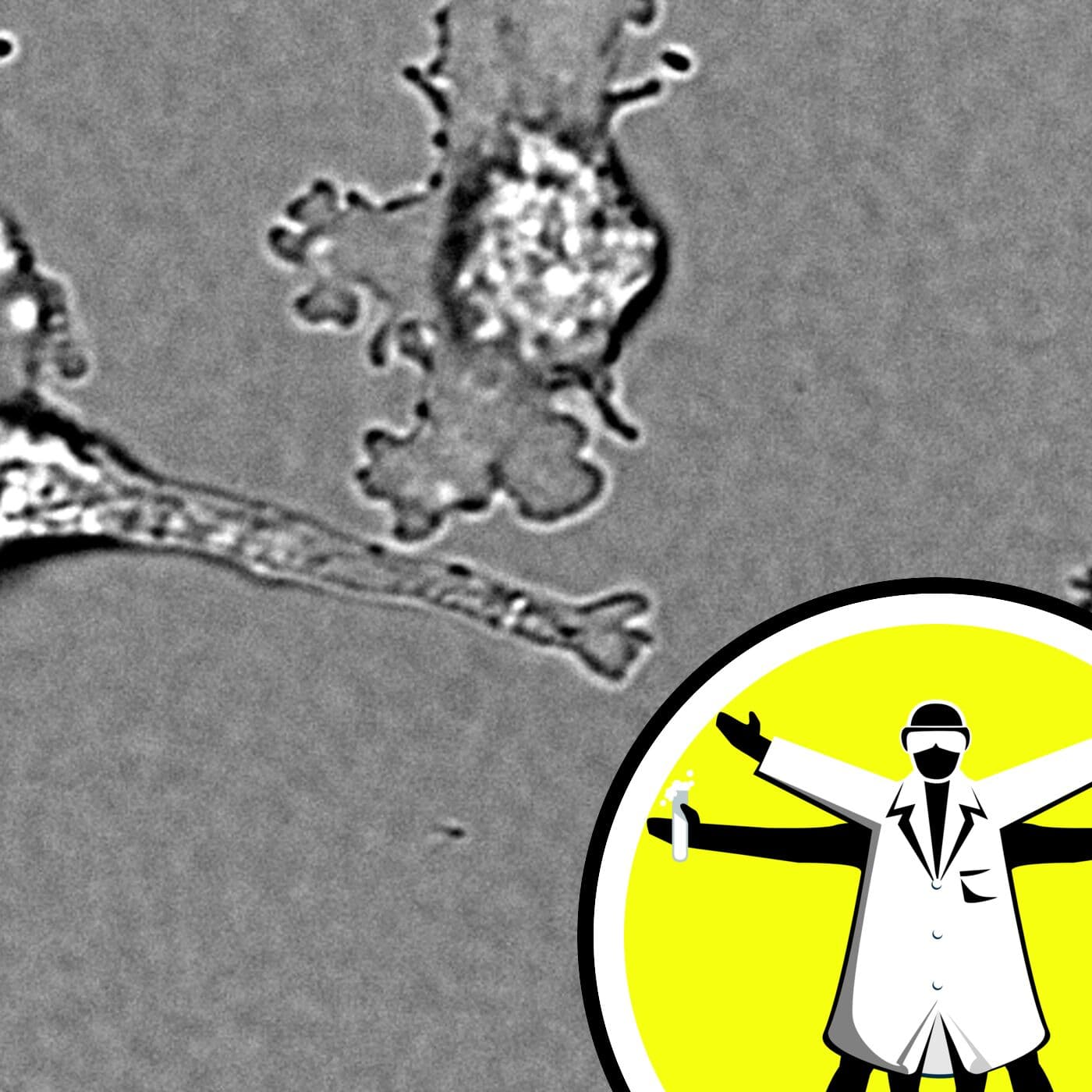
- CAR-T Cell Therapy: Revolutionizing Cancer Treatment
- What is CAR-T Cell Therapy?
- A form of personalized medicine that involves genetically modifying a patient's T cells.
- These modified T cells, equipped with chimeric antigen receptors (CAR), are trained to identify and attack cancer cells.
- Current Success and Challenges
- Effective in treating certain blood cancers since its clinical approval in 2017.
- Solid tumors (e.g., kidney, liver) pose more challenges due to:
- Cancer cells disguising themselves.
- Shared markers between cancerous and healthy cells complicating treatment.
- Recent Research Breakthrough
- Sophie Hanina from Columbia University has discovered the CD70 marker present on many solid tumors.
- Research indicates a more sensitive CAR design targeting CD70 can successfully eliminate tumors in mouse models.
- Future Implications
- Potential for clinical trials using this innovative approach.
- NASA's DART Mission: Asteroid Defense
- Overview of DART Mission
- Aimed to test methods for deflecting asteroids to prevent potential threats to Earth.
- Focused on Dimorphos, a moon orbiting Didymos, where a spacecraft was deliberately crashed to observe changes in orbit.
- Findings
- The collision successfully altered Dimorphos' orbit by approximately 30 minutes.
- Ongoing analysis determined changes in velocity regarding the system's orbit around the sun.
- Scientific Collaboration
- Involvement of amateur astronomers helped achieve precise measurements of the asteroid's position post-impact.
- Breastfeeding Benefits: Health for Mother and Baby
- Nutritional and Health Benefits for Babies
- Customizes milk based on the baby’s needs through communication via saliva.
- Milk contains antibodies and active immune cells offering protection against infections.
- Long-term Health Implications for Mothers
- Research indicates breastfeeding lowers risks for breast, uterine, and ovarian cancer.
- Ongoing studies explore the biochemical mechanisms behind these benefits.
- Challenges in Modern Society
- The demands of modern life often hinder breastfeeding, leading to the use of expressed milk.
- The Science of Squeaky Shoes
- Understanding Squeaks
- Traditionally attributed to "stick-slip" friction, but new research indicates that squeaks are created through "slip pulses" — tiny regions that lift and slide rapidly.
- Research Innovations
- Utilized transparent plates and advanced optics to study surface interactions.
- Findings could improve shoe designs to reduce slips and enhance performance in sports.
- Applications Beyond Footwear
- Insights into friction dynamics may inform geophysical studies related to earthquakes.
Conclusion This episode encapsulates cutting-edge research and developments in cancer treatment, space exploration, maternal health, and the understanding of daily physics phenomena. The discussions not only highlight scientific advancements but also the importance of ongoing research in various fields.
Call to Action Listeners are encouraged to support the Naked Scientists through donations and to follow their social media for updates on future episodes and scientific discussions.
Written by AI. May contain mistakes. Listen to the episode to check what was said.
Chapters
Tap a time to open that second in VOCAR T-Cell Therapy Explained
1:53 to 4:13
Explore how CAR T-cell therapy is transforming cancer treatment.
“But when it came to solid tumours, in other words cancers that grow inside organs like livers, kidneys or the pancreas, CAR T-cell therapies have really struggled.”
Challenges with Solid Tumors
4:13 to 7:20
Understanding the challenges CAR T-cells face with solid tumors.
“and you put the gene in so the cells then make this receptor going after the target that you want them to go after, programmed in that DNA recipe.”
Innovative CD70 Targeting Strategy
7:20 to 9:17
How a new targeting strategy using CD70 could improve cancer treatment.
“And what I saw is that the mice that were treated with these standard CAR T-cell designs, the tumors at best were slowed down but weren't eliminated.”
NASA's DART Mission Overview
9:17 to 12:05
An overview of NASA's DART mission and its implications for asteroid deflection.
“The target was Dimorphos, a small moon that orbits a larger parent asteroid called Didymos.”
Precision Measurements and Future Implications
12:05 to 14:01
The importance of precise measurements in asteroid impact analysis.
“So it went from about 12 hours to 11 and a half hours.”
Impact of Amateur Astronomers
14:01 to 15:34
Discover the surprising contributions of amateur astronomers to scientific measurements.
“These people sound more like professionals than amateurs to give them their due.”
Benefits of Breastfeeding
17:15 to 17:55
Explore the various benefits of breastfeeding for both infants and mothers.
“breastfeeding benefits the growth of a baby because the mum's milk is packed with nutrients antibodies and other factors that baby formula can't replace.”
Breast Milk Composition Insights
17:56 to 20:04
Learn how breast milk composition is influenced by the baby's saliva and maternal health.
“and recently she brought all the data together in a big review on the topic and she told me what she's written about.”
Challenges of Modern Breastfeeding
20:05 to 22:09
Understand the societal challenges mothers face when breastfeeding in modern times.
“changes that are happening to the mom during pregnancy and while they're breastfeeding.”
Expressed Milk vs. Direct Breastfeeding
22:10 to 24:40
Explore the differences in health benefits between expressed milk and direct breastfeeding.
“So you're saying that contact with baby's saliva to the nipple tissue is needed and that seems to affect the recipe of the milk?”
Show all 16 chapters
Research Gaps in Formula Feeding
24:41 to 25:29
Discover the limitations of formula feeding compared to breastfeeding regarding immune components.
“keeping milk in the fridge, that still has beneficial effects, right?”
The Science of Squeaky Shoes
25:30 to 27:30
Investigate the physics behind the squeaks of shoes and their causes.
“Now, have you ever wondered why it is that your shoes squeak on a baseball court, or in my case, the corridor down the lab, or why your bike brakes make screeching noises when they're in need of some love?”
Understanding Shoe Friction
27:31 to 28:05
Learn about the research on how friction affects the sounds made by shoes during movement.
“In fact, we don't see a macroscopic stick and slip, but we see something quite different.”
Understanding Friction and Sound in Shoes
28:05 to 31:18
Learn how friction affects sound production in different types of shoes.
“along the contacting interface and they travel as fast as the speed of sound of the material.”
Applications of Friction Science in Geophysics
31:18 to 32:21
Explore the implications of friction science for understanding earthquakes.
“For example, rather than getting the Jedi Order together, this information could be utilised to improve court shoes to prevent slips and therefore injuries.”
Choosing the Right Shoes for Performance
32:21 to 32:35
Discover how shoe design can impact athletic performance and safety.
“help towards the development of earthquake-safe infrastructure.”
Transcript
Automatic transcript. May contain errors.0:28My perfect day as sand, salt, water, and friends. allergic to SkyRizzy. Serious allergic reactions, increased infections, or lower ability to fight them may occur. Before treatment, get checked for infections and tuberculosis. Tell your doctor about any flu-like symptoms or vaccines. Thanks to SkyRizzy, there's nothing on my skin, and that means everything.
0:49Ask your doctor about SkyRizzy, the number one dermatologist prescribed biologic in psoriasis. Visit SkyRizzy.com or call 1-866-SKYRizzy to learn more.
1:03all engine running absolute genius get this welcome welcome this is the show where we bring science what that essentially means is discovery advances research technology unbelievable without further ado this is the naked scientists hello welcome to the naked scientist podcast the program that brings you the biggest breakthroughs and also talks to the major movers and shakers in the worlds of science, technology and medicine with me, Chris Smith. Coming up, reprogramming immune cells to attack tumours, how suckling infants' mouths actually talk to their mother's breast tissue to make milk composition just right for them, and the physics behind the squeaky noises that our trainers make in the gym.
1:52first this week car t cell therapy is a form of personalized medicine that works by genetically modifying a patient's own immune t cells to reprogram them with a new t cell receptor so they can recognize and attack diseased tissues the concept has been around for several decades but it was only approved for clinical use back in 2017 since then though it's been transformative for different kinds of blood cancers, including leukemias and lymphomas. But when it came to solid tumours, in other words cancers that grow inside organs like livers, kidneys or the pancreas, CAR T-cell therapies have really struggled.
2:30For a range of reasons, these tumours are much harder for the engineered immune T-cells to recognise and destroy. But now though, researchers at Columbia University think they might have found a way forward. Working on what she dubs a hunch, Sophie Hanina has found a marker called CD70 that all cancer cells appear to display. Programming CAR T-cells to go after this successfully cured mice implanted with a whole range of different human cancers. A T-cell is one of the immune system's frontline soldiers. It travels in our blood looking for infected or abnormal cells and when it finds them it eliminates them.
3:10However, cancer is very good at disguising itself from being detected by the immune system and avoids being killed. And that's where this idea of CAR T-cell comes in. It's a way of turning a T-cell into a highly trained serial killer so that it can more easily recognize these cancer cells. And CAR just stands for chimeric antigen receptor, which is essentially a synthetic receptor that we put onto T cells so that it can more easily recognize these cancer cells, like strapping a missile onto a T cell. And we can program that missile for a specific target found on a patient's cancer, grow those cells in a lab, infuse them back into a patient.
3:59And once inside the body, those engineered CAR T cells hone in on the cancer and start killing the cancer. Really, it's a living drug. It's your immune system upgraded to hunt down cancer. So you basically got the genetic recipe for the receptor and you put the gene in so the cells then make this receptor going after the target that you want them to go after, programmed in that DNA recipe. That's exactly it, Chris. Why has it been a problem to use this then in certain kinds of tumours? Because this is being used clinically. it's in the clinic, it's in patients, isn't it, in other contexts. So why does it work for some things and not others?
4:40You're absolutely right. As we speak, these CAR T cells have cured patients with certain types of blood cancers. However, for solid tumours, like kidney cancer, it's really a different story. And that's because with blood cancers, the target is on nearly every cancer cell. So CAR T cells can easily spot them. But with solid tumours, it's a completely different challenge, the target that is expressed on these cancer cells are also found on healthy, normal cells. And so that makes it much harder to attack the entire tumor safely without damaging normal tissues. The other issue is that the potential target you could use isn't always expressed on the entire cancer cell.
5:28For example, I'm working on a protein called CD70, and it's found on about 20 different solid tumor cancer types. And it seems to be a very promising car target because it has limited expression on healthy cells. However, if you look at a patient's cancer, the expression is often patchy, meaning if you have 100 cancer cells, 50 will be positive and 50 will look like they're negative. And the CAR T-cell can spot the 50 positive ones, but the 50 negative ones will remain unscathed and continue to grow. And that's really what we've been seeing in current clinical trials. At best, you know, these patient tumours are being slowed down, but not completely eliminated.
6:18And what have you done to try to come up with a better way of getting the T cells to see all the cancer cells? It was a hunch. I basically found that tumour cells that look like they're negative for CD70 might not be negative at all. And in fact, they actually retain ultra-low levels of CD70, but they're so low that you can't detect them with normal methods in the lab, and they can't be seen by the CAR T cells that we have that are already being used in the clinic. And so I had the idea that if you use a more sensitive receptor design, can you now eradicate the whole tumor? I tested this in mice using human kidney, ovarian and pancreatic cancer, refractory to multiple lines of treatment, and we implanted them into mouse models.
7:12And I tested this with human CAR T-cells and a more sensitive human receptor targeting CD70. And what I saw is that the mice that were treated with these standard CAR T-cell designs, the tumors at best were slowed down but weren't eliminated. and when I used a more sensitive receptor, the tumours were completely eradicated. What is this CD70 marker then? Why do the cancer cells have it? What's it doing on them that means it's there and it's not elsewhere? So CD70 is naturally expressed by immune cells to help them grow and the cancer cells are very clever. They kind of co-opt this molecule to, we think, promote their survival.
8:03That's really crafty. So basically, you've gone after one of the mechanisms that makes cancer nastier and able to evade the immune system. So by being nastier, it makes itself more vulnerable to your treatment. Yeah, that's a really interesting therapeutic implication that we're going after a vulnerability of the tumour cell that might make it seem scarier, but actually is now going to become its Achilles heel. The problem with cancer is it's continuously shape-shifting, altering its appearance. Is there not a risk that basically you'll eradicate everything that's got any vestige of this CD70, but lurking there in the background will be some cancer cells that don't have that, and they'll then thrive and will have a new cancer that looks a bit different?
8:49Yeah, I think that's a great question. I think that's definitely a possibility. But I will say in the mouse models that I used, these cancers didn't come back. So it's possible that if you hit it hard and you hit it quickly, it won't come back. But that's certainly a possibility that cancer cells will continue to evolve and find new ways to evade detection. It sounds really promising, doesn't it? Sophie Hanina there at Columbia University, that study has just come out in science. and Sophie tells me the next step will be clinical trials. So we wish her luck. Into space now. And back in 2022, NASA carried out the first real world test, if world is the right word to use, of whether us humans could deflect the path of an asteroid, a mission known as the Double Asteroid Redirection Test or DART.
9:37The target was Dimorphos, a small moon that orbits a larger parent asteroid called Didymos. Scientists deliberately crashed a spacecraft into the Dimorphos moon to see whether the impact could alter its orbit, which indeed it did. A bigger question, though, was whether it also altered the orbit around the sun of the parent asteroid, Didymos, and by how much. Now, this is crucial if we're to understand our odds of using a technique like this to protect the Earth from an incoming asteroid in the future. Here's one of the team, Steve Chesley, who's a senior research scientist at NASA's Jet Propulsion Laboratory.
10:15The backstory, of course, revolves around the DART mission to the asteroid Didymos, which is a binary asteroid system with a satellite named Dimorphos. And in September 2022, we smashed into that on purpose and we hit the satellite in order to deflect it and show that we can deflect satellites. When you say satellite, this is like a mini moon, isn't it? If you want to know the sizes, the primary body, the most, is about 700 meters across, and the satellite's around 170 meters across. And the purpose of this was to try to understand the practicality of causing things that orbit each other to distort or deform their course.
10:56Right. Asteroids do hit the Earth from time to time. When they do, it's a serious problem, and so we'd like to be able to know how to deflect them should the need arise. And so the two key questions here are, can we hit it? Because that's a technology problem. You're traveling at hypervelocity and you have to hit a target that's just a few tens of meters across. The other question is, what's the asteroid going to do after you hit it? You know how big the spacecraft is and how fast it's going, but there's also a recoil effect from all the debris that gets blown off from the impact. boulders and gravel being thrown backwards into space adds to the effect of the spacecraft.
11:39This is what we wanted to understand. You said you did this in 2022. So that was a little while ago now. Is the intervening period the time when you've been analysing all the data? And how did you get the data? What did you actually measure when you slammed an impactor into that satellite? So what we were trying to figure out is not how did the satellite's orbit change when it got hit. We know that it changed by about a half hour in orbital period. So it went from about 12 hours to 11 and a half hours. That was done and settled back in 2023 from the analysis. What we're trying to do now and what we have done is find out what happened to the system's orbit about the sun.
12:21So because the system is so much more massive than the satellite, the effect is much smaller. and so we had to have first a really good orbit before impact for this system and then again a really good orbit after the impact and then we can compare the two and see what's different and see what the change in velocity of the system's orbit about the sun was and that's really what this paper is about. How were you measuring that though? How did you keep tabs on it before and after the impact to make those sorts of measurements and that analysis possible? I would have to say it's kind of incredible the precision of the observations that we were able to get.
13:00The amount of change in velocity that we found amounts to 1.7 inches per hour. And that's for this asteroid system that's hurtling through the solar system at tens of kilometers per second. And that was because we had these very precise stellar occultation observations that were collected by a cadre, a very dedicated cadre of amateur observers all around the world. Basically, they set up their telescopes at some remote location after driving sometimes for days. And they are ready when the shadow of the asteroid cast by a star falls on their telescope. They report the position of the asteroid with milli-arc-second precision.
13:43And let me tell you, a milli-arc-second is a thousandth of an arc-second, which is a 3600th of a degree. It's a very tiny angle. This one milli-arc-second accuracy is an angle that if you held up a human hair 20 miles away, that's how accurate these observations are. These people sound more like professionals than amateurs to give them their due. I think that's absolutely right. When we say amateur, we put that in quotation marks because these are very dedicated and very serious folks. What does this mean, though? Now you've got this. You've got this deviation that you've been able to measure, this change in speed.
14:20It's an inch. I mean, we're talking imperial here, so a few centimetres in new money. But now you've got these measurements. What does this enable us to do? How do we take that forward and use that? Yeah. So one of the things we wanted to understand from this impact experiment was how much of the boost do we get from the debris that gets blown off. And the estimates were the total change in velocity could be anywhere from two to five times that we get from the spacecraft alone. And that's a lot of uncertainty. This work shows that it's actually around two for this particular case. It also tells us that the ejecta is actually providing a similar boost to that of the spacecraft.
15:00They both are about the same level. What does it tell us, perhaps a bit more critically, about the practicality now we've constrained things in this way? Well, with our work, we've actually, you know, for the first time, moved a celestial body by human interaction. Everything works as expected. We were able to hit the asteroid. We were able to understand the effect of the asteroid. And that leaves us in an excellent position going forward to do this again if we need to for a real-world planetary defence problem. Great story. And the accuracy of those astronomers' measurements is absolutely incredible, isn't it?
15:34That was Steve Chesley. That study just came out in Science Advances.
15:42My perfect day at sand, salt, water in France. But my moderate to severe plaque psoriasis can take me out of the moment. Now I'm all in with clearer skin thanks to SkyRizzy. Riz and Kizum at RZA, a prescription-only 150mg injection for adults who are candidates for systemic or phototherapy. With SkyRizzy, most people saw 90 % clearer skin and many were even 100 % plaque-free at four months. SkyRizzy is just four doses a year after two starter doses. Don't use if allergic to SkyRizzy. Serious allergic reactions, increased infections, or lower ability to fight them may occur. Before treatment, get checked for infections and tuberculosis.
16:19Tell your doctor about any flu-like symptoms or vaccines. Thanks to SkyRizzy, there's nothing on my skin. And that means everything. Nothing is everything. Ask your doctor about SkyRizzy, the number one dermatologist prescribed biologic in psoriasis. Visit SkyRizzy.com or call 1-866-SKY-Rizzy to learn more.
17:01music in the program is sponsored by epidemic sound perfect music for audio and video productions this is the naked scientist podcast with me chris smith still to come sneakers or squeakers we're looking at the physics behind squeaky shoes in gyms but first it's commonly known that breastfeeding benefits the growth of a baby because the mum's milk is packed with nutrients antibodies and other factors that baby formula can't replace. These differences, social studies suggest, translate into long-term health and IQ benefits for breastfed babies. But as we look closer, even more extraordinary effects are emerging.
17:39Baby's mouths actually appear to talk to breast tissue and can alter the composition of breast milk. Whole active immune cells and even infective organisms can transfer between the two and the breastfeeding mother also sees her health being impacted long term. Shika Ramanan studies breastfeeding at the Salk Institute and recently she brought all the data together in a big review on the topic and she told me what she's written about. We all know that breast milk is good for you but we actually don't really know why it's good for you and how it's good for you and given that this is the first food that most babies receive it's important that we have more research on this.
18:20What does the evidence say, Sheik, in terms of the beneficial effects of breastfeeding, both for the baby but also the mum? What sorts of trends, when we look at this, do we see? For babies, it has the obvious benefit of nutrition. Every mom custom makes breast milk for their babies based on their needs. And babies are able to communicate this with their saliva while they're breastfeeding on the mom. The obvious benefit, of course, is nutrition and growth, but there are other benefits as well, which includes protection from infections. Mothers provide antibodies in their milk, which can protect babies from developing infections.
19:00And more recently, we've also been, as a field, looking at how there are immune cells that are in the milk that we think can offer protection to the babies beyond just antibodies. And in addition to that, there's also several other molecules in milk that can help promote the growth of beneficial bacteria, also known as our microbiome, which are bacteria that live on and in us. And components of breast milk can impact the composition of these beneficial microbes that we have. And for the mom? Yeah. And for the mom, doctors have been telling, you know, moms for years that breastfeeding is beneficial.
19:41the WHO tells you that for every year a woman breastfeeds, their likelihood of developing breast cancer, uterine cancer, ovarian cancer decreases, their likelihood of developing chronic heart disease and type 2 diabetes decreases. But we still don't know how and why mothers have this benefit. And so recent research has been highlighting how there are immune cell changes that are happening to the mom during pregnancy and while they're breastfeeding. And these immune cells have a positive impact and provide protection and also tend to improve outcomes when moms receive therapy if they were to develop breast cancer or ovarian or uterine cancers.
20:25So it's not just the people who breastfeed and have the time to breastfeed and are more invested in it and therefore probably also leading a healthier life in other ways. and that's why they're getting these health benefits. It's not that so much as there is something biochemical going on through the act of breastfeeding that seems to endow the mother with these benefits. Yes, I will say that the diet will impact how these immune cells change. However, it does seem to be that these changes in immune cells could be promoting these beneficial effects for the moms. The problem is that breastfeeding and modern society are not easy bedfellows.
21:07If you ask a woman, she'll say, I wasn't prepared for quite how long this was going to take. Some babies seem to take forever to eat their lunch. And it's very, very difficult. And you can't necessarily have a modern life as many people need to live it with a career and invest that much time. So people are resorting to things like express milk and so on. Is that as good? So when we give babies milk that we've expressed and kept it in the freezer, for example, which many, many mums will do that, won't they? Are there any downsides to that or do you get all the same benefits? A fed baby is the best baby, right?
21:41This is not meant to make women who cannot breastfeed feel guilty about how they can't breastfeed. Eventually, hopefully all of this research will lead to findings that will benefit not just women that do breastfeed, but also women that cannot breastfeed. but when the baby feeds on the mom they have signals that they transmit via their saliva and so that's how the moms custom make milk for each baby you said that however how does that work just just if you could as an aside because i was intrigued by that earlier i was going to ask you how can saliva affect what goes on in the mom's body yeah we actually don't really know how this happens what we know is that this does happen but the science behind how this happens and how the mom is able to custom make this milk is still something we don't fully understand.
22:32So you're saying that contact with baby's saliva to the nipple tissue is needed and that seems to affect the recipe of the milk? Correct. What we do know is that when babies suckle, they form a vacuum with their mouth, which allows for their saliva and things that are in their saliva to enter not just the nipple tissue, but enter the mammary gland itself. And these cues are enough for the mammary gland to respond and custom make, you know, milk for the babies. In the case of an infection, say baby, the baby has an infection, you could think about how pathogens are pretty small. And so they can make it into the breast tissue and mom is able to respond by providing antibodies to this pathogen, especially if the mom has previously seen or had this infection, then they're able to provide chock full of antibodies to their baby.
23:28However, something that's always fascinated me is in terms of, you know, fat ratio and, you know, the composition of the milk, not just in terms of immune components, but nutritional components, how the moms are able to do that, we don't really know how and what are the cues that the baby's providing the mom for the mom to be able to do that. This is still an area of active research. How easy is it to recapitulate some of these effects so that people who don't breastfeed can nevertheless benefit their baby it does sound like and you're one of the first people i've actually heard telling me this kind of thing that there is still an ongoing relationship between the breastfed baby and the breast that's feeding it that you need that relationship in order to continue the the benefits correct in terms of nutrition which is our number one goal right for our babies we want them to be well fed and for them to grow.
24:25Yes, formula will do the job and pumping milk will do that job. However, when it comes to immune components, such as antibodies and immune cells in the milk, that seems to require this relationship more. And I do want to say that pumping milk, keeping milk in the fridge, that still has beneficial effects, right? The antibodies in the milk, they're going to be fine because they're resistant to a lot of things, including the stomach acids, right? So they're able to make it through. However, the physical immune cells are not so hardy. So those might die when you freeze milk and thaw the milk out and so on.
25:04In formula, that is really hard to recapitulate because we cannot add some of these immune components, potentially, yes, we're not adding that yet. But a lot of these immune components that I'm talking about, we're not at the point where we can add those to formula yet. Shika Ramanan there, and her review paper documenting what we were just discussing is well worth a read. It's just been published in Trends in Immunology, if you want to look it up. Now, have you ever wondered why it is that your shoes squeak on a baseball court, or in my case, the corridor down the lab, or why your bike brakes make screeching noises when they're in need of some love?
25:44Now, previously, we thought that those sounds were the result of intermittent sticking and slipping between the two surfaces. That's known as stick-slip friction. But now scientists have discovered that these squeaks are actually arising in quite a different way. Our own Rachel Ralph, keen sportswoman and curious investigator, reports. As a badminton player, my life sometimes sounds a little bit like this.
26:14squeaky shoes on court or the screech of under oil bike brakes and even the sound of chalk on a blackboard are all caused by friction the force that is resisting two surfaces from sliding easily over each other but how exactly are these sounds made and why are we so interested in them here's Gabriele Albertini at the University of Nottingham. It occurs so often in daily life that like you're walking around and like your shoes squeak right in the moment where you would like them not to squeak and what was very interesting was that when we started looking at the literature whether there are studies out there that would explain what is the phenomenon responsible for producing the squeaking sound, we didn't really find anything really satisfactory.
27:04Whilst most previous studies look into the science of friction between two hard surfaces, little has been carried out on soft surface interfaces. One of the main theories at this moment is a phenomenon called stick slip, where alternating phases of short accelerations, or slips, are interrupted by static friction, or sticks, creating a vibration and therefore the squeak we would hear. But Gabrielle and his collaborators at Harvard and the French National Centre of Scientific Research observe something quite different. In fact, we don't see a macroscopic stick and slip, but we see something quite different.
Read the full transcript
27:43So what we see is that most of the interface is sticking, but then there are small regions that lift and this mediates or facilitates the sliding motion. And the slipping region, we call them slip pulses, and they travel very fast along the contacting interface and they travel as fast as the speed of sound of the material. But how did they find this out in the first place? And how did they record these slip waves if they are as fast as the speed of sound. I asked Gabriele whether the local sports shop could help answer the physics. So we bought some basketball shoes, we bought skateboarding shoes and so on.
28:33But we also worked on samples that we manufactured in the lab in a controlled way. What's most challenging with friction is that if you want to understand what's going on in friction you need to be able to measure what's going on at the interface between these two solids and this is not so trivial to do because the interface is hidden between these two solids and so the solution that we use involves using a transparent plate onto which we slide the shoe or a piece of rubber. And this transparent plate is set up with an optical technique that involves some LED lights. And whenever you have contact between the shoe and this plate, the image that we see appears very bright.
29:29When there is no contact, the image appears dark. And with this technique, we could see which part of the sole is it actually touching the plate and if we have a region that is detached is it is it moving in space and we observe that this detach detaching region they move like like like waves imagine the ripples you see when you drop a stone in a body of water when visualized these slip pulses between the basketball shoe and the glass surface appear as ripples across the shoe's sole. But does the pattern on the sole affect these pulses or even the sound of the squeak? If we have an interface that is completely flat, then these pulses, they can propagate in many different directions.
30:18So they can tilt, they can separate, they can merge. And this gives rise to a very irregular frequency at which they are generated. And so the sound that produce is also irregular and what it means is like it sounds more like scratching like think about the peeling of a tape on the other hand if we apply a very simple pattern which are ridges that are in the same direction of the sliding direction then these pulses are confined to stay within the ridge and so they can only travel in one direction and then they tend to synchronize and they repeat at a constant frequency. And the sound that is produced by this very constant frequency of pulse generation, it's a very clear note.
31:09Applying the knowledge they discovered from their study, the team used pieces of rubber with ridges of different thickness and rigidity to play the Star Wars theme tune to show how you can exploit the science of friction once you understand it. For example, rather than getting the Jedi Order together, this information could be utilised to improve court shoes to prevent slips and therefore injuries. But interestingly, this can also be applied onto a much larger scale. So one of the most interesting things that we saw was this transition from ordered dynamics to chaotic dynamics. And this is quite important for the field of geophysics, because in geophysics people have looked for a very long time at the concept of a slip pulse and have been arguing that it's important to understand slip pulses if we want to understand earthquakes because the earthquakes itself it's the slip along a tectonic fault and it can take the form of a slip pulse.
32:11By building earthquake models in the lab and using simulations Gabriele and his collaborators can aid in understanding the role of friction in geophysics, which may help towards the development of earthquake-safe infrastructure. But in terms of squeaks, the next time I need to buy a new pair of badminton shoes, I know how thick I want the ridges on the sole of the shoes to be, to hopefully improve my performance. But I have a feeling it's going to take a bit more than that. Thank you to Gabriele Albertini for coming on the show to share their work that was recently published in the journal Nature.
32:47So more squeakers than sneakers. Rachel Ralph reporting on why gym shoes make that really quite irritating noise. That's where we leave it for today. Do tune in on Tuesday though when we're going to be taking a closer look at polio. Are we on the brink of eradicating this virus? Meanwhile, thanks to all of you who are supporting us with your donations. It really, really helps. We're really grateful. And if you like what we do each week and you haven't yet made a donation and you'd like to do please head over to nakedscientist.com forward slash donate we would really appreciate that thanks especially to russ newton who's got behind us thank you russ we're really grateful also we would be grateful if you could drop into linkedin and also instagram and follow us there and leave us reviews and comments on spotify on apple or wherever you get your podcasts i'm chris smith thank you for listening and until next time goodbye
34:11We must work with mental health professionals to support children, and we must empower mentors, educators, and parents to keep kids happy. Learn more about our commitment to finding lasting solutions at empowerourfuturecoalition.com slash solutions. Paid for by the Coalition to Empower Our Future.