
In short
Insect “superpowers,” covering katydids’ mammal-like hearing, a deep-diving fly larva’s pressure/buoyancy adaptations, a large blue butterfly caterpillar’s ant deception, and wasps’ visual navigation (plus possible magnetic sensing).
Guests and backgrounds
Peter Naserreke, entomologist at Harvard’s Museum of Comparative Zoology; Evan McKenzie, University of British Columbia, who discovered/studied the Lake Malawi diving fly larva; Rachel Ralph interviews Will (lepidopterist/gardener) at Stratford-upon-Avon Butterfly Farm and Matt Hayes (University of Cambridge Museum of Zoology) who studies the large blue; Adam Hart, entomologist at University of Gloucestershire, wasp specialist.
Key claims
Katydids use four front-leg/thorax ear openings and tracheal tubes to detect bat echolocation directionally. Caoborus edulis larvae dive >200 m, using resilient tracheoles/air sacs to resist crushing pressure and hide from visual fish predators. Large blue caterpillars chemically and acoustically mimic red ant queen signals to be adopted and eaten ant grubs. Wasps use compound-eye vision (UV/blue/green) for fast prey capture and navigation; experiments suggest magnetic-field behavioral effects.
Notable examples
Lake Malawi >200 m dives; ant nest adoption where caterpillars grow ~20x ant grub size; wasp “pine cone” orientation flights; UV “nectar guides.”
Written by AI. May contain mistakes. Listen to the episode to check what was said.
Chapters
Tap a time to open that second in VOKatydids: Nature's Listening Devices
0:00 to 0:27
Understanding how katydids use their unique ears.
“The more you listen to your kids, the closer you'll be.”
Katydids: Nature's Listening Devices
1:15 to 1:45
Understanding how katydids use their unique ears.
“Now today we're exploring the lives of insects and some of the incredible abilities they've evolved to enable them to thrive.”
Sound Production and Function in Katydids
1:45 to 3:56
Exploring how katydids produce sound and its purposes.
“Peter Nasrekke is an entomologist at Harvard University's Museum of Comparative Zoology.”
Katydid Ear Structure and Function
3:56 to 6:05
Insight into the anatomical structure of katydid ears.
“We call the type of sound production advertisement call.”
High-Frequency Hearing Adaptations
6:05 to 8:02
How katydids hear high frequencies and detect predators.
“So they have an ear drama layer of tissue that vibrates with pressure changes in the air, and it then converts that into nerve signals, or are they doing it differently?”
Underwater Insect Adaptations
8:02 to 9:09
Introduction to a fly larva that excels underwater.
“And again, probably orders of magnitude of what we can perceive.”
The Diving Fly Larva of Lake Malawi
9:09 to 12:15
Adaptations that allow a fly larva to dive to extreme depths.
“Now to put that into perspective that is a good 10 times deeper than most recreational scuba divers tend to venture and the best human free divers don't even get halfway to that depth.”
Survival Strategies Under Pressure
12:15 to 14:00
How fly larvae manage their buoyancy and avoid predators.
“your buoyancy or to stop you from sinking, then you might sink to the bottom of the lake and die.”
Insect Larvae Buoyancy Adaptations
14:00 to 17:12
Learn how insect larvae manage buoyancy in deep waters using specialized adaptations.
“or the water also becomes slightly more acidic at those depths, which would tell the larvae, OK, I don't need to go any deeper.”
Insect Larvae Buoyancy Adaptations
17:44 to 17:57
Learn how insect larvae manage buoyancy in deep waters using specialized adaptations.
“The Naked Scientist podcast is produced in association with Spitfire.”
Show all 18 chapters
Butterfly Metamorphosis Explained
18:36 to 20:59
Explore the fascinating metamorphosis process of butterflies from caterpillars to adults.
“Rachel Ralph picks up the story at the Stratford-upon-Avon butterfly farm.”
The Life Cycle of the Large Blue Butterfly
21:00 to 24:44
Discover the unique life cycle and symbiotic relationship of the Large Blue butterfly and ants.
“Some chrysalists can be a little bit spiky as well.”
Chemical and Acoustic Mimicry in Caterpillars
24:45 to 28:02
Learn about the chemical signals and sounds that caterpillars use to deceive ants.
“But what's thought is that potentially over time, in the large blue butterfly, that behaviour might have been kind of taken to another level, evolved to another extreme.”
Caterpillar Mimicry: The Ant Queen Connection
28:02 to 29:31
Discover how caterpillars mimic ant queens to gain acceptance in nests.
“I think that's still where the research is going.”
The Diversity of Wasps
29:31 to 30:25
Learn about the diverse species of wasps and their ecological roles.
“But their life cycles usually dictate that they need to be extremely shrewd navigators and very good at pattern recognition to find their way around and track down their prey.”
Wasp Behavior and Navigation
30:25 to 32:39
Explore how wasps navigate and recognize faces, using advanced vision.
“But of course, we've also got quite a number of different social wasps, and they're the ones that live in big colonies.”
Understanding Wasp Vision and Magnetism
32:39 to 37:35
Gain insights into how wasps see the world and use magnetic fields for navigation.
“And in terms of that extremely well-developed and advanced visual system, how does that work?”
Celebrating Insect Abilities
37:35 to 37:57
Marvel at the incredible abilities of insects like wasps and butterflies.
Transcript
Automatic transcript. May contain errors.0:00The more you listen to your kids, the closer you'll be. So we asked kids, what do you want your parents to hear? I feel sometimes that I'm not listened to. I would just want you to listen to me more often and evaluate situations with me and lead me towards success. Listening is a form of love. Find resources to help you support your kids and their emotional well-being at SoundItOutTogether.org. That's SoundItOutTogether.org. Brought to you by the Ad Council and Pivotal.
0:34All engine running. Absolute genius. Get this. Welcome. Welcome. This is the show where we bring you science. What that essentially means is... Advances. Technology. Unbelievable. Without further ado, this is The Naked Scientist. Hello, welcome to The Naked Scientist podcast, the programme that brings you the biggest breakthroughs and talks to the major movers and shakers in the worlds of science, technology and medicine. I'm Chris Smith, and this week, the insect superpowers guaranteed to blow your mind.
1:15Now today we're exploring the lives of insects and some of the incredible abilities they've evolved to enable them to thrive. Coming up, the fly larvae that can withstand huge pressures in some of the world's deepest lakes, the butterfly caterpillar that pretends it's an ant to blag freeboard lodgings and even ant grubs to eat inside ants' nests, and the remarkable visual systems of wasps that enable them to home in unerringly on our picnics. But we're beginning actually with katydids. Now you might not have heard of them, but these cricket-like insects actually have incredibly sophisticated mammal-like ears which are sighted on their front legs but plumbed into their bodies with pipes that work a bit like the tubes of a stethoscope, turning the whole insect into a listening device.
2:02Peter Nasrekke is an entomologist at Harvard University's Museum of Comparative Zoology. It's an insect that is very closely related to a grasshopper. Everybody knows what a grasshopper looks like. So imagine a grasshopper that is green, the wings are a little wider, and most importantly, the antennae are exceedingly long. They are much longer than the body of the insect. But just like a grasshopper, it has jumping hind legs. They have typical biting mouth parts that are designed for chewing on leaves and grasses and occasionally chewing on other insects. And they also produce sound, just like grasshoppers.
2:43The only difference is that while grasshoppers produce sound by rubbing their hind legs against the wings, catid is produced sound by rubbing one wing against the other. Where do they live? Where would I have to travel to find them? Unless you live in the Arctic Circle, you don't have to travel anywhere because catid is have a worldwide distribution. They're just called different names. For example, in the UK, they would be called bush crickets. And they are typically associated with areas that have rich vegetation, although there are also catid is that live in the desert. So essentially, any terrestrial habitat, any area of land will have some species of KD-dits.
3:22And presumably, if they're adept at making sounds, they must be pretty adept at hearing them as well. Absolutely. That makes total sense that if you produce sound, you probably should also be able to hear it. The first thing that we have to say, however, is what are the functions of the sound? And when we are talking about sound of katydids, which is, again, produced by rubbing their wings together, their function is essentially the same as the function of a bird call. So principal function of the sound produced by katydids is to attract mates. We call the type of sound production advertisement call.
4:00The males usually advertise themselves to the females. The second function is territoriality. Just like birds advertise that, okay, this tree is mine and it's already occupied, catidies do exactly the same thing. And thirdly, catidies use also sound in their own defense. Imagine being a bird who caught this juicy looking insect and suddenly these insects start producing loud screeching sound. That often makes the predator drop their prey and gives the catidies a chance to escape. And where are their ears? Well, interesting enough, catidies actually have four ears. not just two. Their principal ears are located on their front legs.
4:41They essentially look like two little circular or oval membranes, but those are connected through tubes. They're called tracheal tubes to another pair of openings that are on the side of their thorax, so above the middle leg of that insect. So when a sound wave hits the cadidus body, it actually enters its body through four different openings and the reason for that is that it increases the ability of the insect to locate the sound as the source of the sound it improves detection of directionality of the sound where's the actual hearing organ then because if i if i think about my own ear i've got the the flappy bit on the outside the pinner which acts a bit like a funnel then there's the ear canal, which is a tube, which ends in my ear drum.
5:35And that's really where the detection starts. So where is the equivalent structure in a katydid? In katydids, the equivalent of the human ear is on their front legs. And just like the human ear, they also have that flappy part, the pinny. Actually, they have two of them on each leg. And this is also one of the mechanisms that improves the perception of these high frequency calls, particularly the sound of their principal enemies, which are bats. And do their ears, in inverted commas, work the same way mine do? So they have an ear drama layer of tissue that vibrates with pressure changes in the air, and it then converts that into nerve signals, or are they doing it differently?
6:16It uses the same components. So you do have a membrane that vibrates, and that signal is translated into essentially an electrical signal that is then interpreted by the nervous system. In the human ear, we have this structure called a cochlea that looks like a little snail, snail shell. And that's the part of the ear that's responsible for distinguishing different frequencies of the sound. And a similar structure, albeit it's not curled like that, is also present in the ear of the cadillus. So the structure of the ear of the cadillus is actually quite similar to that of a human ear. It's amazing to think that a little insect is doing things the same way that much bigger, more complicated animals do.
6:58I find that really extraordinary. But can they hear with that the same range of frequencies that I can, for example, or can they go further? They can go definitely further than that. Well, the first and foremost reason why they hear is because they communicate using sound. So females need to be able to detect the calling male, and the male has to be able to detect or hear the female's response. But secondly, that's their main mechanism of detection of potential enemies, their predators. The principal enemy of KDDIT is bats. Bats use very, very high frequencies in a mechanism known as echolocation, where they essentially scream very high-pitched sounds that bounce off objects And the returning echo of that sound tells the bat about the distance and shape of the object.
7:49Now, these are, again, high frequencies that we humans cannot hear, but katydids can. So the ear of a katydid can hear probably all the frequencies that we can, plus many, many more and above that. And again, probably orders of magnitude of what we can perceive. And you said that because they also instrument their body and connect the tracheal tubes in their bodies up to these ears, does that mean they're able to resolve sound not just side to side, front legs, right leg, left leg? Can they actually work out whether it's coming from behind as well then? Probably, yes. Again, because they have four openings in the body that receive the sound signal, they know whether the sound comes not just from left or right, but also from up front or from behind them.
8:37And this is very important because if you're flying at night, chances are that the bat will be probably behind you, trying to catch up with you. So you need to know that it's coming not only from the left or right, but also from left behind or up front from the right side and so on so yes they are very good at detecting the direction of the sun coming and reaching their body really fascinating peter nazarecki there on the katie did and how they hear in much the same way we do albeit with their front legs for our next amazing insect adaptation we're venturing underwater now when someone says insect usually the last thing most people would think of is something capable of giving our best underwater water diving technology a real run for its money but researchers have now found a fly larva living in Africa's Lake Malawi that has the sort of swimming badge that we'd all be proud of because each day Caoborus edulus dives to depths of over 200 meters to duck out of reach of the hungry fish that would otherwise make a meal of it.
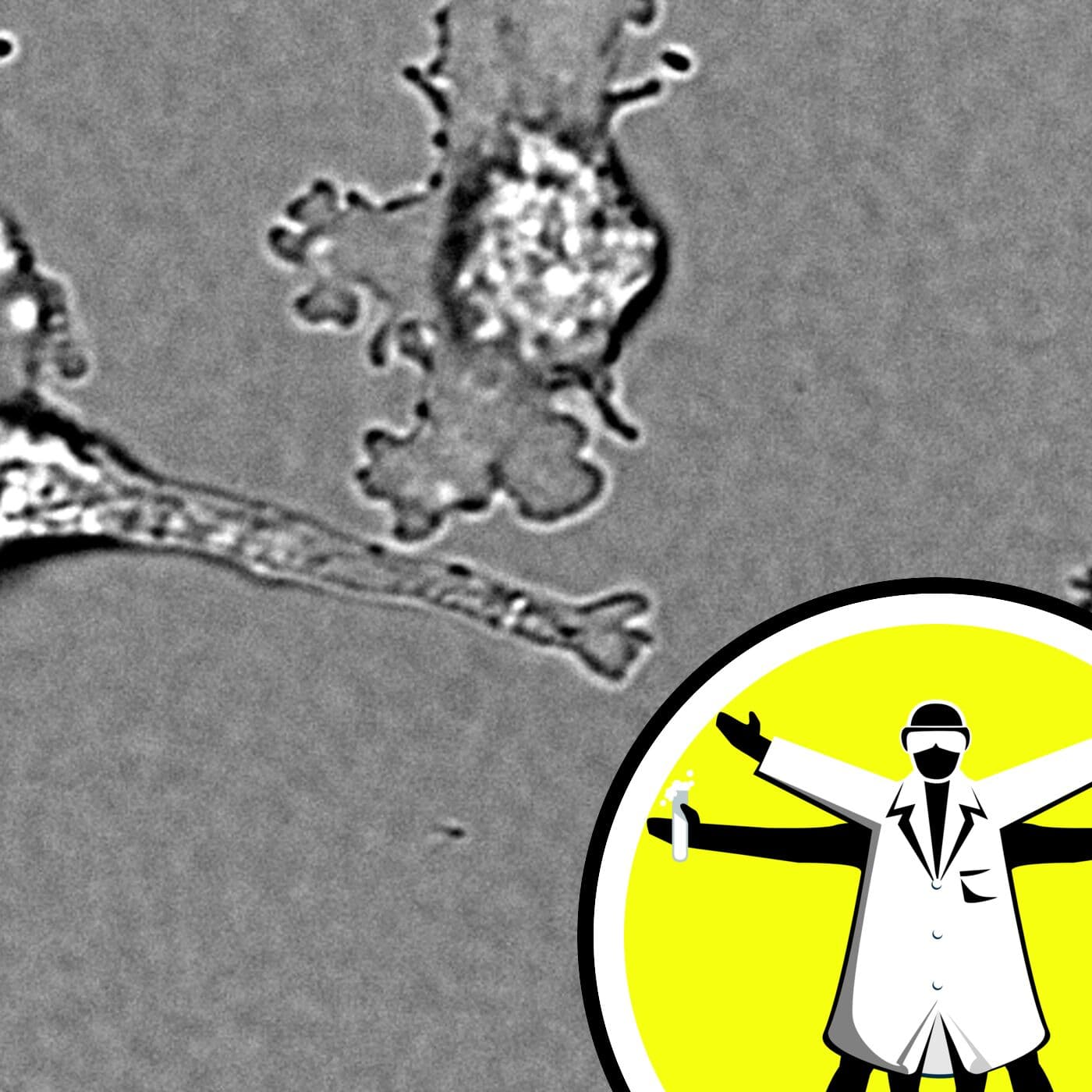
9:39Now to put that into perspective that is a good 10 times deeper than most recreational scuba divers tend to venture and the best human free divers don't even get halfway to that depth. The larvae achieve this feat by using specially adaptive forms of their insect breathing tubes called tracheoles which have evolved to become thinner and also a lot more resilient to being crushed under pressure and they can expand and contract these to manipulate their density and therefore their buoyancy a bit like a submarine. To tell us more about this amazing insectability here's the guy who discovered it, Evan McKenzie who's at the University of British Columbia.
10:18These insects are actually distributed all over the world. And if you find an adult version, they look like a mosquito, but maybe a little bit smaller. But the life stage that we've been studying is actually the larval life stage, which lives underneath the water in lakes around the world, including Lake Malawi. Basically, they are sort of clear submarine-shaped tubes with no arms or legs that simply float in the water with this big prey-catching apparatus at the front of their head. So they kind of look like almost like a saber-tooth larva, you could say, that is made from this modified antenna that they use to catch prey.
11:02And what do they eat? They eat smaller invertebrates, so like daphnia or water fleas or copepods that simply wander past close enough to their mouth for them to grab. And then they at some point turn into the adult fly and leave the water. That's right. So they go through their entire larval stage underneath the water, and then they also become a pupa, where they're sort of developing their adult body parts. And once that stage is done, they come up to the surface and complete their metamorphosis and become a flying adult. But what caught your eye about them in particular with this work? Well, this particular species is interesting because as a larva, they have to dive super deep into the lake.
11:50And Lake Malawi being very deep, that poses quite a lot of challenges for these insect larvae. So as you descend through the water, every 10 meters is actually the same as another atmosphere's worth of water pressure. And if you have any little air spaces inside your body, that could become a problem because they might collapse. And if they're what you rely on for your buoyancy or to stop you from sinking, then you might sink to the bottom of the lake and die. So these larvae have some really interesting adaptations to not only let their air sacs, which regulate their buoyancy and stop them from sinking, which not only keep them from collapsing, but also adaptations which allow these organs to push back against hypostatic pressures and regulate their buoyancy.
12:40So these larvae are in the water. How do they breathe when they're in the water? Are they like a fish with gills or are they so small that they're just in close contact with enough oxygen in the water that it just diffuses in? Your second point is exactly right. They're small enough to breathe directly over their skin, and the dissolved oxygen in the surrounding water simply diffuses in. The CO2 that their body produces can diffuse outward. Why then do they need to go to the bottom of the lake? Lake Malawi must be, what, 200 metres deep? It's incredibly deep. Why would they want to go down there?
13:14The reason that they dive is because they need to escape their fish predators. So they specifically dive into a zone where there is very little oxygen. For that period, they are able to get the energy that they need anaerobically or without oxygen in a way that the fish cannot. So they hide down there during the day. Their predators can't follow them. And because it's during the day, if they were in the more shallow layers, the fish predators, which are visual, would be able to find them and eat them. And just out of interest, Evan, how do they know they've gone deep enough? How do they know they're in the right regime for that to happen?
13:54It is likely due to a chemical sensing ability that they have to sense the drop off in oxygen, or the water also becomes slightly more acidic at those depths, which would tell the larvae, OK, I don't need to go any deeper. The lake is actually quite a bit deeper than 250 metres, which is the deepest they go. So if they accidentally went too deep, then the pressure could potentially overwhelm their respiratory systems, making them collapse and causing the larvae to sink. Right. So the problem is we've got the larvae. They swim down, detecting via some mechanism to go beyond the reach of their predators.
14:37And they lurk down there until they have to come back to get some oxygen, get some food and so on. so how do they then mean that that their buoyancy systems don't collapse because if under those pressures 200 meters that's 20 atmospheres that's quite a crushing pressure on all the spaces in their body that that would drive up their density enormously and make them sink like a stone so that doesn't happen how do they stop it happening then so they maintain these air-filled spaces within their body, kind of like an internal set of water wings, by having the walls of their air sacks be thicker. So obviously that's better for withstanding pressure, but also having them have a narrower diameter.
15:21So plumbers would probably know about the principle that for the same given pressure that you're dealing with, a thinner pipe will be more easily able to withstand it without rupturing, even for the same thickness of wall. And the same principle is playing here to allow the larvae to have air sacs which don't collapse. In addition, so I was talking about how they need to be able to change size to regulate their buoyancy, like maybe they want to rise through the water or fall. They do this by expanding the air sacs only in one dimension so they become longer or shorter but not fatter or skinnier and that way that diameter dimension does not change so they're able to maintain that those sort of wall thickness and diameter based strength advantages to these hydrostatic organs that have to bear the water pressure.
16:15So they've effectively got a bit like a diver has a buoyancy control device a BCD which they increase the volume of that by they put a bit of air into it and that changes their density so they'll float at different heights neutrally in the water these insects are sort of doing that by changing the dimension of their breathing tubes that's right they modify their overall body density but in a way a little bit different than a diver with their floats because they're unable to say secrete gas or inflate like a balloon these organs it actually comes down to the material of the wall itself to push outward against the water pressure where the gas pressure inside the organs is actually only about one atmosphere or the same as the dissolved pressures of gases near the surface another amazing insect adaptation evan mckenzie there The more you listen to your kids, the closer you'll be.
17:17So we asked kids, what do you want your parents to hear? I feel sometimes that I'm not listened to. I would just want you to listen to me more often and evaluate situations with me and lead me towards success. Listening is a form of love. Find resources to help you support your kids and their emotional well-being at SoundItOutTogether.org. That's soundedouttogether.org. Brought to you by the Ad Council and Pivotal. The Naked Scientist podcast is produced in association with Spitfire. Cost-effective voice, internet and IP engineering services for UK businesses. Find out how Spitfire can empower your company at spitfire.co.uk.
18:06This is the Naked Scientist podcast with me, Chris Smith. We're halfway through today's programme and this is an opportunity to remind you about Ask. It is our weekly Q &A show and you can find it on our website at nakedscientists.com forward slash ask or wherever you get your podcasts. Just look up Ask the Naked Scientist. Today though we are profiling some of the amazing abilities that have been evolved by insects to enable them to thrive in their habitats In a minute how wasps use iron deposits to turn cells into compasses to keep them flying on course But first to a closer look at butterflies And one butterfly in particular that can subvert ants into thinking it is one of them and nurturing it But not when it has wings though This happens during the stage that comes before that, when it's still a caterpillar, and before it undergoes its metamorphosis, which is a process that is in and of itself pretty amazing.
19:03Rachel Ralph picks up the story at the Stratford-upon-Avon butterfly farm. My name is Will, I'm one of the Lepidopterists and gardeners here at Stratford Tropical Butterfly Farm. So butterflies are flying insects, made up of three body parts, a head, a thorax and an abdomen. So there's around 18 ,000 species of butterflies, but the numbers are constantly growing each year with different species that are being formed. So yeah, that's a rough estimate is about 18 ,000. So let's start at the beginning. I think one of the first things you learn in science class at school, or maybe through reading The Very Hungry Caterpillar, is that butterflies come from caterpillars and they go through this process where they go through metamorphosis and turn into a butterfly.
19:48Can you tell me a little bit more about that? Yeah, of course. So for these tropical butterflies, this is generally speaking. The butterfly lays an egg, and after 11 days, the egg hatches out. It's a baby little caterpillar. The job of the caterpillar is to grow, so they do that by feeding on leaves, getting bigger and fatter. And they will shed their skins, like a snake called an instar. And they go through five instars, getting bigger and bigger and bigger, sometimes changing colour as well, depending on the species, until they reach their fifth instar when they shed one last time and create their chrysalis, not a cocoon.
20:24So that's where the hungry, hungry caterpillar told us a little white lie says, moths are the ones that make a cocoon, butterflies will make a chrysalis. When they go through this process, are there any senses that these caterpillars or butterflies use to go through metamorphosis? Technically, yeah. The chrysalis does have senses on it when they're disturbed in the wild. They will wiggle. They do this to stop any predators from feeding on them or to blend in with the wind. So some chrysalists will look like leaves or dry crispy leaves or bits of sticks and wood in the wild. If there's a wind flow, it can help camouflage them.
21:01Some chrysalists can be a little bit spiky as well. So if they're being attacked by a predator, it can help defend them, I suppose. Inside the chrysalis, obviously the metamorphosis happens where it completely changes the DNA structure from a caterpillar into a butterfly. Now we know that the brain of the caterpillar remains all the way through its pupation period, so when they emerge as a butterfly, it actually has the same knowledge as being a caterpillar. A few years ago, scientists did an experiment where they exposed caterpillars to pheromones, followed by an electric shock, until they went through their pupus stage, they emerged as a butterfly, the butterflies got exposed to the same pheromone, and they flew away, because they knew what was coming, the electric shock.
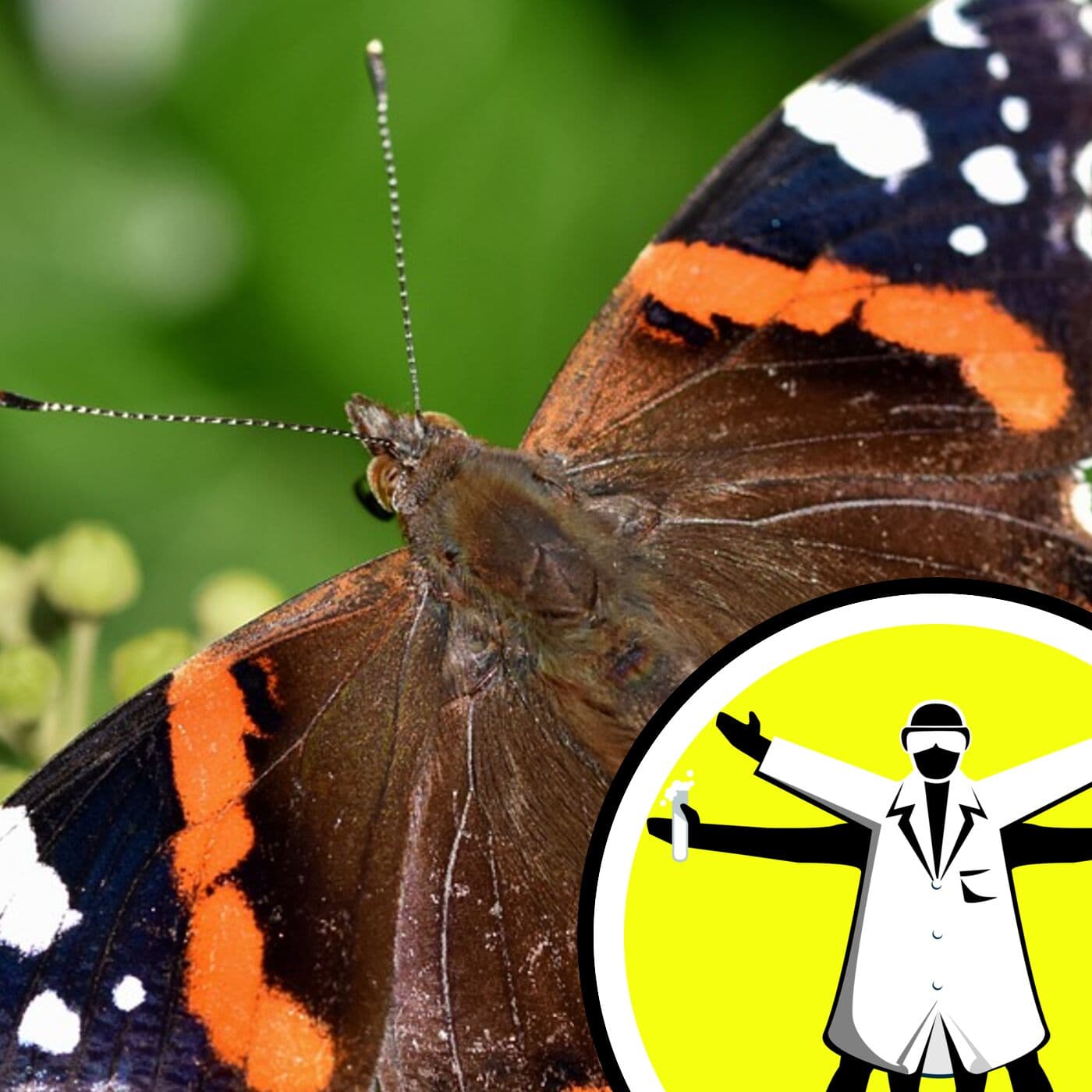
21:44These pheromones they detect, what are they actually used for? So the pheromones is something like a perfume, just something that the caterpillar could be aware of. So once they emerged as a butterfly, they recognised the same pheromone. I'm not too sure what the actual pheromone was. It might have been Chanel No. 5, you never know. So now we've got an adult butterfly. What senses do these adult butterflies use to get around and find food, for example? So that's what the purpose of the antenna are for. So the antenna acts as their nose, basically. It's how they're able to smell out and detect fruits and flowers, as well as some species use it to detect pheromones from a female.
22:23So the males can find a female and they can reproduce. So that's the purpose of the antenna. And then their taste receptors are actually in their feet. So they feed with their proboscis, a big straw-like tongue that they have. And actually they have two special feet that are taste receptors, how they can taste their food or tasty plants that they lay their eggs on. Wildlife Will at the Stratford-upon-Avon Butterfly Farm. Well now we're going to discuss the large blue, which is a rare butterfly. It's found in Europe and it's found in Asia. It needs warm grasslands with wild thyme and a special red ant species to work with.
23:00In the UK we did have it, but it went extinct in 1979 when grazing changes broke its relationship with ants, although it has been reintroduced from Sweden. Its special trick is that as a caterpillar it subverts red ants into adopting it by releasing chemicals and food that ant larvae like. So the ants retrieve it back to their nest and they care for it even though it eats their young. The caterpillar also mimics the sounds that queen ants make to gain higher status in the nest. Matt Hayes studies the large blue at the university of cambridge museum of zoology he's been telling rachel all about it so the large blue butterfly is the first butterfly species i ever studied and the reason i wanted to is because they've got this amazing life cycle where the caterpillars of the butterfly are actually adopted by ants so most caterpillars will be laid on a plant by an adult butterfly and it'll be a specific plant and they'll basically just do a lot of eating that's kind of the job of a caterpillar but with this species with the large blue it doesn't do very much eating at all when it actually then falls off its food plant really quickly in the uk there's one more or less one species of red ant which then actually comes and finds this caterpillar picks it up and takes it back to its nest and then it looks after it as if it's one of its own children and the large blue butterflies caterpillar is then a really bad guest because it eats the real children of the ants eats the ant grubs and it tricks the ants into thinking it's one of its children it grows to be about 20 times the size of the real ant grubs and the ants think that one of their kids is just doing really well so they keep looking after it and then after about nine months the caterpillar pupates and a butterfly emerges out of an ant's nest so it's a pretty cool system and that's what made me interested in them that's really fascinating and i guess a little bit morbid in a way as well yeah tiny bit scary so why would they want to do this in the first place why would these caterpillars want to mimic the signal yeah good question so actually sort of interactions between blue butterflies and ants is really quite common so they belong to a group called the lysinidae and there's a lot of blue butterfly species that have interactions with ants but it's normally not quite so extreme so normally the caterpillars will release some form of like sugary solution the ants can drink that and then protect them so that's a kind of more normal behaviour that you'll see.
25:22But what's thought is that potentially over time, in the large blue butterfly, that behaviour might have been kind of taken to another level, evolved to another extreme. Whereas the caterpillars of the large blue, basically, by natural selection, figured out that if you were adopted by the ants, you get even more protection in their ants' nest, and you get access to all of their offspring as well. So they get a food source and protection from an ants' nest. It's just quite an extreme example. so you're saying that these caterpillars they secrete or release this sugary liquid is that so this is what's attracting the ants or is there a different type of signal that's attracting the ants yeah so the way that they trick the ants it's thought they actually use like a lot of different processes and certainly they do use this little sugary solution right at the start but the main form of mimicry is thought to be chemical based so they use signaling chemicals like pheromones where basically on the on the outer skin of the caterpillar they will have the same signaling chemicals as the ants and the best way i've heard this described is it's it's kind of like an odor so if you imagine that the the caterpillars made themselves smell the same way as the ants in the same way as the ants colony then the ant will come across them think oh you smell like a member of my nest so I'm going to pick you up and take you back with me and that's that's thought to be the main way they integrate which is quite cool.
26:46So how do they produce these phoramones? I mean is there a genetic code for these within the caterpillars? That's a really good question and this is something when I was researching them it's one of the areas that more research needs to be done. So what's cool is that before the caterpillar gets adopted it matches the ants quite well but not amazingly so basically it's thought that a couple of different red ant species which are quite similar at that stage might come across the caterpillar think oh you could be one of us you have a sort of chemical profile a smell that is sort of similar to a couple of different ants it's only once they get adopted and take it back to the nest that the caterpillar starts to mimic them even more so then scientists who have study this have gone okay so there's two options here either the caterpillar is producing more chemicals itself to make it smell like the ants or potentially just by being around the ants and kind of rubbing up against them it's taking some of those smell chemicals from them as well and to be honest it's probably a bit of both i think the caterpillars probably do have some genetic code and can develop signals of their own through that but i reckon they are also actually kind of taking it from the ants once they're in the nest as well.
27:58So it's genetic and environmental then? I think that's it. I think that's still where the research is going. It's kind of those two options and probably a bit of both, yeah. So is it true that the caterpillar can also mimic the sounds that are made by the ant queen? That's it, yeah. So it's thought that to first of all to get into the nest they have this kind of like sugar solution to attract an ant over and make it interested. Then they have this chemical signal which makes them start to think oh you're one of our children will take you back to the nest but then they also make the noise of a queen and so separate research has has looked into the acoustic mimicry because it's not really traditionally being thought that ants rely so much on kind of acoustic and sound signals as much as they do on pheromones and chemical signals but what the research found is that the different casts of ants the different kind of types of ants that nest you've got worker ants soldier ants you've got queen ants they all make slightly different sounds and the the caterpillar of the larger butterfly also makes sounds and they most closely match the queen ant so it's thought that once they've got entry into the nest and they've been accepted the fact that they make the sound of a queen ant actually raises their status in the nest so it's like not only am i you know one of your lost children i'm actually a really important lost child so you should probably look after me more than the others and if you were to unearth the ant nest the the large butterfly caterpillars would get rescued before the real ant grows so it does seem to work it seems to kind of make them more important in the nest brilliantly told cambridge university's matt hayes in conversation with rachel ralph now love them or loathe them wasps are a ubiquitous part of nature but it's often underappreciated quite how many of them there really are scientists speculate there are possibly over 100 ,000 species around the world, ranging from solitary hunters to social colony builders.
29:53But their life cycles usually dictate that they need to be extremely shrewd navigators and very good at pattern recognition to find their way around and track down their prey. In fact, they might even be pioneers of magnetic navigation using iron nanoparticles to guide their flight. Adam Hart is an entomologist with a passion for wasps at the University of Gloucestershire. there's probably more than a hundred thousand species of wasps globally um we are finding more wasps all the time and that might stagger people a little bit because i'm guessing most people think of wasps as being sort of black and yellow things that bother us at picnics and so on but that's really the very small tip of the iceberg in terms of what we're dealing with in diversity both how they look you know morphological diversity but also ecological diversity do they all have the same modus operandi flying around after people's cream teas or do they are they as diverse as their numbers suggest they might be yeah no they they do very very different things actually so the vast majority of wasps are solitary they don't live in big colonies like the ones that that come and bother us at picnics and take our cream teas and so on most of them live on their own many of them are parasitoids so they introduce paralyzing venom essentially into prey which they then use as a sort of living larder for their larvae to develop So that's a very, very common way of wasps making a living.
31:14But of course, we've also got quite a number of different social wasps, and they're the ones that live in big colonies. They have queen. They've got from dozens to thousands of workers, depending on the sort of social structure and the species. So you go right from individual solitary wasps that we barely notice. Some of them are sort of barely the size of fruit flies. some of them even smaller actually all the way through to some really very impressive animals that live in fairly large colonies so that they they really are an incredibly diverse group in any particular axis we choose to look at someone told me once that wasps actually can recognize faces and that they they go after us for that reason because they know we're vulnerable on our faces is that true they're very visual creatures they've got a excellent pair of eyes many of them are very, very visually acute.
32:02I see no reason at all why an organism that's highly evolved for protecting and defending its nest. I mean, with these social wasps, we're talking highly defensive animals with great visual systems. It certainly seems entirely plausible that that might well be the case. And having interfered with a large number of social wasps nests in my time, they certainly seem to know what they're doing. Hornets are quite notorious for doing this. So if you wear a bee suit and you sort of try and gain entry to a hornet's nest, they'll often gather across the visor and you can actually feel the venom being sprayed out onto your face.
32:39So that certainly checks out. And in terms of that extremely well-developed and advanced visual system, how does that work? Mounted on the side of their head, if you like, if we think of them as a sort of an organism we're bolting together. They've got these fabulous sort of large eyes on the side pointing slightly forward, but they're also almost hemispherical in terms of how they sit, which gives them a really big field of view. And if you look at one of their eyes, what you'll see is a sort of hexagonal pattern of elements that make up that compound eye. And each one of those is gathering light and feeding it down through its own nerve into the visual cortex of the animal inside, the brain, which is quite complex, actually, even though it's tiny, you know, the pinhead size, but it's sort of very complex structure in there.
33:23and that's when it's integrated with lots of other things and provides the kind of sensory impetus for much of their activity. Do they see, therefore, if they're looking at me, do they see hundreds of Chrises and build the picture or do they break up the me into lots of little bits of me and then recompile that and recompile that in their brain? Yeah, that's what they're doing. So they're not seeing essentially a thousand different images or however many elements they've got to their eye. They're integrating them together to form a clear image. And if you've ever seen a wasp flying, particularly these social wasps, they're intercepting prey on the wing.
Read the full transcript
34:00You know, they'll take flies out and all sorts of things. Both a very rapid and very acute visual system. They're able to respond very, very swiftly and they're able to nail their prey in the air. So they're incredible aerial predators. That's purely visual. And what colours can they see? Because I know that if you look at a human, I mean, we see a fairly narrow repertoire of all of the different colours that are really out there. What can these animals see? Yeah, so they can see UV. So that's the first thing that's important. They can see into the octavioliate. And famously, of course, bees can also do this.
34:30Bees are very closely related to wasps. And I'm sure lots of people will have seen pictures of flowers, for example, taken under UV that show these kind of nectar guidelines on the petals that sort of bring the bees in. So they can see that. They can also see in blues and greens. So their colour world is kind of shifted compared to ours. we're sort of blue green red trichromats whereas most wasps are sort of uv blue green they don't really have a dedicated red receptor so their visual system is is acute and it does contain color information but that color information is is blue shifted a social insect like a wasp has a central headquarters that's its nest but they're going off on long foraging journeys how on earth do they find their way around is it visual yeah vision is a major part of their navigation and And we can show that actually by messing around with them.
35:18There's a classic experiment that was done in the 1930s. Very simple. It was looking at a type of wasp that's a parasitoid wasp that goes out and hunts bees and then sticks them in a hole in the sand. And that's where its larvae hatch out. And the experimenter put some pine cones around the sort of hole. And you could see this wasp come out, circle around and fly off. And he then moved those pine cones slightly. And sure enough, when the wasps came back, it dived into the relative position within those pine cones where the hole should be rather than where it actually was. So even from the sort of very beginnings of studying animal behavior, wasps have been quite an important part of that.
35:55And we can tell that they're using their vision. So they're doing these orientation flights, learning what the landscape looks like and building up that visual map in order to be able to find their way back. They can also use some celestial information. so the sun and sort of patterns of polarized light in the sky which they can use for direction as well. I was going to say to you what happens when it gets dark. So yeah the simple and kind of trite answer to that is most of these wasps aren't active at night. Some wasps are and they will certainly be using similar sorts of things. It's very rare at night that it's completely dark but most of the sort of wasps that we're used to seeing flying around aren't really moving that much during nighttime hours so they're not really facing that problem.
36:36I did read somewhere though that wasps might do what we think some species like birds and bats do, which is rely on the Earth's magnetic field. They might be magnetically sensitive. Is there any robust evidence for that? Yeah, we've got some great evidence in wasps that they are behaviourally affected by magnetic fields. So we can mess around with them, we can put them in Helmholtz coils, we can do some experiments that show that the magnetic field is being detected by them and that they alter their behaviour as a consequence. we also know in ants and bees that this is a this is a thing that's happening ants bees and wasps are all very closely related what we don't have in wasps quite yet is the exact mechanism that it works by but we can clearly show that they are using the earth's magnetic field which is i guess unsurprising in one sense because it's a fabulous orientation cue that's around us all the time but equally you know because we seemingly can't detect the earth's magnetic field it does seem pretty pretty remarkable to us i think it's one of those things where animals additional sensory sort of capabilities are quite stunning and i think being able to sort of have that in-built compass is a pretty cool thing adam hart so next time you watch a wasp go buzzing by you see a butterfly land on a leaf or you watch a cricket flexing its knees and as we now know exercising its ears too you can marvel at the amazing feats of evolution that have endowed these tiny creatures with the most incredible abilities.
37:59We are back with the latest science news stories from the week on Friday, and we'll touch on how manipulating the microbiome can control food allergies. So don't miss it. Thank you, meanwhile, to everyone who's been supporting the show with your regular and also one-off donations. This really is a massive help to us, and we are truly grateful. Moreover, it does literally keep the show on the road. So if you can help, do please go over to nakedscientist.com forward slash donate. I'm Chris Smith from all of us here at the Naked Scientist team thank you for listening until next time, goodbye
38:51the more you listen to your kids the closer you'll be So we asked kids, what do you want your parents to hear? I feel sometimes that I'm not listened to. I would just want you to listen to me more often and evaluate situations with me and lead me towards success. Listening is a form of love. Find resources to help you support your kids and their emotional well-being at SoundItOutTogether.org. That's SoundItOutTogether.org. Brought to you by the Ad Council and Pivotal.