In short
The Naked Scientists Podcast: Episode Summary
Episode Title
Meningitis in Kent, and Sonic Hedgehogs
Episode Overview In this episode, the Naked Scientists explore various scientific topics, including a meningitis outbreak in Kent, innovative diagnostic tests for schizophrenia, the rise of bowel cancer in younger individuals, and efforts to protect European hedgehogs from traffic fatalities.
---
Key Segments
- Meningitis Outbreak in Kent
- Current Situation:
- An unprecedented meningitis outbreak has occurred in Kent, England, resulting in two deaths (a university student and a sixth form pupil) and more than a dozen reported cases.
- The outbreak is attributed to a strain of the Neisseria meningitidis bacterium known as MenB.
- Transmission and Symptoms:
- MenB typically resides harmlessly in the nose and throat of many individuals but can become virulent under certain conditions, leading to severe illness.
- The disease can cause septicemia and meningitis, with symptoms including fever, headache, neck stiffness, photophobia, and a non-blanching rash.
- Public Health Response:
- Health officials are identifying close contacts of affected individuals to provide preventive antibiotics.
- A vaccination campaign is underway, targeting students and individuals in high-risk groups.
- Vaccination Insights:
- MenB vaccines have been developed over the past 20 years, with two vaccines now available covering about 80% of strains.
- The sudden surge in cases necessitated a reevaluation of vaccination strategies for adolescents.
- Diagnosing Schizophrenia with Biomarkers
- Current Diagnostic Challenges:
- Schizophrenia is diagnosed clinically, lacking a definitive test, leading to variability in treatment responses and diagnosis.
- Research Breakthrough:
- Researchers found two potential biomarkers (SP4 mRNA and heat shock protein 60) that correlate with schizophrenia symptoms and cognitive impairments.
- This study aims to develop diagnostic tests that could differentiate schizophrenia from other disorders.
- Future Directions:
- Further studies are needed to explore the applicability of these biomarkers in younger individuals and the impact of medications on their levels.
- Rising Bowel Cancer Rates in Young People
- Growing Concern:
- Bowel cancer cases among individuals under 50 have doubled since the 1990s, with research focusing on environmental and lifestyle changes.
- Research Methodology:
- Scientists at the Institute of Cancer Research are analyzing old tumor samples stored for nearly a century to identify factors contributing to this rise.
- Attention is given to the role of gut microbiome changes and potential links to specific bacteria like E. coli.
- Implications for Public Health:
- Understanding these changes could lead to targeted screening and prevention strategies for at-risk young adults.
- Protecting European Hedgehogs
- Conservation Challenge:
- European hedgehogs are facing severe population decline due to road traffic, with estimates indicating that one-third of hedgehog deaths are road-related.
- Innovative Solutions:
- Researchers are exploring sound repellents that can deter hedgehogs from roads without disturbing other wildlife.
- It has been discovered that hedgehogs can hear ultrasound frequencies, opening avenues for creating effective sound-based deterrents.
- Future Research Needs:
- Further studies will assess the effectiveness of different sounds and their impacts on hedgehogs and other animals, such as bats.
---
Conclusion This episode of The Naked Scientists Podcast presents a fascinating blend of current scientific challenges and breakthroughs in public health, mental health, cancer research, and wildlife conservation. The discussions highlight the importance of ongoing research and the potential for innovative solutions to pressing issues facing society today.
---
Support the Podcast Listeners are encouraged to support The Naked Scientists by donating and providing feedback, helping to further their mission of disseminating scientific knowledge.
Written by AI. May contain mistakes. Listen to the episode to check what was said.
Chapters
Tap a time to open that second in VOMeningitis Outbreak in Kent
1:06 to 2:20
Discussion on the unprecedented meningitis outbreak and its implications.
“Also how thousands of old tumour samples could help scientists fight rising rates of bowel cancer in young people and a sound way to save the much-loved European hedgehog that's falling victim to road traffic.”
Understanding Meningococcus
2:20 to 4:38
Exploring the Neisseria meningitidis bacterium and its effects.
“Dominic Kelly is a paediatric infectious disease consultant and vaccinologist with the Oxford Vaccine Group.”
Managing the Outbreak
4:38 to 6:31
Strategies to manage and contain the meningitis outbreak.
“Why a particular individual gets disease is still not well understood.”
Vaccination Strategies
6:31 to 9:08
The role of vaccines in combating the meningitis outbreak.
“So could begin to look more closely at the spread and identify a wider group of people who might be at risk.”
Recognizing Symptoms of Meningitis
9:08 to 9:43
Key symptoms of meningitis to watch for in the community.
“So these aren't the mainstay of the immediate response, which is detecting cases, treating them, antibiotics for close contacts.”
Schizophrenia and Biomarkers
9:43 to 14:04
Exploration of schizophrenia diagnosis and the role of biomarkers.
“If you have any of those symptoms, please don't delay, ask for some help.”
Exploring Biomarkers for Schizophrenia
14:04 to 17:26
Learn about the biomarkers being studied to diagnose schizophrenia earlier.
“There's the sp4 mRNA, which I just described.”
Investigating Bowel Cancer Trends
18:20 to 24:16
Discussion on rising bowel cancer rates in young adults and research efforts.
“Music in the programme is sponsored by Epidemic Sound, perfect music for audio and video productions.”
Understanding Hedgehog Decline and Solutions
24:16 to 28:00
The research on hedgehog decline and potential sound repellents to protect them.
“How long do you think it's going to take you to work your way through the samples and therefore when should we be phoning you up next to hear what you've found?”
Understanding Hedgehog Hearing
28:00 to 29:00
Learn about hedgehogs' unique ability to hear high-frequency sounds and its implications.
“The amazing thing is that we discovered that hedgehogs can hear everything between 4 kilohertz and 85 kilohertz.”
Show all 12 chapters
Impacts of Sound Repellers on Wildlife
29:00 to 30:28
Explore the potential effects of sound repellers on hedgehogs and other wildlife.
“We don't want to evict bats from our gardens because I'm imagining that the sound repellers could also be placed on robotic lawnmowers and garden strimmers that may also hurt the hedgehogs.”
Seeking Collaboration for Hedgehog Protection
30:28 to 31:30
Discussing the need for car industry collaboration to protect hedgehogs from roadkill.
“and make them stressed and then they'll still run in front of the car.”
Transcript
Automatic transcript. May contain errors.0:26The Bleacher Report app is your destination for sports.
0:48Hello, welcome to the Naked Scientist podcast, the programme that brings you the biggest breakthroughs and also talks to the major movers and shakers in the worlds of science, technology and medicine. I'm Chris Smith and coming up this week a massive meningitis outbreak in the UK. What's behind it and what's being done to stop it? Also how thousands of old tumour samples could help scientists fight rising rates of bowel cancer in young people and a sound way to save the much-loved European hedgehog that's falling victim to road traffic.
1:27Up first this week, health officials have described a sudden outbreak of meningitis in Kent as unprecedented. It follows the deaths of a university student and also a sixth form pupil in the English county, with more than a dozen other cases reported. At the root of the outbreak is a strain of the Neisseria meningitidis, or Meningococcus bacterium, called MenB. It usually sits harmlessly in the noses and throats of a significant proportion of the population, maybe a quarter of some age groups carry it, and it spreads between individuals through close personal contact. Occasionally though, for reasons we don't understand, it becomes virulent, invasive and deadly, entering the bloodstream to cause septicemia and the tissue layers around the nervous system to cause meningitis.
2:15It's a public health emergency and officials are now racing to identify potential contacts and offer them protective doses of antibiotics. Dominic Kelly is a paediatric infectious disease consultant and vaccinologist with the Oxford Vaccine Group. The meningococcus comes in different types and we give them a letter to differentiate them. A, B, C, W, Y, things like that. The letter refers to a capsule of the bacteria. Historically, back in the 1990s, serogroup C, we call them serogroup C meningococcus, was a big cause of disease. But we had a vaccine for that introduced in the late 1990s, which really has controlled that type of the meningococcus very well.
3:00The types we're left with, the type in the UK that has caused most disease over the subsequent years has been the type B. infants and young children have the highest rates of disease, but there's also been a higher rate in adolescence students over the years. We think that is something to do with transmission rather than perhaps a weakness of immunity in that age group, that in mid-adolescence, early adulthood, people are having many more social contacts and perhaps a more close-knit nature. So their exposure and ability to meet lots of people means that they transmit these organisms more readily.
3:39And that's probably why you have a higher number of cases of disease anyway in that age group. The extraordinary thing though is that if you go and pick people at random from the population in this particular age group, you can find as many in some cases as one in four who are carrying this bacterium in their nose and throat and they don't have meningitis. So why do we have this situation where some people can just have this nasty bug in them and on them and they're completely fine and then the next person gets it and they go down with meningitis? Well, that's a really interesting question. And I guess the first point you make reflects the fact that this organism, for the most part, causes very little trouble to most people and passes from person to person without causing disease.
4:26And the disease is only in a minority of people exposed, probably even in this outbreak where disease rates are much higher. It's only a small number of any of the people who've actually had the organism that get disease. Why a particular individual gets disease is still not well understood. There are genetic factors probably about their immunity. There may be things to do with the dose they get. There are some risk factors such as smoking, which make you a bit more susceptible. But we don't understand especially well why a single individual gets disease when others haven't. But yes, the organism normally exists just as a commensal, almost a colonising organism just passing from person to person and disease is almost an accidental by-product.
5:10How are they managing the outbreak? What's the strategy to protect people in the short term and then stamp this out in the days to weeks following? People who are ill, the priority is to get into hospital, give them antibiotics and deal with their immediate illness. But very rapidly after that, because this organism is spreading from person to person, the public health organisation, the health security agency would be informed of the case from the hospital. And their first priority is to identify close contacts of those individuals. So often in the hospital, we're contacted while we're still managing the case by public health.
5:47And either we're asked to try and compile a list or they will talk to the individual or their families and identify who's been in close contact. And the reason for that is so they can give antibiotics to reduce the chance that their contacts, who may well be carrying the organism, will actually get disease. And what's interesting is it's a disease with a very short incubation. So if you acquire the bacteria, if you're going to get ill, usually it's going to be within a week or so of that initial contact. So there's a real priority on public health identifying contacts quickly and offering them appropriate antibiotics and begin to look at the spread and whether any common themes, common places those people have been to.
6:30And I think the interesting thing in Kent was they identified a nightclub where a lot of them had been to. So could begin to look more closely at the spread and identify a wider group of people who might be at risk. Where do vaccines come in then? Because that is also being spoken about quite a lot. There's also a big campaign to vaccinate thousands of students in the Kent area. And it's also leading to a run on people accessing the vaccine privately in pharmacies and so on across the country, to the extent that some have actually now said they've run out of vaccine. So where does vaccination come in, in the fight against this?
7:09We have vaccines for many of the strains of the meningococcus, but MenB, which is this strain, has been more difficult to develop vaccines. But over the last 20 years, there's been extensive research and development of a vaccine against MenB. So we're in a very fortunate situation at this point in time for the last 10 years where we've actually got two different MenB vaccines that cover around 80 % of the strains. We have an infant programme in the UK offering vaccines to infants. And vaccines haven't been offered to adolescents up till now as routine because the number of cases in adolescence and early adulthood have been low enough that it actually was not felt to be worthwhile to immunise hundreds of thousands of people a year to prevent very, very few cases.
7:56The situation changes when you've got an outbreak like this. There is an increased rate of disease for some time after an initial index case, and there may be ongoing chains of transmission. And so if you've got an outbreak that's continuing on a scale that's likely or could go on for weeks and months, then vaccines come into play. And the strategy for vaccines requires quite a lot of thought on the public health authorities part to identify groups of people who in the weeks and months ahead may be at higher risk because of the communities they're mixing in that have had a higher rate of disease.
8:36And so what I understand in the Kent outbreak is that they are doing a targeted vaccine programme around the groups of people who've been most likely to contain cases of meningococcus. The interesting thing about vaccines, though, is they are, particularly for the MnB vaccine, you probably need two doses for full effect. And you only begin to get real protection two, three, four weeks after the vaccines. So one dose, four weeks later, you have a little bit of effect, but you need a second dose and it'll be two or three weeks afterwards. So these aren't the mainstay of the immediate response, which is detecting cases, treating them, antibiotics for close contacts.
9:16Dominic Kelly with the Oxford Vaccine Group and the current guidance is that the risk elsewhere in the country hasn't changed so there are no grounds to seek vaccination for people who are farther afield but everyone should nevertheless remain vigilant for signs and symptoms which include a flu-like illness, fever, headache, neck stiffness, photophobia that's pain caused by exposure to bright lights and a purple rash that doesn't disappear when you press on it with a glass If you have any of those symptoms, please don't delay, ask for some help. We're going to discuss schizophrenia now, which is a chronic mental health condition characterised by hallucinations, delusions and disorganised thinking.
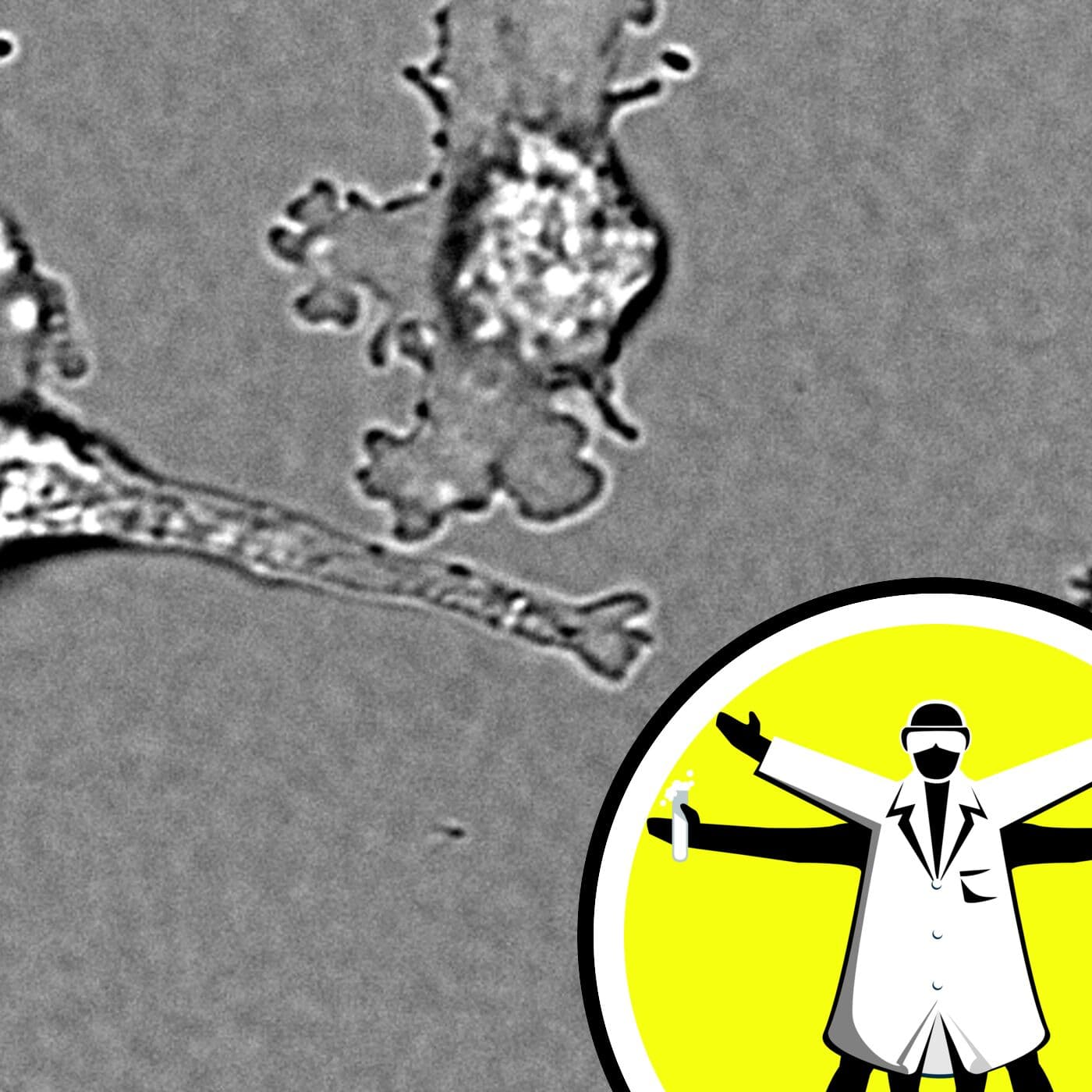
9:57There's currently no diagnostic test for schizophrenia though, so the diagnosis is usually made clinically. And this can limit our ability to tell apart different disease processes that might have different prognoses and also different treatment responses. But now, US researchers have identified two potential biomarkers which do appear to signal the condition. Bonnie Feierstein conducted the study. So many years ago, we started researching schizophrenia, but we were looking at things like how chemicals in cells change when you have schizophrenia. So we used what we call post-mortem or after-death brain samples from patients.
10:39and we found that some of these molecules in cells were elevated. So then we asked the question, well, what if we looked at living human beings who are experiencing schizophrenia and could we somehow detect the increases or even other types of changes to these molecules or chemicals in cells without having to wait until unfortunately they pass? We want to be able to figure out, can we help diagnose early on? Can we help figure out what medications will help them? And that's what led to this study. Do we have a problem doing that at the moment then, diagnosing people who actively have schizophrenia?
11:18Yes, we do. So there are different ways that or different domains that psychiatrists will use to diagnose somebody with schizophrenia. And in these domains, they look for things like hallucinations or hearing voices or not having interest in the things that people used to have interest in or having memory problems. But the problem is that there are twofold. One is that it's difficult and more subjective to say that someone has schizophrenia. In fact, schizophrenia is on a spectrum. There are schizoaffective disorders, meaning that they're similar to schizophrenia, but not quite schizophrenia. The second problem is often medications that are prescribed do not work and it's trial and error.
12:05And the third and biggest issue is that, let's say, Chris, you and I unfortunately both have schizophrenia. The reasons for us having schizophrenia could be different. So there is a component that is genetic, and there's a component that's also environmental, but the genetic component, it's not like when you have a certain disease where you have a problem with one gene and that's it, you're diagnosed, you develop that disease. In fact, it's a lot more subtle. So we can have different genes that confer what we call a risk for schizophrenia, and the basis, the biological basis for your schizophrenia could be different than mine.
12:39So they might converge and have different what we call pathways in the cells, different ways of signaling that might be very similar between you and me. But the reason for it could be a little bit different. And what you think you have some markers that can be used to diagnose people who have schizophrenia? Yes. So what we did is we grouped different ages, races, and both sexes. And then we looked for these biomarkers or these chemicals or markers or molecules in cheek cells that were elevated in patients with schizophrenia versus a population of control patients without schizophrenia who are age, race, and gender matched.
13:22How many of these markers are there? Well, we focused on two of them. So right now we have two that we were able to confirm are indeed increased in patients with schizophrenia and correlate with symptoms and also with learning and memory issues. So for example, if you look at patients with schizophrenia and they have an elevated level of something called SP4, that's just the name of the chemical, and it's mRNA, which tells the cell to make that chemical, for example, we see that the more that a patient with schizophrenia has, the worse that they do on learning and memory tasks and the worse their symptoms of schizophrenia are.
14:05So there are two of these. There's the sp4 mRNA, which I just described. And then there's something called heat shock protein 60, which is a molecular chemical in the cell that helps and acts as a chaperone for other chemicals and takes them throughout the cell and puts them where they should be or helps them degrade and go away. And so the more of this also marker, we see that patients with schizophrenia do worse and they have worse symptoms. one of the interesting but also frustrating things about diagnosing schizophrenia it's one of those disorders that comes on a bit later in life once people get into their teenage or late teenage early 20s and then again there's a peak later in life as well isn't there do you see your markers correlating with the behavior changing or are your markers always positive and therefore they could help us to spot people early so that is an excellent excellent question.
15:03We do not know. So this was considered a very large pilot study, although it's not a large study overall. We had 27 patients who were already diagnosed with schizophrenia. And what we'd like to do is now extend this for either patients who are showing signs or looking at just patients who are of adolescence or late teen age, which is probably easier to do in adult patients. So we would say 18 to early 20s and be able to screen and see if people develop schizophrenia. The other question we have is, do medications alter the amount of these chemicals, these biomarkers or markers in the cell? We would hypothesize that perhaps if there is a medication that helps somebody with their symptoms or what they're learning in memory, that somehow that would decrease these markers.
15:54But these are things that we have to look at going beyond this initial study. And how sensitive and specific are these markers just for schizophrenia? Because when we look at a range of other things like the genetic risk for affective disorders like depression, for example, there's a huge overlap in risk factors, environmental risk factors, family risk factors, genetic risk factors. Have you got discrete markers here or do you think that the lines are going to get blurred and so you're going to end up diagnosing some depressed people with schizophrenia by accident? So I think part of it is that we need a combination of these biomarkers.
16:29It's not a single biomarker. It might not even be the two we found. It might be five or ten. I think that there are going to be overlapping biomarkers because a lot of these neuro, we call neurocognitive disorders. So disorders where you have changes to personality or changes to learning and memory. There's a lot of overlap. And so the question is, how do you diagnose one versus the other? It might be that we have to combine with symptomology. but it's an excellent question and I think that one of the control groups for the next study would be patients with bipolar disorder for example or patients with depression what are the differences between the patients with schizophrenia versus one of these other disorders and that will help us narrow down again my guess is that it's going to be more than two markers that will allow us to distinguish between schizophrenia and one of these other disorders but do I think it's 10 ,000?
17:20No, I do not. I think that it's going to be manageable. We just need to extend this study. Really interesting. That was Bonnie Feierstein. She's based at the University of Kentucky. The study was recently published in Science Advances.
17:49That's why I stay locked in with the Bleacher Report app. For me, it's about staying connected to my sports. I can follow the teams I care about, get real-time scores, breaking news, and highlights all in one place. Download the Bleacher Report app today so you never miss a moment.
18:19and empower your company at spitfire.co.uk. Music in the programme is sponsored by Epidemic Sound, perfect music for audio and video productions. This is the Naked Scientist podcast with me, Chris Smith. Still to come, how researchers are trying to keep much-loved European hedgehogs safe from road traffic. But first, we're in London, where researchers say that thousands of tumour samples which have been stored in a hospital for over seven decades could help us to understand why bowel cancer cases are on the up among young people under 50. The scientists at the Institute of Cancer Research are examining these samples to determine what is causing the current uptick and how we might be able to tackle it in future.
19:06I've been speaking with the ICR's Trevor Graham. The number of cases of bowel cancer in young people that's adults under the age of 50 and often these people are in their 20s or 30s is rising rapidly. We don't know why this is the case and if we're going to prevent this rise in bowel cancer in young adults we need to know what the cause is. When did we first spot this was happening? The data is really clear looking back to about the 90s you can start to see the increase in the data and I think one of the numbers which I find really striking is the number of cases of bowel cancer in adults under the age of 50 has doubled since the 90s.
19:42So in the data we have today, it's extremely clear this rise is going on. And what's the study you have in mind to try and get underneath this? We know that something has changed in our environment or the way that we live our lives that's causing this increase. I mean, it can't be human genetics, because that doesn't change over a few decades. You know, that's something that changes very, very slowly through generations. So there's something out there or something in the way that we live our lives, which has changed. and we want to figure out what that is. Our plan is we found this incredible archive of bowel cancer samples that's existed in a London hospital and been kept in a dusty basement room for many decades.
20:22They've been stored there, we think, for almost 100 years now. And by looking in these old samples from cancers, say, collected from people who had surgery, say, in the 1950s and the 1960s, and comparing those to cancers from people who've had surgery in the present day, we can start to interrogate them and look at what's changed through the decades. We can do histopathology, which means looking at the cells under the microscope and the structure of the cells is really well preserved. But we can also get DNA out and look at what's going on in the genome of the cancer cells. Well, that was what I wanted to ask, because is it the same disease?
20:58Although we're seeing more diagnosis of bowel cancer in younger adults now, is that the same disease that was knocking around 50, 60 years ago? or is there something else that's different? And therefore, by comparing these older specimens, are we literally doing an apples-with-apples comparison or has something else changed? Absolutely, something has changed. There are lots of hypotheses out there about what's driving this increase in bowel cancer in adults under the age of 50. These range from changes in our diet to perhaps the amount of exercise we do. Some people think it could be something to do with microplastics.
21:36There's even ideas it could be something to do with air pollution. There's a whole host of things that it could be. One of the leading ideas where I think the evidence is best is that there's a change in the bugs that live in our bowels, the gut microbiome. And there's a particular kind of bug that's more common in people's bowels today and we think was rare in the past, although we're not entirely sure, which is a type of E. coli. And this particular type of E. coli is known to damage the lining of the bowel. And that damage we think might be the driver of bowel cancer in young adults. And in the specimens you have, can you get a cross-section of the microbes that that person would have had in their bowel when that specimen was collected?
22:20So you get both the microbiome as well as the person's genome. Can you see that? That's correct. So we can see both the microbiome and the genome. But actually where we're going to look is not directly at the microbiome. we're just going to try and look for the damage that the bugs have done if they are indeed there. So the kind of damage that the bugs do is to mutate the DNA of their cells and make up the lining of the bowels. That means to change the genetic code. And once those changes have happened, they're fixed, they're there, and the DNA, of course, is copied and passed on each time the cells renew in the bowel and produce the offspring cells to renew the bowels.
23:00so if the bugs do damage at some point in life we can see that damage later and because we think the damage causes the cancers to grow in the first place it's changing the DNA of the of the cells in the lining of the bowel that makes the cancers grow we can look in the cancer and ask are the mutations we see in the cancer are they the ones that are likely to have been caused by the bugs themselves if you do get a hit and it does look like that is the case that there is evidence that something has shifted in the microbiome of today compared with yesteryear and that's what's driving the damage to the intestine and that's what's causing the cancers.
23:41What does that tell us about what we need to do to address the problem? Then that tells us we need to do something about the bugs. So the kind of things we might be able to do are to have a test where we can check young adults, you know, possibly even children to see if they have evidence of this damage from the bad bugs. And then if people did have the evidence, we might think about screening them later in their life to see if bowel cancers are developing. So we could have screening just for the people we think are particularly at risk of early onset bowel cancer. Another thing to say is that our microbiome is shaped by the way we live our life, particularly by our diet and the amount of exercise we do is shaped by many of the factors in our lives and so it may be that we can find some intervention you know a dietary supplement or something which promotes some bugs in our bowel and and gets rid of the the bad ones so we might be able to change the microbiome to prevent the bad bugs getting a hold in the first place.
24:40How long do you think it's going to take you to work your way through the samples and therefore when should we be phoning you up next to hear what you've found? Well, research is an open-ended thing, so it's very difficult to be exactly precise about the timescale here. But I think within a few years' time, we should have been able to look at the genomes of hundreds of cases collected over the many decades leading to today. We're going to focus starting in the 1950s, when the NHS was created, and when lots of samples started to be stored in the archive there, and take samples from the 50s, 60s, 70s, 80s, so on, up until the present day and look across time and I think it would take us a few years to do that well so yeah come back in a couple of years and hopefully we'll know what's going on.
25:27And I shall put that date in my diary to call Trevor back at the Institute of Cancer Research in London and find out what he has found. European hedgehogs are much loved but they've been in grave decline lately largely because of road traffic which is leading to a third of deaths but new research has now demonstrated that these animals can hear very high frequency ultrasound, which raises hopes that in-car sound repellents might help to keep them away from roads and being run over in the first place. Oxford University's Sophie Lund-Rasmussen is dubbed Dr Hedgehog, and she has the story. So the European hedgehog is declining all over Europe, and in the UK alone it's estimated that three out of four hedgehogs have disappeared from the rural areas since the turn of the century.
26:17So it's a very worrying and massive decline. The decline is caused by a multitude of factors, but the most important one is traffic. It's estimated that one out of three hedgehogs are being run over by cars every year. So this was the problem I set out to try and solve to save the hedgehogs. And how are you going about it? What's the solution apart from banning cars which is impractical? Yes so I couldn't ban cars I wouldn't be very successful with that so I decided I wanted to look into the possibility of creating sound repellers for cars to actually avoid having the hedgehogs avoid dipping out in front of the cars.
26:59For that I needed to understand what hedgehogs can hear so we could actually target the sound repellers at hedgehogs. Ah right so what as the cars come along they're making some kind of sound that the hedgehogs can hear and that warns them but cars make sounds anyway so will this work? Well we don't know that yet but we needed to understand how to really target these potential sound repellers at hedgehogs and we also need to investigate which sounds actually scare the hedgehogs. So it wouldn't make sense to just have the car emit any sound. So this is something we have to look into in the next step of the research.
27:38What sort of sound are you contemplating using then? Well, I really don't know that yet, but I know, for example, that the hedgehogs hate the sound of juggling keys, for example, and also velcro. But perhaps we could also use a distress call from a hedgehog to warn off the others and have the sound repellers play that. Would this not be extremely unpopular with people? The amazing thing is that we discovered that hedgehogs can hear everything between 4 kilohertz and 85 kilohertz. Humans can hear up to 20 kilohertz and everything above that is considered ultrasound. Our dogs can hear up to 45 kilohertz.
Read the full transcript
28:22Our cats up to 65 kilohertz. And this means that because the hedgehog can hear such high frequency ultrasound, we can actually target sound repellers that wouldn't bother us or our pets that we wouldn't be able to hear. They might hit bats though, mightn't they? Because bats use same sort of sound regimes. Yes, so bats and mice and rats could be affected. And this is something really important we have to look into in the future to make sure that the sound repellers wouldn't have any harmful effects to hedgehogs, but also to bats. We don't want to evict bats from our gardens because I'm imagining that the sound repellers could also be placed on robotic lawnmowers and garden strimmers that may also hurt the hedgehogs.
29:12So we need to look into any potential negative effects of these sound repellers as well. Why do hedgehogs hear these very high sound regimes? What purpose does it serve for them? I mean, it was a surprise to me to find that they actually heard such high frequency ultrasound and they heard best around 40 kilohertz. And this is really interesting because I've often wondered why hedgehogs don't have that many sounds. They have like a whistling sound when the hoglets, the juvenile hedgehogs, are calling for their mothers. And they have a hissing sound like when they tell each other to go away. And then they have a very high scream when they're in worrying distress.
29:59And this is, of course, an awful sound. But other than that, they don't communicate a lot verbally, or at least it seems so to us. but since they hear best in ultrasound they may also be communicating in ultrasound and we just can't hear it. Do the hedgehogs react in the way you would hope as in if we had cars or vehicles going along the road or lawnmowers or strimmers producing these sounds does it deter the hedgehogs from coming near would it make them run away because what we don't want is just to scare them and make them stressed and then they'll still run in front of the car. So this is the next step of the research and I'm really hoping to catch the attention of the car industry here and have them reach out finance the research and collaborate with me so that we can help each other save the hedgehogs by creating efficient and unharmful sound repellers for hedgehogs.
30:54And have they made positive noises about that? Not yet but we'll see what happens. I'm really hoping to hear from them because to me it's a no-brainer to have them support this research as it is their products that are killing most hedgehogs a year and and if we want to stop this decline of the hedgehogs if we want the hedgehogs to be in the wild for future generations to experience then we need to stop this decline and the most efficient way would be to reduce the amount of road-killed hedgehogs every year. So if you're listening and you think you can help out then do get in touch with Sophie Lund Rasmussen.
31:35She's at the University of Oxford and she just published that work in biology letters. That's it for today. Do tune in on Tuesday though when we're going to be exploring the race to return to the moon and what either the US or China are going to need to sustain the mission regardless of who gets there first. Meanwhile thanks to all of you who are supporting our program with your donations we really appreciate this we read all your messages and i do write back to everyone personally to say thank you but here publicly thank you to all of you this really helps and we're really grateful and if you're enjoying the program and you would like to get behind us and show us your support we would love that please go to nakedscientist.com forward slash donate we'd also like to ask you if you are getting your podcasts in places like apple or spotify do please leave us a review and send us some thoughts comments and feedback we really appreciate hearing from you i'm chris smith thanks for listening and from all of us here at the naked scientist team until next time goodbye
32:53The Bleacher Report app is your destination for sports. Right now, the NBA is heating up, March Madness is here, and MLB is almost back. Every day there's a new headline, a new highlight, a new moment you've got to see for yourself. That's why I stay locked in with the Bleacher Report app. For me, it's about staying connected to my sports. I can follow the teams I care about, get real-time scores, breaking news, and highlights all in one place. Download the Bleacher Report app today so you never miss a moment.