
In short
Episode topic: “Nature frozen in time” explores how permafrost, ice, and glaciers preserve biological material (DNA, RNA, seeds, microbes) and what scientists are trying to revive or learn from it.
Guests and backgrounds
Ben Lamb (Colossal Laboratories and Biosciences, Boston) works on de-extinction/genome engineering. Jen Bromley (Churchill College, Cambridge) studies plant science and seed viability. Arwin Edwards (University of Aberystwyth) studies microbes in glacial ice, using fieldwork and lab DNA sequencing.
Key claims
Woolly mammoth remains can preserve recoverable DNA/RNA; mammoth genes can be engineered into Asian elephant DNA for cloning/assisted reproduction. Some plant seeds remain viable for tens of thousands of years; tissue culture can regenerate plants from ancient seeds. Glacier ice contains vast microbial diversity; “genome recycling” may transfer ancient genes, but evidence for human pathogens is limited.
Notable examples
“Yuka” woolly mammoth (40,000 years). 30,000-year-old Siberian campion seeds revived via cell culture. Svalbard Global Seed Vault. Ice-core studies on Svalbard; bacteriophages outnumber bacteria (40–50:1).
Written by AI. May contain mistakes. Listen to the episode to check what was said.
Chapters
Tap a time to open that second in VOLife Preserved in Ice
1:00 to 2:26
Exploration of how icy environments preserve biological materials from the past.
“So this week we're going to look at what's sitting in nature's deep freeze and some amazing stories of what we can actually bring back to life, in some cases thousands of years later.”
The Mammoth Resurrection Project
2:26 to 4:25
Discussion on Colossal Laboratories' efforts to resurrect woolly mammoths using genetic engineering.
“So mammoths appeared a little over a million years ago in the evolutionary tree.”
Understanding Mammoth Genetics
4:25 to 7:20
Insights into the genetic similarities between mammoths and elephants and the challenges in cloning.
“Try to de-extinctify, resurrect these animals?”
Techniques of Genetic Engineering
7:20 to 10:30
Overview of the methodology behind cloning and genetic editing for resurrecting mammoths.
“And so we focus on the parts of the genome of those 104 mammoth genomes across that 1.3 million years.”
Innovations in Conservation Science
10:30 to 11:15
Discussion on the implications of cloning technology for other endangered species.
“And we're starting that process of trials with non-reproductive viable females.”
Plants in Permafrost: Surprising Survivors
12:12 to 14:02
Exploring how certain plants survive in permafrost and the potential for revival.
“Coming up, we'll examine bacteria and their remarkable ability to survive inside Norway's glaciers.”
The Longevity of Seeds: Nature's Time Capsules
14:02 to 15:01
Explore how seeds can remain viable for thousands of years, including remarkable examples like ancient seeds found in permafrost.
“I mean, she says she has one of them growing in her garden or in her lab.”
Ancient Seeds and Their Revival Techniques
15:01 to 19:04
Delve into the discovery of 30,000-year-old seeds and the innovative techniques used to regenerate them back into viable plants.
“About 2012, a paper came out about the narrow-leaved campion or Silene stenifolia.”
Microbial Life in Glacial Ice: Uncovering Frozen Ecosystems
19:04 to 22:25
Learn about the microorganisms trapped in glacial ice and their potential implications for climate change and genetic material exchange.
“Right now I'm in Nielersund on Svalbard, which is an archipelago of islands.”
Understanding Microbial Survivability in Extreme Conditions
22:25 to 26:26
Examine the ways different microbes survive in glacial conditions and the unique characteristics that define their existence.
“melt them very gently, and you can hear the kind of tinkling and fizzing of the gases that are trapped in the ice for thousands of years coming out, you know, when you've got a room full of melting ice cores.”
Show all 12 chapters
Viruses in Glaciers: The Hidden Threats
26:26 to 28:00
Discuss the presence of viruses in glacial environments and their implications for health and environmental science.
“So in the general environment, you might find 10 viruses for every bacterium.”
Exploring the Natural Archive in Ice
28:00 to 28:48
Discover the findings about viruses preserved in ice and their inactivation.
“And the researchers looking in the 1990s had much the same kind of technology that we use today for detecting these RNA viruses.”
Transcript
Automatic transcript. May contain errors.0:00The semi-annual warehouse clearance event is on at Mattress Warehouse. Save up to$1 ,000 warehouse-wide. With our lifetime price guarantee and 100 % comfort guarantee, why shop anywhere else? Limited time clearance savings only at Mattress Warehouse. Visit mattresswarehouse.com.
0:34Hello, welcome to the Naked Scientist podcast. This is the show that brings you the biggest breakthroughs and also talks to the major movers and shakers in the worlds of science, technology and medicine. I'm Chris Smith and this week we're looking at the elements of life frozen deep in time.
0:59across our planet natural archives preserve the biological footprints of species long gone from woolly mammoths at the macro scale through plants and seeds to dormant bacteria and viruses at the micro end of the spectrum and one environment that safeguards some of this material in the best condition of all is the cold, in other words, in ice. So this week we're going to look at what's sitting in nature's deep freeze and some amazing stories of what we can actually bring back to life, in some cases thousands of years later. Let's begin with the largest. In 2010, tusk hunters in the Arctic Circle discovered the perfectly intact body of a young woolly mammoth that had been preserved in the permafrost.
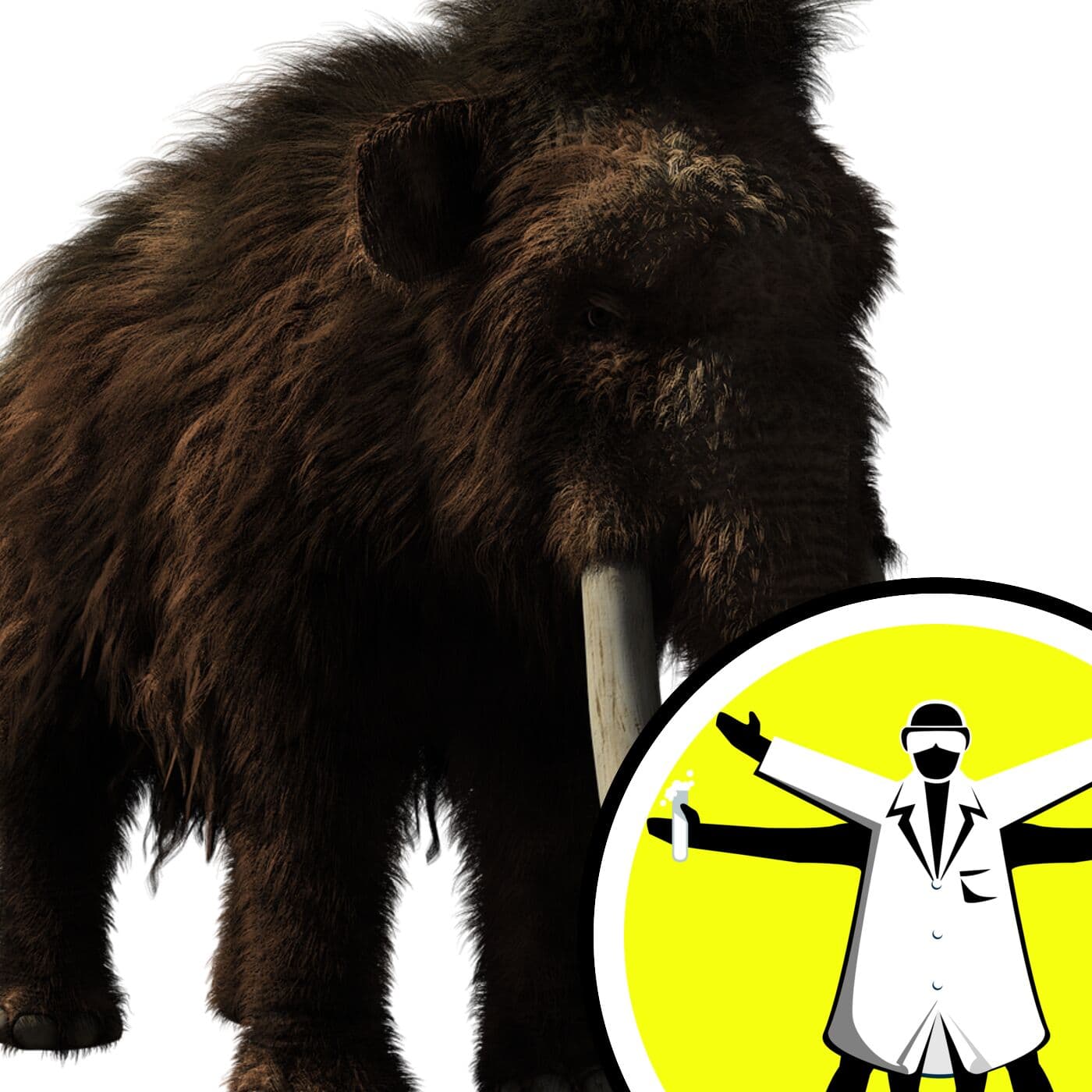
1:44They called it Yuka, after the nearby village of Yukagir, where it was found. The trunk, the fur and even the brain are all beautifully preserved and so too is its biochemistry. Because DNA and even traces of notoriously fragile RNA molecules, the recipes for the proteins being made in the animal's cells, can still be recovered from the 40 ,000-year-old tissue. So the tantalising question is, Could the genetic information inside specimens like this be used to bring them back from extinction? Ben Lam at Colossal Laboratories and Biosciences in Boston is aiming to do just that. Armed with the genetic codes of a host of mammoths like Yuka, they've identified the key differences that set them apart from their close elephant relatives and they're now in the process of engineering those genetic changes back into elephant DNA so they can ultimately use cloning techniques to bring these animals back to life.
2:45So mammoths appeared a little over a million years ago in the evolutionary tree. They went extinct about 4 ,000 years ago. So what's crazy, most people don't realize this, is that mammoths were alive at the same time that the Great Pyramids of Giza were standing, which is amazing, right, when you think about that in perspective. They were a cold-adapted elephant lineage, so they were pachyderms. They lived mostly in the Mammoth Steppe ecosystem, but had distribution and migratory patterns. So think of like northern Siberia, Alaska, Russia, Canada. But then they came all the way down even into the central parts of America because they traverse very wide different places.
3:26They were herbivores, so they, you know, mostly grasses and trees and shrubs. And they were absolutely critical to the ecosystem with dispersing seeds and defecation across and helping make that ecosystem really flourish at the time. A big African elephant weighs as much as a bus. Were mammoths bigger? They were about the size of African elephants today. A little bit bigger than Asian elephants, but somewhere between Asian elephants and African elephants. Sometimes people think they were much, much larger, but they weren't. And where did they go? Why are they no longer with us? So they went extinct for many reasons, right?
4:02Changing climates, the introduction of anthropologic effects from early man. You can almost track on every single continent, the introduction of early man and the decline of megafauna. There were some cataclysmic events that occurred, you know, in the late stages of the Ice Age that we think also probably had some role in their demise. And then the last ones actually died, most likely a sad story due to inbreeding on Wrangell Island, as well as loss of water because they were on an isolated island. It is a little bit of a tragic story, but if you look at their migratory patterns and when they started to go extinct in the last part of their lineage, most of them were driven further and further north into isolated island pockets.
4:49Your plan is to what? Try to de-extinctify, resurrect these animals? Or is it to extract information that we still have about them and just learn about them? No, it's to bring them back, you know, just like we did with our dire wolves and we're working on other species like the dodo and whatnot. We want to identify the core genes that really made a mammoth a mammoth and bring those back and engineer them into their closest living relative being the Asian elephant, which is our genetic donor. And actually have mammoths walking around the planet again that have all of the core phenotypes that made mammoths unique and uniquely suited for their ecosystem.
5:26And what have we got as our starting material? What have we got to work with in pursuit of this? So we actually have frozen samples and materials from mammoths that have passed away that died in the permafrost, that got buried and frozen over time. And what Colossal has been able to do is take about 104 mammoth samples from these frozen remains that go across 1.3 million years. So we've got 104 samples from different unique mammoths that lived and existed over a million plus years of time. What's the condition of the material? If you had some of my tissue, you could easily read the genome because the DNA would hopefully be all intact and very readable.
6:09What's the state of these frozen samples? Ancient DNA and DNA as a whole degrades very, very quickly. Optimal conditions for storing them are cold, dry, dark places, right? And so that's one of the things that was great about the mammoths is that they died in cold, dry places. So they got well preserved. But even their DNA is massively fragmented. So we actually have to spend a lot of time and use artificial intelligence to do what's called ancestral state reconstruction models. So we actually have to use AI to actually rebuild the genomes and compare it to other known elephant genomes, some of which we've also created.
6:47And that's why you need so much DNA over such a long period of time so that you can build a synthetic genome from all of these individual genomes. There are about three billion letters in the human genome. There's probably going to be something similar, I'd guess, in running a mammoth. But I couldn't, with the best will in the world, make a human tomorrow just from what we know from the Human Genome Project. So how can you turn that genetic map, that DNA sequence, back into a living, breathing, walking woolly mammoth? Well, Asian elephants are about 99.7 % the same genetically in terms of related to a mammoth.
7:26And so we focus on the parts of the genome of those 104 mammoth genomes across that 1.3 million years. And they actually stayed the same over a vast amount of time. And those are the genes that gave rise to the core physical attributes that made them woolly with small ears and additional fat layers so that they could survive some of the coldest temperatures during the Pleistocene. And so we really spent a lot of time identifying those genes and then engineering those genes on to the Asian elephant platform because all the other stuff's roughly the same. Right, so by comparing what the elephant that we have today has and what the mammoth does that's different, you can then say, well, I'll put the different bits and superimpose those in the elephant and replace the bits in the elephant.
8:14So we should end up with a mammoth genome, but that still doesn't get us a real life mammoth, does it? So what's involved in turning that genome into a living, breathing mammoth? Most people have heard of the project from the 1990s where they actually cloned a sheep named Dolly. That process is called somatic cell nuclear transfer. And that's where we take a somatic cell. We look at the nucleus. We take the nucleus out of the somatic cell, put it in that of an egg cell. We stimulate that. That basically creates an embryo that can be implanted into a surrogate. We know this works with mice. We know it works with Dolly the sheep.
8:53We've had Ian Wilmot, now sadly not with us, who cloned Dolly the sheep on this show. But it gets harder and harder the more complicated the species is. Has anyone ever cloned an elephant? We will be the first to ever clone an elephant. Only about 18 species have been cloned. And that's not a function of technical depth. That's a function of focus and funding. So how far along that pathway are you? Have you edited all the mammoth changes onto the elephant sequence yet? Or is this a work in progress? We are in the editing process, right? And so obviously, in addition to critting our woolly mice last year, which were a testament to the technologies in platform, you know, we've edited over 25 different genes into that of the Asian elephant.
9:39So that's multiple edits in the actual genomes that we're going to be using from our genetic donor. So we've already done that process. We've decided that originally there was about 65 targets. Those are not genes, as our individual edits in those genomes. We've now surpassed that. It'll be probably more like 85 to 90 edits in our first mammoth. Now, the final step in doing this is going to be to take that egg that's ready to go, the elephant egg cell with the edited mammoth DNA in it, and put that back into an elephant as a surrogate. Does IVF like that work in an elephant? So I don't know if we'll be the first.
10:21We're working with Dr. Thomas Hildebrandt, who is leading the genetic rescue for the northern white rhino, which we're also involved in saving that species. And so a lot of those same technologies that we're co-developing have applications to elephants. And we're starting that process of trials with non-reproductive viable females. So we're working with females that couldn't be pregnant so that we can help them get pregnant. That process is in the process of starting. And so it'll have massive applications to elephant conservation when it works. But just like no one had done the same thing in wolves before us, no one's going to be doing the same thing in some of the other species that we're working on as well.
10:59So the assisted reproductive technologies for non-model species, like some of our genome engineering, is, you know, world breaking science. certainly sounds like it and you're probably after that interview a bit like me surprised at quite how far that research has come already thanks very much to ben lamb at colossal laboratories and biosciences in boston big savings are here during the semi-annual warehouse clearance event save up to 65 take up to one thousand dollars off plus get a free adjustable base with select-sealing mattresses. Hurry, clearance deals won't last. Mattress Warehouse.
11:43The Naked Scientist podcast is produced in association with Spitfire. Cost-effective voice, internet, and IP engineering services for UK businesses. Find out how Spitfire can empower your company at spitfire.co.uk.
12:01Music in the program is sponsored by Epidemic Sound. Perfect music for audio and video productions. This is the Naked Scientist podcast with me, Chris Smith, and today we're opening nature's freezer to find out what is lurking in the permafrost. Coming up, we'll examine bacteria and their remarkable ability to survive inside Norway's glaciers. But first, to plants. These too sometimes turn up trapped in permafrost, either as seeds or just plant tissue, and scientists have managed to bring them back to life too. One celebrated example is a campion found frozen for 40 ,000 years inside a Siberian squirrel burrow.
12:41And seeds recovered from archaeological digs going back millennia have also been successfully germinated. Jen Bromley is a researcher in plant sciences at Churchill College, Cambridge. Well, different plants take a different approach to life in the same way that many animals, many microbes take different approaches to life. So every different organism has a different sort of strategy in order to maintain its genetic presence in the environment. So if you think about how organisms, what our end goal is, it's about maintaining genetic presence. And so we reproduce to maintain genetic presence. And some plants will do that quickly.
13:21So you have like annual plants. They literally are one and done in a year. But the next year you'll see their seeds come up again. and that's genetic presence that's being maintained. The other way that some plants do persist is that they set seeds but then those seeds don't immediately come up. They're like a time capsule waiting to burst open and bring the plant back into existence for an ill-defined length of time. We had Sarah Salon on this programme from Israel who famously went to archaeological digs and found seeds including date pips spat out by people in the Middle East 2 ,000, 3 ,000 years ago.
13:59She managed to get those to come back to life. So it's extraordinary. I mean, she says she has one of them growing in her garden or in her lab. But it's extraordinary that these seeds can persist and remain viable for thousands of years. Seeds are like a little pool of dormant genetic material that can persist and it can wait until the conditions are right for it to germinate. and hearing about Sarah's work and knowing that some of these seeds were 2 ,000 to 3 ,000 years old, it gives me a bit of happiness and positivity that the seeds in my seed store, in my shed, which are a few years old, will probably germinate.
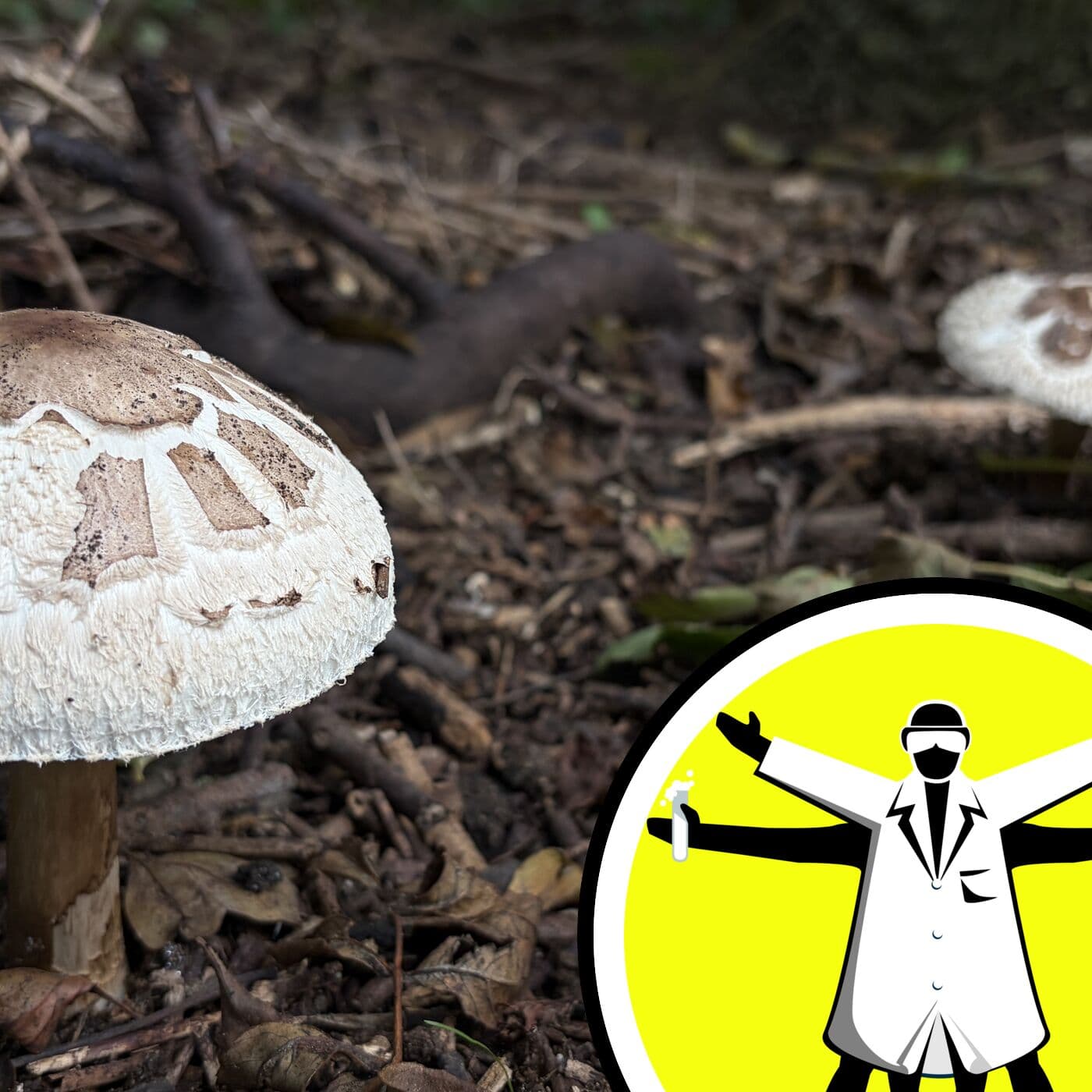
14:38Are there seeds that have gone longer than a few thousand years ago? Because we've heard about mammoths where their DNA has remained intact in ice. Given that seeds are already made to last, are there examples of environments where seeds have been set, found themselves locked away in places like ice, for example, and they have now sort of been in suspended animation since? About 2012, a paper came out about the narrow-leaved campion or Silene stenifolia. And in that, they had found 30 ,000-year-old seeds from the Siberian permafrost. And they were encapsulated within the fruit that squirrels burrowed and left in their stores.
15:19These seeds got locked away in the permafrost and were only found relatively recently now. So they've been there for 30 ,000 years. They worked that out through some radiocarbon dating. And they did try to germinate the seeds, but unfortunately, the seeds growth aborted. And they think that's because the embryo inside the seed. So inside every plant seed is a tiny, tiny little plant embryo. So it's not a single cell. It's got two tiny seed leaves and a radical, which is a sort of a pre-root, which is waiting to escape. And in some of these seeds, you know, the radical did emerge, but then the growth aborted.
15:55And they think that that's because there was some damage to the growing point. And that then sort of resulted in it failing. But they did, however, they did persist. Because these seeds were in fruit and an immature fruit, it meant that the seeds still had some of their placental tissue surrounding them. So if you eat a tomato, some of the jelly-like substance around a tomato seed is essentially placental tissue that supports the seed. And so they were able to, using cell culture techniques, take some of this immature tissue and then put that onto plates and they were able to regenerate that into callus.
16:36And then using various molecular biology techniques, you can take that sort of callus, which is undifferentiated cells, which are just sort of growing into this amorphous blob. and you can use knowledge of how plants differentiate and you can provide some of the plant growth regulators to those callus and you can induce shoots and they did they got a shoot induction and then they could take those shoots and they could then induce roots from them and so you got you got a plant came back from it and then those plants are then taken out of tissue culture and grown on and then they were able to produce viable seeds from them as well they didn't go seed to seed in that sort of traditional way that we think about how we go through a plant generation but they were able to get living material from that plant and able to get it back to seed such that it was going seed to seed.
17:23One of the initiatives that we are working on with a view to conservation and preservation is to have seed banks where we will store seeds so that in the future if something terrible did happen we could bring plants back more easily than the technique you just described? 45 % of flowering plant species are likely to be threatened with extinction and so Millennium Seed Bank is really sort of it's part of that resilience strategy that we're building in order to make sure that should something happen we're able to get these species back. But there's another seed bank in Spitsbergen in Norway called the Svalbard Global Seed Vault And the really cool thing here is that they're using the permafrost in order to buffer the seed stored in that bank.
18:10So the Svalbard Bank stores cultivated plants. So it's more about our crop species, but they store them in vaults buried deep into the permafrost. The idea being that if there's ever any power failures, that the permafrost will maintain the temperature. Sounds like a very sensible initiative, especially with energy costs being what they are at the moment. jen brobley at churchill college cambridge there well finally we are off to svalbard that jen was just referencing over in norway but not because of plants but because trapped in the snow and ice there are microbes both bacteria and viruses and like some of the plants that jen was just telling us about these are great survivors too understanding how they persist there what they're doing and how they might also contribute to phenomena like climate change and even antibiotic resistance is the preserve of the University of Aberystwyth's Arwin Edwards, who's taken fieldwork and Zoom calls, as it turns out, to a whole new level.
19:09Right now I'm in Nielersund on Svalbard, which is an archipelago of islands. If you could imagine, halfway between the North Pole and the top of Norway, that's where I'm sat at the moment. And I'm probably the northernmost user of a videoconferencing app right now. And what are you doing there? leading a research project looking at what's alive in earth's glacial ice so 70 percent of the freshwater on this planet is buried as glacier ice so in greenland antarctica and here in svalbard and we've come here to svalbard because we can act as lots of different types of glaciers to study what's actually living in the ice when you say living are you talking sort of microorganisms that are alive, growing, proliferating, or are you saying things that are in the ice and they may not be active, but they have the potential to be?
20:02Both, really, because for a human or an animal or a plant, you can fairly quickly figure out whether something is alive or dead. For a human, do you have a pulse? Do you have a heart rate? Do you have blood pressure and so on? For a microbe, it's a lot harder to do that because there is no a clear dividing line between alive and dead for a microbe. There's kind of a conveyor belt between life and death. And we only know that microbe is dead when it can no longer recover from being really, really damaged on the pathway to death. So there's kind of a spectrum of alive growing, reproducing through to maybe just able to copy their DNA or avoid damage to their DNA or to express a few genes or to keep some biochemical process just slowly, slowly taking over.
20:44And of course things which are plainly dead uh so it's a spectrum rather than a very binary kind of situation does it actually have to even be alive or have the prospect to be alive for a microbe to be interesting nonetheless because they may nevertheless be almost like a sarcophagus for genetic material and even though something is not going to ever be viable again itself it could spew out its dna and other viable life forms microbes could pick that up and use it couldn't they? Microbes love swapping genes from one organism to another. They do that for several reasons. One is to confuse us as microbiologists and make our lives really difficult.
21:23The other is because it gives them an advantage in rapidly changing environments or very stressful environments. So when thinking about the vast number of microbes that are trapped in the ice, some of them may be dead, but their DNA might survive. And that DNA may come accessible to other organisms then when those microbes are melted out of the ice. And it's a hypothesis that's been thought about for about 20 years in my field, and it's been called the genome recycling hypothesis. So we're interested in what those genes are because they could get transferred into modern-day organisms and change how they respond to the massive changes that are going on right around me right now here in the Arctic.
22:00How are you studying the bugs that are there, viable or not, in the ice that you've got access to? Our work here is in three parts, essentially. So the first part is, like today, we've been out on snowmobiles, travelling over a number of different glaciers, spotting where we need to come back to and collect ice cores. And so we collect ice cores from the surface of the glacier, and then we bring them back to the lab here, and then cleanly, as sterile as possible to avoid contamination, melt them very gently, and you can hear the kind of tinkling and fizzing of the gases that are trapped in the ice for thousands of years coming out, you know, when you've got a room full of melting ice cores.
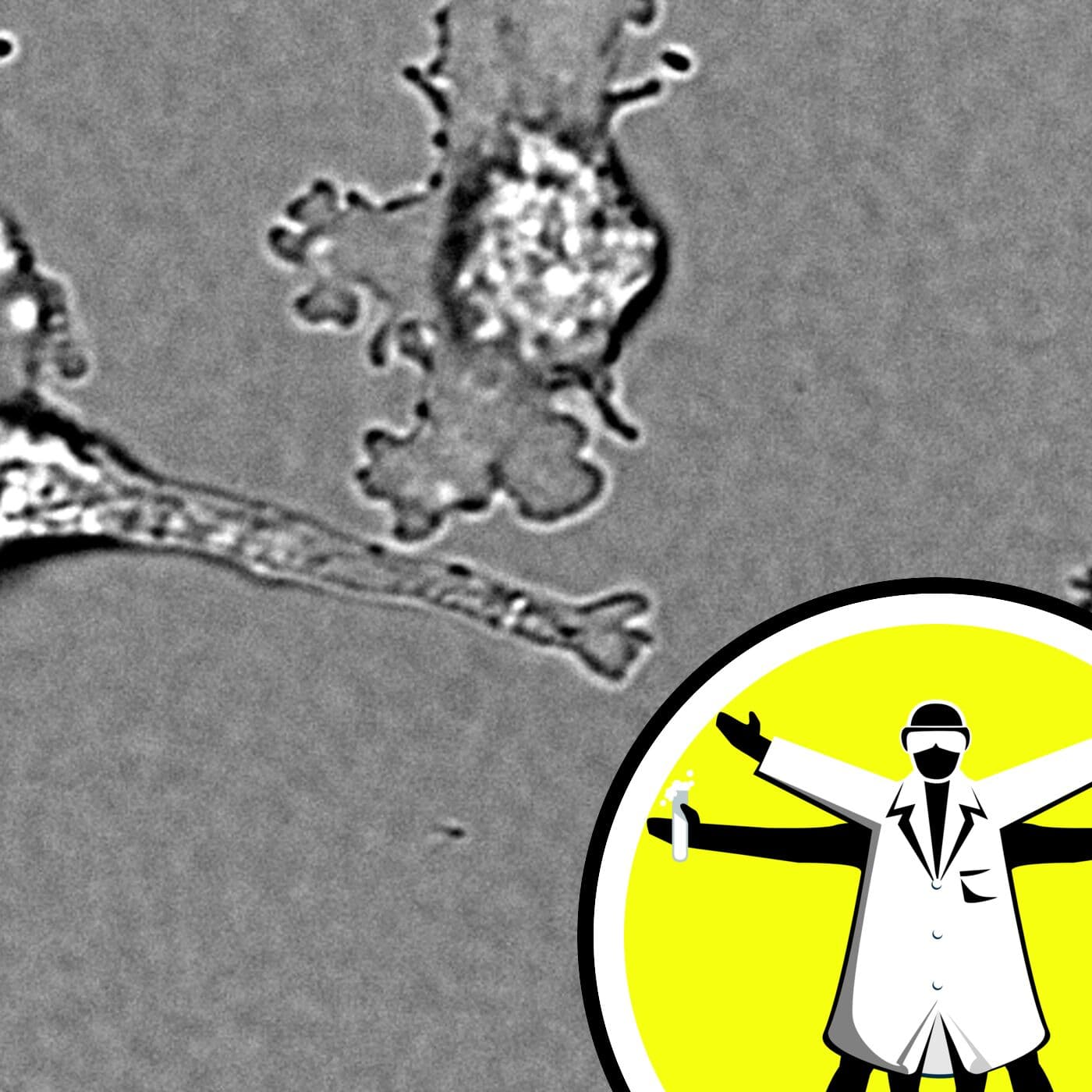
22:37and then filtering the bacteria that are in the ice onto a sterile filter paper. And then we extract the DNA from that and use lots of DNA sequencing then to understand what present in there and what kind of genes do they have. So these microbes might have been inactive and locked in that ice for millennia? Yes. So some of them will have been inactive and just frozen in time, essentially. But what I find really intriguing is the ones that may be alive and may be dividing at very, very slow rates, or not even dividing at all, but just preserving the integrity of their DNA or keeping their sort of biochemical processes just about ticking over.
23:17And, you know, as microbiologists, we're often used to defining success as what's growing the fastest. But in this environment, it might be the things that are growing the slowest that are the most successful. So we're keen to understand a little bit more about those very blurry boundaries between not being alive and being alive. And that's very curious to consider when you're thinking about life at a glacial pace. Literally. How do you know, though, that the microbes you're recovering have always been there and they didn't creep in through tiny cracks and fissures or even get onto the ice when you recovered it?
23:51We know that they haven't crapped in because the conditions that have led to the formation of ice in this environment. The ice itself, believe it or not, there can be temperate or warm ice and there can be cold ice in technical terms. This is cold ice so there's no liquid water flowing around within that ice and there hasn't been any liquid water in contact with it in appreciable amounts for hundreds of thousands of years since it was formed essentially. So we know that things haven't been able to sneak in from the surface very easily. And what sorts of microbes are you finding? What lives in ice?
24:23The amazing thing is that there's thousands and thousands of things that live in ice and on ice as well. So I think of a glacier as a sandwich, essentially. So on the top slice of bread, at the surface of the glacier, there's actually a load of things living and growing there in the summer that are very, very happy when there's 24-hour daylight and melt going on. So you get blooms of algae and you get this weird stuff called cryoconite, which is my life's work. But then at the bed of the glacier, you have perennial darkness and cold and there are things producing methane down there, which is very relevant for climate change.
24:57but then in between those two slices of bread is where you've got the filling and there there's a large volume of things so our best guess is that there's tens of thousands of different species of microbe present in any given glacier and different glaciers will have different mixtures and different kinds of microbes as well so when thinking about 200 ,000 different glaciers across the world that's a lot of different kinds of microbes and a load of different kinds of microbes in each one. Are these all what we would dub environmental organisms, the kinds of things you find out there in the natural world, or are any of them would-be pathogens, the kinds of things that would have come from us or animals and been left behind and now got locked in the ice?
25:38This is a really popular question. To live and survive in a glacier requires a very particular set of skills for a microbe. To live and potentially make a host sick requires a different set of skills and essentially you can do either but you can't really do both so there's no evidence that there's anything particularly pathogenic to be found in any of earth's glaciers we find antibiotic resistance genes quite commonly in some of these environments but that's because antibiotic resistance is a natural phenomenon it's just that we've invented antibiotics and it's selected for the organisms that are good at breaking down antibiotics but in terms of things that can make people sick or animals sick there's there's very little evidence for that and the most fundamental reason there's there's no evidence for it is that i've been doing this for 20 years and i haven't even caught as much of as a sniffle while doing it it's because there's no one else up there with you to give you a sniffle that's why but you make an important point which is sniffles are mainly viral infections are you just focusing on boring bacteria sorry i'm being facetious what about the viruses because a there are viruses that attack bacteria are you seeing any of those or do you plan to look at those and are there other viruses that might be up there too yeah that's a good point so um i handle the boring bacteria because i'm married to a glacier virologist so we've decided that we shouldn't have professional arguments over who works on what but yes to talk about her science a little bit there are loads and loads of viruses that infect bacteria bacteriophages to be found in this environment it's a very very tough environment to be a bacterium not just because it's cold and very stressful for the kind of physical environment, but there are loads of viruses coming after each and every bacterium.
27:18So in the general environment, you might find 10 viruses for every bacterium. On glaciers, you might find 40 or 50 viruses for every bacterium. So they are some of the most challenging things that bacteria have to encounter. For human pathogenic viruses, with the exception of smallpox or polio, you're generally talking about enveloped RNA viruses. So that's viruses that have this lipid layer, this fat layer outside them, and have a genome containing RNA. And the most serious that we've seen has been the 1918 influenza pandemic. And just, I was going to say, just down the road here, but a short 20-minute flight from here is Longybin, which is home to a number of 1918 influenza victims who were exhumed in the 1990s.
Read the full transcript
28:02And the researchers looking in the 1990s had much the same kind of technology that we use today for detecting these RNA viruses. And they found absolutely nothing. And that's simply because those corpses had been pushed up into the surface layer of the soil that thaws and freezes every year. So much like you might destroy viruses in the laboratory by freezing and thawing them repeatedly, that was going on naturally. So if there are deadly viruses down there, chances are they're that particular kind of virus and the physical conditions quickly inactivate them. Absolutely fascinating. Arwin Edwards there from the University of Aberystwyth.
28:39So there we have it, from mammoths through to microbes, the amazing natural archive that is sequestered in ice and waiting to be brought back to life. Talking of waiting, we will see you on Friday when we're going to be back with a look at this week's top science news stories and hopefully you also survive the clock changes okay. I've only turned up to one meeting late so far. But I pose that question because we thought this was an ideal opportunity to look at the science of time, including how Greenwich Mean Time, GMT, came about, and also why time flies when you're having fun, like listening to this programme.
29:14That is going to come up next week. Meanwhile, we'll also have our regular updates on social media, and if you'd like to support the work we do here at The Naked Scientist, we'd be very grateful if you headed over to nakedscientist.com forward slash donate. Your donations really matter, and we really appreciate your kind support. I'm Chris Smith. Thanks for listening. and from all of us here at the Naked Scientist team. Until next time, goodbye.
30:02From Sealy, Serta, Beautyrest, Purple, Casper, and more. With 0 % interest financing and free next day delivery and setup, Mattress Warehouse makes it easy. And with our lifetime price guarantee, you can rest assured you're getting the best deal. Don't miss the semi-annual warehouse clearance event only at Mattress Warehouse.