In short
The episode covers three science stories. First, rising UK melanoma rates: melanoma has surpassed 20,000 cases/year. Consultant dermatologist Faisal Ali says risk is driven by UV exposure (sun, travel, sunbeds) plus delayed effects from childhood sunburn and increasing diagnoses even within younger age groups. He notes melanoma is a small share of skin cancers but is deadly because it can spread; early detection (changing moles: bleeding/itching/darkening) is usually curable surgically. He recommends avoiding peak sun (11–3), shade, long sleeves, hats, sunglasses, and SPF 30+ with UVA/UVB, reapplied every two hours. Second, postpartum brain changes: Jennifer Ochan (Icahn School of Medicine, Mount Sinai) reports mouse studies where dopamine drives epigenetic gene-activity changes in regions like the hippocampus, improving learning/memory and maternal behaviors, while stress can disrupt adaptation. Third, artificial bird eggs: Ben Lamb (Colossal Biosciences) describes artificial eggs for species too large for existing surrogates (e.g., South Island giant moa), using engineered primordial germ cells and a porous, gas-exchanging titanium-based incubatable egg system; they’ve produced 26 healthy chickens.
Written by AI. May contain mistakes. Listen to the episode to check what was said.
Chapters
Tap a time to open that second in VOHeat Records and Skin Cancer
0:46 to 1:30
Understand how heat records in Europe relate to rising skin cancer rates.
“After a slow start to summer in some places, much of Europe is now sweltering in unseasonably warm weather, with temperatures reaching record highs in May for much of the continent.”
Interview with Dermatologist Faisal Ali
1:30 to 2:15
Insights from Dr. Faisal Ali on melanoma and its implications.
“I've been speaking with Faisal Ali, who's a consultant dermatologist and spokesman for the British Association of Dermatologists.”
Trends in Melanoma Cases
2:15 to 3:37
Explore how melanoma cases are affecting different age groups.
“How is that pattern of presentation changing?”
Risk Factors and Prevention Tips
3:37 to 6:00
Learn about UV exposure risks and effective prevention strategies for skin cancer.
“But if we break down the cases by age, are we seeing a particular blip at certain ages?”
Impact of Pregnancy on the Brain
6:00 to 7:04
Discover how pregnancy alters brain structure and function.
“So the things I would recommend is that you should be avoiding the sun on hot days between 11 in the morning and 3 in the afternoon.”
Research on Motherhood and Brain Function
7:04 to 11:59
Insights into how motherhood affects brain activity and structure.
“US scientists found the chemical dopamine plays an essential role in remodelling brain connections postpartum, but that high stress can also disrupt this process.”
Long-term Changes After Pregnancy
11:59 to 14:04
Understanding the adaptive changes in a mother's brain post-pregnancy.
“behavior and function of other downstream nerve cells.”
Reviving Extinct Species with Artificial Eggs
14:14 to 21:32
Learn how Colossal Biosciences is using artificial eggs to potentially bring back extinct species like the dodo and giant moa.
“Still to come, the Ebola outbreak in the DRC in Uganda, what is driving it and what can we do about it?”
Innovations in Coffee Flavor Measurement
21:32 to 27:36
Explore a new method to measure coffee flavor using electrical currents as developed by researchers at the University of Oregon.
“Now, coffee fanatics will know it takes a surprising amount of work to keep a brew consistent from cup to cup.”
Transcript
Automatic transcript. May contain errors.0:17Hello, welcome to the Naked Scientist podcast, the show that brings you the biggest breakthrough and talks to the major movers and shakers in the worlds of science, technology and medicine with me, Chris Smith. Coming up, May smashes heat records in Europe and at the same time, the UK surpasses record rates of skin cancer. So we'll look more closely at melanoma. Also, how pregnancy and child rearing changes the female brain and what came first, the chicken or the egg? Well, thanks to a US company who've cracked artificial egg tech to bring back extinct birds? Both.
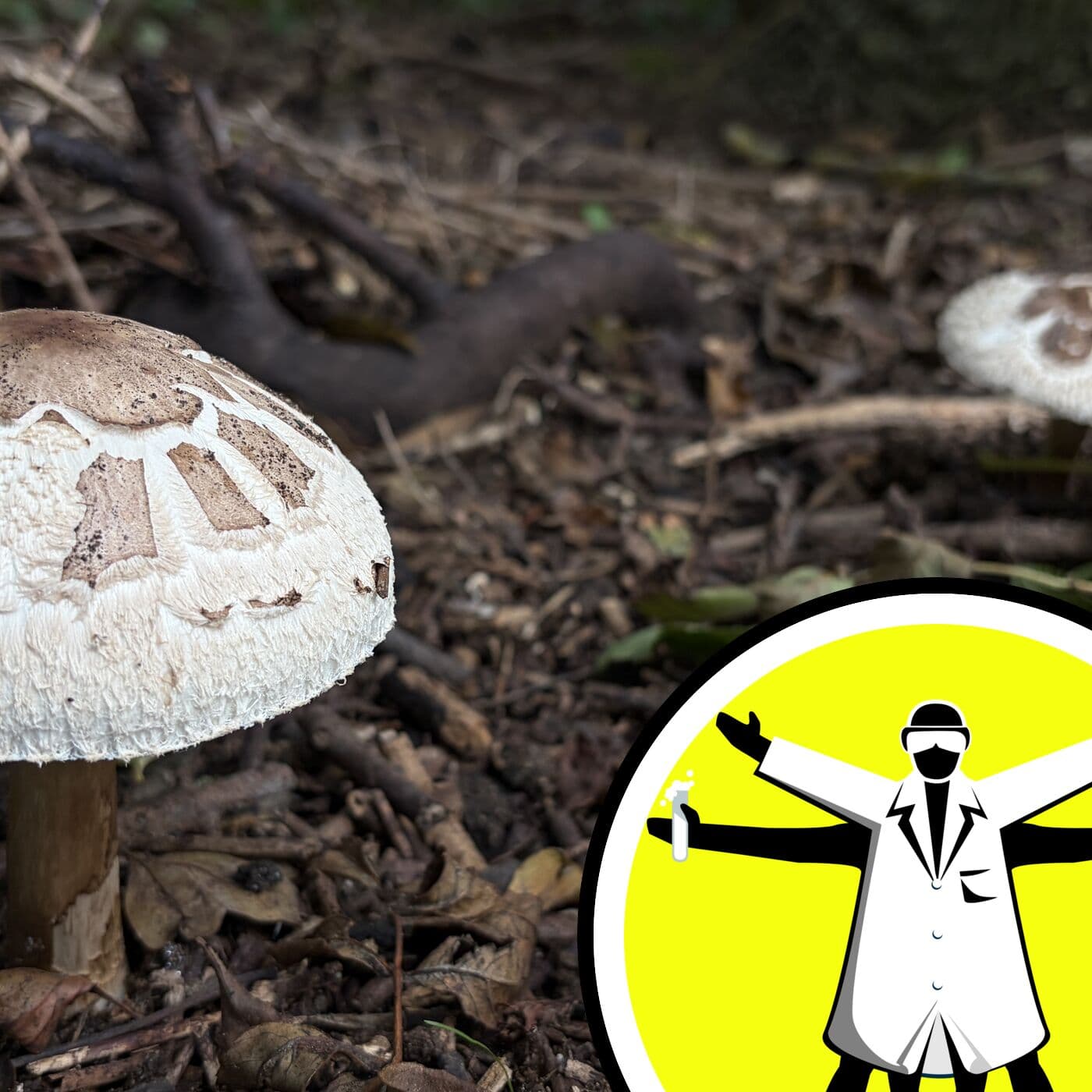
0:59After a slow start to summer in some places, much of Europe is now sweltering in unseasonably warm weather, with temperatures reaching record highs in May for much of the continent. But it comes as the number of cases of melanoma, which is one devastating type of skin cancer, have just surpassed 20 ,000 a year in the UK for the first time. The rising rates are thought to be down to people living longer and also greater UV exposure through international travel and sunbed use. The frequency of heat waves at home also plays a part. I've been speaking with Faisal Ali, who's a consultant dermatologist and spokesman for the British Association of Dermatologists.
1:37There are various types of skin cancer, and melanoma is one of the more common skin cancers. and the reason why we're so concerned about it is because it can spread to other parts of the body and can be deadly. What proportion of skin cancers is melanoma out of interest? So the vast majority of skin cancers are actually what we call non-melanoma skin cancers or keratinocyte skin cancers which are basal cell carcinoma and squamous cell carcinoma. So melanoma forms a relatively small proportion of those but because the effects are so devastating and because it can affect younger individuals that's why we are so concerned by it.
2:14And how is that changing? How is that pattern of presentation changing? What we are noticing in the UK and across the western world is that more and more people are affected by melanoma year on year. Now part of that may be that our population is getting older and as you get older you're exposed to more sun and there's more of a chance of you developing cancers including skin cancers. But what we are also seeing is that the number of people diagnosed with melanoma in each age group, whether it's people in their 20s, their 30s, their 40s, seems to be increasing year on year. Do you have a feeling for why that might be?
2:52Part of the reason why people develop skin cancers, including melanoma, is through ultraviolet light exposure. Now that may be from the sunlight, and that's probably the commonest cause. So outdoor activities and historically people that used to work outdoors, so on farms. And more recently, we have a lot more time for leisure activities outdoors, whether that's tennis or golf or walking, or indeed sunny holidays abroad, all of which increase our sun exposure to levels probably many of our ancestors weren't used to reaching. The other phenomenon that we are seeing more and more now is artificial ultraviolet light exposure in the form of sunbeds.
3:32And they become more popular as time's gone on. You've mentioned that age is a big risk factor. But if we break down the cases by age, are we seeing a particular blip at certain ages? Because if it is things like hot holidays and sunbeds, that's more likely, although not exclusively, to be younger people being affected. So do you see any peaks along the sort of age spectrum here? The problem with sun exposure is that it's not what you're exposed to that year. So if you have a sunburn at the age of 10, it doesn't necessarily mean at the age of 11 you're going to develop a skin cancer, but it increases the risk later on in life that you are going to develop a skin cancer.
4:12So that's why there is a delay in the sun exposure compared to when you're seeing skin cancers present. But what we are seeing are melanomas and other skin cancers presenting in younger and younger individuals. And is it always moles that get affected or is that how it tends to present? What moles are are groups of cells which we call melanocytes and they're the pigment producing cells. Now everybody has pigment producing cells in their skin and moles are groups of healthy pigment cells grouped together. Now when those groups of pigment cells become damaged or their DNA becomes damaged that can give rise to a skin cancer.
4:55and so not every mole is a skin cancer by any means but if you do have a changing mark on your skin whether it's you think it's a mole or whether it's a patch it's important to have it checked out sooner rather than later is it potentially if caught early then if someone does spot that there's a changing mole bleeding itching darkening if you get those sorts of things and they come and see you early, can it be cured? That's absolutely correct. So the good news about skin cancer is if it's caught early enough, it almost always can be cured entirely with a surgical procedure. And the advantage we have with the skin is that we can see the skin.
5:37So I would encourage everybody to look all over their skin once a month so they get to know where their moles and marks are on their skin. If anything might be changing month by month, then have that checked out either by your GP or a dermatologist sooner rather than later. And obviously taking steps to minimise sun damage in the meantime must be the order of the day, sun cream and so on. Absolutely. So the things I would recommend is that you should be avoiding the sun on hot days between 11 in the morning and 3 in the afternoon. So when it's at its peak, try to either stay out of the sun or stay in the shade.
6:12wear long sleeve clothes and wide brimmed hats and think about wearing sunglasses not only to protect the skin around your eyes but also protect the back of your eyes as well from things like cataracts the other thing i recommend to people is that they should be putting a sunscreen on what i would tell people to look for is spf 30 or above which protects you against the more damaging uvb rays and also look for protection against uva rays so that's normally a uva with a circle around it or a star rating or a PA rating. So you want both UVA and UVB protection. So that's two finger lengths worth of sunscreen to cover the whole of the head and neck.
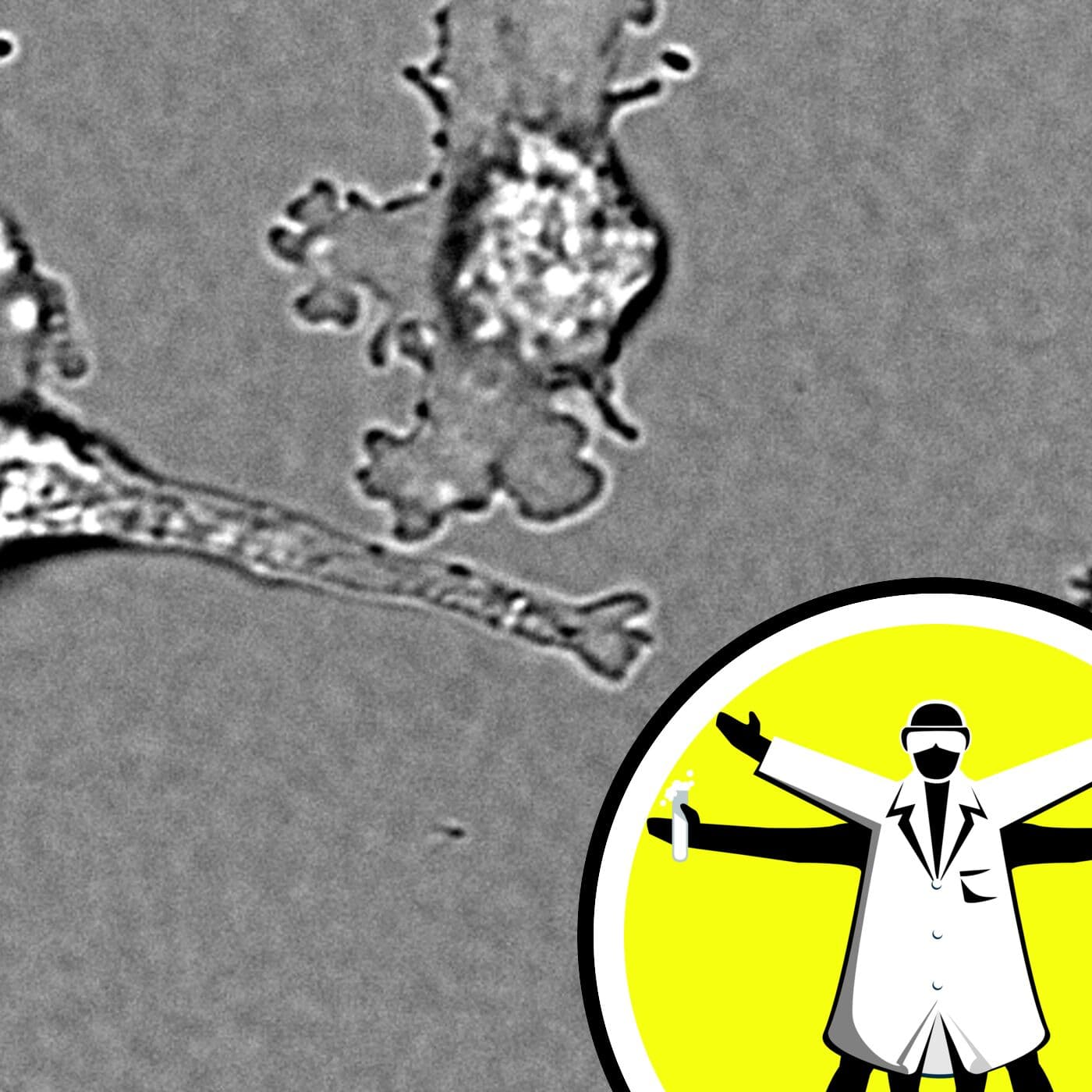
6:55And on a sunny day, that needs to go on every two hours. Faisal Ali with some sound advice to take care of your skin in the hot weather. A new study published in Nature has shown that pregnancy and giving birth can result in changes to a woman's brain. US scientists found the chemical dopamine plays an essential role in remodelling brain connections postpartum, but that high stress can also disrupt this process. Jennifer Ochan is at the Icahn School of Medicine at Mount Sinai. There's been a lot of research in humans that showed that motherhood actually has long-lasting changes in women's brain.
7:34For example, how one responds to a baby or an image of a baby And so there's like a lot of evidence that this occurs for even like decades after giving birth. But no one exactly knew how this might happen. We knew that it happened, but we didn't know how. And so I was really interested in trying to understand what might be going on. And so that's why the study became born. I like the use of the word born. Was that a physical change you're referring to? The brain actually physically alters or is it a functional change? It looks the same to all intents and purposes. but when you ask it to do various tasks, you get different results?
8:08So it's both actually. In the human data, they did these scans that look at images of the brain and they actually found that there were structural changes in the brain as well as activity changes. And so we had this idea then that there must be an underlying biology that leads to these functional as well as structural changes. And what did you do to try and pursue it? We're really molecular biologists, which means that we look at what's happening at the level of the cells and what the cells are doing in the brain. This is something that you really have to use animal models to do. And so our expertise was really in developing a mouse model to examine how pregnancy and postpartum can actually lead to these long lasting changes in the brain.
8:57And how do you actually do the study? What did you do and what did you measure? First, we wanted to look at the long-lasting impacts of pregnancy and postpartum. So we took mice and we exposed them to these experiences. And then after they gave birth, they took care of their pups. And then after postpartum, the pups are removed. And just functionally, we wanted to know whether the brain was actually doing something different. So we tested them on a variety of behaviors. And what we found was even months after postpartum was over, there are no more pups. these dams, which is what we call a mouse that has gone through these reproductive experiences, these dams actually had improved outcomes on learning and memory behaviours as well as maternal behaviours.
9:43So in that way, we knew that there was a functional change just due to these previous reproductive experiences. And if you ask, we know which bits of the brain probably subserve those changes or the functions that have improved. Do you see genetic changes there that reflect those functional improvements? Yes. So one of the cool things we did is that we looked at the changes in the gene activity in 11 different brain regions. So these are regions that in the entire literature, they were really suggested to be impacted by motherhood. And so we looked at the gene activity in these 11 regions, and we actually found a spectrum of differences across.
10:31And the region that was the most changed is actually the hippocampus. And the hippocampus is a really important hub for regulating learning and memory. And this was really beautiful because, of course, in the behavioral changes that we saw, learning and memory was one of the prime outcomes that were altered in these animals. Do you know what the mechanism is? Is it something to do with the physical contact to the pups? Is it something to do with the hormone environment of being pregnant? How does this happen? Yeah, great question. We were able to find one particular molecule or one particular component that leads to these changes.
11:05And this is through dopamine. So dopamine is a signaling molecule that perhaps a lot of people know of as a reward chemical. It's known to be involved in kind of giving a feel-good kind of response to things like sugar. And we also know that it's really important for maternal responses as well. And so what we've found is that dopamine levels actually change in response to pregnancy and postpartum, and that this can actually lead to what we call epigenetic changes, basically changes to gene activity that don't actually impact the DNA itself. So these are long lasting functional changes to the cell that can lead to differences in these genes being turned on or off as a result of this prior experience.
11:51And we found that dopamine was the main driver for them. So dopamine levels change in the brain, that in turn changes the behavior and function of other downstream nerve cells. But what lies upstream of the change in dopamine in the first place? Yeah, that's a really great question. And that is actually one of the future directions for this project. There's been decades of research looking into the maternal brain. There's all types of hormones such as estrogen, oxytocin, which are really important for maternal behavior as well. And people have long known that dopamine is actually important for some of these maternal responses.
12:30And we believe that perhaps there is a complex interplay here. So estrogen and oxytocin may be regulating dopamine further downstream. But essentially, we think that they're all working together and dopamine may represent kind of like a fundamental signal downstream that leads to these long lasting changes. What are the implications of what you found? People often think, well, after I'm pregnant, when will my brain return to normal, right? But what we found is actually perhaps there's a new normal and that having undergone pregnancy and then a postpartum period, that this actually leads to a long lasting change in brain state that we believe is adaptive for the new parenting demands that one has to go through.
13:16and I think that on the flip side of this is that it's these changes are actually really susceptible to stress during these critical periods such as pregnancy and postpartum when all these changes in the brain are occurring and so really protecting these periods for for new mothers and new parents is really important in order to help the brain foster these adaptations for parenting in the future. Really interesting Jennifer Ochan from Icahn School of Medicine at Mount Sinai on the brain, new normal postpartum. The Naked Scientist podcast is produced in association with Spitfire, cost-effective voice, internet and IP engineering services for UK businesses.
13:56Find out how Spitfire can empower your company at spitfire.co.uk.
14:04Music in the programme is sponsored by Epidemic Sound, perfect music for audio and video productions. This is the Naked Scientist podcast with me, Chris Smith. Still to come, the Ebola outbreak in the DRC in Uganda, what is driving it and what can we do about it? But first, we heard from the company Colossal Biosciences on the programme not that long ago when the Boston-based business said they were attempting to bring certain species back from extinction, including the woolly mammoth. Now, while these efforts are ongoing, the company say they've meanwhile now succeeded in creating artificial eggs to enable them to also bring back dead birds like the dodo and the giant moa.
14:43Their plan is to genetically modify a surrogate species like an emu which is sufficiently similar to the extinct species so that the emu can produce the eggs and sperm and thus embryos of the extinct animal and they'll then transplant the embryo from the emu egg into the new and much larger artificial egg capable of nurturing the chick of a much bigger mower. As Ben Lam, who's the CEO at Colossal Biosciences, explains. Well, for egg layers, you really have two different processes that you have to think through. Number one, you have the ability to edit and cultivate what's called primordial germ cells, which are the precursor to egg and sperm, engineer them and then put them into surrogates like chickens that have been genetically modified that do not make their own egg and sperm so that when those two chickens mate, you would get your edited egg.
15:38So imagine a world where you create precursors to dodo egg and sperm, put those into an edited chicken surrogate, they mate, and it lays an egg. And when that egg hatches, it all goes well, you have a dodo. You can do that for certain species. But for other species, like the South Island giant moa, the largest moa, there's no species of bird out there that can currently lay an egg big enough because they're eight times larger than that of an emu. I was going to say because the adult bird weighed a quarter of a ton, I gather. Correct. And so there's nothing large enough to gestate and create that egg.
16:17So then our only option, if we want to return the South Island giant moa, is to create an artificial egg that can actually be gestated outside the need for an egg. Can you do that? Can you make a new egg? We have. We have successfully created the world's first artificial egg that allows us to grow a one-day egg from laying to full gestation. We've only done it so far in chickens, so we still need to scale it up, but we have successfully birthed 26 healthy chickens that are running around our avian facility living out their lives with our system. How does it work? How do you make an artificial egg like that?
17:00So what we did is we actually designed an egg, and if we're going to redesign an egg, we wanted to completely re-engineer it for our purposes. But what most people don't realize about an egg is a couple of things. One, that they're porous, meaning that the eggs breathe, and so there's a gas exchange that is a permeal membrane. So we had to recreate that membrane and we had to actually engineer a way for the gas exchange to happen at normal atmospheric pressures with normal oxygenation so that you don't hurt the developing embryo. The other thing is we had to design the eggshell because from a developmental biology perspective, it actually supports the development of the birds to form correctly at the right size and scale.
17:45So it's not only the nutrients that it has, but it also has a shape structure that applies the right pressure. Now, remember, if you look at our artificial eggs, they look a little different than eggs because we wanted to create a large window. We wanted to be able to access the embryos in development. And we also wanted to be able to image the embryo at every different stage of development so that we could track it. We could learn from it. If we've made edits, we can look at the developmental edits in process, right? And so to do that, we changed the shape of the egg so that we could compensate for the changes that we made at the top of the egg to make it flat and highly accessible.
18:23So there were many challenges like that permeable membrane and then the shape that we had to get right so that we could gestate the egg in normal incubators like everyone else does. You basically introduce an embryo into there or do you put the gametes, the eggs and the sperm into your egg? That's a great question. What goes in the egg? At this stage of the process, it is the actual embryo. So we take a day one egg that gets laid, and then we transfer it into our artificial egg system. Because for us, if we use a surrogate for our South Island giant moa, like an emu, we can birth a South Island giant moa via an emu.
19:05And on day one, we could transfer it into the right construct and then supplement. When you look in an egg, I mean, the reason most people are familiar with eggs is because they eat them for breakfast and they've got a nice big yolk, the yolk sac, which that would be an energy, a fat supply, and so on for the developing embryo. So if you're doing this through a surrogate, you use an emu, doesn't that put an emu-sized yolk into the egg? And even if you transfer it into a nice big egg, would the developing embryo not run out of yolk effectively because there's not enough going into even a nice big egg.
19:39Do you have to supplement it then in the future? Is that how you're going to do it? You would have to supplement it, which is what our current plan is. You could do that synthetically, which we're doing experiments on right now, or you could actually use other genetically modified emu eggs. So if you have 20 emus that lay eggs, you could supplement it from those existing eggs. And when you say that you've just basically built an egg orbit with a slightly different shape, Is it recognisable as an egg? And is the material you've used, is it calcium like a chicken would lay? Or have you used different materials to make the outside of the egg and then the layers inside that effectively cocoon the developing embryo in there?
20:19We actually use 3D printers to actually print the different styles. We went through 13 or 14 different iterations to get it correct, right? They then printed them in titanium. So we are leveraging a titanium infrastructure now for repeatability. You'd need a big teaspoon to crack into that, wouldn't you? If it's titanium, it's not really, really strong. How does the chicken get out? The top part, right, it's called tipping when the chicken actually starts to crack the shells. And so we have this same gas permeable membrane that's on the sides on the top. And we're monitoring all of this with our animal care team, as well as through computer vision and robotics.
20:56And so we watch for that, right? We know the timing of it because we know the timing of this in chickens. but once they start pipping it's removed from uh the incubator and then our team's there to help in that process but they're actually not going through the titanium on the side they're going through the top um layer i'm i'm relieved to hear that because if these chickens could peck their way through titanium i think you've done something genetically very interesting to them or scary a chicken that can that can uh pack through titanium is like the scary that may be the scariest thing we ever could do.
21:31Ben Lamb at Colossal Biosciences on how they have cracked the artificial egg problem. Now, coffee fanatics will know it takes a surprising amount of work to keep a brew consistent from cup to cup. But an electrifying new approach from the University of Oregon means researchers could make the task a lot easier. They've discovered a way to measure the flavour profile of a cup of coffee by sending an electrical current through it. It's called voltammetry. The chemist Christopher Hendon is the brain behind it, and I've been speaking to him. I've worked in the coffee industry for quite a long time, and there's been an outstanding question of how can we make a chemical measurement that maps to something that people actually taste.
22:12So for the longest time, the industry had built itself around this idea of using light, basically shine a light on coffee, and that will tell you how dark colored it is. But it wasn't actually measuring flavor, it was just measuring the concentration of the coffee itself. The issue with that is is that you can have a very concentrated drink that is made of a light coffee you can have a concentrated dark coffee and they're going to taste wildly different and so there remained this question of can we do at least as well as the human tongue by measuring the main flavor that people taste when they taste coffee and that is how dark does it taste do we know though what the flavorants are in coffee because it's a complicated mixture of all these different chemicals that the plants pack into the seed.
22:55And then of course you've got the whole roasting process adding complicated chemistry. You've got the effect that it goes in your mouth and some of these things evaporate and go up the back of your nose, some hit your tongue etc. How can you capture all that? I think that's probably part of the reason why this has taken so long to make an advance towards is because you're exactly right. There's thousands of compounds floating around in solution and it's very difficult to determine which of those compounds is giving rise to the flavors that you're tasting. We took somewhat of a naive approach and we decided, well, are there families of compounds or groups of molecules that might respond in some chemical way where they're going to map directly to something that we taste?
23:36Now, maybe it's those molecules themselves, or maybe they're just representative of other compounds in solution that are giving rise to flavors. But if we can measure that family of compounds, we're then able to make some intuitive statement about how that drink is tasting. And how do you propose to measure them? So we aren't the first to approach this problem of using electrochemistry to measure composition of food. But the basic premise of this here is you're going to apply an electrical voltage and you're going to measure the current response. Now the current that is flowing through the, in this case, coffee, is actually electrons in the circuit moving into and out of molecules that are floating around in solution.
24:14And so you're directly reacting with molecules that you are in principle tasting. Now, other people had looked at this, but they'd specifically been trying to determine the concentration of caffeine in solution using electrochemistry, or perhaps the phenolic compounds because of their antioxidant capabilities. We were more interested in finding a group of molecules that would respond to this applied voltage that then mapped to flavor. And so we actually ended up looking in a totally different voltage range down in the negative voltages. And that's where we found this feature that seemingly maps to how dark the coffee tastes.
24:49Do you apply different voltages then to sort of push or pull electrons on and off of these molecules? And that is proportional to how much of each molecule is there? Different molecules will react at different voltages. And if there are more of those molecules, then more current will pass at that voltage. So you get to select for the families of molecules based on voltage and you recover the amount or concentration of those molecules based on their current. So that gives you a whole bunch of measurements in terms of numbers but how do you relate that to what your tongue would say? Is it as simple as you go sip the coffee that's very nice or not?
25:28Here's the electrochemical voltammogram if you like the picture of numbers that it produces. That's more or less where we got this idea from but actually what we do is we skip the human tongue component because the device and the measurement don't actually assign an absolute quality. They don't say this one is better than this one. Instead, they just produce these numbers, as you mentioned. So instead, we focused rather on the variable of roast color because we know that the human tongue perceives roast color at very high fidelity. So you and I can absolutely determine a dark roast versus a light roast, for example.
26:02And so we didn't necessarily require our mouths to taste. We just roasted coffee to different degrees of darkness and use that as the input variable. Does that map onto quality and quality of experience though? The mouth feel, those lovely aromas that come off. Can you actually take a sample blind now with this and say, Chris, you're going to love that coffee or that's vile? If I have one example from you where you told me you loved it, so therefore I know the numerical response from this measurement, then for future cups i will be able to tell you you're going to like it as well without knowing your preference you and i could be quite different in whether we like a dark roast or a light roast coffee right and so as a result i think that this device will never be able to know something about you uh without actually first making the measurement from your own mouth nevertheless that's still pretty neat isn't it because i mean when we blend coffees or we make something we're working to averages we're thinking what does the average coffee drinker who likes a stronger or a weaker flavor what do they tend to go for so this really puts an objective measure on it doesn't it it means that quality control can be done much more easily you're absolutely right it basically means now that cafes and the roasteries that you go to will be able to be certain that the coffee that they've produced is going to yield a flavor profile that they intended well i will drink to that a great story on one of my favorite beverages christopher hendon there at the university of oregon he just published that technique in the journal nature communications that's it for today tune in on tuesday though when we're going to be taking a closer look at the emerging outbreak of ebola in the democratic republic of the congo it's very likely that the vaccines and drugs we already have for the previous outbreaks of ebola won't work for this variant of the virus so what's going to happen.
Read the full transcript
27:55I'm Chris Smith. Thanks for listening in the meantime, and until we're together again, goodbye.