In short
The episode covers three science stories: a Europe-wide Salmonella outbreak linked to imported eggs; astronomers’ discovery of the fastest star near the Milky Way’s supermassive black hole (S301); and an ancient Roman shipwreck off Sicily carrying wine amphorae.
Guests
Claire Bryant, vet and infectious disease immunologist at Queen’s College, Cambridge, explains Salmonella transmission and outbreak investigation. Stefan Gelesen, Max Planck Institute for Extraterrestrial Physics, describes how interferometry helped detect S301 and how its orbit may reveal the black hole’s spin. Bill Schaffner, Vanderbilt University epidemiologist, discusses FDA-approved mRNA influenza vaccines and how they can be updated faster than egg-based vaccines. Richard Alston, Professor of Roman History at Royal Holloway, explains the 2,000-year-old amphorae wreck and what it may reveal about Campanian wine trade.
Key claims/examples
Salmonella can be present in chickens without illness and be passed through the oviduct into eggs; whole-genome sequencing traced human strains back to egg contamination; cooking eggs thoroughly and buying British eggs reduce risk. S301 orbits Sagittarius A* extremely close (about 12 AU at closest), letting researchers probe spacetime rotation and test Einstein’s general relativity. mRNA flu vaccines use a genetic “blueprint” for viral surface proteins, enabling quicker updates; trials show stronger immune responses and possibly better protection in younger adults. The shipwreck contains Dressel 1A amphorae (late 2nd–1st century BCE), likely carrying Campanian wine toward North Africa or the eastern Mediterranean; amphora markers/residues could indicate estates, while Carabinieri will prevent looting.
Written by AI. May contain mistakes. Listen to the episode to check what was said.
Chapters
Tap a time to open that second in VOSalmonella Outbreak in Europe
0:46 to 7:03
Discussion on the recent Salmonella outbreak linked to imported eggs.
“And what have the Romans ever done for us?”
Discovery of a Unique Star
7:04 to 14:00
Exploration of the fastest moving star in the Milky Way and its implications.
“In fact, it's so close that the star is passing through the space being heavily warped by the huge mass of the black hole.”
Exploring the Rotating Black Hole Discovery
14:00 to 14:37
Learn about the implications of Roy Kerr's discovery regarding black holes.
“Yeah, that was Roy Kerr who discovered the rotating metric around the black hole.”
Advancements in mRNA Flu Vaccines
15:34 to 16:48
Discussion on the new mRNA influenza vaccine technology.
“But first, regulators in the United States have followed Europe and other jurisdictions' lead by approving an influenza vaccine that relies on mRNA.”
Comparative Effectiveness of mRNA vs. Traditional Vaccines
16:49 to 19:07
Comparison of immune responses generated by mRNA and traditional flu vaccines.
“Well, the traditional way we make flu vaccine is to kill the virus, take a piece of it and inject that into the body to stimulate the immune system.”
Future Practices in Vaccine Production
19:08 to 22:20
Insights into how mRNA technology could change vaccine production practices.
“very rapidly, and that's well established.”
Discovery of Ancient Roman Shipwreck
22:24 to 24:28
Unveiling the details about an ancient Roman shipwreck discovered in Italy.
“To Italy now, where a free diver has stumbled upon an ancient Roman shipwreck off the coast of Sicily.”
Analyzing Artifacts from the Shipwreck
24:29 to 28:00
Discussion on the potential insights from excavated jars and their contents.
“So it's probably sunk somewhere around 1890 BCE.”
Understanding Roman Maritime Practices
28:00 to 29:16
Learn about the complexities of Roman ship ownership and insurance.
“No, unfortunately we don't have that level of detail.”
The Future of Underwater Archaeology
29:16 to 30:34
Explore the challenges and plans for recovering archaeological treasures from a shipwreck.
“Having identified where the wreck is, I mean, it's in 50 metres of water, so it's reasonably deep but there is this treasure trove of wonderful archaeology down there what's the next step?”
Transcript
Automatic transcript. May contain errors.0:11Hello,
0:17welcome to the Naked Scientist podcast, the programme that brings you the biggest It's breakthroughs and talks to the major movers and shakers in the worlds of science, technology and medicine. With me, Chris Smith. Coming up, salmonella strikes across Europe. Health officials are pointing the finger at imported eggs. Also, astronomers spot the fastest moving star in the Milky Way. It's hurtling around the supermassive black hole at the heart of the galaxy. And we talk to one of the team behind the discovery. And what have the Romans ever done for us? we explore the remnants of Neapolitan wine aboard a 2 ,000-year-old boat off the coast of Italy.
1:04Hundreds of people across Europe have been left unwell after outbreaks of the intestinal bacterial infection Salmonella. Some have been sufficiently ill that they've had to be treated in hospital, and it's even cost others their lives. At least 200 cases have cropped up in the UK. The UK Health Security Agency, which has been investigating, have linked the infections to contaminated eggs consumed in cafes and restaurants. Now, Britons chomp their way through about 40 million eggs each day, most of them homegrown. But about 10 % of the eggs we consume are imported from overseas, with the Netherlands and latterly Spain and Poland and Ukraine being major suppliers.
1:45and it looks like these imported supplies, particularly those coming from Eastern Europe, are the source of the infection. Claire Bryant is a vet and an infectious disease immunologist at Queen's College in Cambridge. Salmonella is a bacterium, so a microorganism. It's an interesting bacterium because it can live in animals and not cause any problems and then go into people and cause disease. Because of that, we have had vaccinations for animals to try and remove salmonella, and that's a standard practice in chickens in the UK. It can also occur as a disease, a human-specific disease, for example, typhoid, and typhoid can be transmitted between people.
2:23So there's a famous case, typhoid Mary, many years ago, but typhoid fever is a human-restricted pathogen and it causes a very severe disease. Usually the disease that comes from animals and animal products like eggs is not that severe. So this is a food-borne disease. We consume it in what we eat and then it becomes an intestinal infection in us. Yeah, that's correct. Normally it's because either eggs haven't been cooked properly or meat hasn't been cooked properly, like chicken, for example, or potentially with contamination from feces from animals, for example, on vegetables and things like that.
2:56That can also sometimes cause it. But intrinsically, it's like food not being washed properly or not being cooked properly. And then we eat it. Bacterium enters the gut. And then when it's in the gut, it causes an inflammation, which gives you diarrhea and so forth, which are common signs of salmonella infection. But sometimes if you're immunosuppressed, for example, or if you're a child with not a fully formed immune system or an older person whose immune system has started to wane, under those circumstances, the disease, the bacterium can then invade through the gut and cause a nasty systemic disease.
3:28And that's what we're seeing with the hospitalised cases at the moment. How can an animal have it and not be ill? But we get it and we are. Well, do you know what, Chris? That's the multi-million dollar question that I spend my research career trying to answer. we don't know it's a super super interesting question and it's one of the reasons why for example we have developed vaccines to take salmonella out of things like chickens and eggs for that reason we don't really understand what the cause is but at least if we can remove the bugs from the chickens then that will not transmit into humans super interesting question that i wish i could answer the finger has been pointed at eggs with this present outbreak how do they know it's eggs for a start and why is there salmonella in an egg?
4:11So salmonella gets passed through the chicken oviduct where eggs are made. Bugs can pass from the gut of the chicken to the reproductive tract. So that's why there's salmonella in chicken eggs. The reason why we know is because what we have been able to do is we've been able to do the whole genome sequence of the salmonella that's in the people and they've then been able to trace that back to salmonella in eggs so therefore they are able to map that the human infection has come from eating eggs. We had a problem historically in this country with salmonella in eggs but for 20 years we've had no problems.
4:50The chickens have been vaccinated and so on. We do import about one in eight of our eggs and so people are saying well perhaps the problem lies overseas would that be a reasonable hypothesis yeah that is a reasonable hypothesis at the moment we've had a really fantastic food security policy in place which includes vaccination hygiene measures but also we do a lot of surveillance so we know what's in our eggs and we know how well our protective mechanisms are working and that's kind of like the you know the little lion mark that we put on our eggs that's the sort of sign that everything's been adhere to and regulations are very tight in order to be able to get that standard mark on the eggs.
5:27So our food security policy really has set in train a fantastic food security measure to protect our eggs from salmonella infections which is why we've not really seen much of a problem. And also these policies are also rolled out across the EU so the challenge now is that under Brexit rules because we no longer are fully adherent to what happens in Europe we can also import eggs from elsewhere, then it's presumably possible that eggs are coming in from other sources other than Europe. And therefore, that may be a potential source of where the salmonella infection has come from. Because those other sources might not be compliant or quite so diligent with things like vaccines as we are.
6:07Yeah. I mean, food measures and food safety measures vary across the globe. And our measures are very stringent and the European measures are very stringent. But But not everybody at the moment adheres to those measures. And to be fair, of course, these measures cost money. So this is what our farmers do and what our farmers adhere to. But it doesn't necessarily mean that everybody adheres to the same measures. So if it has got from the gut of the chicken into the chicken egg, so you've got an egg with some salmonella in it, what can you do to make sure you don't catch it? If you're not buying British eggs, because at the moment there's no evidence that British eggs have any problem at all, You need to make sure the eggs are cooked properly in order to kill any bacteria in place.
6:47You can get rid of it because it is sensitive to heat. So if you cook eggs properly and thoroughly, then you should not have a problem. But the best way to avoid getting it at the moment is to buy British eggs. Or swerve the steak tartare. Swerve the steak tartare. Claire Bryant on the Salmonella cases in Europe at the moment. the fastest moving star in the milky way galaxy moving at eight percent of the speed of light has just been documented by astronomers now it's slightly underwhelmingly called s301 but what makes it really interesting is that it's orbiting closer to the supermassive black hole at the galactic center than any other object at its nearest it's only about 12 times as far from the Sagittarius A black hole as the Earth is from the Sun, which in astronomical terms is next to nothing.
7:38In fact, it's so close that the star is passing through the space being heavily warped by the huge mass of the black hole. And because the black hole is also spinning, the distortion it provokes in the surrounding space is also spinning. And by periodically passing through this deforming region on its orbit, the star is effectively carrying a torch that we can watch in this patch of space, giving us a unique opportunity to probe deep within the gravity field of a black hole and find out how fast it's really spinning, and further test out Einstein's theory of general relativity of course. Stefan Gelessen is on the project team at the Max Planck Institute for Extraterrestrial Physics.
8:20We have discovered a star that comes so close to the centre black hole in the Milky Way, that it actually will feel the rotation of that black hole. It will feel how that black hole is dragging space and time around it, and that will notably affect the motion of the star. And in that way, we hope that at some point we'll be able to measure the rotation of the black hole by just following that star very precisely. How did you see that star in the first place? A technique which is called interferometry, by which we can combine the light from different telescopes as if they were a single telescope.
8:57And that's incredibly powerful. And it allows you to get a sharpness of the images, which is a factor of 15 or 20 higher than what a single telescope can achieve. And in that way, we can distinguish between a very bright star, even a faint object such as the star which we have discovered. And tell us a bit more about this star then. How big is it? So in other words, how bright is it? How old is it? And how close is it to the centre of the galaxy? So this star which we have discovered actually is rather similar to the sun. It's not quite the sun, it's maybe 50 % more massive, maybe twice as bright or something like that.
9:34But it's from the category, it's a main sequence star, just an ordinary star like the sun. We don't know its age, but what we do know is that it has a very interesting history. That star must have come into the galactic centre as a binary, and then in the interaction with the black hole, the binary was breaking up and redistributed the energy so that one of the stars gets almost all of the energy, gets flown out at high velocity. And the other star, our poor S301 star, is stuck forever with a black hole. At its closest point, only 12 astronomical units away. That's between Saturn and Uranus' distance to the Sun.
10:14It's very, very close. So you're saying this started off as a pair of stars twirling around one another. they end up very close to this black hole and through the effect of physics one of the pair gets flung away but it leaves one lonely star behind very very close to that black hole. That is correct. But where did they come from in the first place because there are no other stars there presumably they've been pulled into that sector of space so what was their origin? That's a very good question we actually don't know and that probably was more than a million years ago, so we really don't know from where these stars come.
10:53What we think is that it's probably ordinary binaries, and time to time, some of them will have orbits which lead very close to the black hole. And these are the lucky or unlucky ones, depending on how you see it, which then get disrupted. But we think it's an ordinary star, which by some means, think about interaction with a giant molecular cloud or some other big mass, had been deflected towards an almost lost cone orbit, almost hitting the black hole, but just almost. And that close to the black hole, what is that doing to the star? You say you can use this to sort of image the effect that the black hole is having on nearby space.
11:31But how is it affecting what you're seeing of that star being that close in? And what's the ultimate impact on the star? So think about a hurricane on Earth and a plane. if you want to be safe from the hurricane, you keep your distance to the hurricane, right? But if the plane dares to fly into the hurricane, it will all of a sudden not only feel its own force by its engine, but it will also feel the force of the wind. So it might be a drag, it might be additional propulsion coming from the tailwind, or there might be a strong headwind. So there's an additional effect due to the medium for which the plane is flying.
12:08And in a very similar way, the star will experience the space-time around the black hole. It will feel that space-time itself is rotating. And that extra rotation will lead to a change of the orbital trace. And that is what we hope we can observe within the next 10, 15 years or so. Does this mean that time is also running very differently for that star, where it's sitting that close to the black hole? Because it's distorting space-time in that way. So does that mean that that star is going to age at a different rate to an equivalent star elsewhere in the galaxy? Yeah, that's absolutely correct.
12:48But the star is not sitting there. It's actually on a very dynamic orbit. So it flies by at this very close distance every nine years. And that takes probably just a few weeks. And all the rest of the time, it's much further away in a regime where it's sort of unaffected by the black hole. So it's a very eccentric, like a cometary type of orbit, right? Think of the comets in the solar system. They sit for ages in the Oort cloud and then get scattered in and do one quick turn by the sun. Similar is the orbit of that star. And so it will feel the rotation of the black hole at the moment of closest approach.
13:24Then you can think of it that it gets an additional kick. And this additional kick then leads to a changed trajectory. And since the effect is cumulative, it's only a matter of waiting long enough until we will have discovered it. Were we aware that when you have a massive object like this distorting space-time in this way and it's rotating, that it will cause a rotating effect on space-time? Or did we just think that the object would sit there and rotate and do its thing, but space-time would be distorted, but just symmetrically distorted? Did we have that insight before you made these observations?
14:00Absolutely. Yeah, that was Roy Kerr who discovered the rotating metric around the black hole. It's a mathematically very interesting solution of the Einstein equations of general relativity. And this set of equations indeed predicts that this should happen so that the space time is swirling around the central object and that it would affect this. And now we think for the first time that we do have a chance to directly see the effect. We haven't seen the effect yet, but give us another 10, 15 years and we're pretty sure if we are allowed to continue what we're doing now, we will measure it. So watch this space.
14:36That was Stefan Gelesen and the amazing discovery has just been published in the journal Nature.
15:02This is the Naked Scientist podcast with me, Chris Smith. Now we're halfway through today's show, but if you like what we do, do please consider checking out our weekly Ask the Naked Scientist Q &A show. This is where we endeavour to answer in real time whatever is on your mind, scientifically speaking. That's on our website at nakedscientist.com slash ask, or just look up Ask the Naked Scientist wherever you get your podcasts. Still to come here on the Naked Scientist podcast, what have archaeologists uncovered aboard a 2 ,000-year-old shipwreck off the coast of Italy? But first, regulators in the United States have followed Europe and other jurisdictions' lead by approving an influenza vaccine that relies on mRNA.
15:45Now, this is the same technology that underpins the remarkably successful Pfizer-BioNTech and Moderna COVID vaccines back during the pandemic. Now, historically, we've made flu vaccines through a fairly laborious process involving culturing the virus in millions of laboratory-grade chicken eggs. And although there have been moves to use more cell-culture-based methods in recent years, it nevertheless still takes months to generate the necessary stocks. The viruses won't always grow sufficiently well, and by the time we make the intended vaccines, newer variants of the virus have inevitably emerged that can sidestep the immunity triggered by the shot.
16:24mRNA vaccines, on the other hand, rely on using just a short genetic message corresponding to the target structure on the virus, effectively turning the body into its own short-term pharmaceutical factory. Because the technology is so simple, these vaccines can be updated and mass-produced much more rapidly, which has the potential to dramatically impact on our ability to control seasonal flu. Bill Schaffner is an epidemiologist at Vanderbilt University. Well, the traditional way we make flu vaccine is to kill the virus, take a piece of it and inject that into the body to stimulate the immune system.
17:03These new mRNA vaccines actually present us with a blueprint and the body actually creates that little part of the virus, which then stimulates the immune system. It's a bit of a miracle of modern science. This is the same technology that got us out of trouble during COVID, isn't it? Exactly. And it did so very rapidly. So the way in which they did that was they found a bit of the SARS-CoV-2 coronavirus that causes COVID. And they said, that's the bit that if we get the body to respond to that, then it will neutralise any incoming virus and protect people. Is it essentially the same thing here with flu then?
17:47It's exactly the same thing. We have picked that external portion of the virus, which is the part that the immune system recognises. We give the body a blueprint. It makes that little surface component. Our immune system responds to it. So it's a vaccine, just a very modern way of making one. What are the strengths of doing that over the existing technology? Because we've got a tried and tested way of making flu vaccines that we have had for decades. and it works pretty well and people are comfortable with it. We know it works. We know we can rely on it. We know it's safe. So why change anything?
18:26One of the great advantages of the mRNA technology is that it's so rapid. You know, the flu virus changes. And between the time we select the components of the flu vaccine, the virus can change. And so the vaccine may not exactly match the virus. we can wait longer before we create the mRNA vaccine and we're likely to get a better match. What evidence have we got that A, that's true and B, that when you put this new way of making a flu vaccine into people, they are protected at least as well as they are with the existing approach? I think the COVID experience certainly shows us that we can employ this mRNA technology very, very rapidly, and that's well established.
19:18Now, how well does this vaccine work? There's been a clinical trial to compare the standard influenza vaccine with this new mRNA vaccine, And there are two results from that. One is that the immune response that's measured is actually quite better with this new mRNA vaccine. The question is, does that translate into better protection? And there are some data from the initial clinical trial to suggest that that may well be the case, particularly for younger adults. Let's assume that's true then, and it does seem to translate into solid protection. How will the advantages of this new approach then be translated into different practice?
20:08Because at the moment, we ask Australia to kindly share what's happening in their flu season, to tell us what we should put into vaccines for our flu season and vice versa. We have to start, as you say, months ahead because it takes time to make the vaccines. And that means the virus may change in the meantime. And then we start putting these things into people just ahead of their flu season. So they reach peak protection around the time we hope flu is going to turn up. How will that practice change then if we shift towards a more mRNA vaccine led service? Well, that remains a bit to be determined, Chris.
20:44First, I think the traditional flu manufacturers will adhere to the standard process. However, our Food and Drug Administration may permit the mRNA vaccine manufacturers to wait a bit longer before they commit to what it is they actually put in the vaccine to assure a better match. How that works next season hasn't exactly yet been determined. with SARS-CoV-2 COVID as the virus elaborated new variants they have updated the vaccine but they have had to go back and get things re-licensed and check for safety and so on the flu vaccine is accepted to be extremely good extremely robust and extremely safe using the existing technology are we going to have to kind of go back to old principles again then with these mRNA vaccines and go back to long-term trials and everything could could that hold up what is an agile technology and mean that in fact it ends up being slower in the long run?
21:45I really don't think so because you know we update the SARS-CoV-2 vaccine on an annual basis already and we don't oblige major clinical trials to determine how effective and safe it is. As with the influenza vaccine, that is done because we know so much about these vaccines now in a routine and rather rapid way. So I think the same principles there will apply to this new influenza vaccine. Bill Schaffner at Vanderbilt in Nashville, Tennessee there. To Italy now, where a free diver has stumbled upon an ancient Roman shipwreck off the coast of Sicily. The diver first thought that he'd spotted a large rock, but when he swam closer, found hundreds of tall ceramic jars used to carry wine, oil and grain.
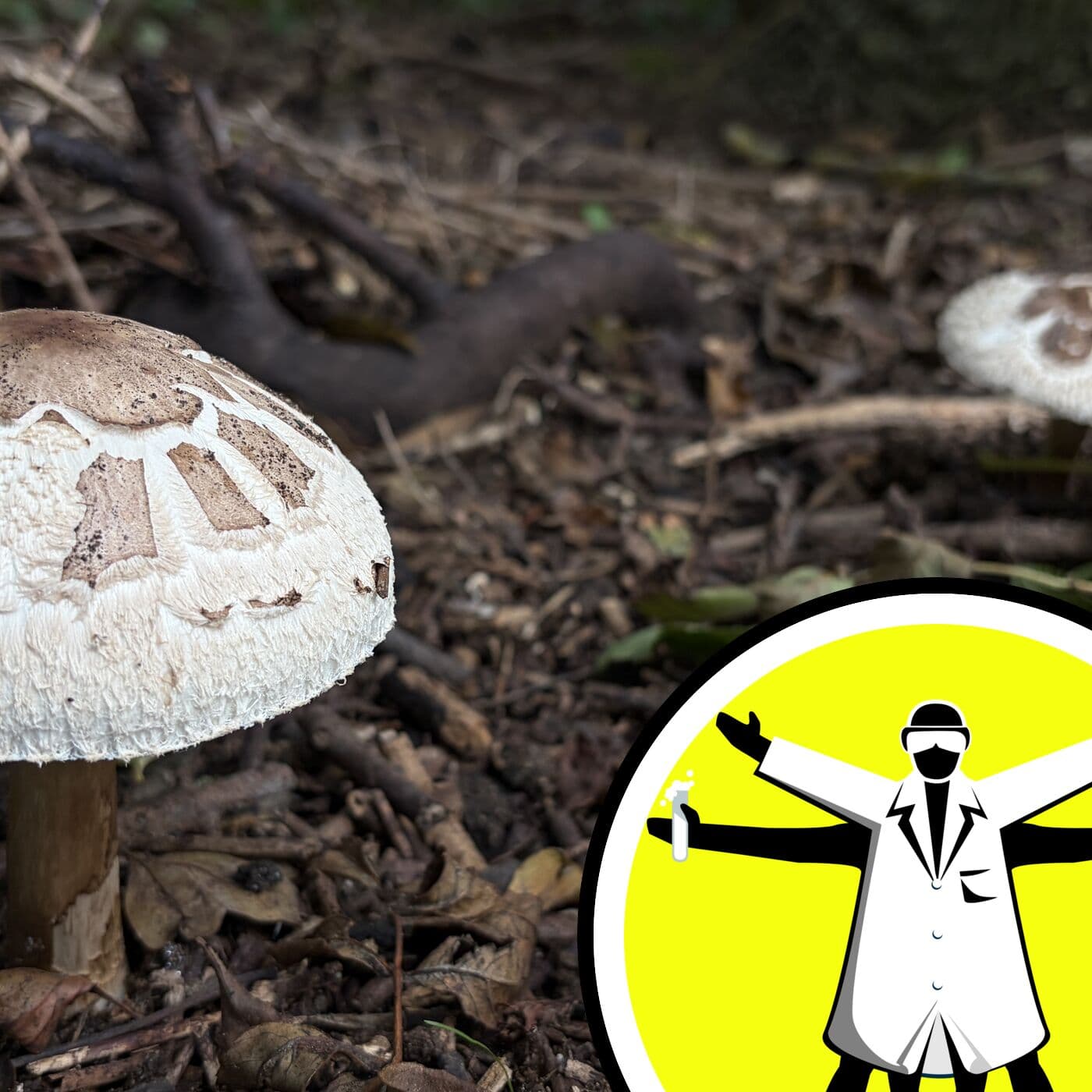
22:41They're so-called amphorae, and they had been loaded onto the ship before it sank about 2 ,000 years ago. Now, a specialist Italian cultural unit, part of the country's police force, have been investigating the wreck, which lies at a depth of about 50 metres. Richard Alston is Professor of Roman History at Royal Holloway University of London, and he's been telling me about this remarkable discovery and what we might be able to learn from it. So it's a wreck off the Sicilian town of Mazzaro del Valo on the west coast of Sicily. It's quite deep, and it's been identified by the pottery remains in the wreck.
23:23How did they find it in the first place? It looks as if fishermen or fishermen found something and then they had a dive and the dive then identified the pottery on the seafloor. And what's actually down there? They moved stuff in the ancient world in pottery jars. And unlike in the early medieval period when a boat sank, it disintegrated. It's made of wood. In the ancient period, the wood would disappear, but the jars, which are nearly indestructible, remained. So what has been seen on the seafloor is a whole load of Roman transport jars. When do they look like they date from then? So how long do we think that wreck has been down there?
24:07Transport jars are strange things. And although you might think you would go to the market when you were trying to move stuff and just buy what was around, they're highly stylised in some ways. And so you have a typology of different shapes and different fabrics of jars. And these jars are known as Dressel 1A amphorae. And they were in use from the late 2nd century BCE into the 1st century BCE. So it's probably sunk somewhere around 1890 BCE. And therefore, it's been down there for 2 ,100 years or thereabouts. Not that we're going to argue about that between friends. And do we know roughly where this ship would have been going from too?
24:54What do we know archaeologically about trade routes that would have existed and therefore probably what this boat was doing? The wine jars that were on this boat were probably coming from Campania, the area around Naples or around Vesuvius, where you get really good quality soil and really good quality wine. It looks as if Rome was starting to export wine into the eastern Mediterranean. round about this time, having been exploring into the western Mediterranean for a bit longer. So it's probably sailing down from somewhere near Naples, heading round the coast of Sicily and heading either into North Africa, where Romans were present at the time, and quite a lot of Roman veterans had been settled there, or into the eastern Mediterranean.
25:37Almost certainly it's carrying wine because that's what the core product of the Campanian region was at this period. Are there residues potentially left behind that we might be able to chemically analyse in these jars? Or will 2 ,000 years under the sea of the Mediterranean have done for any further analysis? It depends on the state of preservation. The pictures we've got suggest a very good state of preservation. We can see lines of those jars more or less as they would have fallen as the ship went down. Now jars were sealed. They were sealed with a wooden seal at the top and that would then have a layer of tar across.
26:12If it's been down there for a long time, that could have decayed and water could have got in. Obviously, the wine inside would have decayed. But depending on the state of preservation, how rough the seas are there, there might be residues within it. And you only need a little bit. So if you're going through your botanical, archaeobotanical analysis, if you find wine pips, if you find a little bit of material that are dried on before seawater gets into it, you should be able to identify it. And what can we do with those residues? Will that tell us where it came from? Can we actually get down to that level of resolution of understanding what sort of wine, where it's come from, etc.?
Read the full transcript
26:52That will tell you about the wine pip. If we can get a pip from it, it will tell you the type of grape it might have come from. It would not in itself, I think, but it's very unlikely in itself to allow you to be very confident about the type of wine that's being produced there. But it's going to be almost certainly the standard wines that are being produced on the hillsides of Vesuvius and around Naples. Now what we might be able to get is information about whose estate it comes from because some of these wine jars had scratched or painted and hopefully this is scratched onto the top of the neck of the wine jar.
27:34Initials or markers that can be identified with a particular owner or a particular estate and sometimes not all the time we can identify more or less where that was within campaigning within the region of Naples. Are there any documents connecting this boat or wreck to a potential source? Did the Romans, because I mean they were notorious for record keeping, weren't they? So did anybody write anything down about the loss of what would have been a really precious cargo? No, unfortunately we don't have that level of detail. The Romans were, as you say, very good at keeping records, but mostly they kept records on perishable material.
28:11We know about trade because when it appears in our literary sources rather than in our documentary sources, There is an archive of documentation from Pompeii from a bit later where they have loans. We know that ships got insured, but this is really fragmentary information. This ship, we would have no idea about any of its detail. We might be able to assess its size from the distribution of the pots. They seem to have fallen pretty straight down. But who owned the ship, who was sailing on it, how many people were on it, very difficult to reconstruct. I was going to ask you if there was the equivalent of Lloyd's of London for the Roman Empire, did they have insurers in the same way as we do today?
28:53Maybe not quite in the same way as we did today. There was loans and there would have been some level of insurance. It's very probable that the guys on the ship would have been taking a lot of the risk, as you do when you're sailing, and they're not coming back. But the people who had put the cargo on the boat, they're probably going to get some level of reimbursement from the ship having gone down. And what's the plan now? Having identified where the wreck is, I mean, it's in 50 metres of water, so it's reasonably deep but there is this treasure trove of wonderful archaeology down there what's the next step?
29:28Will it just be left now or is there a plan to try to recover this material? What should happen? Well the fact that the Carabinieri the Italian police force are involved suggests that they are going to take the site seriously I mean protecting underwater archaeology is really hard because you can't actually put a guard on the site all the time so they will not have released directly where it is So I suspect the locals will know quite soon. And what they want to stop is treasure trove hunters coming down looking for material. People might steal it and then put it on the illegal market. But they're going to want a proper archaeological unit to go and preserve what is there and lift the pottery and look for any other things that might be around.
30:13There might be coins, there might be some level of artifacts. And that's hard. you've got to get your divers down you've got to get your technology down to assess it you've got to get your scanning equipment and you've got to find ways of getting the material up from the sea floor with it without damaging it it's a lovely story isn't it which i suspect we're going to be returning to as those artifacts begin to be recovered that was richard alston at royal holloway university of london there that's it for today join us on tuesday when we will be examining the coolest characteristics of some insects, including how fly larvae have adapted to withstand the pressures at the bottom of one of Africa's deepest lakes, and the wasps with internal magnets to help them to navigate.
30:57Meanwhile, do please leave us a review on whatever podcasting platform you use to get this show. These rankings really help us with our visibility, and that matters because it's helping us to grow the show. And thanks also in advance to everyone who's already done that. And if you do like what we do here each week, do please consider supporting the program at nakedscientist.com forward slash donate. It means a huge amount and it does help us to keep the show going. And especially big thanks rowing this week to Michelle down in South Africa, who made a very generous contribution for our efforts.
31:29She says her 11-year-old enjoys the program as well as our Naked Astronomy shows. That is brilliant to hear. Thank you, Michelle. And thanks to everyone else as well. I'm Chris Smith. From all of us here at the Naked Scientist team, thank you for listening and until next time goodbye