
In short
The Naked Scientists Podcast: Episode Summary
Episode Details
- Title: Small Modular Reactors for Wales, and Moss Survives in Space
- Host: Chris Smith
- Description: The episode discusses the UK's investment in small modular nuclear reactors, Iran's cloud seeding efforts to combat drought, and research on moss's ability to survive in space.
---
Key Topics
- Small Modular Nuclear Reactors in the UK
- Overview of SMRs
- The UK is launching its first three small modular nuclear reactors (SMRs) at a site in Wilfer, Anglesey.
- SMRs have an output of 200 to 400 megawatts, significantly smaller than traditional reactors (over 1,000 megawatts).
- Advantages of SMRs
- Modular Construction: Manufactured in factories for standardized production, potentially lowering costs.
- Job Creation: Expected to create thousands of jobs and boost the local economy.
- Technological Insights
- SMRs operate similarly to larger reactors by boiling water to produce steam for turbines.
- New cooling methods, such as molten salt and helium, are being explored.
- Challenges Ahead
- The first reactors won't generate power until 2035.
- Investment costs are high, and the viability remains uncertain until they are constructed.
- Iran's Cloud Seeding Initiatives
- Context of Drought
- Iran is experiencing one of its worst droughts, prompting the government to try cloud seeding techniques.
- Cloud Seeding Explained
- Cloud seeding involves injecting particles (e.g., silver iodide) into clouds to increase rainfall.
- The effectiveness of cloud seeding is debated, as controlled experiments are difficult.
- Ethical Considerations
- Potential issues arise regarding the distribution of rain across borders, raising questions about water rights.
- Moss Surviving in Space
- Research Overview
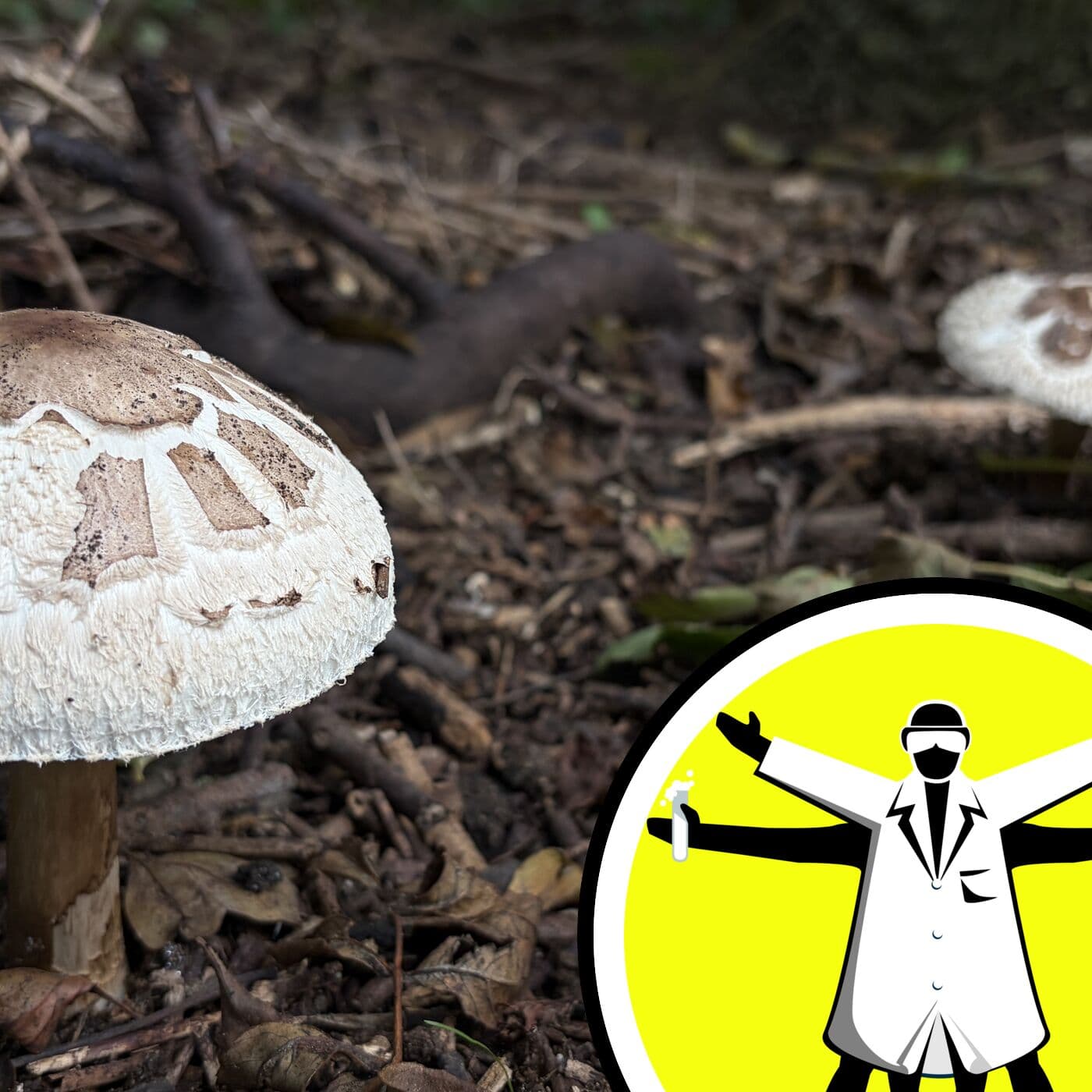
- A study shows that 80% of moss spores can survive nine months in space conditions and still germinate upon returning to Earth.
- The study was conducted by Japanese researchers using the International Space Station (ISS).
- Biological Resilience
- The spores were exposed to UV radiation, showcasing moss's strong protective mechanisms.
- Findings may provide insights into early terrestrial ecosystems and plant resilience.
- Future Implications
- Research could inform strategies for space colonization and terraforming efforts, examining how life might thrive on other planets.
---
Insights & Takeaways
- Nuclear Energy Future
- The shift towards SMRs represents a significant change in the UK’s approach to nuclear energy, emphasizing smaller, potentially more manageable reactors.
- Climate Engineering and Ethics
- Iran's approach to cloud seeding illustrates the complexities and ethical dilemmas of geoengineering in response to climate challenges.
- Space Biology
- The ability of moss to withstand extreme conditions opens avenues for research in astrobiology and the potential for life in extraterrestrial environments.
---
Upcoming Topics
- The next episode will focus on antibiotic resistance, coinciding with World Antibiotic Awareness Week, discussing how science is addressing this pressing issue.
---
Conclusion The Naked Scientists podcast provides an engaging exploration of current scientific innovations, ethical considerations in technology, and the resilience of life, showcasing the intersections of environmental science, technology, and biology.
Written by AI. May contain mistakes. Listen to the episode to check what was said.
Transcript
Automatic transcript. May contain errors.0:18Hello, welcome to the Naked Scientist podcast, the programme that brings you the biggest breakthroughs and talks to the major movers and shakers in the worlds of science technology and medicine i'm chris smith coming up the uk finally kicks off its small modular reactor plan also iran seeds the skies in a bid to end the worst drought in decades a moss grows fat on a rolling stone at least that's what don mcclain told us but can it survive the harshness of space
0:53an island in north wales has been chosen as the location for a trailblazing type of nuclear power station the plant at wilfer on anglesey will be home to the uk's first three small modular reactors and it's expected that the engineering giant rolls royce will build them the uk government says the move will create thousands of jobs and it will bring a welcome boost to the British economy. But the reactors are yet to be built and they're not going to generate any power until 2035. We asked Malcolm Grimston, who's an honorary senior research fellow at Imperial College's Centre for Energy Policy and Technology, to explain what's going on.
1:31The S stands for small. Most of the big nuclear power stations that we've built in the world over recent years, have had an output of over 1 ,000 megawatts. That's the unit that we use for energy. Small reactors are defined as being more in the sort of 200 to 400 megawatt range, perhaps even smaller in some cases. And the M stands for modular. This means instead of it being a big construction project that you, in effect, redesign every time you do it because of the geography of the place you're putting it. The idea would be that you manufacture these reactors in a factory and then take them out and put them up wherever they're actually going to be used.
2:13Now that ought to bring considerable savings because you're standardising and mass producing the reactors. So that's the principle. We need to show whether it works or not, but that's the basic idea. And is the science that makes them tick effectively the engine inside pretty much the same as I would find in any other nuclear reactor. All nuclear reactors, like most power stations in the world, work by boiling water, which then comes off at a huge pressure of steam. And that steam is then used to turn very large wheels called turbines, which produce the electricity. But there are also a lot of new approaches.
2:48They've actually been around for a long time, but they haven't been used as much. So for example, there's a lot of interest in what we call molten salt reactors, where the uranium, which is the main nuclear fuel, instead of being in rods in the middle of the reactor, which then have gas or water going over them to collect the heat, the heat goes directly into molten sodium fluoride. And then that heat can be used to boil the water in the same sort of way. There are proposals to use helium as a coolant, which hasn't really been used. So there's quite a wide range going on in the world of different approaches.
3:20And clearly, over time, we'll work out which ones work best, and they'll be the ones that are successful. Why have they chosen the site that they have for this first offing in the UK? Wilbur is on the Isle of Anglesey or Annasmon, which is just off the north coast of Wales, the western bit of the mainland United Kingdom. It's already had a nuclear power station there, which operated very successfully. It's got a lot of local support because people know the nuclear industry there and it will bring a lot of employment to that part of Wales. Didn't Hitachi own that site? Didn't they have plans to build a next generation, much bigger station there?
3:57And for some reason that was sidelined? That's right. It was really about the funding that was the challenge there. At that time, there wasn't really a mechanism in place by which you could produce the many tens of billions of pounds that are necessary in order to build a larger nuclear power station. Now, soon as then, we are building one of those in Somerset in the United Kingdom. There are firm plans for another one on the east of the country. So funding methods are coming forward. Nuclear power is much more in fashion now globally than it was at the time that Hitachi was looking at the possibilities for the site.
4:32And what's the timescale and the cost for doing this? Because Hitachi backed out on the grounds that this was going to cost them more than they wanted to invest in it, and they walked away. So what's this going to cost? And why do, in this case, Rolls-Royce think that they can make this a viable go where others have walked away? It will certainly be a working power station, but it will also be, in a way, the last stage of research and development. We haven't yet built one of the Rolls-Royce SMRs anywhere. They're quite big as far as small reactors go. They're about 470 megawatts, which is at the top end of the scale.
5:10So actually putting three of them together on the site gives you a station which is equivalent to a large nuclear station or certainly to one of the twin nuclear stations that we're building, say, in Somerset. So the outcome will actually be quite large. The cost is one of the things that we're looking at here, because until you've actually built a few things, you don't get a firm idea about the cost. It's unlikely that per unit output at the moment it will be very much less expensive because, as I mentioned earlier, the real benefit of this comes from manufacturing them at a huge scale in factories.
5:46And clearly we're only at the beginning of that, so we won't have those economies at the moment. But we know what the downsides of the existing fleet of nuclear we have are, which are you end up with a big piece of infrastructure in a particular site, which you know is going to have a legacy effect for thousands of years because of what's left behind. Do these suffer the same problem or is some of that avoided or mitigated? And are there any new risks or disadvantages with this new technology, apart from obviously the uncertainty around it so far an unproven technology? Pretty much all of those issues are under management.
6:22Radioactive waste disposal is moving forward. The Finns now have their final disposal site sorted out, and the world is learning from that. The real issue with nuclear for many years has been the investment costs and how expensive it is at the top end. Nuclear is one of those power sources that once you've actually built it, it becomes very cheap to run and pretty much a cash cow once you've paid for that initial investment. But the initial investment is expensive, And that will still be the case with small modular reactors. So the funding is going to be an issue. There's the advantage that you're not dealing with this massive, great one-off chunk.
6:57You've got a number of smaller units. So in getting up to the size of a big power station, your early units will be generating electricity and making an income while you were still building on the later units. With big stations, you pretty much switch it on at a point. And up to that point, it's not been earning an income. But I think waste will have to be managed. they won't produce any less radioactive waste per unit of power produced. So we'll still need to continue with the move towards finding final solutions for radioactive waste. And also for those countries with large grids, so basically most of the developed world, there still is an advantage of having very large point sources of power in a single place, feeding into the grid to give reliability.
7:43So there's still going to be a place, I think, for the large nuclear reactors as we have at the moment. SMRs aren't meant to replace those, but they should be nimbler. They should be easier to switch on and off during the summer in the UK or wherever your demand is not particularly high. But no source of energy is perfect. Otherwise, we'd have been using it for many years. And certainly the claim always for very large reactors is that you get economies of scale from the fact they're very big, which counteract the economies of scale that you might get from the manufacturing process. and I don't know the answers to these questions we're just going to have to build a few and see what turns out.
8:21Malcolm Grimston at the Imperial College Centre for Energy Policy and Technology. To the United States now where researchers have developed a novel method to combat a type of antibiotic resistant bacteria known as Klebsiella pneumoniae. They've done it using phages which are viruses that infect and kill bacteria. Now this is not new technology. Over 100 years ago scientists were exploring the use of these very same viruses to try to combat bacteria in the pre-antibiotic era. Now in the past microbiologists have tried to find phages that can do this for them in nature but when sourced in this way the phages tend to hit a very narrow repertoire of bacteria and the bugs also evolved to sidestep the phages which ultimately can limit their utility.
9:10But what What David Pride at the University of California, San Diego has done is to create the bacteriophage equivalent of a fight club. He mixes clinical samples of the bacteria with phages and grows the two together over successive generations in the dish. The ensuing arms race, as the bacteria change to defeat the phages and the phages in turn up their game to compete, optimises the phages so they become much more powerful and broad spectrum, in fact, more akin to an antibiotic. These evolved phages can then be isolated and used clinically. All of the viruses or bacteriophages that we find, we do find in nature.
9:51What we are doing that's sort of unnatural is that we are taking the bacteria and the bacteriophages and we are putting them together in sort of an artificial situation, making them battle it out. And what the bacteriophage learns over this process, over a very brief period of time, we did it over 30 days, is they learn all of the tricks that the bacteria is trying to do to resist it. So they become much, much better at killing the bacteria over this period of time. It's almost like the mirror image of when we want to attenuate a virus to turn it into a good vaccine like MMR, we grow it for hundreds of generations in a dish.
10:32And because dishes don't have immune systems, the viruses become complacent effectively and they lose a lot of their virulence. You're doing the opposite and saying, I'm going to really stress the system. I'm going to put enormous pressure on the bacteria and on the bacteriophages. So one optimises to fight off the other. And in the process, you get a much more focused, much more efficient killing machine in the viruses, I suppose. Yes, we do. The good thing about what we're doing is we're only recovering the virus from the spike. And then if, say, we take a bacteria that's causing an infection in a person, that bacteria has no defenses, usually, against the viruses or bacteriophages that have been through this process.
11:21that we have artificially put them through. Obviously, 30 days would be far too long for a person with an acute infection. So is your argument that you would do this in a sort of generic way and make a much more powerful super phage for hitting bacteria of the type that you've optimised it against and then use that regardless of the specific infection a person has got? Obviously, it's got to be with that bacterium, but you've got a sort of off-the-shelf phage. you're not trying to optimize the therapy for that person's infection at that moment because you just couldn't do it quickly enough? I would say a few things to that.
11:58One is we strongly suspect we could actually accomplish this process in much shorter than 30 days. Two, what we're doing in the process is we're creating bacteriophages that kill a lot more bacteria than they started with. One of the really good things about antibiotics is they kill a broad spectrum of these bacteria. And in this process, phage evolution, we are able to kill a much broader spectrum of bacteria. The bacteriophages that come out are much more like antibiotics than they started. And the last thing is that they suppress bacteria growth much better than they did to start the process.
12:39So for many of the phages at the end, it's kind of a win-win-win process for us. Where do you get the phages from in the first place? Do you just start with generic phages that you've recovered from the environment and then put them through this optimization process to hone them? They are all from the environment. And the most interesting thing about it is they're most likely coming from people in the environment because our biggest source is sewage. What bacteria did you explore with this? Did you explore clinically relevant microbes that cause genuine hard-to-treat infections, the kind that we are beginning to run out of antibiotics to treat reliably against?
13:23So in other words, this is a step in the meaningful direction to tackle the problem. Yes. So in this study, we explored a bacteria called Klebsiella pneumonia. It's one of the escaped pathogens responsible for most of the hospital-acquired antibiotic-resistant infections really across the globe. The organisms that we actually took really are directly from patients. So that developing stages that kill these bacteria that are directly from patients and not like patients from 20 years ago, and that really pretends very well for us to be able to use these in people to cure infections. Would the same technique then work on other classes of microbe?
14:09Because you've picked on one particular, albeit very important, class of often multiply resistant bacterium, but there are others. For instance, MRSA, the strain of Staphylococcus aureus that's really hard to treat. Could we go down a similar path against those other very important, multiply drug resistant, hard to treat infections and use your technique to arrive at phages that can help us out there as well? Absolutely. Others already are. Our colleagues have already done similar things for E. coli. For example, I can say there are certain organisms that you definitely will see studies like this for in the future.
14:49There are also other organisms where, quite frankly, the bacteriophages out there available are kind of so good already that you may not need to do this process for. So how much better then, if we compare the phages you started with and the phages you ended with, can you put a number on how much better the result is once it's gone through the process that you have developed? It's really difficult to put a number on it. I can just tell you, if I'm the patient on the other end of it and I have a choice, I'm definitely choosing the need. And the reason for that is that resistance can develop very, very quickly.
15:28And if resistance develops quickly, there's really no use of using that bacteria phase. And what we're able to show is that going through this process, resistance is unlikely to occur quickly. And that's just such a big component of any treatment. David Pryde, that study just out in Nature. And we're going to learn more about new advances in phage therapy on Tuesday, in fact, because we'll be marking World Antibiotic Awareness Week then. So do be sure to tune in for that. The Naked Scientist podcast is produced in association with Spitfire, cost-effective voice, internet and IP engineering services for UK businesses.
16:08Find out how Spitfire can empower your company at spitfire.co.uk. Music in the programme is sponsored by Epidemic Sound, perfect music for audio and video productions. This is the Naked Scientist podcast with me, Chris Smith. and still to come this week, what happens when Moss goes into space? But first, decision makers in Iran are resorting to cloud seeding, injecting showers of tiny particles into the high atmosphere in a bid to break the country's devastating drought. Commentators are reporting that the capital Tehran is literally turning the taps off on the water supply in the Middle Eastern nation as it battles one of its driest spells in decades.
16:52They're hoping that the technique will bring some much-needed rain. Peter Gibbs is a former Met Office and BBC weather forecaster. He spent many years telling us when it's likely to pour down. But Iran doesn't get much rainfall, even in a wet year, does it, Peter? Average rainfall in somewhere like Tehran is only around 250 to 300 millimetres a year, less than the driest parts of the UK get in a whole year. Then, of course, you've got to add into that the fact that they have pretty hot summers. The rainfall only really happens during the rainy period from November-ish through to about March. That's when they get their rainfall for the year.
17:34So if that fails, then you've got huge issues once the summer heat kicks in. So it's always an area climate-wise that's going to be a little on the edge. Some of the water supplies depend on snowfall as well and snowpack in the mountains, which then gradually melts over the summer and feeds down into the rivers and the reservoirs. It hasn't rained. It hasn't snowed either. So things are pretty dire. Is this an exceptional year or have they seen the likes of this before? It appears to be a pretty exceptional year. They have had serious problems before. It's always perhaps a more complex issue than just the weather in these sort of situations.
18:12growing populations increased water use more groundwater being used being used for different purposes so it's not as simple as saying yeah it's climate change this is an exceptional year it's never happened before because there are so many other factors involved as well one suggestion that was being made is that they could try to force rain and use cloud seeding and rain seeding as a way to do that. How does that work in theory? The idea behind cloud seeding, which is something that's been talked about since sort of the early part of the 20th century, is to increase what's called the number of cloud nuclei, condensation nuclei within a cloud.
18:54If you have little particles within a cloud, it's much easier for droplets to condense out of the water vapour to form drops which then go on to produce rain. The idea is that if you increase the number of those nuclei, then theoretically you should increase the chance of a cloud producing rain. And the most common thing that's used is silver iodide. It's a kind of salt. Salt crystals from the sea, actually, are a fairly common condensation nuclei in the natural world. So this is the stuff they go up into the cloud, they spray it from an aircraft usually, or send a rocket up that explodes and puts out this silver iodide.
19:31More recently, they've been experimenting, particularly in the Middle East, with actually using charged particles. So inducing static electricity from an aircraft or a drone to actually give the droplets, the little developing droplets, a static charge so that they attract each other together and start sticking together that way. So they're the main sort of things that are used, the idea then being to get the cloud, hopefully going to produce a bit of rain anyway, to produce more rain. And does it work? well that is the big question that scientists have been trying to answer for a long long time and i think it's fair to say it's still unanswered it's quite a controversial topic actually within meteorological science because how do you do a control experiment you can't find two identical clouds seed one don't seed the other and see which one produces rain if at all so you can only hypothesize you can only go with a theory that you've done this and that cloud produced some rain did it produce more rain than it was going to anyway really really hard to say but still this technique you know has persisted so obviously a lot of people do believe that it does the trick but it's a really hard one to prove didn't china allegedly use it ahead of the beijing olympics to try to guarantee good weather then yeah they absolutely did it gets used for all sorts of things in China.
20:57They've used it as a way, they say, of reducing pollution as well by inducing clouds to rain to kind of wash away the pollution down near the surface. PM10 particles from vehicle exhaust, that sort of thing. But again, you know, you come back to that same issue. How could you prove it wasn't going to do that anyway? But yeah, it's quite a big thing. Whether it works or not, well, the question is still open. Assuming that it does, let's say it does, Does that mean I'm robbing someone else of their water, though? So there are ethical considerations. There are indeed, because you've also got to think about where that cloud's going to go.
21:34And weather knows nothing about national boundaries. So exactly as you say, you may induce a cloud to produce the rain, if it works, over your part of the world, which was actually going to go on and develop further and produce some rain over the border for somebody else's reservoir. So there are ethical questions, as there are around any sort of geoengineering, of course, which essentially, I suppose, is what it comes down to, that nature doesn't respect national borders. And returning to what's going on in Iran, what do you think practically then they can do, given the circumstances and the situation?
22:12Well, I suppose the thing we need to remember is that you can't just magic rain out of clear skies with cloud seeding. So if the conditions aren't kind of ripe anyway for clouds to start producing at least a bit of rain, then you're just wasting your time. The best you could ever hope to do if cloud seeding really does work is to just add a little bit extra to what was going to fall anyway. there were a couple of studies done in america that came out with something like a three to six percent increase they thought in the amount of rain that was going to fall anyway so it's small amounts compared to the sort of rainfall that you need over a wide area which only comes from a really quite large weather system you're only going to be tinkering using something like cloud seeding basically you need the weather pattern to change now as i mentioned we're going into the rainy season now in iran so they can only hope that over the next few months that the weather patterns will kick into the right mode and actually start producing some rain but it will be an awful lot it would have to do to get water reserves back up to where they actually need to be peter gibbs and he'll be back in a few weeks time as part of a special festive program on what constitutes a White Christmas, so do be sure to tune in for that one too.
23:35Now it's well known that moss grows everywhere, from the frozen peaks of the Himalayas to the scorched sands of the Sahara, but new research suggests that it can also withstand even harsher conditions in space. The study, which has been carried out by a team of Japanese researchers, found that 80 % of moss spores can survive for nine months outside the International Space Station and still grow on their return to Earth. We asked Jen Bromley, who's a researcher in plant sciences at Churchill College, Cambridge, to take a look at the paper for us. What the team did is they sent a bunch of moss sporophytes, and that is a kind of a reproductive structure of moss, up on a commercial resupply mission to the International Space Station in tiny little prepared vessels that were ready for astronauts to then take outside and put them into a unit on the Japan side of the ISS called Kibo unit.
24:31Now that's an external laboratory that allowed them to mount these sporophyte tissues, so exposed to all of the harshness of space. And they left them there for nine months and then brought them back to earth on a SpaceX commercial resupply capsule that was coming back down from the ISS, took them to their lab and germinated them to see what would happen. When you say they were outside the ISS, were they outside with the tubes open? So the spores are not just open to the radiation in space, but open to the vacuum of space, or were they sealed up? I believe that they were sealed and that they were testing the UV alone.
25:10And that allowed them to compare them to the ground control unit. And when they planted them, for want of a better word, what happened? So what they did is they took spores and they germinated them on some agar. And they found that the spores that had been exposed to the full UV radiation scope of space germinated to about 80%. And the interesting thing was that they had different levels of filtering of the radiation. So when they were kept in the dark, they germinated essentially equivalent to what they would on the Earth, about 97%. And then when they were exposed to non-UV space light, so they put a filter over another component part of the experiment, they still germinated to 95 % germination, indicating that the decline in germination was very much due to UV exposure.
26:07What does that tell us then about the biology of moss? tells us they're pretty resilient anything that can survive that level of uv exposure is pretty pretty hardcore stuff the casing of a seed and the sporophyte which encases the spore of a moss are doing a pretty good job at shielding that genetic material inside so the embryo or the spore in the case of the moss from the uv radiation so there's a lot to learn from that that sporophyte material. Presumably this is a reflection on the biology and how it's evolved to survive in the environments it survives on earth because there will be environments where it does get a lot of incident sunlight it might be dried out for a long time and just be in the light.
26:52When I was a first year undergrad many many many years ago my lecturer who then actually became my PhD supervisor said plants don't go places they grow places and what he meant by that is plants have to survive and sit out difficult conditions, whereas animals, we can get up and move. Plants are very much in this stick it out and cope survival mechanism. Mosses are a really interesting plant in that they were the first colonizers of the land. So they came out from the aquatic environment onto the terrestrial environment. So they were the true pioneers of surviving or going from what is a relatively stable aquatic environment.
27:32You don't get huge fluctuations in temperature and light UV radiation. And to get out onto the land, they made that initial leap. So there's something about the mosses that managed it, and that's going to allow them to do this terraforming. So it's like an early colonising process. Why do they only report on the germination though? Because if I'd sent some seeds into space, and then I got a plant out of it months later on Earth, I'd want to grow the plant and then ask you, what does the plant look like? Are they keeping their powder dry or their moss dry? I suspect they are and I hope they are because I'd be really interested to see what's going on with the genetics of the moss.
28:13It's well known that the amount of radiation that organisms are exposed to in space can cause enormous quantities of genetic mutation. They did do some checks on the pigment content of the spores. This isn't the spores doing anything themselves. This is kind of like looking at the natural degradation. And the interesting thing here was that they only found that chlorophyll A degraded, which isn't a surprise because it's a pigment that degrades in relation to reactive oxygen species being produced. And that's the sort of thing that's going to happen when you get excessive UV exposure. But they did comment that it might be that there's a UV protective compound, which again is another type of pigment, sort of like a flavonoid in a plant, or a moss in this case, that has reduced the UV exposure and has effectively worked as a protoprotectant.
Read the full transcript
29:03What's the purpose of doing this? Why is this helpful? I mean, it's academically very interesting and exciting that it might also give us some insights into how the invasion of the land occurred about 450 million years ago. But why are we doing this now? How does this help our space endeavours? if we think about going to space and the further that we get from earth the more we've got to take with us and so the more you take with you the more you're filling up your space capsule i suppose so if you can carry anything on the outside i suppose that's also a good thing pop your moss borophytes you can pop your seeds on the outside of the vessel but there's also the interest around that terraforming that we spoke about could you take those spores and pop them on a Martian surface and allow them to grow.
29:49There's a lot of legal ramifications to that. How should we do it? How should we think about this as regards our sort of human exploration and, dare I say it, colonisation of other planets? Jen Brodmerly, that study just out in the journal iScience. Well, that's it for this week. Next time, as part of Antibiotic Awareness Week, we're going to be examining how science is stepping in to tackle the problem of antibiotic resistance. the Naked Scientist is supported by Rolls-Royce it's also supported by you who continue to help us out very generously including on a regular basis we really appreciate that and if you would like to help us out you can go to nakedscientist.com forward slash donate and that will keep the show on the road I'm Chris Smith thanks for listening have a great weekend and until next time goodbye
30:49You