
In short
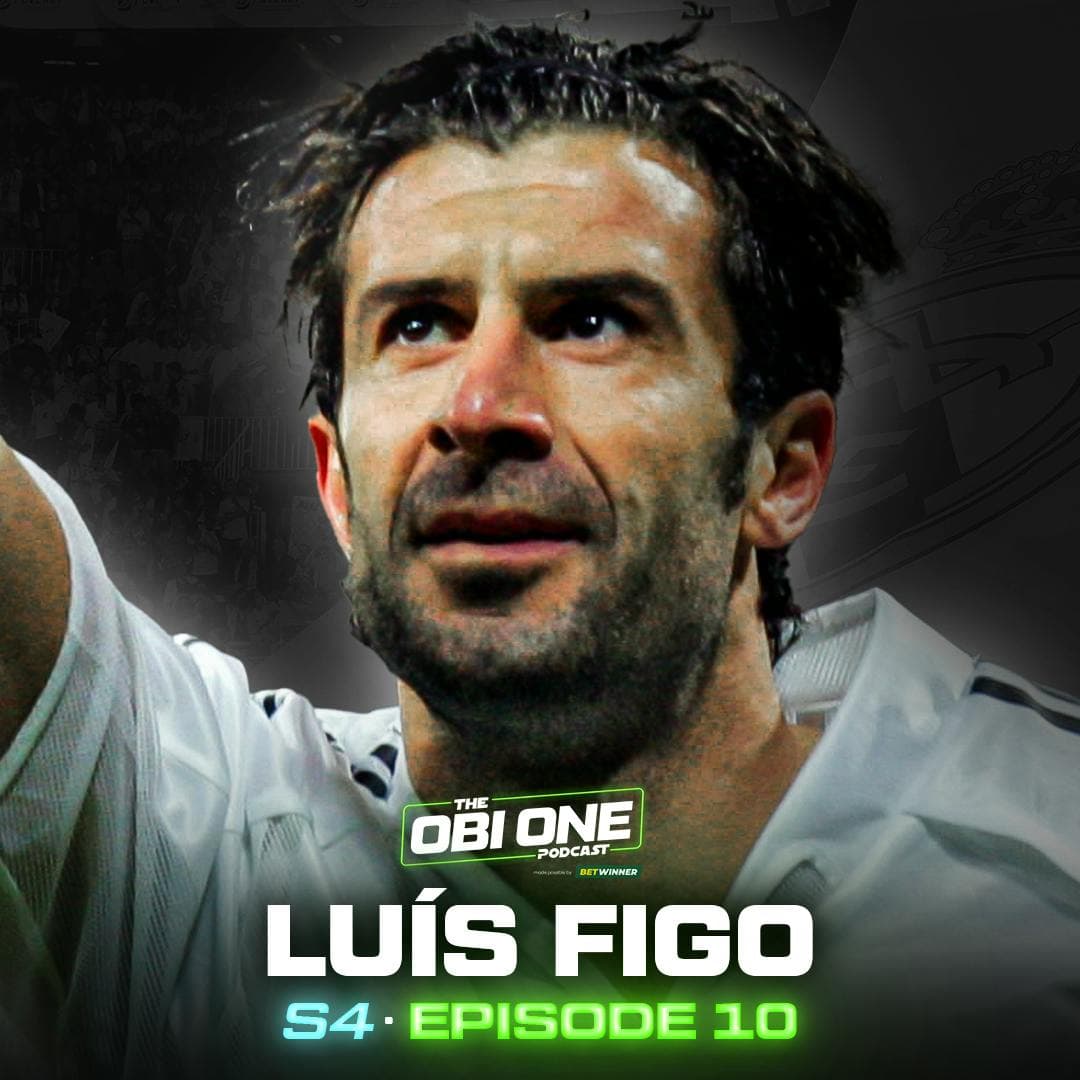
Summary of The Obi One Podcast Episode Featuring Luís Figo
Podcast Overview Title: The Obi One Podcast Hosts: Chelsea and John Obi Mikel, alongside Chris McHardy Description: A candid discussion with football legends about experiences, stories, and insights from their careers.
Episode Title Episode: Luís Figo reveals all: ‘No - Ronaldo played with ME!’, the mental toll of that Barca-Real transfer & the greatest Galactico
Episode Description In this episode, Luís Figo, a distinguished football icon and Ballon d'Or winner, reflects on his career and the controversial transfer from Barcelona to Real Madrid. The discussion covers various aspects of Figo’s experiences, including his thoughts on Cristiano Ronaldo, the mental toll of his career decisions, and insights into his time with Real Madrid's Galacticos.
Key Discussion Points
Luís Figo's Career Reflections
- Post-Career Feelings: Figo mentions not missing playing football, attributing it to exhaustion from a long career. However, he still enjoys watching games and misses the camaraderie of the dressing room.
- Transfer to Real Madrid: Figo discusses the complexity and eventual shock of his transfer from Barcelona to Real Madrid in 2000, detailing the pressures and decisions involved.
Controversial Transfer from Barcelona to Real Madrid
- Decision-Making: The transfer process started during the Euro 2000, influenced by a presidential election in Madrid. Figo initially hesitated, considering his commitment to Barcelona and the potential fallout with fans.
- Fan Reactions: He faced significant backlash from Barcelona fans, including threats and hostility. Figo reflects on the emotional toll this took on him and his family.
- Media Influence: The media played a substantial role in escalating the tensions surrounding his transfer, affecting both his personal life and professional decisions.
Insights on Team Dynamics and Managers
- Managers: Figo shares experiences with various coaches including Johan Cruyff, Bobby Robson, and Louis van Gaal, highlighting their unique styles and how they impacted his career.
- Galacticos Era: He reminisces about the time at Real Madrid with star players like Ronaldo, Zidane, and Beckham, noting the synergy and talent within the team that contributed to their successes.
Thoughts on Cristiano Ronaldo
- Ronaldo's Early Career: Figo reflects on Ronaldo's initial talent and potential when they played together, acknowledging his evolution into a football superstar.
- Comparisons with Other Legends: While discussing the greatest players, Figo emphasizes the importance of appreciating individual contributions rather than comparing talents directly.
Future Aspirations
- Football Administration: Figo expresses interest in pursuing roles in football governance, highlighting his previous attempt to run for FIFA president. He emphasizes the need for capable leadership within football administration.
Key Takeaways
- Mental Health in Sports: Figo's candid remarks about the mental toll of transfers highlight the pressures athletes face beyond physical aspects.
- Legacy and Admiration: He appreciates being part of a generation with significant talent and aims to contribute positively to football in the future.
- Respect for Peers: Figo maintains a respectful admiration for fellow players, emphasizing that each has made unique contributions to the sport.
Conclusion This episode of The Obi One Podcast offers an in-depth look into Luís Figo's illustrious career, his pivotal transfer, and the mental challenges faced by athletes. It encapsulates the highs and lows of professional football, providing listeners with valuable insights into the life of a football legend.
Written by AI. May contain mistakes. Listen to the episode to check what was said.
Chapters
Tap a time to open that second in VOLife After Football: Luís Figo's Perspective
1:07 to 2:15
Figo discusses his transition away from professional football and what he misses.
“This presentation looks like I paid before.”
The Premier League and Missed Opportunities
2:16 to 4:44
Figo shares insights about his career choices and the Premier League.
“And I wanted to be eternal, play until 40 or 45 or whatever.”
Coaching Legends: Managers Who Shaped Figo
4:45 to 7:21
Figo reflects on his experiences with top coaches throughout his career.
“At that time I was talking with Benitez, he was in Liverpool, but in the end nothing happened.”
Playing Alongside Ronaldo: A Unique Experience
7:22 to 11:24
Figo recounts his time playing with Ronaldo and the latter's evolution as a player.
“But I tell you, he's a person that you can argue, either if he has a strong personality and he's very professional.”
The Iconic Move: Figo's Transfer to Real Madrid
11:25 to 14:01
Figo describes the circumstances and impact of his controversial transfer to Real Madrid.
“It's, you know, you're moving from Barcelona to Real Madrid.”
The Transfer Saga: A Player's Dilemma
14:01 to 15:20
Discover the complexities and pressures surrounding Luís Figo's transfer from Barcelona to Real Madrid.
“But I don't know if they had some offers, you know.”
The Emotional Toll of the Decision
15:20 to 17:12
Understand the emotional and familial challenges Figo faced during his transfer decisions.
“because this process was taking like all my holidays, no?”
Mental Preparation for a Historic Move
17:12 to 19:19
Learn how Figo mentally navigated the pressures of moving to one of football's biggest clubs.
“And that day that was in the summer with my family, they came to try to push me to go to Real Madrid because crying in front of my wife and kids, I said, oh, if I don't pay, if I don't go, I have to pay.”
Fan Reactions: Safety and Threats
19:19 to 21:05
Explore the intense fan reactions and personal safety concerns Figo encountered during his career.
“we never talk about mental problems or, you know, this kind of things that is more common now.”
The Media's Role in Player Pressure
21:05 to 22:56
Examine how media narratives influenced public perception and player experience during Figo's transfer.
“But of course, in that moment, me and my family, we saw a lot of threats, no?”
Show all 20 chapters
Handling Hostility on the Pitch
23:33 to 25:00
Figo shares experiences of dealing with hostile fan environments during matches.
“we all know what was thrown on the pitch how do you focus on a game of football?”
Reflections on Euro 2004
25:00 to 27:19
Figo reflects on the emotional impact of losing in the Euro 2004 final and its significance for Portugal.
“I mean, a couple of times, few times when you went to take a corner kick in that game, everything was thrown at you.”
The Emotional Journey of the Portuguese National Team
28:06 to 30:02
Luís Figo reflects on the highs and lows of playing for the Portuguese national team, highlighting the unity and passion experienced during major tournaments.
“But to explain you, in that time, Portugal, national team, was a moment before, but that moment, that year too, that was always like that in the past.”
The Era of the Galacticos at Real Madrid
30:12 to 33:10
Figo discusses his experiences and the dynamics of playing with legendary players at Real Madrid during the Galacticos era.
“what is now called again well never it's always going to be called the Galacticos when you see you R9 Beckham Zidane, you know, all these guys, Roberto Carlos, you know, that team.”
The Impact of Individual Awards in Football
33:11 to 37:00
Figo shares his thoughts on winning the Ballon d'Or and the significance of individual accolades in relation to team success.
“Well, for me, it's a privilege, of course, an honour.”
Comparisons and Legacy in Football
37:01 to 42:00
Figo discusses the challenges of comparing players across generations and expresses admiration for contemporaries like Ronaldo and Messi.
“So, maybe, maybe him, but because everyone knows Zidane and talks about the best is Ronaldo.”
Comparing Legends: Ronaldo vs. Messi
42:00 to 42:55
Luís Figo discusses the styles of Cristiano Ronaldo and Lionel Messi, emphasizing personal preferences.
“your mother with your father, what's going to happen?”
Figo's Experience in FIFA Politics
42:55 to 44:14
Luís Figo reflects on his experience running for FIFA president and his views on football administration.
“I know you, you know, you did run for candidate, you know, FIFA president.”
Career Reflections and Regrets
44:14 to 45:56
Figo shares his thoughts on retirement and the impact of not continuing his career with Inter.
“I decided because I thought that at that time I have at least some support from the European Confederation.”
The Influence of Jose Mourinho
45:56 to 47:48
Figo talks about his final season under Jose Mourinho and their shared history.
“You, like John, your final season you played under, Jose Mourinho or Inter, yes?”
Transcript
Automatic transcript. May contain errors.0:00Chris:Ugh. You said you were over him, but his hoodie is still in your rotation. It's time. Grab your phone, snap a few pics, and sell it on Depop, listed in minutes, with no selling fees. And just like that, a guy 500 miles away just paid full price for your closure. And right on cue. Hey, still got my hoodie? Nope. But I've got tonight's dinner paid for. Start selling on Depop, where taste recognizes taste. List now with no selling fees. Payment processing fees and boosting fees still apply. See website for details.
0:34Chris:right we are folks it is the obi-wan podcast made possible by bet winner we are john at the beautiful melia desert palm new little link between melia and la liga and went right to the top shelf for their ambassador a ballon door winner one of the goats one of the greatest yeah to ever
0:54Luís Figo:Yeah, one of the goals. A legend of the game. Somebody, obviously, since we launched the podcast, I've been chasing him. But finally, here we are. And it's a pleasure to have you on the Obi-Wan Podcast, Luis Figo.
1:06John:Thank you, my friends.
1:08Luís Figo:How are you?
1:08John:This presentation looks like I paid before.
1:14Chris:You're looking well, Luis.
1:15John:Thank you, my friend.
1:16Chris:How are you? How's life?
1:18John:Well, I cannot complain. I think pretty good. healthy the most important first family good do you miss do you miss the game you miss playing I don't miss the game you don't everyone says that why everyone everyone says I hear everyone say I miss a lot no
1:37Chris:everyone we interview Louis says the same no
1:39John:don't miss it no well let me explain I don't miss I don't miss because I'm realistic because why It doesn't change nothing if I miss it. And I finished my career very tired, physically and mentally. So I think that was the reason that I didn't miss suddenly when I retired the football, because I was really mentally and physically tired. So long career. And right now, if I see a fantastic game, Champions League or the Classico, of course, I wanted to play. And I wanted to be eternal, play until 40 or 45 or whatever. But realistically, no. The life changed. Before we were training with 25, now I used to train alone.
2:42John:That is the difference too. But missing, missing like traveling. I miss what is like to be in dressing room with my teammates and the traveling, the atmosphere, but not the stress and depression anymore.
3:02Luís Figo:Yeah, he can still move though. I mean, sometimes when you play a couple of times to play legends again he's still you know I try I try he still wants to win he wants to win all the time
3:12John:that that is always in your body you know when you are competitive you always want to win either when I play ping pong with my daughters I wanted to kill them so this is in the blood you know
3:27Chris:one thing that John and I were talking about you need to put this to bed because a lot of fans of the Premier League Luis Figo never made it to English football Manchester City in the mid-90s what is the story there and now John is one of few people to turn down Sir Alex Ferguson is it true that you turned down Sir Alex Ferguson no no no
3:49John:I never had by circumstances of course I played in Spain the best clubs in the world and by circumstances I never had the chance to play in Premier in that period because I left very young from Sporting with 21. But it's real that when I moved from Madrid to Inter, I was talking with the English Premier Club. But at that time, they took too long to decide. And I had a meeting with Moratti. and in that meeting I chose to go to Italy because between us it was a big feeling and in the end I did the right decision.
4:43Luís Figo:Oh wow, do you mind telling us which club that is?
4:46John:No, it's no problem. At that time I was talking with Benitez, he was in Liverpool, but in the end nothing happened. It's the destiny.
5:00Chris:And Manchester City, is that true?
5:01John:No, no, no, it's not true. I never had contact with Manchester United or Manchester City because of the circumstances, you know.
5:10Chris:You did move to Barcelona and we were going through the managers you played under there. Luis, Johan Cruyff, Sir Bobby Robson, of course, another Louis van Gaal. Three of the greats, all very different reasons. Who was the best? Which manager did you have a greater rapport with?
5:30John:Well, I moved because I was the first coach out of Portugal, so Cruyff. For me, I moved to Barcelona for one of the reasons because of the dream team.
5:48John:I had the experience with him the last year that he coached. Because after that, he left the club and never more work being a coach. So, it was his last year of coaching. And I always say that for me, it's like 20, 30 years ago. And it's still in advance of so many in this time. So just with that, I think I explained everything. And then of course, I had Bobby Robson. I already had it in Sporting. So we met again in Barcelona. It was a difficult transition for him because the club came since many years with Cruyff, with the philosophy of football. and what was Cruyff for the club. So for Bobby it was difficult, but we could win some titles.
6:57John:It was in that time like Cup of the Cup. That's right. Koppelerskoppel. Koppelerskoppel. Koppelerskoppel. What is now Europa League. Yeah. Oh. Yeah. And after came Van Gaal, another Dutch. But I have a big, big respect at Buneci for Van Gaal. Everyone talks about his character. Yeah, people say he's crazy. But I tell you, he's a person that you can argue, either if he has a strong personality and he's very professional. and he was very strict in some circumstances. But I think he was one of the best coaches I had. And either if I have a lot of Fargo's with him, because I play in the white wing, and I always, you always, always wanted that I play out of the pitch.
7:59John:Very white. White, wants to meet the pitch wing. No, but it was fun. Until now, we have a very good relation and it was a great experience.
8:10Luís Figo:So, in 1996-1997, you played with R9. How good was he that one season in Barcelona? I mean, he was tearing people apart and you got to play with him in that team. How good was he? Ronaldo? Yeah, Ronaldo.
8:27John:Wow, Ronaldo at that time, he had no injuries. He was very thin, like in the best moment when he came from PS Vendovin. And no words. I think in that time, he was so, so superior of everyone that he didn't need to train, you know, because it was all talent. And he He was fast, strong, technically, Brazilian, like Ronaldinho and all these top players. But it was amazing to see. Each training session and the games. I remember one game against Valencia, almost at the end of the game, that he scored since since the midfield with the ball. He was on the floor, he came up and dribbled, dribbled, dribbled, dribbled and he scored.
9:30John:Almost at the end of the game he said, what is this? This is Superman. No, that was amazing. and well I think everyone had the chance to enjoy we more because we train every day and we are teammates and friends so since that we had always a very impressive relationship
9:56Chris:I'm always amazed by him because Luis we had the Ronaldo before 98 and what happened in the World Cup final as you said stick thin could dribble could do it all and then we had the Ronaldo post-98. Real Madrid, a little bit different, but he was still so effective. When I think of his finishing, side netting, side netting. He was incredible. How did he change in front of your eyes?
10:23John:Well, physically, it changed, of course. And I think the injuries made him to suffer a lot. And he lost some years that I think in his age was to be the best of the best always. But I think he showed that he came back and he worked a lot, he sacrificed. Of course, the body changed, but the quality was there. So either when he came to Real Madrid, first game he scored, I don't know, two, three goals. And for me, that I had the chance to see close, I think, is the player and the striker
11:15John:with best definition in front of the goal. It's like I never saw one player like that so easily to score.
11:24Luís Figo:He was that good. Yeah, he was that good. Betwinna, home of two winners. Let's talk about 2000. Obviously, your big move. Really?
11:33Chris:I remember it. You wonder if everybody remembers.
11:36John:You have to watch my documentary. I know all the stuff.
11:42Chris:It was incredible. I don't know. I've seen it.
11:44Luís Figo:Yeah, exactly. It's, you know, you're moving from Barcelona to Real Madrid. That move, I think everybody still remembers it today. I mean, you know, it's incredible. What was your thinking and how did that move happen? Did you know it was going to be crazy the way it became?
12:05John:Well, I think it's like everything in life starts like with a surprise and then the snowball starts to grow, grow, grow. And then a moment that you cannot go back, you know. So this situation was during the Euro 2000 with my national team. And suddenly I got a call from my agent. He said, no, look, he's a candidate of the elections in Madrid that want to pay your clause and that you go to Madrid. He said, what? In that time, my clause was 60 million euros. How long? 60 million? 60 million euros in 2000. So you can imagine what it is now. And I said, and this is a candidate. So what you want me to do?
13:07John:So I have a contract. This is a candidate. You don't know either if he want to win the elections or not. And I had to focus in the euro. And in the same year, this never happened because in the same year, there were elections in Barcelona too for the president. So, okay, I told him, okay, you listen to what you have to say to you and that's it. And I communicated that to Nunes for the president. I said, look, he's a person, a candidate in elections, they want to pay my clause. But I think in that moment, you know, it was my feeling. I don't know if it's right or not. Barcelona was passing a difficult financial situation.
13:53John:And I think they wanted to sell probably some big player like Rivaldo. Okay. But I don't know if they had some offers, you know. So I told him, look, this situation. and said, okay, okay, bring the money. And I said, okay, ah, you, you, yeah, more or less like this, no? And I said, you know how is our egos, no? And I said, okay, you think that I'm doing a bluff to get a better contract, you know? Okay, so let's, let's, I went to holidays and the things start to get more serious, you know? And in the end,
Read the full transcript
14:39Luís Figo:you know what happened yeah i saw the obviously i watch a lot of your documentary yeah i mean i saw the the the when you were on the beach yeah and you had to obviously answer the phone calls and you have to because you wanted to relax with your family but then you have this saga going going you know happening and the rumors starting to happen but barcelona they absolutely loved you you were the captain, I think you were. Did you think the fans were going to turn on you the way they turned on you?
15:16John:Well, for telling you the truth, well, what happened, because this process was taking like all my holidays, no? And, of course, I made some mistakes. I think one mistake in terms of, I gave an interview saying that I didn't go to Real Madrid, no? because in that moment I thought that. But during this process was like one day you think you go, another day you think you don't go, another day. Like it was not a regular situation, no, because in the end was people involved that you don't want to disappoint too and a lot of decisions that they had to take. but in that moment I thought that I will stay so I give an interview it was my mistake because in the end I finish in Real Madrid but yeah I didn't had contact with Florentino until the day that he won the elections because it was that day that I flew to Lisbon to take the responsibility because my agent the one who represented me at that time.
16:38John:My relationship with him was from a long time and I didn't have anything signed like a contract with him. Just a relationship and friendship. And in the news that was coming out that he was signing an agreement with the candidate of Madrid, Florentino Paris, that if I didn't go to the club, he had to pay a one-year membership for him. I never saw this contract, you know. I never saw this contract in my life. But he was playing with that, you know. And that day that was in the summer with my family, they came to try to push me to go to Real Madrid because crying in front of my wife and kids, I said, oh, if I don't pay, if I don't go, I have to pay.
17:33John:this and this and this. So your agent, the guy was telling you this? Yeah, yeah, because, because I never saw the contract, this contract, but it was a little bit too sensibilize me and of the situation. So I flew to Lisbon when he won the elections and it was the first time I met Florentino because I never saw him before. So we went to the office of my, my, my agent and I met them. We talked until late. My wife and kid was in Sardinia at that time until I decided to go to Real Madrid. And I called to my wife and said, look, we go. Okay, we go, support you, of course, blah, blah, blah. And the day after, I went to the presentation in Real Madrid and since that, my life changed.
18:28Chris:And your life changed. and I've got to ask, how crazy was it, Luis? Your wife, you said that she said, okay, I will support you. Could you have ever envisaged the craziness? I was a young boy. I was in Tenerife, 13 years of age and there was grown men. We were round a little, I still remember it. Little television, we're round it. Figo 10, you and Florentino. It was just the biggest, one of the biggest footballing stories ever at the time? Could you have ever prepared yourself mentally for what came next?
19:06John:Well, I don't know what to answer to you because that time we don't prepare mentally. We just try to focus and concentrate on work because in that time we never talk about mental problems or, you know, this kind of things that is more common now. I didn't know, of course, I knew the symbolism of the transfer and what was my move because it's two big clubs and the passion that is in Spain. In that circumstances it's not the same that what I I saw, for example, in Italy because there are so many changes between Juventus, Inter, Inter, Milan, you know. And nothing similar to this. But, okay, I was not sure what came in, but I took that decision and I didn't prepare for nothing.
20:16John:I just try to identify as soon as possible with my new club, my new teammates and give my best.
20:28Luís Figo:We've seen sometimes over the years, like when big players want to make moves and their fans absolutely say no. We saw that happen to Steven Gerrard when he wanted to come to Chelsea to join us. and at some point he was scared for his life. Were you at any point scared of your safety, you know, when you were living in Barcelona? Was there any time somebody, maybe a fan came up to you on the streets, you know, and wanted to have a go at you or was it just...
21:04John:Well, realistic, no. But of course, in that moment, me and my family, we saw a lot of threats, no? But what you're going to do is you have to live with that. What I don't really like in that moment, I didn't like, was things that, of course, you couldn't control and be a little bit concerned about what could happen. Extra-sportive, you know. But all this was provoked by the press in Barcelona. I always say because the campaign and the news and what was done, not only for my person, for me, if it was only like that, okay, I could hold it and you forget. But directed to my wife and kid. My kid was one year old.
22:06John:One. One year old. And when I came back, of course, I cannot forget this. That was a lot of, I don't know how you say, like slow. Banners. Banners. Banners with the face of my daughter in the stadium. And that is things that, of course, is a minor. So it could not happen, but it happened. in the end and nothing happened, you know, regarding that. So, well, it was experienced in the end. You finish more mature. You try to grow and pass the page and try to do your best, of course.
22:53Luís Figo:A few words about our crowd sponsors. Betwinner is your reliable partner in the world of sports betting. Enjoy placing bets on any sports event with great odds and maximum convenience. Visit Betwinner.com now.
23:33Chris:we all know what was thrown on the pitch how do you focus on a game of football?
23:39John:I don't know how to answer that because they asked me so many times but I think it's like first of all my focus was preparing the best to play football during the week and I think for a football player when you expect one atmosphere like that is you prepare not prepared but okay it's happening because you go to play not in your stadium. I think for me I always think that is worst when you play home and you have the your funds against yourself. That is your confidence because when you go to the rival or Another stadium, okay, they can do whatever they want. For me, I don't care about that. I'm not worried about that.
24:35John:I was worried about my performance, you know? But about the people screaming and this and that, my scare was like what I said to you before, because he's always a crazy guy. You don't know what happened in the stadium, no? But in the end, I think the most important is you to focus and prepare well during the week, you know? If they scream, if they call you whatever, they don't have to change your performance.
25:07Luís Figo:I mean, a couple of times, few times when you went to take a corner kick in that game, everything was thrown at you. Water bottle, pig's head, you know, everything was thrown at you. And I think eventually the game was stopped.
25:23Luís Figo:How did you, when you guys went back into the dressing room, how was your feeling? How was the players? Where were you? Were they trying to support you? Who was that player who was the team were trying to support you? Because it was a difficult situation for you.
25:36John:Yeah, of course. But difficult not only for me. Of course, I was the focus because of what happened. But either for the rest of the team, I think it was not the atmosphere to play football. because concerning what we have to do and you have to stop the game, start again. The pitch was full of stuff. I don't think we had the conditions, not only me, but for play football, you know, but it was what it is. It was, sorry, but in the end, nothing happened. Disciplinary, nothing happened so you can imagine these days if something happened just a little medium close to that so I don't know but look it's history
26:27Luís Figo:so Barcelona were not fine they were not no zero zero zero that cannot happen today if it does for sure I hope not I hope not
26:38Chris:you don't wish that on your worst enemy Luis I want to talk if I can about this shirt
26:44John:beautiful shirt
26:45Chris:Portugal John and I were talking 2004 Luis I look back on your career there's not many disappointments you won it all in your career Ballon d 'Or Champions League 2004 Euros in Portugal that final does that still hurt today?
27:06John:No I think it's destiny I believe in destiny so you know you know Joaquin Gubens you're getting goosebumps yeah you know I have of course disappointed because you lost Euro but in the same time I will just like try to take the positive stuff and for me and I think for all country and for national team was a a memorable experience that I think never more we're gonna leave one thing like that because I explain you and we lost of course we lost the first game yeah against kris and after that you always go behind the result you know because it's three games that time was three games you have to win if you don't win the second maybe you out and of course depends on the third so we did a big effort because we lost and And then we had to win against Russia.
28:08John:We won against Spain. We won. So we give everything. But to explain you, in that time, Portugal, national team, was a moment before, but that moment, that year too, that was always like that in the past. That is a country that was divided by the clubs, you know. National team, okay. But you always say, okay, Porto, Sporting, Benfica. And we could unite the country in terms of national team. And the support and the last game, the final, it was people falling from the air, from the sea, from the car running with the horses, everything that you can imagine was amazing. Of course, we lost. But I think if you take the rest to remember, of course, and by experience that I had, it was amazing, you know.
29:09John:But it was a pity because sometimes the football takes you and then they give you back. And they give us back in France. Because I think we deserve it. Our generation maybe deserve it. but couldn't happen. So in that year, against France, because my generation never won against France, you see how it's football, we never won against France, we always lost semifinals of the Euro, quarterfinals, sorry, semifinal of the World Cup 2006. And then we're going to win the Euro in France against France. this is you know you see destiny so anyway so it was a pity but in the end you take the positive stuff
30:03Luís Figo:Betwinner your bets your wins we have to go back to again your time at Real Madrid you guys had what is now called again well never it's always going to be called the Galacticos when you see you R9 Beckham Zidane, you know, all these guys, Roberto Carlos, you know, that team. How do you guys, when you guys walk.
30:31John:When you want your spring break to feel like. And your kids pool day to feel like. And your hotel bed to feel like. Oh, and room service to feel like.
30:47Chris:Because at Hilton, hospitality feels like. Your cabana's ready. Would you like fresh towels? It matters where you stay. Book now at Hilton.com.
30:58John:Hilton, for this day.
31:01Chris:My day kicks off with a refreshing Celsius energy drink, then straight to the gym. Pre-K pickup, back home to meal prep. Time for my fire station shift. One more Celsius, gotta keep the lights on. When the three alarm hits, I'm ready. Celsius, live, fit, go. Grab a cold, refreshing Celsius at your local retailer
31:20Luís Figo:or locate now at Celsius.com. Through the tunnel and you're playing against any team and you look at yourself and you think there's no way we're losing today.
31:30John:How good was the players? Well, it was amazing years for us and a period for the club, I think, to have the chance to play with so many of the best players in that moment in the same team, I think, was incredible. and destiny too, because it's not easy. The market allows you to buy this or this in different years. So, it's destiny too. Because now if you want to buy maybe another big club or you have a contract or a clause, it's difficult. know. But I think it was a period too that everything changed a little bit in football, in terms of pre-season, marketing, commercial, all this stuff. And for us, I think, it was a privilege to be in the same team and to win practically everything in terms of clubs.
32:40John:of course you are remembered by what you win but in the same time what you play and I think in that moment we had so much quality that most of the games we won easily because of the quality of the players
33:06Chris:you won the Ballon d 'Or as well you won the Ballon d 'Or in 2000 Luis I know football is a team game, but is that Ballon d 'Or trophy, is that the one that you put up above the rest?
33:18John:Well, for me, it's a privilege, of course, an honour. I think it was more a word of my career, I feel like that, than one year best football player. But of course, it's a privilege because it's a word that is very exclusive. and the other years I was in the list too with chances to win. But in that time, I think that generation had so many players that could win individual awards that were very, very difficult and compete, of course, with Ronaldo, with Zidane. I was competing now, but that generation that I pick was like Baggio, was like Van Basten. I played with Van Basten when I was starting.
34:07John:So, can you imagine all these great football players and you have the chance to win? So, it's a privilege.
34:17Luís Figo:Last time, I was, two weeks ago, I was with your friend, Roberto Carlos in Madrid. And we had the pleasure to have him on the podcast. And I asked him a question. I said, out of all those players, the Galacticos, how good all of you were, fantastic players. I asked him, I said, who was his favorite Galactico player? And obviously, he said so many good things about all of you, but he mentioned one name which I didn't think he will. He said, Beckham. And I asked him, why? He said, they were all fantastic, Figo, Zidane, all of them. But he said, one thing Beckham was good at was the intensity that he came to training with, the way he trained, the way he played.
35:02Luís Figo:He was always running, giving always the intensity, how you call it, like the English mentality of always there, training hard. Take yourself out of it. Who is your favorite Galactico player? Me. No, I'm joking.
35:18John:I'm joking. No, do you think, I think we had luck because of the quality of the players. But I think we are lucky too because of the quality of the persons too. Because it's not easy to manage egos. And can you imagine in all the egos that we had in that time that of course you think that you are the best. But we are focused on putting our our qualities in serve of the team. I think we did very well. Until now, we are friends. So that shows that we have respect and admiration for each other. We have a very good relation. Of course, you know that everyone has their own life. But when we met, we laugh and we remember good times and we are in contact.
36:21John:But going to your question, I think David is underestimated in terms of the quality he had because of course he's the number one with no doubts in terms of image. He's a very good friend of mine and I always talk very well about him because he was a very great professional. Like Roberto was saying, he was putting his talent in service of the team. He could run all the game. He was of quality, kicked the ball like no one. And he was a good person, you know, a very good professional. So, maybe, maybe him, but because everyone knows Zidane and talks about the best is Ronaldo. But I think we had amazing teammates like Makalele was crucial for us.
37:19John:That was going to be my next question. Because he was the only one who defended. And we had Raul, we had Diero, big captain Roberto Carlos, of course. and so on.
37:30Luís Figo:Quality, yeah. I mean, yeah. But you just said Claude McAlele. I mean, what he gave you guys in that team. You know, he let you guys go and express yourself and do your thing. But he was just covering the ground and doing all the dirty work. And there was a lot of quality, eh? Yeah, a lot of quality. I think a lot of people underestimate that as well. But again, I have to ask you, you know, when I watch him play, I didn't get to watch him so many times. But now when I watch the clips, sometimes...
37:57John:You have to put YouTube. Exactly.
37:59Luís Figo:You're too young. No, I want to tell you exactly. Let's talk about Zidane. Oh, my God. Like, it's like, sometimes it's like ballet, isn't it? It's like a ballet ballerina, you know. Elegant. Exactly. I mean, tell us something. How does he, I mean, when you see him. No, you can see it.
38:18John:It's like the control, the technique. Now he stopped the ball. It's like how he could make the team work, you know. And he scored. so important moments he made fantastic goals so it was a totally under 100 % top player
38:37Chris:we've talked about one Ronaldo we've talked about Beckham and his image I think you know where I'm going Luis you probably get asked this question so many times so I apologise but Cristiano 2004 was his first major tournament 2026 of course injury permitting at the World Cup be honest with us when you played with him in 2004
39:00John:no he plays with me he plays with you exactly you're right
39:04Chris:back then you're absolutely right he played with you he played with you he was starting I was finishing he was playing with you you're right he was a winger then he's obviously morphed into what he's become honestly could you have ever imagined yeah
39:20John:yeah no you could see that he was amazing talent and with the the qualities he had in that time, he was 18, no, 2004, when he started in the national team, we could see because he had technique, he was very fast and he could play both legs and he could jump, so it was amazing, that time, it was amazing, yeah. And you knew that? I think, look, maybe people, when you tell something that is not positive, myself, maybe they think, no, he's jealous, this and that, because Portuguese is this and that generation. No, I have the biggest admiration for him because I think he's an example, he's a person that, of course, take the Portugal name for them everywhere.
40:24John:And the example, the records, the hunger that you have to always be better and win, be competitive, I think, just nice words in relation to what is the history of football in the end.
40:43Luís Figo:I mean, you know, the conversation of between, it's crazy because then, you know, you have players like you, you know, legends who achieved so much, you know, who inspired me growing up as well. and then when we talk about the greatest you know Ronaldo gets mentioned alongside yourself Messi and Maradona and the rest of them where do you rank him as the greatest of all time?
41:18John:I don't like to compare because he's someone who's going to lose so I think each one make your own history in football. And then it's like you don't have to compare because everyone is was important or is important. I cannot compare Maradona with Messi and Eusebio with Cristiano Ronaldo because it's different players, different qualities, different moments. I prefer to, you know, to admire the moments and what they do or they did in the history of football. Because if you compare your mother with your father, what's going to happen? You know? It's not really the same. Yes, but you compare caviar with truffle, you know, it's like...
42:15John:Both are great. Both are amazing. Okay.
42:22Luís Figo:Yeah, no, but for me, you know, I've always said, you know, on the podcast that, you know, I got the opportunity to play against both of them so many times.
42:31John:But maybe, for example, you like, or people, I like more style of Cristiano, or the other ones like more style of Messi, you know, it's like, it can happen, because it tastes, you like blue, I like white, It's like, it depends on the taste of each one.
42:53Chris:Everyone loved you, Luis. Thank you, my friend. Not everyone. Maybe not Barcelona fan.
43:00Luís Figo:I don't care. I know you, you know, you did run for candidate, you know, FIFA president. Great experience.
43:15John:I remember I spoke to you. I'm waiting to write a book.
43:20Luís Figo:Is that something you are still looking maybe one day you might still again throw your name in the hat? Is it going to be FIFA or is it going to be UEFA? Where are you looking at? Because I think you were respected in the game. I've had the pleasure to be with you in the Legends game. I know how well we all respect you. And I see where you are going with your image, your life, where you want to go. So if you can tell us where you think one day you might.
43:50John:I think that moment that I decided to run for FIFA president because the organization was really bad, bad leadership. And in the end, the time was putting the truth in that situation was really a mafia.
44:20John:I decided because I thought that at that time I have at least some support from the European Confederation. It was not like that. So I stepped back.
44:36John:My dream and my ideas are to continue to burn faces in the administration. I've been in UEFA for seven years already and it's a thing that I'd like to do. I never took the license to be a coach because I don't like to be in the field. I'd like to be in administration. I'd like to try to do in terms of competitions and football better and promote football in that way. So, I have a dream, of course, but I don't need to say it now. I know, I know. But, of course, I continued, like I said to you, to burn face, to learn. Because I don't believe and I don't think that you should be in position of any circumstances by just having a name.
45:36John:I think you need to be prepared for some role. And I think it's what I've been doing in the past. So when it happens, if it happens, okay. If it doesn't happen, well, we continue our way and our life trying to do what you like and what you can achieve.
46:00Chris:Last one from me. I've got to ask this question. You, like John, your final season you played under, Jose Mourinho or Inter, yes? Final season.
46:09John:Yeah, yeah, final season.
46:10Chris:Any part of you, be honest with us, Luis, regret retiring when you did because Inter won the treble the season after.
46:19John:If I won it by being an international relation for Inter. If I knew that before, if I had the crystal ball, I didn't retire.
46:31Luís Figo:You were staying for one more year. Of course.
46:36John:I stayed that year in Inter to work with Jose Mourinho and because the months before I was injured, I didn't want to retire with that feeling, you know, injury. So I stayed one more year and in the end we won the Scudetto and we won something, some cup more. And for me it was amazing because I finished winning, playing a lot in that year, either if I was with 36 and had the experience to be coaching by Jose. Because I worked with him before in sporting in Barcelona, but never like a first coach, you know.
47:26Chris:He was a translator again.
47:27John:Yeah, he was in Translate, he started Translate with Bobby Robson and then he moved to Barcelona with Bobby Robson, he stayed with Van Gaal and well, it was a great experience, he's a good friend. Luis Vigo, thank you so much for being on the podcast. I hope it's not the last broadcast you do after me.
From the publisher
Luís Figo is a footballing icon. One of the greatest players of his generation, a Ballon d’Or winner and the subject of one of the most controversial and talked about transfers of all time.
Here, the Portuguese sits down with John and Chris at the Melia Desert Palm in Dubai to reflect on his illustrious career, and set the record straight once and for all.
So what does he REALLY think of Cristiano Ronaldo and his place among the game’s pantheon? And what of his bid to one day become UEFA president?
Luís also takes us into the inner workings of his transfer from Barcelona to Real Madrid in 2000, a move that shocked the world. What was the catalyst, how did his family deal with the fallout and most pressing of all: does he have any regrets?
Figo also talks us into the inner sanctum of Real’s Galacticos, picks the team’s best player and reveals just how close he came to a move to the English Premier League.
Luís Figo was speaking to the Obi One Podcast to celebrate La Liga’s partnership with Meliá Hotels International in the Middle East.
Learn more about your ad choices. Visit megaphone.fm/adchoices

