In short
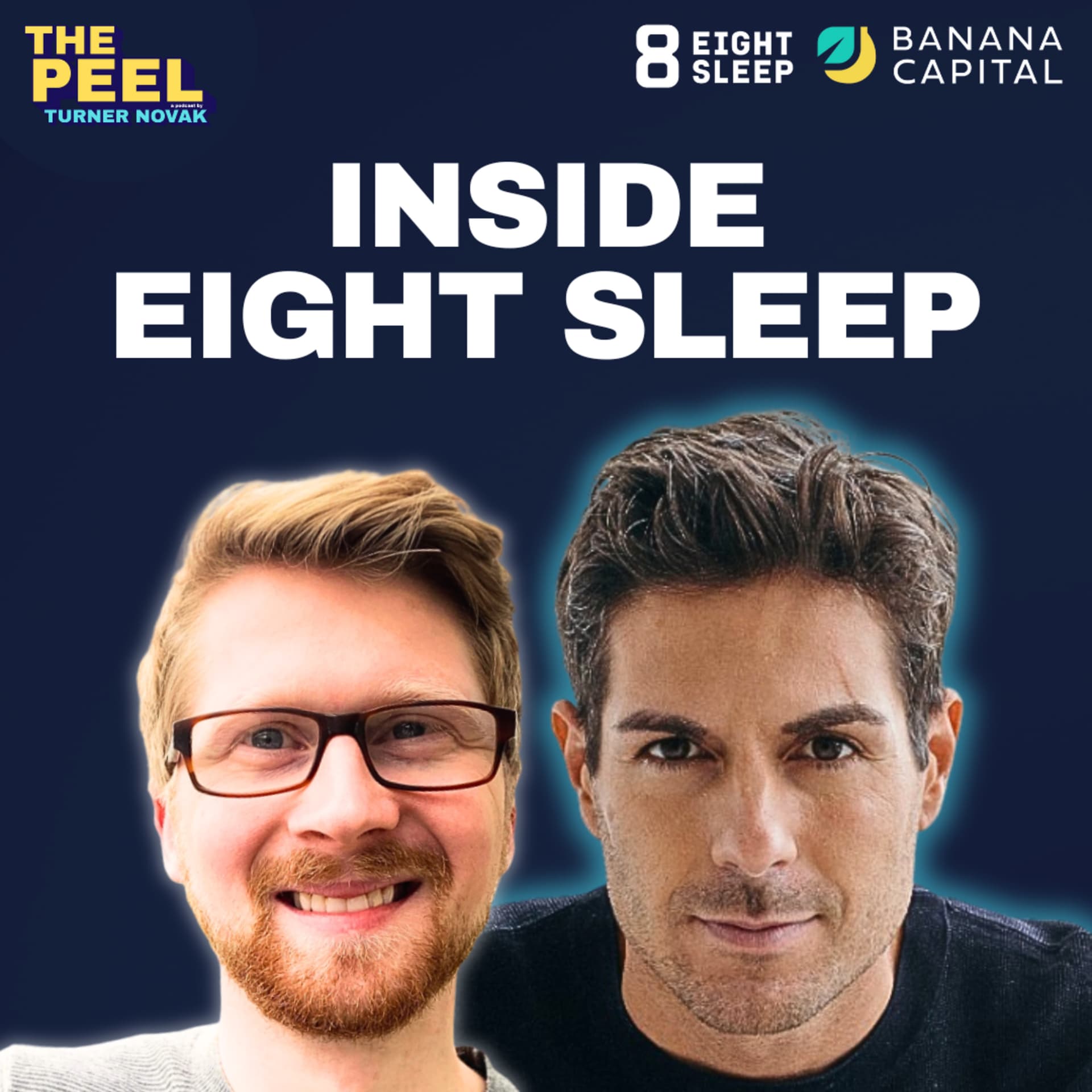
Matteo Franceschetti, co-founder/CEO of 8Sleep, explains how its AI-driven “sleep butler” cover improves sleep via continuous temperature control, routine guidance, and cloud-based biometrics. He also covers founding a consumer hardware company, fundraising, and building an AI moat, plus product roadmap and reliability during an AWS outage.
Guest background
Born and raised in Italy; moved to the US ~14 years ago. Previously built a solar/renewables startup that was acquired by Panasonic-owned company; later became an angel investor. CEO of 8Sleep since its 2014 launch; company reportedly raised $300M+ and was free-cash-flow positive in H1 2025.
Key claims
Sleep is the “foundation” of health; routine and pre-bed content matter. 8Sleep’s pad uses sensors (heart rate, movement, respiration; snoring via vibrations) to infer sleep stages and adjust water temperature hundreds of times/night. Customers can see metric changes on wearables. AI models can flag health risks and support longevity “digital twins.”
Notable examples
A customer emailed that 8Sleep metrics led them to the ER, resulting in surgery. Matteo describes fixing an extended AWS outage with restored functionality and a Bluetooth fallback. Roadmap includes more controls (head elevation to reduce snoring; light/noise/air quality/oxygen) and women-focused programs (menopause hot flashes, pregnancy comfort).
Written by AI. May contain mistakes. Listen to the episode to check what was said.
Chapters
Tap a time to open that second in VOOverview of 8Sleep
0:45 to 0:57
Matteo discusses the challenges and milestones in building 8Sleep.
“Check out the back catalog of over 100 episodes, including last week's with Rahul Vora, founder of Superhuman Mail.”
Overview of 8Sleep
1:00 to 1:38
Matteo discusses the challenges and milestones in building 8Sleep.
“It's easy to set up, and they automatically handle all registrations, ongoing filings, and their API provides sales tax rates wherever you need them with all the integrations you need.”
Introduction to Sleep Challenges
1:38 to 1:51
Turner shares his personal sleep challenges and sets the stage for discussion.
“That's N-U-M-E-R-A-L.com for the end-to-end platform for sales tax and BAT compliance.”
Understanding 8Sleep Technology
1:51 to 2:20
Matteo explains the technology behind 8Sleep and its benefits for sleep.
“I was just joking before we started recording that I've got terrible sleep the past couple nights.”
The Importance of Sleep
2:20 to 3:47
Matteo highlights the significance of sleep as a pillar of health.
“I'm hoping a lot of listeners are maybe like generally familiar with it.”
Tips for Better Sleep
3:47 to 6:00
Matteo shares actionable tips for improving sleep quality.
“Yeah, like every person, no matter what, sleeps every day.”
Temperature Control in Sleep
6:00 to 7:47
Matteo explains the role of temperature control in enhancing sleep.
“If you're chatting with your best friend about an amazing trip you guys had three years ago, that's completely fine.”
Behind the Technology of 8Sleep
7:47 to 9:30
Matteo describes the sensors and technology that power 8Sleep.
“It's like having a sleep butler that keeps adjusting things while you're unconscious.”
AI and Sleep Monitoring
9:30 to 14:00
Matteo discusses how AI is used to monitor and enhance sleep quality.
“time temperature to help you fall asleep so you can fall asleep 15 20 faster and get more deep sleep, more RAM.”
Life-Saving Technology
14:00 to 15:15
Learn how Eight Sleep's technology can detect health issues.
“I received an email recently from a customer who said, you guys literally saved my life.”
Show all 27 chapters
AI and Predictive Health
15:15 to 16:30
Discover how AI can predict health risks and improve longevity.
“So with all the data that you have and you're collecting, just like on aggregate over all these people, what is kind of the most interesting or surprising thing that you've kind of come across?”
Data Ownership and User Benefit
16:30 to 18:01
Understand the importance of data ownership in health tech.
“at predicting my health 10, 20, 30 years down the line.”
Responding to Outages
18:01 to 20:06
Find out how Eight Sleep handled the AWS outage and prevented disruptions.
“because it's almost a modern form of medicine.”
Future Innovations in Sleep Tech
20:06 to 22:59
Explore the upcoming features and hardware enhancements for better sleep.
“So by the time people are hearing this, it's all been shipped and released.”
Matteo's Journey from Italy
22:59 to 24:23
Learn about Matteo's background and his transition to the U.S. startup scene.
“Instead of just giving you a wall with, I don't know, 20, 30 metrics, which we have in the sleep report, there will be this butler that will be able to report to you only what matters.”
Challenges of Building Hardware
24:23 to 28:05
Hear about the challenges in transitioning from prototype to manufacturing.
“And then one, she's like half Italian, half Venezuelan and is in San Francisco.”
Building Eight Sleep: Challenges and Early Days
28:05 to 30:06
Learn about the initial challenges of creating a consumer hardware product and the journey from prototype to manufacturing.
“And I think there's like probably building this thing and getting the first kind of prototypes out was probably a challenge, I'm assuming.”
Finding Product-Market Fit in Consumer Hardware
30:06 to 32:00
Understand the importance of product-market fit in consumer hardware and the iterative process of development.
“our technology things were incredible the key thing in consumer hardware you really need to have product market fit or you're not gonna make it if people love your product then you have the chances to make it.”
The Fundraising Journey of Eight Sleep
32:00 to 35:27
Explore the fundraising challenges and milestones faced by Eight Sleep, including insights into investor relationships.
“to kind of talk about the fundraising journey because I think a lot of founders building consumer hardware like this, they probably run into a lot of the things that you run into.”
The Market Potential of Sleep Technology
35:27 to 38:26
Discuss the sleep technology market and why consumers are willing to invest in better sleep solutions.
“Because I mean, I'll have conversations with friends and they'll say, what do you think about that eight sleep company?”
Innovations in Sleep Aids and Supplements
38:26 to 42:01
Learn about Eight Sleep's innovations in sleep aids and their recent launch of supplement products for sleep enhancement.
“So then when you were hiring people and trying to convince people to join you, I don't know how easy that was, but I would assume there's a lot of people that are like, hardware, sleep, is this like a real problem?”
Adjusting Sleep with Melatonin
42:01 to 43:37
Learn how melatonin can help adjust sleep patterns after traveling.
“If it's the first night or two capsules the second night or one capsule the third night, you adjust the dosage.”
Addressing Women's Health Needs
43:38 to 44:46
Explore how Eight Sleep is focusing on women's health, especially during menopause and pregnancy.
“And so literally every woman on earth who is going through menopause with hot flashes, if they can afford our product, they will see a meaningful benefit from it.”
Unexpected Use Cases for Sleep Products
44:47 to 45:48
Discover how Eight Sleep products are helping women during cancer treatment.
“And so now we see a lot of these people buying our product because they have hot flashes while they're going through the therapy of no chemo.”
The Subscription Model in Sleep Technology
45:49 to 47:10
Understand the evolution of Eight Sleep's subscription model and its value proposition.
“And so one thing you mentioned just from like a business model perspective, you mentioned initially you did not have a subscription product.”
Matteo's Personal Health Routine
47:11 to 48:44
Get insights into Matteo's extreme health and fitness regimen and its impact on performance.
“What's your personal sort of like fitness or health regimen?”
The Physical Demands of Car Racing
48:45 to 51:41
Learn about the intense physical and mental requirements of competitive car racing.
“Well, and it's probably good that you, as somebody who's like, you're building a company for like a certain percentage of consumers that really wants to optimize this stuff.”
Transcript
Automatic transcript. May contain errors.0:02Turner Novak:Welcome to The Peel. I'm your host, Turner Novak, founder of Banana Capital. Today's guest is Matteo Franceschetti, co-founder and CEO of 8Sleep. Matteo and his team created one of the original breakout consumer health products in 2014, quietly building a business that's raised over$300 million and was reportedly free cash flow positive in the first half of 2025. But things weren't always easy. Mateo shares the challenges of starting a hardware company, why hardware companies have stronger moats, and the fundraising mindset he adopted that eventually got Coastal Ventures and Founders Fund to invest.
0:34Turner Novak:We also get into the importance of sleep, how the company's sleep butler uses AI to help you sleep better, and the big opportunity building more consumer health products. A quick reminder, I publish two episodes of The Peel every week, exploring the world's greatest startup stories just like this one. Check out the back catalog of over 100 episodes, including last week's with Rahul Vora, founder of Superhuman Mail. Now, let's talk to Mateo after a quick word from Numeral. This episode is brought to you by Numeral. Numeral is the fastest, easiest way to stay compliant with US sales tax and global VAT.
1:05Turner Novak:It's easy to set up, and they automatically handle all registrations, ongoing filings, and their API provides sales tax rates wherever you need them with all the integrations you need. Numeral supports over 2 ,000 customers in both the U.S. and globally, and they pride themselves on white-glove, high-touch customer service. Plus, they guarantee their work, and they'll cover the difference if they mess anything up. They're fresh off a fundraise, closing a$35 million Series B from Mayfield, which they're going to reinvest into building an even better product. If you want to put your sales tax on autopilot, check out Numeral at their new domain, numeral.com.
1:38Turner Novak:That's N-U-M-E-R-A-L.com for the end-to-end platform for sales tax and BAT compliance. Mateo, welcome to the show. Thank you for having me. I'm excited. Yeah, I'm excited too. I was just joking before we started recording that I've got terrible sleep the past couple nights. So I think it's kind of ironic that we're doing this episode right now. I'm in like the worst cognitive sleep state that I've probably been in in a while. I'm the perfect guest to be here today. So maybe I can give you some tips. Yeah, I want to ask you for tips. But I guess really quick for people who don't know what 8Sleep is, I'm hoping a lot of listeners are maybe like generally familiar with it.
2:24Turner Novak:But can you just kind of explain what it is and we can kind of talk about a bunch of different topics from there? Yeah, of course. We invented a technology that improves your sleep. It's a cover that you can install on top of any mattress, your own mattress, and it will change your body temperature hundreds of times per night to maximize your sleep performance. So each side of the bed can have a different temperature. So if you sleep with a partner, your partner will have a different temperature based on their needs. And by controlling this temperature during the whole night, it will make sure you fall asleep faster, you get more deep sleep and more REM, and you wake up more refreshed.
3:01Turner Novak:And this may be a kind of a rhetorical question for some people, but why is sleep so important? When you look at health, health is based on three pillars. One is sleep, one is nutrition, and one is fitness. But at the end of the day, even if there are three pillars, one is the true foundation, which is sleep. Because if you don't sleep, you will not have the energy to work out today, and you will probably crave junk food. So sleep comes first. After a good night of sleep, you are ready to go to the gym, you're ready to eat healthy, the right type of food. and it's probably honestly even the simplest thing to take care of.
3:38If you can just go to sleep and make sure you sleep at least seven to nine hours and you're just disciplined, it's much easier than going to the gym every single day.
3:47Turner Novak:Yeah, like every person, no matter what, sleeps every day. Like it's not like you can't not sleep. Like you have to do it. Yeah, but sometimes it's an afterthought or we think, oh, I have to do all these, this and that and you just go to bed and you pretend to fall asleep and wake up fully refreshed after seven, eight, nine hours. And it really, it doesn't work like that for your body. And so the example I usually give to people is, I don't have kids yet, but I have a lot of friends with kids. And when they have a kid, right, they have a certain discipline, a routine with their kid. Now they do the bath always at the same time.
4:26They put them to sleep at the same time. They wake them up at the same time. and then we become adults and we pretend to forgive that. But our biological state is still the same.
4:36Turner Novak:Why do people forget it? Like, why do people not prioritize sleep as much as they should if it's so important? Because I think they're busy. I think they think it's something they can compress. Obviously, sometimes, you know, you go out with friends, you want to have a couple of drinks and you go back home late and you want to chill. and so you tend to sacrifice your sleep. But at the end of the day, you shouldn't because you just need to be disciplined and then your body will adjust and you will fall asleep at the same time, you will wake up at the same time and probably your sleep will be more stable.
5:12And then there are technologies like ours that can help you to take it to the next level. But even if you just nailed the basics, that should be enough to help you have a pretty small sleep.
5:22Turner Novak:So low-hanging fruit, just for somebody who wants to listen to this and just immediately improve. It's like stick to a schedule and make sure that you get, I don't know what you said, seven, eight, nine hours of sleep. I think it depends, right? On kind of like REM cycles and all that stuff. Yeah. So the most important thing, even if you go to a sleep doctor, because you have insomnia, the first thing that will fix is your routine. Go to bed at the same time, wake up at the same time. You just literally train your body to develop the melatonin and to develop the state of sleep at the right time.
5:56and to wake up naturally at the same time. Then that is one. Second is to start preparing for bed. And so we are actually running a study, and the study is proving that it's not so much about using the phone or not before bed, but it's the type of content that you consume before bed that really matters in this quality of your sleep. So you need to start relaxing. You can keep using your phone. If you're chatting with your best friend about an amazing trip you guys had three years ago, that's completely fine. If you are fighting with your boss about a certain topic, you might not sleep that well.
6:35So preparation, routine, temperature in the bedroom, right? If you have our product is one thing, but even just setting the temperature somewhere between 68 and 72 degrees Fahrenheit in your bedroom, very important. and those usually are the basics.
6:54Turner Novak:And that seems to be one of the big features of the product is temperature control. Why is that so important, like temperature control and sleeping? Yeah, so your body temperature already changes during your sleep. And so what we are doing is not that we are reinventing the wheel, we're just helping your body to do what it's supposed to do. And as soon as you fall asleep, your body temperature should drop, go as low as possible during deep sleep, and then three, four hours before you wake up, issues rising. Then at the same time, there is plenty of medical evidence that in deep sleep, you need a different temperature from REM, for example, which are the two of the main phases of sleep phases.
7:35And so based on our data, we are able to adjust the temperature, again, hundreds of times per night based on your sleep stages, based on your movement, based on the temperature of the bedroom, and many other factors.
7:47Turner Novak:We optimize everything for you. It's like having a sleep butler that keeps adjusting things while you're unconscious. Interesting. So it's like, in theory, you could, I don't know, like have an actual person that's there, like changing the temperature of the room that you're in or something like that. Or like you're in the second piece or maybe in early 90s, and you could literally have a human butler who was there adjusting the temperature, but they wouldn't know in real time your biometrics. So they will have to be a PhD sleep butler with some form of sensors to monitor your sleep stages, your heart rate, your respiration, and adjust things in real time.
8:30Turner Novak:And so the way it works is, so it's a pad that goes on top of your mattress. And it just like, how does it work that it knows what to do? Like what all goes into that? Yeah. So it's a very thin pad. it doesn't change the feeling of your mattress and inside there are sensors that are able to track your heart rate your movement, your respiration and based on that we can infer sleep stages and sleep quality and then there are micro tubes and we circulate water at a different temperature for each side of the bed so next to the bed there is what we call the hub which is a small tower where we have our thermal engine so it's literally like having a ferrari asleep as there is this engine that sits next to your bed is extremely quiet you you is impossible for you to know if it's on or off we tested that and based on these different sleep stages in our ai which is called autopilot we adjust in real time temperature to help you fall asleep so you can fall asleep 15 20 faster and get more deep sleep, more RAM.
9:41And overall, what we see is that you can get up to 30 % better sleep quality. The most beautiful thing for us is that a lot of our customers, they have a wearable and they can see their own metrics on their own wearable. So it's not just a sleep report in the metric. Obviously, we have an app with all your no sleep metrics and your heart rate and your respiration. But if you have an aura or a boop or an Apple watch and you have your history, you will start seeing a change in your metrics before and after using our technology. Or if you travel and you come back and you compare the data, you will see your recovery was much poorer while you were traveling than when you're back home.
10:23Turner Novak:That's been one of my things I was kind of, I was almost like scared about with date sleep is because I run into this when I'm traveling is I have a really good pillow. We bought a cup plug probably like right before COVID. we bought one of those like$2 ,000 mattresses. It is very nice. And then when you travel, you go to a hotel and it's like shitty mattress. The sheets are itchy. You know, maybe like the hotel room is bad temperature, all that stuff. But like you run into that scary problem of like, oh man, my home bed is so good that I literally cannot sleep if I'm not at home. Yeah. Well, it's true that at the end of the day, you spend most of the time at home, hopefully.
11:01And so the key is to maximize at least all the nights that you're at home. And then in the future, maybe there will be other technologies that we can offer to our users for when they travel.
11:15Turner Novak:Is it possible to build something like that? Yeah, we have some ideas. You know, in startups, it's always a matter of bandwidth and priorities. So we could build it in six months from now if we wanted. The question is you do that or you do something else. it's just the trade-off. Yeah, well, I think I thought, don't you do some hotel partnerships where like certain hotels have eight sleep covers already? Yeah, we had the partnership with Equinox Hotel in New York and we are talking to multiple hotels. So that could be another easy way where at some point there will be some hotels that are just affiliated and they have an eight sleep in their main streets.
12:01Okay. And you mentioned that you're able to use AI to do this stuff.
12:05Turner Novak:I mean, what are you actually doing there? Is it using LLMs to do something? What's actually happening? We have been using hardcore AI for now many years, now five plus, because at the end of the day, the key of what we do, there's two key components. On one side, there is the hardware with all the sensors. And the other one is our cloud computing, where we stream the data to the cloud, we run our AI, so extremely advanced models that can detect, first, all the different parameters, all the different biometrics. and second now they are also able to triangulate and take action for you and so let's say that you had the late meal or let's say that you train really late we will automatically adjust the temperature based on how your body's responding or if you had alcohol and we see a heart rate that is accelerated so this goes back to the butler the sleep butler with phd level there is a phd the sleep agent that on the cloud is monitoring in real time all the information you gave us plus your biometrics, and it keeps tweaking things to maximize your sleep performance.
13:23Turner Novak:Then in parallel, when you wake up in the morning, this PhD sleep agent also reviews all your data, and it comes back to you with insights. And so there is also where we can show the power of our AI because what we started noticing is our models are reaching a point where we're becoming smarter than us. And they can triangulate certain types of data and come up with certain potential risks or certain health conditions we were not even thinking of. That's the power of not reaching the scale that we have reached, where you're able to fit this data into the models and the models can literally save lives.
14:03I received an email recently from a customer who said, you guys literally saved my life. My metrics were upside down. I went straight to ER. They found a problem. I had an immediate surgery and that saved my life. Wow.
14:19Turner Novak:And so how does it actually work? Is it depending on like how your weight is distributed on the pad and like heat? And like, does it, do you need to have your skin touching it in order for it to measure it? Like it kind of seems It's pretty tricky to get all that to work. So there are sensors more or less at the chest level, so behind your back. At the end of the day, you should almost imagine that the pod, our technology, from a sensor standpoint, is almost like if you had a doctor with a stethoscope on your back during the night. We also detect snoring, but we don't use microphones. Everything is based on vibrations.
14:57It's literally the same technology of a stethoscope, But imagine Tesla making a 5.0 stethoscope that shares to the cloud, where there is the most advanced AI, the information, and the AI comes back to you with everything you need to know about your health and your longevity.
15:18Turner Novak:So with all the data that you have and you're collecting, just like on aggregate over all these people, what is kind of the most interesting or surprising thing that you've kind of come across? Like it literally can be anything, but I'm assuming there's some interesting stuff. Well, now is, is so cool because with, with the AI, we're really unlocking the, the next frontier of longevity. And so right now there are hundreds of Macteros, digital twins, replicating my health, my sleep, and my health policies for the next 10 and 20 years. and they are stimulating different behaviors. And based on that, we can understand what I should be doing or not to make sure that the healthiest in 10 years from now and 20 years from now.
16:05Then at the same time, AI, by correlating different data and behavior, can have a prediction about the risk that I develop Alzheimer or diabetes and all these kinds of things. And the more data we are able to feed into the model, the more the model will be accurate. And so soon you should expect that you can upload the data also from other sources. It could be blood work, it could be DNA. And all that will just make this model more accurate at predicting my health 10, 20, 30 years down the line.
16:35Turner Novak:Yeah, and you've kind of, a lot of people, you'll kind of say like, how do you build a successful AI company right now? You need to capture like a new data source that no one else has data and like build this like proprietary data stream. And I mean, it kind of seems like you've done that with the pads and with, I mean, I'm assuming you can make like a blanket. I know there's like an app component. I'm assuming you could make like some sort of wearable device. Like you could probably build a lot of these different things over time to capture a lot of different data that is previously not being captured, I would assume.
17:08I always think of data in two buckets. But even right now with this AI wave, on one side, you want to have your own data as a company because you don't want to rely on external data. Otherwise, you don't have a moat and you will be commoditized soon. Then the second bucket is this data needs to be used in terms of intelligence for the benefit of the customer. And that's all that we do. So we give back. Substantially, we create an AI layer in the middle where there is the data that is being fed into the model. We are AI experts in terms of health and longevity applied to your data. and we give the data back to you.
17:48We don't do anything else with the data except giving back to you and following all the standards in terms of security and privacy and all that. But that is what really makes me really proud because it's almost a modern form of medicine. And that is where we want to extend your life, help you live a longer and healthier life and to be able to give back to your loved ones.
18:13Turner Novak:Yeah, and one really interesting thing that you mentioned there was relying on external parties and third parties. I know recently we're recording this the day after the great AWS outage. I think this episode's coming out on, it's either Thanksgiving or Black Friday. I know we were going to do a little Thanksgiving promo related to that, like a Black Friday promo related to the episode. But when we were recording this, you're fresh off. AWS went down across, I don't know, a large portion of the internet. what happened on your guys' end and how did you fix it? Yeah, there were some devices that were impacted and so some functionalities, they didn't work for some hours as they were expected.
18:55And so we took two actions. The first one was we worked all night long to make sure that all the functionalities were restored. And so everything is working properly right now and so there is no disruption at all. That was the P deal. Then the P1, which is what we are currently working on and we work on that the whole night, is also to make sure that this doesn't happen ever again. And there are a couple of ways to do that. One, we have a fallback solution where you will be able to just control through Bluetooth the device. And so if there is no Wi-Fi or if there is an outage from our cloud providers like AWS, you will still be able to fully control your device like if nothing happened.
19:43And so there will be no disruption for the sleep of our users moving forward. And I'm really proud of how the team responded because this is something that usually requires several months. But between hard work and AI and the latest tools, we expect to release something by the end of today or tomorrow the latest. Interesting.
20:07Turner Novak:So by the time people are hearing this, it's all been shipped and released. I think we're going to throw this up on Twitter for people, but people listening to the full podcast, I guess that goes to show how fast you can actually move. Some people don't realize how fast you can move on things. What was the reason that happened? I'm assuming you guys didn't get much sleep last night. No, we didn't. I mean, this is something that almost never happened, right? It never happens for a prolonged period of time. So even if a cloud provider might not be available for half an hour or an hour, then that wouldn't impact our devices.
20:46So here it was extended for multiple hours. And the key is just to build multiple backup solutions instead than just a few. And so we are adding more solutions to make sure that this is not going to happen again. Again, last night, everything worked properly. Everything was restored.
21:12And we fixed it.
21:15Turner Novak:Nice. That's always good. I know that at 8 Sleep, you have this sleep score that kind of ranks or sort of shows you how well your sleep was. I'm assuming, what were sleep scores like internally at the company the past two days? It was pretty bad. Even because our engineers that caught the outage very soon, they were still up at 2 a.m. two days ago working, and they caught that. And that is why we were able to also start showing in the app the message that there was an outage. And then since then, substantially, we kept working nonstop, and we will keep working nonstop until when we ship this backup solution with Bluetooth control that can make sure that if there is an outage, nothing happens to your device and more than to your sleep.
Read the full transcript
22:02Yeah. I mean, it's like pretty quick turnaround.
22:06Turner Novak:I guess, what else are you guys cooking in terms of product roadmap over the next couple months, couple years, decade? How do you just think about what kind of opportunities you have? We think always in two buckets. One, there is hardware, and we are working on a lot of new products that will come out fairly soon. I'm really excited. So we'll keep doubling down on sleep enhancement. that that is our bread and butter, but with more functionalities. So we spoke about temperature, but another feature we have is we can raise your head if you're snoring and you will stop snoring. So we sell your bangs that goes underneath the bed.
22:44And as we detect snoring, we immediately raise your head and that will mitigate the snoring. And a lot of our customers absolutely love that feature. So you should imagine more things that we will control with the sleep butler, the sleep agent. you can think of light and noise and air quality and oxygen everything that we can optimize while you're asleep will do it this is on the other side on the software side we have an internal data already of a new page where we really maximize the power of ai and so this sleep agent will have its own page and it will be able to share in real time insights that change during the day based on the data that we collect.
23:27Instead of just giving you a wall with, I don't know, 20, 30 metrics, which we have in the sleep report, there will be this butler that will be able to report to you only what matters. What happened during the night is there is a certain trend, a summary of the night, and also certain recommended behaviors or changes that the agent can do to your bed for the following night to maximize your sleep.
23:51Turner Novak:Interesting. And I like that you call it a butler and not like an AI agent because, I don't know, it just makes it a little bit more human, makes it a little bit more like easy to identify with as a consumer. Yeah, thank you. And so I guess I want to ask you kind of going back to the earlier days of the company, but also I think personally, are you originally from Italy? Like, did you grow up in Italy? Yeah, born and raised in Italy. I moved here just 14 years ago, Matt. Oh, wow. Okay. I am very like not planned, but I've actually invested in two companies with one of them is actually based in Milan, Italian founders.
24:32Turner Novak:And then one, she's like half Italian, half Venezuelan and is in San Francisco. But I never thought I'd be investing in a bunch of Italian founders. But I guess there's actually a lot. And they I mean, they seem to be pretty good. All the ones I've met are pretty they're crushing it. So thank you. the college in Europe I mean the top 1 % in Europe is incredible as good as the US it's obviously much harder there I did a startup there oh really? yeah but it's very hard to raise money so we had to be profitable since from the beginning and that is how we made it happen otherwise it would have been impossible for us and so the VC fundraising landscape is much more difficult and that is why the ones that they make it, particularly if they remain in Italy, they are really world class because it was so impossible, so hard for them that if they made it happen, it's just because they are insanely good.
25:28Yeah.
25:29Turner Novak:Have you seen that one account on Twitter? It's called Compliant VC and it's this like parody account of a VC in Europe and he just tweets about how European startups are way better than San Francisco startups because in Europe, they support the government and they follow regulations and they help us increase tax revenue and stuff. And he'll make a joke about how like, wow, I just met a founder building in Berlin. I can't wait to spend six months doing my diligence and then a three-month regulatory review. And then in nine months, when I wire them the money, they're going to get ready to build or something.
26:06Turner Novak:It's just extreme, over the top. It's kind of like that over there. It's kind of not an exaggeration at the same time. Yeah, everything, all the procedure. I used to be a lawyer, so I understand the legal landscape. And even just incorporating a company, first, it's fairly expensive. It's probably in the$5 ,000 at least. And then it's fairly slow. You need to go to a notary. There are a lot of formalities that you need to follow that here don't exist. Like everything in life, there are good and there is the positive and the negative side of the coin. Yeah, I think we can keep moving on past this, but I think one crazy story someone told me, I think it's in Germany.
26:50Turner Novak:In order to close a funding round, you have to have somebody like a notary actually read every page of the documents out loud to everyone who signed or something like that. And it takes like a day. And you just sit there listening and read them out loud. There's got to be a better way. That's just a little bit ridiculous. hopefully we're able to figure out we need like DocuSign for European you know figuring out how to get their doc signed faster so so then was there like a certain point that when you decided okay I think you said you sold your first company in Italy and then did you move to San Francisco thinking I want to I want to go to the U.S.
27:30Turner Novak:and build a startup or how did that all kind of kind of play out so we saw that company that it was in solar and renewable energy then I moved to New York and we did something extremely similar here in the US. And then all the assets were acquired by Panasonic or a company owned by Panasonic. And then during that time, I started being an angel investor. And so I started being connected with people in tech. And after that exit is when I came up with the idea of Eight Sleep together with my co-founders. And I think there's like probably building this thing and getting the first kind of prototypes out was probably a challenge, I'm assuming.
28:15Turner Novak:Had you done anything like that before? Like, had you ever built a hardware product? No. And I think the biggest challenge was not even the prototype because Max, my co-founder and CTO, he's a hacker and he was able to build it for the past. I think we lacked the full understanding of how complicated it is to go from a basic prototype to something that you can really manufacture at scale. And there is where we were really blind. And so we built the first prototype. It was working and it was not cool. We were able to raise a bit of money from family and friends. We do a crowdfunding campaign. I think at the time it was the 16th or 17th largest in the world.
28:58I was told they 1 ,000 pre-orders. we go through YC but then manufacturing is not happening and I had to move to China so I go to my wife who is actually one of the co-founders and I say manufacturing is not happening I have to move to China and she says when do you go and I say tomorrow and she said when do you come back once I have fixed it four months later but I fixed it and so the people we hired back then are still people we have with us today but consumer hardware where it's really, really hard, particularly in the early days, because shit happens, and you end up burning more money than what you expected.
29:40Having good unit economics is really hard. Having repeated purchases is really hard. And the speed of iteration, particularly on hardware, is extremely difficult.
29:50Turner Novak:Yeah, it's really slow. If you miss one generation of the product, you probably need to wait another 12 months if you're really fast. and so that means you need to survive for the 12 months and so the first probably three four years they were the toughest and then as things now really started taking off particularly with the our technology things were incredible the key thing in consumer hardware you really need to have product market fit or you're not gonna make it if people love your product then you have the chances to make it. But if it's nice to have, then you're in trouble. So you really have to build and create a new thing, like a new product that people truly love.
30:35Turner Novak:But it's probably difficult because you can't just go vibe code an app or whatever and like, oh, it looks like people are using this. You actually have to go and build this thing. How do you know what to build and what to do? And I step back for a second and then I answer, which in the early days is obviously a disadvantage because you're slower and it's more risky. But if you really cross the cusp, at that point you have an incredible mode and much more defense stability. So once you reach our stage, you're in a better position because you already went to a pain that very few people can overcome.
31:13Then we started with the idea of a cover that was just tracking your sleep. and then as I was doing customer discovery and talking to people about the product, everyone said, look, that is cool, but does it cool? And my partner wants it warm, I want it cold, does it do that? And literally 100 % of the people I was talking to, they were asking for that. And so after we shipped the 8 ,000 units in pre-orders, we were able to raise money from Kostla Ventures with Kithra Boys and Vinod. because they were bullish on the idea. And that is when we built the pod, which is our current technology. And it went from zero to multiple hundreds of millions in a matter of 40 years, five years.
31:59Turner Novak:Interesting. So I guess it might be interesting to kind of talk about the fundraising journey because I think a lot of founders building consumer hardware like this, they probably run into a lot of the things that you run into. How did you raise money for this? It sounds like initially was the first round. It was like people that you knew really well. and then it sounds like you did the crowdfunding round after that yeah I would say particularly the first three rounds they were really hard so first we had a family and friends, it was probably a million then we got rejected by way, see, twice but the third time we got in and after demo day we raised six million in a day And that was probably the easiest time to raise in the history of the company.
32:49Because YC, hardware was still very hot. There were investors from all over the world. So it was the right time. Then what happens is that investors start to realize, because there it was immediately after Nest got acquired by Google. And so there was a hype around hardware. A year later, everyone hated hardware. Because a lot of companies, they were in trouble. crowdfunding was not working a lot of companies sold i don't know six seven million on crowdfunding and they were going bust and so investors didn't want to touch consumer hardware particularly there was no subscription which we have the time we were able to do a a small a then we did a b or a1 whatever it was the name convincing causal adventures and there you is just because if and be not, they have always been very bullish on sleep.
33:44And so they knew there would be a company that could dominate a trillion dollar industry. It was just a matter of finding the right funders. So they gave us the money and I think we raised around$9 million. Then the next round was funders fund.
34:02But it was never easy because then we had Valor Equity Partners, first investor in Tesla and then recently we raised$100 million. So overall we raised, I think somewhere between 250 and 300 million, that range. But each round was very difficult. It's not that we had an insane amount of people that were begging to invest. But where we were lucky is that at the end of the day, the people that invested were always some of the best. And the reason was that it was easier for me to convince them that we were the right team than convincing them there would be a massive company in sleep. All these people, right, Keith, Vinod, Trey Stevens, who's the founder of Unreal, Antonio Brasquez, first born member of Tesla, and one of the closest people to Trilog.
34:48I didn't have to convince them that there will be a trillion dollar company in sleep. I just had to convince them that we could beat that company because we are going to work hard and we are the right people. While I started with a lot of other people, it was much harder because they had to be convinced about the business opportunity in general. And so we ended up with some of the best investors in Silicon Valley, if not the best, because of this unique angle.
35:20Turner Novak:So it's like a trick for fundraising. It's just figure out the people who actually believe what you're doing. And that's like half the battle. Because I mean, I'll have conversations with friends and they'll say, what do you think about that eight sleep company? It's just a mattress. Like there's no way that's a venture-backed company. I'm like, I don't know. I mean, is it just a mattress? I don't know. Like, I don't think so. I think there's actually a pretty big opportunity there. Like you spend a third of your life sleeping. For a lot of people, I mean, your biggest purchase is maybe your home, your car.
35:54Turner Novak:Mattresses are pretty expensive products that people spend a lot of money on. And I think especially today, we're kind of at a point where people will spend each incremental dollar of income they have, they will spend it on a luxury good or like something that improves their life. And we just spent the last 30 minutes talking about how important sleep is. So it's like, would somebody pay a couple thousand dollars, like a year or a month or whatever it is to like be healthier and get more sleep? I don't know. I kind of think the answer is probably like some people would. If you can get up to 30 % better sleep and you're paying a dollar or two per night, would you pay that?
36:35I think the answer is yes. The main thing is if you look at mattresses, which again, we are not a mattress because we are a device that goes on top of the mattress, but I call them dumb mattresses. And so we go to bed at night and we pretend to fall asleep and wake up eight hours later fully refreshed. First eight hours is the equivalent of a trip from Miami to Milan every single day. Because we are unconscious, we don't realize how long that time is. But it's literally worth flying from New York to Milan every single day. That flight is a pretty long flight. So, if you can optimize it for$2 a day or$1 a day, I would consider it.
37:18Turner Novak:Yeah, like you think people pay$1 ,000 to get first class on a flight like that. Yeah, for one trip. Right here, three times per month. And second is, these mattresses, the latest technology for mattresses was memory foam, which was invented around 1966 in the 60s from the NASA for space. Okay? That is the latest weekend innovation we had in sleep. and we all sleep on these pieces of dumb foam. We have iPhones, we have OpenAI, Elon Musk is taking me to Mars, but we still spend 30, 40 years of our life on a piece of dumb foam that does nothing for us. And that really is the part that doesn't make sense.
38:08And so for a small amount, I understand our product is still fairly premium, and over time, we will make it more affordable to more people. But the fact that we need technology to enhance our sleep for our health and our happiness and our longevity, I don't think is debatable.
38:26Turner Novak:So then when you were hiring people and trying to convince people to join you, I don't know how easy that was, but I would assume there's a lot of people that are like, hardware, sleep, is this like a real problem? Like, I want to go join like a B2B SaaS, like whatever company was hot at the time. Was it hard to get people to join? Or was like, did you have like a thing that worked really well for hiring people, maybe in the early days and then today? It was much easier than what you would expect because of our mission, right? At the end of the day, again, we are a healthcare company. We are substantially a wearable company.
39:00We just have a different form factor. And so people from Apple Watch or from other wearables companies, they all want to join us. Because actually, we are the only wearable that does something for you. We don't report the data. We have our sleep buckler, which based on the data can do things for you. but now the most interesting thing is the the number one way to recruit is these people already have our product and they love it so much so they're already in pack they're already doing hardware i don't know a couple or they're doing software i don't know meta whatever you you pick the top company they have the product they love it they see we are hiring they want to join us and that's the best way because they already know the product then on our side because we are so hardcore and we work so hard then it's just a matter of alignment if you join a sleep you're on a mission you're going to war we need to move as fast as possible to deliver better sleep to millions of people
40:04Turner Novak:yeah the mission alignment's interesting like I'll have I'll be trying to help a portfolio company hire and they're just doing some boring like compliance thing or something. And I'll like send it to, like I'll try to convince my friend and they're like, I don't want to do that. Like that seems lame. And so one thing I thought was kind of interesting on the website, you didn't mention it earlier, but on the website, it said you launched supplement products and then you also have like a jet lag supplement. Is that like pretty new-ish? Yeah, we launched them recently. I travel 250 days a year because I travel across all our offices.
40:42So we have quarters in New York, San Francisco, China, Milan, and Boston. And so I developed the product with Peter Attia, which is one of the greatest doctors. He has a very famous book in terms of longevity. And so we developed these supplements. There is a line of supplements that they help you just to relax and calm down at night. And they don't create any form of dependency to, so you can take them literally every single night. And then there is a jet lag supplement, and that is specific for jet lag, and is amazing. Obviously, I'm biased, but people should try it, because that is very affordable.
41:22And substantially, when you travel based on the delta in terms of time zone, you take more or less capsules, and it's going to put you asleep. And you don't feel the jet lag anymore. So it doesn't matter if I travel to Europe, if I travel to Middle East, whatever, now I have my plan in our app. There is a whole jet lag protocol that uses all these supplements and you will not feel jet lag anymore.
41:48Turner Novak:So how does it work? Does it like release like a melatonin or something or like change your heart rate or temperature to just like help you fall asleep based on the new time zone you're going to? Yeah, there are two ingredients. One of the two is melatonin, as you were saying. And so you take three capsule. If it's the first night or two capsules the second night or one capsule the third night, you adjust the dosage. And based on that, once you take it, within an hour, you will feel super sleepy. You fall asleep. You want to take it at the right time. So whatever is your usual bedtime. It doesn't matter.
42:21Let's say you land in the Middle East and you usually go to sleep at 10 p.m. At 10 p.m., you take the three capsules the first night. You go through the whole night and you adjust quickly. And then in the app, we also give you a protocol of things you could do in the morning, like sunlight or exercise a little bit when you should eat. And so we have really transitioned you to the new time zone.
42:44Turner Novak:Yeah, because I've definitely, I've done a little bit of research around, like, you know, you want to eat about 12 hours before you want to wake up. You don't want to eat like three hours before bed. So that's probably like, that's like a self-control thing. Like, if you need to tell the person, give them the instructions and they got to stick to it. So just generally thinking then, Is there like an opportunity to do things related to women's health? Because it kind of feels like an underexplored area. Have you done much there yet? Not yet. That is part of our focus. We are working on that as we speak.
43:17And you will start seeing more and more results early next year. And the reason is this. We have seen a lot of demand from women, particularly women going through menopause because they have hot flashes. And with our product, we can cool them down when they have hot flashes in the middle of the night and we can help them to stay asleep or go back to sleep. And so literally every woman on earth who is going through menopause with hot flashes, if they can afford our product, they will see a meaningful benefit from it. Just because, again, we can cool you down in a matter of minutes while you're sweating.
43:58Then, as a derivative, we have seen a lot of interest from women also during their pregnancy because their biometrics and their temperature changes during the different trimesters. And so we are working on programs also for women during that period to help them, particularly also with the base, which is designed for snoring, but in reality, a lot of people use it also for just comfort. We even see women using our base to be able to feed the baby after they gave birth, just because it's easier in the middle of the night to raise themselves with the base and then feed the baby. And so there are all these very interesting features that humanize the product and solve a lot of micro problems for women.
44:43And we believe we can do an amazing job for them.
44:47Turner Novak:Yeah, and it's interesting too, because I don't know what the specific number is, but I believe women control like 70 % of all consumer spending, like every household like i was like i think about my me and my wife like it's usually i sometimes have input but she's usually the one who's like really driving a lot of our decisions so i feel like it's a pretty big market that you guys can unlock yeah and what we love is we are a painkiller and not a vitamin and that is always what excites me like another thing we didn't expect is for people with cancer going through chemo and they have hot flashes.
45:24I didn't know and we didn't expect. And so now we see a lot of these people buying our product because they have hot flashes while they're going through the therapy of no chemo. So those are the things that make me really proud because some of these people write me and they say, I was unable to sleep for months. Now I can finally sleep again. Thank you very much. That is the best message you can receive as a CEO.
45:50Turner Novak:Yeah. And so one thing you mentioned just from like a business model perspective, you mentioned initially you did not have a subscription product. So people would just buy it and then maybe they might come back to get like a new generation of the product. But then at some point you layered in the subscription. How did that kind of work over time? Well, as we started applying more and more intelligence, as what we were saying before, right? So now we run a lot of computational activities on the cloud. And that has a cost. And that is how we can provide more advanced biometrics, more biometrics in general, and also come back to you with insights.
46:32And then this 24-7 sleep butler that in real time can adjust things. And so there is really a computational cost. When people say, oh, why this device has a subscription
46:43Turner Novak:is to deliver all the value that we deliver is because of that. And I think the value is proven in our retention, which is insane. Like literally almost very, very, very few of our customers stop the subscription after one year, two years or three years. And the reason is we hopefully we are proving that we can deliver so much value that again, for a dollar a night for you and your partner, this is more than worth the mark. Yeah, that makes sense. What's your personal sort of like fitness or health regimen? I'm assuming you use a sleep. I'm assuming you track and optimize that. What else? What other kind of stuff do you do?
47:22Well, I'm fairly extreme. And so I fast. I usually eat once per day or maybe twice. I definitely skip breakfast. I usually never intake more than 500 calories before dinner, but I train every day. So on average, I probably burn in a day between 3 ,000, 4 ,000 calories.
47:44Turner Novak:And you make it all back up. at dinner? Yeah, majority. Then I'm at like 8 % body fat. So I'm really skinny. I'm at the peak in terms of HRV, which is pretty good for someone who has been running the company for 10 years that was able to keep my self in shape. My heart rate is at the lowest it has ever been. As I said, I train every day. Particularly, I play paddle at a competitive level when I can or I'd go to the gym. I do an ice bath every single day. I do probably a sauna two, three times a week. And I'm on a keto diet. So I almost never eat carbs except Friday night when I have pizza with my wife.
48:31So I'm very regimented. I don't advise. I don't recommend this to many people who could say I'm a robot. But that is also what helps me to perform and stay stable as we build a company.
48:45Turner Novak:Well, and it's probably good that you, as somebody who's like, you're building a company for like a certain percentage of consumers that really wants to optimize this stuff. Like, it's probably a good thing that you're constantly just iterating on the different areas that someone might want to optimize their health. And like, you're, you're basically, you're your own customer in a sense. So it's probably a good thing. I think the, the type of guinea pig who is testing things for our audience to then maximize their their own sleep i'm extreme and i think it's it's fine and at the same time i think of my job like i'm an athlete myself if if i want to know help the company grow and achieve what we want to achieve i need to make sure i'm a peak performance and so i try to treat myself as an athlete for as much as i can and i know you you do a lot of like sports car racing is that considered a sport or is that more of like a leisure thing i mean when when i do it is a true sport it's very competitive i did a few years ago the 12 hours of abu dhabi where i finished third but yeah whenever i i can i i race with cars because the passion i had since when i was a kid i was gonna have a lot of time for that but it's really good for my brain because it's all about not taking decision quickly at high speed.
50:13There is adrenaline. So yeah, I love it. I just work and play paddle and three times a year I race with cars.
50:23Turner Novak:A lot of people don't realize how physically demanding that is. You look at the F1 guys and they're in very good shape. It's because it's super stressful. Your mind is constantly thinking and you have to be like super quick, the fastest reflexes of any human in order to do that. So yeah, I think it's a lot harder than people realize. Two things people underestimate. The first one is the braking. It's almost the equivalent with the car side drive. You need to put a pressure of 160 pounds-ish just with the left leg multiple times. Wow. And you need to go full, no, full power. That is one. And the speccon is particularly in GT cars.
51:09Inside the cockpit, it gets really, really warm. Like you're probably in the 100, 210 Fahrenheit. And then you have the helmet and the gear. And you're there performing for a couple of hours. I pick perform.
51:24Turner Novak:That'd be really uncomfortable for most people. No, yeah. And so I remember when I stopped racing cars for many years, then I was able to just go back a few years to go. And I was not in the shape of it. a micron shape and after an hour right because it's a matter of a tenth of a second there now that your is not seconds is a tenth of a second and so if you just become a tiny little bit slower because you just get a little bit tired or you're sweating a little bit too much you merely lose three tenths of a second oh wow and that's like everyone else you're competing against is probably not missing that three-tenths of a second.
52:04Turner Novak:So you're like immediately in last place. Yeah. Well, this is a lot of fun. Thanks for taking time to come on the show. No, of course. Thank you for having me. It was a great chat. And I hope you thought it was a great chat. Thanks again to Numeral for supporting this episode. Head to numeral.com for the fastest, easiest way to stay compliant with US sales tax and global VAT. If you missed it, make sure to check out last week's episode with Rahul Vora, sharing the lessons he's learned selling to companies, including going behind the scenes of the most recent acquisition of superhuman mail, and how he almost died selling his first company, Reportive, to LinkedIn.
52:38Turner Novak:If you like this conversation, please like, comment, subscribe, and name your sleep butler after me. If you don't want to miss a future episode, subscribe to my newsletter, The Split, linked in the description to get each episode plus a transcript emailed directly to your inbox every week. Thanks again for listening. See you next time.
52:58You
From the publisher
Matteo Franceschetti is the Co-founder and CEO of Eight Sleep.
Eight Sleep created one of the original breakout consumer health products in 2014, quietly building a business that’s raised over $300 million dollars and was reportedly free cash flow positive in the first half of 2025.
But things weren’t always easy, and Matteo shares the challenges of starting a hardware company, why hardware has stronger moats, and the fundraising mindset he adopted that eventually got Khosla Ventures and Founders Fund to invest.
We also get into the importance of sleep, how the company’s Sleep Butler uses AI to help you sleep better, and the big opportunity building more consumer health products.
Thanks to Numeral for supporting this episode. It’s the end-to-end platform for sales tax and compliance. Try it here: https://www.numeral.com
Timestamps:
(2:18) Three pillars of health: sleep, nutrition, fitness
(4:02) Creating a sleep routine
(6:59) Importance of body temperature in sleep
(8:43) How Eight Sleep works
(12:14) Using AI to help you sleep
(18:35) The AWS outage
(24:12) It’s too hard to build in Europe
(28:09) Why hardware has stronger moats
(32:23) How to fundraise for a hardware company
(35:30) The opportunity in Sleep tech
(38:43) Hiring is easy when you have a mission
(40:37) How to fight jet lag
(43:03) Opportunities in women’s health
(45:54) Evolving from single purchase to subscription model
(47:12) Matteo’s personal health stack
(49:41) Racing sports cars
Referenced
Eight Sleep: https://www.eightsleep.com/
Compliant VC Meme Account: https://x.com/compliantvc
Follow Matteo
Twitter: https://x.com/m_franceschetti
LinkedIn: https://www.linkedin.com/in/matteofranceschetti/
Follow Turner
Twitter: https://twitter.com/TurnerNovak
LinkedIn: https://www.linkedin.com/in/turnernovak
Subscribe to my newsletter to get every episode + the transcript in your inbox every week: https://www.thespl.it/