In short
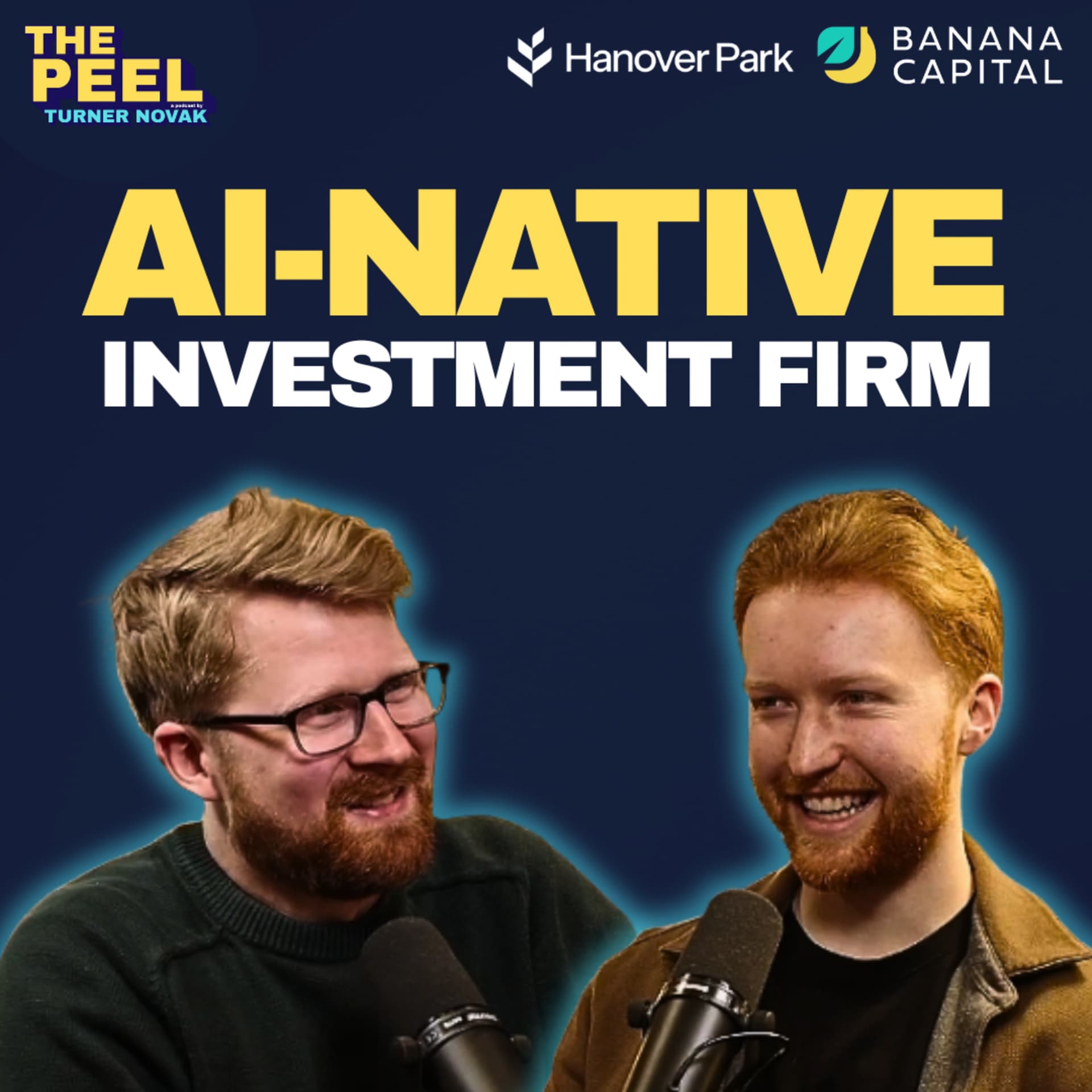
Podcast Summary: The Peel with Turner Novak - Episode: Inside Hanover Park
Episode Overview In this episode of *The Peel*, Chris Hladczuk, Co-founder and CEO of Hanover Park, discusses the journey of building an AI-native fund administration business that manages over $15 billion in assets. The conversation covers Hanover Park's recent $27 million Series A funding round, the unique challenges of creating their own general ledger, and the implications of AI in the financial services sector. Chris shares insights on the company's growth strategies, hiring practices in an "unsexy" industry, and the importance of maintaining strong customer relationships.
---
Key Topics Discussed
- Introduction to Hanover Park
- Hanover Park is designed as a financial infrastructure solution for investment firms.
- The business model integrates fund administration, portfolio management, and a seamless experience for limited partners.
- Funding and Growth
- Recently secured a $27 million Series A funding round, led by Emergence Capital.
- Rapid growth from $1 billion to $15 billion in assets over 20 months.
- Validation of the opportunity in the market and the potential to disrupt traditional fund administration practices.
- AI-Enabled Services
- Discussion of how AI is transforming service businesses:
- Automating repetitive and mundane tasks commonly handled by humans.
- The potential of AI agents to perform fund administration tasks, allowing accountants to review outputs rather than manually process data.
- Building a General Ledger
- The rationale for developing their own general ledger system:
- Complexity of fund accounting involves multiple legal entities and various allocation percentages.
- Ensures accuracy and scalability of AI applications on top of core financial data.
- Customer Relationships and Onboarding
- Emphasis on understanding customer needs and expectations.
- The concept of living in "constant paranoia" about customer satisfaction.
- Prioritizing seamless onboarding to create "raving fans" among clients.
- Cultural Elements
- Unique office environment:
- Music played in the morning, team bonding activities like hackathons, and an emphasis on a fun workplace culture.
- The use of a gong to celebrate wins and milestones in the office.
- Sales Strategy
- Founder-led sales approach with an emphasis on direct relationships:
- Chris' philosophy of "always get on the plane" to build trust and rapport with clients.
- The importance of polite persistence in nurturing leads without being intrusive.
- Long-Term Vision
- Goals for Hanover Park include expanding into additional asset classes and ultimately becoming a key vendor for major investment firms.
- Building a comprehensive platform that serves as a single source of truth for financial data.
- Personal AI Stack
- Chris shares his preferred tools for productivity:
- Granola for managing meeting notes and documents.
- Claude Cowork for streamlining presentations and data analysis.
- Plans to create a CEO command center for efficient decision-making.
---
Conclusion Chris Hladczuk's journey with Hanover Park showcases the intersection of technology and finance, illustrating how AI can serve as a transformative force in an industry traditionally reliant on manual processes. The episode highlights the importance of building strong relationships with clients, maintaining a culture of innovation, and the strategic use of technology to enhance operational efficiencies.
Supporting Sponsors
- Numeral: An end-to-end platform for sales tax compliance.
- Flex: An AI-driven financial platform for business owners.
---
Additional Resources
- [Hanover Park Website](https://www.hanoverpark.com/)
- [Careers at Hanover Park](https://jobs.ashbyhq.com/hanover-park)
- [Follow Chris Hladczuk on Twitter](https://x.com/chrishlad)
- [Follow Turner Novak on Twitter](https://twitter.com/TurnerNovak)
For more insights and episodes, subscribe to *The Peel* and the accompanying newsletter to receive updates directly in your inbox.
Written by AI. May contain mistakes. Listen to the episode to check what was said.
Chapters
Tap a time to open that second in VOUnderstanding Hanover Park's Role
0:45 to 2:20
Overview of what Hanover Park does in the financial infrastructure space.
“middle office to do all the financial reporting for the limited partners at these firms, for the CFOs and all that kind of stuff.”
Recent Funding Announcement
2:20 to 3:50
Chris shares the details of the recent $27 million Series A funding round.
“And there was this crazy moment where Jake Saper, who joined our board from Emergence, flew in from San Francisco to New York City on Friday night.”
The Process of Raising Funds
3:50 to 6:40
Discussion on the challenges and process involved in raising a Series A.
“and globally, and they pride themselves on white glove, high touch customer service.”
AI-Enabled Services in Fund Administration
9:30 to 11:28
Exploration of the role AI plays in changing fund administration services.
“What percent of times when a customer sends us an email with a request that AI agent can action on it with no edits, right, by the human team.”
Challenges and Opportunities Ahead
11:28 to 14:00
Discussion on the challenges of traditional fund administration and future opportunities.
“So I think there's like, our goal is to become the default for how fun CFOs adopt AI.”
Building the General Ledger: A Complex Challenge
14:00 to 15:30
Learn about the complexities involved in building a general ledger from scratch for an AI-native service.
“Part of our goal was actually we're the opposite of that because we did the really hard thing first.”
Understanding Fund Accounting Complexity
15:30 to 18:15
Discover the intricacies of fund accounting and the challenges it presents for investment firms.
“And kind of think about that as like the core layer.”
Creating a Collaborative Engineering Culture
18:15 to 21:04
Explore how Hanover Park fosters a culture where engineers and fund accountants collaborate effectively.
“I think, I think I think about like, of like, if you're one of the greatest engineers in the world and we've like built this hacker culture.”
Automating Financial Reporting with AI Tools
21:04 to 24:13
Learn about Hanover Park's approach to automating core financial reporting and portfolio management.
“And so like, we constantly want to be like pushing the envelope to invent on our customer's behalf.”
The Work Environment at Hanover Park
24:13 to 28:00
Get insights into the vibrant work environment at Hanover Park and its impact on team morale.
“And so like the what was like the hardest part about doing all this?”
Show all 36 chapters
Surviving the Blizzard: A Unique Office Arrival
28:00 to 29:00
Learn about a team member's extreme commitment during a snowstorm.
“There's a crazy blizzard happening in New York City.”
Celebrating Product Velocity with Team Demos
29:00 to 30:20
Discover how regular product demos foster excitement and collaboration.
“we're literally doing multiple releases a day.”
Customer Engagement: The Importance of Feedback
30:20 to 31:40
Understand how customer feedback shapes product development and events.
“I actually want to start bringing on, bringing customers to the office for these Friday demos to see the latest and greatest.”
Challenges of Scaling: From Manual Processes to AI
31:40 to 32:50
Explore the complexities that arise as businesses scale and adopt AI.
“Problem two is like, I've heard all these good things about AI chat GPT's out, Claude's out.”
The Difficulty of Switching Fund Administrators
32:50 to 34:10
Learn why changing fund administrators is a daunting task for CFOs.
“Because like it is a, and I take that like insanely seriously of like the level of trust that our customers put in us.”
Building Trust: A Commitment to Customer Success
34:10 to 35:10
Discover the lengths the team goes to in order to build trust with clients.
“It's really just like ENG bandwidth plus some pushes on the frontier of like, how do we think about these like long running agents that need to operate over days and weeks, not minutes?”
Real-Time Data: A Game Changer for CFOs
35:10 to 36:20
Understand the critical need for real-time data in financial decision-making.
“trusted us with their most important financial data.”
The Importance of Real-Time Data for AI Agents
36:20 to 36:40
Learn why real-time data is crucial for the functioning of AI agents.
“And so he was constantly struggling with, I have no idea what's going on.”
Sales Lessons from Early Customer Engagement
36:40 to 37:30
Explore the sales strategies learned through direct customer engagement.
“And with what's possible with AI now, like I think now is the time where we should solve that problem.”
Always Get on the Plane: Building Customer Relationships
37:30 to 38:50
Understand the philosophy of prioritizing in-person interactions to build trust.
“So you mentioned getting on the plane, you jumped on this plane, went down and talked to the customer in Florida, spent five hours at his house.”
Managing Time: Prioritizing Customer Engagement
38:50 to 40:00
Learn how to effectively manage time for customer engagement amidst company growth.
“Can they really trust you if you're not going to do that?”
Transitioning from Sales to Raving Fans
40:00 to 41:20
Discover strategies for turning initial customers into enthusiastic advocates.
“there's just like, there has to be like a level of like, okay, how do we think about what is the highest ROI thing?”
The Journey of Gaining Initial Customers
41:20 to 42:00
Learn how the company gained its first few customers and built credibility.
“And like all the worst parts about sales in general of like, I'm just trying to get them like some sales guy with commission.”
Building Trust with Early Customers
42:00 to 43:42
Learn how the founder built trust with initial customers to gain traction.
“to ensure that they can be successful in their first 100 days plus.”
Mastering Polite Persistence in Sales
43:42 to 45:34
Discover the balance between persistence and annoyance in sales outreach.
“And you had this concept of, I think it's called polite persistence.”
Creating Raving Fans: Onboarding Success
45:34 to 46:50
Understand the key elements of effective onboarding that convert clients into fans.
“Like, as a CFO, like, what are you happy about?”
The Evolution of Hanover Park's Growth
46:50 to 48:56
Explore how Hanover Park scaled from 5 billion to nearly 15 billion in assets.
“you kind of knew things were kind of working, like you were just getting like the scale sort of tipping towards more positive feedback in like momentum versus not?”
The Role of Founder-Led Content Strategy
48:56 to 50:48
Learn how a strong content strategy can drive customer engagement and sales.
“Like, it doesn't matter if Elon retweets me, which he did one time, which got me like 50 million views or something, that doesn't matter.”
Challenging Conventional Startup Advice
50:48 to 53:28
Examine why much of traditional startup advice may be outdated and ineffective.
“Do you like plan it out Sunday night, right?”
Navigating One-Way and Two-Way Doors
53:28 to 56:00
Discover the concept of one-way versus two-way doors in decision-making processes.
“However, that doesn't mean like we have multiple people that have been at companies that have exited before.”
Expanding the Customer Base
56:00 to 1:00:00
Explore the strategies used to grow the customer base beyond VC firms.
“Next time, next time I'm near the office, I should try to do it.”
Trust but Verify in Financial Modeling
1:00:00 to 1:04:00
Learn about the importance of accuracy and trust in financial modeling products.
“And I basically had this thing where like, I had this massive chip on my shoulder.”
The Future Vision of Hanover Park
1:04:00 to 1:06:30
Discuss the ambitious long-term goals and future vision for Hanover Park.
“like what you use personally as like Chris.”
Personal AI Tools Used by Chris
1:06:30 to 1:07:20
Find out about the AI tools and technologies Chris uses in his daily work.
“pulled together from like any activity over Slack, over email, over calendar, over anything.”
Upcoming Podcast Episodes and Sponsors
1:07:20 to 1:10:01
Get insights on future podcast episodes and the sponsors supporting the show.
“It's like you're spending half your time on your to-do list.”
Upcoming Guests and Their Backgrounds
1:10:01 to 1:10:39
Learn about notable figures joining the podcast and their achievements.
“I'm trying to think of who else we have.”
Transcript
Automatic transcript. May contain errors.0:02Turner Novak:Chris, welcome to The Peel. We're back. The second ever, second time guest. First one was Dan at Chain Guard, which they went zero to 40 in revenue in two years. Those are big shoes to fill. I know. We went zero to 15 billion in under two years. 20 months to be exact. So we're going. 15 billion in revenue? That would be a lot. That would be a lot of revenue. I'm not cursor. Assets on platform. Assets on platform. Okay. Okay. So for someone who isn't familiar with Hanover Park, they didn't listen to the first one, which we'll link in the show notes for people if they want to listen to the year old conversation.
0:37Turner Novak:What is Hanover Park for people who don't know? You can think about us as financial infrastructure for the investment firm. And so today there's like all these insane armies of human duct tape, we call it, that sticks together all the back and middle office to do all the financial reporting for the limited partners at these firms, for the CFOs and all that kind of stuff. And what we've built is like unified software plus AI plus services to do all the financial reporting, which would be called fund administration. And then we also have a bunch of portfolio management monitoring tools and kind of like our thesis is that, you know, B2B SaaS is dead, which I said literally on this podcast a year and a half ago, that's come true with Claude.
1:14These like thin layers on top of data that you don't own are things that are being disrupted. And so our goal is like build the system of record for the fund. We did that. And then owning and controlling that data can deliver a better product for the CFO.
1:26Turner Novak:So I know you just announced some news within the past day or two, three, whenever people listen to this. What's the thing you just announced? Breaking news heard here on The Peel. We raised a$27 million Series A led by Emergence Capital. Lux, Sousa participated as well to build the financial infrastructure for the investment firm. And how did this kind of come about? Like what was sort of the setup sort of leading into it and like the process of raising a Series A? Because it can be hard sometimes. We were growing really fast. We went from like one to seven-ish billion of assets on platform late last year.
2:05People were super excited and we were kind of like, what I wanted to validate is like the size of the opportunity, right? It's like you have 100 trillion of global assets. Largely, these investment firms are paying millions and millions of dollars a year to these outsource providers. And we said, can I provably take this from a human heavy services business or something that's scalable? And so that's what we validated. And then we went to the market. It was a very quick process. It only took kind of a few weeks or so. And there was this crazy moment where Jake Saper, who joined our board from Emergence, flew in from San Francisco to New York City on Friday night.
2:40He's like, I'm going to take you out to dinner. You know, it was like a three hour long dinner. And I was like, when are we actually going to talk about the terms here? Are we just going to like keep looking at each other, eating omakase back and forth? And at the very end, he's like, all right, so let's talk about the terms. And so we end up like negotiating these terms. And he literally nothing. It's like Friday night at 9 p.m. I go back to my apartment and at midnight I get a phone call. I'm like, why am I still up right now. And he's like, term sheets in your inbox right now. What are you doing?
3:10You have 48 hours to make a decision. I was like, oh, that was fun. So I was like, this is great.
3:17Turner Novak:Now, we'd done a bunch of back channeling with Jake, and he had been super close to the team at SUSE as well. And he has kind of been the leader in what I call like AI enabled services, which we can talk about. And so pretty excited to team up with him and the emergency. team. This episode is brought to you by Numeral. Numeral is the fastest, easiest way to stay compliant with US sales tax and global VAT. It's easy to set up and they automatically handle all registrations, ongoing filings, and their API provides sales tax rates wherever you need them with all the integrations you need. Numeral supports over 2000 customers in both the US and globally, and they pride themselves on white glove, high touch customer service.
3:54Turner Novak:Plus, they guarantee their work and they'll cover the difference if they mess anything up. They're fresh off a fundraise, closing a$35 million Series B from Mayfield, which they're going to reinvest into building an even better product. If you want to put your sales tax on autopilot, check out Numeral at their new domain, numeral.com. That's N-U-M-E-R-A-L.com for the end-to-end platform for sales tax and VAT compliance. This episode is brought to you by Flex. It's the AI-native private bank for business owners. I use Flex personally and I love it because I use AI to underwrite the cash flow of your business, giving you a real credit line.
4:34Turner Novak:The best part is 60 days afloat, double the industry standard. Flex has all the features you'd expect from a modern financial platform like unlimited cards, expense management, bill pay that syncs with your credit line, and their new consumer card, Flex Elite. Flex Elite is a brand new, ramp-like experience for your personal life. A credit card with points, premium perks, concierge services, personal banking, cars and expense management for your family, net worth tracking across public and private assets, and a whole lot more fully integrated with your business spend. One card for your businesses, one card for your personal life, one card for everything.
5:10Turner Novak:To skip the waitlist, head to flex.one and use my code Turner to get an additional 100 ,000 points worth$1 ,000 after spending your first$10 ,000 with Flex Elite. that's flex.one and code Turner for$1 ,000 on your first$10 ,000 of spend. Thank you, Flex. And now let's jump in. That's probably an interesting thing to get into this whole concept of AI enabled services businesses, because you just talked about kind of the industry standard. I mean, we could re hit on like, what does the fund admin market kind of look like, even if we're going back to maybe a couple of years, or if you're, if you don't know Hanover Park exists and you're talking into a fund admin, like what do they kind of look like?
5:51Yeah, it's very, it's like army of humans with like a set of disconnected tools that people are buying. And so if you, they might buy, you know, you have a bunch of people in Kentucky, they are fund accountants, they are CPAs, they buy QuickBooks, they buy Excel, they buy bill.com. They don't build any of their own tech because they call engineering IT. They don't have engineers on their, at their companies. And so a lot of it's just disconnected SAS tools with human duct tape on top. And so So kind of the opportunity set is like, we're like, okay, if we build this ERP for the fund, right, which is like, it's like, everyone told us from day zero, this is crazy.
6:25Don't do this. Don't build this insanely hard thing to build. You're building financial infrastructure for the most complex rooms in the world. We did it. And it was like, if you build this, that gives us the opportunity to have AI agents action on top of that data. And so instead of having people clicking buttons, you can have agents actioning. And then kind of the paradigm that we've had is AIs preparing things. and then humans are reviewing things. And so we have, you know, well-trained fund accountants on our team that are reviewing outputs to ensure accuracy. But that's never been done before.
6:54Most people, I think, in 2018 would be like selling software to a fund admin instead of saying like, I'm actually going to be the full stack fund admin.
7:02Turner Novak:Yeah, because a lot of people then would say, you know, what's the size of the fund admin software market? And it's like - Tiny. Yeah, it's like not existent. I mean, they pay for bill.com and QuickBooks maybe. maybe Intuit is a big company, but like, you know. It's tiny. And so what kind of changed then over the past couple of years to just make this possible? And then you talked about how you built your own general ledger. Why did you need to build a general ledger? It's like, what's going to change? And then why did you do what you did? Yeah, I think the big why now about this market is like, it's possible now with AI to act as a fund accountant.
7:39We call it like an AI fund accountant. And so it's like, OK, we can take this thing that used to be really disconnected tool set with a bunch of humans in a room trying to click buttons and do work to agent can actually like click the buttons and do the preparation work for our team to review. And so I think it was a lot about what is AI unlock. But what I tell the team all day long is like if you don't have the right bedrock, the right like core foundational system of record, it doesn't matter what AI is doing on top. AI is not going to figure out bill.com, which randomly isn't going to give access unless you're doing some computer use agent.
8:11AI is not going to figure out Excel because there's a lot of limitations. AI is not going to figure out QuickBooks and other things. And so we said like the 80 % is building the general ledger from scratch. And then on top of that, having agents action on. So I think the big change here was it's now possible to have agents doing work that would require an army of people. And now, you know, our fund accounting team can just review work.
8:34Turner Novak:And it sounds like really what a fund administrator is, is basically an accounting firm for an investment fund, like in the most simple terms. Simple terms, financial reporting. You know, they also do like investor services. And you kind of talked about how we're entering this era of you can build an AI native services company. So traditionally, if I'm thinking about from like a technology business perspective, I'd look at a fund administrator and say, you know, they're not building any technology. It's just mostly people. It doesn't scale in the most efficient way. So what's kind of happening in this sort of like broader AI native services?
9:11Turner Novak:Like, are there certain things that needs to be true in order for that to like unlock like this massive opportunity? Yeah, I think we think a lot, and this is something we've spoken a lot at the board level in the past like quarter or so, which is like, how do we productize the services layer? Which is like, we are tracking key metrics on things like what percent of cash is auto-categorized? What percent of times when a customer sends us an email with a request that AI agent can action on it with no edits, right, by the human team. This is sort of like a customer service type of automation as well.
9:43Turner Novak:And it's like, so you're automating like the accounting, you're automating the customer service, you're automating like other software that you're kind of starting to build on top of things. Yeah, a lot of it is like productizing these like core services delivery metrics, we call it, which are things like cash categorization, email agents that are action on like customer requests and other stuff. And so that's been like the key part. Without that, you are just, and I think the reckoning will happen in 2026 for AI native services businesses that are growing revenue, but not actually productizing the services part.
10:13Oh, wow.
10:14Turner Novak:Is that a common thing? Very common. I think a lot of people are doing that. Are there certain categories you think it works best in? Fund admin? I'm assuming that's one of them. Well, I'm talking my own book now. I was just talking my own book. I think there's a lot around like, what is the data layer that we have access to that can enable us to deliver a better service? And so part of what we've done is said, like, how do we build wedge products around the core fund admin? Because if I go to someone and be like, I'm going to give you slightly better fund accounting, or I'm going to give you 10 times better fund, that's still kind of interesting, but not the most compelling.
10:46And so we built a lot around AI native waterfall modeling, which is adjacent or portfolio management, which is adjacent or portfolio monitoring, which is adjacent. So it's like, what does the full bundle look like? That's not just the core fun, Devin.
10:59Turner Novak:And so the kind of like the core customer or core user buyer decision maker of this is a CFO of an investment firm, like the finance leader in an investment firm. The CFOs are my heroes. Yeah, I know. I know you love you love CFOs. So what what can they use AI for? Because you just mentioned so many things like a waterfall model. Maybe you can explain why that is maybe it's not worth explaining, but you can make that in Excel, kind of right? Like, so what's the importance of all this stuff? So I think there's like, our goal is to become the default for how fun CFOs adopt AI. I think there's a lot of noise in the market.
11:35There's a bunch of providers, I call it the army of overpriced SaaS tools that are offering like, here's what AI is. And the CFO is like, this doesn't actually help me. And so part of our goal was we're launching an MCP server, which you can think about that as an API for AI, right, which is like, I can have all of this data that Hanover Park has inside, which is your LP data, your portfolio data, your fund performance data, all the data that might be in disconnected systems is now in one place. And now you can give that and feed that directly into Claude. You can feed it into ChatGPT or Gemini.
12:09And now you can instantly access and say, like, generate me a report with Yale endowments commitments across our five funds with a pretty graph with my logo on it with our top five performing portfolio companies by ownership percentage, Moic and GrossIRR. That is like literally 100 hours of work to do across a bunch of random tools today. And now you can instantly do that through Hanover Park. And so I think that's some of the power is being able to like feed this into the tool you're already using as well.
12:37Turner Novak:And that's even something that's something like the IR team might make. So it sounds like it's not even just CFOs. It's like other people at the firm can maybe start using the tool too? What we realized is there's so many like CFOs and finance teams are like drowning because they get like hundreds of data requests that are like, hey, can you pull this like random initial versus follow on thing that like of my venture fund portfolio companies that we have no idea what the status and the CFO is like, oh my God, what do I do? They're like, do I just like run around and like try to go into 17 spreadsheets that haven't been updated in three months to figure out where this is.
13:14This enables anyone to instantly access your data, as well as like the managing partner, the founder of the firm. So they don't have to be begging their CFO to get back to them in three days, they can instantly access it, which gives a lot of credibility to the finance team. There's a lot of these kind of like, I don't even know what you call it, like banker AI tools,
13:34Turner Novak:or like, you know, junior credit analyst type AI modeling tools. Does it start to kind of flow into that? Not really like where's the delineation between all that stuff? Yeah, I think like part of our we call ourselves the anti GPT wrapper. There's a lot of companies that are fine that are basically like, I'm going to take GPT, I'm going to verticalize it for something specific, I'm going to enable it to be better for a lawyer, a banker, whatever it is. Part of our goal was actually we're the opposite of that because we did the really hard thing first. Building a general ledger from scratch is one of the hardest technical challenges you have.
14:08So hard that our early investors were like, what is going on? This is crazy. And so we're like, once you do that, though, you unlock all the ability for AI to action on data that you couldn't before. And so part of this was building the GL sets the stage to build the magical MCP server on top versus the opposite, which is I'm going to get data that everyone else has access to, and then I'm going to make it slightly better on the AI front. So that's kind of how we thought about the paradigm, which was different.
14:35Turner Novak:So it's basically, you know, you're people you might describe, if you're trying to like hype up this in the most simple terms, possibly it's like an AI native fund administrator. Yeah, I think AI native fund admin, strike that. Fund admin, most unsexy term in the world. I kind of think about it as like financial infrastructure for the investment firm. So Stripe did this for payments, Ramp did this for expenses, Hanover Park's doing it for investments. That's kind of how we think about it. And you didn't even start with like, hey, we're building an AI model for your fund. You started with like, we're building a general ledger that, I mean, general ledgers have existed since like the invention of commerce, basically like ancient Italy or whatever.
15:15Yeah. I think, I think the vertical integration story is around like, okay, what is the core job to be done? Every single fund in the entire world needs to generate quarterly financials for their limited partners. Great. You're going to have to pay someone to do that. May as well be us. Right. And kind of think about that as like the core layer. But on top of that now it's like, okay, I need to help a CFO make better decisions. Great. All that data is now sitting in Hannover Park to help you make better decisions. On top of that, maybe in the long term, it's like, how can I unlock alpha for the investment firm?
15:44How can we have this investment firm make better decisions on top of all the source of truth data that Hannover Park has? And so that's kind of how I think about the layering from most unsexy to most sexy.
15:54Turner Novak:And so what makes it so hard to make a general ledger? Because it's just like some accounting, like it's like debits and credits. Like, I don't know, it just seemed it doesn't seem that hard. Yeah, I know. So I think partnership accounting and this is tune out if this is the most boring thing you've ever heard ever. So there's a lot of complexity with fund accounting. And so we're kind of like, OK, built debits and credits for a simple small business is like table stakes, honestly. But saying, OK, I have all of these different limited partners in a fund. They have different allocation percentages.
16:20They have different side letters waving economic terms. They have blockers and splitters and aggregators and they have 50 legal entities for one fund. All of that complexity of the interaction between all these legal entities and all the partners in those entities gets crazy. And then there's multiple funds sometimes too, right? Dozens of funds. And then you have a management company that needs to talk to the funds. And so I think the complexity lies in like, think about these investment firms as the most complex financial institutions in the world. And organizing that data is crazy, right? And so we kind of had to build a system that can handle the most complex investment firms in the world.
16:54Turner Novak:And is this sort of why it was just like a, let's just throw some bodies at this and people just manually do it? Correct. And I think a lot of the underlying tools that were built, there's some like specific fund accounting tools that people had tried to build, but it's like, the problem is there was a disconnect between the people doing the work, the fund accountants, and the people building the product, random engineers at a different company. That disconnect created tons of problems because no one's actually talking to their quote unquote customer all day. And so what we've done is said, hey, we have this 60 person room in Flatiron where we all go to every day called an office.
17:29Let's all put the best fund, I call it the Navy SEALs of fund accounting alongside, you know, lead engineers to kind of like work in harmony.
17:35Turner Novak:And you, the last time you came on the podcast, we had an interesting conversation where the traditional fund admin sees like an engineer, they call them the IT department. Like your job is to like get people access to like the HR system or something or, you know, sign up for QuickBooks and generate someone an account on the different software. I love you talking about accounting. This is hilarious. Well, and so, so it is, so just basically like who you're competing against. You're like, you are an engineering product led company that is competing against people who think about it as an IT department.
18:11Turner Novak:Yes. Basically, like it's not, it's like a back of house versus front of house thing. Yeah. I think, I think I think about like, of like, if you're one of the greatest engineers in the world and we've like built this hacker culture. You know, it's only dropped out of Harvard. You know, he was later sophomore in college. We have a team USA drone racer. We have people that have multiple, multiple ex-founders, former and future founders, I call it. So like we built this like really talent dense engine product team. Those people would never in their wildest, wildest considerations or nightmares join a legacy fund admin who doesn't care about them.
18:42And so our goal is like, how do we build this financial infrastructure for the most complex firms in the world. If ramp can make expense management sexy, we can make investment sexy. Right. And so I kind of think about this as like the most elite engineers on the planet will never join a legacy fund admin because no one cares about them there. What we've done is say, how do we build this like world-class team of engineers, people that drop out of Harvard, team USA drone racers, shout out JT, former founders, future founders, like people that are top 1 % that might join an AI lab say, hey, I just like deep obsession with like building for fintech and building for the most complex investment firms in the world.
Read the full transcript
19:24This is a series of insanely hard technical challenges. When you think about the data complexity that we have, let me go do this here. That's very different, obviously value prop than like a legacy fund admin.
19:35Turner Novak:Yeah. Okay. So you've, you've built this environment where the top 0.1 % of engineers want to go. How do you like convince people to join? And then, and maybe another interesting thing to hit on is like, how has that changed over time? Like if somebody listened to this first conversation, they can hear original philosophy. What's changed over the past year? Yeah, I think I want to, I kind of say like growth solves a lot of problems. We went, you know, zero to 15 billion in 21 months since our first line of code. That level of growth proves to a, the most skeptical engineer on the planet, like, Hey, this is working.
20:06And if I have a deep interest in fintech, this could be a compelling and interesting. And the second piece is like what you are, what you prioritize. There's a lot of companies who have a hundred people on the team and like 80 salespeople. That is not the company that I'm building. I have still scaled us to 15 billion of assets with no other salespeople on the team, primarily because I'm like, I'm just a founder with a product and a plan. We don't need an army of salespeople that resonates with the best engineering teams and the best engineers on the planet, because they're thinking like, okay, what is prioritized?
20:37What is hired for? If this is an eng first hacker culture, that matters deeply. When I think about like, how I'm going to be prioritized first class citizen, et cetera, in the type of company I'm at versus an army of salespeople that are like pushing on engineering when it comes to when it comes to building.
20:56Turner Novak:So then how do you guys figure out kind of what to build when you're talking about like the engineering being first class? Like, are you and it sounds like it's literally just you like are you talking to customers are engineers joining calls are engineers like using demoing the products like i know i've seen i think i've seen something or like when i was hanging on the office one day like everyone uploads stuff or something i'm maybe remembering the story wrong but so we have demo night every friday night where literally people are like showing what they're building both to the fund accounting team as well as on the engineering side which is really fun um but kind of how we think about what to build is we have a Slack channel with every customer.
21:33I literally, I said, I live in constant paranoia that my customer, you know, is finding a better solution, just like this Jeff Bezos quote of like, oh my God, live in fear that you're not that your customer is like unhappy that they'll find something better. And so like, we constantly want to be like pushing the envelope to invent on our customer's behalf. And so we take that super seriously when it comes to feedback and being a Slack channel with every customer, our engineering team is like blown away by like how much this matters for the CFO. If we are their most important vendor, the things that we deliver for them can really change everything.
22:03And so like the level of importance creates a sense of urgency, especially on the team. And so, and then on, on what we're building, what we're working on, it's like, you know, we really said, start with the unsexy, automate core financial reporting, automate core fund admin. And then now we built like a series of portfolio management and portfolio monitoring and all the adjacencies that like should live in one place that haven't, but stay tuned for more stuff.
22:26Turner Novak:So can you give me some examples if I'm not super familiar of like what some of those tools might be and like what I'm using them for? Yeah. So say, you know, you invest in Hanover Park at the Series A, you know, you get a set of legal documents or cap table or something like that. Typically, these legacy providers, all they do is like save that brand, those docs randomly. It's in a random box.com or Google Drive or something super random and be like, oh yeah, like I guess I'll look at that if I need to look at it for audit at the end of the year. And they'll like book some super boring accounting stuff that the CFO doesn't care about.
23:01Turner Novak:Sometimes there will be like a share drive that you can access it from like your browser and you can download it. You can download it. And so we said, as we were like, amazing, we have this leverage position because we're doing our fund accounting that we have all those docs in real time. And so you just forward that over email to us and say, hey, I don't need to click 50 buttons in a UI that was built in 2018 to create more work for me as the CFO, I can just delegate to a Hanover Park AI email agent. That email agent reads it, it uploads it, it AI extracts and processes like 150 key terms. And so now I've enriched and been like, hey, not just cost and fair value, I have, how much do I own to this company?
23:39What's the ownership percentage from the cap table? What's the latest valuation, post-money valuation? Who are my co-investors in the deal? Right? Like all these other like important details that should live in one place that don't. And so So we bundled this like, quote unquote, AI portfolio management tool in for free alongside the core fund admin services.
23:56Turner Novak:And I think you mentioned it took you about nine months to kind of make this. Am I remembering that number right? Well, yeah, there's a so this is a very complex technical. Like if you're an engineer listening to this, it's like you want the hardest technical challenges in the most complex industry. Like this is the place for you. We've processed 200 ,000 documents at this point. I'm talking random Indian language docs where AI translating into English and like all this crazy complexity in the pursuit of like, how does the customer lift zero fingers just forward it over to us and let us take care of the rest.
24:32Turner Novak:And so like the what was like the hardest part about doing all this? Is it like natural language processing, like extraction is like organizing it in like a sortable, efficient way? the extraction is really complex because like you know it's really simple if you're doing a series a in the united states like we did but like if you're doing a deal in europe if you're having a a random like mistake made by the lawyers on the cap table okay if we have like a random excel file that doesn't make it in that we don't get access and so there's just like i call it the land of infinite edge cases which is just like highly complex documents that like you know kind of what the answer should be at the end potentially, but it's really, really hard to figure out with all the different legalese that's in there.
25:16And so that was part of the challenge.
25:18Turner Novak:So you walk into the office at Hanover Park in the morning. What's it like? So at 9 a.m. exactly on the dot, I literally walk out of my office and we just have a speaker blasting music. My team will hate this, but it's literally one of two songs every single day for the past 21 months since we found the company. It's One More Time by Daft Punk or it's Levels by VG. There was a period where we shifted a little bit given literally my entire team now says to me, these are the songs that I never wanna hear outside of work ever again, but we do that. And so it's a fun environment where we're like blasting music.
25:55We go right into engineering standup. We then go right into the accounting team standup and we kind of get right into our day. But my goal is like, how do we create this like overwhelming sense of energy and like how much we're building and how much, how fast things are moving.
26:09Turner Novak:Is there a gong in the office? How did you hear about this? You heard about the gong? So, so we have this gong in the office. So we've moved offices three times in under a year. It's been very entertaining for, for everyone involved. I actually haven't seen the new one yet. How close is it? Yeah, it's right. It's right near here. Can I stop by like right after this? I want to see it right after the site and all head to the airport. So we have this, we like in our first office, which was this tiny little office in FIDI, we had this like gong. Anytime we would get a sale, anytime something great would happen, we did this.
26:39Now we've moved offices to much bigger offices and we still have a small gong. We've gotten people to say, why do you have this tiny gong? You need to have a bigger gong, Adam Neumann, We Crash style. We have not upgraded yet, but the gong is very, the only people allowed to bring the gong our one customers. And so we literally had a customer in the office the other day. I told Johnny, I was like, Johnny, I know this sounds really weird. I'm going to now interrupt the entire team of what they're doing. And they have to ring, you have to ring the gong. So he comes over, he rings the gong and the entire team goes wild.
27:15Like literally people
27:16Turner Novak:are cheering. They're about like, I think people are going to jump on top of their desks at this point. And people are getting fired up. Or we ring the gong when it comes to like, we ship some massive product update or or or close the sale and so those are the only people that are allowed to ring it right no outsiders no outsiders i technically cannot ring the gong i'd have to be a customer you'd have to be a customer which i i need to hit that institutional sky i don't have a cfo it's just me we're just just cfos soon soon we'll we'll be on that level soon. And so you had this one guy who I think he biked to work during a snowstorm one time or something like what's the story?
27:55I got to give a shout out to Philip. We we literally it was like a Sunday at 2 p.m. There's a crazy blizzard happening in New York City. And of course, I don't expect people to be in the office like this is like hunker down and survive. somehow Philip decided to go and rent a city bike and bike in a 10 inches snowstorm to the office. And he shows up. He's like, I just biked here. I'm like, how are you alive right now? And he's like, just goes right to like coding. And he's like, I'm good. I'm just biking. So I'm like, okay, this is, this is what we screen for though. We have forces of nature that are figuring stuff out.
28:34Turner Novak:Was the subway like down because there was so much snow or like, what was the subway? way that's what it is he's not a subway guy he's like a bike guy interesting i mean the streets would probably be open like very clear you could probably just keep cruising you probably wouldn't have to stop yeah like maybe yeah it's crazy it's like if if it even got plowed that day so then what do you guys do on friday night so now you have like a friday night thing that you do so we have this thing where we love to celebrate like our product velocity is everything right like we're literally doing multiple releases a day.
29:05I would say compared to many legacy players who call engineering IT and don't actually ship that new product, our goal is like, how do we have the highest product velocity out there? And so we have multiple product releases a day. And what's really fun is we have engineers demo what they built like every few weeks on Friday at like 6 p.m. where they'll literally like, everyone will huddle around what we call the podcasting couch. It's not actually for podcasting. The podcasting couch.
29:29Turner Novak:We should have done this there. Yeah, we should have. All the podcasting couch. But we have this massive couch, which people have gotten excited about, that literally everyone goes onto that couch. And like we demo like the latest and greatest and people go crazy. We're playing music. People are getting fired up about what's going on. And so it's been a fun little ritual to inform the broader team as we've scaled a lot in terms of team in the past six months to like tell everyone what we're working on. So this is not like a like a hackathon, random like side project type of thing. It is you're showing what you built in the product.
30:00Turner Novak:Yeah, exactly. Okay. And you said you're shipping multiple things per day. So is it Friday? You spend like an hour and just everything that was shipped, people just kind of go through and show what they ship? And there's a lot of times when people get feedback. So like, we'll ship something and it'll be like an iteration and the fun accounting team will be like, oh my God, this could be amazing with these two changes or, hey, we get CFO feedback and people are excited. I actually want to start bringing on, bringing customers to the office for these Friday demos to see the latest and greatest. Because like what we've had is like, I had a customer call me and be like, hey, you're our most important vendor.
30:33I love Hanover Park. I don't think anyone's ever said that about a fund admin before. Or like, I love Hanover Park. Can we host a customer conference at the office? And can everyone just like jam and huddle about like what the future of finance can look like in this space? And so we've not done that yet. Stay tuned. But it'd be great to get more like live feedback of these demo nights.
30:53Turner Novak:So when somebody comes across Hanover Park, what is like the reason that they choose Hanover Park versus I mean, there's a couple other options that are out there. Like what is usually the discovery process of finding it and then the decision making process usually? All the problems come from as you're if you're just, you know, a 50 million dollar venture fund and it's super simple and it's one person in a room like things are super simplistic. Like there's not a lot of complexity. But as you scale, all of these manual processes break. And so you're like it went from, oh, I did this one manual process for two hours a month to I'm doing five hours of manual processes a day just to tread water.
31:31And so therein lies the problem with all the legacy players where things are break broken and held together by legacy human duct tape and Excel. Right. And so that's problem one. It's like, oh, my God, I can't scale. Problem two is like, I've heard all these good things about AI chat GPT's out, Claude's out. But what is it even done for CFOs? Nothing. Right. And people are frustrated by that. And so it's a combination of things are breaking while we scale. And oh, my God, like, how can I adopt AI? And so we're kind of at the intersection where it's like, hey, instead of buying a random army of overpriced SaaS tools on one side to like complement a broken system of record, which is your core fund admin today, why don't we marry that into a single source of truth where you can expose all of your data to an MCP via, you know, LM to Claude or Chatechipity or Gemini and like be able to action on your data.
32:22And so it's this like, oh my God, my data is super stale. Everything's broken as we're scaling. I have no idea what's going on. I have no visibility to, oh my God, the only way to duct tape this together is by 20 other SaaS tools. And we solved both those problems.
32:38Turner Novak:Isn't it really hard to switch a fund admin though? Like it's gotta be one of the most difficult problems in the history of humanity. So I joke, I literally, I'll be on like a first call with a CFO and I'll be like, look, I know I'm asking you to marry me on the first date. but here's what we're doing, right? Because like it is a, and I take that like insanely seriously of like the level of trust that our customers put in us. Like that's what keeps me up at night, right? Like how much I care about their trust and what that matters. And so one, it's a massive decision. Two is, oh my God, Hanover Park's amazing, but isn't it such a pain in the ass to switch?
33:14That's literally what everyone says.
33:15Turner Novak:That seems like that would be the disqualifier. Like seems cool, but like, I don't want to do this. I don't want to deal with this. I'm not going to put up with this. And so I literally tell our team, Like we're building a one-click migration future. Today, it's not one-click, obviously. We did migrate someone in only a handful of days, which was pretty crazy. Shout out Mackenzie at Asylum Ventures. She's amazing. And so we did that. But our goal is now like what's possible with AI is like, you know, there's a lot of long horizon agents that can run for hours and hours and days and days. And we're experimenting right now on how that can supercharge migration.
33:47And so I see a future where we get to one-click migration.
33:50Turner Novak:Really? What needs to happen, you think, to get there? Just do the models have to get better? Does the context windows have to get longer? I think it's just if you're a world-class engineer that's looking at this, this is an example of a really fun technical challenge to work on, which is a super challenging technical problem wrangling the most complex financial data in the world. It's really just like ENG bandwidth plus some pushes on the frontier of like, how do we think about these like long running agents that need to operate over days and weeks, not minutes? So that is probably like the big kind of just like overarching problem that people are trying to solve right now is like cracking how to speed this up.
34:29Yeah, I think it's a massive problem that like traditionally people like hired an army of humans to solve it. And it's like, well, if that doesn't deliver a 10x better experience, like what would and I think there's an opportunity to do that.
34:40Turner Novak:And I know there was a time where you I think when you when you first kind of started the company or getting customers. And it's even like harder ask back when you started it. You I think you promised that you'd literally sleep in people's office until the migration was done. Is that still a thing that you promised? So people have been like, don't sleep in my office. What are you talking about? I don't want you here, Chris. I don't want to spend more time with you. So it did. I'll never forget, though, one of our earliest customers. And like, by the way, I have like a crazy place in my heart for like our earliest customers that trusted us with their most important financial data.
35:13And I was one of our earlier customers and I'm on a call with him on like a Tuesday. And he's like, and I'm like, Hey, where do you, where do you live? Where are you? And he's like, why are you asking me where I live? And he's like, he's like, I'm in this like random town in Florida. And I'm like, okay, I'm booking a flight right now. I'm coming down to fly. This was like the first call. He's like, who, who is this guy? I'm like, he wasn't a customer yet. No, the prospective customer. And I'm literally booked a flight and I go and literally me and him spend like five hours at his house. I'd like to like two in the morning, basically like talking about how the future of finance is possible.
35:48They became one of our earlier like key critical customers and has been like a massive advocate for us. So it's credit to them and kind of like what happened. But in the early days, like do whatever it takes to win.
35:59Turner Novak:What did you talk about in that five hours? Like what was the biggest takeaway? Everything that was broken about the current system. He had been using a legacy fund admin. He had been duct taping additional tools on top. And because a lot of the problems is like, oh, my God, this might be surprising for the audience, but like CFOs don't have visibility in real time of anything that's going on. That's crazy. Think about you're making$100 million investment decisions, but you don't know what's going on today with your data. And so he was constantly struggling with, I have no idea what's going on.
36:30I'm asking these humans to book cash and do super basic things. it gets delayed by weeks and weeks and weeks and months. And I tried to buy another SaaS tool, but it had the same problem because it didn't talk to my underlying data, right? So it was just a frustration layer. And with what's possible with AI now, like I think now is the time where we should solve that problem.
36:48Turner Novak:Speaking of real-time data, I have another portfolio company. She was just on the podcast a couple weeks ago, Artie. They basically enable real-time data, basically syncing between all your databases, the data warehouse. I don't know if you guys have tried it yet, but I'm giving a plug. Oh, this is the plug. I'm giving a plug. This is on pod plug. I have not tried it. It might be interesting. We can maybe talk about it after. I'll throw a link in the show notes if people want to check out that episode. But basically, like their thesis is if you have AI agents that are like doing things automatically, you just need real time data.
37:21Turner Novak:Everything needs to be synced because if something's off by, let's say you have to wait for a sync or the data is off and the agent starts to make a decision, like you're making decisions and it's just doing things with incorrect information. 100%. So you mentioned getting on the plane, you jumped on this plane, went down and talked to the customer in Florida, spent five hours at his house. That's something the first episode, we spent a lot of time talking about like, what you had learned about sales before you started Hanover, you spent some time at Meow. I don't know to what extent we should we should re hit on that stuff.
37:54Turner Novak:And what to what extent we should talk about how you're thinking about understanding how to sell things understanding customers has evolved over time. But it may be interesting for the first people hearing this for the first time. What was Meow and what was your journey like there? Yeah, so ended up joining Series A FinTech that was doing business banking, helped us scale from, call it like 10 to 1 ,000-ish customers, became Chief Revenue Officer of the business. Brandon and Bryce, the founders of Meow, were the first checks almost pre-idea into Hanover Park today. And so, ton of like, you know, respect and credit for them.
38:28But it taught me a lot. It literally like SVB collapsed. We scaled exponentially, you know, closed hundreds of customers, myself personally. And like, you know, I wrote this like almost manifesto, which I call like always get on the plane that I think is like become popular now. I think people are just stealing my tweet and like retweeting it. But it's like you came up with this.
38:46Turner Novak:I came up with this. So I wrote this thing of like always get on the plane. And the key principle is the following. If you are asking someone to trust you with something as important as what we build and what we sell, the fact that if I won't get on the plane to spend four hours in a room with them, like this is a decade long relationship. Yeah. Can they really trust you if you're not going to do that? And it's like, well, I can't build trust over a Zoom call. Right. And so we, I like did this, I popularized it. And now like, it is like one of the key philosophies, especially for us. And so, you know, I was in, there was a 10 person finance team at a massive private equity firm that we're talking to that, like, I literally told them, I was like, I'll just go to your office wherever in random place in California.
39:25And like, I'm going to be there for five hours with their whole finance team. After five hours, you really get a chance to know someone and you build that level of like, let's just be honest with each other about like what the trust and the blunt feedback is. And so I've like obsessively been focused on this always get on the plane thing. I'm glad to see like people are taking it. Yeah.
39:45Turner Novak:So how do you manage that though? Like you're trying to run a company and you're trying to hire and recruit people and then suddenly in two hours, you got a flight, you got to jump on and you're spending two days in a random town in California. So look, time management prioritization, there's just like, there has to be like a level of like, okay, how do we think about what is the highest ROI thing? I think a lot about like, I've taken a lot of inspo from Elon on this of like, what is the limiting factor in the company? And then how do I parachute myself into the biggest problem? And how do I take that and like obsess over that problem until it's solved?
40:20And so, you know, limiting factor is migration. We need to go like parachute in, work with our head of ops, Emily, who joined and like obsess over what is AI native migration look like, right? So at different times, whatever the limiting factors in the company, my job is like jump into battle and figure it out.
40:36Turner Novak:One of the things that you've done really well, people call it founder led sales, where you're like, I think you said you're the only person that's like on the sales team. Still, I don't know how. I'm just a founder with a plan. I'm not even a sales guy. Yeah. So maybe it's like not sales. It's just like trust building. You're trying to understand customers, trying to solve their problems. So what have you, what's been the biggest learnings you've had over the past 21, I was going to say 21 years, 21 months since you, since you wrote the first line of code and started onboarding customers. Yeah, I think for, and we're definitely in founder-led sales mode too long.
41:08We're at 15 billion of assets on platform. That's probably a little too long. And it's just been, it's been something I've held onto too, just given how critical and customer trust is and how that interacts with like product and on that side. But for me, I've really tried to transition from how do I get our first five, 10, 15 customers into a position of like, how do I make sure that these people can become a raving fans, which I think is like very different philosophy. And like all the worst parts about sales in general of like, I'm just trying to get them like some sales guy with commission.
41:42Obviously, I'm a founder with no commission. And so like, you know, what I think about is like, if our number one goal in 2026 is every customer is a raving fan, that is very, very hard in our industry. That's like the craziest thing ever, right? And so with how unhappy most customers are at their current providers. And so my goal is that how do we set and manage expectations prior to signing any contract to ensure that they can be successful in their first 100 days plus. And so it's a lot of been like, hey, we've proven we can do it with your peers, with your counterparts. Here's five other customers that are exactly like you guys that we can service.
42:17How do we make sure that you're a raving fan in 12 months?
42:19Turner Novak:You mentioned it was different getting the first five to 10 customers and making people raving fans. How did you get the first couple of people on board? Because you had built this general ledger from scratch. You had no customers. And then suddenly you're like, hey, trust us with like to manage your fund. So I got to give a lot of credit. I'm going to give a shout out to Chad at Souza, founder of Souza, Pratouche, Kenny, who's their CFO. I love you, Kenny. You're literally like he was there. We're our first customer. And so I literally was like, hey, we're we're doing this. You're a first investor.
42:55They didn't want to move over everything to start. That's a crazy thing to be like, hey, move over all of your funds to an unknown provider called Hanover Park that you invested in a seed round for the most important thing for your firm, which is all of your LP relationships. And they were literally like, it took some convincing. It took some trust building, but they ended up doing it. And like, that was obviously like a critical kind of like first customer. But like the people after that, it was like, hey, I will literally like do whatever it takes to ensure that this is successful. I don't care if I need to sleep at your office.
43:29I don't care if I need to book the entries myself. It's just all about like, hey, we're taking this journey together. Here's why this can be a super compelling future. But like, look me in the eyes and say, like, I will deliver for you. And that's how we got the first five or 10.
43:45Turner Novak:And you had this concept of, I think it's called polite persistence. Is that the phrase? Yeah. So was there a lot of that? Like you had to continue to be getting in front of people, continuing to. What was that process like? I mean, text, call, carrier pigeon, email, LinkedIn, DM, Twitter. It was really anything. And like, I kind of see like in the earliest days and even now it's like whatever it takes to win, do. And I think like people don't take that seriously enough of like, I think any company, it's like you should have a level of obsession and desperation where it's like I will literally do whatever it physically is possible to make this happen.
44:23And so we've like, I took that very literally, like 10 texting, calling voicemails, whatever. And like, because the reason why I did that is like, I know that this is the right future that you should be moving to. I know this is scary, but like, we got you, we're going to execute well for you and we're going to make this happen. And so that was a lot of the early like trust building plus just like obsessive play persistence.
44:45Turner Novak:How do you avoid being annoying in that process though? Because when I have somebody that's constantly like, hey, did you see this message? Like, hey, I'm just following up. Like, I usually kind of start to tune that out. Like, so how do you how do you not do a lot of jokes? Yeah. Like if someone's like calling you being like, hey, it's like me calling you. Hey, it's me randomly calling you, Turner. I'm sure you're really excited to hear from me right now. Like, you know, there's a little bit of like humor and fun to it of like, hey, it comes off as very authentic if you're actually believe in what you're building and selling versus like some random sales guy who's sending a friendly follow-up 58 times, which no one cares about.
45:22And so that's been a lot of the focus, which is like, how do I build trust while also being persistent?
45:29Turner Novak:And so now you're making this transition and making people raving fans. Like, how do you be a raving fan? Like, as a CFO, like, what are you happy about? Like, what are you, what are you telling your friends and the CFO group chat of like, Hanover Park is so great. There's the three elements to raving fan that I think about. One is amazing onboarding deployment migration. That's the one click migration thing we talked about earlier, which is like, how do we make this experience where literally you sign a contract, you give us data access, and you put your feet up on the table and never think about this again.
46:01That is incredibly challenging, right? And we've done this now for customers and people have been like, you told me migration wasn't going to be bad. It's amazing, right? So that's the first piece. The second piece is taking the fund admin services from reactive to proactive. And so how do we use AI to supercharge services delivery by saying, no, I don't need to wait days or weeks or months to see this action happening. I can see things in almost real time. So that's the second piece. And then the third piece is jaw-dropping AI-native product experiences. And so it's not good enough to just deliver fund admin or the core service delivery.
46:38It's how do we unlock and build something magical on top of that data that no one else could offer. Right. And so that's been the three elements and hitting those are things that I like care deeply about tracking and monitoring and focusing on.
46:50Turner Novak:Was there a time when you kind of knew things were kind of working, like you were just getting like the scale sort of tipping towards more positive feedback in like momentum versus not? Yeah, I think like after 5 billion of assets, now we're almost 15 billion. After five, things started moving downhill. ecosystem started to pick up of people being like, have you heard this Hannibal Park thing? Despite us doing not a ton of marketing aside from me tweeting and posting on LinkedIn, right? And so we started to get this like positive momentum and ecosystem of like, oh my God, this could be the future.
47:24The idea of vertically integrating the core accounting system and building all these magical moments on top could be possible. And so that's when things started to kind of snowball. And then now it's just been like, let's make sure we can catch the snowball rolling down the hill.
47:36Turner Novak:And kind of hitting on the content that you post online, you are probably one of the, if somebody were to say who's a founder that's doing founder-led content well, I'd probably send them your profiles and just like check out what Chris is doing, follow his stuff. What's been sort of your process for thinking about things? And then maybe even you started making content online before you even started to Hanover Park. So what's that kind of like whole journey for you been like? Yeah, so the quick primer and background on it is, was a college kid at Yale, literally was like, okay, I was reading it.
48:08And before Sam Altman was cool, in 2020, he wrote this blog post.
48:12Turner Novak:This was pre-JadGPT. Pre-JadGPT, pre-JadGPT, pre-He was cool. He wrote this blog post, How to Be Successful. And I like obsessively read that and was like, this is insanely cool. And I was like, okay, this startup thing might be interesting. But like my dad sells commercial insurance, had no background, no ecosystem, nothing. And I was like, okay, there's really two ways you add value in early stage. Writing code or selling code at the early stages wasn't a good end. So I wanted to figure out distribution sales and said, like, Like, how do I like write compelling content on the internet that like people would actually click on, watch, listen to?
48:41And so I did this whole interview series where I interviewed Emmett Shear at Twitch and, you know, Michael Seibel at YC and, you know, Kevin Ryan who found a MongoDB. And I turned all that into Twitter content that went super viral. And so built the following to a few hundred thousand people over the past few years. And, but like when I started Hanover Park, I was like, I actually don't care about virality, which is a little bit contrarian. Like, it doesn't matter if Elon retweets me, which he did one time, which got me like 50 million views or something, that doesn't matter. It's actually like, if I'm trying to use this as a way in which CFOs find us, I need to write for them, which is obviously a much more niche audience than some random hustle tweet about whatever.
49:22Turner Novak:You're tweeting about the accrual-based accounting method, closing faster. The average person reads that they block you. Please block me. Yeah. They're like, block, Chris. And it's really like the problems that that a CFO faces of like, you're up at two in the morning, your LP calls you and says like, this number's wrong. Do you ever want that problem? No, you don't, right? So it's a lot about that in terms of like how I think about the positioning and how I think about what we're doing. And so like one of our largest customers came inbound off a LinkedIn post that had 10 likes. So it's really not about going viral.
49:52Turner Novak:Like going viral is not how you do founder led sales. It's resonating with the problem that your customer is facing. It's really just obsessive. Like all I do all day is talk to CFOs. They tell me their problems. They tell me some of the things that they're having issues with. And then we try to invent the future for them. Do you then take that feedback? You should take that feedback, put in the product. And you also I feel like a decent amount of your content is like, I just talked to a CFO at a billion dollar private equity firm. They said this and that's the that's the content. Yeah, I kind of think about it as like any conversation that I'm having could turn into content.
50:23So like the frame I have on this is with all the AI slop out there, you should only be writing and creating content of things that no one else could create. And a lot of that is like personal conversations. And so like I talked to the CFO about X, Y, Z. Here's what I learned. No one else had that conversation that day, right? So it's a lot about like, how do I, in a world of abundance of content, how do we have something scarce?
50:44Turner Novak:Do you keep like some sort of document or note where you'll like dump ideas in and you come back and visit it? Do you like plan it out Sunday night, right? Some content for the week? What's your process? Yeah, like in real time, I'll like jot down things as I'm having phone calls, conversations, et cetera. And like, that will be like the fodder for like the week's content. And so I think we maybe done this a little bit earlier. I actually don't even remember if it was before we started recording or not. But you talked about there's like a lot of the advice you kind of got or read about and heard about starting a company and building a company.
51:16Turner Novak:I think you said like 99 % of it just ended up being wrong. What's what's kind of the advice that you found is like most wrong? So I think, yeah, my my my take on this is I think like almost all advice, like 99 % of advice on scaling a company is incorrect right now. And so the traditional advice is like, oh my God, delegate everything, you know, hire this massive team, hire like VPs to do different actions and whatever. And I'm like, a lot of that is noise and basically creates this like hierarchical political system by which like people do well by figuring out ways to take credit. My goal is like, how do we do the anti that?
51:55And I took a lot of inspiration from Elon on this. of like be at the bare metal as much as possible. Like literally like don't talk to like three levels of whoever. It's like talk to the engineer writing the code on this like AI email agent and how this works, right? And like figure that out because the problem that creates, like if you don't do that, you create frustration for your best performers. The best performers like want a hard problem. They want the room to run and like go cook on that problem, right?
52:21Turner Novak:And so we've like really been anti this like hierarchical system by which like information is filtered in different ways and say like, let's just cut to the source and go direct. Isn't there an argument though that you kind of like quote unquote need like a grownup or like quote unquote need someone who's kind of done it before and knows the playbook. If you don't have like the VP that's, you know, done this before and can like share the knowledge with the team or knows what it looks like, do you miss out on that? So I think what's changing a lot now with like, what does it mean to build a company in the AI era, which is very different than I think the SaaS era of the 2010s, which is like the playbooks are being rewritten.
52:59What's possible is different. It used to be of a massive sales and marketing team. Now you have inference cost, right? And like that's your sales and marketing team. And so a lot of this is, I think, changing of like, instead of being an army of GTM, you have like the product does the talking, right? I think it's changed a lot. And so you look at companies like cursor that have scaled crazy with like a very small go to market and sales team. And so I think a lot of the playbooks are changing, which means like someone who's reusing a playbook from the last era is probably going to be not effective.
53:28However, that doesn't mean like we have multiple people that have been at companies that have exited before. They've been like senior engineers there. Like there is some level of how do we counterbalance like the hacker culture of the 20 year old who drops out of Harvard to, you know, what I call like the experience. Like I've seen all of these infrastructure problems at scale on the engineering side. And then obviously on the fund accounting team, like we are obsessively focused on bringing in expertise for like the Navy SEALs of fund accounting with like, that obviously requires a different level of experience in terms of how situations have been adopted over time.
54:03Turner Novak:Are there any things that you try to do based on, you know, someone said, this is how I've done this in the past, and it went horribly wrong that you feel like hopefully people can maybe learn from? And specifically with the way that building companies have kind of changed over the past couple of years with kind of these like AI native businesses? Yeah, I think, honestly, one of the things that we like preach every single day is this idea of like one way doors versus two way doors. Jeff Bezos invented this where it's like a one way door is like, if you make a decision in this way, you literally can't go back.
54:33It's impossible. So an example would be the investors you have on your cap table, you can't get rid of them. Right? They're one way door. They're here for the life of the company. The two way door is, hey, we can make a decision. It's easy to go back at any time. And those are almost all decisions in a startup. And so what we've done is like, drop your ego to the ground. be intellectually honest about truth seeking of like, what's the right answer to the company and make a fast decision because you can always revert back really easily at any point in time. And so like empowering the team to say, make really fast two way doors without bogging it down in process to create a committee to figure out if that makes sense to make a decision.
55:08It's better to have iterated five times before the committee even gets out of bed.
55:13Turner Novak:How do you know if something's like a one or two way door? Like, is there a gut check on like, hey, we know this is reversible or won't, you know, blow up the product or customer trust or something like that? You know, examples would be like, you know, shipping an internal accounting update for our fund accounting team is very two way door. You know, if it doesn't work in five seconds, we can update it and nothing changes. Right. Whereas it's like, you know, one way door is like a massive change for LP portal. Right. Which is like what the massive endowments and banks in the world log into every day across our 10 ,000 different limited partners.
55:43Turner Novak:And so I think it's more like that's on the product decisioning side of like, okay, great. You know, that is still a two-way door because you can revert quickly. But it's something that will take a little bit more seriously. And so you started initially, you kind of mentioned Sousa Ventures was the first customer. One shout out. Shout out to Chad and Patush and Kenny. And Kenny. Kenny's a legend. He's the one with all the credit. Nice. I've never met Kenny before. Next time, next time I'm near the office, I should try to do it. Try to meet all of them or try to meet Kenny. And so how did you kind of expand customer base over time?
56:14Turner Novak:Because you first couple customers were all VC firms. You seem like you kind of have like been like laddering up almost, I guess. I don't know how to describe this, but like what's the process been like of expanding? Part of our goal is like, we want to build for complexity, which is like the most complex firms in the world have blockers and splitters and aggregators and triple parallel funds and UK subsidiaries and different currencies. There's all this noise, right? If you were just built for a$10 million venture fund, Obviously, you are not the right partner and customer for them or customer fit.
56:43So what we've done is we said, OK, we need to solve this cold start problem. We need to get our first 10 customers. We're going to do that in venture capital. But we've quickly expanded to other asset classes like private equity and soon private credit as well, where we knew the needs are much more sophisticated and we built for that future. And now it's been like kind of a great opportunity to expand in these different types of asset classes. And so we launched a product recently, breaking news, on AI native waterfall modeling. And so in natural language, I can run my deal by deal waterfall if I'm a CFO, which would take hours and hours and days and wrong and it's not correct.
57:19And it's like seven different system exports that we've made instantaneous and natural language to run these scenarios. And so that would be a product that a private equity firm would fall in love with.
57:27Turner Novak:So how do you know that something like that is accurate? Yeah. Great question. because I fuck it up even when I make it manually in Excel. Like I'll like forget to drag a formula and I'll notice it like later, like, you know, error checking everything. Yeah, one of the key product principles of the company is what I call like trust but verify. And so it's like, it's not like if you just give someone a number, assume every single CFO, they're the most skeptical people on the planet, they're gonna assume it's wrong. You need to be able to have them click into it, export, run their own calculations to like verify the accuracy of a number.
57:57And so, you know, the trust but verify approach on the waterfall modeling plus the explainability. Like the beautiful thing is like, AI can tell you where the work's coming from. It can say like, hey, we went through these three different tiers of our waterfall and here's exactly what happened, right? And so that plus the auditability and explainability has been a critical kind of pillar.
58:15Turner Novak:And it's all, when you export to Excel, it comes with like linked formulas and everything. Am I remembering this right? Yeah, I mean, this is actually really fun. I think there's been two different approaches in the market when it comes to this. One is, hey, it's a bunch of manual, like humans running around with like really big Excel files. That's one. The problem with that approach is it's very error prone and manual and slow, but it gives you some auditability because it has formulas. The other approach, which is like a very 2018 SaaS approach was like, hey, I'm going to give you just a UI.
58:49Great. It's at least something, but it's just hard coded export randomly with no connectivity. We don't think either of those are the right solution. So we actually built an Excel replacement in the browser, similar to ramp sheets or try shortcut. There's these tools that do this. Like generally, we built this specific for our industry for fund CFOs, which enables us to instantly generate all the financial reporting without having to go into this crazy offline process. And so we think we've kind of married like best of both worlds when we think about the reporting aspect with the auditability of like formulas across the different Excel replacement that we built.
59:20Can you still export it to Excel? Always. Yeah.
59:23Turner Novak:Everything's exportable. I was going to say, like, I just don't think if you told a CFO everything we've just described about Hanover Park, but you can't use Excel anymore. It's over. Yeah. Like that's that's even even harder than the migration of a whole provider is like getting them off Excel. Like the industry runs on Excel. And you I think you have a nickname with your friends. They call you Chip. Oh, boy. What's going on with Chip? This is coming up. This is coming up. So my friends will shout out Raj and my friends. But like, when I started the company, everyone was like, you're crazy. What are you doing?
59:59You just like, you know, left this job and previously left Goldman Sachs. And like, this is insane. What are you working on? What are you doing? And I basically had this thing where like, I had this massive chip on my shoulder. I love this quote from Josh Wolf at Lux Capital, which is chips on shoulders, put chips in pockets. And now that, you know, Peter and Lux have invested, it's kind of entertaining for it to be full circle, which is like, everyone started calling me Chip because they were like, wow, he has this like massive chip on his shoulder because everyone doubted that this would be successful.
1:00:27We still have a lot of work to prove it, though.
1:00:29Turner Novak:Yeah, I think one thing that's been kind of interesting is despite you have like this chip on your shoulder, you really want to be successful. There's been times that you've turned down customers like somebody you don't think that you can take them on and like give them the right kind of service. How do you know when to do that? Yeah, I think like ideal customer profile, which is like a common term, has become like insanely important for us. Like I am deathly afraid of disappointment, right? Which is disappointing a customer that is really excited about Hanover Park, that we can't deliver what we need to deliver for them.
1:01:03And a lot of the problems in that is like you take on too many customers that are not the right profile that have different needs from who you're focusing on. And so you don't end up building for them. You end up with a bunch of people that are asking for things that don't match, right? And that's a massive problem. So I'm turning away customers left and right to ensure the people we do partner with have the A-plus raving fan experience that we want to deliver. And so that's kind of been the focus of like, it sounds crazy, but like we'll turn away customers all the time to ensure that the customer base we have can become raving fans in 2026.
1:01:34Turner Novak:But don't you want to grow super fast? Like that's kind of like the point of hyper-growth startup, right? Is it grow as fast as possible? Isn't that what they say? I think grow as fast as possible with like, you know, the right constraints of who you're building for. And so obviously there's a massive market right of like opportunity. And we've just focused, I would say on like mid-market enterprise, which are like larger firms with finance teams, more sophisticated CFOs than some of the kind of the smaller firms. That doesn't mean in the future we won't go there. I just think like, it is not a near term.
1:02:04It might be a long term as we are able to like democratize the like services delivery that we have and make it and make it scalable.
1:02:12Turner Novak:Talking about longer term, what is kind of like the longer term, like 10 years from now? I don't if we're gonna do this every single year. We should do it every year for the next decade. Yeah, but like, I mean, talking about 10 years from now, whatever the long-term is, like I'm reading the S1 for Hanover Park. You're like spilling it, spilling it all out there. Like, what am I gonna be reading about? Yeah, well, I think it was pretty awesome is that when Jake and Emergence led our series A, they wrote this memo and they said like, this, if executed incredibly well, we have a lot of work to do, is a Viva-like opportunity.
1:02:45Viva is the largest vertical software business in the world right now. It's around 50 billion market cap, which is like, but what's funny about Viva is they started as a CRM for life sciences. That is the most niche boring thing of all time. Now they're the board level vendor for Moderna and Pfizer and like all of these different things, right?
1:03:04Turner Novak:Board level. Board level, meaning they're the most important vendor for like Moderna and Pfizer. Like Moderna and Pfizer pay them like tens of millions of dollars a year, right? And so our goal is to do that in finance, right? And so it's like, okay, we want to become the most important vendor for Blackstone and KKR and Vista private equity and pick your name of like really important investment firms and not just do one siloed specific thing that they're used to. We want to like own the core like back office, own the middle office and own all the software tool spend for the investment firm. And along the way, have the opportunity to like bundle all these additional products and service offerings around it.
1:03:42And so, and then in the super long term, if now all this data that used to be in 50 different random tools is now in one centralized system of record, why can't we help people make better decisions and unlock alpha and do that for the investment firm? So that's the super long term.
1:03:57Turner Novak:So I have one more thing I want to ask you. You're kind of like personal AI stack, like what you use personally as like Chris. So I think a year ago, you told me you were using clawed artifacts and you were also using something called Hemingway for writing. what's still using those? What's number one tool right now? Granola, you know, it's just like AI call, you know, call right. So like what we do is a lot of our internal calls is like, we'll basically record any meeting. And then we have this like transcript repository that you can query and do a bunch of analysis on. And so like that really helps with like contact sharing across teams, especially as we've scaled the team really quickly.
1:04:32And so that's been one. The other is like, I am obsessed with Claude Cowork. Claude Cowork has changed everything. Claude Cowork is my chat GPT moment. Like actually.
1:04:43Turner Novak:So not even ChatGPT, like Claude Cowork was yours. Claude Cowork is like 10 times better for ChatGPT than me. It's crazy. Like what it's basically done is I used to be an investment banker. I used to have to put PowerPoints together. I used to put financial models together. I am now like, I did this massively important presentation for a trillion dollars of assets. And legitimately, Claude Cowork took call transcripts, notes, all this stuff. And I was like, here's the format of a different deck. build me this 10 slide thing from scratch with all these graphs, it one shot at it. I made like an hour of modifications of something that would have taken me 10 hours and I was done.
1:05:21And so it's been transformational when I think about like all the data analysis stuff, as well as like building presentations.
1:05:27Turner Novak:You said you built this kind of like central to do list thing. I remember you were texting, but like, what is it exactly? Oh, yeah. Do you use it or just like a fun thing you try to do? So I've literally like, as like the non-technical CEO that wants to be closer to the bare metal, I was like, AI coding tools are so much better. So I literally whipped up Claude Code this past weekend. I was like, I'm going to vibe code a like CEO command center basically to make decisions. And it was like pulling in all of Slack, all of email, all of Google Calendar, all of my granola notes, all of these different sources to like build a dashboard to help me be like, what are the decisions that I need to action on right now?
1:06:05and then like a self-updating to-do list that's synced with my email and other things. And so it's been pretty fun. It's still like super experimental. Like I did it for two hours on a Saturday, but it's been pretty fun to play around with.
1:06:16Turner Novak:Is it like you get like a feed that's updating every minute, like synced with Slack and you're like typing in and hitting enter to like make it do things? Like how does it actually work? Yeah, it's pretty crazy. So it's updating like, I think it's like every hour or something pulled together from like any activity over Slack, over email, over calendar, over anything. Linear is another one. We pull in our product issues and stuff like that. And so all the activity feeds in. And then if I want to update the dashboard, it's like I'm just connecting to a bunch of MCP servers and I'm literally prompting cloud code to do things.
1:06:49And so it'll just auto update. Say it's like, hey, you need to respond to this email. It's super critical about this deal. Once I respond to the email, it just auto updates.
1:06:57Turner Novak:In the dashboard. Yeah. Because that's the thing that I've always had, the issue I've had with these to-do lists is like you make your to-do list and then you can do the thing and you like go and change the to-do list. It's like what's going on. Yeah. So like I've always had super simple to-do lists that are basically like high level bang up this hour thing. And then you like maybe it's worth updating, but like there's some people make these like super elaborate, like very minute to-do lists. It's like you're spending half your time on your to-do list. I mean, I think it's like this, like, you know, productivity optimization sometimes is procrastination.
1:07:31I think it's like the piece of it of like, if you're doing too much, like the simplest execution should be like, I'm doing this thing today. And here's the most important problem to solve and everything else is noise.
1:07:40Turner Novak:And you just announced, I think you mentioned earlier, the Hanover MCP. So what is that? And what can you do with it if you're a customer? So breaking news, Hanover Park MCP is live now. What this enables us to do is MCP think about as API for AI. And so So instead of having many different disconnected data sources, the really cool thing about Hanover Park is because we are doing your core accounting execution, we have all of your system of record data. That's what gets audited. That's what gets sent to your limited partners. That's what you get your financials. On top of that data, we built some magical things like now we have all your LP data organized.
1:08:17We have all your portfolio data extracted. We have all your KPIs collected, all this stuff. Now with our MCP, it can be like, I don't even need my GP to log into Hanover Park. I can just tag it right into Claude alongside our CRM from Adio. And I can just query the full context of my data and generate PDFs on the fly. And so it's been a pretty magical opportunity for customers and excited to see where it goes.
1:08:41Turner Novak:You mentioned Adio. Did you switch over to Adio? I didn't. I'm a HubSpot stan. Oh, okay. Like it'd be old school. Use HubSpot for CM right now. But I'm thinking about new things like Monaco and others. Oh, nice. Shout out Sam Blonde. Yeah, he actually, I actually need to respond to my DM. I was like, hey, want to come on the podcast, talk about Monaco, everything you've learned about sales and growth. And he's like, yeah, let's do it. I think we're gonna do it in a couple of weeks. So if you're listening to this, look out for that episode. I think we have a couple. Let's see. I think it's either right before this or right after we have one with my friend Chathan at Benchmark talking all about software.
1:09:16We have an episode with Scott Stevenson at Spellbook.
1:09:20Turner Novak:It's like the fastest growing AI company in Canada. We think that that's a true statement. Is that true? We think based on what he's heard from. Yeah. It's sort of like cursor for contracts. So if you're a lawyer, a lot of the work you're doing is like with contracts. It's essentially like a Microsoft Word plugin where you can sort of like edit contracts like you would code, essentially. And like if you're a lawyer, a lot of your job is just like writing legal documents and editing legal documents. It just helps you do it faster. And I have a couple others. It's almost like Claude co-work for doing legal things.
1:09:55Turner Novak:So you can say, hey, write me this document based on these things and just go and do it. It's pretty interesting. I'm trying to think of who else we have. We have Mike and Nikhil at Footwork. I don't know if you ever met them throughout the course of fundraising, but Nikhil was a seed investor in Canva, Farmer's Dog, probably missing a couple, a couple like multi-billion dollar companies. And then Mike was the COO of Stitch Fix, his zero to a billion in revenue, ran Walmart.com, was like the in charge of all that, thousands of employees. Walmart.com is pretty big now. So anyways, a lot of good conversation coming up on the podcast.
1:10:36Turner Novak:People should continue listening to. Love it. Subscribe to the show. Subscribe to the newsletter. I might not even have to do an outro now. We can just do the outro right now. Also, thanks to Numeral and Flex for sponsoring the show. Check out numeral.com for sales tax. Do you guys have sales tax you have to collect? Are you using Numeral? We're not using Numeral yet. What are you talking about? You should use Numeral. Oh, whoa, whoa, that's good. And then other sponsors, Flex, which I use for the fund. If you check out the link in the description, sign up for the waitlist, you'll get the Flex Elite personal card.
1:11:11Turner Novak:It's like business and personal banking all in one. Let's go. And they give you credit. So there's a lot of guys out there that'll say, oh, we'll give you like a credit card, quote unquote, just based on your bank account and what kind of cash. We'll give you a percentage of it. Flex actually gives you like a credit card, underrates it like Amex. So worth checking all those out. Let's go. Thanks for listening. See you guys next time. See you soon.
From the publisher
Chris Hladczuk is the Co-founder and CEO of Hanover Park, the AI-native fund administrator, vertically integrating fund administration, portfolio management, and LP experience for finance and investment teams.
Chris is the 2nd ever returning guest of the show, and is fresh off announcing Hanover’s $27m Series A. We go inside the round, their explosive growth, why they built their own general ledger from scratch, and how that enabled them to build incredible AI products for investment firms that touch over $100 trillion in assets.
Thanks to Sahil Bloom, and Chad + Pratyush at Susa for help brainstorming topics for this conversation.
Thank you to Numeral and Flex for supporting this episode.
Try Numeral, the end-to-end platform for sales tax and compliance: https://www.numeral.com
Sign-up for Flex Elite with code TURNER, get $1,000: https://form.typeform.com/to/Rx9rTjFz
Timestamps:
(0:37) Financial infrastructure for investment firms
(1:35) Hanover Park’s $27m Series A
(5:30) AI-enabled services businesses
(9:07) Productizing the service layer
(11:30) Helping CFO’s and investors use AI
(13:46) Building a general ledger from scratch
(18:03) Compete against companies with IT departments
(19:55) Hiring in an unsexy industry
(21:30) Live in constant paranoia of your customers
(25:19) Gongs, music in the office, blizzard commutes
(28:54) Friday night hackathons
(30:54) Automating onboarding and manual admin work
(35:05) Real-time visibility on all data
(38:07) Always get on the plane
(40:36) Turning customers into raving fans
(43:45) Using polite persistence in sales
(47:36) How to master founder-led content
(51:29) 99% of advice is wrong in AI era
(54:21) Importance of one-way vs two-way doors
(56:11) Growing from VC into PE and Private Credit
(1:00:36) When to turn down new customers
(1:02:22) Becoming a customers most important vendor
(1:04:00) Chris’ personal AI stack
(1:07:41) Hanover Park’s MCP
Referenced
Try Hanover Park: https://www.hanoverpark.com/
Careers at Hanover Park: https://jobs.ashbyhq.com/hanover-park
First episode with Chris: https://www.youtube.com/watch?v=7lomqcrFNv8
Artie: https://www.artie.com/
Episode with Jacqueline @ Artie: https://www.youtube.com/watch?v=6fd1YKsBaq0
Granola: https://www.granola.ai/
Claude Cowork: https://claude.com/product/cowork
HubSpot: https://www.hubspot.com/
Attio: https://attio.com/
Monaco: https://www.monaco.com/
Follow Chris
Twitter: https://x.com/chrishlad
LinkedIn: https://www.linkedin.com/in/chris-hladczuk-b09204153
Follow Turner
Twitter: https://twitter.com/TurnerNovak
LinkedIn: https://www.linkedin.com/in/turnernovak
Subscribe to my newsletter to get every episode + the transcript in your inbox every week: https://www.thespl.it/