Ask ChatGPT
 The Peel with Turner Novak
8 Oct 2026 · 1h 39m · 31 chapters
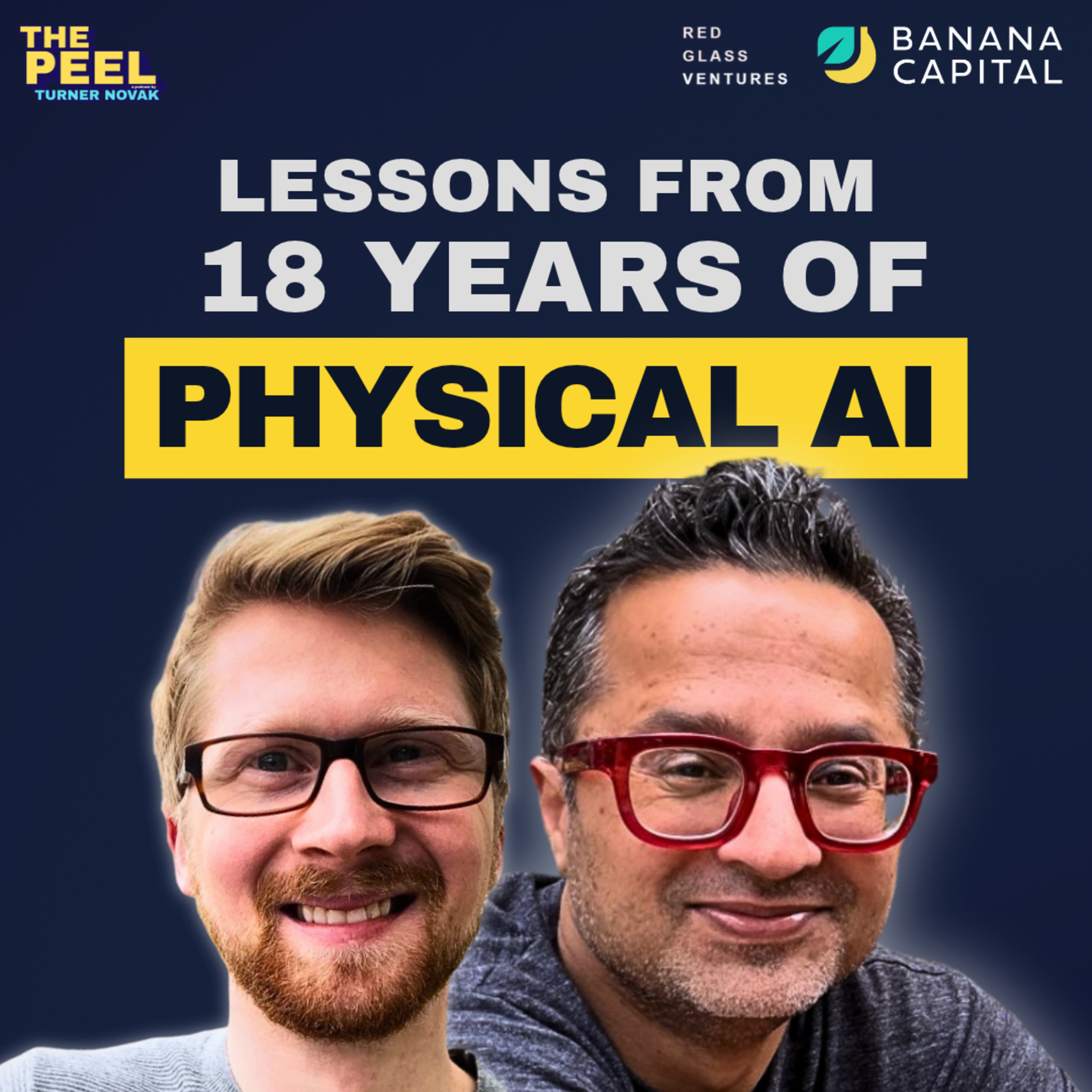
The episode explains why physical AI (AI applied to the physical world via robotics, autonomy, and deployment) is the next major investment wave, what investors and founders often get wrong, and where value accrues in the stack—especially at the deployment layer.
Bilal Zuberi is a chemist-turned-venture investor who has invested in physical AI for 18 years, including at Lux Capital (reported ~$7B AUM). He left to start Red Glass Ventures, focused on “AI and the physical world.” Turner is the host.
Jensen Huang’s AI→agentic AI→physical AI framing; Kiva Systems (marker-based automation); Waymo-style data collection vs simulation; Applied Intuition’s simulation platform; SpaceX/Tesla as “full-stack” analogies; robotics demos/benchmarks that stay “researchy” (e.g., laundry/coffee/shutting doors).
Written by AI. May contain mistakes.
Bilal shares his journey in investing in physical AI and its evolution.
“people will not stop talking about it so as somebody who's been doing this for a really really long time what do most people typically get wrong when they first start to invest in something that's not just software.”
Bilal discusses common pitfalls for investors in the physical AI space.
“I mean, look, number one, there's a lot of very smart people investing in this space, and they're coming from different vantage points.”
The conversation highlights why startups must focus on profitability and customer needs.
“probably cost less than$25 to register and we can call it, we're going to go mine on the dark side of the moon and likely get admitted into some accelerator and even get funded.”
A discussion on how the landscape of hardware investment has changed over time.
“I think a lot of VCs are motivated by commercial offerings.”
Explore how the entrepreneur's quality and government involvement transformed industries in physical AI.
“who have 20, 30 years of experience at Shell and GE and BP who really understand oil and gas and energy and manufacturing and let's fund them.”
Understand the evolution of AI solutions from full stack to specialized applications.
“When you're early to a space, any space, the early solutions that get built, in my opinion, are full stack solutions.”
Learn about the critical role of deploying AI technologies in real-world applications.
“It's also where the, you know, real life learnings will come.”
Explore the difficulties and investor perceptions impacting AI deployment in various industries.
“Everybody wants to build the models, but nobody wants to build, you know, actually put them in the chef, like chef, the company, put them in the, you know, in the field to do cooking.”
Understand the balance between vision and execution for successful founders.
“and the customer is like, yeah, I like all your big things, but this is what my problem is.”
Delve into the true experiences of founders and the challenges they face in venture capital.
“and they're the ones that we should all chase.”
Discussing the struggles founders face during fundraising and the perception of their journey.
“I won't name anybody, but there are some people who are like, you know, haven't founded a single company really.”
Exploring the core values that guide a venture capital firm and their significance.
“I really sat through and thought about, you know, what are the values for the firm?”
Examining the impact of AI on society and the importance of ethical considerations in its deployment.
“It gives you like, you can read something for two minutes and understand most of it.”
Understanding how venture capitalists create value and the dynamics of their relationships with founders.
“Humanity comes, in my opinion, from the last two core values, which is integrity and humility.”
Insights into the key traits and qualities investors seek when meeting potential founders.
“So I had to create a business model and that's what VC is.”
Learn how to assess a founder's belief and technical depth when investing.
“So I look for that belief and that conviction.”
Understand why fundraising is a crucial skill for founders and investors.
“That's something I learned from Gaurav at a four.”
Explore how the perception of unicorns and capital investment has evolved.
“You know, we've, we've gone through these cycles, just not that big, you know, when, you know, I remember when, you know, remember when Tiger Global was doing COVID writing checks on a daily basis.”
Learn about the risks and opportunities in the current market for startups.
“Like you said, it might actually end up becoming an okay fund.”
Discover the principles for creating a sustainable and impactful investment firm.
“on i think if you look 21 vintage is not the best vintage in the vc world so who knows what 26 vintage will look like.”
Learn how geopolitical factors influence investment decisions and the importance of mission-driven investing.
“I feel like oil prices and geopolitics has a way bigger impact on it.”
Discover the speaker's transition from science to early-stage investing and their motivations.
“And I had to find that in myself before I started this.”
Explore the current landscape of early-stage investing and the role of emerging funds.
“And as I was building a company, I realized that what I loved most was the early stage.”
Examine how investor networks shape startup funding and market strategies.
“So when I moved from Boston to Silicon Valley 13 years ago, I was a VC in Boston and moved to Silicon Valley.”
Understand the implications of having competing investments within a portfolio and its effects on startups.
“So you're a seed investor with another big investment firm.”
Delve into the operational aspects of venture capital firms and their business models.
“If you're a$2 billion fund, You're a pretty profitable fund.”
Explore how VC funds manage expenses and revenue, revealing potential disparities between raised capital and actual fund management costs.
“Now, you're that fund and you're like, hey, I have, you know, seven employees, six investors, two other people, some staff, whatever.”
Delve into the phenomenon of consensus investing and its impact on company valuations and founder incentives.
“If they could raise$5, they would raise$5.”
Discuss the challenges founders face when raising capital in a consensus-driven environment and its implications for business growth.
“what are the top five companies that we think will be the biggest fund returners.”
Examine the financial allure of large management fees in the VC industry and the ethical considerations involved.
“VCs in the meantime keep raising bigger funds, creating a lot of fees and, you know, getting rich on fees.”
Learn about creating a venture capital firm that prioritizes relationships and ethical practices over mere profit.
“And then comes the other associated benefits.”

Get the gist, explore an idea or ask about something said.
 Claude
On The Peel with Turner Novak, what are the key points of this episode?
Searching your listeningAutomatic transcript. May contain errors.
0:02Turner Novak: Bilal, welcome to the show. Thank you. Thank you, Turner. So good to see you, man. It's awesome to see you too. I'm really excited because we haven't really got a chance to sit down and have like a two-hour conversation. I don't think like ever before. So this will be fun. I think probably the most interesting place to start is you have been investing in what we now call, you know, physical AI for 18 years. you were at a pretty large fund Lux Capital I think they have I think Claude told me $5 billion in AUM oh$7 billion you left to start your own fund you know it wasn't necessarily the hottest thing in the world but suddenly like it is people will not stop talking about it so as somebody who's been doing this for a really really long time what do most people typically get wrong when they first start to invest in something that's not just software.
1:01So number one, many thanks to Jensen Huang, who I think in January 2025 put up this chart that now people have seen many times where he says there's AI, then agentic AI, and then physical AI. And I was like, oh my God, the future is physical AI. 18 months ago when I was starting my conversations with LPs that maybe I should do a fund, there were many LPs who said, we've never done investment in this area. This is capital intensive. And I tried to tell them, no, it's not, at least not the way I'm approaching it or the kinds of investments I want to do. But it was an uphill battle because, you know, oh, this is probably only large funds can do this, where you can write big checks and hold on to your positions.
1:44That has completely changed in 18 months and everybody wants to invest in it. The way Jensen describes physical AI, it feels like a little bit more narrow around robotics and autonomy and so on. The thesis of my fund is AI and the physical world. I think there's tremendous innovations happening in AI. I think we all realize that at this point in a hundred different ways. And I think we want to fund some of those fundamental innovations, but we also believe that AI is going to have a massive impact in real world physical industries. Things that we consume, this table, this glass, the food, the energy we consume, the industrially produced products that we have, and so on, defense and all that stuff.
2:28What are the mistakes that people make? I mean, look, number one, there's a lot of very smart people investing in this space, and they're coming from different vantage points. Some people have been doing it for a long time. So clearly, they bring that expertise. They also bring a scar tissue to it. So sometimes their problem would be that, you know, they've seen too much, and they know 100 ways to fail, and that's all they think about. So they sometimes miss the big idea because they had seen something like it before and they wouldn't do it. But for newer people, you know, go to market in these industries is tough.
3:00Decision making in your customers is much more complex. The incentive systems at your customers are not exactly aligned with you. They want better products, but they just want to protect their market share more than anything else. they've never seen rapid growth and you know uh oligopolies or monopolies that doesn't really happen to them um they um you know they would love to push all the risk to you and you as a young entity might assume all that risk thinking that's what it takes not realizing that there's not enough at stake for your customer to be there for the long term so you end up sometimes investing in companies that feel like a big idea, but the practicality is missing.
3:47One of the things, you know, I talked to LPs about it, I was doing fundraising was that, you know, of course, we want to fund big, important ideas, change the world ideas and companies that can become very, very big. And hopefully the entire investment investor ecosystem will want to be a part of that at various stages. So it's not some niche one. But I also said that we want to back founders who understand what it takes to turn a startup into a business. So why is that such a big deal? Look, startup, you and I can create a startup during this podcast, probably cost less than$25 to register and we can call it, we're going to go mine on the dark side of the moon and likely get admitted into some accelerator and even get funded.
4:28Turner Novak: Yeah, I mean - Especially with you and my background. Yeah, I can spin up Claude right now. These guys know how to raise money. While we're talking, yeah, Claude can go and we'll have a website and a product. These days, people are saying, can these guys raise money? And if you can raise money, great. People want to fund you, so we can do that. But the business, business has customers who buy products. When they buy a product, they give you revenues. And the revenues are real only when there's margin associated with that, right? And going through all those steps is non-trivial. It's finding a customer on the other side that cares about your product enough to part with real dollars toward you.
5:04And in a way that's not just real dollars, while they know that you're packaging a dollar with every product you sell to them, but you are actually generating margins and profits on the other side. That's a tough ask. And I think the greatest companies that I've been fortunate to be part of have figured that out. And as their business starts to grow, they also start to grow the TAM. So they're turning their startup into a business and the business is becoming bigger and bigger on its own, expanding, and the opportunity set in which their building is becoming bigger. Those are the business that I think are just most amazing ones.
5:38Turner Novak: So it's basically you need to make sure on day one, or as close to as day one, you can sell a thing profitably. You're going to make money. Maybe the TAM in a spreadsheet or in a market report can or cannot be big, but it actually has to be large, long-term, whether or not the spreadsheet says it does. Yeah. Like it has to materialize over time. It's not so much that you have to start selling day one. You know, you have to do real development, real product work, but you have to understand what it takes, what it takes to sell. You know, I met somebody earlier today, remarkably smart individuals, building a research lab in a very important area.
6:23But when you reach the point of like, you know, what is your path to turning it into a product that actually people use it? They just haven't thought about it. And they don't see that as a priority, which is fine because they're researchers who are basically doing, you know, research just happens to be inside a company and in today's climate, they'll get funded. But I think that cannot be your portfolio. There could be a shot on the goal that, you know, you take in your portfolio. There's room for something like that, but that cannot be in a majority of your portfolio.
6:55Turner Novak: You mean as an investment firm? As an investment firm. Okay. So it's almost like you need to be, commercial. Like the founders need to be commercial and know how to get customers to pay them for the thing. Isn't that the purpose of starting a company? I mean, I think so. I mean, why do we start a company then? Like, I don't understand if we're not trying to be commercial. Like, I mean, professors, I mean, research, I mean, basically saying nobody will give us money in a university. So let me create an alternate form of a university and do research there. Don't take me wrong. Like, you know, we know the Coastline others who funded open AI that was not commercial, it was a non-profit.
7:31Vinod could do that, but Vinod can also give a billion dollars to somebody as a non-profit grant because he wants that to exist. That's very different than necessarily an average VC who's trying to do remarkable investments and make a mark on the world to the extent that Travis Kalanick was saying everyone wants to make a mark on the world. We're trying to find amazing individuals who will create real value, who will create real products who will improve people's lives and who will create products that have economic value in society. And that's what we get paid for in return because then society says, thank you for building that.
8:08We'll give you a lot of money because I think you will continue to add money for a long time to come. And hence we will apply a multiple to it that will be pretty high and you can cash out and we will continue with the company going forward. Thank you very much. And that's what we call an exit.
8:23Turner Novak: Does that happen a lot, you think? I think so. This episode is brought to you by Monaco. Monaco is the first revenue engine built specifically for startups. Monaco's AI-needed platform replaces your legacy CRM and sales point solutions. It has everything startups need all in one place. Monaco helps build your TAM, generate demand, run outbound, capture every interaction, manage pipeline, and automate follow-ups all in one tool. They pride themselves on an effortless onboarding, white glove activation, and get you to value in days, not months. And the product practically runs itself with built-in agents that are always working for you.
9:02Turner Novak: Startups to switch to Monaco book three times more meetings. Start growing your revenue faster with Monaco. Try it now at monaco.com. This episode is brought to you by Flex. It's the AI native private bank for business owners. I use Flex personally, and I love it because I use AI to underwrite the cashflow of your business, giving you a real credit line. The best part is 60 days afloat, double the industry standard. Flex has all the features you'd expect from a modern financial platform, like unlimited cards, expense management, bill pay that syncs with your credit line, and their new consumer card, Flex Elite.
9:37Turner Novak: Flex Elite is a brand new, ramp-like experience for your personal life. A credit card with points, premium perks, concierge services, personal banking, cards and expense management for your family, net worth tracking across public and private assets, and a whole lot more fully integrated with your business spend. One card for your businesses, one card for your personal life, one card for everything. To skip the waitlist, head to flex.one and use my code Turner to get an additional 100 ,000 points worth$1 ,000 after spending your first$10 ,000 with Flex Elite. That's flex.one and code Turner for$1 ,000 on your first$10 ,000 of spend.
10:16Turner Novak: Thank you, Flex. And now let's jump in. I think so. I think a lot of VCs are motivated by commercial offerings. You know, VCs are responding to the environment that they're in. They know what their job is, but sometimes they feel like in the interim, you got to do what everybody else is doing. And if everybody else is funding research labs, then maybe I should have a research lab in my portfolio as well. And then some get carried away. But I think VCs, investors generally understand that their job is to invest in something that creates long-term real value. And people may differ on how long it takes to create that value.
10:55That's okay. You know, SpaceX is a very old company. Tesla is a very old company. Feels like a new company, but it is not. I don't think anybody has a 23-year fund. I don't think my LPs are willing to give me 23 years. Now, maybe if it becomes, you know, at the end of 12 years, if it's starting to look like SpaceX, they'll hold on to it. But, you know, otherwise, these are 12-year funds. In fact, 10-year funds plus two has become very common. Maybe they'll become 15-year funds. But that's roughly the timeline that you've got to make your mark on the world with that company.
11:30Turner Novak: So what's happened over the past, you know, couple of years? Because if I go back three, four, five years ago, I feel like the mantra was hardware is hard. Right. So what's changed that people are now all of a sudden really excited about the category? Hardware is still hard. I really encourage people to not let VCs tell you that hardware has become easy. It has not. In fact, it's become in some ways harder. Supply chains in China have been cut off. If you designed a product here, you could go make it in China. Now you have to do everything yourself. You have firms that are having to, you know, basically reinvent motors and actuators, things that are used to be bought in bulk in China, and we're having to rebuild them here.
12:15But put that aside, what has changed? Few things have changed. One is, you know, the founder set that has been attracted to the hardware space is a founder set that Silicon Valley is more familiar with and understand. And that founder set understands how to build fast-moving companies. I've often said that, you know, while technology is a great differentiator for a startup, the real differentiator is the speed. You know, if you can move fast, you can do amazing things. You can do something that's relatively commodity and build an interesting company because the other players who provide that commodity are stale and are not going to move fast.
12:58Turner Novak: I mean, it's like Uber. So there's like a car ride. Correct. There's hundreds of millions of cars around the world. Correct. Right. Every photo taking app could have created an app that also deletes your photos. But Snapchat did it and did it fast. Yeah. Right. Everybody could have added filters, but Instagram did it. And eventually everybody tried to, but Instagram had already established its lead and community around it. But in hardware, you know, 18 years ago when I entered venture, we had discovered 18, 20 years ago that there's this whole world of deep tech, clean tech, that, you know, energy is massive.
13:33Like, you know, all of enterprise software business is like$3,$4 trillion of revenue, right? Just automotive alone is$4 trillion of revenue. Industrial is another$10,$12 trillion of revenue. Manufacturing is another. Construction is another. I mean, we're talking$40,$30,$40 trillion worth of economy. that's available for us to work in. The problem was that because we did not understand these industries intimately as investors or as founders at that time, we said, who should we fund? We said, let's find these guys who have 20, 30 years of experience at Shell and GE and BP who really understand oil and gas and energy and manufacturing and let's fund them.
14:11Turner Novak: Yeah, that makes sense because they're the experts on the industry. They'll know how to navigate. Correct. But they're not founders. They don't have the founder DNA. They don't have the entrepreneurial spirit. They don't move fast. They can't make it and break it. They do things the old fashioned way. And hence, they are no different than, you know, the other incumbents. So what happened is that because these industries take a while on its own, by the time they would get to market and market would be ready for them to be there, the incumbents would be like, ah, the market is available. Let's go.
14:45And the incumbents will catch up. So you have to move fast. You have to do things slightly more unnatural. starting with obviously Elon Musk back in those days and then moving on and, you know, founders of Nest and then Palmer Luckey who created Oculus and, you know, and a bunch of, you know, Aurora and then Applied Intuition and Anduril and, you know, all these companies that we now know about. These are Silicon Valley folks. They move fast, they hire fast, they raise capital, they deploy capital. They know how to bend the rules. They know how to, you know, do things that are not typical for that industry forward deployed engineers.
15:22And now in physical sciences, it's become a real thing. So the first thing that changed was the quality of the entrepreneur and the type of entrepreneur changed. And I think VCs became more comfortable with that. So they were no longer talking to stayed, you know, old guard. The second thing that happened was that government was seen as a SBIR mill that would give you small grants that would help you, you know, do some development of some really big idea, but never became a customer. Really? And it was all, you know, I'm on record talking about this, that this was all bullshit. It was, you know, it was a job creation mechanism.
16:07And a few companies that became really, really good at getting SBI or mills would get tens of millions of dollars. In fact, hundreds of millions of dollars in SBI or dollars would just go to them.
16:16Turner Novak: These are startups. So these are like incumbent companies? These are like, I call them SBIR mills. They were good at creating proposals and submitting them and getting, you know, there's nothing to do, but it's like, you know, I need to do some research. Let me give me some money. I'll call it a commercialization effort, but there's no real plan to commercialize. I'll get my SBIR one and two and then move on to another topic and SBIR one and two and just keep going. So that was actually the business model was getting government grants essentially. Yeah. And kept people afloat for the longest time.
16:46Turner Novak: Yeah. Yeah. And and I think thanks to the effort of a lot of founders over the last 10 years and then, frankly, some VCs, you know, I mean, I remember making early defense tech investments 15 years ago and nobody was interested in them. And then often at these defense tech panels, you know, there'd be the same few of us, Trey and I and a few others were like always on these panels together talking about government needs to change its procurement policies and so on. And so that started to change. That has now become, government's become a massive customer. And it's a direct customer, but it's also an influencer on the incumbents to say, you need to buy from these guys.
17:27And that has created a very real market. I mean, government budget is, you know, it's a trillion dollars in defense, but at least a big portion of that is now headed towards these companies. Now, we need to do a lot more. Trust me, it's still small peanuts relative to the big budget. But certainly even the small peanuts is like big numbers for the startup industry. And then the third thing that happened was that in the world of robotics, everything was very deterministic. And by robotics, I mean, broadly speaking, it was, you know, you had to almost hard code. What would you need to do for a robot arm to come in, grab this thing, how much pressure to grab it with and move it here and put it down?
18:09Turner Novak: So like every single potential path that could happen was like literally in the code base. In the code base. It's almost like if then statements or something like that. Relatively speaking, I mean, we're not doing justice to it, but roughly that. Okay. And then it became, you know, probabilistic with AI. And now it is, you know, there's real-time models that are looking at, you know, there's, you know, there's obviously vision models that are identifying this and, you know, connecting it. and then there's robotic control models, world models, VLA's, all kinds of stuff, which is saying, okay, I now know that this is a glass.
18:42I also know that it needs to move there. I can take a path to get there. I can in real time figure out how to grab this so that I don't crush it. And all of that stuff became probabilistic. So it became much, much more easier to not only solve more interesting problems, but to generalize that solution. So nobody wants to build a robot, or it's not a startup idea to build a robot to pick this up and put it there. Yeah. Right. Somebody needs to do that. Let's assume this is a bottling company or a glass filling company, but this is not a very big venture scale business. But if I have a model that can do that, but it can do hundreds of other things, now you're doing something very interesting.
19:20And that is a more venture like model. Right. So I think that's what you're seeing, especially in physical AI that people like, okay, this is very interesting. It is not that I can, you know, drive a car inside an airport knowing exactly where the lanes are. If you go back to Kiva Systems, the early robotics company that Amazon bought, it was like literally markers on the ground that the robots were tracking and following and doing things. They weren't super intelligent, but they did very good automation work. But now when you think about robots, you're thinking of robots interfacing with the world, interacting with people, hopefully not smacking people, not killing people, but able to do things literally in conjunction with humans.
19:59And that has become very interesting.
20:01Turner Novak: and then that has caused a lot of capital to come into the space correct correct a lot of capital has come in because people realize that the markets are more accessible because of that and you can actually build real revenues and now the thing is okay can you become the dominant player can you become get in early and and create whether you call you know network modes or you know, platform mode or something that, you know, everybody builds around you or including you and you become the most well-known player and then it's harder to move away. Large corporations who are customers, so if you are a large automotive company or a manufacturing company or whatnot, they don't really have too much of a capability or talent base internally to build AI themselves.
20:51You know, the smartest engineer out of UIUC or Carnegie Mellon or MIT or Stanford is probably not saying, let me go necessarily go. My first job choice is like working at a PLC company. Right. I mean, a robotics, you know, actuator company. So, so these guys have to buy the technology from the outside. If they're going to use robotics and automation and AI in their, in their workflows. that has now become open that, Hey, if we can become that entity that starts working with these companies and these companies will trust us. And if they trust us, they won't move off of us. And if they don't move off of us, which then that means that we can become, you know, the most important player in that industry.
21:35Turner Novak: So where do you think if I'm building a company or investing in companies in the space, like, where do you think the most interesting place to be investing is right now? Like, maybe this is what you're doing, advice to other people, et cetera. Like, how do you just think about what should I be thinking about in terms of what I should be deploying capital into today? Where's the value going to accrue? This episode is brought to you by Clerc. When I had Clerc co-founder Colin Sidoti on the show, we talked about why authentication keeps changing. For a software company, that work goes beyond just getting someone signed in.
22:08Turner Novak: Business customers need their own organizations with their own users and access requirements. Clerc handles authentication and user management with pre-built components that developers can customize to match your product. With multi-tenancy built-in, you can manage organizations and set roles and permissions for each customer. An enterprise single sign-on lets customers use their existing company login, so your team can spend more time building the product your customers actually came for. Start building for free at Clerc.com. That's C-L-E-R-C dot com. This episode is brought to you by Numeral.
22:45Turner Novak: Numeral is the fastest, easiest way to stay compliant with U.S. sales tax and global VAT. It's easy to set up, and they automatically handle all registrations, ongoing filings, and their API provides sales tax rates wherever you need them with all the integrations you need. Their solution combines AI-driven automation with human expertise to manage global sales tax compliance end-to-end. Numeral supports over 3 ,000 customers, including companies like Brex and Character AI, and they pride themselves on white-glove, high-touch customer service. Plus, they guarantee their work, and they'll cover the difference if they mess anything up.
23:19Turner Novak: If you want to get compliant, check out Numeral at their new domain, numeral.com. That's N-U-M-E-R-A-L dot com for the end-to-end platform for sales tax and VAT compliance. When you're early to a space, any space, the early solutions that get built, in my opinion, are full stack solutions. Because you've got to provide end solution to you, the customer. So this is like SpaceX per se. SpaceX per se. Or Tesla per se, right? You know, Elon Musk wanted to build, you know, he had to build a car. And the next thing you know, he was searching for the right door providers or the door latch providers in China, right?
23:58So you have to build a full stack solution. Then as a customer start liking your solution, oh, I never knew that you could do this. That's pretty interesting. I like that. I like this electric car that has no sound. I don't have to fill in the gas and, you know, goes really fast and this is really cool. And so the customer interest grows in that area. Then you see the stack disaggregating. A full stack, a stack evolves. Oh, interesting. So you can be at the infrastructure layer, chip layer, model layer, data layer, application layer, deployment layer, post-training layer, all of that stuff. FRL, all of that.
24:30Turner Novak: So the bigger a market gets, the more sliced the stack. Yeah, because you have more and more players willing, I'm going to do this and I'm going to do the best job at doing this, right? Early, there's Tesla. Then came all these autonomous startups, autonomous car startups that were all building their own company, like Zoox and Cruise and all of these companies. And at that point, like, you know, we're going to build the whole car and it'll be our car. We just do it better than Tesla and this way and that way. And then came like the Auroras of the world who were like, We're going to build the entire operating system.
24:59So, okay, you know, you can build a car, but the entire intelligence will be ours. And then came, you know, Applied Intuition, which is now already a$15 billion company doing really well. And it was like, you know, look, yeah, all that is fine. But, you know, you see this thing around simulation. This is where I'm going to go and become an expert at. And yes, I'll grow from there. But Applied Intuition was an autonomous car simulation company. So what does that mean?
25:25Turner Novak: What were they doing? Well, when you are training models for autonomy, you need to collect data and feed that data into the models. And, you know, if you're a Waymo, you spend billions of dollars and have many cars that we have seen for the last 10, 15 years running around roads collecting data. and they have the ability to collect real world data, daytime, nighttime, in California and other places when it's raining, when it's, you know, all that's lightning strikes and all of that stuff. And they collect that data and, you know, and then you have feed that into the models, but you can also simulate.
26:04So you can collect data on a road in San Francisco, but then you can simulate it a million different ways. Same road, but at night, same road with a guy crossing the road, same road where there's like heavy rain downpour and a eight-year-old child standing on the side you know so one of your sensors is occluded now what happens what are you seeing as a machine when one of your sensors has dirt on it or whatnot you can do millions of simulations and this was non-trivial to do creating those simulations that were real physics so it wasn't like a gaming simulation it had to have real physics involved in it you know and then providing the platform for you to be able to store those simulations, share those simulations, run them into the model and develop your model further.
26:46Applied intuition was like, you know, look, Waymo can do that. Maybe Tesla can do that. Maybe Apple can do that. But the major automotive companies around the world who really are the, you know, providers of cars, they don't have the capacity capability or technical know-how to do this. So we're going to provide that to them. So that's where they started. And then obviously grew from there. And now they have many products. They provide full autonomy suite. They provide in-cabin suite. They have solutions for cars and trucks and mining and drones and robots and all that. But you start on tools.
27:20In their case, they went to then platform and then built applications on top of it. So I think that stack evolves and people start playing in the stack. Today, you know, I see a lot of excitement about some of the most capital intensive parts of the stack. I sometimes jokingly say, you know, like if Elon Musk announces that we're going to land on Mars, somebody wants to create like a rocket that lands on like Venus or something, right? Like we got to go, let's go further than Elon Musk goes. you know if we're doing like you know data centers in oceans which is already like how are we going to do this let's go data centers in space and we've seen companies get funded who are doing that and hopefully they'll be successful but I fundamentally believe that you know while all these layers of the stack are very important and we have invested across the stack across many industries the most you know under invested in area and I think the most interesting area right now is at the deployment layer Okay, it is actually putting robots in the field to do the work.
28:24It's the messy part of the equation. It's also where the, you know, real life learnings will come. There'll be, you know, models that'll get post-trained on the specific tasks and all the complexity. It's a little bit like at some point Waymo had to say, we're going to build a car and we're going to drive. you know right now we have too many people who are at the sort of the intellectual academic layer not denigrating anybody it's just they don't want to do this dirty stuff they like want to sit in like good factories good offices like you know do clean stuff it's almost like picks and shovels
28:57Turner Novak: like we're going to build the tools for them to then go use yeah they want to build models they want to build the intellectual stuff they don't want to build the thing that works in the field You know, the works in the field is you have real things happen in the field. You have a beautiful robot, like this beautiful microphone. But if I had a five-year-old here, you know, I could just go like this. And suddenly your sound engineer is like, holy shit, what is going on? Right? Or everything is great, but I put a phone here and it's vibrating. Or you have a, you know, a beautiful model that does the screwing in assembly, but, you know, a train passes by and this entire train shakes because this is not, you know, on a vibration-free table.
29:37Right? So dealing with all of that and that will generate real world data that will make these models much more interesting and much more applicable and much more real and more accurate and more efficient and so on. And I think, you know, I'm certainly investing in that space and I think we will see more of that. Everybody wants to build the models, but nobody wants to build, you know, actually put them in the chef, like chef, the company, put them in the, you know, in the field to do cooking. or like foundry robotics, do manufacturing in the field or do cleaning, or do logistics or whatever it is.
30:13And I think that's going to be very, very interesting.
30:16Turner Novak: So why is it that you think people are not doing that? Is it like not fun? Is it hard? Is it perceived to not be valuable? Is it like perceived like investors don't want to fund it, so I'm going to build this thing? Like what's causing it? I mean, one, it's hard. it requires you to understand the business, the end customer well. Most VCs have no idea about the customer set. I mean, you know, where you live, right? You have real world industries around you. How many VCs do you think are walking the shop there and understand what's going on there? I mean, I don't even do it enough. I mean, you know, it's like VCs.
30:58Everybody has friends who work at Amazon and Google and Dell and we hang out with the CIOs and the CISOs and the CTOs and the CEOs.
31:07Turner Novak: Like it's easy to just send a text to your friend and be like, would you guys use this? And they say, yeah, it looks great. Yeah. And then you, and then like at your diligence, really. Correct. That's, that's super easy to do. You know, it's easy if there's, if somebody is building a fundamental model around manufacturing or robotics or something, you ping somebody at Berkeley or Stanford or MIT and they're like, yeah, yeah, this professor is very well known. This work is really interesting. It's like a cutting edge work in this space. and you're like, wow, maybe we should be funding this fundamental lab in this space, this grasping model or this, some other model.
31:37And we need to do that. Don't get me wrong, we need to do that. But then you say, yeah, this is all fine, but now we need to deploy robots in the field that pick up, you know, think of just laying the roof on your house, right? Like the roof tiles. It's like when your roof tiles are laid, like 10, 20 people show up and all day, they're like doing repeat work. Like now you take a robot to do that, You can create a lot of efficiency, do it really fast, create a great company doing that. But you got to be up on the roof with a robot, right? Or doing any other kind of construction work. You have to be in the field doing that.
32:12And I think few people want to go that far. And I think that will change. Like I'm investing in it and I'm sure others will invest in it. And we will start C deployment. You know, five years ago, you could be a research lab, open AI and anthropic and not care much about revenue. Who cares? You know, we just, we're building the most amazing thing in the world. We're building the AGI. Like who cares revenue, dude? Like we will build whatever revenue. Today, every day we wake up, like Anthropic is now at 67 billion in revenues. And last June, it was at 40 billion in or whatever it was. And, you know, like everybody's like, no, we have real businesses.
32:46Should Anthropic also become a legal AI company? Should OpenAI become that? These companies are getting into physical AI because they feel like there's going to be large markets that they can open up there. So real businesses need to be built. So the same way that we saw in the LLM world that research labs had to start worrying about real dollars and cents and real business and real revenues and margins, the same thing will happen in the physical AI space, not just robotic, but broadly. And you have to think about real revenues, real margins, real customer traction, real churn. All of those things are going to matter.
33:14And that's going to be the deployment layer. And it's not just about putting machines in the field and doing services. It is most important. This world requires data. You have to collect data in the field. Like even for simulation engines to work, you have to have enough data in the field to be able to have good physics and good simulation models that can, you know, then take that and multiply it many fold. And I think companies that have that will accrue a lot of value.
33:41Turner Novak: So is that like largely not happening in a lot of cases of like the actual collecting data of some of the new technology that's being deployed, being applied? Like, are we not, you know, going, are we not going through those motions in terms of how customers are using it in a real sense? Like in terms of like what needs to be done. No, we're not doing it enough. Not nearly enough. I mean, look, so let's just take robotics, you know, and I don't want to just harp on robotics, but let's take robotics. How many demos have you and I both seen of like folding laundry, making coffee, shutting doors?
34:18Turner Novak: It's all fine. Yeah, I've seen like, I mean, I see the videos all the time. It's like the same demos. It's like benchmarking, benchmark maxing, or whatever that word is. Yeah. That was like one of my favorite things. It's like every week, a new model, and they like made up some new benchmark that they're number one on. Like what? We just made this up. Well, you know, look, and robotics is harder. And I think some of these benchmarks are, you know, there's no good evaluation models in robotics. There's no good benchmarks in robotics. So everybody has to just, you know, see what I'm doing. Like recently, there's a company, Dyna, that came up with, you know, oh, scaling law that, hey, when we get 1 million hours of data, we start to see real scaling happen.
34:54Oh, that's interesting. A lot of people started to pay attention to that. It was just in the last week or so. But then a whole bunch of companies are like, well, this has already been done and we've shown it as well or whatever. Or this has now compute, you know, requirements that are very high or whatever. But this is all very important work, but it's still in some ways researchy work, right? And what needs to happen is somebody needs to take it into the field. Now, let me do a little advertising for red glass, right? I said, you know, to do what I do, investing in AI meets the physical world, you need to understand AI and all the things that are happening in AI at an extremely fast pace.
35:34Every day we wake up to some new thing happens, some new model has dropped and open source is now better or cloud inference is better. But now, no, you can actually have these small models that operate like large models, but run on your own private GPUs.
35:46Turner Novak: So we have to keep in touch with all of that and be, you know, at least fully aware of it, if not an expert at it. In my case, you also have to understand in the physical world, these industries, what are the problems in those industries? How do you sell into those industries, have relationships, trusted relationships into those industries and be able to help founders who are building in those companies by creating those networks and relationships? Founders have to do all those two things, which Red Glass does. And on top of it, they have to go deploy it in the field. They have to be answerable to the customer and the customer is like, yeah, I like all your big things, but this is what my problem is.
36:21I was just with the founder earlier today
36:23Turner Novak: that we've recently funded. And I was reminding him that you start a company and when you started the company, you had 100 % equity and you thought by the time the company goes public, you will own still, I don't know, 20, 30 % of the company. Hopefully he owns more, but who knows. And the company will be worth billions of dollars and you'll be worth billions of dollars and your product will be used by everybody. And that's your motivation set, right? Like change the world and make a lot of money and make a lot. Now you've hired the first 10 people and those 10 people you're giving them, maybe a percent, half a percent of equity.
36:55And they also believe that, oh my God, if this becomes worth$10 billion and I'll make, I don't know,$20 million and my life changes, my family's life changes. But by the time you're hiring employee number 400, 500, this is like another job for them. There's some amount of equity and compensation, don't get me wrong, but they're not joining this as like, I'm going to become Insta rich in the next two, three years. Now think of your customers. They're sitting there. They're like, there's no way in hell I'm making any money off of this. I am a senior engineer at an automotive supplier. All this hype that these guys have, dude, I just get paid to do my job.
37:35Does this do my work better? Does this make my work better? I have all the downside to worry about, but very little upside. So you have to deal with that and pay attention to that. And I think a lot of founders don't want to do that. Those founders that do, do really well. They're close to the customer. They're ears and eyes very close to the customer, understanding what the customer wants. Their product roadmaps often evolve with the customers. They're not just trying to be profits. They're not just trying to make grand statements about what the future of the world looks like. To some extent, they have to do that.
38:13But they also understand execution really matters. And the best entrepreneurs in AI in the physical world or deep tech or whatever I call it are the people who've done that both. Elon is, you know, for all his faults and, you know, I have lots of issues with him. But he's able to paint the big picture and then he's able to execute. Sometimes he's off by the timing a little bit, but it doesn't matter. That's a second order issue. But he's able to execute. Many people can paint big pictures, but they can't execute. Or there are people who are like too stuck in the weeds and they can't help people see the bigger picture of why what they're doing is really important.
38:51And the best entrepreneurs are those that can do both those things. Few, but they're there and they're the ones that we should all chase.
38:58Turner Novak: I feel like one way I've been kind of like distilling down on how to think about that and describe it as like being very commercial. You can sell it, you can execute on it, deliver to the market, which is maybe also part of like painting a picture. So like you're very commercial. You know how to make money in a sense. Yes, commercial. It's also, look, if you're building something that's going to take several years to get to market, it's something that's going to require a lot of capital to get to market. Then you have to be able to sustain the interest of your investors, your employees, even your customers for a long period of time.
39:34And you have to have the ability to do that.
39:35Turner Novak: So is this like a very underrated aspect of this? Very underrated. But also equally, those people who are very good at it are not very good at execution sometimes. Paint a great picture, but they haven't shipped anything in 10 years. And they keep telling one hoopla after another, right? Like one hype story after another. Look, Moses was followed in the desert, if you're a believer or whatever, at least the story, for 40 years. People followed him until they creased the promised land. You would think at the year 39, somebody would have said, this dude has no idea what he's doing. But people kept following him because he was a prophet.
40:11And how he spoke to the people and the message he brought to the people
40:14Turner Novak: and the belief that people had in him allowed them to follow him for 40 years. And I think entrepreneurs are like that. People have to be able to follow them, but they have to also know where they're going or at least have the ability to execute on what needs to get done. Because I don't think we would be singing the story of Moses, Prophet Moses, if he hadn't reached the promised land. It would be a little bit of a awkward story that we, 40 years, we wandered in the desert and then the story ends. It is actually kind of like an amazing story. And then like the land of milk and honey, I think they call it.
40:45And like parted,
40:47Turner Novak: he literally parted the Red Sea. He did unnatural things. Founders do that. Look, you know, the red glass name, it's sort of funny, right? Like I named it after my glasses, but actually I didn't name it. My children named because I couldn't come up with a name and I was struggling with all these boring names that felt like VC, gobbledygook. So my children, like, just call it red glass. And I asked some friends and they're like, dude, that's pretty cool. But here's the thing. Red also is passion and courage. You know, red is also the color of good luck in Asian cultures. And glass is transparency and clarity, which are really important values to me personally and to my fund.
41:25But also glass is molded into beautiful objects like that beautiful glass you have. I have the plastic one.
41:32Turner Novak: I offered you the glass one. It's okay. I want to put that on record. I did say you could have the nice one.
41:39Glass is also molded in fire, right? And that's what founders kind of go through. You have to go through the fire. There's no easy way. It all looks very glamorous from the outside. There's a lot of VCs who like to call themselves founders of every company they end up investing in early. I never do that.
41:58Turner Novak: Do people really do that? All the time. All the time. I won't name anybody, but there are some people who are like, you know, haven't founded a single company really. But they're like, I'm founder of these eight companies and bullshit. I mean, whatever. Just because you're an early investor doesn't make you a founder. You're a founding investor, maybe. Yeah. Right? But the founders chew glass. This is not easy. No founder will tell you that they love fundraising. Even Travis Kalanick, who's like one of the most successful fundraisers in the history of venture, maybe, wouldn't tell you that he loves fundraising.
42:30In fact, he's like, shits on VCs every day these days. Yeah, he's been going on a tour lately.
42:36Turner Novak: He's like getting it out of his system. He's got some like really excruciating, just like, he's like crucified some people lately with some of the stuff. You know, he's getting it out of his system. There's also, you know, and you know, look, give credit to him for having built what he built. and then kicked out of it. But also, there's also an effort to rewrite history. That's true. Winners get to write history. And he wants to establish himself as a winner. And he's actively rewriting history. Because back then, when he was let go, the prevailing consensus among all VCs, I would say, or many most VCs, and community in general, was that ship went astray and astrayed off the target.
43:21and needed course correction. But that's okay. It doesn't matter. Look, it doesn't take anything away from him. He built it with blood, sweat, and tears, and he's doing it again. We'll see how that goes, and hopefully it's successful. But the point I was making is that these guys' founders go through an excruciating journey, and I don't think most people appreciate that. And I'm hoping that, you know, as a fund, we can be appreciative of that.
43:50Turner Novak: a little bit more of the Travis thing. Like he actually, it was pretty interesting. He also kind of like dug A16Z a little bit, which they did end up like leading the round of his new company, joined the board. He's kind of like, yeah, you guys fucked up big time. I don't know if you saw that. I've seen some of these interviews. Look, man, every VC needs getting dunked on. VCs have too big an ego. We think we are very powerful. God complex is very easy to get. In fact, if anybody understands God complex, it's probably Travis. Didn't he have the God mode on his app at one time where he could see every car everywhere that was moving around and taking people to people to places?
44:26You know, when I started the firm, before I had a name or an office or anything, I had four core values. I really sat through and thought about, you know, what are the values for the firm? Most VC firms don't have values. Most VC firms have, if you ask them, they'll give you some statement. But if you asked, picked up a random guy at the company, at a VC firm, and said, wait, what are the core values of your firm? I think you will hear some pretty random blah, blah.
44:54Turner Novak: Just like add value to our company. Add value, be nice, whatever. I don't know, something, right? Make money for LPs. Yeah. Or for ourselves, maybe. Maybe that actually might be the more correct version. Yeah, some people do both, but most often they don't. Yeah. I, you know, like there's many, many things that a VC accomplishes. You know, having a beautiful office might be an accomplishment. Yeah, that could be a value. That could be, you know. Some of those offices are insane. There's too much money, man. You know, too much money in some VC firms.
45:29But my core value is for the fun. And every employee hears it at least once. Right? It's curiosity, intensity, integrity, humility. we have to be curious what is happening in the world is phenomenal what is happening in the world of technology is still underappreciated I don't think most people appreciate what is really happening and I'm not just talking about the general world or the rest of America
46:00Turner Novak: I feel like in tech I feel like the average centering in tech still is just like oh this robotics hype is just all It's like all hype and it's a bubble and it's going to die. Everything is a hype until it's not. So I don't pay too much attention to that. I think if you just look at the fundamentally what's happening in technology, some incredible minds working on incredible things and incredible progress being made on a daily basis. So we may be off by 10 years, hopefully not, but we may be off by 10 years, but man, we're moving in the right direction on making technology accessible and available and intelligent such that we can solve the most important pressing problems in the world.
46:38Turner Novak: Like you can literally pick up your phone and just ask Clyde, like, hey, I want to learn about this thing and then just like go and like do it for me. And like, you can come back in 30 minutes and just like learned it all. It gives you like, you can read something for two minutes and understand most of it. And then it like accomplished the thing and like did it. Yeah, I mean, you know, these are basic cases, right? Like last night I was doing pro rata calculation on a company that I've invested in. And typically I would sit with Excel and create a model and whatever. And I went to Excel and I wrote like seven lines.
47:06Hey, I invested at this price this much. This is the round that happened after that. This is the safe note that happened after that. This much warrants, this many. Create a spreadsheet that gives me my prorata if I was to maintain the same ownership post series A or whatever, whatever, right? And it created a beautiful model for me. Now, even just a year and a half ago at Lux, I would probably take all of this and just send it to the CFO. Hey, can you just create a model for me? I mean, I know how to do it myself, but I'll just push it off to the CFO. And she would do that. But now Claude can do that for me in like a minute and a half.
47:39Turner Novak: And this is like a basic example too. This isn't even like a crazy thing. People are solving cancer with that. I mean, you know, or people at least trying to solve cancer with this. Like this is like basic shit. So that's curiosity. The second is intensity. Work hard. Right? I was at a dinner at a famous VC's house a few years ago. Some of our common friends were there. And, you know, one of the things he said that stuck with all of us was, you know, this is the greatest show on earth and we have the front row seats to it. Okay? What else could I be doing? Imagine you have the opening show of Hamilton tickets front row.
48:16Are you going to sit there and do fucking emails? Like, you know, you're going to be like, oh my God, I am seeing history happen.
48:25Turner Novak: Yeah. Right? That's what's happening in front of us. So, you know, 20 hours a day is not enough. and I can survive with at least four hours of sleep is necessary for me, but it's just not enough hours in the day to do what I need to do and learn and get execution underway. But those two things together can make you a good VC, curiosity and intensity. Where we live in the world today and the impact that AI is going to have in the society, it is going to require us to be good humans as well. We are deciding fate of humanity. We're deciding literally where bombs get dropped and people are killed.
49:01Right? AI is going to be doing that. AI is deciding what healthcare you get, what medicines you get, what coverage you get, what loans you get. AI is doing all of that. We are really changing people's lives in very, very meaningful ways. We better have humanity in all our decision making. Humanity comes, in my opinion, from the last two core values, which is integrity and humility. You've got to be able to stand for the ethics and the values that you care for and are willing to, give up some asset, some value, some upside for. And humility is understanding that if I sound smart to you, yeah, sure, I'm sure my IQ is not terrible, but it's because really, really smart people come and tell me incredible things all the time.
49:49I'm in some ways regurgitating. I'm analyzing. I'm like the Claude.
49:54Turner Novak: You're like a voice I'll am right now. I'm a pre-trained LLM that's getting a lot of real time reinforcement learning happening. Yeah. Right. So I, I think that's important to understand, have the humility of founders doing the real work, you know, and not just founders, but every single person in that company, even those that are not going to become super rich, they're just doing a job. They're doing the real work. They're going frustrated at home at night that either their project didn't work or their, you know, sales didn't close or their boss was unhappy at them or their politics in the company or whatever.
50:29That's really understanding that that's what the value is. And I think VCs tend to attribute way too much value to themselves, which is because we have money, we have power, we have access. So we feel like we're on top of the world. Yeah.
50:46Turner Novak: It's kind of like this weird dynamic where like people just want to be friends with you. and they are nice to you, like overtly almost, it can kind of get to your head. It's like, man, I'm kind of the shit because everyone wants my, people just want your money, really. At the end of the day, like that's kind of it. So it's kind of like this weird dynamic where I try not to think about this, like, but is this person just my friend because they want my money, right? Look, this is my take on myself. Yeah. I just had lunch with COI funded and it was a very competitive round and I ended up getting serious allocation in that company.
51:25But here's the thing. I said, when I met you, you were talking to a lot of VCs. You took a half an hour call, but then you called me back and you said, can we get on the phone again? It's because you probably thought I had some smart things to say and interesting things to say because you were talking to a lot of top VCs. And then after the second and third call, you were still willing to talk to me because you really, clearly, you're not calling me because I'm good looking. You're calling me because I'm telling you things that you find useful for your business. That's just getting off the ground.
51:53So you value my intelligence and, you know, perhaps my, you know, knowledge base about this industry and my networks or whatever it is. But if I came to you and I said, hey, for all this intelligence that I'm going to be parting to you every now and then, why don't you pay me$250 ,000 a year? You're probably going to say, buzz off. we can hire people to do this we need full-time we don't need these part-time consultants charging 250 ,000 so I can't get paid for that so I have created a business model to get paid for that my business model is that I go to LPs and I say give me money so I can give money to these guys and that's how I get paid I get the fees and I get the carry and you take the money so instead of me asking you for money for sharing my knowledge advice insights connections and all that I actually give you money that comes with all of these things to hopefully increase your odds of success and increase the magnitude of your success, which then results in, you know, carry on the other side that feeds me.
52:56So I had to create a business model and that's what VC is. And so what I sell to the founders is not my money. Money is fungible commodity today. Any amount of money I give you, somebody else has more money than that. They have cheaper money than that. they have maybe easier money than that. They're money that comes with maybe other, you know, fancy things, you know, private jets and fancy dinners or whatnot that I don't do. But I try to become a partner to the founders.
53:27Turner Novak: What are you usually looking for when you're meeting a founder for the first time? Because I think you, today at Red Glass, you're kind of formation through Series A, which to different people, that means different things. but what are you specifically kind of looking for when you're meeting and talking to someone? And this is maybe help for other people that are also getting into investing. It's helpful for founders that like, what is an investor looking for when I'm meeting them? So like, what's your general arc of a conversation and just like a meeting usually kind of look like? What are you trying to do?
54:02So at the, so I invested in the earliest stages, ideally the first check-in, whether you call it pre-seed or seed or whatever, it is. Sometimes they take precedence seed from, you know, friends and angels or whatever, then they call this an A. So it doesn't matter what the title is. I look for, first and foremost, you're investing in the founders. And everybody will tell you if the smart founders or whatever, I look for conviction and mission. Do they have a missionary zeal towards this idea? This needs to exist. Do they really firmly believe that this is important? And then I probe why. And sometimes they're off.
54:39They have a belief system that is not based on any fundamentals, just a belief system. But they have to have that missionary belief in what they're doing and the field that they're in and the necessity of the solution that they're going to be building.
54:55Turner Novak: Any examples of that? Like from investments you made in the past that people might be able to like applied intuition? Yeah. Applied intuition was very simple. It's like, you know, it had a fundamental belief that while everybody in the industry was saying that all these automotive companies are screwed and they should be just metal benders and we're going to build the next automotive company in Silicon Valley and whatnot. There are fundamental belief that what are you talking about? These automotive companies run the entire economies of countries. These are not going anywhere. It's an extremely complex business.
55:24They're at a missionary level of belief that these companies are going to continue to exist for a long time to come. And our job as entrepreneurs founders is to provide technology to them so that they can get to the next phase. And the next phase is digitizing their solutions, electrifying their solutions, automating and providing autonomy to those solutions so that they can do superhuman work. Right. What humans could not do sitting inside those machines.
55:48Turner Novak: Was this their Series A when you? Series A was their first round of financing. Okay. Yeah. And it was, you talk to Keser then, and he would tell you that. Kesar and Peter both of them were like you know they were like grew up in Detroit, Michigan you know came to Silicon Valley clearly saw that this is really important to build and they had many other I mean they had I'm sure Kesar could just go become a general partner at a big VC firm you're like don't need to do that you know why would I want what is that why would I do that that's like that's like a shitty job compared to what I'm doing you know he's loving what he's doing compared to like you know doing a sales job like mine, like selling to other founders.
56:31But he had real belief in that. So I look for that belief and that conviction.
56:35Turner Novak: So the missionary is number one. And then the second thing is, are they prepared for the job that they're taking on? So if you're taking an extremely technically complex thing, do you have the technical depth required to do that? Or can you accumulate the technical depth that is required on your team? You're taking on something that's going to be very capital intensive. So it's a little bit of saying, you know, do you have the foresight to see what it will take? And then you have the ability to get that. So the capital intensity may be like, you may think, okay, do we think they'll be able to capitalize the business appropriately to do this?
57:10Turner Novak: Or, or they're selling to an extremely technical customer. Will they be able to understand and meet those customers and have those conversations and, and build the product that they need to get there or hire the right kind of team. I can say in my sleep, oh yeah, it would be really nice that I don't have to see a doctor. Just an AI can do everything that a doctor can do. Easy set. The technical complexity of it is pretty serious. And technical complexity includes working through the regulatory frameworks that exist, working through the trust issues that are implicit in this and so on. so do you know how to do that you can't just launch something and be like we'll see, you have to have the understanding or you know discovery of a new drug or new class of drugs, you know you have to understand what is happening there and have a point of view and technical understanding of you know where it can go like enough breadth in that space and depth in that space and the second part of that as I said is you know the if you need capital do you know do you have the personality to be able to raise capital?
58:19Do you, you know, do you know what it takes? Are you a good storyteller?
58:24Turner Novak: Yeah. That's something I learned from Gaurav at a four. It was my first job in venture. And I thought it was like really weird that he said that, like their ability to raise capital in the future. I'm like, oh, that's kind of dumb. Like, I need to fundraise. Like, it's just about making a business. But fundraising is actually super important and kind of hard, like we talk about. So it's like, you and I have to fundraise all the time. Yeah. It's not fun. It's not easy. But those who do it well are often those that, you know, realize that this is an important part of the job and then they strive to become good at it.
58:57Turner Novak: So, I mean, that's a good topic. Like, has there been any, maybe anything you think that sets apart the founders that check all the boxes, accept fundraising and or crossing the chasm to like get to becoming a good fundraiser? Like, is there something specific that typically people tend to do differently? Or is there something like a change people tend to make that ends up kind of like unlocking that superpower for them? I think in technical, I usually invest in companies that tend to be fairly technical. Technical founders, even if they've had business experience, often tend to think that the solution will speak for itself.
59:41And all they have to do is just provide a little bit of color around it and then the product will speak for itself or the solution will speak of itself or our customers will speak in its favor in a way that will sell.
59:53Turner Novak: And the investor's just like, oh my God, this is a trillion dollar TAM, like just based on using the product. Look, if the investors were sufficiently technical and knowledgeable about that particular industry, maybe. But most investors are not. So they need to be convinced. And that convincing depends on the investor. Some people live in FOMO world. They spend their entire careers and build great careers in FOMO. Some others are like, I want to know if this is going to be a massive industry. I remember when the word unicorn was invented. It wasn't that long ago, was it? It was like, oh my God, we have these things called unicorns.
1:00:36unicorns. And I was with a VC two, three weekends ago who was telling me that last year, he led$5 billion investments. The investment going in was$1 billion.
1:00:48Turner Novak: Like the amount of capital he invested in those companies was$1 billion. How far have we come? How fast? He's a great investor. Don't get me wrong. I'm not saying it in a negative way. I'm just saying that capital has taken a different, you know, shape. And, and to be honest, I think it's a, it's a moment in time too, by the way. You know, we've, we've gone through these cycles, just not that big, you know, when, you know, I remember when, you know, remember when Tiger Global was doing COVID writing checks on a daily basis. Yeah. I think there was like, someone did the math. They did an investment per day, basically for like a year.
1:01:29And you know, they did not invest in a single of my companies and I don't think they invested in a single Lux portfolio company.
1:01:34Turner Novak: Oh, really? Okay. And I can tell you that I can only speak for myself. I won't speak for Lux anymore. I used to, but I won't anymore. I speak for myself. I used to pick up, you know, what am I doing wrong? That freaking Tiger's investing in everything but none of my portfolio companies. Like maybe I'm doing something wrong, right? Like why is my company not getting mocked up by Tiger or SoftBank or whoever of that moment?
1:01:56only about a year or two later I was like thank goodness that did not happen because most of those companies are like I don't know
1:02:03Turner Novak: I think like on a net return basis the fund will probably like meet LP expectations maybe if we just like go far enough out but on like a in the moment I think it's kind of it was like a rough rough time I mean dude there was all kinds of companies that you know people were building pizza companies and thinking that's going to be like, you know, the next SpaceX or, you know. Oh, this was like pizza robot, like a restaurant. A bunch of them, right? Not only one, right? A bunch of them, there was pizza robots. And people were trying to convince each other, by the way, they're all well-meaning guys.
1:02:35Don't get me wrong. Some of my companies probably look idiotic to others too.
1:02:39Turner Novak: Yeah. But people are trying to convince me. You don't understand, Bilal. When you get the pizza in six minutes versus 15 minutes, the taste completely different. I was like. I could see that actually. Yeah. I can totally believe that. It's so much better. Yeah. I just don't think I got into VC or got a PhD and built a founder career and then VC to solve that problem. Yeah, that's fair. Yeah, actually, it was like during that time during COVID, I think like Tiger had invested in a bunch of my companies. Like every company that raised follow-on rounds, like they had tried to. And like they really liked that above my fund.
1:03:13Turner Novak: Like we love your portfolio. and it was like a really, it was like weird because at the time, you know, you're like, this won't probably end well, right? Look, this is hard to dissect it. It's like, you know, many of my friends are doing this now and to some extent one could argue that maybe some would say even you're doing that, right? So it's not against time, you know? It's like, they believe that there's a rising tide and if you do a portfolio approach, then, you know, all you need is a few success stories and it will wipe off all of your failures. Like you said, it might actually end up becoming an okay fund.
1:03:44Turner Novak: Yeah, because didn't they invest in like open AI early? I don't know. I think I remember. I haven't followed them so closely, man. But I can tell you that today is the same thing that's happening. Like, you know, remember, so I said not too long ago, we were talking about there's this thing called unicorns. And oh my God, how amazing would it be that we build companies with unicorn? The first unicorn, if I remember correctly, in Lux Portfolio was a company called Desktop Metal. And I remember waking up one morning. They're a public company now, aren't they? They were a public company and then they got sold.
1:04:13and they went public at a very high valuation and their valuation went down significantly and then they got sold. And, but that was the first unicorn and it was just a few years ago. Okay, in Lux portfolio now there's many unicorns. I mean, I invested in like six, seven, eight unicorns that have become unicorns in the Lux portfolio. But unicorns, it's a quaint word now. It's, you know, it's now often I hear my friends talk about, you know, like this company could be worth, You know, three, four years ago, it was like, this company could be worth like$10 billion. And I remember people telling each other, if you're not investing in a company that could be worth at least$5 to$10 billion, you shouldn't even be investing.
1:04:52And I would ask them, how many$10 billion companies have you invested in that you invested early that became 10 million zero? It doesn't matter. It's a prevailing logic is that everybody says 10 billion. Now 10 billion, the fuck cares about 10 billion. Now it's 100 billion.
1:05:05Turner Novak: Yeah. You know, like we are building the next Stripe, the next Databricks, the next OpenAI, the next Anthropic. So that's trillion dollar territory right there. If your entry prices are like, you know, 2 billion, 5 billion, 10 billion, and you know, interim markups look like there are many companies that are hitting 10, 20, 50, 100 billion dollar numbers, maybe this will all work out. I don't care. My thing is at the early stages, when the founder starts building company, they may talk about 100 billion or a trillion or whatever. The reality is they have to hire co-founders. They have to hire technical, you know, employees.
1:05:41They have to build a product. They have to raise capital. They have to convince people to, you know, join them in person. If they have, you know, move families over and come join them, they have to think about their first product. They have to think about pricing. They have to think about go to market. You know, this founder that I, you know, told you is a very competitive round that I invested in conversations were around go to market and the lessons learned from applied intuition or nominal and others and how did they apply to their particular world. That's the help and advice they get. Now that they have money, more money cannot solve this problem for them.
1:06:11right like okay we gave them money but if at this point we walk away you know he still has those questions he has to go somewhere to ask those questions yeah so i feel like there's like there's
1:06:20Turner Novak: an implied in what we've been talking about like this didn't end well in the past and there's is there like a it also won't end well this time or is it is it different like is it okay that's going on i think if you look 21 vintage is not the best vintage in the vc world so who knows what 26 vintage will look like. That said, there will be some companies that are going to be just amazing. Right? Amazing. I really hope so. Well, first, I hope some in my portfolio, but generally in venture, I think there will be some amazing companies created because incredible talent is coming in, solving incredible problems, technology supporting them because the speed at which it's developing and capital is available for them to move fast and speed becomes more available to them.
1:07:05But not everyone. And because it's not everyone, there will be lots of losses. And, you know, every VC thinking that, you know, they are playing, you know, the, they're playing, you know, the entire landscape and, you know, something or the other will work out and hence let's just roll the dice and see what happens is not the right way to do this. You have to be very thoughtful about it. You have to do what, I'm sure you'd think about it too, like a portfolio construction. You have to think about what's my early bets, What's my middle stage, late stage? How am I playing this? Is there something in my portfolio I've invested in that could potentially become very large, but very high risk investment, but can only be one or two in the portfolio?
1:07:51Something you invest in, they're like, you know, look, I have such conviction on these founders and the TAM associated with the market they're going after or the opportunity set that they're going after that I'm willing to pay a very high price. But that you can't say that for every company, right? Because that can't possibly be true. For every company that you see, is like could be a hundred billion dollar company. That doesn't make sense. And there are others that are like, look, I can't, I can see that this is an important problem, but I don't know how big this gets, but I really want to work with this founder and help figure that out.
1:08:21And that's your early incubations or hatches and, you know, EIR types of situations. And, you know, you could take some ownership in those companies and help them build.
1:08:31Turner Novak: Yeah, so you're almost like taking different types of risk and you make sure you have like a basket of like quite a couple different risk profiles to make sure that if there's spikes on any existential risk that happens across the portfolio, that you still make money. Yeah. Where the risk is balanced out, where it's different types of risk. I'm trying to build a firm. I'm not playing YOLO. I'm not saying, hey, I just left OpenAI. I have a lot of friends who are leaving OpenAI. Give me money and I'll just invest in a bunch of these guys and let's see what happens. And it might all be exactly the same type of risk that you're taking, really.
1:09:10I'm sure there's room for those investors in the world. And that's not me. That's not what I'm building. I'm building a firm that should last a very long time, that should last past me. That should be the legacy of that firm, should be incredible investments we made where founders saw us as real partners to them at the earliest stages. and we did it with, you know, humility and we did it with being nice, right? Like I think all of those things matter. And when you do that, you have to think about portfolio and you have to think about, you know, there are various ways that the world could play out that I do not control.
1:09:57I don't control interest rates and flooding of capital or capital getting pulled back.
1:10:05Turner Novak: I feel like oil prices and geopolitics has a way bigger impact on it. I don't control war. I don't control elections. Yesterday, I was talking to a founder who was like, crypto is screwed. Today, I was talking to a founder who said, I built my last company in weed and the weed is screwed. Okay. I mean, everybody told me crypto was the next big thing. I don't know what happened. I'm not close to it and never was close to it. So I don't know. But other things will happen. I can't control that. But as a portfolio, as a managing money on behalf of families and endowments or foundations or fund funds or sovereign wealth funds, and also in my case, it's like, well, we are trying to, you know, return their capital and then some.
1:10:54and we're trying to do that by investing in these companies at the earliest stages so that we can have the most ambitious ideas that get funded so that they can become big and they can have positive impact on society. That's the job and it's a job. I love doing that job. I'm trying to hire people who love doing that job and along the way, by the way, you make good money. We're decently compensated. I took a 90 % plus pay cut to do this job when I left Lux to do this. But I really firmly believe in it. You know, I told you earlier that I look for being missionary about this and having conviction.
1:11:32And I had to find that in myself before I started this. I feel this is a mission I'm on. I refuse to believe you have to be an asshole to be successful in that industry. I just refuse to believe that. And so I'm going to do my daundish to show that you can do that. I refuse to believe that you have to be, you know, sort of loosey-goosey on your ethics because the world is too complex. No, I mean, you know, I think it's a line of Hamilton, like, you know, if you don't know what you stand for, what will you fall for? Or something along those lines. I haven't heard that,
1:12:02Turner Novak: but that's, I like that line. And then the idea that, you know, if we can do what we're doing, we will impact human lives. I grew up with posters of scientists in my room. I thought I would become a scientist and a professor. That's why I studied science and then a PhD with a Nobel laureate and all that stuff. And what I discovered while I was through that process and then in PhD was that what I really enjoyed was a reading about how their discoveries changed lives. How my professors, my PhD professors, discovery of the reactions in polar stratosphere and polar stratospheric clouds were leading to destruction of ozone layer, which was leading to cancer on Earth.
1:12:46And then you could create alternatives to chemicals like Freon and others so that you would not destroy the ozone layer, so that you would not have cancers in the world.
1:12:54Turner Novak: And it required you to do the chemistry to create Freon, you know, first understand the physics of what was going on, then create alternatives to the Freon and then do the political work that was necessary to get the world to stop using Freon. And that led to massive impact in the world. So I realized that's what it takes. And I said, I'm going to dedicate my life to doing things like that. And I built a company. And as I was building a company, I realized that what I loved most was the early stage. There's negative one to zero, where you're like ideating and thinking about the problem and how to think about the problem and zero to one.
1:13:26And, you know, when it goes past that, you know, I was like, okay, that's nice, but not enjoyable enough for me. So that's where I decided that I want to become an early stage investor.
1:13:37Turner Novak: I think there's a couple other things I really want to hit on. And it's maybe related to being an early stage investor right now. it almost feels like a lot of being an early stage investor, being like a small emerging manager fund. You're almost like, kind of like an outsourced associate in a way. I think this is like your words, but I kind of like resonate. Somebody said that to me. Okay. I mean, I feel like this is almost like a, many people sort of have this like sense right now. So what is kind of going on where a lot of new and or small funds are essentially like outsourced associates for someone else?
1:14:14Um, number one, I don't think everybody's an outsourced associate. A lot of people are dedicated to the art and the craft of doing this. They're building firms. They may be starting small. They may remain small. You know, they may remain a$50 million fund. Like our friend Semel has 50,$70 million funds and he can raise bigger money, but he's staying there at least for now. Um, you know, benchmark was like that union square ventures has stayed that way. So, you know, and some others may have ambitions to become mega funds themselves. But there is a lot of capital available in the market. There's a lot of people who've discovered that, you know, you can make a lot of money here and perhaps lasting money, right?
1:14:53You know, you can actually put your shares and put money into SpaceX shares and hold them for the next 25 years. I know people who are doing that, who are creating their, you know, programs to just buy space shares for the next 25 years and not sell any bit of it. Now, there's a lot of money available and that money wants to go direct into companies for many reasons. It's fun. You know, they think it's like great to meet founders and be directly invested versus like money managers.
1:15:20Turner Novak: Yeah, it's awesome. I mean, I love doing that. But there's a lot of LPs who also want to do this because it's better economics. You don't have to pay as much in fee, carry is reduced or whatever, you know, like if you're doing. So what they're doing is they're finding people who have access to deal flow and saying, hey, I'll give you a little bit of money so you can put in a little bit of money into these companies, but then bring them to me as if raising downstream rounds. And I will, I will do SPVs. And, you know, if your fund was two and 20, I'll do one in 10 or whatever. I don't know that whatever the numbers are, but it's an access game.
1:15:58And if you have access to those companies, great. And if I have to pay you a little bit of this in your fund that will might return 3x, 4x, 5x or whatever it is, fine, we'll do that. But what I really want to do is go direct your 2 million, 5 million that I put into your fund is noise to me. What it is, is a 25, 30, 50,$100 million check I can write into, you know, these companies as they become big and
1:16:20Turner Novak: growing. Is that okay? Or like, do you think it's something you just have to like accept is sort of what's happening right now in the market? I think there's a lot of that going on in the market right now. And I have no problems with that. I actually think that there's a... So when I moved from Boston to Silicon Valley 13 years ago, I was a VC in Boston and moved to Silicon Valley. One of the things I noticed was that Silicon Valley works like a cabal. There are multiple cabals. You're like groups of investors who do things together. Oh, 100%. Right? Like we always invest together here. There's a bunch of defense tech investors who are like all supporting each other's company.
1:16:55and a bunch of other, you know. And I have a feeling that some of these cabals are now money-hungry, large AUM funds. Right? Again, nothing wrong with that, but that's who they are. No amount of AUM is small enough, or big enough, sorry, for them. So they want every dollar flowing into startups to flow through them. They're not about multiples. They're not about, they're just like, my power is the amount of money I have. You will take my money because I have the most amount of money available. And because the most amount of money may have ancillary benefits, like I have access to corridors of power because I have money available or I have access to certain companies because I've invested in so many that I know the CEOs of half of your customer set or whatever.
1:17:39Turner Novak: Yeah, so I can introduce you to customers. I can introduce you to a politician. I can influence what those people think. And, yep. You know, I was just reading on my way here that the largest contributor to the elections this quarter was like Anderson Horowitz, like in terms of donations. It wasn't, you know, some other pack or whatever. I would have guessed it was like a, I would have guessed like OpenAI or like a big tech company. At least according to this report, it was Andres and Horowitz. But even if it's not exactly right, they're up there. Nothing wrong with that. Every right to do what they're doing.
1:18:07Turner Novak: Yeah. But I mean, it's smart strategy. I think it's like a smart strategy from them to do it. Which just creates value for their portfolio companies. Sure. Why not? Hopefully it creates value for my portfolio companies too if they get money from Andres and Horowitz down the road. But certainly General Catalyst is a great investment firm. They're doing this. They have global reach in policy circles around the world. They do less politics, but more policy, but that's okay.
1:18:34But what some of these cabals will actually do or could do is they could start restricting their portfolio companies from accepting SPV money.
1:18:43Turner Novak: How would you do that? So you're a seed investor with another big investment firm. Your portfolio company is now raising$500 million. dollars. You were like, dude, I can write a$30 million SPV into it. And if that becomes 5X, I'll make a lot of money. That lead investor could say, we're not going to allow any SPVs to invest in this round, even if they're your SPVs. So it's like, it's part of the terms in the term sheet. Yeah. And the terms in the term sheet be like, no, just as a board, you're just like, Hey, by the way, like I'm on the board and I say, we don't do this anymore. And the founder, okay.
1:19:15Yeah. And you know, the founder is like, dude, I love you, but you know, I'm not going to piss off this big fund partner to get an SPV from you. Because they're probably going to give him another. Let alone an SPV from somebody who's not already on the cap table.
1:19:26Turner Novak: Yeah, that's true. Because that big investor is probably going to give him a lot more money. So you want to keep him happy. Yeah. But also those guys are basically saying, why am I letting all these other LPs who want to invest in the company come through Turner? If they want to invest in companies like this, they have to come through me. I have 17 varieties of funds that you can invest in. I have a residential fund, I have an energy fund, I have a debt fund, I have a growth fund, I have a defense fund, I have whatever fund. Why don't you invest through me? Why should they give that one in 10 economics that you're getting?
1:20:01Why should you get it?
1:20:02Turner Novak: Yeah, I should get it. And all they have to do is just, you know, politely. I actually saw, I know of one case where a great investor who would have been very helpful was recently told that they will, you know, sorry, our, you know, board or, you know, the powers to be have decided that they will not allow us to take any SPV money. So that could happen too. So then I don't know what happens to all the, if the business model of some of these funds is, you know, like I can't survive on a$10 million fund, but it doesn't matter because I'll raise 50 million in SPB. I don't know what happens there, but this is all noise.
1:20:41You know, this is all important to our industry. If we're talking about the mechanics of our industry, but at the end of the day, from a founder perspective, what they care about is I want money, but I also want advice and help. I don't want no nonsense. You know, I don't want you to invest in competitive companies and fuck me over later. you know and that is some of the bad behavior that we're also starting to see in the industry
1:21:03Turner Novak: really i mean they probably just like they just want you to not mess anything up like it's just like they they that's a lot of it from what you hear is like if you just like don't do anything to make things harder for them that's in like the top i don't know the number is 10 20 i mean i don't know man i'm not an expert at this but you know i don't know how i would feel if i was that you you know, OpenAI and Anthrop. I mean, if I was a founder at OpenAI and my big investor also had money in Anthropik. Now, at this point, they're both operating almost like public companies. So maybe it's different.
1:21:35But if you are a smaller company, if you are a$2 billion,$5 billion company, how would you feel that? Or if you had a defense company and you had competing investments in those spaces?
1:21:44Turner Novak: What do you think the pitch is to pull that off? Where it's like, I'm an investor in five big AI companies, I'll compete and I'm coming to the sixth one. How do you think they convince them to let them take their money? Is there like, is it just not really brought up and there's like all these other things they can do for them? You know, I don't know how they pitch it, but I can imagine, you know, them not being very open about this. Or they're so big that it's like, I'm Fidelity and I invest in every company that goes public. Or, you know, at least, you know, above a certain market cap or whatever.
1:22:17And I have an index fund or whatever. I'm not sure it should be seen by founders as like the top quality capital, but that's my opinion. You know, you don't want, I mean, you know, you don't want to be the stepchild. You know, you built blood, sweat and tears to build a$5 billion company. Holy shit. You know how hard it is to build a$5 billion valuation company?
1:22:41Turner Novak: Yeah, really hard. Hopefully underlying has a business too. Yeah. And then somebody comes in and becomes a$20 billion company and suddenly they're the top dog. You know, the most important intros are going to them, the customer, you know, conversations are happening with them. The board member is spending more time there than with you. And also a board member knows what's going on in both and knows how to strategically help the other one. Or the board member is like, you know, trying to get you to sell your business because they're like, you know, hey, why don't you just merge into this other company and then we'll together take it.
1:23:11And you're like, I don't want to merge this company. I want to build my own company. No, but you know, like if one and one will become three. Now, again, I don't think VCs do this because they're bad people necessarily at all. I know many of these guys, a lot of the senior partners, I've worked with them, known them. I've been in the industry long enough to know most of these people. I think it's the incentives. Just follow the incentives. And it's the more money that you touch
1:23:38Turner Novak: that flows through you, the more money you make. So you want to deploy, pass through as much funds as possible through your funds. VC is a big VC. If you're a$2 billion fund, You're a pretty profitable fund. You know, people are looking to buy management company shares because it's like a nice annuity you get for the next 10 years. And then it compounds because, you know, every three years you raise more money or two years you raise more money. Now, you're that fund and you're like, hey, I have, you know, seven employees, six investors, two other people, some staff, whatever. And I get nice money into my pockets.
1:24:13I take 10 million home or whatever. Right. I don't know what the numbers are, but let's assume in that it's millions, certainly. and then you raise another$2 billion that generates$40 million annually of fees do you think the VC expenses go up by$40 million you might
1:24:28Turner Novak: hire a couple more people you might spend$2 million more,$5 million more maybe actually these days investment funds are size of AUM is increasing and funds are shrinking right yeah we're all using AI but also power is consolidating in a few people Like if I'm not giving a lot of advice to you and I have to make a decision of a hundred million dollars, I need a couple of junior associates to do some analysis to tell me that this voice recognition company is better than this voice recognition company. And then that associate is not going to write that check. I'm going to write that check. So I just go do it.
1:25:05I don't need a lot of in-between people. Yeah. Right. So, but the point is that net new 40 million annually revenue you got, it's probably going straight into the managing partner's pocket.
1:25:16Turner Novak: Mostly. I mean, why do$2 billion? You should raise a$5 billion fund. Exactly. So that's what's happening. If they could raise$5, they would raise$5. If they could raise$10, they would raise$10. I mean, there's only a few people in the$5 and$10 category, but certainly you can do this for$500 million or a billion dollar fund,$2 billion fund. You have people who are raising separate funds. We have an early stage fund. We have a growth fund, but we also have this thing in energy fund, or we have a clean tech fund or whatever. And as a founder, it's like, that's more money for you. That's potentially awesome.
1:25:46There's like more money that's being deployed towards your theme or company.
1:25:50Turner Novak: That can be an awesome thing. Yes, but it's also, yes, absolutely. But it's also more money available for if you don't have alignment on incentives and ethics to your competitors. Yeah, fair. Funding noise in the system, forcing you to take more money than you need to. You know, forcing you to, you know, skip exits when you needed to because you should go bigger. Yeah. and all kinds of stuff. I know you feel this way, but there's kind of like a circle jerk almost in sort of like tech media. You mean consensus investing. Consensus investing. That's like a more polished. So like what's kind of going on and what do you think is like sort of a solution to like navigating through this as an investor and maybe a founder too?
1:26:42So I'll tell you, at Lux, we used to, for a number of years, every year we would write just within our portfolio, what are the top five companies that we think will be the biggest fund returners. And then we would, everybody would write their five companies and would aggregate and would come up with a consolidated, oh my God, 2021, we think like these are the top five companies in our portfolio from a meaningful returns.
1:27:03Turner Novak: This is just inside the firm. Inside the firm. Everyone do this? Okay. So inside the fund consensus, finding consensus within the firm. Okay. and then we do it again next year and then again next year. And, you know, the thing we learned in that was that most of the companies were different every year. Okay. And certainly the positions changed a lot. So it's like the flavor of the year a little bit. You know, if somebody got a recently, had run nice financing at a big price, like, whoa, this company is hot. And the company, they're like two years long in the tooth and, you know, hasn't grown very much since then.
1:27:32Like, eh, you know, it was really hot then, but now it's coming down. And, you know, it's real. It happens in every portfolio. There's nothing special to luck. We just did it to be very, try to be more quantitative and qualitative about our own internal assessments on this. The same thing is happening at the industry level now. Every year, it's like, or every month or every week these days, like, what are the companies that everybody's excited about? And then, you know, you listen, everybody just runs into those companies because the idea is, you know, it's, it's, you know, to some extent, it's like, you know, is this company at least worth the LickPref that they've raised?
1:28:04you know, the company's raising money at 25 billion, but they've only raised 500 million. Is this company at least worth 500 million? So yeah. So then my downside is relatively protected. Let me play for the upside. The founder, on the other hand, is now, you know, raising money at 25 billion and, you know, has taken on significant liquidation preference. So he has to clear that before he gets any money or she gets any money or they get any money. This starts to become a problem. The biggest issue right now is that, you know, you're seeing these, what becomes consensus, it would be one thing if it became consensus because it built a real business.
1:28:42So there are some businesses that are growing really fast and that's fine. But you're also seeing consensus, which is like nothing has happened in the business. They have registered a trademark maybe and boom, the valuation jumps. Why? Because three other top investors have invested. So boom. You know, and a lot of people, founders, are also figuring out how to game the system. Like I've had friends who I've known for a while who are researchers in AI, were like, dude, how do I structure my shares that after a year I can actually do some, because when my price goes from, you know, 500 million to 5 billion, I'd like to get some equity out, but I'd only be a year.
1:29:20I think I can get it to high prices within a year or two. Do I get founder preferred shares or what structure should I strike? Like, do I need it in the documents that I'm allowed to do secondary of 10 % of my share? You know, what if the board blocks me? People are starting to think about all that nonsense, right? Because again, follow the incentives. We are creating incentives for people to be distracted by all this bullshit. And, you know, all this bullshit looks good on paper and whatever. VCs in the meantime keep raising bigger funds, creating a lot of fees and, you know, getting rich on fees.
1:29:50You can, if you do the math and you're at one of the big funds, you can become a billionaire just on fees alone. Just the management fees? Just the management fees. I don't know. That's crazy. It's crazy. I didn't know. I think of like...
1:30:05Turner Novak: So I guess for people that don't know, basically like for each dollar that you raise in your fund, you roughly get 20 % of it in fees. Just roughly speaking. So if you had a$10 billion fee, a$10 billion fund that you raise... $2 billion in fees. $200 million in fees. Well,$2 billion over the course of the 10 years. $2 billion over the course of the 10 years. Exactly. Yeah. So you generated by raising, going out wherever around the world you went and raised a$10 billion fund. There's not many people who can do that. If you could, you just generated$2 billion in fees over the next 10 years. Guaranteed income.
1:30:40Turner Novak: Yeah, I was going to say the interesting piece of this is you raised the money and you locked in. Your$2 billion. Which is, so the incentives. So you hire a team and whatnot. And over the next 10 years, I'm going to spend a billion dollars on them. I'm the sole managing partner. and spend a billion dollars on all these people, on my events and all those things that will happen over the next 10 years. Here's my budget for the next 10 years. And the other billion dollars is mine. You can be a billionaire without having to show returns because you raised one$10 billion fund. Now, I'm not... You have to do a lot of debt.
1:31:11More mortals can't go and raise$10 billion fund. You and I are not about to go out and raise a$10 billion fund. But, you know, if I raise$150 million fund like I did, you know, like, look, it's not lost in me. Yeah, sure. It generates$3 million annually in fees, right? And I've hired a bunch of people. I have an office. I have lawyers who are bloody expensive, but they're very kind and nice. You have a nice suit. You guys have nice glasses.
1:31:32Turner Novak: I don't have a suit, but it's definitely there. It's a jacket. It's a nice jacket. But the thing is, you know, over 10 years, you have$30 million in fees. Now, what I do know, however, is that, you know, the$3 million annually I make in fees is less than my compensation in the last year I was at Lux. So you have to take huge pay cuts to be able to start this. But, you know, if you become big, and this is why I see a lot of people wanting to become big AUM, is because the fee is really enticing. And then comes the other associated benefits. Look, if you have a lot of money, you're floating around in circles that are more powerful, you get invited to all these cocktail parties, and then you get invited to billionaires' homes for dinners because they think you will support the political, you know, campaigns or the charities that they care for, but you have excess money so you can give to that.
1:32:20You know, it's your circle of power grows. And, you know, and you convince yourself that all this is in the interest of the company. Maybe.
1:32:27Turner Novak: And the contribution margin is pretty high when it's like, okay, 125,$150 million fund. You do, nothing changes, but you raise a$300 million fund. Nothing really changes on the cost structure, but you raise a billion dollars. Like just pure cashflow. Yeah, I think this is where, you know, a lot of people struggle with succession and so on. Because you'd have to give that up. Because you have to give that up. You have to give the economics up and so on if you want to retain the best people. Now you can let the best people go and just keep hiring young people to do the, that's not what I'm building.
1:33:08I, by design, I don't get rich on fees. I'm paying. I'm hiring people. I've, you know, people have joined me left leaving, you know, other big funds to join me. The two other people I had had offers from other big funds that joined me. So I had to give competitive salaries, have great equity in the firm. They will grow their equity. It's very standard, but they will grow to, right. I want the fund to eventually be five general partners equivalent and everybody has equal carry. Like, you know, so it's a very, it's, it's like, just keep it simple, stupid. Like, and, and what we are right to win is not the amount of money we have.
1:33:44our right to win is you should come to us because you care about getting the advice and support and help and you know the love for your industry and you that we bring to the table. If you're just looking for capital there are many sources of capital available. People think that the cheapest capital might be you know like oh go to the big fund they have a lot of money.
1:34:06Turner Novak: There are always for every big fund there's a big brother out there. If you think Anderson Horowitz is big there's piff out there. If you think general catalyst is big, there's QIA out there, right? Everybody has a boss. I don't know who's QIA's boss or PIF's boss or, you know, Singapore, Tomasic's boss. But there's always somebody else who will give you money and maybe even at a cheaper price. So the minute a bigger boss gets involved, then people start talking about, but look at the value we bring to the table. Look at the partnership and look at the, you know, investment expertise of this guy.
1:34:37And I'm just doing the same thing at the smaller end. When I'm saying, you know, take 3 million, 5 million from me, you can get it from 1 ,800 other places. But the reason you get money is so that, you know, we can help you build the business. And oh, by the way, the most important thing that people don't tell you is I'll be there through thick and thin. Let me tell you, I've been out of Lux now, almost coming up in almost two years. I mean, at least we announced it in December. I mean, I left middle of last year formally, but I'm still on many, many boards for them. I'm not getting compensated for them.
1:35:07I don't have equity vesting or salary or anything. But I care about, you know, yes, I care about my partners at Lux and I want to be supportive of them. But most importantly, I care about these founders.
1:35:17Turner Novak: Yeah. Right? Like, through thick or thin. And these, you know, of course, I'm on, you know, applied intuitions board and whatnot. But I'm also on companies that are struggling. And they take up a lot of my time. But I'm doing that because my reputation matters. and the pledge I made to those guys when I was trying to win their investment back in the day was you are buying yourself a partner and I want to be that partner and if I am not there when going gets tough if I replace myself with some young associate who's like sitting on the board I'm not being fair to you I'm effectively lying and I don't want to do that we need good ethics in BC there are a lot of great people in BC hopefully are you know, we can promote that more.
1:36:02And I think we can also do a better job of like aligning incentives. So the founders, the VCs and the LPs have similarly aligned incentives.
1:36:13Turner Novak: Yeah, I feel like there's a lot more we could talk. We could probably talk for like another hour, but we are both significantly late to this dinner. And I know actually people will, some of them listen to the podcast. They'd be like, dude, that's why you were late? Are you kidding me? You're recording a podcast with Bilal and you were, you know, 25 minutes late because of this. Oh, my God. Well, this has been a lot of fun. Thanks for doing this. We can always get together again, man. We should just bring these mics, just attached to the table at dinner. I've actually thought about that. People have been like, oh, you should do like a group thing.
1:36:42Turner Novak: Imagine if we did a round table dinner and everybody had a microphone. That would actually be interesting. I don't know if it would be listenable. I think it'd be great because, you know, look, I used to do this falafel dinner, falafel ventures. Oh, yeah. Nabil and Samil and Avidan. I've seen those. And there was no holds barred. Very open conversations. Yeah. And we thought about for a second during COVID days when we were like depressed sitting at our home. They're like, you know, maybe we should turn it in. And then Olin came and we're like, hell no. There is no way we're doing this. Like that, you know, get out of the circus.
1:37:19You know, like I don't want to become a circus clown.
1:37:22Turner Novak: Yeah. Well, man, maybe we should do that. I should figure this out. And now people are going to hear this. And if I don't do it within the next month or two, people are going to be like, dude, why did you not do that dinner podcast series? But anyways, this has been a lot of fun. Thanks for doing it. So fun. Always fun to talk to you. Thank you for being you. Thank you for being funny. Thank you for being real. And thank you for pushing, you know, entire industry to, you know, do a little bit better. Well, thank you. Yeah, that's my job, I feel like. And your job is to check out this episode's sponsors, Flex, Monaco, Numeral.
1:37:53Turner Novak: If you like this conversation, share it with a friend who's building something in physical AI. Make sure to check out the back handle of over 150 episodes with investors like Charles Hudson from Precursor Ventures, Hans Wildens in Industry Ventures, and Ali Partovi at NIO. Tune in over the next few weeks for conversations with Dara Buckley, the first employee at Stripe who just bought his own bank, Orin Zeev, the solo GP managing over$2.5 billion all by himself, and I didn't send cut at Felicia's ventures. If you don't want to miss any of these, subscribe to my newsletter, The Split, linked in the description to get each episode plus a transcript emailed directly to your inbox every week.
1:38:31Turner Novak: Thanks again for listening. See you next time.
Bilal Zuberi spent 18 years investing hard tech, most of it as a GP at Lux ($7B AUM), before starting @RedGlassVC in 2025 to bet on AI that touches the physical world.
Bilal was making defense tech investments 15 years ago, and he led the Series A in Applied Intuition, now a $15 billion company.
We hung out for a few hours and he shared everything he's learned investing in hardware, why hardware is still hard, why the deployment layer is the most attractive area of physical AI, taking a 90% pay cut to start Red Glass, "AUM as a moat", how to become a billionaire off management fees, and why consensus investing is mostly a circle jerk.
Thanks to this episode's sponsors:
Monaco: The revenue engine for startups https://monaco.com
Flex: Premium banking, 60-day credit, 0% APR https://home.flex.one/referral/bananacapital
Clerk: Everything you need for authentication https://clerk.com
Numeral: Sales tax on autopilot https://numeral.com
Timestamps:
(0:00) Leaving $7B to bet on physical AI
(0:51) What most people get wrong in physical AI
(4:17) Why a startup has to become a business
(11:31) Hardware is still hard, so what changed?
(15:40) How government went from SBIR mills to real customer
(17:48) Robotics goes from hard-coded to probabilistic
(23:34) Where value accrues: full stack, then wedges
(25:24) How Applied Intuition became a $15B company
(28:03) The deployment layer is the real prize
(32:22) OpenAI and Anthropic hint what will happen in physical AI
(36:14) Why customers have all the downside
(37:56) The best founders paint a picture and execute
(40:53) Why it's called Red Glass (founders chew glass)
(42:17) Every founder hates fundraising, even Travis
(44:29) Red Glass's four core values
(50:49) Why founders really take your call (the $250k effect)
(53:28) What Bilal looks for in a founder
(58:44) Why technical founders underrate fundraising
(1:00:26) The Tiger Global era
(1:04:02) From $10B to $100B, the goalposts moved
(1:06:21) Is this a bubble? Portfolio construction
(1:08:55) Building a firm that outlasts him
(1:12:13) From Nobel-lab chemist to Zero-to-One investor
(1:13:45) Are small funds just outsourced associates?
(1:16:35) When AUM becomes the moat
(1:18:34) How big funds choke off SPV money
(1:21:24) The risk of VCs backing competitors
(1:23:31) Why fund economics push everyone bigger
(1:26:20) Consensus investing is a circle jerk
(1:29:51) You can be a billionaire on fees alone
(1:33:09) Equal carry and the right to win
(1:35:55) Why good ethics in VC matter
Check out Red Glass VC: https://www.redglass.vc/
Follow Bilal
Twitter: https://x.com/bznotes
LinkedIn: https://www.linkedin.com/in/bzuberi
Follow Turner
Twitter: https://twitter.com/TurnerNovak
LinkedIn: https://www.linkedin.com/in/turnernovak
Subscribe to my newsletter to get every episode + the transcript in your inbox every week: https://www.thespl.it/