
 The Peel with Turner Novak: Startups, Venture Capital and Founder Stories
15 Oct 2026 · 1h 14m

 Add vo to ChatGPT or Claude to ask about everything you hear
vo listened to this episode to put together the overview and transcript, so there may be the odd mistake.
Darragh Buckley explains why Stripe’s first employee later bought a bank to build Increase Bank, an API-first “last mile” for U.S. depository rails (ACH, Fedwire, cards, FedNow, etc.). He argues modern fintech is stuck in layered abstractions that hide critical data and force manual operations, and that compliance should be embedded as code from the start.
Darragh Buckley is the first employee at Stripe (joined around 2010) and previously worked at Lehman Brothers. He co-founded/ran Increase (Increase exposes U.S. depository functionality via API). He later acquired a Washington state chartered bank, Twin City Bank, rebranded as Increase Bank (completed about a year before the episode).
0:02Turner Novak: Darragh, welcome to the show. Cheers. Thank you very much for having me. Thanks for being here. So you were the first employee at Stripe and you just bought a bank. What's going on? I did. Yeah. The bank is now called Increase Bank. I run a company called Increase. Increase exposes U.S. depository functionality by API. So having your machines talk to my machines to be able to orchestrate your finances. And that's things like opening accounts, sending and receiving transfers, issuing cards, balanced transaction reporting. Our users and use cases are things like payroll, bill payment, loan servicing, neobanking.
0:41Some kind of no more public users are things like some of Gusto is built on top of us. Some of Ramp is built on top of us. We do their bill payment, for example. To give a sense of scale, we do about a little over half a trillion dollars in payment volume these days. And those users choose to use us because of reliability, transparency, and flexibility. They themselves are payments companies or folks familiar with payments who want all of the details and the capabilities. And Increase is designed to to expose all of the data and capability of U.S. depository functionality by API. So it's, I know, the joke is always like, Ramp does not need me in any way, shape, or form to explain, like, ACH payments to them.
1:31They got it. They just want all of the data and all of the capability in a way that's composable into their own product. So can you, could you not do that, you know, five, ten years ago? Well, I think... If it's okay here, I'll speak to some kind of experience from Stripe.
1:47Turner Novak: Yeah. And while I was building Stripe, we built on top of a cohort of US banks that grew out to global banks and integrating in with the card networks.
2:01And the banking as it was exposed to us, you could always tell that we were always a little bit of an awkward duck, right? Like you're always wearing someone else's shoes, right? Like something always felt a little off. Be it the size or the scale. So like what felt off? Yeah. So Stripe never did disbursements to merchants by wire, right? So Stripe would receive a chunk of change from the card network from Visa and need to push that out to Stripe users. A very natural way of, you know, moving those large amounts of money is by wire. But Stripe was always hesitant to do that because when a wire would fail, We'd receive an email from the bank partner saying, we were unable to deliver this wire.
2:48Could you please go repair it? And it's just hard to build a product that you're proud of up on top of those kind of manual flows. And there are dozens of these examples. Oh, that data element. Yeah, we don't pass it through to you. Why would you want it? So it was always, you knew you weren't in the right place. You knew you were building on top of someone else's product. There was a stone in your shoe, and you were trying to explain to someone why the stone in your shoe was super annoying. But they can't see the stone in your shoe. So just why are you so worried about your shoe?
3:15Turner Novak: Like just keep walking in there. Very much a princess and the bee kind of problem, right? But you know you're not in the right place. You know that this is not built for you. No fault on it, right? Like it's built for someone else. Products are built for their users. You just don't happen to not be in the target users. And so Increase is the banking technology that I wanted while building Stripe, exposing all of the data and all of the capabilities by API. Of course you want to be able to originate the ACH by API. And of course you want to be able to handle the return of it by API. And of course you want to be able to handle the like, secondary and tertiary processes in the case of ACH, this, you know, hold harmless requests, et cetera, by API.
4:00The dispute process that comes out of the end.
4:03Turner Novak: Yeah, I get emails from my bank sometimes. It's like, someone just pulled an ACH. Like, do you approve the ACH poll that has already been pulled? like maybe you could have told me before that um yes the train has left the station would you want it to have you wanted to come back and no fault on that but like all of those are all of those should be exposed to companies that are looking to programmatically orchestrate their finances by api the alternative is that you end up growing large manual operations teams or worse just like not building that product right like uh did stripe do that for a while you'd like build around these weird...
4:40Turner Novak: Oh, certainly. Yeah. You end up... I know Stripe ended up with a team at one stage with like dozens of people on it for like ACH return reconciliation. And the reason that that was necessary is because there was a particular data element in the ACH file. It's called a trace ID that didn't traverse correctly. And when you dug into the details, you could see why Wells Fargo was like altering this data element. You know, so what they were doing was not unreasonable. It wasn't like the engineers there built it badly, but it wasn't built under anticipation that you'd want to compose that within your own product.
5:19Yeah, and anytime you see a product that almost fits so close and that we have such buildings built on top of it, one of us should surely go back and do a redo of the foundations. And that's what prompted increase.
5:37Turner Novak: So there's been kind of the sort of, I don't know, infrastructure providers in the fintech space. And it sounds like some of them would sort of solve some of these problems, right? Like, so were they not fully solving it by not owning a bank? Like, what was going on? Short answer, yes. But let me give you a no or interesting answer than the short one. Yeah, we need this to be an interesting podcast. We got like 80 minutes left to go. Just cannot just say yes.
6:26Turner Novak: manage pipeline, and automate follow-ups all in one tool. They pride themselves on an effortless onboarding, white glove activation, and get you to value in days, not months. And the product practically runs itself with built-in agents that are always working for you. Startups to switch to Monaco book three times more meetings. Start growing your revenue faster with Monaco. Try it now at monaco.com. This episode is brought to you by Flex. It's the AI-native private bank for business owners. I use Flex personally and I love it because I use AI to underwrite the cash flow of your business, giving you a real credit line.
7:02Turner Novak: The best part is 60 days afloat, double the industry standard. Flex has all the features you'd expect from a modern financial platform like unlimited cards, expense management, bill pay that syncs with your credit line, and their new consumer card, Flex Elite. Flex Elite is a brand new ramp-like experience for your personal life. A credit card with points, premium perks, concierge services, personal banking, cars and expense management for your family, net worth tracking across public and private assets, and a whole lot more fully integrated with your business spend. One card for your businesses, one card for your personal life, one card for everything.
7:38Turner Novak: To skip the wait list, head to flex.one and use my code Turner to get an additional 100 ,000 points worth$1 ,000 after spending your first$10 ,000 with Flex Elite. That's Flex.1 and code TURNER for$1 ,000 on your first$10 ,000 of spend. Thank you, Flex. And now let's jump in. Modern banking has like many comparisons to like 2010 payments, right? 2010 payments, so the like pre-stripe and ad yen and similar payments. Back in the day, you'd go get what's known as your merchant account and your merchant account is your like network level identifier for you to be able to process transactions on the card networks.
8:19Turner Novak: This is like the equivalent of if you had a card reader when you swipe your Visa or MasterCard. Is that your equivalent of that? Your card reader would reference your merchant account. Exactly. Yeah. You'd get that from Wells Fargo Merchant Services or similar. Weren't there also like some local, really regional sellers of like these on-ramp type things? Oh, very much so. There's a whole industry called independent sales organizations, ISOs, which, you know, are the boots on the ground and the pavement pounders of the payment card industry. And it's fascinating. And, you know, where they grow up in different regions and jurisdictions and specialize in different things.
9:01So were they ultimately,
9:02Turner Novak: do they evolve as like a go-to-market function of the card networks back like 50 years ago whenever they started? Yeah, indeed, indeed. Okay. I very much appreciate this depth-first approach to this question, by the way. Just let me like have a tip to that. Well, it's like, it's like, I'm always like really fascinated just like how things came to exist the way that they did. Because you're like, that's kind of messed up. Like, why do we have all these layers of like, you know, there should be an API to just be like, hey, send a wire and it just does it. Versus, you know, why did that, why did that happen?
9:32Turner Novak: Because then, then you know how to fix it if you understand how it works. Oh, certainly. But I will even like take a step back and go like, you know, why is it messed up? is a fascinating trigger question for like, oh, I'm about to learn something instead, right? Like it's the like, a solution has arrived at that I don't understand. And the next question is like, great, I must not be seeing a constraint. Where are the constraints that I'm not seeing? And that's always a fun game to play, right? Like the, what am I currently blind to? What am I not seeing? What am I, like the fun thing with the podcast is sometimes is like, you have to kind of hit people with different angles of the same question to be like, what do most people get wrong?
10:13Turner Novak: Or like, you know, what was the most surprising thing you learned about this? Like you kind of like poker. I was like, all right, the third attempt, I got him. I got him to finally explain this. Yeah, I got that. Yeah, different views reveal different things at times and fire different neurons. So basically you get this merchant ID to like get onto the card networks. Okay, but great. You now have this identifier. What are you going to do with it? You are building, you know, you're building your software as a service. company, you needed a way to programmatically interact with that, right? You have your identifier, what you're going to do with it.
10:48So would this be ramp and frex and flex? Back in the day, we're talking about credit card acceptance, we had our merchant identifier, and then you had what was known as a gateway, right? And so these were the things like authorize.net. And so back in 2010 payments, what you do is you'd get your merchant identifier, bring it to authorize.net, and that would be how you'd be able to programmatically interact with the network. And among the insights from Stripe was like, these two things are not two separate things, right? Why are you talking to two companies here? This is one. So you combine them.
11:19So Stripe combines them. That was kind of, at least one of the initial insights of Stripe was one of these things is not worthwhile without the other. So therefore, you should bundle these. And that's what allowed, for example, Sunday night signups on Stripe, right? Not allowed for... You were just able to... Everything was within Stripe's control. It wasn't like Stripe told you to go off to talk to Wells Fargo Merchant Services and come back when you had your identifier. Stripe would just take care of it all.
11:48Turner Novak: And would you kind of almost be like a buffer layer between the rougher, harder parts and you'd kind of do that inside of the Stripe backend so it made it simple for people to do? At times, yeah. You got to be careful with those abstractions becoming leaky. But yes, what you would attempt to do would be to kind of render the terms of the credit card networks into terms that were going to be like more usable by developers and engineers. Stripe creates these beautiful abstractions over all of these things. And this is actually in contrast to increase, but we'll probably get to that in a bit. Okay, so 2010 payments, you're in this ecosystem of like gateways, merchant providers, insight is verticalized that, yeah?
12:40Current day banking ends up somewhat similar, right? You end up with these layers that are built on top of banks and fundamentally you've got like the bank, the Wells Fargo, running their own, what's known as bank core, their own maintenance of transactions and balances. That's what a bank core is. I've actually never known. I've seen the word maintenance. there can be many like there'll be dragons with respect to bank cores but like I think you get a good first pass model if you just count it as maintenance of of balances and transactions okay
13:11Turner Novak: so it's almost like a general ledger like a live living ledger of the of the system of the bank yes yeah it's actually their client ledger right like and so oftentimes you'll end up with a general ledger behind but boy do I love my pedantic details. So happy to double click on this anytime. It's probably good that you know all the details. Well, I think it's, it's, I enjoy digging into these, right? Yeah. You know, so it's not like these come to anyone with birth, right? Like they're, they're, if your interests take you this direction and you keep swimming, you end up with these fun, um, these fun hobbies.
13:51So current day banking, when you end up with a technology layer or an API layer, that's talking to a bank's core looks very like 2010 payments. And my view is that's probably wrong, right? What we need is a bank with a technology muscle. We don't need to keep adding layers up on top of bank technology. We need to redo from, we need to drop down layer. Now, I'm always pretty skeptical when someone says, oh, we need to rebuild that technology, right? Because usually that's, you know, a bit of an odyssey. But we've been building on top of banks technology for, you know, successfully for 15 years.
14:32It's actually worthwhile that we just do a double click as to whether or not there's parts of it we should replace. So that prompted increase, right? Like increase verticalizes that. Increase replaces both the banks core and the API that you use to talk on top of it in much the same way that Stripe did this back in 2010.
14:49Turner Novak: And you started in 2020, but you just bought the bank within the past year. So what was going on? Yeah. My journey into banking started with kind of increasing in 2020 as building the technology. And the way in which we worked then, and we still do, is we have the technology with a series of bank partners. And so in particular, we built the core, but having that talk directly to the underlying networks, so talking directly to the Federal Reserve for Fed ACH, Fedwire, Check21, FedNow, talking directly to Visa for our card issuing products. So we've had that for years and years and years and years.
15:30And that was very necessary for me to build first.
15:37Increase built that first because that's the part that is very important for us as a company is growing to know and understand whether or not it's me and my friends who are interested in this or whether or not the appeal is broader, whether or not other people felt the same problem and wanted it solved. So yeah, technology has been up and running for years and years, but the bank purchase completed maybe about a year ago at this stage. A small Washington state chartered bank called Twin City Bank. Fun fact, it's probably the closest bank to my house. I live in central Oregon. And we rebranded it about last month as Increase Bank.
16:25And so how do you buy a bank?
16:28Turner Novak: Like what's the process of doing that? It's like, I actually saw there's an NBA player recently. I don't know, Harrison Barnes. Okay. I think he's retired, but he bought a bank. I came across that when I was looking this up. So I guess like some people do buy banks. So like, how does it go? Bank investment is, you know, is actually relatively common. I recognize that bank investment, you know, to this age of controlling a bank might be less so. But, you know, fun fact about banks around the U.S. is that you can publicly sell stock in them, right? You know, they're eligible for a Securities and Exchange Commission exemption that allows you to publicly sell stock.
17:06Turner Novak: So you could, in theory, just buy all the public stock of like a publicly traded bank and then do it on the majority of the shares? Yes, in the same way that you could do so with any public company. But, you know, the fun parts are obviously when you run into various thresholds. And in particular, banking has restrictions on who can control a bank. And there are control thresholds. The first is kind of a 10%. The second is a 25%. And to progress past those thresholds, there are various regulatory approvals that are required. but yeah how to buy a bank is is is a fun part about understanding different industry norms right how you might go about like buying a technology company or how you might go about buying you know the the local printer might be different than how you go about buying a bank in particular like banks can't tell you they're for sale right um why not because you end up with the drain of the, like, the loan officers from the bank itself, right?
18:14The folks producing loans within the bank would then be kind of known to be on the market. And that would be problematic for the bank.
18:27Turner Novak: Because that's not for the bank. Banks generate money is you make, I mean, generally like a spread on the interest in lending out the capital to people like generating loans. Very much so. It's an asset for the bank. If you're looking for a good first pass model of a bank, it's a lender, right? Like, don't worry about the deposit side from the first pass if you're looking for, like, a super simple... Yeah. So you can imagine now, if you're in this situation where you can't tell anyone that you're a bank trying to be sold, what do you do? And so the industry has this humorously named conference called Acquire or Be Acquired, right?
19:04You know, so like, let's allow ambiguity oh you might be here to acquire we're definitely here to acquire we are
19:12Turner Novak: not on the market so it's like everyone shows up it's kind of like one of those things um like every vc says they're top decile or whatever like every founder says oh i'm not raising right now like every bank that goes to this conference oh we're definitely trying to acquire other people we're not trying to acquire um so some of these are and you can imagine entering a new culture you're always going to like, which social faux pas am I going to make? Right? How am I going to look at the neophyte novice here accidentally? Did you have to wear a suit to this thing? Like, it was the first time you'd ever worn a suit?
19:49I had actually worked in investment banking before. So like,
19:55in theory, I had owned a suit. Yeah, I took it out of the closet. Yeah, but... So understanding these kind of norms around... around... industry acquisition, like, it takes a bit. Typically, you end up working through investment bankers, and the investment bankers are the ones who kind of, you know, knows who's looking at which direction. Originally, back in 2023, I had pursued buying another Washington State Chartered Bank called Washington Business Bank. And we had gotten pretty far in the regulatory approval process. And the message back was like, listen, you're new to this industry. You seem nice and all.
20:37Everything's together. We'd like to encourage you. You should sit in a bank board for a while. As a means of us getting to know each other. And so at that stage, I started sitting on bank boards. The kind of learning that you can get from being on like the governance layer and seeing what happens is fantastic. What all did you learn from that? Like you're learning things as broad and wide as like this is what you need to be looking with within your like lending portfolio, within your lending pipeline. And this is how long these deals are going to take. This is what we're specializing in. And explicitly, we are not specializing in these other things.
21:21And we'll walk away from all of these. So like we lend to farmers
21:24Turner Novak: or we do not lend to farmers. You will have a specialization. Yeah. And it's dangerous to wander too far outside your specialization. Why is that? Because don't you want to grow, diversify? It kind of sounds riskier technically to be really focused. Oh, concentration can be a thing, and you need to watch out for that. I suppose what I'm saying is don't accidentally wander, as opposed to don't wander. Choose your directions carefully and... see where you have a differential advantage based on what you're currently good at, etc. And so purposefully wander, but don't just chase the next path. You will, yeah.
22:10Does that happen too often, you think? Yes, it would be the short answer. We ended up with a bunch of banks in like the 2010 timeframe, for example, chasing financial technology partnerships. And so a lot of community banks around the nation saw it as a growth mechanism and didn't have the appropriate capability or capacity to be able to do so safely and soundly. And so we ended up with a regulatory pushback against that. And I think quite a lot of that regulatory pushback was appropriate. I think there was skepticism that that many of especially the smaller community banks knew what they were getting into and it was also one of the reasons we kind of it took us so long to build out increased bank right the acquisition closed north of a year ago and it takes quite a while to put in place the correct the correct capability and capacity
23:18Turner Novak: You can't just slap an API on it kind of thing and we're good to go. What's so hard about it?
23:48Turner Novak: to match your product. With multi-tenancy built in, you can manage organizations and set roles and permissions for each customer. An enterprise single sign-on lets customers use their existing company login so your team can spend more time building the product your customers actually came for. Start building for free at clerk.com. That's C-L-E-R-K dot com. This episode is brought to you by Numeral. Numeral is the fastest, easiest way to stay compliant with US sales tax and global VAT. It's easy to set up, and they automatically handle all registrations, ongoing filings, and their API provides sales tax rates wherever you need them with all the integrations you need.
24:29Turner Novak: Their solution combines AI-driven automation with human expertise to manage global sales tax compliance end-to-end. Numerals supports over 3 ,000 customers, including companies like Brex and Character AI, and they pride themselves on white-glove, high-touch customer service. Plus, they guarantee their work, and they'll cover the difference if they mess anything up. If you want to get compliant, check out Numeral at their new domain, numeral.com. That's N-U-M-E-R-A-L.com for the end-to-end platform for sales tax and VAT compliance. Is the question whether or not practically you can or whether or not safely you can?
25:08Because practically, you can certainly strap a jet engine to a go-kart. You will promptly find a wall. So what's the first wall that you'd need to run into? If you strapped a jet engine to a go-kart or if you exposed a bank by API? Maybe they're the same thing. I don't know.
25:26Turner Novak: So I'm assuming you build this API and you were probably within pretty quickly like, all right, we're good. Was there anything you had to like, oh, shoot, we had to adjust for this thing? Yeah. I think this is where you get into... The money movement side is very, very important, right? It's important to get all of the details and the reliability and the transparency correct there. But how that interacts with compliance regimes is fantastically important. And it's very useful if that's not a post hoc tag on. It's very useful if you're able to embed the compliance regimes as code early on. And that requires engineers being comfortable reading the source docs for the compliance regimes.
26:10it also requires compliance professionals and experienced practitioners being comfortable jumping into the engineering details. If, for example, you are, there's a compliance regime that has to do with the data elements that need to traverse when you're sending a wire and they apply at a threshold, dollar amount threshold of$3 ,000 and it's called the travel rule. and it's very useful if you like build that in from the start into your wire processing system as opposed to when you're going through your first like audit realizing that you need it and then tagging it on
26:54Turner Novak: so it's almost like you need to make sure when someone goes to enter in that wire there's just like almost like an extra box it's like oh by the way we just need you to fill this in also and then anything that else is going to get triggered it's like just part of the product in a way. Indeed. If you're able to build it into the product early, you can make life nice for yourself. There's this time during an examination and you may have had this experience yourself with respect to kind of any audits or, I don't know, test. You get your list of data requirements. Can you pull these data elements?
27:32We're going to sample from them, et cetera. but can you pull them all for the time being so that we're going to tell and even though you know that you've been doing everything correctly right like even though you know that like you've processes are correct you've good you know organizational hygiene with respect to these things when you see the data correct you know there's this like sigh of relief like great all worked and I think you should try to make that sigh of relief like asymptote to zero I think that sigh of relief should be like as small as possible. And the way in which you can get there is by like running the examination on yourself more frequently, right?
28:14In much the same way, when we were building like engineering products, we build like a test battery around it, right? And so there's never any question when you're rolling out the next version of the API, whether or not you're correctly, you know, capturing that parameter, because you know that it wouldn't have deployed but for, you know, that test having passed. And if you can do the same with respect to compliance regimes, you can help yourself a lot. And the way you get good at doing hard things is by doing them more often, right? Like, you know, this was kind of a lesson from engineering of like, how do you get good at doing the hard thing of, you know, rolling out a new version is you do it dozens of times a day, right?
28:55Like, whatever you do, don't like have any manual step in there. And if you're able to apply, I don't know, the same concept to compliance regimes, how do you get good at doing examinations? You do it on yourself multiple times a day, right? Like you run all of that same logic yourself multiple times a day.
29:16Turner Novak: Yeah, that seemed kind of like way too obvious that that was not a normal kind of thing. Because it just seems like, oh, looks like one of our processes that we've built doesn't really match what we should be doing. we should probably change it.
29:34Like any solution, when you look at it from the correct angle, you're like, ah, that's it. And you're like, cool, cool, yeah. And, you know, that is the benefit of having, being able to look at things from multiple angles.
29:44Turner Novak: Yeah. So one thing that you mentioned was you talk directly to the Fed, to the Federal Reserve. Like you, you work with, so I don't even know how that works. Like I thought that was, doesn't every bank kind of do that? Like what's the importance of that? Yeah, in ways. So Stripe built on top of Wells Fargo. And the way that Stripe would interact with Wells Fargo is Stripe would send Wells Fargo the messages that Wells Fargo was to send to the Federal Reserve. And if it gets passed through in high fidelity, all's good, right? If some things change in between, it's very useful to know what changed.
30:19Turner Novak: Then you can adjust it as your Stripe to measure. Correct. Yeah. Or it helps you understand how things are going to fail. So Stripe was not talking directly to the Federal Reserve. there. And that meant it was difficult for Stripe to expose that to others, right? Like if Stripe really wanted to expose some data from wires, if Stripe did not receive that from Wells Fargo, it fundamentally couldn't expose. It wasn't Stripe's gift to give unless it had been given that gift, right?
30:48Someone else's abstraction places a limit on what you can do. And that can be frustrating from product, right? Like a So Increase's role there was to step down and talk to the Federal Reserve directly. The Federal Reserve is also a fantastically reliable and good service provider. I think this was one of the unknowns for me when starting Increase was like, how good is the fundamental layer, right?
31:24Turner Novak: You think, man, that thing was started in like two centuries ago. So, kind of question like - Well, Federal Reserve is later than that. Federal Reserve is like 100 years, right? Was it, what year was it? 1907? And the actual group, the Federal Reserve is many things. And I don't just mean in its regional banks level. I also mean in its, it's got this division called Federal Reserve Services, which is its technology layer. Okay. And so, you know, central bank, bank regulator, and technology provider are not fundamentally like components that need to be placed together, but we have chosen to do so as a nation and calling them the Federal Reserve.
32:06So it's Federal Reserve Services is the technology layer that we end up chatting with a bunch. And they have good technology. And they've got fantastic technology. And also they're very good operators. Like I know the fun fact here is about a year and a half ago, the Federal Reserve ran an update to its messaging specification to do with wires, right? The Fed wire system bumped over to an international standard called ISO 20022. No one knows about this outside of, you know, a kind of niched group of interested people, right? But it required coordination across the financial institutions of the nation.
32:45So it's basically like at one moment in time, everything needs to be adopted for the new methodology.
32:50Turner Novak: Yep. Whatever, okay. You've seen enough technology companies, right? And so if anyone described a technology transition like that to you, you likely would do the same thing I do, which is like head in hands, like, oh, please don't try to do that. That will go horribly. Yeah, I mean, it's like Y2K. You're like, the world is going to end when the calendar rolls over. and with you know the Federal Reserve was under constraints and this is the one that made most sense that it was going to be a hard cut over but successfully operated that hard cut over through just good planning good good testing good operations for months and months prior and success here is defined as you didn't know about this thing right?
33:40Like you didn't read about it on the front page of the paper that that wires across the nation stopped. So the fundamental underlying of the U.S. deposit area networks is in fact great. We have real-time payments there. We're missing the last mile delivery of that. We're missing the productization part of, or the ability to productize that. So what was missing in that last mile? Yeah, high fidelity
34:09Turner Novak: pass-through of the data and the capability. So there'd be someone who's sitting with all the technology and they have access to it all, but they don't like expose it correctly. Exactly. On the bottom. Why didn't they just expose it correctly? Oh, exposing it correctly is, isn't like trivial, right? Like, so this is the case where I'll like differentiate between product at Stripe and product at increase, right? Like product at Stripe is creating these beautiful abstractions, right? Like you're a developer, you care about payments. You do not care about ACH. You do not care about FedWire. You want this abstraction.
34:46Product at increase is oh, this is the FedACH API. You want to know what that parameter is called? It's called the exact same value as the network calls it. We do not try to be creative and to create an abstraction there because you want high fidelity pass-through of that data and information. And that's what I wanted
35:09Turner Novak: while building Stripe. So you're almost like the increased product is built for the Stripes of the world, and Stripe is built for developers. Very much so. Our users and use cases are those technology companies building financial products for others. So I'm curious, and how did this go when Stripe's a customer, wouldn't maybe have an inside track with Stripe, where it's like, but with some customers, they may have already been using a product, and you're like, or they built it all internally, and then you go to them and say, hey, you have this whole team, switch to increase. How does that go getting people, convincing a lot of these companies to switch over?
35:47Yeah. Oftentimes, there's a moment in a sales conversation. It's usually someone from product or engineering is the person interested in picking up increase. And often, there's a moment in that conversation where they're like, sure, I get that you have these APIs, like, but do you do like, do you pass through the input message accountability data? And like, when do I get that? And like, you're like, yep, you get that here and in this way. And after three or four of these skeptical questions, there's like, this like, sigh of relief and dropping of shoulders, which is just like, oh, I'm with my people.
36:27I found my place. Great. I'm glad that one of us went ahead and did this, right? Like, I'm glad that one of us went ahead and did the
36:35dropped down to the base level and just surfaced it all with no abstractions. When we're in those, those are actually pretty fun conversations, right? Like, yeah, oftentimes there's a high degree of shared experience.
36:52Turner Novak: Yeah, actually, the founder I was mentioning earlier that uses Increase that I know, he was telling me, I was like, oh, Increase, I don't know if I've heard of them before. Why'd you go with those guys? Like, cause there's, there's like other, there's other solutions on the market. And he was like, I don't know. They just like, I felt like they were engineers and everyone else I talked to was like a salesperson and like the increase sales guy. I have no idea. I guess he talked to you, who was what you mentioned, but just felt like he like understood the problem and like understood the technology behind it.
37:21Turner Novak: And so like, that's why I went with them. I was like, oh, interesting. I am increased about half engineers. and it's very, very important to have like, you know, not just engineering within increase, but I think everyone takes the same approach. And that's like what we strive for is kind of friendly competence, right? That we are willing and capable to talk about the details with everyone. Great, you want to talk about the, I know, ISO 8583 standard for the card network and like, and do you care about this parameter that's in there. Yep, I know why you care about that. That's similar to the life that I've lived of wanting to build that into my own product.
38:03Like, you probably want it in this way. Like, great. Yes. The intention of increase is that you're composing it into your own product.
38:15Turner Novak: And I had recently, I think it will have come out before this episode goes live, but I guess like a peak preview in the future, if not, I had Ron Gabrisco, who's the CRO of Databricks. Okay. Their sales team joined before they had a million in revenue. And I think they just announced they're doing$7 billion in run rate or something. Maybe it's bigger than that. I can't even remember the number. But he built the sales team there. And I think their thing is their sales team is very technical. They're not traditional, quote unquote, salespeople. They're people who understand the problems that you're facing.
38:48Turner Novak: They understand the technology behind it. And then how do they solve the problems that you have? and I know that's always been my favorite way to think about sales because I like you know you grow up thinking like ah sales got like snake oil salesman whatever you know shoving something that they don't need in front of them but it's really like somebody has a problem and if you can solve they'll pay you money for it so how can I solve your problems and then yeah that's really how you should be doing it at the end of the day and there are different modes of sales sales folks I very much enjoy the like the sales person who can be in a challenger sales model and so that's the So what's a challenge your sales model?
39:23My understanding, like here is where it's important to understand that this is not my own skill set, but it's listening, exploring, sitting with the problem, but then being comfortable saying, I think you're doing it wrong, right? Like, I think that you should be doing this instead. I hear what you're saying. I'm trying to understand the constraints that I'm like, you know, are not obvious from the start, but I've asked enough questions around it. And like, no, you should do it this way. You should hold the product this way instead. And it can be very trust-building, right? Like it requires a lot of like empathy on behalf of the salesperson.
40:06It requires a lot of technical competence on behalf of the salesperson, a lot of understanding.
40:13But then...
40:18having a like a trusted third party who's familiar with the bank side being able to say like no you should probably do it this way is valuable right like you're not trying to be infinitely flexible
40:30Turner Novak: it's okay that there's a correct way to do things so what does what does a good kind of increased customer look like or like the average customer because you know guy we were just talking about he's just like starting his company. I mean, he's like super small. You also have, I mean, I could say Stripe is like basically almost the scale of a public company. Like, so you have all the, so what does a customer look like of increase? Yeah, ours very much tends towards the larger use cases, as opposed to the earlier use cases. I certainly, you know, do hold many of the early use cases like near and dear to my heart and want to continue supporting those.
41:05but it's more for the at-scale use cases like payroll, bill payment. When you are moving kind of billions of dollars and it is very important to you that you're able to do it with a high degree of reliability, with a high degree of transparency, that's where we do best.
41:26Turner Novak: So you got to like, a lot of the customers you get, they're probably already doing some of this stuff or using someone else. You got to like get them to switch over. Either switch over or if they're launching a new feature that's adjacent to something they already have. I know if I was to give a Ramp example. Yeah, Ramp's build pay is a great example. I think we actually have a case study up about this, but Ramp uses us to pull in money from the from the payer and push out money to the payee and, you know... We are their means of interacting with the Federal Reserve for that. So in particular, you originate ACH debits, so the US mechanism for pulling money from someone's accounts, and then how you do the funding to the payee, be it by ACH credit or Fedwire or even checks.
42:24More modern mechanisms are things like real-time payments or FedNow or push to card and being able to combine all of those nicely within one API. that can be valuable.
42:37Turner Novak: One thing I think is super interesting about Increase, you mentioned you're doing over half a trillion in volume and you have, according to LinkedIn, there's 33 employees. I have no idea how accurate LinkedIn is, but that's like a pretty high, you know, employee to volume moved ratio. Yeah, I think, point to emphasize beforehand is I would not do so with that amount of people unless it was safe to do so with that amount of people. But the preamble aside, I'd go to, it's fascinating how much you can scale when you're just like building on top of the Federal Reserve when you don't have those abstractions.
43:16Like a lot of the other operational team stuff
43:20Turner Novak: in the general financial services space is adjusting for the abstractions. Yes. Figuring out how to get around them. Or figuring out what happens when things leak through. An example from Stripe. ACH reconciliation, or ACH turn allocation. You send a transfer, the transfer is not able to arrive to the person's account. It gets bumped back to you from the receiving bank. And now you need to know which transfer got bumped back to you. Sounds like a trivial problem, right? Sounds like, but of course, how could money just arrive back to you without you knowing why? It would of course be labeled. Correct.
43:59Yeah, of course. But it's not labeled. The primary identifier, the one that you're meant to use, is called a trace ID. And the trace ID is a numeric string of 15 characters. You don't get all of those 15 characters because some of that embeds the routing numbers. So you've got less entropy than you might expect. And so, you know, you'll end up repeating these at like pretty high frequency, right? Like they're not actually a unique identifier for you. and so you'll end up also building heuristics okay it was this transfer with this id and to this account and routing number great that allows me uniquely identify and so you'll build your like heuristic mapping of this is just fine um stripe didn't have that trace id because of some systems issues with with how stripe interacted with wells fargo no fundamental fault on either group or anything.
44:57But it meant we ended up using the heuristics very early on. And of course then there's things that manually fall out of that heuristic queue. And so you build a team that is responsible for those allocations.
45:09Turner Novak: You're kind of like automating and making software to make up for the lack of capabilities in the original software. Indeed. Yeah. And that's a reasonable thing to do to a point. And at that point the correct thing to do is go back and fix the fundamental problem. yeah and um hence increase so then how how do you think about hiring and adding to the team there's not very many people like how have you have you been doing that yeah it's i enjoy working in a high empowerment cultures um and i enjoy working with people who enjoy working in high empowerment cultures and for me high empowerment means the kind of ability to wander the world and affect the change that you need to build the product.
45:58There are prerequisites for that. You got to hire well. And you also have to trust the people who you hire and trust that they trust you to go off and affect that change. It does mean that it's very useful not to silo too strictly, right? you have to allow a compliance person to wander into engineering and an engineering person to wander into compliance and i suppose more than just allow but like you know promote and expect them to do so too stripe was very good at this for for for for very many years uh stripe maintained it like to a higher head count than kind of facebook maintained it to facebook maintained it to a higher head count than google maintained it to google maintained it to a higher head count than like Microsoft maintained it to, right?
46:47You know, so I would aspire and hope that that increase will maintain it to an even larger headcount. But I think it's what builds good product. It's what builds like effective organizations.
47:01Turner Novak: One thing we talk about now, going back to Stripe. So you met the Colossians back in Ireland. Yeah, we grew up in the same hometown. This is like Limerick? In Limerick, yes. is that a big city? Limerick's not all that big at the time it was maybe 35 ,000 people depending on where you draw the city lines so it's like not a big city it's for the US but it has a very forward looking university which I think was very influential on Canavolo's and it has a whole bunch of like multinational companies and that creates a different kind of, I don't know, window of what's possible. Yeah, so we grew up in the same hometown, spent more time together while at college and university in the US.
47:56And then I ended up joining up with them in about 2010 as Stripe's first employee. You were kind of the banking guy? Indeed, right? Yeah, yeah. Prior, I worked for Lehman Brothers prior. And so - Oh, no shame.
48:16Turner Novak: You had firsthand experience with the banking system. Well, I expect that this is where we'll show the kind of how early Stripe was in its journey with respect to what is a bank, right? Like counting, oh, you worked for an investment bank. Surely that is a bank. And kind of, oh, sweet summer child, no. Yeah. It reminds me of the story, like I had Will Gabrick on the podcast and he told me a story about how I think one day Patrick texted him is like, I forget exactly the conversation when it was like, you know, you know, finance, like why don't you be our CFO or something? here's this broad regime like John Patrick they have many superpowers one in particular is is is is learning right and kind of their own ability to learn who they learn from how they learn yeah it's fantastic and so so you you're like oh this sounds like a good idea like I'll go be the banking guy this stripe company and be the Irish superheroes coming over to fix payments in the US yeah Wouldn't go that far.
49:25But yes, I joined up and it was quickly evident that what was necessary was like, it was less banking and more kind of engineering related to banking. And so that was kind of the first thing that I jumped into. I think, I know, some fun vignettes here might be, you have likely had this experience, right? Like where you're at a group project and there'd be like, you know, four people on the group project and you're all going to be working on this thing together and you're going to kind of get to know each other. And so I arrived into Stripe and like the early group project is like, well, it's John Collison, it's Patrick Collison, that's Greg Brockman.
50:04Like this is a very high powered group to be able to learn and build with. Yeah, and I'm very grateful for that experience.
50:16Turner Novak: So you were like the other guy. The other guy on the team. Yeah, the guy. So what did you learn working with, with the early Stripe team. Yeah. I think one of the most impactful and kind of meaningful for me was the amount that a small empowered team can get done. If you'll forgive a story. It was one night where, I suppose it was an afternoon, we jump on the call with a partner and this was how Stripe was finally going to be able to talk to the credit card network more directly, right? and on the call the person in charge of certification was like okay great uh the next certification date is six weeks you've got a lot of things to do before six weeks but you know six weeks you you should be able to get it done and you can imagine in startup world six weeks when someone says this to you you're like wait what like you might as well have just said 10 years from now right like this is not this this is beyond our like time horizon to contemplate so someone pipes up in the call of like oh um we've you know is is there any time sooner like oh there is tomorrow at 10 a.m but like you're not going to be ready for that right just assume and so you know there's a meaningful look around the table of like oh no you sign us up for that great we'll we'll chat to you then and like sure okay i'm not even gonna like i'm just assuming when you're coming back in six weeks.
51:49Well, yeah, yeah. But sure, I'll hang up the phone, kind of look around. It's like, okay, we've got 18 hours to get this 150 test cases done. I guess I know what I'm doing. One of us is starting at the top. One of us is starting at the bottom. Go for it. And you just work through the night. What do you do after test case 36? You do test case 37. and just keep going throughout the night with this group. And it's a fantastic, I know, shared stress, strife, and struggle is great for, you know, building camaraderie. And that's always fun. Maybe at about eight in the morning, in order to talk to the certification service, we needed to, like, do a, like, you know, back in the day, plain old telephone, like, connection, right?
52:43So I had to run down to Fry's electronics store in South Bay. As it's opening, knock, knock, knock, please. I need this part for this thing. Great. I'm now jumping back to Palo Alto.
52:59Getting the call at 10 by maybe 11.30. Okay. Everything's passed. Never in my years have I seen anyone go through this certification this quickly. But you're good to go. you can run your first live transactions. So just turning on the first live revenue for the company. Yes. The sigh of relief of a group that has achieved something that required just a sprint of effort and endurance is great. That experience of overcoming adversity is great. right? Like that's kind of what drives much of the enjoyment of startups. Yeah.
53:47Turner Novak: It's almost like no one's ever done this before, but we just did it. And we didn't even know this was a thing. We didn't even know this was a hard problem. We just were like, all right, we'll just get it done. Yeah. Ignorance can be helpful, right? In certain circumstances. But it's more to do with the group, right? Like doing these things alone is fun and whatnot, but like it's more when you're sharing this experience with the group that's kind of dedicated to empowering each other, to dedicate to helping each other learn and grow. Yeah, I value that. And so carrying that forward into increase was very important for me.
54:22Turner Novak: Is there anything about Stripe maybe that someone from the outside wouldn't have seen or like wouldn't have understood about the reason that Stripe was so successful and the reason that it worked? Like, I don't know, myths about the company that are incorrect or they should be myths and no one actually knows about it yet. I think this changes over time, right? Like, it's okay that a company's story changes over time. I think probably in a, you know, what's now common of a group of smart, nice, hardworking people who are relatively disciplined around thought and how to give support to each other in the correct ways.
55:11Those are useful. Back in the day, differential characteristics were probably things like long-form written, like culture of communication, right? Like writing it down. That wasn't as common. I don't think it was as common in 2010 as it currently is. I don't think I would call it a differential characteristic these days, right?
55:33Turner Novak: I mean, now you can just like throw some prompt and claw and get some AI slop and, you know, share it in the chat. Yes. And you would get all of the value for doing that. And none of what actually matters. Yeah, yeah, exactly. Yeah. Yeah. If you're using it as the thought partner to grow and develop yourself, yes. but like you know the reason you had long form written was because it was like helping you learn right like it was like forcing you to put your ideas down in like a legible way for falsifiable statements and and you were going to have to expose all of your logic to to someone else and someone else was going to be able to point out the parts that were more or less shaky and it's not like you're on thesis defense territory right like you're not being like attacked for this thing this is a group project of of of us all trying to come to the correct answer yeah but you know that's a lot easier when there's a like it's like a artifact to look at right like yeah well yeah sure but then it's like a culture of everyone looking at the artifact together and using the artifact to get to a point of learning or truth at the end yeah and and you're all there in support of the the person who's going to have to like own the decision and uh and you're going to get behind this decision this person makes so it's like working together to get to the right decision.
56:48Very much so, yeah. But I don't... Like the particulars of all of this matter, right? Like I feel like there's nothing objectionable about that statement that we've made and it's probably not all that interesting until you get to the details. Anything specifically that you learned from Patrick and John? Yeah, I... There's this fun story. Forgive me for storytelling again. That's more interesting to people, I think. So, So as is the tradition of all startups who first get their office, right? You arrive into the office and the place is empty. Like, great, what are we going to do? Ikea trip. Jump in the car to Ikea, get, you know, six of the cheapest desks and cheapest chairs that you can get, put them back in the car, drive back to the office.
57:36You're unloading the car, right? Pick up a box, put it down, you walk back to the car. That's not what John and Patrick do. They pick up the box, walk into the office, put it down, and sprint. And you're like, you know, me as observer, like, do we park illegally? Did I miss something? Right? Like, why are you running? They just always have this sense of urgency, right? There's just always a, oh, we can just do it faster. Why would we not just do it faster? Just run. We run. And if you're in an environment where someone else is running, are you going to be the one person who's not running? Like, of course not.
58:18You're going to run too. And not in an obnoxious way. Not in a like, I'll race you and if you're slower than me, I'll rub it in your face, right? Like it very much is in a like, no, this is, you know, just all of us here together. You just got to get there faster. Yeah.
58:36Turner Novak: Yeah, you can say, probably create an extra, if you're doing a lot of traveling and movement, the faster you move, the more time you save. Well, uh... Yes, but I think that the cultural prevalence of the importance of urgency, John and Patrick are fantastic at creating, right? And it's not an obnoxious, like, why haven't you done it yet? It's just like, oh, why wouldn't we just do it now? right given in a very friendly pleasant but boy you're gonna want to keep moving way yeah and they're very very good at doing this nicely yeah I think Patrick has a blog post about I think it's just called fast or something it's like his name dot com slash fast or something and it's just like a list of like what's like literally just like bullet points just how the Empire State building got built really quickly Yeah.
59:36Yeah. That at times, like our expectations around speed are just missed set. And we can, in fact, when you have the right group of people with the right resources and the right things out of their way, you can do things at unreasonably fast speeds.
59:55Turner Novak: One thing, going back to the podcast I had with Will, when he came on, he said an early thing that you guys learned at Stripe was it was like a really high up executive slash CEO or something in financial services. He didn't actually tell me who it was. I can't, maybe he did, I can't remember. But something that they told you was, you know, you guys are like all gung-ho, like we're building a payments company. And he's like, oh, you're not building a payments company. You're actually in the fraud business or something to that effect. Yeah. And I feel like Will actually told me, but I forget. I'm interested in hearing it again.
1:00:31Turner Novak: So why is it ultimately you're not actually in the payments business, like the money movement business? You're actually in the fraud business. How does that work? Yeah, I think, as you can imagine, cards in particular, but payments generally, are magnets for bad actors, and in particular, fraud. There's a lot of money to be extracted. it. I get emails every day with like a fake invoice from some random company. Right? And I'm like, I guess some people get caught by this. Yeah, and in very unfortunate ways, right? And there's many things that we can do as an industry to reduce that. Why has it been so hard to solve the fraud problem?
1:01:24If you're able to tell me how to properly solve the identity problem, I will be able to tell you how to solve the fraud problem. And I'm not meaning to unfairly throw it back at you. I'm just saying that, like, we haven't correctly solved, like, online identity. We have various versions of it to, like, reasonable levels of confidence. But, like, you know, that's a fundamental problem of fraud payments is identity. Because you're like pretending to be someone else, really, at the end of the day. At times. Now, there are other versions, which I know I wouldn't actually like chuck in the, or you may or may not count as fraud, like first party fraud, you received a good and you pretended like you hadn't received the good, right?
1:02:16Like that's not solved by identity. But from a, you know, something that rounds to correct definition, saying, if you solve identity for me, you will vastly, you will solve fraud for me is correct.
1:02:31Turner Novak: And I know one of the things you did really early on was you would literally just like manually look at transactions and just kind of watch them come in. Yeah. Like, what did you get from that? I think this is kind of advice to any payment company who's starting, right? Like that you can try to design all of your fraud systems
1:02:53from, you know, in the absence of data and like try to think deeply around it, but know that you'll miss it. The far more important thing is just watching the initial activity. And by initial activity, I mean like, it's not unreasonable to expect a person at an early stage payments company to look at every transaction up until there are like, you know, 5 ,000 transactions a day. You can just have to do that. Oh, and I don't know of how to build good risk systems without that, right? You do all of the thinking beforehand, of course. Make sure you're collecting all of the data, of course. But you're not even going to know what the patterns look like until you start seeing the patterns.
1:03:41And you have a pretty effective neural net between your ears. You should go use it. does AI now kind of help with this nowadays I would be very and I can imagine that there's quite a lot that can help I'd be surprised if you still didn't want to do like person sitting in front saying this trucking company should not in fact be receiving this like mortgage escrow payment something's up
1:04:08Turner Novak: I think Will actually told me that Stripe has built their own kind of like model internally where when certain entities make a transaction, you can kind of tell based on learnings over time of where they might be grouped and more chances of these happening. I'll link a spot to click on to check out that part of the episode because I'll probably butcher the way exactly it's done. But it was pretty interesting, just like, oh yeah, I guess that does actually make sense. You can just, essentially, the models will know, like, you know, it's probably not perfect, but they'll start to pick up on these things, these behaviors.
1:04:42Those clusters are fun. like anything within early company, it can be tempting to overbuild in that particular area. And it can be useful if instead of coming up with a intricate data pipeline analysis tool, then you just look at them at the start. And one thing I think you like to do is you like to give cards to your agents.
1:05:07Turner Novak: Like, how does that go? Because a lot of people are kind of like, oh, we're going to, it's like agentic payments. Right. Yeah. How do you do this? Yeah, the thing that I'm, I don't know. I feel like I'm particularly grateful that I'm able to do that. Perhaps not everyone is able to do yet. Is, you know, similar to others, have kind of agents wandering the world doing things for me. But I want them to be able to economically interact. I want them to be able to like pay. What are they paying for right now? I am currently traveling to San Francisco. I likely need to send a set of flowers home thanking for being with the kids today and being able to set the agent upon that task is great.
1:05:53Yeah, so what are the limitations of that, right? Like if an agent goes to the local flower shop, jumps on their site, is able to stack up the checkout, et cetera, et cetera, it would be useful if they're able to complete that. But in order to be able to complete that, they've got to have, you know, credit card, right? they don't need to be able to interact with crypto, right? Like the flower shop already has a checkout. They need to be able to enter the 16 digits of the card on the site. Now I'm able to give my agents payment cards, right? Like my agents have their own bank account. And if they need more money, they ask me for more money.
1:06:34Like I went through the$100 you gave me. Can I have more, please? and so you give them$100 more. And a difference here that I'm pointing towards is I'm not sitting within the synchronous approval process for a transaction, right? Like the point is that I'm not thinking about it. It selected, you know, what it was buying. It selected the instant coffee from the local roastery that it's going to send me, right? It would be broken for me if I need to go in and enter the card details. likely what would happen there would be some sort of timeout because i didn't get to it quickly enough and we'd end up in various loops to you know to to try to synchronize our schedules but having you know the agent have an account having the agent have a payment card is great and that control plane on that for me you know the thing that stops it you know just burning a bunch of money is it can only spend what's in its account and it asks for more money when it needs more money.
1:07:36It sounds like it's almost
1:07:37Turner Novak: when you have an employee that has a charge card, like you can only spend this, these are the rules of what you can spend it on. It's almost like applying the same principles in a way to an agent. Indeed. Yeah. There's rules. And in particular, I suppose what I'm pointing towards there is we don't perhaps need to rebuild all of the checkouts across the internet. We don't need to to plug a bunch of, you know, crypto or stablecoin connections into these. It's okay that we use the existing ones. So sadly, I hope we run both of these experiments. It'd be great to know which one, like, you know, plays out.
1:08:15But for the immediate use case, it's very, very useful that we use, like, you know, the card with its known dispute process. Yeah.
1:08:25Turner Novak: Do you have a favorite founder or kind of historical figure that you've gotten a lot of inspiration from? Oh, fascinating. I think this is going to vary based on different characteristics in different places. Yeah, I mean, there can be a hundred of these. Sure, yeah. And I think in particular, what you're trying to do there is not overly romanticize the person, but that particular characteristic that you really liked from them. I mean, I've gotten some off-the-record answers to this question, like a dictator. And it's because of not what you would think, but it's like it's like kind of interesting I won't say any of the names but I feel it would be unfair for me to probe deeper on that particular question yeah yeah but but it's like kind of interesting like what have you kind of like oh that's like with being fast and like urgency like oh like I can apply that principle to myself yeah yeah I'm wondering if there's like any any you know maybe like non-intuitive or maybe it's like super obvious answers to this question but yeah you know the way when you end up running like a small mental model of someone in your head.
1:09:33You're like, what would this person do in this situation? I feel like that's always like a kind of, you know, a sign of admiration, right? Like you've carried around this person as a heuristic for you. One related to engineering for me, if I'm allowed to go that way and you can tell me my hobbies are too boring. Tom Brown, who's one of the Anthropic founders previously at OpenAI. has this like remarkably impactful, like a technical essay from early on of like just use boring technology widely, right? Don't try to over optimize for the correct tool for the correct job. Very much benefit from like, use a broad tool that can do many things.
1:10:22And what you're pointing towards there is just like the price of complexity. When you're using the correct tool in the correct place, now you have many correct tools and your ability to understand the correct tools is hard so just be very careful about your your complexity cost of what it is that you're doing i i reach for that one maybe daily
1:10:43it's okay to do something in the wholly uneventful way it doesn't need to seem bright or clever it just needs to seem maintainable yeah and it's almost like
1:10:55Turner Novak: there's sometimes some like the glamorous of building and trying some new hard thing there's like more social status internally like you get more joy from like I figured out this really complicated thing versus like sometimes it's the beauty of the simplicity of like not actually complicating it don't get me wrong I can admire arduous intellectual pursuits right it's okay that those but we can do that by answering the hard crossword on a Sunday, not by obligating our team to maintain a thing for years. Choosing the uneventful thing. And I especially think this is true in banking. Imagine if your friend is an air traffic controller, and they show up to meet for you to coffee, and they're saying, I've had the most exciting day at work.
1:11:46You'd be like, no, I don't want excitement for my air traffic controllers. It was so boring. It was nothing that happened. I will make the statement. I think you want the same from your banker. I think you want your banker to have an uneventful day. I think you want your banker to, in fact, enjoy uneventful days. There to be a quiet satisfaction of that, you know, reliably, regularly getting the things done as expected. Yeah, I think that personality works well in banking.
1:12:18Turner Novak: Yeah, because when I think about what are the biggest events in banking. Like, they're generally not something that you want to see happening on a daily basis. Indeed. Yeah. Interesting, huh? Yeah. Yeah, in much the same way that, you know, the kind of underlying utilities of society, electricity or water, et cetera, like, it's okay that these things are uneventful. It's, in fact, good that they're uneventful. Yeah, I feel like any type of, like, infrastructure you want no events like it's just it works as is always all the time yeah and operators and builders and maintainers who kind of value that it like I know can be well suited yeah well it's been a lot of fun thanks for coming on the show I very much enjoyed it thank you very much for having me and thank you very much for listening thanks again to this episode's sponsors Monaco, Flex, Clerk, Numeral and if you like this please share it with the founder who's building on top of the banking system or anyone who still thinks the way to fix broken infrastructure is to stack one more layer on top of it.
1:13:25Turner Novak: Make sure to check out the back catalog of over 150 episodes with founders and investors like Tomer London from Gusto, Sam Blonde at Monaco, and Gary Tano, YC. Tune in over the next few weeks for conversations with Matt Murphy at Menlo, where we unpack their pre-revenue investment in Anthropic, with Oren Zeev, who manages over$2.5 billion as a solo GP all by himself, and with Aydin Senkut at Felicius Ventures. If you don't want to miss any of these, subscribe to my newsletter, The Split, linked in the description to get each episode plus a transcript emailed to your inbox every week. Thanks again for listening.
1:14:00Turner Novak: See you next time.
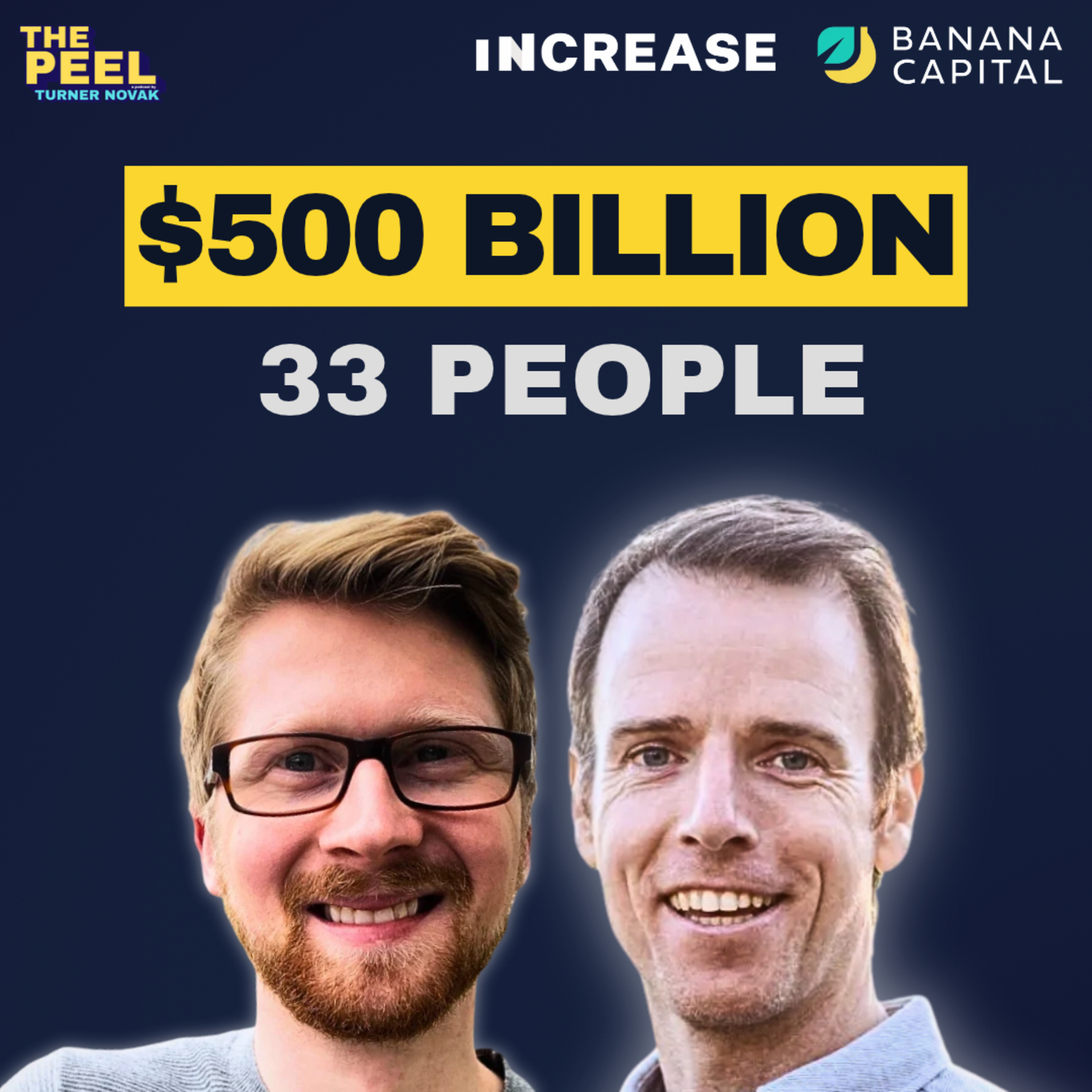
Darragh Buckley was the first employee at Stripe. He’s since started Increase, the banking infrastructure that moves over $500 billion a year. And he just bought a bank.
We talk about how to buy a bank, why putting an API on a bank is like "strapping a jet engine to a go-kart", operating with high-empowerment, the overnight sprint that turned on Stripe’s first dollar of revenue, why Patrick and John Collison would run across the office, and why you want your banker to be bored.
Thanks to this episode’s sponsors:
Monaco: The revenue engine for startups. https://monaco.com
Flex: Premium banking, 60-day credit at 0% APR. https://home.flex.one/referral/bananacapital
Clerk: Everything you need for authentication. https://clerk.com
Numeral: Sales tax on autopilot. https://numeral.com
Timestamps:
(0:00) Stripe's 1st employee bought a bank
(1:38) Fixing the stone in his shoe building Stripe
(7:59) Banking looks like 2010 payments
(11:11) Merging two layers into one, just like Stripe
(14:52) Why he finally bought the bank
(16:26) How do you actually buy a bank?
(20:20) The first bank that got away
(22:04) Why banks can’t chase new fads
(25:26) Compliance as code, from day one
(29:46) Talking straight to the Federal Reserve
(32:19) The Fed migration that nobody noticed
(33:50) The missing last mile of banking
(35:44) Getting customers to switch
(38:23) The challenger sales model
(40:33) What customers use Increase for
(41:48) How Ramp's bill pay works
(42:37) $500B a year with 33 people
(45:31) Hiring for a high-empowerment culture
(47:08) Growing up with the Collisons
(50:27) 150 test cases in one night
(54:23) What really made early Stripe work
(57:07) Why Patrick and John sprinted everywhere
(1:00:00) “You're not in payments, you're in fraud”
(1:02:31) Where AI hits a wall on fraud
(1:05:08) Giving payment cards to AI agents
(1:09:27) Use boring technology widely
(1:11:37) You want your banker to be bored
Referenced:
Increase: https://increase.com
Careers at Increase: https://increase.com/articles/how-we-work
Stripe: https://stripe.com
Links:
NBA Player Harrison Barnes Buying a Bank: https://sports.yahoo.com/articles/nba-player-harrison-barnes-invests-155500816.html
Acquire or Be Acquired Conference: https://www.bankdirector.com/event/acquire-or-be-acquired-2026/
Choose Boring Technology Essay: https://mcfunley.com/choose-boring-technology
Previous episode with Ron Gabrisko @ Databricks: https://www.youtube.com/watch?v=WYOO0DfeXu4
Previous episode with Will Gaybrick @ Stripe: https://www.youtube.com/watch?v=AM1_NADNSgI
Patrick Collison's "Fast": https://patrickcollison.com/fastAuthorize.net: https://www.authorize.net
Follow Darragh
X: https://x.com/darraghbuckley
LinkedIn: https://www.linkedin.com/in/darragh-increase/
Follow Turner
Twitter: https://twitter.com/TurnerNovak
LinkedIn: https://www.linkedin.com/in/turnernovak
Subscribe to my newsletter to get every episode + the transcript in your inbox every week: https://www.thespl.it/
Scan the code with your iPhone camera
Listen in the app.