In short
```markdown Podcast Episode Summary
Podcast Title
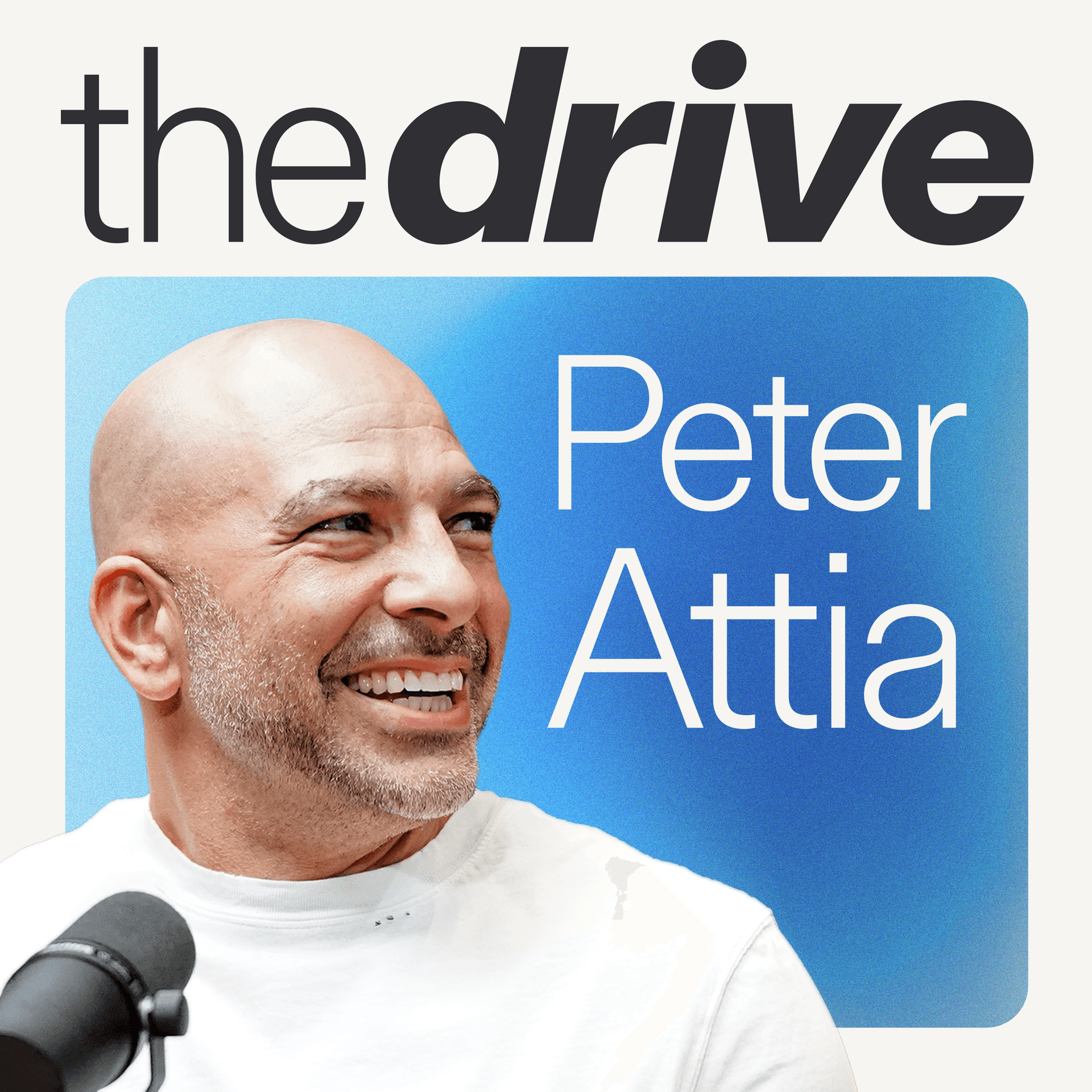
The Peter Attia Drive Description: Expert insight on health, performance, longevity, critical thinking, and pursuing excellence. Dr. Peter Attia (Stanford/Hopkins/NIH-trained MD) talks with leaders in their fields.
Episode Title
#332 - AMA #67: Microplastics, PFAS, and Phthalates Description: In this AMA episode, Dr. Peter Attia explores the widespread concerns regarding microplastics and associated chemicals like BPA, PFAS, and phthalates. He discusses the science behind these substances, their prevalence, health risks, and provides a practical framework for minimizing exposure.
---
Key Topics Discussed
- Understanding Microplastics and Associated Chemicals
- Definitions:
- Microplastics: Particles smaller than 5mm; often categorized as less than 1mm for relevance.
- BPA (Bisphenol A): A chemical used in hard plastics; associated with potential health risks, though largely phased out.
- PFAS (Per- and Polyfluoroalkyl Substances): Chemicals used for waterproofing; known endocrine disruptors.
- Phthalates: Chemicals that make plastics flexible; also found in personal care products.
- Prevalence and Exposure
- Increase in Microplastics:
- Plastics have only been prevalent since the 1950s, leading to increased environmental presence.
- There’s a growing focus on research and observation, resulting in perceived uptick in microplastics documentation.
- Human Exposure:
- Primary exposure routes include inhalation and ingestion through contaminated food and water.
- Common sources: seafood, salt, water (both tap and bottled), and even fruits and vegetables.
- Health Risks and Concerns
- Current Research Limitations:
- Most studies are inconclusive about long-term health impacts.
- Challenges exist in accurately measuring microplastics in human tissues.
- Speculative Risks: Discussions around potential endocrine disruption and other health impacts, though much remains unknown.
- Elimination from the Body: Microplastics are generally eliminated through stool, urine, and respiratory secretions.
- Strategies for Mitigation
- Minimizing Exposure: Practical tips on reducing contact with microplastics and associated chemicals:
- Choosing alternatives to plastic packaging.
- Selecting personal care products without phthalates or BPA.
- Understanding and navigating food sources.
- Regulatory Perspectives
- Current Regulations: Overview of how regulations on BPA, PFAS, and phthalates have evolved, including voluntary reductions in some cases.
- Consumer Awareness: Importance of being informed about the presence of these substances in products and food.
---
Key Takeaways
- Nuanced Understanding Required: Microplastics and their associated chemicals present complex challenges; there is no simple answer regarding their safety.
- Framework for Risk Assessment: Listeners are encouraged to evaluate their own risk based on personal exposure and health concerns.
- Continued Research Needed: There is a call for more robust studies to understand the full implications of microplastics on health and the environment.
---
Additional Notes
- For full access to this episode and additional content, listeners are encouraged to subscribe to the podcast.
- The episode reflects significant preparation and discussion, illustrating the complexity of the topic.
- Listeners are reminded that the information provided is not a substitute for professional medical advice.
---
Connect with Peter Attia
- Social Media: [Twitter](https://twitter.com/PeterAttiaMD), [Instagram](https://www.instagram.com/peterattiamd/), [Facebook](https://www.facebook.com/peterattiamd/), [YouTube](https://www.youtube.com/channel/UC8kGsMa0LygSX9nkBcBH1Sg)
For more content like this, visit the [Peter Attia MD website](https://peterattiamd.com). ```
Written by AI. May contain mistakes. Listen to the episode to check what was said.
Transcript
Automatic transcript. May contain errors.0:10Hey everyone, welcome to a sneak peek, ask me anything, or AMA episode of the Drive Podcast. I'm your host, Peter Atia. At the end of this short episode, I'll explain how you can access the AMA episodes in full, along with a ton of other membership benefits we've created. Or you can learn more now by going to peteratia MD dot com forward slash subscribe So without further delay here's today's sneak peek of the ask me anything episode
0:38Welcome to ask me anything AMA episode 67 For today's AMA we're going to focus on something that's gotten a lot of attention lately in the news online Social media and as a result we've received an endless stream of questions not only from our audience but also from our patients. And that topic is microplastics and all other accompanying chemicals, such as BPAs, PFASs, and Thalites. Given the interest, we decided to dedicate an AMA to this topic. In this conversation, we dive deeply into what we know and what we don't know about these chemicals. Why they seem to appear all of a sudden everywhere, how we're exposed to them, how much exposure we have, and how dangerous they may or may not be to our health.
1:23Ultimately, and perhaps most importantly, I think, we propose a framework for how someone can think about avoiding and mitigating exposure to these chemicals. If you are a subscriber and you want to watch the full video of this podcast, you can find it on the show notes page. If you're not a subscriber, you can watch a sneak peak of the video on our YouTube page. So without further delay, I hope you enjoy AMA 67.
1:54Peter, thanks for coming back for another AMA. How you doing? Good. Thank you for having me. Before we get started today, quick question. Do you have a beverage in front of you? I do. What type of glass is that in? Is it a plastic? Is it glass? It is plastic. Huh. Okay. Interesting then. That will be interesting for this AMA, which is going to cover one topic, which is something that seems to be growing in interest. We've been getting a ton of questions on ton of conversation online. That's microplastics and other chemicals such as BPAs, PFAS and Dalits. So what we did gathered all these questions that have come through, pulled them together, and are ultimately going to try and help people understand, should they be worried?
2:41What should they be worried about?
2:47What's started, anything you want to add. I think there's actually a lot I need to say before we dive into this for context. So I'll preface maybe by saying the following. Obviously, people who are regular listeners of the AMA can appreciate that these are not off the cuff remarks that we make here and we put a lot of work into doing this. When I sit up here and do these AMAs, I'm doing them based on the work that me and a team of analysts have done for usually about a month in preparation for them. I think it would be safe to say that in the six years we've been doing this, or is it seven or eight now I've lost track.
3:26To date, at least this will go down as the AMA that has required the most work that has probably generated the most swear words. and probably resulted in the secretion of the most adrenergic compounds from the adrenal glands. In other words, this has been a royal pain in the ass to prepare for. And as recently as last night at 10 o 'clock, I was emailing you saying, what the f, why are we doing this? It's a never -ending morass of information. Most of which is incomplete. There's so much I could say on this. And then the most wonderful thing happened, which always happens. Anyone has experienced this if they think back to being in college.
4:17Even the night before the exam, you're like, I don't know what the hell is going on. And the best advice is usually just go to bed. Get a good night's sleep. Get up. Nice and early. Fresh cup of coffee. And I think that sort of happened this morning. Me and a couple of the other analysts went to bed, I got up this morning and all of a sudden I just had more clarity about in my words how to land the plane. And I took to writing a couple of pages out and I think I've got kind of a sensible way to make sense of something that is incredibly noisy. So what I'm going to say at the outset is if you are listening to this thinking that there is a punchline and a one word answer, I'm going to spare you the disappointment.
5:01This is a very nuanced topic. If I could answer this in a word, I promise you I would and I would never try to go through the 75 pages of notes that our team has assembled to help me think about this topic. I swear to you, there are a hundred things I'd rather be doing right now than going through this. However, it is important in an area where there is so much uncertainty, so much asymmetry, and such complete and incomplete information that we have to understand the boundary conditions so that we can each make a reasonably informed decision. So with that as my preamble, let's do our best to guide people on a journey that we've been on and acknowledge our shortcomings, acknowledge where we wish we knew more, where there may be others do know more, but leave people with a framework such that at the end of this AMA, which will hopefully be some time today and not tomorrow, everyone can sort of make a risk -based decision for themselves for their families.
6:10Definitely. And it kind of reminds me of what Bob Kaplan always used to say, right, which is further from the shore, the deeper the water. So as we've kind of like gone deeper and deeper on this, it seems more complicated, more complicated. The last question I asked before we get started, that coffee you drank this morning, was that in a glass mug or like a Starbucks paper mug with the plastic lid on top? It was actually in a metal Yeti camping coffee cup. That's sort of my favorite way to drink coffee. All right, so you redeemed yourself a little bit there, which is good. Starting off, I think it'd be helpful as we kind of typically do definitions.
6:49What are microplastics? What's BPA? What are these chemicals we're talking about? Let's just define them now. So as we say them going forward, people understand what we're talking about. Part of this is you just have to suck it up through the semantics. And part of the challenge is that some of the definitions are not very helpful. So starting with microplastics, they're typically defined as any particles of plastic that are smaller than five millimeters. Now, again, I realize that not everybody is fast -siled with the metric system, but anybody who is will realize 5 millimeters is huge. You can see 5 millimeters.
7:25That's half a centimeter. So we're not really talking about that. I think most current studies would really classify microplastics as those smaller than 1 millimeter, 1 tenth of a centimeter, about 125th of an inch. And then, of course, we talk about what are called nano plastics, which are particles that are smaller than one micro meter or micrometer, so 1 1 ,000th of a meter. So we abbreviate these as MNPs or micro nano particles. And we should just acknowledge that these things are completely ubiquitous. They're found anywhere that we have looked for them, which is to say we find them in water, we find them in food, we find them in fruit, on fruit, in vegetables, on vegetables, in meat, in the air, and therefore micro -nano -plasticals or MNPs are completely ubiquitous.
8:21Okay, you asked about BPA. Now there are lots of these bisphenol chemicals, but bisphenol A or BPA is the one that most people are familiar with. Ironically, the presence of BPA, at least being used actively, has been reduced quite a bit over the past 15 years, but just understand that there's a whole family of these bisfing halls, and typically we substitute one for the other. But what are they? They're chemicals that are used to make polycarbonate plastic. Polycarbonate plastic is the hard plastics we have in our world. So if you think about all the places where you use plastic and it's hard, I think of the Nalgene type water bottles, epoxies, resins, things like that, that's where you're going to have historically found a lot of BPA.
9:06Of course, today this is less the case, but the truth of the matter is they're now replaced by other bisphenols, so BPS and BPF. And the truth of the matter is not clear that we know if those are any better than BPA. So when I say BPA, I think it's just easiest to sort of think of the broad category of these families. Another thing that we're going to talk a bit about, and I've talked quite a bit about this in the past is actually particulate matters of the 2 .5 or smaller variant. These abbreviated PM 2 .5. And again, it refers to particulate matters in the air that are smaller than 2 .5 micrometers.
9:45So why is that important? Well, there's something relevant about a particle that's that small, which is that if inhaled, it has the potential at least to become systemic. And the reason for that has to do with the anatomy of the lung and the size of both the alveolar air sacs and the epithelial linings of them, which again, it's not necessarily that intuitive that you could breathe something, but that it is small enough that it could actually get across a cell barrier at the innermost part of the lungs and enter the systemic circulation just as though it had been injected into you. A PM 2 .5 refers to any particulate matter that is inhaled in the air that is of that size or smaller.
10:32Now, are there some microplastics or micro nanoplastics that fit that description? Yes. But most are not. So most PM 2 .5s are not microplastics. I forget the exact number. I know it's somewhere. We did look it up. It's on the order of a few percent. I would say that the greatest contribution to PM 2 .5s probably come from air pollution. So anything that has to do with when there's a fire burning wood, obviously burning fossil fuels, but coal being the hands down the leader of this. I mean, natural gas combustion produces much less of this. And then we'll talk about thalates, which are another class of chemicals that are kind of like, I think of them as sort of the opposite of the BPAs.
11:14So these are the things that are used in plastics to make plastic more flexible to have more bend in it. They're also found in products that we use like shampoos, lotions, laundry detergents. It makes fragrances last longer. Now, there's been a constant regulatory shuffling around all of these things, and I'm not going to get into it because I could just put everybody to sleep right now. We're going to leave a ton of this in the show, note section where we're going to kind to go through the regulatory machinations on this and which of these products were banned and when and what got substituted in.
11:52But the bottom line is that the use of phallates are still currently allowed in food content application, but many companies have undergone voluntary reductions in this. There doesn't appear to be any restriction in the use of phallates for personal care products. And I think this is probably where people are going to see their greatest exposure to them. So I guess I'll stop there, Nick, but that's the whirlwind tour of what all these different compounds are. Do we have any idea why it seems like we're now hearing about microplastics being everywhere? It doesn't seem like that was always the case.
12:30So do we know why there's been this huge uptick in this? Yeah, I think there's two things going on. And so the first is that obviously plastics are relatively new, didn't really exist much prior to the 1950s. And if you think about it, I mean, they were pretty remarkable. So incredibly lightweight, remarkable strength to weight ratio, resistant to rotting and corrosion and shattering. I mean, there are lots of reasons we use plastic. So when you combine the fact that they've been increasing in their proliferation over the past 70 years, that would certainly explain why we might be seeing more of them.
13:12But there's also a little bit of what is the expression that drunk under the streetlight problem. People are also looking at this more and more and more. In fact, if you don't mind, if you could pull up, there's a figure we've got that shows the number of scientific publications focusing on microplastics in the last 20 years. So if you go back, it's showing basically 2000 to 2020, it's a linear scale, but it's still pretty remarkable. It still looks like you're basically watching Bitcoin from 2010 to 2020. That's effectively what's been going on. So I don't doubt that there are more and more microplastics accumulating in the environment.
13:50That's likely, but we can't lose sight of the fact that we're also looking for it non -stop. So one of the questions that I didn't come up with a satisfactory answer to was if you just look at the last five years Are we seeing a true increase? I wouldn't doubt that there's more 2020 versus 1980 that strikes me as hey over that 40 year period I could really see it going up but 2020 to 2025 is that a real increase or is that an artifact of observation? You touched on a teeny bit when you were kind of going over the definitions, but I think it'd be helpful to just dive into it a little deeper, which is how are humans being exposed to microplastics currently?
14:33We should always be thinking about this through the lens of relevant versus not so relevant exposure. But again, we're going to always try to focus on a relevant exposure, which is an exposure that has the potential to accumulate. So the most common route of human exposure is from inhaling plastic dust and fibers and from consuming food and beverages that contain these micro nano plastics. And again, that's why I prefer to talk about NMPs rather than just micro plastics. Why? Because my concern about consuming a 5 millimeter piece of plastic is nil. Because it can't be absorbed, it's going to come right out my body the next day.
15:13this is not the thing that we need to be afraid of. So what are the foods and beverages we need to be concerned with? The highest places we tend to see these are in seafood, salts, water, both tap water and bottled water, but also in fruits, vegetables, meats, even beverages like milk, be here in wine, which obviously contain water as well. Nanoplastics in soil can accumulate within plants, and obviously the exposure gets magnified as you go up the food chain. This again explains why we would see it in seafood, given that we understand the role of plastics in the oceans. And that's why obviously you can see seafood and land animals accumulating these as well.
15:54The epithelial barrier is the first line of defense. And remember there's an epithelial layer on the outside of your body that we can see, but there's also an epithelial layer on the inside of your body. Everything between your mouth and your anus is also an epithelial layer. And that's why generally, micronanoparticles don't enter the body through the skin, or through the gut, unless they are small enough. We've already talked about it. The pulmonary epithelium requires them to be smaller than 2 .5 microns, and in the lining of the gut, they could probably be as big as 150 microns to be absorbed.
16:31Do we know how much plastic humans actually consume and is it even noble? Are you often here numbers thrown around a lot? Curious what we know on that. It's difficult to know, but I think we can probably put some brackets around it. So, first, there's a huge amount of variability based on a lot of factors. So, where you live, what type of food you eat, and what your source of drinking water is would probably be the three biggest determinants of your exposure to MNPs. That's worth noting again, and I think it's worth stating. Your geography, your source of food, your source of water plays the biggest role.
17:13If you aggregate the data from all of the studies, it would suggest that humans are consuming, and this is a broad range, so that's just unfortunately the nature of this stuff. Somewhere between 10 and 300 micrograms a week. This is 10 to 300 thousandths of a gram per week. Now a study that was published in 2021 estimated that on average we consume about four micrograms per week from fish and other sea things like crustaceans, mullossks, tap water, bottled water, beer, etc. etc. The study simulated the expected exposure to amounts that agreed with measured quantities in microplastics and stool.
17:59So I think this is probably an underestimate given that it didn't look at some of the other areas that have already been found to contain some MMPs such as fruits, meat, vegetables, potentially plastic off -cutting boards, utensils, plastics that may come from things will talk about like reheating food and things like that. So the point is that the mass of these things is pretty small and that might not be the right way to think about it and we can talk about some of the misinterpretations of that stuff. There was a recent study published in 2023. It was in Korea and it estimated that the population was consuming somewhere between 140 and 310 micrograms per week.
18:42That's a nice narrower band. It also ports with largely the upper limit of the US -based study as well. I think that's probably the ballpark of where people are consuming. How do those numbers compare to the credit card worth of plastic that was all over the news? I think you couldn't go anywhere without seeing that we're eating or consuming a credit card worth of plastic a week. So the numbers that we're seeing in those studies compared to what that would be, how do those compare? Not even in the same zip code, so that sound bite that humans consume a credit card worth of plastic refers to a report that estimated weekly consumption was five grams of MMPs.
19:24That has been largely debunked, despite what you've said, which is the prevalence in popular media. But, and I don't remember who famously stated that a lie will travel around the world, or halfway around the world before the truth has a chance to pull its boots on. I don't even need to go into that. We'll link in the show notes to both the original analysis, which came out of the University of Newcastle, commissioned by the WWF, was released, I think, in 2019. And then, obviously, the rebuttals to that. But yeah, the long and short of it is, I don't think any serious person believes that we're consuming five grams of plastic a week.
20:01Based on what we consume, what do we know about how they're eliminated from our body? The main way that these things are eliminated is largely through coughing and sneezing them out. So, anything that's coming into our lungs, we can get it out by a cough or a sneeze, as well as urine and stool. So the largest particles, those that are greater than 10 microns, will generally be removed with relatively high efficiency. Regardless of how they enter the body, it's really the smaller particles that are eventually going to make their way to the immune system. If you were going to do a mass balance on this stuff, the majority to the tune of 99 % of ingested microplastics are going to be eliminated through stool.
20:48And this is a relatively short transit time. We're talking about 24 to 72 hours. Plastics have a very difficult time crossing the GI epithelium. So when you look at animal studies, we would see that it's about 0 .3%, maybe with a ceiling of about 1 .7 % of microplastics have the capacity to be absorbed across the GI epithelium. And of course, it's heavily, heavily sized dependent. So it's the particles that are going to be less than 10 microns, which remember that's four times larger than what is required to get into the lung. So again, just thinking the long -war anchoring to 2 .5 microns or less in the gut, even though in theory the gut could absorb something close to maybe a hundred.
21:35I think that's more theoretical and in practical terms We tend to see it as 10 micron or four times that size. So the bottom line is this if you're encountering a Microplastic that's less than 2 .5 microns you could absorb it both in your gut or via your lungs. Now, when we go through this type of analysis, in urine, we again see that we also excrete microplastics through the urine, but this is less than what we do through the gut. For the things that are not eliminated, where do they end up and why are there growing concerns about that? So this is really the crux of what's going on. Thank you for listening to today's Sneak Peak AMA episode of The Drive.
22:17If you're interested in hearing a complete version of this AMA, you'll want to become a premium member. It's extremely important to me to provide all of this content without relying on paid ads. To do this, our work is made entirely possible by our members, and in return, we offer exclusive member -only content and benefits above and beyond what is available for free. So if you want to take your knowledge of this space to the next level, it's our goal to ensure members get back much more than the price of the subscription. Premium membership includes several benefits. First, comprehensive podcast show notes that detail every topic, paper, person, and thing that we discuss in each episode.
22:56And the word on the street is, nobody's show notes rival Iris. Second, monthly ask me anything or AMA episodes. These episodes are comprised of detailed responses to subscribe questions, typically focused on a single topic and are designed to offer a great deal of clarity and detail on topics of special interest to our members, you'll also get access to the show notes for these episodes, of course. Third, delivery of our premium newsletter, which is put together by our dedicated team of research analysts. This newsletter covers a wide range of topics related to longevity and provides much more detail than our free weekly newsletter.
23:34Fourth, access to our private podcast feed that provides you with access to every episode including AMAs, Sans this spiel you're listening to now, and in your regular podcast feed. Fifth, the Qualies. An additional member -only podcast we put together that serves as a highlight reel featuring the best excerpts from previous episodes of the drive. This is a great way to catch up on previous episodes without having to go back and listen to each one of them. And finally, other benefits that are added along the way. If you want to learn more and access these member -only benefits, you can head over to peteratia -md .com forward slash subscribe.
24:13You can also find me on YouTube, Instagram, and Twitter all with the handle peteratia -md. You can also leave us review on Apple podcasts or whatever podcast player you use. This podcast is for general informational purposes only and does not constitute the practice of medicine, nursing, or other professional healthcare services including the giving of medical advice. No doctor -patient relationship is formed. The use of this information and the materials linked to this podcast is at the user's own risk. The content on this podcast is not intended to be a substitute for professional medical advice, diagnosis, or treatment.
24:49Users should not disregard or delay an obtaining medical advice from any medical condition they have and they should seek the assistance of their healthcare professionals for any such conditions. Finally, I take all conflicts of interest very seriously. For all of my disclosures in the companies I invest in or advise, please visit peteratiamd .com from forward slash about where I keep an up to date and active list of all disclosures.
From the publisher
View the Show Notes Page for This Episode
Become a Member to Receive Exclusive Content
Sign Up to Receive Peter’s Weekly Newsletter
In this “Ask Me Anything” (AMA) episode, Peter tackles a topic that's been dominating headlines and sparking widespread concern: microplastics and plastic-associated chemicals, including BPA, PFAS, and phthalates. Peter explores the science behind these substances including how and why they've become so prevalent, the extent of our exposure, and the potential risks to our health. Most importantly, he provides a practical framework for understanding microplastics and plastic-associated chemicals and minimizing exposure while distinguishing genuine risks from exaggerated concerns.
If you’re not a subscriber and are listening on a podcast player, you’ll only be able to hear a preview of the AMA. If you’re a subscriber, you can now listen to this full episode on your private RSS feed or our website at the AMA #67 show notes page. If you are not a subscriber, you can learn more about the subscriber benefits here.
We discuss:
- The complexity of the topic of microplastics and associated chemicals [1:30];
- Definitions: microplastics, BPA, PM2.5, phthalates, and more [6:30];
- The reasons behind the increase in microplastics in our environment and the surge in interest in them [12:00];
- The various ways that humans are exposed to microplastics and nanoplastics [14:00];
- Volume of plastic consumed by humans, and how the body eliminates or absorbs microplastics [16:00];
- How microplastics accumulate in the body, the variability in tissue accumulation, and the challenges in studying their long-term health effects [21:30];
- Limitations of blood tests for microplastics, and the importance of reliable biomarkers for guiding behavior and interventions [26:30];
- The speculative health risks of microplastics, the limitations of current research, and the need for more robust studies [29:15];
- The challenges of measuring microplastics in human tissues, the need for better methodologies, and the importance of critically evaluating study relevance and claims [39:45];
- If it’s unclear whether microplastics actually cause harm, should we still be concerned about exposure? [42:15];
- Strategies to minimize microplastic exposure [45:00];
- The financial cost and effort involved in various microplastic exposure mitigation strategies [51:00];
- The role of airborne microplastics in total exposure and accumulation [1:03:00];
- Chemicals associated with plastics, their role as endocrine disruptors, and the challenges in linking exposure to specific health outcomes [1:04:00];
- BPAs: role in plastic production, and its potential developmental risks [1:05:45];
- BPA's potential health risks: pregnancy, fertility, obesity, and diabetes, and the socioeconomic confounders in the data [1:08:30];
- Regulatory limits on BPA exposure, and practical considerations for reducing exposure [1:12:45];
- The prevalence of BPA in modern products and how to identify it [1:17:15]; PFAS: chemical structure and purpose in products [1:18:30];
- Why PFAS are considered endocrine disruptors [1:19:45];
- The main sources of PFAS exposure, and practical steps to reduce exposure [1:21:30];
- The potential health risks of PFAS exposure [1:24:00];
- Phthalates: role in making plastics flexible and presence in personal care products [1:24:45];
- Why phthalates are considered endocrine disruptors [1:25:15];
- The main sources of phthalate exposure, and how manufacturing practices are evolving to reduce exposure [1:26:45];
- Practical strategies to reduce exposure to phthalates in food, air, water, and personal care products [1:28:30];
- Navigating microplastics and associated chemicals: a framework for personalized risk reduction [1:29:30]; and
- More.
Connect With Peter on Twitter, Instagram, Facebook and YouTube