In short
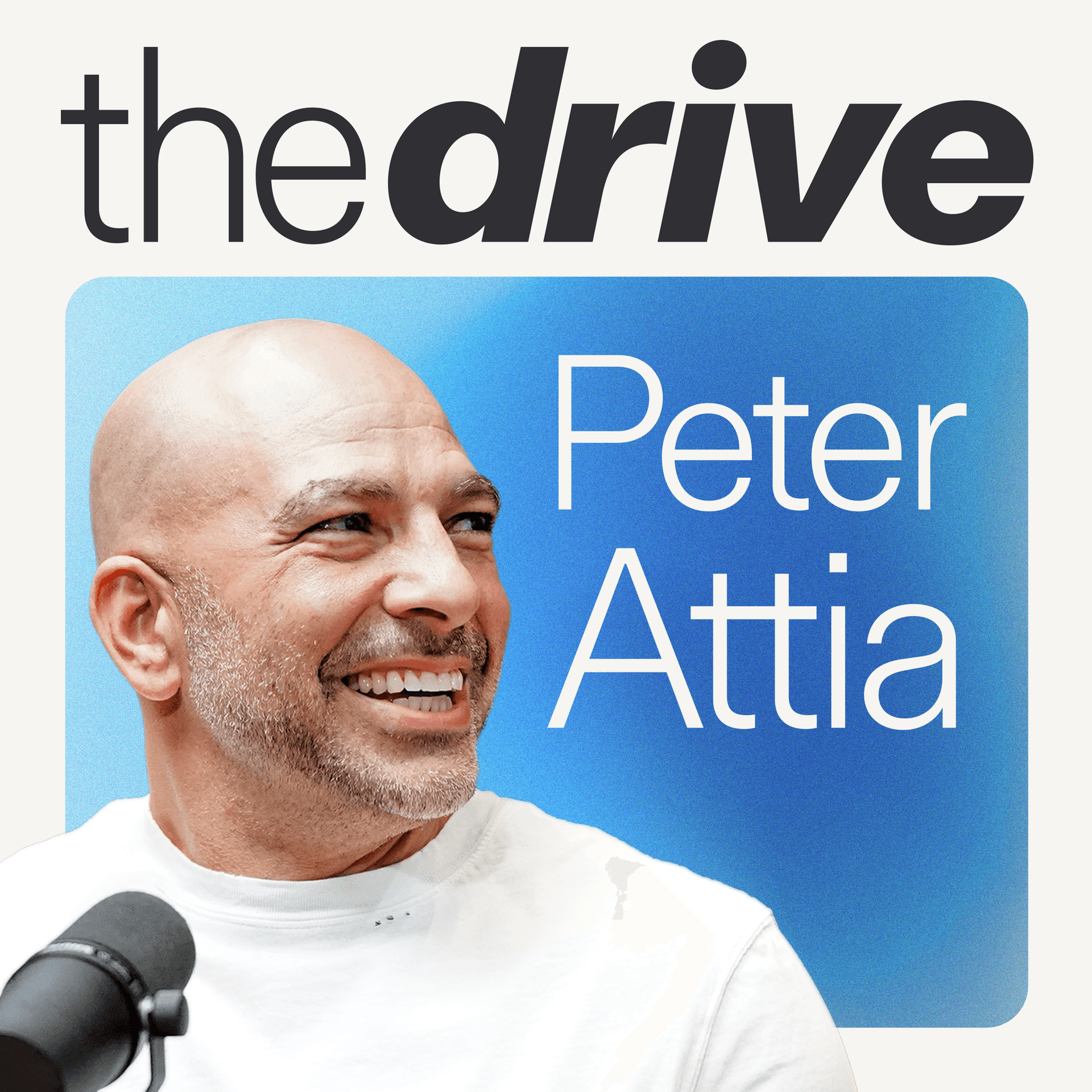
Podcast Episode Notes: The Peter Attia Drive - AMA #70: Nicotine
Episode Overview
- Episode Title: #344 - AMA #70: Nicotine: impact on cognitive function, performance, and mood, health risks, delivery modalities, and smoking cessation strategies
- Host: Dr. Peter Attia
- Air Date: Not specified
- Episode Type: Ask Me Anything (AMA)
Description In this episode, Dr. Peter Attia explores nicotine, addressing its impacts on cognitive function, mood, and performance, as well as its health risks and delivery methods. The discussion aims to clarify misconceptions surrounding nicotine and tobacco, assess the various delivery methods, and provide strategies for smoking cessation.
Key Topics Discussed
Introduction to Nicotine
- Distinction Between Nicotine and Tobacco:
- Nicotine is a compound found in tobacco, but it is often misunderstood as the primary cause of tobacco-related health issues.
- Major health risks from smoking are attributed to other toxic compounds in tobacco smoke, not nicotine itself.
Current Landscape of Nicotine Research
- Growth in Research:
- Increased studies on nicotine's effects have emerged since the last AMA on the topic.
Risks and Benefits of Nicotine
- Health Risks:
- Addiction potential
- Sleep disturbance
- Cardiovascular health concerns
- Variable effects on mood and anxiety based on genetics and dosage
- Potential Benefits:
- Short-term cognitive enhancements
- Possible protective effects against neurodegenerative diseases
- Effects on physical performance
Delivery Methods of Nicotine
- Comparison of Delivery Methods:
- Traditional cigarettes vs. alternatives like gums, pouches, and synthetic nicotine.
- Ranking of methods based on safety and health impacts.
Cognitive Function and Performance
- Impact on Cognitive Ability:
- Nicotine's effects on memory, learning, and attention.
- Interaction with other stimulants like caffeine.
Smoking Cessation
- Strategies for Quitting:
- Effective nicotine replacement therapies.
- Considerations for potential weight gain after quitting smoking.
Miscellaneous Insights
- The Role of Genetics:
- Genetic factors influence addiction risk and metabolism of nicotine.
- Cultural References:
- Dr. Attia addresses misconceptions about his apparel featuring tobacco branding, clarifying that it is a tribute to Formula One history, not a promotion of smoking.
Key Takeaways
- Understanding Risks: It's crucial to differentiate between nicotine and the harmful effects of tobacco smoke.
- Cognitive Insights: Nicotine may offer cognitive benefits, but with risks that need careful consideration.
- Effective Cessation Strategies: For those looking to quit smoking, understanding nicotine replacement options is essential for success.
Conclusion This episode provides a comprehensive overview of nicotine, shedding light on its complexities and offering guidance for those curious about its effects and risks. Dr. Attia emphasizes the importance of informed choices regarding nicotine use and smoking cessation.
Additional Resources
- For full episode access and more insights, visit [The Peter Attia Drive](https://peterattiamd.com/ama70) and consider subscribing for exclusive content.
- Follow Dr. Peter Attia on:
- [Twitter](https://twitter.com/PeterAttiaMD)
- [Instagram](https://www.instagram.com/peterattiamd/)
- [Facebook](https://www.facebook.com/peterattiamd/)
- [YouTube](https://www.youtube.com/channel/UC8kGsMa0LygSX9nkBcBH1Sg)
Disclaimer This podcast is for informational purposes only and not a substitute for professional medical advice. Seek guidance from healthcare professionals for medical conditions.
Written by AI. May contain mistakes. Listen to the episode to check what was said.
Transcript
Automatic transcript. May contain errors.0:10Hey everyone, welcome to a sneak peek, ask me anything, or AMA episode of the Drive Podcast. I'm your host, Peter Atia. At the end of this short episode, I'll explain how you can access the AMA episodes in full, along with a ton of other membership benefits we've created. Or you can learn more now by going to peteratia MD dot com forward slash subscribe. So without further delay, here's today's sneak peek of the Ask Me Anything episode.
0:38Welcome to Ask Me Anything, AMA episode number 70. For today's AMA, we're discussing a topic that has been gaining significant attention in both the scientific community and among the public. And that is nicotine. This is a topic that we get a lot of questions about not only from our audience, but also from my patients. In this episode, we discuss the distinction between nicotine and tobacco. Understanding why nicotine itself is not the primary driver of the major health risks associated with smoking. We discuss the risks of nicotine use, including addiction, sleep disturbances, cardiovascular effects, and its impact on mood and anxiety.
1:14We talk about the various delivery methods of nicotine from traditional cigarettes, which I think everybody would agree or bad, to pouches, gums, and synthetic options, ranking them from least to most harmful. The role of nicotine in physical performance, cognitive enhancement, fertility, and its interaction with other stimulants such as caffeine, we touch on the guidance for those interested in minimizing the risks while still using nicotine. And we end this podcast by looking at smoking cessation and considerations for those trying to quit smoking, which often involves using nicotine replacement.
1:47If you're a subscriber and you want to watch the full video of this podcast, you can find it on the show notes page. And if you're not a subscriber, you can watch the sneak peak of this video on our YouTube page. So without further delay, I hope you enjoy AMA number 70.
2:06Peter, welcome to another AMA. How you doing? I'm doing really well. Thank you for having me back. I mean, we're always happy to have you, whenever you would like. And again, it'd be very awkward if you weren't here. I think we do need to follow up based on one of our recent AMAs is, do you still have a liquid of some form in front of you? I do. What kind of cup is that in? You know, I'm actually drinking it in a glass. Did you listen to our microplastics AMA? And that's why you made that change? Nick, I have made several changes following the AMA and microplastics. I believe that they are all in the spirit of 80 -20, so I'm really low on the sigmoidal curve of cost and energy with one exception.
2:52And yeah, I think I'm just taking what I think are the relatively easy steps to hopefully mitigate 80 % of my exposure. and I'm going to spend no more time worrying about the last 20%, which, A, I have no idea if it matters, and even if it does, I don't think I could live my life and be concerned with it. That's great to hear. Two things. First is, by the time this comes out, we'll most likely have a short video on what those changes were. So we'll link to that. If we don't have that video, something terribly went wrong, so we should have it. The second is, are you just so happy that you continue to join us for these AMAs?
3:30otherwise you would still be living so foolishly in your microplastic life. I am looking forward to the day when someone else hosts an AMA for me. Maybe an avatar. That would be awesome. We could just have an AI -Peter and it's just an ongoing AMA that never ends. Well, today's AMA is not going to be that. It will be you, live, and it is on a single topic. we can ask a lot about there's so much more use of it. We initially didn't AMA on it, I think like four years ago, and at the time you didn't see as much use as you do now. And that's nicotine. So we're going to talk all things nicotine today.
4:13This is going to look at benefits, short term, long term, around everything from cognition, exercise, whatever it may be, risks of nicotine and things that people need to be aware of. We're gonna look at different ways and vehicles that people can use nicotine and what are the pros and cons And then we're also gonna end this with something that we've been asked a lot about every now and then when it comes to Smoking cessation and I think we often say a lot of people in our audience Most likely are not smoking because if you are you're probably not opting into this deep content But some people are but also we hear from people where it's hey my parents significant other children, friends, whatever it may be, are still doing this.
4:57How can I talk to them about quitting? So we'll cover that as well. So all that said, anything you want to say before we get rolling. Nope. The great insight that you had right there. So thank you for that. All right, start out. Can you explain just where the field of nicotine research currently stands and what's new and distinct from what we talked about this four years ago. One of the things that we appreciated, meaning the team and I, as we were preparing for this, was trying to appreciate how much of the research on nicotine is based on tobacco, and its first application through obviously cigarettes.
5:38But then also the idea of using tobacco to extract nicotine for non -smoke, but tobacco -derived nicotine versus synthetic nicotine, which is honestly what a lot of people are thinking about in that context. And so I think that's important to understand that it is not always easy to tease out the impact of nicotine. And I'll foreshadow one example that we're going to talk about, which is infertility. You would think we would have legions of data that would explain the effect of nicotine on fertility, both for males and females. It turns out that if you want to talk about it through the lens of smoking, that's true.
6:17But if you want to talk about it through the lens of vaping or nicotine pouches, that's not true. And so I think that's one of the issues that I think makes this difficult to talk about with complete clarity. So anyway, I guess that's the first thing I would say. I think the second thing I would say is, and you alluded to this four years ago, we did an AMA on nicotine. Don't worry, those of you that listened to that, there's very little overlap. I spent way more time talking about how nicotine worked, mechanisms of action. Today, we're probably going to, I think, answer a lot more of the practical questions that people have.
6:48And I will also say that four years later, there's frankly more research on some of the benefits of nicotine. And to be sure, we're going to talk about both the risks and benefits of nicotine today. So anyway, I would say that's probably a good place to start. It'd be really helpful for people double clicking on kind of one thing you hinted at there, which is for a lot of people when they hear nicotine, there's just a negative connotation. And usually it's because they associate it with tobacco, cigarettes. And so their mind initially goes to nicotine as maybe a negative harmful thing. So do you want to maybe quickly disentangle for people the health risks of tobacco from the effects of nicotine specifically?
7:29Yeah, this is something I think I maybe I didn't do a good job of this four years ago or maybe I did. and at the end of the day, people just don't appreciate new ones. But I remember being very surprised at how A, people thought that the takeaway from the podcast four years ago was we should all be using nicotine. And B, people were like, how can you advocate for this as a doctor? So my hope is to untangle all of that for people. Nicotine is one of many compounds found within the leaves of the tobacco plant. As such, it is in tobacco -based products. But the major health concerns that are associated with tobacco, which are primarily cancer and cardiovascular disease, for reasons we can talk about another time and we're not going to talk about today, are not caused by nicotine per se, but instead they are caused by several other components of tobacco itself and tobacco smoke, such as everything from toxic metals, for maldehyde, things called polycyclic aromac hydrocarbons.
8:38These are actually the things that are causing the harm. Now, there are byproducts of nicotine that are produced in processing tobacco, and they can be carcinogenic. So that means, and this is a very important point. I want to make sure if you're trying to pay attention to the key points, this is one of them. This means that any tobacco derived nicotine product may contain carcinogens. This was actually something I did not appreciate prior. I thought that you could extract nicotine from tobacco and be completely free and clear of carcinogens. That is not the case. I want to be clear. It might be that, and it likely is, in fact, it almost undoubtedly is, that smoking tobacco is a much higher level of risk.
9:27But I want to make sure people understand that if your nicotine is tobacco derived as opposed to synthetic, you are still probably assuming risk. So the level of these compounds depends on the processing technique and the tobacco variety of course. So they're found in the highest concentrations in products that actually still look like tobacco. So I think that's kind of a nice way to think about it. Everybody can imagine what a cigarette looks like. If you take tobacco chewing leaves, people chew tobacco, that's going to have a lot of the negative properties. So the more closely you are to tobacco, the worse things are.
10:06So obviously if you're sticking it in a cigarette or a cigar or pipe, yep, you're getting plenty of it there. If you're chewing it or taking it in snooze, also a big problem. So this is why I don't think I fully appreciated this four years ago. When you take nicotine out of tobacco directly, you're still assuming some of that risk that comes in curing and fermentation of the tobacco itself. Before we move on, we should just address something because I forget sometimes people get confused by it. And even earlier this week, we got an email to the website, which is Peter. For someone who cares so much about their health, why did I see an Instagram or YouTube video of you where on your hat or your t -shirt, there was the Marbarale logo.
10:51Do you support cigarette smoking? So while we have people, do you just want to explain why sometimes your clothing has that and how you're not sponsored by Big Tobacco and that is not a, you should be going and smoking Marble Reds on the regular. Yeah, boy, that's okay. This is a philosophical issue, but as some people, listen to this podcast, no, I am an enormous fan of Formula One, and that goes way back for a long period of time. And up until 2005, tobacco was a major sponsor of Formula One. In fact, the largest sponsor would have been Marble, And they were in the early 2000s all over the Ferraris.
11:36And in the era that is my favorite era of Formula One in the 1980s, in the early 90s, they were all over the McLaren car. And so you are correct from time to time. You will see me wearing something or memorabilia that I have that is a throwback to that era of Formula One. And I believe in the original delivery of those vehicles. In other words, I believe in era appropriate nods to things that we pay attention to. And so, yes, if you're looking at a hat or a shirt or a car that is replica or pays homage to something of that era, you're going to see the delivery of the sponsors of the time. And that would have been Hugo Boss, National, Marbro.
12:19Anyway, there's nothing else I can say about it other than it has nothing to do with a tacit or otherwise approval of these products. I want to be unambiguously clear. I think smoking is an absolute error. Arguably the single biggest unforced error you can make with respect to your health. And fortunately, Big Tobacco does not sponsor motorsport anymore. And I think they're better for it. Perfect. Back to the regular schedule program. Nicotine. Are there any harms associated with nicotine itself based on what we just talked about that. Well, we're going to go into this in some detail, but I would say that clearly the biggest risk of pure nicotine, and now I'm just talking about it through the lens of synthetically acquired nicotine, so you're getting rid of all the tobacco related processing, is in its addictive nature and make no mistake about it nicotine is highly addictive.
13:11There are some other areas where depending on the dose, there may actually be a harm. Again, I think this is very important to understand. There are some mechanistic insights that suggest a negative impact on the endothelium. And it's certainly plausible that anything that negatively impacts the endothelium could increase the risk of cardiovascular disease. But these are not large studies. These are not studies that have been done in humans, and these are extrapolations typically from other animal models. So I guess we should probably just maybe spend a minute kind of talking about nicotine again.
13:45And if people want more detail on this, I think it's covered four years ago. But nicotine activates, so nicotine is a molecule and it activates something called the nicotinic acetylcholine receptor. Now, these receptors are not just in the brain where we most frequently talk about them, but they can actually exist throughout the body. And if you look at certain mouse models and rodent models, such as other rodent like rats, It's been demonstrated that high doses of nicotine can actually increase tumor growth and even foster metastases in addition to increasing atherosclerotic plaques. Now that sounds pretty devastating.
14:24I just want to always point out whenever we're talking about these rodent models, there's lots of daylight typically between what happens in that model and what happens in humans. and I think it's important to look at other ways to triangulate upon the answer. So we'll link to those studies in the show notes. But the closest thing that we could find in humans was a 2024 Mendelian randomization. I know we talk about these a lot, but I always think it's worth explaining what an MR is. So a Mendelian randomization says, let's look at genes in the population, which we can assume are randomly assorted.
15:01That's the randomization part. And let's ask the question, will these genes be a proxy for a behavior that I want to study? Or something that I want to study, where I can now use effectively observational tools to see if there's a difference. One example is Mendelian randomization consistently shows that LDL cholesterol is causally associated with heart disease. Why? Because LDL cholesterol is highly genetic, and you can look across a population and see different levels of LDL, even in people who are otherwise healthy, and you can examine the cardiovascular outcomes of these people, which would be the dependent variable, and that's how you could infer causality.
15:50By extension, by the way, HDL cholesterol turns out to be not causally related in the inverse. Nevertheless, so if you look at this Mendelian randomization, they wanted to to look at the relationship of nicotine by itself on compromised lung function, lung cancer, COPD, CH, AACPD, et cetera. Okay. I wanna be clear, I don't think this was the world's best MR. I think it was clever though. What did they look at? Because like what genes would you try to parse out to understand how much tobacco someone is consuming, which is what you actually wanna be able to do? So what they looked at was they looked at genes that spoke to nicotine metabolism.
16:26And so just as caffeine, we've talked about this on the past caffeine metabolism is highly genetic. So people like me are wickedly fast at metabolizing caffeine. And therefore I seem to be able to drink it later in the day without a negative impact. Someone who's a very slow metabolizer is going to feel it more. Similarly with nicotine, you have high and low levels of nicotine metabolism. And what the authors of this study postulated was people who are faster nicotine metabolizers are going to have lower levels of circulating nicotine and therefore less nicotine exposure. Now, technically you could also argue that maybe someone who's a faster nicotine metabolizer would smoke more or consume more nicotine, so put that aside for the moment.
17:08But nevertheless, the authors used these genetic variants associated with nicotine metabolism to adjust for basically smoking heaviness. And again, we're not interested in the role of smoking, we're interested in the role of nicotine, okay. Disease risk was increased with slower nicotine metabolism, but the added risk was abolished when adjusted for smoking heaviness, because of course if you do this you have to adjust for smoking. Indicating that the main drivers of the outcomes are the non -nicatinic components of cigarette smoke. Let me state that again. This is a complicated MR, but it's the closest thing I think we have to looking at humans.
17:45And it's looking at how much people smoked, how quickly they metabolize nicotine, trying to do an overlay of that to appreciate the nicotine exposure. And it came away basically saying that the harm of smoking is due to the tobacco and tobacco -related products, not due to the nicotine. I want to be clear, this is way, way far away from what you would want to be able to say as level one evidence. If you wanted to do this in a level one fashion, you would actually have to randomize people to a whole bunch of different tobacco -free nicotine products and study the outcomes of interest. Now of course, nobody's going to do that for hard outcomes like mortality, but I certainly think people could do that for softer outcomes.
18:32And my hope is that somewhere along there, people do that. What do we know about potential side effects of nicotine? Thank you for listening to today's sneak peak AMA episode of The Drive. If you're interested in hearing the complete version of this AMA, you'll want to become a premium member. It's extremely important to me to provide all of this content without relying on paid ads. To do this, our work is made entirely possible by our members, and in return, we offer exclusive member -only content and benefits above and beyond what is available for free. So if you want to take your knowledge of this space to the next level, it's our goal to ensure members get back much more than the price of the subscription.
19:11Premium membership includes several benefits. First, comprehensive podcast show notes that detail every topic, paper, person, and thing that we discuss in each episode. And the word on the street is, nobody's show notes rival Iris. Second, monthly ask me anything or AMA episodes. These episodes are comprised of detailed responses to subscribe questions, typically focused on a single topic and are designed to offer a great deal of clarity and detail on topics of special interest to our members. You'll also get access to the show notes for these episodes, of course. Third, delivery of our premium newsletter, which is put together by our dedicated team of Research Analyst.
19:52This newsletter covers a wide range of topics related to longevity and provides much more detail than our free weekly newsletter. Fourth, access to our private podcast feed that provides you with access to every episode including AMAs, Sons, the Speel you're listening to now, and in your regular podcast feed. Fifth, the Qualies, an additional member -only podcast we put together that serves as a highlight real featuring the best excerpts from previous episodes of the drive. This is a great way to catch up on previous episodes without having to go back and listen to each one of them. And finally other benefits that are added along the way.
20:30If you want to learn more and access these member -only benefits, you can head over to peteratiaemd .com forward slash subscribe. You can also find me on YouTube, Instagram and Twitter, all with the handle peteratiaemd. You can also leave us review on Apple podcasts or whatever podcast player you use. This podcast is for general informational purposes only and does not constitute the practice of medicine, nursing, or other professional healthcare services including the giving of medical advice. No doctor -patient relationship is formed. The use of this information and the materials linked to this podcast is that the user's own risk, the content on this podcast is not intended to be a substitute for professional medical advice, diagnosis, or treatment.
21:15Users should not disregard or delay an obtaining medical advice from any medical condition they have, and they should seek the assistance of their health care professionals for any such conditions. Finally, I take all conflicts of interest very seriously. For all of my disclosures and the companies I invest in or advise, please visit peteratia -md .com -forward -slash -about where I keep an up -to -date and active list of all disclosures.
From the publisher
View the Show Notes Page for This Episode
Become a Member to Receive Exclusive Content
Sign Up to Receive Peter’s Weekly Newsletter
In this “Ask Me Anything” (AMA) episode, Peter dives deep into nicotine—a topic increasingly debated both scientifically and publicly. He clarifies the critical differences between nicotine and tobacco, highlighting why nicotine alone isn't primarily responsible for smoking's severe health consequences. Peter examines the specific risks associated with nicotine use, including addiction, sleep disruption, cardiovascular concerns, and effects on mood and anxiety. He evaluates various nicotine delivery methods, from traditional cigarettes to gums, pouches, and synthetic alternatives, ranking them according to their relative safety. Additionally, Peter explores nicotine's potential positive and negative impacts on physical performance, cognitive function, fertility, and its interactions with other stimulants like caffeine. Finally, he provides practical guidance for minimizing risks with nicotine use and offers thoughtful strategies for smoking cessation and effective nicotine replacement therapies.
If you’re not a subscriber and are listening on a podcast player, you’ll only be able to hear a preview of the AMA. If you’re a subscriber, you can now listen to this full episode on your private RSS feed or our website at the AMA #70 show notes page. If you are not a subscriber, you can learn more about the subscriber benefits here.
We discuss:
- Revisiting the previous AMA on microplastics: low-effort, high-impact changes to significantly reduce microplastic exposure [1:45];
- Overview of episode topics related to nicotine [3:30];
- The current landscape of nicotine research [4:45];
- Addressing the common misconception that nicotine itself is the primary cause of tobacco-related health risks [6:45];
- Peter’s Marlboro-branded apparel is a nostalgic tribute to the Formula One era and not a sign of support for smoking [10:00];
- The limitations of current research on the health risks of nicotine itself [12:15];
- The most common side effects of nicotine [18:15];
- The impact of nicotine on sleep [21:30];
- Nicotine and mood: how nicotine can have both anxiety-inducing and calming effects based on genetics and dosage [25:00];
- The addictive properties of nicotine: factors influencing addiction risk, and why certain people may struggle more than others [29:15];
- The various nicotine products and nicotine delivery methods available: effects, absorption rates, and potential risks [33:45];
- The relative risks of various nicotine products: how differences in nicotine concentration, absorption rates, and presence of contaminants impact their safety [37:00];
- Potential cognitive benefits of nicotine: short-term benefits and impact of chronic use [44:45];
- How nicotine exposure during adolescence can negatively impact brain development [47:45];
- Nicotine's potential to prevent or slow neurodegenerative diseases [50:45];
- Nicotine’s impact on memory, learning, and attention [52:45];
- The interaction between nicotine and other stimulants, particularly caffeine [55:15];
- Nicotine's potential impact on physical performance [57:15];
- The potential effects of nicotine on fertility, and the challenges of distinguishing the impact of nicotine itself from the effects of smoking [58:30];
- Considerations for people curious about using nicotine for its cognitive benefits [1:01:30];
- How to think about nicotine: weighing cognitive claims, addiction risks, and personal tolerance [1:03:15];
- The prevalence of smoking, the health risks it poses, and the substantial long-term benefits of quitting [1:05:45];
- Effective strategies for smoking cessation, including the use of nicotine replacement therapies [1:09:00];
- The reasons behind weight gain after quitting smoking, the role of nicotine in appetite suppression, and strategies to manage weight [1:15:30]; and
- More.
Connect With Peter on Twitter, Instagram, Facebook and YouTube