
 Ask ChatGPT
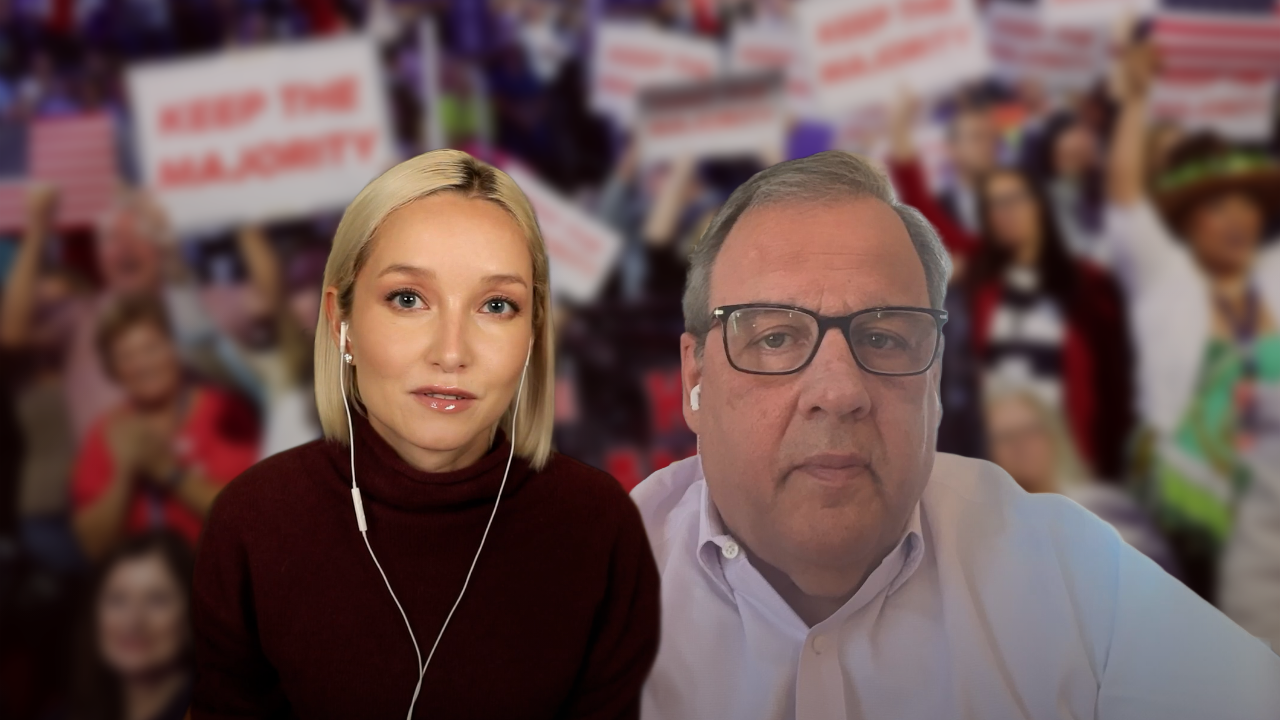

The episode is about Washington’s reaction to the “Jensen Huang NVIDIA scandal,” and how it could reshape U.S. chip export policy and national security. Congress is pushing for NVIDIA CEO Jensen Huang and Commerce Secretary Howard Lutnick to testify; GOP and Democrats are calling for investigations, including intelligence community review. The scandal is tied to the AI/China “arms race” and debates over adding chip export controls to the NDAA; OpenAI and Anthropic are said to support measures. Lutnick and Commerce export overseer Jeffrey Kessler face scrutiny as possible scapegoats. Politically, Democrats may use tech-billionaire attacks and AI/data-center concerns to energize 2028 voters. Other segments: Senator Mark Kelly’s 2028 viability; Trump’s Cuba takeover comments naming Marco Rubio; and a Logan Circle shooting with local reporting highlighted.
Megan Messerly (host), Ali Bianco (Playbook reporter), Owen Dahlkamp (Congress tech reporter), plus referenced figures (Mark Kelly, Tim Scott, Howard Lutnick, Jeffrey Kessler, Elizabeth Warren, Darren LaHood, Josh Gottheimer, Chris Van Hollen, Jason Crow, Alyssa Slotkin, Marco Rubio).
Written by AI. May contain mistakes.
Discussion on the political implications of Huang's ousting.
“How are you both doing this very auspicious Friday the 13th?”
Overview of Congressional actions following the scandal.
“So I want to get into all of that, but let's start with how Congress is grappling with all of this.”
Examination of the legislative impacts related to chip exports.
“Within that, people who are proponents of chip export controls have really been pushing for three main bills to go into that year-end package.”
Discussion on Lutnick's involvement and potential fallout.
“And that's because of the severity of these allegations.”
Exploration of AI-related fears among voters and political implications.
“I mean, and these are two men we should note who have known each other for three decades.”
Analysis of how tech billionaires are perceived in the political landscape.
“Like, as we learned from the midterms, concerns about AI really do cut across party lines for voters.”
Senator Mark Kelly discusses his potential presidential run.
“They are all saying, look, these billionaires, these tech executives, they are going to be villains in 2028, especially for Democrats and some Republicans as well.”
The speaker shares their unique background and motivations for public service.
“I'm not your typical person that runs for president, right?”
Discussion about Kelly's potential run for president and his political strategy.
“And I want the future of this country to be great for kids.”
Exploring how Trump’s criticism can inadvertently elevate Democratic candidates.
“So Kelly is part of the so-called Seditious Six.”
Identifying rising stars within the Democratic party, including members of the Seditious Six.
“Maybe someone who's not always thought of the most in the most fighting of terms.”
Analysis of the U.S. stance on Cuba and the implications for Marco Rubio’s political future.
“So the president has been signaling a possible military takeover for literally months now.”
Discussing the complexities of Venezuela's political situation and its impact on U.S. policy.
“And it feels like yesterday, but also a lifetime ago.”

Get the gist, explore an idea or ask about something said.
 Claude
On The Playbook Podcast, what are the key points of this episode?
Searching your listeningAutomatic transcript. May contain errors.
0:00A message from OpenAI. Bradford and Brian Manning are brothers and blind entrepreneurs creating opportunities for their community. With ChatGPT, they're doing everything from reading menus to building a website that connects young blind people with career opportunities. For the brothers, accessibility means more than navigating daily life. It means having more freedom to build what comes next. Discover their story at openai.com slash stories.
0:30Today on the Playbook Podcast, Jensen Huang's fallout is sending shockwaves across Washington. We unpack the political effects unfolding on Capitol Hill and inside the White House. That's the story driving the day. And in talk of the town, Democrats are descending on the Mile High City to plot the party's next chapter, with potential 2028 contenders in the mix. We'll get into what Senator Mark Kelly told Ardasha Burns about his presidential prospects and whether President Trump is sending a backhanded blessing. Meanwhile, President Trump is considering a forceful military takeover of Cuba, name-checking Marco Rubio as the key player.
1:08Plus, Washington grapples with the aftermath of a tragic shooting in Logan Circle. Hello, I'm Megan Messerly. It's Friday, November 13th. I am here with Playbook reporter Ali Bianco and Congress tech reporter Owen Dahlkamp. How are you both doing this very auspicious Friday the 13th? Are you guys superstitious or not? Doing well. Hoping not to jinx it. Yeah, doing all good after the news day today. I'm hoping that everything stays calm on this Friday. You know, we're all just hoping for a quiet Friday. But I want to talk to you about the story that has been undoubtedly dominating Washington this week, which is, of course, the fallout from the Jensen Huang NVIDIA scandal.
1:51As we all know, Huang was ousted from the company on Thursday following reports of affairs with two women. There are now reports of an additional affair with another employee of the company as well. Look, you guys, this is just such a messy story. And not just for the salacious headlines, but there are some pretty serious ramifications for national security, geopolitics, the politics of the Trump administration as well. So I want to get into all of that, but let's start with how Congress is grappling with all of this. So, Owen, you have been following this unfolding story. Our colleague Jasper Goodman scooped last night that Senate Banking Committee Chair Tim Scott is asking Commerce Secretary Howard Lutnik to testify before the committee.
2:32Lutnik's department, of course, is charged with, you know, overseeing the chips that NVIDIA produces, issuing export controls. It's really quite something that we have this bipartisan call for information, not just from Jensen Huang, but from Lutnik himself, who has come under scrutiny for his department's oversight of NVIDIA. Owen, what are you hearing and what should we be looking out for? I think you should be really watching two different tracks. One is sort of the oversight that Congress is going to engage in following this whole scandal, and the other is sort of the legislative policy implications.
3:06Starting with the oversight, as you mentioned, it is completely bipartisan. There are members of Congress on both sides of the aisle, in both chambers, that want Huang to testify and want Lutnik to testify. Representatives Darren LaHood and Josh Gottheimer urged the intelligence community to investigate this themselves. Elizabeth Warren has said that she wants an investigation run by Congress. It really is all over the place. There were three GOP committee chairs that had previously sent a letter to Jensen Huang asking him to come before Congress. They've been in active negotiations with him, and it looks like he has agreed.
3:38It's just unclear when he's going to be here, what format it's going to be in, whether it's going to be public or private. All of those are still up for debate and discussion. But I've been told that Huang has indeed agreed to come to Capitol Hill at some point to testify, likely before the end of this Congress. Now, there's also the policy implications of this as well. It affects the NDAA or National Defense Authorization Act. Within that, people who are proponents of chip export controls have really been pushing for three main bills to go into that year-end package. There is some disagreement about whether that package will pass, but there's broad consensus right now that if there is a package that passes, there are going to be some sort of chip exports that come into this.
4:21Now, NVIDIA's scandal here really plays a very, very big role in this whole debate. Jensen Wang was one of the people who said, I don't necessarily want strict chip exports controls. Instead, I really want this kind of free flow of commerce. He did support some of them, but there are people who are much, much more supportive who say, look, we shouldn't be exporting our most advanced chips to China or other foreign adversaries. We should really be keeping them here at home. But with Jensen Huang out of the way and NVIDIA out of the way, they are really, really looking at this and saying, look, one of the biggest impediments that we face to getting these export controls in this package is now suddenly gone.
4:59Some tech companies are now lining up to say, actually, we do support this as well. OpenAI, I've been told, has been telling offices we support this. Amthropic also supports some of these measures as well. So there really is no clear roadblock right now to actually getting these measures into the NDAA if it passes. But really, all eyes right now are on Howard Lutnick, especially with oversight. They don't just want Quang to testify. They also are looking at Howard Lutnick, and there are some knives out for him. That's been really the most fascinating thing to me in all of this. I mean, you know, here we are in November of 2026.
5:36And I remember way back at the start of the Trump administration last year, the knives were out for Howard Letnick, first over his role in Liberation Day tariffs. Then they were out for him over his relationship with Jeffrey Epstein. Now we have yet another instance of knives out for Howard Letnick. And what's really interesting to me is I have a new story with several of our Politico colleagues, and we report that the president is once again facing this pressure over, you know, Lutnik and some of what he's done. But some of the folks said that it really feels different this time. And that's because of the severity of these allegations.
6:16Not that, you know, the so-called Liberation Day tariffs were not, you know, extremely significant and roiled global markets. But here we now have these allegations of Howard Lutnick having this too close of a relationship with Jensen Huang. And now people are alleging that that led to the Commerce Department being too soft on NVIDIA. All of this, of course, is happening against this backdrop of this AI arms race with China. And really, the president has been a China hawk. Historically, he has been. But we've really seen here some of this push and pull with NVIDIA, given the close relationship that Jensen had with both the president and Howard Lutnick in terms of, you know, regulating these chips.
6:58And so I think what remains to be seen here is whether, you know, this will finally be the thing that turns the president against Howard Lutnick. And we have no evidence to speak to that. You know, there's folks inside of the administration who think this time feels different, but the president himself has not said that. So one administration official told me, quote, I don't know if this is necessarily the straw that's going to break the camel's back. POTUS himself was just too directly involved for this to be an easy. Lutnik is the scapegoat. We also can't separate this from this particular moment within the administration where they're staring down a Democratic Congress.
7:34And Howard Lutnik, he's an advisor to the president. He is close with the president. I mean, this is somebody who has stuck by the president's side for the last two years. And we see now Trump closing ranks, bringing Stephen Miller, really starting to think about how does this administration hunker down to deal with a potentially very combative Democratic Congress. It wouldn't come as a total surprise for him to be keeping his friends very close to his chest right now with that looming so large in the background. Absolutely. I mean, and these are two men we should note who have known each other for three decades.
8:08And this is why that Howard has had the staying power that he has in this administration. One thing that also came to mind to me as you were speaking was another person in the administration that I think we should be watching is Undersecretary Jeffrey Kessler. He runs an office in the Department of Commerce that really oversees a lot of these chip exports. And he testified before a House committee earlier this summer around some of these chip export questions. And he was being grilled by members on both sides of the aisle. He was also specifically named by Elizabeth Warren in her letter calling for an investigation, a congressional investigation into this incident.
8:41So I think we're going to see him in the limelight a little bit more before this is over. Absolutely. And some of the current and former administration officials that we've been talking with have pointed out that if, you know, Howard Lutnick is, you know, saved from any recriminations because of his relationship with the president. But if, you know, the president, the White House, believe that there needs to be a fall guy here, it's going to be Kessler. But Ali, I wanted to ask you a little bit about the politics of this all. I mentioned, you know, China, AI, data centers. Like, as we learned from the midterms, concerns about AI really do cut across party lines for voters.
9:17People are skeptical of this technology, worried about it taking jobs. They're worried about data centers and energy costs. I can't imagine that this scandal is helping anything. Yeah, well, I mean, your average voter may not really know who Jensen Huang is, but they're certainly going to be attracted to a headline that's about some kind of affair with a Chinese spy. I mean, this stuff is just such clickbait. But really, you can't separate this from the political moment that we're in. We just saw this overwhelming rebuke, whether it was in ballot measures to in the candidates themselves who were elevated last Tuesday, really, really going in on data centers and dialing in on that, especially for the Democratic Party as a potentially huge talking point ahead of 2028.
10:01But part of me also can't help but remember, you know, we were here very not long ago when it came to the warnings from Dario Amade over at Anthropic and the deep set fear that that set across Washington in terms of what the possible repercussions of that would be. The biggest rejection and the biggest movement that we've actually seen on this issue has been at the ballot box. So how that looks over the next two years is, A, going to be fundamental with whether this goes from talking point to an actual vantage point for Democrats, and also how the Trump administration actually weathers it and what side they sort of end up landing on in terms of these guardrails or not.
10:41One thing with this story that I just might add as well is that Democrats are really seeing tech executives, tech billionaires as this sort of boogeyman. They're really seeing them as ripe for attack, as sort of an emblem of people's affordability concerns, people feeling as though they can't afford the goods that they once did while the tech executives are dining with the president in the White House or they are getting really, really close to them. And I'm talking with many people right now who are in the early stages of trying to shape the tech debate around 2028. And they all unanimously say whether it's people who actually work in the tech industry themselves and advise the tech industry on their political standing or people who are really trying to hold the tech industry accountable.
11:20They are all saying, look, these billionaires, these tech executives, they are going to be villains in 2028, especially for Democrats and some Republicans as well. And I think this story is just one more thing that they could potentially point to as a way that the Trump administration has really ingrained themselves with this industry. Absolutely. And it's created this whole new generation almost of AI and tech-based power brokers, even within the Democratic Party the year ago, were not the forefront of people's minds in terms of who you were thinking on this issue. I mean, state rep Alex Boris comes to mind.
11:55He didn't ultimately win his race. He's now poised to be one of the biggest voices in the Democratic Party on this. Gina Hinojosa, now to be governor of Texas. I was with her on election night. It was very clear that that night her opponent was as much Governor Greg Abbott as it was Elon Musk, who put nearly half a billion dollars into the midterms overall. This isn't going anywhere. It is not. There's going to be so, so much to unpack here in the coming weeks, months, years, but we will have to leave it there for now. Thank you so much, Owen, for joining us. Thanks for having me.
12:32okay ali let's get into the other stories swirling around washington this morning and one is the storyline that everyone is already tired of or i don't know we're all like news junkies so maybe we're just really really excited but that is of course the 2028 presidential contest there are a lot of democratic potential 2028ers on the ground in denver at the what's next conference several of our colleagues are there as well. But I want to zero in on one of those potential 2028ers, none other than Arizona Senator Mark Kelly. So our very own Dasha Burns sat down with Kelly and asked the question that is on everyone's mind.
13:07Let's listen. I have to ask 2028. You told my colleague Adam Wren that you would make a decision about running for president after the midterms. It is after the midterms. It is after the midterms. But you know, So after the midterms goes on for a while. Sure, sure. A conveniently vague promise you made there. So when will you make that decision? After the midterms. Before the end of the year? Before the end of the year, I haven't decided on when I will make the decision after the midterms. Have you actually decided and just like aren't ready to say it? I think there might be people out there that do that.
13:53I actually have not made a decision on this. I am thinking about it. I'm not your typical person that runs for president, right? I spent 25 years on active duty in the Navy. I'm an engineer. I'm like a very mission-focused person who believes in science and data, not a lot of this bullshit that you see in Washington. You know, I'm not your typical senator. So I've got to make a decision. Hey, am I the right person at the right time? Does all of my family support this? Not only my wife, Gabby, who we talk about this. You know, she was a member of Congress. This is a rough business, right? She knows that.
14:36We know that better than anybody. Before Gabby got shot, I thought I had the risky job in the family. I flew 39 combat missions. I flew four space flights on a rocket ship built by the lowest bidder, and she's the one that nearly lost her life serving her country. But I believe in public service. I believe in the future of this country. I want to contribute to the future of this nation in the best way I possibly can. I have two granddaughters now. One's five years old. One is about 10 weeks old, brand new. And I want the future of this country to be great for kids. I mean, I was fortunate enough to grow up in a time where hard work paid off.
15:27The system we have now, I mean, the system still works. It just doesn't work for most people. We've got to rebuild the system where everybody benefits. I'm listening to you and I'm seeing those words being delivered at a podium with a big sign in the background. I've sometimes delivered them with a little sign in the background now. Look, Kelly is a formidable politician. The midterm cycle, he brought in$15.2 million for Dems, campaigned in 27 states. I mean, so he's clearly not tipping his hand here saying that, like, you know, he'll announce his decision whether he's going to run after the midterms.
16:07Of course, like, if we're talking about time, everything is after the 2026 midterms now. But Ali, based on, like, your reporting, what you're seeing, who you're talking to, how viable does Kelly seem at this point in time? I mean, if Kelly isn't going to run for president, he's doing a very good job of acting like he's going to. I spoke to him recently. He went to an event in New Mexico, which is a new early voting state. and he was there and we spoke briefly about courting Latino voters. I mean, when you look at his endorsement record, even just from this cycle, it really jumps out. And this is something that Dasha and Adam write about this morning.
16:45This is somebody who was invited on the trail by both Josh Turek in Iowa and Abdul El-Sayed in Michigan. Exactly. He clearly has some kind of crossover appeal. How much he's defined himself within a party that I think we're all seeing and hearing from Democratic operatives as opposed to have this big intra-party ideological faction battle in the next two years is more to be determined. Mm-hmm. It absolutely is. And I'll note, like, talking to folks in Nevada, next-door neighbor of Arizona, like, people just really love him there as well. They say that, like, he's a tremendous fundraiser. Like, he does really well with the donors when he comes out.
17:23And he's clearly been all over the country. So to your point, Ali, if he's not running for president, he certainly laid a lot of groundwork for it. One other thing, though, that I thought was super interesting. So Kelly is part of the so-called Seditious Six. That's a moniker that the president came up with. But these are the six Democratic members of Congress who published a video last year encouraging service members to disobey orders they believe to be illegal. And then yesterday, the president posted to True Social asking, quote, will the Seditious Six ever be prosecuted? But, Ali, every time Trump attacks a Dem, like, it also has this effect of elevating them, right?
18:01Like, everyone can show up as a fighter against the president. Like, it does seem like a backhanded blessing to be the subject of one of the president's true social posts. Absolutely. And, I mean, Kelly's not even the only senator we've seen this with. I mean, when we look at, like, who is at what's next, because absolutely everybody, apparently, if you trust Twitter, is at what's next. Someone like Senator Chris Van Hollen also had a very memorable spat with the president over Kilmore Abrego Garcia and his deportation to El Salvador that Trump lifted up. I mean, now we're talking about Van Hollen as a serious party leader, which is a pretty significant resurgence for him politically.
18:41So we have empirical data showing us that this is just something that Trump does. He picks his sparring partners. He picks his nicknames. He chooses sort of who he's going to go to bat with. And over the next two years, I mean, Democrats are going to be dying to figure out who the next big person of their party is, who the Trump of their party is. It may very well be that Trump picks that person himself. I mean, I just think of, you know, all the times that, you know, Democratic politicians have used these monikers and sort of, you know, co-opted them for themselves. The one that comes to mind is like the dark branded beam co-opting that phrase on the right and using it for Joe Biden to paint himself as a fighter, right?
19:23Maybe someone who's not always thought of the most in the most fighting of terms. But it'll be very interesting to see how, you know, Democrats respond to these attacks from the president and really use them to fundraise and to campaign off of, especially in a Democratic primary. And something our colleagues know, too, this edition six. I mean, it's not just Kelly here. You've got Jason Crow, who also seems to have some bigger ambitions, whether for president or senate. You've got Alyssa Slotkin in there, also a senator from Michigan, who is speculated to potentially have some 2028 ambitions. So this is quite the crop of people who could suddenly be very much back in the mainstream.
19:59Okay, so we should also talk about Cuba. So the president has been signaling a possible military takeover for literally months now. So yesterday, this is what he told conservative talk show host Hugh Hewitt. I want to get Cuba done before I leave you. And we have a very good, talented guy from Cuba named Marco. Because Marco's parents are from Marco Rubio. His parents are from Cuba, as you probably know. And he would love to do that. So we're watching it very closely. It's doing very poorly. It's essentially a failed place, nation, whatever you want to call it. It's failed. And we're watching it.
20:37I would like to be able to do it. So Ali, I know both you and I have a lot of thoughts on this, and I want to get into the Marco Rubio of it all. You are from Miami. You know better than anyone else what happens to Rubio if he goes home without having anything to show on Cuba. Absolutely. I mean, this is his child, for lack of a better way of describing it. I think there are a few things that can be so ubiquitous to one politician, and Cuba just is that with Marco Rubio. And it is that with Miami, right? We saw how Florida was one of the few red states that really, by and large, was unencumbered by the blue wave.
21:17One of those places where those, you know, Dem inroads were staved off was in Miami. And that's in no small part because of the foreign policy moves that we have seen from the president. that Rubio, the first question he's going to start getting from back home if he decides to run for higher office in the next couple of years is, what is the plan with Cuba? What is the plan with Venezuela? What is the plan with Latin America? Yeah, I've talked to so many folks, like folks who really want Rubio to run for president, who've said, like, if he's trying to run for president and he has nothing to show for Cuba, like, that's not going to be a satisfying answer.
21:53It'll be like, you had this platform as secretary of state. Like, why? especially when the president and Rubio have, you know, had this whole shield of America's plan. They've been very focused on, you know, the Western Hemisphere and Western Hemispheric defense and staving off the influence of China and Russia, right, which have ties to Cuba. If, you know, he's not able to say that he did something else for, you know, literally the island nation so close to the U.S., like that's going to be very challenging for him to message. Yeah, and Cuba's regime, I mean, as much as we compare it to Venezuela, is structurally and historically completely different and is dominated by this one family in a way that Venezuela has many talking heads in a way that Cuba just doesn't.
22:39And you can almost see Venezuela for Rubio being somewhat of a dry run. And it feels like yesterday, but also a lifetime ago. But when we really sit down to think about it, the one-year anniversary of that operation that took out Nicolás Maduro, the former leader of Venezuela, is just under a year in the anniversary. So really, we're starting to see what the longer-term ramifications of a decision like that are looking like. There is so much pressure on the ground about when are elections happening? What does that democratic transition look like? If he can't get that done in Venezuela, much less Cuba, it will leave a lot of questions open about what he potentially looks like at the head of the Oval Office.
23:22OK, before we go, we should mention yesterday there was a shooting in the Logan Circle neighborhood. This is really tragic news and our thoughts are with the people and families affected. But we wanted to highlight some of the incredible local reporting on this story coming out of the Washington Sun. So if you want to learn a little bit more about the circumstances behind the shooting, you should check out Michael Bryce Sadler's article. It's really worth the read. And the kicker is just, wow. Yep, it is. Go read it. Okay, folks, that's all for today's show. Don't forget to follow the Playbook Podcast wherever you listen to your pods.
24:01You can also get episodes on YouTube and the new Politico app. Download it today. Want more news and analysis? Sign up for the Playbook newsletter at politico.com slash playbook. We'll be back on Monday. Have a great weekend.
24:18Presented by OpenAI.
Jensen Huang’s fallout is reverberating across Washington. Who could take the blame and what could it mean for U.S. restrictions on AI chip exports? Then the other stories animating Washington: Sen. Mark Kelly won’t confirm a 2028 run, but is dropping plenty of hints. President Trump is considering a forceful military takeover of Cuba, name-checking Marco Rubio as a key player and Washington grapples with the aftermath of a tragic shooting in the Logan Circle neighborhood.
For more news and analysis, subscribe to the Playbook newsletter: politico.com/playbook