
 The Playbook Podcast
24 Nov 2026 · 23m

 Add vo to ChatGPT or Claude to ask about everything you hear
vo listened to this episode to put together the overview and transcript, so there may be the odd mistake.
The episode centers on Jensen Huang’s reinstatement as NVIDIA CEO and the resulting Capitol Hill scrutiny, especially from incoming Senate Banking Chair Elizabeth Warren, plus related political ripple effects. It also covers: (1) Warren’s push for independent investigations into alleged international wrongdoing and NVIDIA’s China/export-control dealings; (2) J.D. Vance’s role in Huang’s comeback and what it signals for his 2028 ambitions; (3) DNC rules for 2028 primary debates, including a pledge to denounce super PACs/dark money; and (4) House ethics fallout leading to Rep. Jimmy Gomez’s resignation.
Calder McHugh (co-host, Decoded by Politico). Mike DeBonis (senior congressional editor, Politico).
Huang’s return removes “not there” excuses and intensifies oversight; Warren expects hearings (Dec 3) and broader investigations; Vance is aligning with Silicon Valley tech founders; DNC debate pledge may be hard to enforce and could backfire in primaries; Gomez resigned after ethics findings involving misconduct allegations.
memes about Huang’s return; Warren saying investigations need to be “serious” and independent; claims that Sen. Kennedy expects Huang to plead the Fifth; DNC debate framework for 12 presidential debates; Gomez’s alleged sexual-assault incident and prior House cases (Swalwell, Gonzalez).
0:00Support for this briefing comes from United for Cures. Congress has already funded the medical research patients are counting on, but a proposed rule from the Office of Management and Budget would give political appointees greater control over research funding decisions. Patients need stability, not political interference. Congress has paused the rule through December 11th, but a temporary pause is not enough. Patients need cures, not politics. Tell Congress to stop the OMB rule. Learn more at unitedforcures.org.
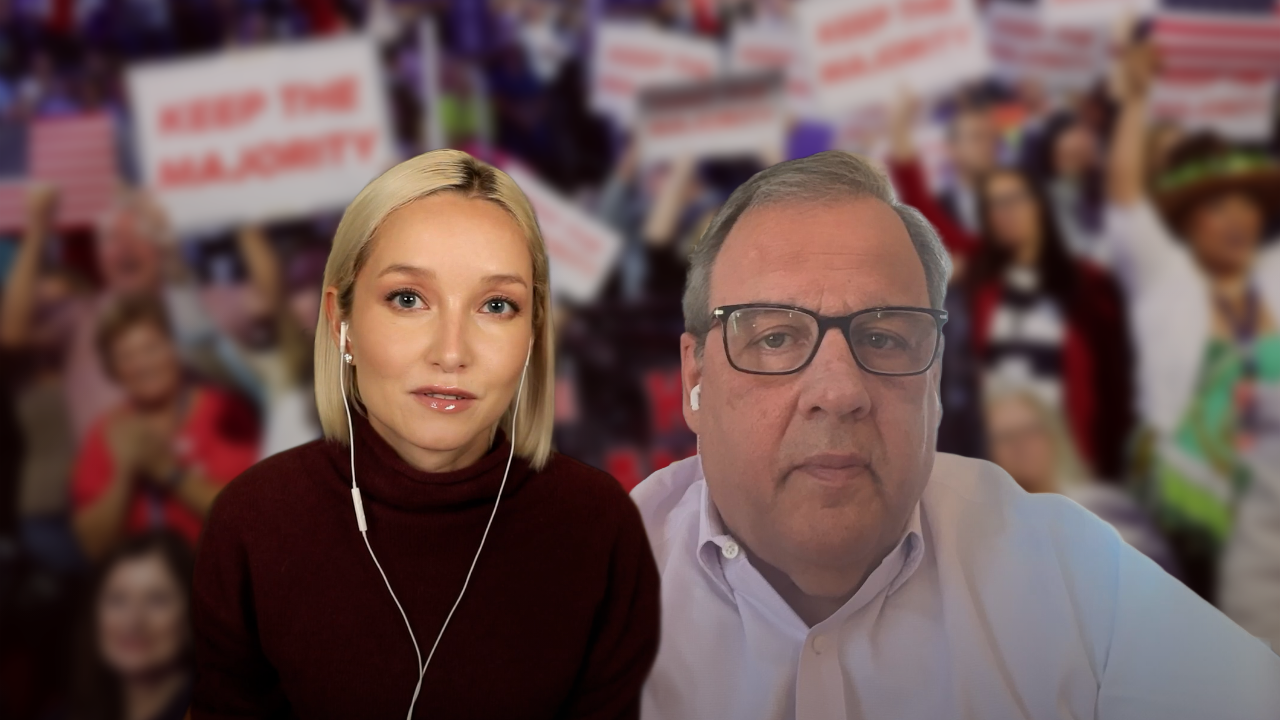
0:35Today on the Playbook Podcast, Jensen Huang is getting his job back, but a unanimous vote from NVIDIA's board won't spare him from scrutiny on Capitol Hill. I spoke with incoming Senate Banking Chair Elizabeth Warren about the answer she wants from Huang when he testifies next week. That's the story driving the day. And in Talk of the Town, what J.D. Vance's role in Huang's comeback means for his own political future, the DNC's new debate rules are already ruffling feathers, and a House Democrat announces his resignation in the wake of an ethics investigation. Good morning, Playbookers. I'm Will Stakin.
1:10It's Tuesday, November 24th. And to help us unpack the story driving the day, we have Calder McHugh, who is the co-host of Decoded by Politico podcast. Hey, Calder, how's it going? Hey, it's great. I can't believe you're catching me on the one day that my diamond studded leather jacket is in the dry cleaner. But, you know, this this Uniqlo shirt will have to do as a replacement. Well, Jensen didn't wear it yesterday, so maybe you can find his. Maybe he's, you know, selling it in some pawn shop somewhere. Right. Yeah. Who knows what's going to happen to all those. Okay. So we obviously brought you on to talk about the big news from NVIDIA with Jensen Wong returning.
1:53And honestly, the Internet has been a goldmine of memes over the past 24 hours. Even President Trump kind of got in on the memeing and posted this really rather eye-catching one, which was an adaptation of his post-assassination attempt photo where he was standing in Pennsylvania holding up his fist. But instead it was Jensen holding up a red bra, which he can't make up. I'm curious, what was your favorite internet artifact yesterday during all this? Yeah, I mean, that one is hard to top, right? Right. I did, you know, just staying on the leather jacket theme, I did see someone in the tech world saying that he really wants to buy Jensen a white leather jacket for his new era, which I, you know, who knows?
2:40Asking for recommendations, some people sort of responding with a lot more seriousness than I think maybe it needed to be afforded. Okay, but, you know, you obviously deeply cover this stuff. And so I'm just curious, kind of, what was your reaction when the news broke yesterday? Was this as much of a shock as it was for me? Or did you kind of see this coming? I'm just curious. Yeah, I mean, just off top, you just have to say this is a crazy story. And it just gets more and more insane. You know, I think that it was absolutely surprising to me that he came back. About a week ago, I was talking to a pretty well-placed Republican source who was telling me he gave it about a 30 % chance.
3:19And I was pretty shocked at that number. I was like, oh, that's quite high. You know, he texted me today saying, I guess I was a little low. This groundswell was really coming from California. You know, there was this real push to bring him back. There was a big petition. He had a lot of kind of major tech CEOs, Elon Musk most notably among them, suggesting that Jensen needed to come back to NVIDIA. So, yeah, I mean, there was absolutely a push for that to happen, but I was surprised. Yeah, I kind of just shocked, I think, everybody, including the markets, which quickly responded. But there's also a pretty big side effect to his reinstatement, which is that Jensen and NVIDIA are now even bigger targets for people like incoming Senate banking chair Elizabeth Warren, who I spoke with yesterday.
4:06And here's what she told me. NVIDIA needs to be held accountable whether Jensen Wong is there or not. And Jensen Wong needs to be held accountable whether he's at NVIDIA or not. But having the two of them there gathered makes very clear the need for a serious, independent investigation. Another point that Senator Warren told me which I thought was interesting is in terms of how Jensen returning could be a worst-case scenario for them in terms of, you know, her investigation. And here's what she told me about that. The Congress would have been investigating NVIDIA with Jensen on the outside. Now he's being brought back in.
4:49Does that change the way the investigation and what needs to be looked into gets played out? Does that intensify things or is it changing at all? Yes, and not to NVIDIA's benefit. All the excuses of, I don't know what NVIDIA's doing now because I'm not there, will be denied to Mr. Wong. And NVIDIA's ability to separate itself from a CEO that is under serious investigation over whether he has participated in an international scandal. of monumental proportions will also have disappeared. So I'm curious, you know, for you as someone that covers this so, you know, closely, obviously, like you said, so many folks in the tech sector were really pushing for this to happen.
6:03But, you know, speaking to Elizabeth Warren, you know, she views it as for their now the oversight, it could almost come back to backfire in terms of, you know, what when they're going to be looking into NVIDIA and how this played out because, you know, Jensen won't be able to basically, you know, separate himself given he's back inside the company. I'm wondering how much that could potentially backfire as these investigations play out over the next two years. Yeah, without a doubt. I mean, of course, Senator Warren is sort of one of the primary villains within the tech industry. They really don't like her out there.
6:35But I think that this sentiment is not unique to her at all. You know, you have plenty of congressional Democrats in particular, but congressional Republicans as well, saying there really needs to be investigations and that Jensen really needs to, you know, commit to coming to Washington quite a bit and that this is going to really kind of speed up that process in many ways. You have that starting in the lame duck with a hearing on December 3rd that, according to all of our sources, is still scheduled to to happen as of this moment, at least. And then, you know, certainly in January when the, when the Dems retake the gavels, that's going to be just a huge priority of theirs.
7:15And, you know, I had one person tell me on Monday that this was really just a very clear example of the way that, you know, Dems can now actually do oversight in a way that matters to the American public. So, you know, I think that sometimes these kind of hearings, you know, unless you're like a really hardcore C-SPAN watcher, they get really bogged down and kind of boring. But I think that this is an example of something that is going to be kind of prime time. Like people are really going to want to tune in to this. And this is a way that, you know, talking to Democrats, they really think they can make some hay.
7:51So yeah, I mean, you know, Silicon Valley is betting that Jensen is sort of this singular figure. And in many ways, the market response suggests that, you know, Wall Street thinks at least something similar. But, you know, I think that DC often has a very different view of that. This is sort of like a classic Washington SF story. And so, yeah, I mean, it's complicated. But, you know, I think Washington, for its part, is kind of licking its lips on this front. Yeah. And, you know, we should say I think there's going to be some real questions to be asked about whether there was this Chinese spy related, you know, how much information got back.
8:32If that's true, I was talking to Senator Kennedy, who's on the banking committee and will be there next week and is planning to question Jensen, but was telling me he's expecting for him to plead the fifth the whole time and doesn't expect to get any answers out of him. Yeah, that wouldn't surprise me at all. This is the beginning of what is sure to be a long investigative process. And so, yeah, I mean, you know, in the meantime, I think that what's going to happen is there's going to also be sort of questions around some of the company's dealings, especially in terms of export controls and how much they actually can sell chips to China.
9:06So I think that, you know, that is actually something that still might potentially pass in the lame duck is some sort of more stringent export controls on selling these advanced chips to China that, you know, NVIDIA had been doing. And so, yeah, I think that, you know, you sort of have maybe parallel tracks here, right, where there's the investigative process into Jensen himself, and then also the question of, you know, what's going to happen with the company and the company's value, both to, you know, the stock market, to, you know, other frontier AI labs, to, you know, some of its other past customers.
9:41Like, this is all sort of all happening at once, So there's just a ton going on. A ton going on and a ton for us to be paying attention to. Calder, thank you so much for coming on. Where can people find you? Yeah, so you should check out Decoded, which is our newsletter, Decoded by Politico, our podcast. Great. Calder, thanks for coming on. Appreciate it. Thanks for having me.
10:08It's now time for Talk of the Town, where we get to the other stories animating Washington this morning. And to talk about all of it, we have senior congressional editor Mike DeBonis. Mike, how's it going? Hey, man. Doing great. Happy Thanksgiving week. I know. Thanksgiving. Slow week right into the holiday, which we love. Yeah. Jensen Huang really got us off to a great start. Yes. Yes. Fun Thanksgiving chatter for everybody. So, look, there's so much to say about the Jensen news, but I wanted to talk about 2028 because it's not just President Trump who pushed for his reinstatement. There were a whole cast of characters, including the vice president, Vice President J.D.
10:45Vance, who is someone who has a longstanding ties to Silicon Valley and who's reportedly working over the weekend to make this happen. We know J.D. Vance is still mulling over whether or not he's going to run in 2028. But what does a headline like this mean for the vice president right now? Well, I mean, he's clearly he's taken a side in the great AI wars to no surprise, given his ties to Silicon Valley, in particular, Elon Musk, Peter Thiel, you know, the the the big heavyweights of the tech industry. Like it should come as no surprise that if he was going to be involved in this, it would be on the side of the founders.
11:30And that seems to be basically the role he played was forget your Washington niceties, forget your whole national security concerns. Here's one of our guys. This is, you know, Jensen Huang is in the pantheon of great tech founders, certainly alongside Elon, Steve Jobs even. Like, they're in the same breath. He has built what is now the second biggest company behind Apple in terms of market cap. And, you know, he can do no wrong. He has been forgiven of corporate sins that have felled other powerful CEOs, and they've just been brushed aside. And frankly, I don't know any other CEO who has been alleged to have carried on an affair with an alleged foreign asset.
12:19So, you know, this is new territory. This is new territory. And, you know, this is a big bet on, you know, AI being a popular thing in two years. Which is fascinating because it hasn't been in terms of especially the MAGA base, right? Well, in terms of everybody, like if you look at a poll, you know, basically the only people who are pro-AI are in Silicon Valley or in the industry. And J.D. Vance wants it known that he was involved in rehabilitating, you know, for all intents and purposes, an avatar of everything people don't like about the tech industry. So why do you think that is? Because I found that really interesting, that there was this effort to make it clearly and to make it known that the vice president played a significant role here.
13:10When, you know, I was maybe thinking heading into 28 that the vice president's very politically savvy. He knows that one of the biggest critiques he'll face, like you said, is his ties to Silicon Valley, his ties to Peter Thiel. This just feeds into that narrative, right? And so it's kind of interesting that they are going all out to lean in. And why do you think that is? Why do you think it's so important for it to be known for at least Team Vance for him to be part of this? I think, you know, you can't deny there's some like internal short term politics here. Like he's already gone out on a limb on Iran and made clear that he's not the Iran guy.
13:49So I don't know that he could go out on a limb and say, hey, I'm not the Jensen guy. He's not the Trump guy if he keeps doing that. Yeah. Pretty soon you're not the Trump guy and you've created yourself a whole other set of problems. I, you know, I, you know, you could look at it as a bet that it's more important to have the power, influence and money of the tech industry in your corner going into a 2028 primary fight and general election than not having it, than alienating that crowd. And like, you know, it's fair to say that public opinion will be public opinion. But given a choice, would you rather have Peter Thiel for you against you, I guess, in a Republican primary?
14:33And speaking of 2028, we're going to head to the other side because the DNC announced this week a framework for 12 presidential primary debates. Are you ready for these? Because I don't think I am. The first one will take place in June, but the DNC didn't release a specific schedule. They also announced a new condition to participate, which Democrats are tearing their hair out over, which is that candidates have to sign a pledge to denounce super PACs and dark money. or doing pledges again, Mike. Yeah, so two thoughts. Number one, I can't believe in six months we're going to be talking about the kids' table again.
15:09Yes. Maybe multiple. Do we get multiple kids' tables? That's a vocabulary word that's going to be back on our agenda. Number two, the Super PAC pledge is by far the most interesting thing about this. Yeah. I don't know how enforceable it is. I, you know, I kind of wonder, is somebody going to sue over this? Like, you know, probably not. But I mean, it's it's a pretty interesting move. And I there are a lot of lawyers in Democratic politics that are probably looking for ways to evade the letter of the law, if not the spirit. What is not clear is, does it work against people who are wealthy themselves?
15:51In particular, J.B. Pritzker, who has his own money. Basically, I'm limited money to spend on his behalf. So that's a pretty interesting dynamic that could emerge here. You know, we're like Pete Buttigieg can't get his rich friends to write him checks, unlimited checks, but J.B. Pritzker can stroke a check for as much as he wants. Which is, yeah, like you said, a very interesting dynamic. And, you know, to me, I just can't, I'm kind of like, I feel so much sense of deja vu that we're doing pledges again in a Democratic primary. and to me, you know, what's all over my timeline is like just a debate already about whether this is just shooting them, Democrats shooting themselves in the foot.
16:31We had Wes Moore's press secretary tweeting out, I love when Dems virtue signal so hard to the point that they want to cost us elections. And to me, it's a good point to argue in terms of like, this is for the primary, right? So you come out, you sign this pledge, you say no dark money for the primary. When you get to the general, the Republicans are not going to have any kind of pledge in terms of dark money. It's going to go all out with dark money. And so the Democrat is going to need the assistance of dark money. It's such an easy attack for the Republicans to say, well, this person signed a pledge.
17:06You know, if the Democrat wants to use the, you know, the attack against the Republican and saying you're backed by dark money, it's just, it gets very messy when you get into pledges. And I'm just, I'm kind of shocked that we're, that Democrats are starting like this. And I, I wonder how many or if enough of these 28ers kind of gather together and protest and just make this whole thing mute and, you know, push back on it. Yeah. And I think there's a couple of contours under which that could emerge. Like, historically, the voices in the party who have defended big money fundraising, not exclusively, but a big chunk has been, at least in Congress, Congressional Black Caucus, the minority caucuses have made the case like, listen, we can't we don't have a base on our own constituencies necessarily that can do big money campaigning.
17:58We rely on corporations and major donors to, you know, we set us on the path to power. Or is a, you know, a Jim Clyburn going to stand up and say, well, you know, right. This this this sets Westmore back like, you know, what's you know, we have a Westmore surrogate basically saying that. And those tend to be powerful voices in the party. And, you know, it goes to the question of what's a primary about? Is it about selecting the best, most competitive candidate? You know, is there or is the is the primary a test? Like, is it a test of the skills you need to go into a general election and win? And one of those skills is big money fundraising.
18:43Like, small dollar fundraising is definitely a skill now. Like, absolutely. But big money fundraising is a skill, too. Like, you can't deny that. And you need to do both. And, you know, Democrats kind of learned that this year on the congressional level because they had all the small donor money and they just could not keep up with big Republican checks in Texas and elsewhere. Turns out it didn't matter. Like the atmosphere was just so bad. At least this year. In a more, you know, in a scenario where the environment is not D plus 14, which I don't, you know, I doubt that 2028 is D plus 14. The big, the megabucks matter.
19:25So, like, you know, that's something they're going to I think we're going to have a robust conversation about inside the Democratic Party. The last thing I wanted to talk with you about is something that's obviously completely in your wheelhouse. So yesterday, a House ethics report was released. And in the aftermath, Congressman Jimmy Gomez of California announced he would resign. Can you break down exactly what happened here? So Jimmy Gomez is one of several members of the House who's just been gotten in trouble for being creeps. You know, he's now the third to resign after Eric Swalwell having, you know, affairs with staffers, Tony Gonzalez having an affair with a staffer.
20:11and now he had a consensual relationship with a staffer who wasn't his own and he admitted to that. And then there was this other incident that there is no way to describe it other than sexual assault, at least the allegation. And it's pretty crazy that, you know, these shoes continue to drop even as we're in the final weeks of the Congress. I do wonder what the next Congress is. Are there things, you know, changes that can be made in the next Congress to kind of beef up, you know, repercussions? Or is it or is this just playing out the way it should be? You have a ethics investigation, findings are produced.
20:51And, you know, now in this case, at least, a congressman is resigning. But that doesn't always happen, right? I mean, look at I think of Max Miller and other folks where all of similar allegations are put out there and they're sticking out. I guess he just got booted out of Congress. He got voted out. But I'm curious what But then is there any talk about what the next Congress can do, given what has happened over the course of this Congress? There has been a bipartisan effort to try and create some rules around member conduct and sexual relationships. And we expect there to be a rollout of some proposals in the next few weeks.
21:25You know, I think that there is some desire among, you know, Hakeem Jeffries and his fellow leaders to at least show some initiative. You know, is it going to is it going to, you know, eliminate every creep, creepy dude that comes through the halls of Congress? Probably not. But you have to, like, set the standards so you can enforce them. And I, you know, I think what we saw over the last year or two between Swalwell, Gonzalez, you mentioned Max Miller, who was accused of domestic assault, domestic abuse, Corey Mills, who was accused of dating violence, and now Jimmy Gomez. Like, I think that there's going to be a lot more attention paid to bad behavior.
22:13And like, if you're a staffer who's put in a bad situation, I think, you know, you at least have gotten the message that, you know, there can be consequences for these powerful people. And I think that's that's important. We'll have to see what the next Congress can do. But, Mike, thank you so much for joining the pod. Appreciate it. Yeah. Anytime. Thanks, man. And that's all for today's show. If you haven't yet, complete our playbook survey. Your feedback will help us shape the show. Find it at politico.com slash survey. Want more news and analysis? Sign up for the Playbook newsletter at politico.com slash playbook.
22:48We'll be back tomorrow. Have a great day.
22:57Presented by United for Cures.
Jensen Huang is getting his old job back, but a unanimous vote from Nvidia’s board won’t spare him from scrutiny on Capitol Hill. Then the other stories animating Washington: What JD Vance’s role in Huang’s comeback means for his own political future, the DNC’s new debate rules are already ruffling feathers and a House Democrat announces his resignation in the wake of an ethics investigation.
We want to hear from you! We have a survey out and would love to know what you like about the podcast and what we could do differently. The survey will take max five minutes: politico.com/survey
Scan the code with your iPhone camera
Listen in the app.