
 Ask ChatGPT

- Podcasts
- The Playbook Podcast
- Why the midterms are a warning sign for both parties
The Playbook Podcast1 Nov 2026 · 45m · 20 chapters

Why the midterms are a warning sign for both parties | The Conversation
In short
A pre–Election Day discussion of what the midterm cycle signals for both parties, focusing on why races are more competitive than expected, the role of voter enthusiasm and affordability, and what each side should learn heading toward 2028.
Guests (backgrounds)
T.W. Arrighi, Republican communications director for Sen. Lindsey Graham’s 2020 re-election; now spokesperson for Graham’s sister Darlene Graham. Liz Smith, Democratic strategist; rapid response director for Barack Obama (2012) and senior advisor for Pete Buttigieg (2020).
Key claims
Republicans face an “enthusiasm gap” driven by high gas prices and economic frustration, plus Trump being “underwater” nationally; Democrats are seen as too status-quo and dismissive of inflation/border concerns, so they must recruit younger, non-career-political candidates and avoid overly far-left messaging in swing states.
Notable examples
Kansas and Texas Senate/House dynamics; Michigan Senate (Abdul El-Sayed); Texas 15th (Bobby Pulido) and Texas 35 (Johnny Garcia); Alaska “stalking horse” tactics; the idea that a “red undertow” may replace a “blue wave.”
Written by AI. May contain mistakes.
Chapters
2:18
Republican Perspective on Midterms
T.W. Arrighi shares insights on the Republican strategy and election outlook.
“And now here's my conversation with T.W.”
3:27
Polling and Candidate Dynamics
Discussion on polling accuracy and candidate performance in key states.
“But the question is, and this is what I was sort of talking with somebody about last night, is I'm trying to understand the polls better.”
6:17
Economic Factors and Enthusiasm Gap
Exploring the impact of economic issues on voter enthusiasm and elections.
“The midterm election after the president.”
8:16
Trump's Influence on Campaigns
T.W. discusses Trump's role in the current midterm elections and candidate strategies.
“President Trump has been pounding the pavement.”
10:55
Messaging Challenges for Republicans
Analysis of the challenges in messaging faced by Republican candidates.
“OK, I made a face when you said messaging because the messaging coming out of out of President Trump has been, I think.”
14:01
Understanding the Republican Challenges
Explore the challenges Republicans face regarding candidate perception and messaging.
“And what I think Republicans have a really good opportunity of doing in each of these races is saying, I am not of that ilk.”
15:01
Republicans' Strategy for the Future
Discussion on the importance of unified messaging and candidate recruitment for Republicans.
“It's just a matter of, do you embody what I dislike going on right now?”
16:21
Blame Game in Political Losses
Analysis of who gets blamed within the Republican party for potential electoral losses.
“But I think a unified message would have served us really well.”
18:16
Looking Ahead to 2028
Speculation on the implications of upcoming elections for the Republican party and Trump’s role.
“I'll have people or things that I wish we did differently outside of what I told you.”
21:30
Democratic Strategies in Competitive States
Discussion on how Democrats are targeting traditionally Republican states in the midterms.
“Okay, girl, you have worked on some of the closest races in this cycle, Kansas, Iowa, Alaska.”
Show all 20 chapters
23:25
Qualities of Successful Candidates
Insights on the desirable traits of candidates in swing districts for Democrats.
“When you look at these very different states, very different candidates, but folks like Adam Hamilton and Josh Turek, right, do you see a through line in how they're talking to voters?”
27:13
The Big Tent Debate in the Democratic Party
Exploration of the ideological battles within the Democratic party regarding inclusivity.
“qualities in the candidates we seek out.”
28:00
Insurgents vs. Moderates in the Democratic Party
Exploration of the ideological battle within the Democratic Party between the insurgent left and moderate candidates.
“A DSA member can absolutely get elected from a congressional district in New York City, right?”
29:36
Diverse Candidate Profiles and Their Impact
Discussion on the varying stances of Democratic candidates across different regions and the implications for the party.
“He talked about being supportive of Border Patrol, but against the destructive actions of ICE, right?”
31:16
Progressive Candidates and Their Viability
Debate on the potential success of progressive candidates in different states and the lessons to learn from election outcomes.
“He's the only Democratic candidate for Congress this cycle who was a police officer.”
33:04
Learning the Right Lessons from Elections
Analyzing the misinterpretations of election results and the need for Democrats to reassess their strategies and messaging.
“And that is the spin that they're going to take.”
36:26
Democracy and Election Tactics
Discussion on the ethical implications of electoral tactics and how they align with the Democrats' mission to defend democracy.
“And the groups that I advise, the bench, majority Democrats or another, that are going to be pushing in a different direction.”
39:51
The Future of Democratic Candidates in 2028
Speculation on the characteristics and strategies of potential Democratic candidates for the 2028 election.
“And so is this something that we should try to address going forward and say neither party can do it?”
42:05
The Call for Younger Candidates
Discussion on the demand for younger presidential candidates and the importance of addressing systemic issues.
“And a lot of people have said they'd like to see presidential candidates who are under the age of 50.”
43:55
Reflecting on the 2024 Landscape
A critique of the Democratic Party's focus on being anti-Trump and the need for a hopeful vision.
“I think you just did a pretty good autopsy of 2024 there over the course of this conversation.”

Ask about this episode
Get the gist, explore an idea or ask about something said.
 Claude
On The Playbook Podcast, what are the key points of this episode?
Searching your listeningTranscript
Automatic transcript. May contain errors.
0:00Presented by AHIP. Health plans work every day to shield Americans from high and rising costs by negotiating lower prices from providers and drug makers and protecting consumers against unexpected medical bills. Learn more at AHIP.org. We've got to give people hope for the future and we've got to tell them what Democrats stand for, not just what we stand against. The modern Democratic Party, to a lot of people, is not an acceptable alternative.
0:34Hello, hello, and welcome to The Conversation. I'm Dasha Burns, and every week on this show, I talk to some of the most compelling and sometimes unexpected power players in Washington and beyond. And for this final episode before Election Day, I wanted to talk to the people behind the candidates. They are the sleep-deprived operatives working to win these races for their respective parties. So I called up Republican T.W. Arrighi and Democrat Liz Smith to get their takes on this wild midterm cycle. They're both working on multiple races across the map. T.W. Arrighi was communications director for Senator Lindsey Graham in his 2020 re-election campaign and is now working as a spokesperson for his sister Darlene Graham.
1:17And on the other side of the aisle is Liz Smith. She has worked on some of the most consequential Democratic campaigns in modern American politics. Just to name a couple, she was rapid response director for Barack Obama in 2012 and a senior advisor for Pete Buttigieg in 2020. So what do these opposite party power players have in common? Well, they are deeply experienced in what makes a winning and losing campaign for each of their parties. And with that, they were the perfect pair to talk to right ahead of election day and looking toward 2028, which is a good reminder to make sure that you are subscribed to our show because you will not want to miss our post-election day episode.
1:57And if you love the conversation, you will love Politico Elections Live. You'll have me, you'll have my playbook co-authors, Adam Wren and Will Stakin. You'll also have Jonathan Martin and Alex Burns live on election night with unique analysis, exclusive interviews. Make sure you are tuned in at politico.com or in the Politico app. And now here's my conversation with T.W. Arighi. T.W. Ariggy, thank you so much for joining the conversation. Good morning, Dasha. How are you? I am hanging in there. Are you hanging in there? Six more days, six more days, five nights, five days and one wake up. I mean, look, we are almost there.
2:42This cycle has been absolutely nuts. A lot of twists and turns and who knows how many more to go before Election Day. let's think about from your perspective what would a good night look like for republicans within the realm of possibility yeah we keep all of congress dash that's an easy question that's a very good night look i think i i put our chances at keeping the house probably around Oh, goodness. 25%. And I would put the chances of us keeping the Senate around the coin flip mark, give or take. But the question is, and this is what I was sort of talking with somebody about last night, is I'm trying to understand the polls better.
3:35So many of these are margin of error races, and then you get outlier polls left to right, just like every cycle. But if we find ourselves in a position that we were in, in 2020 or 2022, where the polls are underestimating Republicans, then we have a broader conversation of why do we do this polling game every year and expect different results. Well, look, I think all of us are having the same conversations about polling, but there's polling. And then there is sort of the vibes on the ground, right? And you've been traveling the country. I've been traveling the country. And the fact that I've been traveling to places that I did not expect to travel to this cycle, places like Kansas, places like Texas.
4:19What has happened to this map? Well, the two examples you cite, Kansas and Texas, you have a candidate issue, right? Right. So the NRSC dumped a bunch of money to save Roger Marshall last time. He ended up winning by winning by a decent margin, but he was in trouble last time. And let's not forget it was Mitch McConnell who wanted Secretary of State Mike Pompeo to leave office to run for that seat. So that's not a new concern. Obviously, Kansas has a history of electing Democrats, have Democratic governor, Democratic members of the House. I worked for Mike Pompeo. I've been all around Kansas, love Kansas.
4:57But that's a unique state in so far as if you're a candidate that isn't quite meshing, I don't know if you'll ever fully mesh. So we'll see where that margin winds up. Democrats also just got a good candidate in return, somebody who sort of met Kansans where they are, can speak their language. That's a valuable tool against a candidate who seems to stumble every time out of the block. Same goes for Texas. Are we having this conversation if John Cornyn is the nominee? I doubt it. I doubt it. And James Tallarico has run a great race and seems to communicate well. The conversation is, can he bring out minority communities, black communities, Latino communities that he's going to need to win on election day?
5:35Is he going to be able to bring over those moderate Republicans? remains to be seen, at least in vast numbers. When Ken Paxton, we knew, was deeply flawed, it was going to take a bunch of money. We're still dumping money in there. And I think that money, a lot of Republicans would say they'd be happy to see to go to other states. To that point, I mean, those are not the only two states. There are other Senate races at play. There are congressional races at play that nobody expected. I mean, I think there's no arguing that the environment is not good for Republicans. And I'm curious where you sort of point the finger at why this is more competitive than most folks expected.
6:16This was going to be competitive regardless. The midterm election after the president. We know the history. Yes, yes, yes. Our audience is very sophisticated, T.W. They get it. I wouldn't be here if they weren't. But look, I think it has something to do with that. Trump's underwater just about everywhere. That's basically ubiquitous across the country. But the thing that I keep looking to as really important, I'm here in South Carolina. We're seeing it here. It's the enthusiasm gap. And why is it? Why is there an enthusiasm gap? Because gas prices are high, because people don't feel like they're getting ahead.
6:52You could make a case to somebody that, oh, yeah, I still agree with President Trump on XYZ, but I really am unhappy about ABC. And so those two things don't jive with each other. And when we see enthusiasm gap, people are – they're at best apathetic and at worst are willing to try to stick it to you. And I see that more in other states than I do South Carolina, but it's everywhere. So you've made what is a baseline bad year even worse because the economic numbers aren't good. And when you compound candidate issues on top of that, you've just got worse, worse, worse. Now, the silver lining for Republicans is that the modern Democratic Party and those who are representing it right now and races across the country are not ideal.
7:41They might boost energy among the base, but probably aren't great at bringing in the middle. And therefore, some of these races are closer than they should. El-Sayed and Michigan being a good example of that. So it remains to be seen. But right now, the map is broader than we have thought it would be, or I surely thought it would be, in large part of the confluence of stubbornly high gas prices, Trump being underwater, an apathy among base voters, and tough candidates in different key races across the country. that should have been safer. President Trump has been pounding the pavement. He has been everywhere over the last few weeks in the homestretch.
8:24One of the big questions for Republicans this cycle has been, what do you do about a president who is underwater nationally, but did in 2024 drive out a ton of low propensity voters and build a coalition unlike one that Republicans have ever really seen? and the political operation behind the president has been putting him out there and trying to shore up candidates all across the country. And the question has been, how much should candidates bear hug the president and hold on tight? Or how much should they distance themselves? And I'm curious, as you've been working on these races, how have you been helping candidates navigate that?
9:10And what's been your advice? Yeah, I have candidates in Trump states. I got candidates in non-Trump states. And so every candidate's going to have to make their own calculus on that. The president still is a really good salesman to low propensity voters, especially conservative low propensity voters. And I don't claim to be a pollster. I just look at what I've seen and what's provided to me. But say in a state like South Carolina or somewhere else, we're trying to close the enthusiasm gap as best we can. And in a lot of other states like Texas, you're going to need those unenthusiastic two-time Trump voters to feel bought into this.
9:50If he is the catalyst to do so, outstanding. Republicans are going to be painted with President Trump whether it's the right thing or the wrong thing. You see it like in New Hampshire. Sununu is getting smeared with Trump. Chusin Collins is getting killed with Trump. Does anybody really think those are dyed-in-the-wool mag? Like I was, no, of course not. Are they going to be inviting Donald Trump up there? No. But the idea being in other states, in other regions of the country, when everyone just is piling Republicans into the MAGA umbrella, underneath the MAGA umbrella, then yeah, if Trump's going to be able to close that enthusiasm gap among key voters, it's probably worthwhile that he comes.
10:30He's got to be strategic about where in the state he goes. He's got to be strategic about his messaging, even though that's not really part of his MO. And then we got to go from there. But again, with the distrust or at least the questions about some of the polling, it's going to be interesting to see in the postmortem where he went and how numbers moved post his arrival and what that looks like on Election Day. OK, I made a face when you said messaging because the messaging coming out of out of President Trump has been, I think. Not necessarily what Republicans such as yourself who are trying to win these races would wouldn't ask for.
11:12For example, you know, affordability is like number one right for voters at a rally in Georgia last weekend. President Trump said, quote, no, I could just see the fake headlines. President Trump is talking about all the money they're making while people are suffering at the pump. That'll be the headline. But I said, I don't give a damn. I'm going to say it. We're making a freaking fortune. Our country is getting stronger and stronger all the time. How's that for a closing message, TW? Well, I think John Huston's ass and Mickey Panagos is a great closing message. It was totally on my video. Let's close with the backside.
11:50Close with the backside. So, yeah, look, you got to take the good with the bad with Trump, unless you want to drive yourself crazy every single day. But as a Republican, you sort of have to take the good with the bad. The folks who love him see it as a stand up comedy routine, even though he's weaving in important issues. Would I like to see him say, look, we got still work to do on all these affordability issues and this is how I plan to do it? Of course. but that's never been his MO. And although I keep sitting here wishing for the day where all of a sudden he has this great closing message, which he repeats all the time, we're not going to get there.
12:29But I think what's confusing to me is like, it's one thing to not be like super on message and sell the affordability agenda in the best way possible. But some of what he's saying is like literally the opposite of what you'd want to hear. It's these big companies are making a ton of money while you guys are suffering. The other day he said, you know, come to Mar-a-Lago. Wait, no, you can't because a burger costs$5 ,000 and none of you can afford it. And like so much of this race, of this cycle has been like voters saying they are tired of the elite class, whether we're talking about Epstein, whether we're talking about big tech billionaires, right?
13:10Voters are saying it doesn't feel right that there are people who are exempt from accountability and who get to rake in all this cash while we struggle? You know, just like, don't pee on my leg and tell me it's raining, right? So I think Biden ran into that problem. Donald Trump, in so many different ways, seems to be able to get away with things other politicians can't, regardless of what comes out of his mouth or what his messaging strategy is. A lot of people, not everybody, surely not the majority, but a decent bloc, still see him in a different light, see him as this rogue character who can fight back against those elite forces because he is one of them.
13:51To the point, though, I think, which is also important to sort of mix into this conversation, is that the modern Democratic Party to a lot of people is not an acceptable alternative. And when you have DSA candidates that have come sort of being the leader or at least the loudest minority of the party and sort of driving conversation, that's concerning to a lot of other people because it's like, wait, my choices are what I don't like going on right now and say socialism or a party that seems to be driven by socialist voices within their party. That's a false choice. There's got to be something else.
14:33And what I think Republicans have a really good opportunity of doing in each of these races is saying, I am not of that ilk. I have my disagreements with Donald Trump. I'm with him on the policy. I obviously don't act like him. This is what I think we should be talking about in a hard contrast against their Democratic opponent. Like, do you understand what this means and what this will look like? Do you like that either? And I think along the margins, that can be convincing. No one thinks the status quo is good. It's just a matter of, do you embody what I dislike going on right now? Yes or no.
15:08And is the alternative better? Yes or no. We don't know the ultimate outcome, right? But we know where the trends are and the challenges that candidates have faced. What do you think is the ultimate lesson that Republicans should learn coming out of this cycle? Keep the main thing, the main thing. If it's affordability, we need a message on how to fix it. So a lot of that goes back to sort of behaviors in Congress, what we've got done, what we plan to get done. But it needs to be a consistent messaging throughout. Also candidate recruitment. This goes for everyone in the Republican ecosystem, whether it be consultants, whether it be the White House, whether it be on the Hill.
15:53It's always a big issue. It's tantamount in tough cycles like this. But really, we need a more unified message, I would say. I think the one thing that's really helping us is we've been able to get on parity with money with the Democrats for the first time that I can really remember. So I remember getting swamped in 2020, swamped in 2022, et cetera. At least we were able to fight back in a realistic way. I think that's been super helpful and kudos to all the Trump folks for making that happen. But I think a unified message would have served us really well. But sometimes you aren't going to be able to control a lot of the macro factors.
16:31And when we're talking about issues of war and peace, like in Iran, it bleeds into politics and it drives up oil prices. But who am I to say I'm going to tell the commander in chief to do something or not to do something regarding national security for political reasons? I think that's a little bit of a bridge too far. If Republicans lose the majority, where will the blame lie? I don't like singling one person out. I've been on the wrong side of this too many times. And Lord knows that in a lot of these races, we're going to lose. And some that we might win, look at Minnesota. I think there's a lot of people who work really hard and who sacrifice a lot to do this, who aren't the marquee names.
17:18But the blame is spread pretty universally. Yes, people are going to go after the president. The buck stops with him. His approval ratings aren't great. But he also was the one who raised all this money and kept things competitive. He's the one who's going to save probably a couple seats with his appearances. I think leadership candidate, you know, the committees are going to get blame. I love a lot of the people at all the committees. But obviously, candidate recruitment is going to fall on them. You're going to have people blame Congress itself for not getting its act together and doing more to fix the issues that Americans care about.
17:50That's going to be part of the blame. But we also got to remain optimistic. If we pick up seats we shouldn't, there's going to be a postmortem for Democrats. They're going to say, did we, again, embrace the further left elements, the social elements, more than we should have? Did we nominate people with a history? If they lose Texas, what's the conversation going to be like there? So the blame is going to be all over the place. I'll have people or things that I wish we did differently outside of what I told you. But I don't like to square it all on one's shoulders because the party apparatus is a big thing.
18:27And there's a lot of people with hands in it. And I'm sure people will blame me, too, somehow. Pounding down your door. T.W., what did you do? What did you do? Before I let you go, I do want to thank Future for a moment. Because as soon as the clock strikes midnight or whatever it is, we all turn into pumpkins. And 2028 begins, right? Right. What do you think this cycle will signal to Republicans about how the 2028 presidential should play? What Trump's role should be there? How do you think Republicans like the party at large, how do you think their relationship with Trump changes, evolves in the aftermath of all this?
19:09To really that is the question, that it's literally the whole question. It's going to depend on the margin, obviously. I think everyone's sort of buckling in for what we feel is going to be a long night for Republicans. But if somehow it stays somewhat close, if we get some surprises, that's going to be touted as a win by a lot of factions of the party. If we get crushed, now the finger pointing really, really begins. I'm of the belief that either way, any loss of one of the two chambers or both of the chambers is going to launch a complete fight for the renewal of the party. I think we talk about 2028 and we talk about the presidential race and we say, well, it seems to be a fait accompli that Donald Trump's going to endorse J.D.
20:01Vance. What if J.D. Vance finds in a year he doesn't want to do it? Then who is it? Is Rubio going to keep his powder dry? Has the MAGA faction tried to distance himself further from core Republicans? Or do we have sort of an agreement together that what we just saw can't be repeated and we're going to need to go back to the drawing board about what our core values are and what our core messages are? That remains to be seen. But usually bad news spurs people into action. And I'm excited to be a part of that process after the fact. Well, I'm excited to see what you get up to in the weeks and months ahead.
20:40T.W. Arigi, thank you so much for joining the conversation. Thank you, Dash. I appreciate it. Thanks again to T.W. Arigi for joining the show. On the other side of the break, you'll have my conversation with Liz Smith. We'll be right back. Presented by AHIP. In the face of rising medical and drug costs, your health plan is working to make healthcare more affordable. negotiating lower prices from hospitals and drug makers, protecting patients from healthcare fraud, helping people get the preventive care they need with no out-of-pocket costs. Health plans are the only part of healthcare working to make care more affordable for you.
21:20Let's work together to address the root causes of higher healthcare costs. Liz Smith, thank you so much for joining the conversation. Thanks for having me, Dasha. Okay, girl, you have worked on some of the closest races in this cycle, Kansas, Iowa, Alaska. Why are Democrats competing in these states? And what makes you think that these races are winnable? Part of the reason why, you know, we're closing out this election by talking about places like Iowa, like Kansas, like Alaska, is because at least some Democrats have tried to learn the lessons of 2024, right? It was pretty devastating when we lost a second time to Donald Trump.
22:05And I think we lost for a few reasons. One, we were seen as a party of the status quo, the party of a broken establishment, right? Our reaction to Donald Trump saying, burn everything down was, you know, keep it as it is. And that was not where the American people were. We were also seen as being dismissive of people's concerns on things like inflation and the border. And, you know, when they would say inflation's killing me would say, well, you know, it's higher in Sweden or the border. Too many people are coming over the border would say that's Fox News propaganda. And it made people think that we were not taking their concerns seriously.
22:40And then a third thing I think that we saw is that people thought that we weren't focused on their issues, their day to day issues. Right. People feel like they are drowning economically and that every day, no matter what they do, that they're one health problem, one car crash away from financial ruin. And then they saw us talking so much about democracy, which obviously is very important, but we weren't centering their issues day to day. And so I think that we have got a lot of really good candidates who are younger, understand we need to shake up the system, take on the establishment, and are centering issues like affordability, taking voters' concerns about things like the border very seriously, and also taking on a lot of the corruption that voters and our candidates see in Washington.
23:31When you look at these very different states, very different candidates, but folks like Adam Hamilton and Josh Turek, right, do you see a through line in how they're talking to voters? And is there like advice that you're giving them that cuts across those different demographics, but seems to be, you know, resonating in both kinds of places? Yeah. One, they are connecting on top issues, right? Like affordability. They're not going off on detours on a ton of cultural issues. Two, they have like interesting backgrounds. These are not people who spent their entire lives climbing the political ladder.
24:13And I just want to take a step back for a second here because post 2024, my group, The Bench, went out, did a study saying among voters, looking at what qualities that they would prioritize among candidates. Because we wanted to go out and find the best candidates, the candidates who could sort of reverse the slide that Democrats had had in recent years. And what we found was that voters wanted younger people. They wanted people who were not from political backgrounds. They wanted people who were teachers, who were ministers, who were police officers, who were firefighters, people who were engaged in the community and not career politicians.
24:48They wanted people who were willing to stand up to the Democratic Party. And in general, in these swing districts, they wanted people who were maybe a little, a touch less far left on cultural issues. And so we hired scouts across the country. We hired about six scouts to really go out in communities, talk to people and say, who are the people that should be running for office? Who are the people who are running for office that sound really good? And that's how we found some of these candidates very early on. And it wasn't us saying, OK, we need to find candidates who look, believe, talk like we do.
25:22We need candidates who actually like look, sound and live like the people in these districts. So that's how you get an Adam Hamilton? Well, yeah. And Adam Hamilton is a great example. He is not someone who is a career politician. He is not someone who spent his life trying to run for office. He built a megachurch out of nothing. And he was someone who until recent years was a Republican. And he sounds very, very different from a lot of Democrats. And that's what you have to do to win a state like Candace. You know, he is someone who talks about being personally pro-life. He is someone who says Biden's policies on the border were a disaster.
25:59He's someone who says no way in hell, I guess that's a wrong term to use for faster. No way in hell would he vote for Chuck Schumer. And those are the types of Democrats we are going to need to succeed in a place like Kansas. Same with Josh Turek, right? After the 2024 election, so many Democrats went out and they're like, let's go study working people like like they're Diane Fossey in Rwanda, you know. And you know what we said is we have a simpler idea. Why don't we just run them? And Josh Turek is someone who talks about growing up on food stamps and understanding what that struggle was like.
26:38Like, he's someone who talks about being born with spina bifida and having to go through, you know, dozens of surgeries in his life that gives him a better understanding of our healthcare system than anyone at a think tank. And he's a Paralympian gold medalist before he even ran for office. And these are people who have led really interesting lives outside the political sphere, who have experiences that cannot be caricatured as, you know, typical liberal AOC-late. and who have a different ability, I think, to connect with people. And what these different types of candidates tell me is that we need to prioritize different qualities in the candidates we seek out.
27:21Stop asking, how much money can you raise? And start asking, how much do you feel the pain that your voters feel? How much will your voters be able to identify with you? And if we do that, I think we will be able to succeed in places where Democrats have been struggling in recent years. Well, one of the storylines on the left in this cycle has been this question about the big tent and how big is it really and who can fit in it and how do you manage the people inside of it and the battle between the sort of insurgents and the establishment. And I'm curious, as you watched, you know, from the primaries through to now almost the general, who do you think is is winning that that fight of like where the energy in the party is is it with the insurgent left and the dsa-ers is it with the moderates that are flipping these red districts or is that even the right way to look at it i would reframe it a little bit because i you do not have to be a socialist to be an insurgent i think that's sort of the wrong way to look at it and i'm not saying that you're saying that but that's sometimes how it is let's become the narrative.
28:31Yeah, that's become the narrative. And that's just wrong. And the reality is this. A DSA member can absolutely get elected from a congressional district in New York City, right? I live in New York City. Plenty of DSA candidates around here. And that's fine. It's part of a big tent. That's not going to play in Kansas. It's not going to play in Iowa. That's not going to play in Alaska. That's not going to play in Texas. Yeah. I mean, even in Michigan, right, the far left candidate for Senate there is saying, I'm not DSA. So I think we've got to understand that different candidates work in different places.
29:04But also, if we want a big tent of voters, we need to have a big tent of candidates. And that means sometimes our candidates are going to piss people off. Our candidates are not going to fall in line with the National Democratic Platform. And that's why you see candidates like Bobby Pulido in Texas 15th District. This is a race that my group, the bench, got involved in extremely early. we were involved in recruitment efforts with bobby going back to march of 2025 we officially got involved with him the end of october and i remember when i first talked with bobby and asking him about his position then he said you know i'm i was raised catholic i'm personally pro-life i do not believe that trans girls should be able to play in girls sports i asked him how many guns he's had and he said i don't know it would be hard to count but let me tell you this i named my son remington He talked about being supportive of law enforcement.
30:00He talked about being supportive of Border Patrol, but against the destructive actions of ICE, right? And that's a very different type of candidate from the candidates that we were running in 2024. But how do you square that, Liz, with the candidates and potentially likely to be members now, because they have one in blue districts who want to abolish ICE? you know what there's no one way to be a democrat and a big tent party means that we have a big tent of views and if you are in upper manhattan in a you know gentrifying district like daria lisa is fine that's a fine position to take but my lord is that a toxic position in um almost all of the states and districts that the house and senate are going to come down to and this is the thing it is okay for Democrats to have different positions.
30:52It is okay for them to have different positions on abortion, on immigration, even on law enforcement. I know that there are a lot of these candidates who still are, you know, say, deep on the police or are critical of law enforcement. That's not going to play everywhere. In a district like Bobby Polito's, there are a lot of people who employed by law enforcement. In Texas 35, we have Johnny Garcia running. He is a former police officer. He's the only Democratic candidate for Congress this cycle who was a police officer. And he describes himself proudly as a law and order Democrat. And if we want to win everywhere, and if we want to win the Democrats that went to Trump, if we want to win those swing voters, we need to understand that that far left rhetoric isn't going to play everywhere.
31:39And that we've got to be able to have candidates who can connect with them and speak to their concerns about, frankly, some of that rhetoric. I think this is why everyone is so obsessed with the Michigan Senate race, because in Abdul El-Sayed, you do have an insurgent left candidate. He doesn't say he's a member of DSA, but he is a hardcore progressive. if he wins in Michigan what message do you think that should send to the party and what message do you think he thinks it should send to the party one thing I've heard said it I heard AOC say if he can win in Michigan he can win in anywhere Michigan isn't everywhere if you can win in Michigan you can win in Michigan and states like Michigan if you can win in Michigan it doesn't mean you can win in Iowa it doesn't mean you can win in Kansas.
32:32It doesn't mean you can win in Texas. It doesn't even mean you could be competitive there. But I do think that is the argument that progressives are going to make. If LCA can succeed in Michigan, then all of this worrying that Democrats have about progressive candidates and how they only can win in blue areas, that goes out the window. The wind is in the sails of the progressive left. Do you think that's wrong? Well, just because you make that argument doesn't mean it's true. Doesn't mean it's supported by facts, right? Of course, We work in politics. Everyone's job, whether they're a staffer like me or an advisor like me or political candidate is to spin.
33:06And that is the spin that they're going to take. But it's just frankly not true. When the dust settles from this election, we need to analyze not only who won, because Dasha, you and I know that in a wave election, there are candidates who win who are average or even mediocre because a wave sort of lifts all boats. But who overperformed? How did Democrats perform relative to the rest of the ticket? Were they able to win back groups of voters that we had previously lost? Were they able to run up the margins more in areas that we had lost? And that's why, frankly, I'm looking to races like Bobby Polito's, right?
33:48Because that is a district that is 80-something percent Hispanic. And we know that Democrats did very poorly, you know, relative to previous years with Hispanics in 2024. That's why I'm looking to districts like Jamie Ager's in North Carolina 11 or Sam Forstags in Montana, because those are very rural, majority rural districts. And we know that Democrats have been getting absolutely killed with rural voters. And I think there's something that we need to understand here. Even if we do not win over rural voters, there is a really, really big difference between losing rural voters 90-10 to losing them 70-30.
34:26And I'm more interested in the candidates who are able to cut those types of margins than the candidates who are just able to eke out a victory. So to your point, I've been saying that I think there's a world in which Democrats learn the wrong lessons from this election. Oh, hell yeah. That's our specialty. That is our specialty, taking the exact wrong lessons from elections. Right. Because, you know, we keep talking about a blue wave. I think it's Charlie Cook that has been saying if what we expect to happen happens, it'll be more like a red undertow rather than a blue wave. Because the reality is when I'm out there in these communities and talking to voters, it's not like everyone's suddenly like so stoked about the Democratic Party and is like running into the arms of the left, they're pissed off at what's going on right now.
35:15It's an anti-status quo election. It's a change election. It's voters trying to signal that they are not happy with what's happening, not that they're necessarily thrilled by the other side either. And I wonder how you think about how your party may interpret what happens if there is a big victory for Democrats. So there are definitely going to be people who are doing what you're talking about, Dasha. Think about it this way. After 2022, right, when we had that sort of really big outside factor of Roe v. Wade getting overturned, Democrats then thought, hey, guess what? We overperformed in the midterm.
35:59Everything's OK. Why don't we run Joe Biden again while we're at it? And why don't we just say everything is great. Concerns about inflation? It doesn't matter. We're going to protect your right to choose. We're going to fight for democracy. Concerns about the border? It doesn't matter. We're going to protect your right to choose. We're going to protect democracy. And my God, was that the wrong approach? And my God, did we take the wrong lessons from that election? So, yes, that is a big fear. But I think there are a lot of Democrats. I'm one of them. And the groups that I advise, the bench, majority Democrats or another, that are going to be pushing in a different direction.
36:35You know, we're hosting a conference after the election called What's Next in Denver, and we're going to have a number of the potential 2028 candidates and a lot of the candidates who, you know, I'm talking about right now from 2026, talking about the lessons that we really should learn. There are going to be people there who will advocate for a more progressive course. But to your bigger point, is the Democratic brand repaired just because we have a good year? No. I think a wave really conceals a party's weaknesses. And we have to understand that there are a lot of candidates who are really high quality candidates and whose brands were really strong.
37:17But that doesn't mean that we've repaired the party's brand. And what I would encourage every Democrat to do is to go out and look at the Democrats who overperformed, the ones who overperformed with the voters that we've lost, the ones who overperformed in areas where we've been hemorrhaging voters and say, what did they do that was different? And what can we learn from them? A lot of them were younger. A lot of them came from outside the political system. A lot of them were willing to adopt heterodox views on a number of issues, whether it's the border or support for oil and gas or guns or even how they talk about abortion.
37:50But a lot of them were saying the system is broken. The system is rigged. We need to fix it. We need serious reforms to our political system. And there's this view sometimes that if you are, you know, quote unquote, moderate, that, you know, you're just sort of splitting the difference between the far left and the far right. But I think that there is a path where you can be common sense on a lot of issues, you know, not way out far to the left, but also willing to challenge a system that is very broken and being populist in terms of taking on institutions. I do want to ask about what the heck's going on in Alaska, because we've seen this reporting that Democrats reportedly recruited another Dan Sullivan to run for Senate in Alaska with the parent goal of confusing voters who might mistake him for the Republican incumbent, the Dan Sullivan gate.
38:42Is this, in your view, a legitimate campaign tactic? uh yeah it is i is it something that we should celebrate no but the reality is it is something both parties do we know in alaska in 2024 the republicans boosted you know a quote unquote spoiler against mary peltola in 2026 they did the same there was reporting that cornell west in 2024 was backed in basically entirely by Elon Musk money. I got my start in part of my start in St. Louis politics. And there is a long, sadly proud history there of stalking horses. As Democrats, sometimes we unilaterally disarm. You know, we saw that sometimes on gerrymandering.
39:29I think gerrymandering is horrible. But if Republicans are going out and doing these things, why would we tie our hand behind our backs. Yeah, but, you know, Democrats have been arguing for years now that they're the ones defending democracy. And I wonder how that squares with deliberately, you know, trying to confuse voters. Well, part of how we defend democracy is by winning elections, right? Like, I understand what you're saying here, Dasha, but it's really, really hard for me to take seriously concerns about this from Republicans when they continue to stand by Donald Trump, who continues to deny the results of the 2020 election, who incited a mob to go to the Capitol on January 6th.
40:09And so is this something that we should try to address going forward and say neither party can do it? Yeah, I would love to see that. I would absolutely love to see a ban on gerrymandering going forward. But until we make those reforms, I do not think it makes a ton of sense for Democrats to unilaterally disarm. All right, let's talk 2028 before I let you go. So, okay. Have candidates, potential candidates, started calling you up already? Um, look, I don't have to name names, but... I talk to a lot of people. I'm running for a lot of different offices. And I've worked on four presidential campaigns now.
40:46So you do the best there. Have you gotten a call from Pete? Pete is someone I've known now for just about 10 years. You know, I started working for him in December of 2016. I talked to him regularly. And I think the last time I heard from Pete actually was he texted me the clip of the Bengals players ignoring J.D. Vance. So oftentimes we just text about the Bengals. He knows I'm a big Bengals superfan. Although J.D. Vance, potentially a 2028er that Pete might be running against. I don't know. I think J.D. Vance is going to struggle in 2028, just like other vice presidents have struggled in the past, because we're seeing that Donald Trump is historically unpopular.
41:33And I don't think it's going to go anywhere but down for him from here. I'm just trying to read tea leaves. But based off of this cycle, what kind of candidates do you think voters will be looking for in 2028? Who do you think will have the kind of success necessary to really do this thing? younger like younger you know and this is something um i've listened to so many freaking focus groups this cycle i'm packed a fewer voters than i usually do because i'm a single mom i have a three-year-old at home i do not get to travel as much as i usually did in previous elections um so focus groups are sort of my way of getting to hear what a lot of voters say and to a person, everyone says no more octogenarians, no more old people.
42:23It's time for younger people. And a lot of people have said they'd like to see presidential candidates who are under the age of 50. And I really do think that having a next generation candidate is going to be really important. Another thing that I think is going to be really important is someone who understands we've got to shake up the system. We've got to take on the system. We've got to take on corruption. We cannot just stand up there and say, let's go out and put everything together like it was before Trump was here. And they've got to be willing to criticize their own party as well as the Republican Party.
42:55Third thing, I think these primaries can sometimes become racist to the bottom, racist to the left in an effort to sort of get attention. And that was like a really destructive thing in 2020. It obviously came back to haunt Kamala Harris when she was the nominee in 2024. No doubts that there are candidates who are going to do that in 2028. But the smart candidates will sort of resist that urge to say decriminalize border crossings, defund the police, gender reassignment surgery for prisoners, all that. And what voters really want to hear about more is what are you going to do to make my life better, easier, more affordable, safer, so they don't have to think about politics every day.
43:39Another thing I would say is we can't just be the anti-Trump party. I know that there are a lot of Democrats who go out there and say, all we need to do is be anti-Trump. That's just not going to work. We've got to give people hope for the future. And we've got to tell them what Democrats stand for, not just what we stand against. For all the talk about what a gift Donald Trump has been to the Democratic Party, I actually think that in some ways he's held us back because we've made our central orienting force, you know, fighting Donald Trump versus like coming up with our own vision. All right.
44:12I think you just did a pretty good autopsy of 2024 there over the course of this conversation. Liz Smith, thank you so, so much for joining the conversation. Yes, thank you so much for having me, Dasha. This has been The Conversation with Dasha Burns. Thank you so much for following along with our midterm series. If you want to keep it going and you won't want to miss our post-election episode, make sure that you're subscribed to the show. And Politico has a new app. It's free to download and brings you our reporting from DC and around the globe together in one place, along with the newsletters you read, alerts on the stories that matter to your work, and of course, all our podcasts, including this one.
44:51Check it out.
44:57Presented by AHIP. In the face of rising medical and drug costs, your health plan is working to make healthcare more affordable. Negotiating lower prices from hospitals and drug makers. Protecting patients from healthcare fraud. helping people get the preventive care they need with no out-of-pocket costs. Health plans are the only part of health care working to make care more affordable for you. Let's work together to address the root causes of higher health care costs. Learn more at ahip.org.
From the publisher
With Election Day days away, Republican strategist T.W. Arrighi and Democratic strategist Lis Smith join Dasha to break down what’s driving a surprisingly competitive midterm map. They discuss the central role of affordability, how candidates are navigating voter frustration with the status quo, and the risks and rewards of tying campaigns to President Trump.
The conversations also look beyond Tuesday: What should each party learn from the results, and what could this cycle signal about the fight for the parties’ futures?
Watch POLITICO Elections Live at POLITICO.com or the POLITICO app, starting at 9pm ET on Tuesday.
Have thoughts for The Conversation? Text or leave us a voicemail at 202-643-1536.
More from The Playbook Podcast
All episodes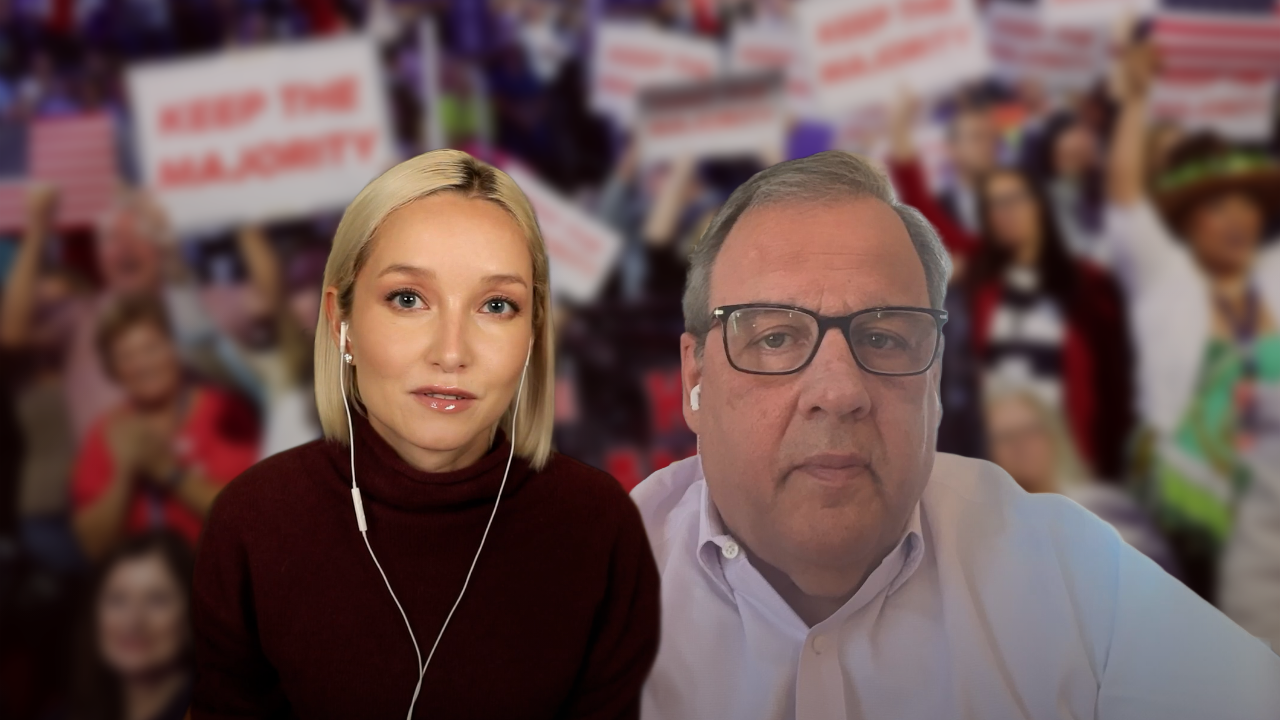
We use cookies.They keep VO running smoothly and help us improve it. Privacy policy