Ask ChatGPT


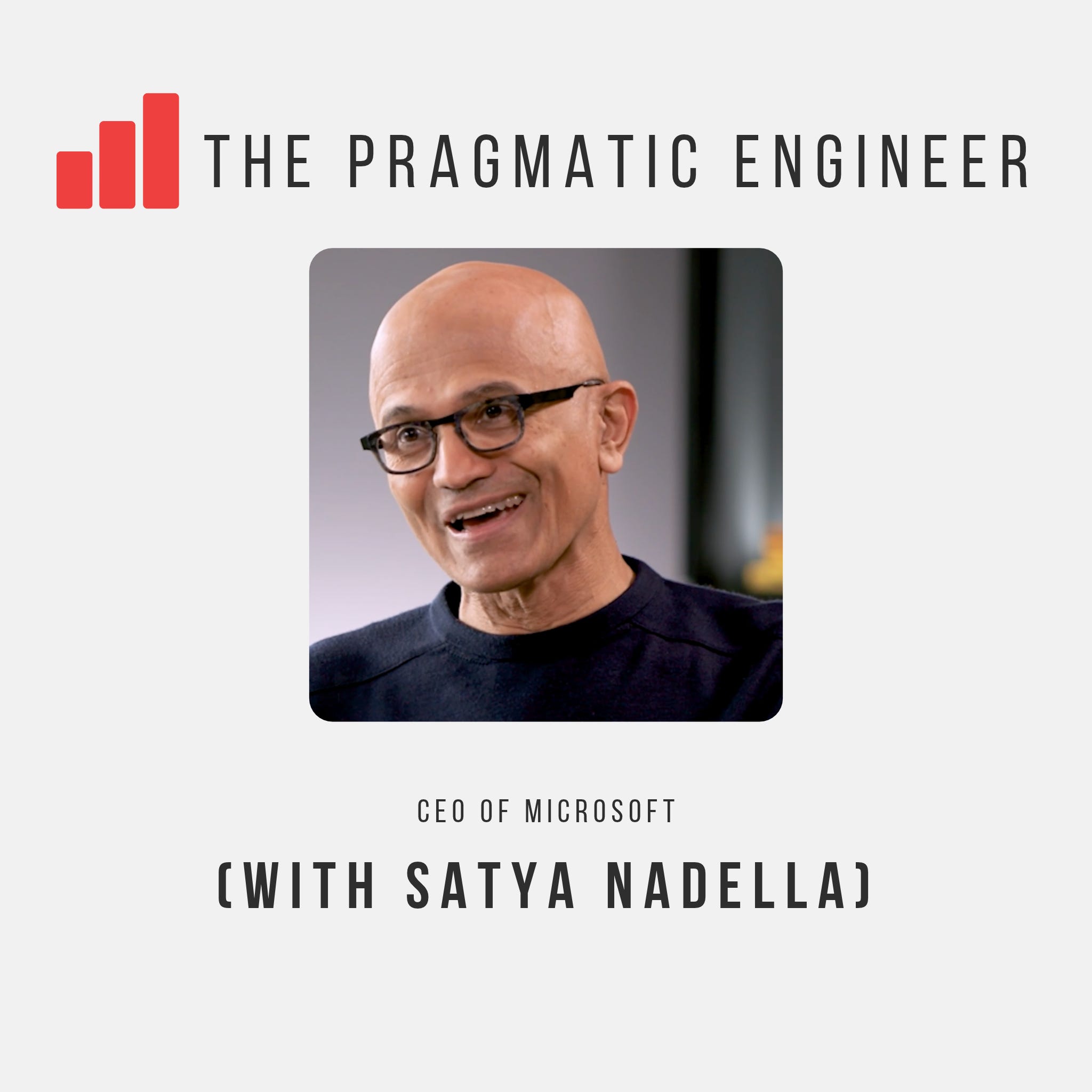
GitHub’s evolution from its 2007–2008 origins to today’s remote-first culture and AI-assisted coding, including how GitHub Copilot was built and how GitHub runs at massive scale across regions and clouds.
Thomas Zumke, CEO of GitHub (CEO since 2021; GitHub user for 16 years; worked at GitHub for 7 years). Interviewer is the podcast host (not identified in the transcript).
Written by AI. May contain mistakes.
Learn about the advancements in AI coding tools like GitHub Copilot and their adoption.
“So GPT-3 came out right after the BUILD conference in 2020.”
Explore the origins and growth of GitHub's unique engineering culture.
“And we saw more and more folks on social media saying, well, I was skeptical that this could ever work.”
Hear an introduction to the podcast and today's guest.
“If you're interested in the past, present, or future of a high-growth company like GitHub, this episode is for you.”
Discover the current tech stack used by GitHub, including Ruby on Rails and beyond.
“It's great to meet a person after exchanging emails and putting a name to the face.”
Delve into the pros and cons of monolithic architectures versus microservices.
“contributing to it at different times of the year.”
Understand the challenges GitHub faced as it scaled and how it managed deployments.
“I mean, we can spend a whole hour probably just talking about the benefits of having a monorepo with a monolith versus, you know, hundreds of microservices.”
Examine GitHub's approach to data centers and cloud providers, including Azure.
“Now you mentioned something really interesting, which I also heard that you run your own data centers or historically have run your own data centers.”
Unpack how GitHub maintains a remote-first culture within a larger organization.
“Yeah, I feel these are the really kind of boring things, but they start to become really important when you are at a company that is now starting to care about these things.”
Learn how GitHub transitioned to a remote-first culture and its implications.
“And so very quickly, GitHub moved from a culture that was headquarter centric to a remote first culture.”
Discover how GitHub utilizes asynchronous communication across teams.
“And so even there, we don't do company-wide emails.”
Explore GitHub's history of internal tools and their influence on the company.
“One fun fact I've heard is you have some really kind of fun and interesting internal tools.”
Understand GitHub's security philosophy and how it prioritizes safety.
“So we had a tool with our own internal video streaming platform.”
Learn about GitHub's strategy for hiring junior developers in a competitive market.
“He came from Duo, the two-factor authentication company.”
Discover the benefits of having interns and fresh perspectives in tech companies.
“I see engineers, it's a little bit under 1 ,000 that work and build software.”
Explore how internships contribute new perspectives and skills to tech companies.
“I'm not going to say that we necessarily did more work.”
Discuss the shift in engineering mindsets across generations and its impact on tech.
“This product manager was saying, she was saying, this is while we were doing the Gen Z research about the latest generation.”
Learn about the founding of Git and GitHub and their early developments.
“So Git, I did a podcast episode with Linux kernel maintainer, Greg KH, and he told a story about how Git was created in 2005.”
Understand why GitHub became popular and the innovations it brought to version control.
“And back in the day, probably the product was the fastest product market fit.”
Learn about the evolution of Git workflows and the significance of pull requests.
“So like Linux or design Git, and a lot of GitHub or the Git functionality comes from there.”
Explore the introduction of GitHub Desktop and its impact on user experience.
“GitHub originally had the separation between everything you do in public as free because it helps the community, obviously helps the social network, quote-unquote.”
Understand Microsoft's changing views on open source and its impact on GitHub.
“Why do you think GitHub waited that long to have these desktop applications?”
Get insights into the motivations and implications of Microsoft's acquisition of GitHub.
“So then we're getting to the Microsoft acquisition.”
Learn about Microsoft's evolution as a developer-first company and its acquisition of GitHub.
“like the natural next step for Microsoft to go down that path.”
Explore GitHub's revenue growth post-acquisition and its impact on Microsoft.
“But it was really important to think about the acquisition, not a Microsoft gets a lot out of GitHub, but Microsoft is willing to invest into GitHub.”
Discuss GitHub's stagnation between 2015-2020 and the changes brought by Microsoft.
“And that ultimately resulted in the acquisition then in June 2018 through an acquisition and a new CEO, Ned Friedman.”
Understand the cultural issues and product development struggles GitHub faced after acquisition.
“I mean, obviously, the time before Microsoft, you know, 2015 to 2018, I only have hearsay and a little bit of insight.”
Learn about the development and impact of GitHub Copilot on coding productivity.
“Many developers wanted full CICD, while GitHub Actions originally was designed more as workflow automation.”
Examine how the launch of ChatGPT and Copilot shifted discussions around AI in development.
“you quickly detract and you get a low net promoter score or whatever you're measuring satisfaction with.”
Explore how ChatGPT transformed developer productivity and customer interactions.
“And then ChatGPT actually had two moments, but one of them was not noticed by many.”
Understand the historical context of GitHub's shift towards AI-powered tools.
“And then in 2023, we launched chat, GPT-4, bought it into the CLI, voice came out, right?”
Discuss the rationale behind open sourcing the Copilot extension.
“And it's not like we don't want to get to that issue, but it's like there's also a thousand other things that are also a high priority.”
Learn about the emergence of autonomous agents and their role in software engineering.
“And we felt the time is right to bring the Copilot extension into the main editor code base.”
Examine the evolving expectations and skill requirements for software engineers amidst AI advancements.
“I do like looking back at the history of Microsoft.”
Explore the evolving role of AI in software engineering and its implications.
“But now we have all this code generated by all these agents.”
A compelling insight on the importance of human roles in AI-driven development.
“Really great to meet you, Gergi in person, and looking forward to stay in touch.”
Encouragement to engage with practical resources and leave feedback.
“and he thinks that the future of software engineering will not be about autonomous AI agents but software engineers directing AI agents on what kind of work to do and staying in charge of this work.”

Get the gist, explore an idea or ask about something said.
 Claude
On The Pragmatic Engineer, what are the key points of this episode?
Searching your listeningAutomatic transcript. May contain errors.
0:00TVU came out in 2021, yeah. So GPT-3 came out right after the BUILD conference in 2020. Kevin Scott and Sam Altman did a session about transformers and Dutch language models. And then after that, GPT-3 got into the preview and we got access to that and through the OpenAI-Microsoft partnership. And we realized together with OpenAI that it was able to write decent code in different programming languages and would not mix up the syntax between Python, Ruby, and JavaScript. And then OpenAI fine-tuned a model that was called Codex that was specific for these coding scenarios. And so in 2020, in August, we wrote a paper with three ideas we had.
0:32Text-to-code, code-to-text as in describing code, and conversational coding is what we called it, which then today is known as chat. And those two later scenarios didn't work very enough. But text-to-code, as in prompting the model within the editor and ultimately building autocompletion, that worked so well that very quickly we saw our internal hubbers adopting the tool, giving it really high scores, saying, this is great, I want to keep using this. It's not the typical management says you have to use it and you don't want to. But ultimately, writing in the early days, 25 % of the code in those files, it was enabled.
1:01And then shortly thereafter, that number got into the 50 % range of 46%, I think, early 2023. And so that was the early days of Copilot. And then June 2021, we went into the public preview. And within a few months, this had grown to a million users. And we saw more and more folks on social media saying, well, I was skeptical that this could ever work. But it actually is good enough that I don't want to work without it anymore.
1:22Thomas Dohmke: GitHub recently turned 17 years old. But how did it start? And how did a platform evolve? I sat down with GitHub CEO Thomas Zumke, who has been a GitHub user for 16 years, has been working at GitHub for 7 years, and has been the CEO of the company for the last 4 years since 2021. In today's episode, we discuss GitHub's remote-first and async-first engineering culture and why the company barely uses email, why GitHub seemingly stops shipping features between 2015 and 2020, and how they created GitHub Copilot in 2021. GitHub's interesting internal tools in the early days, like Haystack, GitHub TV, and Hulp.
1:57Thomas Dohmke: How GitHub sees about 10 billion API requests per day, that's about 120 ,000 per second. And why Thomas doesn't believe that autonomous AI tools would solve hard-engineering challenges. And many more topics. If you're interested in the past, present, or future of a high-growth company like GitHub, this episode is for you. If you enjoy the show, please subscribe to the podcast on any podcast platform and on YouTube. So, Thomas, welcome to the podcast. Thank you so much for having me. It's great to meet a person after exchanging emails and putting a name to the face. And reading your newsletter every week.
2:31Yeah. Twice a week, I guess. I appreciate that. That's where interaction started. Before we jump into the history, I just wanted to go through a couple of interesting things that people might or might not know about GitHub. Number one is a tech stack. It is pretty commonly known, or it used to be that this was Ruby on Rails monolith. At some point, it might have been the biggest in the world. and then I think Shopify might have come. But today, is it still a Ruby on Rails monolith, or have things changed? It's still Ruby on Rails, and I think it's still one of the largest Ruby on Rails applications.
3:03The other one you didn't mention was Twitter. It was in the early days also Ruby on Rails. In the early days, yeah. I think all three companies in one form or another have somewhat moved a wave on this being the only part of the stack. So we still have a large monolith with about 700 engineers within the company contributing to it at different times of the year. Not all of them are working constantly in the monolith. We actually just passed 2 million Git commits into the monolith and tens of thousands of pull requests. But we also have moved beyond just that one architecture. So for example, we're using more and more React on the front end.
3:42We have a number of services that's outside the monolith For example, the Copilot API is written in Go, given it needs lots of API calls for inference. The Kithub Actions sits on a completely different tech stack. Kithub Actions. I would imagine Rails might not be the best for a very heavy workflow. And it has actually a history because a large part of the Action Stack came from what was back then Visual Studio Team Services and then became Azure DevOps and Azure Pipelines. And so there was a lot of.NET code in that code base. And over time, we are now evolving that into a more modern architecture with the goal of one of the other posts of getting to four nines and beyond.
4:25And so our tech stack is very diverse today. Obviously, we're doing also Swift for our iPhone app. We have Kotlin for our Android app. We're using all the clouds beyond also having our own metal in commercial data centers. And we have like a modern software company with all the complexity and all the challenges that everybody else has as well. And I guess all the not simple trade-offs, for example, it's easy to point, you know, the community loves to say Rails does not scale or why would you do it? But I mean, you are one example, obviously, there's other companies we mentioned that it feels like it's less about the technology itself, but what you're building on it and, you know, your history of it.
5:04I mean, we can spend a whole hour probably just talking about the benefits of having a monorepo with a monolith versus, you know, hundreds of microservices. You know, when GitHub was, in 2007, was founded for, I think, more than a year, it was only the three original founders, Chris, PJ, and Tom, plus Scott, who's now the founder of GitButler, and Scott Charconnell, who's kind of like the first employee that was often seen as the fourth founder. And so a team of four is way better off of working in a single code base. You can move much faster. I think that was always important for GitHub to be able to move really fast and ship new features.
5:45And it's much easier to get to learn the code base and try to understand the dependencies. As the company scales and the product scales, it makes more sense to move away from that architecture. I'm so glad you're saying this. The other day I was talking with an early Amazon employee and he was saying the same thing, how early Amazon had made sense. And then as you grow, you figure out your trade-offs.
6:05Thomas Dohmke: If you want to build a great product, you have to ship quickly. But how do you know what works? More importantly, how do you avoid shipping things that don't work? The answer, Statsig. Statsig is a unified platform for flags, analytics, experiments, and more, combining five plus products into a single platform with a unified set of data. Here's how it works. First, Statsig helps you ship a feature via feature flag or config. Then it measures how it's working, from alerts and errors, to replays of people using that feature, to measurement of top-line impact. Then you get your analytics, user account metrics, and dashboards to track your progress over time, all linked to the stuff you ship.
6:46Thomas Dohmke: Even better, StatSec is incredibly affordable, with a super generous free tier, a starter program with$50 ,000 of free credits, and custom plans to help you consolidate your existing spend on flags, analytics, or A-B testing tools. To get started, go to statzig.com slash pragmatic. That is S-T-A-T-S-I-G dot com slash pragmatic. Happy building! This episode is brought to you by Graphite, the developer productivity platform that helps developers create, review, and merge smaller code changes, stay unblocked, and ship faster. Code review is a huge time sink for engineering teams. Most developers spend about a day per week or more reviewing code or blocked waiting for a review.
7:25Thomas Dohmke: It doesn't have to be this way. Graphite brings stack pull requests, the workflow at the heart of the best-in-class internal code review tools at companies like Meta and Google, to every software company on GitHub. Graphite also leverages high-signal, code-based-aware AI to give developers immediate actionable feedback on their pull requests, allowing teams to cut down on review cycles. Tens of thousands of developers at top companies like Asana, Ramp, Tekton, and Vercel rely on Graphite every day. Start stacking with Graphite today for free and reduce your time to merge from days to hours. Get started at gt.dev slash pragmatic.
8:01Thomas Dohmke: That is g for Graphite, t for technology.dev slash pragmatic. Now you mentioned something really interesting, which I also heard that you run your own data centers or historically have run your own data centers. But I talked with some current GitHub folks and they said that you in some parts still do so. Why did you do this? How is it changing? And are you, obviously, since you're now part of Microsoft as well, does it make sense to use some parts of Azure? And if so, what parts are you using? And you also mentioned other clouds. So, like, how are you thinking of own data center, which, again, we used to say, oh, it's just moved to the cloud, and there's now an opposite thing as well.
8:35What's your take on this? Get up, you know, started on the cloud. Really? In the early days, it was, to my memory, it was engineered as a platform as a service provider, and then AWS behind the scenes. Oh, okay. You know, it's easy to forget in today's world where lots of startups announce huge funding rounds. GitHub had no funding until, I think, five years into its journey. Oh, okay. Back then, unheard of$100 million came from around, led by Andreessen Horowitz. But until that point in time, GitHub was bootstrapped. And it had very fast adoption. You know, when it launched in April 2008, Very quickly, the number of users, the number of both public and private repositories kept growing.
9:21You can still find people talking about that they're begging the founders to introduce a paid tier so they have the confidence that the company can survive. Will be around. Will be around. And so it was a natural business decision for the founders to say, how can we host this more optimized cost given that we are bootstrapping this and we're having to pay for the service from our own revenue stream? And they couldn't be burning money because they had no money from venture capitalists. And so I think that was part of starting the decision. The other one is storing Git data, what we call today our Git systems team in file storage in itself is probably not the best use case for the cloud summatives that existed in 2008, 2009, where you had limited access to that layout.
10:10and where, you know, especially the networking part of having multiple, you know, nodes communicating with each other was much more complex than it is today. And so the decision was made to move to servers in commercial data centers. So we own the servers and we still own, you know, the servers and the racks and the storage and all that. But the data center is a commercial data center. So we don't own the data center. So it's owned in the sense of, I'm making air quotes for listeners, it's owned in the sense of we managed, you know, the servers in those data centers. Now, today's GitHub still is a lot of that.
10:38the core is in these own data centers, but things like GitHub Actions, GitHub Codespaces, GitHub Copilot run on Azure cloud and leverage the scale that you naturally lead, whether it's CPUs and actions or GPUs in Copilot. Of course, Copilot, given its multi-model choice and has a topic models and OpenAI models and Gemini models, not all of these models are on Azure. So naturally we're also working with other providers, often with both the first party API, AKA the API that OpenAI or the Topic provide. And other clouds that have Vertex, Bedrock, and so on. And we, in fact, now have GitHub fully hosted on Azure for data residencies.
11:19If you, as an enterprise customer in Europe, want your data all stored in Europe, you're getting a GitHub organization on a stamp that fully runs on Azure in the Netherlands and in Sweden. And we have the same for Australia. We've just announced a US stamp that will be FedRAM compliant. and we're going to expand into more regions in the years to come. Yeah, I feel these are the really kind of boring things, but they start to become really important when you are at a company that is now starting to care about these things. Well, they're not boring from an interesting perspective. Well, not boring, but it's a thing that I think from outside, it's not the shiny features, but I agree.
11:58An interesting perspective, that actually sounds pretty challenging. The challenge, if you go back to the Rubio and Ritz conversation, is and if you know a little bit about Rails and how, and we do not only run on Rails, we also run on MySQL. And so whenever you change, you know, the schema of a database table, a so-called migration is run. How do you do that if you not only have one stamp in one region, but you actually have, you know, five or 10 stamps and we deploy, you know, hundreds of times per day. In fact, I think this year we're forecasting 12 million deploys across the about a thousand or so IC engineers that we have in the company.
12:34And so how do you do that? How do you go from one central stamp on our US data center cloud, if you will, to having deployment that goes to all these different stamps and run the migrations and if you need to be able to roll back. So that was a lot of the engineering work that went into that. So I'd say the actual work of moving this to Azure was less work than getting the engineering system to DX, the developer experience, actually aligned with this. Now we are running in multiple regions. Yeah. One interesting thing that I always surprise people who don't know GitHub all that well is people think, well, it's now Microsoft, right?
13:11So it must work the same way as Microsoft. And then one fact that shows this is not the case, GitHub is still remote first. It started as remote first initially, and it was actually one of the few companies that even before COVID truly remote first. And as I understand, even today, it's remote first. Tell me about this on, A, how you managed to keep this, how it's working inside a larger company, which Microsoft is not remote first. There are, I understand, parts of it that are more supportive of it, but generally, people are often in the office. So the pre-founders, they actually met in San Francisco.
13:44So you could argue that very, very early phase was kind of three people in the same place. And that's often how that goes. But yeah, very quickly, GitHub started hiring super fans, people that were interested in GitHub, promoting GitHub, helped drive in the communities. Those people got hired into GitHub and they were naturally everywhere in the world. And so very quickly, GitHub moved from a culture that was headquarter centric to a remote first culture. And that gave us an advantage when the pandemic came, COVID, because we were already used on being on video calls, on using Slack. I am, in fact, you know, I think GitHub is very different than Microsoft when it comes to how the company communicates.
14:28My joke always is when I wake up in the morning, because I'm obviously both, I'm a Microsoft executive and I'm a GitHub employee. When I wake up in the morning on the GitHub side, I have lots of Slack messages, DMs, channels to look into. And maybe, you know, a handful of customer emails or emails from you that can't communicate with me in Slack. On the Microsoft side, it's the other way around. I have like dozens of emails to pay attention to and maybe a few Teams messages. And so I think that shows the async part of our culture that has grown over the last 17 years. And that is so important at GitHub.
15:01We are using GitHub for everything. And so all employees across all the functions, not just engineering and product, but HR and comms and finance, all the functions work on GitHub. And so they have repositories to describe their team. You know, they're using pull requests to make changes, for example, to our terms of service. You know, every company-wide announcement is a pull request against the repository that we call the hub that gets published as a pages page that is only internally accessible and that goes to our identity provider. And so even there, we don't do company-wide emails. Almost never.
15:36We do an announcement on the hub. Wow. There's a link that is posted in the Slack channel that everybody can see and let me take the conversation there. So, yeah, today we are very much a remote first company with people all around the world in different time zones. Almost everything is async. Obviously, there's, you know, meetings and our town hall meeting is called the get together. And so that has to be in some time zone. And the challenge there is that if you do it, you know, adjusting it for the folks in the US, North America and Europe, you're missing out those in Australia and India because that's just impossible to meet.
16:12So we try, you know, different times of a year to have one that is in the APEC-friendly time zone, you know, a few that are European-friendly. Often, you know, it's not the way when you do like one early in the morning on the West Coast. That's actually bad time for the Europeans because that's kind of like when you pick up your kids from school and go and have family dinner. So many of them actually prefer a later point on the day on the West Coast. So it is later in the evening when maybe everybody's watching TV or the kids are already in bed. So, yeah, we're trying to really keep that spirit and it enables us to hire talent, you know, in different places, in different phases of their life.
16:49And I think that helps us as a company, you know, to be as agile as possible. Yeah, it is pretty cool to hear because GitHub, I mean, you can use GitHub in many ways, but like one popular way is to use it at this async way, right? So it's kind of cool that you're using it the same way as a lot of the startups are. I think one of the core pieces there is not only as the startups are, but as the open source ecosystem is using it, right? But the open source ecosystem by design is async. And they're not all in the same place. That would never work if an open source project could only, you know, you could only be a contributor if you're in the same place and all the same time zone.
17:23And so given that we're catering to both commercial customers, startups, enterprises, those that are paying us money for GitHub Enterprise and co-pired business, but we're also catering, serving the open source economy, the open source ecosystem. And as such as a company, even though the GitHub core itself was never open source and we're operating pretty much like an open source project. One fun fact I've heard is you have some really kind of fun and interesting internal tools. Some are still here, some are not. One tool that I understand is no longer there was called Haystack, which was an internal exception tracking app.
18:00And someone told me it was the best piece of software they've seen. Can you share a little bit about what past fun internal tools you have and what kind of internal tools do you still have today, especially what engineers use? If you look back into GitHub's history, and we don't have the time to cover it all today, I can recommend if I'm allowed to another podcast, the Acquired podcast. They had an episode on June 5th, 2018, so the day after the acquisition announcement that covers a lot of the history of GitHub in the early days. And in general, a really good podcast. And they actually mentioned this, that GitHub, you know, when it started, it had a very, you know, non-traditional way of operating.
18:40There were no managers. Everybody was encouraged to work on their passion projects. And as such, GitHub, you know, for many years, didn't have a traditional IT infrastructure company. Everybody was built in-house because there was the belief, you know, we can build, we as GitHub can do it better than a tool that we can buy off the shelf. Maybe we come back to this later when we talk about AI. That future might actually come back to some startups. So we had a tool with our own internal video streaming platform. It was called githubber.tv. And so all the, you know, town halls and so on, you know, streamed on our own platform.
19:19And of course, that no longer exists. And we're using Loom for that. Haystack, you already mentioned that was exception tracking. And now keep in mind, 15 years ago, there wasn't like established players in that market that you could use, especially not in the Ruby Rails work. So Haystack was my such tool today. it's Sentry that we're using for that. Another one was HALP, H-A-L-P, which was our internal support system where tickets got routed for folks to work on the ticket and have internal communication. To the right teams. Yeah, and now this is all in Zendesk and HALP has been retired. But some of these ideas have led to new startups.
19:56HUBBers is what we call GitHub employees, where HUBBers have taken the idea and maybe they're a bit frustrated that we're shutting down their internal passion project, have taken that and created it. business out of it. I think, you know, culturally, we are still encouraging folks pretty much to experiment and to incubate new ideas, but we're trying to make those external facing products. And there's a number of examples from GitHub's history as well there. Electron comes to mind, which came out of Atom, which was our editor. Oh, yes. It's hugely influential. Our desktop app or comment line interface, also open source projects.
20:31And so everybody can see what we're doing there and can take the ideas. And, you know, we mentioned TechSec earlier, The CLI, for example, is with Mingo. And so it also gives, you know, whoever wants to learn how to build a CLI can use the GitHub CLI as an example. One thing that keeps surprising me about GitHub is every now and then there's a security incident that is in the press that is like a big deal. Not always, but sometimes it starts with like company X had a security issue and it starts like, oh, they detected it because GitHub alerted it for them. And a very famous one was in 2022, Heroku had a security incident.
21:05And it started by not Heroku noticing that something leaked, but GitHub itself noticed some strange patterns. They contacted the Heroku security team, who then confirmed it. And this just struck me a little bit striking. Like, hold on. Like, how is GitHub having better or very strong security? I'm not going to say better, but in some ways in this case, clearly they got earlier. What is your approach to security? And this was, again, this was not even right now. This was years back. It just suggests to me, like, you probably think about security a little bit differently than maybe some other companies.
21:40Security is part of our culture. We have the saying, again, security is priority zero for everybody. And in fact, our previous CISO, Mike Hanley, introduced this concept. He came from Duo, the two-factor authentication company. He introduced this concept that when the question is asked who he is on the security team, every hover raises their hand. And so we institutionalize that security is part of what we do. Of course, we want to drive innovation and make customers happy, but we cannot be in the market if we lose the trust. And of course, the worst day, you know, in my life would be that I get a call and say I lost, you know, the private repositories.
22:17We lost, you know, as a platform. It's so important to companies, your code. To an attacker and now have to do the damage control. And so it's really important for us. The CSO, the chief security officer reports directly to me. And we have a team of about 150 or so in a row that take care of security from multiple angles. One is, of course, quite intelligence, working closely with the Microsoft security team, the so-called Cyber Defense Operations Center, and those folks that look into finding security vulnerabilities, that teaming, not only for the traditional software building, but also for the AI pieces.
22:55And you can imagine, you know, at the scale of GitHub, but even more so at the scale of Microsoft, there's a lot of threat intelligence. When you combine all that intelligence, you get a lot of signal. And one such example is a very trivial example is that if you have a person, if you, for example, you know, your user ID accesses not only the pragmatic engineer repositories, but also those of, let's say, BMW and Mercedes, that person is very unlikely to exist in the industry, right? Even if you're working for a systems integrator, then you typically don't work on a BMW and a Mercedes quadrack together.
23:32So there's a lot of intelligence that we can collect by having the holistic view, even more so when you combine it with all the other Microsoft systems. And we also have a security lab where we have a team of researchers that are hunting for security vulnerabilities using our own security products like CodeQL, which is query language that you can use to find variances, like variations of existing code flaws, you know, code vulnerabilities. tries to find those in open source projects, and then we post them to the open source maintainer in a responsible way, helping them to fix those. And then in time of disclosure, hopefully the bug is already fixed.
24:09So we are doing a lot of that. We are investing into a lot of that. But of course, nobody is perfect. And so it's really crucial for us as a company to have this ingrained into our culture, to not have secrets and source code. In fact, you're blocking all the pushes. Exactly. I guess open source might help here, your big focus on open source. But you mentioned 150 people working on security. As context, how many people or engineers are in GitHub roughly these days? Yeah, so GitHub all up is about 3 ,000 employees. About half or so are in what I would call engineering product design or EPD. So that's about 10 % if I just look at the security versus engineering.
24:47Yeah, a junior function. And then if you look at just engineers, I see engineers, it's a little bit under 1 ,000 that work and build software. And then it's, of course, managers and product managers and technical program managers, designers and all that. One interesting thing I've heard from a current Gethseman employee is you are starting to look into hiring junior developers, developers with less experience, which is a little bit different because most of the industry, we don't hear this. Why are you deciding on this? And this is just a really positive thing to hear. I'd love to hear more about your thinking.
25:17We're really excited about working with young people. You saw some of those in the second day keynote yesterday as well. And in fact, you know, just on Monday, our intern class for the summer started. We have three groups that start on different days and go through the internship. So those are the very early in career folks that often, or not often, that still go to college or university. And this is a program that we institutionalized after the pandemic was over and you could bring people back in person. Because obviously, or half in person, where they at least have a way to meet with folks at our San Francisco headquarters or here in the Pacific Northwest or elsewhere in the world.
25:58And so we have an intern program and often these interns get a full-time offer at the end of the internship or maybe they come back for a second year. And so it's lovely to see that those folks that bring fresh ideas, a great amount of energy, the latest learnings from college and university, and often a different diverse background into the company. and, you know, come in and often, you know, the folks, you know, that are younger in Korea bring a new perspective to the team and say, here, this is, you know, why don't we try this or I want to incubate this idea. And so we are excited about having this kind of like both junior and senior population in the company.
26:43And it's not only twin engineering, you know, it's the same if you look into sales or into marketing. Obviously, the way marketing works today is very different than it was five, ten years ago when the press, traditional media played a much bigger role. Today, you've got to be in a podcast and you have to be on YouTube and TikTok. Just like today. Just like today. But you see more and more of that happening. And of course, when you hire people earlier in Korea, they give you those ideas. They give you that input. And you know how it is, you talk to a lot of people in companies, there's always a debate.
27:22There's always a debate between those that are defending how we've always done it in a 50-year-old company like Microsoft that obviously exists.
27:30Thomas Dohmke: And those that come in and say, hey, you know, nobody in my peer group, you know, watches TV anymore and or CNBC or whatever. And they're all watching just, you know, three-minute videos on TikTok. And so I think that's really important. And we're trying to have a nice balance between early career engineers, senior engineers. We have a number of distinguished engineers, and they all contribute back to our plan. I love it because when I worked both as an engineering manager or as an engineer, having an intern, it's just a boosted morale. Like we were so much more enthusiastic. I'm not going to say that we necessarily did more work.
28:06I think we might have, but we got fresh ideas. and it's just so rewarding looking back at those interns. I now see them many, many years later. Some are now principal engineers, some are CTOs. But the one question that a lot of people who are maybe less technical than you and who have not seen the benefit of internships, they're thinking like, oh, I'm hearing all these AI things, including Microsoft is saying it's so efficient. They're now talking about AI colleagues on the keynote. Why? And now this is not Microsoft people, but we're hearing people at Google say like, oh, it's now at the level of a junior engineer.
28:39And they're thinking, hmm, maybe let's hold off on hiring new grads because they're telling us, you know, some of these so-called experts that it's now at the level of a junior engineer. So maybe we don't need junior engineers. What would you suggest to people who are in this thinking and maybe not as informed? Because clearly you've decided it makes sense and, you know, this thing doesn't apply, but their thinking is real. I think that's backwards in many ways. I think actually folks that, you know, go to high school now or to college or even kids earlier in their education, they get to use AI much faster.
29:12And they get it because they're taking this with an open mind. This is how we always done it, the don't touch, never touch a running system. They haven't been in an experience where some change that was applied from upper management or from the engineers themselves has led to a big outage and things like that. So they're more open-minded. You kind of see that when you look at media, as we already talked about, kids are much more open to just scrolling through charts and consuming the content they'd like to consume. While when you and I were a child, we had linear TV and you got to watch on the living room TV what your mom and dad decided is on tonight.
29:51And so they have much more freedom. And I think this will lead to ultimately junior engineers coming or interns coming into the companies and thinking in like prompting skills, you know, experience with different models. Like, you know, intern doesn't mean I haven't worked for another company before. It might be my third, my second or third internship or might have already been coding with, you know, a group of students on my own project, on my own app. So you get a lot of good new ideas and outside perspective that is ultimately crucial to compete in the market. And I think vice versa, you know, these interns then go back into college and they have worked on something real.
30:27I remember my time at university, I always had the feeling I got to get out in the industry and learn how it's actually done. Because while, you know, you learn coding in university, but you don't really have an engineering system. You're not having tech debt. You're not working on a legacy code base. Because becoming an engineer in a company means you're working on somebody else's code, often now GitHub 17 years old code, and you have to follow up on decisions other people made. And that's not how you learn coding in a university. And so I think it's both for us important to have those fresh ideas within the company, but also for us important to give back to those that in the future become GitHub customers.
31:08I love it. And I feel it's also just the cheapest way to do it. Just like, you know, you're not going to have the highest salary for the new people. This is a silly way to think about it. I talked with the product manager recently, and I just had a deja vu when you said it. This product manager was saying, she was saying, this is while we were doing the Gen Z research about the latest generation. She said, I love Gen Z. She's like, for years as a product manager, I'm sitting in front of engineers telling them, oh, you know, get product thinking. Think about the customer. And they're like, just tell us, you know, what we need to do.
31:37And she's like, the new generation comes in, and they have opinions. They're like, I think our customers would like this. I have tested a competitor. Here's what they're doing.
31:45Thomas Dohmke: And she's like, I love it. So I wonder if by hiring these people and actually just ignoring, as you say, the backward thinking, you might get the next generation of software engineers. Gen Z is already too old, I think, to some degree. Because Gen B, I think, starts 1980 or something. The millennials, Gen Alpha, right? Like, they're 60 years old, are coding today. And so that's Gen Alpha or, you know, soon the whatever the Gen Beta, I guess, is the next one. But you're right, you're getting folks that didn't learn to code on a Commodore 64 or a PC that have a lot of low-level thinking, but also learned in a different environment than those that grew up with smartphones, that grew up with being always connected.
32:27They just have, just from an expectation perspective, they're looking at this often systems problem they're trying to solve with a different perspective. Yeah, I wonder just like a silly thing. Would you rather hire an engineer with the same years of experience of like someone who has, you know, like has traditional coding and learned in university or the same years old? You learned in university and did some university projects or this engineer or this fresh grad who did a university, but they actually have before that five years of building programs in Roblox. And they actually built this like hundred person thing.
33:02is like the skills that that person brings and the mindset, you know, the way they think about things. And there's a third group and there's lots of folks, you know, at Microsoft and GitHub that don't have a formal university education and either dropped out or never went. But that goes back to the earlier discussion about being a remote first company. You hire people because they're passionate about the product. You hire people because they have a green contribution graph on their GitHub profile because they have shown they contributed back to the Ruby on Rails code base to the Git open source code base where at GitHub we traditionally have employed folks that are spending a lot of time on maintaining Git together with the open source community.
33:41So I think a lot of what actually plays a role to us is that folks have shown the right mindset to join GitHub. If you don't have a green contribution graph on your GitHub profile, that I think matters more to us than whether you have five years at one company and five at another company. Of course, we take people to an interview loop and I think increasingly we're thinking about how do we leverage AI within the interview loop. There's nothing wrong about that from my perspective. In fact, I would say if you want to get a job in a tech company very soon, you're going to be asked to show your prompting skills, your co-pilot skills, if you will, and how you use something like agent mode or the coding agent that we introduced this week to get the exercise done.
34:24Because the goal of the future engineer is no longer to run it all from scratch. and the goal is to combine their prompting skills and agent open source libraries into getting that problem solved much faster than they could have done two or three years ago. So with that, these were some of the, like a bunch of interesting facts. I wanted to talk about the past and then later the present and the future of GitHub starting with the past. So Git, I did a podcast episode with Linux kernel maintainer, Greg KH, and he told a story about how Git was created in 2005. In fact, recently there was a podcast with GitHub, a staff engineer at GitHub, interviewed Linux Torewords.
35:03In 2005, Linux Torewords got frustrated with source control for the Linux project specifically. There were some commercial things. We can't see the history. He sat down in 10 days. He wrote Git, which was obviously open source. It was meant for Linux only, but they released it and it turns out it's pretty good. GitHub was founded in, I believe, 2008. Can you tell me about these early days? What happened then? What do you understand from talking with the early founders? The first commit was October 2007. So it was about two years after Linux had done Git, right? And then October 2007 to I believe February 2008 is when they started beta testing it with folks in the Ruby on Rails community.
35:44And then April is when the public version of GitHub launched. That was really fast as well. You know, October to April, roughly six months. If you go back to the history books, it's Chris and Tom, Tom Preston-Worner and Chris Wonstrad meeting in a bar, as I remembered, and having seen Git and figuring out that there isn't a place where you can boost your open source repositories and your private repositories together. There was obviously things like SourceForge, which was the most popular open source platform back then, but also painful to use. I think that's fair to say. I had a couple of projects on SourceForge as well.
36:27It was kind of designed for a different era of the web and didn't make the jump in that mode. Ultimately, it became known as Web 2.0 or Cloud Native. And so I think the idea was, okay, Git is here. Git is amazing. but I want to host it without setting up a server and installing the backend and managing SSH access. And so they started building around that idea. What always made GitHub GitHub is that they put the developers first. Like if you go on the Wayback Machine and look at the first GitHub homepage, it isn't very fancy. It looks like a commit log. It's very short announcement of, hey, we shipped this new feature, try it out and let us know what you think.
37:09The story about our logo, what is now known as the Octocad, is a funny one. And I learned that actually from the Acquired podcast because they learned from the Twitter founders how they got their logo and they bought it on some stock graphic page from a British designer, I believe. And so they looked for other graphics that the same designer had done and bought this hybrid of an octopus and a cat and made that the logo. So there was a lot of, as a bootstrap startup, that's scrappy, that has a cool technology that might become the future of version control. And then they built what is now known as cloud native, a cloud native company.
37:56and yeah, it grew fast. And back in the day, probably the product was the fastest product market fit. Nowadays, you know, there's other companies that have similar, but - It's a different time. It's a different time now. And I think it was unheard of how quickly it spread like wildfire. I was in 2008 still working in the automotive industry. I was at Bosch. So I didn't use GitHub in the first year. And then I quit Bosch at the end of 2008, not because of GitHub, but because of the iPhone SDK. And it became an ISV building apps for German companies. And so I created, I think, my GitHub account in early 2009.
38:34We can look it up, I think, March or April 2009. And then I was at the Rubio and Rails conference in Las Vegas in 2009 and saw Chris Wonstrath giving a talk about GitHub and what they were up to. And that's, I would say, when I became a GitHub fan and when I started using GitHub in my projects. But until that point, you would use some help self-worth tool, install it on some root server, or maybe you already had the cloud and maintain all that yourself. And ever since, people just log in with GitHub and create repo. Yeah, when I looked through the history of just the things that I could find, what struck me as the first commitment was in 2007.
39:11In 2008, the service was launched. I think you said March or something like that. April, sorry. And already in 2008, Reddit, Yahoo, Twitter, and Facebook already onboarded. Facebook was surprising to me because I knew they used Mercurial, but apparently they used it for their open source things. And these were very hip and very trendy companies at the time. And obviously from there on, as you said, in 2009, this was the obvious place to find. Why do you think it was so popular? What was the reason? Was it open source? Because Git wasn't even like back in 2008, 2009. Like now we know Git is great and it works, but back then this was not clear.
39:49Everyone was using SVN, I remember at the time, and Microsoft had their own really heavily invested TFS, Team Foundation Server. Why do you think this product market fit just hit so bad and devs were like, yeah, GitHub is the place to be? Solve the pain point that we had with all these other version control systems. You know, subversion, TFS, you know, had its own version control until much data when they added Git support. They're painful to use and they're painful to use, especially when you had multiple teams working together within the same code base. Git brought this concept of you have the full repository on your machine.
40:27So you can switch from one branch to another even without having an internet connection. And you did always everything on your computer. So, you know, you could make changes to multiple branches and then push upstream or share with the coworkers. And in some ways, you know, GitHub, I think, is the irony of software development tools because you have a decentralized system like Git and then you have a central hub that the world depends on today and where everybody pushes to. So this notion of decentralized systems is still something that sounds great when developers are chatting about technology.
41:03But I think humans are longing for a home. And today at GitHub, we have the saying, we're the home of software developers, where they collaborate human to human and soon human to agent. So I think that played a big role. You have had a new version control system that people were intrinsically motivated to try out because they were frustrated with using some versions. Or even CPS, you know, and something like that. And just wanted something new to solve that problem. And then it was just easy to shoot an account and try it out. And, you know, even user interfaces like browsing the repo, clicking the file tree, GitHub, you know, innovated a lot in that compared to what was there before and making that AJAX request so they would load really fast and you wouldn't wait for the full page to reload.
41:50GitHub invented the pull request, you know, this notion of that you can fork a repo, make your modifications. If you'd like to keep your fork, you can just do that. That's totally cool. Or you can send a pull request back. So we're asking the other maintainer to merge in your changes before that diff files for exchange.
42:06Thomas Dohmke: This episode is brought to you by Augment Code. You're a professional software engineer. Vibes will not cut it. Augment Code is the AI assistant built for real engineering teams. It ingests your entire repo, millions of lines, tens of thousands of files. so every suggestion lands in context and keeps you in flow. With Augment's new remote agent, queue apparel tasks like bug fixes, features, and refactors, close your laptop, and return to ready-for-review poll requests. Where other tools stall, Augment Code sprints. Augment Code never trains or sells your code, so your team's intellectual property stays yours.
42:41Thomas Dohmke: And you don't have to switch tooling. Keep using VS Code, JetBrains, Android Studio, or even Vim. Don't hire an AI for vibes. Get the agent that knows you and your code base best. Start your 14-day free trial at augmentcode.com slash pragmatic. Well, I think this is one of the biggest things that people miss, as I understood, like understanding. So like Linux or design Git, and a lot of GitHub or the Git functionality comes from there. But the Linux workflow was email-based. So actually in Git, there is a command. I don't remember the exact command where I think it's something email where you send an email with your changes bundled, with your Git changes bundled.
43:18And that's how Linux works. They just use email. And GitHub does not do this. Indeed, GitHub invented the pull request, which is a big difference between even today how Linux uses Git and GitHub does. And yeah, it was a smash. When was the pull request invented? Do you know? Was it early on? I'm getting the date from. I think it was a year or so into GitHub's journey. Pretty early. Definitely wasn't there on day one. It came sometime later. We can look it up and add to show notes. But it was a new thing at the time. And I think it's ultimately liberating for software developers where you send a pull request and if the maintainer doesn't like it, they can just close the pull request or leave it open.
43:58But others can see it and if they want to pick it up, they can just jump over to your fork and keep using it there. And so you see a lot of that also happening that people just keep their forks independent because they don't want to have the obligation to engage with the main project. Like I have a bunch of forks where I made some small modification for my own hobby project. I don't see a big reason that that needs to go back into the main branch. Some of that might be just a bit hackery as well. And so it makes it much easier for developers that want to collaborate, to collaborate with each other.
44:34And for the others, it democratizes how they engage with open source, how they learn from it, how they mix and match, and so on. So what am I kind of gathering if I'm putting it together? Like open source was clearly one thing. This new collaborative workflow, especially with open source, but also, and I think one thing you didn't mention, but I wonder if it is a part, is how even if you use GitHub, you can always move to your own Git server. It's very easy to migrate. It also works offline. So even if GitHub is offline, like, yes, it's a central hub. But if there's a GitHub outage, I mean, we're not happy about it.
45:06And people complain these days and there's not many of them to be fair. But even when that happens, I mean, oh, I guess I can keep working locally. Like, I can keep pushing. So you might not, if it's just, again, if it's just like a 30-second outage or a one-minute one, again, not advocating for it. But you might not even notice because you're just like doing your local thing. So I think as a developer, like, I think we appreciate when we know we are not locked into it. Oh, by the way, it's free. Like a lot of the, sorry, not GitHub per se, but for open source, it was always free, right? It was always free for open source.
45:39And you might say GitHub invented a version of the freemium model that is not ad-based, where traditionally freemium is ad-based. Yes. The free users get something for free with advertisement, and then the paid users get rid of the advertisement and get more features. GitHub originally had the separation between everything you do in public as free because it helps the community, obviously helps the social network, quote-unquote. Yes. GitHub growing. And then when you wanted private repositories, you had to pay for them. Shortly after the acquisition, early 2019, we changed that. And instead of paying for private repositories, we actually made private repositories free as well.
46:19We did, yeah. Because we had a lot of individual developers giving us feedback, especially when you travel around the world. For an American,$4 a month might not be a lot. But for somebody in a different country, that is much more money relative to their income. And so we were private repositories free. And today we charge for what you could call enterprise features, like single sign-on or branch protection, things that a student or a hobbyist probably doesn't need. If I'm honest, when I work on my hobby projects, I barely write any tests. I certainly don't send myself a pull request. Then I have to review my own code.
46:54I just merge, push into main branch, and that's cool. And so, but yeah, GitHub innovated in the business model space as well. You mentioned the scenarios where it's helpful to use GitHub or Git on your local machine. In 2007, 2008, flights didn't have Wi-Fi, at least in my memory. No, no. Wi-Fi wasn't as prevalent. That's very recent. They obviously didn't have Wi-Fi as far as I remember. I don't know if Starbucks, maybe Starbucks already had it. But there was much more places where you would work just local on your machine for quite a while and being able to commit into the repository. There wasn't, you know, subversion didn't have a push.
47:33You would always commit into the upstream, change branches, you know, roll back all these operations that are now natural with Git. They weren't natural in 2007, 2008. So GitHub started off, it started to get real big traction, 2008, 2009, 2010. The next big kind of mouse scenario from a developer's perspective is, Until then, to use GitHub, you could use the web version and use the local command line interface. You just learned all the commands. The easy ones are easy and then cherry picking and all that. I was always confused by that. And then, around 2014 was the first time that GitHub actually released desktop applications.
48:16Thomas Dohmke: But not only did it release desktop applications, it actually released the Atom text editor, which I loved. I used it for so long. It was a lightweight editor. It released the Electron framework, which powered Atom, and then GitHub Desktop in 2014, 2015. Why do you think GitHub waited that long to have these desktop applications? What was the goal with Atom, and how did this help? Did it actually help get more people who just liked a nice user interface and were not the command types? I don't know the history of all these apps. My suspicion is that when you say waited this long, I'd make the counter argument in how long is long for a startup to move from one core product to having multiple other products that may or may not become a distraction.
49:00I think each of those solved a specific problem that the team saw. Adam came out, you know, I think a year or so before VS Code launched. And so clearly the time was ripe, you know, for a new generation of IDEs. Both of them were open source. for the acquisition, they both ended in the same company and then O2 made the decision to continue our journey on VS Code and retire Adam. But it goes back to this developer-first culture. It goes back to GitHub's origins where you would join as an employee and you wouldn't have a manager, you wouldn't have a backlog, you would have the... So back then, really, there were no managers.
49:39Well, there was obviously a CEO, but that was very flat. And people, when they... Onboarding was always at headquarters, So even though it's a remote forest company, you would spend a week or so in our headquarters in San Francisco and you learned how to make an espresso. And that was literally one of the onboarding videos. And, you know, they kind of have some musical future, musical culture. And you got told, you know, pick something that you're interested in. And that naturally leads, you know, to developers picking things that they want to solve for themselves, that they care about. And so Adam was actually, you know, Chris Wonstrad, the CEO at the time, and then for most of GitHub's journey until the acquisition, was one of the, you know, core maintainers of the Adam project.
50:28And so I think a lot of that was about passion. You don't hear that often, the CEO being a core maintainer? A lot of that was about the passion of the people working there. I don't know exactly the history of desktop, but my assumption there would be that they saw a need to expand the people that can use GitHub without knowing all the intricacies of Git. In many ways, the GitHub user interface on GitHub.com also served that purpose. If you think, for example, about blame views, blame on GitHub.com is just picking a button and see who modified which file, which line in the file. While if you do get blame on the command line, it's much, much harder to figure out what's what, especially if you don't know a lot about software development.
51:10So it's all about growing the user base and expanding the people that get utility. I'll say that I use GitHub Desktop a lot. I mean, everything is different, and I know how to use command line, but I just like that I don't have to think about it again. So I appreciated what it came out. I barely use it, but I use the GitHub integration, GitHub integration and VS Code a lot for the same purpose. And so I think even that, you know, Git as a protocol, both SSH access and HTTP access, which also, by the way, wasn't something that was very prevalent in the early days of GitHub and is now much more used because it's easier to access through HTTP than through SSH.
51:53I think all of these pieces, you know, were ultimately helping, you know, to create the developer experience that we now consider normal, but by no means was normal 20 years ago. So then we're getting to the Microsoft acquisition. So we've now passed 2015. It's now 2016 or so. You were in the inside of Microsoft. You were already working there. How did this come about? What was Microsoft thinking? Why was even Microsoft interested in GitHub? And then how did the purchase go from your perspective? It was 2018, early 2018, that back then, Nat Friedman, my boss within Microsoft, CDP in the developer division doing mobile developer tools, Nat came from Xamarin, so had joined Microsoft himself for an acquisition.
52:40I had joined for the Hockey App acquisition. So we were like a bit of a, you know, outside in team within Microsoft with lots of people coming from companies, lots of, you know, cloud native experience, a non-traditional stack for Microsoft. At the same time, also Microsoft had changed. It was now about four years since Satya Nadella had become the CEO. Satya had very early on embraced open source, you know, then VS Code was launched,.NET became open source. Also, a number of steps that happened where Microsoft changed its fundamental position on how it views open source, how it views the stack and where the future is going.
53:22You may remember this part of the strategy back then was cloud first, mobile first. And in many ways, that is still true today. We're no longer saying those two things. You know, if you think about how you interact with Microsoft products today, they are, you know, on every device, regardless of who makes the device and what upbring. This was not obvious then because it was still Windows first. It was still a feeling that Microsoft is only Windows. And yeah, I heard this was said everywhere. And I think outside of Microsoft, we were skeptical, honestly. But, you know, and obviously the cloud stack, the compute stack that Microsoft offers today, not only to its own products, but to any company in the industry, really.
54:05One thing I learned early in my journey at Microsoft is that when you're a small startup, you consider, you know, other companies in the space competitors and they, you know, quote unquote, the enemy. At Microsoft, competitors are at the same time also customers and often partners. We are providing, if you take, for example, Azure AI Foundry, our inference stack for larger English models, we're providing those not only to our own co-pilots, we're providing those to many other companies that may directly or indirectly compete with GitHub or with other Microsoft products. And so 2018, the worldview in Microsoft had changed.
54:42I think the reputation started to change. We at Microsoft started to believe that we could pull off an acquisition like GitHub where you make GitHub part of Microsoft and not lose all the open source maintainers because Microsoft is not going to be a good steward of GitHub. And we said very early on clear principles of what that looks like. And 2018 was about two years after the LinkedIn acquisition, a bit longer since the Minecraft acquisition. So we had kind of like two examples of acquisitions where we kept the brand and the platform independent. even today when you go to the LinkedIn homepage, you don't see a lot of Microsoft there.
55:24Seven years after the GitHub acquisition, there's no Microsoft on the GitHub homepage unless you're using Entra ID as your single sign-on provider or, of course, we have blog posts where we talk about Copilot and the Microsoft file model and things like that. And Minecraft is, you know, many kids, I think, realize much later in their childhood that one of their favorite games is actually the same company that also produces the operating system and the professional network and GitHub, right? But when you look at those two acquisitions and then you see GitHub, it feels like a natural consequence, like the natural next step for Microsoft to go down that path.
56:06Microsoft always has been a developer-first company. First product was basic for the Altair. And here at the conference center, I don't know if you had a chance to see the 1975 experience where you work on a fake out there and pass some coding tests. You know, then that was basic for the Apple II and obviously Visual Studio in the 1990s. I think my first version of Visual Studio was Visual C 1.0, came with a book, and then had Visual J, which was like Microsoft's Java clone. And then I bought like a full-scale Visual Studio 7 for way too much money back then. At least, you know, for where I was as a high school student, right?
56:45Obviously, in today's world, selling an IEE at a one-time price would be something that has no market fit anymore. Microsoft lacked access to the open source ecosystem. It didn't have the same attraction to cloud-native developers. It was just being not trendy at all. Yeah. And it was important from a business perspective to have that ecosystem. It was important for us, you know, to put developers first again. And so that was actually the first principle of three principles. And we believed we can re-accelerate GitHub because GitHub in 2018 had a bit of the reputation of not being able to innovate anymore for various reasons.
57:29And we can talk about that as more in detail. But it was really important to think about the acquisition, not a Microsoft gets a lot out of GitHub, but Microsoft is willing to invest into GitHub. You know, GitHub in 2018 at the time to start the conversation with them was about 700 employees all up. And we mentioned earlier, it's now over 3000 employees. So that investment surely has happened. And we have leveraged, you know, a lot of the Microsoft stack and Copilot comes to mind where we're using Azure AI Foundry and the relationship with OpenAI, you know, to build our AI. cogeneration product.
58:02And then the last one was, of course, also Microsoft wanted something back. And so GitHub accelerated Microsoft. And the easy answer there is how did we achieve that? By growing revenue. And we announced last July, so about a year ago now, that revenue has grown to over 2 billion annual recurring revenue run rate. And that keeps growing. And we're very happy with these business results and contributing back to Microsoft's earnings. But in that order, right? Like developers first making good developer products, accelerate GitHub and then eventually GitHub accelerating Microsoft and giving back both on the product side with Copilot or on the revenue side with our results.
58:40But I think this last thing is just worth emphasizing in the sense that I think as a developer, I really like that. I like using products where I know they'll be around. So you're saying that GitHub's revenue has been consistently going up more enterprises, more companies, more teams paying for professional use cases to help their work. If I remember correctly, 2017 was the last official revenue announcement that you have made before the acquisition. And they were at about 200 million run rate. And they announced at that time that they're looking for a new CEO. So Chris was ready to step down.
59:13And that ultimately resulted in the acquisition then in June 2018 through an acquisition and a new CEO, Ned Friedman. But like 2017,$200 million to 2024, in seven years, revenue went up factor 10. Yeah. Well, which is also kind of reassuring to hear that because there's always a risk. Like we know Microsoft is a for-profit company. It was such an adult report to shareholders. It's good to know that those things are going well as well. Well, and I think, you know, for a long time, developer tools were not seen as a revenue driver in the industry. I think, you know, there were a few examples like companies in JetBrains comes to mind or JFrog.
59:56There's a bunch of companies that, you know, were focusing on developer tools. But I think, you know, if you turn to it back five years or before that, let's say seven and a half years, and we talked with venture capitalists about an idea that we have, you and I, about a developer tool startup, they're going to tell you you need something else beyond just developer tools because that's where the big money is and today this world obviously has dramatically changed. Absolutely but as I was talking with Scott Booth really interesting thing was that the last company that was able to make developers pay for developer tools a lot of money we're talking thousands of dollars was Microsoft in the 2000s where this was pre when internet was small and developers didn't just pay for developer tools but they pay for MSD and documentation for access to the latest software and that time has passed and we were talking about Scott on some of the learnings but it's interesting how Microsoft figured that out and I feel Microsoft is very good at figuring out this great mix where again back then and I worked at a Hungarian company we paid about$1 ,000 per developer in Hungary because it made us so much more productive so we'll go with today I part on this one but you mentioned something interesting which I also noticed so I was looking back and I remember back when GitHub Desktop came out it was great I think I started to use GitHub more.
1:01:10But then from like 2015, nothing really happened. Microsoft bought GitHub great. And I remember on online forums as well, people were saying like GitHub is not doing anything. And then the next thing, I looked at the change log and the only notable thing I've seen shipped, it started in 2021. Then GitHub sponsors came out, the package registry, co-pilot, code spaces. But what happened there from 2015 to 2020, it almost felt like from, I'm sure people were working, but from the outside, it just looked like nothing, like barren land and more people being hired. And you alluded to this. What was going on behind the scenes?
1:01:42I mean, obviously, the time before Microsoft, you know, 2015 to 2018, I only have hearsay and a little bit of insight. I think a big problem that GitHub had, especially before the Microsoft acquisition and, you know, for some time after that, was that the platform had grown so much and so many people were relying on it being available and not broken. plus you know many developers did the big band and still are very much in love with the brand like the octocad you know internally we call it mona mona like mona lisa you know mona um and it is something that is recognized you get you get asked about it on the street or like in a coffee shop or in the lego store because obviously the employees there are often also college students and and happen and i mean i've been you know i had a you know on an on an airplane, the crew member asked me about GitHub.
1:02:36I'm like, how do you know GitHub? She was like, well, I used that in college for some computer science course that I took. And I think if you have something that is so beloved by the space, that also means the expectations are really high. It's often that the disappointment is even bigger if you actually care about something. Well, if you don't give a damn about this thing, then whether it's up or down or whether it's broken, it doesn't really matter to you because you hate it anyway. And so I think those two things combined led to people really being worried about shipping stuff because you would change something and the reaction from developers when you change something, whether it's in the user interface or things work or hate limits and things like that, is often there's a loud minority yelling on the internet.
1:03:22and there's a silent majority that are actually fine with the change but don't say anything. And a small change might lead to an outage and then you're the one that made three lenders of change in your first week and you brought GitHub down. That's obviously not encouraging in your journey. So I think that created an organization that actually still shipped a lot of things and what we call staff ship, what Microsoft called stock coding, so features that landed within the GitHub organization that Hubbers would see when they use, you know, one funny thing is we have, even today, as we're using GitHub every day, I often actually don't know if that feature is available to you because I only see GitHub how a Hubber would see it.
1:04:03And there's a way to disable all these features. But how often, well, no, I can hide the staff bar and then it disables the features that you don't see. But how often do you really do that? And do you then remember that in a conversation that Gerging, it doesn't have the feature, but I have it. And I thought it already shipped, but it is actually slated for next week. So I think that proved a culture where things were internally shipped, but never made it to the public because everybody's worried, is that good enough to ship it? CEO change was in flight. There were a number of cultural issues.
1:04:36And then as we closed the deal and we came in, we made private repos public relatively fast. That was the fast one. Yeah, sorry. That's version of GitHub Actions was announced. That was even before the deal closed. But it was, you know, hopefully the folks building it, forgive me, it was a bit of a hack built on top of containers in Google Cloud. And we quickly saw from the data that the product wasn't actually meeting the requirements from developers. Many developers wanted full CICD, while GitHub Actions originally was designed more as workflow automation. and we kept that work for automation part, but evolved it into what it is now.
1:05:17And over the course of 2019, 2020 sponsors was announced in mid-2019 at the last ever satellite conference in Berlin. And then COVID came and that ruined kind of like the plans that we had as we came back from it. You know, we were very careful with bringing back Universe in a smaller scale given that there was still lots of travel restrictions. But it took us a while, you know, to get the organization back into a state where we could both innovate really fast and keep the fundamentals in place, keep security, availability, other things like accessibility, things that you might not actually see have changed because if everything is working, you don't notice it, but it created a lot of investment behind the scenes.
1:06:03So we are feeling good about the pace of innovation that we have today, but yeah, it took us a while to turn the ship around And even in a team of 700 people, that takes a while. And certainly, with 3 ,000 people, it is something that requires a lot of energy and focus. I think it's just a good reminder from the outside, a company that is doing great. Because GitHub, I think all developers can agree, from the outside, it looked like it's doing really good. Like, yeah, you can have some things that you need to work through, right? And growing too fast is amazing. I think the best problem for any team to have.
1:06:36But it's still a problem, right, that you need to solve and you get through it. Now, Copilot was the biggest flash that I can remember from the past few years, clearly. Especially because when it came out, it just felt so early. Did the beta come out in 2022? 21. 21, yes. The beta came out in 2021 because it was built on an earlier model before chat GPT launched. It was on, was it on GPT-2? No, it was GPT-3. So GPT-3 came out right after the BILT conference in 2020, which was obviously, given the pandemic, fully remote. But Kevin Scott and Sam Altman did a session about transformers and Dutch language models.
1:07:19And then after that, GPT-3 got into the preview. And we got access to that through the OpenAI Microsoft partnership. and we realized together with OpenAI that it was able to write decent code in different programming languages and would not mix up the syntax between Python, Ruby, and JavaScript, which somebody asked me that earlier this week, was my biggest surprise that it can do that even though it doesn't have a compiler built in. It's not able to validate the code it generates. It doesn't have the syntax. It just knows it from the training set. And then OpenAI fine-tuned a model that was called Codex that was specific for these coding scenarios.
1:08:00And so in 2020, in August, we wrote a paper with three ideas we had, text-to-code, code-to-text as in describing code, and conversational coding is what we called it, which then today is known as chat. And those two later scenarios didn't work well enough. We had a described code, and sometimes it worked, and oftentimes it was wrong, and you know how it is. when developers see that, that the description is not actually what the code does, you quickly detract and you get a low net promoter score or whatever you're measuring satisfaction with. But text-to-code, as in prompting the model within the editor and ultimately building autocompletion, that worked so well that very quickly we saw our internal hubbers adopting the tool, giving it really high scores, saying, you know, this is great.
1:08:47I want to keep using this. It's not the typical management says you have to use it and you don't want to. But ultimately, writing in the early days, 25 % of the code in those files was enabled. And then shortly thereafter, that number got into the 50 % range or 46%, I think, early 2023. And so that was the early days of Copilot. And then June 2021, we went into the public preview. And within a few months, the debate just had grown to a million users. as you saw more and more folks on social media saying, well, I was skeptical that this could ever work, but it actually is good enough that I don't want to work without it anymore.
1:09:25Yeah, because the surprising thing for me is most of us remember the launch of ChatGPT in November 2022, and everything exploded from there. It was the product that made people go, wow, inside tech, outside tech, and a lot of AI startups started up, and a lot of actually coding startups started after that, so like in early 2023. However, by that time, GitHub Copilot was already, I think it was beta in 2021, right? But in 2022, I think it became public. So it was GA already. It was generally available. It was generally available in June 2022, in which started charging for it for individuals in August 2022.
1:10:02And then ChatGPT actually had two moments, but one of them was not noticed by many. So OpenAI showed at Microsoft Ignite conference, which is the fall event, showed actually ChatGPT in the keynote. It wasn't called ChatGPT, but they showed a similar scenario that is what you see now the agent doing, where you ask it to write some code and make modifications to that code. And then it launched in late November. And the world changed for us dramatically. For once, because we had a product in market that was really good for developers. And so our customer conversations shifted from us having to convince customers that AI is actually something they should look into to customers asking us to come talk about how we build Copilot, how it can help their developers.
1:10:50The first user studies come in. We were the first company comparing a group without co-pilot with a group with co-pilot. And the 55 % number is obviously both well-known and often used today as a productivity improvement, which was never intended to be. It's a case study in that one scenario. It made the developers 55 % faster. There's lots of other things that developers do day in, day out where you don't get the co-pilot to make you that much faster. But it was a very exciting time. And then in 2023, we launched chat, GPT-4, bought it into the CLI, voice came out, right? A lot of these things feel like they have been around forever, but it's only been a little bit over two years.
1:11:33It's only been. And then 2023, on a post from GitHub, I'm not sure if it was you, so I don't want to mis-act you. But it was written that just as GitHub was founded on Git, today we are refounded. Sorry, so it was you writing it, that just as GitHub was founded on Git, today we are refounded on Copilot. This was in 2023, and Copilot was clearly very strong. What has this change meant since then? And now it's been two years. This was at GitHub Universe at 2023. So I think in that year, the conference was in early November. It is our biggest event of the year, and it was one of the lines in the keynote and I think in the press release or blog post.
1:12:08And we talked a lot about the early days of GitHub, right? The GitHub founders did not invent Git. Linux, Torvalds did. But they realized there's a new technology that changes how developers work. not only to version the code, but how they collaborate, right? GitHub, if you think about it, GitHub is designed for asynchronous collaboration of developers. That's what GitHub is really all about. And with Copilot, it repeated history because we didn't invent transformers. We didn't invent large language models. We didn't train GPT-2 or 3 or codecs. But we saw something that changes how developers work.
1:12:46And, you know, if you're honest, we saw an opportunity for ourselves to accelerate. You know, my backlog is endless. There's lots of GitHub issues in repositories that were filed, whether the issue was filed in 2014 with customer feedback. And, you know, every enterprise seller since then posted on it. I have the same problem. And it's not like we don't want to get to that issue, but it's like there's also a thousand other things that are also a high priority. and you mentioned security issues and availability and all these things are also high priority. When we saw GP3 and then Codex, we saw an opportunity to bring the effort down for all the, for all developers.
1:13:24And of course, every developer on the planet to get more done. Not that, you know, they actually get to an empty backlog because I don't believe that because Javon's paradox means more ideas will get stacked. In fact, now we have all the AI ideas. You know, if you will now, GitHub and Microsoft are closer together from the sense that Microsoft's developer division has for over 25 years produced IDEs and Copilot started as an IDE feature. And while GitHub was the developer platform, now those are the Venn diagram of GitHub and VS Code and VS is much more overlapping. And we see that here at the conference and we see that in our day-to-day interaction between GitHub and DevDiv.
1:14:03And just on build, two big announcements related to GitHub. One is open sourcing Copilot extension. Why did you decide to do that? And also, yeah, so like what's the idea here? Because we have seen open sourcing with VS Code. In fact, open sourcing VS Code gave way to some of the competing editors that are also adopted, you know, Windsurf, Cursor. I think there's smaller ones as well. What is your hope with this move and why? You know, it feels counterintuitive because Copilot has kind of been an edge for Microsoft, right? Isn't it funny that it's counterintuitive? We live in a world now where Microsoft is embracing open source and is open sourcing its part while startups are taking open source, forking it and making the closed source.
1:14:52This is like if you had told me that 10 years ago, I would have said you'll have it backwards, buddy. This is true. We're not open source. That's not, you know. And look, you know, we published VS Code in 2015 under the MIT license. So the license allows it. And of course, people can do with the VS Code code base what they want. That's fair game. And so we're stepping into our own footsteps of VS Code over the last 10 years. And we felt the time is right to bring the Copilot extension into the main editor code base. And that means it needs to be open source because we made a promise to the community when we published VS Code that we will keep it open source.
1:15:35You mentioned we co-piloted in 2021, 2022. It didn't take long until people reverse engineered the VS Code extension. It's at the end of the day JavaScript. We write it in TypeScript, but it's delivered as obfuscated JavaScript. And so you still can find those blog posts of how we compose the prompt, how long the prompt context window is, you know, that we're using adjacent tabs. All that information is already out there. but you couldn't take that information and contribute back or look at the code base, learn from it, or take Copilot and its APIs and its system prompt and put that into, let's say, code.org or the interview tool you're building because you want your applicants to use a Copilot and maybe even show how they can sign in with GitHub at the same time, not given the full VS Code experience, you want that scope experience for an interview loop.
1:16:24So I think from our perspective, it follows exactly the idea of open source, which is you can learn from it, you can contribute to it, you can fork it, you can do whatever you want with it. It ultimately helps the developer community to have that piece of client code available. And now you're going to ask, or I'm going to ask myself the question, so where's the value generated and aren't we losing all the revenue? And we believe that the ultimate value generation for these AI tools is in the platform, whether it's the computer inference layer, whether it's the security or control layer, enterprise is one control, what model is enabled, who can use AI, in which project you might use AI, given that you might have signed legal terms with whoever provided your source code that you aren't using certain technology.
1:17:13And inference layer, the security layer, and at the collaboration layer where people collaborate. And you see that with human-to-human collaboration. And we were going to see that with human-to-agent collaboration with our new coding agent. And we're bringing that agent into the Gear platform and we're giving it certain permissions. And we are protecting the agent from doing things that you might, you know, allow for a human, but you want control over that when the agent does it. I do like looking back at the history of Microsoft. I do appreciate that Microsoft has been open always to the idea of being a platform, but a good platform.
1:17:46So, for example, JetBrains, you know, they might disagree with this. But I remember the first time I bought a JetBrains project for$200 a year was this extension called ReSharper. sharper. So Microsoft opened up their IDE to allow extension points and JetBrains honestly wrote a way better autocomplete than Microsoft themselves had. And they made a bunch of money off of it. And I think this helped them spin out these things. But when I look at, let's say, Apple's Xcode, the reason I don't like it, and I'm very vocal about it, there is no extensions. I'm stuck with what it is. I would sometimes pay money for someone I cannot.
1:18:17So I just really like how Microsoft seems to be keeping this idea of like sometimes opening up the business so others can succeed, startups can do it. It's better for everyone, especially as for developers. And as you mentioned, Xcode, we actually have a co-pilot extension for Xcode. It's a bit of, you know, hackery given the extension system. But it does have auto-completion. It has chat. And just this week also we ship agent mode as a preview into the Xcode extension. We have it in the Jet Plains extension as well, across all the different Jet Plains IDEs. We even bring it to Eclipse. and that is something you know including agent mode because if you look into you know larger companies they have developers on all of these and probably you know another dozen of other editors that developers prefer and where the company doesn't want to prescribe which IDE to use but it is important for companies to standardize their engineering system stack and to have certain approved tools maybe it's just maybe it's multiple of those obviously if you think about for example Artifactory or JFrog often companies have that in the stack together with GitHub or HashiCorp Terraform.
1:19:25And of course, you have a cloud and a key store, a secret store and a key value store and whatnot. But it is important to have a co-pilot available across all these IEs. And our Xcode extension is already open source, was open source before this week, because an open source maintainer voted. And then we did a commercial agreement with that open source maintainer to take it over. So the maintainer benefited from it. We benefited from it. But so that means the system prompt, the APIs, all that, you can already find an export extension. And so now we're continuing that journey with VS Code and others.
1:19:58The last question I wanted to touch on, this is agent mode or GitHub agents was also an announcement and the agents are getting more and more autonomous now. As developers, there is a bit of this fear. There's some, not necessarily Microsoft, but there's this vision of in the future of a software engineer, you will manage all these agents and you'll be more of a manager than a software engineer. And there's two things here. A, a fear of like, are they taking away the parts of the work that I like? Even if not my job, I'll have a job, but it'll just seem like a boring job to be a manager. And then the other thing is what will happen with, what could happen with software engineering jobs?
1:20:36And then you said earlier that you believe this will increase actually, just recently in public. So what is your view on agents and what advice would you give to software engineers who want to say software engineers, but obviously want to up level? How should we look at this thing? Because it feels like a frigging big change. I don't like the term autonomous because I think autonomous, at least in my understanding, means the thing figures out itself what it should work on. That's not how these things work. They have a level of autonomy. when you assign a task to them of how they're implementing the task.
1:21:07But even that autonomy is restricted by the MCP service, a model context protocol that you configure for it, or the tools you allow it to use, or the repository you give it access to. Because obviously, as an engineer, as a human engineer, I can look beyond the one depository boundary and see what has happened in other repositories. While the agent needs to get permission to do that, right? So we are definitely far away from full self-driving. If you take cars as a metaphor here, we're certainly getting into more driver assistance systems. And as developers, we have always automated whatever we can automate.
1:21:46A compiler is a tool that helps me to not write assembler. Instead, I can write a much nicer language. Thank God. But I'm sure when compilers and languages like BASIC and others were introduced, there were also skeptics saying, you know, I'm losing control over the instruction set and the optimizations that I can do. And my app is so much faster. And I certainly remember, you know, my Commodore 64 days when there was a very active demo scene and you couldn't really have a successful demo, especially as, and I think even nowadays it exists where the size was limited. Back then, for physical limitations, today it's artificial, right?
1:22:23Like you're limiting it because you want to create a challenge, but you could only win those damage and just if you knew how to do assembler and and and you couldn't you couldn't win that in basic so agents will you know work as one of the tools that have developers have available um just like we have compilers linkers linters and whatnot they will pick up tasks that i don't want to do like writing test cases i don't know many developers that want to buy test cases and certainly not more than they're already written right like test unit testing is always a how many do I write until I can get away with it when I go into code review?
1:22:57Because there isn't like a right answer. It's like not a dozen and you're good. It's like how many you need is actually a very subjective thing. And those have tried to holistically test all the edge cases, they're never shipping actual valuable software. Writing documentation, fixing security vulnerabilities, finding these security vulnerabilities when I didn't see them because I had a long day. And I have obviously always my own bias that the code that I'm writing does exactly what I want it to be until you have even something simple like a pull request description. Like you have the AI describe the work that you have done and all of a sudden it shows, well, Thomas broke the behavior.
1:23:35It won't say it like that, but you get the idea. Thomas changed the behavior of the checkout flow. I'm like, wait a second, I didn't touch the checkout flow. Why is this now changed? Because when it describes the code changes, it doesn't have the confirmation bias that you self had when you would write your own description. So I think we're heading into that world. And now you have these, let's say, I start four agent flows. I think that's what Jessica Dean did in the day two keynote. But now we have all this code generated by all these agents. I'm the one now having to validate that what the agent did is actually the thing that I'm willing to merge into my code base.
1:24:10And we all know that this gets harder the more open pull requests you have in different branches that might have merge conflicts by the time you're merging those things. So you've got to understand all that code. You've got to understand how the system is designed. You need to know what the agent did to have the level of confidence, trust. You know, we talked about security, availability, all these things earlier. Scale. At the end of the day, most companies are for-profit organizations and even those that are non-profit operating on the budget. And so you need the agent to write code that solves the business problem and still makes you a healthy margin.
1:24:43Sounds like keep an open mind and experiment and see how they can help you, right? The other thing that is, I think, super important to this is that we're already seeing this paradox because now we have all the AI requirements that come on top of what a full-stack engineer does, right? Like no longer this backend and database and infrastructure and content and how the front end communicates with the backend. And, you know, at GitHub to give you one last data point is we are seeing 120 ,000 API requests per second on an average day. Oh, wow. That's seven per minute. That's 430 million per hour or 10 billion per day, right?
1:25:22And that's API requests. And now that doesn't say, is it a cheap API? like listing the first 10 repos that you have? Or is it a GraphQL API that can take lots of complex queries to actually get another result, right? And so if you just take that example, you've got to have engineering skills. You've got to have developed craft. You need senior people that know how to build large-scale systems. You need people that take large complex problems, break them down into smaller problems. Maybe they use AI along the way and say, what's a good new SQL database? What's a good infrastructure? how do I do data residency, how do I do GDPR, that job is going to be break it down to the layer, but then now I can sign it to the agent that will provide high-quality code without me having to reprompt it 15 times.
1:26:08And then I can merge that into my code base and move to the next task. That's what engineering is all about. The coding skill will be part of that engineering skill set, but ultimately engineering means I can build a really large complex system and then evolve that they need to even larger system next week in today's world. Love this takeaway, abstractions and being able to take on more complexity. This was a really good conversation. Yeah, awesome. Really great to meet you, Gergi in person, and looking forward to stay in touch.
1:26:35Thomas Dohmke: Thanks very much to Thomas for this conversation. The thing that struck me most is how despite GitHub building AI tools like Copilot, Thomas very strongly believes that there's a lot of value in hiring junior engineers. and he thinks that the future of software engineering will not be about autonomous AI agents but software engineers directing AI agents on what kind of work to do and staying in charge of this work. For more practical reading and listening to on AI engineering check out Deep Dice from the Pragmatic Engineer linked in the show notes below. If you enjoyed the show it would mean a lot if you left a rating on the show on your podcast player.
1:27:09Thomas Dohmke: This helps more people discover the show thanks and see you in the next one.
Supported by Our Partners
• Statsig — The unified platform for flags, analytics, experiments, and more.
• Graphite — The AI developer productivity platform.
• Augment Code — AI coding assistant that pro engineering teams love
—
GitHub recently turned 17 years old—but how did it start, how has it evolved, and what does the future look like as AI reshapes developer workflows?
In this episode of The Pragmatic Engineer, I’m joined by Thomas Dohmke, CEO of GitHub. Thomas has been a GitHub user for 16 years and an employee for 7. We talk about GitHub’s early architecture, its remote-first operating model, and how the company is navigating AI—from Copilot to agents. We also discuss why GitHub hires junior engineers, how the company handled product-market fit early on, and why being a beloved tool can make shipping harder at times.
Other topics we discuss include:
• How GitHub’s architecture evolved beyond its original Rails monolith
• How GitHub runs as a remote-first company—and why they rarely use email
• GitHub’s rigorous approach to security
• Why GitHub hires junior engineers
• GitHub’s acquisition by Microsoft
• The launch of Copilot and how it’s reshaping software development
• Why GitHub sees AI agents as tools, not a replacement for engineers
• And much more!
—
Timestamps
(00:00) Intro
(02:25) GitHub’s modern tech stack
(08:11) From cloud-first to hybrid: How GitHub handles infrastructure
(13:08) How GitHub’s remote-first culture shapes its operations
(18:00) Former and current internal tools including Haystack
(21:12) GitHub’s approach to security
(24:30) The current size of GitHub, including security and engineering teams
(25:03) GitHub’s intern program, and why they are hiring junior engineers
(28:27) Why AI isn’t a replacement for junior engineers
(34:40) A mini-history of GitHub
(39:10) Why GitHub hit product market fit so quickly
(43:44) The invention of pull requests
(44:50) How GitHub enables offline work
(46:21) How monetization has changed at GitHub since the acquisition
(48:00) 2014 desktop application releases
(52:10) The Microsoft acquisition
(1:01:57) Behind the scenes of GitHub’s quiet period
(1:06:42) The release of Copilot and its impact
(1:14:14) Why GitHub decided to open-source Copilot extensions
(1:20:01) AI agents and the myth of disappearing engineering jobs
(1:26:36) Closing
—
The Pragmatic Engineer deepdives relevant for this episode:
• AI Engineering in the real world
• How Linux is built with Greg Kroah-Hartman
• Stacked Diffs (and why you should know about them)
• 50 Years of Microsoft and developer tools
—
See the transcript and other references from the episode at https://newsletter.pragmaticengineer.com/podcast
—
Production and marketing by https://penname.co/. For inquiries about sponsoring the podcast, email [email protected].