 Ask ChatGPT



The episode discusses Russell Brand’s conviction for rape and sexual assault and argues that the “everyone knew” narrative is oversimplified. It focuses on how investigative journalism (Sunday Times and Channel 4 Dispatches) led to the trial, and on industry culture—how Brand moved between “walled cities” of media, avoided HR, and used fame/charisma to enable abuse.
Marina Hyde and Richard Osmond host. Hyde is a journalist/commentator; Osmond is a media figure with long experience in entertainment/TV. They also reference Catherine Ryan (comedian who confronted Brand on Comedy Central) and Sunday Times investigators Ros Irwin and Charlotte Wace.
Brand was known as a “sleaze” but not necessarily as a proven criminal until 2017–2018. The industry’s awareness grew over time, especially after Me Too and Ryan’s confrontation. Brand’s career is described as “shapeshifting,” relocating to the US and building follower-based platforms with legal protection and minimal oversight.
MTV and Channel 4 work; BBC Radio 2 role and resignation after Jonathan Ross/Andrew Sachs controversy; Comedy Central Roast Battle (Ryan calling him a predator); Brand’s post-2018 US podcasts/books; his later political/right-wing alignment and public religious conversion.
Written by AI. May contain mistakes.
Exploring how playful family films convey deep messages.
“Now, some of the most playful characters in family films do end up dealing with surprisingly serious material.”
Discussion on Russell Brand's recent legal troubles and their implications.
“And now, you know what we're going to talk about this week, and it is Russell Brand.”
Examining how journalism exposed Russell Brand's actions.
“And we'll be certainly talking about why.”
Analyzing the timeline of when the entertainment industry knew about Brand.
“It is incredibly expensive, this kind of journalism.”
Discussion on how Russell Brand was viewed in the industry over time.
“and a lot of people have spoken to those journalists and a lot of people have spoken up and a lot of people have told their truth.”
Exploration of the culture that allowed Brand's behavior to persist.
“I mean, the truth is he hasn't done very many shows on British television.”
Discussing the difficulties faced by victims in coming forward.
“And they were the last people to work out because often the case.”
Explore the toxic culture that enabled Russell Brand's predatory behavior.
“As I say, from 2017 onwards, I think the writing was on the wall and people were not going to stop.”
Analyze how Brand navigated the media landscape and built his controversial career.
“We're still talking about Russell Brand.”
Discussion on the media's misinterpretation of Russell Brand's influence on politics and youth.
“once you're ascending the stairs to Russell Brown's kitchen, okay, you are screwed.”
Examination of how abusers navigate the media landscape and the implications for future generations.
“And I hope we've given some factual things and interesting things.”
Analysis of Brand's career trajectory and the control he exerted over his public persona.
“So let's go back to a couple of times where he was HR'd.”
Discussion on how sexual abuse allegations are monetized in today's political climate.
“And everyone thinks I'm amazing, but maybe I'll jump ship over here.”
Discussing the ramifications of public figures facing allegations and societal responses.
“Either people are saying this couldn't happen now, or people should have known.”
Exploring the ongoing investigations into high-profile figures and the challenges faced by victims.
“And then you're disappearing to another country.”
Concluding thoughts on the issues discussed and inviting audience engagement for future conversations.
“I'll say there are so many ongoing investigations into high profile public figures happening in newspapers and TV news outlets right now.”

Get the gist, explore an idea or ask about something said.
 Claude
On The Rest Is Entertainment, what are the key points of this episode?
Searching your listeningAutomatic transcript. May contain errors.
0:00The Rest is Entertainment is presented by Octopus Energy. Now, some of the most playful characters in family films do end up dealing with surprisingly serious material.
0:08Richard Osman: Yeah, whether it's Muppets or puppets or cartoon characters, occasionally the very silliest of on-screen presences can carry the most serious of messages. Well, sometimes that's what the entire film is actually about. If you look at a film like The Muppet Christmas Carol... And I've looked at it probably 30 times in my life. But actually, a genuinely and tremendously moving version of that story. The Muppets, you can always rely on to hit the emotional notes. You look at something like Inside Out, which of course is essentially the emotions of Riley. And there's such a beautiful piece in that when Joy is desperately trying to keep sadness at bay.
0:42Richard Osman: And the story of the film is that Riley needs sadness and Joy in the end understands that. And this is a family movie and it's teaching such an incredibly valuable life lesson. Yes, the playfulness never really kind of gets in the way of the serious material. Octopus Energy's mascot is an enormous pink fluffy octopus called Constantine. Now, energy is a serious business, but Constantine gives them a rather more colourful way to talk about it.
1:16Hello and welcome to this episode of The Rest is Entertainment with me, Marina Hyde.
1:20Richard Osman: And me, Richard Osmond. Hi, everybody. Hi, Marina. How are you, Richard? Yeah, I'm not too bad. I'm not too bad. And now, you know what we're going to talk about this week, and it is Russell Brand. Last Thursday, Russell Brand was convicted of one count of rape and three counts of sexual assault. He now faces a significant custodial sentence. Our number one thoughts are with the victims of this and how difficult it was for them to come forward. How insanely brave. How insanely brave. How long it took. And we'll be certainly talking about why. Why? And the journalism that brought it to light in the first place, because I firmly believe there would have been no trial without the journalism, that was the Sunday Times and dispatches.
2:01Richard Osman: And I think about, you know, what particularly we can add, you know, people have spoken about this a lot. I can tell you a thing that I think I can definitely add, which is the timeline of what people knew when inside the industry, which I think is interesting and I think is instructive. I think it's been rather flattened over this last weekend where everyone just assumes that everyone knew this extraordinary open secret about a man who was able to do this in plain sight. And it simply wasn't the case. And I think it's clarifying to go back and look at that timeline and understand the sliding scale of when people became aware of things in the entertainment industry.
2:36And also the kind of shows he did and where he worked and what that says about the culture.
2:42Richard Osman: and finally sort of were able to say some of the things that would have been you know that we haven't been able to say for the last year or so you know now he's been sentenced has Matt suits on I would say because it's a bit of a grim week I must say yeah before we go any further I want to pay tribute to the journalism of the Sunday Times and Channel 4's dispatches the Sunday Times led by Ros Irwin, Charlotte Waste, the investigations editor I know something about how long this took for them to get this over the line. It is years of painstaking work. It is incredibly expensive, this kind of journalism.
3:17There are masses and masses of setbacks to it. It's very, very difficult to do. And people always saying, why don't you investigate this or that individual? It's extraordinary, actually. I was talking to someone who runs another investigations department quite recently, and I was actually putting a story in their direction. And they were saying, it's really hard for us. We are so overstretched. We are investigating so many people. And every journalist wants these stories to come to light. And every journalist is trying to put them in different... If they can't afford or don't have the manpower or woman power to cover these stories, they're trying to put them somewhere where they might have a chance of being investigated.
3:55But there is a significant volume of this kind of stuff. And it isn't just the entertainment industry for a second. All different kind of businesses and all different kind of high-profile people. But it's very, very difficult to investigate this. and you can see how hard it is to get stuff to the level where you can get it over the line.
4:12Richard Osman: And I'd also say that, you know, behind that, they are supported by people in those industries as well because the people in the industries want this stuff out there as well. And listen, it's instructive to talk about this idea of why did nobody speak up? As you say, this investigation has been going on a long time and a lot of people have spoken to those journalists and a lot of people have spoken up and a lot of people have told their truth. I am trying to absolutely think back 20, 25 years and work up what everyone thought about Russell Brand at the time. When I see this thing, oh, everyone knew it was an open secret, blah, blah, blah.
4:45Richard Osman: What did people actually know and think? This is not the case. Clearly some in TV knew more, and they certainly knew more over time. Clearly some, by the time he became more sort of high profile on the comedy circuit, We can see that Catherine Ryan, at a certain point, made as clear as she possibly could within the kind of legal bounds, made accusations. But there has been a huge amount of retrofitting by a lot of commentators saying everybody knew. In the same way that people said about Harvey Weinstein, oh, everybody knew. Certainly some people knew some things, but there is a sliding scale of when they knew it, whether they thought it was just rumour.
5:24I have to say that I was, how would you describe it, entertainment adjacent? Jason, I didn't realise this. I thought people liked him. He wasn't, to my tastes, remotely.
5:34Richard Osman: From someone who was in the heart of the comedy and entertainment industry. And by the way, I will argue, I'll go on to argue, that Russell Brown was in neither of those industries. He was in an industry all of his own. So he came out in the early 2000s or something. I've never worked with him, never met him. Right from the beginning, I thought he was awful. I thought he was talentless, all of that. But that's fine. None of that is illegal, right? But I'm not interested in working with him. And I can't think of any actual comedy producer who'd be particularly interested in working with him because there's nothing there.
6:01Richard Osman: And the only thing that is there is himself. He's not someone who can be collegiate. So I definitely knew that about him. He came along and sort of knew who he was. He was working on MTV and things. And I was like, that's not something that interests me. It gets more famous. You certainly hear that he is a sleaze, right? Again, not illegal, not nice. Again, not someone you would want to work with, not someone I can think of anyone I know who particularly wants to work with. But the guy is a sleaze and the guy is, you know, sex obsessed. And the guy runs around with a group of people who have that same aesthetic.
6:33Richard Osman: Again, nothing illegal, heard nothing. There comes a point, and it's 2017, I think, possibly 2018, when, and I think because of the Me Too movement, I think people have been emboldened actually to be more public within the industry about things that had happened. That's the year, that's when people knew, when they had heard stories from people they absolutely believed and absolutely trusted. And so everyone in the industry goes, okay, it is instructive that he has not worked on British television since 2018. He has not had a single gig on British TV for eight years. After that, the roast battle, funnily enough, where Catherine Ryan came straight out and said to his face, I think you're a predator.
7:13Richard Osman: That was the point where if you want to use the expression everybody knew. At which point he was fairly swiftly off the show. Yeah. I mean, the truth is he hasn't done very many shows on British television. No. You know, the stuff he's done has been Russell Brand led. He's done his tours. He was never really a stand up, but he would do stuff that just is on his personality. Then he'd go to Hollywood and he would jump from company to company to company and channel to channel to channel. And, you know, these things tend to be slightly walled citadels. So I think in the same way that an American criminal can commit the same crime in Kansas and Tennessee and that, you know, in the 70s and the federal government never put things together.
7:51Richard Osman: So he was, I think, very adept at moving from place to place to place. There came a point, a reckoning in 2017, 2018. Forgive me if I can't give a specific date when the industry understood that this was a person who had committed a legal act. Right. From that moment, he doesn't work. in British TV. And from that moment, people in British TV start talking to journalists. Yeah. And you start that very, very, very long journey. You see the insanity of how long that journey has taken. It's got very, very good lawyers. You know, the very nature of sexual crimes means they are very, very difficult to prove.
8:27A tiny percentage of rapes are reported for various reasons. And of those that are reported. An unbelievably tiny percent ever even get to the stage of a trial. And a smaller percentage even of that gets to the stage of a conviction.
8:43Richard Osman: Yeah. So I would say just as a starting point, the idea that everyone knew, yes, everyone knew from 2017, 2018. And that's the point at which he did not work again. And that's when he scuttled off to America. And that is also the time at which he started becoming a wellness guru and he started protecting himself with the people on the right. And he jumped from the left to the right. Yes, because by the way, he knew that people knew at that point because he was confronted about it by people in the industry. That's why you go to Florida. And the people around him were confronted about it as well.
9:14Richard Osman: And, you know, in terms of enablers, we can talk a little bit more about the culture of enablement, certainly in the early part of his career. But I think he was also surrounded by people. An abuser is an abuser is an abuser and a groomer is a groomer. And they groom the people around them as well. And they use their charm and they use their power. And, you know, so I think a lot of people around him were the last people for who the scales fell from their eyes because they had too much invested in this journey, in this fun, this kind of messianic figure that they sort of given everything to. And they were the last people to fall.
9:47Richard Osman: And it's instructive that in the court case, when it said, oh, no one will come and speak for you, will they? He said, no, no one will come and speak to you. These are people who are incredibly close to him. And they all worked out. And they were the last people to work out because often the case. They were the last people to work it out. But in TV, people have worked it out in 2017, 2018. And from that moment on, he has not worked. And from that moment on, people have tried to support these incredibly brave women who came forward to give their accounts. And as you say, the work of the journalists.
10:14Richard Osman: But that is how long that took. Eight years before, thankfully, he's now in prison for his crimes. I think it's important to understand that because otherwise saying, oh, everybody knew is a kind of pointless thing to say. You know, clearly the left had an issue with overlooking aspects of the way he spoke about women. And, you know, people talked. I never went to this thing because, as I said, I wasn't a fan of his. But he was invited into the Guardian editorial conference. He kind of guest edited a new statesman. Those people did not think that he was a rapist. No. And it is crass to suggest that they did.
10:53And by the way, if you at the time thought he was a rapist, then would have been a really great moment to write an article about it. But you didn't because actually it wasn't possible. You know, it's difficult to know whether things are rumours. I personally hadn't even heard any of those rumours at all. I was when the first story in the Sunday Times came out and you heard about all these kind of taxis going everywhere and all these girls like, I was like, my God, you know, I didn't. Most people are not actually at the epicentre of completely open celebrity gossip. Most people who work in the media don't know about all these things.
11:23They're just getting on with their particular beat, their particular patch, you assume in general that that isn't particularly happening. And so I think just to now make it part of some kind of intertitle turf war, there are lots and lots of different people who've been investigated by, you know, the Guardian of Investigated People. Lots of different titles have investigated people. We all know it takes a very, very long time. To me, a thing that I found particularly shocking is Russell Brand's lawyer, who's a KC called Ian winter, what he said to Ros Irwin, who, as I say, led the investigation at the Sunday Times, where it could be heard after the verdict, he said, I hope you're pleased with yourself.
12:07And she said she was pleased that justice had been served. And he said, well, it wasn't. You fucked it. Congratulations. He has reported himself to the Bar Council, which certainly saves some other people to bother and i have to say again there would not have been a trial without that sunday times and dispatches investigation and we know how these things were and without the victims coming forward but without the victims coming forward to them which begins something where other people feel emboldened a different kind of emboldening where other people think well if other people have said it then maybe i will disclose what happened to me and i firmly believe that the trial would not have taken place had those investigations not been the starting point because the people who came forward and performed the cases in the trial came forward because these things were made public and this is a very very big part of why we don't have anonymity for people who are accused of sexual crimes is that it's in order for other people because we know
13:07Richard Osman: how this works well most most most sexual offenders are serial sexual offenders yes and And, you know, if you don't know that this person is a serious sexual offender, it's useful to find out because it contextualizes what happened to you. And also you feel the powerlessness of being assaulted by somebody who has fame, charisma, charm and lawyers and an industry sort of around them that seemingly fates them at all times. It seems absolutely hopeless. You know, you seem like one brick and you can't make a wall out of one brick. You have to gather them all together. You have to put them all together and start building your wall.
13:46Richard Osman: And that's a really, really long process. And I'm lost in admiration for everyone who did it. But the fact that it's taken eight years tells you everything you need to know about how difficult that is and how easy it is on the other side of it for someone like Russell Brand to get away with what he did. As I say, from 2017 onwards, I think the writing was on the wall and people were not going to stop. There are enough people, and as you say, people like Catherine Ryan and this incredible WhatsApp group of female comics who, again, they're very good. They talk about sleazy guys and stuff like that.
14:15Richard Osman: Again, it's usually not something illegal that's happened. At this stage, everyone goes, something illegal that's happened. That's the point where nobody stopped. That's the point where everyone's like, we have to get this guy. This is absolutely unacceptable. You recognize that he's like so many predators and so many abusers. He'd worked out vulnerabilities. He'd worked out ways in which he could do things without anyone talking to anybody else. And he existed in a very specific culture, which I think is really important. Trying to sort of, as always, when you're judging it by the kind of morays of today, it seems ridiculous.
14:48But you forget how toxic the noughties was as a decade for women. And that's where, you know, the beginning of this offending starts before that. But that kind of 1990s laddism, which then had to give way to sort of ladetism, where you couldn't beat them. so you had to join them and you had to be like that women had to become complicit in it women had to become a complicit in it that gave way itself i think to a sort of version of sex positivity where you could be mainstream and literally just talk out loud about your sex life in these particular ways and it was sort of like oh we've all grown up we've all shown shaken off the sort of stifling mores of the 20th century and we can just talk like this because this is
15:31Richard Osman: how we all really are aren't we and that's so often whenever there's a wave men powerful men manage to co-opt that yeah to fit their lifestyle I can only describe it as a sort of borrowed queerness because it's it was interesting that one of the victims said I thought Russell Brown was gay there's a sort of really insidious way of kind of disporting yourself that was sort of like I'm camp this is all just a joke am I actually even straight which really served as a cover for lots of those guys who went way beyond the boundaries of what was actually acceptable and clearly in this case crossed into criminality.
16:09And I don't think that's the last we'll be hearing about this, but there was a certain sort of, as I say, a borrowed queerness that was a fake cloak to mask what was really happening. Yeah.
16:21Richard Osman: So the question of how did he get work at all in the industry, I think is a very, very interesting one. I don't believe, I certainly don't know anyone, perhaps there were people out there who knew he'd committed criminal offences. My view is most people thought he was just an unpleasant sleaze. Okay, that's what most people thought. And almost everyone didn't work with him. As I say, he didn't do any sort of big entertainment shows or big comedy shows. He did his own stuff and he'd do MTV. I think the weird thing in the middle of it is his Radio 2 show, which we can get onto and talk about that.
16:52Richard Osman: Because that's a particular aberration and comes from a particular place. but you know I think that most people would have zero interest in working with him and not because it was like they found him distasteful or they did it's just why would you what's he giving you he's not giving you anything I've sort of read various reports this week people saying I mean you know listen he was a brilliant stand-up right he was not challenge but he but he just wasn't he was he was a force of nature right he was he was he was a hundred percent a force of nature one human being. A sort of cultural grotesque really in all senses of the world.
17:24Richard Osman: Like a lot of people, like a lot of control freaks, everything has to go through him. It has to be everyone working for him as an acolyte in terms of comedy, in terms of what he would do. Any format that he would do had to just be, oh no, this is just me talking. So he is absolutely made for the world of YouTube and these channels he's doing now because he is completely in charge of that at all times. So I don't know anyone who's particularly interested in working with him. There's a sub group of people, of course, who did work for him and I think we should talk uh maybe we go for a break we'll talk about specifics of different shows that he did and why he did those shows and why he was chosen to do those shows but I would say now 95 % of the industry has zero interest in working with him but 5 % of the industry is a lot of people and those people did want to work with them so I think I think we can explain where his career came from and then where his career went if in this first half we can nail anything it's this when everybody knew yeah everybody absolutely rallied behind getting this story out and everybody is punching the air this week that this story has happened and that he finally is going to be in prison for his crimes and all of this stuff of oh where's the where's the evidence where's this i cannot begin to tell you the joy with people who've been in this industry and understand the things that he did, the joy that justice has been done that comes from inside this industry.
18:52Okay, well, let's go to a break now. And after that, we will carry on talking about this and a bit more about the industry and the places he found a hearing.
19:15passengers. The great game. Strategic struggle between Britain and Russia.
19:24Richard Osman: We assess our Prime Minister with high confidence it was Russian. Holding the Russians accountable is World War 3. They took down a British passenger jet containing 350 people. Man in the Kremlin is playing, Alex. You've got to ask yourself, do you want to play or not? You're the Prime Minister. You've done nothing! We would need to understand the policy context. All the relevant context will be structured as a framework today. And disseminated into an operation order, or Frago. A Frago that says to kill the president of Russia? Yes. New from Gaulhanger. Who is going to be able to pull this off?
20:10Richard Osman: You're my soldier are you? Sergeant Tom McDuff Duffy An audio drama journey like no other Men like Duffy They are our most valuable weapons Devised as a technically rigorous Geopolitical action thriller We have two times friendly key Where Britain plays its strongest hand He's the best Against its strongest foe Don't do it Duffy Bear Hunt Available now wherever you get your podcasts
20:54Richard Osman: Yeah, welcome back, everyone. We're still talking about Russell Brand. And so I've outlined in the first half what I understand when people say everyone knew. When I felt that that was the case, certainly when I knew and when I felt that other people knew. But clearly there would have been a smaller group of people who knew other things at different times. So it's instructed to look at his career and how he built it and where he built it. And, you know, he starts at MTV. Then he moves on to Channel 4. Keeps moving, actually. Keeps moving between and place to place. And as someone who's been in the world of media for a very, very long time, I think sometimes you can see television as a monoculture.
21:31Richard Osman: And it's not. It's sort of a series of walled cities. and actually it is you know people at mtv you know might think one thing and then he goes to channel four and actually that sort of gets lost and then people at channel four might think one thing and that gets lost because he goes to radio too which was an insane call let's come to that and then he moves somewhere else and then as i say he doesn't really work for any traditional production companies he doesn't work on any traditional shows um he he does his own things He's his own HR from there on in. And he works on those shows, really, those kind of elements of zoo shows, if that term still means anything.
22:08MTV is very much like that, where you can sort of say anything. Big Brothers, Big Mouth. It's a kind of licentious spin-off. It's a place where you can say the things you can't say on the main show. And he tries to be that outsider character always. and in order for the show to exist as a sort of, I don't know, a proper counterpoint or as a proper sort of after-hours version of the other show, he needs to be different. He needs to be weird. So again, there's that thing that covers things and it blinds people sometimes around the person in question to what's actually happening.
22:47Richard Osman: Yeah, and I think if this is interesting psychologically at all and most actors will tell you, and certainly it's the case in television, any production, if it's a drama or a TV show, will tend to take its temperature from the biggest star in that production. Now, in a movie, that might be the director, but more normally it would be the biggest star in it. In television, it's almost always the talent. So a presenter will sort of set the tone for how a show is run. And so, you know, if you've got calm, kind, nice, funny presenters, that tends to be what the show is. It tends to be quite fun to do.
23:18Richard Osman: If you've got slightly mad, Maverick, oh my God, where's this guy coming from, presenters, they can create an atmosphere in which they can hide in plain sight. They go, no, this is the show. We're crazy on this show. And everyone who works it, we've all got to be crazy. We're all going to go out every night. We're all going to, you know, go out drinking. We're all going to go out to the groucho. We're all going to do X, Y, and Z. And, you know, that comes from the sort of lead protagonist in any show. As to why he was attractive to broadcasters, I think a number of things. I think he's sort of, there's an idea he's a comedian.
23:52Richard Osman: He's not. I mean, he's not. I don't think there's any stand-up who would say this guy's a stand-up comedian. He's one of those guys who, he wasn't anything. So he kind of, no. He was probably quite cheap as a result. Yeah. I hate to say it. This is an industry that's painfully middle class. And I think he came along as something that appeared to be an authentic working class voice. And that was very, very, very attractive to people. As someone from a British working class background, I tell you now, he's not an authentic working class voice. I've got lots of clever working class people in my family and they don't have to put on the airs and graces that he does.
24:24Richard Osman: But it was catnip to a certain type of commissioner for sure. And in a world where you wanted things to be noisy. And as you say, this kind of zoo thing, he could definitely do that. So you've got this person. It feels like, oh, we've got this authentic working class voice. And oh, my God, he's so funny. And God, everything is crazy when he's around. And there was people sort of liked that in the 90s and early 2000s. You know, this is the era TFI Friday and everything had to be crazy. Everything had to be mad. Everything had to be manic to hide the fact that sort of nothing particularly funny or smart was going on.
24:55Richard Osman: And so he fit that bill perfectly. He found an audience for sure. You know, people people did like him as a TV presenter and his his books, which we're going to get onto, by the way, because I had not read them and reading extracts from them. Oh, my God. I hadn't read them either. Anyway, but we'll talk about that. But that's why he was appealing. It gets to the stage, one thing to remember, he hasn't done very many TV shows. So he moved on very quickly. I'm going to do books. I'm going to go to America. I am going to become a political guru. The mail said Russell Brand convicted and he pulled the wall over the left side and everyone was furious with the mail.
25:33Richard Osman: I think it's fair enough to say that's exactly what happened. And I remember thinking why. I tell you what, at that stage, in fairly short order, everyone just talked about politics all the time. You had the big political shocks of 2016. By the time he'd sort of decided he was going to be this person who went on Newsnight and told people not to vote and, I mean, was just moronic about these sort of things. And I remember I very so rarely went into the Guardian office ever, but I remember sitting on the sofa talking to the then deputy editor of the Guardian and I was saying something about Russell Brand because it was just sort of so ridiculous that he was becoming this person for the left and particularly actually in a way the Guardian was kind of really into it and I do think there's something rather sad that of those sort of people on the left that they don't really know any celebrities and if somebody notices them they're so completely pathetically grateful that it's exciting and also by the way they're also seduced by the fact that you felt like an authentic working-class voice I think but you know that's because they're very middle class yeah exactly who should come who should come past who someone who also as far as I know didn't go into the office very often, but Owen Jones, who said, and I remember the deputy editor saying to him, oh, you know, it's wonderful that he's going to come and do, I can't remember what it was, was it that he was going to come to conference or was it he was going to, that he was going to do this thing with Ed Miliband, which I'm also going to talk about in a second.
26:59And Owen Jones said, well, I mean, you know, apparently it's because of something of mine he read. And he was so clearly delighted by the idea that Russell Brand, whereas Owen said, and I remember sitting there saying yeah but like the deadline for people to register vote has now passed so what is the actual point of this? This is like waiting for a celebrity, this is like waiting for Mariah Carey. If you ever interviewed a celebrity Owen you'll know that this is the only time I've ever met Owen Jones in my entire life if you've ever interviewed a celebrity you'll know that you'll sit down in the lobby waiting eight hours for Mariah Carey because they're operating on celebrity time he's operating on celebrity time which is now why he's finally told his acolytes that, oh, actually, no, you should vote after the deadline to vote in the 2015 election has passed.
27:44Why do we give a shit about this guy? I mean, really, why do we give a shit? Anyway, as it turned out, there was more to come because he got Ed Miliband to come round to his flat. I remember just seeing all these pat photos of Ed Miliband. It's like, oh, my God. I mean, if you don't know that you're going to lose the election at that point, then on the vibes of it alone, once you're ascending the stairs to Russell Brown's kitchen, okay, you are screwed. You really are. And in that interview, it was so, I remember thinking, how are we acclaiming? I wrote about it at the time saying, how are we acclaiming someone like this?
28:16Because he was saying things like, he said to Ed Miliband, since suffrage, since the right to vote, what has meaningfully occurred? That is a direct quote. And I remember thinking, and Ed Miliband was sitting there explaining to him things about the creation of the NHS and, you know, which he had to acknowledge. I was thinking, this is so moronic. The idea that just because this guy has lots of followers on Twitter, it was such a thing about Twitter as well. It was that platform, that corrosive platform in so many ways that because someone had whatever million followers he had on Twitter, that those people might be marshaled to vote in a general election.
28:50It's like, well, something we at least know now is how many hundreds of millions does Taylor Swift or whatever. It doesn't make any difference. It doesn't move the dial at all. But it was thought of by people on the left as maybe a route into young people who don't vote. And it really comes from the fact that they don't understand those people either. And they don't understand how any of it works. And if they think that this guy was going to move the dial in any way in a general election in this country, then they understood nothing about politics. The fear of that amongst very middle class kind of news media organizations, and I include the BBC on that.
29:25the reason you have him on Newsnight or you have him to edit the New Statesman is you think, are we missing something? A lot of those people just probably thought, are we missing something? Is this guy some, you know, pied piper to a disenfranchised youth? And the answer, if you'd given it three seconds of thought, was no. But the fear of missing something and the fear of looking out of touch was a big motivating factor. And what it actually revealed was how little they understood the country. And I have to say that many of the political shocks that would go on to happen in the next couple of years, you can see this is how little people understand about what's actually out there.
30:03Richard Osman: By the way, I would say to all of those things, tick, tick, tick, I think you're absolutely right. I don't think any of those people knew or even suspected that he was a sexual abuser, right? It was just, this is how somebody like that rises. Yeah. You know, because they get found out, by the way, when I mean found out that TV is like, I don't think you're for us, you're not particularly good at doing TV. So you move on to something else and then when they find you out and they're like, oh, actually, you sort of promised slightly more than you showed, then you move on to somewhere else. That's why he does TV, then Hollywood, then live, then political, then turns to the right.
30:40Richard Osman: Okay, you constantly move on because you disappoint the people that you've left behind. As Ros Owen said in her sort of long read that she wrote about it this weekend, he was a shapeshifter. Yeah. And by the way, abusers are. They're like water through concrete. They understand anyone who's vulnerable. They absolutely take advantage of those people. And then they move on and they move on, they move on. And they absolutely did that. Here's the big question. Should we have known? Could we have known? Could we have worked it out? Is there a culture that we can inculcate now? Is there a culture that we have now where his career would not happen again?
31:15Richard Osman: So we can go back all we like and post-rationalize it and say this, that, the other. And I hope we've given some factual things and interesting things. But none of this is for anything if this career can happen again today. And that's an interesting question. As you say, he came up in that sort of late 90s, early noughties. and if I think about someone who was you know if I think about someone starting in television or content creation now that era would be the same as when I started in television something that happened in 1965 so we have to remember that we are old and lots of things happen and lots and lots of things change but I still see an awful lot of things in that culture that we still see now and certainly where talent is concerned.
32:00Well even the calling of Tim Davey tried to stop that at the BBC, calling it talent. And that thing, as you said, that where the talent becomes the figurehead and the presiding intelligence of the show is perhaps unhelpful.
32:14Richard Osman: Yeah, but unfortunately, we live in a culture where it has become even more monetizable to be someone who is recognizable and someone who has a following and someone who people want to watch. You know, the whole of our industry now is people building follower counts, is, you know, content creators building huge audiences. And so that definitively hasn't changed. Talent hasn't become less important. It's become more important. This thing with the book and this thing with his public pronouncements and the way he talked about sex very openly, which you look back now, you think it was definitively it's hiding in plain sight because it's any time someone would complain about him, he'd go, yeah, no, I talk about it all the time.
32:56Richard Osman: And people go, oh, yeah, no, I suppose, actually, no, actually he does. It's my persona. He says he does sleep with a lot of women. So, of course, he slept with this woman. I absolutely get it. And again, it's very calculated. It's how you hide. The one person who definitively knew all the way through he was a sexual abuser was Russell Brand. Yes. He's the one person who absolutely knew at all times that he was a sexual abuser and that if people knew what he had done, he would go to prison. So he knows that throughout his whole career. So everything he does is to try and deflect from that. And his career is an object lesson in how successful you can be in doing that.
33:33Richard Osman: And so the question for us now is if you have the same person doing that now, if you have the same person who's 24 and starting that now, are there things in place to stop that? Now, we talked before about television being sort of a walled garden and, you know, people in documentaries don't really talk to people in entertainment and people at MTV don't really talk to people at Channel 4. And there are, you know, the borders are porous, but, you know, it can be quite siloed. And that feels like we have much more of that now because there are so many different platforms and so many different ways to build a fan base.
34:07Richard Osman: And it feels like the parasocial relationship that content creators and that presenters have now is even more powerful than it was. And I think that one of the key things about Russell Brand, he did live a life without HR, really. Yeah. And, you know, most of his appearances on TV, even in the kind of 10 years before he finally disappeared, as himself or on chat shows or on, you know, doing stand up, things where he doesn't have a contract with anyone, things where he's not in an office, things where he doesn't have a producer. He's just himself. So he's HR-less. And I think, you know, a lot of content careers now are going to be built by the HR-less.
34:45Richard Osman: Yes. If you know what I mean, people who don't actually have anyone that they answer to. so what you'd hope is that we have a generation coming along who would not find acceptable what we found acceptable in the early noughties and if you know someone like Russell Brown would come on stage and tell some of the jokes he did it it wouldn't just be like oh yeah okay I suppose that's like you know in a world of loaded and stuff I suppose you can do that joke if you want you know now whether that would be an immediate red flag or whether actually because of the Manosphere and this that or the other you can sort of do that comedy again I think you can yeah and I think that that's what worries me will always want to find their way through and the idea that this tendency it has been sort of stamped out and I don't I don't think is the case at all and as you say almost everyone big now is HR list it's you know it seems quite old-fashioned to work for legacy media and legacy television companies and to be subject to their various processes.
35:49Most people are just not like that.
35:51Richard Osman: Yeah. So let's go back to a couple of times where he was HR'd. Yes. Okay. So BBC Radio. So that's the absolute zenith of, okay, this guy is going to be the heart of British culture. Suddenly he's on radio. He's done MTV. He's done Big Brother's Big Mouth. And suddenly, you know, Radio 2 is a huge deal. It's the heart of Britain. And he was put in the heart of that. And again, here's the reason. You go through certain times in your culture where, certainly if you're Radio 2, you go, we need younger listeners. We need a more working class listener. We need a maverick to shake this place up. And suddenly right in the middle of culture, there's this guy who represents all of those things.
36:31Richard Osman: And so I sort of understand giving him a job, right? I get it. Why not? I don't understand keeping him in that job. when you look at transcripts of some of the things he said, some of the things he did in interviews, some of the ways he behaved, because he has signed a contract there. And you do have reporting procedures there. And, you know, you do have duty of care to your staff there. And it seems like he trespassed over those lines a number of times. And again, it's, you know, most of us work in offices. You know, we can, we see stuff happen. So suddenly he's in a place where there is HR and there are reporting procedures.
37:09Richard Osman: And you get the situation with Jonathan Ross where they make the call to Andrew Sachs because Russell Brand has slept with his granddaughter. So they do that, yada, yada, which to anyone with half a brain is deeply unpleasant. He is finally in a place where that is not acceptable. And he would have been fired. He resigns, I think, but would have been fired. He immediately resigns rather than submit to any procedures. Procedures, exactly. Because for lots of reasons, Russell Brand does not want to be investigated by anybody or spoken to by anyone. So the BBC, get rid of him. I think it's the last time he was in any situation where someone else could fire him.
37:46Richard Osman: You know, I think he thought, oh, maybe I could, maybe actually I could be right in the heart of culture. He thinks, oh, no, do you know what? Actually, this is a little bit too exposing for me. Don't forget all the way through, he's the only one he really, really knows. He's the only one we know for a fact knows. He knows he's a sexual abuser. Exactly. And so that's too much for him. So off he goes and then does a series of things which he feels he has more control of it. Instructive that he writes books because you have control over every word there. I don't know who his editor was, but I don't imagine he was easy to edit.
38:17Richard Osman: But in the books, he repeats the same trick. which is you know what I didn't read the books they were sort of a phenomenon like they sold they sold a lot of copies these books but reading them reading what it feels like that must have been a foreign country that doesn't feel like the country that I had never read them I agree with you and I read big extracts this weekend and I just thought my god I mean this the uselessness of it the like the like unedited I mean was he edited if that was edited I you know I imagine not It was just extraordinary. But it shows you of the sort of primacy he must have had to say, I'm literally going to just fart out this absolute nonsense and it's going to be bound and it will sell millions.
39:00Richard Osman: Hold on, who are the publishers of that? I think that given the conversation that's been had since 2018 and given what was in those books, that's a book you might have pulled from the shelves. A little before last week. A little before last week. I really think that. I'm glad they have pulled it from the shelves, but I found that extraordinary. But anyway, so the last time he's ever HR'd is the BBC. He has to resign. I mean, he probably shouldn't have been there in the first place. But the culture at the time is, oh, great. We've got a laddie, working class, maverick talent who no one seems to be able to contain.
39:40Richard Osman: And, you know, he was able to rise up through the industry without anyone really sort of ever getting any bang for their buck from him. Because he's just very good at going into a new world and telling people I'm incredibly famous in this old world. And everyone thinks I'm amazing, but maybe I'll jump ship over here. And it's, I mean, listen, it's a trick. Which is what he's now done with the conservative right in America, which is all the places to be able to hop over. Yeah. But he has, and to find God and to be baptised by Bear Grylls in the Thames in the year 2024. Yeah. I mean, immediately after.
40:20Richard Osman: So 2018, Roast Battle on Comedy Central was the last show he did. Yeah. Right? And I think probably everyone who worked with him on that regrets it now, other than Catherine Ryan, who at least used it to sort of air some of the things that were becoming known. It's instructive that every single thing he did after that was in America. and it was all just chat shows and podcasts. And he started with slightly kind of progressive ones and then very, very quickly gets writer and writer and writer. Because again, don't forget, he knows he's a sexual abuser. After 2018, he knows that other people know he's a sexual abuser and he knows that people are coming for him, right?
40:56Richard Osman: He definitely thinks he can fight it off because he's got lawyers, so he's fighting it off with lawyers. Then he's also thinking, is there a way culturally I can make myself safe And of course, the first thing you do is just say, there is an elite who are out to get us all. They are lying to us all the time about everything. Don't trust. I mean, come on. Don't trust what you hear in the media. What are we going to hear? What is it you think we're going to hear that we shouldn't trust? He doesn't care about vaccines and stuff like that. He cares about one thing, which is he's a sexual abuser and he knows people know.
41:25Richard Osman: That's the thing he doesn't want you to trust in the media. Everything else he couldn't give a toss about. He doesn't believe in any of those things. It's become so extraordinary to me. and if you want to talk about and people talk about progress and people have talked about progress in terms of this case but i would say we've gone so far back that to say that sexual abuse allegations are not just monetizable on the right they're not just monetizable they are politically advantageous in some ways is to me so extraordinary we could never have said we would not have said this 10 years ago 15 years ago but now we do say this and i think that his journey there suggests, you know, everyone is saying, well, this couldn't happen.
42:03Either people are saying this couldn't happen now, or people should have known. Well, I think something much worse is happening now, which is that he found a home. And there are many people out there defending him this weekend, and will continue to do so, because he found a home somewhere in a culture where actually you can monetize those allegations, and you can make them politically advantageous. You can be the victim.
42:25Richard Osman: Yeah, and the last year, the accounts of his company, I think he's made four million, you know, and all through subscriptions and all through sort of early access to, you know, his content. Yeah, so he went, he goes all right, he goes religious as well. I slightly feel for Bear Grylls. I saw Bear Grylls talk. He said, I believed he was genuine about his religious conversion. And Bear Grylls is clearly a very religious person. And that's important to him. And, you know, now I think he probably understands a bit more about the man. But what it just looked like when you saw a picture like that of three men hugging in the river is that even very high profile men, even the chief scout as Barrett Grylls at the time was, will support other men in these.
43:03You know, if you want to help, go and work at a victim's charity for the afternoon. I understand Christian charity, but he would have been some way down my list of people who should receive it in such public fashion. And I'm afraid that is part of the culture. We live in a culture where 27 women have made allegations of rape or sexual assault against the leader of the free world. And I don't see that mentioned in every article about him. Women can see this and they have to sort of accept this. So I don't feel, it's very difficult to feel like there's been significant progress despite what has happened.
43:37Because I think that all the ways that culture has split and atomized and polarized means that there is always a place for these people, even if they have to move through all the different silos, they'll find one eventually that will stick by them. And he's got one right now, even now. Yeah.
43:52Richard Osman: And I do think it's instructive to look at his career as a series of him just moving on so stuff doesn't catch up with him. You know, just running to the next place and the next place and the next place. I'm delighted he finally ran out of room. But I think, and it's so easy to post-rationalize, but you look at his career and you see, as I say, he's the one who knew and everything he does. You think, oh, I see, you're running and running and then you're hiding and hiding and you're covering yourself in kind of layers of disguise and layers of camouflage and peacock feathers. And then you're disappearing to another country.
44:27Richard Osman: Don't forget, 2018, he knew people. That's the point. He knew people knew. That's the point where he knew that people knew. And, you know, it's frustrating to see him being over there and making this money and being fated by people. but as I say there were huge cheers when the guilty verdict came down and when the sentence came through as well um can we change anything as you say I think our culture is not in a place where things have got particularly better I hope that the generation who comes along are in a place that's different to the generation of young women in the 90s and and 2000s I suspect in a lot lots of industries it still isn't but you hope that that there are there are more avenues to to deal with these people but in a completely freelance industry where you can move from job to job to job it is quite easy to hide and Lisa and Andy quite rightly said look we have to deal with talent and the BBC and people right it's they are not the people they are not the people yeah it is people who can move from job to job to job from country to country to country project to project to project and never find somebody who is responsible for them at any given time that's the way that you would hide in today's culture you know that is the thing that you would do and you know i think it'd be worth you know the department of culture you know looking at that because i do think it's very very interesting and of course the easiest lever to pull is you know bbc itv channel for i mean and of course and you must do that as well but i do think just this idea Something much bigger is happening.
46:02Richard Osman: Yeah, exactly. And also, and this is Lisa Nandy, of course, talks about television because she's the culture secretary. But this is happening in lots of other industries all the time as well. And in some ways, it's useful that this is a famous person because suddenly we can talk about it. We can talk about it a lot. But it's happening in lots and lots of industries. Again, just go back to the bravery of the people who spoke out because it's so hard. And you think about the people in years gone by who've got away with it, you know, and the people who were never able to speak out. Or are still getting away with it.
46:34I'll say there are so many ongoing investigations into high profile public figures happening in newspapers and TV news outlets right now. Right now. And some of them will get over the line and some of them won't. And even the ones that get over the line, maybe nothing will happen because it's still very, very difficult to get to where we've got now where someone just couldn't outrun it any longer.
46:56Richard Osman: Yeah. Yeah. And as you say, some people will get away with it. You hope at least they know they're being investigated. So you hope at least they're looking over their shoulder. You hope at least they're living with a paranoia that Russell Brands have to live with for the last eight years thinking, I wonder if they'll send me to prison. Well, guess what? They did. Well, I'm sorry that that was a rather a grim episode, but an unavoidably grim one. I would also say anyone who has any questions, just write them in because we can talk about this on the Q &A episode as well. If there are specifics that we've talked about where you feel we haven't covered things or things that you've experienced that you think are instructive, please feel free to add to this because no one's got all the answers.
47:33And I fear there will be much more to say in these kind of areas quite soon anyway. So I'm sure we'll continue to talk about this. But thank you so much. We'll be back with a light and frothy Q &A on Thursday. See you then. See you then.
On Monday 9th November, Russell Brand was sentenced to 10 years and six months for rape and multiple sexual assaults.
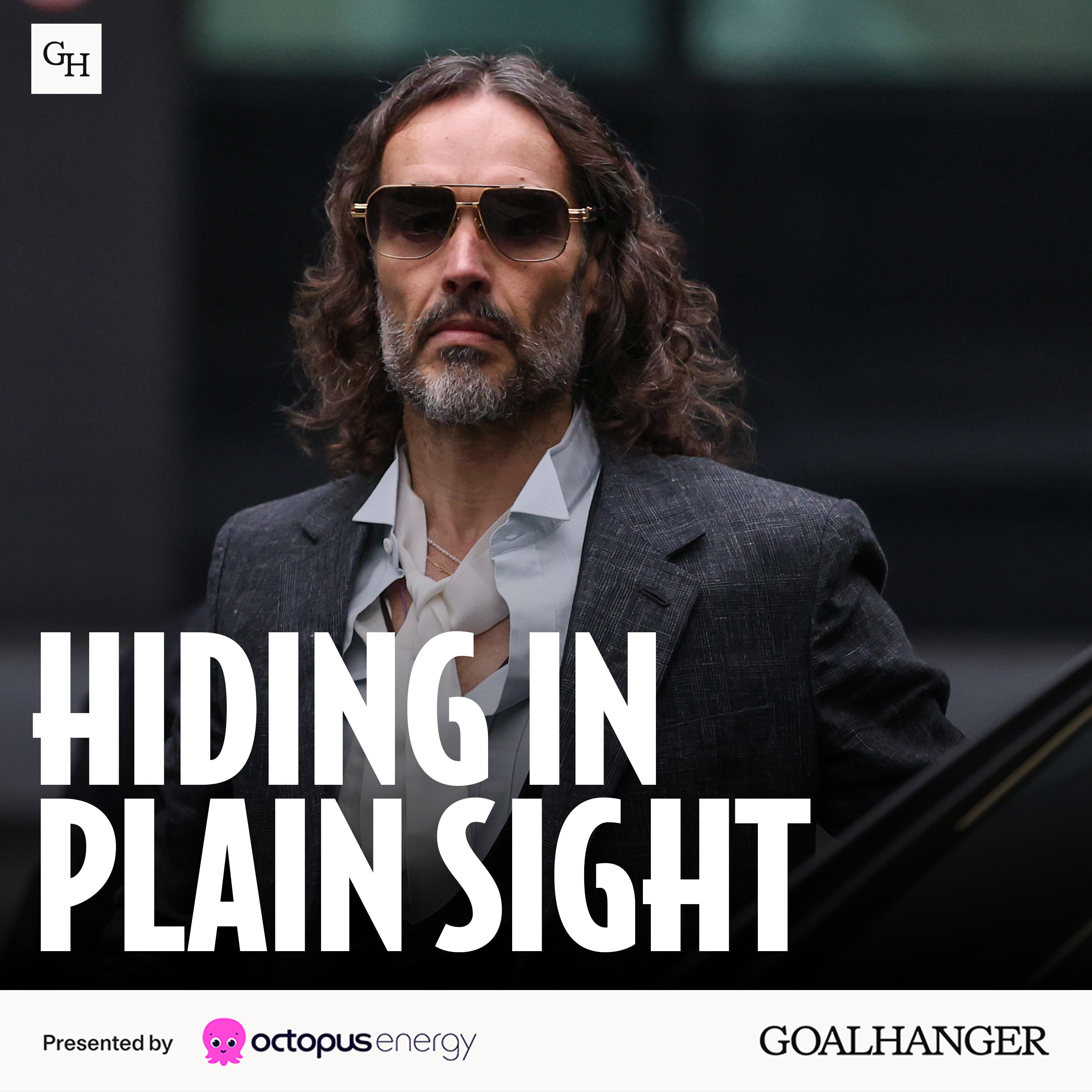
Richard Osman and Marina Hyde speak in detail about Russell Brand’s career, his ability to ‘hide in plain sight’ and the UK’s toxic media culture.
This episode contains discussion of sexual violence, which may be distressing.
If you’ve been affected by sexual violence, support is available for you.
rapecrisis.org.uk
survivorsuk.org
The Rest is Entertainment is brought to you by Octopus Energy, Britain's most awarded energy supplier.
Join The Rest Is Entertainment Club: Unlock the full experience of the show – with exclusive bonus content, ad-free listening, early access to Q&A episodes, access to our newsletter archive, discounted book prices with our partners at Coles Books, early ticket access to live events, and access to our chat community. Sign up directly at therestisentertainment.com
For more Goalhanger Podcasts, head to www.goalhanger.com
Video Editor: James Clayden & Tom McCagherty
Assistant Producer: Imee Marriott & Orla Phelan
Senior Producer: Joey McCarthy
Social Producer: Emma Jackson
Exec Producer: Ami Bennett
Filmed at www.westdigitalstudios.com
Learn more about your ad choices. Visit podcastchoices.com/adchoices