Ask ChatGPT


 The Rest Is Entertainment
5 Nov 2026 · 43m · 19 chapters
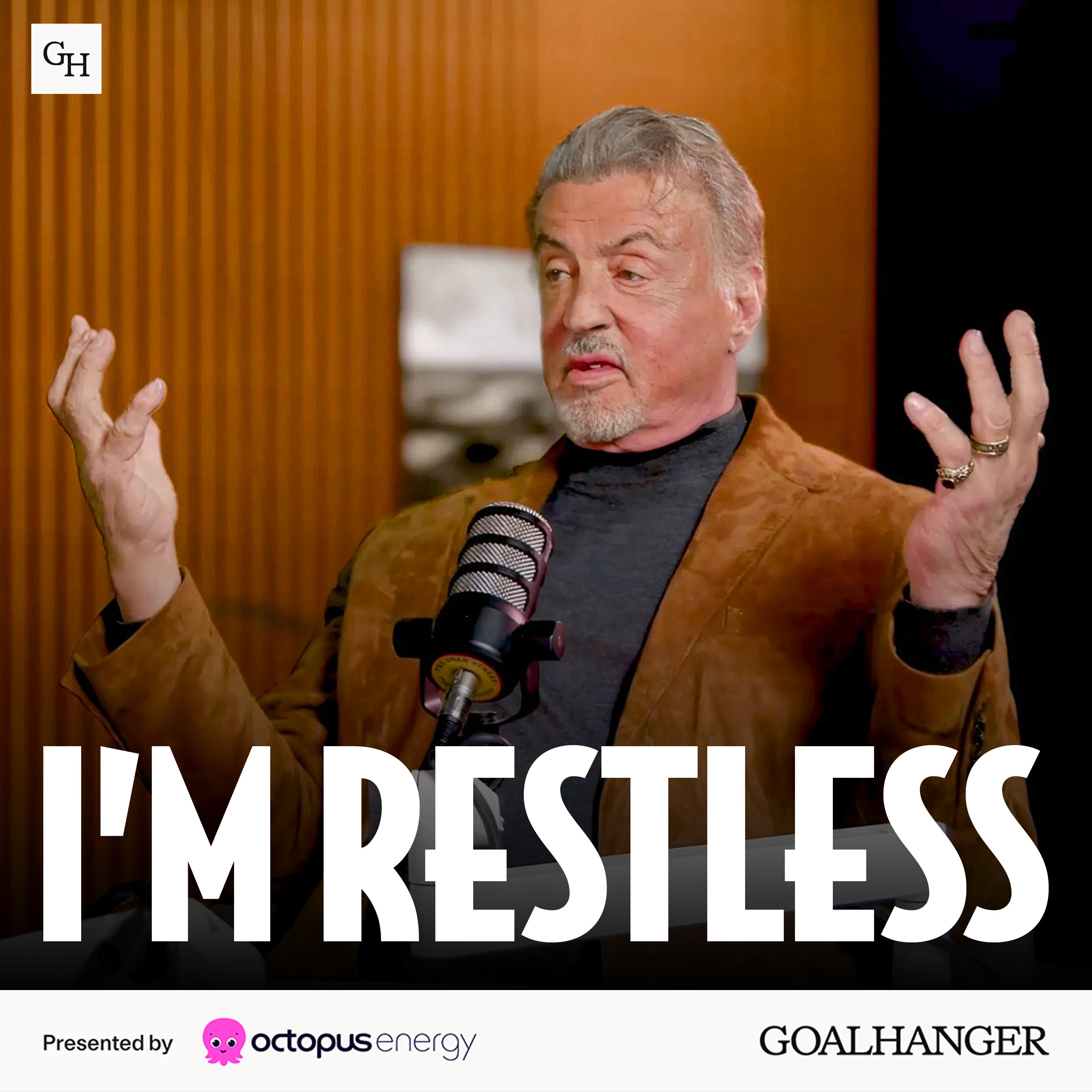
Marina Hyde interviews Sylvester Stallone on The Rest Is Entertainment, mixing film discussion with career philosophy, Hollywood business changes, and personal anecdotes.
Stallone says Rocky’s success came from taking a chance on an unknown; he argues modern studios won’t risk “zero followers” actors and that cinema needs immersive “safe spaces” to lure audiences back. He frames his Rocky/Rambo masculinity as darker, outsider survival rather than triumphant action. He credits Tulsa King’s humor as essential to Taylor Sheridan’s originally darker, violent character. He also claims Steven Seagal was “not invited” to Expendables and that Seagal lives in Russia.
Paddington 2 prison kindness compared to Shawshank; Stallone meeting Ali before writing Rocky; rivalry with Arnold Schwarzenegger escalating through on/off-screen competition; turning down Witness and Coming Home; Dolly Parton’s Rhinestone as a career-risk flop he loved.
Sylvester Stallone (main guest). No other guests appear as interview subjects.
Written by AI. May contain mistakes.
Discussion about the themes of prison in movies, specifically Paddington 2.
“I would watch the Muppets anything, but the Muppets Shawshank Redemption would be a great movie.”
Transitioning to discussing Octopus Energy's mascot, Constantine.
“It's only when you start moving money between currencies that you really think about the exchange rate, the fee, and what might be hidden away in the small print.”
Stallone reflects on his early experiences in Hollywood and kindness from others.
“It is my great honor to be sitting here with Sylvester Stallone, someone I have spent countless this hours watching and re-watching.”
Stallone discusses the new film about his life and his connection to the character Rocky.
“Well, actually, most, like I said, hello to a couple of stars.”
Stallone shares his thoughts on the current state of movie stardom and young actors.
“Does it feel strange that someone was dramatizing just that tiny period of your life?”
Discussion on how the action film genre has changed over the years.
“If you look at those characters, if you tried to make The Godfather today, you couldn't do it.”
Stallone expresses his views on the cinema experience and its challenges.
“would just fly by the seat of their pants.”
Stallone recounts his rivalry with Arnold Schwarzenegger and its impact on his career.
“I can't go to the cinema because people are like interrupting and the people around me going, hey, shut up.”
Explore the playful rivalry and camaraderie between Stallone and Schwarzenegger.
“Thank you very much for, you know, waking me up, lighting a fire under me.”
Stallone reflects on career-defining roles he turned down and their impact.
“Something that almost could have happened but then didn't.”
Discussing the creative environment of the past versus today's industry standards.
“The media was kind of like sleeping at the wheel, which is good.”
Stallone discusses his iconic roles and the portrayal of masculinity.
“I saw him, I was, this will be very obtuse, but James Dean was in East of Eden.”
Stallone shares insights on his box office failures and their reception.
“It was based on a French classic, you know, but it wasn't right for America.”
Stallone reflects on his experience making the movie 'Rhinestone' with Dolly Parton.
“and the audience is so, like, mortified that you would go that far, left or right, off center.”
Stallone discusses the difficulties of reality television and its impact on family dynamics.
“Natalie says, me and my sister really enjoyed the family Stallone.”
A discussion on the changes in Hollywood and the impact of streaming.
“Lately, I don't know if you've been seeing it.”
Stallone shares insights into his rivalry with Steven Seagal and their history.
“So it's sad because California is not, when I went there, I thought it was the ultimate.”
Stallone elaborates on writing for female characters and the unique dynamic in 'Rocky'.
“I saw one where he was having a fight with someone, but he was sitting in a chair while he was doing it.”
Stallone addresses common misconceptions about his intelligence and character.
“Yeah, you have certainly shapeshifted many times.”

Get the gist, explore an idea or ask about something said.
 Claude
On The Rest Is Entertainment, what are the key points of this episode?
Searching your listeningAutomatic transcript. May contain errors.
0:00The rest is entertainment is presented by Octopus Energy. Now, cinema is often very mean to some very cute characters. Yeah, you could be a Muppet, you could be a Puppet, you could be a cartoon, but in this world, a prison is still a prison and a heist is still a heist. Bad things can happen to you, but something very bad happens to Paddington. I know. This is real. It's real life, Richard. Paddington goes to prison in Paddington 2. He's framed for stealing a pop-up book. and somehow he's going to have to rise through that prison hierarchy as so many have had to before him. No, he manages to win over everybody with his kindness, his marmalade.
0:35It reminds me a lot of the Shawshank Redemption. Yes, it's very, very similar to Shawshank. Some key elements fortunately missing. Yeah, I would watch the Muppets Shawshank Redemption. I would watch the Muppets Shawshank Redemption. I'd watch the Muppets in anything. I would watch the Muppets anything, but the Muppets Shawshank Redemption would be a great movie. Yeah. Now, none of these films ever really has to choose between the joke and the stakes. Which rather suits Constantine, which is Octopus Energy's enormous pink fluffy mascot. Energy is about as real world as it gets, yet somehow he doesn't feel remotely out of place.
1:04Hi, this is Gary Lineker from Goalhangers. The rest is football. This episode is brought to you by WISE. It's only when you start moving money between currencies that you really think about the exchange rate, the fee, and what might be hidden away in the small print. Whether you're living abroad, paying someone overseas, or just trying to manage your money across borders, you want a fair exchange rate, an easy transfer and no surprises along the way. Wise keeps things simple. Wise is a smart way to move the currencies you need around the globe. It works in more than 160 countries and with over 40 currencies.
1:40Most transfers arrive instantly. Wise uses the mid-market exchange rate, like the one you see on Google, with no markups or hidden fees. So when money needs to move, you can see the rate, know the fee and get on with it. Join millions saving billions on hidden fees by downloading the Wise app today. Be smart, get wise, T's and C's apply.
2:23of fresh violet leaf, aromatic sage, green vetiver, and mineral salt. Shop holiday gifts at Macy's.com.
2:40Hello and welcome to this special episode of The Rest is Entertainment with me, Marina Hyde. It is my great honor to be sitting here with Sylvester Stallone, someone I have spent countless this hours watching and re-watching. Regular viewers and listeners of this podcast will know I'm an action movie nut, but you are so much more than an action movie star. In fact, in lots of ways, you never really fit the mold as an actor, most particularly because you've been a writer too. You are writer and star of the iconic Rocky, so iconic that a very buzzy movie about your struggle to make it is soon to come out.
3:15Your book, The Steps, It takes us with incredible candor into your very difficult childhood and beyond and onto your stellar career. And we are about to be given season four of your starring turn in Taylor Sheridan's Tulsa King series. So you stay a very busy man. I do. It's not like by design. It's just I'm restless. You are very restless. I want to say to you today that all the questions today come from our viewers and listeners. So if they jump around and are a little bit restless too, don't worry about it. Let me start with something from Helen McGill, who says, a few years ago, I had a new music artist performing on the Graham Norton show.
3:55And we asked if we could meet Sylvester Stallone, who was also on the show. Sylvester was such a delight and so gracious with his time. I wondered when he was starting out, was there anybody wonderful that was kind to Sylvester when he was getting Rocky off the ground? Not really. People treat you like rubbish. Well, actually, most, like I said, hello to a couple of stars. It was like Henry Fonda. He goes, don't be rude. Okay. I mean, it's that kind of a thing. So I get it. Of course, it was in a men's room, so he probably didn't like that. It was a bad choice of timing. You meet Henry Fonda where you meet Henry Fonda.
4:32Things like that. But I didn't get to meet that many people. I met Ali before I wrote Rocky. and ironically, I ended up using him as Apollo Creed. And then in Rocky III, I used his house. So I saw him every day. Did you? Yeah, I am. Which is the house in Rocky III? Rocky III is a big white house. That's where Rocky's living there. Yes. When he's lost sight of what made him great. Right. Yeah, with Trouble Lang. Okay, we won't go into all the books. Very good. Believe me, I've watched it so many times. Thank you so much. Okay, Kaylee Ann Ross has a question. She says, I'm so excited for I Play Rocky to come out in cinemas.
5:12The Rocky myth grows and grows, and I'm sure the film won't harm that. When did you first realize that your life story was picking up its own steam? I had heard there was a script circulating. I had nothing to do with it. And then one day I met Peter Farrelly, who ended up directing. He goes, do you want to be involved? It's not. It'll look like some fashion thing. or what is the word I'm looking for, some ego massaging kind of vehicle. I said, no, because the thing is, Rocky is fiction and it's wonderful, but your story is like a movie and it's real. So I said, well, I have at it. And then they showed me the fellow who was going to play me, and I thought it was me.
6:01It's unbelievable. I thought I would. And then my daughter says, really, check this out. She goes, oh, my God. It's the most phenomenal impression. A guy called Anthony Ippolito plays you in it. He gained weight. I mean, he looked the real deal. It's extraordinary. It is. Does it feel strange that someone was dramatizing just that tiny period of your life? Or do you think that there was something even in the writing of it that just is part of the Rocky myth? It is. But it would have taken too long. So I think they did it correctly because obviously it took years and they condensed it in a way that I think it's very commercial and also, I think, life affirming.
6:45Yeah, very much so. Now, Daniel Hernandez says this podcast is slightly obsessed with Glenn Powell. I admit this, who you hired for Expendables 3. Now, every chance, Glenn Powell always talks about the advice you guys gave him, saying that, you know, oh, the world is totally different now. Movie stardom's not the same as it was. Do you have confidence for young stars starting out in this industry? Oh, I do. I do because they're tech savvy. They get it. If I had my mentality the way I came up today, I'd live in a cave. I'm so primitive. We're back to like hand-cranking movies. But Glenn Powell, you know, he was very energetic.
7:25He had something. He had real confidence and bravado. And even my daughters, they just know so much about current media. It really is the bombarding aspect of it. So I think the stars today, these guys, they're absolutely reflective of the culture. You know what I mean? They're different. They're not like us. They look different. Like in the 70s, that was a whole other. If you look at those characters, if you tried to make The Godfather today, you couldn't do it. Because those actors don't exist. Yeah. You know what I mean? So it's time sensitive to have a career to be in the mainstream at that time.
8:10Because right now, Rocky would never be made. You think so? I know so. because no one's going to take a chance on an unknown in a boxing movie, which has notoriously been underwhelming. You know, it's just everything about it was lucky because back then studios every now and then would just fly by the seat of their pants. They didn't talk to, for example, the publicity department, can we sell this or how many followers does they have? They have zero followers and they go, okay, let's try it. Yeah, I can't imagine your Instagram during those years. It would have been very, yeah. But is there a sense that Glenn's right to some degree?
8:51And I do think there's something quite elegiac about the way he talks about the generation, your generation in particular of like 80s and 90s stars, that you can never go back to that and movie stars can never be that big again. He said that. Yes, I think so. And I think that people think that movie stars can never be that big again. Do you think that? No, there's a possibility. Of course, people can explode. You've got Timmy Shishalam, you've got him. But here's the problem. They're not making that many films. When I came in, they're doing 120 films a year, and now they're doing 20. Yeah. And it's a crapshoot.
9:25Do you have hope for more amounts? I do. I'm a big believer in it's a cycle, and they go through it, and then eventually it comes back. The whole thing is, can theaters create something? And I'm talking about a safe space, a quiet space, where people can actually watch films. A lot of these theaters, it's nerve-wracking. It's loud. It's expensive to drive there. It's a big deal. You see what I mean? It's real effort to get there. So I think you need something that attracts them. Like, for example, in Vegas, they have this fear. Yeah. And people will fly across the country because of the immersive experience.
10:04So I think technology is going to have to step in, and then people will want to go, oh, yeah, I can never see this at home. Do you still go to the cinema ever? I don't think I've been in like 20 years. Really? Do you have one in your house? Well, yes. Not a cinema, but I have a big... A nice room. Yeah, right. A media room. Yeah, I can imagine. I can't go to the cinema because people are like interrupting and the people around me going, hey, shut up. Okay. Can we talk about one of the stars that was always seen as one of your big rivals? John Pike says, did your rivalry with Arnold Schwarzenegger shape your career or did it make you take more risks?
10:50Yeah. You know, we were very confrontational. Tell me about it. Well, because you have two people arriving at the beginning of a different genre and we both want to be in charge of that genre. I never wanted to be an action guy, but I did First Blood. And I said, this is interesting because action films, if done right, is modern mythology. It's like what they used to do, you know, Iliad and the Odyssey and Hercules and Achilles. So I see this guy, and I can tell right away he's going to be a problem. You know, I just, we were at the Golden Globe Awards, and he's sitting there, and he's eyeballing me.
11:27And the guy is, no. He said, we call it stink eye. I said, okay. All right, I got it, pal. And then he wins. What did he win for that year? He wins best newcomer. I went, give me a break. For what? For like Conan or something? For Pumping Iron. Oh, really? Yeah. Okay. Pumping Iron. And I went, okay. And then we went for Rocky, and he's looking at me like, and I throw flowers on him, like a bowl of flowers. It's just like, I made like I was celebrating, like, yay, like that. Great. And the gauntlet was thrown and it was on. And how did it develop? Well, it developed because right then you knew we were both going to be antagonistic because that's who he is.
12:15You know, he likes to challenge. I like to challenge. And we're both physical. And now who's going to be like the vanguard, the leader in that genre? So I do Rambo. He does command. So we went back and forth, back and forth. on and off screen. It was very contentious, trust me, which I enjoyed. Yeah. Because the matter I made him, the matter made me, the more we fought to make the next action film, bigger knife, louder gun, more body count, this and that, better location. It just kept elevating. And you talked about each other to your agents, to people all the time. Oh, well, definitely. You know, he, I wanted to do a movie because it was so, bombastic, the confrontation, that a guy named John Hughes wanted to do a movie, that we were next door neighbors.
13:08I went, oh boy, that would be great. And we couldn't get together on that. We just, kind of a thing. And then we were in Planet Hollywood together. I was going to say, for people who don't know, this was a restaurant chain that you guys were the faces of. We had 40 ,000 people in London. Yeah. It was crazy. It was, it was, it's very hard to explain what an enormous deal this was. At the time. And he was part of it. I was part of him, Bruce Willis. And we couldn't get on the same stage together to make a presentation or a speech. I always thought you'd put it to bed by then, but no. Oh, no, no, no.
13:45It wasn't put to bed until like 20 years later. Tell me when it was put to bed. When he decided to run for governor. Yeah. Yeah, we went to the same cigar place. and he was there. I said, you know, enough of this. We're not in competition. He's not doing movies anymore. All right. Thank you very much for, you know, waking me up, lighting a fire under me. And he felt the same way. God. I know. Did you have a cigar together? Oh, many, many, many. We actually did a cigar magazine together. Oh, of course. Of course you would commercialize it. Are you still friends? Yeah, very much so. You know, we're always going to be competitive.
14:23there's just no coming that's the nature of the beast and i enjoy it i really do but we're not as um financially competitive anymore because like your movie my movie yeah yeah that's that's long did you literally used to compare box offices and things like that all the time he would do things like this i hope he doesn't mind like if i what my film didn't perform he go oh Sylvester had a movie opening this weekend. That's 40 % what they predicted. Maybe better luck next time. I went, oh, brother. I said, you're dancing on my grave here. And then I would come back. So it was almost humorous. It's something that'll never happen again, where you have two actors in the same genre literally going for it.
15:18on screen, off screen. And was there something about that era, the 80s and the 90s, that is so plugged into your own box office as that as a way of keeping score, which we don't see so much nowadays. No, no. It's the old ways of the better. Okay, well, Johnny Bart has one question to finish up this little section and says, if you had to be in one of Arnie's films instead of Arnie, which one would you choose and why? I'd like to play the predator impression. or the guy in Terminator 2 chasing you. That kind of thing, yeah. Oh, someone will sadly go back and make this now with AR. No, no, I'm kidding.
15:54Now, Francesca Young has a question. She says, what is the sliding doors moment in your career that still breaks your heart? Something that almost could have happened but then didn't. Oh, there's a few films that got away, like Harrison Ford did. Which ones that Harrison did? It was called Witness. Oh, with Kelly McGillis. Yeah, no. It was a big stupid mistake that I didn't do. You turned it down? Yeah. Yeah, I did. It was like dumb and it was a really good director. And then there was a thing called Coming Home that John Voight won the Oscar for and that was right after Rocky and I didn't think I could pull it off, which was a big mistake.
16:33You could have pulled it off. Thank you. You could have pulled it off. Now, I'm very sorry, but if you come to the UK, you have to have a few UK specific questions and we can't let escape to victory pass. How much about football did you know? Zero. You surprised me. I learned the hard way. Pelé broke my finger and everything. Oh, my God. Did Pelé do that to you? Yeah, he did. He did. I was sort of, oh, this doesn't look so hard. And World War II, the balls were like bowling. They're smaller, thick, brown leather. And it was steel-toed shoes. Can you imagine? Yeah. Steel stone. And so he goes, why don't you get into the goal?
17:19I'm going to tell you exactly where I'm going to hit. Like right there, you stand there, and you won't even see it. I go, pshaw, try your best. And he goes back, and he kicks it. And I hear a sound. And I put my hands up. God damn. And then, wait a minute. And there was an old World War II net. So it tears through the net. And we have prisoner of war bunkers with a metal grate over the window. Bang, broke the window. That's the power of his freak. Like a mule. Yeah. And like an idiot. Your body bears the scars. That's how good he was. Yeah. I mean, yeah, he was extremely good at football. Yes.
18:08Now, you got married in the Dorchester Hotel here in London Oh yeah, I did Yes, yes Do you love anything specific about the UK? Is there anything, do you like coming back? Are you an Anglophile? I love, listen I was here like at Tramps with Johnny Gold in the 70s So I was here like really as a young neophyte I loved it I had some amazing adventures here Did you? Yeah Ernie, you can tell us about No, I won't You just buried them No, those would die with me. Thank you anyway. But it was fantastic. And also there was a lot of actors that were going to the nightclubs and they were shooting The Shining or something like that.
18:48Rod Stewart would show up. It was all these guys. Actors had a better time then. Now they're all like up at 2.45 and doing workouts and praying and having showers and stuff like Mark Wahlberg. Everyone was drunk face down on an ashtray like this. Yeah. It sounded like it was a lot more fun. It was. It was. It was freewheeling and nobody was concerned. There was no iPhones, no this, no that. The media was kind of like sleeping at the wheel, which is good. They weren't so vehement about going after you. Do you think it was better for creativity, the fact that you could all mix and mingle and that you went out a lot?
19:23Yeah. Than it is now where it's incredibly businesslike. It was very important that certain actors, because quite often they're standoffish. Yeah. They are. It's just their nature to be solitary creatures as a rule. But when they're among themselves, things happen. Like I was with Andrew Garfield last night. I never thought we would hit it off, ever. And I thought, boy, I'd love to have him as a villain in Tulsa King because it would create a whole different dynamic. Instead of this big lumbering villain, maybe it's thoughtful. Maybe it's AI-driven. and maybe it's something that I have no idea how to stop.
20:04I would love to see this. I know. Okay, well, our next question from Matty T is about Tulsa King. Okay. Matty says, I'm obsessed with everything Taylor Sheridan touches, likewise. What drew you to work with him on Tulsa King? We have kind of an interesting relationship. He created it, but originally the character was very dark and violent and he just went out to Oklahoma. I said, can we temper it a little bit, maybe put him in prison? He has a daughter. His wife leaves him, and then he's betrayed. So he's thrown in Oklahoma. It's like banishment. And he goes, I don't know. I said, yeah, I think it'll work.
20:45And then we added humor. Yeah, the humor's the key. So he goes, you're on your own. Take it away. Enjoy. and so I write my character whatever scenes I'm in. Do you? Yeah, every one. And then Terry Winter kicks in and Taylor has his hands so full of all these other shows. It works out perfectly. So what's your take on his sort of interpretation of America? All those shows are so popular and they speak to an audience that lots of that audience feel has been left around. It's very, very important because that audience was ignored for centuries, it seems, since John Wayne. And he really mined a consciousness like, oh, we forgot about that guy in the middle of America.
21:37They were always writing about California and New York. But the middle of America, it's a different vibe. And so people were starving for it. It's like a simpler world and more, I don't know, confrontational. A more masculine world. Slightly. Yeah, that's been left. But that's been, I think it's really interesting. We talked about Harrison Ford earlier and very few people get two kind of hit series where they kind of define something. And he had those great swashbucklers, Indiana Jones and Han Solo. But you also had two series. You had Rocky and you had Rambo. Right. That also said something about late 20th century masculinity that was much darker and grittier.
22:22Tell me about that. And also is kind of counterintuitive to, like, the philosophy of Hollywood. You know, they looked at those characters as being antagonistic. And I said, no, no, he's just a, Rambo is like a broken soul. I saw him, I was, this will be very obtuse, but James Dean was in East of Eden. He played one son that Cain and Abel kind of thing that he was completely dismissed by the father. And I saw Rambos being completely dismissed by his country. Like I did what you asked. And then they throw him onto the scrap heap. And that's where I got the kind of the idea that people will sort of like him because he's just trying to like survive this, you know, like dismissal and loneliness.
23:16and, you know, obsolescence. So he wasn't really an action guy. He was actually running away from things. And it was different than these joyous, bombastic action films. It was a very dark kind of a film. You know, and then I thought, wow. I never thought it would be a disaster because I was the 11th choice. Nobody wanted to make this movie. Really? Oh, yeah. Yeah. Do you think when people find their screen persona and there's something about it and that you've played these outsiders, is there something in you that thinks, am I always an outsider because I play them so well? You know, when people ask me, do you have any advice on acting?
24:01My advice is you have to be a specialist. You cannot play comedy and Shakespeare and do this and do that. People get confused. But if you have a certain knack or like, let's say you're villainous or you're heroic or you're muscular, focus on that and be the best at it. Because we have, for example, in Tulsa King, we have the character of Bodie. He's a nerd. He says it. But that's his career. and he's played that many, many times and he's so good at it that no one can compete. So he didn't go all off and dye his hair and get a crew cut. He stayed with that image. And the way things are today, I don't know if actors are literally becoming specialists.
24:57In other words, they're trying to be very, very, what would I say, versatile. But that's risky. Do you still feel like an outsider yourself in life? Oh, yeah. It never leaves you? Well, it served me well because I was never distracted. I felt coming up, there was a window of time, at least in this business, to make an imprint. Usually, by the time you're 25, if you haven't made something, it's doubtful. I was 29 and a half. I was like there. And I said, you cannot have a social life and a professional life. If you're trying to get the professional life, if you're trying to acquire a goal, you can't diversify.
25:49You can't splinter off your time and go out and party and then think you're going to come back the next day and have the same momentum. You're not. So I thought about being very, very dedicated to my solitude because I just wanted to say, if I never made it, I left no stone unturned.
26:19Shaq here. What's it like to buy a car from Carvana 100 % online and get it delivered to your door? Let me tell you. Your car is here, Mr. Shaq. Thank you, Mr. Carvana Guy. Can't wait to take it for a spin. Only the best for you, Mr. Shaq. Hey, have you always been so big, tall, and handsome? Not always. I was 6 '10 once. Seven days to love it or return it, Mr. Shaq. Not that I would. You never do. No, I never do. So buy your car today on Carvana. Delivery fees may apply. See our seven-day return policy at Carvana.com.
26:57now people are always good at talking about their successes but i think they're often interesting when they're talking about their failures and zetika asks you've had a lot of hits but also some box office failings how did you feel during the opening weekends of oscar or stop or my mom will shoot yeah you know i think the public blew it i'm serious i really do Don't worry, idiots. I'm serious. Forget it. Just that was a good film. Everybody in it was good. It was based on a French classic, you know, but it wasn't right for America. French farce did not translate. And I thought it was fantastic, but the audience, no.
27:40But it was really a well-made film. I'll tell you, I've done some like turkeys. Which do you think are your worst? The worst of the worst? Like Avenging Angelo. Oh, yeah. Okay, I've seen that. Now, Sopper, my mom will shoot. They'll go. I like that. It's not bad. Yeah. But my favorite movie is the one where you take the biggest risk of all, and the audience is so, like, mortified that you would go that far, left or right, off center. When I did the movie with Dolly Parton. Someone's asked about Rhinestone. By far. the favorite movie of all time besides Rocky why because here I am Rambo here I'm Rocky and then I decide to play this complete lunatic taxi driver who's horrible at singing who's completely out of his element who goes to the deep south and he's talking uncle lug nut and dogs and donkeys and I'm saying this is a career killer this is I'm enjoying it she she's a magical person No, I'm telling you, she's a unicorn.
28:48And I enjoyed every second I spent with her in that film. And the fact that the audience didn't like it, to me, it's okay. Because I really worship that time of doing something incredible. Like she's a great singer. So she goes, hey, let's sing live. I go, whoa, you do that. Let's get in a boxing ring and try that live. You know, so she talked me into singing. She brought a studio into the studio. And I went, oh, I'm dead. I'm like, it's like a croaking frog. But I went for it because she wanted me to. I liked it. I loved it. And did you develop a lifelong friendship from that? Oh, God, yeah. I'm talking tight.
29:35Yeah. Oh, yeah. Like crazy tight. Because she was a writer, an artist, a cerebral. She was not what you think she is. That was a performance to entertain people. You'll never see that again, ever, in a zillion years. There won't be anyone like her again. No, God, no. Plus, she's a philanthropist. She gave millions of dollars in books. Where are you going to see that? That's a different generation, you know. That is the passing of the old order, for sure. Yeah, it really is. I'm going to get onto reality TV now. Thank you. Yes. Natalie says, me and my sister really enjoyed the family Stallone. Likewise, I watched every episode.
30:16Thank you. And we are sad that it won't return. But would you recommend doing reality TV to anyone? I should mention that during this, your wife did attempt to divorce you, but the divorce didn't happen. No, no, no, no. Reality TV is stunningly difficult because quite often you have to make it up. and my daughter is your hair and makeup for hours and then this doesn't work come back and we'll do a bowling alley scene and you get mad at your daughter and then you spank the dog I mean you just keep making this stuff up and they hate it they they found that to be so insincere and also so crime let's say brutal yeah it really was but what was it like for you to be in something that's a completely different medium from anything you have done before in your career.
31:09I sort of enjoyed it. Did you? Yeah. Yeah, because I just, you know, I had nothing. I just felt like we had a very animated family and it would be fun to see it because what you saw is exactly the way we live. It's like everyone's got a comet. It's a very noisy family. Yeah, it really is. But it's, I don't know how to Kardashian. I really don't know. Really. It's a lifestyle. you give up any sense of privacy or sanctity. I mean, people in your bathroom, you're washing, brushing your teeth. It's really intrusive. It becomes a lifestyle of voyeurism. It must have been hard for you with your outsider thing.
31:50Yes, it was. But I was trying to do it like I thought, oh, let's do a family thing. This will be the ultimate family album. Yeah. I don't know. I think we did two seasons, maybe that was it. Yes. Was it two or three? I can't remember. But yes, it was, I suppose, speaking of other newish mediums, Jay Lewis says, have you been approached by people about taking your likeness for AR use in the future? Yeah, I hope they do. You hope they do? Yeah. What am I going to do with it? Do you want a paycheck now? Yeah. Why not? You know, I'm serious. The jury's out on how intrusive it can be in the arts. Right now, for example, it's a tremendous lifesaver economically for young filmmakers because literally you could turn this into the ocean like this cheap.
32:40Lately, I don't know if you've been seeing it. It's so overwhelming. On the Internet, on Instagram, there must be 100 videos of me age-appropriate doing these stunts flying off a roof on an ostrich. I'm going, that's unbelievable. Like, how do you create all that on a laptop? When I'm directing a film and I just want to do a crowd scene, it takes six weeks and there's a meticulous movement. And, you know, oh, my God. So I can't imagine what's coming down the pipe. One thing that isn't coming down the pipeline is your role in the Trump administration, which you just found out from watching. You were watching TV, is that right?
33:25and you were being announced as a Hollywood envoy. Don't get me in trouble here. No, no, no. But that's what happens. So I'm watching TV and he goes, President Trump is appointed Sylvester Stone, Mel Gibson and John Boyd, ambassadors to Hollywood. I go, that's news. I'm sitting there in my underwear going, okay, let's head to California. And I had to say, this won't work. Well, Anthony Scaramucci, who also does a podcast for our company, And he also found out that he was taking a job by watching, by seeing it announced on the news. Yeah. But he ended up giving 11 incredible days public service to the United States federal government.
34:05Now, Harry Slade says you turned down that special advisor role. But how would you, with almost 60 years in the industry, try to save the town from itself now? It's almost impossible. That's what I was telling them, that we have moved so much production overseas. First they moved it to the East Coast, New York, New Jersey. Now it's in Ireland and Greece and here. Huge amount here. That's like turning around so soon. That would take years and years. So it's sad because California is not, when I went there, I thought it was the ultimate. I thought I was in Nirvana. This is it, palm tree sun. So if you're going to suffer, this is the place to be.
34:52You know, Supper with a Tan, it's great. But it's different. Now it's sad. Do you think that Hollywood is making films for that Taylor Sheridan audience? No. No. No, no, no, no. But the beauty of streaming is they're fast and they're nimble and they can literally put a show on the air in a matter of weeks. It really is that fast. and now they're designing them for viewing pleasure, extended stories, and I love it. I mean, if you're going to make mistakes, you can, like, for example, on the first season of the Tulsa King, that's a good thing that I didn't like. You can fix it. Third season, second, you know, it goes on and on.
35:35Can't do that with a feature. No, it's gone forever. Now, speaking of interesting pathways, Neil Tuttle asked, I would like to ask this too, because I'm obsessed with Steven Seagal, who turned down the Expendables, right? Please. You never asked him? Please. He tells everyone he turned it down. Please. I want to know so much more about this. No, let's just say he was not invited to that party. Okay. Yeah. Now, when was the first and last time you spoke? Oh, my God. Really? He turned us down. Yeah. How about I tell you he was begging to be in the show? Oh my God, I'm so here for it. Begging, begging.
36:14Yeah, begging. I can imagine. Okay. But when was the love first and last time you spoke to him? I shouldn't get involved with it. No, don't get involved. He's involved with it. He lives in Russia now. Why lie like that? I don't know. I guess he wants to be in demand with people other than autocrats, but, you know, I'm not sure how you run the franchise. Yeah, no. I got nothing against you, but we've had our moments. Please tell me. Tell me about our moments. And he had a real interesting thing going in. Then he took his life in that direction. And I don't even know if he does action films anymore.
36:49I think he lives in Russia. I saw one where he was having a fight with someone, but he was sitting in a chair while he was doing it. So I think there's that. He was on a sort of throne and he was fighting someone, but he was sitting down to do it. I've got to try that. Yeah. I mean, it's a look. It is a look. It's a nice perk. I think you get to a certain stage in your career. It's a bit like when you see Mariah Carey being carried on to stage and she just does the whole song off a chaise longue, which the men are carrying. It's a bit like that. I think he sort of sits in the throne and fights like that.
37:20It's a, you know, tastemaker. I like it. Yeah, he occasionally loses at judo to Putin. Thank you. Now, can I ask you a few questions about writing? Because it's so interesting that you are... Yeah, writing is a very fascinating profession. Well, Chloe Templeton says that Rocky and Adrian's relationship is so awkward and tender. I really do think this. It's not really replicated. It's so unusual. It doesn't feel like a conventional movie romance. How did you find the rhythm between those two? I studied the character. You see, there's a certain way that Talia Shire, Adrian, talks and moves and moves her hands and gestures in her eyes.
37:59And I said, I have to write according to this kind of body English. So it all flowed. Like she would be able, she'd be looking down and she would say dialogue on the way up and then finish it on the way down. See what I mean? And I like writing for women. I really do. It's kind of weird, but I do because I'm so used to writing for like alpha dogs. Yeah. There was just, to me, it's a great challenge to try to get into the female mind, which I've been very unsuccessful. But the challenge is still there. And I thought, okay, Adrienne, she's so gentle and nice. It's kind of an easier approach. But that kind of love story, it had to be awkward.
38:46Yeah. You know, you have two totally broken people, but they're magnetically pulled together somehow, the wounded helping the wounded. So I loved it. She's great. And Maxine C, I suppose this is about kind of passion projects, impossible projects. Is it true that you've had a script about Edgar Allan Poe from the 1970s that's still in pre-production and why did it never get made? Okay this is interesting you bring this up because it still bothers me. The script is like 53 years old so I rewrote it two weeks ago. Yes I did. No way when did you first when did you first write it? I wrote it in 1971.
39:30And you're Rewriting it? Yeah. Okay. That's a writer. Yeah, I can't give it up. But the culture has changed so much that I'm not sure that it would make a feature anymore. I don't know if the audience, first of all, did they even know Poe and his works? So I thought, you know, I've got to rewrite it for a gothic comic. Take the comic, and if that works, then you move it to, like, Sin City. you get a guy, a partner like Frank Miller. Oh, I see. So you're doing like a graphic novel. Yeah. That's cool. See what I mean? Always changing the format. Yeah. Why not? Shapeshift. Yeah, you have certainly shapeshifted many times.
40:14Thanks. So I'm going to finish with our final question from Ollie Best. He says, what's the one thing that people think they know about Sylvester Stallone that's completely wrong? Oh.
40:28People think that, and it's always been a bone of contention, that because of the characters I played, that I was shallow and not very bright. And there's nothing that triggers me more than the word stupid. You know, I grew up hearing that. And the thing is, I consider myself very, very cerebral. I really do. I'm not like, okay, let's go out and hunt deer. Let's go fight a bear. I'm like at the library reading that, getting involved in other people's adventures. That's been my key. So being taken as shallow, let's just say, is something that people think, and that's a real gross interpretation.
41:24Well, I also believe you could fight a bear. Right. I want to thank you. Thank you. I thank you so much. It's been such a privilege to talk to you. I've been a fan as long as I can remember. Thanks so much. You're very good at your job. Thank you very much. Appreciate it.
41:43Thank you.
How did an unknown actor convince Hollywood bigshots to make Rocky? What was really behind Sly Stallone’s legendary rivalry with Arnold Schwarzenegger? And, how did football legend Pelé break the actor’s finger.
In this very special interview, Marina Hyde and Sylvester Stallone discuss his extraordinary career. Including his biggest regrets, and roles he wishes he took.
Sylvester reflects on half a century in Hollywood, answering why the industry has stopped taking risks, working with Dolly Parton and his ongoing hatred of Steven Seagal.
The Rest is Entertainment is brought to you by Octopus Energy, Britain's most awarded energy supplier.
Join The Rest Is Entertainment Club: Unlock the full experience of the show – with exclusive bonus content, ad-free listening, early access to Q&A episodes, access to our newsletter archive, discounted book prices with our partners at Coles Books, early ticket access to live events, and access to our chat community. Sign up directly at therestisentertainment.com
For more Goalhanger Podcasts, head to www.goalhanger.com
Video Editor: Louis Mealing
Assistant Producer: Imee Marriott
Senior Producer: Joey McCarthy
Social Producer: Emma Jackson
Exec Producer: Ami Bennett
Learn more about your ad choices. Visit podcastchoices.com/adchoices