
- Podcasts
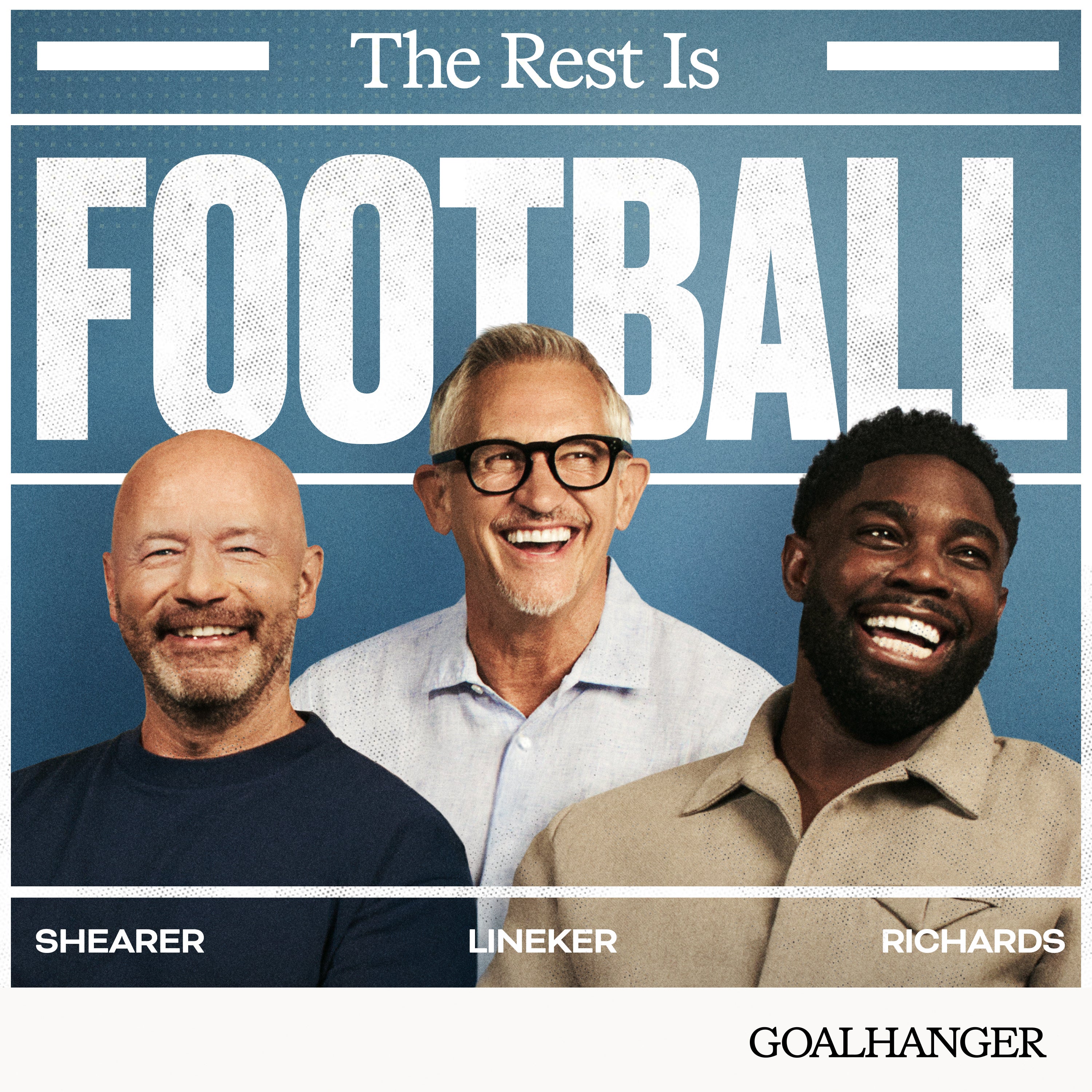
- The Rest Is Football
- Juan Mata Exclusive: I Changed My Mind In A CL Final Shootout
The Rest Is Football20 Nov 2026 · 1h 4m
Juan Mata Exclusive: I Changed My Mind In A CL Final Shootout

 Add vo to ChatGPT or Claude to ask about everything you hear
vo listened to this episode to put together the overview and transcript, so there may be the odd mistake.
In short
Juan Mata announces retirement and reflects on his career—choosing the right moment to stop, major international and club highlights, and lessons from different managers and leagues.
Guest backgrounds
Juan Mata is a Spanish midfielder/winger who won World Cup 2010, UEFA Euro titles (2008, 2012), and major club trophies including Chelsea’s 2012 Champions League, plus Europa League, FA Cups, Copa del Rey, and titles in Turkey and Japan. He also discusses his father’s football background and his own youth development in Spain.
Key claims
He stopped because he wanted to finish on a high and felt it was “enough,” not because of physical decline. He says Spain’s technical edge comes from constant street football plus strong academy coaching, and that Luis Aragonés changed Spain’s belief. He credits Ronald Koeman for trusting him at Valencia. He emphasizes respecting fans and clubs, and argues academies should support players who don’t make it.
Notable examples
Spain’s 2010 group-stage pressure vs Chile; Mata scoring in the 2012 Euro final; Chelsea’s 2012 Munich comeback and penalty shootout where Peter Cech saved Mata’s kick after Neuer’s left-dive tendencies.
Transcript
0:00Hi, this is Gary Lineker from Goalhangers. The rest is football. This episode is brought to you by WISE. It's only when you start moving money between currencies that you really think about the exchange rate, the fee and what might be hidden away in the small print. Whether you're living abroad, paying someone overseas or just trying to manage your money across borders, you want a fair exchange rate, an easy transfer and no surprises along the way. WISE keeps things simple. Wise is a smart way to move the currencies you need around the globe. It works in more than 160 countries and with over 40 currencies.
0:35Most transfers arrive instantly. Wise uses the mid-market exchange rate, like the one you see on Google, with no markups or hidden fees. So when money needs to move, you can see the rate, know the fee and get on with it. Join millions saving billions on hidden fees by downloading the Wise app today. Be smart, get wise, T's and C's apply.
1:24night two only in theaters December 4th. Are you looking for support in your weight management journey? ZepBound Terzepatide may be able to help. ZepBound is a prescription medicine used with a reduced calorie diet and increased physical activity to help adults with obesity or some adults with overweight who also have weight related medical problems to lose excess body weight and keep the weight off. ZepBound is approved as a 2.5, 5, 7.5, 10, 12.5, or 15 milligram injection. ZepBound contains terzepatide and should not be used with other terzepatide-containing products or any GLP-1 receptor agonist medicines.
2:03It is not known if ZepBound is safe and effective for use in children. Don't share needles or pens or reuse needles. Don't take if allergic to it, or if you or someone in your family had medullary thyroid cancer, or if you've had multiple endocrine neoplasia syndrome type 2. Tell your doctor if you get a lump or swelling in your neck. Stop ZEPBound and call your doctor if you have severe stomach pain or a serious allergic reaction. Severe side effects may include inflamed pancreas or gallbladder problems. Tell your doctor if you experience vision changes before scheduled procedures with anesthesia.
2:35If you're nursing, pregnant, plan to be, or taking birth control pills. Taking ZEPBound with a sulfonylurea or insulin may cause low blood sugar. Side effects include nausea, diarrhea, and vomiting, which can cause dehydration and worsen kidney problems. Talk to your doctor. Call 1-800-545-5979 or visit zepbounce.lily.com.
3:09Hello and welcome to The Rest is Football for a very special episode. Joining us today is a man who after two decades of gracing the beautiful game has decided to hang up his wonderfully worn boots. It was quite the career. He won pretty much everything. A World Cup, the Euros, a Champions League, FA Cups, Europa Leagues, a Copa del Rey, a Turkish Super League and a J League. Worked it out? It is, of course, Juan Mata, a man I would say who transcends his sport, that rare footballer that is universally popular. Juan thank you for sharing with us such a significant moment for you difficult decision?
3:49well yes and no I think of course yes because it's you know to stop something that you've been doing 30 odd years something that you love to do and that has given you so many happy moments is tough but also I'm really thankful and grateful and I think you feel it when it's enough you feel when you're excited for the next step in your career in your life and so it hasn't been difficult, the actual decision. Maybe in the future I tell you, well, I find it so tough. But I'm really grateful for what I've lived through football. Emotional at all? Yeah, some emotional moments when you actually realise this might be my last game.
4:28That's what happened actually in my last game in Australia. I didn't know if it was going to be my last game, but I kind of felt it. My family was there. Everything was perfect during the season. So inside of me, I thought maybe this is it. I wanted to come back to Europe and give it some time to the decision. But I think I already knew. It happens to all footballers. It has to. Was there a moment perhaps on the field where you started to think, my powers are waning a little? To be fair, I've been lucky because it hasn't been a physical challenging decision in terms of I couldn't move anymore.
5:05Neither mental. but over the last years of my career I've been wanting to fall in love again with the game I had great experiences but sometimes it became routinary so I wanted to feel I enjoy this game again to finish and thankfully that happened last season at Melbourne Victory You wanted to go out on a high? I wanted to live in a moment where when I look back I was going to say that was the right moment to do it I didn't push it a lot farther I couldn't move myself on the pitch that's why I stopped and thankfully I didn't stop because of an injury that sometimes happens so I think it's a good feeling to be in charge of when you finish and I wanted to do it that way And family and friends what did they think of Yeah I mean they knew it had to come at some point of course they were trying to convince me not to and keep playing one more season because they saw how happy I was last year.
6:07At the end of the day, it has to be your own decision and I felt inside of me that I wanted to end with that positive feeling. That's quite a career, haven't you? I mean, an astonishing career, long career, successful career, almost everything. When you look back now, perhaps that young lad who started to kick a roll around. I mean, it's been way more than I ever dreamed. So my dad used to be a professional football player and he played in... Did he play like you? Yeah, he was left-footed. He claims he was better than me. Probably he was. I don't know. But he was a proper left-winger at the time where left-footed players were playing on the left and not on the right coming inside.
6:49So he was a proper winger. He was for sure better than me at one against one and he was quicker than me. He was great at free kicks. I tried to live up with his standards. And he played so many years in second division but he never made it to La Liga, to First Division. He promoted, but he never played. And so my only dream was to play one game in La Liga. To be your dad. Yeah. To make him happy through me, let's say. Anyway, that was my family dream. And I was lucky to do that when I was 19 for Valencia against Almeria. And so everything that came after that, it has been a bonus. And it has been a lot.
7:32A lot of bonuses. I want to come to your career shortly, but firstly, I want you to look back. I mean, I mentioned some of the highlights in my introduction too, and there have been many. What are the moments that stand out for you? Well, I think the first one is my debut with Valencia when I fulfilled that dream. Of course, the first goal, all these things. But when you really think about something that really changed my life or our life for that group of players, was the World Cup 2010. It was the first time that Spain won the World Cup. So coming back to Spain and celebrating with everyone was something that I will never forget.
8:15Champions League with Chelsea, also the first time for the club. Something, you know, that night in Munich was just incredible. Playing against Bayern Munich in Munich. My first game with Manchester United, you know, the feeling for to play at Old Trafford at home is incredible. And of course, the trophies we won there are most of all, and most, of course, not only the trophies, but the ability to, you know, to live life in doing something that you love, to travel the world, to get to know different places and to make so many people happy. I mean, sad sometimes, but most of the time, thankfully happy.
8:56And, you know, football is incredible. way of living and if you become a professional football player it's a dream. How do you think you've managed to be universally liked? I mean because I generally think you are. I mean I don't know anyone that's got a bad word to say about you Juan. And I mean obviously you've done amazing things and we'll come to those later with the charities and etc. But as a footballer it's quite unusual that you can play for clubs like Chelsea who Manchester United is in this country and still fans of opposing clubs will respect you and say he's a good person. I think at the time when I was playing for Chelsea and everything was going great and suddenly it didn't go so well for me and I stopped playing, I think everyone or most of the fans understood that maybe the best for my career was a change.
9:48To be honest, I'm really thankful that every time I came back to Stamford Bridge, everyone was so nice to me in the stands and clapping to me. So I don't know. I just try to respect every club, respect the history of every club, respect the fans. For me, football as we know it without fans means nothing. So I always try to be respectful to every fans of the clubs that I played with. And I don't know if that resonates with people. Let's go back to the start. I mean, you're obviously influenced by your father being a footballer himself. Was it always football for you as a kid? It was, yeah. All I can remember is me going to his games, his trainings, going in the dressing room, playing football at home with my sister.
10:36So my mom, my sister and me, we always travel within Spain because of my dad's different clubs. So as far as I can remember, I was with a ball at my feet. And you know how football, it's like a religion in Spain. You play everywhere, anywhere. So all I can remember is me playing with the ball. And that's something that Spain has over everyone else at the moment, that technical side, the thoughtfully intelligent side of the game. Why do you think Spain has the edge in that sense? Well, I think it's a combination of things, of course. Like I told you, we are born with a football in our feet. We play all the time in the streets, in the school, everywhere.
11:18We also have a great setup. We have great coaches in the academies. They really make you understand the game. They can help you and they do help you to become a better football player. So the pursuit of becoming professional is really good in Spain. We have great facilities to play football. We are kind of street smart also, which helps with competitiveness and I think the whole combo makes Spain great. It wasn't always like that in Spain. I spent three years there in the mid-80s, and it was incredibly aggressive. Yeah. The Butcher Bill Bowne, all these characters. You know, you look at Maradona's time, the big punch-ups at the end of games, crazy stuff.
12:02I think it might have been the turning point, and it might, you know, I wonder if it was the era when Cruyff came in and changed things and the Masse. Certainly that is a pivotal moment in Barcelona's history. but I think possibly Spain followed suit in that sense of producing really good I mean they were always good technical players I mean you and Butch again you and Michel great players in that era but how they are now how they've been the last couple of decades since your time as well I mean it's the streets are high Yeah I think the big change was actually when we went through the quarter finals we had this challenge always of arriving to quarter finals and then losing against the big countries in football but like England now yeah exactly so we we beat Italy in the 2008 and so Luis Aragonese was the national coach there and I think he changed the dynamic of you know he made everyone believe in themselves like we can beat big historical countries in football and we can make it happen through our small quality players and he changed the dynamics I played for him as well did you yeah Barcelona for one year he was amazing yeah and what character yeah And did he still do that thing where in the dressing room he'd get everyone to touch the ball?
13:17I didn't play for him. I came with Del Bosque in 2010. But they told me, my generation told me, that he made all kinds of things in the dressing room. In terms of how to motivate and all that. But I think he was the start of what we're seeing right now. And then, of course, Vietemite Del Bosque took over and we won what we won. But now it's nice to see how the new generation has actually been the best in the world. For me, by far. The last, I don't know, you've won so many major trophies now, Spain. It's been impressive. You were part of that first World Cup win. You mentioned it earlier. I have to say that that must be just to live through winning a World Cup and be part of that squad must have been so special.
13:59It was really special. I mean, for different reasons. The first one is that I was 22. So I always say that it was the best thing that could happen to me to be in that national team. but it was also challenging because it was difficult to play. I mean, you had Andres Iniestas and Xavi Alonso and Xavi. Everyone was 25, 26 at their peak. So basically I was there learning a lot, but also experiencing everything and I managed to play. But, you know, to be in a tournament where you start feeling, and we started the first game losing with Switzerland. So there were a lot of critics. We were, of course, the European champions at the time.
14:40But I remember the third game that we played in the group stage against Chile. I've never felt so nervous in my life. And I think everyone was the same. I remember going in the bus to the stadium, total silence. Because you lost your first game, didn't you? Exactly. So we had to win. At the end, we could have drawn that game, but we had to win against Chile, Marcelo Bielsa Chile, which is very difficult. and so I remember Vicente El Bosque inspirational motivation meeting and you know it was a tough moment because it could have been a big failure and so we won that game and from there you start feeling something special can happen here but what happens in the World Cup and in the Euros is that not always the best team wins you need to be lucky at certain times and I thought we were too Winning the Euros in 2012 you'd already obviously defending the Euros because you won it in 2008.
15:37You were part of the squad, of course, for the World Cup in 2010. Coming on and scoring in a final, when you blitzed Italy, I was at that game. Yeah. I mean, Spain was so good that day. I think that was our best game, actually, because we didn't play that good during the tournament. But of course, we managed to win and win. But that game, it was nice that we played our best football. And yeah, I remember, first I remember being warming up for too long I didn't think he was going to get me on yeah exactly I mean I don't know about people I mean when you're on the bench in a big game you're just desperately especially in the final and it's 3-0 and you want to be part of that and I was just I didn't think I was going to come in but then you know he called me thankfully and I came in trying to catch his eye that's the other reason yeah yeah I went to drink so many times I'm still here anyway I'm thankful to him and he put me in and then the first two minutes or something like that I scored a pass from Fernando again no wonder he's your friend he told me he passed me because he heard me he couldn't see me actually he was one against one against Buffon and he had a tendency of going for it himself as a striker but I screamed as loud as I could and he passed me an open goal but that moment of scoring the fourth goal in the final my family was there everyone was there and it was kind of closing the circle of that 2008 10 and 12 and It feels really nice to think about that memory.
17:05Did that make the memory for you more special in 2012 than 2010 because you didn't feature in the World Cup? I never thought about that. It's difficult to be honest. I think in the World Cup it's just up there and nothing can match it, even if you don't play the final. It's funny because when Iniesta scored that goal, I was on the bench. and if we had GPS's at that time that was my my highest speed for sure celebrating all of us we went to that corner and I don't know what I hit but I tell you it was the highest in my career but it's difficult to compare but I mean the celebrations of both tell us what tell us what I mean we don't know well there's hardly anyone even I'm not old enough to remember 66 I was five years old at the time tell us what I mean the feelings and the celebrations must have been?
17:57It was not only the celebrations, of course, in South Africa, in the stadium, and realizing what have we done here. It was the flight back straight away. Straight back? Straight back, yeah. So nobody slept in that flight, of course. Pepe Reina was making sure that the music was loud enough. Then we arrived the next day, and of course we do all these royals, and we visit the prime minister, the president, and everything. And then we do the parade with the bus, I've never seen so many people in my life together. It was challenging times in Spain financially. And we managed to bring everyone together celebrating the first World Cup.
18:36And I remember landing with the plane. And so the motorway, everything was stopping. Everyone was out of their cars in Madrid, through the streets. You could not see pavement at all. It was all in the windows. It was millions of people on the street. I get Guzman talking about it. And so we had a big party there in the stage. Then we went for dinner and I think a nightclub or something all together. Then the next, we didn't, I mean, it was a day that it was not 24 hours, it was 70 hours. And I slept for four days after that. But it was, that was the best part of winning, coming together with our families and with everyone in Spain.
19:15I think, I still think you're the best team. And I think they were the best team this year as well. Yeah, yeah. Yeah, I mean, France, of course, had an incredible squad, but I think the best game of the tournament was Spain against France because France couldn't do anything. Spain was much better than that. You were at the Real Madrid Academy. Yeah. And then you came through Castilla, the kind of Madrid's second team. You obviously then moved to Valencia. You didn't feature for Real Madrid. No. Was that at the time difficult, disappointing? Yeah, it was difficult. I mean, when you go to Real Madrid Academy, your dream is to play in the first team of course but after a couple of years you realise how difficult it is to play for a club like Real Madrid with all the big signings the international players that come to the club it's sort of a different approach isn't it at Real Madrid to Barcelona Barcelona they seem to rely on the academy and amazing the players that they bring through whereas Real Madrid very much signing the big stars the Galacticos which makes it tougher for a young talent like yourself to actually go through and you had to go to Valencia to find it.
20:24Yeah, at the time they had a combination of Galacticos, which are the big names, and some players from the academy. But yeah, I couldn't find my spot there and the opportunity of going to Valencia arrived and I was only 18. Valencia at the time, which is sad to say now because Valencia at the moment is so sad to see, but at the time they were the third club in Spain for me, by far. They were ahead of Atlético Madrid in terms of winning trophies and being third after Madrid and Barcelona. So it was a really exciting opportunity for me to play Champions League, to feature regularly in a top club.
20:59Do you think people underestimate how difficult it is to be a very young man trying to find a career in football? It's so competitive. So many young players that are really talented never make it. Yeah. Most don't make it. That's the thing, right? The vast majority. 99 % of the players that we were in And in that team, when I was 15, 16, 17 in the Real Madrid Academy, didn't make it to La Liga. Some they made it to professional football in second division and second B. But it's very difficult to actually be the one or the two out of 25 that make it. And that's football, of course. That's the competitiveness of wanting to become a professional football player.
21:39But I think there is more work to be done there in academies to actually care and take care of the ones that don't make it. because I had so many teammates that at 15, 16, they focused everything on their life to become a professional football player. And then they have to deal with what they think is failure. Exactly. And when you're told when you're 15 or 16 that you're not good enough, it's a very big... What do you think clubs can actually do about that? I think that there should be more support to the ones that don't make it in terms of providing other opportunities because, of course, our dream was to become a professional football player and we were lucky to do it.
22:18But if you don't do it, it's fine. Life goes on. And thanks to football, you should have other tools to develop yourself. And I think clubs could do more in that sense. Do you think it was an advantage having a dad who was a footballer? I think it was an advantage to have my mom and my dad who let me be, actually. Because, you know, sometimes when you have a dad... That's quite an interesting one. because a lot of people say, and I've had these arguments as well, and I'm on your side, I think, on this one. A lot of people will go, you need parents that push you, that drive. And then they always cite the Williams sisters as an example.
22:53I mean, I think the Williams sisters would probably be quite good at tennis anyway, even if they hadn't. But I agree with you. My dad was supportive, but not pushy. And I think so many parents drive their kids away from football because they're trying to live their dreams through their kids. just let them play let them enjoy they'll find their level yeah no I agree and I you know I had experience of being with teammates that they didn't want their parents to go to the games because their parents were so pushy and don't pass the ball shoot yourself don't listen to the coach listen to me and all of these unhealthy things that happened in Spain and probably everywhere else because certainly happened here yeah so I was very lucky because my parents let me be and you know I made my own way and I did what I did but if I was not a football player, they would have been fine with that.
23:44So my dad used to play football but was never pushy in a negative way. He gave me some tips that helped me but always in a supportive way. Yeah, and obviously you always thought you were better than you. He and his friends claimed that. His friends claimed it as well? Yeah, yeah. I mean, he was very good. He says that he was not lucky and whatever. He certainly was a good football player. He made his debut in Real Oviedo, our team, when he was 16. So he must have been good. Did you enjoy football when you were trying to break through? Because I think that's the hardest bit. When you're a youngster, you're trying to make your way.
24:22You go from the youth team to perhaps the second team. And then you can't quite get in the first team. And it's the worrying time, I think, for most young players. Once you've established yourself, I think you can live with yourself more. You see, it was the opposite for me. so when I was playing at Real Madrid and I was playing my first years at Valencia I didn't really think too much about what I was doing I was just playing finding my level trying to improve and always consistently improve and develop as a player so of course it was challenging times in the beginning at Valencia when I arrived because I didn't play I was out of the squad and then you start to think you start to question the decision of having moved from Madrid to Valencia but But at that time, especially early years in my career, I was not really thinking of what I was doing or what I was achieving.
25:14I think later in your career, where you are probably more mature and you realize what you've done, it's more difficult to satisfy your own expectations. So there is this dilemma of when you don't think too much, you tend to perform better. When you start thinking a lot, you start doubting yourself and knowing what it means to score a goal or to lose a penalty. And then the joy of the game starts to disappear. And that's what kind of gradually happened in my career until last year. Sometimes you need someone that's really supportive. Was Ronald Koeman that man? Yeah. He basically was the most instrumental coach in my career.
25:55of course the academy coaches but he was the one when he arrived to Valencia and I was not playing I was out of the squad he saw me training and he said why are you not playing? And so he said don't worry keep doing what you're doing and I believe in yourself and and he gave me actually not one game or two because he actually gave me a real chance to establish myself on the first team and of course you have to take the advantage of what position? Left winger. That's right. Yeah. Do you think that was your spot, your position where you felt, I mean, you could move around, you could play midfield, you could play as a 10.
26:32Yeah. At that time in my career, it was left wing. I was quicker back then than in the second half. And we were all quicker when we were back 20 than we are when we were in our late 30s or mid 60s. Exactly. So left wing was the natural position for me. But I think overall, if I have to look back, my ideal position as a creative player would have been number 10. Now, what happens with number 10 positions that gradually in football started to disappear somehow. So a number 10 was normally deployed on the right or on the left. It came back a bit though, hasn't it? A little bit more fashionable. Yeah, that's right.
27:09So it came back now. But for a couple of years there, it was more like 4-3-3 or 4-4-2 without the proper number 10. I mean, I can think of number 10s at your time. and they were fantastic. Diego. Tres Cuartistas, yeah, exactly, connecting. As much as anyone, but I mean, talking about good players, I mean, Valencia at that time, and I know you've already said that they're really struggling now, but in that era, you won the Europa League, obviously, you had the likes of David Villa, David Silva, Albeda, Joaquin, Vicente, Moriente. I think there were seven or eight players at the same time from Valencia that we were going at the Spanish national team.
27:53And I don't think that ever happened before. So we won the Copa del Rey with Koeman and we had an incredible dressing room. It was very important for me also to have these players like Villa, which is from Asturias, like I am, Silva and all the great players around me to keep improving. I've always been one that when I arrived to a certain dressing room, of course, when I arrived to Chelsea, when I arrived to United, they were fantastic players, but I always tried to make myself the best I can be within that level. And so that happened always through my youth years, but especially during my professional career.
28:31So Pia Silva, we enjoyed so much together. Incredibly good, gifted players. Was it difficult to leave Valencia? Because you're not just leaving that, you're leaving your country and going away as a young man. I felt it was the right time. At Valencia, I was there for four fantastic seasons. and we had success. The club was already in a very difficult financial situation. So the year before, Villa and Silva left because the club needed money. And then the following year, which I was made captain and I was going to have real importance in the club, an opportunity came to go to Chelsea to change completely my life.
29:16And I felt it was the right time and Valencia as a club needed that transfer too so how did that come about the move to Chelsea who contacted you or you represented so my dad was always my agent yeah so from Chelsea directly they called him I had a conversation with Andre Villas-Boas the coach at the time my good friend Fernando Torres was at Chelsea and he was an instrumental part of the move actually he was calling me where was he a friend from from the national team from the national team yeah He is probably one of the most important teammates in my career, basically because of what we lived in the national team, but especially because he pushed a lot for me to go to Chelsea.
30:02And, you know, since the first day that I arrived to London, I felt that I loved it. I loved this country. I loved the Premier League. I loved, of course, it helped that I scored a goal in my first game against Norwich. and you know when you arrive to a place and you feel this is right for me I felt like that yeah I mean you had some great great memories at Chelsea and that extraordinary season when you won the Champions League I mean you've already you've already mentioned that you went to Munich but it wasn't just the Munich was it it was the the wins in adversity where almost being outplayed in the quarterfinals it Napoli Napoli yeah semi-final Barcelona was extraordinary yes that great still don't know how we went honestly that game in Barcelona yeah and I think Messi missed the penalty that whole season was just because we started with Villas-Boas so things were going well in the Champions League but not in the Premier League and then after Napoli which we lost 3-1 I believe Villas-Boas was out and then Di Matteo took charge which was his assistant and then he found a way of making everyone believe if we came back in that quarterfinal against Napoli and then the semifinal against Barcelona I still don't know how we made it and then also in the final I still don't know how we managed to pull that one out Yeah I mean it was obviously a great moment and having a drug ahead was fantastic I've got to ask you though because I heard Petr Cech talking about the penalty shootout now you took the first penalty Yeah and the goalkeeper saved it Yeah Now he insists that all along they'd done so much research that Manuel Neuer always, if it was a left-footed taker, would always dive to his left.
31:54And that was your favoured penalty generally to the keeper's left. And you were practising tit it to the keeper's right, then you'd open up and just knock it in there because they knew that Neuer would go to his left. What happened?
32:11Well, yeah, that's true. Like after the extra time, it was extra time and everything. And so the goalkeeper coach came to me and I wanted to shoot. And I told Di Matteo I wanted to shoot the first one. And the goalkeeper coach came to me and he said, you know, Neuer goes to his left, right? I said, okay, okay. That was my favorite side anyway. Then I put the ball. I go back. I take my time. And when I'm making the run up to the ball, I feel that I'm showing too much that I'm going to play to his right. At that stage? Yeah, I swear I felt that. And so I was thinking, I'm showing too much that side.
32:50So in the last second, my muscle memory of something came and I should leave. And of course, he was waiting for the walk. And from that moment, honestly, when I walked back to my teammates and they scored, and then we scored and they scored again, and I was just pleased. I don't want to lose the Champions League because of only me. Not mistaken. only my penalti. Marginally terrifying, I would say, wouldn't it? So I always say that Peter Cech saved my life. He did save my life. Because imagine that I am the one that missed the only penalti because we all scored. That saved your career, maybe. My life, I think.
33:28I think my life. I mean, how relieved were you when you won that penalti? That must have been added to the glory of winning the Champions League. That was, I mean, it was relief. It was relief, actually. When they missed, when Peter saved, Of course I wanted to win, but at that time I was like, okay, then we are not losing because of me. But when we won and Didier scored that penalty, which I thought it was meant to be, I thought it was written that we had to win in Munich against Bayern Munich that way with Didier also scoring that final penalty, it was relief and it was just an incredible happiness.
34:06And at that time in my life, it felt that everything was good. It was winning after winning and then the Euros and the Champions League and the Europa League and they fake up. You felt, oh, football is easy. You have to play and it will win. But after time, you realise it's not that easy. Let's take a little break. There's a lot to discuss when we come back. This advertisement is brought to you by Guinness. The Premier League is in full swing and with Black Friday coming up, it's the perfect time to give your home viewing setup an upgrade. Well, I've done that myself, actually, Micah. I've got a new media room now, and I'm looking forward to sitting in the cold in the winter and watching loads of football with a pint of Guinness in hand.
34:53Which calls for one of these, boys. There we go. Look, the old nitrous surge on here, boys. There you go. Oh! It's a pub-like pint at home, Al. Cheers boys Cheers Enjoy a perfect pour at home With the Guinness Nitro Surge device Available at selected UK retailers Get one for yourself or a friend On Black Friday And make your match day lovely with Guinness Official beer and non-alcoholic beer Of the Premier League 18 plus for the facts Visit drinkaware.co.uk Please drink responsibly
35:35Ulcerative colitis and Crohn's disease symptoms don't pause for the moments that matter. That's why understanding your treatment options matters. Discover what's possible with Trimphia. Gusalkamab. Trimphia is a prescription medicine used to treat adults with moderately to severely active Crohn's disease and adults with moderately to severely active ulcerative colitis. Serious allergic reactions, increased risk of infections, or lower ability to fight them and liver problems may occur. Before treatment, get checked for infections and tuberculosis. Tell your doctor if you have an infection, flu-like symptoms, or need a vaccine.
36:08Talk to your doctor and explore what's possible. Or call 1-800-526-7736 to learn more about Trimphia and visit TrimphiaRadio.com.
36:21Somewhere out there is a Chevy truck. And the person who drives it, well, that's a Chevy person. You probably know one. Your buddy. Your sister. Ones who always show up. They're the first to rise, the last to leave. They always have that little extra something, and maybe you've got it too. Chevrolet, together let's drive. Visit chevy.com slash trucks to explore the lineup.
36:53Welcome back to The Rest is Football with me, Gary Lineker, and today I'm delighted to be joined by Juan Mato, who's just announced his retirement from football and we're discussing what has been a phenomenal career we're at the stage where you're at Chelsea I mean Chelsea went through managers and still do you played for some interesting managers most notably of course Jose Mourinho what was he like to play for? Well I played for him twice not only in Chelsea but in Man United in Chelsea it was tough for me of course because I was having a great time playing a lot winning voted player of the season for two seasons in a row.
37:34And so I felt I was at the top of my game. And then this is something that you learn also during your career that football can change so quickly. And so he came in, he brought different players and I was not playing so much. And then from September until December, I was just not a first team player. I was playing some games, but not... How frustrating was that? It was tough. it was probably the most challenging part of my career when you actually believe that you're at the top of your game and then suddenly you did you knock on his door? we talked, there was nothing personal it was his idea of football my qualities as a football player probably the squad that we had at the time, the players that he brought in so I mean you have to accept it you don't have the last word when it comes to who plays or who doesn't, it's the coach so I kept professional I kept training I kept being a good teammate and so then the opportunity of going to Manchester United came and I think when a club like Manchester United calls you it's difficult to pass it that might have changed a little bit so I still you know of course challenging times of course during my time also challenging times after Sir Alex left I just arrived when Sir Alex retired and it was always going to be difficult when someone like him of his stature and his power in the club and his legacy stops is going to be difficult for anyone that comes after.
39:03But I always say that the feeling of having been a Manchester United player is unique. And there were some good and bad moments now. They're tough times, but I really believe that the club is, you know, it's something unique in the history of football, something special. Old Trafford is a really special play to call home. And I'm happy with the time that I spent there and I realized how big of a club it is. How did that move transpire? I have a couple of options. When I was at Chelsea at the time and the January market came along and I had different clubs calling. I was not sure about staying in the Premier League and playing for a different club other than Chelsea.
39:49But at the end of the day, United was trying to rebuild after St. Alex. We still had a great squad with the likes of Rooney, Van Persie, Ferdinand, big players, Ryan Giggs was still there. And so I wanted to leave that experience. Again, the club contacted my dad and the deal went through. At the time, he was the highest transfer for Manchester United in the history, which now I think is the 25th. How times change. More expensive. I'm an old man, yeah. No, no. So at the time it was just another big move and a new stage of my life. Yeah, yeah. It's been quite exciting to go. It always is when you move to another club, I think.
40:37There's an element of the unknown, there's the element of excitement and obviously ambition. But it was the start as well of United post - Sir Alex Ferguson, things were a little bit different. Could you, as someone that was there at the start of that, could you feel something was changing? Yeah, I mean, I could feel that there was a massive challenge in front of all of us. As players, as coach, David Moyes was the coach, was the one that called me to come to United, which I'm grateful for. But it was a challenging time because the expectations are so high at Man United every single year that it's difficult to fulfil them when the great leader is not there when players are coming to a certain age when you know in my time at United we went through to also different coaches with different styles of play so it was just looking for something that I think that's one of the mistakes that makes they just went for a big name here it was different completely different styles so he wants these different kind of players and then they go a different style someone like Mourinho who's different to Bangal yes we had Bangal it was just trying to look for success I believe in a short term view and we kind of achieve that sometimes like we won the Europa League and the FA Cup and of course we won trophies but I believe that for a club like Man United you know you have to have a very strong culture of what you want to be what you are and walk towards that with the decisions of coaches and players and go to a certain direction because otherwise other clubs are signing right, are having the right coaches, and then you get distance from them.
42:22I always thought it was going to be extraordinarily difficult for the person that replaced Sir Alex. It's just impossible. How was David Morris? Because, I mean, he's just shown he's had such a stellar managerial career. Yeah, of course. It was almost impossible for anyone. But he was a very decent man with me. I'm, of course, grateful to him. It didn't last very long at the club, again because of the expectations but my experience with him is very positive of course. Talk about one or two of the coaches Louis Van Gaal I met Louis Van Gaal once and I did an interview with him when I was in my early days of doing television and I went to Ajax to interview him behind the desk and he was terrifying I played at the top but he was so kind of borderline arrogant so I remember because he had this system and the Dutch way of playing and I said what happens when a team eventually works out a way this will not happen with my football I thought oh okay oh really okay and then I met him latterly and he was actually really like kind of nice guy but I just think I was a bit in awe of him at the time he you know what struck me with him is that he is very like if you talk one against one with him which he did actually in his first season, he wanted a personal interview with each player, with Ryan Giggs and a bottle of wine in the table.
43:50So he asked you who you are and I said, well, Juan, I play in this position. He's like, no, as a person, who you are. So that was really positive to hear from someone like him. And what struck me is that as intimidating as he can be he is also very warm I remember he cried sometimes talking to us saying something nice about how players approach the fans or how would we play in a certain game or he valued really valued some human gestures and he was emotional when he talked about it so you could see this big man which of course you are intimidated by but but he was very warm and we played we played good football under him.
44:35I remember a couple of games against Liverpool and we actually were much better than our opponents. But at the end of the day, yeah, we won the FA Cup with him but he didn't continue. No, that day, wasn't it? I think it was that day that he realised. That's right. One thing, the wine on the table, did he share it? He wanted to share it but I thought he was trying. So he was like, do you want some wine? And I said, maybe not now. Rioja. Yeah, yeah. He had somebody off. It was a trick. It was a trick. So you must have been, were you actually thinking? It was a trick. Is he going to share this on it?
45:10That was fun. Wait for me to ask for some. Exactly. Yeah, that's just a... Tell me what you felt when you heard Mourinho got the job, because obviously it didn't work for you at Mourinho at Chelsea, because you moved on. Was there part of you going, oh no, jeez, really? Yeah. but you know what I think in different contexts different decisions can be made and so people also change in their process of being a coach of being a player and we never had a personal problem so my family was telling me well you have to leave if he's coming out to United you need to leave because you're not going to play and whatever and I actually took it kind of personal and wanted to prove challenge yeah I wanted to prove that I didn't have to leave and that I was going to be an important player for him.
45:59And that's what happened, actually. And our relationship at United was funny, like, was good. We had a good relationship. He can be a very funny man when we are winning. I've heard that if you're winning, he's great. Yeah, it's tough. He could just watch past you and completely ignore you. Yeah, he hates losing, like we all do, but it's tough when you lose and he's the coach. On the other hand, when you're winning and everything is going well, he makes you feel that you're probably a better player than you are. How does he do that? I think it's just a way of communicating, a way of behaving, a way of motivating, a way of criticizing sometimes.
46:40But to be fair, at our time at United, I enjoyed it. And I felt an important player playing in the finals, playing the important games. I thought he was very good at picking reliable players. I think he relies on that, actually, in his way of competing. And we won trophies together and we had a good time together. So whether I had more or less time with him at Chelsea in terms of game time, I always tried to face every situation, trying to bring what I can bring for myself and trying to improve myself through the challenging moments. and I think he helped me do that. I mean, he's gone on record as saying, hasn't he, that finishing second with Manchester United was one of the great achievements of his career.
47:29Could you understand what he meant? Well, what he meant is that we had a good season, that of course the expectation for United is to win, but we were the best of the rest. And at the time Man City was playing incredible football and it's funny now to come back to those times because those times were the ones that are being judged now. I was going to ask you about that, because you finished second in the league, obviously, with Manchester United and City were the winners. So what do you think will happen with Manchester City? I mean, would you be the sort of person that would say, well, they should take the titles off.
48:09I mean, if they do, we should have won one. I think I should have won two. too. Because Ole, you know, with Ole also, I think. Oh, Ole, of course, yeah. Of course, it doesn't feel well as a player that you were second and then suddenly you are a Premier League champion. I wouldn't be specifically proud of that. It's not something that I really want. I think Man City players also will feel disappointed because, you know, they were playing football and it was not their responsibility what happened at the office. Of course, you have to follow certain rules in football and if you don't follow them, then you cannot compete with the rest in the same position.
48:49So I don't know what's going to happen. I think, of course, it's a very serious matter. And I think the Premier League has to take it really seriously. I don't really know what the accurate punishment is. I don't think anyone knows yet. Everyone's got their theories and they might do this, they might do that. And I guess there's the ongoing appeal, but I think it's highly unlikely they'll probably win that. So we'll see what happens. You play with Michael Carrick as well, of course. So what do you think United need to change to get right, to get back to the huge football club, successful football club that they were?
49:24I know it's not an easy question, but what do you think the answers are? Well, first of all, I think, you know, I play with Michael and not as a player, of course, which I used to call him the quarterback because he will always find you in front of him. like a Spanish kind of city player so if you're number 10 you're a winger he will always find you fantastic player for me underrated player and as a person I actually wrote in my book that if you want to become a professional football player you should aspire to be Michael Carrick as he is, as a teammate so of course I'm suffering because of what's happening because I wish him and the players the best the question is a question that's been ongoing for many years and I don't really have a short answer to it.
50:14I think it's more about who the club wants to be and respecting the history, respecting the legacy, but actually making decisions towards what the club wants to be. Having a certain style of play, signing players and coaches in that style of play, and I think the road back to success will be shorter than keep looking for short-term solutions. And I understand it's difficult for all of us that we like Manchester United because the expectations are that the club wins soon. And so there is a dilemma between keep building for the medium long term, which it's stronger, or trying to win in the short term.
50:52I think you can try and do both. But certainly right decisions and smart decisions need to be made. I believe so. And I think that's the only way of actually going back to competing with the greatest. Towards the latter stages of your career, you travelled a bit. I did. I couldn't travel farther. You were in Japan, Australia, Turkey. Great experience, cultural differences. Yes, there was a time when I finished contract at United that at the time I really didn't want to play for a different club in the Premier League. I didn't want to go back to Spain at the time. I just felt I will have time to go back to Spain at some point.
51:38So I wanted to do things that I wouldn't do otherwise. And I wouldn't have lived in Japan or Australia, probably if it wasn't thanks to football. So the first opportunity that came was Galatasaray in Turkey. How was that? It was fantastic. It's a massive club, massive club. And of course, you know, it's a big club, but you only realize when you go there and Istanbul in Turkey, football is again, religion. and to have this rivalry between Galatasaray, Fenerbahce, Besiktas, be part of that, be in the derbies, which is the most challenging game that you can play, Galatasaray, Fenerbahce and otherwise, and being able to win the league there and enjoy my football.
52:20It was the start of a new stage in my career where I wanted to keep competing and keep winning, but also I wanted to live in different cultures. Yeah, which you did. and you went to Japan, which I obviously experienced. I went to Japan. Do you want to go on a shimaska? Yeah, come on. You're showing off now. That's all I can say. Do you speak Japanese? You were, of course, one of the players that I've always admired. No, and this is not because we're doing this. I mean it. Because you going to Japan and you're doing what you're doing after your career is honestly a big example for me. So players like yourself that went to different cultures always interested me.
53:04And I've actually wanted to play in Japan. And I actually wanted to play in Australia. So I talked with my dad and we talked with a couple of agents there. And I was the one that said, I want to play in this country. So what opportunities are here? And so Bissell Kobe came along. And of course, I knew the club because Andres Iniesta was playing there. David Villa played there. Boyan and other players, Samper, played there. And I wanted to live in Japan, so having the chance to play for one of the best teams in the country and then living in Japan, it was a perfect match. It's a very different Japan.
53:38I've never seen a more different place. But great as well. Incredible. You can learn so many things from Japanese culture. They're just so different in everything we do, in our daily routines. I remember my first day I went to training and of course you want to create a good impression so I went there as early as I could I don't know maybe we had to be there at 8 and I went there at 6 I arrived to the dressing room there's no one perfect I started to get changed and suddenly I see 7 Japanese players going out of the shower because they do onsen they do the hot bath the onsen yeah the hot bath before training which I've never seen so they arrived there at 5.30 in the morning then after training have never seen more dedicated people and players.
54:27So after training, they spend one more hour practicing control pass, control pass, or just how to kick a ball in a free kick. So very specific execution movements. After that, they go to the physio for one hour, then they go to the gym for another hour. So they spend 10 hours in the dressing room. It's just incredible to see the dedication. They devote to their work, actually. Yeah, I mean, the food as well. I mean, great variety. I mean, it's not just raw fish. Everyone was on raw fish. Yeah, yeah. It's not, I mean, the sushi's great, by the way. I mean, ramen and everything. And it's in every restaurant.
55:06The quality of the food is fantastic. You don't have to go to the luxury restaurant. Every restaurant is so good. Yeah, I loved it there. It was great. And it's very safe there, isn't it? Super safe. Yeah, super safe. Yeah, incredibly. Lovely people as well. So all these experiences that you've had, and then Australia as well, which had mixed. I think your first time there didn't go that well. What was wrong there? Well, actually, it happened a couple of times, unfortunately, over the last years, which is I went to clubs because the owner or the sports director wanted me, but I didn't have a proper conversation with the coach.
55:45and I don't know if the coach was on board onto this decision. So that happened in a couple of clubs and that kind of happened in Sydney. And to be honest, I was so happy living in Sydney and the life there is great. You could put it where not playing. Yeah, I wanted to play, but it was fine anyway. But I didn't want to finish my career that way. That's why I wanted to stay in Australia, but then Melbourne Victory came along and the same that happened with my feelings when I arrived to Chelsea, this is right, when I arrived to Melbourne Victory, it was insane. The coach, we had a great relationship with my coach, with the rest of the players, with everyone at the club, with the fans.
56:28Everything started well and everything was so well. And to be honest, I felt like I was 19 again. Not only, of course, physically I wasn't. If you felt like you were 19 again, you wouldn't have retired. In my mind. Not in my legs. But in my mind, I went to the games just wanting to enjoy and that helped me to play one of the best football that I've played and enjoy every game and not be worried about anything else you know and you had a great season it was a good season yeah played really well um it's funny isn't it that that that you mind always thinks you're 19 to 20 and I can tell you even now even now there are times but then you try and get off a sofa exactly you've been sat on for this and that time and you struggle yeah There's a lot of life after football.
57:15You tell me. I've lived a lot of life after football. You got a plan? No. I mean, not a specific plan. Do you know roughly what you want? Do you want to go into coaching, into management? Do you want to go into television, fundatory, even a podcast now? I think I know what I don't want. You know what you don't want? Yeah. And I think that's kind of important to build from there. at the moment I don't need the rush I don't need the competitiveness I don't need the high frequency of football in terms of you won't get it there is nothing yeah but if you get into coaching if you get into things like that I don't really want that I feel that I want to be happy on a Tuesday I don't want to be sad because I lost a game on a Sunday and that happens a lot you've worked it out really quickly as well.
58:11I looked at the lives of managers and they were permanently either up there and down there and up there. And a footballer as well. But even more so I think a coach. Because the responsibility is enormous. I mean, this is about you, not me. But I just, I looked into that media and the television and you kind of get a bit of the camaraderie side of a dressing room. It's smaller, but it's still there. You still get a bit of a buzz but it's not quite as significant. You still still loving the sport and watching the sport, if you'd love football, like I always have. So, I mean, if you're thinking of going down that route, I would say it's not a bad world to be in.
58:53But you've also, I mean, you've done so much more than football. I mean, your charity, which you set up, what, how long ago is that? 2017. About 10 years ago, almost 10 years ago. Yeah. Tell us about that, because it's been a huge success. What you did was amazing. I mean I think it's part of the process of having played football for for so long and realizing the power of football I think in this next phase of my life It will be also about trying things and see what resonates with me what it doesn't because Yeah, maybe I You know try and get into the coaching role, but not right now I'm doing my badges and everything so basically because I don't have a specific idea of what to do I want to learn as much as I can to open To all doors and make a decision on it But what I know is that I will still be involved in Football for Good, like Common Goal, which is amazing.
59:44The movement we've created in 2017, in which basically what I try to do, what we try to do is to create a smaller gap. So make the gap between professional football and Football for Good, which historically have been separated, because we know that football is not only winning the World Cup. Football is so many millions of people playing the sport and trying to have better tools to develop themselves as humans, as persons, thanks to sport and thanks to football in particular. And I think there's nothing like sport to get to people, to communicate with people, especially with the youth. So creating Common Goal gave me the chance to realize that and try to bring those two walls of football together because I think they have to be together because we will not have been the players that we are in terms of the context that we live in if it was not thanks to the millions of people that support the game and the passion that is in the game.
1:00:38So I will certainly be involved with Common Goal, with Football for Good, with different projects that I'm doing in football. I will certainly try my best to give the importance to the fans that they deserve. Because for me, football without players and fans is impossible. Everything else you can change, but not players or fans. And I will explore what needs to be done down there. And I think that gave me a Common Goal and the other projects that I'm doing gave me a deeper meaning of what having been a football player Interesting, you're involved as a stakeholder in San Diego That actually has to do with common world because the ownership of San Diego is part of the ownership of San Diego they own Right to Dream and Right to Dream is a group of academies around the world that they do something that I've never seen which is they don't only care about the kid, boy or girl, as a player, but they care as a human.
1:01:38And they provide tools to the ones that don't make it. So for me, that's something really that could change the way we understand football. And so that's why I got involved with Right to Dream, specifically in San Diego, in the club. So I think more things like that should be done in football where you treat players first as humans because that's what we are. We're definitely human. With all human frailties as well. Exactly. along the way. And also the Australian team that you're at, you've invested in a little bit. Melbourne Victory, when I told them I didn't want to play anymore, they were sad and I was thankful for that but they wanted to create a long-lasting relationship which I'm happy because I think the club has potential, an incredible potential within Australia and also in different continents.
1:02:27So yes, they've created a football committee which I chair now and I will try my best to try to support them in any way. So it's also good for me to create relationships with the clubs and the countries that I played for because I love going there, I love meeting people there, and I love using football as the tool of connecting everything. Looking back over your career now, I think the young Juan Mata would have been quite proud of what you've achieved. He couldn't believe it, I think. He couldn't have believed what I lived. So if I look back at myself when I was playing for Real Oviedo at the time, to sign for Real Oviedo when I was 12, it was like winning the Champions League.
1:03:09Everyone in the town wanted to play for Real Oviedo. So when I played for Oviedo, it was like, wow. But yeah, if I could see myself back then, or if I could tell something to myself back then, I would say try to keep the joy and the passion for the game. But sometimes in professional football, it's easy to lose. given the expectations and the demands and everything. Not everything is going to go your way. Keep believing in yourself, no matter what happens. Some coaches are not going to play you. You're going to have some injuries. Keep believing in yourself. Keep being consistent in your mindset.
1:03:48Adapt. I think adapting is a key quality for a human being, anywhere you go. Adapt to what you have in front of you. And be resilient. and another one important I think is sometimes we tend to focus too many times in what we cannot control which is out of our hands and as a player I think it's important to control what you can do and that's your attitude your professionalism and the way you want to be a teammate that's it and I think the rest will apply to life after football as well Juan it's been a real pleasure to talk with you I think you're a credit to our sport and I think you're a credit to your family and yourself.
1:04:31So thank you very much for everything you've given us, Paul. Thank you. That's it from this episode of The Rest is Football. Goodbye from me.
1:04:55This episode is brought to you by State Farm. Football has a play for just about everything. You can go deep, keep it on the ground, or draw up something nobody sees coming. And whether you want to run a flea flicker or the tush push, you need a plan to fit your unique situation. That's why State Farm takes the time to get to know you so they can help personalize coverage for your life and budget. Now that's a solid game plan. Like a good neighbor, State Farm is there. All new holiday drinks are now at McDonald's. Like the Frosted Cranberry Splash with Sprite, the Red Bull Frosted Cranberry Energizer, and Cookie Butter Coffees.
1:05:33It is the season for seasonal drinks at McDonald's. Sam's Club is the club for every holiday club. Guess who's joining the club this season? Walmart Plus. Yep, Sam's Club Plus membership now comes with Walmart Plus at no extra cost. Two memberships, one great price. Just$120 a year can save you time and over$700. Want to get in on the membership duo of the century? Visit samsclub.com. Come join us. Sam's Club. Annual plan only. Auto renews. T &C apply. Estimate based on average. Combine Walmart Plus and Sam's Club Plus savings among members of both for one plus year versus non-member or club member pricing slash fees.
1:06:05Excludes membership fees. See Walmart Plus terms and Sam's Club terms for more info.
From the publisher
Gary sits down with Juan Mata to reflect on his incredible career following his retirement from football. From winning the World Cup and European Championship with Spain, to the unforgettable Champions League triumph with Chelsea, and his move to Manchester United, where he reunited with José Mourinho for a second time, a spell that wasn’t always plain sailing.
Juan opens up about the fearlessness of playing as a youngster compared to the pressures and tendency to overthink that can come with age. He also reflects on how football has taken him around the world, experiencing different cultures and lifestyles while playing in five different leagues.
Learn more about your ad choices. Visit podcastchoices.com/adchoices
More from The Rest Is Football
All episodesWe use cookies.They keep vo running smoothly and help us improve it. Privacy policy
Scan the code with your iPhone camera
Listen in the app.
- Play everything vo finds for you
- vo remembers everything you hear
Go to the App StoreFree on iPhone