 Ask ChatGPT
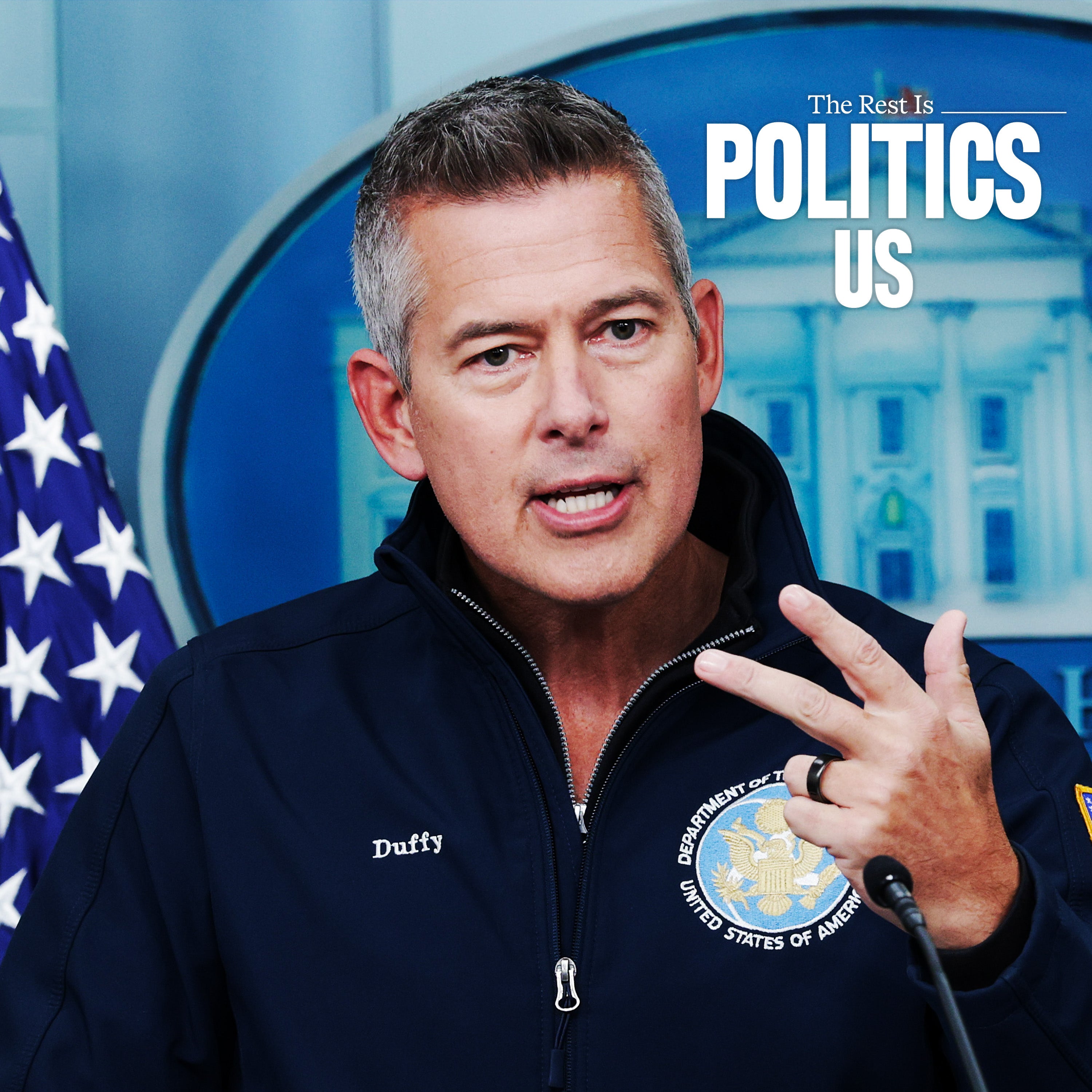


The episode addresses whether a wave of outages and rumors of a “90-day blackout” signal an impending crisis, and evaluates a CNN-reported Iranian “dirty bomb” plot targeting Washington, D.C. It also discusses how distrust, AI-driven systems, and surveillance law (FISA Section 702) shape public fear and policy.
No guests appear. Hosts are Anthony and Caddy Kay (Caddy Kay is the primary speaker).
Outages (Microsoft outage, flight groundings, bank/airline issues, NSA outage) are likely either unrelated failures or increased system stress from AI usage; a 90-day blackout rumor is dismissed as coinciding with Pentagon “Fortress” preparations and a scheduled federal emergency alert system test. The dirty-bomb threat is considered unlikely because it would be strategically self-destructive for Iran; Iran denies the claims. Section 702 is described as warrantless surveillance of foreigners abroad, expiring and being renewed/extended.
Pentagon “Fortress” stockpiling/generators; FAA/air-traffic system update causing disruption; Baltimore incident where AI allegedly mistook Doritos for a gun; face-recognition “gender shading” study misidentifying darker-skinned women; Trump approval/politics questions and Stephen Miller’s role.
Written by AI. May contain mistakes.
Hosts introduce the episode and the Thanksgiving special.
“See etoro.com forward slash trip US for full terms.”
Discussion about recent tech outages and public reactions, including cybersecurity concerns.
“Welcome to The Rest is Politics US with Anthony and me.”
The hosts discuss the erosion of trust in government and public fears around AI.
“One is that these are just unrelated, unfortunate things that happened at the same time.”
Exploration of Iran's potential dirty bomb threat and its implications for U.S. national security.
“And I think feeding into this is all of people's concerns about AI.”
Assessing whether Iran has the capability to carry out a dirty bomb attack and the context of U.S. intelligence.
“That and all of the meltdowns, but this is definitely tied into it.”
Exploration of the distrust towards the Iranian government and the implications of claims about a dirty bomb.
“But I think actually national security people that I've spoken to have been a little bit relieved that there hasn't been more Iranian retaliation abroad.”
Explanation of Section 702 and its implications for surveillance and civil liberties in America.
“Could you explain what Section 702 is to people before we go to the next question?”
Discussion of an incident involving AI surveillance and the racial implications of its use.
“All right, let's go to the next question.”
Analysis of the gender disparities in tech fields and the impact on AI development.
“I mean, am I being am I being overly cynical about this?”
Examination of Trump's approval ratings and their significance for the Republican Party and upcoming elections.
“How much does Trump's approval rating matter now that he can't run again?”
Discusses Trump's impact on future Republican primaries and the party's dynamics.
“we have another two years to go plus of Trump being in office.”
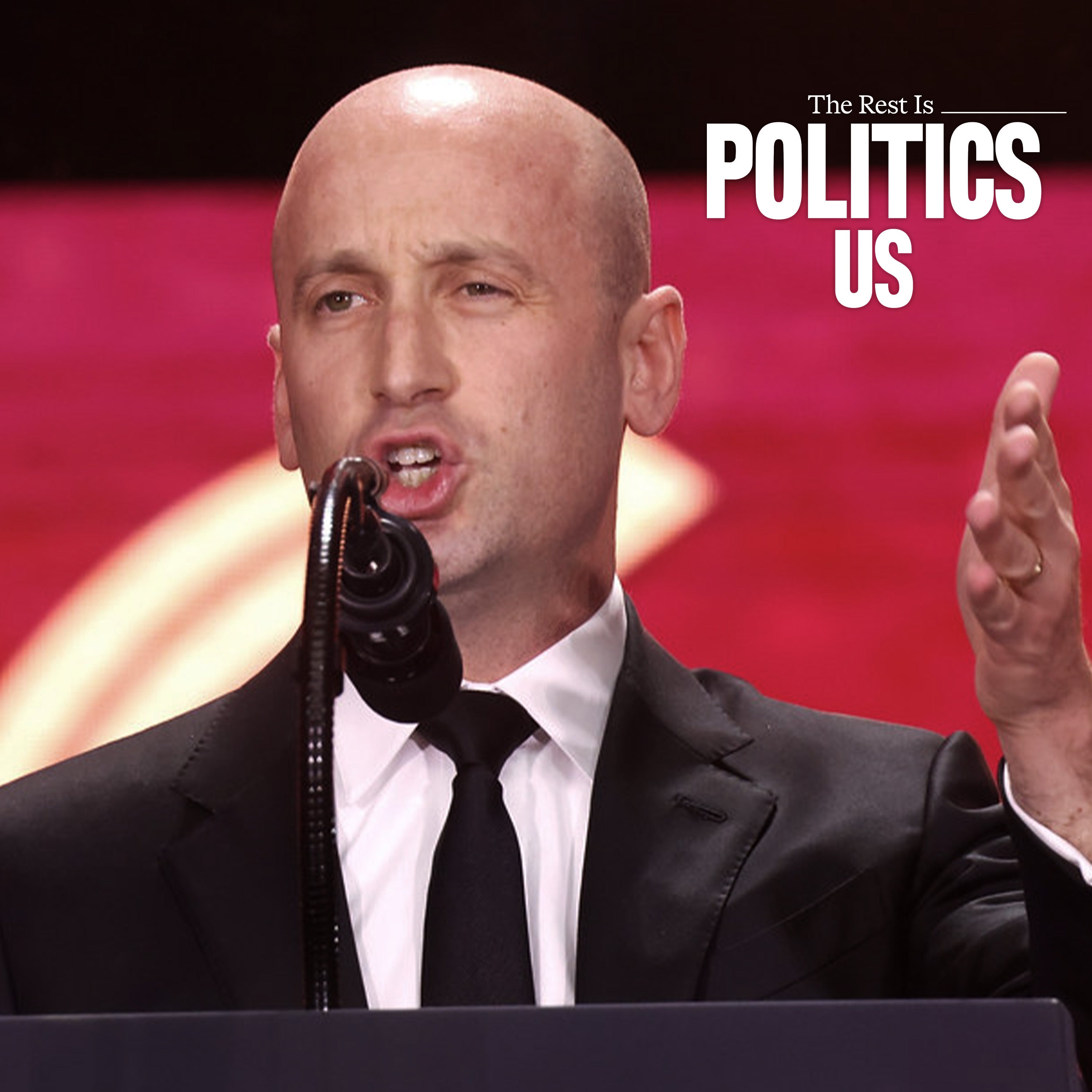
Explores Stephen Miller's significant influence in Trump's administration and his strategies.
“Is Stephen Miller the de facto US president now, given that he's effectively Trump's brain and semi-plausible mouthpiece on many issues?”
Engages in a discussion about the presidential pardon power and its implications.
“One last question, Anthony, this is for you.”
Hosts share what they are thankful for, highlighting personal stories and connections.
“It should have been, all right, we're going to use it sparsely and judiciously.”

Get the gist, explore an idea or ask about something said.
 Claude
On The Rest Is Politics: US, what are the key points of this episode?
Searching your listeningAutomatic transcript. May contain errors.
0:01Katty Kay: A nationwide ground stop, a Microsoft outage, and a Simpsons prediction. Wow, social media is convinced that we're about to have a 90-day blackout. Countries across the globe are being told to make preparations. So is a real crisis coming? Or is the panic itself doing the damage? And could Iran be planning a dirty bomb attack in D.C.? How credible is that threat? This episode is brought to you by eToro.
0:30Anthony Scaramucci: It's midterm season, which means the political madness is well underway.
0:35Katty Kay: The drama doesn't stay in Washington. It can ripple through markets and portfolios around the world.
0:42Anthony Scaramucci: And that is where eToro comes in. Their platform allows you to follow global market movements and see what millions of investors are doing. And it's data that shows that nearly half of all retail investors are repositioning their portfolios ahead of these midterms.
0:57Katty Kay: And since politics rarely ends neatly, Cady and I, we're going to be back with a special Market Watch segment at the end of November to
1:06Anthony Scaramucci: unpack what happens. Join eToro and get a welcome bonus exclusive to TripUS listeners. Go to eToro.com forward slash TripUS.
1:16Katty Kay: Invest$200 or more to claim your free share. Keep in mind, The offer is subject to local regulatory restrictions and isn't available in all regions.
1:26Anthony Scaramucci: As with all investing, your capital is at risk. See etoro.com forward slash trip US for full terms.
1:40Anthony Scaramucci: Welcome to The Rest is Politics US with Anthony and me. Today, we're taking your questions in this Thanksgiving week when I will not be doomsdaying, Anthony. I will be sitting, enjoying the sun and my family and ignoring all of the internet gossip.
1:57Katty Kay: There's a rumor out there, Caddy, that you're not going to have any Wi-Fi next week. No, I love it. Is that true?
2:02Anthony Scaramucci: And that is on purpose, not, you know. I like it.
2:05Katty Kay: I like it.
2:05Anthony Scaramucci: This is not, before we start fueling all of this into the 90-day conspiracy stuff, that is my choice. Okay, this is from Ella McAvoy. Ella is asking, there seems to be a wave of outages and tech failures across banking and travel. Can we be confident that these are tech failures rather than cybersecurity issues? Is more being done to prepare for possible attacks? Okay, quickly to bring everyone up to speed. It started with the Microsoft. Then we had the flight groundings. First time since 9-11. My son was caught up in that. He was actually meant to be flying into Washington last weekend for my birthday.
2:43Anthony Scaramucci: Trigger, Antony, my birthday was last weekend. Happy. I said happy.
2:47Katty Kay: No, I didn't say happy birthday. No, you didn't. You didn't. I didn't say happy birthday. No, you did not say happy birthday. Oh, man, that's probably true. Okay, I apologize. Happy birthday, Katty. Was it a good birthday?
2:58Anthony Scaramucci: Yes. And Felix finally managed to get in, but he did get caught up in that long way of saying there was lots of outages. Then we had the banks went down, then United Airlines. Then I think actually the most worrying but has not been reported on that much was the National Security Agency, which is America's version of GCHQ. It's where they do all of their listening from. That went down as well. And there's been this huge debate and no one's really answered it very satisfactory. You've had Caroline Levitt on Fox News saying to the administration, guys, you just need to have transparency. On the other extreme, you've had Donald Trump saying, well, when you are a rich and powerful country, these things happen.
3:35Anthony Scaramucci: It's fine. and half of the internet, meanwhile, is freaking out, thinking the world is about to come to an end or we're going to get a 90-day stoppage and we should start stockpiling, I don't know, cans of tuna or whatever it is people stockpile. But the truth is, Anthony, it looks like, I've spoken to people in the security space who said it does, there's two things possible. One is that these are just unrelated, unfortunate things that happened at the same time. The second is that with all of the AI consumption that is now happening, that is overloading systems systems in ways that we can't anticipate because we don't really know how much stress AI puts onto computer systems and that we can expect this to happen more.
4:15Anthony Scaramucci: And that is feeding into the idea that there is some kind of 90-day stoppage and that you need to kind of just have resilience built into your system because you're not going to be able to present these things. Have you spent the day with the great and the good last week at the Dealbook Summit? Did you get any clarification on what is happening? How panicked should we be? Should we be all, you know, putting stuff into the larder and living in our basements for the next two months?
4:40Katty Kay: Well, first of all, I'm not a guy that panics. But secondly, everybody remember that the rumored date was the 17th of November. OK. And as we're talking, no blackout has arrived. OK. I think the rumor also got instigated by some of the nonsense at the Pentagon where Fortress, F-O-R-T-R-E-S-S, is a Pentagon plan for bases to power themselves. And of course, that got announced on September the 30th that they were planning on having 90 days of stock and supply and generators and so on and so forth. And then a regularly scheduled, remember there's a statutory requirement that every three years we have to test the federal emergency alert system, okay?
5:28Katty Kay: And that's statutory. So it just so happened to be coinciding with this intersection of rumors and Pentagon activity. So I'm going to dismiss those fears. And I'm going to tell you also something that I know from the whole cyber security world. It's very hard to knock out the energy grid everywhere. And there's just tremendous backup and tremendous triple layering, quadruple layering of defense mechanisms. But, Cady, I want to say something different, and I want to get your reaction before we go to another question. Because I asked this question. I spoke at a university this week, and this question came up, and I said, well, the government is saying nothing to worry about.
6:14Katty Kay: None of these things are linked. And the very famous Yogi Berra, the American baseball catcher, said that many coincidences means there's no coincidence. But the government is saying it is a coincidence. And I said to the students, raise your hand if you believe the government. Raise your hand. Caddy, nobody in the room raised their hand. Okay. Last night, I spoke at the Alternative Investment Summit. I asked the same question. Now, these are adults, not students. Nobody raised their hand. And so my question to you is we've lost so much trust in our government and what they're saying that nobody, they may be telling us the truth, but no, nobody believes them, Katty, right?
6:59Katty Kay: Imagine Eisenhower in 1954 saying something from the White House and the reaction from the Americans and, and, and the rest of the world versus what's going on today.
7:09Anthony Scaramucci: You're so right that we need voices of calm and competence and plausibility in this moment. And we don't have them. And we also have a population that doesn't trust the government anyway. And I think whether it was Democrats or Republicans in control, I'm not sure how much trust people would have. And I think feeding into this is all of people's concerns about AI. What you said about those people, none of whom believed that this was coincidences, reminds me of something Poppy told me the other day when she was starting her semester this year and she was starting this history class actually about the Cold War.
7:44Anthony Scaramucci: And the history professor started off by asking the students to say what they were afraid of. What were their fears? Was there something that gave them fear? About 90 % of the students in this class said AI. And he was struck because he said not since just after 9-11 when he was also teaching this class and he asked the same question had he had so much uniformity of a fear from his students. And back then, of course, it was a fear of terrorism. specifically of Islamic terrorism and Al-Qaeda. He said it took him 26 years for the students to have the same view about what their fear was. And now it's about AI.
8:25Anthony Scaramucci: And I think feeding into all of that mistrust is that here is this thing that we don't really understand with these fears around it around our jobs and also the fears of systemic failures that it may produce. And we aren't in a position to understand it. And the only people who understand it are the people inside the companies. Because I don't trust my member of Congress and I don't trust my people in the White House to understand it and to regulate it because they haven't done it so far. And so that just, I think we're in a period where people don't have trust. They don't really understand what's happening because honestly, nobody really does understand what's happening.
9:04Anthony Scaramucci: We don't really understand the technology and we don't know where it's going to go. Even Dario Amadei, who's just had that massive IPO last week, he doesn't really know where it's going to be in 10 years, possibly even in two years. And I think that feeds into a lot of the feelings that people have around fear at the moment and insecurity.
9:23Katty Kay: The other thing I would add, I would go to another question, is that concentration itself is the vulnerability. So if you have one company that we're relying on for the FAA and the air traffic control on the continent, or at least the American US portion of the North American continent, guys, I don't know. We could probably have to have a backup system. We got to think about decentralizing a little bit more and being a little bit less concentrated.
9:51Anthony Scaramucci: Yeah, because the more, I mean, the more reliant we are on this stuff, the more we're screwed when it goes wrong.
9:56Katty Kay: Of course, the lights go off. Katty Kay will not know, guys, because she will be somewhere in the Caribbean, sunning, tanning herself. Absolutely. I will be here with a candle and a megaphone trying to reach you people.
10:11Anthony Scaramucci: Yeah, and I will not be listening. And the other thing that I will say quickly about this before we move on, because we've got a great question coming up on the idea of Iran's capabilities, and it's kind of tied to this. But that whole FAA shutdown and whether it was the software update from some poor company that was trying to update the system and shouldn't have been doing it, it was a reminder of how bad America's infrastructure is. And I think I understand people in the administration when they're saying these systems are old and they have not been updated. And I think Americans don't realize that Europeans do not live with transport systems in particular, particularly, you know, like I took a train every time I take the train from New York to D.C.
10:52Anthony Scaramucci: or D.C. to New York at the moment. It's at least half an hour late. The systems are old and creaky. People in Asia are not living with systems as old and creaky as this around transport. And I do think it would serve the American people well to have better infrastructure. But there you go. That's my little rant about American infrastructure. too many late trains recently guys okay Isaac Fisher is asking do you think the timing of the CNN article about an Iranian plot to attack Washington DC with a dirty bomb is significant given it comes as national security officials and Trump administration seeks congressional renewal of section 702 of the foreign international surveillance act Pfizer allowing the US to spy on foreign nationals okay quickly an update for everybody on what Isaac is talking about because I have to tell you, this has been the only topic of conversation in Washington, D.C.
11:42Anthony Scaramucci: recently. That and all of the meltdowns, but this is definitely tied into it. CNN reported on November the 16th that there was new intelligence that indicates that Iran is developing plans to target senior Trump administration officials by detonating what's called a dirty bomb, which is a kind of sort of a nuclear weapon, but it's a nuclear material mixed up with other things. as far as I understand, I've never made one, or a chemical weapon in Washington, D.C. They were citing seven American officials in their story. The White House said that there are currently no credible threats to the homeland.
12:19Anthony Scaramucci: In a letter to congressional leaders, however, Todd Blanche, the attorney general, and John Ratcliffe, who's the head of the CIA, said that Trump urged them to extend the law known as Section 702, which is the FISA law, to expand surveillance on foreign nationals. Obviously, I live in Washington, D.C. This, for me, immediately evoked memories of 9-11 when we were very concerned in those early days that there might be some kind of a dirty bomb attack. I remember with my family having kind of evacuation routes planned, where would we go if there was a dirty bomb? And it felt very, very real back then because we didn't know what else was out there and we'd just been attacked.
13:03Anthony Scaramucci: And so we did have kind of stocks in the cupboard. I have not been doing that this time around and I have not got an evacuation route, but who knows. But I don't know that the Iranians have the capability to do that. They didn't pull it off after 9-11. Al-Qaeda didn't manage to pull it off after 9-11, even though there was much speculation about it. It would take a lot of organization. I think one of the interesting things that we've seen, even though the Iranians are still attacking ships in the Strait of Hormuz and still launching attacks against Bahrain and against Kuwait at the moment, they still have some capability.
13:36Anthony Scaramucci: We actually so far haven't seen a huge Iranian attack either in Europe, and I kind of almost feel like I should touch wood, or in the United States since the launch of the war against Iran. And maybe that is, or even a massive Iranian-backed cyber attack. Now, there's some reports that the Iranians were behind the freezer attacks in Europe, in continental Europe, which cost millions of dollars worth of damage to food. But I think actually national security people that I've spoken to have been a little bit relieved that there hasn't been more Iranian retaliation abroad. What do you think is going on here, Anthony?
14:14Anthony Scaramucci: Do you think it's a real possibility? And do you think this is just an excuse to try and extend Pfizer?
14:18Katty Kay: You know, we just had this conversation about trust in the government and statements coming from the government. There are people that think that's a false flag. They think that that's been dropped by the government, okay, to have more justification for elongating the war. Now, I don't know that. I don't want to believe that about our government, okay? But I'm just telling you that's where we are in terms of the level of distrust. And I will just say this because I want to read this to you. This is the communique from the foreign minister of Iran. He says the claims are baseless. This is fabricated media narrative.
14:58He states that this is being designed, okay, to extend the conflict.
15:04Katty Kay: This is being designed to continue the narrative. I don't, I mean, I know this is crazy and I just, I don't think the Iranians are that stupid. You're going to drop a dirty bomb. Okay. You, what do, what do these guys want? Okay. They're mafia guys, right? They're controlling a 93 million person state. Okay. One of the guys that was at the deal book thing last week was Reza Pahlavi, the son of the Shah.
15:31Anthony Scaramucci: The Shah.
15:32Katty Kay: And he's there and I'm in a private conversation with him. He's not going to mind me saying this because he said a lot of this stuff on TV. He's saying, yeah, you know, I talk to a lot of people inside country and they want the regime to topple. And, you know, they don't want it to topple, right? They've got control of the regime. You drop a dirty bomb in Washington, that regime is over, okay? The Chinese, the Russians, the Europeans, that's it. The regime's over. So that is like such a suicidal thing to do that I don't actually believe it. You know, unless you're telling me they're in the last gas of the regime and then they press the dirty bomb, okay?
16:17Katty Kay: But I don't see that either, Katty. So I don't know. Am I being too naive? Am I being too -
16:21Anthony Scaramucci: No, I kind of agree with you. I mean, honestly, after 9-11, we were worried about it. We've all heard this story and people are talking about it in Washington, but I don't see people stockpiling gas masks in the way that we did back after 9-11 or trying to get out of the city. I mean, they're getting out of the city because of Thanksgiving. They're not getting out of the city because they're worried that there's going to be a dirty bomb. And let's, you know, gosh, let's hope we're right, Anthony, because it would be catastrophic if we were wrong and if it actually happened. But I'm not sure whether the capability or that's such a smart point that you make.
16:53Anthony Scaramucci: Why would they do that when it would ensure the end of their regime? And at the moment they have the rest of the world fractured. You know, they've managed to rally actually quite a lot of support for themselves. But I think you're right. That support would disappear if they were to go totally rogue and launch a dirty bomb. Yeah.
17:09Katty Kay: I don't want to be that person where I pretend that we don't have problems, you know, because we do. And I certainly know the pressure on our people that are observing this. And just can you before we go to the next question, because I think this is important for Americans. Could you explain what Section 702 is to people before we go to the next question? Is that okay?
17:29Anthony Scaramucci: So this was a law that was enacted by Congress in 2008 to legalize warrantless wiretapping. So it meant that you could wiretap people in the country, but you could do it without having to get a warrant to do it. The Bush administration, of course, had secretly created a program after 9-11. And this was just the codification, I guess, Section 702. But it did allow the government to obtain without a warrant and from American providers like AT &T, Google, the messages of foreigners abroad, even when they are communicating with American citizens. citizens. And the statute expired in June because there's been this congressional impasse around it.
18:18Anthony Scaramucci: But because of the way that Congress wrote the law, the National Security Agency, which has been having problems of its own recently, can legally operate the program until March of 2027. So, I suppose the idea is, well, they want to continue it beyond March of 2027. And are they using the threat of some kind of terrorist attack in order to continue this program beyond March of 2027? And it pits, you know, it's privacy against security, is that old argument.
18:42Katty Kay: All right. Well, I think it's important for Americans. You're talking to somebody in another country, you're likely under surveillance. And there's a big issue with that about civil liberties. But, you know, we're now in a situation where we're, you know, and we have been, we take our shoes off, we throw our water bottles out in the country, and we are on alert, as we have been for the last 25 years.
19:04Anthony Scaramucci: We're going to take a quick break. But when we're back, We're going to talk about Trump's final two years, Stephen Miller and the sinister world of AI surveillance.
19:36Katty Kay: With high confidence, it was Russian. Holding the Russians accountable is World War III.
19:41Anthony Scaramucci: They took down a British passenger jet containing 350 people.
19:44Katty Kay: Man in the Kremlin is playing, Alex. You've got to ask yourself, do you want to play or not? You're the Prime Minister. You've done nothing!
19:57Katty Kay: We would need to understand the policy context. All the relevant context will be structured as a framework today. Disseminated into an operation order. Or Frago? Or Frago that says to kill the president of Russia? Yes. New from Goalhanger. Who is going to be able to pull this off? You're my soldier, are you? Sergeant Tom McDuff.
20:23Anthony Scaramucci: Duffy!
20:23Katty Kay: An audio drama journey like no other.
20:26Anthony Scaramucci: Men like Duffy, they are our most valuable weapons.
20:29Katty Kay: Devised as a technically rigorous geopolitical action thriller. We have two times friendly key. Where Britain plays its strongest hand. He's the best. Against its strongest foe. Don't do it, Duffie! Bear Hunt. Available now wherever you get your podcasts.
21:00Anthony Scaramucci: Welcome back, everybody.
21:02Katty Kay: All right, let's go to the next question. This is from Summer Owen. Last week, a group of black teenagers in Baltimore were stormed by six police officers outside their school after football practice. They were handcuffed, forced to their knees and searched, all because an AI surveillance system mistook a bag of Doritos for a gun caddy. Should we be using AI in this way? And how do we make sure it doesn't entrench harmful stereotypes? That's my first question. Did the AI stereotype these kids?
21:37Anthony Scaramucci: Look, we've been talking about this earlier during this program. You want to know why Americans are so mistrustful of AI, of who is writing the programs, who is doing the coding, are biases being built into the coding, is AI, when it starts to be self-generating, going to generate stereotypes that were built into the programs initially, and then you end up with black kids being hauled over for a bag of Doritos. And it doesn't take long for society then to start having backlashes against that kind of thing and against the AI that is producing this because nobody's going to look at this and think this is the way we want AI to be used.
22:16Anthony Scaramucci: And this is why when Alex Karp stands up, the head of Palantir stands up and says, oh, well, you know, I'm a, you know, a progressive now and my tools are being used for progressive means, he's going to have a hard time now, I think, because this is the kind of incident, and this may not be anything to do with Palantir technology, which has mostly been used by ICE, is my understanding, but this is the kind of incident that is making Americans around the country vote against these people. They are hated. They are hated, these tech giants, because of things like this. They are sitting there making tons of money, and you've got six black kids, And nobody thinks that if these had been white kids, they would have been handcuffed and forced to their knees.
22:59Anthony Scaramucci: The police might have come up if they were white kids and said, can we see that bag of Doritos? But I don't think anyone in America thinks that if these had been white kids, they would have been treated in the way that they were. What do you think? I mean, am I being am I being overly cynical about this?
23:14Katty Kay: You know, that's the case. And I know that's the case. And we have to be honest about that. And that's the only way, if you're not honest about it, you're not going to make the society better. You're not going to heal the society. You know, I was, do you know who Nolan Wells is?
23:29Anthony Scaramucci: Uh-uh.
23:30Katty Kay: Okay, yeah. So unfortunately, Nolan Wells ended up getting murdered. He was a black young man out with a group of his white friends. Okay. And there's a racial undertone to that. You know, my friends like Spike Lee are very upset about the facts surrounding that situation. Again, I'm not even mentioning the names of the people or anything like that. Everyone's innocent until proven guilty. Okay. I'm just mentioning the point that this racial tension and these stereotypes are very, very powerful still in this country.
24:08Anthony Scaramucci: Can I get, Anthony, can I ask you something? And maybe you know the answer to this better than I do, and it'd be worth doing some digging into. I'd be interested in digging into this a bit more because I know from the work that I have done writing about women and women in leadership and positions of leadership, that there has been a lot of concern around tech generally that if you don't have, and because this is the field I know about more than about racial inequality, if you don't have gender balance in the people who are writing the code, whether it's around the kind of code that is used to help you hire people or the kind of code that is used to scrape through resumes, that kind of thing, then you're going to have stereotypes built into the code system.
24:54Anthony Scaramucci: So, women were concerned that they were going to get excluded because they were not represented amongst the code makers, because the code makers tend to be young white guys. Now, I don't know about AI as much and whether it is quantifiably different or whether it is kind of the same, but do you hear whether AI is going to build in stereotypes and biases in the same way that regular code was building in biases, code that was written by humans? Well, what I don't like,
25:29Katty Kay: and this is just a fact, okay, Okay. You know, all right, let me ask you this question before I answer it. Is it a men's world, Katty?
25:37Anthony Scaramucci: Of course.
25:38Katty Kay: Okay. All right. So we know it's a men's world. Okay. We have to accept that. I always tell my daughter that she gets mad at me, but I have to tell her that.
25:44Anthony Scaramucci: When we have more than 12 % of our CEOs are women, then I will be happy to say to you, no, we've got gender parity, but at the moment we don't.
25:51Katty Kay: Okay. So that's a good segue for what I'm about to say. We only have 18 % of the members of the technical staff as surveyed in AI that are women. Okay. And so you just have to think about that 50%, 51 % of the population is women, but we only have 18, but you said 12 % are the CEOs. So I do think it's a factor and I do think it does. You know, there's, you know, MIT had a study in 2018 called gender shading. And the study found that commercial face recognition misidentified, ready? It misidentified darker skinned women about a third of the time. And how often did it misidentify lighter skinned men?
26:39Katty Kay: Gatagay, less than 1%. Okay, so you tell me if the coding doesn't have a bias in it. Go ahead. You see what I mean?
26:47Anthony Scaramucci: Elon Musk, white guy. Jeff Bezos, white guy. Dario Amadei, white guy. Demis Hassibes, white guy. I thought you were going to say Elon Musk, white supremacist guy. I mean, you were great. I mean, tick them off. Tick them off. And tell me when you get to a black guy, a black woman, a brown guy, a brown woman, or even just a woman. It's going to be a while. You are great, man.
27:11Katty Kay: You are a much nicer person than me. Okay, let's go to the next one.
27:16Anthony Scaramucci: Let's go to Politics Fairy. How much does Trump's approval rating matter now that he can't run again? That is a great question. Okay, quick update. So on 18th of November, there was some polling done that shows that Trump has a 60.6 disapproval rating and a 36 % approval rating net approval level is minus 24. he has a positive approval rating, not surprisingly, in states like Idaho, Utah, North Dakota, South Dakota, Kansas, Oklahoma, even though Kansas just voted for a Democrat for senator. I think it does matter, politics fairy. And here's why it matters. Because Trump, even though his approval rating is low, even though he is now clearly a lamed up president, we have another two years to go plus of Trump being in office.
28:08Anthony Scaramucci: So there is lots that he can do, particularly around the world. That summit he held in China last week being an example of that. But also, he is going to have an impact on the succession. He has the money and there are still people in MAGA world who adore Donald Trump. And it will be difficult in a primary process for a Republican who does not have Trump's endorsement. And he is going to be very keen on playing kinmate because it's a way of him having attention, it's going to be very difficult for a Republican who doesn't have Trump's endorsement to win the nomination, right?
28:48Katty Kay: I think his approval rating matters for everybody other than Donald Trump. Okay. And what I mean by that is Trump does not care. I was at the Dealbook Summit last week. I'm not going to name these guys because they'll be pissed at me, but I was with former Trump officials from Trump One, and we were all standing together waiting to go into the lunch. And one of them looked at me and said, Mooch, you know Trump for 20 plus years. I said, is he phoning it in? He looks like he doesn't give an SHIT. And I said, before I answered that, I turned to two other guys. I said, what do you guys think? And it was universal.
29:23Katty Kay: Okay. And these are people have known Trump for several decades. He is phoning it in right now. He could care less. His number one goal is to preserve the money that he's taken. Okay. And I think it's over $10 billion. Again, that's my opinion. Not reported in the press. I just know that he's a nefarious guy and he's figured out a way to rake it in, Caddy. But this is going to hurt Republicans on the 2028 ballot. It's going to hurt Republicans that are too tied to him. It's going to hurt the succession. And again, not to beat a dead horse, but I'll beat it again. Trump wants to destroy the Republican Party.
29:57Katty Kay: They hate him. He hates them. And you watch over the next two years. And And if the Democrats, if they would just please listen and go right up the middle, you will knock MAGA out and you will probably sideline the Republicans in the Congress, the House and the Senate for maybe three cycles. You probably sideline them. OK. And all of that will be related to how disliked President Trump is by his fellow Americans.
30:25Anthony Scaramucci: OK, you choose another one, Anthony. OK.
30:28Katty Kay: This is from Alison Sutcliffe. Is Stephen Miller the de facto US president now, given that he's effectively Trump's brain and semi-plausible mouthpiece on many issues?
30:38Anthony Scaramucci: He kind of looks like a brain. I mean, he looks like a brain on a stick, right? I'm now getting brain images. I'm getting brain cartoons, Alison. You've kind of lodged this image in my head.
30:50Katty Kay: I'm going with aging penis, shriveled aging penis.
30:53Anthony Scaramucci: Oof. Ow. I don't see. Okay. Look, it is Stephen Miller who has done the work. He knows how policy works. He knows how White House works. He knows how Washington works. He knows how Congress works. He knows where the levers of power are. I mean, the thing that made Trump so kind of formidable in his first year of his second term was the fact that Stephen Miller had spent four years trawling through all of the documentation along with Russ Vought, who was the architect of the 2025 project. They were sitting there looking at exactly how can we take on the law firms? How can we take on the universities?
31:30Anthony Scaramucci: How can we enact a mass deportation program? They'd done all of this. How can we expand the power of the presidency to enact this MAGA agenda? and I think that does make him much more of a powerful chief of staff than Susie Wiles was and I think he'll stay. I think he stays until the end because Trump feels very comfortable with him. He lets Trump be Trump. He's an accelerant to Trump. I mean, it's like pouring kind of fuel on a fire. Stephen Miller is that fuel to Trump's ego and the more constrained Donald Trump feels and wants to lash out, the more Stephen Miller will be there telling him exactly how he can do it.
32:11Anthony Scaramucci: So he's more than just an emotional security blanket. He knows the nuts and bolts. And I think he is the one who is now saying, okay, if Democrats try to investigate us, we are going to charge those Democrats with illegal activities. That takes a certain amount of kind of ballsiness that I haven't heard in Washington for a long time, where you attack the investigator before they've even started. And that is a classic Stephen Miller move. And it's not just that he wants to attack in the way Trump wants to attack. Trump wants to be the person that's always on offense. But Trump doesn't do the homework.
32:45Anthony Scaramucci: He doesn't trawl through the statutes and think, okay, what could we charge Democrats under to undermine their investigations so that we can say that the investigation itself is illegal? That's where Stephen Miller, I think, is going to be a very powerful Trump. He's not the president. In the end, this stops with Donald Trump. And Trump makes it clear that he is the guy who has the final say so. But I do think Stephen Miller is going to be a powerful one because he understands the mechanism. What do you think?
33:11Katty Kay: Well, I agree. I'm not going to add much more than that because I actually agree with everything you just said. I just would say that Dan Scavino, who's Trump's Twitter maestro, and Stephen Miller will be there to the end. And I will predict that they will likely work for Trump after the administration is over.
33:29Anthony Scaramucci: Okay. One last question, Anthony, this is for you. Clive Wilson, I've read Anthony's book, which is great, yes. Would Antony and Katie agree that a further constitutional amendment should be to remove the presidential pardon? I think this is a great question, Clive, and it's getting a lot of discussion in Washington at the moment. Certainly, there is the presidential pardon. This is not a Democrat or Republican issue because we saw Joe Biden pardon his family as he was leaving the presidency. And that is the kind of thing that Republicans are now pointing to saying, you see, it's not just a Trump issue.
34:05Anthony Scaramucci: This is something that is a bipartisan issue. But there has been a thriving business in Washington around presidential pardons. And I do think it is one of the areas that Democrats should be investigating. Who's got pardons? How much did they pay for the pardons? And how much were those pardons in America's interests or actually in the counter interests of America? I mean, I've had lawyers in Washington say to me, Anthony, if you are in the pardon giving business, your phone is ringing off the hook with people trying to get pardons. In fact, those lawyers won't pick up the phone anymore to any other kind of business.
34:41Anthony Scaramucci: Now, they may be under scrutiny themselves, those lawyers, but those are lawyers who are doing a full-time business in presidential pardons, and it is super lucrative at the moment. So I don't know. Do you think, is that one of the constitutional amendments you think that there should be.
34:54Katty Kay: I'm very, very torn on this issue because a normal statesman and a normal rational person would be very judicious and very sparse in the use of the pardon. Bill Clinton, you may remember, upon exit, he pardoned famously Mark Rich, the felon that was selling oil to Iran. The Department of Justice went crazy. They said that he got money from Rich's family to do it. And that started this string of money for pardons in Washington. And we're here now where you could see 2 ,000 people pardoned by President Trump. He could just put out a list, 2 ,000 people pardoned, every person, to quote Maggie Haberman, every person in a 250-foot radius to the Oval Office is pardoned.
35:40Katty Kay: And so I get all of that. I don't think we should abolish it. This goes all the way back to Julius Caesar. I think that the titular head of state should have pardon power. I'm not sure if we should. I think we should clinically and codify that there should be no self-pardoning because that's ambiguous in the Constitution right now. The Supreme Court's going to have to probably render a decision on that. And we would be better off legislating that and preventing somebody from a self-pardon. I think, and this really upsets me because I've looked at the thing. if you are a treasonous SOB, okay, and you're selling sanctioned chips or you're doing something nefarious against the interests of the United States and you're caught red-handed and you're guilty and you are tried by your peers, you're guilty, the president can pardon you.
36:32Katty Kay: And I don't think he should have that. I think there should be an exemption for people that commit treason and sedition against the country. So I'm ambivalent about it. I think it should be limited. I think that's where most people land. I don't think it should be fully abolished. But, you know, I guess I just got to tell you something, you know, I'm upset that we're having the conversation. We shouldn't have had to have had the conversation, Kathy. It should have been, all right, we're going to use it sparsely and judiciously. We're not going to make a business out of it.
37:02Anthony Scaramucci: Yeah, at the moment, that's what it is. It's a business. And a lot of people beyond the president and his PACs, a lot of people, including lawyers, are making a lot of money. Okay, one last question because it is Thanksgiving week. Marie Irvine is asking, ahead of Thanksgiving this week, what are you both thankful for? Wow, Marie, I'm actually thankful to all of those American voters who turned out, particularly young American voters, because we needed a decisive result that would not be litigated, that the country could feel confident about. Anthony and I have spoken about trust and the trust deficit, but actually overwhelmingly Americans had trust in the electoral system.
37:43Anthony Scaramucci: And part of the reason they had trust is because you didn't have super narrow majorities. You had so many people turn out. And I think it was just inspiring to see all of those Americans show up to the polls, particularly all the younger Americans. And to see in the South, I mean, Mississippi result was amazing to see Americans who felt that their voting rights had been infringed stand in line and turn up in huge numbers despite the gerrymandering, despite the voting rights restrictions, they made it to the polls. It was really, it was people power. I thought that was pretty great.
38:14Katty Kay: You know, I mean, I am very thankful for that. I think if you guys follow us on the evening of the election, I could not, I mean, I was unbelievably ecstatic. I said it was like Christmas and the Easter Bunny and the Tooth Fairy, and I was seven, just to give you a sense for how pure delight I was feeling. But what I'm thankful for this year actually is my dog, Caddy. Now, let me just say a little bit about my dog. My dog is nine pounds. Okay. Her name is Leah, as in like Princess Leah. And she's a little cavapoo. And she's got these beautiful eyes. She's a beautiful little puppy. She's 11 months old now.
38:51Katty Kay: She's about to turn a year old. So I'm going to miss her puppiness. But, you know, as somebody that loves dogs, the impact that this little puppy has had on my children, because we had a dog that lasted 15 years passed away. It was a hard adjustment. We didn't get a dog. Now we have another dog. And the love that the dog shows to the kids and the vice versa, it's just a wonderful thing to see. And I'm pumped for this little girl who is living the life, Caddy. And if there are aliens, I'm just going to say this before we end. If there are aliens and the flying saucer lands in my backyard and they say, take me to your leader.
39:28Katty Kay: I'm going to say, let me show you my leader. And it's Princess Leia. Yes, she is. Because this one gets catered to like you have never seen before. And I am thankful to her because she's a cool cat. Cute. Even though she's a dog.
39:41Anthony Scaramucci: Yeah, I'm thankful to my little dog, Charlie, too. He's been the best for the last 10 years. And we're thankful to you all for listening as well. And if you liked this Q &A format, we do do this every week for our members. If you'd like to become a member, you can sign up at therestispoliticsus.com and send us your questions for next time. And then also this week, since it is Thanksgiving, we are going to do a special Aunt Agony for our founding members later in the week. If you would like to listen to that as well, we'll be talking about everything from, should I have kids when the world is on fire?
40:16Anthony Scaramucci: Where should I raise my kids? Why am I feeling so empty inside? You can hear all of that from us too. That's always fun. Okay, guys, happy Thanksgiving to you all. We're thankful to you for listening as well. It's always great to be in your company.
40:31Katty Kay: Happy Thanksgiving, guys. Thank you for being with us always. You know that. We're very grateful.
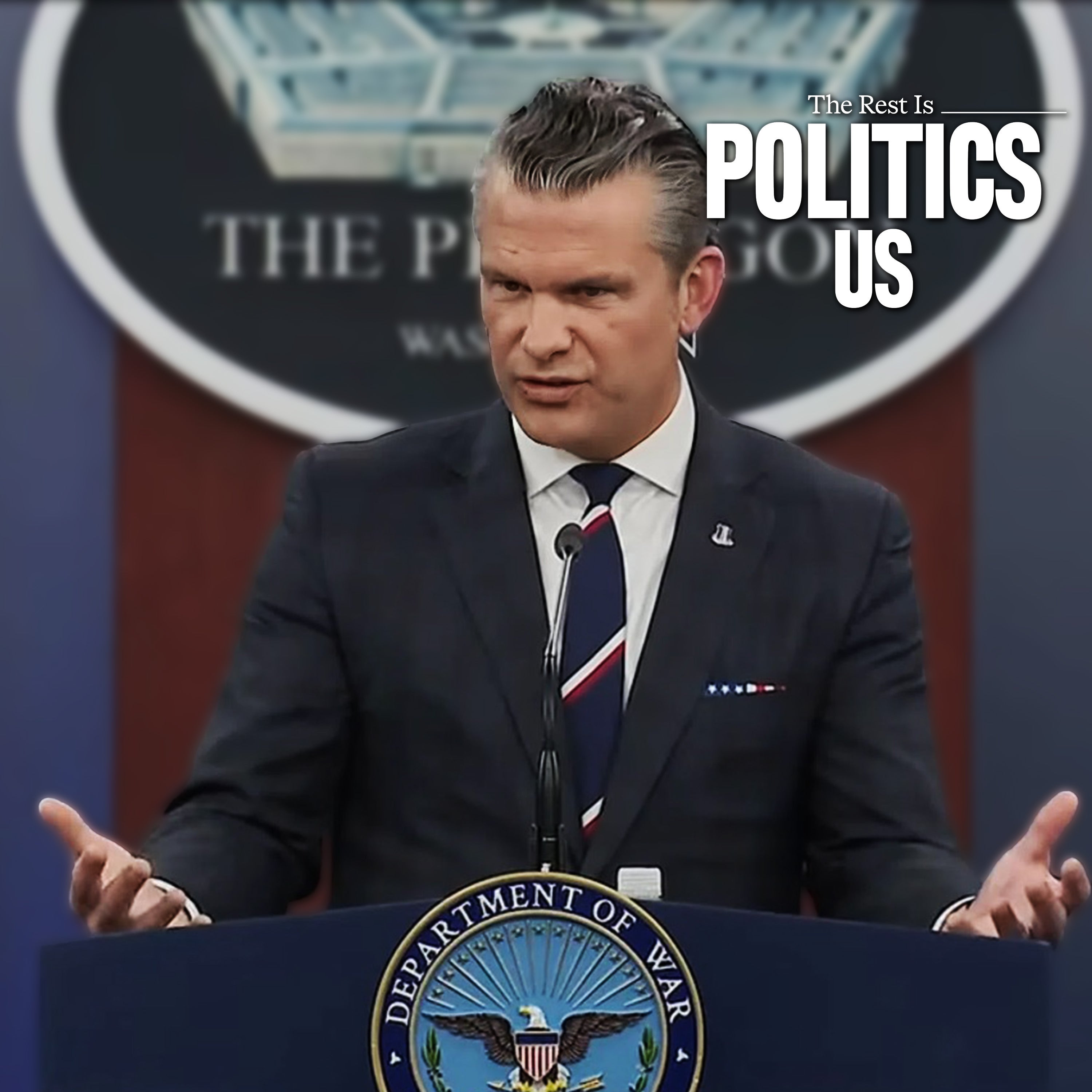
Why is Hegseth preparing America for a 90-day blackout? Would Iran really detonate a dirty bomb in Washington? And, should presidential pardons be abolished?
Join Katty Kay and Anthony Scaramucci as they answer all these questions and more.
Give The Rest Is Politics US Club this Christmas. Treat yourself or a fellow fan to a membership: bonus episodes, ad-free listening, members’ newsletter, and more. Annual gifts come with a special edition T-shirt.
Sign up to our free newsletter here
Join etoro and get a welcome bonus exclusive to TRIP US listeners. Search etoro TRIP US. Invest two hundred dollars or more to claim your free share. This offer is subject to local regulatory restrictions and isn't available in all regions. As with all investing, your capital is at risk.
Instagram: @RestPoliticsUS
Twitter: @RestPoliticsUS
Email: [email protected]
Video Editor: Kieron Leslie
Social Producer: Charlie Johnson
Assistant Producer: Alfie Rowe, Evie Townend
Producer: India Dunkley
Senior Producer: Fiona Douglas
Executive Producer: Tom Whiter
Learn more about your ad choices. Visit podcastchoices.com/adchoices