In short
Yaron Brook argues the U.S. is in ideological decline, driven by “woke”/postmodern education failures and escalating pro-Hamas activism, and he says Trump’s tariffs have backfired economically. He also criticizes socialism as a political trend, using New York City mayoral politics as an example, and calls for a renewed defense of capitalism, liberty, and rational education.
Guests
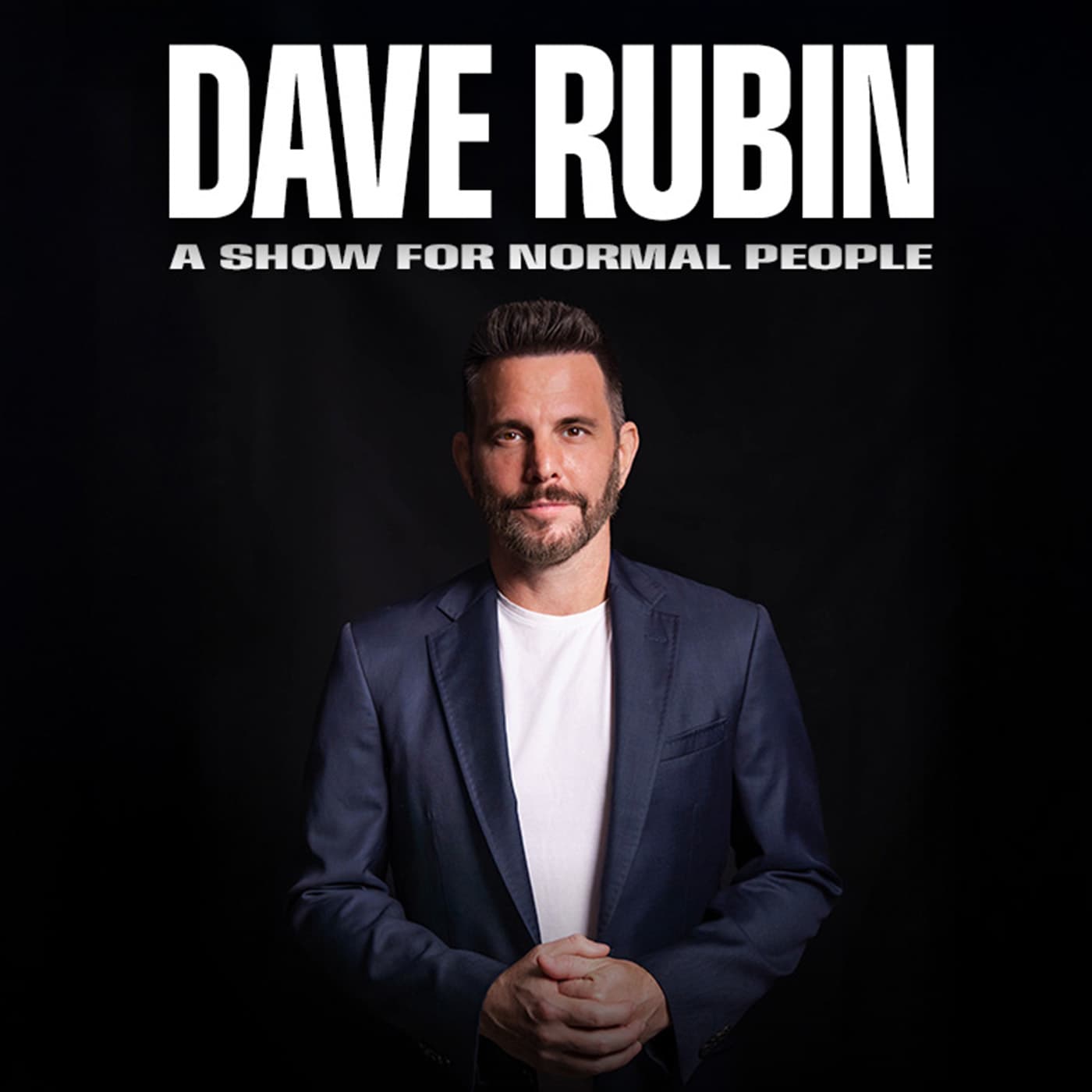
Yaron Brook (chairman of the Ayn Rand Institute; host of the Yaron Brook Show). Interviewer: Dave Rubin (host of The Rubin Report).
Key claims
After Oct. 7, pro-Hamas protests show intolerance with little institutional response. The core problem is education/ideas, especially humanities and universities. “Woke” has deep philosophical roots and morphs into Palestinian jihad activism. Tariffs tax Americans massively with “zero” return. Socialism is “on steroids” and leads to failed governance; he cites New York’s past under Democrats (e.g., David Dinkins) and defunding-police as a mistake.
Notable examples
Oct. 7 pro-Hamas demonstrations at New York and King’s College London; David Dinkins era; defunding police leading to higher crime claims; Trump tariff impacts on manufacturing and soybean farmers.
Written by AI. May contain mistakes. Listen to the episode to check what was said.
Chapters
Tap a time to open that second in VOYaron Brook's Perspective on Today's World
0:41 to 2:39
Yaron shares his bleak outlook on the current state of global politics, economy, and society.
“And you certainly have the library behind you to prove it.”
Responses to Pro-Hamas Protests
2:39 to 4:04
The hosts discuss the implications of pro-Hamas protests and the proper response in a free society.
“I don't see where the future of the Democratic Party is.”
Ideological Failures Post 9/11
4:04 to 6:25
Yaron critiques the ideological failures in the U.S. since 9/11 and the consequences of accommodating radical ideologies.
“What would, or not what would, what should a free society do in the face of that level of pro-terrorism and intolerance do?”
Education and the Humanities Crisis
6:25 to 10:40
Discussion on the failure of American universities in educating students on Western values and the humanities.
“But the complete and utter failure of American institutions of learning, particularly at the Ivy Leagues, but across the board, the humanities have failed to educate students.”
The Evolution of Woke Ideology
11:42 to 14:00
Yaron and Dave discuss the evolution and persistence of woke ideology and its roots in postmodern philosophy.
“Should we have realized that it was going to morph?”
The Intellectual Battle Against Wokeness
14:00 to 16:28
Explore the challenges of defending capitalism and the dangers of ideological alternatives.
“This is, if you're going to get a PhD, this is what you had to mouth back to your professors in order to get that PhD.”
The Rise of Socialist Politics
16:28 to 18:50
A discussion on the implications of socialists gaining power in urban settings.
“So we're airing this interview, as we mentioned, probably about two weeks or so before the New York City mayoral election.”
Consequences of Socialism in Urban Areas
18:50 to 23:08
Analyzing the historical failures of socialism as a policy in urban environments.
“But, you know, I heard him say a couple of weeks ago in an interview, he said, well, I won't be the first Democrat socialist mayor because we had David Dinkins.”
Consequences of Socialism in Urban Areas
23:11 to 23:58
Analyzing the historical failures of socialism as a policy in urban environments.
“You're seeing it everywhere and prices just keep climbing.”
The Nihilism in Modern Politics
24:08 to 28:00
Examining the nihilistic tendencies in politics and the desire to dismantle systems.
“as you just said, and OK, we don't like these old Democrats.”
Show all 18 chapters
The Perils of Returning to Faith-Based Ideologies
28:00 to 29:17
Exploring the dangers of turning back to faith and religion as a defense of the West.
“to go back to ideas that are associated with the West, Christianity primarily, religion, and base our defense of the West and defense of America on those religious ideas in combating the left.”
The Failings of the Educational System
29:17 to 31:03
Critique of the American education system's focus on emotions over reasoning.
“Where do you think our technological adolescence fits into this equation?”
Trump's Administration and Its Approach to Education
31:03 to 33:15
Discussion on what Trump could do to improve education and promote freedom.
“And the kids just know more and they're better thinkers than most of the kids on our campuses.”
Critique of Political Approaches and Immigration
33:15 to 34:26
A look at the current administration's approach to political opponents and immigration.
“So what's like the biggest affront to you that this administration has done?”
Assessing Trump's Tariffs and Trade Policies
34:26 to 39:55
An in-depth analysis of the implications and failures of Trump's tariffs.
“Well, OK, so why don't we go through a few just to see where we.”
Foreign Policy Under Trump: A Critical Perspective
39:55 to 42:33
Evaluation of Trump's foreign policy regarding major international players.
“The amount of bogus economics that I hear from, not from economists, economists are pretty good on this, but from administration officials left and right, because this is where Bernie Sanders agrees with administration.”
Reassessing U.S. Strategy Towards China
42:44 to 45:01
Explore the need for a clear strategy in U.S.-China relations, especially regarding Taiwan and military readiness.
“Because I feel like that's something that we just don't talk about that much, that maybe a certain set talks about, but it's not just like in the culture.”
Envisioning a Positive Future
45:01 to 47:31
Discover a hopeful vision for America's future focusing on prosperity, freedom, and education.
“I'd like you to paint a positive vision for the future.”
Transcript
Automatic transcript. May contain errors.0:07All right, joining me today is the chairman of the Ayn Rand Institute and host of the Yaron Brook show. My old friend, it has been way too long, man. Yaron Brook, how are you? I'm doing great. How about you, Dave? What happened to us? We used to do this multiple times a year and now it's got to be, it could be three years or something. What in the world have you been doing? London. It was at the AOC conference in London. We did a short segment there. But yeah, we've drifted apart somehow. Well, you're always traveling the world. And as people know, I'm traveling at the moment. So I'm in Australia.
0:39We're taping this right before I leave. And we wanted to do a couple interviews with people that I thought could be somewhat timely, but also a little bit timeless in that we're going to talk about principles, which is, I think, what you excel at really as much as anyone in the public space. And you certainly have the library behind you to prove it. I mean, that is definitely the Yaron Brook library behind you. Galt's Gulch and your books and Ayn Rand's books and all that stuff. So why don't we start this way since it's been a while since we've done a proper interview. How do you feel about the state of the world at the moment?
1:15And then we will dive into capitalism and socialism and all the areas of expertise? I mean, I don't think I've ever felt worse. I mean, really, it really is horrific. I mean, here we are. I mean, we're taping after the second anniversary of October 7th. Yesterday, there were demonstrations all over New York, pro-Hamas, on October 7th, and a number of university campuses. The same was true in Europe. King's College, massive demonstration at King's College London, pro-Hamas. Pro-Hamas, remember, these are the people who barbarically slaughtered and raped and just— and it's like—it just passes. I mean, there's almost no response out there.
2:03At the same time, so I think the left has gone completely nuts. I mean, it is over the last, you know, five years, 10 years, has gone way, way crazy. And then woke kind of peak at some point, but they latched onto this Palestinian issue. And this is the issue that really animates them and gets them excited. So that just is horrific. And at the same time, I think the U.S. politically, economically is in decline. I just don't see where the future of the Republican Party is. I don't see where the future of the Democratic Party is. I just see almost no hope on the political spectrum in terms of moving towards what I believe in, which is individual freedom and liberty and capitalism and all those good things.
2:54And I see nobody in our political spectrum advocating for that or pushing for that. But, you know, as we again speak, and I think this will continue for a while, we're seeing people I believe are hardworking. Yes, they're here illegally in the United States being rounded up like cattle. I think it's horrific the way they're being treated. So I just think from every perspective, I've never seen things worse. And the debate, of course, in the country has just deteriorated so much. conspiracy theories and anti-Semitism, left and right and across the political spectrum. It's just never been this bad.
3:36Now tell me what you really feel. Yeah. All right. So, okay. So, well, let's just jump off a few things you said there. So when you see these pro-Hamas, and I agree, they are pro-Hamas protests. There's nobody out there saying, I'm for the Palestinians, I'm against Hamas. They'd be treated the way you and I would be treated. So obviously, I make no distinction there. And as a matter of fact, there were plenty of Hamas flags out in New York City, even on the anniversary of October 7th. What would, or not what would, what should a free society do in the face of that level of pro-terrorism and intolerance do?
4:18We want to respect free speech. Everyone watching this gets all the principles of Ayn Rand and of individual liberty and all of those things. So what is the proper response to these things in a free society? Well, I mean, it's a very complex question because I think we have so betrayed the principles of this country since 9-11, really. So accommodated our enemies. You know, when Bush refused to blame Islam for 9-11, Islam was a religion of peace, he told Congress. And, you know, the Ramadan was celebrated in October of 2001. It was celebrated at the White House, the Ramadan, just after 9-11. We are so far gone in terms of what should be the approach.
5:01We should have declared, you know, Islamism, radical Islam, however you want to call it, an enemy ideology, just like Nazis and just like communism when we were at war with communism. We should declare it an enemy ideology. We should have listed the organizations that support that ideology from Al-Qaeda on down to Hamas and declared support for these ideologies as treasonous, as, you know, as betraying America. Now, it's way too late to do that. Nobody can do that. Nobody remembers. Nobody has any context. But I think the main thing that needs to be done today is ideological. I mean, that's where the battle has always been.
5:42That's where we failed. That's where we lost, and that's where it needs to continue to be. You know, these people need to be called out for their religion. Nobody's doing that, right? This is about Islamism. Hamas is just a concrete, and it's not about, you know, Israel. It's about the West. These are anti-Western forces that want to destroy our whole way of life and our ideas, and we need to call them on that. We need to advocate against it. I think that if I were university president, not happening, I would fire the entire humanities faculty, right? I mean, what we saw after October 7th, 2023 was the complete and utter failure, which many of us already knew, right?
6:25But the complete and utter failure of American institutions of learning, particularly at the Ivy Leagues, but across the board, the humanities have failed to educate students. They have inculcated support for the worst causes for an anti-Western ideology, and they should be extracted from those universities. I don't think the government should intervene here, but I do think alumni, I think people who support the universities, shouldn't just demand that the president resign. They should demand the whole resignation or the firing of the of the of the humanities and start from scratch so in that much of this hasn't happened yeah there's been a couple places where they've been turned back the tide on some of this you know florida's done some nice things particularly as it pertains to our state schools and stopping some of the more violent protests or at least when they take over our roads and that sort of thing in that most of what you just described hasn't really happened do you now just see it as an inevitability that we will end up where Western Europe is?
7:34Well, no, partially because I think the number of Muslims here is significantly smaller. And I don't think the problem is Muslims. I think the problem is the Western supporters of those Muslims. I think it's the far left and the people that support it and now kind of elements on the right, like Tucker Carlson and Candace, who are supportive of this kind of agenda. And I think that, so I don't think we land up exactly as Western Europe. I do think that what we're going to see is an ongoing attack against Western values and Western civilization. I think what that ultimately does, and I've said this about Europe for 20 years, and I think this is true of the United States.
8:13What ultimately that does, it awakens forces within Western culture, which are not good forces. It awakens, you know, authoritarian forces that ultimately will rise and clean it up, right? They will get rid of these people, but they won't get rid of these people in a nice way or in a way that we would be, I think, would be supportive of because it will be in a way that all of our freedoms will be gone at the same time. So does that then tell you something very deep about just how humanity works over generations, that it sort of never self-corrects until it kind of has to be done in a way that maybe you wouldn't be thrilled about?
8:51That there is no stopgap from where we are at now to what you just described as sort of the scary thing, that there just won't be enough people that will wake up and do whatever it means, whatever that would be. And that maybe is just how it works for humanity. I mean, I don't believe it's how it works, but it certainly is how it's working, right? It's a reality that we face today. I still think this is fundamentally an ideological failure, fundamentally a failure of ideas, fundamentally a failure of education. And I think that the challenge has been that, you know, and I've been a critic of those who have tried to defend the West for a long time.
9:32I don't think they have done a—we, you know, have done a good enough job. I don't think we have gone to basic principles enough. I don't think we have gone to the core ideas. I think people are way too quick to compromise on those ideas and sell out. And we haven't, and this is true for 100 years, haven't viewed our universities as important enough. We basically handed over the universities to the worst elements in our world philosophically. We didn't view ideas as that important. So who cares what they teach in some of these departments? It turns out they're very important. It's what shapes the future.
10:12And by the time they, now the left dominates the universities, has for 50 years, now what do you do? Now you're stuck. Now there are no easy solutions. I'm Hannah. I've lost 75 pounds in 20 months with GLP-1s, plus diet and exercise. On Roe, I've gone from struggling to run a mile to running farther every day. you can access fda approved glp ones online get the support you need to reach your weight loss goals go to row.co weight to see if you qualify i'm a paid row partner 20 average weight loss in one year and non-diabetics with obesity or overweight with a weight-related medical condition versus 3.1 percent in placebo arm rx only to stay informed about serious side effects go to row.co safety cryptocurrency isn't just the future it's already reshaping the world of finance And one of the leading companies in that transformation is Crypto.com, the trusted platform used by millions around the globe.
11:07Recently, Crypto.com partnered with Trump Media and Yorkville Acquisition Corporation in a major$6.4 billion initiative built around CRO, Crypto.com's native token. CRO powers fast, low-fee, decentralized finance, stalking rewards, and real-world benefits like cash back on everyday spending. This collaboration underscores how far digital assets have come and how platforms like Crypto.com are helping bring cryptocurrency into the mainstream economy. To learn more about Crypto.com and explore the future of digital finance, visit Crypto.com today. You mentioned that Woke morphed. Should we have realized that it was going to morph?
11:47You know, even someone like me who's been on the front end of talking about this for years and before we called it Woke, it was identity politics and all that stuff. I sort of felt that by Trump winning, that it really would, it wouldn't stop it. And of course, it was going to change a little bit and it would never just get out of the institutions just like that. But I really did think we were going to have a period of a better bulwark against it. And yet it has morphed into this Palestinian jihad cause. Should we all have realized, I mean, should we have been yelling about that way earlier or at least realized it way earlier?
12:19I think the realization should have been it was going to morph into something. It doesn't just disappear. And again, you're right. It might have gone unseen for a few months, but then showed itself in something. Something would have happened to bring it up if not the Palestinian cause or the Hamas cause. But yeah, I mean, these ideas don't disappear. They're not—look, woke ideology is not some superficial set of ideas. This has deep roots in a postmodern of philosophy. It is taught, you know, it's taught in a number of different courses. It is grounded in hundreds, if not thousands of books, you know, whether we call it intersectionality or post-colonialism or all this stuff.
13:07It has a huge intellectual foundation. An intellectual Foundation, we haven't done enough to question and, you know, renounce and prove its falsehood. But we need to do that work. We need to do a lot more of that work rather than politically, because in politics, all you can do is act. It's action-oriented. The ideas need to be done before you get to the politics. But look, these ideas dominate universities. I don't see how you get out of that because you'd have to replace hundreds of professors. Every time you, you know, Mom Donnie is running and you've got his dad who's a professor and you scratch a little bit on the surface and there it is.
13:50There's the postmodernism. There's the postcolonialism. It's all there. And it's not unique. It's like, this is it. This is everywhere. This is what graduate students have been taught for 20, 30 years. This is, if you're going to get a PhD, this is what you had to mouth back to your professors in order to get that PhD. Now you teach new students. This is the system we put in place and without a massive overhaul. And then even if you do overhaul it, you overhaul it in favor of what, right? What is the right that is objecting to woke? What is it proposing in its stead? And I think the big tragedy, and I think this is going to be the real tragedy of the West is that the alternative positive for wokeness is Christianity.
14:31that is the alternative is going to be religion. And I don't think that leads to a good place. I think that leads to a dark place. So is part of this that capitalism, because of the baked in idea that you will just succeed based on yourself and you will have voluntary relationships, you will be busy with things that interest you, all of the great ideas of capitalism, is that the sort of allows for the same soft underbelly that liberalism seems to have, which is that there's a lot of good stuff there. But because once you're busy building something, you don't really pay that much attention to the fact that the inmates are running the asylum or the barbarians are at the gate.
15:14And that is what they used against us, that the capitalist was out there building great societies and not defending the gate. No, you know, absolutely. The best people have gone into business. You know, the real entrepreneurs, the real geniuses, the real brilliant people have created the modern world from a material perspective. The tragedy is that they're not armed intellectually with the ideas to defend the capitalism that they are engaged in. And then they also write these big checks to the universities, to the alma maters, and perpetuate the anti-capitalist mentality that these kids are gaining.
15:55And you go to them and you tell them that, and they're like, yeah, but it's my alma mater, and it's kind of cool to write them a$5 million check. And they don't get that the fundamental battle here is an intellectual one. And maybe they gravitate towards politics to try to deal with it. That's not going to do it. At the end of the day, what we need and what we've always needed is a robust defense of capitalism, of individual liberty and individual freedom, of the founding principles of this country. And that's what we haven't got, and that's what we're We're still a desperate fool. And until we have it, we're going to continue losing.
16:30So we're airing this interview, as we mentioned, probably about two weeks or so before the New York City mayoral election. By every account, Mamdami is going to win and win quite easily. Maybe there will be a miracle. Do you make a distinction when people call him a Democrat socialist or a socialist or a Marxist or a communist? Do you think there's any meaningful distinction between any of these things at this point? and then we can get into the policies. Sure. I mean, I think there is. I mean, is he... Now, he might be a communist ideology that, ideologically, he might believe in communism, the complete repudiation of private property and everything is owned by the state or by the workers, whoever they want to frame it.
17:12He might be that. He's positioning himself as a socialist. You know, he wants to open a grocery store, you know, and the city will own a grocery store. He's not yet talking about shutting down all the other grocery stores and confiscating them and nationalizing them. He can't, right? He's going to be the mayor of New York City. He's going to have very limited powers. Very destructive. He can be very destructive, but he has limited powers. He's a socialist. He really does – he's antagonistic to private property. But he won't have the kind of powers to impose communism on us. And I think just calling him a communist or treating him like a communist is a mistake because it sets it up for him to say, well, of course I'm not a communist.
17:59Look at – but he is a socialist. He's really bad. And as we said, a big part of how you see his evil is in his approach against Israel and to the Palestinian issue. I mean, that's a big part of his agenda is globalized intifada, which basically means rape, pillage, slaughter, you know, everywhere, everywhere they want it. And it's a legitimization of violence on scale. And, you know, he is going to be he is going to be a disaster for New York. And and people say maybe they should have it and then we'll learn. And it's like, God, I've heard these. I've heard this so many times over the decades.
18:42No, we don't learn. We don't learn from experience. If you want examples of the failure of socialism, just open your eyes, study a little bit of history. That doesn't convince people. So it really is unbelievably tragic that the most capitalist of all cities, historically, the bastion of America really from an economic perspective, is now going to be voting in somebody who is an explicit advocate of socialism. It's also so incredible. And I get it. They put ideology over truth. So I get where it's coming from. But, you know, I heard him say a couple of weeks ago in an interview, he said, well, I won't be the first Democrat socialist mayor because we had David Dinkins.
19:24And it's like, dude, do you remember what David Dinkins did to that city? I remember it because my great-grandparents and my grandparents lived in the city at the time, and we basically stopped going to visit them, and they would come to visit us instead in the suburbs because it was a freaking nightmare in New York. Yeah, and, you know, go back to the 70s and when Democrats drove New York bankrupt, when it was a dark place, it was a horrible place to visit. I mean, New York really went through kind of a renaissance in the 80s and 90s and became a place that was great to be at and great to be in.
19:59And, you know, New York wants to revisit those dark days. It wants to go backwards towards that. I mean, the idea of defunding the police, if we understand anything from the last few years, it should be that, no, if you put police— and the history of New York suggests this. You put police out in the street, crime actually goes down. Surprise, surprise. So the whole agenda is an agenda of failure, an agenda that's failed many, many times. It doesn't matter. Partially, this is an ongoing thing, I think, a process in American politics. We want to smash the establishment. We want to do away with the way things have always been.
20:38So go after the conventional Democrats. Go after conventional Republicans. We want something new, different, completely out there. And the question is, what will happen when they start suffering the consequences of all of that? Do you think this is also partially the difference between urban life and suburban life in that people that live in cities seem to want more control over their lives? And in some and you can probably make a cogent argument why it might make sense. You know, you might need some more regulation because people literally live on top of you. There's the congestion, all of those things.
21:16So it lends itself to a type of person that wants more rules. and I think people that are more in line with our ideology are just going to leave cities where they'll have more responsibility over their own lives. It's hard to tell. I mean, I don't think that that's how it evolved originally. I certainly don't think, I think the reason cities became the way they are is because - Oh, I don't think that's how it's evolved. I think that's maybe what it's now turned into in a modern sense. It's become, that the people who are there are self-selecting to be there and the people who leave or self-selecting to leave.
21:48And you build upon that. But look, if you look at Mabdani's support, Mabdani's support is from young professionals who are relatively wealthy, doing pretty well, and highly educated. And this is the same thing we talked about before. These are kids who've been taught at universities that socialism is a noble idea, even though it's never been practiced before. And they've been convinced by 9-11, the financial crisis, COVID, all these crises that they've experienced in the 21st century, that they cannot rely on the experts and the authorities and the way things have always been. They need to smash things and they need, they want something new.
22:27And that's where he's gaining support. And of course, almost nobody is willing to criticize the fundamentals of socialism, the entrenched altruism and the idea that from each according to his ability to each according to his needs is something most people resonate with, right? To take from people who have money and give it to people who don't. That's cool. That's the welfare state. That's a mixed economy. That's what we have. He's just putting it on steroids. And nobody's willing to question the morality of that. No, that's wrong. That is not the way the world should run. And when it does run like that, you're legitimizing violence.
23:06You're legitimizing taking stuff away from people just because they created it, just because they made it. Gold has officially gone mainstream. You're seeing it everywhere and prices just keep climbing. Every day, more and more Americans are discovering the power of gold. But how do you actually take advantage of it? How do you invest in a way that's safe, simple, and built for the long run? That's where Noble Gold Investments comes in. Their specialists are trained to help advisors like you go from confused to confident, from wondering what's next to knowing exactly what to do. Whether you're looking to roll over an old 401k into a gold IRA or you want Physical coins and bars delivered right to your home, Noble Gold makes the process simple, secure, and stress-free.
23:44You'll get step-by-step guidance, transparent pricing, and U.S.-based service from a trusted team that's handled over$2.5 billion in precious metal transactions. With Noble Gold Investments, protecting and growing your wealth isn't just their job, it's their commitment. Visit DaveRubingold.com today to claim your free wealth protection kit. That's DaveRubingold.com. Noble Gold, helping you build a stronger future. Are you surprised that there are so many people who are so in the mood to tear it all down, as you just said, and OK, we don't like these old Democrats. We don't like these Republicans.
24:17And yet the solution seemingly in their mind is give more power to the state. So in some sense, I mean, this is the progressive ideology. We hate the state. The state is corrupt. Everyone's evil. It's all awful. And also take more of my money and take more of my autonomy. It's extraordinary. And yet it keeps happening over and over. It keeps happening over and over. They don't have a solution and they need and so they want to smash. They want to smash things. They want to destroy. There's nihilism today. I think nihilism is probably the most it's one thing that both the ideology of the left and right, I think, unites them is this wanting to smash things and destroy things.
24:54And but you need somebody to do the smashing for you because very few people have the audacity or you call it even the courage to actually go do the smashing. So you nominate, and that is where you bring in the state. The state is then responsible for doing the smashing for you. And the fact that you have to give up some freedoms for that, all right, that's—I mean, ultimately, the nihilist hates his own life. So it's not like you're going to get the nihilist protecting individual freedom. They're not. They're always going to move towards one form or another of state control, of more state, of more government.
25:29And they love to see things burn. They love to see things knocked down. They want the clash. They want the conflict. One of the things that you and I talked about many times over the years was what was happening to the liberals and, you know, why weren't they standing up for liberalism? Now that the Democrat Party seemingly has been completely taken over, do you think there was a moment or a person that should have done something more? Or was this all inevitable? I mean, it's sort of an offshoot of an earlier question. But like was and do you think whatever seems to be happening on the right that I know you have some concerns about and I do as well?
26:02I'm really trying to hold that. I'm trying to hold the classical libs with the conservatives. And I think that's what the most pro-America situation we can possibly get is. Maybe that's a fool's errand. But but what do you think about why the liberals didn't do better when it came to this stuff? Well, I mean, it really depends on what we mean by liberals. If we mean classical liberals, I think it's a number of things. It turns out there are not that many of them. It's a small group, it turns out. I mean, I remember the days, you know, the days of the intellectual dark web where we thought there was some kind of commonality that held this group together.
26:40And it turns out there really wasn't. It was a group that had a respect for free speech and a few other things, but generally didn't agree on pretty much anything else. And it fractured and splintered very quickly as a consequence. I wish those who advocate for classical liberal ideas were more philosophical. You know, I wish they took ideas more seriously. I wish their ideas that they took were more consistent. I think that we've seen this over the last—I mean, the biggest—I mean, one of the scariest trends that I see in the culture, and we might disagree on this, but to me, this is a really scary trend, is classical liberals now turning to religion as the solution.
Read the full transcript
27:25And Hosea Lee comes to mind as converting to Christianity as the solution to dealing with the left. I think that's a massive fail. So, yeah, I don't agree with that. But even putting maybe her aside specifically, explain what you mean by that in a broader sense. Well, I mean, the idea is that the left is clearly an enemy. The left is clearly, you know, this obstacle to liberty and freedom. And we don't have, the opposition has no coherent set of ideas to oppose the left. And so therefore, our response to it should be to go back to ideas that are associated with the West, Christianity primarily, religion, and base our defense of the West and defense of America on those religious ideas in combating the left.
28:16And that brings both personally in terms of finding meaning and purpose in life, and also politically in terms of combating woke and combating the entire ideology of postmodernism. And I think that is a massive mistake. I think this is part of the problem that we've seen over the last few years with the right. The solution cannot be the ideology that at the end of the day, this country and the Enlightenment kind of overturned. The United States was a product of Enlightenment thinking. It was a product of people holding reason above all else and people advocating for individual liberty and individual freedom.
29:00And bring everything before reason was what I think they held. And to return to an era where there is something about reason, faith, in other words, I think is a disaster. And it's a disaster that's going to lead the West in a very bad direction. Where do you think our technological adolescence fits into this equation? In that if logic and reason and arguing things, you know, based on merit and all those things, if that was the way to go and that was the lesson of the Enlightenment, that 20 years of social media and scrolling and bots and, you know, algorithms and all that was the direct polar opposite of all of those things.
29:43So in some sense, this was obvious. Yeah, but the reality is that we've had an educational system for 100 years, really since James Dewey, that has not taught kids how to think and how to use reason. And it's taught them how to emote. I mean, the primary function of education in the United States for the last 100 years has been to socialize kids and to teach them how to work together and to feel and to connect with their emotions and to have opinions about things they know nothing about. And if you take kids and you teach them how to emote, not how to think, not how to, you know, use your mind in a rational way and look at evidence and judge evidence.
30:26and then you give them a tool like social media or you give them a tool like the internet, yeah, their emotions now are overwhelmed and they don't have the tools to deal with what is fact and what is not, what is reality and what is not. How do I judge? How do I go out there into the world and even evaluate what is true and what is not? What are the tools for doing that? And so our educational system has failed and this is not a phenomenon of the last 20 years. This is a phenomenon. Again, it's philosophy, it's ideas. This goes back to John Dewey. It goes to progressive education. We have, in many respects, the worst educational system in the world in the United States.
31:03I travel a lot to Europe and elsewhere. And the kids just know more and they're better thinkers than most of the kids on our campuses. Now, it's not good anywhere in the world because we've exported these bad ideas to the rest of them. So I don't blame social media. Social media, I blame our schools. And, you know, if you equip kids to deal with the flood of information, then they will know how to deal with it. And they'll produce something positive out of it, as some kids do. Not all kids are co-opted by this. So to me, this is, again, an ideological, philosophical battle about how to teach, how to educate kids, how to get people to think for themselves.
31:44So in that we've got, you know, still two and a half years, actually more than that, of Trump. what would you like to see him do that maybe could heal it to whatever extent he could heal any of this or direct us properly or get us out of this mess what what are two or three things that you would like from this administration that you're not seeing well i mean healing is the opposite of what he's doing i mean he's he's he's clearly not focused on uh on healing but but if it was if that were the focus. I mean, look, I think at the end of the day, this is all about education. I think the best thing, one of the best things, maybe the best thing he's done is close down the Department of Education.
32:26I'm sad that a lot of the pieces were saved and just moved to other departments. I'd like to see that wholeheartedly. I'd like to see the government stop, for example, giving loans to education. Zero, zero it out. Let banks, let kids go to bankers and convince bankers that their education is worthwhile funding and is worthwhile giving them a loan for, that would be a massive game changer. I'll also say that probably the most positive thing going out there, you know, at the state level is the amount of school choice that is increasing, which I think is good, that is going to allow for innovation.
33:05Look, I think the whole approach of this administration goes counter to what I hold. So it's not one or two different things. I'd like to see a focus on freedom and liberty. I'd like to see a focus on individualism rather than on the various tribes that are now fighting over the crumbs in the United States. So what's like the biggest affront to you that this administration has done? Because to me, they've done almost everything that I think any administration can possibly do to fix this stuff. Maybe it isn't fixing it in the long term, the cultural rot and that our cities are still going to go in a certain direction, all those things.
33:42I just don't know what else they can do, really. So like what is beyond that you'd like more individual liberty, we all would, but what would be like the biggest affront? They're making it worse, not better. I mean, I think that the way he talks about his political opponents, you know, the approach to political opponents, I think is wrong. I think the approach to immigration is completely wrong. So I think that the whole approach is to elevate conflict. It's to elevate problems with no real solution. You know, I would love somebody who could articulate an actual American solution to the problems that we face.
34:25But, you know, we're the opposite here because I can't really think of anything this administration has done with the exception of maybe shutting the Department of Education. Well, OK, so why don't we go through a few just to see where we. So to me, we've got control of the border. That is good. I sense we disagree on deportations, but you agree that having a border that's actually a border is better than what we had. Right. Or maybe not. I don't want to put I don't want to put words in your mouth. Sure. No. I mean, I definitely think that what was going on in during certainly during a portion of Biden administration's period of what was ridiculous.
35:05I mean, it was just mayhem on the border. It made no sense. But what you really need is comprehensive immigration reform. What you really need is a comprehensive solution to legalizing immigration and viewing immigrants as a positive, not a negative. I mean, the latest thing on H-1Bs is just an absurdity and incredibly destructive both to the debate and to the economy. The vilification of illegal immigrants is, I think, horrific. So, yeah, we've got the border under control, but we don't have immigration under control. That is, we don't have a positive vision of an immigration system that is pro-American.
35:43And that's what we need, and that's what I don't see anybody articulating on. But don't you have to do that in steps? I mean, you have to get control of the border first. You have to kind of figure out who the criminal illegals are. And then you can... The Biden administration, the border was basically under control already. You know, and the border was under control before Biden. I mean, the borders, I don't consider, I consider like a year or two of Biden where it was really insane at the border. That was nuts. That needed to be put under control. But beyond that, I think the issue is massively blown out of proportion.
36:15So, all right. So let's leave that with it. Again, we don't have to agree on all these things. I'm just curious to see what the points of discrepancy are, obviously. So on something like the trade stuff, now, I know you're definitely against tariffs. And in principle, I don't like tariffs. And trust me, I've watched enough videos of Thomas Sowell to understand tariffs. My general feeling is it seems to me we are getting fairer trade deals. So it was used as a point of leverage more than what they were doing with the tariffs specifically. But I sense you would disagree with that. Yeah, completely.
36:45I mean, we've gained nothing from the tariffs. I mean, really zero. If you look at agreement after agreement after agreement, we have taxed Americans at rates that are unthinkable as compared to what it was a year ago. And we've got almost nothing in return for taxing ourselves, which is kind of ironic. We've got almost nothing in return. That is, these countries have not opened up their border, opened up trade with the United States any more than it was opening up already. Look, there'd been a process in place for about 50 years, which had resulted in a massive global reduction in tariffs. All over the world, tariffs were going down in dramatic fashion.
37:27And what Trump has done is reverse that. And now what we're going, what we've seen is not only is the U.S. tariffs up, what, seven, eight times higher than they were before, but other countries have raised tariffs in the United States relative to us before these so-called deals were passed. So literally, from my perspective, and here I'll pull rank as an economist, as an economist, there's literally zero value coming out of this and a lot of destruction. A lot of bad stuff is happening.
38:00It's not an accident that manufacturing is seven months now. I've seen a decline in employment and everything else. It's not an accident what's happening to soybean farmers. all of this consequences. There's literally nothing good that has come from there. So when Trump is telling us that these deals are coming back and they are better than they were before and that we're getting manufacturing jobs back here and he's up there with all of these tech leaders and bank leaders telling us about the investments in America, is the argument that that's just not true or you don't think any of it's going to work?
38:34Both. I think it's not true. Most of it's not true. Most of it's just a lie. And some of it won't work. It won't work. It can't work. You know, it goes against everything we believe in economically. And look, you mentioned fair trade. Fair trade is a concept invented by the left a couple of decades ago to fight against free trade. And it was the idea that, look, you can't have free trade because, you know, Mexico doesn't have labor regulations like we do and doesn't have environmental regulation. And we do need to impose those regulations on them so that we have fair trade. There's no such thing as fair trade.
39:10You know, trade is between individuals. And if I want to buy something from Mexico versus buying it from the United States, what is the government's business to step in and tax me for it? And I think it's destructive. It's structured throughout, and again, the process which we had before these tariffs was actually reducing global tariffs all over the world and creating a relatively free trade world in which we live, which I believe was a good thing, not a bad thing. And I think the United States has benefited massively, massively from the trade regime that existed before tariffs. And I think we will suffer massively because we've turned that over.
39:54And that includes all this complaining about the China shock and everything like that. The amount of bogus economics that I hear from, not from economists, economists are pretty good on this, but from administration officials left and right, because this is where Bernie Sanders agrees with administration. It's just unbelievable how much economic ignorance is out there. What do you make of the foreign policy stuff? I mean, I think he's been decent on Israel. You know, it's the one area where I think he's been okay. But look, I think he's been terrible with Putin. I mean, it's just Putin's humiliated him time and time again.
40:40And he's made fun of him and belittled him. I think he's terrible on China. You know, it looks like the U.S. is pivoting away from China and does not want to engage with China in any kind of confrontational way. I wouldn't be surprised if this administration basically turned its back on Taiwan. And the pivot now is internally and towards Latin America. And, you know, I'd be really happy to see Maduro go in Venezuela. That will make my day. I'm not sure the United States should be engaged in a war in order to do that. You know, I generally like stepping away from NATO. I want the Europeans to take much more responsibility over that.
41:24So I think that's a good thing. But his behavior towards Putin, his behavior towards Xi, you know, and, you know, I was very critical of the way he dealt with the brutal dictator of North Korea his first time around. so it doesn't really surprise me that he, you know, he has a much too positive view of dictators, even Erdogan in Turkey. I mean, I think he was way too friendly to him. If you've ever been seriously hurt in an accident, your injury could actually be worth millions, and most people have no idea. Insurance companies love to lowball claims offering way less than what you deserve. That's why there's Morgan & Morgan, America's largest injury law firm, with over a thousand attorneys across 50 states.
42:07They've been fighting for people for more than 30 years, and they don't settle for low ball offers. Just recently, they won$12 million in Florida, $26 million in Philadelphia, and$6.8 million in New York, all way above what insurance companies offered. And the best part, it's completely free unless you win. No upfront costs, no hidden fees. It takes only a couple minutes to see if you have a case. Did you know you can start a claim with America's largest injury law firm in just one click? It's super easy. Just go to forthepeople.com slash Rubin or click the link in the description and pin comment.
42:44What would sane China policy be like? Because I feel like that's something that we just don't talk about that much, that maybe a certain set talks about, but it's not just like in the culture. What are we really doing with China? Yeah, first, we really need to know what we want, right? We really need to decide on a strategy. The United States, I think, should make it very clear. Are we set on defending Taiwan? If China invades Taiwan, are we going to defend Taiwan or not? And I'm open to either side of the argument on that one, but I'd like to see an actual debate and actual strategy around it.
43:21And then I think we definitely need to be in a position where as China is becoming more militarized, as it's building more sophisticated weapons, we need to be positioned strategically to be able to defend ourselves. You know, they obviously hack into our systems all the time. They're obviously aggressors where they think they can get away with it. There's no reason to believe that as they build up a military, they don't become aggressive vis-a-vis the United States. So we should really think about the technologies we export to them. And here's another Trump, right? He says, I won't send advanced chips to China unless NVIDIA gives me 15%, right?
44:01It's just mind-boggling. So you need a strategy and say, look, if we're not going to send them advanced chips, and there's a question whether that makes sense or not because the chips somehow make it to China anyway, right? We sell them to UAE, right? And then the UAE sell them on to China. And then we need to start seriously thinking about our military and is our military equipped given modern warfare and given, for example, drones and what we're discovering of drone warfare. is the American military today equipped to deal with China where they can produce millions of drones a day? And we need an orientation and a rethinking of our entire strategy militarily to face the Chinese, and I'm not getting a sense that that's being done.
44:48So, all right, all of that stuff aside, now I'm going to ask you the final question, which will be the hardest question, and people can decide if they agree with you on some of these things or not. I want you to, well, it's not a question. It's a statement, I suppose. I'd like you to paint a positive vision for the future. So all of the things notwithstanding, what does the positive vision look like? Because I think that's almost the biggest problem here, or that's the meta problem, is people are having trouble even envisioning what it could look like relative to all the things we've discussed here and plenty of others.
45:24I mean, the positive vision is, I think, a truly amazing vision because the reality is, in spite of all the problems, in spite of all the divide and the challenges that this country faces, we still live in the most prosperous time in all of human history. We still have the most amazing technology ever invented. We still live great lives. I mean, I know I do, and I'm sure you do, and it's, you know, life is good. And that should be the focus. What is it that makes life good? And I think at the end of the day, it is freedom. And the positive vision of this country is somehow find a way to return to those values, the values of individualism, the values of capitalism, the values of an American system of government that basically the government does very little and leaves us free to live our lives.
46:18And if you think about how much productive energy today exists that is building this country. Think about the AI revolution that's going on right now and all the technology that's being created. Imagine if we actually liberated Americans to actually go out there and build and create and make and grow this economy and grow this world. Imagine if we somehow could flip a switch and create an educational system that taught kids how to think and how to do and how to live and how to produce and how to be happy. And, you know, the world suddenly becomes amazing. And as good as our lives are, everybody's lives are going to be amazing.
47:06And our lives become multiples of what they are today. So I think the human potential, you know, I'm not negative on the human potential or on human nature. I think human nature and human potential are fantastic and terrific. It's just a matter of unleashing the right ideas and convincing people that these ideas will make them have more successful lives. And it is way better than the alternative. You're on, Brooke. It was good to see you, my friend. Good to see you, as always.
From the publisher
Dave Rubin of "The Rubin Report" talks to Yaron Brook about the decline of Western civilization; the rise of pro-Hamas protests and the moral collapse of universities; why he is pessimistic about the future of both the Republican and Democratic Parties; how woke ideology and failed leadership have eroded support for freedom, capitalism, and individual rights; why Western elites enable anti-Western movements; why Donald Trump's tariffs have harmed the average American and destroyed the progress made in free markets; why the inevitable failure of Zohran Mamdani's socialist policies in New York City won't be enough to convince young Americans that socialism doesn't work; the danger of radical Islam in America; why woke ideology has not gone away but is instead mutating into a different and more dangerous form; the influence of China and Russia on global instability; and Yaron's belief that innovation, freedom, and reason can still restore hope for America's future; his warning that growing chaos may lead to an authoritarian backlash that could destroy freedom in the name of restoring order; and much more.
Today's Sponsors: Crypto.com - Trump Media just signed a massive $6.4 billion deal with Yorkville Acquisition Corp. and Crypto.com. This new company will be the largest publicly traded CRO holder out there. For more information, visit Yorkville Corporation's Public filings: https://www.sec.gov/Archives/edgar/data/1849635/000114036125032615/ef20054552_ex99-2.htm Go to https://crypto.com
Noble Gold Investments - Whether you're looking to roll over an old 401(k) into a Gold IRA… or you want physical coins and bars delivered right to your home Noble Gold makes the process simple, safe, and stress-free. Download the free wealth protection kit and open a new qualified account and get a FREE 10-ounce Silver Flag Bar plus a Silver American Eagle Proof Coin. Go to http://DaveRubinGold.com
Morgan & Morgan - Morgan & Morgan is America's Largest Injury Law Firm, with over 1,000 attorneys operating in all 50 states. Go to: https://ForThePeople.com/Rubin
