In short
Arthur Brooks argues that modern “meaninglessness” drives depression, anxiety, addiction, and self-harm. He claims meaning requires real-life connection and engagement (not simulation/technology), and he offers a six-month plan from his book The Meaning of Your Life. He also discusses happiness measurement, device “addiction” protocols, and how pain should be managed rather than eliminated.
Guest backgrounds
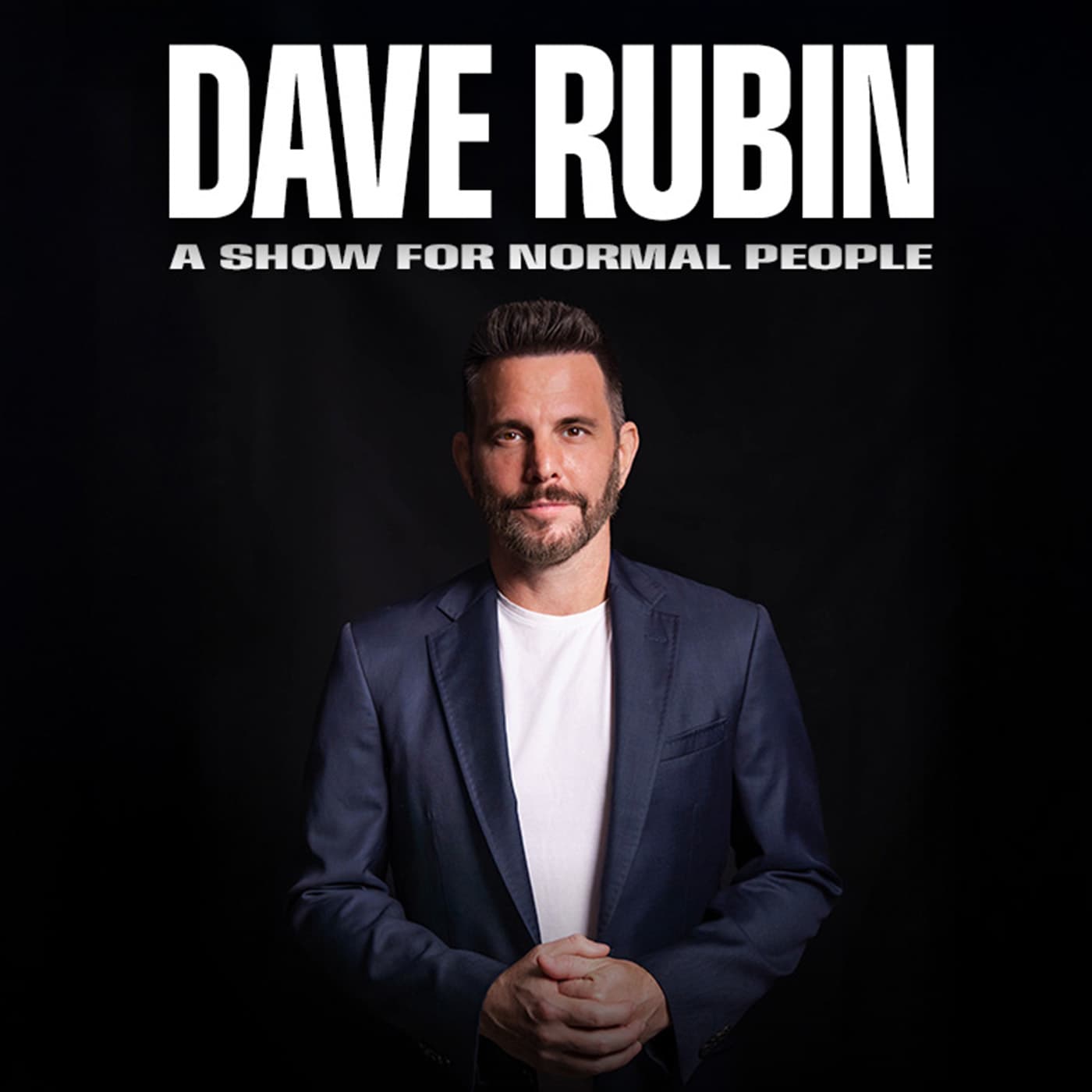
Arthur Brooks is a Harvard professor and author. Dave Rubin is the host of The Rubin Report.
Key claims
Since ~2008, depression is up about 3x, generalized anxiety doubled, and loneliness/addiction/self-harm increased; the best predictor is inability to articulate life meaning. Meaning answers three questions: coherence (why things happen), purpose (why I do what I do), and significance (why my life matters). Technology shifts people toward left-brain analysis and away from right-brain mystery/meaning.
Notable examples
campus activism and social-media scrolling as substitutes; “success addiction” in famous young people; device rules: no devices first hour, phones down at mealtimes, no devices last hour before bed; deep conversation, real love, faith, calling, beauty (art/nature/moral), and suffering.
Written by AI. May contain mistakes. Listen to the episode to check what was said.
Chapters
Tap a time to open that second in VOThe Crisis of Meaninglessness
0:59 to 1:50
Discussion on addiction, self-harm, and the meaning of life.
“Life, when it's meaningless, feels like you're stuck in an airport lounge and the flight, you're not getting any information, but it's just really late.”
Exploring Happiness
1:50 to 2:22
Arthur Brooks shares insights on happiness and the pressures associated.
“Do you find undue pressure as someone that studies happiness and is sort of an expert in happiness to be happy?”
Teaching Happiness
2:22 to 3:24
Arthur discusses how teaching happiness has improved his own well-being.
“I'm Dave Rubin and joining me today is a Harvard professor and author of the new book out today, The Meaning of Your Life, Finding Purpose in an Age of Emptiness.”
Managing Emotions and Expectations
3:24 to 4:56
Discussions on the responsibility of managing emotions in public life.
“Is there something strapped to your finger right now?”
Leading by Example
4:56 to 6:45
Arthur Brooks illustrates the importance of leading by example to children.
“So for me, what I have a lot of pressure to do, thank God, is to never have somebody see me being a jerk in the airport.”
Rebellion and Personal Growth
6:45 to 8:07
A personal anecdote by Arthur about his teenage rebellion and growth.
“And the way that actually the way that you respond, the love with which you respond, notwithstanding the fact that you're jet lagged or anything else, that's what's actually passed on.”
The Search for Meaning
8:07 to 11:28
Arthur discusses the quest for meaning and its correlation with mental health.
“If they want to play with magnet tiles or they want to play with lightsabers, I never say no because I just don't want them to ever have that in their head that I had something better to do.”
Modern Life and Meaning
11:28 to 13:32
Exploration of how modern technologies affect our search for meaning.
“Yeah, well, that's one of the things that we do when we don't know what to do, is that we actually find activist causes.”
Conclusion on Human Connection
13:32 to 14:03
Wrap-up discussion on the importance of human connection in finding meaning.
“I do these interviews, they all say some version of life feels like I'm living in a simulation.”
Understanding Hemispheric Lateralization
14:03 to 15:12
Explore how different brain hemispheres process technology and meaning.
“In some sense, is it just because we've atomized all of these things where most of these things are supposed to be connected in some sense?”
Show all 26 chapters
The Impact of Technology on Relationships
15:12 to 16:45
Learn about the disconnection caused by technology in social relationships.
“The real problem is that our brains, our brains were in the same form that they are currently about 250 ,000 years ago in the late Pleistocene.”
Effects of Addiction to Devices
16:45 to 18:04
Examine how addiction to devices affects happiness and personal connections.
“The second thing is that they're not buying into the lie, that sort of the mechanistic lie of our culture, that success at any cost is all that matters.”
The Consequences of Early Success
18:04 to 20:08
Discuss the long-term implications of early fame and success on individuals.
“basketball player or any athlete, and you were like, I'm going to make it to the pros, and you're great in high school, you're great in college, you make it to the pros, you have a nice career in the pros.”
Cultural Optimism and Hope
20:08 to 21:35
Delve into the theme of optimism as an inherent part of American culture.
“And you're probably going to fall prey to this problem.”
Addressing Device Addiction in Families
21:35 to 23:08
Learn strategies for parents to limit device use and foster meaningful interactions.
“And so what I spend all my time doing is teaching young people and not so young people, by the way, the ways to live that used to be ordinary that no longer are, because that turns out to be the solution.”
Establishing Healthy Device Protocols
23:08 to 25:08
Discover practical steps to break free from device dependency at home.
“You can you can get clean effectively so that you can start living in a different way.”
Navigating Wellness Information Overload
25:08 to 26:35
Understand the challenges of conflicting wellness advice in the digital age.
“And life can be fundamentally different.”
Finding Meaning Beyond Quick Fixes
26:35 to 28:05
Explore the importance of focusing on foundational aspects of life over quick solutions.
“And, you know, the people who are calling me up saying, ah, what do I do?”
Finding Meaning in Life
28:05 to 29:08
Explore various ways to find meaning, including awe, love, and spirituality.
“There was literally a technique that was promoted by Socrates to understand the meaning of your life was to sit in a state of puzzlement.”
The Role of Beauty and Service
29:09 to 31:05
Discuss the importance of beauty and service in cultivating a meaningful life.
“And this answer is because we want to stand in awe of something and standing in awe.”
Moments of Connection and Joy
31:06 to 33:52
Reflect on cherished moments with family and the essence of living in the present.
“Moral beauty is even more important where you actually witness acts of selfless people.”
The Pursuit of Love and Intimacy
33:53 to 36:59
Delve into the importance of love and intimacy in relationships, including prayer.
“And the way, you know, they're just looking at an old man standing with me saying hello, but the way their eyes just burst.”
Navigating Life's Milestones
37:00 to 39:29
Examine how age and significant life events can influence happiness and perspective.
“You know, I, I knew that I needed more love in my life.”
The Seven Habits for Lasting Happiness
39:30 to 42:00
Identify key habits that contribute to sustained happiness as one ages.
“I'm guessing all of them ultimately end up being physically health related.”
Understanding Pain and Medication
42:00 to 45:04
Explore the complexities of mental health treatment and the role of medication.
“Let me ask you something for somebody that, okay, you're, you're going along, you've tried to do some of these things.”
Concluding Thoughts on Happiness and Meaning
45:04 to 46:14
Reflect on the relationship between happiness, meaning, and personal connections.
“I think people can see clearly why I wanted to have you on so soon.”
Transcript
Automatic transcript. May contain errors.0:00Hey, Chicagoland! The Wayfair store is in your neighborhood at Edens Plaza in Wilmette. Finally, you can feel the fabric, sit on the sectionals, and even open the refrigerators. Plus, our in-store designers will help you bring it all together with free one-on-one design support for any project on any budget. Yep, we said free. Oh, and did we mention the cafe? So what are you waiting for? Come see all that's in store. Visit the Wayfair store today at Edens Plaza in Wilmette. Wayfair, every style, every home Still waiting in line? Again? That's time you'll never get back. Save time and money with Stamps.com.
0:38Over 4 million businesses have skipped the line with Stamps.com. Join them to save up to 90 % off carrier rates from your computer or phone right now. Print postage for certified mail, registered mail, and packages in seconds. Then schedule a pickup right from your home or office. For a limited time, go to stamps.com and use code podcast for a free welcome gift. Taxes and fees apply.
1:23Arthur Brooks:levels of addiction and self-harm. Life, when it's meaningless, feels like you're stuck in an airport lounge and the flight, you're not getting any information, but it's just really late. You're just waiting and waiting and waiting for something to happen. Most actually will just shrink into themselves and scroll social media. The big problem, however, is that it's not real life. And so the result is that the neurochemistry of the human brain only works. The sense of mystery and meaning in life only works when we are in real life with other real life humans. Do you find undue pressure as someone that studies happiness and is sort of an expert in happiness to be happy?
1:59Arthur Brooks:The meaning of life is really the answer to three big questions. Number one is the coherence question. The second question is purpose. And the last is significance, which is why does my life matter? And the simulation doesn't cut it. I think people can see clearly why I wanted to have you on so soon.
2:22I'm Dave Rubin and joining me today is a Harvard professor and author of the new book out today, The Meaning of Your Life, Finding Purpose in an Age of Emptiness. My friend, Arthur Brooks, welcome back to The Rubin Report.
2:35Arthur Brooks:I love being on The Rubin Report. How are you, Dave? I am doing just fine, sir. I see you virtually every day, one way or another, on Instagram, constantly telling people to be a better version of themselves. dress right, look the part, live your best life. Seems like you're doing it up over there. Always smiling. Everything fits. It's working for you. So far, so good, I have to say. But, you know, the truth is that the secret to getting happier is actually teaching happiness. You know, the, it's the most amazing thing. We kind of know that if you want to be a better golfer, I mean, learn about golf, go play a bunch of golf and teach it to somebody else.
3:11Arthur Brooks:And, you know, that's actually the reason I got into the business in the first place. I have questions that I want the answers to. And so I learn about it and teach it to other people. And my own happiness is 60 % higher than it was seven years ago. Can you believe it? Well, how do you quantify? How does one quantify their happiness? You have a happy meter. Is there something strapped to your finger right now? What's going on over there? The biometrics aren't solid on this, but what we found is actually over about the last 45 years of research that asking people over time to self-evaluate with respect to their well-being when they compare themselves to all the other people that they know, you get very solid and stable answers.
3:48Arthur Brooks:Now you don't want to answer this in front of your spouse because, you know, it's like, I don't know about you, Dave, but it's, uh, I'm not sure I would tell the truth. You gotta have people. Depends on the day. Anonymous. But, but you know, when I actually take these tests, because I'm giving them to my students again and again and again, and we have a really good one on my website called the happiness scale that's been validated with thousands, like tens of thousands of people. and you can actually see your own progress. And I see mine. Do you find undue pressure as someone that studies happiness and is sort of an expert in happiness to be happy?
4:23I mean, how do you, how are you able to regulate your own emotions properly in a sort of pool that's supposed to be happy all the time?
4:31Arthur Brooks:Yeah, no, that's a good question. What I find is that the expectation, the legitimate expectation is that I'm somebody who's taking my own advice, whether I'm happy all the time or not. Because one of the things that I teach is you're not going to be happy all the time. You couldn't be happy all the time. We're not made to have pure happiness. Now, look, I'm a religious person, so I do believe that we will have unremitting happiness, just not in this life. And we have negative emotions. We have negative experiences. That's normal. What we have a responsibility to do is to self-manage to ourselves, to actually be kind and good to other people, to show love, even when we don't feel love, which are some of the big conclusions, the big lessons actually from this research.
5:11Arthur Brooks:So for me, what I have a lot of pressure to do, thank God, is to never have somebody see me being a jerk in the airport. That would be off-brand, right? And I want to be held to that standard, actually. So you like that. You know, I feel a version of that too, that just as a public person, if I'm out and about, I don't want, you know, this is how I am basically when the cameras are off. But, you know, the camera turns on and there's a 5 % little shift in kind of how you are. Right. But like, I wouldn't want to be at a restaurant and just be a dick to a waiter or something because people may know who I am, but I wouldn't want it anyway.
5:49But there's like an added pressure as a public person. Yeah.
5:52Arthur Brooks:And, you know, the truth is that the way that we lead other people is the way that they see us leading ourselves is what it comes down to. So you and I are dads. and people often ask me, you know, what's the secret to passing on your values to your kids? And it turns out there's nothing about what you say. You could talk to your kids in a foreign language, Dave. All that matters is what they see. You know, when I was a kid, my dad was a brilliant mathematician and a strong man and a proud man, and he would have never bent the knee to any other man. But he was on his knees in prayer every night before I went to sleep.
6:28Arthur Brooks:And so to me, what that meant was you're in awe of the divine. That's what it means to be a good man. It was really all what I saw is what it comes down to. And so when we're trying to lead other people, either our children or anybody else, because we have the privilege of being in public life. I mean, you go to the airport. I go to the airport. People say, I love your stuff. And the way that actually the way that you respond, the love with which you respond, notwithstanding the fact that you're jet lagged or anything else, that's what's actually passed on. that's what truly has an impact you know i know last time when i had you in studio we talked a little bit about jordan peterson and one of the privileges that i got to see when we were on tour originally was him putting that into practice every day because we would go to places people would be waiting for us at the airport waiting for him at the airport you know just hoping that they were maybe going to see him and he would be decent and respectful and kind to every person ask their name etc etc so wait i want to back up though to to what you said about your father so did that model always make sense to you?
7:28I mean, did you have a, did you go through a, you know, 16 year old rebellious phase? I'm not, I'm not into this. None of this is working for me. Or were you just kind of on the path?
7:36Arthur Brooks:Well, you know, I actually had rebellion for sure. And when I was 16 years old, my rebellion is like, I, I was raised as an evangelical Christian. I became a Catholic, you know, and my, you know, I thought that that was like really, really rebellious. My parents were like, I guess it's better than drugs, you know? And then of course, in my twenties, I was lazy. I was never off the path. I was just not, I was just sort of lazy. But by the time I was about 30 years old, I said, I want to be like my dad. I want to be more like my dad in all the good ways. And that was really the good way that I saw that's what sticks.
8:07Arthur Brooks:And so just make sure your kids, everybody watching us, make sure your kids see them, the person you want them to be because their future you, you know, one thing I try to do with my kids all the time is that if they ask me to play with them, I never say no. I'm pretty sure I've never said no. If they want to play with magnet tiles or they want to play with lightsabers, I never say no because I just don't want them to ever have that in their head that I had something better to do. And even if I'm in the middle of something and I can only do it for a few minutes, I really try that. So that's one little piece of how you put it in action, I suppose.
8:41Arthur Brooks:Yeah, for sure. And that's actually, when you do that, Dave, you're raising your grandchildren right there. That's how you raise your grandchildren, is the way that you raise your kids. And that's how you pass on your values, the values of, you know, honesty and decency and compassion and love. It's also interesting. My wife has this idea about that. It's related to that. She says that, and it's true, I've seen this, when our kids who are now 27, 25, and 22, and two of them are dads. And when they give her a hug, she's never the one who lets go first.
9:17Arthur Brooks:So they can never remember. They'll never remember my wife letting go of the hug. That could be some seriously long hugs. You have really long family dinners. Oxytocin release in the brain is maximized after a 22 second hug, but that's mostly between romantic partners. So anyway, we have to adjust it for. All right. So you have a spouse that's working with you on this. You got children that seem to be following that path. You've got the grandchildren already. However, you are, you're at Harvard. You're in Boston. You're in Massachusetts. It's a kind of wackadoodle lefty intellectual place where I'm going to guess if I walked around Harvard, there's probably a, I could be wrong on this, but I would guess that a lot of the kids aren't happy.
10:04at some of these elite schools, that they're way too in their head. We know rates of, you know, neuroses and paranoia and just general worry about the world, all the rest of it. Can you comment on that?
10:17Arthur Brooks:Yeah, no, the truth is the data are, I mean, you're exactly right on the data. And it's not just about elite universities, it's people under 30 in general is what we find that, you know, since about 2008, depression is up by about a factor of three. Generalized anxiety has basically doubled. Higher levels of loneliness, higher levels of addiction and self-harm. And it doesn't make sense in so many ways. You know, that's actually why I wrote this new book, The Meaning of Your Life, because I found that the main correlate, the best predictor of those maladies is the inability to articulate the sense of life's meaning.
10:51Arthur Brooks:And so saying my life feels meaningless is the best predictor of depression and anxiety. And that's craziness because you actually see that that was a very unusual thing to say until about 2008. And then that exploded alongside depression and anxiety. So my research actually went to this whole meaning thing. I've been looking at this question for the past five years. Number one, what are they talking about? Number two, where do you go to find meaning? And number three, how do you have to live differently to find it? And this book is a six-part plan to actually find the meaning of life in the next six months.
11:24So what are they talking about? If you were just walking around to your campus just listening, basically. Like, what are they talking about? Is it just, it must be Palestine. It must be Palestine.
11:34Arthur Brooks:Yeah, well, that's one of the things that we do when we don't know what to do, is that we actually find activist causes. Most actually don't do that with activism. Most actually will just, like, shrink into themselves and scroll social media or watch YouTube shorts. And a lot of YouTube shorts are not, you know, meaty, like Dave Rubin YouTube shorts, which I strongly recommend. They're, you know, dumb stuff is what it comes down to. And the reason is because life, when it's meaningless, feels like you're stuck in an airport lounge or in a terminal and the flight, you're not getting information, but it's just really late.
12:06Arthur Brooks:And you're just waiting and waiting and waiting for something to happen. Now, some will actually take that activist route on campuses to be sure. But all of these things that are substitutes for actually the meaning of life is a problem. Now, what do they want? What are people looking for? The meaning of life is really the answer to three big questions. Number one is the coherence question, which is why do things happen the way they do? You got to have an answer to why things actually happen. Some people use science. Some people use religion. Some people, when they're really desperate, use conspiracy theories.
12:36Arthur Brooks:You know, when you've got somebody who's going berserk on conspiracy theories in your family, don't actually confront them with data and tell them they're a moron. That's a cry for meaning. That's what it is. That's because they're unhappy. The second question is purpose. And purpose is the why question. Why am I doing what I'm doing? A lot of people are just, you know, they feel like their lives are passing by and that their lives don't have a why. They don't have goals. They don't have direction. And the last is significance, which is why does my life matter? That's the love question. I mean, for whom does my life matter?
13:08Arthur Brooks:You got to have somebody that your life matters to. I mean, for you, you're married, you got kids, you have friends, but more and more and more people don't. And so then the question is because why can't they answer these questions? There's something blocking that. And that's a lot of what this research is, is how our brains have become different than they were. We've used our brains differently than we used to. And so when you ask young people today, which I do a lot of interviews, not just survey research, I do these interviews, they all say some version of life feels like I'm living in a simulation.
13:43Arthur Brooks:i get up i look at the device you know i go to work on zoom i date on the apps my friends are virtual um i for my sense of accomplishment i do a lot of video gaming it's like a matrix and there's one thing dave you can't simulate and that's the meaning of your life and the reason is this what it comes down to meaning is actually understood in the right hemisphere of your brain technology the way that we use technology analysis and almost everything that we do with technological tools is in the left side of the brain this is the theory called hemispheric lateralization simple way i should say that's a complicated way we say complicated stuff to get tenure right a way of saying that the right and the left do different things this is mystery and meaning this is technology and distraction is what it comes down to and the tip of the spear is the way we've been online and how it's forcing everybody to the wrong side of their brain to understand the meaning of their life.
14:43Right. In some sense, is it just because we've atomized all of these things where most of these things are supposed to be connected in some sense? You're going to have friends out of that friend pool is going to come your mate and your other social things where now we've atomized it so you have your video game world and your dating world, but they're on different apps. Everything has just been so pulled apart. There's no connective tissue between these things.
15:07Arthur Brooks:Yeah, that's part of it. The big problem, however, is that it's not real life. The real problem is that our brains, our brains were in the same form that they are currently about 250 ,000 years ago in the late Pleistocene. And at that point, all Homo sapiens were living in bands of 30 to 50 individuals in kin-based hierarchies. and the way that we understood each other, the way that we took care of each other, the way that we have a sense of altruism toward each other would be like sitting around a campfire, eating, putting pieces of yak meat into our mouths and talking. And, you know, you couldn't know somebody except in real life.
15:44Arthur Brooks:And so the result is that the neurochemistry of the human brain only works. The sense of mystery and meaning in life only works when we are in real life with other real life humans. And the simulation doesn't cut it. Now, there's a lot of reasons for us to do technology and to answer how and what questions. All the analysis and the culture of grind and work, that's fine as far as it goes, but it will never give you a sense of meaning because literally it's using the second half of our brain. When you're interviewing these kids, how often do you meet a kid that just is kind of happy-go-lucky, that doesn't necessarily think about a lot of these things, that doesn't necessarily think about the spiritual part of it?
16:26but, you know, wakes up and is kind of happy and going about their studies and will get to tomorrow's problems tomorrow and it's kind of okay.
16:34Arthur Brooks:There are some, I mean, there's a, there's a, you know, there's a, it's a definitely a minority at this point, but you do find them. And what they all have in common is that they're not, they're not addicted to their devices. That's what they all have in common. The second thing is that they're not buying into the lie, that sort of the mechanistic lie of our culture, that success at any cost is all that matters. we've been here's the problem the machines have taken over our private life and the machines have taken over our our work life as well our machines have taken over our relationships our machines have taken over our ambition you know what happens is that if you believe that there are questions that can't be fed into chat gpt you're on the right track you know and and there's a lot of students at harvard and a lot of other places that don't is what it comes down to now it's interesting because my kids, I saw it happen a little bit differently for weird reasons.
17:24Arthur Brooks:I had one kid who was in a religious community coming out of high school. And so they weren't getting addicted to social media. They were, you know, he was going to mass every day and he was actually, you know, praying a lot of the day every day. Then, you know, about six years later, he met the love of his life and got married young and had kids. My two other kids are military. So my two other kids have high-level security clearances because they're in the Marine Corps, they can't have social media. And so the result is just by the structure of the lives that they had, that they were protected from it.
18:00Yeah, that's actually what I was going to ask you next, because as you were saying that, I was thinking, well, all right, so let's say you were a great basketball player or any athlete, and you were like, I'm going to make it to the pros, and you're great in high school, you're great in college, you make it to the pros, you have a nice career in the pros. Your whole life has been dedicated to one singular focus thing that puts all your physical and mental and spiritual energy into that, you may not have to worry about a lot of the big questions. Then comes the day after, and then suddenly you're, you know, old in that world, you're 35, and then you're flooded with all of those questions, which is probably different than a 16-year-old being flirted with those questions.
18:34Arthur Brooks:Yeah, yeah. That's a different problem, actually. So I work a lot with, you know, people who've gotten famous young, like Hollywood actors. That's almost one of the worst things that can happen to your brain. And so that's what leads to what we call the success addiction in which you only feel alive when an extraordinary thing is happening to you. Those people, generally speaking, only get sufficient amounts of dopamine. And, you know, a lack of dopamine leads to a syndrome called anhedonia, which is the inability to feel pleasure. And they have anhedonia unless they're in the presence of people who are admiring them, admiring strangers.
19:10Arthur Brooks:That's what actually will happen. So the worst thing you can do to your kid is make him a Disney star. They'll be screwed up for life because their brains actually won't develop in that particular way. And then people who are great athletes, one of the things that they find is they chase and chase and chase and chase and chase for the rest of their lives. But these are a really small minority of people. The main reason that you have people who are so messed up today is because they got hooked. They don't remember the before times. Dave, you're way younger than me, but you remember the before times.
19:37Arthur Brooks:You remember that, you know, before device. How old are you? How old are you again? I think we did this last time. It's not we're not that one. But I mean, we got 12 years. You got 12 years on me. Yeah, we grew up at the basically same time. If only I had your looks. Anyway, I mean, it's like the before times, we had to do things in person. So the result of it is that we have way, way, way less likely into falling into this ennui, into this syndrome of meaninglessness. But if you don't remember the before times, if you were coming of age after 2008, you don't remember before your life was actually mediated by these screens, before the culture of machine life wasn't surrounding you all the time.
20:20Arthur Brooks:And you're probably going to fall prey to this problem. do you think there will eventually be a massive cultural bounce on that that somehow there will be some ancient thing awoken in in us that people will just be like okay that was fun yeah i do moving moving out to you know nowhere people i i actually do i do believe that that's the case i mean it's one of the things that we have the things we always get wrong you know i mean you and i are fundamentally optimists you know it's i know you're not better be if you do if you talk for a living, like you better be. Otherwise, it's going to be pretty soon.
20:54Arthur Brooks:You know, who would bet? I mean, America is the land of optimism and hope is what it comes down to. And it's the triumph of human spirit is everything that we're about. I mean, the Rubens, I'm just going to take a guess. They were probably running from some godforsaken shtetl, like two, three generations ago or something. Yeah. My great grandparents. Yeah. There you go. And, you know, that's the same thing. My ancestors were moving west every generation one step ahead of the law. And, you know, the whole point is that this is in our genome. The trouble is that you can get a punctuation to the equilibrium of optimism and hope and screw up a generation.
Read the full transcript
21:31Arthur Brooks:And that's what we've done. And so we desperately actually have to get it back. And so what I spend all my time doing is teaching young people and not so young people, by the way, the ways to live that used to be ordinary that no longer are, because that turns out to be the solution. So how do you figure out for someone that doesn't remember the before time? Now some of those people are becoming parents. Now they're going to start having kids and they're going to go to restaurants and do what everyone does at restaurants, which is hand the kid an iPad or a phone just because they want a moment's peace.
22:04So what do you do? What do you do if you've done? Okay. So there's that version of it, right? Where they don't even remember the before time, but what do you do for the people that do remember the before time that just they've, they're living right. They take their kids out to dinner and they just want a little of that peace. And you see them do it. We haven't, we haven't gotten that far yet. Like we will sit there at the table and let them pour the salt all over the place and really piss off that waitress. But, but I, but sometimes people want more peace. And, and so that seems to be something you have to grapple with or
22:32Arthur Brooks:contend with. And so those times are actually not the punctuation to the equilibrium of life. No big deal. The real problem is what you're doing at dinner and home. That's the real problem. And the number one predictor that your kids are going to get screwed up by devices is if you're looking at your device during dinner is what it comes down to. So I talk to parents all the time. I talk to people who are like you who have young kids. And the whole point is I put together protocols on device use that people can enforce inside their home life that can fundamentally change the culture inside. So for example, just with a few little alterations, you can break the grip.
23:11Arthur Brooks:You can you can get clean effectively so that you can start living in a different way. And I use this language of addiction on purpose. You know, if you go to, if you drink it too much and you go into rehab or you get into recovery, the first thing they're going to have to do is break the grip of the physical addiction on you. And then you actually have to live differently with new friends and with an eye to the divine and, you know, have to live in a new way that's different. So when we talk about breaking the grip of the devices, there's device protocols that are in this book. There's a whole chapter on how to get clean.
23:42Arthur Brooks:And basically, it comes down to three easy things. Number one is the first hour of the day, no devices. First hour of the day. That's super hard for people because they use it as their alarm. They wake up in the middle of the night, they check it, which is unbelievably bad for your sleep, but it's also bad for your cognitive wiring for the day. You neurocognitively set your day in the first hour that you're awake. And that means you do something in the first hour of the day that's actually healthy, like praying and or exercising and not using your device. And after, it only takes three weeks before that grip is broken.
24:17Arthur Brooks:The second is mealtimes. And part of the reason is because we get a maximum amount of this neuropeptide in the brain called oxytocin that links us to our loved ones. You know, when you look at your kids in the eyes and it's like the 4th of July, if you're at dinner and the phone is on the table facing down, that actually, your attention to that because you'll think, I wonder if somebody texted that will actually cut your own oxytocin flow that will make you less receptive to that love molecule for your children. And the third is the last hour before bed, partly because you want to maintain a healthy sleep architecture and a healthy functioning pineal gland for your natural melatonin.
24:55Arthur Brooks:But part of it is just because, I don't know about you, man, but the last hour of the day is when you link up with your spouse, right? I mean, you get maximum amount of oxytocin when you stare your spouse in the eyes before you go to sleep. You'll sleep better. You'll feel better. Just those three things. And life can be fundamentally different. What about how we are hit endlessly with 20 different versions of this? Meaning I see a lot of you on my Instagram, as I said. So because I'm sort of, you know, I'm sort of mostly in the politics world, but now it's sort of the wellness and spiritual world are kind of adjacent to that, obviously.
25:30And I'm interested in that. But once you click down that, you end up with 500 conflicting people saying all of these different things. And then people just end up in that rabbit hole of trying to fix themselves all day long instead of actually doing it.
25:44Arthur Brooks:Yeah, yeah. So that's a big problem that actually people have with the protocols lifestyle. You know, it's like I want to be – I want to do the 10 % as opposed to the 90%. You know, live, make the main thing. The main thing is what it comes down to. That's an ancient Stephen Covey idea. Pay attention and live the things that are actually most important and then get into the marginalia once you've mastered the 90 % is what it comes down to. A lot of people get really stuck on this. So they want to know, you know, the nine supplements that I need to take. But they're not actually eating a protein-rich diet and going to the gym for Pete's sake and trying to get seven hours of sleep.
26:19Arthur Brooks:I mean, it's just they're not doing the big, big, big things. And so that's what I talk about a lot with people. I say, you know, I'm going to give you the details on this. But most of the time, I'm going to be talking to you about doing the big things. Are you doing the big things? And the people that I work with, you know, I don't have clients. I have friends. And, you know, the people who are calling me up saying, ah, what do I do? I say, let's go over the big things. Let's go over the big things again. And what are they usually missing? I mean, okay, so seven hours sleep, most people can basically get that.
26:48I, you know, most people probably should work out more, but probably do a little something. I mean, what is this? Is the whole the spiritual one? Is that usually the one that's the biggest?
26:57Arthur Brooks:Well, that's the main question for finding the meaning of life, actually, is doing this science-oriented but common sense. I mean, your grandma wouldn't say, you know, great-grandma Ruben wouldn't be like, ah, it's nonsense, you know, like so much of science, like so much of behavior. Hey, great-grandma, you know, I read an article that says that polyamory is good for your marriage. And she's going to be like, Polly, what? Right, right. But this is real stuff. And so it's basically six things. Number one is deep conversation about things you can't Google. In other words, it's the, you know, I can't remember.
27:34Arthur Brooks:Where did you go to college, Dave? I went to Binghamton University. Oh, nice. I remember you told me that, which is one of the great, the four big, the four great Sunnis, actually. That's a terrific. Do they still have any great ones? It's a little hard to tell what's going on in New York, but that's a different topic. No, I get it. I mean, New York is a problem, but those are still really good schools. They're still really good schools. And, you know, at 1130 at night before you were stuck to your device and you'd come home from a party with your friends and you'd have like these deep pretentious conversations that were activating the right hemisphere of your brain.
28:04Arthur Brooks:And that's actually a huge part. The ancient Greeks called that aporia. There was literally a technique that was promoted by Socrates to understand the meaning of your life was to sit in a state of puzzlement. That's why the Zen Buddhists have koans. They train their junior monks to become enlightened by puzzling over questions that don't have answers. So that's number one, is you got to stand in awe and puzzlement. Number two is falling in love with a real person. This is not OnlyFans. This is not, you know, this is not, you know, the AI girlfriend experience. This is the real deal is what it comes down to.
28:42Arthur Brooks:And that means putting your heart at risk and getting your heart broken and learning again, just like you and I did it the old fashioned way. Right. Number three is actually looking for your faith is spirituality and faith. And so, you know, this is one of the things that I'm actually finding. I mean, you and I come out of the world of public policy and politics. I mean, this is like I was running AEI. Right. And, but we're, we all wind up asking the big questions at the end of the day is what it comes down to. And this answer is because we want to stand in awe of something and standing in awe.
29:13Arthur Brooks:This is called transcendence. You transcend through your spiritual life or the way that you serve other people. And that takes you out of the me self. And then you can, you can actually observe the world. That's number three. Number four is looking for a calling in your work. That's meaningful because you serve other people. That's what it comes down to, which I know you do, but not everybody can actually find that so i talk in the book about all the ways to actually make your work into a calling even if you hate your job how to make your work into a calling the fifth meaning it meaning because it can provide for all of the other things correct so if your work is not that meaningful in some sense it's like well as long as it's serving some of those other goals then you're yeah and you're serving other people and so i talk about the different ways that people who hate their jobs can can actually find great satisfaction by, through their jobs, serving their colleagues, for example, which is this huge thing.
30:02Arthur Brooks:I mean, I was doing Drew Barrymore's show a couple of months ago, and this guy in the audience, because that was, you know, audience questions, which are fun and awesome. He's like, I'm a drone, man. I do data entry, and I'm in a cubicle, and I hate it. And what do I do to find meaning? And I said, well, at 2 o 'clock in the afternoon, go into the break room, make a fresh cup of coffee, bring one to the guy in the next cube and say, dude, you look like you could use a fresh cup of coffee. and look at the look on his face. And you're like, you looked at your job better that day because service is everything.
30:32Arthur Brooks:But the last two are beauty. And there's three kinds of beauty that really illuminate the right hemisphere of the brain. Artistic beauty, natural beauty, and moral beauty. Those are the three types of beauty that really matter because they just change your brain. And the machine culture is not beautiful. It's just not beautiful. I mean, it's like looking at nature through a screen. I'm sorry. You know, and being on vacation at, you know, Sequoia National Forest and just looking into your phone to take pictures of it, you've destroyed the natural beauty of it. Moral beauty is even more important where you actually witness acts of selfless people.
31:10Arthur Brooks:It's one of the reasons that everybody loves the life of Mother Teresa because it's tremendously inspiring. And last but not least, and this is the hard one, is suffering. When you're suffering, your right brain is lit up like a Christmas tree. That's the reason that everybody will say, I learned the meaning of my life in the worst hour of my life. You know, so we're taping this a little bit before we're posting it. And this Iran war is happening right now. And maybe it'll be wrapped up by the time we post this or not. But I just, I'm going to text it to you right after this. I just saw a video of an American fighter pilot who had to eject out of his plane.
31:49He lands in Kuwait. Did you see this? And the Kuwaitis, these guys are running at him with the phone. Can we help you? Can we help you? Are you okay? What do you need? You know, we love America. And it's, and the guy's obviously shell shocking. And it's like the most unimaginably beautiful thing you could possibly ever see. And it's a guy standing in the desert.
32:07Arthur Brooks:I know. When you witness moral beauty, it's like you're friends with Rainn Wilson, right? Are you friends with Rainn? We've tweeted a couple of times over the years. And I like the office. We're really great friends, Rainn Wilson and I. And his uncle is a very famous psychologist named Rhett Diesner. And Rhett Diesner, who's also Baha 'i, just like Rainn Wilson is a member of that, writes about moral beauty. And so I cite his stuff all the time, and he talks about this sense of moral elevation and the physiological nature of how it works. And when you actually witness somebody doing something morally beautiful, it uplifts you for a particular reason.
32:46Arthur Brooks:And that's just like when you see a work, you know, when you hear a song, you don't know why it chokes you up. anything by the way that makes you emotional and you don't know why it's because your right hemisphere is working that's actually how you know when something actually makes you like when you think you know something anything about your kids that actually isn't tragic and you start like you're going to cry you know that feeling or or or something about religion that reminds you of something or a train whistle from when you were a little boy that's because your right brain is working and that's these are the moments that we actually need to induce in our lives you know i'll tell you one thing that is definitely, you know, my kids are three and a half.
33:23And one thing that I've definitely noticed is when I, there are certain moments that I'm doing something with them and I'm thinking it will never get better than this. Like this is as good as it gets. We, we almost nightly now we have, uh, this Frankie Valley. They love the song soul. It's a disco album he did in 1979 and we do a soul dance party and they run around like crazy people. And quite literally last week, um, I I've met Frankie a couple of times and I showed him a video of the kids dancing to Solon. I got him to say hi. And then I showed it to them saying, this is Frankie Valli, 91 year old Frankie Valli saying hi to you.
33:56And the way, you know, they're just looking at an old man standing with me saying hello, but the way their eyes just burst. And now they keep asking me to see that video. And it's like, that, how could anything be better than that?
34:08Arthur Brooks:You know? I know. I know. And you know, the truth is when you're living in the simulation, there aren't those moments. I mean, somebody could say, well, that's a video, Dave. It's a it? No, no, no. It's you in person showing them the video. Life is in the moment. It's a funny thing. The human brain, the prefrontal cortex of the brain, which gives us this incredible time travel ability to prospection, which means living in the future, thinking about the future, thinking about how people will see you, or living in the past, which is retrospection. That's fine. That's what makes our species so unbelievably successful.
34:45Arthur Brooks:But the moments right now when you're with the kids listening to that song, it really proves the point that you can only live, you can only love in the present. Love only exists in the present. Love doesn't exist in the future. Love doesn't exist in the past. It's right now. And if you're in the, in the matrix, if you're in the simulation, in the left side of your brain all day long, the thing that's really missing is love. Do you have to work to do it sometimes? So you're obviously not going to be around your kids or your wife all the time or in every situation, every meeting you're in or this or that, you're not always going to be around love.
35:21So what do you do to stay locked into that state as much as possible?
35:26Arthur Brooks:Yeah, it's hard. Or have you just trained yourself into it at this point? I wish. I wish. I mean, I've trained myself into a lot. And part of the reason is because happiness in general is really hard for me, which is why I study it. You know, I have gloomy parents. Half of your happiness is genetic. You know, I got gloomy parents who died young, and it was tough. It was very sad a lot of the time, a lot of health problems. And, you know, the truth is that it was hard for me. And so the result is I have to have really, really strong discipline. You know, I do have very high negative affect, which is just another academic way of saying, you know, strong negative emotion.
36:02Arthur Brooks:And by the way, there's nothing unusual about that. It's not like I'm depressed or, you know, something clinically wrong. but the truth is that I have to pay attention to these things. I have to take my own advice. And so I've really altered my life in a lot of ways. I start every morning by going to mass because I want to stand in awe, in transcendence. I finish every night by praying and I'm on the road about 48 weeks a year, you know, because of what I'm doing for a living. But every night before I go to sleep, my wife and I, we pray together because prayer, by the way, is the most intimate thing you can do with your partner.
36:35Arthur Brooks:It's way more intimate than sex, is prayer, actually, because what are you doing? You're fusing the right hemispheres of your brain as an antenna of meaning to the divine. I mean, it's like no joke. I know couples that have been married 50 years, like super serious religious people. They've never prayed in front of each other because it's too embarrassing. They'll get naked, but they won't pray together. And the reason is because that's actually more intimate. So I'm taking care of that. The second thing is I've altered the way my life works. You know, I, I knew that I needed more love in my life.
37:06Arthur Brooks:And so I, you know, I, I went to my kids who are all like retro. They're, they're, they're more conservative than I am politically. Um, they live a more traditional lifestyle. I mean, two are, they got married at 22 and 23, the older ones, two of the three are military. As I mentioned before, they're all religious. And, and I said, okay, how do you want to live? And they said, we all want to live in the same place. And so we all moved to the same place and, and, and two of the families are, we're living in the same house, which is like 1940. I mean, my, I, two of my grandsons lived downstairs from me and, and that's the right thing to do if you possibly can.
37:44Arthur Brooks:I mean, that intergenerational living is a strong way to live, but that's entirely because I'm trying to eat my own cooking, Dave.
37:53What do you think that there are certain just date points, chronological points that can, can tighten some of this stuff for you. And by that, I mentioned you, I'm 49 and I know now, like when I was turning 40, I remember thinking, man, I'm going to be 40. Like I'm, I'm going to be old at 40. And now I look at 50 and I'm like, I can't wait to be 50. Something, you know, I, I take better care of myself now. I'm my career is solid. My relationship's great. My kids, like, so the stuff is there, but like, I look at 50 as like, yeah, this could be great. And maybe I could even be better at 60. Is that possible?
38:27And we'll see about 70. And then, and then I know, obviously you're going to get diminishing returns in most facets at 80, 90, whatever, but you know, science is also changing and AI and all the rest of it. But did you find that certain calendar points also can, can kind of turn things for people?
38:42Arthur Brooks:They can. And one of the biggest and most unwelcome surprises that people experience is that they think they're going to get happier through their 30s and 40s, and they don't. Most people actually get unhappier through their 30s and 40s. Not a lot. It's not catastrophic. But that's one of the things that David Blanchflower at Dartmouth, he's been doing work on this for years and years and years. And it's all over the world. It's this U-shaped thing. And then in your early 50s, for almost everybody who's not clinically depressed or addicted, almost everybody gets happier through their 50s and 60s.
39:14Arthur Brooks:Your 50s and 60s tend to be happier. Then the population breaks up into two groups. Half the population keeps going up in happiness and the other half of the population starts going back down again. And that's entirely based on seven habits. You want the seven habits? because you're 40 days. I'm guessing all of them ultimately end up being physically health related. So four of them are diet, exercise, smoking, and drinking. Okay. The obvious stuff, right? And, you know, obviously don't, and it would be like cannabis too. It'd be euphorics. It's basically use very sparingly or not at all. Don't smoke.
39:49Arthur Brooks:Don't eat like an 11 year old and get good exercise. Duh. Right. But the other three are number one, you need to have excellent technique unique at dealing with your problems. And that means you get good at something. Maybe it's journaling, you know, maybe it's religion, maybe it's therapy, maybe it's, you know, metacognition through Vipassana meditation, whatever. The next is learning. The happiest people after 70 are those who are in the habit of learning, learning, learning, learning, learning, which by the way, for you and me is what we do for a living. I mean, you're a super strength. The reason you're so good at what you do, besides the fact that you're a hard worker and highly intelligent is that you're curious.
40:25Arthur Brooks:You're like one of the most curious people I've ever met. And that's a super strength because you're a learner. Last but not least is love, is your loving relationships. And there's two kinds that really correlate with people happy after 70. Number one is a strong and stable marriage. Number two is close personal friendships. And to be happy, you don't have to have both. It's great if you have both, but you have to have one. You can't be without either is what it comes down to. And so those are the seven ways to be out And it seems to me that you're killing it, man. I'm doing all right. You know, I'm really trying.
41:00Something about 50, just seeing it in the mirror. And when we talked last time, like, I'm in better shape than I've been in probably 25 years now. I'm playing basketball a couple times a week. I work out every single day. You know, I'm out in Florida where the weather's nice. The kids are, you know, I just got a bike yesterday, so we're taking the kids out now. Like, there's just enough. And then the work stuff. and it all, it just feels very full at the moment, knock on wood. So, so that's good.
41:25Arthur Brooks:And then the thing is also, as you get into your fifties, it's a really, really good opportunity to develop your spiritual practices. I mean, really, really developing your spiritual practices. And I can't remember where you are on that particular journey, but that's - I'm a believer. I mean, we're, we're, we're doing Shabbat now and, you know, we're, we're trying to incorporate a little more of that. And, you know, it's, for me, it's, it's more tradition than, than necessarily reciting certain things or that sort of thing. But, you know, we can pick this up in a couple months and discuss it again.
41:53Arthur Brooks:That's great. You know, so you're, maybe your fifties are Torah, Torah, Torah, Torah. I'm reading enough already, but it's a lot of reading. Let me ask you something for somebody that, okay, you're, you're going along, you've tried to do some of these things. You seemingly are just sort of stuck. You know, the other part that we haven't talked about is that we have a very over-medicated society. Where do you put some of these antidepressants and whatever when somebody is just, they've tried the stuff, it's not working. Is your answer short of like that they really have deep, you know, imbalances, chemical imbalances, that it's just a shortcut pretty much all the time?
42:32Arthur Brooks:Well, so I'm not against psychiatric drugs. I mean, that would be foolish. And psychiatric drugs literally saved my mother's life. And for a lot of people who have really grave, not just chemical imbalances, but just, you know, mood disorders that are beyond the pale, they can be truly life-saving. And, you know, Jordan Peterson has talked about this, how important it is too. And he's a completely credible witness on this because there's one thing that Jordan Peterson is incapable of doing is lying. He can't say something he doesn't believe to be true, which is, you know, he's suffered a great deal because of that.
43:05And preternatural
43:08Arthur Brooks:ability to, you know, tell the truth. So, so it's great for a lot of people. The trouble, a trouble with it is that we live in a culture that has an eliminationist philosophy toward pain. And this is an important thing. And, you know, I think I've told you before, I work a lot with the Dalai Lama over the past 12 years. And the Dalai Lama has this, and the Buddhists in general have this math where they say that suffering equals pain times resistance, resistance to pain, Pain and suffering are not the same thing. We talk about it in the same sentence. But you find people with great equanimity of real enlightenment who have incredible amounts of pain but low amounts of suffering.
43:44Arthur Brooks:And the reason is because of resistance. Now, the reason that we're getting this wrong for young people today who I believe – I'm not against medication, but it's not the first line of actually how we're going to understand our pain is because we have an eliminationist thing. If you go to campus counseling at most campuses, including mine, and you say, look, I'm feeling really sad and anxious. They're going to say, well, we got to fix that. Well, dude, if you're at Harvard and you're not sad and anxious, you need therapy. It's normal. I mean, it's like Newsflash, Arthur and Dave are also sad and anxious.
44:20Arthur Brooks:That's just life is what it comes down to. Now, again, it can be exaggerated. It can be dysregulated. I completely get that. But the truth is that they're an incredible opportunity to learn and grow if you understand they're not to be eliminated. The pain literature on physical pain, for example, it's very clear that if you have back pain, I got a lot of back pain because, you know, it's like I'm 61. Engineering, it's all messed up. And so the result is that I know perfectly that if I baby my back, I'm going to wind up with a lot more back pain. You know, do your life is what it comes down to.
44:52Arthur Brooks:And the same thing is true with most kinds of emotional pain, that they're there to teach you something you're supposed to learn. And understanding and practicing techniques of non-resistance, that's a better path. I think people can see clearly why I wanted to have you on so soon. We usually don't do two sit-downs within a couple months, but it was fairly obvious, well beyond the book. We're going to link to the book right down below. Any final thoughts on your day of happiness over here? Yeah, you know, thank you for doing this. It's really meaningful to me to talk to you. And part of the reason is because, you know, you've had this really, really interesting journey and evolution in your own career and life.
45:30Arthur Brooks:It's clear that you're living with a lot of meaning. And the meaning is actually coming from all of the things that we're talking about here. Happiness and meaning are a function of love and loving in real life. You're a testament to that. And I'm really grateful for your friendship. it wow well that that is a two-way street my friend will i see you at arc in london this year that's where we the where we met originally yeah that's right i'm gonna be there oh good all right wait i would say a drink on me but i feel like you don't drink at all now or maybe there's a steak on me how about steak how about steak drink but you know let's go have a steak together steak done thanks arthur
46:13Thank you.
From the publisher
Dave Rubin of "The Rubin Report" talks to Arthur Brooks about parenting, values, and raising children through example; why kindness, presence, and family habits shape future generations; the rise of depression, anxiety, and loneliness among young people since 2008; the modern crisis of meaning and purpose; how activism, social media, and endless scrolling replace deeper fulfillment; and Brooks' research on the three pillars of meaning—coherence, purpose, and significance; how technology may be undermining happiness and human flourishing; the modern crisis of meaning and happiness; how social media, smartphones, and digital life have replaced real-world human connection; why our brains evolved for small in-person communities, not virtual relationships; rising depression and loneliness among young people; the link between device addiction and unhappiness; success addiction, dopamine, and fame; and why Brooks believes a cultural backlash against screen-driven life may restore purpose, community, and optimism; parenting in the smartphone era and raising kids without device addiction; why family dinner habits and parents' phone use shape children's wellbeing; simple digital detox rules like no devices the first hour of the day, during meals, or before bed; the importance of focusing on life's "big things" over wellness hacks; and Brooks' research on meaning through deep conversations, real relationships, faith, purposeful work, beauty, and even suffering as keys to happiness and human flourishing, and much more.
Get Arthur Brooks' new book The Meaning of Your Life: Finding Purpose in an Age of Emptiness here: https://www.amazon.com/Meaning-Your-Life-Finding-Emptiness/dp/0593545427
