
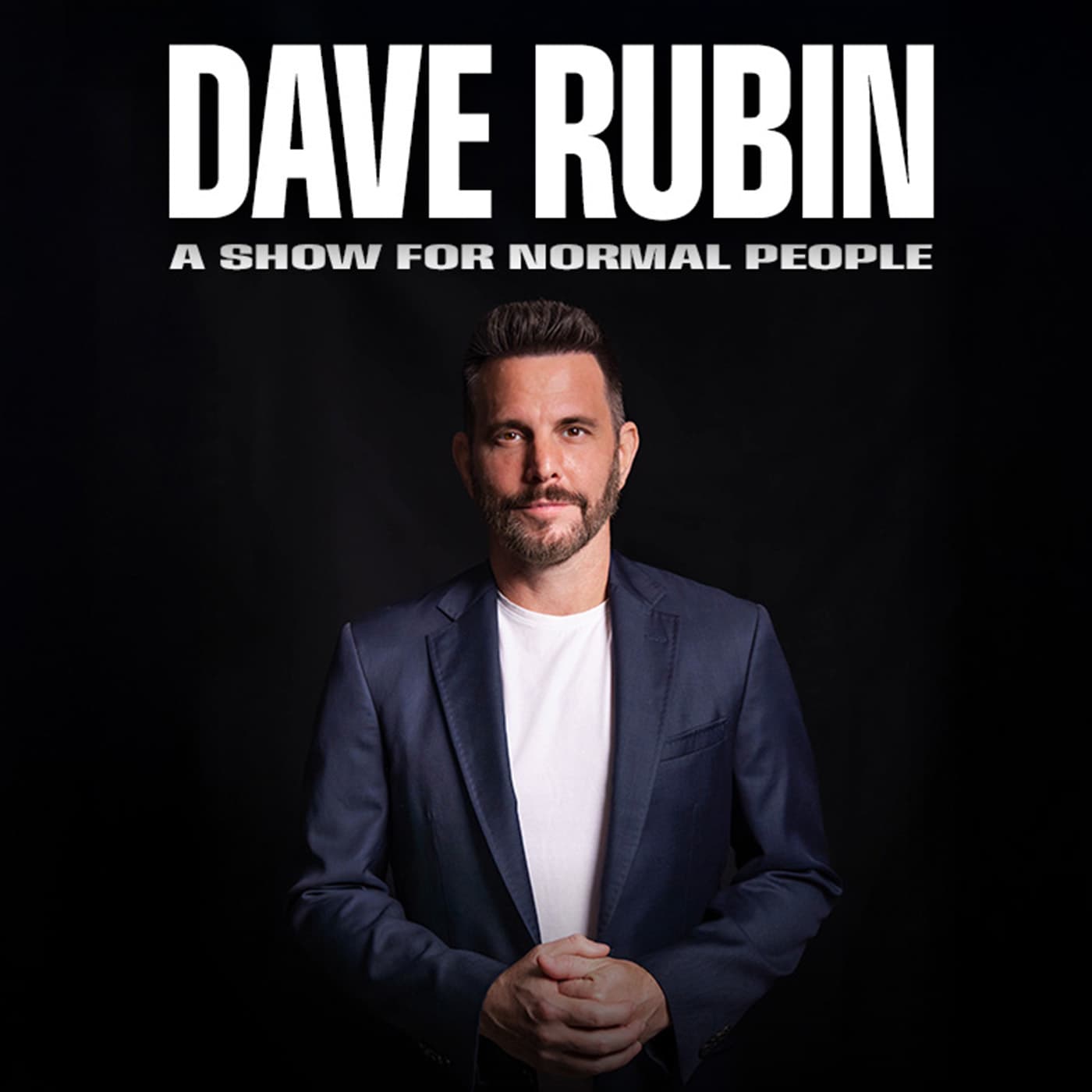
In short
Dave Rubin visits Budapest and CPAC Hungary to argue that Hungary is a “bulwark” against European “craziness,” especially immigration/migration, and to claim mainstream media misrepresents Viktor Orbán and the country. He frames Hungary’s border policy as “America first” style sovereignty, including EU fines for keeping borders closed, and says Hungary feels safer and more culturally cohesive than Western Europe.
Guest backgrounds
The episode centers on Rubin, with interviews and appearances at CPAC Hungary. Notable named guest: Balázs Orbán, described as Viktor Orbán’s chief political director (not related). Rubin also references Viktor Orbán speaking at CPAC and meeting him privately.
Key claims
Hungary learned lessons from surviving Nazis and communists; it protects borders and “values” without being xenophobic; Hungary is safer for minorities including Jews; Western Europe has lost cohesion and is degrading.
Notable examples
CPAC Hungary “Age of Patriots” event; Rubin’s description of walking Budapest at 2 a.m. without hiding his phone; claims Hungary is “by far the safest place in Europe for Jews”; EU fines of about one million euros/day; discussion of pro-Palestinian protests as anti–Western civilization.
Written by AI. May contain mistakes. Listen to the episode to check what was said.
Chapters
Tap a time to open that second in VOUnderstanding Hungary's Strengths
1:50 to 3:17
Discussion about Hungary's unique position and its cultural heritage.
“a very small, misunderstood country that I've spent a lot of time in and really grown to love.”
Personal Experiences in Budapest
3:17 to 4:45
Dave shares his experiences and observations while in Budapest.
“What was the overall vibe and energy while being in Hungary?”
Safety and Quality of Life in Hungary
4:45 to 6:01
Exploration of the safety and cleanliness of Budapest compared to other cities.
“after, you know, going out to dinners and hanging out at bars and chatting with people.”
Insights from CPAC Hungary
6:01 to 7:25
Reflections on the CPAC event and its connections to Hungarian and American politics.
“How was it different than Arc London and your trip in February?”
Cultural Values and National Identity
7:25 to 8:20
Discussion on how Hungary defends its cultural values and national identity.
“The age of patriots is the tagline for the event.”
Challenges Facing Hungary and Media Perception
8:20 to 9:52
Analyzing Hungary's political challenges and the role of media in framing narratives.
“So that seems to be what this conference is about.”
Defending Freedom in Hungary and Beyond
9:52 to 14:01
Exploration of freedom issues in Hungary and comparisons to other Western nations.
“So that's a little bit more of my expertise.”
Wokeism and Freedom in Europe
14:01 to 17:06
Explore the impact of wokeism on freedoms in Europe and the political landscape in Hungary.
“They are hacking away at our basic freedoms.”
Hungary's Resilience
17:07 to 19:18
Assess how Hungary stands out in Europe as a bulwark against political pressures.
“meaning Western Europe, Eastern Europe, Central Europe, etc.”
Israel and Global Conflict
19:19 to 22:43
Understand the implications of the Israel-Palestine conflict on Western civilization.
“And that's what I think most other Western nations are struggling with.”
Show all 15 chapters
Reflections on Hungary and the West
22:44 to 28:00
Rubin discusses his impressions of Hungary and contrasts it with Western Europe.
“It is the same ideology of ISIS, Taliban, Al-Qaeda, Hamas.”
Exploring Hungary's Sociopolitical Landscape
28:00 to 29:10
Learn about the contrasting perceptions and realities of Hungary's political climate.
“and there's obviously Russia, Ukraine, and all of those things.”
Cultural Richness and Diversity in Hungary
29:10 to 30:29
Discover the cultural vibrancy and diversity present in Hungary beyond media narratives.
“What is a message that you'd like to get across after having been there for a couple of days.”
Contrasts with Western Europe and America
30:29 to 31:26
Examine the differences in safety and societal conditions between Hungary and Western countries.
“And now I go back and I see how it's just been so severely degraded.”
Call to Action: Visit Hungary
31:26 to 32:03
Encouragement to experience Hungary firsthand and appreciate its freedoms.
“You know, it wasn't, in some sense, Trump was the signal.”
Transcript
Automatic transcript. May contain errors.0:09Out of all of the countries in all of Europe, meaning Western Europe, Eastern Europe, Central Europe, etc., Hungary to me is the strongest. I think some of the other Eastern and Central European nations are doing just fine. Hungary really is sort of, I would say, it's the main bulwark against the craziness. and Western Europe is largely screwed up. And I don't sense, you know, after spending a lot of time in London and wandering around those streets, like, you try to find me a native Brit who is bullish on his country and you've got to find somebody who's like six pints in and willing to tell you that because otherwise it's hard to find.
0:49Does it shock you that Hungary is the example for other European countries? Yeah, that's a good question because does it shock me that Hungary is the example?
1:03What's obvious to me is that they learned the lessons. That's the thing. These people are serious about protecting their nation this time because their ancestors paid the price for it.
1:25I'll make it work, and then so that's 5 p.m. London time, and 6 p.m. Budapest time. Yeah.
1:39Wonderful. Already? It's a little early. It's a little early. I'm Dave Rubin, host of The Rubin Report, and we're going to be talking about Hungary, a very small, misunderstood country that I've spent a lot of time in and really grown to love. What are some of the main things that stood out about Hungary? You know, Hungary is small, first of all. It really is a small country. I don't know if people think it's big or think it's medium or think it's small, but it's a country geographically that's pretty small in Central Europe. People think it's in Eastern Europe. Technically, it's Central Europe.
2:15And it's only got 9.7 million people, which is not a lot. We've got about 350 million in America. So only about 10 million people. But they have a heritage. They have a history. They have a culture. They've survived the communists and they've survived the Nazis. And so much of what's happening in Hungary in 2025 is a rebuilding or a rebirth of the survival of their history. And they're trying to figure out how do we protect our borders? How do we protect our country, our values, without giving away too much to all of the European nations that seem to want to take a lot from Hungary? They want them to open their borders and take in refugees and create much of the mess that's across Europe right now.
3:04And Hungary, almost all the Hungarians that I talk to, and I'm sure I talk to plenty of people from all sorts of walks of life, they just want Hungary to remain Hungarian. And that seems like a pretty noble project to me. What was it like being there? What was the weather like? What was the overall vibe and energy while being in Hungary? You know, this was my second time in Budapest. And it's a beautiful, beautiful city. And what I love about it is that there's incredible history. They've survived wars. There's, you know, places that were destroyed that are being rebuilt. But then you see the parliament building that is absolutely stunning.
3:39You can't believe that they could even make architecture like that. And you walk across the Danube River and the bridge and, you know, everything. I mean, what really struck me is that everything feels safe. All right, here we are in Budapest, also known as Budapest, as the locals say, and we're crossing the Danube River right now. There's the Parliament Building, which is absolutely stunningly gorgeous. It's one of these things that you can't believe that people used to make things like that. And we're crossing the famous River Danube right here. Look at this. This splits the city. It's really rather remarkable.
4:13And I have to say more than anything else, this is my second time here in Hungary, but more than anything else. It's a beautiful day out. The air is perfect and crisp, but it's clean. It's pleasant. It's buzzing. There's just a feeling of, I don't know, safety. And, you know, there's really no homeless people and drugs and, you know, vagrants and migrants and all the other ants and things like that. So it's really, really nice. We're going to head to CPAC tomorrow. We're doing an event with the Danube Institute. It's going to be a little bit of a European Rubin Report reunion more in a bit. We were walking around at 2 a.m.
4:50after, you know, going out to dinners and hanging out at bars and chatting with people. And, you know, I didn't have to hide my phone in my pocket. We were in London just a few days before that. And people were saying, oh, you don't want to walk around with your phone just, you know, out in your hand. You got to you got to hide it. And there everybody was safe. People were out and about. You don't see homeless people everywhere. It felt like an experiment of a successful city. It was clean. You know, you see sort of old school Hungarian things, like a little kind of hole in the wall where you can get some goulash.
5:24And then you see beautiful hotels and chain restaurants and all of that stuff. But it really strikes me as a place that is open and liberal in the right sense of the word, meaning that there are different types of people there. But it's within the prism that is the Hungarian culture. And the weather, we were there in the springtime, so the weather was absolutely great. And the Danube is beautiful. And the geography, and even just because it's sort of, even as a city, it's a little bit mountainous. You get multiple layers and levels and lots of stairs. So it's just a really cool place to be. Can you talk about your experience at CPAC?
6:02What was the energy like there? How was it different than Arc London and your trip in February? Yeah, you know, CPAC Hungary was super interesting to me because there's a deep connection right now between what's going on in America and what's going on in Hungary. If what drove Trump to becoming president was the idea of America for Americans, like build a wall and we either have a country or we don't, well, Hungary is very much dealing with it right there. They are fined one million euros a day to keep their borders closed, meaning to just control their own borders and decide who can be in Hungary or not.
6:36The EU fines them a million dollars a day. they're willing to do it because they get other benefits by being part of the EU, but it's a really bizarre hostage situation. And that really was the backdrop of much of what was discussed at CPAC.
7:09We are not in studio today. Normalize this idea. It's okay to be America first. It's okay. Mikko said it. Right? Father man. That's awesome. All right, I'm here in Budapest at CPAC Hungary. The age of patriots is the tagline for the event. Viktor Orban, the Prime Minister of Hungary, just spoke. There are diplomats and public speakers from quite literally all over the world here. I'll be on the main stage in a few minutes. We're doing a live show, live Rubin report right over here. Here, you can turn the camera. There's a chair there. There's a chair and people and all that good stuff. And then we'll be doing a live Rubin report tonight with now 20 guests, probably the most guests I've ever had on one show, except maybe for election night in America.
7:53But it's very exciting. We're in a very small country here. Hungary has, I think, 9.7 million people. But it is in a very critical part of Europe where they are trying to defend their borders, defend their culture. And I think you understand that has a little something to do with what we're trying to do in America. And it doesn't have to do with skin color or religion or anything else. There are cultural values that every nation shares with their own citizens. And if you don't defend that, then you don't have a nation. So that seems to be what this conference is about. That's a bit about what I'm going to talk about when I get up there with a little bit of smacking around the mainstream media a bit and more.
8:30So stay tuned. Thank you. It's good to see you. something like two or three percent of the time of the world. So let's count our blessings and let's speak like a lot of people.
8:45It's been like 10, 15 years ago. I remember that as who we are and what we are doing. Because we have a very special language. Only 12 million people on Earth are speaking this kind of language. Global warrants are under strength. The allies who built and profited from disbelief, confusion and anger that is false about. How are you? Great. Nice to see you. Good to see you. Our children scattered across the continent in the largest great press in decades. And yet, new times. When I gave my talk, what I was trying to focus on is how do you deal, every country has to deal with that themselves, but how do you deal with that with a media that's also lying about you the entire time?
9:36So if you're the good guy in the story and you're the one saying, hey, I just want to defend my family, I want, these are the values we believe in, this is our country, we just don't want everyone taking all that away from us. And the media is calling you the bad guy the entire time. How do you deal with that? So that's a little bit more of my expertise. And I sat down with Balazs Orban, who's Prime Minister Viktor Orban's chief political director, although both Orban's not related, apparently. And we talked about how do you deal with not only the physical problem of the border and dealing with the EU and making sure, again, that Hungary is just for Hungarian people.
10:11Not that they happen to be a Christian nation, but not that they happen to be all Christians. There's 100 ,000 Jews that live in Hungary. It's by far the safest place in Europe for Jews. And there's other minorities there as well, obviously. But how do you deal with like a physical sort of attack on your country and then the media attack on your country? And I think we came up with some decent ideas to push back against that.
11:08freedom i have not had any goulash or anything else yet today no goulash we gotta do that we gotta do the goulash they've got i see a lot of carrots i see a lot of crudités but no goulash I'm starting to think it's not a real thing Is goulash just a rumor? I think it's just a rumor Do you want to tell people what you're doing right now? I'm about to go on the main stage here at CPAC Hungary I'll be giving a solo talk and then I'll be joined by Victor Orban's political director Balazs Orban No relation A lot of Orbans here in this Hungary apparently And we'll be talking about freedom and borders and sovereignty and all that good stuff Stay tuned.
11:50Where's my speech? You give me the speech. How do I do this? I just get up there and say whatever I want
11:57How are you? Nice to see you.
12:15Thank you. It is wonderful to be here at CPAC Hungary. I must say that I watched the opening video intro of some of the mainstream media coverage of this event. And first, a very warm welcome to all of you right-wing extremists. It's great to be here with you. Very exciting.
12:37Particularly in Europe, there is an assault on free speech right now that probably is the single biggest issue on the globe more than anything else. We've got immigration issues, there are economic issues, there are security issues. But the assault on free speech, the attacks that we are seeing across Europe, where if you tweet a meme or you say something against the government or you make an unsavory joke that you're going to have police show up at your door, this notion, I think, attacks the very bedrock of the ideas that we are here to defend today. And I'm particularly honored to be here in Hungary.
13:18This is my second time here. And it's interesting. Hungary, which is a country of, I think, 9.7 million people, a fairly small country, that you guys, if America is the epicenter of all of this for the globe, that Hungary has become the epicenter of freedom for Europe. You're doing it right here. You really are doing it right. And one of the things that I think I'll discuss with Balazs Orban in a few minutes is that when you do things right for a while, it doesn't seem that exciting. People stop remembering that things could be a lot worse. And I can tell you, having been involved in the culture wars in America for the past decade plus, that all of the things that we're fighting, this crazed sense of wokeism, whether it's related to the transgender nonsense, whether it's related to race, or whether it's related to borders, or any of these things, These ideas are hacking away every single day.
14:20They are hacking away at our basic freedoms. What are some of the main differences that you saw when it comes to the politics of Hungary versus a country like London? You know, most of Europe just seems to be falling on the sword. They, I think, have resigned themselves to a future that's not really their future. I don't think it's what the average person in London wants. I don't think it's what the average person in Paris wants or any of the big cities in any of the Western European nations. But they've elected leaders over the course of really two decades at this point that have said, we are going to open up our borders.
14:54We're going to allow all of these people in from other places. It doesn't mean that these people are all bad. It doesn't mean that one religion is specifically bad or anything else. But when you allow all sorts of people in and they have all sorts of competing ideas and you had a set of values as a nation, there was a set of values that was a British set of values. Doesn't mean it was perfect, but it was British. Same thing for France, same thing for any of these countries. And then you let people in who don't really care about your values. And then you don't create the conditions for these people to succeed.
15:26So then they end up getting on the government dole. They want government benefits. And then you're actually then costing the person who's legally in your country, who's one of your citizens more. Because you're saying, oh, these people are going to come in and we're going to give them stuff. And we're not going to assimilate properly. I mean, the United States has assimilated people from all over the world better than any country in the history of the world. That's the grand experiment of the United States that largely has worked. Europe, it was not exactly that way. They were like, oh, you can move here and Pakistanis will live here and native British people will live here and Africans are going to live here.
16:01And so their experiment was more tenuous, even though it's older. And now they've created a situation where it seemingly is untenable. For the first time, Muslims marking the holy month of Ramadan have been invited to break fast at a royal residence. Windsor Castle, once the symbol of British royalty and heritage, now echoes with Ramadan prayer.
16:31And then when you get, you push people to a point where then eventually they kind of do become racist in some sense. because if you push people enough and say your country's not yours, your values are not yours, your food and your culture and your music and your history, all of it was bad and negative and your founding was bad and all of those things that we see here, you do that to people enough, they will start fighting back maybe in ways that will either be, will be genuinely racist in some sense, if that's the word, or perceived as racist or using racism as a mechanism to push back against.
17:05So I would say Hungary right now, out of all of the countries in all of Europe, meaning Western Europe, Eastern Europe, Central Europe, etc. Hungary, to me, is the strongest. I think some of the other Eastern and Central European nations are doing just fine. Hungary really is sort of, I would say, it's the main bulwark against the craziness. And Western Europe is largely screwed up. And I don't sense, you know, after spending a lot of time in London and wandering around those streets, like, you try to find me a native Brit who is bullish on his country, and you've got to find somebody who's like six pints in and willing to tell you that because otherwise it's hard to find.
17:45Does it shock you that Hungary is the example for other European countries? Yeah, that's a good question because does it shock me that Hungary is the example? In some ways it is shocking because you would think that, you know, the UK and the British Empire, whatever would be left of it, that they would be leading countries out of this. Or we think of France for all the problems with France. Like they're this great nation. You don't really think of Hungary as this great nation. You don't really think of it much at all. Like Hungary, you think of Hungarian goulash. That's pretty much it, right? You could probably think of one European basketball player or something like that.
18:22But again, it's a country that has an unbelievable history because of its geography. So having survived Nazism and having survived communism, what's obvious to me is that they learned the lessons. That's the thing. These people are serious about protecting their nation this time because their ancestors paid the price for it. So while it's shocking, I guess, in some sense, that you get a leader like Viktor Orban who's willing to stand up to the Europeans. You know, he's the Trump of his country, in essence. He is just saying no to everybody. The European Union, they come in there, they want more money, they want open borders, and he just says no to everybody.
18:58So he's their Trump. So I guess in some sense, it's not shocking. They were hit both ways, communists and Nazis. They survived. They got their country back, and now they're fighting for it. And in some sense, you know, being a relatively small country with a relatively small, largely homogenous population, that's their strength, right? Like, that ends up becoming the strength because they have a certain cohesion around a history. And that's what I think most other Western nations are struggling with. There's no cohesion around a history if you have a certain set of people that aren't proud of their history and then another set of people who come in and are there to basically crap all over the history.
19:36Hungary doesn't have that fraying within its sort of logos. And I think that that's part of the key. All right, so it's the middle of day one here at CPAC. I spoke earlier, been doing interviews all day long. I'm going to meet at the prime minister's, I guess we call it, palace residence with Prime Minister Viktor Orban. If you listen to the media, he's a very scary man who says all sorts of scary things. I've met him once before. He seems like a nice guy. I said, Mr. Prime Minister, how are you doing? I'm good. He was like that. He seems like a nice guy to me. And we're going to talk about Hungary.
20:09We're going to talk about freedom. We're going to talk about the connection between America and much more. They're actually not letting my cameraman in the room, but they will be videotaping it. And we'll grab some clips of that. And then we will have some Hungarian goulash.
20:36We're going to do a proper sit down in the free state of Florida, which I call the other promised land. You come from the real promised land, Florida, the other promised land. So I only have one question for you right now, which is something that you brought up in your talk a few minutes ago, which is that even if you don't care about the Jews, I care about the Jews, I'm Jewish. You care about Israel. Your last name is Zed Nehahu. Even if you don't care about the Jews and you don't care about Israel per se, there is a reason you should care about what is happening in Israel. And I thought maybe you could just explain that for a few minutes and then we'll do a much longer version.
21:10For sure. Back in that other free state. The pro-Palestinian riots and protests, it's not really about Palestinians, and it's not really about Israel. It's the same people that did the George Floyd riots. It is the same people that are Antifa people. The Palestinian flag is the new hammer and sickle red communist flag. This is just an updated version. This is about the desire to destroy Western civilization. You have the Red-Green Alliance, The red is the Marxist. The green is the Islamist. They have different reasons, but they have a common goal. The destruction of Western civilization, the destruction of Judeo-Christian civilization.
21:51Israel is just the first target because it's the smallest. But, you know, America is the real target. The Iranian regime, the Islamist regime in Iran. How do they call us in Israel? They call us the small Satan. But they call America the big Satan. And we are just the... And you said that Europe is the middle Satan. Europe is a middle school, but we're just an appetizer. You guys are the main course. And Iran is building intercontinental missiles. They don't need it to reach Israel. Their current missiles already cover Israel. They're building it to be able to threaten America, to be able to threaten the East Coast of the United States.
22:26What we saw in the last two years in American elite universities, and by the way, the biggest funder of American elite universities is Qatar. It's a country of the Muslim Brotherhood, which we outlawed throughout the Middle East, outlawed in Saudi Arabia, outlawed in the United Arab Emirates, outlawed in Egypt. It is the same ideology of ISIS, Taliban, Al-Qaeda, Hamas. And they are the biggest sponsor of this organization, and they're hosting them on their soil. Just like Afghanistan hosted Bin Laden and Al-Qaeda after 9-11, they are hosting the leaders of Hamas after October 7. and they are brainwashing through influencers and through the academia, American youth, to hate America, to hate Christianity, to hate the history and heritage of America instead of being proud of it.
Read the full transcript
23:18What we saw in the colleges, they've been waving Pasadena flags while burning American flags. They would take the American flag out of the pole. You remember that? and then they would raise the Palestinian flag. So this is not about Israel. They are vandalizing the monuments of Lincoln and George Washington. This is nothing about Israel. This is about the desire to destroy America and destroy the world. Good to see you, my friend. Good to see you. Thank you. I do remember you. That's right. That's right. How are you? Good. Welcome back to Budapest. Hi. It's a pleasure to meet you. How are you?
23:53Good day. Six times a week in the gym. Six times a week. Sometimes seven. Sometimes most of the shops... What is it? What's going on? I missed a text from you. Is that the bar? I'm not sure what you're saying.
24:14That's the clear water only in Jersey.
24:33Are we going up here? Yeah, we're going to go outside. Oh, ****.
24:51Okay, alright, let me take a look. Okay, either way, we may try to leave the talk with that just to get there a few minutes from it.
25:04What's your name? How are you? Hi, nice to see you. Hi, great to see you. Sorry, I'm going to go back and I didn't want to hit you. Nice to see you. Oh, oh, oh, whoa, whoa. Oh, whoa, whoa. Oh, whoa, whoa. Oh, boom, boom, here.
25:26It's a new style of friendly...
25:32The questions won't be answered. Great pleasure to meet you, sir. Welcome back. I have a good responsibility in Kiev, but we have to go back there. But, you know... How's the perception, you know? Because...
25:49I mean this is nuts now. I'm just about to do a show with 10 guests with no rundown, no run through, no papers have been handed to me. I don't even know all the guests. The wind, this is getting very windy. Don't worry, now you're going to see. Is Dave Rubin a professional? We're going to find out. All right. Hi. Hi. Can you skip his monologue? Okay, here. Okay. Ready? Yeah. Do your monologue. Stand-up comedy, ten minutes. And then next guest invites Cecilia Huzai onto stage. If it doesn't say a clip, there's no clip. All of my broadcasting skills right now in one shot. I know, I know. This is the real test.
26:30Yeah, okay. Ready? ! I'll do it until they say it. Yeah. I'm going to go to the. I'm going to go. And I'll meet you again. Thank you for our. Thank you.
26:59Well, it is time.
27:12Thank you. Thank you. I must say, first off, I don't think I've ever started a show and been the last one at the show. So welcome to everybody. Thank you for being patient. I do have a good reason. I was in a small group chat with the prime minister next door just now, and that guy's got an awful lot of security. There was no way they were letting me out of the room. So I appreciate your patience, and it's good to be here with everybody. So thank you. Thank you. Just spent an hour with your prime minister, who was so unbelievably impressive to stay with, really. He deserves the applause, even though he got me here a little late.
27:54he was so impressive, not only talking about what the issues are. I mean, everyone knows what the issues are, right? The issues are immigration and migration, and there's economic issues, and there's obviously Russia, Ukraine, and all of those things. But listening to him just for this last hour talk about the philosophic roots of why he thinks the way he thinks, and some of the reasons that he's doing the pro-family policies here in Hungary, and just things that are just not really talked about that much at the national level. So it was a pleasure to be there. And just generally speaking, when I come here, I find the people, you're all in the fight.
28:28I travel all over the world, and there's a lot of countries right now that the people, they're kind of nervous about the direction their countries are going. And I just spent a couple weeks in the UK, and you walk around London, and you talk to these people, and there's a real feeling that they're giving their country away, or perhaps that they've actually given it away already and that there isn't much hope. And it's like that, obviously, in other parts, particularly, I would say, in Western Europe. You know, there's certainly a feeling of that in France. There's a feeling of that in Germany.
29:00But it doesn't feel like that here. It feels like you guys have kind of stemmed the tide that was coming. This is for anyone who's never been to Hungary. What is a message that you'd like to get across after having been there for a couple of days. I think the most important thing that I saw about Hungary firsthand was that what you hear about Hungary versus the reality of Hungary are very, very different. So if you just listen to the media, oh, they're a right wing, they're this far-right nation, and Orban is a modern Nazi, and Hitler, and far-right, far-right, all of that nonsense that the media lies about and everything else.
29:38You know, we did a live Rubin report there where it was literally probably the biggest show I've ever done. And we had a couple hundred people in the audience and I had about, I don't know, 10 or a dozen guests that we rotated in and out. And they were from all over walks of life. There were political thinkers there. There were artists. There were actors. There were musicians. It was as culturally rich as any show that you could have done in the United States. So the idea that it's this nation and just because they're Hungarian and they're fighting for Hungary, that that somehow means they're all xenophobes or racists or any of the other silly things is just kind of very thin.
30:13I think most people watching this can understand that. I would say the other part is that it really is nice to see, having been someone that has spent a lot of time, you know, traversing the United States of America, where I go to plenty of our cities that are depressed and that are not safe. Or, you know, I lived in a place like New York City under Giuliani where it was safe. And now I go back and I see how it's just been so severely degraded. And that's not just in America. I go to London and I see over the every time I've gone back for the last 15 years, it's worse each time. Or you go to France and you see that it's worse each time in the homelessness and the migrant situation, all that.
30:51Where then you go to Hungary and you're like, oh, it doesn't have to be like this. In some sense, it reminds me of Florida, where I walk around Florida and you're like, oh, it's normal and sane and decent and good. And that's what it could be. But you have to vote in the right people. That's probably not even the first thing. The first thing is you got to kind of fix yourself, right? Jordan Peterson, clean your room, kind of. Figure out what it is that you're doing in your life. Start your family, your values, your community, all of those things. And then hopefully that will extrapolate up to the political sphere.
31:21And that's what then gets you a leader like Orban who's trying to fix his country. It's what we did in America. You know, it wasn't, in some sense, Trump was the signal. There was enough of us, especially Trump 47, that basically were like, oh, this is our last chance to fix the nation. We better get on board. And that's what the Y10 thing is that Trump is doing with MAGA right now. So I would say go to Hungary and see what's going on there. And guess what? You're going to be able to exercise your free speech. You're going to be able to go to a bar at 3 a.m. and have a good time. And you will eat plenty of goulash.
31:57This is the Danube report. That's a good one. You get it? You get it? That's good. That's good.
From the publisher
Dave Rubin of "The Rubin Report" discusses his experiences and observations in Hungary, highlighting it as a stronghold against what he perceives as the decline of Western Europe; why Hungary should be praised for its cultural preservation and national pride; how it is fighting to maintain its sovereignty and cultural identity amidst pressures from the European Union; how CPAC emphasized the country's alignment with specific American goals of border control and national identity; the media's inaccurate portrayal of Hungary; and much more.
