In short
Adam Carolla argues that “feminine safetyism” (using safety/risk as a justification for constant regulation and control) will “destroy America,” comparing California/LA’s more “feminine-leaning” culture to more “masculine-leaning” places like Florida/Texas. He links this to COVID-era protocols, building bureaucracy, and broader cultural trends toward prefab/robotics and automated life.
Guest backgrounds
No separate guests are interviewed in the transcript; it’s Carolla speaking with co-host/producer “Dave” (off-camera). Carolla is a comedian/podcaster and former radio host; he also describes blue-collar work experience (remodeling, welding, woodworking) and owning many cars (including Paul Newman race cars).
Key claims
Safety rhetoric becomes control (“I’m going to control your life 100%”). COVID protocols were “femininely driven.” Blue-collar work keeps people mentally even; white-collar life increases anxiety. Friendships shouldn’t be defined by politics.
Notable examples
helmet laws vs motor-vehicle requirements; LA COVID shoe/glove rules; Malibu wildfire evacuation and stalled rebuilding due to permits/commissions; driverless cars and robot construction; Little House on the Prairie (moral: physical problems become spiritual problems).
Written by AI. May contain mistakes. Listen to the episode to check what was said.
Chapters
Tap a time to open that second in VOCritique of Recent Political Leaders
0:30 to 0:53
Discussion on political figures and their focus on issues like safety and LGBTQ+ rights.
“Over 4 million businesses have skipped the line with Stamps.com.”
Critique of Recent Political Leaders
1:30 to 2:30
Discussion on political figures and their focus on issues like safety and LGBTQ+ rights.
“I've been ruminating a lot on women, women's role, women's role in society, safety, risk.”
The Future of Feminine Safetyism
2:30 to 5:00
Exploration of feminine influence on societal regulations and safety.
“You get no intro, and I start an interview that way.”
Personal Stories and Insights
5:00 to 7:30
Hosts share personal dog rescue stories and reflections on their experiences.
“Or what are you thinking about right now?”
Gyno-Fascism and Societal Roles
7:30 to 10:00
In-depth conversation about women's roles and societal safety concerns.
“Are you telling me that if the future is female, as the bumper sticker says, it could lead to some problems?”
Safety Regulations and Control
10:00 to 12:30
Discussion on how safety regulations can influence freedom and control in society.
“Obama started, he started with the league.”
Pragmatism in Politics
12:30 to 14:01
Examination of how hands-on work influences political views and sensibility.
“that the gorilla who's going to sit like this and all the other gorillas are going to, you know, pull stuff off his.”
The Practicality of Hands-On Work
14:01 to 16:48
Discussing how practical work experiences shape sensible ideas.
“and that that pretty much set the table?”
The Future of Prefab Construction
16:48 to 18:08
Exploring the implications of prefab homes on craftsmanship.
“You're going to be thought of as basically an alcoholic.”
Robots vs. Human Labor
18:08 to 19:25
Debating the role of robots in replacing manual jobs.
“That's why I sort of like the blue collar world.”
Show all 22 chapters
The Impact of Wealth on Identity
19:25 to 21:03
Examining how financial success affects personal identity.
“So I was able to buy cars and race cars.”
Cultural Reflections on Happiness
21:03 to 22:40
Analyzing societal changes related to happiness and depression.
“But I was always poor and, like, generally decent temperament you know, and then I was rich and I was sort of the same, I think.”
Connection Between Nature and Mental Health
22:40 to 23:54
Discussing the benefits of nature on mental health over medication.
“So it's a physical problem first before it becomes the religious or philosophical problem.”
Physical Engagement and Mental Well-Being
24:19 to 28:05
Exploring how physical tasks contribute to mental stability.
“and so I was always kind of instinctually thinking, you know, I was kind of breaking it down.”
The Importance of Relationships Beyond Politics
28:05 to 30:58
Learn about maintaining relationships despite political differences.
“that a lot in that i think about people where i go i like this i like that i don't like this and I wonder if there's a way to change that thing I don't like.”
The Evolution of Podcasting
30:59 to 32:34
Explore the growth and changes in the podcasting landscape over the years.
“How do I deal with a friend who I think has gone off the deep end?”
From Radio to Podcasting: A New Journey
32:35 to 36:19
Discover how a career in radio transitioned into a successful podcasting venture.
“It seemed to me like it was the future of news.”
Navigating the Challenges of Podcast Success
36:20 to 39:02
Understand the challenges and strategies for sustaining a podcast long-term.
“There was a little bit like Bill Simmons was doing ESPN and he worked with ESPN and then did a podcast.”
The Key to Longevity in Comedy and Entertainment
39:03 to 42:04
Analyze the factors that contribute to sustained success in comedy and entertainment.
“which is when I was at the Acme Comedy Theater in the early 90s, probably 90, 91, sketch comedy, improv comedy.”
The Creative Landscape of Entertainment
42:04 to 44:34
Exploration of various entertainers and their contributions to the industry.
“Well, He was in Oingo Boingo and he did weird pop music and new wave music or whatever.”
Rebuilding Malibu and California's Bureaucracy
44:40 to 56:00
Discussion on the challenges of rebuilding after disasters in California and the ineffectiveness of government response.
“But he'll have 50 years and they'll have four years or whatever.”
Reflections on Loss and Legacy
56:00 to 1:02:45
Discussion on the impact of losing prominent intellectuals and their legacies.
“But every day, 200 ,000 tons of raw sewage floats in from Mexico over to San Diego of untreated wastewater, and they have nothing to say about it.”
Transcript
Automatic transcript. May contain errors.0:00Hey, Chicagoland! The Wayfair store is in your neighborhood at Edens Plaza in Wilmette. Finally, you can feel the fabric, sit on the sectionals, and even open the refrigerators. Plus, our in-store designers will help you bring it all together with free one-on-one design support for any project on any budget. Yep, we said free. Oh, and did we mention the cafe? So what are you waiting for? Come see all that's in store. Visit the Wayfair store today at Edens Plaza in Wilmette. Wayfair, every style, every home Still waiting in line? Again? That's time you'll never get back. Save time and money with Stamps.com.
0:38Over 4 million businesses have skipped the line with Stamps.com. Join them to save up to 90 % off carrier rates from your computer or phone right now. Print postage for certified mail, registered mail, and packages in seconds. Then schedule a pickup right from your home or office. For a limited time, go to stamps.com and use code podcast for a free welcome gift. Taxes and fees apply. Karen Bass and Gavin Newsom have talked much more about fighting Trump and then allying with the LGBT community and fighting ICE than they've said anything about rebuilding anything. I think Trump is one of the most destructive presidents and human beings in my lifetime.
1:19You can find some females that think like Margaret Thatcher, but there are many more males like Gavin Newsom who think like females. Under the rubric of safety, I'm going to control your life 100%. I've been ruminating a lot on women, women's role, women's role in society, safety, risk. Well, what's wrong with wearing a helmet when you're riding a skateboard? And you could go, nothing, but I don't think there should be a law that you have to wear a helmet while you're riding a skateboard. And then they'd go, well, let's just make a law. But at some point, it's you've got to wear a helmet while you're operating a motor vehicle.
1:56The difference is going to start affecting protocols, rules, and regulations in society. And if we go too hard toward the feminine, we're going to end up mostly like L.A., which definitely leans toward the feminine versus Florida, Texas, places like that that have a more masculine. Are you telling me that if the future is female, it could lead to some problems? Let me get comfortable. I'm just trying to get comfortable.
2:29All right, Carolla. Yeah. What is up? You get no intro, and I start an interview that way. How you doing? I'm doing well. Thanks for having me. We let the dog stay. Yeah. That's nice. I wasn't sure how you would deal with that, but you seem okay with it, at least for the first time. You know, as a dog, there's so much breadth and width in terms of the kind of life you could have. You could have a homeless guy as your owner, and he could be dragging around with lamp cord, and you guys could be sharing a nugget you fetch from the dumpster, or you could get affluent gay men. And then this. This is way better.
3:10This is way better luck of the draw for this puppy. Can I tell you a quick 30 second story? So you see this scar on his head right here. Yeah. So Clyde, I don't remember if you met our previous dog before this, but we had another dog, Emma, who looked exactly like this. She was a rescue from Hurricane Katrina from 2005. She lived to 16 incredible life she uh we had to put her down a few months like like two weeks before covid and then remember in la when they immediately said we're gonna we're gonna kill all these dogs at the shelters the day oh right right right so even though we didn't want a dog for a little while because you know when you put a dog down you want a little time i ran to the local shelter on ventura they would not let me in because i didn't even have a mask yet that's how early in covid it was and i they said they were going to kill all dogs and i pushed my way in and i grabbed him.
3:59He had a huge gash in his head, like, like, you know, literally bleeding, like open wound on his head. We immediately got him surgery. And they had, they had, as I pulled him out, they said, well, if you're taking him, take the papers. And they had already signed the thing to put him down. He was going to be put down at one o 'clock. That was about 1030 AM or something. Well, I don't use the word hero that often, but people who get free dogs, I definitely put up there. Like you don't have to wear a cape to get a free dog. No, you've done enough work. Enough about me. What's going on in your life?
4:32I mentioned you right before we started. We've played a lot of clips of you lately because I think you've been hitting things on like multiple levels that make sense lately. And that seems to be your forte. But what's on your mind before we get into some of that? Yeah, I mean, I do kind of sit and think about where we're at and what we're doing and why we're doing it. And then I sort of wait till it sort of bubbles to the surface a little. And then I start drilling down on it. But, you know, somebody said to me, like, what's next? Or what are you thinking about right now? And I just blurted out gyno-fascism because I— It was just on the tip of your tongue.
5:08It's on the tip of my tongue. I just was sort of—I've been ruminating a lot on women, women's role, women's role in society, safety, risk, and the sort of influence of women and estrogen in our society. And I realized that's a big part of sort of the change that's going on and what we're thinking about and safety and safety uber alice and then precautions. And, you know, people think it's sort of misogynistic. And, you know, there are elements of that, but it's more pragmatic. Like COVID, the aforementioned COVID was very femininely driven. You know, I was married at the time and my wife was COVID protocol oriented and I was, who gives a shit oriented.
6:03And she was very kids oriented. And I was like, it's not going to harm them because they're 14 and they're healthy and they have no comorbidities. comorbidities. And she was very, you know, watch the news, affected by the news, protocol as set by the city and the county. And I realized that, you know, Barbara Ferrer was the L.A. City Council pro, you know, L.A. protocol coordinator. Oh, I remember. You remember her, you know, Mayor Bass or and or Garcetti at the time, mostly feminine city council. And we were like setting an agenda the way women would set an agenda in a situation like this. And it was happening sort of micro and macro at every home.
6:54The woman was sort of in charge of the, take the shoes off, don't come into the house, you know, with the shoe. And, you know, I got boy, girl twins and my son didn't give two shits about COVID. And my daughter was texting me, wanting me to take pictures because I was at the supermarket and she wanted me to take pictures of my hands in gloves, pushing the cart. And I realized, okay, there's a difference. And the difference is going to start affecting protocols and rules and regulations and society. And if we go too hard toward the feminine, we're going to end up mostly like LA and California, which definitely leans toward the feminine versus Florida, Texas, places like that that have a more masculine tilt to them, or just something like guns, for instance.
7:48Are you telling me that if the future is female, as the bumper sticker says, it could lead to some problems? A lot of problems. I thought that would be perfect utopia. Major problems. Well, look, you can find some females that think like Margaret Thatcher, but there are many more males like Gavin Newsom who think like females. Hold on, let me get comfortable. It's impossible. Let me get comfortable. It's not possible. Let me get comfortable. I'm just trying to get comfortable. Look at him. He's getting comfortable, too. Yeah. I mean, I just want to get... You're a friend. You don't mind if I get comfortable, do you, Dave?
8:24No, no, no. No. No, you seem comfortable. Yeah, I just want to get comfortable. My theory... No one has done more, by the way, for the LGBT community than this guy right here. You do know that, don't you? Let me signal to the back of the auditorium. Hey, up there in the Negro balcony, can you see how comfortable I am with the trans and LGBT plus community? Because nobody's more hospitable. Speaking of comfort, yes, sir. Nobody's more comfortable. Yeah. Okay. You know, my theory on that is that he's a lizard person. And you know that the lizard carries the testicles inside. Oh. Can you sit like this?
9:06I know it's not a Corolla thing, and I know your theory and everything. Yes. But you can sit like that, and you're okay. I know you don't have to sit like this. Well, they're okay. But there's a difference. I sit like this. There's a couple of things. Yes. Not only does Newsom. Yes, he's doing this. And Justin Trudeau. Yeah. It's a two-parter, though. No, it's three. They're multi-layers. Yeah. One is Trudeau does it because it exposes his colorful sock, too. He goes, ah! No, it's Argyle. Well, it's not, no, you're calling it diamond. It's called Arga. Yeah. Like he has a gay flag on a sock and he does this.
9:43So not only is, it's kind of like a rich guy at a bar, scratching his elbows. Rolex. See that, ladies? Like, I'll let you know. So, you know, you're uniquely qualified to answer this question because I have a theory. Oh, Lord. Yeah, yeah. Theory. Newsom, deep leg crosser. Obama started, he started with the league. He's a pioneer of the leg. He's a Rosa Parks of the cross with the legs. And then Justin Trudeau. And by the way, when they're interviewed by the guy from the New York Times, he's doing the deep cross too in solidarity. Yeah, yeah. There is one guy on the left who's very to the left who does not do the deep leg cross.
10:29Now, I'm not talking about Pritzker because he can't physically. Well, at first I was thinking Fetterman. He doesn't do it, I'm sure. No. No, but I'm saying to the left. So really lefty bananas. Doesn't do it. The lefty bananas guy that doesn't do it. Yeah. Can I have one other hint? I mean, they all have that thing. They all have the limp wrist. Yeah, yeah. They all have that. Okay, limp wrist. To the left with a limp wrist. Oh, he's got the limp wrist, but he doesn't do this. Doesn't do it. Wait, but he hasn't. Hold on, let me try to act it out. So you've got the limp wrist, but you sit like this.
11:02Well, he's metaphorically limp-wristed.
11:08Pete Buttigieg. Pete Buttigieg does this, and he doesn't do it because it's too gay. He's trying to back off that thing. I noticed he got the beard now. He got the beard, and he doesn't do the deep cross, because Newsom is like, I know this is gay, but you know what I'm doing with my blonde lady friend at home. home. Orgies in San Francisco, right? Yeah, yeah. The point is, is we know you're not gay, then you are down with the community. Right. If you're running for a higher office and it may hold you back to be gay, then you grow the beard and do the regular dude cross. That's why Buttigieg doesn't do it.
11:52Are you implying that if I had my druthers, I'd be sitting some other way? This is it. I'm going to have a beard, I'm sitting like... Like, everything being equal, I play a lot of basketball, so my legs are always tight, I would sit like this. if i if i was just if it was just me and you with no cameras and we were just oh good shit but like you don't need to stare at this no no man does but i you know the thing the thing that's funny and drew dr drew pointed this out trump not only doesn't do the leg cross he does the leg split and then he builds a diamond out of his thumb and forefinger so you can focus on his nutsack like he literally calls attention to it that's like the gorilla right like isn't that the gorilla who's going to sit like this and all the other gorillas are going to, you know, pull stuff off his.
12:36So if it goes too female, we're in a lot of trouble. With those two female, we have a different kind of a culture. And people can go, you know, well, what's wrong with wearing a helmet when you're riding a skateboard? And you could go, nothing, but I don't think there should be a law that you have to wear a helmet while you're riding a skateboard and then they'd go well let's just make a law where you have to wear a helmet when you're riding a skateboard like how could it hurt you go like okay but at some point it's you got to wear a helmet while you're operating a motor vehicle yeah and now we're getting too far every building code all all the all the red tape and all it's all under the umbrella of safety It's safety, safety, safety.
13:22Here's, listen, under the rubric of safety, I'm going to control your life 100%. I'm going to tell you everything you can do and can't do, but it's not because I want control over you. It's because I'm worried about your safety and the safety of others. And I get to call the shots now. And it's more of a feminine leaning, I'd say, than males. males are just like, hey, you want to go ride that ATV in your shorts and no helmet? Go ahead, but you're probably going to learn a lesson. And that's us, right? Do you think most of all of your political stuff, all your political leanings really is just born out of that, that you worked with your hands for so many years and that that pretty much set the table?
14:05Because you're not really ideological. You just strike me as sensible. It's just that. And I mean that as a compliment, even if it sounds kind of simplistic. there's a pragmatism I think that you get from working with your hands that is pretty unavoidable and there's also a kind of a one thing affects the other as you know from doing lots of remod stuff you know it's it's kind of like everything is sort of like you're putting tile in your kitchen, right? And then you go, all right, well, what height do you want the countertops? And they go, well, I'd like them at 36. Okay. So the cabinets are going to have to be 36.
14:52I was like, no, no, the countertops three quarters stick. So it's 35 and a quarter. And then you go, okay, 35 and a quarter. No, no. The sub flooring hardy backer board, that's a half inch on the bottom. You want it on top of the tile. Okay. So back off another They're half inch from 35 and a quarter. We're at 34 and three quarter. No, no, the tile's five eighths thick and it's going on top of the. And so when the cabinets arrive, they're the height you want them to be. But it was a whole bunch of forethought that got you to that height. And if you just said, get me 36 inch cabinets, by the time they went on everything, they'd be too high.
15:31Do you think we're going to give up something as all this goes to prefab stuff? I mean, that just popped in my head as you were saying that. But, you know, all of these things now are going into, they're going to basically be able to build your house in a factory, in essence, and assemble it like a Lego set. I mean, they're already doing this in some ways. We'll talk about what's going on with Cali and Malibu and all that. But that it would take away all the love of the craft and the art and all that. Well, it's definitely going to outsource it. And robots will be doing it. Yeah. And it'll all be calculated in the factory and there won't be, I mean, there'll be a lot less F-ups.
16:04I mean, it's going to be like driverless cars where people are like, I don't want a robot build my, you don't? Have you seen some of the guys I've worked with? They're drunk. You know what I mean? And they don't speak English. So there are plenty of screw-ups. Like they go, you know, for every 100 ,000 miles of driverless car driving, there's 89 % less accidents. You know what I mean? So maybe you do want the robot doing all the calculations. But you're never going to want to get, I mean, how many cars do you have? What's going on with your collection these days? It's not that you're driving all those cars, but you have an incredible...
16:36Yeah, I don't know. You have 25, maybe. What do you have, more Paul Newman cars than anyone, right? I'm going to say I have 14 Paul Newman race cars, so I will say yes. But the idea that 20 years from now, I really think it'll be this way. They will look at people who want to drive manually and be thinking you're like a dinosaur. Like, what kind of crazy person? You're going to be thought of as basically an alcoholic. Like, oh my God, Grandpa still drives. He's a crazy bastard because everyone else will have been sort of for the protection reasons that you laid out before. Yeah, I mean, there's something obviously very visceral about putting a car.
17:11There's just something about tacking up a race car past 7 ,000 RPM and then grabbing the next gear and going through that process. There's just something tactile and visceral that I don't think I'll ever get tired of. But people who never experience it will never know what it is, so they might not long for it or miss it, you know? I enjoyed it. I think there's always going to be that. I think that'll be fine. And, yes, the next generation or the last generation doesn't know how to drive a stick. But even just driving so that your mind can wander instead of just sitting in a robotic car where then you're going to stare at your phone.
17:57I mean, even that alone. Well, you know, I don't think, you know, innovation is fine and it'll work for some and not for others. And there'll be jobs where people get outsourced and replaced and other jobs that you can't. That's why I sort of like the blue collar world. I don't see robots replacing plumbers, electricians or tile setters or something. It just seems so off in the future. like I could see them replacing accountants and many, many other sort of mid mid-level jobs, but I couldn't see him doing the kind of work like I like what robot could lay hardwood flooring in this house or would take a while.
18:45Yeah, but they could do it. Maybe not the exact robots we've got right now, but you give it another couple of years, they'll do it. I think what will ultimately happen is that the super elite will have real people doing it and that will be a marker of elitism, basically. Oh, humans did the marbling on your wall, not just the factory set kind of robot. Did the money change you at all? I've only known you since you were Adam Carolla, but, you know, because you're a blue-collar guy, you obviously, that's like your identifier, but, like, you're also a guy that just has 24 cars and doing all right?
19:18Um, no, I mean, I don't think I don't think I'm any different than I ever really was. I wanted to do things. I wanted to race cars, you know? So I was able to buy cars and race cars. And I don't think I'm a prima donna or out of touch. We got to have the dog killed. By the way, it keeps making noise. Yeah, it's a lot of noise. We have the dog killed. Yeah, that would be your one. It's funny, most of these big stars like you come in with a long rider. Okay, if he was dead, this wouldn't be... Oh, hold on. Is that how we do it? Most people want, like... Yeah, chop, chop. Let's get the dog killed.
20:01Yeah, Diet Coke and a special glass and all. You didn't want any of that. You just wanted... I want the dog killed. Yeah. It was supposed to be put down anyway, so let's just finish the job. You had a good run, man. It was a good run. I, you know, look, I have old habits. like I would never, I don't order room service. Don't really kill the dog. They'll listen. These guys are good. I would never get anything out of the mini bar. And it's like, why not? It's like, it's$11 for a vodka. I'm not going to do that. You know, it's like, why not? Because it's just a weird old habit, you know? I like doing stuff for myself, but not really for financial reasons, just because I'm a strong believer in keeping sane by, like, washing your own car.
20:52Like, tasks, mundane, kind of basic, boring, should-outsource sort of tasks and just sort of doing them just to kind of keep your head right. But I was always poor and, like, generally decent temperament you know, and then I was rich and I was sort of the same, I think. We played a clip of yours. You did an event. Was it a free pressing event, I guess, with Barry Weiss? And you said a couple of things that we've played over the last few weeks. But one that I loved was if you basically said, if you go back and watch Little House on the Prairie, everybody, what was it? Everybody was, I want to get it fully right.
21:41Everybody was. Everybody was miserable, but no one was depressed. Yes, yes, yes. I thought I ordered a hit on this. Clyde, out. Is this a different dog, or are you not listening? Go, go, go. He realizes greatness. No chance he's going to listen. All right. At some point, we'll see what happens. Yeah. You know what the number one response to that was? I got a lot of people going, you know that's a TV show, don't you? Well, yeah, I'm watching on my TV. The camera hadn't been invented in 1841. So yeah, I'm going to go. At the end of my show that day when we played the clip, I said to the guys for the outro of the show today, let's play the Little House on the Prairie, you know, the intro.
22:21And in the intro, you know, the little girl, she falls down the hill. She broke her leg and died. That was, well, they didn't have the medical. Well, she didn't die. They put her down. That's right. He knows she's going. But that notion, I just thought you hit on some. Oh, because then the next thing you said after that was a physical problem becomes a spiritual problem. And I think that gets to a lot of what's going on right now in our culture, that there is a problem with, as you talked about, people being in cubicles and so disconnected from reality, stuck on phones. So it's a physical problem first before it becomes the religious or philosophical problem.
22:56Yeah, you know, it was weird. I'd early, very early on in even in radio, you know, kids were calling up Loveline and they're talking about being on serotonin reuptake inhibitors. And it was just about the later 90s, mid mid 90s, where everyone's just starting to get on all the Prozac and Welbutrin and stuff. And I remember just going, why don't you listen to classical music and take a hike? and everyone's like, what? No, they need to have a chemical imbalance. I'd go, I bet if you listen to classical music and just start hiking, a lot of this stuff would go away, anxiety, whatever you're having.
23:35I bet it would smooth it out a little bit. And everyone's kind of telling me I was nuts. And then, you know, 25. I'm Serena Williams and I'm healthier on Roe. I've lost 34 pounds in a year with GLP-1's diet and exercise. On Roe, you can access GLP-1 options, including the first FDA-approved GLP-1 pill for weight loss. Go to roe.co slash journey to see if you qualify. 14 to 20 % average weight loss in one year in non-diabetics with obesity or overweight with a weight-related medical condition versus 2.2 % to 3.1 % in placebo R. RX only. To stay informed about serious side effects, go to roe.co slash safety.
24:11Five years later, a study came out said hiking and classical music turns out to be better than serotonin reuptake inhibitors. and so I was always kind of instinctually thinking, you know, I was kind of breaking it down. I was like, well, is anyone ever depressed when they're being chased by a bear? And I go, well, no, because all you're doing is thinking about getting away from the bear. And I was like, well, what about when you're struggling, like working and trying to, like, what if you're trapped on an island and you had to build a shelter or something? Would you be depressed? It's like, no, you would never be depressed in that.
24:46Right. You don't have time for it. It's kind of a luxury, right? Anxiety is kind of a luxury too. And, and the, I think for me, I, what were, the reason I got the lesson is because I had toggled between the blue collar world of building and remods and real, like pretty hardcore blue collary stuff, welding, fabricating woodworking and stuff like that and then this sort of heady stuff of being in a writer's room Hollywood ideas this guy's got his degree from Brown and he's got a funny idea and sitting around so it's like I would I don't think many people would go from a late night shows writing writer's room with a bunch of you know educated white collar Ivy League guys and then to a job website with a bunch of, you know, ninth grade education, didn't speak English, half of them, you know, real blue collar, real like hardcore blue collars.
25:52I was going back and forth like all every day. And I just started noticing that the blue collar guys were a lot more even. Like first off, they didn't have stomach things, you know, they'd have things they couldn't eat. I, cause, you know, I would always go like, I'll go on a lunch run and they'd go, thanks FAA. And I just leave they didn't go hold on i've had gluten issue where are you going i don't do chipotle if that's what you're saying i would just leave yeah and they'd either come back with taco bell or in and out or it doesn't it didn't matter i just come back and go yeah you know they go thanks and they just they didn't go what's in this spirit they just ate whatever it is there were no problems no issues and then covid came around and they're all even they're just working no one talked about it.
26:36No one wore masks, no one wore gloves. We just talk about the project. And then I'd get back with the white collar world. They're all wringing their hands, worried about distancing and thinking, I think I have a cough. I wonder what that means. You know, and I started realizing that the hands-on tactile world that they lived in was giving them some peace and some distraction and some sanity as well. And that's when I kind of, I'd always kind of known that the blue-collar dudes were a little more even up in their head. No one was neurotic. You can't be neurotic on like a construction site. Yeah, there's no time for it, right.
Read the full transcript
27:21So, you know, I have to ask you this then. When some of your former colleagues that are in late-night television have gone, let's say, a little off the deep end with some of this stuff and, you know, become super wealthy and kind of giving the machine what it wants. And I don't know if you saw Bill Maher on Club Random a week or two ago said he's now having his friendship with Kimmel struggling a little bit because Kimmel's wife doesn't want all these people around, blah, blah, blah. You and Kimmel obviously the man show together, the most politically incorrect show maybe in the history of television.
27:52Blackface was probably the least of it, you know, that he did back then. um how do you manage that there's a public part to it there's private part to it um well i'll i'll quote the great dennis prager and that people are a package and i i think people i think about that a lot in that i think about people where i go i like this i like that i don't like this and I wonder if there's a way to change that thing I don't like. But people are a package. It is sort of who they are. And you can always pick out a couple things you'd like to change about them. But there's oftentimes a lot more good that comes with the package as well.
28:42And so you can't discount the good part. and um i don't know it was just it was like two years two years it was like two days ago jimmy just text me a picture out of the blue and it's a picture of him and sarah silverman and one of them has my daughter and the other has my son and they're like must be a year and a half old and they're like holding them both both over their head i haven't even seen the picture it's a beautiful picture. And he just like sent it to me like, good thinking of you. And, and I, he, he really has like so many lovely qualities and yeah, I disagree with him about COVID or Trump or whatever.
29:28Um, but this is a newer phenomenon where you must take a stand against these people. It's newer. I never grew up that way. It wasn't an issue in the past. And for me, I just I don't think it's wise to have a relationship defined by politics. If both parties are willing to agree to that, now they don't always agree. You could have your daughter who's going to the lesbian college who comes home for Thanksgiving and will not have Thanksgiving with you. And that's going to be her decision. But if both parties basically agree that there's more good here than bad and there's no reason that this needs to be an issue, just like if you were, you know, you could be Jewish, I could be Muslim.
30:31It could be an issue. But if both parties agree it's not an issue, then why make it an issue? And by the way, of course I believe that. And I wasn't asking you in terms of like have a struggle session with me. I think it's interesting because I know so many people are up against this in their own life. So to me, the public people that you then are like, oh, they really think these different things, how they navigate that, I think is it's super interesting for people because because everyone has nothing to do with fame or being on TV. Everyone's trying to deal with that. How do I deal with a friend who I think has gone off the deep end?
31:02But you're right. It's a two way street there. I think also if you know somebody is a lovely person, then it's much easier to understand who they are and maintain a relationship. So if you are a common person who only knows somebody from TV or from their podcast or wherever you may consume them, then you really only know that part of them. And then the only part of that person you know is the part you disagree with. But you don't know the part where they're cooking for you. You know this part. You know what I mean? But I know the part, so you know the part of Jimmy where he's on his late night show doing a monologue talking about shit you disagree with.
31:57But I know the part where he cooks for me. Yeah. So that evens it out a little bit. He has a smoker and a pizza oven. I can get on. All right. All right. So maybe that's where I can. Let's not piss off the guy with the pizza oven. That's a big tactical mistake. I just got one. Maybe he could. Oh, really? A couple things. Yeah. Is the dog dead yet? Because I haven't heard. Oh, whoa. That's for the smoker. Oh, for the smoker. Yeah. Not for the pizza oven. Well, actually, since you brought that up, what do you make of the world of podcasting at this point in the world of alt media? You were kind of early in on it.
32:34And now it's everywhere. There are more podcasts than people. It's kind of nuts. It seemed to me like it was the future of news. and now it's sort of devolving, at least at the political level, with some of the craziness. What do you make of the general landscape? Yeah, I mean, when I started, people called it a pod cart and didn't know what it was. When did you start podcasting? I started, I don't remember a lot of dates, but I think I remember this one. I started in February of 09. Yes, that's... Yeah, pretty early on. Yeah, that's real early. I started around 11 when I didn't even know what a podcast was, and a guy that I was working with was like, it's something on the iPhone, and we just started recording shit, but we didn't know what the hell we were doing.
33:24Yeah, I got fired from radio in February 2009. What did you get fired for? Public exposure. Oh, I had the station manager's dog killed. and while you were naked while i was on wilshire got it well miracle mile but you know uh but yeah um they flipped the format or something you know and uh and and they just got rid of all the the talkers and they went to a music uh format and so i was let go um i feel like you could have done that though you're a huge music guy you could have did you ever want to do that like just like sit in a booth and play me yeah be a dj yeah with like some ins and outs but oh where you could talk you know well i mean the thing about it was is that as far as a compensation they weren't going to pay you if you're going to spin records you know they were going to pay you if you were syndicated and talked and you know got an audience for them um so what happened to me is I had a year, sorry, I had like nine months, nine and a half months or something left on my contract.
34:43So I was let go in 2009, February. I had till the rest of the year, till the end of the year to get paid. And then my contract was going to be cut off and there'll be no more income. And I had worked in radio for a decade or more than a decade before that. So I had contracts, you know. So I was always pretty comfortable with the concept of a contract, you know. And I stopped working on terrestrial radio on a Friday, and I started podcasting the following Sunday night. I just went right there. And there was no compensation and there was no model for advertising or financially being made whole again, really, because I was paying thousands and thousands of dollars for bandwidth at the time.
35:43So the show was popular. And so I was paying$9 ,000 a month on bandwidth. So what I had in February of 09 is I had three-year-old, two-and-a-half-year-old kids, young twins, probably your kid's age, basically, maybe a little bit younger, no job, and a new business that costs$9 ,000 a month with no income. I'm not a mathematician. This doesn't work. Right. So it seemed a little far-fetched. And podcasting was never anything that anyone had monetized really before. There was a little bit like Bill Simmons was doing ESPN and he worked with ESPN and then did a podcast. But there was no independent guys just getting paid to do a podcast.
36:39So, but I sort of liked the idea of it and I just wanted to keep up with it. So I did it. I did it every day. and what ended up happening is at the end of the year, we weren't making any money doing the podcast, but it was popular enough that the Irvine Improv, I mean, I was doing stand-up or whatever, but the Irvine Improv said, why don't you do the live podcast at the Irvine Improv? And it's big, it's like 500 seats. and maybe we did two shows there and we sold out the Irvine improv and all of a sudden we got paid to do a podcast, even though there was no podcasting money, but you could take it on the road and figure out a way to get paid.
37:28And with that in mind, we're kind of like, well, we won't get paid to do the podcast, but we could sell merchandise through the podcast and we could do live shows through the podcast and we could do other ways to generate, um, Amazon affiliations, click through Amazon, we'll get four cents for every dollar you spend or whatever it was. And ancillary ways to kind of pay the bills doing podcasting versus direct, you know, contracts and commercials and, and stuff like that. So that's kind of where it began. Um, And I used to talk to guests all the time because I would have comedians immediately kind of come through and they would sit down.
38:21And when they were done, they'd kind of go, that's kind of cool, you know, or whatever. And I'd always go, you should do a podcast. And they'd go, I don't have time for that or whatever. But then they all ended up, now they're all doing a podcast. But I don't know. I'm kind of philosophical in that it's going to work for some people. It's not going to work for other people. Everything's that way. Music's that way. Everything worth doing is sort of, it's going to work for this group, and it's not going to work for that group. It's kind of weird that it's my longest running job, which is bizarre because it didn't exist.
39:01Right. But I do, I have this memory, which is kind of weird, which is when I was at the Acme Comedy Theater in the early 90s, probably 90, 91, sketch comedy, improv comedy. I was talking to our director at the theater, the guy who oversaw everything. And we were friends. I remember kind of, I had done sketch and improv for a while with the Groundlings and then Acme and stuff, but I wasn't really getting where I wanted to go. And I said to the guy, his name was Mark Sweeney, I said, Mark, be honest, what do you see for me? You're out there watching, what's your take? Like, and he said, you need a job where you just talked into a microphone just all day, every day.
40:00You just talked and know anything else, just you and a microphone. And I was like, well, that's not a job. Like, that's where, what are you talking? Like, it doesn't, you invented a job for me. And he goes, that's what you should be doing, but that's not a job. And so I was kind of like, thanks. but then years later I realized that's kind of what I ended up doing with podcasts yeah not kind of yeah it's basically what I did literally yeah what do you think has been like the the key to longevity in doing this because I'm sure you know plenty of people I was discussing this with Mar once just the amount of you know you look back on like some of those 80s 90s comedy specials HBO and the young comic specials it was just like a new comic every week that could have been an all-star that could have been the next seinfeld or the next two ever and so many of these guys that were incredibly talented disappeared and then guys that were kind of average but worked hard made it and there's every version of that what do you think's been like the kind of either through line for you or what you saw in guys that didn't didn't quite get there well i think comedy like music and and other things fashion architecture there's kind of two sides to it There's like, who's talented, who's good, who's a good musician, who's really good, and or who's of the moment.
41:21Like, who's trendy, who's hip, who's capturing this, you know? Maybe Lou Bega was at the right place at the right time, you know? But you won't call him a fantastic artist or musician. He had a song, and it worked. Who is he? Mambo No. 5. Oh, okay. that's definitely a one hit wonder, right? It's gotta be. Right. But, but, but in 1997 and a half, he was right. He was right at the right place at the right time, you know? And there was lots of those guys. And then there is perennial all, you know, then, then there's just sort of Pete Townsend, you know, and they're like, what's our Danny Elfman. Okay.
42:08What's Danny Elfman do? Well, He was in Oingo Boingo and he did weird pop music and new wave music or whatever. And now he does scores for every movie. Right, right. Okay. So he's a musician. He's an artist. And Lou Vega is a right time, right place. And there's sort of comedians that are like right time, right place. And then there's Albert Brooks. You know, they're just there. They're writing a book. They're doing a screenplay. They're making another whatever, whatever that thing is. and you know I think if you can be kind of a you know you want to be a Danny Elfman or Albert Brooks you know what I mean because those guys have done all you know it's not like well they you know Albert Brooks has done stand-up but he's written books but he's made movies but he's done everything you know what I mean quite literally has done everything you can do in entertainment right over 50 years at this because he's funny like his core is funny yeah and and Danny Elfman is a musician at his core.
43:08And Lou Bega is more of a suit and a look. You know what I mean? We're going to have to put a picture of him up because I can't even picture the guy right now. Oh, come on. Where is he? They'll do it in B-roll. Where is Lou? We'll get something. And why is that dog? They'll get something. Show him. You got to show Dave Lou Bega. Show him this guy. They're going to turn the computer around. Oh, yeah. He's got star room all over him. he's like a thin you gotta find that pitbull or something you gotta yell pitbull and not expect all right so no no he's not a pitbull you can't otherwise i know i know the neighbors whatever you want it's just so um for me i'm like well i'd like to fancy myself more of an albert brooks than the sort of flash in the you know right time right place now the right time right place you No, that's a boy band.
44:04I mean, that's going to be bigger. Albert Brooks will never have as big a year as the Backstreet Boys. Still waiting in line? Again? That's time you'll never get back. Save time and money with Stamps.com. Over 4 million businesses have skipped the line with Stamps.com. Join them to save up to 90 % off carrier rates from your computer or phone right now. Print postage for certified mail, registered mail, and packages in seconds. Then schedule a pickup right from your home or office. For a limited time, go to stamps.com and use code podcast for a free welcome gift. Taxes and fees apply. His biggest year.
44:41Right. But he'll have 50 years and they'll have four years or whatever. However, the math works out. What I'm saying is the boy band thing is great, but that's lightning in a bottle and it's hard to do versus the kind of marathon versus the sprint. And I've also thought to myself, like, my metaphor in show business is you just have to be a train that's going 100 miles an hour and you have to throw track in front of that train. That track's not there. You have to get in front and throw it out there. You have to have projects that are going to happen in six months and four months and a year from now, you know, that kind of thing.
45:26But for me, my thing is a little sense of what have you done for me lately? Like I wake up every day and kind of like, all right, let's do so. Let's get it going. Let's got to produce a little. I never sort of get up and go, well, you've done all these things. You know, you should relax a little bit. I have a very like what's next mentality. Also, I have a kind of a like, well, you're funny, so you should be able to write a book. And you should be able to do stand-up or you should be able to create an animated series or make a doc. So I have a kind of like, you're funny, so you should be able to push that whatever direction you want.
46:06You're pretty much always doing something. You don't strike me as much of like a vacation guy, really. I can't really picture. No, no. I'm like project-oriented. But I don't think of myself as ambitious. Just sort of. Just enough. Just move. I move. I like to move. So you're not going to try single-handedly to rebuild Malibu? Because I know you guys got problems over there. I mean, you called it with, maybe even before me. I mean, you lived in Cali before me, so you were already frustrated with Newsom. We've played that clip of Newsom on your show. It's got to be 12 years ago, and you just laid into him about his ridiculous theories on racism and all that.
46:45But now, having seen and lived, your house was not destroyed, right? your mouth in place. No, my... But to be around all that. Speaking of destroying, what is he still doing on this earth? Come on. Into the smoker. Oh, what? The... All right. So, okay, a couple things. I knew... You don't mind if I bring out a couple gerbils now, do you? That'd be weird. Let's go. Let your heart see. Okay. All right. We've lost this battle. All right. We, I, it's fine. Florida, Florida, Cali. Okay. I knew the rebuild was not going to be anytime soon. And, and I, so what happened with me is I, um, was forced to evacuate my place in Malibu, which did not burn down, but literally everything around it burned out.
47:46It I was forced to relocate at like two in the morning or something, something late, you know, crazy wind blowing fire engines everywhere. Got out, drove to like a holiday inn in Burbank, California, checked in. Uh, the winds were blowing so hard that the power lines all blew over in Glendale too. And my studio had no power. So I was in my hotel room, um, literally while the fires were still going on, just six hours after they started, just looking at the news, trying to see if I could spot where our house was. And, um, and, and I was, I was told there was no power on at the studio. So now I'm, I'm in this hotel room in Burbank and it's sort of like, well, maybe we'll just run a best of or something people understand because of the fires and everything.
48:42And I said, well, you know, why don't we just sort of set up a camera right here, you know, move the chair and then pull the table over in the Burbank Holiday Inn and just put the camera there and I'll just go solo and I'll just do like a little five, 10 minute update. I'm still alive. We don't have a show today. It's the power's out. Of course, it was 45 minutes of me screaming about the government turned into. But it was six hours after the fire. It's like, there will be no permits. You will not be rebuilding. This is not going to happen. The Coastal Commission is going to get involved. You will find out firsthand what it's like to try to build.
49:20And you're going to find out right now. And I just said all that. And it got a little viral. And I don't know why, but I was like, I've known this my whole work construction. I'm aware of this. I've dealt with the city. I've dealt with plan check permits. I've dealt Van Nuys, downtown LA. I've dealt with all of it. So this is not going to happen. And I do realize that I talk to so many lay people in LA, and they'll say stuff like, oh, I want to put a bedroom up on the second floor like a master suite. And I'll go, good luck. And they'll go, what's the problem? And I'll go, what's the problem? I'll go, I'm just going to do it.
49:58I know you're not going to do it. And they'll go, well, then I'll get a permit and do it. I'll go, maybe you'll get a permit. I don't know if you're getting a permit. They'll go, why not? And I'll go, oh, you've never dealt with this bureaucracy. So I knew it was happening and going to happen. And lo and behold, as we're coming up on one year, I mean, we are weeks away from one year. Down PCH, the only thing that has gone up is graffiti. because in L.A., if you stood still long enough in L.A., you would end up getting tagged. Anything, but it takes a while. Like if you're in Bellflower and you put up a new garage door, it's getting tagged that night.
50:45But Malibu takes a while, but it's still sedentary. There's nothing going on. It's all the block walls, and that's all that's left in between all the ones that burned down as a block divider wall, they're all tagged now. So, okay, you knew it was coming. You know the track record of this guy. Most of Cali knows it. He keeps winning. But putting him aside for a second, wouldn't you think that they would be doing everything possible to kind of disprove what everyone now says about Cali and go ahead and do something in the last year? Or is it just that the machinery is that corroded and stuck and rotten you know, whatever you want to call it.
51:28You know, I'd say it's atrophied, but that would suggest there was an athlete there at some point. You know, there's never been an athlete there to atrophy. Right. You know what I mean? Like, they just don't do that. Well, maybe 60s, that age. Yeah, yeah. They were building all kinds of crazy things. You drive through, what is it, Topanga? There was a lot of cool, funky stuff going all the time. No, I mean, you know, we have a Golden Gate Bridge. You know, I don't know how you, would the Golden Gate Bridge get built today? It couldn't get built today. But it's also, there's a lot of process people that want to talk about everything.
52:03You know, Trump is interesting because Trump's a commercial builder. And commercial builders are always in a hurry. So building is like, where's my foundation guy? Where's my soils guy? Like everything is sort of hurry, hurry, hurry. You're like, why aren't we pouring the foundation? The soils report hasn't come back. Will somebody get that soils report so we can pour, you know? And then where's the framer? Where's my steel guys? Where's my glazers? Where's my glass guys? You know, just it keeps going till you get the flooring and drywall. And it's like, hurry, hurry, hurry. And then you get Karen Bass, who's like, well, I like to hang out in either Cuba or Ghana and dance, you know what I mean?
52:49And it's like, hurry. So they're doing that presser after the fire. and Trump's like, let's go, let's go. And Karen Bass is like, whoa, whoa, whoa, slow it down. Safety, but safely, she says it. He goes, clear those lots. And she's, but safely. Safely means bring it down. We got to get a report, an environmental report, an impact report, we need a source report. Slow down, slow down. So that's their world. So in their world, they're just kind of, they don't want rebuilding and they're not uncomfortable by it, which you kind of wish they were, like, come on, let's go. I don't know what they have to prove.
53:32It doesn't seem like their constituency is that interested in that either for some reason. Right, it's like they revel in the fact that things are terrible. You know, when I was running all my illegal COVID parties that you were coming to, all everyone was talking about was basically complaining about how things were, but then my crew, except for you pretty much, everyone got the hell out of there because we couldn't take the complaining anymore. But there's a certain set of people that like being in it and like the slow descent to hell. They have, like, Karen Bass and Gavin Newsom have talked much more about fighting Trump and then allying with the LGBT community and fighting ICE than they've said anything about rebuilding anything.
54:21It's not even if Karen Bass gives a presser, it's something about fighting ice. It has nothing to do with expediting permits or anything like that. So she's not in. She's not interested. I don't know what Gavin Newsom wants to be president. He's not interested. And I bet. Hey, I'm running out to drop off a stack of letters and packages. Need anything shipped while I'm gone? Save the gas. Stamps.com lets you print postage and schedule pickups right from your desk. Sync your contacts into the address book, get detailed accounting insights, and get notified the moment your certified mail is delivered.
55:00All from my desk? All from your desk. Join the 4 million businesses using Stamps.com right now with code podcast and get your free welcome gift. Stamps.com code podcast. Taxes and fees apply. I can tell neither one of them are interested, which is, you know. Wait, you don't think Newsom's interested? No, he's interested in running for president. He's not interested in rebuilding the Palisades or whatever. Oh, I'm sorry, I'm sorry. Yeah, so there's nothing going on. There's a couple of places being framed in the Palisades. There's nothing in Malibu because once you get too close to the coast, you get the Coastal Commission, and the Coastal Commission says no to everything.
55:36Well, those smelt. No to everything. You just don't care about the smelt. The Delta smelt. You don't care. Oh, oh. Microscopic fish. The milk thistle plant that we can't have run over by the bulldozers to clear the forest so it doesn't burn to the ground. Yeah, here is how the Coastal Commission works. They will by no means let you rebuild on the coast because you could upset the water table. But every day, 200 ,000 tons of raw sewage floats in from Mexico over to San Diego of untreated wastewater, and they have nothing to say about it. They have nothing to say about it. If Mel Gibson tries to rebuild, they got a lot to say about it.
56:19If raw sewage floats in from Tijuana into San Diego, no thoughts on that. That's who they are. Let me, let's end on a little of the spiritual side, because we've done the physical side, and I told you how much I love that line of yours. You mentioned Dennis Prager before, who's a very, very good friend of both of ours, and, you know, he's basically a quadriplegic at the moment. He can move a little bit above here, and his mind is okay, and he's speaking again. And I've been thinking a lot for the last three or four months, really post-Charlie's death. Charlie Kirk is gone. Dennis Prager is at least largely out of public life for now, and who knows where his future will hold.
56:59Another one of our friends, Jordan Peterson, is quite ill at the moment. Like, we've lost three, at least temporarily, massive intellectual heavyweights, but also cultural warriors, people that have been on the front lines of everything that you and I care about. what do you make of that even though i know you're not like a deeply spiritual guy in that sense but what do you make of like that sort of thing well at first i worry if something happens to maxine waters i mean what's the big four yeah i mean what are my kids gonna grow up to you know what i mean your kids without that kind of wisdom i know i know without that old catcher's mitt to look at with the wig?
57:43Um, I, you know, I, I hope that those people sufficiently inspired enough people to replace them essentially, which is going to happen anyway. You know, Thomas Sowell's not going for another 50 years, you know, they're going to have to be replaced. Um, I, I think their legacy is hopefully influencing enough people to take their place, um, as they slough off and as we all get older and eventually end up somewhere other than here. Um, so I, I, I'm hoping there's that, um, you know, I like that. I like comedy and I like building, but also I like that sort of philosophical thing as well. And maybe if I end up doing a little more of that as you get older, you know, you get maybe less into bits and jokes and hijinks and prank calls and a little more something that's a little more ethereal and intellectual or something like that.
59:01So I'd be happy. I'm pleased that you hear my little house on the prairie analogy and vibe with it a little bit. So, um, but yeah, I mean, I, you know, you know, whether it's a Prager or Peterson or Charlie Kirk or, um, David or, uh, sorry, soul. Um, yeah, those guys don't come along that often. You know, I mean, I don't know how they would, you know, so we're going to have to listen to them while they're here. But also, I think different than Plato and Socrates, we have a lot of high def 4K images of them sitting down. You know, you could, you know, Charlie Kirk was young, but you can watch hours of him and his philosophy if you'd like.
59:51Whereas historically, you didn't have that. You could listen to hours and hours of Prager and others. So I think that's good. You know, that's a good leaving that digital footprint is positive. If we smoke the dog now after the show, do we have to split the potato?
1:00:16Yeah. Well, you asked me if I've changed since I got rich. Who was I sitting there? Sachs? David Sachs. David Sachs. Tell the story. End with this story. Because actually this story on multiple levels to me sums up Adam Crane. Well, you were paying for dinner. Yes. And as much as I appreciate that, I do not feel like it's my job to pad the bill. Now, albeit a potato is a lower end item, even at an expensive place. And I did order seven martinis and three orders of caviar. So I will, I will, I'll take credit for that. The third order of caviar, and then you just threw it at the waiter. I threw it at the waiter because he was eyeballing me.
1:00:57He was eyeballing me. You didn't see him. Your back was turned. He was giving me a look. All right. So I ordered a seafood tower, and then I flew a plane into it. That's, so I know, look, a steakhouse potato is the size of an Australian rules rugby ball. I don't know where they get their potatoes, but they're always as big as a clown's shoe, right? And so I wanted a baked potato, but I did not want the whole baked potato. So I asked the person next to me if they were interested in half a baked potato. And that person could have been David Sachs, or it could have been a homeless person. I would have asked if they were interested in half a potato.
1:01:46And they said, yes, they were interested in half a potato. And I said, good, I got a roller skate. You got a key. This is going to work nicely. And you'll have an extra$7.40 in your pocket when we're done. So you split the potato with the billionaire. And it didn't, I don't think I even realized this until just now, that was actually the last time I saw Dennis. Before. Oh, before Dennis. Oh, before the accident. Yeah. Yeah, it was a great evening. And yeah, and I'd do it again. Adam, the potato is on me. Thank you, my friend.
1:02:46the bank. Score up to 70 % off during their Labor Day clearance on furniture, area rugs, mattresses, and more. Plus, surprise flash deals you can't miss. Whether it's one room or the whole house, Wayfair has pieces for every style and budget. Shop Wayfair's Labor Day clearance now through September 7th at Wayfair.com. Wayfair, every style, every home.
From the publisher
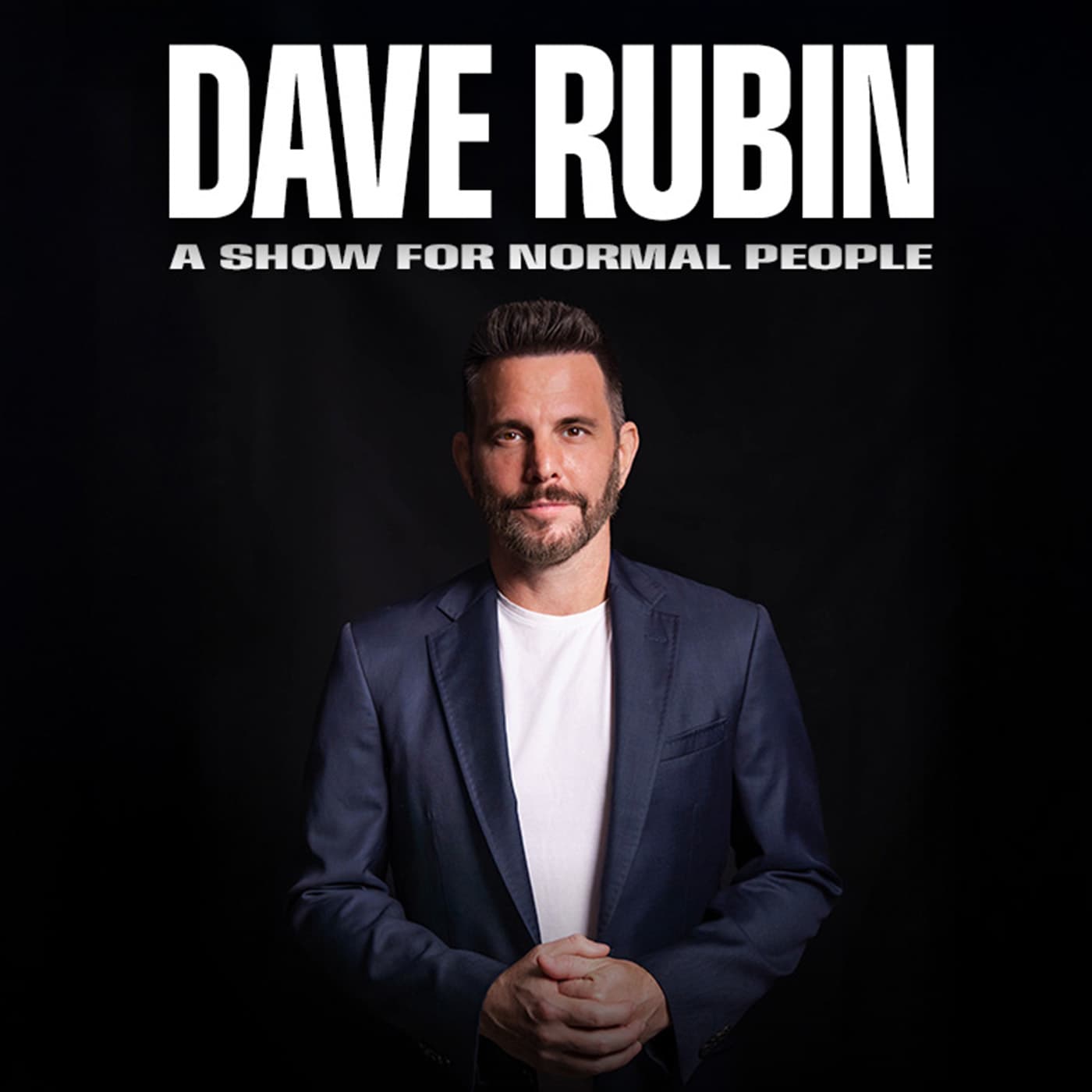
Dave Rubin of "The Rubin Report" talks to Adam Carolla about "gyno-fascism" and the dangers of female-led safetyism dominating our culture and governmental policies; how most of Gen Z's depression and anxiety could be solved with practical blue collar experiences; how he left radio to become a podcasting pioneer; how California's bureaucracy is sabotaging the rebuilding of the Pacific Palisades areas damaged by the wildfires; and much more.
