
- Podcasts
- The Rubin Report
- How Media Lied to the World about Hungary
The Rubin Report21 Jun 2025 · 11m
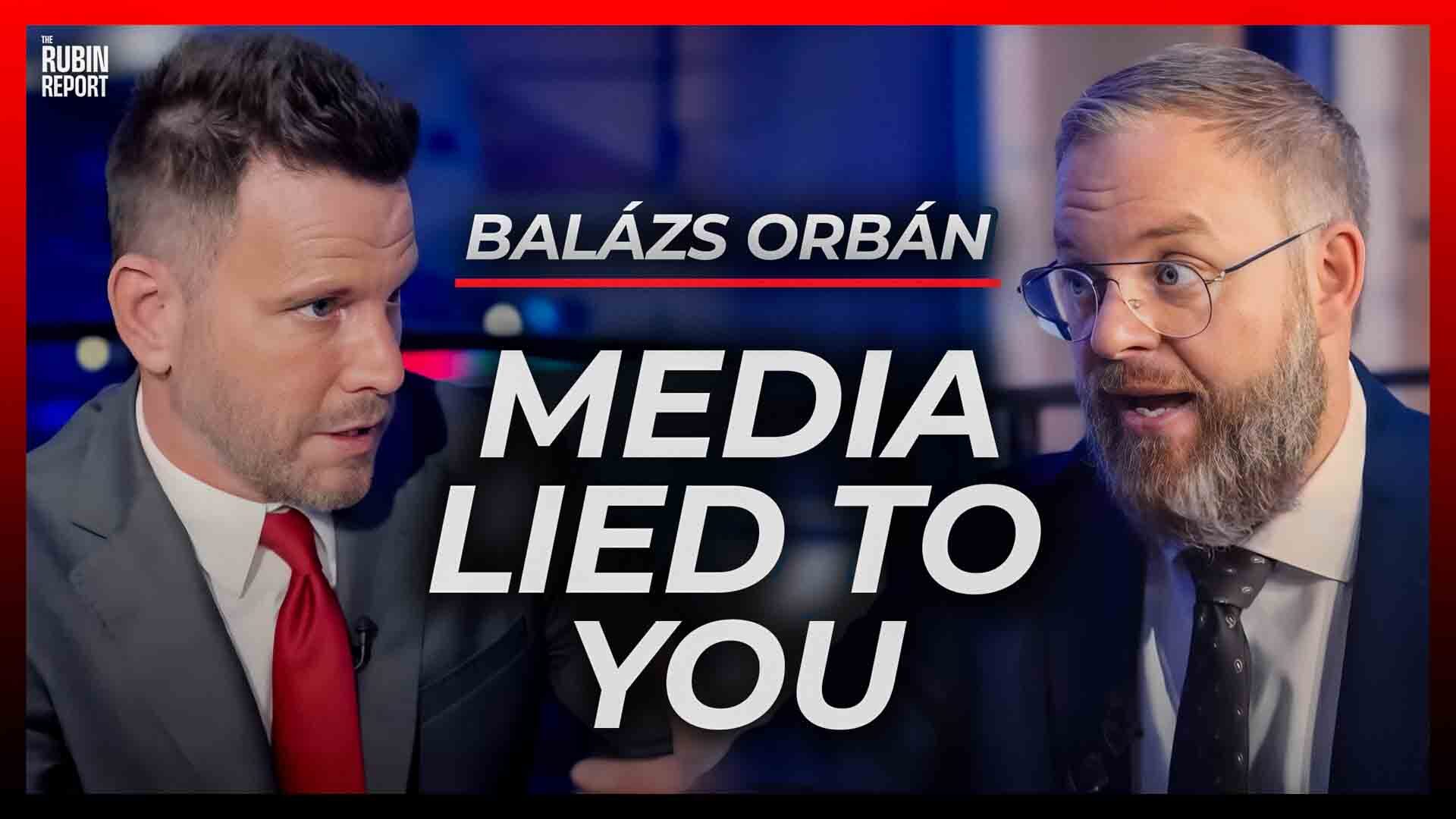
How Media Lied to the World about Hungary | Balázs Orbán

 Add vo to ChatGPT or Claude to ask about everything you hear
vo listened to this episode to put together the overview and transcript, so there may be the odd mistake.
In short
Balázs Orbán argues mainstream liberal media misrepresented Hungary as a fascist dictatorship, discouraging opposition until Donald Trump-era skepticism spread. He claims Hungary’s border-control/migration policy is widely supported domestically (he cites 80–90% approval) and frames dissent as existing despite claims of authoritarianism. He also argues EU “sanctions” target Hungary for defending borders and that Brussels is run by a “globalist machinery” undermining democracy and sovereignty.
Guest
Balázs Orbán, political director for Prime Minister Viktor Orbán (not related to the host; unmarried family note).
Key claims/examples
media “playbook” repeated about Orbán; nearby “Red Ruin” Marxist cafe shows dissent; Hungary pays about €1 million/day under EU sanctions for not opening borders; war/energy/inflation harms Europe, with Orbán urging diplomacy.
Transcript
0:00The mainstream media, which was back at the time also controlled by the liberals, they started a political campaign against us. And they were portraying Hungary like a fascist dictatorship type of country. And no one else, and the voters, the politicians on the other side, actually no one knew who we are and what we're doing. So no one was speaking against it. And that was the liberal propaganda against Hungary everywhere. But then, with Donald Trump, the situation changed.
0:41Okay, Balazsha Orban, political director for Prime Minister Viktor Orban. Every time I've interviewed you, I have to point out you are not related, unless something has happened in the last... No, everything is unchanged. Still not married in the family yet. You know, it's funny, when I see you now, we've been doing this for a couple of years, It seems like it's like seeing an old friend. We've both put on beards over the years. You've gone a little more rustic than me. We chatted a bit last night. And one of the things that you mentioned that I think we're going to talk about on stage in a few minutes, and then again later tonight at the Danube Institute, is how the country of Hungary is so misportrayed by the mainstream media.
1:19And as you know, that's something that I really focus on from an American perspective. And you guys played a montage, or CPAC played a montage at the beginning, just with some of the ways that Orbán, Viktor Orbán, and infantry are perceived. And it's rather extraordinary, even though it's kind of old hat for us because we've been through this game. Yeah, it's true. I think, you know, when I think how the situation was looking like 10, 15 years ago, I remember that it was very hard to explain for us Hungarians who we are and what we are doing because we have a very special language. it's only 12 million people on earth is speaking this kind of language and you don't know the cultural and the linguistic context you have no idea what's going on in the country so it's very hard to explain to the foreigners what's going on but and and the mainstream media which was back at the time also controlled by the liberals they started a political campaign against us and they They were portraying Hungary like fascist dictatorship type of country.
2:24And no one else, and the voters, the politicians on the other side, actually no one knew who we are and what we're doing. So no one was speaking against it. And that was the liberal propaganda against Hungary everywhere. But then with Donald Trump, the situation changed. because I think American people and many Western European people realize when the liberal media started to spread lies on Trump, they realize that, oh, they are lying on this issue. You start seeing it in one place and the next thing you see you're seeing it in one place. And then they realize that if they're lying about Trump, it's possible that they are lying about Viktor Orban in Hungary as well.
3:07And they are lying about many things. And people started to be curious about what's going on. And this is why we are very happy to have so many Americans who are here and they have field experience what's going on. And they can broadcast the different context, which is closer to the truth than the liberal one. The media compilation they showed beforehand, I mean, the things they were saying about Hungary and about your prime minister, it's exactly the same stuff. It is the same playbook over and over. Interestingly, you mentioned at an event last night that we were at the Roger Scruton Cafe, which there are several up here, a great conservative thinker who unfortunately is no longer with us.
3:48But you mentioned there that right next door was a communist and Marxist cafe in this place that we are told is authoritarian and has no dissent, that quite literally next door, the Marxists have their own cafe. And the bar is called Red Ruin. So that's a... Yeah, yeah, yeah. And they live next to each other. So you have dissent here. There are people who are not happy with the government. There are. There are. Yeah. There are many people. But, you know, we try to convince them that it's the best decision to support the government. But if we are not able to convince everyone, we still can convince the people that even if you dislike the government, there are some important civilizational issues, which is not about party politics.
4:42It's about the country and about how to defend it. So the migration issue, it's a perfect example. Now, I would say 80, 90 percent of the society bags the Hungarian government on the migration policy. Which is basically just closed borders. That's the most simplest way to put it. They don't like us, but they support our migration policy. it and i think it's very important for every country to have you know like like cultural civilizational society-based agreements within the society shared by the leaders and it has nothing to do with party politics you can love you can hate politicians and you can do whatever you want you can say whatever you want but but there are some basic things like leave alone our children, protect the borders, preserve the sovereignty, not to bring a country into a war and things like this.
5:43This is about politics or should be. You also mentioned something last night that I will bring up when we're on stage later, which I thought was interesting, which is that in some sense, what you're suffering from right now is a function of your own success, that because you guys have done this right, as it pertains to the border, you're obviously at Oz, you're in union, your economy basically is doing well, especially to the backdrop of what's and a lot of other Western European nations, that at some level the electorate kind of doesn't realize that things could be significantly worse. Yeah, and this is why it's very important for us to have the foreigners who are here in Hungary and they are explaining to the Hungarian public as well that, guys, this is unfortunately not the case in every country.
6:26So politicians are persecuted. People are persecuted based on their comments, their tweets, their political opinions, the migrants are on the street, and it can happen. In Germany, there was no politician or in France who was saying back in the time, 20, 30 years ago, that, guys, what's going on 30 years forward will change our country, so we should rather stop it now. No one was saying it in those big countries. And people, I think, would love someone who is telling them the truth. So this is why for us it's important to have our friends here in Hungary and explain to the Hungarian audience what's going on.
7:12And things, unfortunately, can be much worse. So we have to be able to defend our values. Would you have ever thought years ago that Hungary would become sort of an epicenter of freedom the way that it is? I mean, you're a country of, I think, 9.7 million people. You just mentioned only 12 million people worldwide speak your language. And yet you really do seem like the European epicenter of freedom. America is sort of the world epicenter and you guys are the satellite in this part of the world. We talked a lot about this with the prime minister. And he many times said, he said it publicly as well, but also many times told me that, you know, we, our job is not to save the world.
7:58Our job is to save Hungary. So it's like we don't want international attention. It's like we just want to have a government which helps the nation to thrive. This is the only important part of the job. But what happened, the attacks came from outside. And we realized that if we are only focusing on domestic issues, then we will lose the battle because they will destroy us from outside. And they have the power. They have the media. They have the sanction regimes. They have the political pressure. They have the NGOs and everything. So this was the point where the prime minister said that we have to create a system which is helping us to defend the country.
8:47And on this level, we have to engage in international politics and have the conservative right wing sovereignty forces all over the world. So since this is one of three events that we'll be doing together, I'll save the rest of the questions for later. Let me ask you one other thing for now, which is, so when people look at a small country that has its borders under control, that has competent governance, what is the biggest external threat? The things that you just mentioned, what is the biggest thing that you could be sanctioned by the European Union or that they can hamper your ability to trade?
9:19What would you say is the biggest threat from sort of like what we call the globalist order? I give you one example. we are already under sanction by the European Union because we are defending our borders. The Hungarian government has to pay 1 million euro per day because we are not opening our borders. So it's a sanction which is operating every day against us. Probably so they can fund propaganda against you. Yes, exactly. And you know what is going on, What happened with the war in the last three years? Prime Minister Orbán was saying that there is no solution on the battlefield. The sooner we get back to the diplomatic track, it will be better for everyone.
10:07But the European leaders were pushing, pushing, pushing to another direction. And it caused a massive destruction. And the negative consequences on the field of energy, on the field of inflation, on the field of general stagnation, what you experience in Europe. are affecting the Hungarian people. So the biggest challenge for us now is, as it was mentioned by the prime minister, how to deliberate Brussels, how to regain the control, because now it's controlled by a globalist machinery and they are using everything what they have against the nation states and the national governments. It's not democratic at all.
10:48It's the opposite of democracy, what is going on there. So if we want to preserve Hungarian sovereignty, then we have to be part of the European cooperation of the nations, but also defend the country from the Brazilian liberals. You will continue this on the main stage. Thank you very much, Dave.
From the publisher
Dave Rubin of "The Rubin Report" talks to Balázs Orbán about Hungary's misrepresentation by mainstream media; the cultural challenges posed by Hungary's unique language and history; how liberal media falsely portrays Hungary as authoritarian; the shift in perception after Donald Trump's rise; Hungary's strict immigration policies supported by most citizens; the importance of civilizational values over party politics; resisting EU sanctions to protect national sovereignty; Hungary's focus on domestic success over global approval; and the threat of globalist agendas; and much more.
#RubinReport #Hungary #conservatism #conservative #westernculture #westerncivilization #mainstreammedia #mediabias #BalazsOrban #daverubin
More from The Rubin Report
All episodes
We use cookies.They keep vo running smoothly and help us improve it. Privacy policy
Scan the code with your iPhone camera
Listen in the app.
- Play everything vo finds for you
- vo remembers everything you hear
Go to the App StoreFree on iPhone