In short
How to use AI/phones without harming the brain; redefine “leisure” as generative time; and discuss looksmaxxing, plus relationship and spiritual practices.
Guest backgrounds
Arthur Brooks is a behavioral scientist specializing in human happiness; former classical French horn player (12 years), economist/professor (10 years), and president of the American Enterprise Institute (11 years). He teaches happiness science at Vanderbilt and Harvard and hosts “Office Hours with Arthur Brooks.”
Key claims
Phones are “tools,” not friends/therapists; using screens in the “wrong hemisphere” (for love/meaning) creates counterfeit connection and can worsen depression/anxiety. Leisure should deepen relationships, spirituality/philosophy, or learning—serious, not “chilling.” Social media should be limited (about one hour/day total). AI can enhance productivity and information dissemination but shouldn’t replace real relationships.
Notable examples
Spain’s August shutdown and siesta culture; “nothing box”/no-phone beach time; couples’ eye contact and reading before bed; the “36 questions” experiment; looksmaxxing’s off-putting effects in heterosexual dating; clavicular’s jawline feedback conversation; and using a second, disconnected phone to avoid constant access.
Written by AI. May contain mistakes. Listen to the episode to check what was said.
Chapters
Tap a time to open that second in VOTechnology as a Tool
0:30 to 0:58
AI and phones should be viewed as tools, not substitutes for human interaction.
“That's why there's Jerry, your proactive insurance assistant.”
Technology as a Tool
1:03 to 1:52
AI and phones should be viewed as tools, not substitutes for human interaction.
“That's j-e-r-r-y dot a-i slash l-i-b-s-y-n.”
The Boredom Paradox
1:52 to 2:19
Exploring how modern life causes superficial boredom despite constant stimulation.
“You know, today, when you've got your phone, your life moment to moment is never boring, but your life overall is extremely boring.”
Arthur Brooks' Journey
2:56 to 4:48
Arthur details his diverse background and focus on human happiness.
“So we're taping this a few days before before August begins.”
The Need for Disconnect
4:48 to 5:32
Discussing the necessity of taking breaks from technology and phones.
“So when I told you the first time we spoke that I do this off of the grid thing, I remember very specifically you were like, wow, that's just incredible and everyone should do it more.”
Understanding Leisure
5:32 to 6:31
Arthur explains the true meaning of leisure and its importance in life.
“It doesn't amaze me at all because these are dopamine-based addictions.”
Productive Leisure Activities
6:31 to 8:19
Exploring how meaningful leisure activities contribute to happiness.
“It's not recharging so that you can actually do more work.”
The Spanish Approach to Leisure
8:19 to 11:12
The cultural differences in taking leisure time and the impact of technology.
“When's the last time you just laid on a beach and stared at the ocean and didn't think about anything else?”
Technology's Neurological Impact
11:12 to 11:43
Discussing how phones affect our brains and leisure benefits.
“And so one of the things that we have to urge all of our viewers today to do as they go into the nothing box is that means no phone, man.”
Rethinking Phone Usage
11:43 to 14:01
Arthur and Dave discuss the relationship with technology and social media.
“Is that really just an ego problem first?”
Show all 22 chapters
Impact of Social Media on Relationships
14:01 to 18:06
Learn how social media can harm personal relationships and mental health.
“Once you're actually using it as something beyond, something that enhances your productivity, it's a problem.”
Introduction to Sponsor: Kalshi
18:07 to 18:43
Discover how Kalshi allows you to trade on predictions like a stock market.
“Well, speaking of predictions, watch me throw this ad in seamlessly, and then we'll do more on that prediction in just a second.”
AI's Role in Enhancing Productivity
18:48 to 22:18
Understand how AI can improve work-life balance when used correctly.
“What are the, what are the, see, the matrix?”
Navigating Relationships in the Digital Age
22:19 to 28:01
Explore protocols for managing technology use to improve personal relationships.
“So again, I started asking this before, but now walk me through the kid, it's not even a kid, the young person who grew up with this device.”
Importance of Touch in Relationships
28:01 to 29:52
Learn about the significance of physical touch and fun in maintaining healthy relationships.
“Well, I mean, we still do all that stuff.”
Exploring Looksmaxxing
30:04 to 33:04
Engage in a discussion about the psychology and societal perceptions of looksmaxxing.
“Tell me, wait, they are a little bit different.”
Spiritual Experiences and Technology
33:04 to 34:15
Investigate how technology impacts our spiritual experiences and mental well-being.
“I mean, we have more than one attribute.”
A Journey to Happiness
34:15 to 36:42
Listen to a personal story about seeking happiness through self-discovery and spirituality.
“I'm on just one of those over the water huts where all you can see is the horizon, that you can't hear a thing.”
Advice on Relationships and Happiness
36:42 to 42:01
Gain insights into providing relationship advice and the keys to happiness.
“But I was thinking that I was rolling into my 50s.”
Finding Happiness Through Love and Relationships
42:01 to 44:15
Explore how love and relationships contribute to happiness and personal fulfillment.
“using the science that you suffered through a PhD for, for Pete's sake.”
Inventory of Life: Love, Use, and Worship
44:15 to 46:28
Discuss the importance of reflecting on what we love, use, and worship in life.
“When I'm sitting on the beach and I'm dumping the files or I'm reordering.”
The Value of Privacy and Solitude
46:28 to 48:11
Understand the significance of stepping back from public life for personal growth.
“And I'm going to clip this part and send it to David so he can also work on that.”
Transcript
Automatic transcript. May contain errors.0:00Hey, Chicagoland! The Wayfair store is in your neighborhood at Edens Plaza in Wilmette. Finally, you can feel the fabric, sit on the sectionals, and even open the refrigerators. Plus, our in-store designers will help you bring it all together with free one-on-one design support for any project on any budget. Yep, we said free. Oh, and did we mention the cafe? So what are you waiting for? Come see all that's in store. Visit the Wayfair store today at Edens Plaza in Wilmette. Wayfair, every style, every home Are you noticing your car insurance rate creep up even without tickets or claims?
0:34Arthur Brooks:You're not alone. That's why there's Jerry, your proactive insurance assistant. Jerry handles the legwork by comparing quotes side-by-side from over 50 top insurers so you can confidently hit buy. No spam calls, no hidden fees. Jerry even tracks rates and alerts you when it's best to shop. Drivers who save with Jerry could save over$1 ,300 a year. Don't settle for higher rates. Download the Jerry app or visit jerry.ai slash libsyn today. That's j-e-r-r-y dot a-i slash l-i-b-s-y-n. Your phone is a tool. It's a tool. It's not a friend. It's not a therapist. It's not there to give you the girlfriend or boyfriend experience.
1:14Arthur Brooks:It's a tool. It's a hammer. It's a toaster is what it is. The way that people treat their technology is much the same way as alcoholics treat alcohol. that gamblers treat gambling. I use AI constantly, and there's an AI Arthur as well. But it's not a substitute for me any more than AI Dave is a substitute for you. The problem is it makes us less human when people use it in the wrong way. And the wrong way is as follows. We have a set of complex problems in our lives that are all about love and mystery and meaning. AI is great at complicated information-based problems. And so I should use it for those things in my work.
1:46Arthur Brooks:And then it should free up my time to spend more time with the complex problems of mystery and meaning and love and happiness. You know, today, when you've got your phone, your life moment to moment is never boring, but your life overall is extremely boring. And I've studied leisure a little bit because as a behavioral scientist, it's a very interesting topic. It's not chilling. It's not recharging so that you can actually do more work. It's a serious business, actually. It's a serious part of life, per se, if you want to live the best possible life. The young person who grew up with this device, and they say, I'm more depressed, I'm more anxiety-ridden, et cetera, et cetera.
2:18What are you telling them to do?
2:27guys i'm off the grid but i'm still dave rubin and joining me today on the rubin report is the leading expert on the science of human happiness as well as the host of office hours with arthur
2:37Arthur Brooks:brooks my old friend arthur brooks arthur welcome to the show good to talk to you young man and i hope you're right now having a great time off the grid i hope i am too we are agreed on that Well, I thought actually you'd be the perfect person to have do my first show with me being off the grid. So we're taping this a few days before before August begins. And I realized right before we started taping, you were actually my first guest on the show in 2026. We aired our show on January 2nd of the year. And now you're my first show off the grid says a little something about what you've done with your career that I hold you in these very high regards.
3:19Would you say that's the top award? There's got to be an award behind you there somewhere.
3:22Arthur Brooks:I like that award. I like that, you know, these moments of, you know, of significance where you're actually doing the things that you love with the people that you love the most. I'm delighted to commemorate that. Oh, well, thank you. And I do mean it. Like, I have found you to be, particularly this year where things have been a little bizarre, a just a great, clear voice, not totally bogged down in the endless minutia of politics in the culture world, but trying to get us to aim for something a little bit better. and I think for those of the audience that don't know you, it'll be fairly obvious why I wanted to have you on this first Off the Grid show.
3:55So just give me the, I do this every time with you, but give me the one minute recap if someone had to say, what does Arthur Brooks do? And then we will dive into all the stuff.
4:05Arthur Brooks:Yeah, thank you, Dave. I'm a behavioral scientist specializing in the science of human happiness. It's not what I've done my whole career. I've done a lot of different things. I was a classical French horn player for 12 years And then I was an economist, a professor of economics for 10 years. Then I was the president of a think tank called the American Enterprise Institute for 11 years. And then I went back to what I did my PhD in, which is behavioral science. And I've dedicated the last seven years and the rest of my life to lifting people up and bringing them together in bonds of happiness and love, using science and ideas.
4:35Arthur Brooks:And so the culture war is off-brand for me. What's on brand for me is lifting people up, helping them understand that we're all brothers and sisters and we're all making our way hand in hand to get through the world together with happiness and love. My God, he gets the elevator pitch. He did it. All right. So when I told you the first time we spoke that I do this off of the grid thing, I remember very specifically you were like, wow, that's just incredible and everyone should do it more. Are you amazed, despite all of the research that we now have and just sort of the obviousness of the addiction that everyone is suffering with the phone and technology, that more people don't do this type of thing?
5:13I know doing a month with no nothing is rather excessive, and I know not everyone can do that. But even a weekend, I mean, the amount of people in the last couple of weeks that have been like, oh, Dave, you're doing the month. I wish I could do it. I always say to them, well, when's the last time you did a weekend or a day without your phone? Right. And nobody can even do that.
5:31Arthur Brooks:Right, right. It doesn't amaze me at all because these are dopamine-based addictions. The way that people treat their technology is much the same way as alcoholics treat alcohol, that gamblers treat gambling. I mean, the truth is that they all want to do that and they all truly are envious of you for doing that. But they can't do it because of the chemistry in their brains is actually linking them to their devices. And they have a sick relationship, a disordered relationship with their technology. You've talked a bit and written a bit about sort of leisure just in and of itself, that we need more leisure time, but in some ways we don't even know what leisure time is.
6:12That leisure time is not just laying on your phone and rotting all afternoon, that there is actually something else to it.
6:19Arthur Brooks:Yeah, no, for sure. And I've studied leisure a little bit because as a behavioral scientist, it's a very interesting topic. It turns out that philosophers and psychologists in the middle of the 20th century had a lot to say about leisure. It's not chilling. It's not recharging so that you can actually do more work. It's a serious business, actually. It's a serious part of life, per se, if you want to live the best possible life. Probably the best writer about leisure is Josef Pieper, who's a 20th century German philosopher. And he wrote a very famous book called Leisure, the Basis of Culture, where he talked about the fact that it should be something incredibly generative and incredibly productive that they just don't pay you to do.
6:59Arthur Brooks:And he found that leisure that's most productive, that does the most good for psychology and the soul, is sort of in the areas of deepening your relationships, deepening your spiritual or philosophical life or learning something that you don't have to learn and taking it really seriously. So just chilling on the beach, looking at nothing, that's okay for an afternoon, but that's not a serious pursuit that's actually worth going after for a month. How much time do you think people should devote to each of those things? So he, you know, what we would think of is there's sort of three legs of the stool.
7:34Arthur Brooks:There's the work leg, there's the leisure leg, and there's the sleeping leg. And what that suggests is there's about eight hours in the day that you should be dedicating toward things that are that that deepen your life but they're not paying you to do um and that you know for you and me you and i are family men you and i are you know we have pair bonds and children and and and in my case grandchildren and that's what he would consider to be leisure but you have to take it seriously you have to take deepening those relationships with a certain seriousness he would say that me going to mass as a catholic is a leisure activity that me reading a book you know you know, reading The Brothers Karamazov, which I don't have to read for work, that would be a form of leisure as well.
8:14Arthur Brooks:And that's as important as work and as important as rest, as sleep. When's the last time you just laid on a beach and stared at the ocean and didn't think about anything else? That's real hard. See, I can tell because interestingly, as you're laying that out, part of what I will do, not all month, but part of what I will do is lay at a beach. I don't need a book. I don't need, I don't have my phone. I don't need much actually. Even on a plane, I don't need to look at anything. And what I try to do, and maybe this is, for me, this is a type of leisure, but I'd love to get your take on it. I really think about all the things that went on throughout the year.
8:52So my year is ending right now. August is my break. Then I start my year in September. I think about how I did the show, my relationships in studio and in my family and all those things. And I try to sort of get rid of some nonsense, almost like I'm going through a file. I really have it like sort of ordered in my mind. What do I want to think about today? And obviously I can't fully control it. Sometimes it just sort of happens. But I could do a week laying on a beach without doing much. And I do find it highly productive in a weird way.
9:23Arthur Brooks:Yeah, no, I get that. And actually you are doing something, which is that you're going through your files. You're going through your mental files. You're taking an inventory and you're doing something. It's actually a generative activity. What's real hard for me is to lay on the beach and actually just try to go into the nothing box. That's a really tricky thing to do. But it's actually quite interesting. The research on even doing that suggests that that can be a generative activity. That's the importance of what we would think of as boredom. An undistracted state is really critical too. For a long time early in my life, when I was in my mid-20s, I moved to Spain.
10:00Arthur Brooks:I was chasing a girl, of course. And by the way, we now have four grandchildren. So it worked. All right, all right. It worked, absolutely. We had to learn the language enough so she could realize that I was not a complete idiot. And one of the things that I found is that, you know, the Spaniards are very serious about their August. You know, they're, I mean, they don't understand Dave Rubin. It's like a country of Dave Lubin's, man. They understand they're 3 p.m. over there or whatever it is. What time do they do siesta? Well, 2 to 5 is where everything's closed, and they're still eating supper.
10:33Arthur Brooks:I mean, it's crazy schedules. But August 1st, everything shuts down, and unless you're in hospitality, you're not working. And when I first moved there in my mid-20s, I was amazed at the radiance that they would come back with, and I would ask, what did you do? And they would say, well, nothing. it. And they kind of meant that as a matter of fact. And now one of the things that I notice is that people still take August off in Spain because, you know, that's a violation of natural law that somebody should make you actually go to your job in Spain in August, but they're less refreshed. And there's a reason for that, which is that they're on the beach with their phone and they've broken their brains.
11:12Arthur Brooks:And so one of the things that we have to urge all of our viewers today to do as they go into the nothing box is that means no phone, man. You will destroy the neurological benefits that come to you from leisure and from relaxation if you're staring into your phone. And, you know, we could enumerate all the ways that the default mode network and the right hemisphere of the brain are extinguished and their activity. But bottom line is you won't be refreshed, nor will you actually get any benefits of leisure whatsoever if you're on social media. Do you think that at the end that the phone thing and the need to, you know, be sitting on a beach in a beautiful place where you should be completely disconnected and still have the desire to take the selfie or live stream or put up the video or whatever, is that all really ego-based before it becomes a, like a brain chemistry problem, before the addiction part kicks in?
12:04Is that really just an ego problem first?
12:08Arthur Brooks:It's probably not an ego problem in so far are in as much as it's a, it's a, it's a being stuck in the wrong sense of self. And so, you know, William James, the great American philosopher, he talked about the me self and the I self. And, and this is kind of, you know, all the new stuff like Michael Pollan's book. Have you had him on your show? No, I haven't had him on yet. We've got, he's on the master list. So hopefully in the fall. Yeah, he's great. And his new book, The World Awaits, really is a, is a brilliant book about consciousness. And what he talks about is the fact that consciousness kind of has human And consciousness, which is awareness of being aware, awareness of, you know, to be conscious, it has to be like something to be Dave Rubin.
12:49Arthur Brooks:That's consciousness, right? But it has four levels. There's sentience that a plant has. There's feelings that your golden retriever has. There's awareness of others that we all have. And there's awareness of self that only human beings have. And it's that highest level of consciousness that's the biggest problem. It's the most mysterious. It gives us dominance over what we do, but it makes us utterly miserable. And so what we need to do is to go backwards in consciousness, to be looking out at the world and not in on ourselves. But we have a tendency to want to do that. We created the perfect device to look at ourselves all day long.
13:22Arthur Brooks:And that's the phone. And so it scratches an itch. It's not an ego itch. It's a funny tick about human consciousness itself. It's not really well understood. So then what do you think the proper relationship with the phone and with technology and with news and the hamster wheel actually is? So the answer to that is your phone is a tool. It's a tool. It's not a friend. It's not a therapist. It's not there to give you the girlfriend or boyfriend experience. It's a tool. It's a hammer. It's a toaster is what it is. It's something that actually help you to accomplish productive tasks and not there to entertain you.
14:01Arthur Brooks:It's not there to love you. That's not what it should actually be. Once you're actually using it as something beyond, something that enhances your productivity, it's a problem. And with relationships, it should only ever complement your relationship and never substitute for your relationships. And that means, by the way, with social media, you should not be on social media platforms for more than an hour a day, total, combined across all platforms. And that's probably nobody, myself included, when I'm on the grid, that has these things. It's very hard. It's a very hard thing to do. But if you actually limited yourself to that, you'd start using it much, much more like a tool and you'd never get lost in, you know, in reels and algorithms.
14:43Arthur Brooks:Part of the reason that it's such a problem is when social media algorithms, they feed you information you didn't ask for and you become very addicted to extraneous information, information all day long. You know, Einstein is purported to have said, I mean, he said on the internet, so who knows who said this? Einstein is purported to have said that people read too many books. And he said this in the 40s. And the reason is because we get too much information and not enough thinking. So let's go back to your example of what you're going to be doing on the beach. You're not going to be reading a book.
15:17Arthur Brooks:You're going to be thinking about stuff that you already know to learn deeply about what you should be doing. that's exactly what Einstein would say is a proper use of the knowledge that you already have. Gosh. Well, I'll take that, I suppose. And by the way, a book might get in there. There is a chance halfway through that I do get an itch or more likely what I will do. My first book, I basically wrote on like four notebooks while on the beach the first time around. Last time... That's fine. That's perfectly good. The problem is actually your phone is a continuous book with no point. Right. That's the problem.
15:49We talked about this last time a little bit, but I'd love to expand on a bit more that we also don't give up by being connected to these things all the time. We're never giving ourself a chance to just connect to anything else. Meaning back in our day, you meeting a friend for dinner. Well, you say, okay, I'll meet you on the corner of 83rd and Amsterdam. Well, it's 730. You're supposed to meet at 730. He may not show up. She may not show up till 740. You'd have to just stand there. And that was all you could do. And you might start thinking about some things or you might start people watching or something else might happen.
16:20And there's no spontaneity or just ability for randomness anymore.
16:26Arthur Brooks:Yeah, even worse than that, when you had to wait for your friend for 15 minutes on the corner of 73rd and Columbus, what was happening is that as you waited and watched, the default mode network, a series of five structures in your brain, would start to become active. And when they did, you'd have mind-wandering, flights of fancy, and you'd be thinking about the meaning of your life, which is exactly how your brain was intended to work. Now, you know, we talked the last time, you know, in January about great-grandpa Ruben, you know, who was looking at a mule's butt all day long. And his default mode network was going all the time.
16:57Arthur Brooks:And he was bored moment to moment, but his life was intensely interesting. You know, today, when you've got your phone, your life moment to moment is never boring, but your life overall is extremely boring, which is because your brain isn't working the way it's supposed to. In a weird way, we can't get out of this, right, at scale? like you can get out of it, I can get out of it. Hopefully some people watching this can get out of it. There'll be like escape pods of people that will slowly get off the ship, but the ship itself is not going to change. Well, I actually think that we will figure it out because we generally do.
17:30Arthur Brooks:When new technologies come along and they're misused and they're misunderstood, at Homo sapiens, we're really, really good at surviving and ultimately getting back into some form of an equilibrium. I mean, AI is going to mess us up in a lot of ways, too. But ultimately, AI is something that I strongly believe will wind up making us a lot richer than we are today. And it won't make us any less human at the end of the day. It'll make us less human from here to there, but I don't think it's the end of humanity, per se. People have been predicting that new technologies would upend human life permanently and deleteriously forever.
18:02Arthur Brooks:It just takes us a while to figure it out. And that's what we're having trouble with with our space. Well, speaking of predictions, watch me throw this ad in seamlessly, and then we'll do more on that prediction in just a second. Speaking of travel, guys, which countries will Pope Leo visit this year? Here's what the Kalshi markets are showing. And as you guys know, Kalshi's like buying or selling a stock, except the line isn't set by some algorithm working against you. It moves based on where the money actually goes. It shows where people are putting their money, not what the media wants you to believe.
18:32So if you put yes, if you put$100 on yes, Mexico, You can earn$263 if correct. Download the CallShee app and use code RubenReport to get up to$500 in bonus credits. When you trade$25, you go to CallShee.com slash RubenReport. Just as you're talking about predictions, we've got a prediction sponsor. What are the, what are the, see, the matrix? It's getting us, it's getting us one way or another. But all right, let's go with that. Let's go with that for a little bit because obviously.
18:57Arthur Brooks:Was somebody betting that I was going to say that on the Ruben Report? Probably, probably, probably. When Arthur Brooks or Dave Rubin starts showing up in Kalshi, which has happened, then all butts are off, no pun intended. Yeah, that's exactly right. And by the way, speaking of Pope Leo, he wrote a very nice encyclical called Magnificent Humanity. It was just published. I know this because I wrote the foreword to the English edition of all things about AI and about how AI and technology together, we can work such that it doesn't rob us of our humanity, which is what he's talking about. He says that these things should make us more human and not less human, but that's a real danger.
19:38Arthur Brooks:So what we're talking about here is on the Pope's mind, too. Whether he goes to Mexico or not, it's still up in the air. Well, all right. So tell me your feelings about that. So I understand your feelings about it. I understand the Pope's feelings. But how does that actually play out? You know, one of the things I've said to my guys here is I want to lead on all of the ways that AI can incorporate, you know, the way we can incorporate AI into the show, whether that's through editing or clipping or AI Dave or translations. I mean, there's a million things that we can do and probably a billion things we can't even think of yet.
Read the full transcript
20:11So how do you view, okay, the average guy, he's got a job and he's got a family. Now AI just starts becoming more ubiquitous in his life. Yeah.
20:23Arthur Brooks:And that's an incredibly powerful tool for sure. And it can actually make your work and life a lot better. You're using it in exactly the way it's intended to be used, which is to enhance your productivity along the lines of quotidian tasks, automating stuff, finding information, et cetera. I use AI constantly, and there's an AI Arthur as well, but it's not a substitute for me any more than AI Dave is a substitute for you. What it is is an enhancement of your ability to actually disseminate the information that originated from you. It's just a way to replicate you to more people, to go to scale.
20:59Arthur Brooks:The problem is it makes us less human when people use it in the wrong way, and the wrong way is as follows. We have a set of complex problems in our lives that are all about love and mystery and meaning. These are all actually adjudicated in the right hemisphere of our brain. You know, our marriages, yours and mine, they're very complex problems. They'll never be solved. Never. They'll only be understood. They'll only be lived. That's why I love my marriage more than my car. My car is a complicated problem. That's a problem based on information. I can solve problems with my car, but I can't with my marriage or with my family.
21:37Arthur Brooks:And so the result of it is that AI is great at complicated information-based problems. And so I should use it for those things in my work. And then it should free up my time to spend more time with the complex problems of mystery and meaning and love and happiness. What people are doing wrong today is using AI and screens to get the girlfriend experience or to have a best buddy and conversation partner or, God forbid, to have a therapist. This doesn't work. And this is one of the reasons that people are depressed and anxious is because their brain knows they're getting a counterfeit curve fit, kind of a, they're getting a simulation.
22:14Arthur Brooks:They're living in the matrix, effectively, when they use technology in the wrong hemisphere of their brain. Right. So again, I started asking this before, but now walk me through the kid, it's not even a kid, the young person who grew up with this device. They do not know a world without it. We still remember the world without it, right? They grew up with this thing. They're on it all the time. And then they come to you and they say, I need help managing this relationship. It's not working. I'm more depressed. I'm more anxiety ridden, et cetera, et cetera. What are you telling them to do? So there are a bunch of protocols that actually I put people on that will turn it from a relationship into a tool.
22:53Arthur Brooks:And what they largely have to do with is reordering when and how you use the tools in very manageable ways. So there's three times during the day never to use your phone. I mean, you can go away for a month like you, but it's hard to do for a lot of people. And it's not practical for some people. And by the way, you know, it's gotten much more difficult for me over the years because the amount that we use this, even in the last 10 years, the way we've become dependent on it. Like literally my house to turn on lights, I'm used to this thing. You know, basic things like directions if I'm driving somewhere are on this thing.
23:25So we, I do, this will go in a safe, but I do have a second phone that's not connected to anything. So I can literally turn the lights on in my house. Otherwise I'm not even sure I have switches for all those things. Like they've really just got us.
23:38Arthur Brooks:No, that's true. And a bunch of things that I recommend, aside from the times apart from it that I'll talk about in a second, are disambiguating, as much as we can, different areas of our lives. So don't read books on your iPad. I mean, I realize it's very convenient to have 75 books on your iPad before you go on vacation, but take the three that you really want to read and have real books. That's very good for your brain, as it turns out. But the times is really important because the neurocognitive learning and adaptation in your life has a lot to do with the technologies that you're using at different times.
24:13Arthur Brooks:For example, the first hour of the day is a holy hour. That's literally what a lot of religious communities call the first hour of the day is the holy hour. because you're doing neurocognitive programming. It's going to make you closer to God or farther away from God, depending on if you believe in God, your results may vary. But the first hour of the day is really, really important. I mean, I talk to journalists, for example. They say, I got to look at the phone. I say, okay, pick it up and see if something's on fire and then put it down for an hour. That's all I'm talking about is that has a huge impact on your relationship with your phone, for sure.
24:48Arthur Brooks:The second is during mealtimes. And so I recommend that people eat alone as infrequently as possible. It's actually not healthy to eat alone. And it's especially unhealthy to eat alone while you look at a screen. And the reason for that is that we get a lot of oxytocin, which is a neuropeptide of human bonding. It's kind of a love molecule. And you get that a lot when you're looking at somebody, when you're putting yak meat into your mouth. This is how, you know, homo sapiens develop, their brains developed in the middle Pleistocene period. This is how we knew what was going on with our kin. The last is the last hour of the day.
25:25Arthur Brooks:And this is really important for sleep architecture and blue light. We all know this stuff. But it's also really important for relationship management. I mean, one of the things that I do, I talk to people about how to save almost any marriage. And the first thing I talk about, my wife and I, we go on the road talking about this stuff, is look into each other's eyes every night before you go to sleep for five minutes. The 15 minutes before that, read to each other from a real book. And I'm telling you, I mean, it's just like it rejuvenates marriages that have, you know, had bed death that have been, you know, on the rocks or have become nothing more than roommate relationships for a really long time.
26:01Arthur Brooks:How literally do you mean that? Do you mean literally stare in each other's eyes or do you mean at least have a conversation where you're looking at each other for five minutes? Direct eye contact, direct eye contact. Now you can do that. And there's a very famous experiment that Art Aaron, the great social psychologist at Stony Brook did, where that was the 36 questions experiment that everybody, most people know about now, where you ask each other a series of 36 questions that escalate in intimacy. and then you stare into each other's eyes silently for four straight minutes in that particular exercise.
26:32Arthur Brooks:And when strangers did this, they all felt like they were falling in love. You know, two of the strangers in the original experiment got married, actually. I mean, not that day, but it's an amazing thing, actually, how efficacious the, you know, our brains are. We got to respect the biology, man, is how this works. And so I recommend this strongly. You can't do it. The saddest thing I've ever seen are pictures of couples looking at their phone scrolling social media in bed. It's so interesting. Like if you just think about it, like how important pillow talk is like just, just laying there before bed or after sex or, but we're like just laying there and just like some stuff pops in your brain and you just talk and that's it.
27:14Arthur Brooks:Yeah. No, it's really, I mean, we do this a lot. My wife and I, we do this a lot and we read to each other a lot. I mean, we read the Psalms, we read love poetry to each other. We don't read, you know, the new, for Pete's sake. I mean, we're reading to each other. You don't just read headlines from CNN before bed, do we? I know, it's like, hey, guess what Trump did? No. But we read really good stuff to each other, and then we talk while looking into each other's eyes. It's kind of a miracle, actually, but it's not. It's biology. Does that keep you, I assume the answer is yes, But does that keep you on just sort of a regular enough presence with your wife that you don't have to do a once a year or every half six month check in with her to make sure everything's OK?
28:00Because you're pretty much doing maintenance all the time.
28:03Arthur Brooks:Well, I mean, we still do all that stuff. We check in a lot and we work with couples. I mean, it's one of the things that we do. So it's kind of off brand if we're, you know, out of kilter with each other. So we're making sure that we're doing all the stuff that we recommend to other protocols. So the first two protocols are staring into each other's eyes and reading to each other. The other protocols that are really important are number one is having fun as opposed to rehearsing grievances. That's, man, that one is really critical because what a lot of couples do is that they fell in love because they had so much fun together.
28:35Arthur Brooks:But when they're having trouble, all they do is they talk about the things that are bothering them, the things that are bothering each other. So having more fun. And the last one is sort of the ABT rule, always be touching. and this turns out to be more important for men than it is for women because men get this another neuropeptide called vasopressin that's that oh man i'll defend you i'll fight a tiger for you um and and you get it a lot when your partner touches you non-sexual touch like you know just touching while holding hands while you're watching television or something like that so or touch more touch more touch and in and in opposite sex couples a lot of wives stop they They forget to do that with their husbands, and their husbands don't know they need it is the way that that works.
29:18Arthur Brooks:Same-sex couples are a little bit different in this way. If you or someone you love is on Medicare, this is worth paying attention to. Medicare can be confusing, and a lot of people end up on the wrong plan without even realizing it. That's where Chapter comes in. They're independent Medicare advisors who compare every plan available, not just the ones that pay them the most. They'll look at your doctor's prescriptions and health care needs to help you find the plan that's right for you. If you're already on the best plan, they'll tell you. and if not, they'll help you switch. The call is completely free, takes less than 20 minutes, and seniors who work with Chapter save an average of$1 ,100 a year.
29:51Don't guess when it comes to health care. Call Chapter today at 332-867-0207 or visit askchapter.org. Once again, that's 332-867-0207 or visit askchapter.org. Do you... Tell me, wait, they are a little bit different.
30:08Arthur Brooks:They're a little bit different. Meaning same-sex couples, meaning because it's two men or it's two women are different? or is this two men they're better yeah because they know yeah interesting too so gay couples they tend to be they tend to be more physical they just have more constant touch and what about uh gay females less less actually and it's a big problem it turns out to be a big problem there's that you know there's not enough social science research on on non-heterosexual couples there just hasn't been that long to get a big research base together but it suggests and it's interesting because I had a column today, the day that we're recording this episode, on looks maxing.
30:44Arthur Brooks:Oh, I just had clavicular on a couple days ago. It's a really interesting thing. And looks maxing, I can't think of anything where psychology, where biology and technology are more at odds. Huh. Because, you know, it turns out that, especially for opposite-sex couples, looks maxing for men is one of the best ways to be perceived as vain and unattractive to women. Right. Right. There's like a peak and then it starts going in the other direction, actually, even if you think you look better. Yeah. Yeah. They don't want fertility cues. They want resource cues. That's what women are looking for. And so men are learning from the internet.
31:23Arthur Brooks:They should be doing something that women have traditionally done. And that turns out to be quite off-putting in heterosexual relationships, as it turns out. That's obviously going to be quite different in non-heterosexual relationships. But again, the social science on this has just developed. You know, I'm going to connect you if you want with this clavicular kid. You know who he is, right? He's the one that kind of created. Yeah, he basically made it up, but we had a really interesting moment. So I'm sitting across from him about 40 minutes into the interview. And I thought, you know, he was kind of thoughtful and there's obviously a lot of sort of strange vanity stuff here, but he was oddly present that he was actually answering my questions, you know, honestly, I thought and whatever.
32:00And then I said to him, and I don't know that anyone has ever done this to him before. I said, so, okay, so are you right now staring at me and just measuring up my face and going, well, what's wrong with this guy? Whatever. I said, so tell me, I'm 50 years old. I'm 50 years old. So I got 30 years on you. What are you seeing? And he, he, I could see he kind of didn't want to do it, but then he said something about my jawline. Maybe it could be a little bit sharper back in this area. I don't know, Arthur. I think it's okay, but you know, something like that. But, but then he said something that, that is where I thought it was thoughtful that I think you would have a really interesting conversation.
32:32He said, but you know what? He said, but you're 50, you're successful, you have a family, you have money, and it's just one of the things you want to focus on. I'm obviously paraphrasing, but people don't think that type of idea, not that it's so novel, but that it wouldn't come out of him, the looks max guy, that there was, that his whole thing is that you optimize that so you can optimize the other things in your life. And I thought that was actually pretty kind of insightful for a 20-year-old kid that, you know, otherwise people think he's just whacking his jaw with the hammer.
33:05Arthur Brooks:Yeah, no, I get it. And, you know, the truth is people who are talking about all that matters is how successful or how famous you are, they should also, they should expand their understanding to say, and being a good person is important as well. I mean, we have more than one attribute. And, you know, the truth is I don't want to take off my shirt and have my wife cringe. I don't want that, you know. But you're working out like two hours a day, aren't you. Isn't that, that's how you start your day, right? You're, there's some prayer in the morning and then right into working out, right? Yeah. I go, I go right into working out, but, but man, if I had your hair, I wouldn't have to.
33:39PRP. I think I told you that last, although, but it can't put, it can't put hair where it has bid you adieu. That's the issue. It can.
33:46Arthur Brooks:Oh yeah. No, that's absolutely the case. You know, this is, this is like a, a once great civilization. All right. So if people start getting their happiness in order. Let's connect it to the spiritual part, because about seven or eight years ago, I came back from one of these off the grids. I had done it three or four times. And I had gone through my atheist phase. And I remember we were in Bora Bora and I'm staring at the end of the universe. That's what I kept thinking it was. I'm on just one of those over the water huts where all you can see is the horizon, that you can't hear a thing. Nobody plays music.
34:23You know, there's nothing. And we're six days into this and it's just been absolutely perfect. And the food and everything was incredible. And I remember thinking, I am not an atheist. It is so obvious that there is a design, that there's an elegant, thoughtful design to all of this. And then I've evolved continuously over the years. That's also a piece of this, right? That's also a piece of get off this freaking thing because it's not even giving you space to connect with that other thing beyond, you know, getting your body right and everything else.
34:59Arthur Brooks:Yeah, no, it's pushing you away from your ability to connect spiritually. And the reason is because every time you open your phone, which the average American does 205 times a day, you're jamming yourself into the left hemisphere of your brain where ideas of mystery and meaning don't reside. You're using the wrong part of your brain to have a spiritual experience. In other words, it's kind of like you're trying to find, you know, a warm, sunny climate, but you're in Nova Scotia in February. It's like, good luck to you. I mean, it's like you get a freak day perhaps. And so that's a really important thing to do.
35:33Arthur Brooks:When do you actually, when you're more likely to get that, but when you're experiencing natural beauty is when people have a spiritual experience. So you had, I mean, Dave Rubin had Torah Torah and Bora Bora. How do you like that? Oh, that's good. That's good. There's definitely a rabbi somewhere on that island that can write that book. That's right. I'm sorry. That was awful. Everybody just turned off. It worked. It worked. All right. All right. You gave me a pity laugh. You don't have to say. It basically worked. But the truth of the matter is that you did something where your brain was working in such a way that you could have an experience of the divine.
36:11Arthur Brooks:You know, that's the reason that when people are suffering, they tend to be more religious. That's why when people are experiencing deep love for another person that they have more experiences of the divine because these are all right hemispheric experiences in life. And when you're relegating all of your cognitive activity to the left hemisphere of your brain, which technology does, you're going to be less religious. Let's back up for one second because we started talking about the looks maxing thing. And you said to me right before we started, I missed you, unfortunately, in ARC. I couldn't go because I had just done this crazy thing to my shoulder.
36:41And my audience has seen it already. I don't need to show them again. But I was thinking that I was rolling into my 50s. I was feeling great sort of physically, spiritually, career. Everything was feeling so good. And that life just finds a way of kind of smacking you out of nowhere. And now, at the moment, it looks like I'm going to be left with some kind of hump here that maybe I can have surgery for or reconstruct some other way. But how important do you think, if it's not functional, is fixing something that is wrong, that is sort of optically wrong with you, that's not functionally wrong with you?
37:20Arthur Brooks:I think that that's a prudential judgment. And I don't think there's anything really wrong with that. I think that if people want to use GLP-1 drugs for largely cosmetic purposes, more power to you. Or a little Botox or even hair transplants. If a trip to Turkey is in your future, great, is the whole thing. The question is whether or not it's getting in the way of who you are as a person. If you're actually thinking about physical beauty in this way as a substitute for what you're trying to do with affairs of the soul and matters of character, then it becomes problematic. But that's not necessarily the case with most people.
37:58Arthur Brooks:You know, the truth is it's nice to actually look nice. It's a good thing. It's a virtuous thing within the realm of what's actually reasonable, what's actually will not degrade your character. Right. That was the interesting part, again, of talking to Clavicular, because it was like, what you just said there is obviously true. We all know it, but people are sort of afraid to say it in some ways. They're afraid to say, oh, looks do matter. They're not the end all be all, but there is some value to that. We all know that. Yeah, for sure. I mean, it's like my wife, she's not trying to be hot for all the other guys.
38:35Arthur Brooks:She wants to look nice and she wants me to look at her and say, you're so pretty. You look the same to me as when you were 25, which is true to me. And that's a nice thing. It's a nice thing. I mean, you want to look good for your spouse. I mean, you want to look good in general. You want to be pleasant to look at. And that's a virtuous thing. But it can obviously be taken to ridiculous terminus. if you're taking a hammer to your jaw for Pete's sake, or if you're spending endless amounts of money with an unending string of cosmetic surgeries, you're taking it too far. It's probably lowering your quality of life.
39:13If you've been sitting on a business idea, Shopify makes it easy to turn it into a reality. Everything you need to build and run your own storefront is ready from day one. When I started my merch store, what impressed me most was how seamless the checkout was. Customers can pay quickly. Their information is saved for next time. and way more of them actually complete the purchase. Because Shopify handles the tech, you get to focus on growing your business instead of fighting with tools. It's the same platform used by millions of entrepreneurs. Start your free trial today at shopify.com slash Rubin.
39:41Once again, that's shopify.com slash Rubin. Do you always walk around aware of all of this or do you have moments where you suddenly are like, boy, it's been an hour and I stopped listening to my own self on some of this stuff. Like, have you really like trained your mind
40:01Arthur Brooks:and spirit in that sense? I'm better than I was. And one of the reasons I study happiness and I teach people to be happiness teachers, actually. So I, you know, for our listeners who, I mean, you asked me to introduce myself. I'm a college professor too. I teach at Vanderbilt University at Harvard University. And so, you know, I teach really, really great students about the science of happiness because I want them to be happiness teachers. And the reason I've done this for the past seven years after leaving my executive job running the American Enterprises Institute, which is a very different line of work, is because I wanted to be happier.
40:33Arthur Brooks:And look, I had the technology. I knew the research. And I said, I'm not living this. And I'm not a very happy person. I'm extremely burnt out. I'm very anxious. I'm a little depressed. And so I walked. I went for a long walk. This is what we Catholics do, and we can't figure out the answer to a question. We just go for a really long walk. I walked the Camino de Santiago across northern Spain after I retired from my job. And it was too young to retire. It was like that old succession line where the kid is going to inherit$5 million. And they said, oh,$5 million. That's just enough to drive you in poco bobo.
41:07Arthur Brooks:It's too much to work, but not enough to retire. So that's like when you leave your job at 55. It's too young to retire, but, you know, so I had to figure out. Right. You can only be the best at pickleball for so long before it gets boring. Get a deep tan, you know. Yeah. So, um, so I, I, I walked the Camino and I actually asked God, what do you want me to do? What do you want me to do with my life? And I felt it was kind of revealed to me because this is when you search for truth with a long pilgrimage, every religious tradition and philosophical tradition has taught this, that if you actually go on a pilgrimage where you physically use the metaphor of walking that you'll walk your way into the information that you seek.
41:50Arthur Brooks:The information will kind of find you. And it sort of did. It was go learn what you have always deeply learned, these things that you're supposed to know, and teach them to other people. Lift people up in these bonds of happiness and love, using the science that you suffered through a PhD for, for Pete's sake. And I did. And I know how to measure happiness pretty carefully with a lot of the survey-based methods that are at the cutting edge of this work, I'm 60 % happier than I was. How often are you with someone and you can sort of see what is kind of like obviously not right there on their quest for happiness and you can just offer them a little tweak or something?
42:30Arthur Brooks:A lot. And a lot of people ask my advice. To be fair, I get probably 25 emails a day from strangers. And I don't see them, but my staff does. sometimes I do that, that are asking me for, you know, a lot of relationship advice, um, you know, family, but especially in, you know, marriages, uh, friendship advice, a lot of the stuff that has to do with love, because ultimately love is the secret to happiness. And, and, and so I'm getting that advice when people, you know, know my work and they see me in an airport, they'll generally ask me a question, you know, and that's great. I have to say, but sometimes, you know, I'm talking to somebody and clearly the, you know, the, the wheels are starting to come off the bus a little bit.
43:10Arthur Brooks:I'll talk to, I sort of specialize in high achieving people, CEOs, strivers. I'm kind of a striver whisperer. And I'll find a lot of people that, you know, they'll be going along and trying to find the love and happiness that they seek through the world's rewards. And that's pretty easy to spot as it turns out. Sometimes I'll give the advice if it's welcome. And sometimes when it's not welcome, I don't. Wait, pardon me for not knowing this. Wait, do you coach these people separately? Is that like a separate gig altogether? I'm not a coach. I don't do that as a gig. I'm a teacher. And, uh, but you know, I, I, I'm helping people all the time because, you know, that's, I'm dedicated to doing that.
43:46Arthur Brooks:I just don't do it professionally. I don't do clinical work. I like how you laughed while talking about clinical work. That's, uh, yeah, well, I mean, it's like, I don't know. I mean, Jordan Peterson did clinical work until relatively recently because he's really dedicated to it and loves it. But you know, I'm a, I'm just a social scientist. I don't, I don't, I don't, I've never had anybody on the couch. Arthur, give me some final brilliance that I should take with me as this is my last interview before leaving the grid and my first that will air once I am gone. When I'm sitting on the beach and I'm dumping the files or I'm reordering.
44:19Sometimes I'm just reordering things. What do I want to worry about more? What do I want to think about less? You know, it's just like I just do stock for a month, really.
44:27Arthur Brooks:I love it. I love it. So let's think of a little filing system, okay, for Dave Rubin, filing system for the beach. There's kind of three, there's three things to do. There are three things that you do. There, you use things, there is what you love, and there's what you worship. Those are three files in your life, okay? Now, first take stock on all the way that you're doing it wrong. and that would be all the things that you're loving and the people that you're using and the extent to which you're worshiping yourself. That's a very important inventory because that's the counterfeit formula for happiness that the world teaches us.
45:13Arthur Brooks:It's kind of the dark formula. Love things. Oh, that'll make you happy. The fame will make you happy. The money will make you happy. Love it. Use people for your desires and for your ambitions. and worship yourself because, I mean, for Pete's sake, you're at the center of everything. I mean, you're thinking about yourself all day long, so you're kind of God in that way. That will make you miserable. And so taking an inventory about the way that you're doing those three things is the first part of the exercise. The second part of the exercise is to move the nouns and the verbs around. And these are the resolutions for after you come back in September, okay?
45:49Arthur Brooks:And that is the way that you will use things with gratitude and abundance. You and I are capitalists, baby. This is a great world. This is a world of freedom and abundance and wonderful, wonderful things, but don't love them. Think about all the people that you will love and how you can love them better. Love everybody. Love your friends. Love your viewers. Love your enemies. For Pete's sake, how am I going to love my enemies better? And then last but not least is how am I going to worship the divine? What am I going to worship? Only the divine is worthy of worship. How am I going to worship the divine better?
46:23Arthur Brooks:So do the inventory and then do the resolutions by moving the verbs and nouns around. Does that sound right? It does sound right. And I'm going to clip this part and send it to David so he can also work on that. And hopefully we can work on it together. But you know, it is interesting. One thing that always pops up in August is that I always end up realizing, you know, so much of my life because I'm a public person is about me all the time, right? Like everything that I do is about me. And I love, there's a million reasons to love that. And I created great businesses and I do what I want and that's all great.
46:56But I really love the fact that when I'm away that nothing really is about me. You know what I mean? Like it's not about the things that I created or something like that. It's just about something else. Or hopefully I'm somewhere that I'm not being recognized at all. Like just to get rid of some of that, I have found to be just incredibly important.
47:18Arthur Brooks:Yeah, when you leave the country, I was talking to McConaughey a couple of years ago, and he says he likes going to countries where people don't recognize him at all. And he seems like he's doing it right. I feel like he has a deep appreciation and understanding of the types of things you talk about. That's just what he strikes me. A lot. And it's hard to do, though. When people treat you as if you were worthy of worship, that's a very easy thing to come to believe. and and so your work is super public to a certain extent so is mine and it's you know that's an easy thing to become convinced of all that they love me there must be a reason for that there is a reason that they love you i think you just illustrated it over these 45 minutes arthur i thank you for your time we will pick this up when i return can't wait i hope you have a wonderful time off the grid i'll be thinking of you thank you my friend
48:10Thank you.
From the publisher
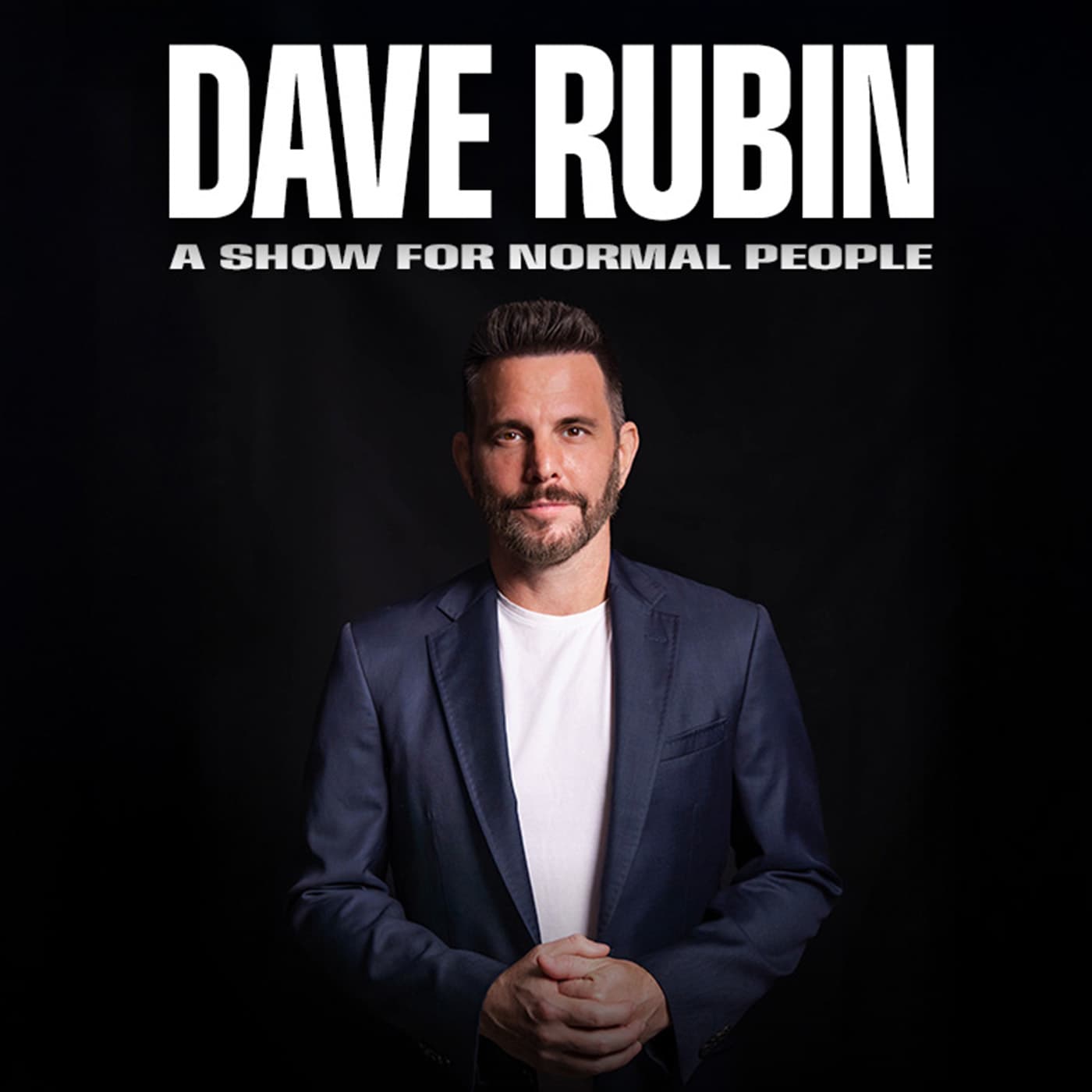
Dave Rubin of "The Rubin Report" talks to Arthur Brooks about dopamine-driven phone addiction and why technology prevents people from disconnecting; why boredom and time away from social media are essential for creativity, happiness, and meaning; why smartphones and AI should be tools instead of substitutes for human connection; ways to break smartphone addiction;how shared experiences strengthen relationships; his surprising take on looksmaxxing and why excessive male vanity can be unattractive; why confidence, character, and purpose matter more than perfect looks; and much more.
Today's Sponsors:
Kalshi - Download the Kalshi app and use code RUBINREPORT to get up to $500 in bonus credits when you trade $25 or go to https://kalshi.com/r/RUBINREPORT. DISCLAIMER: 18+ only. Restrictions and eligibility requirements apply. Event contract trading involves risk and may not be suitable for all investors. Prices, values, and available markets may differ from those mentioned. For more information see kalshi.com/regulatory
Chapter - Optimize the one piece of your health most people never audit: the Medicare coverage that pays for all of it. For free and unbiased Medicare help: Dial (332) 867-0207 or Go to: https://askchapter.org/rubin Chapter and its affiliates are not connected with or endorsed by any government entity or the federal Medicare program. Chapter Advisory, LLC represents Medicare Advantage HMO, PPO, and PFFS organizations and stand alone prescription drug plans that have a Medicare contract. Enrollment depends on the plan's contract renewal. While we have a database of every Medicare plan nationwide and can help you to search among all plans, we have contracts with many but not all plans. As a result, we do not offer every plan available in your area. Currently we represent 50 organizations which offer 18,160 products nationwide. We search and recommend all plans, even those we don't directly offer. You can contact a licensed Chapter agent to find out the number of products available in your specific area. Please contact Medicare.gov, 1-800-Medicare, or your local State Health Insurance Program (SHIP) to get information on all of your options.
Shopify - Turn your big business idea into money with Shopify on your side. Go to Shopify and sign up for your one-dollar-per-month trial and start selling today at Go to: http://shopify.com/rubin
