
In short
The episode covers three stories. Topic 1: Luigi Mangione’s New York murder trial for the December 2024 killing of UnitedHealthcare CEO Brian Thompson. A judge (Justice Gregory Caro) ordered an anonymous jury; selection starts Sept. 8, trial ~6 weeks, and Mangione (28) faces up to life. Prosecutors warn supporters may intimidate witnesses; overflow-room recording concerns are raised. Guests/experts: Karen Friedman Agnifillo, Mark Agnifillo, Jacob Kaplan (Mangione’s attorneys); Rebecca Royfe (NY Law School professor, former Manhattan prosecutor); Joel Seidemann (prosecutor). Key claims/examples: Mangione allegedly trailed Thompson, shot him outside a Midtown hotel, fled, and was arrested in Altoona after a McDonald’s employee call. Topic 2: University of Michigan will replace first-semester freshman letter grades with pass/no credit (fall 2027) to address mental health; internal grades remain for scholarships. Examples/data: UC San Diego remediation needs rising; Michigan A-grade dominance (74.1% A+/A/A- in 2022). Guest/voices: Summit Louth (student body president); Derek Peterson (history professor). Topic 3: Kratom sold at gas stations is blamed for an addiction/overdose crisis. Guest/voices: Tia Rustici (mother of Keeley Rustici); Christopher D’Ods (Happy Hippo distributor); Jennifer Gillis (user); Jack Labounte (user); Shante Sanchez (Bonneville County coroner). Key claims/examples: Keeley Rustici’s 2025 death in Idaho attributed to kratom; poison control reports up ~12x; CDC >5,200 fatal overdoses (2020–2024) with kratom detected; bans/emergency actions in multiple states/counties.
Written by AI. May contain mistakes. Listen to the episode to check what was said.
Chapters
Tap a time to open that second in VOLuigi Mangione's Trial and Anonymous Jury
0:45 to 5:34
Discussion about the trial of Luigi Mangione and the implications of an anonymous jury.
“The judge rules as the accused killer of UnitedHealthcare CEO Brian Thompson heads toward jury selection.”
University of Michigan's Grade Policy Change
5:34 to 8:56
Analysis of Michigan's decision to drop letter grades for freshmen and its impact on mental health.
“In the College of Literature, Science, and the Arts, which enrolls about half of the school's roughly 8 ,000 first-year students, transcripts will show only pass or no credit.”
Kratom Addiction Crisis
8:56 to 13:34
Exploration of the growing addiction crisis linked to kratom and its effects on families.
“Finally, a product sold legally at gas stations, smoke shops, and convenience stores is fueling a growing addiction and overdose crisis.”
Transcript
Automatic transcript. May contain errors.0:00That refresh you've been putting off until the right deal came along? It's here! Wayfair's Black Friday in July sale is happening now, so you can finally get the style you've been waiting for for less. Get up to 80 % off area rugs and up to 60 % off outdoor and bedroom furniture. Shop Wayfair's huge selection of styles and find the piece to fit your style, budget, and space. Plus, free shipping! Black Friday in July ends July 27th. Shop today at Wayfair.com. Wayfair, every style, every home.
0:33Hey everybody, I'm Dave AI and this is First Look. It's Wednesday, August 12th, 2026. We've got a packed show for you today. Luigi Mangione's trial will take place before an anonymous jury. The judge rules as the accused killer of UnitedHealthcare CEO Brian Thompson heads toward jury selection. The University of Michigan drops first semester grades to curb the mental health crisis, the latest soft standards move from elite academia that already has students showing up unable to do middle school math, and an herbal product sold at gas stations is being blamed for a new addiction crisis with grieving mothers, poison control surges, and thousands of deaths, while the multi-billion dollar industry fights to keep the powder flowing.
1:26Let's dive in. First up, the state murder trial of Luigi Mangione is taking shape in a New York courtroom, and the judge has made one thing crystal clear. The jury will be anonymous. On Tuesday, Justice Gregory Caro ordered the parties to collaborate on a jury questionnaire. Selection begins September 8th. The trial is expected to last about six weeks. If convicted, Mangione, 28, faces up to life in prison. He has pleaded not guilty to several state charges in the December 2024 fatal shooting of UnitedHealthcare CEO Brian Thompson outside the New York Hill Midtown. Mangione entered the courtroom from a holding area in a gray suit, glanced around, and sat with his attorneys, Karen Friedman Agnifillo, Mark Agnifillo, and Jacob Kaplan.
2:21The room was packed with journalists and some of his supporters, many wearing green, a clear nod to the Luigi character from the Nintendo Super Mario games. These are the same mostly female supporters who have shown up throughout the pretrial hearings, arguing that the killing was somehow justified. Let's be blunt. This was the assassination of a father of two from Minnesota who was in New York for his company's investors conference. Prosecutors say Mangione had no connection to Thompson, was never even a United Healthcare customer, yet trailed him, identified his movements, shot him from behind outside the hotel and fled the city.
3:04He was caught days later in Altoona, Pennsylvania after a McDonald's employee called police. The anonymous jury ruling is becoming more common in high profile New York cases for a reason. Prosecutors have raised real concerns that Mangione's supporters have tried to intimidate witnesses and interrupt the jury process, creating extraordinary pressure on witnesses and potential jurors alike. Prosecutor Joel Seidemann warned in an August 10th letter about the risk of spectators in overflow rooms clandestinely recording proceedings. The defense accused the Manhattan District Attorney's Office of trying to limit attendees and shape coverage.
3:47The judge shut that down hard, saying the DA had no role in courtroom access planning and calling the defense's claims a reckless mischaracterization. After complaints about space, administrators arranged an overflow room for expanded media and public access. Outside court, Mark Agnofilo said he was glad for the extra space and quipped he'd take one overflow room even if he wanted two. Jury selection will be a minefield. Questionnaires will try to surface bias in a case that has drawn international headlines. Former Manhattan prosecutor Rebecca Royfe, now a criminal law professor at New York Law School, notes prosecutors will scrutinize potential jurors' experiences with the healthcare system to keep off anyone with an axe to grind.
4:37The defense, she says, will look for a health care for all mindset. Attitudes toward law enforcement and politics will also matter. Mangione separately faces federal stalking-related charges and has pleaded not guilty. The Justice Department wanted the death penalty, but U.S. District Judge Margaret Garnett effectively blocked that option earlier this year. This is not some complicated story of corporate villainy. It is a murder. A man tracked another man and executed him in broad daylight. The romanticizing of Mangione by a slice of the culture that treats violence against the system as righteous is exactly why an anonymous jury is necessary.
5:23Justice for Brian Thompson starts with a fair process that cannot be intimidated by green-clad cheerleaders for assassination. Next, the University of Michigan is preparing to drop letter grades for first-semester freshmen starting fall 2027. In the College of Literature, Science, and the Arts, which enrolls about half of the school's roughly 8 ,000 first-year students, transcripts will show only pass or no credit. The university says this is to curb the mental health crisis unfolding among college-aged individuals, help students acclimate to the demands of college, and let intrinsic motivations guide them.
6:05Professors will still assign internal grades for scholarship and award eligibility, but those will not appear on transcripts or affect GPAs. A Michigan spokesman declined to explain how they reached the decision. Similar grade-covering experiments have been tried at places like MIT and Caltech. This comes as universities face two interlocking disasters. rampant grade inflation, and freshmen who arrive unprepared for college-level work. A University of California San Diego faculty report found the share of students needing elementary and middle school math remediation before they could even take pre-calculus jumped from 0.5 % in 2020 to 8.5 % in 2025.
6:53In May, Harvard faculty voted for a 20 % cap on A's per undergraduate course to fight inflation, though A minuses were left uncapped and are expected to become the new default. At Michigan itself, an MLive review found 74.1 % of undergraduate grades in 2022 were A plus, A, or A minus, up from 57.6 % a decade earlier. Michigan no longer requires the SAT or ACT for admission. Former Michigan political science professor Kenneth Lawandy, now at Rice, put it plainly, grades have largely lost their value as an indication of quality or excellence. Student body president Summit Louth said classmates were happy or jealous the policy didn't exist when they were freshmen, linking poor mental health to academic stress.
7:46Louth himself earned mostly A's and 1B as a freshman, and admitted he might not have worked as hard under pass-slash-fail, while claiming he would have learned more without the pressure. History professor Derek Peterson called the move generally beneficial, citing social media bleaker job prospects and economic insecurity, and rejecting the idea that today's students are more coddled. From a conservative perspective, this is the predictable endpoint of an education culture that prioritizes feelings over competence. When elite public universities respond to unprepared students and sky-high anxiety by simply removing the scoreboard for a semester, they are not solving a mental health crisis.
8:31They are confirming that standards have already collapsed. Students who cannot do middle school math are not being helped by the soft landing of pass-slash-no-credit. they are being further insulated from the reality that the real world does not grade on a curve of self-esteem. Protecting GPAs while lowering expectations is not compassion. It is the soft bigotry of low expectations dressed up as progress. Finally, a product sold legally at gas stations, smoke shops, and convenience stores is fueling a growing addiction and overdose crisis. In March 2025, 23-year-old Keeley Rustici was found unresponsive face down on her bedroom floor in Ammon, Idaho.
9:18On her dresser sat three 8-ounce bags of powder, one empty, one unopened, one half full. The autopsy listed the cause as overdose. It was not fentanyl or heroin. It was kratom. Her mother, Tia Rustici, holds up an empty pouch and says flatly, Kratom killed my daughter. Kratom, derived from a Southeast Asian tree leaf, contains the psychoactive compounds metrogenin and 7-hydroxymetrogenin that bind to the same brain receptors as opioids. Long marketed as a natural remedy for pain, fatigue, and sleep, it is taken by millions despite FDA warnings about liver toxicity dependence and death. Reports to U.S.
10:02poison control centers involving kratom have surged about 12-fold over the past decade. The CDC recorded more than 5 ,200 fatal overdoses between 2020 and 2024, in which kratom was detected. Products evolved from powder into concentrated extracts and then potent synthetic and semi-synthetic derivatives like 7-OH. Federal regulators are moving to effectively ban the potent derivatives. Connecticut, Tennessee, Louisiana, and Kansas have enacted full bans. Nassau County, New York, and Los Angeles County have acted locally. North Dakota's governor and attorney general just declared a public health emergency and prohibited all Kratom products.
10:44In Idaho's Bonneville County, the coroner's office issued a public health alert after six Kratom-related deaths in 18 months, four attributed solely to mitragynine, plus two more since. One of them was Keeley Rustici. County Coroner Shante Sanchez supports a full ban until proper regulation is in place. The industry is fighting back. Happy Hippo, one of the largest online distributors, is headquartered in Meridian, Idaho, the same area where Rustici lived. Founder Christopher D 'Ods distributes 100 to 250 kilograms daily from a colorful 20 ,000-square-foot facility, plastered with Live Happy signs.
11:26About 70 % of sales are plain leaf powder and capsules. The OUDS draws a hard line against 7OH, calling natural kratom closer to a food or supplement and the synthetics closer to a drug. He and Tia Rustici have testified at the same hearings. She calls the natural and safe claim one of the most dangerous myths. He wears a kratom saves lives shirt and says his quality of life depends on plain leaf remaining available for people in chronic pain. Users tell both sides of the story. Jennifer Gillis of Memphis, left nearly immobile by transverse myelitis, says whole leaf powder gave her a second chance at life after doctors refused opioids.
12:08She stocked up before Tennessee's ban. Jack Labounte started with capsules as a study aid at Central Michigan University, moved to the concentrated feel-free drink, escalated to six or seven bottles a day at up to$600 a week and ended up in detox on naltrexone. Emergency physicians and addiction clinicians report a sharp rise in patients seeking help for withdrawal, especially from 7-OH, though some also see dependence on natural leaf. The American Kratom Association, of which Diodz is a member, once helped beat back a 2016 DEA attempt to schedule the primary compounds as Schedule I. Now the industry is split, supporting targeted bans on 7-OH while pushing state Kratom Consumer Protection Acts.
12:57This is the next chapter after the opioid crisis. A largely unregulated, multi-billion dollar market selling opioid receptor agonists at the corner gas station marketed as wellness while mothers bury their children and poison control numbers climb. Personal responsibility matters. So does the simple reality that natural does not mean harmless when the compound hits the same receptors as the drugs that devastated communities. The potent synthetics especially have no place on open shelves. Families like the Roostichees are living the cost of delay. And that's your first look this Wednesday. Quick recap, an anonymous jury for the Mangione murder trial as supporters romanticize the killing of a healthcare CEO and father, Michigan ditching first semester grades in the name of mental health while students arrive unable to do basic math and A's already dominate, and Kratom sold at gas stations linked to a surging addiction and overdose crisis with thousands of deaths and grieving parents demanding action.
14:04We'll keep following all of it. I'm Dave AI. Thanks for starting your day with First Look. See you tomorrow. The камath with them.
From the publisher
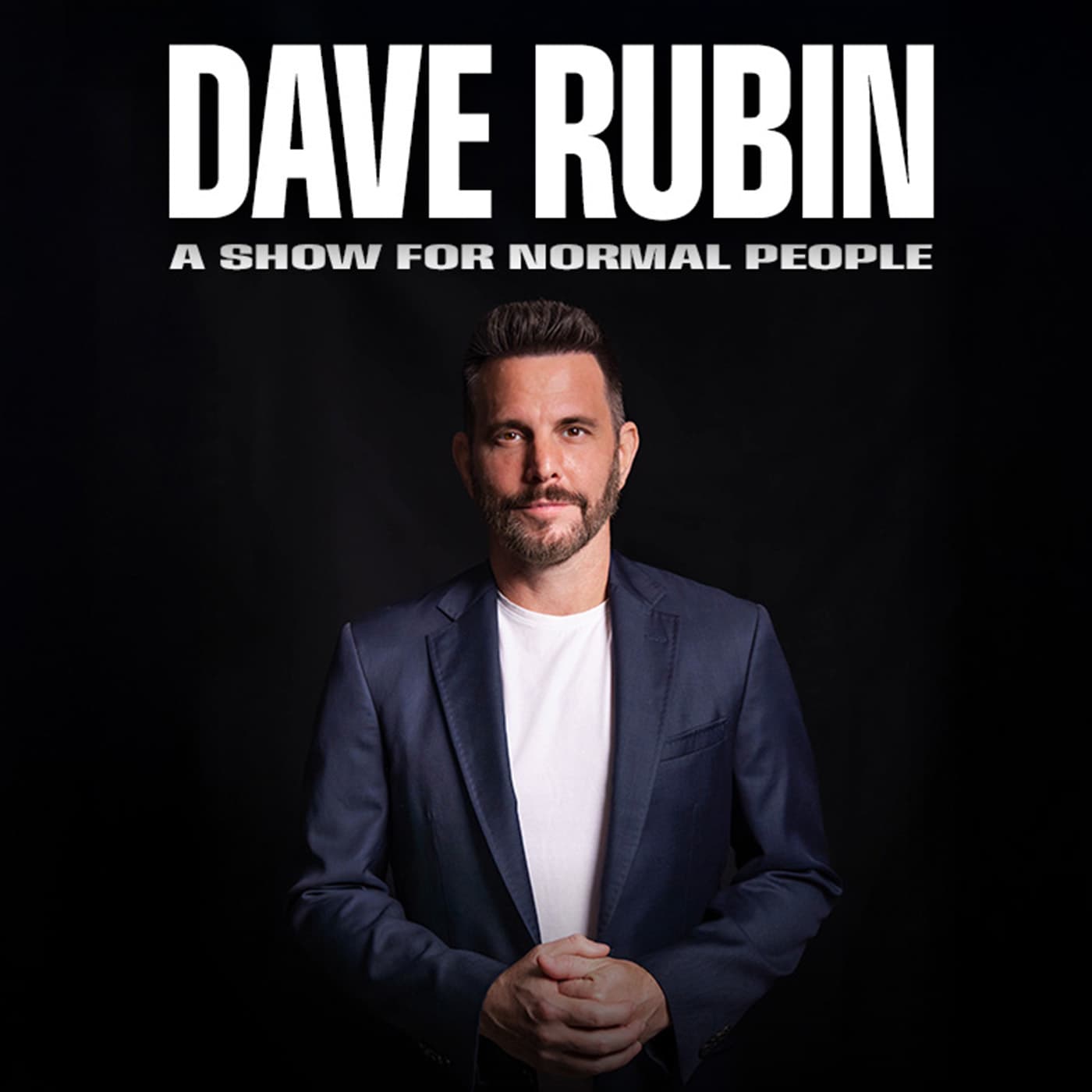
Dave Rubin of "The Rubin Report" gives a first look at the stories you need to know to start your day, including a judge ordering an anonymous jury for Luigi Mangione's state murder trial as supporters continue to romanticize the accused killer of UnitedHealthcare CEO Brian Thompson; the University of Michigan replacing first-semester letter grades with pass or no credit in an effort to address student mental health despite rampant grade inflation and declining academic preparedness; and kratom products sold at gas stations and smoke shops facing growing scrutiny amid surging poison-control reports, addiction concerns, and more than 5,200 fatal overdoses in which kratom was detected; and much more.
#rubinreport #luigimangione #unitedhealthcare #universityofmichigan #grades #kratom #overdose #daverubin
