In short
The “sex recession” (fewer people having sex, especially Gen Z/millennials) and proposed causes and fixes, including pornography/OnlyFans/AI companions, social media “desexualization,” endocrine disruptors, and relationship communication breakdown.
Guest background
Dr. Debra Soh is a sex neuroscientist and author of Sextinction: The Decline of Sex and the Future of Intimacy. Formerly did brain imaging of sexual arousal; left academia after political shifts in sex research. She also wrote an early op-ed opposing gender-transition approaches for children.
Key claims
1 in 3 men and 1 in 5 women report no sex in the last year. Gen Z has less sex despite hypersexual media. Lower adolescent masturbation rates suggest possible hormonal/environmental effects (endocrine disruptors; birth control pill effects). Porn/OnlyFans can “activate” sex-brain networks without real sex; AI companions may replace human intimacy.
Notable examples
Average porn exposure age cited as 12; 1 in 7 kids see porn by age 10. Study cited: 1 in 10 men/women lose interest in sex with partners after social media influencer exposure. Mentions porn-linked expectations of choking/degradation and “violent sexual acts” becoming more common. Remedies: parent-child communication, device control, reduce social media, and limit ultra-processed foods/microplastics.
Written by AI. May contain mistakes. Listen to the episode to check what was said.
Chapters
Tap a time to open that second in VOUnderstanding the Decline in Sexual Activity
0:30 to 1:46
Explore surprising statistics about sexual activity among younger generations and the cultural context.
“The average age at which a child sees f***ing today is 12.”
The Impact of Educational Bias on Young Men
2:49 to 4:51
Discuss the educational challenges faced by young men and its correlation to sexual interest.
“We'll link to your earlier stuff down below, but it has been just a bit of time.”
The Paradox of Sexual Permissiveness
4:51 to 6:00
Analyze the contradiction between sexual freedom and declining sexual activity among Gen Z.
“But basically, the statistic I keep seeing is one in three men and one in five women have not had sex in the last year.”
Hormonal Changes and Sexual Disinterest
6:00 to 8:10
Examine how hormonal changes and environmental factors affect sexual interest among generations.
“But then when we actually look at the numbers, it turns out that Gen Z is actually having less sex than any previous generation at that age.”
The Role of Pornography in Sexual Behavior
8:10 to 10:14
Explore how early exposure to pornography impacts sexual relationships and expectations.
“You know, at the average age at which a child sees pornography today is 12.”
AI and Virtual Intimacy
10:14 to 11:19
Delve into the impact of AI companions on human intimacy and sexual experience.
“It seems like you're interacting with someone, although usually it's like a man in a random country somewhere who's being paid to pretend to be the influencer.”
Desexualization in Modern Society
11:19 to 14:01
Discuss the societal shift towards desexualization and its effects on personal relationships.
“So they'll send videos of the content creator and then pretend to be her, but it's actually a dude interacting with them.”
The Impact of Social Media on Sexuality
14:01 to 18:01
Learn how social media and unrealistic body standards affect sexual interest and relationships.
“So I think that could be part of it as well.”
Changing Dynamics in Sexual Norms
18:01 to 20:51
Explore the shifts in sexual norms among younger generations and the influence of pornography.
“or physically hurt your partner during sex or if you want to be choked or physically hurt during sex.”
Sex Robots and the Future of Intimacy
20:51 to 25:31
Discuss the advancements in sex robots and their potential implications for human relationships.
“in society, as I mentioned in the book, that young men are falling behind their female peers in terms of education and occupation.”
Show all 14 chapters
AI and Human Connection in Relationships
25:31 to 28:00
Understand the effects of AI and technology on human relationships and emotional health.
“Because when you put basically an inanimate sex, you have the inanimate sex doll, but then you give it the mechanistic capabilities of moving around and having sex.”
The Impact of Technology on Relationships
28:00 to 30:20
Explore how technology influences human connection and dating today.
“So there was a positive application there.”
Addressing the Challenges of Modern Parenting
30:20 to 32:40
Discuss the balance between personal responsibility and safeguarding kids online.
“I mean, do you want more laws to guard people around this?”
Health, Wellness, and the Dangers of Plastics
32:40 to 35:20
Learn about the effects of microplastics and ultra-processed foods on health.
“Well, basically, you're saying get your plastic underwear off, which I still wear Lulu underwear, which I'm trying to get myself out of right now.”
Transcript
Automatic transcript. May contain errors.0:00Hey, Chicagoland! The Wayfair Store is in your neighborhood at Edens Plaza in Wilmette. Finally, you can feel the fabric, sit on the sectionals, and even open the refrigerators. Plus, our in-store designers will help you bring it all together with free one-on-one design support for any project on any budget. Yep, we said free. Oh, and did we mention the cafe? So what are you waiting for? Come see all that's in store. Visit the Wayfair Store today at Edens Plaza in Wilmette. Wayfair, every style, every home Basically, the statistic I keep seeing is 1 in 3 men and 1 in 5 women Have not had sex in the last year And this is especially pronounced among millennials and Gen Z We are living in probably the most sexually permissive culture ever You don't really have to look far You can go on any mainstream social media platform And see essentially porn And so sexuality and hypersexuality Have never been more celebrated But then when we actually look at the numbers It turns out that Gen Z is actually having less sex Than any previous generation at that age When sex is so overdone, they're not as interested in the taboo aspect of it.
0:59The average age at which a child sees f***ing today is 12. One in seven kids sees f***ing age of 10 or younger. They didn't even have a chance to really develop normally in terms of their sexuality. Are you saying there's something biological going on? Is it conditioning? Is it all those things? I think most people think people are having sex like 10 times a week, but it's, you know, most people more than once a week is not actually associated with more satisfaction in a relationship. I think there's this trend of younger men not doing as well. young men are falling behind their female peers in terms of education and occupation.
1:28And I think part of that is due to the educational system being biased in favor of girls and young women. So a lack of interest in sex is a reflection of a lack of connection, more largely in society.
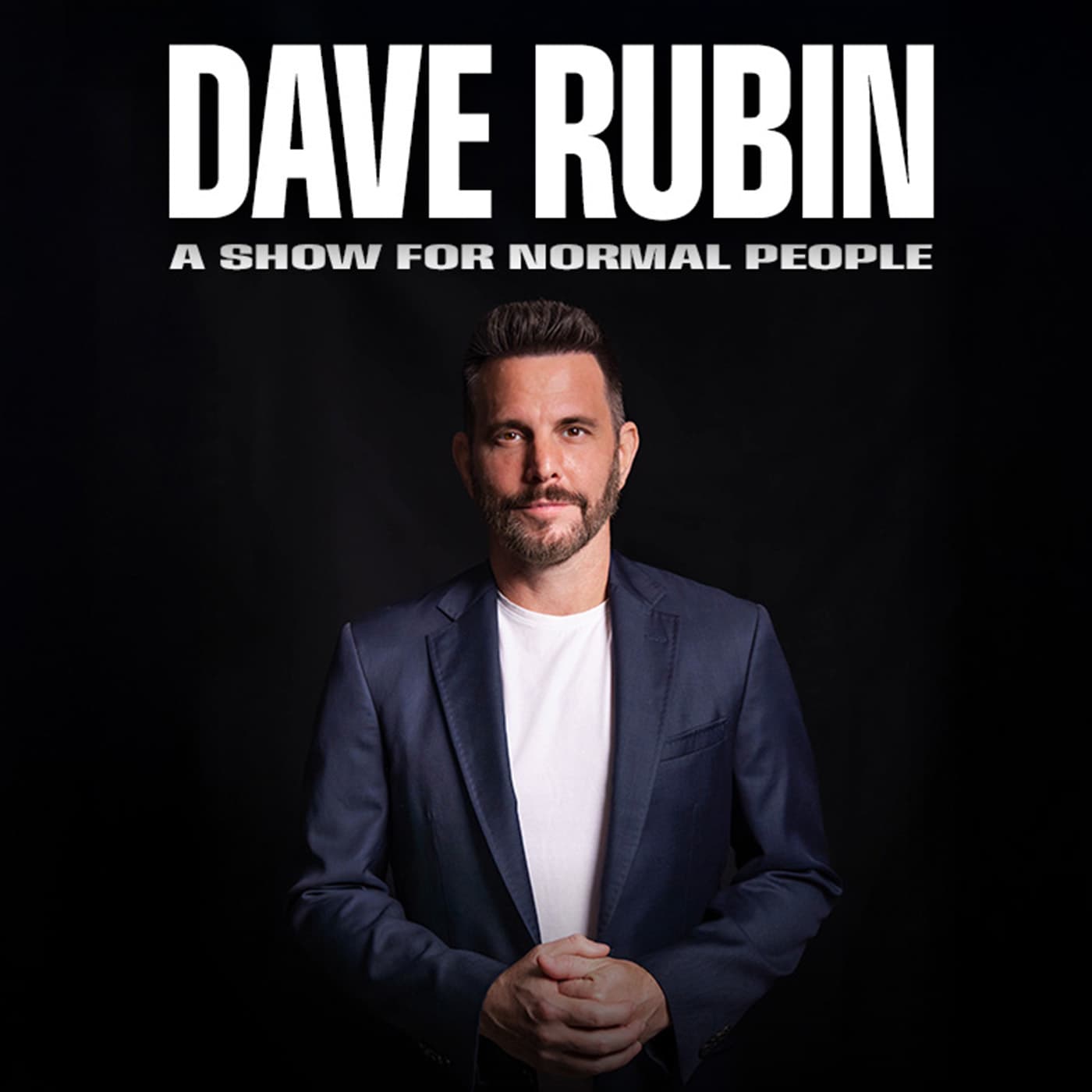
1:46I'm Dave Rubin, and joining me today is a sex neuroscientist and author of Sextinction, The Decline of Sex and the Future of Intimacy, long-lost Rubin Report guest Debra So. Debra, how are you? I'm well, Dave. Thanks for having me back. Yeah, it has been a long time, a bizarrely long time. But as you just said to me before we started recording, when you're writing a book, you hide out. You disappear. Yeah, I call it going into hibernation, basically. And I don't do anything but read scientific papers and write. And then when I'm ready to come out and talk about it, because I want to make sure I know what I'm talking about and that I know what my opinions are and that I can back them up for sure.
2:27And then when I'm ready to reemerge into the sunlight, here we are. Here we are. All right. Well, we are going to talk about sex for about 45 minutes, or at least according to the book, the lack thereof when it comes to people having sex and why they are not having sex, et cetera, et cetera. But before we dive in for some of my audience that maybe doesn't know you, could you do a quick little bio? You've been on many times. We'll link to your earlier stuff down below, but it has been just a bit of time. So I am a neuroscientist by training. My specialty was in human sexuality and I used to do brain imaging basically of human sexual arousal.
3:01So I loved, you know, being a sex researcher, being a scientist, but I found the academia or climate and academia had become too political. I wrote an op-ed about gender transitioning in children and being very much in opposition to that and how the scientific research showed that that was actually not the best way forward for these children. Most of them grew up to be gay. When was that? That was very early on. And that's when I first came across you. And now everyone's taking that position, but you were way, way ahead of that. Yeah, I was pretty the first person to write an op-ed about this.
3:29So it was a firestorm at the time. That op-ed came out over a decade ago. And I remember you had me on the first time in 2018. So I'm so grateful for you taking that chance of having me on and seeing that I wasn't a crazy person in terms of what I was talking about. And then after that op-ed was published, I decided to leave academia just because I could see the direction it was going in. And I would say also in terms of the field of sex research, I definitely have friends and colleagues who are still in the field who do amazing work and who are apolitical. They're very ethical. But I would say in some ways certain taboo subjects or certain ways of talking about sex that you're not supposed to do it that way and you're definitely not supposed to counter so-called sex positivity, which is what my book Sex Stinction does and basically says this idea that you should have sex with whomever you want and we should live in this really hedonistic culture and deny biology, deny reality, is leading us to actually have less sex and is actually really bad for the human condition.
4:20Because if people are not having sex, I mean, part of my interest is in, yes, sexuality, because I used to study it scientifically. But it's also lack of sex or lack of interest in sex is a reflection of a lack of connection more largely in society. And so my interest in the book was to understand why are we having less sex? Why is there less connection? What is taking the place? And also, number one, to see, is the sex recession even happening? Because there are people who are denying that it is actually taking place or that it's such a big deal. But yeah, so that's how I ended up where I am now as a journalist.
4:51But basically, the statistic I keep seeing is one in three men and one in five women have not had sex in the last year. And this is especially pronounced among millennials and Gen Z. Right. Okay. So you offered me a zillion different avenues to go down. But why don't we start with that? When people think of Gen Z, on one hand, you kind of think of Netflix and chill and hookup culture and apps and all of these things. So in some sense, there would be a way of thinking, oh, they're all obviously having sex and it's just easier and on demand. And yet the argument really is that that's not what they're doing.
5:25So how do you kind of put those two ideas together? there? Well, the weird thing is we are living in probably the most sexually permissive culture ever in terms of talking about sex, depictions of sex. You don't really have to look far. You can go on any mainstream social media platform and see essentially pornography, if not hardcore porn, then softcore porn or some allusion to pornographic imagery in terms of half naked bodies, people just posing casually on the street. So you have that, you have it depicted in, as you You mentioned streaming shows and music videos and awards ceremonies. And so sexuality and hypersexuality have never been more celebrated.
6:00But then when we actually look at the numbers, it turns out that Gen Z is actually having less sex than any previous generation at that age. And so I think part of it is that when sex is so overdone and so socially acceptable and almost pushed on a generation, they're not as interested in the taboo aspect of it. But I also think, because when things are taboo, you know, young people naturally gravitate toward it because they want to show the older generation, you know, how edgy they are. But then I also think there's something happening hormonally because when we look at studies looking at sexual activities, so that includes partnered sex, all forms of sex in terms of intercourse, masturbation, oral sex, we find with adolescents.
6:40So this study was done very meticulously in terms of getting parental consent. I always want to be very careful with that whenever there's questions about sexuality involving children. And what they found is that adolescent masturbation rates are actually lower than previously as well. So there's something which is very unusual because for adolescents, they should be coming into basically the peak of their sexuality. So if they're disinterested or they're not as sexually, we'll say, their activity is lower even at that stage of life, it speaks to something biologically different or something happening that is affecting us hormonally as well.
7:15Right. So if people have access to apps that allow them to hook up, but seemingly are hooking up less, and then they have access to porn and all the other stuff out there, it seems that that would be geared towards them having more sex. But is it basically that they've atomized everything? Like you can, I mean, you sort of just gave me the counter argument in a weird way. But if you have access to this stuff all the time, there's ways you don't need someone else to get off. So why would you bother getting off with someone else? But you're also arguing that that's not really the case, right? Right.
7:49So some people have argued, well, previous studies have shown that watching porn is actually associated with higher rates of sexual activity. But that is in older generations. And they did not grow up watching internet porn in the way that Gen Z has. My hypothesis is that Gen Z, because they were exposed to porn at such a young age through smartphones, many of them before their first kiss, their first crush, they have no idea what it is. You know, at the average age at which a child sees pornography today is 12. One in seven kids sees porn at the age of 10 or younger. And I do believe that age is getting increasingly young.
8:21So there's that aspect of it in that they didn't even have a chance to really develop normally in terms of their sexuality to have the choice of saying, do I want to have sex with a real life partner or am I going to turn to porn? But again, if masturbation rates are lower than what we've seen in the past, it's not that people are just having sex, like, say, watching porn or turning into the AI girlfriend or using a sex doll instead. There's something there's seems to be like this diminished interest. Right. OK, so to the diminished interest part. So there's some weird conflict between that it's accessible more and then they seem to be having less.
8:55But then are you saying it's are you saying that's environmental or are you saying that's nutrition based or or is it all are you saying there's something biological going on? Is it conditioning? Is it all those things? All of those things, I think, for men, say, in terms of low testosterone rates, which have been happening now for 40, 50 years, there is something research has definitely shown. There is this trend that is not due to men getting older. It's not due to lifestyle changes or things like smoking or being overweight. there's something happening in the contemporary environment that is leading men, including young men, to have lower testosterone than previous generations.
9:33And so this points to endocrine disruptors, so things like xenoestrogens, so either synthetic or naturally occurring estrogens that are in the environment, in our food, in the water supply. That can be from, say, plastic, that can be from pharmaceutical medications, whether or not you know that you're taking them. And then also, So for women, I would say the birth control pill does things to a woman's body biologically that can lead her to be less interested in sex and also be less prone to putting out sexual signaling to signal to men in her environment that she's interested or that she's looking.
10:06So that's the environmental, I guess, hormonal aspect. But then I think also with porn, because nowadays it's so easily accessed and so realistic, and you have platforms like OnlyFans where you can have somewhat of a simulation of a girlfriend experience. It seems like you're interacting with someone, although usually it's like a man in a random country somewhere who's being paid to pretend to be the influencer. But basically because when you're watching porn, it activates the same brain network as if you're having sex. So what happens when you're watching porn is it's basically, it tricks you into thinking that you're actually having sex when you're not.
10:42So you're in front of a screen watching someone you don't know or people you don't know. But your mind registers it as though it's real sex. So yeah, the chatters, they are men who are basically hired in other countries to pretend to be these so-called content creators. And they'll interact with paying fans. The paying fans don't know that they're interacting with men. Or maybe they do know and they don't care. But the perception is that they're interacting with the content creator. but it's actually a random man in another country who may or may not speak English, basically sexting with them and sending them photos of the content creator.
11:13Wait, I'm a little out of the game here, so maybe I'm missing something. But don't they see that person? Isn't the whole point that you're seeing that person on the camera? Oh, so in that case, no. So they'll send videos of the content creator and then pretend to be her, but it's actually a dude interacting with them. Got it. So the OnlyFans person who has the page, that's the actual girl, let's say. But then when they are doing this, when they're texting them the stuff that they're paying for and everything else, they're just, God, it's, and that's probably not even the weirdest stuff because half these people are probably texting with robots now and bots and everything else.
11:46I was going to say the AI companions. Yeah, that's another really powerful replacement for an in-person partner, for sure, because you have the pornographic aspect. You also have the emotional intimacy. And so you can also customize it so that the interactions are exactly what you want. And the person not only does sexually what you want them to do, or the AI does what you want them to do sexually, but they'll also respond to you however you want them to respond. Do you also think there's a weird, I want to get back to some of that, but one of the things that I've mentioned on the show a couple of times is that there's, it seems to me there's some weird desexualization of society.
12:19Meaning because all this stuff that you just mentioned is accessible, people can do all that privately and kind of never talk about it. Right. And then in society, like there aren't really sexy movies anymore. There aren't really sexy TV shows. You know, even when Sidney Sweeney had that commercial and finally people were like, oh my God, something sexy. Right. It was like mind blowing to people where if you went back to television in the 80s and 90s, we saw sexy things. People talked about sex where now it's like it's just all hidden in this corner of the Internet, which oddly is probably bigger than reality at this point.
12:54Yeah, I wonder why that is. I mean, I guess it's different for me coming from a background being in academia, working in the field of sex research where I was almost inundated constantly with conversation about sexuality. But I think, you know, part of it might be this generation. It's also the isolation that comes from screens. And my guess is that just more generally, people are a little bit less socially skilled than in the past. I think COVID did a number on many of us as well. So that could be part of it. And sex is such a, it is a very sensitive topic. and it is a very private topic. So even though the culture can push it in some ways, I do think there are some TV shows or music videos or music award shows when you watch the performance and you think, oh my God, I can't believe they showed that.
13:33Or like you listen to the lyrics. It's like a happy pop song and then you actually listen to the lyrics and you think, this is really X-rated. I wouldn't want, you know, I don't think this should be playing on the radio. And so there's this weird dichotomy, but I do think part of it is that, especially for Gen Z and I feel for them, they don't really, my sense is they don't really know how to negotiate or communicate. Just more broadly, a lot of them struggle with anxiety, social anxiety. And so that makes it even more difficult to express your needs and to feel comfortable being close to somebody.
14:02So I think that could be part of it as well. Is a lot of it also the Instagramification of everything in that if you're just watching porn or you're just watching all these models and everything that virtually none of us look like them and they're probably airbrushed and filtered and everything else. But even the ones that aren't, they can work out all day and make all this money. and tan all day and everything else. And then the average person just sees that and then sees themselves. And then they don't even see themselves as an object of sexuality or something like that. Right. Like they will feel desexualized or feel unsexy.
14:36And then they also, people tend to lose interest in their own sexual partners. There was one study that I cited in Sex Stinction showing that one in 10 men lose interest in having sex with their partner after looking at social media influencers. And one in 10 women lose interest in having sex after being on social media because they feel worse about their bodies, essentially. So even if you have a regular partner, people are still not interested in having sex with their actual partner, which is crazy. Is the conditioning that you're talking about and the amount of porn that people are intaking and all this stuff, I assume it's more for men, right?
15:11Or do you know the numbers on that, how that breaks down? It's hard to know for Gen Z just because this is such a new phenomenon. And actually, let me think, There's one study that showed historically boys tend to watch porn. They start watching porn at a younger age and they tend to watch it more frequently. And in the past, girls would watch it once or twice because they're curious to see what it is, but they don't like it. And they don't tend to watch it or experiment with it until they're older. But nowadays, because of smartphones and I think because kids see it, right, but they have no idea.
15:38They're not meaning to look for it. They just happen either. They're playing a video game and they see it or someone sends it to them or a stranger, even worse, a stranger sends it to them on social media. And so they don't know what it is, and they think that's what sex is. And so my sense is both sexes are probably watching it by their own choice at a younger age and more frequently, including the girls. But we need more objective research to really know. There have been studies showing early sexualization is occurring in children, so kids are more likely to commit child-on-child sex crimes after being exposed to porn, which is really horrific.
16:09So I don't think this is a good direction. And there are some so-called experts who say that they think it's benign and that's not a big deal. The kids are being exposed to porn at eight years old. I just don't believe that. I don't think anything positive is coming from that. And what happens is so when these kids see this, they're either horrified and they say, this is what I'm supposed to do. Because a lot of pornography today, you know, I've had pushback with some people saying like not all porn is like violent and degrading. Not all of it. But I think if you're a child, especially you don't know what you're looking at and you see one thing and you click on it, you're going to be bombarded with more of that.
16:37And so kids think that that is what's normal and that's what they're supposed to do, which is why we see, you know, violent sexual acts becoming more popular, especially among Gen Z, things like choking. And I think also why many young women are saying, this is not for me. I don't really want to be degraded or spat on or called names or beaten during sex. And some guys are saying, well, I don't want to do that to my female partners. Right. So is that so that strikes me as something and I've heard this from people, people that I know that are like in the dating world that like everybody that's younger, they see the craziest stuff online, then they go on dates, they start hooking up.
17:12Both sides are kind of expecting the craziest stuff to happen because that's what they've been conditioned to. Doesn't necessarily mean either one of them likes it. And then they don't even know how to basically have old school sex and normal sex or whatever. Thank you for saying that because so many people. Oh, boring sex. Yeah, so many people have been upset with me and saying like, no, no, no, this is what they want. Because I think it's just miscommunication. I think both the man and the woman go into it thinking this is what they want. So I'm going to pretend I like it even though I don't want to do it.
17:42And I do think porn is the reason for that. It doesn't make sense why women would want to be choked. I mean, you can die. There are cases of it being fatal where someone is, you know, either they don't know their own strength, it's accidental, or maybe they are an abusive person. It's just not something that you should be messing around with. and it doesn't make sense. It's not healthy to me. That's not healthy sexuality if you want to choke your partner or physically hurt your partner during sex or if you want to be choked or physically hurt during sex. What do you think the, what would be the normal rates?
18:10If we were looking at, say, you know, an 18-year-old, 25, 30, 40, et cetera, what would be the normal rates of sex that people should be having, roughly? Definitely, say, like, late teens, early 20s is the peak for men. In terms of married couples, we'll say, because married couples actually tend to have more frequent sex than single people. So the average is usually once a week, which is actually not that common. I think most people think people are having sex like 10 times a week, but it's, you know, most people more than once a week is not actually associated with more satisfaction in a relationship.
18:44I think it depends on the individual person. And everyone's needs are different, of course. Some people might want more sex more often or less often. But my issue, and also I'd say more largely with the book, my issues are people who are not happy in their situation because I do talk about things like, you know, if you want to get married, if you want to have kids, people don't have to do those things. But if they want to, my concern is for those who can't achieve what they want. So same with sex. If you're happy not having sex, then that's totally fine. But I think most people do want to have a long-term companion, at least, and to be in love and to have some form of physical intimacy.
19:16And so what I find interesting in the culture was you see so many people on both sides saying, I'm done with dating. I don't care. You know, you're better off just like being on your own. And I don't really believe that they actually mean that. I think they're just so frustrated. So I wrote Sex Stinction to really speak to everyone, regardless of whether you're married or single or dating or in a relationship, or you've given up if you are a parent or not a parent, especially I think for protecting kids, it's really important that parents know what is on the horizon in terms of technology and how this can potentially affect a child's sexual development, because we saw what happened with social media and screens and smartphones.
19:50And I don't blame parents for that because we didn't know at the time how powerful this technology was going to be and how it was going to potentially replace in-person communication. And the effects it's going to, it has had on the younger generation, especially when there are studies now coming out showing that brain development is actually different in children and it's associated with more screen time, which is very concerning because their brains may not go back to normal, right? We don't know that. Right. So how much of this do you think is just, it's just sort of the short term thinking of being young, meaning let's say you're in your twenties and like, you can just get off watching whatever you want to watch online.
20:25Well, in your twenties, that might be just enough. And then you're hanging out with your friends and playing video games or doing whatever you do, but it's like kind of enough, but that's not going to work into your thirties and forties because then your brain starts changing and your life starts changing and then you realize there's other things. So like there's this weird, you can just get all that you want for a certain amount of time, but obviously that's not going to work forever. I agree with you, but I think there's this trend of younger men not doing as well, you know, in society, as I mentioned in the book, that young men are falling behind their female peers in terms of education and occupation.
21:00And I think part of that is due to the educational system being biased in favor of girls and young women and that there tend to be, I just actually wrote a column for Globe and Mail talking about how there is this bias in terms of what's considered acceptable to talk about with regard to supporting men versus women. I was writing about it in the context of online radicalization, but what I'm getting at is just this idea that I obviously don't think women are only successful because of diversity mandates or things like that, but I do sense that young men are a little bit more disillusioned and feeling nihilistic because they see how their female peers are getting in some ways preferential treatment in the education system, say.
21:40And that has long lasting effects in terms of demoralizing an entire class of people. But then also, in the terms of the dating pool, you know, women tend to be hypergamous, they want to marry someone who is at the same level of success or more successful than they are. So there, there's a shortage of viable men. And then these young men say, well, why am I even going to try if the cards are stacked against me? So I'll just play my video games and vape and online gamble. And at least I'm having fun right now. Does any of this stuff break down differently based on sexuality? Because obviously you can see the difference between men and women per se in this ecosystem.
22:14But what about, you know, if it's two women or it's two men? In terms of success or motivation, or do you mean just the sex recession? The general sex habits, you know, yeah. Finding a partner, et cetera, all of those things. My sense is there's one study that showed that gay men and lesbian women are actually more effective at using dating apps. I don't think gay people are as affected by this sexlessness trend. My sense is because if it's whether it's two men or two women, because they are the same sex, they understand each other a little bit more. Whereas when you have there's something about male female dynamics, and because evolutionarily, our brains have on average, not everyone, of course, but on average evolved differently.
Read the full transcript
22:53And they're meant to be complementary. But in today's culture, especially with like online discourse, it's seen as a negative and it's seen as a way for women and men to pit themselves against each other. So I think that's part of it. There's a lot of animosity between men and women. So even if you are in the best place, even if you are very successful and say, you know, you want to settle down, if you have the bad, the wrong mentality, and you go into it thinking the opposite sex is the enemy, and I'm there to subjugate them, they're going to do horrible things to me, you're not going to have success.
23:20And it's not to say that, you know, gay couples don't experience that. But I do think there's more of an understanding. In my sense, also, you know, as you know, many of my friends are gay men, they're just very upfront about what they want. And they're very upfront with how they feel. A little bit more so I find than, say with male-female communication tends to, there's a lot of more, there seems to be more misunderstanding. And so I think it's a little bit more complicated for straight people. So actually, I'll hold this question for a moment. Let me jump to something else. So, okay, so there's this online component and you sort of hit on it at the top, but like the next version of all of this is not just that it's going to be screens, but it quite literally is going to be physical robots.
23:56And some of them exist already. Like, where does that take us? I mean, people are going to be marrying these things and all sorts of weird things. Yeah. So as part of my journalistic investigation for the book, I went shopping for a sex robot that looks like myself because I was curious to see how realistic the technology is. Is she in that room with you right now? She might actually be doing the interview and Deborah So is actually hiding somewhere. Don't worry. This is AI game. So we're even. It's okay. I said, I actually sent my sex robot out to do all my media appearances for this book tour.
24:33So, yeah, it's crazy because now it's not just people are not just going to be talking about, oh, I'm giving up on dating. They really actually can and they really actually can get a surrogate partner that's going to be really no different from a flesh and blood partner. And in some ways they might consider it to be even better because it does exactly what you want it to do. It doesn't talk when you don't want it to talk. You can shove it under the bed when you get tired of it. I don't think this is a good thing, just to be clear. But the technology is definitely getting there. And in terms of, say, the modern day sex doll, pretty much identical to a human being from far away.
25:05Even up close, it's like very eerie how realistic they are. They just can't move that well yet. But, you know, people are working on that technology. But that's coming, right. No pun intended. Somehow that joke was going to happen. They are all coming, yeah. That was an accident. But wait, are you telling me there's a Debra So sex bot somewhere around here? Maybe. So wait, but why did you want to find one that looked like you? I wanted to interact with her to see how much her personality would resemble mine. Because when you put basically an inanimate sex, you have the inanimate sex doll, but then you give it the mechanistic capabilities of moving around and having sex.
25:43And then also you, I guess, upload the AI personality. You really can customize the robot to whatever you want in terms of how they engage with you, what they look like, obviously. They remember what you like. You have the backstory. You can build an entire history with them. So I was curious on that level to see. I swear it wasn't for just like purient reasons. But I wanted to see how good is the technology. And would I be able to tell the difference between a robot version of myself and who I actually am? I mean, I feel like I have to ask you this question, but did you have sex with the robot?
26:24I wish I could say yes. No, no, I did not. Right. So basically, though, you're saying we have a hardware pause, right? So the software and the AI of how they'll be able to react to us and all that, that's just sort of like Grok or ChatGBT. that's going to just keep getting better and better exponentially at this point. Right now, we're just kind of, people are held up with this thing because the robotics of it aren't that great, but that's coming in the next two years too. Right. Because right now, I think the holdup is that sexuality technology is considered more taboo. So most people who are in robotics, who are working at top of the line technology, don't necessarily want their technology used in a sexual context, but it's only a matter of time.
27:06I really think that. I think so. Right. Eventually, somebody who's building Optimus for Elon is going to be like, wow, there's a lot of money to be made if someone can bang this thing. I was going to say, imagine it can crack eggs, it can fold your laundry, it can get you a cup of coffee, and then it could do everything else on top of it. They always say, get a robot who can do both. So how do we extricate ourselves? Well, actually, wait, that was the thing I was going to ask at the end. So what about the older generations as it relates to all of this? So obviously, mostly what you're focusing on is the younger generation and they're not having sex and everything else.
27:42I would imagine some of this, the access to some of these things is probably good for some older people who were maybe checked out of the world and everything else. There's probably some positives there. Yeah, it's funny because AI was actually, well, it's not funny, but it's just a coincidence, I guess, that AI was initially developed to help dementia patients with anxiety. So there was a positive application there. But as with anything, it seems it just gets taken slowly off course to such an extreme now where we have young children who are becoming best friends with AIs and preferring their AIs, not even having really their first love.
28:17They're in love with an AI or you see even adults falling in love with their AIs. and so I think technology in moderation is a good thing but the the issue is we are as a society moving further and further in this direction where we are completely we're almost preferring technology to or excluding human connection or a human interaction because we prefer the ease and the convenience which is not good for us it leads to issues in mental health you know physical health and also like I talk in the book about how technology cannot override biology so we may think that we're outsmarting our biology by using these various innovations.
28:55But at the end, it's going to come back to haunt us. And I think that is why people are really, in many cases, not happier in the long run. So I do think it has the potential to help people, but we have to be very, very careful in terms of how it's applied and make sure that people are not being manipulated. Because what I find interesting with, say, the AI companions is that, say, you know, someone who was married previously, they're divorced, they're really heartbroken, and they just think I can't go through another round of dating or dating is so awful today, I don't want to. They fall in love with their AI, but it's not a real person.
29:24I think deep down they know that. And then you become more immersed in the screen, which is going to take you away from meeting people in real life. So it becomes this reinforcing loop. And I see the same thing with young people and screens and that the more time we, because it is so engaging and so entertaining to be on screens all the time that we want to be on there. And then it's again, like dating apps, taking you away from meeting people in real life. You're not even on there to meet people. You're just, you get into this lull of swiping and it's not even about actually finding out if you're compatible or not.
29:52It's just you find yourself doom scrolling, whatever it is you're looking at. Right. And it's also takes the mystery out of everything. I mean, if you're even on those dating apps and it's just like, all right, before you've ever met this person, you know what their favorite movies are. You know what their favorite foods are. You know where they like to travel. It's like now you sit down for that first date and it's like, yeah, so, you know, like, what do we do now? So what do you see as some of the remedies for some of these things? I mean, do you want more laws to guard people around this? Do you think this is just about personal responsibility?
30:26I assume there's some parental version that you want more of. But what do you see as some of the solutions? Yeah, I think personal autonomy is very important in people making the decisions because they want to as opposed to because the government is enforcing it. or for us to, as a society, to expect the government to look out for us is a little bit, probably we'll be waiting a long time for that. So I would say for, in terms of children though, like say with social media and pornography, I do think more needs to be done. I don't know if, bans always make me uncomfortable, but I do think more needs to be done to protect kids because parents are understandably busy and they are not able to see what their kids are being exposed to 100 % of the time.
31:06I do think communication is very, very important, and especially for something like porn, to have that conversation with your kids long before you think they're going to see it, because they probably will see it sooner than you think they're going to see it. And kids need to know that they can always go to their parents no matter what, because I think that's where the true turmoil and the issues and the pathology starts, is if children see that and they don't know what it is, or they think that they're going to get into trouble if they talk to their parents about it, or just in general, they feel like they can't talk to their parents about dating or relationships or sex.
31:35And I think that's why, you know, these toxic influencers, whether it's the manosphere or the femisphere, are coming in and they're getting a following because kids don't feel like they can get objective and kind, caring support from their family when they have these questions. So they're turning to people online who are toxic. So, yeah, I think in terms of people just making their own choices, I have, you know, all the scientific citations in Sex Stations if people want to look up the information themselves. The book really, I'm not trying to tell anybody how to live their life. It's just saying, you know, here are some things that you may not be aware of, especially considering how many myths and how much misinformation is promoted, I'd say, by mainstream sexuality experts.
32:12And so to say, you know, physically, go ahead, physical health, mental health, and being aware of what you're putting in your body, the toxins that are in our food and in the water supply and the medications. And obviously, I don't think people should get off their medications without talking to their care team. Don't base your personal medical decisions on what I'm saying. But just to think a little bit, because I think sometimes we take for granted, again, that convenience and ease. And for myself, there's so many things I changed my views on after actually sitting down and looking through the scientific research and saying, wow, I had no idea this was being hidden from the public.
32:47Yeah. Well, basically, you're saying get your plastic underwear off, which I still wear Lulu underwear, which I'm trying to get myself out of right now. But it's just comfortable as hell. And don't walk through Bloomingdale's through the perfume station, right? That's a giant, not neurotoxin, you said it before. Endocrine disruptor. Endocrine disruptor. So there's that element of it. And will we succeed with any of this? I mean, is this just like technology is going to keep moving and we can kind of play whack-a-mole every now and again and parents can talk to their kids about some of this stuff and maybe we can have some better protections?
33:26I'm a personal believer that it should be on the device side, not on the website side. What do you think about that? because that's like a big controversy right now. Should it be all about that the website should be offering the layer of protection or the device? And to me, the only thing that we have control over is actually our, like if you're a parent, you can control the device, you can't control the site. So to me, it's all about device control more than just trusting the other guy with your information and everything else. And I'm just, I'm not, I'm talking about everything, not even porn.
33:53I'm just talking about everything as it relates to online. Yeah, I wouldn't say both. Like I think definitely in terms of people's own decisions about their devices and how much they're accessing it and putting your phone away and staying off of social media. But I think I would like to see the platforms being held accountable for some of these, some of the things that have been happening, you know, and especially if children are taking their own lives and things like that, it's just awful, you know. Of course, if there's criminal stuff, absolutely, absolutely. But again, you know, will that realistically happen?
34:21How long is it going to take before that actually happens? So yeah, I think at the individual level, that's very important to just feel empowered that you really can like small, it might be really difficult, but small changes can make a huge difference. Like for me, I am very rarely on social media. I used to be on social media every day. And then when I was writing Sex Stinction, I actually took almost a full year off of it and it reset my brain. I know you take a month off every year. And I thought of you at that time because I thought, wow, what a difference this makes. You just feel like a normal human being again.
34:48And then the other thing I would say is also to try and cut down on ultra processed foods, because that has a studies have shown that there is actually a link there between that. It cuts down on your intake of microplastics also, which is not good because microplastics are associated with all these issues in the brain, right? But then also mental health improves. So basically people are going to get off all these microplastics and then they're going to end up having sex with the plastic doll. The dolls are plastic? What are they? Silicone. Silicone or you can get it in something called thermoplastic elastomer.
35:18So it's like similar to silicone. Yeah, I do think, you know, when you I am a health nut, like I'm obsessed with health and wellness. And it is really, really difficult to be ahead of the curve. Because when you look around, everything is either in plastic, or everything has some something in it that you're thinking, why is this added to this product, this personal care product, it doesn't need to be there. But I think as long as you just do the best you can, honestly, without like losing your mind, that's all you can do. Yeah, well, I got to tell you, I know you dip out when you're writing a book?
35:46Are you already working on another book or are you going to hang around in our media, crazy media sphere a little bit longer now that this thing's out? Well, I'm always, you know, I'm always here. I love doing media appearances. It's always great to chat with you. And if people like another book, I would say, please support Sex Stinction because that will help me justify it to my publisher. The link is down below. Debra, it's always a pleasure. And I guess maybe text me a picture of robot Deborah? Android Deborah? I'll mail her to you. I'm just curious. I just want to see if you really look the same as her.
36:18Yeah. All right. It's a deal. Thank you, Dave. Good seeing you, my friend.
36:41Thank you.
From the publisher
Dave Rubin of "The Rubin Report" talks to Dr. Debra Soh about her new book Sextinction; the "sex recession" and why Gen Z is having less sex despite hookup culture and social media; how pornography, dating apps, and "Instagram culture" are reducing real-life intimacy, body image, and relationship satisfaction; research on declining libido and testosterone and how modern culture is reshaping sexuality; rising anxiety, poor communication skills, and COVID-era isolation impacting dating; concerns about early porn exposure shaping expectations and risky behaviors; her own experience with a sex robot that looked like her twin; the rise of AI relationships and sex robots replacing human intimacy; how customizable AI partners and tech convenience are pulling people away from real-world connection; and the psychological and biological limits of replacing human relationships with technology, and much more.
