
In short
Carl Barney describes his “happiness experiment” in which he turned a planned inheritance into a “prequest” (a pre-death bequest) for 24 people, but only if they created and followed a happiness plan with a coach, spending the money within about 2–5 years. He argues happiness is driven by mindset and by planning/acting toward visions and values, not just money.
Guest backgrounds
Carl Barney is an author of The Happiness Experiment and an entrepreneur/businessman with wealth built mainly through real estate and education. He worked with an executive happiness coach network.
Key claims
The planning process mattered more than the money; most recipients became happier and closer to him; a “happiness mindset” (deserving, possible, wanting) can increase happiness; grief can shift when guilt about happiness is addressed.
Notable examples
A sister’s husband dying in England received the prequest and used it for last wishes; three recipients initially refused due to not believing they deserved it; a couple devastated by losing a child to a drunk driver later turned around after reframing happiness as something their daughter would want; many plans centered on home remodels or buying a dream home on a golf course.
Written by AI. May contain mistakes. Listen to the episode to check what was said.
Chapters
Tap a time to open that second in VOThe Origin of the Happiness Experiment
0:00 to 1:40
Learn how a personal family experience inspired a unique approach to happiness.
“The way this started was my sister's husband was dying.”
Introducing Carl Barney
1:40 to 4:15
Meet Carl Barney, the author of 'The Happiness Experiment' and learn about his journey.
“As you know, I am off the grid for August, but that does not mean that we don't have content for you.”
The Concept of a Prequest
4:15 to 6:10
Explore the idea of giving money forward to enhance happiness and fulfillment.
“Even Google doesn't know what a prequest is.”
Reactions to the Happiness Grant
6:10 to 8:06
Discover how recipients reacted to the idea of receiving a happiness grant.
“So I said, well, I'll hire a happiness coach.”
The Emotional Journey Behind the Grant
8:06 to 10:35
Understand the emotional complexities of giving and receiving a happiness grant.
“It was hard for me and it was hard for them because you can't just do that.”
The Importance of Planning for Happiness
10:35 to 12:43
Learn about the significance of planning in achieving personal happiness.
“I've obviously made a lot of money in real estate and education.”
The Importance of Planning for Happiness
12:59 to 13:20
Learn about the significance of planning in achieving personal happiness.
“And most people's heaven involves a home, you know, beautiful art in their home, books, technology, friends, family, pets.”
Crafting a Vision for Happiness
13:20 to 14:01
Explore the key elements of vision and values in pursuing happiness.
“What are you hoping to gain and keep in your life?”
Actions and Values for Happiness
14:01 to 15:17
Learn how practical actions can lead to achieving your values and happiness.
“Well, you saw something in me well before a lot of this.”
Insights from the Happiness Coach
15:28 to 18:05
Discover how individuals crafted their happiness plans and the roles of coaches.
“Did any of the people that you pre-quested to, I'm sure some of them found it very difficult at times to come up with what would make them happy and plan and work with the coach and all that.”
Show all 14 chapters
The Impact of Financial Support
18:14 to 20:10
Understand the balance between financial help and the importance of personal effort in achieving happiness.
“Because you referenced that earlier, that work does mean something.”
Mindset Shift Towards Happiness
20:14 to 21:24
Explore the concept of a happiness mindset and its transformative power.
“They were already pretty happy, but it took them to a new level of happiness.”
Navigating Generosity and Taxes
21:31 to 22:52
Learn about the complexities of giving while managing tax implications.
“Because there has to be some component around that, right?”
Reflections on Happiness and Giving
22:54 to 24:16
Hear about personal revelations regarding happiness and the joy of giving.
“So first, did anything about this surprise you in terms of your own feelings about all of this?”
Transcript
Automatic transcript. May contain errors.0:00The way this started was my sister's husband was dying. And so I flew to England where she was living. And I sat down with her and her husband and I said, you know, we know that you're not going to die. But just in case, you know, you're in my will and you can use the money now. So I'm going to bring it forward and give it to you now. And she said, what is that? I said, it's a prequest. Bring this prequest. We'll give it. She was overjoyed, burst into tears because she was a girl. You know, that's what they do. and it really worked very well for them because they could fulfill last wishes and it was a great experience.
0:32But then I thought with my friends, you can't just, I mean, that was a family member, special circumstances, but you can't just sit down with your friends and say, look, here's a big chunk of money, you know, hang in there and be happy. I said, look, it's not a condition, I said, but, you know, I want you to use this money, spend it all within the next two, three, maybe top weights five years. And that was a shock to them. And I said, but look, I also want this money to have the greatest effect for you for your success and happiness. So I want to see a plan. And they said, well, what kind of plan?
1:07I said, I want you to make a happiness plan. And they said, what's a happiness plan? So I said, well, I'll hire a happiness coach. I'll sit down with you, do the planning with you, create the plan. It'll be your plan, not for me to approve, because it's your plan. But once you send it to me, I'll send you all the money at one time. And that's what I did. And it worked out really, really well. And you know what the thing is, Dave? Many of them said it wasn't the money. It was the planning. It was the thinking that they did and the planning that made the biggest difference.
1:47All right, everyone. As you know, I am off the grid for August, but that does not mean that we don't have content for you. In fact, we do have content for you. And joining me today is the author of the new book, The Happiness Experiment. My friend, although I haven't seen him in real life in probably a decade, if that's possible, we've just done this virtually. Carl Barney, how are you? I'm very well, thank you, Dave. And congratulations on taking a vacation. I am very happy. I assume wherever I am right now, I am very happy and hopefully relaxing and decompressing and working on my own personal happiness experiment, which is exactly why when you reached out to me a couple of weeks ago, I thought this would be a perfect interview to put up for August.
2:32because part of the reason I do it is to reconnect with not only my family and my friends, but myself. It's to disconnect from the algorithms in the world that keep us in a certain state of neurosis and craziness and to get to pilfer a little happiness out of this existence. But you are a happy guy. You got a great smile. You've built a lot of great things in your life. But before we get into the book specifically, for people who don't know you, can you just tell a little bit of your bio that gets someone like you to write a book like this. And then we'll talk about happiness for the duration.
3:08Well, the reason I wrote the book, Dave, but congratulations on your vacation. You know, when I was much, much younger, a kid, I used to think vacations were, you know, a waste of time and only wimps and slackers did a vacation. And then I took one. And I tell you, vacations are good. And while you're on that vacation, read that book. I let a little happiness to you. But the reason I wrote this book was because I saw my friends getting happier. I was running a real-time experiment, and it was working, something that had never been done before. And that's the idea of all the people in my will. And I had 20 people in my will, friends, employees, former employees, professors, teachers who had taught me things.
3:52So there was whole 20, in addition to family. And I thought, this bequest is great, but I'm going to be dead. And there's going to be hopefully many years into the future. So I thought, well, what about bringing it forward and giving it to you now as a prequest? So I looked in the dictionary for prequest, no such entry in there. I went to Google, who knows everything. Even Google doesn't know what a prequest is. So I realized this was completely new. And I had this unknown territory, and I had to figure it out. And I figured it out and then I wrote about it. So you basically, you've made a good amount of money, mostly in education, if I'm not mistaken, throughout your life.
4:34Real estate and education. Real estate and education. You basically decided that instead of when you're gone, the bequest version of this, where most people then give their money away and give properties or whatever it might be, you want to do this when you were alive. But it wasn't just as simple as just handing people money. This is what I think is really interesting about this. There were going to be some conditions involved. Well, it really wasn't a condition, but the way this started was my sister's husband was dying. And so I flew to England where she was living and I sat down with her and her husband and I said, you know, we know that you're not going to die, but just in case, you know, you're in my will and you can use the money now.
5:17So I'm going to bring it forward and give it to you now. And she said, what is that? I said, it's a prequest. Bring this prequest. We'll give it to her. She was overjoyed, burst into tears because she was a girl. You know, that's what they do. And it really worked very well for them because they could fulfill last wishes. And it was a great experience. But then I thought with my friends, you can't just, I mean, that was a family member, special circumstance. But you can't just sit down with your friends and say, look, here's a big chunk of money. You know, hang in there and be happy. I said, look, it's not a condition.
5:49I said, but, you know, I want you to use this money, spend it all within the next two, three, maybe top weights, five years. And that was a shock to them. I said, but look, I also want this money to have the greatest effect for you for your success and happiness. So I want to see a plan. And they said, well, what kind of plan? I said, I want you to make a happiness plan. And they said, what's a happiness plan? So I said, well, I'll hire a happiness coach. I'll sit down with you, do the planning with you, create the plan. It'll be your plan, not for me to approve because it's your plan. But once you send it to me, I'll send you all the money at one time.
6:28And that's what I did. And it worked out really, really well. And you know what the thing is, Dave? Many of them said it wasn't the money. It was the planning. It was the thinking that they did and the planning that made the biggest difference. Now, was everybody, so it was 20 people plus families. So how many people total? With my family, that would be about 24. Okay, so 24 people total. Was everyone's reaction to it happiness? I mean, were some people saying, no, I don't want it right now, or I'll wait, or I don't need it, or give it to someone else, or a series of other things people could say?
7:04Three people refused it. Wow. They said, look, it's very generous of you, really appreciate it, we love you, but we can't accept it. And most of it was they didn't believe that they deserved it. And one couple had such a tragedy in their life. A dear friend, sweet, lovely people had gone through a tragedy. They'd lost one of their children to a drunk driver. And they were just devastated for years. And they believed they couldn't, wouldn't, shouldn't ever be happy again. So I'm giving this happiness grant. The prequest became a happiness grant. For me, it was expressing my gratitude to them for their friendship and the help that they'd given me because all of these people had been really close and helped me.
7:49So it was in a sense a return for me to acknowledge their generosity by giving them this gratitude grant. But all three of them came around afterwards. I think their wife worked on them and said, you know, we really could use that money and they came around. But it was difficult. It was hard for me and it was hard for them because you can't just do that. There's got to be, it's got to be a rationale. It's got to be authentic. It needed to be authentic to me. Why was I doing this? You know, was it sort of a grandiose gesture or sincere, authentic gesture? And it also had to make sense to them. So when I, when I sat down with them and I did sit down with each of them in a nice dinner and I, at home typically, I would say, look, I'm really, you know, I had a long conversation with them.
8:34And I said, I'm really grateful for our relationship. I'm really grateful for what you've done for me, how you have been so generous to me with your advice, your help, your support. And I would tell them specifically what they had done for me. And they said, oh, that's great. They could get that. They understood it. And I said, so in exchange for that, you're in my will. And I told them how much. And they said, oh, that makes sense. And it did make sense. I said, but look, there's a couple of problems. They said, first off, I'm planning to live to be 120 and they said yeah that could be a problem and i said the the other thing is i'll be dead i won't be able to see you enjoy the money and they said well that's the way it goes and i said but look i have the money now and so i want to bring this forward and that's it and there was a huge emotional and it was like are you you mean all the money now um is this are you kidding you're dreaming.
9:26And so it was a big thing to accept for them. But when they did accept it and they understood what it was about, that I was authentically expressing my gratitude, expressing my gratitude for their generosity, their support, their help, what they did for me. I mean, it's such a wonderful idea. You could clearly see that they can make a movie about this. So I have a feeling you're going to tell the movie rights on this thing. I'm in the process of making a movie, Dave. I mean, you really can. It just seems, you know, even if they'll have to, even if some of it becomes fiction, like just the concept is so brilliant.
9:58So there's so many questions here, but how did you decide how you were going to plan for your life properly? If you're giving this money away now and you want to live to 120, and by the way, anything's possible at this point, how do you plan to live the way you want knowing that you're giving away the bulk of your inheritance right now? Well, I'm working on it, Dave. You know, I think happiness is a lifelong pursuit. Life, liberty, and the pursuit of happiness. But it goes on forever. Till the day you die, you're pursuing in one form or another your own happiness. And, you know, I'm a businessman.
10:34I'm an entrepreneur. I've obviously made a lot of money in real estate and education. And I'm thoughtful about this. So I need to be sure that I've got left over for – and I've got plenty of money left over for other purposes, other charities, other things I'm working on. so it worked it out so alright so you're going to be okay that was probably the from what I can sense probably the least of concerns on your list when you sat down with the coach did you have requirements of the coach in how he or she was going to guide them related to all of this yeah to agree I have a really wonderful coach really super smart guy and he was involved with a bunch of other coaches.
11:22So I had a source of really good high-level executive coaches. And what we did was brief them on how we were going to approach this. You know, we told them the story behind it and that this was happiness coaching, not general coaching, but specifically what we wanted to do is focus on this. And most of them had never really quite done that before. And I emphasize, you know, how does one become happy? And I discussed this with my coach, and we came up with the formula, if you like, and you'll have to read the book to find out what the formula is. And I'm just kidding, but I'll tell you briefly.
11:53It's what I call three V's, V as in Victor. First off, you've got to have a vision for your life. And a vision can be your dreams. And I'm really a big believer in dreams. You've got to have dreams, things you aspire to, things that look great for you. Other things, the daily dream is your career purpose, your central purpose, what you wake up for every day. You know, whatever you're doing that's meaningful to you, that's your vision for every day in your future. And another vision is, I love this phrase, you know, Rand, Ayn Rand, and you know Ayn Rand, of course. She said, imagine a heaven. A heaven on...
12:28I'm Hannah. I've lost 75 pounds in 20 months with GLP-1s, plus diet and exercise. On Ro, I've gone from struggling to run a mile to running farther every day. You can access FDA-approved GLP-1s online. Get the support you need to reach your weight loss goals. Go to row.co slash weight to see if you qualify. I'm a paid row partner. 20 % average weight loss in one year in non-diabetics with obesity or overweight with a weight-related medical condition versus 3.1 % in placebo arm. Rx only. To stay informed about serious side effects, go to row.co slash safety. Nurse. And then not just to dream of it, but to make it happen.
13:02And so this is what I did. I created my heaven, you know. And most people's heaven involves a home, you know, beautiful art in their home, books, technology, friends, family, pets. You know, create all this thing that means a heaven to you and then make it happen. And so that's the first V, visions. The second V is your values. What do you love? What do you care about? What fascinates you? What are you hoping to gain and keep in your life? Such as wealth, health, love, self-esteem, family, children, pets. All of those things that in some way acting to gain and put into our life. So identify those things clearly, that this is what's really meaningful to me.
13:45This is what I want. This is the meaning of my life or my values. And I'm not just talking about moral values and I'm not talking about religious values. I'm talking about obvious things like a career value. I mean, you value your career. I followed your career for 10 years. Congratulations, incidentally. You're doing good. Thank you. Well, you saw something in me well before a lot of this. So it goes both ways. I did. So, yeah, I'm delighted how well you're done, Dave. But, you know, those are the values that we get. But you don't get values just – they don't just drop out of the sky. You have to act.
14:22You have to do something. If you want friends, you have to be friendly. You have to be trustworthy. You have to be honest. You know, you have to be a good friend. If you want love, you have to be loving and be lovable. So there's actions that you take to achieve your values. And the Greeks viewed virtues as the actions that you applied to achieve values. It's not the modern view of virtues and everybody's virtue scheduling and signaling and all that. But this is real practical actions that you take when you want something. If you want to be wealthy, you've got to work. You've got to think. You've got to plan.
14:59You've got to start a business. You've got to do something. Start a podcast, you know, a TV show or something. You're going to create wealth. Healthy. You don't become healthy just by living. You've got to eat right. You've got to do some exercise. So you've got to do what it takes. And the thing that do what it takes is what I call virtues. And in my book, I discuss this view of virtues and the actions necessary to achieve values and achieve your visions, your dreams, your purposes, and so forth. Did any of the people that you pre-quested to, I'm sure some of them found it very difficult at times to come up with what would make them happy and plan and work with the coach and all that.
15:40Did any of them come up with a plan that you then looked at, even though you did say earlier you would not be the judge of the plan? But did any of them come up with a plan that you kind of were like, this is not my thing, but OK, good luck with that? There were those plans. There were some of those plans, and I thought, hmm, I wouldn't do that. That's a bit something. All that I required is that they spent the money on themselves and those that they cared about. I didn't want them to give the money away again, give it to a church or some other purpose. I said, this is money for you. It's my sense of gratitude to you, and I want you to achieve success and happiness with this money.
16:21But when I got the plans, Dave, it took sometimes as little as three weeks to come up with a plan. And one person took 10 months to come up with a plan. So they really gave a lot of thought to it. They really dug deep into it. So most of the plans were really serious. I mean, some of them were beautiful. Yeah, can you give me an example of like one of the plans? Well, almost all of the plans involved in some way their homes. It's really interesting. Home is a source of great pleasure and happiness for most people. And most people did something with their home, either refurnishing or sometime a complete remodel.
16:57One person wanted to buy a home. They just hated where they lived. They just didn't like it. This was a professor. He just really wasn't happy there. He said, I've always dreamed of the dream of having a beautiful home on a golf course. And so that was his central thing on his thing. I actually questioned about that. I said, you know, you're buying a home. How does that relate to your happiness? I did challenge him a little bit on it. He said, oh, you cannot believe what this means to us to have a beautiful home. And being a professor, he said, I want to invite my colleagues and my students to my home.
17:27He said, I can't do that right now because I hate the home I'm in. It's ugly. But this would be such a great pleasure and joy for me and my wife. And as I explained to it, you know, it made sense. Another person went in to build a home from scratch. So they bought some land and they built a home. So that was a central part. But there are some things, you know, that I won't even mention them because they were a bit weird and wild, but not very many. Just a few things that I raised my eyebrows. But again, it wasn't for me to approve or not. This was their personal plan. But most of them were very rational and thoughtful.
18:00And that's where the happiness coach comes in because it's very hard to create a happiness plan. But if you've got somebody that's smart, that's thoughtful, that understands happiness and works with you closely, it makes a huge amount of difference. Do you have any fear that, you know, helping people accomplish these things, whether it's build a home or buy a boat or whatever it might be, that somehow, because that takes the work part out, that that will, you know, take a little edge off the happiness to have accomplished it? Because you referenced that earlier, that work does mean something. Yeah, that is such a thoughtful question, and it is a problem.
18:38There was one person that was having financial difficulties, and I didn't think it would be right for me to bail him out. I didn't want him. I wanted him to work it out for himself. I wanted him to do what was necessary, and he was working on it. So I delayed that specifically until he'd got that problem solved, and then I met with him and said, hey, here's this. And so this was bonus money. But you're right. You know, people who suddenly get an inheritance or they win the lottery or something like that, it can actually hurt them. And I was aware of that. And I wanted to make sure that that didn't happen.
19:13And now I can tell you all 20 people, it did not hurt anyone. Yeah. Well, that actually was my next question. So now that some – obviously a certain amount of this has all been taken care of. When did you start this? I mean, what's the runway on all this? Has the house been built? I mean, I assume you're now participating in some of their happiness. I get feedback from my friends. The house is built. They're living in it and loving it. There's people that are doing things. They send me – they tell me what they're doing. They send me photographs from Bora Bora or one man climbed Kilimanjaro. So they sent me a picture from the top of Kilimanjaro.
19:53So I get to enjoy their happiness. And my friendships, it didn't alter them a lot. It would have intensified them a bit. I feel closer to them. I think they're closer and more appreciative to me. That wasn't my purpose, but that's the result of it. So I would say it definitely increased my own happiness. And everyone there became happier, increased their happiness. They were already pretty happy, but it took them to a new level of happiness. And some were extraordinary. I mean, there's a couple I was telling you about that were devastated by the loss of their beloved daughter. and they were just bereft for five years.
20:30They were just miserable. And so they said, you know, we have to get out of this and this grant helped them to lift out of it and they are now wonderfully happy and doing great things. And they changed their mindset. Our daughter would want us to be happy and that was the trigger that turned it around for them because they were feeling guilty about being happy because, you know, how could they be happy when their dear daughter was dead? And the coach was the thing that triggered it, changed their mindset. And happiness is a mindset, Dave. This is a new definition. I've got a new definition. I'm very proud of it because there is a happiness mindset.
21:05There's a money mindset. There's political mindsets, which you deal with every day, political mindsets. Not usually connected to happiness. You got that right. But the happiness mindset is a wonderful mindset. There's great possibilities. I deserve to be happy. I can be happy. I want to be happy. If you've got those mindset, those ideas in your mind, you can increase your happiness. What would you say, since you mentioned Ayn Rand before, and I know you're an objectivist, and obviously a lot of my audience leans at least libertarian-ish, what would you say to the people that would say, okay, I'm into all of this, but I'm going to get crushed on taxes if I just start giving away all of this money and it goes before I die?
21:47Because there has to be some component around that, right? Well, there is a component, but you can give away today. I think it's President Trump increased the amount that you can give away tax-free. I think it's closer to – it used to be like$12 million, I think$12 million a year. So you've got that. You can give away$12 million a year if – and I recommend this. If you have the money and you have dear friends in your will, don't wait. You don't have to wait. Do it now. Bring it forward. Sit down with them. explain how much they mean to you, how grateful you are for their generosity. Because that's where gratitude comes from.
22:25It comes from the generosity. And so we feel grateful for it. And I said, look, I want to express this gratitude to you with this prequest. I think that's a terrific thing for people to do. Taxes, you know, what are you going to do? You can't live with them and you can't live without them. They're going to be there. And I would ignore that. Don't get involved in the taxes. Do what you want to do and, you know, suffer the tax consequences if you have to. I have two more questions for you. So first, did anything about this surprise you in terms of your own feelings about all of this? Not that they chose to do this or they chose to do that or it took some people a little bit longer to get there or anything.
23:07But in terms of the reward for you. Was there anything surprising within that? Well, the first surprising thing was actually just doing it. I couldn't get my head around this. I said, this is totally ridiculous. You don't sit down with people while you're still alive and give them a whole chunk of money. You know, how do you do that? And it was difficult for me, so I had to come through that. And I think that the most joy I got was this couple, as I've told you, who were devastated, totally bereft and depressed for five or six years. And these were accomplished, bright people. They were very good people.
23:46And that turnaround brought me a lot of joy. And when I get postcards, pictures, feedback from my friends talking about their happiness, that brings a smile to my face, makes me, increases my happiness. But I think there's one other thing that I'm realizing things about this all the time. For instance, this new definition of happiness, happiness as being a mindset. I think that's really, if you'll forgive me, quite profound. I love it. So that's good. But also, happiness is a lifelong process. It's something we can plan for and pursue every week, every month, every year of our lives. And we can continue to do that.
24:26It's a wonderful pursuit. It's a wonderful idea. Do you feel you're happier now? I'm throwing in a bonus question before I Do you feel – are you at your happiest that you have ever been in your life right now? I'm as happy now as – I've been in some really wonderful happy states. I would say I'm enjoying this now. Yes, I would say so. My happiness now I think is more thoughtful. It's more stable. It's more consistent as a result of giving in all this thought, writing this book about happiness. It got my mindset, happiness mindset, much clearer. And that's really important. If you've got that great mindset, Dave, that happiness is possible.
25:13I can do it. I want it. You know, by God, I'm going to go for it. If you've got that into your head, you will increase your happiness. And so my happiness has definitely increased because of my more clear, more solid, stable mindset. Yes. And then my final question is the obvious one. Is it possible that my golden ticket was lost in the mail?
Read the full transcript
25:43Well, tell me you didn't see that one coming, my friend. Well, I want to tell you I'm very grateful for you, Dave. but I'm not quite that grateful. I'm doing okay. Carl, this has been an absolute pleasure. This is exactly the type of thing that I want people to think about during August. So the book is The Happiness Experiment. The link is right down below and enjoy the rest of your summer, my friend. Thank you. This has been fun. For more insightful conversations on how to live the good life, go to our Lifestyle Playlist. And if you want to watch full interviews on a wide variety of topics, watch our full episode playlist all right over here.
26:19And to get notified of all future videos, be sure to subscribe and click the notification bell.
From the publisher
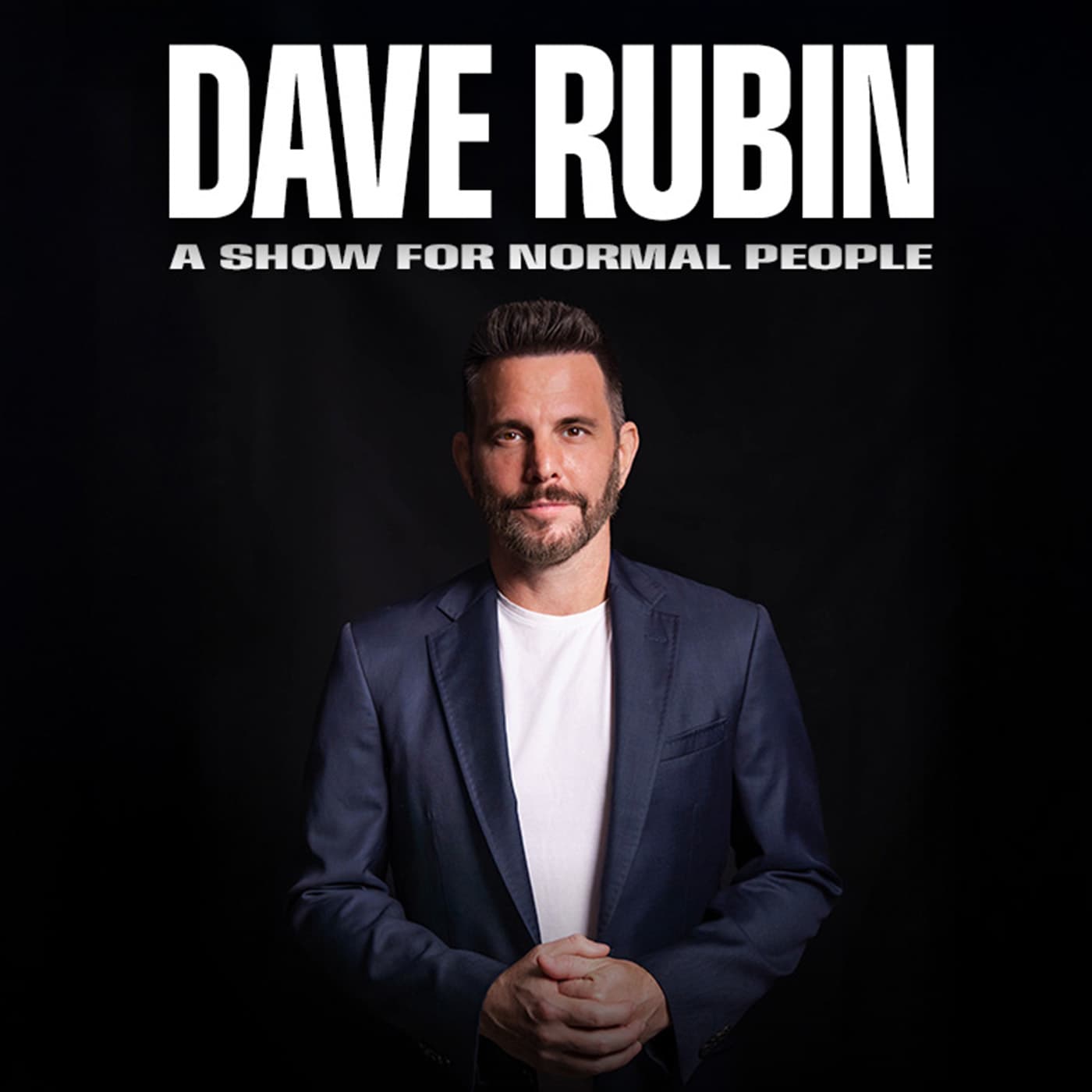
Dave Rubin of "The Rubin Report" talks to Carl Barney about his book The Happiness Experiment and his "prequest" concept of giving inheritance money while alive; how gifting with purpose encourages recipients to create happiness plans with coaching support; the role of gratitude and mindset in achieving long-term happiness; how his approach brought joy to both giver and recipients; why financial freedom combined with personal development creates lasting impact; and much more.
