Ask ChatGPT
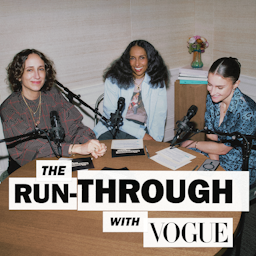
 The Run-Through with Vogue
17 Nov 2026 · 51m · 16 chapters
The Run Through discusses Ron Howard’s Netflix documentary about fashion photographer Richard Avedon, focusing on how Avedon’s rigor, intensity, and storytelling reshaped fashion photography and influenced culture beyond fashion.
Tonne Goodman, longtime Vogue editor; first met Avedon as a young model in the 1970s, later collaborated with him as a fashion editor. Ron Howard, director of the Avedon documentary; approached the Avedon Foundation/archives and built the film around interviews and selected imagery.
Avedon had “no peripheral space” in his studio—models couldn’t escape his focus. His fashion images weren’t just clothing; they captured personality and relationships. He created glamour that didn’t exist (notably postwar Paris). The documentary shows his personal depth and his social reach (covering Vietnam and civil rights), plus his complex, sometimes prickly relationships.
Marilyn Monroe (“Real Marilyn”), Verushka’s tassels/braid moment, Lauren Hutton in Exuma (18 photos in two days), Tina Turner portrait (Goodman’s favorite), George Harrison photo, Duke/Duchess of Windsor portrait, and Avedon’s “bury the lipstick” note to Vogue.
Written by AI. May contain mistakes.
Tonne Goodman shares her unique experiences with Richard Avedon as a model.
“We have you here today to talk about Avedon and you have a unique connection to Avedon.”
Discussion on the extraordinary atmosphere in Avedon's studio and his unique energy.
“So I think that the fact that she sent me to Abaddon and to Penn and to, you know, the best photographers that the magazine had at that point was really a gesture of kindness to her grandson.”
Goodman reflects on the emotional depth of the Avedon documentary and its significance.
“After the war, that Paris did not exist at all.”
Exploration of what defines a Richard Avedon fashion shoot and his influence.
“because Vogue at that time, Diana Vreeland had, people are talking about, I mean, Vogue did go into the culture a lot.”
Goodman shares her favorite Avedon photographs and their significance to her.
“I mean, I obviously went to the Gagosian show when it was out and loved it, but I have to say that my favorite picture by Avedon was not in it and that is a photo of George Harrison.”
Tonne Goodman reflects on her experiences working with Avedon and their impact on her career.
“Is there anything that you took from those experiences that you've applied to your own life, your own career?”
Explore the personal experiences and insights shared by a model working with Richard Avedon.
“And I think that, you know, I actually don't remember that picture.”
Discussion on how Richard Avedon influenced the fashion industry and filmmaking.
“The Run-Through will be back with Ron Howard.”
Ron Howard discusses his motivations and experiences while creating the documentary about Richard Avedon.
“in creating fashion imagery today can't help but be influenced by Avedon.”
The discussion revolves around Richard Avedon's personal relationships and their influence on his work.
“Because the documentary feels very focused on his work and his— He, you know, he's shy.”
Discussion on Avedon's impact on fashion photography, his relationship with Vogue, and the complexities of his career.
“Uncanny Valley brings that same fearless reporting straight to your feed.”
Discussion on how Richard Avedon's work influenced personal creativity and perspectives on fashion photography.
“There were a lot of rumors about him, relationships and so forth that I didn't really, you know, focus on or respond to.”
Conversation about the challenges and roadblocks faced in careers, drawing parallels with Avedon's experiences.
“And, again, I think I look at them as sort of the story behind the story and a little less superficially.”
The balance between discipline and spontaneity in creative work, using Avedon's methods as a reference.
“But he applied this kind of rigor to everything that he was doing.”
Overview of upcoming creative projects and collaborations, including a potential Grinch movie.
“You're going to have something that was your plan that's perfectly workable.”
Expression of gratitude and concluding thoughts on the discussion and film.
“But I work closely with the people who are writing them.”

Get the gist, explore an idea or ask about something said.
 Claude
On The Run-Through with Vogue, what are the key points of this episode?
Searching your listeningAutomatic transcript. May contain errors.
0:05This is The Run Through. I'm Nicole Phelps. Today on the podcast, we're talking about Avedon, the new documentary out now on Netflix by director Ron Howard about the iconic photographer Richard Avedon. In order to dive deeper into the documentary, we brought on two people to speak about it. First, we will be airing my conversation with Tonne Goodman, a longtime Vogue editor who first met Avedon as a young model in the 70s and then later collaborated with him as a fashion editor. Then we will be back with a chat between Chloe Mal and the director of the Avedon documentary himself, Ron Howard, who got into the behind the scenes of making this film.
0:44Hi, Tani. Welcome to The Run Through. Hello, Nicole. Hello. We have you here today to talk about Avedon and you have a unique connection to Avedon. From our research, I discovered that your very first photo in Vogue as a model was shot by Richard Avedon. That is the truth. However, I didn't know it was my very first photograph in Vogue. I did do a couple of them as a model. So that's interesting for me to know. Take us back to that time. From what I understand, were you a student or you're a young person and you were looking for an internship? Well, it goes back before that. It starts, I mean, the whole modeling sort of stint, which is actually what it was, it was not kind of for real, happened when I was in 10th grade and I wanted a summer intern job.
1:34And my parents knew Leo Lerman, who was at that point the editor-in-chief of Mademoiselle magazine, Mademoiselle magazine being the baby sister of Vogue. And Leo said, I don't have anything for you here as a summer intern, but you're tall and you could probably be a model. Why don't I send you, you know, why don't you try it? At any rate, my brother's good friend was the grandson of Diana Breland. And that is how I met Diana Breland the first time, was through the Brelands. Then I started to become very close friends with his older brother, Nicholas. And I think that when I finally got to Vogue and met Mrs.
2:16Breland, And she felt quite obliged to treat me with kid gloves because of Nicholas. So I think that the fact that she sent me to Abaddon and to Penn and to, you know, the best photographers that the magazine had at that point was really a gesture of kindness to her grandson. You know, I worked with Dick once. I worked with Penn once. Do you know what I'm saying? I'm getting to the point that I was not a good model. So that was that. Do you remember anything about that one shoot with Avedon? I do, because I think that the thing that was so extraordinary about Dick was that his studio was one psych.
2:56The whole studio was the studio. So when you walked into it, you walked into his world. There was no peripheral space to try to hide from what you were doing with him. And his energy and his intensity and his curiosity and his ability to plug into whoever he was focused on, and focus is like a principal word, you couldn't escape. There was no way out, actually. And I think that that's what a lot of the models in the documentary, which is so wonderful, I think, mention that you just, you were there with him until you were there, actually, with him. Not just in front of him. Meaning that he had a certain intensity of focus when he was working.
3:46Yeah, totally. And it was, yeah, it was intense. Tell me why the movie moved you as much as it did. I think that it moved me because, first of all, it was quite personal. I mean, Dick revealed a lot of things that were very personal to him. And I think that there is the fact that there is so much that he actually has said that is on tape, that you hear his voice, his fabulous voice and the intonation of his voice, makes it a very, very important document to all of us who are involved in fashion photography and in any form of photography whatsoever. because it is a chronicle of our time, which the movie illustrates really, really clearly.
4:27He came into our focus through fashion because Harper's Bazaar sent him out to, you know, re-present Paris after the war. And that segment in the movie is so beautiful because it really describes how he, his innocence, and how that innocence led him to discover and discovery and the fact that his reference to glamour, I mean, he didn't know glamour, was the movies. And I thought that the juxtaposition of the movie shot with his photograph and everything, I mean, the simple explanations were so gently, you know, revealed in the movie. And I just thought it was so beautifully done. I like that point, too, that was made, that the Paris that he saw wasn't necessarily the Paris that existed.
5:19he created this glamour? Well, that was the assignment. It did not exist. After the war, that Paris did not exist at all. So he literally created it for hope for everybody that it could come back. And he did. But he went so far past that in his career, which I think is very beautifully documented in the documentary. The very, you know, personal elements that were woven into that exposure through the documentary are really important because it speaks of his, you know, the relationship that he had with his sister. I mean, that's an extremely moving part of the film. But it's very important because, you know, the depth of that feeling that he carried with him for his entire life, you can see in photographs.
6:11You can. You know, he waits until he can find that kind of reality in who he is working with. I mean, the famous story is Marilyn Monroe. Real Marilyn. Real Marilyn. The mask sort of fell off and he got that one moment where she wasn't performing Marilyn. Exactly. Exactly. So talk a little bit more, because we are a fashion publication, about his fashion work. What defined a Richard Avedon fashion shoot, either in Vogue or in Harper's Bazaar or more broadly? When you look at photographs, how can you know instantly that's an Avedon? Well, first of all, an Avedon is—there's not one Avedon. I mean, the fashion photographs that he did captured every single kind of example of a fashion photograph that you could possibly take.
7:04So he was on location, and he was in the studio, and he explored every notion of fashion. And I don't think that there is a photographer today, in fact, I'm sure that there is not a photographer today who has not referenced his work in some way or another or been influenced by it because he did everything. In fact, when you came to Vogue to work as a stylist, you referenced a photo of yourself by a pen. Pen, yeah, exactly, that I did with Stephen Mizell. And it was delightful. We were having a great time, and we literally recreated the photograph pretty exactly. So there's a habit that photographers have of looking at the photographers that came before them.
7:53And, you know, what do photographers see in him that they want to reproduce? You've spoken a little bit about his patience and this sort of precision. But how does it show up in a photograph? Well, that's a good question. I mean, Dick was like a kind of a sponge. He saw everything that was in front of him, and then he created a focus of what he, where he was going. And I think that you actually, you see it in an Avedon photograph because, first of all, there's a kind of perfection to it even when there is a mistake. So, you know, that whole moment, I can't remember who says it in the film, about the tassels, the braid from that famous picture of Verushka falling over.
8:41You can see a personality within those photographs. They're not simply a model being there with an article of clothing on, no matter whether it's a T-shirt or a ball gown. There is an element of kind of a personal element. The relationship that he captured in a photograph is, you know, you can feel it when you look at those photographs, I find. And earlier we were talking about the very interesting story in the movie that there's always a dog in his family photographs, and yet there was no actual dog in real life. In real life, which is such a sweet and revealing admission because I think that from that experience with his family and photography and pictures, that he realized that if you don't have it, you get it.
9:44And that applies broadly. So if you're not, if you don't have the picture that you want from the person, if you're not getting it, you stay there until you get it. He was relevant at all times. I mean, when fashion needed, you know, when Paris needed, you know, recreation, he was there for it. And then when he moved on, when Vogue, in fact, gave him the platform for the whole cultural exposure, because Vogue at that time, Diana Vreeland had, people are talking about, I mean, Vogue did go into the culture a lot. And he did so many of those photographs. And then he went on to cover the war in Vietnam, and he covered the civil rights movement.
10:27And his curiosity was absolutely not limited to fashion. You know, that element of him is what has made him the most famous photographer of our time. So there was an exhibition of his photographs at Gagosian timed to what would have been the centennial of his birth several years ago. And people in the culture, in fashion and far beyond it, were asked to pick a favorite photo of his. And you chose a picture of Tina Turner. Yes. Tell us why you chose that photo. Well, there's kind of a personal backstory to that because Tina Turner was one of my favorite artists. And when I was, I guess I was a teenager, I must have been a teenager, she played at Carnegie Hall.
11:16And it was when, it was Ike and Tina Turner. So this is going way back. And Fats Domino opened for her. I mean, it was an incredible, incredible concert that I brought my mother to. Witnessing her and what she represents, and, you know, we all know her life now. And what Dick captured in that photograph was the visual truth. I mean, she was all over the place. She was vibrant. She was sexy. She was everything. But the truth of who she actually was, that we all know who she was now, is in that photograph. and that's why I love it so much. I mean, I obviously went to the Gagosian show when it was out and loved it, but I have to say that my favorite picture by Avedon was not in it and that is a photo of George Harrison.
12:06Oh, wow. As a young guy, but not, I think, post-Beatles and it was a photo that ran in The New Yorker when George died early from cancer And George was always my favorite Beatle, and I pulled it out of The New Yorker, and it was on my refrigerator for years and years. I have to see this picture. I have to see this picture. I don't remember it. Do you have any favorite Vogue portfolios that he shot? What stands out from his Vogue work to you? There's so many of them. I mean, the one down in Exuma that is incredible. and the whole story behind it is that they just, you know, had a wonderful time and they shot all those pictures in the last couple of days.
12:48Oh, that's the Lauren Hutton story. In the movie, she talks about them having basically like a holiday. Yeah. And then they got these most incredible photographs in like half a day or something. Well, she says 18 pictures in two days. And it is so obvious in those pictures how much fun they had. I mean, you can literally smell the breeze. You can feel the sand. You can, all the sensations that they had together in the days before those photographs were actually taken, you can sense in the pictures. You know, they're really extraordinary. And the famous breast is like, you know, I could hear Dick literally saying, you know, oh, that's great.
13:32You know, and Lauren also saying, that's great. It is. And it is. It's an incredible photograph. So you did a photograph with him as a model, and you also worked with him in the 90s, I think once on a campaign. Is there anything that you took from those experiences that you've applied to your own life, your own career? Well, that's a very good question. I think, I mean, I think knowing him personally, I have applied to my life a lot. And I think that, you know, I actually don't remember that picture. I was so overwhelmed by being in front of Abaddon's camera and Polly Mellon was the editor and she is a force of her own.
14:18And I remember very clearly when she decided to lock me onto the suitcase. There is a, I'm literally lock and key with a, you know, chain to the suitcase. And I remember Dick saying, oh, that's, you know, that's great, Polly, let's do that. He took the picture quickly, which he does. And, you know, it was pretty overwhelming. I was a kid, you know, and I was sort of thrust into being a model because I had some of the specifications that could make me one. But I really was not a model. You know, first of all, Dick, you know, his studio was small. I mean, the dressing room and the makeup area was tiny.
14:59So you literally couldn't escape being in his world the minute you walked in that door. And that can be intimidating to a young non-model model. And what about working with him? Because, of course, now you've been on countless shoots since that 1990s time you worked together. I'm also quite decisive. So to be with Dick and to see, you know, the decision-making on the set, you know, don't fool around, let's just get it. And then we had an incredible model, Nadia Auerman, who, you know, amazing model. and the two of them connected right away. You know, the other thing about Dick was that it was a team.
15:38It was not Dick, you know, entering the studio, being the photographer, having the lights set up, you know, taking the picture. It was, his whole studio was like a family and that is brought out in the film as well. And it was completely a team venture. And that same thing happens to me on sets. I do not feel that it's up to me at all. It's up to me and my colleagues, the team that I'm with. And I know you think that people who watch the movie should not watch it on the small screen at home. They should watch it on the big screen. Why is that? Because the imagery is really incredible. When you see those images that you normally have seen in a book, so they've been 8 by 10, they've been a print.
16:28And when you see them at that scale, you can really see them. You can really see what they're all about. And I think the photography is really very good. All the pickup photography, you know, the scenes in the archive at the foundation are beautifully filmed. I mean, I think that you really need to see it in the large scale so that you can feel what it has to offer because it does have so much to offer. This might be a hard question to answer, but having known Avedon, what do you think he would make of the documentary? I think he would like it. I think he really would like it. I think that John's, his son's commentary is beautiful, and he describes how intense his love was for his son.
17:21I think that the people that Ron interviewed with, it was a very curated selection, very curated selection. And I think that he would get it. I think Ron got him, and I think he would have gotten it totally. Thank you, Donnie. My pleasure. The Run-Through will be back with Ron Howard.
18:12Thank you.
18:20VanityFair.com and wherever you listen to podcasts. It's all fair game.
18:29Hi, I'm Tyler Foggett, a senior editor at The New Yorker and one of the hosts of the Political Scene podcast. A lot of people are justifiably freaked out right now. And I think that it's our job at the political scene to encourage people to stop and think about the particular news stories that are actually incredibly significant in this moment. by having these really deep conversations with writers where we actually get into the weeds of what is going on right now and about the damage that is being done. It's not resistance in the activist sense, but I think it is resistance in the sense that we are resisting the feeling of being overwhelmed by chaos.
19:10Join me and my colleagues, David Remnick, Evan Osnos, Jane Mayer, and Susan Glasser on the Political Scene podcast from The New Yorker. New episodes drop three times a week, available wherever you get your podcasts.
19:26Thanksgiving is around the corner, and you know what that means? It is pie season. I'm Jesse Sepchak. I'm a senior test kit and editor at Bon Appetit and the host of Bon Appetit's Bake Club podcast. And this month, we're making three different pies. So here's how it works on VA Bake Club. Head to bonappetit.com for the recipe. then you'll go bake and you can send us any questions you have and we'll get together here on the BA Bake Club podcast to talk about the recipes. And if you haven't made pie crust before, this is the perfect place to start. But if you have made pie crust before, get ready to perfect your technique.
20:00So go to ba.com or our sub stack and come and bake along. Join us the first Tuesday of every month as we debrief about our latest bake. Find BA Bake Club wherever you get your podcasts and happy baking.
20:21Welcome to the show, Ron. We're so excited to have you, and congratulations on this documentary. We've all been talking about this since one of our editors saw it at Kent and was like, oh my God. Really? Yes, it's very— I don't mean to sound surprised, but I'm just— No, it's a big moment, and I love how Samira says in the movie that anyone who's involved in creating fashion imagery today can't help but be influenced by Avedon. He feels like such a patron saint of anyone in this industry. So it's very exciting to see. Well, thank you. That's really why I went into it, because I don't know anything about fashion.
20:54You know, I've never given it, you know, a whole lot of thought, but it became, it very quickly became a character study. Yeah. Because what a journey. And, you know, and he's a very charismatic, entertaining subject and figure. But, you know, a lot of artistic integrity and courage on display there in addition to, you know, all the really fun, you know, sexy work that he did too. What was your first introduction to Avedon? Did you ever meet him? I never got to meet him, no. And I was never asked who to thunk it. I was never asked to sit for Richard Avedon. I wonder why. But I certainly was aware of him.
21:37That's just a big name in the 70s and 80s. Might have known that he did the Brooke Shields, you know, Calvin Klein ads. Nothing comes between me and my Calvin's. Yeah, that stuff. I think I probably read an article about that. And so I was aware of the name Avedon. Didn't have any of his books. But our documentary group had long wanted to—believed in the idea of a Richard Avedon documentary. But the foundation family, very, very cautious about opening up the archives. I think they actually really liked the Jim Henson documentary. And I think they liked one I did about—doc I did about Pavarotti.
22:23and in talking to the foundation, they said, well, maybe Ron would like to come down and just look at the archives. Oh, interesting. And so I did. When was that? About three years ago or so. And is that when you're working to convince a foundation or a family to collaborate with you, is that a courtship process? How do you convince someone that you're the right choice and that your film is going to be what they want it to be? I mean, it's a conversation. It's a series of meetings and a point of view that you kind of can present. You can't give over editorial control or anything like that, but they can get a sense of what it is you're attracted to, and then they have to sort of, they have to kind of roll the dice.
23:10Yeah. So, of course, by then I'd read some books and seen a few interviews and done a little prep prior to going to the archives. But I was knocked out by what I saw. Now, initially, still, I was thinking fashion first. Let's do a study of the world. Okay. And use Avedon to do a study of the world. And maybe we'll get, maybe we'll do a deep dive on 10 or 12 photos and sort of understand, you know, convey the story of the sad Marilyn or the Natasha Kinski, you know, boa constrictor or, you know. But that very first, you know, half a day spent there, I understood the rigor of his work, the discipline of it, the breadth of the sittings and subjects, and began to understand more and more about his desire to use his status and his talent to also shed light on aspects of society that are unglamorous.
24:17challenging, difficult, and that were important to him. And, you know, it immediately began to shift, you know, away from my initial idea and a little more to the journey of Avedon. But I don't think that was really necessarily part of our initial conversations. I think I just was, I think they could just see that I was pretty blown away. I also related to him a lot more than I thought I would ever. Interesting. And I immediately began to. In what ways? Well, when I began to understand that these weren't snapshots, he wasn't, you know, there was, he wasn't, he wasn't ever counting on luck. Right.
24:57Once in a while, sure, there'd be, you know, he'd catch lightning in a bottle with a moment, whether that's Charlie Chaplin or Sad Maryland or a couple of great images. But, but he really was a storyteller. And whether it was fun fashion stuff or whether it was some hypocrisy he was trying to expose, sometimes kind of ruthlessly, which I didn't know about that right away, but that was really interesting. Duke and Duchess of Windsor. Wow. That photo kills me. There are others. We couldn't even get them all in. But the Daughters of the Revolution, he did that. But even that was a function of planning and a point of view.
25:40And the other thing is he reminded me of some men I've worked with and gotten to know over the years who I really, really like. And I felt like I understood Avedon through my being able to align, you know, his personality with this director who I might have worked for. And this, you know, this individual who was a production designer who had a similar kind of tone and vibe. So I immediately developed this kind of affection for the man without ever having a chance to meet him. And when you met with the foundation and you started deciding that you were going to work together, was there anything that they said, this is off limits, we don't want you to use these photos, or we will only do this with this compromise?
26:30What does that discussion look like? The only discussion that I recall was really about not cropping the photos. It was about how we would treat the photos. And they do this with other documentarians as well. If they license a photo, they want to control, you know, sort of how it's presented. Right. But otherwise, you know, and I kind of think they knew they were open to me doing the doc by the time I showed up. Right. So it wasn't like there was a long series of conversations and any sort of guidelines or anything that was off limits. The question was, you know, talking to people. Right. And who would talk to us and who wouldn't.
27:14There were some people who were a little older now and just didn't want to go on camera. Okay. But the people who did, man, you could see that affection. You could see that. And Avedon was very legacy-oriented. Right. And I think people were super cautious about what— That's interesting. You know, they weren't there being glib. They were honest. Yeah. They would talk about his, you know, he was pretty quixotic. Yeah. And, you know, I was grateful for that. Yeah. So I think they came to it with a kind of an honesty. But still, they wanted to do right by Dick. I felt that. Right. You know? John, his son, was very reluctant to be interviewed.
27:55He was supportive of the project, but he wasn't sure he wanted to go on camera. Do you think that's because he didn't want it to feel too personal? Because the documentary feels very focused on his work and his— He, you know, he's shy. He's a little camera shy. He's a writer. He's kind of kept away from the glare. Yeah. And he never said he wouldn't. Yeah. But he just, it was always kind of, I'll think about it, but 18 months of thinking is kind of a long time. But eventually, he, you know, he saw an assembly we had, saw, I think, the way we were treating this story and his father as a subject.
28:39But I said, you know, like in my Pavarotti documentary, which he liked, I said, you know, the fact that his, you know, family, despite some complexities and some disappointments, you know, that they were willing to talk and be interviewed and be frank about their love and their frustration of the same man, you know, it just brought a lot of, you know, relatability. and honesty to the story. And he says he was disappointed in himself as a father in some ways and as a family man. I have that quote. Right. I don't have any other context at all. You could give us that if you're willing. And he did, and I think it was very cathartic.
29:25And he contributed way more than I thought. Interesting. I mean, I thought we'd hit a couple of areas. But he also was very astute about his father's work, the sort of the range of it. and knew his father's story really well and corroborated a lot of things and connected a lot of dots. So I was really grateful for his interview and his support. Was there anyone you interviewed that really made you do a 90-degree turn in a different direction? Well, he did a little. I mean, he deepened it. He deepened it because then the story of Avedon and his own father, which was in our documentary already, just took on a little more weight and there was a little more context and it became something that was very relatable on a human level because it was, you know, multi-generational.
30:15I think even though she's not in the documentary that much, Twyla Tharp was great because I saw in her a real respect, but it was very grounded. It was very pragmatic. Yeah. And you could see she has this sort of clear-eyed view of the world, which I really dug. I mean, she's a really great person. And I like the way she kind of put, you know, two and two together in ways of explaining photographs, explaining moments, explaining like what motivated Avedon. and some things that didn't even make it into the doc, you know, about him being a storyteller and a theater goer and applying that to, you know, to his work.
31:02Well, that made a lot of sense to us when he talked about how much movies influenced his shoots in Paris that were a real breakthrough for him. So then we went back and found movie posters after Twyla Tharp talked about how much he loves movies. And we said, oh, my gosh, look, he's actually doing – he actually was reenacting movie posters. Wow. That's really fun. You know, and stuff like that. So Adam Gopnik was great. Yeah. But he writes beautifully about Avedon and has done some great pieces. And then he was an early subject that just gave us a lot of context. And, again, that balance because he said, you know, he could be prickly.
31:43He could be difficult. He could be, you know, a little unpredictable. and yet, you know, every time you walked in the room, you were glad to see him. I kept sensing that from, you know, even employees who he had treated kind of roughly. Yeah. You know, you could tell that they loved him. Right. And that he also knew how to come back from that and recognize that, you know, he'd handled himself in a way that he wasn't proud of. Right. And he thought he could do better. I was rereading in 1994 Dodie Kazantian, who's a wonderful art critic for Vogue and elsewhere. She wrote a piece and a long profile of Dick on the eve of his exhibition at the Met.
32:25And what I found very funny is that at the end, he called her and said, we need to do the interview all over again. I need Twyla Tharp to be there for it. So she went back over to his house. And she kept pieces from the earlier interview, but he really felt that Twyla helped him articulate what was important to him and his work. And she also wrote about how he cooked her a three-course meal, but it was sort of – he had done half of it. His housekeeper had prepared the chicken and then left instructions on how to heat it up, which I loved. I loved it when Gagosian was talking about the luncheon where all they had was champagne and eggs.
33:07Yes, exactly. Hard-boiled eggs. Hard-boiled eggs and champagne, which is at once very luxurious but also quite simple and aesthetic in some way. Yeah, yeah, yeah. It's sort of a nice— And pretty simple for him to pull together. Exactly. Oh, Gagosian's coming over. What do we have? It's sort of a good party tip. Yeah, yeah. It's like, just boil eight eggs.
33:30The run-through will be back in a moment.
33:40I'm Jessica Krul, editor-in-chief of Allure, and I host the brand new podcast, Perspectives. At Allure, we cover beauty every day. But beauty is so much more than products and trends. It's connected to our health, our identity, our sexuality, and the way we understand our bodies. This season of Allure's Perspectives is all about breast health, a deeply personal topic that so many of us think about, but sometimes feel a little uncomfortable discussing out loud. And that's why Allure, we want to talk about it. Whether it's actor Olivia Munn opening up about her breast cancer and breastfeeding struggles, sex educator Erica Hart revealing how Going Topless started a movement, Rabin Simone detailing the intimate relationship between breasts and body image, or experts breaking down the latest on GLP-1s and cosmetic surgery advancements.
34:30These conversations challenge the way we think about beauty, but they also challenge the way we think about our breasts and our bodies and, of course, the way we think about ourselves. Listen to Allure Perspectives and subscribe wherever you get your podcasts.
34:54shaping our world. Uncanny Valley brings that same fearless reporting straight to your feed. Is Doge finally over? Will AI actually democratize American healthcare? Each week, Wired journalists from across the newsroom are going to unpack where politics, technology, and Silicon Valley collide. From conversations with tech leaders across Silicon Valley, internet fandom investigations, and government crackdowns on rigged gambling, we're taking you all over the news cycle, going straight inside the priorities, pressures, and power plays driving today's biggest decisions. Uncanny Valley tackles the questions keeping you up at night and helps make sense of the future taking shape right now.
35:34Listen to new episodes every Thursday, wherever you get your podcasts.
35:42One day last year, police entered a mansion in L.A. County and discovered the couple that lived there had almost two dozen children, nearly every one of them born through surrogates. But those surrogates had been deceived. I started crying. I was like, what the heck did I just get myself into? I'm Ava Kaufman. The Journey is a new series from In the Dark and The New Yorker. Find it now in the In the Dark podcast feed.
36:20Dick Avedon had a complex relationship with Vogue. He photographed for Vogue for many years and did some of the images that I think of as some of the most iconic fashion images that we reference today. But then, and that was really during the Diana Vreeland era. And then when Anna Wintour came, they had differences about what covers should look like and how that should be portrayed. And Avedon had been photographing all the covers. Anna wanted to try some other photographers as well. So they took a break, and he photographed for Hubbard's Bazaar for a long time. And I loved that he wrote Anna a note that said, let's bury the lipstick.
36:58Oh, I wish I had that. I know. Damn. And I wonder, I thought that that showed real grace from Avedon, that he was prickly and he held grudges. But you saw that he was willing to sort of come around and bury the hatchet. And we saw that with Sebastian Kim, who is interviewed in the film, and he left to go work for Mizell, and Evadon was very hurt, but then sort of came back around. And I wonder, what were the most human trajectories you saw from him in that way? You know, the Sebastian Kim one was sort of our clearest example of that kind of thing. But, look, a lot of interesting people, all people are paradoxes, right?
37:41he had that sort of that anger that was pushing him, that rage. In a way, you know, like we talk about how he was frustrated by the critics. Okay, well, he got some bad reviews. Yeah. You know, I joined the club. Yeah. I know. I mean, they were pretty savage. Well, they were pretty savage. Yeah. And it's not like photographers are getting 100 reviews. Sure. And one of them is savage. Yes, that's true. You know, they're only getting a few reviews, and if one of them is savage, that's all anybody thinks about. And, of course, they were devastating to him in a way. But I think he used that as fuel.
38:16So I think he recognized that there was a kind of neurotic aspect of his ambition that fueled his ambition and probably played into it. I once had a doctor tell me, you're run down. You know, your numbers aren't good. Your adrenals are low. Okay. What is going on with you? And I told him I was in the middle of a very difficult shoot, and you kind of use adrenaline to get psyched up and to go, you know? Yeah. And he said, at this point, I was probably 48, 49. He said, you know, you're a little too old for that. Oh, interesting. You don't need to psych yourself up. Okay. You know, you need to use your intellect, not your nervous system.
39:01It's not healthy. and I kind of have a feeling that Avedon and a lot of people who are driven in that way would kind of use that anger, that confrontational spirit or something, almost as a way to just keep pushing the envelope and keep striving for excellence. And yes, I want to be demanding. But I think he also was a really good friend and a good person and could recognize when he'd overstepped or when he didn't want to be that person, you know, wanted to repair that bridge or that connection. I was quite struck reading over some of the reviews that he got, and the critics were so fierce about him.
39:46And in Dodie's piece, she sort of interrogates that and wonders, is that because a fashion photographer presumed to think of themselves as an art photographer and an artist? And I do think that this is something that is very relevant today. And there's many photographers who are fashion photographers but also have exhibitions that they're proud to call art exhibitions. And I wonder how that conflict evolved throughout his life. I think it still exists, but I think people are a little more open now to that sort of experimentation. But there's still a kind of a, you know, you kind of fold your arms.
40:27Yeah. And he was so successful. Yeah. And let's face it, when somebody's like, I mean, you know, and he inspired Funny Face, you know, and stuff. And that kind of— Which he loved. Yeah. He embraced all that. Yeah. He liked— And I love in the movie where it says that he loved when she's on the steps saying, take the picture, take the picture. It's the best. It's a great moment. But so, you know, so here's a guy who's allowing himself. He's not just staying behind the camera. He's being interviewed. He's out in the world. He's and he's socially ambitious, you know, as well as his work. And so, you know, certainly, you know, I can understand his fears saying, oh, this is our territory in a way.
41:12It's not so easy. It's not just that easy for you to bounce over here and do that. Well, I think it was kind of easy for him. Right. You know? I think history has shown it was very easy and that he could straddle both worlds to great effect. But unfortunately, critics are not, you know, over hundreds of years have been proven to not always be accurate in their moment. And I don't think they were accurate about him. Right. I wonder if there were any other interesting conflicts in his life that you discovered throughout your reporting and then wanted to really be able to parse through, or if there were some that you just decided not to.
41:52I've decided to focus in on really just focus on his work. Yeah. I could relate to that. This is what he talked about. Those were the areas. There were a lot of rumors about him, relationships and so forth that I didn't really, you know, focus on or respond to. Yeah. I think if it had come up in an interview. Sure. And I wouldn't say that, you know, we ask a lot of questions during the course of the interviews. But this is, I wanted to sort of respect what those close to him wanted to share and what he himself had shared. Yeah. I do, in this profile, Dodie also writes that all great portraits are, in a sense, self-portraits.
42:39And all artists exercise manipulation and control. and that Avedon was the first to agree with that. I've been thinking about this a lot with you can see everything. But also, I'm wondering, is there any part of that you agree with and is there any portrait of you in this? Oh, there are things I relate to. I wouldn't say that I could identify anything and sort of say, I want to make this point because, you know, this reflects me. The way he used his work as an entree into corners of society and the world, I relate to that. Yeah. I'm not a very adventurous in person. Yeah. You know, I wouldn't—I would have never scuba-dived if I didn't need to do it for a movie.
43:25I wouldn't go—so many places I've been to that I just wouldn't have done. And certainly people I've met and conversations that I've had. So I really related to the fact that he used his status and his work and the possibilities to open doors and to kind of educate himself. You know, he wasn't formally well-educated, nor am I. I kind of related to that. I did relate to somebody who's categorized in a certain way trying to stretch their creative wings and getting a little pushback. Yeah. You know, I felt that certainly earlier, you know, in my career. And so, you know, those things. And just the desire to kind of, you know, to never stop working.
44:14Right. Because it's kind of, it defines you. Yeah. And it's the motor that makes life interesting. You rest, you rest. Yeah, there you go. I like that. Oscar de la Renta used to say that. Oh, okay. Okay, I like it. I am curious if you look at fashion photographs now in a new way. Yes, 100%. With more respect, of course. You know, they've always been fun, always sexy, cool, interesting. What are they wearing? Yeah. But without a doubt, I now can imagine what was entailed to get the shot. And what else is being said. And, again, I think I look at them as sort of the story behind the story and a little less superficially.
45:03Yeah. I find it ruins fashion photos for me a bit to know too much. Yeah. Someone will say, oh, I loved this cover story. I'm like, oh, it was a nightmare. It rained and they canceled and blah, blah, blah. And it sort of affects the way that you just see something that should just be taken as a fantastic photograph. Yeah, yeah. Well, I can understand that. I can understand that. I'm curious. I often think people who are writing biographies or doing documentaries about people who have died, what is the most – what is the thing you return to most often wishing, I wish I could talk to Avanon about this.
45:38I wish I could discuss this through with him. Oh, my gosh. I think I – I really wish I could have talked to him about – more about roadblocks and career frustrations. because, you know, even after some digging, even though he, you know, suffered some rough reviews and things like that, he was such a winner. Yeah. You know, and I think if I had a chance to interview him, I'd be looking for potholes a little bit more. You know, what gave you a backache? Right. Was it always easy? Yeah. How did it really feel when the museum, you know, wouldn't show your American West work? You know, stuff like that.
46:25He made it look kind of easy. Yeah. Which, you know, is exciting on the one hand, and it's kind of inspiring to recognize that it's one of the things that I really came to admire about him, and I hope the film reflects, is that, you know, there's this amazing scope of work. Okay, so I guess he's probably a workaholic. But he applied this kind of rigor to everything that he was doing. And if you are disciplined and you do actually hold yourself to a standard and hold others around you to a standard, look what it can add up to. Right. No, I think that makes sense. and I wonder well I just I often wonder from him sort of people talk about how controlling he was and how precise but then there does seem to be so much spontaneity he seems he's he seemed quite nimble well I know what he was doing there I mean because I try to do this you know in the scripted work that I'm doing I recognize it right away you're disciplined you're professional you have a plan you figure out what your subject wants he talks about joking around with some of them and then in the last five minutes taking their picture.
47:40Well, that has to do with the personality of that sitter, right? Whether that's a model or a subject, you know. But what he's doing is he's applying all of this professional prep so that he has that as a safety net. Sure. At the very least, he's got the plan. I do that with scenes. Yeah. I understand. But if you're lucky, you have time to grab on to see something and make space to sort of say, no, let's go a little further. You know, I just discovered something. I just want to experiment with it. So it provides the scaffolding. It provides the scaffolding. But more than that, it also kind of ensures that you're going to get the job done.
48:21Yeah. You're going to have something that was your plan that's perfectly workable. Yeah. But maybe sad Marilyn will show up. The magic happens. Maybe something else happens. Right. And you're in a position where you can take advantage of that, share it. Sad Marilyn, it's astounding because it is such a striking image of her, obviously, but I think she hated it. Well, I'm sure she did. Yeah. And again, you sat for Avedon and you didn't have editorial control. And that was a risk. And there was an element of risk there, you know. Adam Gopnik was great the other night because he did a Q &A. Oh, I know.
48:56I came to the party after, but I missed the Q &A. And he hadn't seen the movie. Oh, wow. Until that night. And so you can imagine how anxious I was. Now I'm going to be interviewed. Oh, my God. You know, if he's wearing a sad face, you know, I know he won't be insulting, but it'll be pretty evident. Well, he was really moved by it. But he also then went into a great Avedon impression. And Adam Goplin does a really good Richard Avedon impression. And he said, Dick would have said, yeah, that's, I like, I like a lot of it. I like a lot of it. But have you ever considered? And I'm sure that would have been the case if Avedon saw it.
49:39But a lot of people who knew him have, and this has been very, it's a nice thing to say to me, but enough people have said it that I want to believe it, that he would have actually felt good about it. And that makes me happy. Absolutely. Is there a person or a subject you'd like to delve into next? I know you have a lot coming up. The Grinch is big on my radar. We're very hopeful for the Grinch. We're still in the development stage, and so it has to be good before we go. And I speak for Jim Carrey and myself when I say that. But I think we have a great idea, and I hope we can solve it. Very exciting in my household.
50:17Will it be? That's great to know. That's great to know. I've got five different movie scripts that I'm working on, And three doc subjects that I'm working on and three television pilots that I'm working on. I'm not writing any of them, thank God. But I work closely with the people who are writing them. And, you know, I'd love to do them all. So we'll see. We'll see. Last question for you because my ears perked when I heard this. You and Henry Winkler have been friends for a long time. And you send each other cheese and crackers on the holidays. Yeah. I'm a big cheese and crackers person. I want to know what is this scent?
50:56What is the brand? What is the cheese? You know, my assistant knows. Carrie Zirkle can answer your question. Henry seems to like the cheese. I know, but to me, that's like the Tom Cruise coconut cake. I want to know what cheese you are sending. I send him cheese. He sends me red wine. Oh, wow. I see. Which pair nicely. Yes, they do. Well, thank you so much, Ron. It's been such a pleasure and congratulations on this film. Thank you so much. It's been very exciting in our office. I'm really glad you enjoyed it. Thank you. Great to talk to you. You too. Thank you.
51:36The Run Through the Vogue is produced by Chelsea Daniel and Alex John Burns. Stephanie Kariuki is our executive producer. The show is engineered by Pran Bandy and mixed by Mike Kutchman.
51:53One day last year, police entered a mansion in L.A. County and discovered the couple that lived there had almost two dozen children, nearly every one of them born through surrogates. But those surrogates had been deceived. I started crying. I was like, what the heck did I just get myself into? I'm Ava Kaufman. The Journey is a new series from In the Dark and The New Yorker. Find it now in the In the Dark podcast feed.
52:49actually get into the weeds of what is going on right now and about the damage that is being done. It's not resistance in the activist sense, but I think it is resistance in the sense that we are resisting the feeling of being overwhelmed by chaos. Join me and my colleagues, David Remnick, Evan Osnos, Jane Mayer, and Susan Glasser on the Political Scene podcast from The New Yorker. New episodes drop three times a week, available wherever you get your podcasts.
53:21I'm Jessica Krul, editor-in-chief of Allure, and I host the brand new podcast, Perspectives. At Allure, we cover beauty every day. But beauty is so much more than products and trends. It's connected to our health, our identity, our sexuality, and the way we understand our bodies. This season of Allure's Perspectives is all about breast health, a deeply personal topic that so many of us think about, but sometimes feel a little uncomfortable discussing out loud. And that's why Allure, we want to talk about it. Whether it's actor Olivia Munn opening up about her breast cancer and breastfeeding struggles, sex educator Erica Hart revealing how Going Topless started a movement, Raven-Symoné detailing the intimate relationship between breasts and body image, or experts breaking down the latest on GLP-1s and cosmetic surgery advancements.
54:11These conversations challenge the way we think about beauty, but they also challenge the way we think about our breasts and our bodies, and of course, the way we think about ourselves. Listen to Allure Perspectives and subscribe wherever you get your podcasts.
Last week, Ron Howard’s documentary Avedon premiered at the Paris Theater in New York, before releasing on Netflix on November 11. The revered photographer spent more than two decades at Vogue beginning in 1965 and continued working until his passing in 2004. To get more into his legacy and what it was like to work with him as both a model and creative collaborator, Nicole Phelps brought in fashion editor Tonne Goodman.
Now a longtime fashion director and editor, Tonne’s entrée into the world of fashion came first as a model when she was still in high school. “I was in 10th grade and I wanted a summer intern job,” she explained. She was a close friend of Diana Vreeland’s grandson and when they finally met, Mrs. Vreeland allowed her to be photographed by the greats, “I think that the fact that she sent me to Avedon and to Penn and to the best photographers that the magazine had at that point was really a gesture of kindness to her grandson,” she surmises.
Her first photograph in Vogue was taken by Avedon and published in 1971. Decades later, she would collaborate with him as an editor on a commercial shoot for Neiman Marcus with model Nadja Auermann. On the subject of what made Avedon so singular, Tonne was insistent that there was never just one Avedon. “Dick was a sponge. He captured every single kind of example of a fashion photograph that you could possibly take,” she explained, “I'm sure that there is not a photographer today who has not referenced his work in some way or another.”
After the break, Chloe sat down with the film’s director Ron Howard. Though he never met Avedon himself, he had long been interested in making a documentary about the man and his work. At first, the Avedon Foundation was reluctant to open their archives to a documentary crew, but his 2024 film, Jim Henson: Idea Man persuaded them of the thoughtful treatment he gives his subjects. He spent a day in the archives and “I think they could just see that I was pretty blown away. I related to him a lot more than I thought I would. I began to understand that these weren't snapshots. He wasn’t ever counting on luck—he really was a storyteller.”
They also discussed Avedon’s motivations and the harsh reviews and reception to his work throughout his career. “ A lot of interesting people are paradoxes, right? He had that anger that was pushing him. We talk about how he was frustrated by the critics. And of course, they were devastating to him in a way, but I think he used that as fuel.”
The film speaks for itself, but Tonne surmises that Avedon ultimately would have been a fan. “I think he really would like it. And I think that he would get it. I think Ron got him, and I think he would've gotten it totally.”
Learn more about your ad choices. Visit podcastchoices.com/adchoices