Ask ChatGPT

 The Side Hustle Show
16 Nov 2026 · 52m · 17 chapters
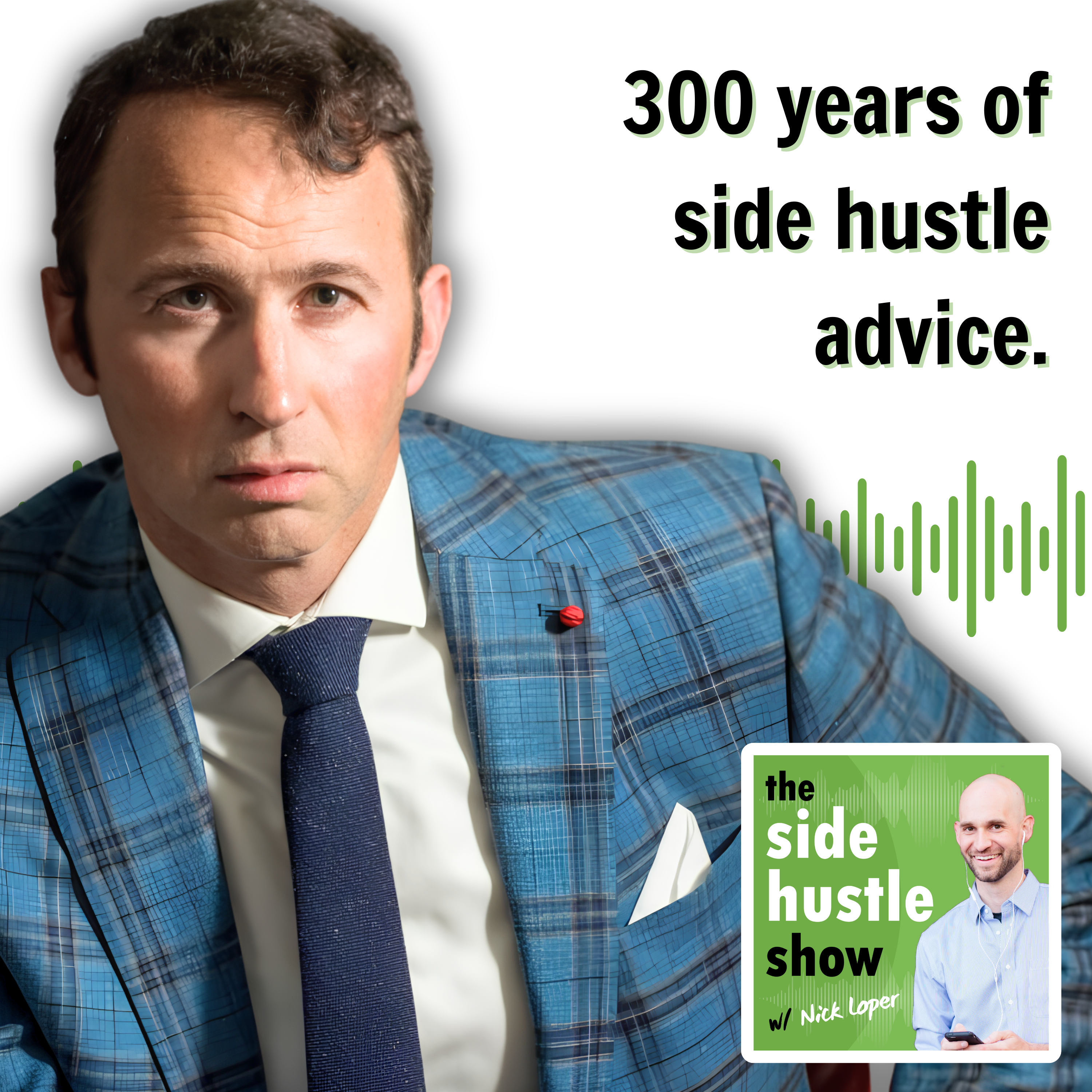
Side hustles across 300 years—how Americans historically “layered” extra income, what worked (and what got shut down), and how to apply those lessons today to get ahead and stay rich.
Dr. Joseph Moore, historian and early retiree; real estate investor; author of How to Get Rich in American History (HistoryHelps.com).
Written by AI. May contain mistakes.
Discussion on the long history of side hustles in America and their evolution.
“This is a job for Indeed sponsored jobs.”
Exploration of the task economy and how it compares to modern gig work.
“every$4 a farm would make would come from the butter they churned, especially in upstate New York.”
Analysis of how perceptions of side hustles have shifted over time.
“Okay, so it may be more historically common to piece together a living or an income from several different sources rather than relying on one paycheck.”
Insights into historical side hustle strategies like 'taking on borders' and their influence today.
“Well, the lowest I could find in the history books was 10 % additional income.”
Sharing personal experiences and lessons learned in real estate investments.
“And it's kind of fear-mongering and it gets a lot of people agitated.”
Exploring the complexities and stresses of managing side hustles and evaluating success.
“anybody to lend you the money because all the banks were terrified.”
Discussing the importance of focusing on core skills and limiting distractions to achieve financial success.
“The other idea in the book is this kind of hierarchy or steps in the game of limitation, concentration, and then diversification.”
Examining the decline in geographic mobility and its implications for career growth.
“especially amongst guests on the show is, look, I'm going to focus on this one thing, whether it's my day thing or whether it's the side thing.”
Offering actionable advice for young people on how to become millionaires through trades and entrepreneurship.
“Once you get kids, once you get established.”
Discover the paths to financial success through entrepreneurship or enhancing your W-2 career.
“Okay, so you come to me and you're like 17 years old, and I wrote a book about how to get rich.”
Learn about seven effective strategies to build wealth and achieve financial freedom.
“that value or you sell that value, whatever it is.”
Explore how marriage influences financial success and historical perspectives on wealth-building.
“The Trinity study, 4 % withdrawal rate, all of the stuff, yeah, over the long arc, say, you know, maybe this is an anomaly.”
Analyze the history and current state of the housing market and potential solutions.
“generations had it easier than we do today.”
Explore unique side hustle ideas like handyman work and pet services.
“Joseph Moore from History Helps dot com.”
Learn about effective marketing tactics leveraging current events and trends.
“And it's like, and you didn't have, I mean, yes, it's still work.”
Discuss the advantages of using note-taking apps in professional settings.
“Like as a standalone business, Costco sells enough pumpkin pies, millions and millions of dollars worth that it would rank ahead of 99.8 % of all other businesses in the country or something.”
Examine historical economic bubbles and their relevance to today's market.
“And she was like, you don't have granola running, which is the one that she uses.”

Get the gist, explore an idea or ask about something said.
 Claude
On The Side Hustle Show, what are the key points of this episode?
Searching your listeningAutomatic transcript. May contain errors.
0:00Look, I'm not afraid to admit it. When it comes to running a business, there's a lot of stuff that either I'm not the best at or I really ought to be handing off to someone else. If you're in that same boat, think this is a job for Indeed Sponsored Jobs. When you sponsor your job on Indeed, you'll get quickly matched with quality candidates who meet your exact criteria and who can drive the results you need. Plus, with Indeed Sponsored Jobs, you only pay for results. spend less time searching and more time actually interviewing candidates who check all your boxes less stress less time more results when you need the right person to cut through the chaos this is a job for indeed sponsored jobs side hustle show listeners get a 75 sponsored job credit to help get your job the premium status it deserves at indeed.com slash podcast just go to indeed.com slash podcast right now and support our show by saying you heard about Indeed on this podcast.
0:56Indeed.com slash podcast. Terms and conditions apply. Need to hire? This is a job for Indeed sponsored jobs. What if these are the good old days? We're looking at side hustles past and present and what that means for your wallet today. My guest is a historian, an early retiree, real estate investor, and the author of How to Get Rich in American History. From historyhelps.com, Dr. Joseph Moore. Welcome to The Side Hustle Show. Nick, I am so excited to be here, man. Good to see you. I like this one. Really enjoyed the book. The subtitle is 300 Years of Financial Advice That Worked and Didn't. And the interesting thing here is the term side hustle may be relatively new, but the act is anything but.
1:43People have been looking for extra and creative ways to make extra money, probably as long as humans and money have existed. So I don't know, can you start us off with some early examples that might be surprising to listeners? Yeah, man. Americans have been hustling as long as Americans have been pursuing the American dream. And there's this idea that like, well, no, the economy's broken. So I've got to go out here and do all this extra stuff. No, actually, like that was the original system. That's how you got ahead. If you wanted to just tread water and stay in place, you did one thing. If you wanted to get ahead.
2:14You and your family combined to do many things. That was normal. So people did all kinds of interesting things. Good Housekeeping, which by the way, is a magazine that goes way back to the 1800s, used to run prize essays every year for the best way to make side income. And regularly, the essay that would win would be like, we raise chickens and this is how we do it. And we sell the eggs and market, right? Like, well, everything old is new again, right? This is a big thing now. So all the stuff that we were doing in 2025 to, oh my gosh, I can, I can make money raising chickens. They were doing that in the 1800s and their egg shortages.
2:45I love it. This was probably not one you can do today, but churning butter was accounted in certain eras for about one out of every$4 a farm would make would come from the butter they churned, especially in upstate New York. And there was a lot of families that paid off their mortgage that way. There were these huge hats that you keep farmers. Obviously, you're in the sun all day. You want a big wide brim hat, but it has to be woven with straw. And families would sit around at night, weave these hats, and then sell them for like one to$2 each and get pretty good money out of it. This was as popular as driving for Uber in the 1830s.
3:17Like people were sitting around going, what are you doing? I'm side hustling, man. Now they didn't call it side hustles. They called them tasks. It was called the task economy. Okay. And everybody was out there hustling for tasks. It was very normal. Yeah. Now we have platforms like TaskRabbit and AirTasker. So it's come full circle. Yeah. One thing, and you may know better than me, but there's this idea of mass employment and maybe this entitlement to a 40-hour work week and feels like it's really a product of the industrial revolution, like a very short window of humanity where prior to that, everybody kind of had to figure out their own way.
3:53A lot of that is through agriculture historically, but the idea of punching the clock for somebody else is relatively new. Yes. Well, the idea that you punch the clock in it, that's your primary identity and income, right? And so there's this long period of American history where everybody has some kind of base level role that you're in. You're a carpenter, you're a farmer, you're whatever. But then everybody's doing these tasks on the side regularly. Then in the post-World War II era, as people not only move into factory jobs, those were there, but there were factory jobs and the world economy was on its back after World War II.
4:25And so there were just plenty of good 40-hour jobs to go around, right? And so that's when we get this idea that side hustling is unusual. and now it's come back. But like the people in the previous areas would have told you the fact that you can go out and do all these side hustles is proof the economy is working. We feel like it's proof the economy is broken. Oh my gosh, I can't work my 38 hours a week at the mill and have a good life. But like that wasn't normal. Normal was I could look around and find all these jobs I can go out and do and make side money and get ahead. Okay, so it may be more historically common to piece together a living or an income from several different sources rather than relying on one paycheck.
5:00Yeah, and generally you would have one base level thing you did, and then you'd add on top of that and layer on. And you would survive on your core identity and thrive on the extra. Okay. And this is a mindset shift that we've been preaching for years. It's like even if you're not a business owner today, you've got to start thinking of yourself as one. I'm already an entrepreneur, and so far, my day job, that's my biggest client right now. Maybe my only client right now. Right. But it opens up the mindset to go start looking at extra avenues. is one of the examples that you talk about is early Airbnb, which would be renting out an extra room or taking on borders, you call it in the book.
5:36Yeah. So this was common to the point that people like don't really believe me, but this was the single number one mortgage payoff strategy in American history. If you had gone back a hundred years ago and said, how do you plan to buy a house and pay for a mortgage? They would have looked around and said the same stuff. we say, oh my gosh, houses are so expensive. This is not the first or the worst housing shortage we've ever had. Try being in New York in the 1880s as an immigrant family that doesn't speak the language. And these families in Yiddish, in Polish, in Italian, in Chinese are getting the same advice.
6:11Buy a house and then immediately rent out all the rooms. And if you do that for eight to 10 years, you can pay down or off the mortgage. People had manuals for how to do this. This was common. So they called it taking on borders. We call it Airbnb. Yeah, or house hacking, yeah. Or house hacking, yes. House hacking, which as I say in the book, until 2013 when BiggerPockets came up with that phrase, had never been uttered in US history. I did a word search, Google search, like all the history books of like, has anyone ever said house hacking before? And the only thing that came up was someone went through the house hacking bodies.
6:43Like I was like, that was the only time that anybody used that phrase. But the idea is very, very old. People have been doing this forever. Your great-grandmother probably rented out the rooms in the house to help pay off the mortgage. Yeah. Great branding by the BiggerPockets folks. We'll get some alliteration going. But you go back. Think about how powerful this was. One in three families that owned a house at any given time rented out rooms in the house. One in three. If you were a homeowner, there was a 30 % chance you were renting out rooms to help pay off the mortgage. At one point in their life, anybody who owned a home in America, half of them had rented out rooms.
7:18So about half of American families who owned a home had been landlords at some point to try to help pay off the mortgage. Now, why? Well, the lowest I could find in the history books was 10 % additional income. And sometimes this would range up to like 20 % or 30 % to the bottom line of the family. It's like Pittsburgh, Pennsylvania, for instance. There was a time when there were a lot of steel mills, a lot of jobs, but not enough houses. Families that would own a house and rent out rooms could add 20%, 30 % to their bottom line. And families were doing this all the time. Lithuanian families, Lithuanian immigrant families, in the 19-teens, 70 % of them rented out rooms in their house to pay off the mortgage.
7:5470%. So this is a side hustle that we've been doing forever. And it works. And it works. We've had some friends do the same thing in California. Say, hey, we got a three-bedroom place. We don't really need the third. We'll rent it to students or interns coming through town. A friend of mine even here in Washington did the same thing for, like, business travelers coming through town. Yeah. I know you've got a per diem. and it was like through the company intranet. So it was like semi-vetted. And so it was like, well, that's an interesting way to do it. And we had in our house hacking episode, Craig Kierlop was like, generally you're going to sacrifice comfortability for profitability.
8:31I think was his line. The more you're willing to sacrifice, the more money that you can make in this space. But what do you think the shift was that said, we don't want to do this anymore? It's like the idea of a third of houses doing this, I imagine it's way, way, way, way less than that now. Yeah. Yeah, it is. Two things changed. One we've already talked about, which is you have this explosion of post-World War II jobs and kind of the ideal of having your own home. And we all would like that ideal, right? Yeah, I want my own space, sure. The housing shortage of the 1940s was really bad, like worse than today's.
9:02But by the mid-50s to 60s, they kind of solved it because they built their way out of it. By the way, that's how you get out of a housing crisis. You build your way out of it. But they built their way out of it. And so there's all these homes. They're affordable. people are able to get into them. So that's the first thing is you can actually kind of get ahead without having to do it. The second thing though happened before World War II. And that was that it became a political problem and politics got involved. So in New York City, especially, you have all these immigrants crowding into these rentals and people are putting people on the floor.
9:31I mean, it did kind of get a little out of hand for a while. And then there were all these reformers who were like, this isn't healthy. We want to outlaw this. The guy who wrote a book called The Klansman, which became the first blockbuster movie in America. Like Birth of a Nation, right? Birth of a Nation, right? And if you haven't ever seen this, you have to go back and watch it on YouTube. The Klan are the heroes of that story. Yeah, it's a little backwards. Yeah, tells you everything you need to know about what's happening in the 19-teens and 20s. Okay, that same guy who wrote the book that Birth of a Nation is based on was writing best-selling books and essays in which the other villain he's portraying is immigrants coming into America and they're renting rooms and they're single men and they're around married women.
10:17And it's kind of fear-mongering and it gets a lot of people agitated. And so all these cities pass laws functionally making it illegal to rent out rooms in your house. And so I have a chapter in the book called The Government Was Always Involved. Like, that's not new. And in this case, the governments of local cities mostly shut it down. Okay. Yeah, we did an episode on creating co-living houses, which was to create, no house is really built with eight, nine, 10 bedrooms. And so it's, you know, this guy was moving walls around trying to create these co-living houses for blue collar factory workers in town where they could commute to the warehouse of the airport or wherever they're working, but still have an affordable place to live.
11:00And there was some interesting pushback on that. I wouldn't want that in my neighborhood. I wouldn't want to live next door to that. And it's like, people got to live somewhere. And you're solving a problem here. I mean, we don't want to make rose-colored glass. We don't want to live where it's like every side hustle is without its downside. Roommate roulette is not for everybody. I did an experiment where I got a rental and then I rented out all the rooms and I slept on the couch and it was a weird experience. Honestly, I met some really good friends through it. Also, some kind of odd people who apply for those things.
11:27And so you do – it is a process. And your great-grandma had all those problems too. She also had to vet people. She also had people who didn't pay. She also had people who didn't leave a clean space, and they had to police it and say, hey, you can't live here anymore. All the downsides are there. They're real, but they're also not new. People were dealing with that before. Tell me a little bit about your own real estate portfolio. This was your ticket to a short-lived early retirement. I decided to try to buy a house with no money down. This was my experiment. and I go off on this place to look for a house and I come back and I've bought a three-bedroom house and a fourplex.
12:05And my wife was like, I said you could buy one. And I just like leapt into real estate and got way in over my skis. I didn't know what I was doing. I was doing it with very little. I'm a history professor, FYI. They don't pay us in money. They pay us in prestige. They call us nice titles and they let us talk to people who actually make money, but they don't give us money. And so I'm doing this basically pulled from my retirement account. And I got in over my skis and next thing I know, I renovated a house and the FBI got involved because the people who rented it were human traffickers and they had like 25 guys living in my three bedroom house working the lithium mines of North Carolina.
12:47And I'm like, what have I done? I had a hoarder in the fourplex. They were house hacking at another level. I had a hoarder in the fourplex who pulled a shotgun on me when I tried to explain you can't do that. And I was like, okay. As I'm driving away from all this, I thought, well, it can't get worse. I'm already starting at the bottom of it. Let's see what the top is. And I got really into figuring out rental real estate. Because again, in a housing shortage, the whole definition of it is you've got to monetize space. And I got good at it. Real estate is a business. Like any other side hustle, like any other part of the economy, it's active.
13:22It's not passive. The real money is made actively. And I had to get involved actively and eventually turned it around. And before I knew it, I owned like 20 something properties at a time. I've owned over 40 houses and apartment buildings and stuff like that through the years, bought them, fixed them, sold them. I still own a few now. And I came in right after the 2008 crash had wiped everything down and right before everything exploded up. So then people go, oh, well, of course you made money. You, you know, any idiot could do it. Well, why weren't any other idiots doing it? Yeah. Because it looked like it was going to zero, right?
13:51Like everybody was stressed out. Yeah. Everybody was terrified. Yeah. And I told my wife, the lesson of history here is that these things are not going to go to zero. Housing doesn't go to zero. But the other thing is you could find houses for cheap. You couldn't find anybody to lend you the money because all the banks were terrified. So you had to figure out how to like get creative with the financing and find people who could lend you the money. And that was the adventure I went on that eventually let me cash out of being a professor. How many doors in the portfolio now? Oh, I'm down to five and I probably sold off way too early, but I just hit a point where the stress, and this is something I'd say where everybody side hustles, right?
14:23If your side hustle really works, you will hit a point where you love it and you just want to keep doing it because, or you'll hit a point where you're like, it's made you the money it was supposed to make you and it's more stress to keep doing it. And I hit that point of like, this is more stress, not less for me. And I've, I've made the money I wanted to make. Yeah. There's an interesting line in Ramit Sethi's book where he's like, look, if you've already won the game, why are you taking additional risk? And I think about that a lot. It was like, how much is enough. And with every new decision, does that add complexity or reduce complexity?
14:54So, and I think it's such an interesting reaction of like, oh, I got a shotgun pulled at me. Like, it can't get any worse. I guess I could have pulled the trigger. That would have been worse. I think most people would be like, I got to get out of this business. This is, this is not what I signed up for, right? I read the books about multiple streams of passive income. This is going to be great. And it's like, no, there's anything but, and you're like, well, there's still like the positive attitude. Nope. I just got to figure out a way to make it work. I think side hustlers as a general – I'm assuming like your audience are people who tune in because they want to know like, wait, how can I do this?
15:22There's a kind of positive can-do attitude in a certain segment of American society that just kind of says, well, I might as well try, right? Like what do I really have to lose? And so I think there was that attitude in me, and I come from a very working-class background where like it's on you. Like if you think you can do it, then go out and do it. And I'm grateful for that because there's a lot of people who probably would have felt it was beneath them to try those things. But for me, it was like, what do I have to lose? Yeah, a friend of mine in the early days of ride share, you know, that was the reaction from his friends as he signed up to be a driver to test it out and was curious.
15:57And they're like, no, no, no, you're supposed to be the one requesting the rides. It's like, well, hey, why not give it a shot here? More with Joseph in just a moment, including the three-step framework for getting rich and importantly, staying rich. Joseph's advice on how to fast-track your way to millionaire status in the seven most common ways people have built wealth throughout American history. All that and more coming up right after this. Nassim Taleb wrote that the three most harmful addictions are heroin, carbohydrates, and a monthly salary. There's no question, everybody loves payday.
16:31And as a business owner, you're going to love it a lot more with our partner, Gusto. You didn't start your business so you could spend your evenings running payroll and stressing about tax forms. Gusto is on the online payroll and benefits software built for small businesses. It's all in one, remote friendly, and incredibly easy to use. So you can pay, hire, onboard and support your team from anywhere. I'm talking about automatic payroll tax filing, simple direct deposits, health benefits, 401k, you name it. Gusto makes it simple and has options for nearly every budget. And it works for both W2 and 1099 workers.
17:05Get that stuff off your plate so you can focus on what you do best. More than half a million small businesses already trust Gusto to help run their payroll, and it's ranked number one on G2's highest satisfaction products list for 2026. Try Gusto today at gusto.com slash side hustle and get three months free when you run your first payroll. That's three months of free payroll at gusto.com slash side hustle. One more time, It's Gusto, G-U-S-T-O dot com slash side hustle. I really don't like the feeling of owing anybody. I don't even really like it when a friend buys me a beer. But I know plenty of entrepreneurs who use debt as a tool to buy the business, buy the property, buy the equipment, and leverage works great for them.
17:48But there's also debt that can be like a tax on your peace of mind. It always is there, constantly humming in the background. The credit card balance that never seems to go down, that degree you're still paying off. Now, this is where our partner Monarch comes in. It's the all-in-one app for your budget, investments, accounts, and financial goals. And the debt paydown simulator is really cool. It shows your actual debt-free date, and you can run these scenarios side by side. What if we add$500 a month? What if we throw a side hustle windfall at it? And you can literally watch that finish line move closer, and it's really motivating.
18:24I want to invite you to write your own money story with Monarch. Use code SIDEHUSTLE at Monarch.com to get your first year of Monarch Core half off at just$50. That's 50 % off your first year at Monarch.com with code SIDEHUSTLE. The other idea in the book is this kind of hierarchy or steps in the game of limitation, concentration, and then diversification. Can you speak to that? The real lesson of history is not to constantly be doing extra things. The best way to get ahead, just having surveyed 300 years of financial advice, having looked at the biographies of people over the last three centuries, is limitation first.
19:09That is, say, limit to what you know you can excel at. You want to find the thing in the world that you can be better than most everybody else and then limit your efforts there. Then concentrate on doing that better and better and better than everybody else who's doing it. Then once you win that game, you generally get the biggest wins in that game there, and then you diversify out of it to protect what you made. So if you're pursuing a medical degree, if you're going to be an anesthesiologist, you're probably going to make more money being a really good anesthesiologist or a really good student to get into medical school than you are side hustling and doing okay in your classes.
19:42The famous example of this is Andrew Carnegie, the still magnet, who knew a thing or two about going from the very bottom to the very top. because he started at the bottom and went all the way to the top. And his argument when he spoke in front of young men was everybody says, don't keep all your eggs in one basket. I'm telling you, put all your eggs in one basket and then you watch that basket. And so that is the way most people went from behind to ahead. But every order of action depends on where you start from. And not everybody starts off in a place where they can get to the, maybe you don't have a skill set that's really wildly over-rewarded in the economy, right?
20:19Maybe you're just, you're at a place in life where you can't, there's not any one thing that if you became really good at it, it would pay out that great. Maybe you actually can't double your salary in your field of work. Okay. Well, if then you do want to go back and do it in reverse order and try to diversify, that is to say, take all your effort and go out and do the side hustles that will build you to a place that the wind is not in your face anymore. Now the wind's at your back. And I'll give you an example of somebody I met in the process of this. Like she was in HR, but she was never going to climb, you know, her degree was from a certain kind of school.
20:50Her industry was in a certain place. Like she just wasn't going to make it to the top. And she realized, okay, but I have all this free time. Like I work 40 hours a week and I've got flexibility. I'm going to go out and side hustle. And she ended up paying off her house, paying off her car. Well, now she's got that HR salary with none of those bills. And suddenly the wind's at her back and she can take opportunities. And so it's about where are you right now? And for some people, diversifying out the side hustles is the way to start. But you want to get to the point that you can concentrate on one wildly profitable thing.
21:21I think Warren Buffett has a similar line to the Carnegie line of diversification is for suckers. Concentration is for the experts. Like if you're committed and confident in the bet you're making, then you're more comfortable going all in with something that has a bigger upside, but also carries some more risks depending on what it is. Yeah. I mean, there's, there's risk in everything, right? It's not guaranteed. That's why they call it a risk, but you do want to find the thing you can be better at than a lot of other people. And that, by the way, maybe your side hustle may become that thing, right?
21:52I've met people through the years. I'll give you an example of a guy who he just loved trees and he loved cutting them down or trimming them or all the things, studying them. And he started as a side hustle, the idea of like being an arborist and going up and like when trees would fall over, cutting them out, getting up his yards. Well, now he runs a highly successful, he's booked out months in advance, cutting down people's trees. He has crews, he has millions of dollars of equipment. The side hustle that he was passionate about, he got, he knew he loved it and he got better and better at it to the point he was better than so many other people that he was booked solid.
22:29He's not doing his old job anymore. That is his job. That's the business he runs. That's the cruise he oversees. You can move from the side hustle to your concentration if you're passionate about it and you're really good at it. Yeah, I think this is somewhat common amongst, especially amongst guests on the show is, look, I'm going to focus on this one thing, whether it's my day thing or whether it's the side thing. And I'm going to get really good at that and put the blinders on and focus on that thing until it pays the bills and then sums. and then, and maybe it even has some equity value. And then along the way, take some chips off the table, right?
23:04That's the diversification piece of like, get all the getting's good, you know, push the, you know, push it as far as you can, but understand it may not last forever. And then trying to reinvest that, I guess, get the money working for you in that way. Completely agree. And I did this with real estate and I've had buddies who have a lot more real estate than me. Like, you know, you sold a lot of your stuff way too early. I was like, I don't care. I sleep better. Yeah. Yeah. Because you know what I'm going to do today? I'm gonna hang out with Nick and then I'm gonna go like watch my daughter play basketball like I'm not going to Okay, do we have this as we have we solve that problem?
23:35I'm not I take some of those winnings and move them off when you yeah when you win the game Recognize that you won the game. Don't there's no reason to play unless you just love the game Now if some people just they love it They get up and they want to do the thing They want to they want to be up in a tree cutting tree limbs or they want to be in the real estate game Or they want to be on wall street or whatever some people just love the game I wanted to win and then like walk away and enjoy my winnings. Nobody went broke taking a profit, right? Isn't that the line? There you go. There you go.
24:01I'm mangling the quote. But the quickest way for a dentist to go broke is to get excited about being something other than a dentist, right? Like, you know, and he pointed out that like there were dentists in his time, like getting all excited about these investment ideas. He's like, no, just be a great dentist. Like get good at drilling teeth and you'll be fine. So whether it's your side hustle that becomes your thing, whether you have that thing, concentrating on being excellent at something is worth your time. Fair enough. Yeah. Minimize your downside and take a swing. The next thing I wanted to get your take on was this idea of geo mobility and the idea of, well, go where the cash is already flowing, go where, and we talk about that in the context of online marketplaces and different strategic partnerships and stuff, but it could mean a physical moving to a new city, a new state, a new country in some cases.
24:52And we are way less mobile. This was a really surprising stat in the book. We are way less mobile than we once were. Yeah. So if I go back to the late 1800s, one in three Americans would change addresses every year. Just dwell on that. One in three people are going to get up and move every year. Is that because they were just renting a room from somebody? There used to be a lot less homeownership in America in the late 1800s. So people were like, hey, I'm going to go with a better rent. I'm going to get closer to work. To your point, there's better jobs on this side of the city, or there's better jobs in another city, and I'm going.
25:25So we were a highly mobile nation. Even in the 1950s, one in five Americans changed addresses every year. Today, it's one in 13. Yeah, under 10%. Even if you think you're maybe in a mobile city like Nashville or Charlotte or some of these places or Austin, but those are outliers. Most Americans stay where they are. What that means, though, if you're willing to get up and go, there's even more opportunity for you because you have that mobility. So mobility was one of the most, it's one of the reasons America was such a go ahead nation, a nation of people moving up the economic ladder. As we were mobile, we would go where the opportunity was.
25:57Oh, there's gold in San Francisco. Let's go. Yeah. Follow where the demand is, I guess. Do you think that's a factor of people feeling stuck or tied to family and community? It was kind of a big decision, you know, when we moved back to the Northwest five years ago, So it felt like we were leaving behind our adopted family in California. And it was something that we didn't really take lightly. But maybe I'm overstating the burden as people hundreds of years ago were like, nope, let's do it. We're out of here. Right. Once you settle into life, especially with kids, especially with schools, especially with friendship groups, especially with networks that are there to help you raise kids together and all the things, it's really hard to detach from all that.
26:39And I would not say do it lightly. right? Like, don't, Oh, Oh, I don't like the taxes in my County. Okay. Well that that's probably a rounding error in the big, bigger decision-making process. But if it's like, Hey, I'm stuck at$22 an hour and there's no way I'm ever going to make more than that. But if I get up and I go where they're, you know, you're an electrician, you can go where they're building data centers. They're paying those guys$200 ,000 a year right now. So like there's, there's just some people would say, Hey, the opportunity to, to leap. And that's what people were looking for. It's not Not when there's just like a marginal benefit.
27:12Yeah, we're not looking for a lateral move. We're trying to get a couple rungs up on the ladder here. Exactly. If I do this, I have the chance to leap up the ladder. That's what people were after then. And that's what I think people should be looking at least considering now. The younger you are, the easier it is. Once you get kids, once you get established. Yeah, the deeper the roots are, the harder it is. People are liking where they are. They've paid off their homes. Homeownership's another part of this. We own more homes than we have in a long time. So if you are older and you own your home, you're highly unlikely to just up and move unless you're going to Florida.
27:47Yeah, there's this one line in the book, which is like a one-line podcast episode all in itself. How to become a millionaire, move to one of the five fastest-growing metros, start a trade business, and sell it in 15 years. Yeah, I get that question from young people. Okay, so you come to me and you're like 17 years old, and I wrote a book about how to get rich. And, of course, what they want to know is, skip all the history, what do I do? and okay well love for you to read the book but i'll tell you if you're young and ambitious and willing to do something and you if you want to go into college and get into ai or tech or you know okay go do that like there's a lot of money out there but if you don't want to go to college i'd say go through a trade program by the way 30 i think it's 33 or 35 somewhere around 35 the u.s states have free community college go get a training certificate in a trade especially like electricians and go where they're spending a hundred thousand dollars a person on those people with those skills and build a business out of it and then sell it.
28:39And like, I know I've met so many people who've made a million plus dollars doing exactly what I just described. They were in HVAC, electrical, whatever it was. And in fact, this whole book of the everywhere millionaire that just came out, like they're everywhere. Millionaires who did just that. And if you're 17, 18 years old right now, go for it. Yeah. That's the unlock. I mean, one thing, okay, work for a high salary. That's great. But if you're running the business, number one, And if you're going to a fast-growing metro, it's not necessarily having to conquest market share from other providers.
29:10It's like just the pie itself is getting bigger. So you can kind of stick your flag and say, look, this is what I do. And then if it's your own business and you've set it up in such a way so it's not you turning wrenches or fixing air conditioning units the whole time, it's hopefully there's some equity value on the exit side of that too where that could be the nest egg. Obviously, if you could build your own business that has real value and either you live on that value or you sell that value, whatever it is. But then some people just look, some people are not entrepreneurial in that way. So I tell them, be entrepreneurial about your W-2 job.
29:44Be entrepreneurial about your career. Because if you invest in the right certificates and trainings and you take on the thing that the other people don't want to take on, you can double your income. So if you're entrepreneurial and you can build a business and you can, I mean, I think a lot of your listeners are going to have that entrepreneurial drive to do it outside of a W-2. But if you don't, then be entrepreneurial within your W-2 and find ways to build out that resume. Those are two tried and true ways to kind of build out a career that takes you ahead. Appreciate that. Have some mobility and be willing to go for it.
30:16In the car business where I used to work, the saying in the service department was, my toolbox has wheels for these technicians. If they didn't like the environment, hey, my toolbox has wheels. I'll go on to the next place. There are, at the end of the book, seven strategies for getting ahead. Number one, building your own business, the entrepreneurship path we talk a lot about here. Number two was taking a large income in somebody else's business. I guess this would be the stock option or early employee option where you have some upside in addition to the paycheck that you're getting. Three was combining several small incomes to create excess, kind of this multi-income streams diversification thing.
30:53Yeah, what's Side Hustle Nation is all about, right? Like building out these small incomes into something big once you put them together. Yeah. Stack them up. Four was investing truly extreme portions of your income. And I think this is probably the traditional fire movement plan of, well, if I just save 50 % of my income, I can be done in 12 years or 17 years or whatever the math is there, which is great if you have a high salary and low living expenses, but you got to really be mindful of that gap. Yeah. I think that's the knock on the fire movement. It's basically the tech bros of the 1990s building the internet who were like, I've got all this money and if I just live on half of it, right?
31:27That was a true phenomenon. I will go back though. I found a reference to a guy working in the Ford motor plant in the 1950s. And the thing about the Ford motor plant is they used to be really watchful of their workforce. And they found that there was a guy working for the company. He was an immigrant from Turkey. And they were like, he's living like weirdly frugal. So they go and investigate him because they want, they don't want the image of Ford workers to be like, they don't have enough money. Sure. And it comes out, They go into his apartment. He's sleeping on the floor. He has just enough dishes to make a meal.
31:58He doesn't have a chair. And they're like, what's going on? He's like, I'm saving to bring my family from Turkey. And so immigrants were known to take the same strategy that fire takes of, I'm going to live on half and invest the other half, and they would invest it in themselves and their family and get their family to the United States. So that strategy of investing truly extreme portions of your income is really an immigrant financial strategy that's been around for hundreds of years. And you almost need that bigger purpose vision or why, why am I doing this? Why am I making all of these near-term sacrifices?
32:31You're going to have something that otherwise it's going to be like, I'm going to go buy myself a chair. Just going to go for it. Fifth on the list was leveraging a high payout opportunity with debt or risk, kind of hopefully low downside and asymmetric bet. Six was investing steadily over a long period. It's probably the traditional retirement path. I thought, oh, if I just save my 500 bucks a month for 30 years, you know, I'll be a millionaire by the time I retire. It's like, well, the problem is that it takes 30 years. It takes 30 years. And, and I point this out in the book, that's actually the newest of all the strategies.
33:02So we think that's the old strategy. And that's one of the things my book tries to point out is actually that didn't start working until basically the baby boomers. There's a study on this that I read, and they went back all the way to the American Revolution to today and said, if you do basically save 10 % of your income in retirement for 40 years, what happens? And in 40-something percent of the cases, you would have not been able to retire. Like if you had done what the baby boomers did starting in 1870, you go broke four times. So it's not necessarily the case that steady eddy investing over a long period of time always worked.
33:39It worked really well for the baby boomers. Okay. That's a little disturbing. The Trinity study, 4 % withdrawal rate, all of the stuff, yeah, over the long arc, say, you know, maybe this is an anomaly. Hopefully, hopefully not. I think what's happened is, and I would actually frame it, it's not an either or. I actually think what's happened is it started to work in their lifetimes. It's continuing to work in our lifetimes. I would anticipate it continue. I think this is a new phenomenon that has a very long tail because think about the markets are more fair. They're more efficient. The transaction costs alone.
34:10In 1940, if you wanted to buy a stock, it was a 5 % fee. Yeah, you're starting 5 % in the hole already. Exactly. So those historical returns aren't real. Nobody really got those because they were 5 % in the hole the day they bought in. So whereas you can go on Robinhood and buy a Vanguard index fund and you're fine. And so I think actually it's a thing of what we're having today is new, but it works better. Very good. The last on the list was on the seven strategies to build wealth. It was marrying well, which is probably the oldest option on here is, yes, marry up if you can. Yeah, marry up. So this was really important.
34:45When you actually go looking for financial advice in history, a lot of it is embedded in marriage advice. And people would tell you who you marry is going to be the most powerful financial driver under your control then and now. There was a game, there was a card game in the 1840s. And if you look at it, it's kind of like a hot or not game. Remember that from the internet? Except it's like you're getting these characteristics. You're like, do I want to hold this card or put this card down? and parents are playing this card game in the 1840s with their kids. And the goal is like, can you pick the best spouse?
35:18Because they wanted to teach their kids. If you have the bad breath card, maybe that's okay because you also have the hard work ethic card. You'll overcome it. Yeah, exactly. You wanted to pick somebody who had the characteristics that would lead to success. So yeah, sure, marry into money, that works great. but also marrying another kind of person. And marriage really matters. One of the biggest predictors of your financial success or failure will be the quality of your marriage. And this, by the way, marriage confounds everything for financial success. So married black men earn more than single white men.
35:53Married women at 55 years old are earning twice as much as single women at 55 years old. Just all the things you think would explain financial outcomes, marriage confounds all of them. So if you are married, invest in yours. And if you're not, don't worry, you only need one good one. You only got to be right once. It's the same thing as in business. It only takes one good idea. The book argues against this, the good old days, this misplaced nostalgia that the previous generations had it easier than we do today. And I want to push back on that a little bit because there is certain arguments of for no amount of money would I want to go back to the year 1700 and even be the wealthiest person around for the comforts of life today.
36:35But you see the stuff, well, okay, a house in 1980, of course, it was easy for you to get ahead because house cost the same as a McValue meal. And like, just there's data to show that real wages have not kept pace with the inflation in other areas, housing, education, healthcare. What do you do to speak to that where it's like the only solution really is to try and increase your income through other creative ways? Because stuff is less affordable. So there's these two sides of this coin, right? One of which is wages have actually outpaced inflation since the 1970s in general. And by the way, I can go to left-leaning groups or right-leaning groups.
37:15They'll give me different numbers. But the lowest number they'll give me is that wages today, I was born in the late 70s. Wages are up roughly 30 % to 40%. And that's if you're on the left-leaning side of the equation, right? Like conservative economists might say 50 % to 60%. Now, that's not 100%. It's not 200%. but we do make more money than we used to. People have a hard time believing that. Now, what you're pointing to is the other side of the coin. Okay, great, we make more money and the TVs are cheaper, but the price of a house has outpaced inflation and in some ways, in some areas has outpaced wages.
37:49Healthcare, also high costs, education, especially for millennials and Gen X, high costs. Okay, so you have those issues that are very real. All right, so with housing, let's take housing. The housing shortage in America right now is a real big issue, and we have to solve it. It is not an illusion. But it is neither the first nor the worst housing crisis we face. The worst statistically is 1948. It's so bad in 1948 that a guy has come home from World War II, and he runs for Congress as a veteran, and his number one campaign issue is affordable housing, and his name is John F. Kennedy. That is how John F.
38:24Kennedy gets his political start is as an advocate for affordable housing for Americans. In 1950, the number one bestselling personal finance book in America, New York Times bestseller, is called, this is the title, Your Dream House, How to Build It Yourself. Because they're like, at this point, you're going to have to build it yourself because there's no way out of this crisis. There's no existing supply. Okay. Fast forward to the mid-50s, and all of Queens, New York, is Levittown. Like, all those houses that get built in the 50s and 60s, like, we solved it. and we know how to solve it right now, which is build your way out of it.
39:03While you're living through it, you're going to have to figure out what to do and what previous generations did in the 1880s and the 1940s was they monetized their space. Just what we were talking about with house hacking. Like other families live through housing shortages. You'll make it through this one, but you do have to figure out what side of it you're going to be on while somebody else builds the solution. We'll have to figure our way out of it. Build more units. The book is How to Get Rich in American History. Really enjoyed it. grab your copy today. We've got more with Joseph coming up in just a moment, including his business idea donation for Side Hustle Show listeners coming up right after this.
39:41I really don't like the feeling of owing anybody. I don't even really like it when a friend buys me a beer. But I know plenty of entrepreneurs who use debt as a tool to buy the business, buy the property, buy the equipment, and leverage works great for them. But there's also debt that It can be like a tax on your peace of mind. It always is there, constantly humming in the background. The credit card balance that never seems to go down, that degree you're still paying off. Now, this is where our partner Monarch comes in. It's the all-in-one app for your budget, investments, accounts, and financial goals.
40:13And the debt paydown simulator is really cool. It shows your actual debt-free date, and you can run these scenarios side-by-side. What if we add 500 bucks a month? What if we throw a side hustle windfall at it? And you can literally watch that finish line move closer. It's really motivating. I want to invite you to write your own money story with Monarch. Use code SIDEHUSTLE at Monarch.com to get your first year of Monarch Core half off at just$50. That's 50 % off your first year at Monarch.com with code SIDEHUSTLE. Nassim Taleb wrote that the three most harmful addictions are heroin, carbohydrates, and a monthly salary.
40:53There's no question. Everybody loves payday. And as a business owner, you're going to love it a lot more with our partner, Gusto. You didn't start your business so you could spend your evenings running payroll and stressing about tax forms. Gusto is online payroll and benefits software built for small businesses. It's all-in-one, remote-friendly, and incredibly easy to use. So you can pay, hire, onboard, and support your team from anywhere. I'm talking about automatic payroll tax filing, simple direct deposits, health benefits, 401k, you name it. Gusto makes it simple and has options for nearly every budget, and it works for both W-2 and 1099 workers.
41:30Get that stuff off your plate so you can focus on what you do best. More than half a million small businesses already trust Gusto to help run their payroll, and it's ranked number one on G2's highest satisfaction products list for 2026. Try Gusto today at gusto.com slash side hustle and get three months free when you run your first payroll. That's three months of free payroll at gusto.com slash side hustle. One more time, it's gusto, G-U-S-T-O dot com slash side hustle. All right, we're back with Dr. Joseph Moore from History Helps dot com. We're on to round two. This is the business idea donation round, something you might start yourself if you have more time or an opportunity you think listeners could run with.
42:15Yeah, so I'm going to break this down into a few answers. If you're just looking for a straight side hustle, I don't know where everybody lives in a different economy. This is a big country, but I will tell you that where I am handymen, you can't book a good handyman. You just can't. If you're handy and you know how to monetize that in your spare time, I know a guy who has a full-time job. He is, he designates one Saturday and a couple of afternoons and he will come to your house and he makes good money. And everybody I know is excited that, oh, I got him on my schedule, right? So if you're just looking for the straight up side hustles and you're handy, you can make good money there.
42:45Well, I would pause on that. and just say, armed with ChatGPT in your pocket and YouTube, you can probably figure out a lot of this stuff. Oh my goodness. I saw this happen in real time and I still wrote the guy a check. The guy's in my house. I've paid him to come fix a thing. And I come in and he is talking to ChatGPT and looking at YouTube videos to how to solve it. But he had the tools that I didn't. And I was like, thank goodness you're here. But then, okay, let's move up. There are other jobs in the economy people often don't think about. Let's say that you're like an accountant or you have experience in the corporate world.
43:16But you're like, maybe you're a stay-at-home mom now. There are jobs called fractional. Have you heard of the fractional job? There are fractional chief marketing officers. There are fractional CFOs. Yeah, which is kind of a clever rebranding of a freelance or consulting type of position. No, no, no. It elevates it in a way. But the thing is, I know so many small business owners who have started. They're entrepreneurs, right? They've started a business. They're in that growth phase where they're growing. They need that kind of skill set. So like they actually have like, oh, I have a CFO. Oh, really?
43:48Like that's a pretty big title for a small company. Oh, well, it's a fractional CFO. I have a fractional chief marketing officer. Like if you could figure out how to help people like in this digital age market. And then here's the franchise I would go after. Like if I was like looking to like build something, there is some space in the economy between the dog walker in the neighborhood and pet suites. Like somewhere in between there is an opportunity zone where I pay an inordinate amount of money to drop my dog off at a doggy daycare. And it is shocking to me that I am literally paying what I used to pay for my toddler for this service, okay?
44:23And I think there are people, if you found out how to take in dogs through the day at your house or in your yard or something, there's probably a white space on the board you could fill with. I'm a little more than a dog walker, but you're not nearly as expensive as pet suites. Okay, you're one step above the 12-year-old with the sign on the mailbox, and then the fully corporate built out system. You don't want either of those, but you want something in the middle. Something in the middle. You can charge less than pet suites, but now you definitely want to not have an HOA for that. I had this thought the other day.
44:57I was like, man, I would love to pay somebody half as much. Just like let my dog run around in their yard with the other dogs. Like it's basically what I'm paying for anyway. Well, do you know Sniff Spot? No, what is that? This is like Airbnb, but for backyard dog parks. Oh, no. So basically somebody's figured this out. Yeah. It's just like bonus points if you have acreage or a big backyard and don't mind a bunch of dogs pooping back there. But, you know, some people have done well with that. So there you go. There's the idea that like I literally would pay for that service. Yeah. I think there's space to play in a lot of these home services where you may not even need to be the person doing the work.
45:36But if you can put on the digital marketing front and the bidding interface and the customer estimates and communication and customer support, the scheduling, you can go find people who know how to do the handyman work or the window cleaning, the gutter cleaning, stuff like that. be the intermediary there. And we've seen people do this in the residential cleaning space. And they're like, oh, I pay the cleaners 60 to 70 % and I take 30 to 40 as my administrative fee. And it's like, and you didn't have, I mean, yes, it's still work. It's still running a business, but it's like, you didn't have to scrub the toilet or mop the floor.
46:13Yeah. And I also think with that demographics is destiny, right? That's an old phrase you've, everybody's heard in every industry, especially in real estate, but like the demographics of we're having less and less children and the people who are having children having in their thirties and sometimes mid thirties. All right. Well that's 15 plus sometimes the rest of their lives where people are not having kids. They're taking all of that energy out on their pets, right? So we're going to have less as we have less and less family formation, less and less children or children later and later, there's just more and more families with pets and they're putting all that emotional energy and money that they would have put on kids into pets.
46:47So I think that's a, I think that's just an area of the economy. That's not going anywhere. We've seen some wild pet-related businesses lately. We found the mobile treadmill dog workout station where the guy rolls up in the sprinter van, air-conditioned personal training for your dog on this treadmill. No way! It was like$75 a session. We found a woman in Texas who was doing over-the-top dog birthday parties, like$4 ,000. We'll throw with the balloon arch and the puppy cupcakes and all sorts of stuff. But you're absolutely right. People spending money on their pets to fill that vacuum of love that a child would normally fill.
47:26That is great. Your personal trainer for your dog shows up just like it's like, all right, let's get our workout on. That's awesome. These are great. Let's go to a marketing tactic that's working for you right now. Maybe it's helping move some books. I've had to learn marketing on the fly. You know, they don't teach marketing in author school, as it were. That's not what we do. But I have found through trial and error and talking to a lot of smart people, people smarter than me in this world, that you do have to lean into the news cycle algorithm. So if you have a business that in any way ties to what's hot right now in current events, whether you're like a media business or you're creating content online, I would put out stuff that I thought was really smart and it would go nowhere.
48:09and then out of nowhere, we put out a video of me talking about a clip of me on Paul Pant's show saying some things about inflation. And that thing exploded. And I was like, oh, because that's what people care about. So I think you need to lean in algorithmically in terms of marketing tactics to what the news cycle is picking up because you can basically free ride a conversation that everyone else is having and bring your stuff into it. So for my content creation strategy, that's helped me. I don't know that's, it's not much good if you're, if you're starting up your dog workout business. Well, there's a way to tap into the conversations that are happening or the stories that are kind of top of mind and to shoehorn your way into that.
48:50And the clip, the, you know, the historical perspective clip on inflation, you know, checks that box. And I could probably set up a Claude skill or something to every day or every week, send me some trending stories and make some PR suggestions on how we can tap into that. And we had a woman on the show recently who was doing just that. She was selling these higher-end diaper bags for trendy moms. And it was the same thing. She had the AI pitching journalists with different angles on her story that she thought was going to be relevant. And she was like, the funny thing is, I pitched this one woman three or four times, and it was the AI pitch that she ended up finally responding to.
49:34I believe it. I think the AI would be very good at this. You started with the shoe business, the shoe website stuff. I'm sure there's some way for AI to say, hey, inflation's a big deal right now. Here's how we're going to hook shoes and inflation together so that people are... Shoe inflation is taking off. How are you going to get a good deal? Something like that. I think there's a way to lean in algorithmically in a way that could at least amplify what you're trying to do. I had a post that did well last Thanksgiving and it was about Costco's pumpkin pie side hustle. Like as a standalone business, Costco sells enough pumpkin pies, millions and millions of dollars worth that it would rank ahead of 99.8 % of all other businesses in the country or something.
50:17It was just a silly little graphic I made with a picture of their pumpkin pie section, but it was tapping into Thanksgiving and pumpkin pie season. How about a new or new to you tool that you're living right now. Note-taking apps, I was drug into this world reluctantly. I'm an old note-taker, you know, by hand guy or type it out real quick. But the problem is the more great, interesting conversations I have with folks like this one, which are online, it's kind of a little weird and rude to sit there and just start typing while somebody's like looking at you. And so I, and then I would be like, well, I didn't want to take the note because it was rude, but now can I remember what they said?
50:51And if you have the note-taking apps running, which I think are becoming more common, people aren't as freaked out by it as they were when they first came out. And so you go back, you're like, oh, that's what they said. That's the person, that's the website they referenced. I'm not going to endorse any particular brand of it, but I do think that they're out there and they're getting better and better and they're really useful. Yeah, I haven't used any of these yet, but I always see them in Google Meet or Zoom. It's like, oh, so-and-so's Firefly or somebody, so-and-so's assistant is also listening in.
51:17It's like, well, I guess that's a little weird, but okay. You're going to go review the transcript afterwards. I don't know how I would live without these note-taking apps. In fact, my wife has a very successful career in corporate America, and she was like – when I was complaining about I couldn't remember something from a meeting and I really wish I could – I didn't want to be rude and ask again. And she was like, you don't have granola running, which is the one that she uses. She's like, what are you doing? She was like she was speaking to a child who had messed up. I was like, what do you mean?
51:45I'm sorry. And so my wife actually shamed me into it. But wow, I want to do it at the doctor's office because it's always like they're always in such a hurry to get through with you. It's like, do you mind if I run the voice memo thing in the back? I don't know. Just to be able to remember what the recommendations were. How about your favorite book other than your own from the last 12 months? Man, there's been so many good books in this cycle. You could do 18. The historian wants to say like 1873 because right now the question I get the most is, oh, is AI a bubble? And everybody's like, is this the railroad bubble of the 1870s and we're just living through it again?
52:23And I think that's one of the values that history brings is the ability to kind of like ask what is similar to the past that we're living through, but also what's different. And so if I had to go with something right now, I'd probably go with 1873 as a book to kind of like other people lived a life that also experienced a lot of the ups and downs and the fears and anxieties that you're experiencing with AI. It's not the first time. We've been here before. and what can we learn from that? It's about railroads? It's about the 1873 bubble that burst, the railroad bubble. And so as a percentage of GDP, the two largest investments in American history have been AI and the 1870s railroads.
53:04Like as like investments, percentage of investment against GDP. And so since the last time we had one this big, it burst. Of course, everyone's waiting for this one to burst. And I think that one of the things we really need to do as historians, I think that that book does a good job of not over-extrapolating lessons. I get this a lot with everybody with 2008 books. They're like, oh, so as soon as housing prices hit their 2008 levels again, people told me, oh, it's about to burst again, isn't it? I was like, that's not the lesson of history. That's not how history works. It's not just because it happened once before doesn't mean it happens the exact same way again.
53:37And so the real histories out there are the ones that teach you to think about time and how very slow it can be and how very fast, but how rarely does it move as fast as you think it does? Yeah, you can be right, but maybe not on the same time horizon or time horizon that you would want to happen. Right. All right. Well, History Helps dot com is where you can find Dr. Joseph Moore. The book is How to Get Rich in American History. Grab your copy today. It's a lot of fun. Big thanks to Joseph for sharing his insight. Thanks to our sponsors for helping make this content free for everyone. Sidehustlenation.com slash deals is where you can find all the latest offers from our sponsors in one place.
54:18That is it for me. Thank you so much for tuning in. If you're finding value in the show, the greatest compliment is to share it with a friend, maybe that history nerd of yours who would love hearing about these historical context side hustles. Until next time, let's go out there and make something happen, and I'll catch you in the next edition of The Side Hustle Show. Hustle on. If you're always looking for ways to become a better leader and a better version of yourself, I've got a quick podcast recommendation for you. Elevate with Robert Glazer, hosted by entrepreneur and bestselling author Robert Glazer, is part of the Yap Media Network.
54:52Elevate explores leadership, personal development, productivity, business strategy, and building high-performing teams. Robert speaks with business leaders and experts about the lessons that have shaped their careers and lives. It's designed for entrepreneurs, leaders, managers, and ambitious professionals committed to reaching their full potential. If that sounds like you, if you're looking for ways to elevate the way you work, lead, and live, check out Elevate with Robert Glazer. Subscribe today on Apple Podcasts, Spotify, or wherever you listen.
What if the "side hustle economy" isn't new at all, but just the latest chapter in a 300-year-old story?
My guest today is a historian, early retiree, and real estate investor who turned his research into a book packed with lessons from America's financial past.
Dr. Joseph Moore, from HistoryHelps.com, is the author of How to Get Rich in American History: 300 Years of Financial Advice That Worked (& Didn't).
Joseph's own side hustle story took a wild turn. He set out to buy a house with no money down and came home with a 3-bedroom house and a fourplex. Before long, the FBI got involved: his renters turned out to be human traffickers. Meanwhile, a hoarder in the fourplex pulled a shotgun on him.
Rather than quit, he leaned in, eventually building a portfolio of more than 40 properties before cashing out of his career as a history professor.
Tune in to Episode 770 of the Side Hustle Show to learn:
how "boarding," the 1800s version of house hacking, helped 1 in 3 American homeowning families pay their mortgage
the 3-step framework of limitation, concentration, and diversification for building and protecting wealth
why geographic mobility is one of the most overlooked wealth-building levers today
Full Show Notes: 300 Years of Side Hustle Advice and How to Get Ahead Today
New to the Show? Get your personalized money-making playlist here!
Sponsors:
Freshbooks.com – Get 90% off your first 4 months!
Shopify — Sign up for a $1 per month trial!
Gusto — Get 3 months free of the leading payroll, benefits, and HR provider for modern small businesses!
Indeed – Start hiring NOW with a $75 sponsored job credit to upgrade your job post!
Monarch — Get an extended 30-day free trial!
About The Side Hustle Show
This is the entrepreneurship podcast you can actually apply!
The award-winning small business show covers the best side hustles and side hustle ideas. We share how to start a business and make money online and offline, including online business, side gigs, freelancing, marketing, sales funnels, investing, and much more.
Join 100,000+ listeners and get legit business ideas and passive income strategies straight to your earbuds. No BS, just actionable tips on how to start and grow your side hustle.
Hosted by Nick Loper of Side Hustle Nation.