Ask ChatGPT
 The Side Hustle Show
19 Nov 2026 · 47m · 20 chapters
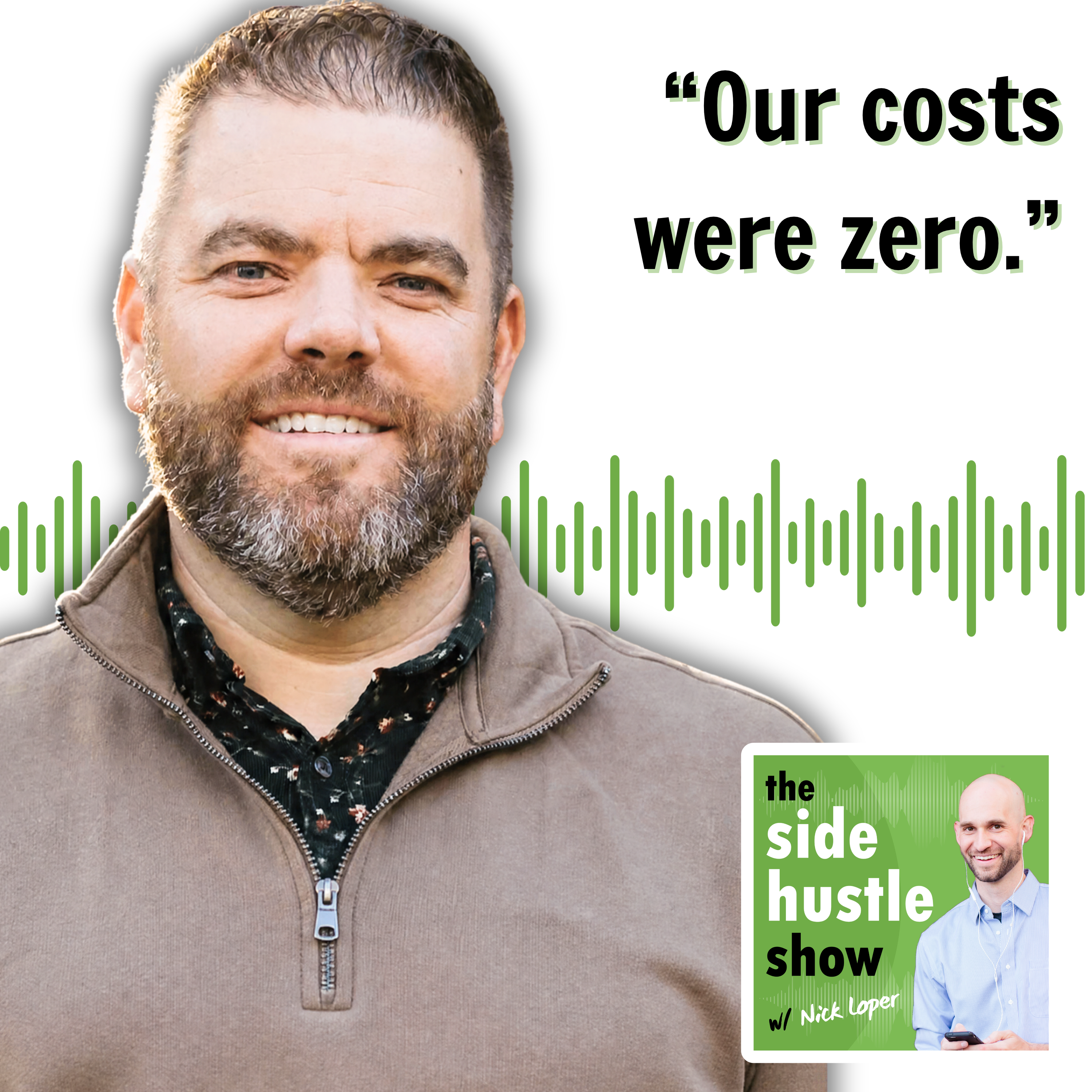
Dan Hendrickson and co-founder Kelly built Volt Cyclewear, a print-on-demand-style custom cycling apparel business that scaled to millions in revenue by serving niche cycling teams and clubs with low/no minimums, dye-sublimated products, and a “middleman” ordering experience.
Dan is a lifelong cyclist who couldn’t find affordable, durable, comfortable custom cycling kits. He and a friend started Volt to solve their own event/team apparel needs, then iterated through about a dozen manufacturing partners before finding one that matched their specs.
Volt targets decision makers (team/club/corporate coordinators) and removes ordering pain via unique URLs, direct fulfillment per order, order-status automation, and a “fit kit” for sizing. Pricing targets ~3x landed cost; no minimums (design fee waived at quantity 10). Delivery promise: typically 6–8 weeks.
first customer was a ~150-person friend cycling group; early event was a 500-mile relay (Moab to St. George). Growth channels included bike events (free socks + “free lunch” Venmo) and NICA school mountain biking teams; one corporate customer buys ~35,000 jerseys/year. Product example: “Drop Bibs” that slide down for bathroom use.
Written by AI. May contain mistakes.
The host introduces guest Dan Hendrickson and discusses the need for Volt Cyclewear.
“So here's the formula as I understand it.”
Dan shares his motivation for starting Volt Cyclewear and the initial challenges.
“So the product existed, but it was a matter of getting the logo or design that you wanted on it and finding somebody who could do that.”
Dan explains the process of finding a suitable manufacturer for their products.
“And you're like, look, I'll be the middleman operator here and we'll facilitate these orders.”
Discussing how they simplified the ordering process for customers.
“But a team that we rode with said they'd be willing to give us the business.”
Dan discusses their first customer and the steps taken to get started.
“And you can probably set up a similar middleman type of operation to Dan, especially if you're already embedded in that community.”
Explaining their pricing strategy and how they maintain profit margins.
“You've certainly got friends that do that and they've got other friends that do that.”
Dan shares networking tactics and ambassador programs used to grow Volt.
“And we actually still do this to this day.”
Learn how to connect with potential customers through passion-driven conversations.
“socks as a way to kind of cut through the clutter and stand out.”
Understand how to leverage networking to land big corporate clients.
“but you need to find decision makers inside of organizations, inside of companies that are going to want 50 or 100 kit, you know, jerseys or, you know, whole setups to make this worthwhile.”
Learn how to manage production challenges when handling large orders.
“So targeting the cycling events, both as a vendor, raising your hand and offering to be their supplier, and then getting on the radar of these different school athletic programs.”
Learn how fostering customer relationships can lead to loyalty and business growth.
“Because it's like we don't really know until we make the switch.”
Discover the tools and technology that streamline business operations and improve customer experience.
“A couple of things that we realized really early on is we were spending a ton of time answering questions from clients like, where's my stuff?”
Explore unique strategies for addressing sizing issues that clients face.
“of random stuff in every size that you can try on.”
Understand the process of enabling clients to customize their products effectively.
“And then that allows the client to get on and really describe exactly what they're after.”
Gain insights into overcoming logistics challenges in a print-on-demand business.
“Now I'm thinking about the logistics piece of this.”
Explore the process and considerations for transitioning from side hustle to full-time business.
“Once we hit a point where that was too much, we rented a basement of another house.”
Learn how nurturing employees can lead to unexpected results.
“And so it was easier for me to find people that needed a lot less income than I did, that I was able to generate elsewhere to do certain things inside of the business.”
Discover the future plans and new product lines in the business.
“I'm just stoked to give it all my attention, right?”
Uncover the importance of solving real problems for success.
“Let's wrap this thing up with your number one tip for Side Hustle Nation.”
Understand the value of leveraging personal knowledge in business.
“It comes from solving other people's pains and problems.”

Get the gist, explore an idea or ask about something said.
 Claude
On The Side Hustle Show, what are the key points of this episode?
Searching your listeningAutomatic transcript. May contain errors.
0:00Look, I'm not afraid to admit it. When it comes to running a business, there's a lot of stuff that either I'm not the best at or I really ought to be handing off to someone else. If you're in that same boat, think this is a job for Indeed Sponsored Jobs. When you sponsor your job on Indeed, you'll get quickly matched with quality candidates who meet your exact criteria and who can drive the results you need. Plus, with Indeed Sponsored Jobs, you only pay for results. spend less time searching and more time actually interviewing candidates who check all your boxes less stress less time more results when you need the right person to cut through the chaos this is a job for indeed sponsored jobs side hustle show listeners get a 75 sponsored job credit to help get your job the premium status it deserves at indeed.com slash podcast just go to indeed.com slash podcast right now and support our show by saying you heard about Indeed on this podcast.
0:56Indeed.com slash podcast. Terms and conditions apply. Need to hire? This is a job for Indeed-sponsored jobs. This side hustle spins off hundreds of thousands of dollars in profit per year. So let's learn how it works. Today's guest took a personal pain point, a gap he saw in the market and turned it into a multi-million dollar business while still working a full-time job. That gap in this case was that it was hard to get custom cycling apparel that was comfortable, durable, and affordable. From Volt Cyclewear, Volt with a V, Dan Hendrickson, welcome to the Side Hustle Show. Nick, thanks for having me, man.
1:35I'm stoked to be here. Me as well. So here's the formula as I understand it. Step one, a passionate niche audience, cyclists in this case, step two, killer or customizable product selection, and then step three, low overhead, a manufacturing partner, like low risk setup. And you've got yourself a profitable enterprise on your hands. So stick around. We're talking idea generation, the marketing tactics that have worked to drive sales over the last several years of running this, and how you can apply some of Dan's same strategies in your own business. But Dan, kick us off with why Volt needed to exist in this world.
2:12Yeah, thanks, Nick. So I was a guy who was passionate about riding bikes. A big, big cyclist, love all types of cycling, all disciplines. And I was really frustrated at how difficult it was to get customized cycling apparel. Seemed like there had to be a better way. So, yeah, initially we just set out and we being a friend of mine to solve that problem for ourselves and a group of friends that we had that all liked riding bikes and wanted to look a certain way. It was actually for a particular event. That was where it all started. Yeah, you see even kind of the weekend warrior cyclists and it looks like they all have custom or maybe it looks custom from the layman looking in.
2:52They're like, are these guys sponsored? Like they look legit. So maybe they're wearing your stuff. my wife always jokes that uh that it's like guys fashion show right go cycling it's when it's when men uh make a stab at being fashionable i'll go riding with my dad and his friends sometimes and the you know construction uh road crew guys would be like spandex coming up like here we go gotta love it okay so in this case uh you were your own first customer and so what was the next step? It was trying to find a manufacturer. So the product existed, but it was a matter of getting the logo or design that you wanted on it and finding somebody who could do that.
3:37The internet makes it pretty easy today to find folks that will make literally anything you want them to. It all started with us reaching out and finding somebody that could produce some cycling apparel for us. And we were really excited. We were giddy at the low prices and, And then the product came and it wasn't great, right? We actually went through a handful of different manufacturing partners, maybe even a dozen. Before we found someone that had good quality, they had good pricing, and more importantly, they were open to our feedback, right? There's lots of products out there, but we wanted something that was affordable, durable, and comfortable.
4:13And so that meant getting it specified exactly the way we wanted it. Now, none of us were in the apparel business. We were not in textiles. We didn't understand the nuances of different fabrics, but we knew what we liked as cyclists. And so once we found a manufacturing partner that was able to take our feedback, iterate on the product, and turn it around in a reasonable time at the low quantities that worked for us, we did that a few times. And then we had people hitting us up saying, hey, what is that? Right? Like that kit, that's what we refer to in the cycling world, what you wear is kit. Yeah.
4:49I said, man, that kit is sweet. What is it? Like, where can I get one? And I remember the moment that I looked at Kelly, who's the guy I founded the business with, and I said, hey, you know what, I think we've got an opportunity here. So is the advantage, because somebody else who wanted this kit could, you know, with a reasonable degree of effort, go find the same manufacturing partners, but it was just like, they weren't willing to jump through the same level of hoops. And you're like, look, I'll be the middleman operator here and we'll facilitate these orders. One of the pain points we wanted to solve was the difficulty in ordering.
5:27You know, we knew we wanted to make it really easy for clients to order. And to put it in perspective, right, you mentioned your dad and his buddies. Let's say that there's 15 or 20 of them, right? They all want a kit that looks good and maybe represents each of their businesses. Well, one of the difficulties that, let's pick on your dad in this situation, who's the guy who's spearheading it, experiences, is he's got to go to everybody. And he's got to collect the money from them. He's got to figure out what sizes they want. He's got to place an order with us. And then when everything shows up, he's got to hand it all out.
6:02One of the problems we wanted to solve was making it easier for dad, right, for the person that's coordinating this whole thing. And so in order to do that, we needed to have a website, right, where folks could go and they could place their own orders. All they have to do is point people to a unique URL that's got that team or club's products. Those folks can order. And then we fulfill each order individually. They pay us directly. And it takes the person who's spearheading this whole thing out of the business of wrangling people to figure out what sizes they need, collecting money, handing the products out, doing all that.
6:37Yeah, I know you're tracking down a million different Venmos and it's a pain in the butt. Okay. Right. Was this going on before customer number one? Or was this like, tell me about, you know, the first one or two orders. Who's buying this stuff? So our first customer was actually the team. I say team kind of in quotes because we were just a group of friends. There was about 150 of us. But a team that we rode with said they'd be willing to give us the business. That was our first customer, right? And so the first thing that we needed to do was get a website up and get a place for them to make orders.
7:10Okay. And so let them do it. So we're not talking, you know, five or six here. We're talking dozens or even into the hundreds of orders. Do you think you needed that much to get on the radar of a manufacturing partner? Or otherwise, what are we doing here, printing six jerseys? So one of the pain points that we wanted to solve was exactly that, right? The first stuff we made for ourselves was for an event. It was a relay race from Moab, Utah to St. George, Utah, a little over 500 miles. And there were four of us that were doing it. So we wanted four, right? Nobody wants to make four. Yeah. And so we found a manufacturer that was willing to deal with our low volumes.
7:50And so that was one of the hallmarks initially, too. And to this day, we have no minimums. If you wanted to get a Side Hustle Nation cycling jersey, you could go to our website, you could fill out a form, and we would make you one Side Hustle Nation cycling jersey. All right. And probably priced accordingly or it goes down the more volume you're doing? So the way that we handle things is if there's a quantity below a certain amount, that's usually 10. If we're doing the design, we charge you a design fee. But no, otherwise, there is no increased cost for that. If you get into the, you're buying many hundreds of products, then we do have some price breaks.
8:29But no, you'd pay the same price for your one jersey. If you want to do the design, great. Once a customer gets to a quantity of 10, then we waive the design fee. Yeah, the way I'm looking at this is as a print-on-demand business, but going to where Printify, Printful, like some of these big suppliers haven't gone yet. And so I asked ChatGPT, what are some clothing or accessory categories with an affluent niche audience that aren't available from the big print-on-demand suppliers? And you know what the first two that it recommended were? Were road cyclists and gravel cyclists. Oh, if only we had Chad GPT back then to tell us that.
9:09Now, other ones on this list, if you're listening in, that might be interesting, were equestrian and horse ownership, yachting and sailing, skiing and ski touring, private aviation, luxury watch collecting, fly fishing, motorsport, track day enthusiasts. There's a lot of different categories here that Printify isn't touching. And you can probably set up a similar middleman type of operation to Dan, especially if you're already embedded in that community. And you may already know your first 150 customers, as he did. Is there a way you're thinking about, well, if I charge$50 for the thing and the manufacturer charges me$25?
9:51How do you think about the margins in this? What's typical? Yeah. Yeah. So initially our costs were zero, right? So that was one benefit we had entering the market is we were able to operate on really narrow margins. Both myself and my partner, my co-founder, had had income that sustained us independent of the company. And so it truly started out as as a passion product. The custom stuff where we're essentially selling it before we make it, we typically target somewhere around three times our landed cost that we charge a customer. So if we're going to sell something for$30, you know, we'd like to be able to make that product for$10.
10:33Got it. That's helpful. So initial zero costs, passion project, we were our own first customer. Talk to me about the first six to 12 months of starting to spread the word about Volt and going, hopefully starting to shoot outside of your immediate circle of your immediate network. So networking is a lot of it, right? We employed a couple of tactics early on. One was a sort of informal ambassador program, right, where we just let people know, hey, share the word about what you like. We're happy to reward you financially if you can send somebody our way. And then the other thing that we found early on that's bared a lot of fruit for us.
11:12Was this through, can I pause on that? Was that through like cycling influencers or who are you targeting for this informal ambassador program? Yeah, certainly not any influencers. We weren't that sophisticated. It was just people that we knew, right, as a cyclist. And maybe, you know, to go to that list that you talked about, if you're into rowing or yachting or equestrian, right, You've certainly got friends that do that and they've got other friends that do that. So that was really where it was for us was just trying to spread the word within our network and frankly, not being afraid to ask people to tell their friends about our business.
11:50But it wasn't any sort of formal influencer marketing or anything like that. We had a woman on the show who was selling these Disney inspired running skirts, like run the run Disney community. It was like, you know, a very passionate niche audience. and she would actually take applications for people to be part of her ambassador program and get a free skirt and spread the word. And some of them had big social followings, but other people were not. They were just like runners. They were happy customers of hers. And it kind of took on a life of its own over the years of running it. But what else was going on on the networking side?
12:27Yeah, that's really smart. On that note, we've taken a run at a formal ambassador program a couple of times now with varying degrees of success. We're going to launch that again in 2027. But another one that worked out great is going to events, right? One challenge that we had in our space is let's go back to your dad and his 20 friends, right? Maybe I see them ride by every single day, but I don't know who they are, how to get a hold of them, or which one of them makes the decision on what business they use to produce their apparel. And so we launched a program where we said, hey, we're going to go to events.
13:03bike race. It could be a bike festival. We're going to have a presence there. Typically, we'd get our way in there without spending any money, would give the event promoter some free products or something, and would find a pain point that they had, would work to solve that, and would get some presence at that event. And we actually still do this to this day. We'll offer free socks for decision makers, right? If you're a decision maker for your team, club, corporation, and we just take your word for it. Scan a QR code, fill out a form on our website. That gets us your contact info. We get you a free pair of socks.
13:39And then we use some automated marketing tools to send you emails and text messages and encourage you to get free lunch from us. What that looks like is someone on our team will Venmo you 15 bucks in the early days. That was me. You'll take a phone call and then we have a conversation about what the needs are for your team and go from there. So we're giving away free socks as a way to kind of cut through the clutter and stand out. I like this free lunch idea. It's like, we're not, you know, who knows where these people are? We can't actually physically take them to lunch. We'll send you some Venmo to get, uh, get some time on your calendar.
14:12But how were those people initially even raising their hands? They were the ones showing up at the events. Yeah, exactly. So let's pretend that you're really passionate about tennis or this Disney running, right? They're going to go to a 5K, right? And if you've ever been to one of those, there's always a bunch of people there handing things out. There's the local insurance agent handing out business cards and things of that nature. And that was us. We bought an easy up at Costco and we'd go set up some camping chairs and get people's attention that way. Got it. And after you got somebody on the phone for the free lunch, the ask was trying to get a bulk order out of them?
14:53What's what came after that? Yeah. So at that point, when let's pretend that you're the customer, we get on the call and I say, Hey, Nick, tell me about your, your team, your club, your events, you know, whatever you're in charge of that has a need for custom cycling apparel. And then we just have a conversation about what your needs are, right? Maybe you're in New York and you're after gear that you can wear in the wintertime when it's cold and wet, or maybe you're in Phoenix and you do, you know, road cycling, gravel cycling and triathlon. And, you know, you've got a group of 150 people that work at your company that all ride together.
15:29We just have an understanding of what those needs are. And the cool thing about it is that we're talking to people about their passion, right? Nobody's really annoyed to get the phone call to talk about cycling, right? These are cyclists that love it. They're passionate about it. and we gain an understanding what their needs are. And then really the close is when can we get started on design? More with Dan in just a moment, including his one-to-many strategy that generates big bulk orders and managing the production and delivery logistics of custom products. Coming up right after this. If you're building a service business, the money side can feel like a whole second job, especially when you want every proposal and every invoice to show clients you're legit, that you're the real deal.
16:13even if it's still a side hustle. Our partner FreshBooks changes the game. FreshBooks makes the money side of your service-based business easy. You can log your hours, send a branded invoice, get paid and know your numbers instead of chasing them. Money in, money out, all in one place. FreshBooks is designed for how small business owners think about money, not how an accountant does. It's simple on purpose. Most business owners are up and running in minutes, not days. And if you need help, a real person is available on every plan. FreshBooks has been trusted by service businesses small and large for over 20 years.
16:48And right now, Side Hustle Show listeners can get FreshBooks for less than$3 a month for your first four months. That's 90 % off. Head to freshbooks.com slash podcast to get started. That's 90 % off under$3 a month for four months at freshbooks.com slash podcast. What do you think makes it difficult for people to turn their idea into an actual business? Is it the fear of failure? Is it not knowing the next steps? In some cases, I've had ideas that were almost too big, like they felt too heavy for liftoff. Our partner, Shopify, is designed to help lighten your load and simplify every step of the process.
17:25It's the go-to commerce platform you've heard recommended by dozens of Side Hustle show guests, and it's the same tool that powers millions of businesses worldwide. Shopify's pre-built website templates and AI site builder make it easy to launch a beautiful, professional-looking store without ever having to touch a line of code. Shopify's mobile app lets you run your store from anywhere, from tracking inventory to customer support to handling payments and more. Plus, when you launch before Black Friday, it means you can take advantage of the extra online traffic. If you're ready to launch your business before Black Friday, go to shopify.com slash side hustle to start your free trial.
18:04That's shopify.com slash side hustle. Go to shopify.com slash side hustle today to hear your first. It almost seems, and maybe I'm not fully understanding like the target customer, but you need to find decision makers inside of organizations, inside of companies that are going to want 50 or 100 kit, you know, jerseys or, you know, whole setups to make this worthwhile. while because if you're just selling onesie twosies and making 30 or 40 bucks on a sale it's like what are that's it's going to be really hard to turn that into the the empire that volt is today sure we initially thought hey we're going to go to all the teams the clubs corporations and the events right if you're in washington right there's a big ride every year the 20 000 cyclists participate in from seattle to portland stp and you know the stp guys have product that they sell that's branded for STP, right?
19:04So that was a natural target audience. And those were folks that we would cold call. But as we were thinking, how are we going to, you know, we don't have any money to market. Like to try and be the supplier of their like official STP event jersey? Yeah, exactly. So that's not an account that we've won, by the way. But yeah, that was one target of ours is, hey, you know, that event, there's a bunch of people that are there and they sell. I've got one STP jerseys or one year. I think they gave me a complimentary rain jacket as part of my registration. Right. So that's an area where the where the decision maker is easy to identify.
19:41But as we were thinking about how do we find these customers? Right. Because you get through your friends and your family pretty quick. One thing that, you know, I've got four sons and I understand the burden that sports and athletics put on families. And mountain biking is a huge thing in junior high and high schools. It's growing all across the nation. And I went to a local high school and I said, hey, who makes your guys' kits? And just like I had experienced, he sighed and he's like, oh, it's such a pain in the butt. And I said, how about this? Got this company. We've got these great products.
20:21Why don't you let us make your stuff? And somebody on the team, some kid's dad is going to own a construction company and he's going to want kits for his company, or he's going to be a dentist or whatever. And that would be a way to get our name out there. That is a huge market segment for us. So in pursuit of$0 leads by helping families out, by giving them a good deal on product to help lighten the burden of parents trying to fund their kids' participation in sports. We found a segment that's probably 25 or 30 % of our revenue today, and by customer count, more than half. We've got clients all across the country that are, you know, what's referred to NICA, National Interscholastic Cycling Association, teams that are affiliated with high schools or junior highs.
21:12Oh, okay. And then it just started with your own kids. You can do this for your team and then starting to call other local area, middle school, high schools? Yeah, exactly. You know, we realized that the problem that I shared with you earlier, right? You think about your dad and his 10 or 20 friends. You're giving him a lot of credit. It's probably like five. We've got five dudes he rides with. Well, let's call them five. It's still a pain. We think about your dad and his five buddies. It's hard enough for him to wrangle them together. Well, imagine that you've got a dozen, two dozen junior high students, and you've got to not only wrangle the kids, but you've got to wrangle the parents.
21:48And then you take it to some of these high schools like in Utah, where we're at, we'll have 250 kids on the team. And so you think about some of the challenges we set out to solve for small hobbyist guys like us, like your dad. Well, that problem's amplified a million times over for these mountain bike teams. And so some of the value proposition that we created to solve the frustration for us just resonated at an immeasurable level with these guys. And so that became a huge growth engine for us, which started the snowball of getting our name out there in a much more meaningful way and at a lot bigger scale all across the country.
22:28Okay, that's an interesting one. So targeting the cycling events, both as a vendor, raising your hand and offering to be their supplier, and then getting on the radar of these different school athletic programs. Anything else that was a big leap forward in terms of, you know, the big first order that made you like, we'll see if we can do this or let's, we're really looking forward to when this hits the account. So that got us a lot of volume, right? That got us a whole bunch of people that buy one or two items. The biggest one for us was the pursuit of some corporate business. But we found a couple of places that were unexpected where there's a tremendous amount of business that occurs.
23:14That's where we've got customers that will buy a huge volume and we just deliver it to them in bulk. So it's a lot less work for us as a company, and it gives us a lot more opportunity to bring revenue in in big chunks. How did you end up getting on their radar, or do you have a story about your first or second corporate account that checked those boxes for you? Yeah, so that was through networking. People really like to talk about themselves. The more questions you ask, the more information you glean, and the more information you get. And the first big one came from talking to somebody about the very common question of what do you do for work?
23:56And it turns out that this person works in a space that spends a lot of time with cyclists. So we've got a customer that buys like 35 ,000 jerseys from us a year. I don't think there's anyone else that buys that much stuff. Okay. 35 ,000 units a year. That's a huge customer. Huge customer. Yeah, to stack up a few of those and you're good. And did you ever run into issues capacity-wise with the manufacturer when some of these big orders come through? Or they're just kind of like, oh, that's cute. We do far more volume than you'll ever be able to bring us. Initially, capacity was not a problem because we were really small.
24:40We've developed a really good relationship with our manufacturing partners. And we've got really good, clear lines of communication with them. But when these couple of larger clients started to come on board, one of the things that we always do is we always under-promise and over-deliver, right? We're never afraid to say, I don't know. And in the case of navigating these unknown territories of a client asking about our ability to produce this high a volume, we were very transparent that we hadn't done it before, but that we felt really good about the fact that we could. We went to our manufacturing partners.
25:16We had some conversations about timelines. And that customer inherently was a little nervous at first. Nobody wants to be your biggest customer. And so we started out a little bit smaller with them. But we've now gotten intimately familiar with what their capacity looks like and how we need to plan for when big orders like that come in. I guess that's baked into the sales promise or the marketing promise of like, you know, allow six to eight weeks for delivery. And then when it's fully custom, there's an expectation. Like, look, it's not going to be prime overnight shipping. Right. Yeah. And people are understanding of that, right?
25:51Because believe it or not, you know, Amazon is here at my house every single day. We're all accustomed to what that looks like. And believe it or not, six weeks, and it's frankly, it's usually four to six. A lot of our clients would tell you that they get their product in three, four, sometimes five weeks. We're big on that under-promised and over-delivered. But six to eight weeks is actually pretty fast, especially when you factor that a lot of these, you know, you think about a high school mountain bike team. They don't just have a cycling jersey. They've got a few different styles of cycling jerseys.
26:23They've got a few different styles of bottoms. They've got hoodies and T-shirts and hats and socks and gloves and jackets and vests and arm warmers and leg warmers. There's a dizzying array. Are you doing all that stuff or just like, you know, it seems like for the sweatshirts, they could find any old supplier for that where it's like the niche specialist in cycling stuff. Yeah. So we do all those products. And to your point, right, we let customers know, hey, if you're after, you know, if you take the T-shirts you're wearing, for example, right, that's a Gildan or a Next Level or a something T-shirt that anybody can buy for a couple of dollars and apply a heat transfer to it.
27:00But the products that we produce, we use a process. It's called dye sublimations. It spans across seams. And so we make some really cool hoodies and shirts and some of those items that you would expect you could get from one of these on-demand print shops. But they don't do dye sublimation. They don't produce products the way that we do. And even something like a hoodie, right? We've got our own bonded fabric, fleece lined, amazing hoodies. And when you think about all those SKUs and the fact that you've got anywhere from all the way up to some of the larger ones we talked about, it ends up being a lot of products and a lot of logistics.
27:37And so six to eight weeks is actually pretty fast. People are really pumped when they hear that and when we deliver it. And in that case of the athletic teams, they had an existing supplier that you had to come in and convince some decision maker that you were going to be better, faster, cheaper. So what does that conversation look like? Because it's like we don't really know until we make the switch. Like it's one or nothing. Yeah, exactly. It's tricky, right? And relationships are big in this business. And I always tell people when they have conversations with us and they say, man, I'm sorry, I'd love to work with you, but I just I've worked with this guy for seven or eight years.
28:19I appreciate their loyalty because I know that someday when I do finally are in their business, they're going to share that loyalty with me. And so it is tricky. We've got some technology that we use and some things that we've incorporated that are such big relievers of pain points that that's a big selling proposition and getting customers to move over. And then the fact that we've got, you know, really an amazing product and an amazing price point, right? The value is there and the product really speaks for itself. And when you combine that with, you know, some of that technology that we use to ease the life of the person who's coordinating it and phenomenal customer service.
28:57Our North Star is that we do whatever we need to do for the customer to be happy. And that is what drives every decision we make. And when you look at the fact that almost all of these people are volunteers, they're not getting paid to do this, right? So if we can do anything to ease the burden that they've got as it relates to putting the program on, that's a big selling proposition for us. Tell me a little bit about some of the tools and tech that's helping run the business as a side project behind the scenes. A couple of things that we realized really early on is we were spending a ton of time answering questions from clients like, where's my stuff?
29:40Has this person ordered? I know that I've got 18 people on the team. Who's ordered? Are we ready to, quote, close the store, close the order and get production started? And so the first one seems so incredibly simple. But we provide order status updates to our customers. Is this something that you built or this is like a Shopify plugin? It is a Shopify plugin. Yeah, it's W3 order status is the one that we use. And we created, you know, a number of different statuses and automations, right? So we had to get intelligent, but all using built-in Shopify tools to let our customers know what the status of their order is, which not only eases the burden on us administratively, but is a big value proposition for the person who's coordinating this order for their audience.
30:32All right. What else on the tools and tech? Another one is a reporting portal. And this was a higher level of effort. AI makes these things easier to do. I'll say they're still not easy, but easier to do. But that is a portal where if you go on our website, you can see everybody who's ordered. You can see what they've ordered and all those things. So you're not reaching out to us, waiting for us to get back to you. It's really a big win-win. Customers are able to self-serve that way. And it takes customer service requests away from us. All right. Very good. What else? So this is less technology related, but a huge pain point that our clients experience is sizing, right?
31:16And frankly, that's one thing that gives people pause when they go to switch vendors. And one thing that was a huge pain point for us when it came to getting our stuff is the way that it always historically worked and frankly does with most of our competitors is if they're nice enough, they mail you a big box full of a bunch of random stuff in every size that you can try on. It's in various states of cleanliness and organization. Or what is more common, they give you a sizing chart. Right. So another thing that we do that's unique and helps our teams out a ton is we send out what we call a fit kit.
31:54So every product that we produce, we send you out. We've got a really nicely organized in garment bags. We actually send you a rack that goes along with it. So you can have your little fit party, stand the rack up, hang the garments up and all your athletes can come try everything on. And then they know exactly what size they need to order. And frankly, if it's something that's even interesting to them. Right. Some people are really particular about their clothing. So it gives them an opportunity to see, touch, feel alike garments. Right. It's not going to be decorated or designed exactly that way, but they can see it and touch it.
32:28Was there anything either built into Shopify or something that you had to build to allow people to upload their own designs and start this customization process? It's not it's not as simple as uploading something to a T-shirt thing and say, put this on the front. Right. That's actually one of the problems that we want to solve. And one of the pieces of technology we want to add in the coming year is the ability for people to play around with creating their own designs on our website. We use Ace Real form plugin on Shopify to allow us to build pretty robust forms where people can upload things like their logos, specify the colors that are unique to them and describe exactly what they're after.
33:05So we use a plug in there on Shopify to get what we call a creative brief. And then that allows the client to get on and really describe exactly what they're after. And then we get working on designs and turn them around via email. More with Dan in just a moment, including his decision to finally go full time into the business and his biggest surprise so far coming up right after this. If you're building a service business, the money side can feel like a whole second job, especially when you want every proposal and every invoice to show clients you're legit, that you're the real deal, even if it's still a side hustle.
33:42Our partner FreshBooks changes the game. FreshBooks makes the money side of your service-based business easy. You can log your hours, send a branded invoice, get paid, and know your numbers instead of chasing them. Money in, money out, all in one place. FreshBooks is designed for how small business owners think about money, not how an accountant does. It's simple on purpose. Most business owners are up and running in minutes, not days. And if you need help, a real person is available on every plan. FreshBooks has been trusted by service businesses small and large for over 20 years. And right now, Side Hustle Show listeners can get FreshBooks for less than$3 a month for your first four months.
34:22That's 90 % off. Head to freshbooks.com slash podcast to get started. That's 90 % off under$3 a month for four months at freshbooks.com slash podcast. What do you think makes it difficult for people to turn their idea into an actual business? Is it the fear of failure? Is it not knowing the next steps? In some cases, I've had ideas that were almost too big, like they felt too heavy for liftoff. Our partner, Shopify, is designed to help lighten your load and simplify every step of the process. It's the go-to commerce platform you've heard recommended by dozens of Side Hustle show guests, and it's the same tool that powers millions of businesses worldwide.
35:01Shopify's pre-built website templates and AI site builder make it easy to launch a beautiful, professional-looking store without ever having to touch a line of code. Shopify's mobile app lets you run your store from anywhere, from tracking inventory to customer support to handling payments and more. Plus, when you launch before Black Friday, it means you can take advantage of the extra online traffic. If you're ready to launch your business before Black Friday, go to shopify.com slash side hustle to start your free trial. That's shopify.com slash side hustle. Go to shopify.com slash side hustle today to hear your first.
35:41So the stuff comes in. Now I'm thinking about the logistics piece of this. The order goes off to the manufacturer, they send it back four to five weeks later. That comes to you. That comes directly to the customer. Let's talk about the shipping and packing of all this different stuff. Here's another challenge that we can get to. If we look at something like this, like this color blue, right? Blues are inherently difficult. This color looks much different on a computer screen than it does when you print it on a textile, right? Much less one that might get a little bit sheer, right? Like a really lightweight, arid cycling jersey.
36:17So what the process looks like is a customer fills out the design brief. We come to consensus on what designs look like on a flat file, and that's done via email. Once we've got that, we actually send the customer what we call a color flag. So we've got a really big, it's probably, I don't know, eight feet wide and four feet tall that has a swatch of every color that our printer can print. So they get to pick out, hey, I want this blue, this yellow, this brown. And that process came about after learning a lot of really expensive lessons in the product showing up and the customer saying, this is more green than I thought it was.
36:55This is more blue or this looks purple. So we actually send the color flag out. The customer achieves the core colors. Why we have the store open on our website and we're taking orders, we send those design files to the factory and the factory does, they create a print sample. So they print the products. Typically, they just send us high resolution photos of that. We then share that with the customer. The customer approves it. Certain customers, we actually have that print sample sent here to the States. Comes to us, we share it with them so that they can see it, touch it, feel it. Yeah. Get like the triple sign off before printing, you know, 200 or a thousand.
37:3635 ,000 of them, right? It's not an assembled garment at that point, right? It's just all the things that you would cut out to sew into a shirt. Once that is approved, then we issue what now is a purchase order. In the early days, it was an email. We issue a purchase order that says, hey, we need to specify all the sizes, the genders, the products. At this point in our maturity, we've got barcodes and SKUs. We do all that in Shopify, but we send all those details over to manufacturing. And then, yeah, everything comes into, we have an office now. For a long time, we ran it out of our home. Once we hit a point where that was too much, we rented a basement of another house.
38:17But now we've got a real life office building where our employees go work every day and products get shipped there. They come in in bulk and then we break those orders down. We receive all the inventory in. So it does come to you first before going out to the customers. Yeah, it comes to us. We see it. We do some quality control checks, right? Make sure everything looks good. And then we pick and pack each individual Shopify order, right? So we might take 100 Shopify orders from 100 individuals that are really all, in our mind, one customer, right? The Side Hustle Nation cycling team. And we then break all those products down into each individual's order, show them in a poly bag.
39:02That's typically how we ship stuff. and the Postal Service, UPS and FedEx, stop by the office every day and pick them up. Where's your time going as the co-founder and still, you know, for the next month and a half, still running it as a side project? We were fortunate in that we didn't need to take any money from the business to support ourselves initially, right? So we were able to spend some of those profits in hiring people to help us with some of the workload. But where my time goes, and the things that I've hung on to, is we just last year finally hired an accountant, but up to that point, I managed the QuickBooks, which was a graduation of QuickBooks from exports from the bank onto spreadsheets that I gave our tax accountant every year.
39:46That was fun. I work with our accountant who manages the QuickBooks and I manage all of our technology. So the reporting portal was order status updates, everything that happens on the website. I'm responsible for that. Was there a revenue target that you were waiting to hit before calling it quits at the day job? Or what triggered the move here? So I'm a big believer in doing things that you enjoy, right? And there's the old adage, hey, if you do something you love, you never worked a day in your life. I don't subscribe to that whole philosophy, right? I'm not going to lie, work is work. I'm very big on doing things that I enjoy.
40:22And I have absolutely loved my day job, right? But it's gotten big. And it got to a point where I wasn't having as much fun as I wanted to. And so as I started to think about my personal life and where I'm at, what the landscape looks like, once I had the realization that I don't have enough money to retire today, right? I've still got a lot of working years ahead of me, but I realized that the amount of money that I've set aside for retirement, if I can just keep that set aside, in 20 years, that's going to be plenty for me to retire on. So as I thought about why I'm coming to work every day, it's benefits, it's health insurance, is easy to get on the exchanges these days.
41:09Once I figured out that our retirement was taken care of, and then I got looking at the company's numbers and I said, we're generating as much profit as my company pays me, what am I doing? That was really freeing for me. So it wasn't necessarily a revenue target. But once I had the realization that company was generating profits at this point that exceeded my pay, that was what allowed me to take the punch. It sounds like a couple of things. Number one was the annual profits that it's spitting off, plus this coast fire milestone of like, look, if I never put another penny into the retirement accounts.
41:44It's still going to be okay there. Yeah, exactly. And it's, I really love it. And I would have done it earlier, but I like to have fun, Nick, and I wasn't willing to sacrifice my lifestyle. And I also didn't want to burden the business with my demands to support my lifestyle. And so it was easier for me to find people that needed a lot less income than I did, that I was able to generate elsewhere to do certain things inside of the business. But I'm, In addition to the things that I've mentioned that are my day-to-day responsibilities, or we'll call them week-to-week, right? Those things don't have to happen every day.
42:19I really love helping grow and nurture our employees, and I'm really excited to have the opportunity to spend more time with them. It's an interesting place to be, and it was something I never really thought about early on in the business. I was in a hurry to quit the day job and be a full-time entrepreneur. But then it kind of did change the equation. well, now I need those profits to pay rent and buy groceries. And so it wasn't like as maybe as big or as concerted an effort to reinvest into that. And so it sounds like you were able to do that for years and years by keeping it as a side hustle.
42:55So I wanted to ask what the biggest surprises have been over the last six, seven years of running Volt. Yeah. So biggest surprises, is people are amazing. And when I say people are amazing, we've got the best employees, right? And I think what that means is these are people that care so much about what they do. And a lot of it is, I think, the culture, just by the way that we work. But I've been really surprised at how much people care. And when you support them and empower them, they'll do amazing things, right? And so So giving them that trust and that latitude to take your baby and make some decisions and get your to where you don't have your fingers around every single thing that's happening.
43:45That's been a really welcome surprise is to see how great people are and how great they can be. Are they all passionate cyclists? You know what's funny? None of them are passionate cyclists. Well, I shouldn't say none of them. One of them is. But what's really cool is we found as we were growing, we didn't have a lot of money, right? We had our meager profits and we didn't have, talk about a designer. Designers are expensive, right? If you put an ad for a graphic designer, right? This is somebody who's going to want$75 an hour or more. And so we will call it just by luck and circumstance, found a cool niche where almost all of our full-time employees, which is a relatively small number, right?
44:34Call it a half dozen, are women that were stay-at-home moms whose kids were in school at this point. And they'd kind of lost some of their sense of purpose, right? They had some time. They didn't have huge financial demands, but they wanted to get told thank you and experience all these things that a lot of moms don't. And so we've got moms that have started working with us on a part-time basis and have grown into full-time gigs. And the cool thing about moms is, man, they're organized. They know how to multitask. They get stuff done. And it's been really cool to provide an outlet for them. That's really cool.
45:15Absolutely. Hire a mom. That's if you want something to get done. Well, you mentioned supporting the team. You mentioned bringing back a formal ambassador program coming into the new year. But what's next for you? You mentioned quitting the day job and going all in. What else has got you excited this year? I'm just stoked to give it all my attention, right? We've got a lot of growth in some areas. I feel like we're just scratching the surface in a couple of market segments, right, that we know that we can go have a big impact in. I'd mentioned the one passionate cyclist. So we're right now in the process of hiring what's really our first, I know this sounds crazy, but our first dedicated salesperson.
45:56And he is a passionate cyclist and we're excited to see how he can exploit his network and take us into some other markets. We're developing some new product lines that I'm really excited about. One that we launched this year that's pretty innovative for any cyclists that are out there. And Nick, if I understand you do a little bit of cycling, bib shorts, what they refer to. So they're cycling shorts, but they go up over your shoulders like suspenders, right? They're a lot more comfortable to wear. But you have the challenge of going to the bathroom, right? This is a bigger challenge for women than it is for men.
46:28But we've developed a product that we call Drop Bibs. We can actually slide them down and use the restroom. You can go number one or number two without getting undressed. So that was a product we announced and launched this year with a ton of great success. We've got a lot of things like that that I'm really excited about to get out there and really just help the business as we go to this next phase of growth. Well, I can hear your excitement for it. And from my perspective, it seems like such a niche market. But you've got a front row seat and you're like, look, despite all that we've grown, we're still just scratching the surface.
47:02And I love to hear that. Like, look, there's still so much more out there, even though it is a niche audience here. voltcycleware.com, Volt with a V. You can find Dan over there. Let's wrap this thing up with your number one tip for Side Hustle Nation. Find a problem that exists that resonates with people and solve that. I see a lot of people who feel like they opportunistically identify ways that they can just make money, typically because they see someone else doing it. Not that that's not a great way to earn a living, right? But if you want to truly achieve satisfaction and success in your business.
47:38Find a problem that resonates with an audience of any size and solve that problem and solve it well. Very good. This is where the money comes from. It comes from solving other people's pains and problems. A couple of takeaways for me before we wrap. Number one was to start with what you know. Dan was part of the cycling community and that's where he was able to find his first customers. In fact, he said, look, I'm my own first customer. I want this for myself. It's not out there. I'm going to go and build it. It wouldn't make sense for me to go into the fly fisherman or sailboat owner niche or luxury watch.
48:12You know, I don't know anything about it. I wouldn't know even where to start the conversation to speak that language. So you got to kind of start with what you know, and then kind of combine that. Like we talked about this niche print on demand thing where the big players are kind of ignoring it. But if you can go find your own manufacturing partner, you're off to the races with a really low, low overhead, low startup, zero, zero inventory. cost type of thing here. And then it comes down to playing connector, being the person in between, like the company that you're talking to or the sports team that you're talking to, they don't want to deal direct with the manufacturer, right?
48:46It doesn't make any sense. But if you can be that person and do that over and over again, you've got yourself a cool little business. If you're wondering what to listen to next, I want to invite you to take our little quiz at hustle.show and it'll build you a personalized playlist of some of our greatest hits episodes based on your answers. It takes just a couple minutes. You can do it right from your phone, and then you'll be set up with another 8 to 10 Side Hustle Show episodes to help you achieve your income goals this year. Big thanks to Dan for sharing his insights. Thanks to our sponsors for helping make this content free for everyone.
49:19You can hit up sidehustlenation.com slash deals for all the latest offers from our sponsors in one place. Thank you for supporting the advertisers that support the show. That is it for me. Thank you so much for tuning in. If you're finding value in the show, the greatest compliment is to share with a friend, fire off that text message. Maybe you know a cyclist in your life who needs to hear this one. Until next time, let's go out there and make something happen. And I'll catch you in the next edition of the Side Hustle Show. Hustle on. If you're always looking for ways to become a better leader and a better version of yourself, I've got a quick podcast recommendation for you.
49:54Elevate with Robert Glazer, hosted by entrepreneur and bestselling author Robert Glazer, is part of the Yap Media Network. Elevate explores leadership, personal development, productivity, business strategy, and building high-performing teams. Robert speaks with business leaders and experts about the lessons that have shaped their careers and lives. It's designed for entrepreneurs, leaders, managers, and ambitious professionals committed to reaching their full potential. If that sounds like you, if you're looking for ways to elevate the way you work, lead and live, check out Elevate with Robert Glazer.
50:27Subscribe today on Apple Podcasts, Spotify, or wherever you listen.
What happens when you can’t find custom cycling gear that’s actually comfortable, durable, and affordable?
If you’re Dan Hendriksen, you build the company yourself, keep a full-time job for years while you do it, and let the business quietly spin off hundreds of thousands of dollars in profit.
Dan is the co-founder of Volt Cycle Wear, a custom cycling apparel business that’s grown into a multimillion-dollar operation serving everyone from five-person weekend riding groups to corporate accounts ordering tens of thousands of units a year.
Tune in to Episode 771 of the Side Hustle Show to learn:
how to find and vet a manufacturing partner for a custom physical product
the networking and event tactics that generated bulk orders with zero ad spend
which unexpected customer segment became more than half of Volt’s customer count
Full Show Notes: Print on Demand on Steroids: How My Side Hustle Scaled to Millions in Revenue
New to the Show? Get your personalized money-making playlist here!
Sponsors:
Freshbooks.com – Get 90% off your first 4 months!
Shopify — Sign up for a $1 per month trial!
Gusto — Get 3 months free of the leading payroll, benefits, and HR provider for modern small businesses!
Indeed – Start hiring NOW with a $75 sponsored job credit to upgrade your job post!
Monarch — Get an extended 30-day free trial!
About The Side Hustle Show
This is the entrepreneurship podcast you can actually apply!
The award-winning small business show covers the best side hustles and side hustle ideas. We share how to start a business and make money online and offline, including online business, side gigs, freelancing, marketing, sales funnels, investing, and much more.
Join 100,000+ listeners and get legit business ideas and passive income strategies straight to your earbuds. No BS, just actionable tips on how to start and grow your side hustle.
Hosted by Nick Loper of Side Hustle Nation.