
In short
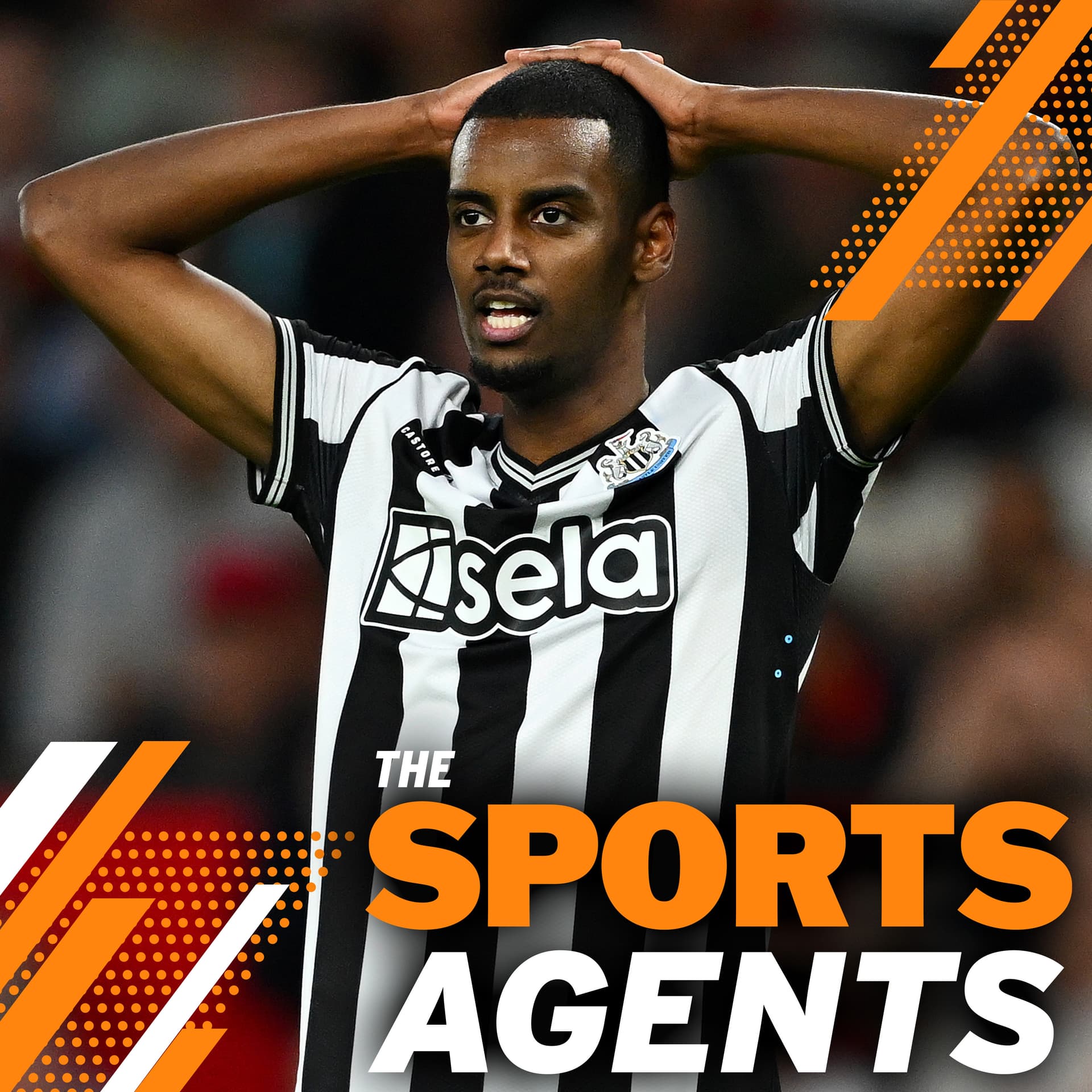
The episode focuses on whether Alexander Isak’s potential move from Newcastle to Liverpool could be the “last” football transfer saga, and uses it to argue that the wider transfer system is broken. It discusses Newcastle’s identity and infrastructure gap since the takeover: the team has surged (trophy, Champions League), but the club’s commercial/marketing setup and recruitment structure lag, with key roles like sporting director Paul Mitchell left vacant. Newcastle rejected Liverpool’s reported £100m+ bid; Newcastle value Isak at £150m and need a replacement (RB Leipzig’s Benjamin Sesko is mentioned). Isak has reported back to training; Howe says players must earn the right to train.
Guests
George Culkin (The Athletic) covers Newcastle/Isak and club operations; Dolph Serkar (sports lawyer, Justice for Players Foundation board member) explains the Diara case and FIFA/European law issues, including a class action seeking damages for ~100,000 players.
Notable examples
Diara’s 10.5m euro compensation ruling; buyout-clause ideas; Bruno Guimaraes’ release clause precedent.
Written by AI. May contain mistakes. Listen to the episode to check what was said.
Chapters
Tap a time to open that second in VONewcastle's Transfer Dilemmas
0:45 to 2:44
Discussion on Newcastle's transfer strategy and identity amid challenges.
“But for them and their supporters, is this as much an identity test as a transfer story?”
George Culkin Joins the Conversation
2:44 to 4:30
Insight from George Culkin on Newcastle's current predicament and missed opportunities.
“George, thank you very much for joining us.”
Analysis of Club Infrastructure
4:30 to 8:06
Examination of Newcastle's infrastructure issues and their impact on player retention.
“everything had been cut back to the quick.”
The Isak Situation
8:06 to 12:15
Status update on Alexander Isak and implications of potential transfers.
“that at least comes some way to compensating what they would lose.”
Owner's Pressure and Future Ambitions
12:15 to 14:00
Discussion on owner expectations and future ambitions for Newcastle as a club.
“There have been developments, but there's been no tangible progress as of yet.”
Reflections on Football Cynicism and Fulfillment
14:00 to 15:49
Explore the emotional journey of a fan reflecting on their team's successes and disappointments.
“just sort of middle-aged miserable cynicism and then you broke out of that for i stayed in it but you broke out of it for maybe 18 months so are we are we back to joint joint middle-aged cynicism together?”
The Diara Case and Its Implications
16:39 to 19:38
Understanding the legal complexities surrounding the Diara case and its impact on player transfers.
“Dolph, thank you very much for joining us on the podcast.”
The Impact on Players' Negotiation Power
19:38 to 22:22
Discussing the long-term effects of FIFA regulations on players' income and negotiation positions.
“Just one other thing here on the players, Dolph, and the Justice for Players Foundation, which is looking at the amount of money that players will have lost because of FIFA's regulations over the last 20 plus years.”
Challenges in the Transfer System
22:22 to 23:49
Exploring the difficulties in reforming football's transfer system and its implications for clubs.
“It's Denmark, it's Belgium, it's Germany, France, and the Netherlands.”
Future of Player Contracts and Transfer Fees
23:49 to 28:01
Examining how player contracts could evolve with new regulations and the concept of buyout clauses.
“So as long as the ecosystem remains employment agreements, then there's nothing wrong.”
Show all 12 chapters
Transfer Fees and Buyout Clauses in Football
28:01 to 31:06
Explore the complexities of transfer fees and the role of buyout clauses in football contracts.
“And therefore, if he goes there, plus the years on his contract, the compensation that will be out to Newcastle is X.”
Challenges in Football Employment
31:06 to 31:34
Discuss the complexities and stakeholders involved in football employment compared to other sports.
“So there will always be negotiations about transfers.”
Transcript
Automatic transcript. May contain errors.0:01This is a Global Player original podcast.
0:30And my wish is still that we see him in a Newcastle shirt again. Eddie Howe there, speaking over the weekend about his star striker, Alexander Isak, as the transfer saga of the summer continues to unfold. Last Friday, Newcastle rejected a bit of over£100 million for him. But for them and their supporters, is this as much an identity test as a transfer story? Would letting him go, even for a British record transfer fee, represent a sliding doors moment for the whole project on Tyneside. And beyond Isak, right across this summer's transfer window, are we seeing maybe the clearest signs yet that football's transfer system is broken?
1:11Could Isak be the subject of the very last transfer saga? We'll try to explain why. Welcome to the Sports Agents.
1:27The Sports Agents. With Gabby Logan and Mark Chapman.
1:34Hello, hope you're okay. Just me today. Gabby on holiday for a little while. It's all about Alexander Isak and the transfer system on this pod. So the Athletics' George Culkin will join us in a little while to talk all about that. A quick reminder to make sure you hit subscribe and follow wherever you're listening or watching to the pod. We've had some big interviews recently. Tom Brady, legendary NFL quarterback, was on with us last week. We've also had a UK exclusive interview with the WWE icon Triple H. In the 90s, you know, in the Attitude Era, yes, the product was very different. Yes, a lot of the things that we did then we would not do now.
2:19But it was sort of where society was. It was sort of where television was. Shock television, shock radio hosts. It was a big piece of the world at that time. We are now a reflection of the world we live in now. But let's get into today's pod. We're going to focus on Newcastle and Alexander Isak and the Athletics' George Culkin will join us after this. The Sports Agents. George, thank you very much for joining us. They're in a mess, aren't they, here? Externally, it looks like they're in a mess. Yeah, I'm laughing. I don't really know why I'm laughing. There are tears behind my laughter. Yeah, it's been a really disappointing summer all round.
3:03I mean, this was the summer when it was supposed to be different. Obviously, they've just won their first domestic trophy for 70 years. They've qualified for the Champions League for the second time in three years. And after three consecutive windows of not bringing in a first-team-ready player, they had money to spend. It kind of makes me laugh in the sense that after all those years of being terrible, it kind of shows you that being good is actually quite difficult as well. You know, they've been operating or trying to operate in the same market as the established, I guess you'd say big six clubs in terms of who they're trying to buy and have not been able to do that successfully.
3:40And it's a story of Newcastle, the team, just pulling way ahead of Newcastle, the club. Is that a, you know, and we talk about it a lot on this podcast, I say it might not be the sexiest thing for football fans, but is that an infrastructure executive whereby the team have pulled ahead of the club? It's kind of everything, really. I mean, you just have to kind of go back to what happened post-takeover. They avoid relegation, and then the following season they qualify for the Champions League. And that was way ahead of schedule. It was, you know, yes, they spent a lot of money. It was a fantastic job by Eddie Howe and the players.
4:20but the whole infrastructure of the club was not ready for that. I mean, so Mike Ashley hadn't left the club debt but in terms of the commercial and marketing, everything had been cut back to the quick. It was a skeleton staff. Departments had to be built up from almost nothing and in terms of the money they're bringing in, they're just blown out of the water by the more established clubs and they just can't compete. So, you know, so in terms of Alexander Resak, if you're talking about what he could command at Newcastle in terms of wages, again, they just couldn't put up the kind of money that a team like Liverpool could put up.
4:58And of course, that's a big problem when you've got really good players who are looking around and thinking, well, Mo Salah is my peer here, or Erling Haaland is my peer here, or we've won a trophy, we're in the Champions League, so we should be getting paid that amount of money. But in terms of the executive structure, at the moment, they've got no sporting director because Paul Mitchell put in his notice and has gone and hasn't been replaced. And I suppose, George, that's the area that I would focus on with the follow-up question, which is he put in his notice so they knew he was going. But also, what had he done in the last 12 months as well, I suppose?
5:38Yeah, and their chief executive has been on notice since Darren Ill since saying he had blood cancer and obviously wish him well, and he's now on medical leave. So at the moment they've got those big decision-making positions at the top of the club are not filled. They will be, but in terms of this summer, which is obviously massive for them, they're not there. It feels like negligence to be having this sort of level of flux at the top of the club, because they had the same thing 12 months ago as well. Paul Mitchell, he was brought in to succeed. Dan Ashworth, and of course, again, in terms of first-team ready players, that recruitment didn't happen.
6:18Now, he would argue from his perspective that he wasn't aware just how difficult things were in terms of PSR, didn't sign players in January for the sake of it, for example, that would have pushed them nearer to their limit. And if he has a legacy, I suppose it was of trimming players as opposed to adding players. It's difficult to point fingers directly at individual people. And in terms of the overall owners of the club, something that's been said from the start is how everything takes a long time and too long. And in football, as you know, you've just got to be fleet of foot. Where are they at with Isak then?
6:58It's just so delicate. And, you know, I have to be brutally honest. My opinion on it changes hour to hour. He has now reported back to Newcastle to training at the time of us speaking. He's been at the training ground today. The first team and coaching staff, they've just come back from East Asia where they've been on tour. Obviously, Eastside didn't go with them. So there's still such a lot to play out. In an ideal world, Newcastle wanted to keep him. They wanted to sign him to a new contract. I think that moment passed a while ago. And again, talking about Paul Mitchell or what happened on his watch, they were talking about this over a year ago and then discussions were put on hold because of that PSR situation or that was the reason given.
7:45Liverpool have made their bid. That bid was below the expression of interest they'd given a couple of weeks previously, which is a strange negotiating tactic. That didn't go down very well. Newcastle say they value him at£150 million. They don't want to lose him. But what they can't do is lose him without having somebody in the door that at least comes some way to compensating what they would lose. And therefore, if they get someone through the door, do you think they will allow him to go? Well, I think that becomes a discussion point again. I mean, Liverpool were suggesting at the end of last week they wouldn't come back.
8:23I don't think anybody at Newcastle took that at face value. And of course, the other point is what Isak does at this point, when he does have discussions with Eddie Howe, whether he does try and make life difficult. One thing that's been very noticeable about Newcastle's stance about their approach is that they've kept all escape routes open. There were some stronger comments from Howe last night after their friendly against Spurs, where he sort of said, you have to earn the right to train with Newcastle. We are Newcastle United. If you behave badly, he didn't mention Isak directly. If you behave the wrong way, you can't just expect to come back into training.
9:04but they haven't criticised him directly. They haven't criticised him in public. They say they can still rehabilitate him but with all these huge big transfers they always feel like they're coordinated. Big players have been reintegrated before at other clubs but I mean I wouldn't put money on it either way. So there's still a party who thinks if they came to him and offered him 280 grand a week on a five-year deal with a sort of nod and a wink that if next season isn't as successful you can go Do you think he might stay? I mean, the issue is that somebody has to bid. I mean, so Liverpool would have to bid again.
9:40So that's the starting point. Newcastle would have to find a replacement. So at the moment, that's Benjamin Sesko. Those talks are ongoing. That approach is ongoing, the RB Leipzig player. And all those things being equal, they would have to then have a sense that Isak would be prepared to knuckle down and get on with things. So that's what I mean. it sort of has to play out. I think what they've previously done with somebody like Bruno Guimaraes, they gave him a new contract and there was a release clause, there was a get-out clause which came into effect last summer and nobody hit it. I mean, if they could get another year out of ISAC, I think they would be doing very, very well at this point.
10:23I can't work out whether, if they missed out on Sesco and he went to Manchester United as well, that actually helps them because they then go to Eastside, we haven't got anybody. You literally can't. We can't let you go. And that's what I mean. I mean, Newcastle needed reinforcements in that position anyway. They allowed Callum Wilson to leave at the end of his contract. And in the last four pre-season games, they've either had Willa Sula starting up front, someone, you know, an under-21 Denmark international who's not started a Premier League game for Newcastle, or in the last game against Spurs, Anthony Gordon playing up front.
11:02Anthony Gordon, just to digress very briefly, was Alexander Isak this time last year. He'd had his head turned by Liverpool. Newcastle had been in discussions with Liverpool as they reached that kind of PSR deadline. And it was a really tough season for him, but Howe has brought him back. And he looks sort of reborn, revitalised this summer, which is kind of good news, when there isn't much else good news. So it can be done. That's the other thing, isn't it, though? I mean, you mentioned Anthony Gordon there, sort of finally on this, is that Isak goes, and then all of a sudden other players are thinking, hang on a minute, hang on.
11:42We thought we were going in this direction. Yeah, I mean, obviously they would have, if Isak goes, they would have even more room for manoeuvre to spend. That, again, is theoretical, because spending money has been a problem this summer. It's not having money, it's about spending it. There's been a problem. But this kind of comes back to that point I made about the team outstripping the club. Here you've got a club that has talked a lot about a new stadium, for example. It's talked a lot about a new training ground, that these things have been sort of on the cards. There have been developments, but there's been no tangible progress as of yet.
12:20Now, would that affect Alexander Ezek in the here and now? No, probably not. But like, say for example, Newcastle have a dodgy run of results. Eddie Howe would be able to say, yeah, okay, things are tough right now, but look, this is the club we're building. You can see, you know, there are spades in the ground in terms of a training ground and our training ground will be the best in Europe. Look at this stadium. The stadium is going to be beautiful. And if you have those two things going in parallel, you can at least show progress. But the point is that, I mean, yes, they've done the stuff behind the scenes.
12:53I'm not trying to say they've done nothing, but in terms of these really big, ambitious projects, nothing's happened. And so it's been the first team that has shown all the progress. It's tangible, it's obvious. They've won a trophy. They're in the Champions League again. But the club itself, it hasn't happened yet. And I do think that is damaging in moments like this. So are the owners under, I don't know if pressure's the right word, for a variety of reasons, they've always been under scrutiny, I suppose. But are there just maybe a few more questions? being asked there definitely are questions i mean because this has been such a bad summer and it's been a bad year i mean off the pitch it's been a bad year you know we were told that something something about the stadium would be imminent and once the button is pressed on something like that it takes a big weight off the shoulder around around the club because you can say well we okay it's going to take years but it's definitely happening here's a sign of here's a sign of proper proper ambition contrary to how it was certainly in the first couple of years two or three years post-takeover that kind of how is doing his alchemy in spite of what's happening at the top of the club and not because of it i mean for many years every time we did a podcast together it was just sort of middle-aged miserable cynicism and then you broke out of that for i stayed in it but you broke out of it for maybe 18 months so are we are we back to joint joint middle-aged cynicism together?
14:17I mean, yeah. I mean, I hope I've never truly lost that, but it's funny. I was, I think about this a lot because, you know, as a kid and as a young man, and then as an increasingly sort of cynical journalist, the thing that I always thought about was Newcastle winning something. And there have been, you know, there've been moments over the years where either through indifference, through incompetence, through not trying, you know, through all of those things, That has felt so distant. And I saw Newcastle do that last season. And what I'd never contemplated was that there was anything after that.
14:54And I know it sounds stupid. I mean, I know that football carries on. But it was always been like, what I want is for Newcastle to win a trophy. And now they've done it. And so what happens next? I mean, there is a part of me that sort of doesn't want to be angry anymore. And having seen them do that, I do feel fulfilled. But of course, the problem is that once you see it happen once, you want to see it happen again. And if nothing else, a bit of grumpiness is very familiar to me. It's like pulling on an old cardigan or dressing gown or something. It fits beautifully. And yeah, let's face it, a bit of a moan.
15:30That's what football's all about, surely. It's not about winning stuff, is it? I don't need to add anything to that. That's just the best place to leave it. Thank you.
15:46Thank you very much to George. But what if I told you next that the entire system enabling transfers like this one is quietly being torn apart behind the scenes? There was this story last summer involving the former Arsenal and Chelsea midfielder Lasana Diara, who was trying to get out of his contract with Lokomotiv Moscow. Well, the upshot of all of that was a wider discussion and legal case about whether the transfer system is actually fit for purpose. And it has led to FIFA facing a multi-million pound class action lawsuit. Well, Dolph Serkar is leading that lawsuit. He's a sports lawyer and a board member of the Justice for Players Foundation.
16:32And he joins us next.
16:38The Sports Agents with Gabby Logan and Mark Chapman. Dolph, thank you very much for joining us on the podcast. It's such a complicated issue for those of us without a legal mind. So can you take us back to the Diara ruling, first of all, and if possible, briefly summarize what that was and where it's left us? Yeah, sure. Happy to do so. Now, well, Diara had an employment agreement with his former club, and he wanted to change clubs, but his employer didn't want to let him go. So he terminated his employment agreement, as they say, without just cause, meaning that there was no real ground, legal ground to terminate his employment.
17:25But he did. And according to FIFA rules, you have to compensate your former club because you breached your agreement. And it is not very clear under the existing rules at the time what the compensation should be. So there was a court case about the compensation. And in the end, he had to pay his former employer 10.5 million euros. But according to the rules of FIFA, at the same time, your new club becomes jointly liable for payment of the compensation. situation so it is very hard for a player who leaves his club to find a new employer because they fear they have to pay this enormous amount he started proceedings before FIFA where the 10 and a half million was granted to his former club then he went to Kasp but he did not succeed then he went to the Belgium court and asked for the Belgium court to explain that the rules of FIFA breach the European rules because the European rules allow you to move freely from one employer to the other.
18:37But the FIFA rules hinders these free movements. And in the end, October last year, the European courts indeed decided that the certain rules in this regard to transfers of players are against European law and are against the competition rules of the European Union. And that relates indeed to the termination of an employment agreement by a player, the compensation that has to be paid to the former club, the joint liability of the new club, and the restriction of a federation to issue a transfer certificate from the one federation to the other. So those three rules of FIFA that were in place at the time, they hinder the free movement and they are against the competition law of the European Union.
19:29It's complicated, I understand, and I agree with you, but that in general is the outcome of the Diara case before the European court. Just one other thing here on the players, Dolph, and the Justice for Players Foundation, which is looking at the amount of money that players will have lost because of FIFA's regulations over the last 20 plus years. That's correct, yes. We have calculated that there are more or less 100 ,000 players involved in this claim. And they were harmed because their negotiation position due to the FIFA rules were infringed over a period of 2002, when these rules were in place, till the end of 24, when the European court declared them null and void.
20:21So during that 20-year period of time, 100 ,000 players have suffered damages because of their diminishing negotiation position. And we have made an economic model which says that approximately 8 % of their income over that period of time that they were active as football player is damaged because of the fact that they had not a sufficient position in the negotiations with the clubs. I mean, if you have 100 ,000 players, all 8 % around underpaid, that's a multi-billion pound claim, I'm guessing. That's correct. Yeah, that's correct. The class action in the Netherlands gives you the opportunity to act on behalf of those 100 ,000 players.
21:13We have now sent a letter to FIFA and 31 national federations within Europe. And we have requested a meeting to discuss the compensation for those players. And if that will not succeed in an amicable settlement at the end, then it's likely that beginning of next year or end of this year, we will go to court and ask court to provide a solution here. Would that compensation be coming from FIFA? because it was their rules or not clubs or anything. I mean, that could blow some clubs up, couldn't it? No, clubs are at the same level as the players. They are more the victims of the system. Yeah. But the claim is only on behalf of the players against FIFA and the national federations.
22:04So the national federations are jointly liable with FIFA. So therefore, we selected FIFA and five other national federations now at the moment that we will involve in this court case if needed. And those national federations are? It's Denmark, it's Belgium, it's Germany, France, and the Netherlands. But what comes out of that is immediately to me a system within football that is probably broken, but sounds like it might be impossible to fix. Of course, it is difficult because you have your employment law of each of the countries has its own employment law that is above the FIFA rules. So you have to comply with the national legal rules of employment.
22:57But the transfer system and the amount that are paid between clubs for players, that will certainly have to change because of this decision of the European court. and it is difficult to fix. FIFA tried to fix it temporarily since the 1st of January with some rules, but even those rules are still hindering players to transfer from one club to the other. But how, I mean, your area of expertise is sports law. If a whole ecosystem is based on transfer fees, which it is, Dolph, isn't it? It is, yeah. How can it be fixed so that hundreds of clubs across the globe don't go to the wall when one of their main ways of income and financing is selling players?
23:48The selling of players, that will not change in itself because as long as you have a valid employment agreement and you want to break the employment agreement because you want to be transferred to another club, then the two clubs will negotiate and then the transfer fee will still remain in place. So as long as the ecosystem remains employment agreements, then there's nothing wrong. The transfer system will remain. But as soon as players start ending their employment agreements because they want to change from one club to the other and they do such without just calls, then they have to pay a certain compensation to their former club, which will probably be much lower than a transfer fee.
24:32But imagine if you buy a player, so to speak, who has terminated his contract without just calls. You fear as a new club, of course, that the same will happen to you. so you do not really want to contract a player i would say who is not reliable who you not can trust that he will indeed comply with his obligations so do you think that though dolf because i think a lot of football clubs would take the risk that a player who has broken his contract with one club to move to you if that's what they want to do won't do it to you because they want to be with you it's a bit like relationships actually i think a lot of clubs would take that risk don't you well it's a bit opportunistic you invest in the player and if if he's not reliable in in compliance with his employment agreement why should you invest such enormous amounts only for a small time success maybe for two or three matches or for a year Yeah, I believe that clubs will be very careful contracting a player who has proven not to be reliable.
25:46So the ecosystem will change in a way. I believe that agents, clubs, players will have to work together to find indeed a good system in which you can contract reliable players. But yeah, of course, that's maybe idealistic, but I hope that they can find such a solution in the end. is the key to this then how contracts are structured and how players are paid some people who listen to this podcast will be absolutely sick to death of of how sometimes we go over and compare with american sports and it's easier isn't it because it's done within an ecosystem of 32 clubs within one country they're the rules this is how we do it and they have their agreement with the players union so everybody agrees the same thing but you know contracts are structured in a way that there's guaranteed payments but there are bonuses there are if you get to the end of your contract then there's a bonus and so on and so forth is the key to football's transfer system down to how players contracts are structured in the future so if you if you do stay for the five years of your contract here's a lump sum at the end of it yeah that could well be that you indeed give some incentives to continue playing for your club and in the end you get a bonus.
27:08But here as well, the national legislation with regard to employment law is very relevant as well because in some countries you are not able to, if you have a definite period of time contract, to terminate such a contract. So I would say that there should be a system in which you comply with your national law, But in addition to that, FIFA has some rules in which indeed a player will be incentivized if they stay on and comply with their agreements. That could well be done. If I took Alexander Isak at the moment at Newcastle, is there a formula? And this is all hypothetical. He wants to terminate his contract.
27:53He's got X number of years left. the club he wants to go to are the Premier League champions and are in the Champions League. And therefore, if he goes there, plus the years on his contract, the compensation that will be out to Newcastle is X. Well, it's comparable to Spain, in which the example of Neymar at the time and Messi had the same, that there are fixed transfer fees. If you leave, if you break your contract, then you have to pay a certain amount. So it is very clear at this very start what exactly you have to pay to your former employer if you leave. So then it is a kind of a barrier to leave your club because you know exactly what to pay.
Read the full transcript
28:34And if you do, you need to pay that certain amount and then the club is benefiting of this high compensation as well. So then it works both ways. So that's agreement and it's not contrary to European law if you have an agreement with someone else who is indeed willing to agree to that. So would that be an answer that every league introduces what Spain has in that buyout clause in every contract? Some players in the Premier League do have a buyout clause. We're told that. Is one way of trying to navigate through this sort of mess, I suppose, to ensure that every player has a buyout clause? Yeah, I think that clubs should introduce in their contract such a clause.
29:18And that can be done on a club level. It can be in the rules of the federation as well. But I would believe it would be better if clubs and players negotiate about such a clause case by case. Because the one player needs to have a higher buyout clause than a lower ranked player, so to speak. But if everybody had one, and admittedly at different levels, as you say, But if everybody had one, it would be a level playing field then, wouldn't it? It is, yeah. I think that would be a very good solution to avoid the discussion that we had with Diara. Do you think a solution is close? Or do you think we are talking years and years of trying to get something sorted?
30:03I'm not sure how close it is, but I would very much urge parties to fix this because there are temporary rules in place now, but they are still not, as the experts say, compliable to the EU law. So it is needed to find a system which will be compliant and that should be the sooner the better. Do you think this Alexander Isak situation at the moment will be the last of this kind of example of to and fro between clubs and a player. Do you think if something comes in that can solve these kind of messes, this will be the last one we see like this? No, I don't believe so. There is always discussion on transfers of players and that will remain because the stakes are that high that there will always be discussions, competition between clubs about the player who is leaving from one club to the other.
31:04There's a competitor who wants to have the player as well. So there will always be negotiations about transfers. I don't know what other sports you are across within your remit. Is football the most complicated when it comes to employment? Yeah, there are too many, not too many, but there are many people involved, many stakeholders, agents, clubs, federations. So it is really complicated. it. I don't know of any other sports that have these issues of this level. No. Seems a very good place to leave it. Dolph, thank you very much for coming on and giving us your expertise. I really appreciate it.
31:39Thank you so much. The Sports Agents.
31:45The Sports Agents. With Gabby Logan and Mark Chapman.
31:52Well, that's it for today. Remember, you can get in touch via email at the sportsagentsatglobal.com or on our socials. We're recording this on Tuesday after another epic sporting weekend that involved, well, it went on beyond the weekend, didn't it, with that England and India test match at the Oval. We're going to talk about that on Thursday, as well as the British and Irish Lions after their Test Series win against Australia. So that will be Thursday's pod and catch up on any of the shows you might have missed on YouTube, Global player or wherever you get your podcast hit subscribe or follow and i'll see you thursday the sports agents with gabby logan and mark chapman
32:41best thing that's ever happened to you financially go easy sold my car on carvana amazing offer really i hit 200 on the scratcher did the scratcher come to your house and hand you a check? No. How many scratchers did you hit to get that? I hit a button on Carvana.com once. Okay, that's fair. It's like the lottery, except you always win. Not like the lottery at all, actually. Exactly! Inexplicably good. Offers worth bragging about. Sell your car today on Carvana. Pickup fees may apply.
From the publisher
It's the biggest transfer saga of the summer - will Alexander Isak, who led Newcastle to the Champions League and ended a 70-year domestic trophy drought, be snapped up by Premier League winners Liverpool? The Athletic's George Caulkin joins Mark to talk about the British-record fee, and a 'sliding doors' moment for the Saudi-backed project on Tyneside.
And behind the scenes is the whole transfer system as we know it unravelling? FIFA is facing a multi-billion pound class action lawsuit for players' lost income because of transfer rules, in the wake of last summer's 'Diarra ruling'. To explain, we're joined by sports lawyer, Dolf Segaar, a board member for the 'Justice for Players' Foundation, which could soon take FIFA to court.
Watch our full episodes on YouTube: @sportsagentspod
Follow us on...
TikTok: @thesportsagents
Instagram: @thesportsagents
Got a question for us? Fill in this quick form!
Executive Producer: Adonis Pratsides
Producer: Sophie Penney
Video Producer: Sam Trudgill
Social Media Editor: Calum Scotland
Guest Booker: Kirsty Giddings
Tom Hughes is Editor for The News Agents podcast network
Vicky Etchells is the Commissioning Editor for Global
You can listen to this episode on Alexa - just say "Alexa, ask Global Player to play The Sports Agents".
The Sports Agents have merch! You can buy yours now here!