
In short
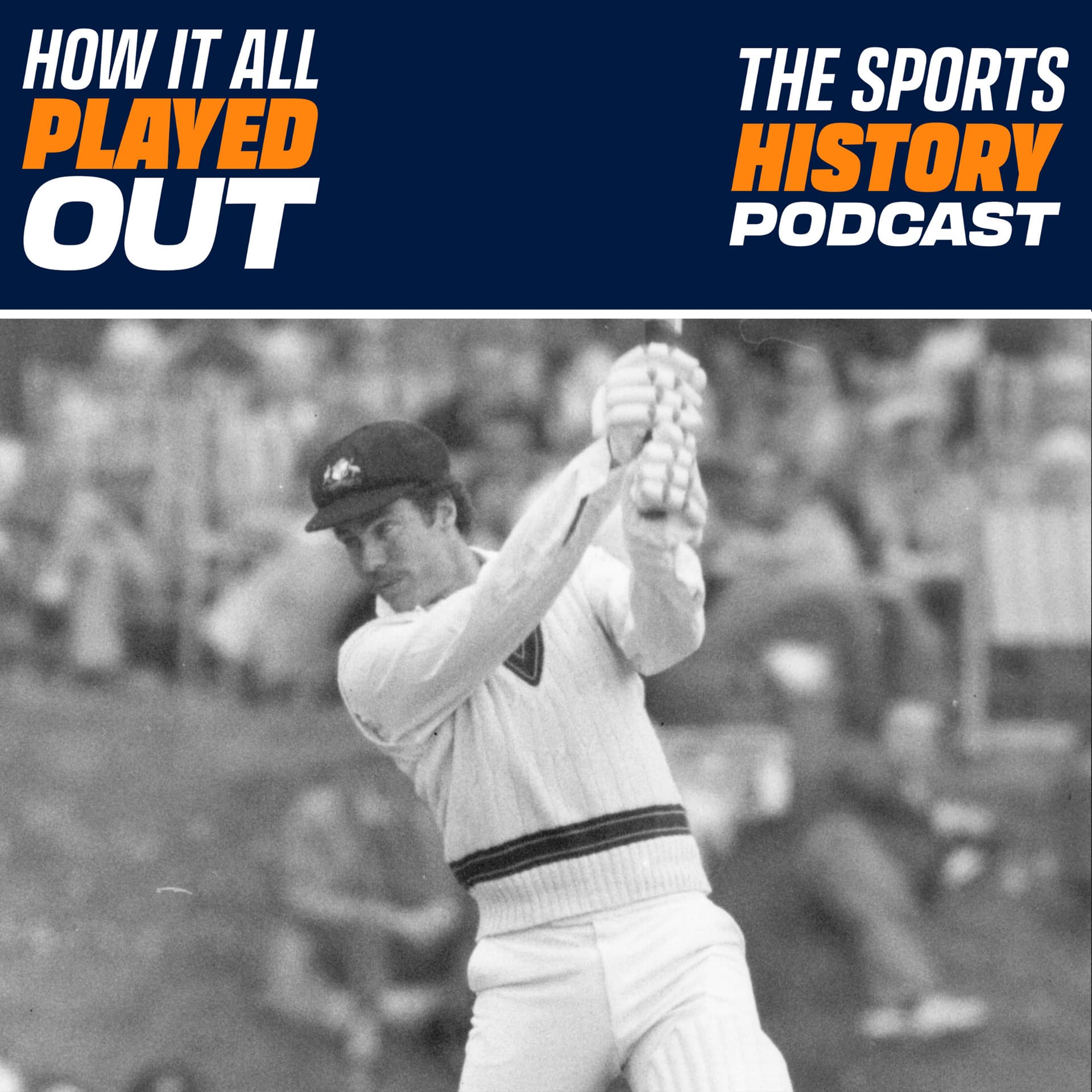
Podcast Episode Notes: The Sports Agents - "How did a 'rebel circus' transform The Ashes? - How It All Played Out"
Episode Overview In this episode, hosts Gabby Logan and Mark Chapman discuss the transformative impact of Australian media mogul Kerry Packer on cricket, specifically focusing on the revolutionary World Series Cricket (WSC) in the late 1970s. Featuring insights from Mark Pougatch and Paul Hayward, the episode delves into Packer's motivations, strategies, and the resulting consequences on the cricket landscape, paving the way for modern cricket as we know it.
Key Topics Discussed
- Kerry Packer's Ambition
- Background: Packer aimed to prove himself to his late father while expanding his media empire.
- Inequity in Pay: Professional cricketers were underpaid despite the growing popularity and attendance in Test matches.
- Introduction of World Series Cricket
- Concept: Packer's 'rebel circus' attracted top cricketers from England, Australia, and the West Indies to participate in WSC.
- Contrast with Traditional Cricket: Shift from classic white flannels and polite applause to colored clothing, floodlights, and marketing.
- Duration: World Series Cricket ran for two seasons, directly impacting the Ashes series.
- Player Perspectives on Pay and Conditions
- Financial Struggles: Players often earned less than they could in other professions, leading to support for Packer's initiative.
- Player Reactions:
- Ian Chappell: Highlighted the disparity in income and the desperate need for better pay.
- Geoff Thompson's Insight: Packer's assertive approach was viewed as necessary by players seeking fair compensation.
- The Role of the Australian Cricket Board (ACB)
- Resistance to Change: The ACB was slow to adapt, often dismissing players' needs.
- Resistance from Legends: Iconic figures like Don Bradman held traditional views, further complicating negotiations for better player treatment.
- The Cultural Shift in Cricket
- Impact of WSC: The introduction of new formats and floodlit matches changed the perception and marketability of cricket.
- Increased Audience Engagement: The combination of entertainment, accessibility, and star players made cricket a spectacle.
- Long-term Effects: The success of WSC paved the way for future formats like T20 and the IPL.
- Transition Back to Traditional Cricket
- Reconciliation: Eventually, the ACB and ICC had to negotiate terms with Packer as traditional cricket realized the necessity of adapting to modern demands.
- Aftermath: The merger left lingering tensions, especially among players who had not participated in WSC versus those who had.
Key Takeaways
- Transformation in Cricket: Kerry Packer's influence marked a pivotal shift in how cricket was played, perceived, and commercialized.
- Financial Fairness: The episode emphasizes the importance of fair compensation in professional sports, as exemplified by the changes in cricket.
- Enduring Legacy: The innovations from WSC continue to shape the cricketing landscape, highlighting the need for adaptability in sports.
Conclusion The episode provides a compelling look into the intersection of media, sport, and financial dynamics within cricket, showcasing how one person's vision fundamentally altered a centuries-old game. As the episode wraps up, listeners are encouraged to reflect on the ongoing evolution of cricket and its implications for future generations.
---
Note: For further insights and past episodes, you can visit their [YouTube channel](https://www.youtube.com/@SportsAgentsPod) and follow them on social media platforms for updates.
Written by AI. May contain mistakes. Listen to the episode to check what was said.
Transcript
Automatic transcript. May contain errors.0:02Paul Hayward:This is a Global Player original podcast.
0:07Mark Pougatch:Take a man who is desperate to prove himself to his overbearing late father and build on his media dynasty and mix that with international cricketers who feel they're not being paid their worth.
0:19Kerry Packer:You get a revolutionary cocktail. That's what happened to cricket in the 1970s. The Australian media magnate Kerry Packer turned the hitherto genteel game of bat and ball, or traditional test cricket, upside down as he signed the captains of England, Australia and the West Indies to what some called his rebel circus. For two years at the end of the 1970s, the traditional world of white flannels, red balls and polite applause collided with coloured clothing, floodlights, music and marketing. Cricket was never quite the same again. How did Kerry Packer lure the best players in the world? And how much of we see today in the dominance of the one-day game, T20 leagues and freelance players can directly be traced back to the drive, ambition and vanity of one Sydney businessman?
1:15Kerry Packer:this is how it all played out
1:27Mark Pougatch:so Paul as we get excited about another Ashes tour down under these players England and Australians I think can thank their forefathers of the 1970s for the well-paid jobs that they have
1:41Kerry Packer:and it's very interesting World Series cricket Kerry Packer's cricket was called World Series cricket, ran for two seasons, the second of which directly coincided with an England tour down under to Australia.
1:52Paul Hayward:Yeah, because when people talk about World Series cricket, they often talk about day-night games, pyjamas, white balls, razzmatazz, you know. But actually, it's just as strong in the story of Test cricket and how Test cricket has evolved. And the players who played in the World Series cricket certainly think that today's cricketers owe them a debt of thanks for having the battle to get proper wages for Test cricketers. Let's have a let's illustrate that point with some figures. So in the 70s, cricket was starting to get quite hit. Big crowds were creeping into Test arenas. Ian Chappell, the great Australian cricketer and great friend of Ian Botham, said that there were gates of$250 ,000 from an average Test match.
2:35Paul Hayward:and the players were on$200 each. $200 a test match, as Geoff Thompson put it. It's a fight over money and fairness and justice and the future of cricket. And it's fascinating and it's tremendously febrile. Let me just tell you a quick story. Ian Chappell was the player that was sent in to speak to the Australian Cricket Board.
2:57Mark Pougatch:He was the captain. He was the captain.
2:59Paul Hayward:So on the Australian Cricket Board committee is sitting the greatest test batsman in the history of cricket, Donald Bradman is sitting on the other side of the desk he's the poacher turned gamekeeper now Ian Chappell turns up with seven points to make to the board all of them begging for more money and fairness in the game at point five Don Bradman leans forward and says oh no son we can't do that so Ian Chappell goes on to point six Bradman leans forward again and says no way son we just can't do that. Ian Chappell gets to his seventh and final point and Bradman just leans back, folds his arms and stares at him.
3:38Paul Hayward:So Ian Chappell came out of that meeting and said Bradman had as much to do with the starting of World Series as anyone. So it was Bradman's contempt, ironically, for these players wanting a fair deal that hastened the development of World Series cricket.
3:51Mark Pougatch:So in the mid-70s, 74-75 is the famous Ashes series down under. Lillian Thompson terrorising England and smashing David Lloyd's box to pieces. Just to reiterate what you said about money, only 2 % of the bumper gate receipts went the way of the players. Australia come to England in 75 for an Ashes tour, Ian Chappell's captain. They are semi-ameter amongst their team. Two insurance salesmen, two accountants, an architect, a teacher, an engineer, a real estate executive, and a cigarette salesman, who I think was Doug Walters. And you said about Ian Chappell talking to Don Bradman, The ACB, you're going to hear ACB and ABC.
4:29Mark Pougatch:I'll try not to say that too much. The ACB is the Australian Cricket Board. The ABC is equivalent to the BBC. It's the television company. It's the national broadcaster. Alan Barnes on the ACB said of the players when they wanted more money, these are not professionals. They were all invited to play. And if they don't like the conditions, there are 500 ,000 other cricketers in Australia who would love to take their places. In other words, you're damn lucky to be playing off for Australia. You do it for honour and for pride. And the disparity in pay, Rod Marsh, the brilliant wicketkeeper batsman from Western Australia, you probably remember this, had a brother, Graham Marsh, who was a professional golfer.
5:09Mark Pougatch:Do you remember he was on the tour? Graham Marsh made over 100 times the money of Rod Marsh. So that's where you were in the mid-70s.
5:18Paul Hayward:Yeah, and it wasn't just Australia, of course. I'd heard an interview with John Snow, the great Sussex in England quick bowler. And John Snow said he could have could have earned more money emptying the bins outside of Lourdes than he did from actually playing cricket. Michael Holding, when he signed up for the World Series cricket, I think they got the West Indies got twenty thousand dollars US for three months work. And Holding said his personal account was in the thousands for the first time in his life. Never reached a thousand pounds.
5:47Mark Pougatch:The West Indies would earn more in a couple of seasons of World Series cricket than in a lifetime of playing test cricket for the West Indies. It's really important that we iterate that. So you've got the financial side. Right. Kerry Packer. His father, Frank Packer, was a TV and magazine magnet, but was a really tough disciplinarian with young Kerry. Thought he was a bit stupid, thought he was dyslexic. I can't wait to see Paul's reaction when I tell him this. Sent him away to boarding school aged five.
6:16Kerry Packer:Oh, I'm sure that helped. Yeah. But but boarding school wasn't 100 miles away. It was round the corner. So he didn't send him to boarding school at the end of the road. Thought his son was a dance. So Kerry was determined when his father died and he took over the media empire to prove that he could make a success of it.
6:38Mark Pougatch:And television in the 70s in Australia was very heavily reliant on US imports. And nobody had yet worked out the golden triangle in terms of sport, which was sport, corporate sponsorship and TV exposure.
6:53Kerry Packer:And Packer thinks, I love cricket. They're underpaid. Cricket's quite cheap to make. And I can fill up my schedules with it. And in the end, I can get corporate sponsorship. So he goes to the ABC and goes, I want Test Cricket and I'll pay you more than the broadcasters the ABC are paying. And they went, no, no, no, not now. And he goes, OK, I'm putting you on notice in three years time.
7:15Mark Pougatch:I'm coming back and I am going to buy it. And in the meantime, he thought, I'll start my own tour. I'll start my own circus, my own revolution. And if I start with Ian Chappell and Dennis Lee, the two most famous cricketers in Australia, the rest will fall. And that domino effect happened quickly.
7:33Paul Hayward:Yeah, I mean, a bit more on Packer. He was chippy, arrogant, combative, smug. I'm starting to understand why now if he was sent to Bordy's Field at 5. One journalist said he looked like a hammerhead shark.
7:48Kerry Packer:Well, that's actually a very good description.
7:50Paul Hayward:Yeah, he did look like a hammerhead shark. And Geoff Thompson said that Packer had told him, son, don't ever cross me. If you do, your life won't be worth living. So he was a combination of sort of saviour to the players. He positioned himself as the saviour of the players, the guy who was going to pay them properly, and absolute kind of business, you know, rhino skin bully. But he was bullying people who really probably needed bullying, really, in terms of the people running Australian cricket.
8:21Mark Pougatch:So that's how he gets to Australian cricket. The West Indies have paid nothing, but he needs a third leg of the tripod, doesn't he, which is England. and England play Australia in the centenary test match of 1977 at the MCG. Brilliant test match, celebrate 100 years of test cricket, where the result is identical to the very first test match. Australia win by 45 runs. And Tony Gregg's the England captain. But I think it's fair to say never really accepted by the establishment because he's South African with a Scottish father. And he's 30 and he's got Ian Botham coming up fast on his inside lane as an all-rounder.
8:52Mark Pougatch:And Packer thinks, I can get to Gregg and does so very easily, very easily. And he goes, OK, he flies him from Melbourne to Sydney after the test match. This is what I want to do. But you mustn't tell anybody. But by all means, see if anybody in the England ranks will come with you. You mentioned Jon Snow had his problems with the selectors. Derek Underwood, the most famous slow left armour of all time, didn't have any security. Alan Knott, the greatest wicketkeeper England's ever had, was bored of always having to go away every single winter. Even Tony Gregg is pushing at some open doors now and then.
9:22Mark Pougatch:And in 1977, there's another ashes tour to England. And Tony Gregg is captain of England. And 13 of the 17 Australians have signed up to Packer. And the other four don't necessarily know what's going on. And inevitably leads to a lot of nastiness and bitterness, doesn't it, within the Australian camp?
9:41Paul Hayward:Yeah, somebody said the test circuit by this point is a red light district. You know, everybody's getting picked up by World Series cricket. And of course, it wasn't just that the players didn't really get any money for playing. They had no security either. They had no contracts, no pensions, nothing. So you get picked one game. If you had a bad game, you might never play for your country again. So in that sense, they had nothing to lose. The authorities had created a situation where these guys might as well go rebel because they weren't losing anything, you know, because it wasn't worth playing conventional test cricket.
10:11Mark Pougatch:Well, Sheffield Shield players, so the equivalent in Australia of the county championship, was surveyed in 1977. More than half said playing cricket was detrimental to their careers.
10:21Kerry Packer:And Ian Chappell said the only way he made money out of cricket, he was one of the very few to make money out of cricket. But he didn't make any money from playing cricket. The money came from the ancillaries. It came from advertising books and newspaper columns. He actually describes the money he makes from cricket as fish and chip money.
10:39Mark Pougatch:Literally as simple as that. Kerry O 'Keefe, very, very funny commentator on Australian radio, a spinner, said, we were a vulnerable bunch of part-time cricketers to whom someone, Packer, had offered us money. So you can see just how they were ripe for picking. Inevitably, the story comes out in May of 1977 and the English board reacted by sacking Tony Gregg on the spot. They said he recruited players for a rebel circus. We can't have you in charge. You can see how that happened. And then the International Cricket Council, the ICC, so the governing body of world cricket, tried to ban all the Packer players from playing for their country or their counties.
11:17Mark Pougatch:And of course, Packer goes, we'll take them to the high court. It's restraint of trade.
11:21Kerry Packer:And they won the players, which leaves the ICC with a massive bill. And who do they want to get the money off for the massive bill? The boards who don't have any money.
11:31Paul Hayward:Yeah, when you look back on it, I mean, Kerry Packer in many ways is quite an unedifying figure, but it's quite fun looking back and seeing these power structures topple like dominoes, wasn't it? because they had to go. The players quite simply were being exploited and used and discarded and denied any kind of professional security. So Kerry Packer historically emerges as the catalyst. Today, we'd call him a disruptor. Yeah, we'd call him a disruptor. But of course, to the players, he was a kind of patron saint because he signed, I think, in the end, 66, I think, players joined. And all of them came away with a lot more money.
12:07Paul Hayward:And also the thing that we'll probably come on to later is that this wasn't exhibition cricket they put on. They were proper matches.
12:14Kerry Packer:Ian Chappell said it was the toughest cricket he ever played.
12:16Paul Hayward:Yeah, it was fierce. The players actually sang for their supper and created a whole new level of drama in world cricket.
12:24Kerry Packer:The last thing Kerry Packard did, before we talk about the first season of World Series cricket, was a very canny one. He got Richie Benno on side. Richie Benno became a disapproved person, as far as the Australian Cricket Board is concerned. that's a bit like saying that the Queen was a disapproved person.
12:40Paul Hayward:Didn't they make his wife disapproved as well? Yes.
12:42Kerry Packer:Oh, yeah. Daphne was disapproved as well. They were both disapproved. What did she do wrong? Exactly. What did she do wrong? So we're going to take a break and when we come back, season one of World Series Cricket.
13:09Kerry Packer:So they weren't allowed to call them test matches for legal reasons. They had to call them super tests. And they weren't allowed to play at the traditional grounds.
Read the full transcript
13:16Mark Pougatch:They went, no, no, we're not having that. That's rebel cricket. So the first test match is played on an Aussie Rawls ground, 25K out of Melbourne. It's proper cricket. The West Indies beat Australia by three wickets. There's a world team as well, sort of three teams. Now, I'm sure one of your heroes, Ian Wooldridge, would have been one of your heroes,
13:33Kerry Packer:the great writer. He watched this test match and he said it featured some colossal cricket. It would be uncharitable to suggest that the big top caved in on Mr Packer's circus. All that happened was that barely a single dinkum Aussie paid it more than abstract attention. Well, it was new. It was rebel. It was outlawed. It was 25 kilometres from Melbourne's city centre.
13:56Mark Pougatch:It was quite expensive to watch. and at the same time, simultaneously, the Aussie test team were playing India at the Gabba in Brisbane. So it's not surprising
14:05Kerry Packer:that the first test didn't really take off. They also had to create, if you go to Adelaide, particularly this winter, to watch the test series, I think any of them actually now in Australia, you will hear drop-in pitches. Lots of things today the World Series cricket invented. Drop-in pitches is basically a pitch made in a huge hothouse, a huge greenhouse, and dropped in because this is an Aussie rules ground. So they had to drop in the 22 yards of turf that they could play cricket on.
14:31Mark Pougatch:There's a man called John Mayley. They call them curators in Australia. We call them groundsmen. He came up with this. It was a genius idea. So the first test, of course, is by comparison not going to have the exposure. It's on Channel 9, but it's not going to have the terrestrial exposure, the free-to-air exposure. It's because it's not got the heritage to start with.
14:52Paul Hayward:I love looking at the footage of that first test match because Bobby Simpson called them slobs. He said they were all slobs. So it's kind of long.
15:00Kerry Packer:So he's captain of the Australian test team.
15:02Paul Hayward:Exactly. It's long hair and sideburns. They were like kind of rock and roll stars, weren't they, a lot of those players? Sort of renegade stars. Yeah, there was a real renegade feel to it. But as you say, the problem is that there were 32 ,000 at Brisbane watching Australia against India in the approved conventional test arena. and there's probably about a total of 13 ,000 at the VFL Park, a sprinkling, really. So it was an incredibly inauspicious start. I love the umpires as well. They wore Panamas, ties, blue trousers, and white blazers. They look like they've dressed for glorious Goodwood, you know.
15:39Paul Hayward:So the umpires are immaculate, and the players were like slobs, as Bobby Simpson called them. The only way you could tell them apart, they got different color caps, didn't they? I think it was yellow against sky blue. So there were these attempts, half-hearted attempts, at making this look futuristic. But ultimately, it looked like a collection of mercenaries trying to sell you something.
16:01Mark Pougatch:But very high standard cricket. Probably high standard cricket because you're playing the West Indies.
16:06Kerry Packer:You're Andy Roberts, the Antiguan, and Michael Holding, two of the greatest fast bowlers that ever lived. Please do not think this was Mickey Mouse cricket. No, no. Clive Lloyd. Clive Lloyd was such a patrician figure. that the minute he signed for World Series cricket, because the West Indies were exhausted from playing so much country cricket because it was the only way they could make any money because they weren't making any money from playing for the West Indies. So the minute Clive Lloyd signs for World Series cricket,
16:31Mark Pougatch:Viv Richards follows, Michael Holding follows, Andy Roberts follows. They all follow.
16:35Paul Hayward:And of course, the top South African players wanted to be there because they were banned. Barry Richards couldn't believe his luck, could he? Yeah, they couldn't get into the international arena. Interesting, there were no, I don't think there were any players from India and there's only one from New Zealand.
16:47Mark Pougatch:And a couple of Pakistanis, but they had a bit of a row with their board. So it's going OK. But what changes World Series cricket? Actually, I think you and I could agree. What changes cricket forever is the first floodlit match. And they play a floodlit match in January of 78, still on an Aussie rules ground. But Ian Chappell says in the second session, so the second innings, suddenly there are 38 ,000 people there.
17:12Kerry Packer:And there's a white ball and everyone can see it. and Wayne Daniel hits a massive six off the penultimate ball to win the match
17:18Mark Pougatch:and everyone's in coloured clothing. And one author wrote, just as the sun seemed to be setting on WSC's first disaster-filled season, someone turned the lights on.
17:30Paul Hayward:Yeah, I think that's a huge factor. I'm going to suggest an alternative theory. It was people getting hit in the head routinely. So you've already described this incredible battery of fast bowlers. It looked like some of the most dangerous cricket I've ever seen. So at the Sydney showground, I think in the second test, Andy Roberts hits David Hooks on the jaw. Yeah, breaks his jaw. Breaks his jaw. Dennis Lilly is hitting people routinely. Yeah. And you start to see these, you can only describe them as motorcycle helmets. Some players start to wear these motorcycle helmets. And Dennis Amis, who got hit probably more than most people in his career.
18:08Paul Hayward:What a brave player. What a brave batsman. he finds a motorcycle helmet maker in the West Midlands and gets them to make a lighter one adapted for cricket. And Amos said that when he played in Australia, the Australians were shouting, hey, Amos, where's your motorcycle, mate?
18:26Kerry Packer:But you're absolutely right.
18:28Paul Hayward:But the violence of it, I think, was a selling point.
18:30Kerry Packer:There's violence, there's validation this is proper cricket because people are getting their jaws broken. And there's also a sort of otherness of World Series cricket because we're wearing motorcycle helmets and Bobby Simpson's wearing a baggy green to play the spin of Bish and Betty in the normal series. There's definitely an otherworldliness and anotherness about it.
18:49Paul Hayward:Oh God, the spectacle of these batsmen facing this perilous onslaught from the best fast bowlers in the world added an air of jeopardy to it.
18:59Kerry Packer:And on drop-in pitches, which were still in their infancy in terms of their trueness of bounds.
19:03Paul Hayward:Yeah, so I'm absolutely convinced you're right about the lights going on. And that was revolutionary. But I think the whole concept already had some emotional momentum from the sight of the spectacle of people trying to get out of the way.
19:16Kerry Packer:Well, I think also you're actually right.
19:18Mark Pougatch:Because Lillian Thompson in 74, 75 wasn't that long ago. So people understood that, that concept of terrifying fast bowling. It's like everything in life. It's a mix of everything. It's floodlights. It's coloured clothing. It's bouncers.
19:32Kerry Packer:It's the world's best players. It's marketing. this is where come on Aussie come on come on comes up which is damn annoying
19:39Paul Hayward:but you know it's a marketing tool you know how much trouble you got in the last time you sang on that show that's why I kept it brief you are getting clipped again Mar good luck
19:47Kerry Packer:it's also you're going to enjoy this it was also the first time that we'd heard Mike Stumps in the first season of Mike Stumps it picked up 13 shits
19:59Mark Pougatch:14 you bastards now it's worth saying this because I spend a lot of time in Australia as you have I worked in Australia as a teenager, clean pools, worked behind bars. You bastards, quite often a term of infection. Good morning, mate, you bastard. Infection?
20:11Paul Hayward:You just said infection.
20:13Mark Pougatch:Yeah, well, it could be either. A term of infection quite often. There were three fucks and one C word. So, you know, that was coming in. Oh, they reined it in then?
20:21Kerry Packer:This is before the guy, you know, on the desk, as we called it, broadcast, he managed to fade it out. It wasn't quick enough to fade it out.
20:27Mark Pougatch:So this is all caught. This is all caught at home.
20:30Paul Hayward:Yeah.
20:30Mark Pougatch:So they got to the end of the first season. Things are going okay. the biggest turning point of all is at the start of the second season so season 78 79 in Australia coincides with England playing the Ashes in Australia and the Australian team is completely denuded by Packer so England win by a mile but the point is they are now allowed to play on traditional grounds the 28th of November 1978 is no question in my mind is the turning point for cricket let alone World Series cricket they are playing a day nighter Australia against the West Indies sorry Australia against the World 11 I think it is doesn't actually matter who it is at the SCG and Kerry Packer sees a snake
21:10Kerry Packer:of people queuing to get into the SCG and he goes we've made it and Rod Marsh looks out the window and goes we're back this is it yeah and
21:19Paul Hayward:he tells the staff to throw open the gates and let everybody in because he knows that's the moment and even the chairman of the Australian Cricket Board said that 30 years of progress had been made in two years. So I think that's the I mean actually World Series cricket doesn't have much longer to go after that but that's the moment of vindication with a farce thrown in because the West Indies come out in pink stroke apricot outfits that were meant to be burgundy and some of the West Indian players are really unhappy with the colour and it really put them off in the game the World XI are in pale blue.
21:55Paul Hayward:I suspect the wardrobe sabotage was entirely deliberate.
21:59Kerry Packer:But you could see it can't you look out the window And you think people are coming now to cricket after. It's so obvious to say it today. They can come to cricket after work or they can take an afternoon. They can take a half day and see the whole match. It was so blindingly obvious to say it now, but it didn't happen in the 70s.
22:16Paul Hayward:No, it is blindingly obvious. And that was the second series, of course, is where all the merch kicked in and all the marketing got going. So T-shirts with big boys play at night, a lot of sexual innuendo. and it was all very... It was all pretty basic. All very basic. It was all very rock and roll and lots of families started coming, more women started coming to the games. It had this... They established the point that cricket had far more to it than the establishment governing bodies had ever realised and Packer liberated this kind of unruly spirit in cricket and made it marketable.
22:55Mark Pougatch:There's a quote here. I'm going to read it to you. The traditional cricket fan was less in evidence than the family elements surrounding VFL Park. Now, I would suggest to you, you could take out the word VFL Park and say surrounding, I don't know, Trent Bridge,
23:10Kerry Packer:and that could be said about the 100. It's exactly the same quote, isn't it? We are getting to a new constituency who have not fallen in love with cricket before, is what it's saying.
23:19Paul Hayward:Yeah, it's remarkable to think that it took so long, really, after World Series cricket and day-night cricket. I mean, there was always... One day cricket was nothing new, But it was played during the day in this country, in white clothes. Absolutely. It took decades between the end of World Series cricket and T20 and the IPL and the 100. You wonder why there was such a big time gap, given that Packer had proved the point.
23:42Mark Pougatch:In the last part, peace breaks out, Kerry Packer gets what he wants, and cricket is changed forever.
24:06Mark Pougatch:so we're coming to the end of the second season of world series cricket and there's a super test match at the sydney cricket ground between australia and the rest of the world which gets 40 000 people and a week later the sixth ashes test is played there and gets half the crowd england have won the series so easily because australia are crap because all their players for World Series cricket. And everybody realises this can't go on. The ICC need money from all their boards to pay for the high court case, which they've lost. So that's not going to work. And the ICC are desperate for all the big players to be back because there's a World Cup in England in the summer of 1979.
24:43Mark Pougatch:So they don't want all the players ostracised either. And we're back to money again. The Ashes Tour profit of 78, 79
24:51Kerry Packer:is a quarter of what it had been four years earlier because there's simply not enough money to go around two cricket circuits. There's not enough money in terms of sponsors and advertisers and fans to go around two cricket circuits.
25:05Mark Pougatch:So Packer realises that the deal that the Australian Cricket Board had with the broadcast is coming to an end. So he makes his move.
25:12Kerry Packer:But just before that, a lot of people make this point, and I think it's fair enough, Packer being the businessman that he is, he doesn't let on about how much this is costing him. And it's costing him a huge amount because they're not just playing in the main cities. They're going up and down the country because the point is they're going to Cairns in Queensland. They're going to Devonport in Tasmania because they've got sort of Cavaliers teams with less known people. They're spending a huge amount of money on this. Ross Edwards, who was an Australian batsman who was playing World Series cricket, and a lot of them were over 30, so there wasn't necessarily a lot of time left in their legs.
25:45Kerry Packer:Ross Edwards says, we, World Series cricket, would have had one more great summer. The Australian cricket board would have had one more disastrous summer and there would have been nothing left for any of us. So actually, Packer doesn't want to kill traditional mainstream cricket because he wants something to take over.
26:01Paul Hayward:There was a great line. Somebody said, Packer didn't spend$12 million buying the game. He spent$12 million turning it into something that could be bought.
26:12Kerry Packer:That's absolutely right.
26:14Paul Hayward:He destroyed the opposition. He crushed the governing body, the Conservatives, the establishment. and then he bought the product that was sitting there waiting to be developed after he'd crushed all opposition to it. And it's clever, really. It's a kind of investment, an investment through war, if you like. And the capitulation of the Australian Cricket Board was inevitable because, as you said, their test team was hopeless and nobody wanted to watch it. The best were playing the best in World Series cricket and the two sides ultimately had to be reconciled. And they were, uncomfortably. There was a lot of bitterness, I think, for years afterwards particularly in Australia, where the players who hadn't jumped ship to World Series cricket were very bitter with the players who had.
26:56Paul Hayward:So it wasn't smooth. It wasn't a smooth transition by any means.
27:00Mark Pougatch:You're absolutely right to say in Australia, think about the great Botham's Ashes of 1981. The rift between Kim Hughes, the captain, who wasn't a World Series player, and Dennis Lilley and Rod Marsh, who were, was massive. It was absolutely evident. The rift in Australia between World Series players and non-World Series players lasted a lot longer than it did in this country. Derek Underwood and Alan Knott, who Kent tried to get rid of initially, but in the end had to backtrack. I do remember that very well because my dad was a Kent member. You know, loving cricket. I was listening to all these conversations.
27:31Kerry Packer:And I think his reaction, my dad's, was very much the reaction in England, which wasn't necessarily sort of, you know, old buffoonery. I think it was just not really understanding quite what was going on. But Underwood and Knott played Test cricket again after playing World Series cricket. They're assimilated in a way that it was a much more difficult one in Australia.
27:48Mark Pougatch:But Packer just walks in and he goes, right, I'll bid twice what the ABC are going to pay you.
27:54Kerry Packer:And of course, the ACB being pretty much broke, thank God for that.
27:57Paul Hayward:We need
27:58Kerry Packer:the money. And actually, the global governing body are pretty pissed off with the Australian cricket ball. They go, we backed you up all the way through this. And now you're just bending at the knee and going, sure, Mr. Packer, take everything you want. Because Packer doesn't just take the broadcast rights. This is really important.
28:14Mark Pougatch:He takes for 10 years the right to promote and market the game as well he hasn't just got the right to show it he's got the right to
28:23Paul Hayward:shape it yeah it's very clever it's like sort of um divide and rule really it was a very clever tactic of his but just to illustrate the quality of of play and and individuals in in that in world series cricket these were the top batsmen in order of average barry richards viv richards greg chapel david hooks clive lloyd gordon greenwich and ian chapel now now with that going on that
28:49Mark Pougatch:is the best to get best against the best that's the best of the 70s bar none yeah and the bowling
28:54Paul Hayward:by the way these guys were facing you know andy roberts michael holding joel garner imran khan uh mike proctor garth larue you know the best of the best the only reason dennis lilly jeff Thompson so so there is no way on earth that the establishment cricket the cricket that these people left behind to make more money could have possibly competed with that absolutely
29:17Mark Pougatch:Gideon Hague's a sort of pre-eminent cricket writer in the world in many ways not just Australia I would recommend his book The Cricket War which I read for this which you know sometimes you buy a book off the internet I opened the front page I went oh sorry Durham Clayport Library this has been Nick from you 50 years ago. If you want it back, I'll happily send it back to you.
29:36Paul Hayward:There's a lot of people in Durham wanting to read that book.
29:38Mark Pougatch:I think this sums it all up. Gideon said that he was talking about the rival attraction, World Series cricket, the rival attraction was working the night shift. That sums it up, doesn't it? The floodlights, the coloured clothing, the marketing, the music. But the players you've just mentioned,
29:55Kerry Packer:it would not have worked if they'd had, with respect, you and I support Sussex, we can do that. They wouldn't have worked if they had a solid county pro from Sussex. It would not have worked. You had to have the best against the best so that there was a validity and an authenticity about the cricket, even if you thought that the structure was a bit rebel-ish and a bit outlaw-ish.
30:14Paul Hayward:Yeah. When did cricket start? I don't know, 200 years before that. It took 200 years for them to realise that you really ought to be showing your wares when people are able to watch it and when they want to watch it. I know there weren't floodlights in the 19th century, but it's incredible it took until the mid-70s for someone to say, Why don't we put this under lights so people can watch it when they get home from work?
30:32Mark Pougatch:I mean, the first one day was in the 70-71 tour when it rained so much, they rained off a test match and England Australia thought we'd better play one. So they played at the MCG. We'd obviously played Gillette Cup over 60 overs, which was obviously an all-day game. But as you say, what we see today, we would argue, are direct descendants of World Series cricket, of Packer cricket. Fitter players, better paid players, day-night cricket, broadcasters running the game t20 leagues marketing songs colored clothing the IPL is second only to the NFL in per match value I would say all those are grandchildren of Packer cricket yeah and it's
31:14Paul Hayward:incredible that this thing could have descended into one big almighty drinking session and it could have turned into a two-year party but actually everybody who played in it said it raise their professional standards of it weirdly because one they were getting paid more to do it so i suppose they had more respect for that they knew that packer would be down on them quite
31:32Kerry Packer:quickly if they didn't deliver he was oh he was down on them some destroy the kepler vessels who was a south african who played for australia then played for south africa didn't do very well one day and he was straight into the pavilion what's wrong with you i paid you good money to come here you know pull your finger out this isn't this isn't a testimonial yeah yeah you've got the
31:49Paul Hayward:threatening owner, you've got the intensity of the cricket itself. And I think a lot of them enjoyed taking it seriously.
31:57Kerry Packer:The West Indies never won in Australia. So for them to beat Australia, even in a super test, was a massive part in terms of their confidence and their self-belief of what the West Indies went on to do, which is to rule cricket for 15
32:12Mark Pougatch:years with that battery of fast bowlers. It was a huge turning point because the West Indies had been battered by Australia in Australia in traditional test matches a few years earlier in the 70s so even in a super test scenario for them to win in Australia for Clive Lloyd and Viv Richards and Michael Holding and Andy Roberts was a massive turning point it was absolutely huge and of course
32:32Paul Hayward:I suppose finally we should say that it really established the point as well that that cricket could be about showmanship and personality and character and rivalry and and individuality and And, you know, because cricket up to that point had been about it was still a game for polite people who dressed well, you know, and concealed their unruly side.
32:52Kerry Packer:And walked when they nicked it to the keeper and all that stuff.
32:55Paul Hayward:Yeah, these guys made unruliness the norm, didn't they? They made it sell. They made it box office. And so I think cricket was transformed temperamentally by these people and by what Packer put on.
33:07Mark Pougatch:But I don't think we can underestimate. Also, we should mention the chutzpah of a businessman, because clearly Packer was spending a huge amount of money on this. I don't think necessarily everybody within the Packer empire knew just how much money they were spending and just how affordable it would have been had they gone into a third season. But you're talking about a brilliant businessman dealing, frankly, a very compliant and ageing Australian cricket board. he had the cojones to see them off didn't he just you know he so he had the he had the poker face
33:40Paul Hayward:to see them off yeah you need me more than i need you huge gamble uh massive for him with his with his money and and but i suppose he saw an opposition that would be easily defeated in the end and he
33:51Mark Pougatch:proved it to dad yeah i mean how often do we hear that proved it to his late father was his dad still around to see no no no he died in 1974 you think i'm dyslexic and stupid you set me away to boarding in school age five you think i'm a dunce i've changed cricket forever yeah turn the lights on well i hope that's got you in the mood for the ashes paul that was really fascinating thank you
34:10Kerry Packer:for that thank you very much for listening to us that's the end of season two and while we take a little break don't forget all our past episodes are there for you to enjoy to go back to to listen to for the first time they're all on global player or wherever you get your podcasts please make sure you rate those episodes and follow us and tell your friends and keep the suggestions coming
34:30Mark Pougatch:because they've been really good suggestions and we are picking up on them so you can email us on how it all played out at global.com and you can find us on socials on at played out pod and we'll speak to you again very soon
34:52Kerry Packer:how it all played out is presented by me mark pugatch and paul hayward it's a global original production in association with apex content ventures
35:02Mark Pougatch:this has been a global player original production
From the publisher
In the last episode of Season 2, as we gear up for the Ashes, Mark Pougatch and Paul Hayward bring you the story of Australian media magnate Kerry Packer, who all the current players should be thanking.
Packer turned the gentile game of Test cricket upside down as he signed the captains of England, Australia and the West Indies to what some called his 'rebel circus'.
For two years at the end of the 1970s, the traditional world of white flannels, red balls and polite applause collided with coloured clothing, floodlights, music and marketing - cricket was never quite the same again.
So how did Packer lure the best cricketers in the world? And how much of what we see today can directly be traced back to the drive, ambition and vanity of one Sydney businessman?
We hope you've enjoyed Season 2 of How It All Played Out. While we take a short break you can check out all our past episodes on Global Player or wherever you get your podcasts.
Remember to follow or subscribe, and give us a 5 star review too!
We'd love to hear from you! Email us: howitallplayedout@global.com
Get in touch on socials: @playedoutpod
Executive Producer: Adonis Pratsides
Producer: Sophie Penney
Video Producer: Sam Trudgill
Social Media Editor: Calum Scotland
Head of Podcasts: Factual: Al Riddell
Director of Podcasts: Vicky Etchells