
In short
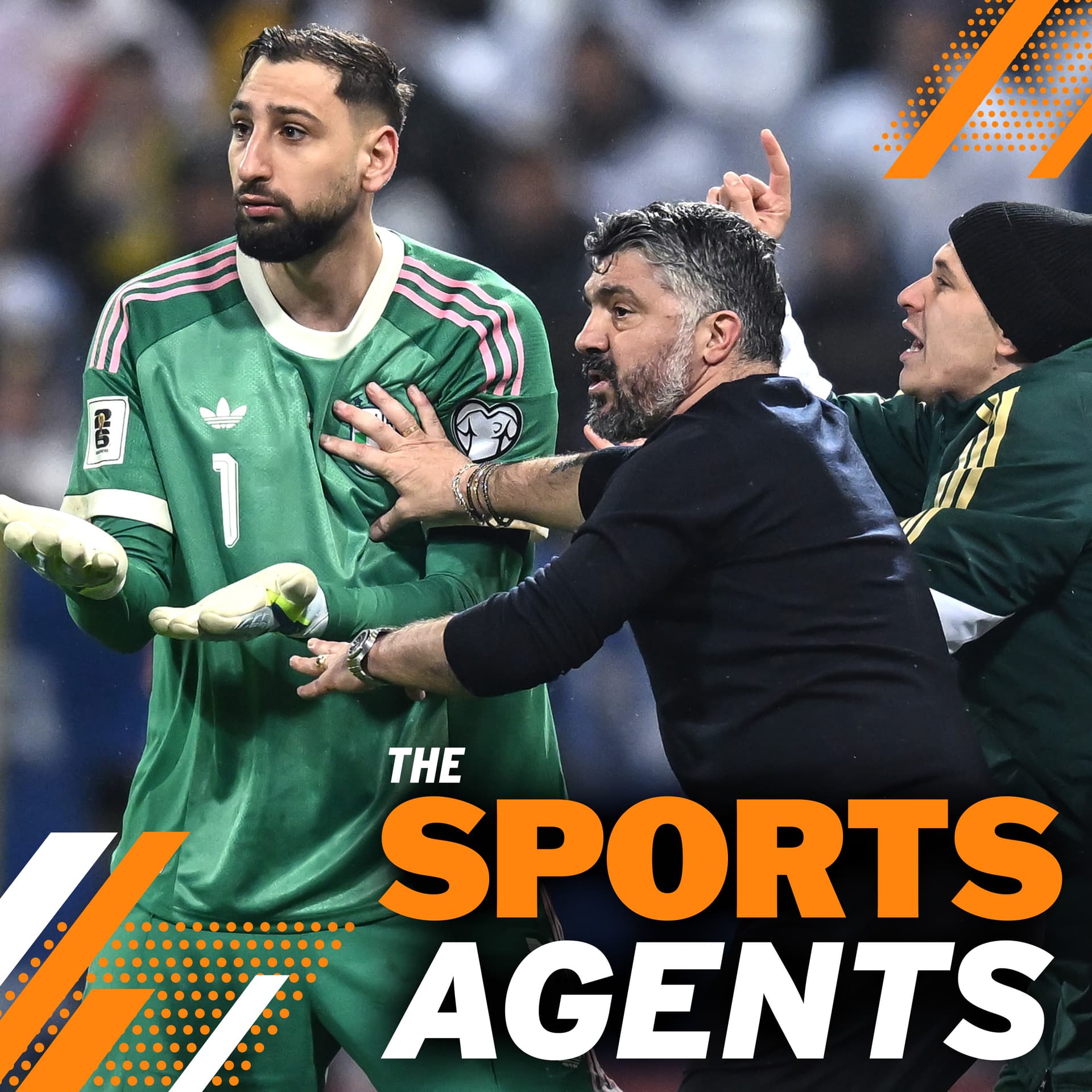
Italy’s failure to qualify for a third straight World Cup triggers a political and footballing crisis, with protests outside the Italian Football Federation (FIGC) headquarters in Rome and pressure for FIGC president Gabriele Gravina to resign.
Guest backgrounds
James Horncastle is a football journalist who joins Gabby Logan and Mark Chapman to explain Italy’s structural problems. (Horncastle references meetings and interviews with Italian football figures, including Demetrio Albertini.)
Key claims
The crisis is driven by systemic flaws “top to bottom,” not just Gravina. Italy’s youth pipeline is hindered by expensive grassroots access and a coaching culture focused on winning games rather than player development. Reforms haven’t “healed” the system since earlier World Cup failures (2010, 2014). Serie A’s complacency and protection of internal power blocks marketing and modernization.
Notable examples
FIGC HQ pelted with eggs; Gravina refusing to resign immediately; Italy’s near-miss in a match where a red card and missed chance could have changed the outcome; Juventus’ limited output from its U23 pathway (only Kenan Yildiz and Dean Huijsen cited); Como’s foreign-heavy model criticized by Italians; Italy youth successes (U17/U19 European titles, U20 final) contrasted with senior failure.
Written by AI. May contain mistakes. Listen to the episode to check what was said.
Chapters
Tap a time to open that second in VOSetting the Stage: Italy's World Cup Struggles
0:45 to 1:21
Discussion on Italy's failure to qualify for the World Cup and its implications.
“failed to meet the tournament that has 48 teams in it?”
Arsenal's Champions League Aspirations
1:21 to 4:30
Hosts discuss the pressures on Arsenal fans regarding league and cup success.
“The Sports Agents with Gabby Logan and Mark Chapman.”
The Importance of Harry Kane for England
4:30 to 5:29
Analysis of Harry Kane's crucial role in the England football team.
“What do you mean a money-making exercise?”
Concerns About Player Readiness Ahead of the World Cup
5:29 to 8:59
Discussion on player injuries and fitness leading to the World Cup.
“Most of the rest of the England attacking lineup have had very hit and miss.”
Veteran Sports: Over 65s Cricket Teams
8:59 to 11:30
Hosts reflect on the joys and community aspects of veteran sports.
“I'm definitely going to start playing cricket, basically, in the aim that in 20 years' time I can be part of it.”
Transition to Italy's World Cup Disaster Discussion
11:30 to 11:48
Hosts lead into the main topic about Italy's World Cup failure.
“So subscribe, follow, and please leave us a review.”
Examining Italy's Failure and Political Fallout
11:48 to 14:01
In-depth analysis of Italy's World Cup failures and the political consequences.
“James Horncastle, welcome back to the Sports Agents.”
Italy's World Cup Failures and Reforms
14:01 to 17:08
Explore the systemic issues in Italian football post-World Cup failures.
“Now, the reason he didn't was because only six months earlier, Italy had won the European Championship for the first time in half a century.”
Challenges in Youth Football Development
17:09 to 19:55
Discuss the financial barriers preventing youth from engaging in football.
“And as we've seen with England, England has still been able to put in all the EPPP kind of reforms that have allowed young players to come through for a pathway to be there.”
Coaching Philosophy and Player Development
19:56 to 22:48
Analyze coaching practices affecting player development in Italy.
“The prices, the costs that it is to put your kids through.”
Show all 18 chapters
Comparing Italian and English Football Economies
22:49 to 25:43
Examine the economic incentives for developing homegrown talent in Italy versus England.
“Kenan Yildiz for Juventus number 10 and Turkey star Dean Hoyssen.”
Marketing and Global Presence of Serie A
25:44 to 28:00
Investigate why Serie A struggles to market itself internationally.
“I suppose this is a two part question really why hasn't Serie A been able to market itself properly?”
The Evolution of Italian Football TV Deals
28:00 to 29:37
Explore how TV deals transformed Italian football's economy and strategy.
“in bringing to the fore the TV model, which has enriched football, um, so well over the last 20, 30 years in starting that satellite TV model.”
Como's Innovative Approach vs. Tradition
29:38 to 30:58
Discuss Como's new strategies in contrast to traditional Italian football management.
“who are interested really in, as you said, protecting their own positions of power where they are very influential.”
The Impact of Italy's Absence from the World Cup
30:59 to 32:57
Analyze the significance and implications of Italy missing the World Cup.
“the natural order of things to not have the Azuri there.”
Gianni Infantino and Italy's World Cup Controversy
32:58 to 35:16
Examine the controversies surrounding FIFA's president and Italy's qualification issues.
“where there are so many Italian-Americans, millions.”
Cultural Resistance in Italian Football Coaching
35:17 to 38:18
Investigate the resistance to change within Italian football coaching traditions.
“And certainly, if they were, it doesn't look like Rino Gattuso would be in charge, because that's the other thing that might happen today, that he might see out the rest of his contract at the end of the season.”
Call for Change in Italian Football
38:19 to 39:43
A compelling call for modernization and adaptation in Italian football practices.
“If you listen to Pep Guardiola, you know, Pep Guardiola says, you know, Roberto is one of the most innovative coaches the last 20 years.”
Transcript
Automatic transcript. May contain errors.0:02James Horncastle:This is a Global Player original podcast. The headquarters of the Italian Football Federation in Rome has been pelted with eggs. Did you watch England lose to Japan? No. The president of the Italian Football Federation, Gabriele Gravina, he will resign today and the reset button will be pushed. Chatting to Arsenal fans, they seem to convince themselves that actually the Champions League is the thing they want the most.
0:27Gabby:It's always the domestic league first and foremost. Has to be.
0:32James Horncastle:The papers, politicians, the Italian public believe that their system is still rotten. It's official then. This World Cup in the US will be the third that Italy has failed to make. So how has one of the most decorated football nations in the world failed to meet the tournament that has 48 teams in it?
0:52Gabby:Even politicians in Italy don't miss an opportunity to throw their two penneth in. So they're demanding that heads must roll. We will talk about this today because their local papers have dubbed it the Azuris World Cup curse. And the kind of debates that England fans might remember surrounding their performance at the 2010 World Cup in South Africa around young talent, foreign players and a league that seems to be in disarray. Welcome to the Sports Agents.
1:31The Sports Agents with Gabby Logan and Mark Chapman. Hello, Mark. Hi, Gabby. How are you? I feel a little bit discombobulated not working at the weekend. I know you are working this weekend.
1:45Gabby:Do you know what? Looking ahead to this weekend, and I think we will talk about this in the build-up to the FA Cup game, the Southampton Arsenal one, But it will be interesting to see how Arsenal react because already the League Cup final defeat seems so long ago. And in fact, by the time we get back to the Premier League in still over a week's time, it will understandably feel even longer since that defeat. So I actually think the way the calendar has worked out could well benefit Arsenal. Yeah, because I will be popping to Lisbon on Monday where they're playing against Sporting on Tuesday. So they will have played an FA Cup and a Champions League first leg quarterfinal before they get, as you say, back into the Premier League.
2:31And chatting to Arsenal fans, I don't know if this is kidology and they're trying to convince themselves of this. I have one in very close to my heart, my son. They seem to convince themselves that actually the Champions League is on balance the thing they want the most because they've never won it. But I still, I cannot believe that the collateral, the damage that would, you know, the fallout from not winning the Premier League would be huge. Whereas if they go out in the semifinals of the Champions League, that's not a disgrace, is it? Throwing away the lead they've got in the Premier League is something of a disaster.
3:05Gabby:I think until you win, I know some teams have very special relationships with European football and so on and so forth. But I am always of the opinion that unless, say, you've won the Premier League four times on the spin or three times on the spin and haven't won the Champions League and therefore really want to get your hands on the European Cup, I think it's always the domestic league first and foremost. Has to be. So this is some kind of PR exercise. From your son. That's protecting you. And others. Others I've spoken to of a similar, I've got a very good friend whose whole family, Arsenal Nuts, been season ticket holders for generations.
3:45And he's trying to convince me of that as well. So I'm glad that you've...
3:48Gabby:I just think, do you know what would be very interesting in this experiment? I'm not saying this is going to happen. And so don't jump on me, Arsenal Files. If they lose 3-0 in Lisbon, but then beat Bournemouth, and so extend their lead at the top of the table. I'd be very interested to know what they're saying after that. What the mood music is like. Did you watch England lose to Japan? No. No. So many players pulled out, which I completely understand. International friendlies are just a money-making exercise. And I apologise to people that I'm cynical. The send-off series, that's what it was called.
4:24The what?
4:24Gabby:Sorry? That's what it was termed by the FA, the send-off series. The send-off series. I must have missed that. What do you mean a money-making exercise? It even had a name. Oh, my God. I'm too long in the tooth for send-off series and stuff. But I just, what can you really, what does anybody get out of it? Does Thomas Tuchel learn, as it seems to be the biggest fallout, that if he didn't know this before, a fit Harry Kane is absolutely vital. If England are going to have any chance of doing anything at this summer's world, Cup and digging into kind of, we all know the impact he's had since his international debut in 2015, but he's been involved in 32 % of England goals in that time.
5:08And I think that percentage would probably be even higher in the last four or five years. That's over an 11 year spread. And that I think is probably the biggest takeaway, isn't it? Oh yeah, we all kind of knew that now we really know that and doing match the day every week. We know there aren't any English strikers.
5:23Gabby:Well, the other thing with Harry Kane is that he is probably the only one who feels like is bang in form this season. Most of the rest of the England attacking lineup have had very hit and miss. Patchy, yeah, patchy. Morgan Rogers was flying before Christmas around the festive period. He has dropped off a little bit compared to what his high standards were. Phil Foden's not necessarily starting at Manchester City. Cole Palmer's had a bit of an injury hit season at Chelsea. Oli Watkins has been very patchy. Dominic Cavaloon had a really good purple patch, again, around the sort of Christmas period.
6:12Gabby:November, December, yeah. But that's maybe dropped a little bit. Dominic Solanke's been injured. Jude Bellingham's been injured. Did you mention DeLapp? DeLapp's been in and out. Yeah, Jude Bellingham's been injured. There are, and I do actually think, I do think probably a lot of them are shattered as well. And I read this morning on the way here that Elliot Anderson's set to play more minutes this season than he's ever played in his career before, before he's even got to the World Cup. So what is the point of having, what is the point of throwing two more friendlies on top of everything else?
6:46Do you think on that basis that Thomas Tuchel isn't panicking too much? I don't think he's panicking, no. And do you think he's changed anything about what he thinks is his squad? No.
6:57Gabby:He didn't learn anything. No, I don't think so. I don't think so. I reckon he knew six months ago, really, what his ideal, certainly maybe what 23 of the 26 were going to be. I think he's always, always. Has Harry Maguire perhaps been one of those that's kind of played his way in since Christmas? Maybe he wasn't there. But then Tuchel has said as well that there are four other centre-halves ahead of him. I mean, Konsa and Gay and Chalabar and John Stones. but mainly I think because of the versatility of it of three of those of Stones and Konza and Chalabar so he's been very consistent with that as well look Maguire has been back Cobby Mane he's been back there are a couple of others who may who have sort of been back as as well but I think I think from six months ago he he knew what the what the main makeup of this squad was going to be I'm not sure he's I'm not sure he's learned a massive amount now we are always looking for ways that we can get you some international caps somewhere right um this has been a theme of our two years or so together um on this podcast you're going to be hugely rude now aren't you well this is something to aim for yes um because the England over 70s cricket team have not only won the Ashes and the World Cup but there is news as well that that's because of the success of overage cricket teams, they're bringing down to 65.
8:28So it's not long. There's an over 65.
8:34You've only got, you know, just over a decade. Look how pleased you are with yourself. I love this story though, because I mean, how fantastic in your retirement to be going off, as these guys have done, to play in a tournament. It's cost them a bit of money to go down under, but as they've said, and the captain John Evans said, dip into your bank balance and tell your kids that their inheritance is going to be not quite as big as it might have been it costs them obviously to do this but uh they've been out there having the time of their lives there are quite a lot of countries playing overage cricket as well uh 36 countries it's just it is it's a a lovely
9:09Gabby:story and be a really nice idea of something to hold on to because i don't um i didn't do any team sport now actually partly through just not having the time to commit not being able to move so so no veteran stuff no nothing and i probably missed that more than more than anything when when team sport was such a large part of my life growing up from sort of first playing at at six all the way to i think i probably stopped around 36 37 um it's a i missed that you know you can play golf and you can go to the gym and you can go on a peloton and all of that kind of stuff it's still not the same as that as that feeling of team sport so the more that that vets that whether it's vets cricket or walking football walking football vets netball whatever whatever it may be the more that that's available to those of us who are getting ever closer to to it i it's How much fun must they have had?
10:23I'm definitely going to start playing cricket, basically, in the aim that in 20 years' time I can be part of it. I mean, there's nothing to say that your skill set can't improve from 50 to 60, is there? Not at all.
10:36Gabby:And when we get Stephen Finn back on to cover the summer test matches, you'll have already done six weeks of nets, and you'll be able to give your cricketing expertise seats to steven i'm thinking i'm probably going to be quite a good fast bowler that's what i'm i think there's a lot of physical attributes that are needed that i that i might i might have that was me i was well when i say fast i'll probably we'll go medium shall we but that that was that way i come back to save my life but i could i could bowl all right i could give you a lesson Gabby. Yes, we could do that. And don't give our producers any ideas.
11:20We'll review that, shall we, in the future.
11:23Gabby:And if we do do it, you'll be able to watch it on YouTube, Global Player, or anywhere else where you can watch these things. And that's where you can find all of our podcasts as well and previous episodes. So subscribe, follow, and please leave us a review. So today we're focusing on the fact that Italy are going to miss their third successive World So just how did the empire fall so dramatically? James Horncastle joins us next.
11:47James Horncastle:The Sports Agents. The Sports Agents. With Gabby Logan and Mark Chapman. James Horncastle, welcome back to the Sports Agents. I can't believe, I genuinely can't believe we're going to have this conversation that Italy have failed to make their third successive World Cup. And unsurprisingly, it's gone to Parliament. I can imagine it's the conversation pretty much every Italian is having on the streets of every major footballing city and town in the country. Give us a sense of the scale of the disaster. Well, I was in Zenitza the other night, Gabby, and there was consternation in the room after the game when the president of the Italian Football Federation came to speak alongside Gennaro Gattuso and Gianluigi Buffon.
12:40James Horncastle:And the consternation was because Gabriele Gravino refused to resign. And he said, we're going to call a meeting, the Italian Football Federation, next week and we're going to decide what to do. And by decide what to do, he didn't mean decide his own future. He meant plan for the next four years. And this has gone down very badly back in Italy. So this morning, the headquarters of the Italian Football Federation in Rome has been pelted with eggs. You have had the youth movement from the Prime Minister's Party, Giorgio Malone. They have been protesting outside of the offices of the Italian Football Federation.
13:21James Horncastle:and you know we are recording this on lunchtime on Thursday and the expectation is that because of the political pressure that you've mentioned Gabriele Gravina despite the support of Alexander Seferin the UEFA president he will resign today and the reset button will be pushed.
13:45Gabby:It can't all beyond one person though this can it if we're looking back at three world cups of failure
13:53James Horncastle:no it's not chappers although he was in charge the last time um and there was a feeling there and then after italy lost to north macedonia in palermo in 2022 that he should have quit Now, the reason he didn't was because only six months earlier, Italy had won the European Championship for the first time in half a century. And there was a feeling that that World Cup failure, remember the Euros in 2020 got pushed back to 2021 because of COVID. Italy won it straight into this World Cup qualifying campaign. And that success was still very fresh. And so he thought, why should I resign? And I think Gravina still looks at it in terms of, hang on a minute, guys, I've actually won something.
14:47James Horncastle:I've been in charge when Italy have supposedly returned to being a successful nation. But you're right, Chappers, it's not all on him. I think from top to bottom, there are systemic flaws which we can get into. And even the game in Zenitza on Tuesday, Italy were 1-0 up. And if Alessandro Bastoni doesn't get sent off and they don't have to play the next 90 minutes through extra time with 10 men, if Moisey Ken at 1-0 up and a man down takes that chance at 1v1, it's probably a very different conversation that we're having today. We're probably saying Italy finally made it. So players and coaching staff also need to take responsibility for what happened on Tuesday.
15:35James Horncastle:But yes, I think more generally, the papers, politicians, the Italian public believe that their system is still rotten. It hasn't had the kind of healing that it needed already 16 years ago, because we talk about these failures to qualify for the World Cup. Italy in 2010, as holders, went out in the group stages. And in 2014, they went out in the group stages as well. So already there and then, they were talking about the need to make reforms. So really, it's from the final of 2006, the demise has kind of started then, or the rot started then somehow. Is that what you're saying? It's 20 years?
16:23Yeah.
16:24James Horncastle:I mean, even then, Marcello Lippi, who was the coach of the national team in 2006, and then he basically went on a sabbatical, smoked cigars on his yacht off the Tuscan coast. When he came back, he was complaining about the mix of players in Serie A. You know, he was already talking then about the fact that there are only 40 % of players to choose from in Serie A. 60 % were foreign. But as you guys well know, that is the same in the Premier League. Yeah, the Premier League has exactly the same issue. Also, plenty of countries have had success without their national league being dominated by those players.
17:07So that just doesn't really wash, does it, as an excuse anymore? No.
17:12James Horncastle:And as we've seen with England, England has still been able to put in all the EPPP kind of reforms that have allowed young players to come through for a pathway to be there. It feels in our case that we've never had so many talented, creative tens and wingers. And that's been despite that mix in the Premier League. So as you say, that doesn't wash. I think to some extent that's quite a political argument as well. I've already heard that argument made over the last 48 hours. The government in Italy at the moment, Giorgio Malone, is very, shall we say, nationalistic. It's about family tradition, putting Italians first.
18:01James Horncastle:So it's unsurprising to hear that argument made. Demetri Albertini, who used to play for AC Milan, was an Italy international. He was the vice president of the Italian Football Federation from 2006, I think, to 2014. And he was talking the other day and he said, you know, if we fail to qualify, they'll talk about the need to make reforms. And we've made reforms. We've spent 16 years sort of making reforms. And they just, they either haven't worked or it's still taking time so is he saying those reforms are about
18:38Gabby:bringing young players through and the academies is that is that what Albertini is saying I mean you mentioned that the the sort of 2010 going out in the group as I Roberto Baggio came up with a plan back in 2010 another Italian legend to change the academy system or get more young players involved and we've had previous conversations about you know Italy is a successful sporting nation in other sports me and Gabby have talked about the men's rugby union team and how through all of their terrible run they were actually focusing on bringing kids through and getting their under 20s sorted to then benefit the senior team so what is going wrong with young footballers in Italy that isn't happening in tennis or rugby union in that country?
19:32James Horncastle:Football in Italy is such a big part of the culture and it's such a big industry that people are always looking to profit from it. And so even at grassroots level, it's become very expensive now to send your kids to a football academy, a football school. In fact, Like this was one of the things that the youth movement of Giorgio Maloney's party were kind of shouting through the megaphone at the Italian FA's headquarters this morning. The prices, the costs that it is to put your kids through. So in a cost of living crisis, you know, some parents are choosing not to put their kids into football because it's just too expensive for them.
20:16James Horncastle:And there are other sports which are more accessible. Wow, that in itself is a statement about Italian football. is quite mind-blowing. Yeah, but football is still the number one sport in Italy. You know, I've just said how big a part of the culture it is. No matter how many front pages Yannick Sinner is on or Kimi Antonelli is on, yeah, the most read newspaper is Gazetta della Sport. Yeah, it's got a bigger readership than the broadsheets in Italy. And that's because it's still a football mad country with 20, 30 pages of football every morning. So I don't think kids are going to stop playing football, but they do have a problem of access when they get into these academies, these football schools.
21:06James Horncastle:We've talked about this, that these schools make coaches, they don't make players. Because, chap, as we were joking the other day about, what will I do if Italy failed to qualify for the World Cup?
Read the full transcript
21:19Gabby:It's a joke we do every four years, James, at the moment. You know, I'm all for, regular listeners know, I'm all for recycling old jokes. It feels like every four weeks, chap.
21:30James Horncastle:But Carlo Ancelotti is in charge of Brazil, Montella is in charge of Turkey, Cannavaro is in charge of Uzbekistan. You know, Italy has no problem producing coaches. Its problem is in producing players, and that's because at youth level, coaches are thinking about themselves, about how they can make the next step. by winning games and prioritizing winning games over the development of talent. And, you know, at grassroots level, at youth level, all coaches should be doing is acting like teachers, educators, instructors, um, doing everything to make them realize their potential, not you, um, as a coach.
22:09James Horncastle:So that's been an issue and it's, look, that's something that the Italian Football Federation looked at the last time they failed to qualify. And so they looked at how big the gap is between youth team football and first team football. And one of the correctives that they brought in was to allow the elite teams to put in a under 23 side into Italy's third division. So the men's game, so that they could learn what it would be like to play men's football, to have things at stake like relegation, like promotion. But for many years, the only team that took them up on that offer was Juventus. And the only players that have come through that Juventus under-23 team are Kenan Yildiz for Juventus number 10 and Turkey star Dean Hoyssen.
23:00James Horncastle:and that's because football is a business. Okay, so on the basis that football is a business, English Premier League clubs and their academies know that if they produce homegrown stars, they are going to be better assets, more valuable going forwards than if they're importing, right? So their incentive to produce a Max Dowman or whoever the next 16-year-old off the block is is because that player is going to have greater value. So surely that in itself is a financial incentive for the clubs and the academies to be bringing through talent. It is. But they still say that it's more expensive to develop a homegrown player than it is to go and scout someone from somewhere else, pay a nominal fee for them and bring them through their own academies.
23:49James Horncastle:and I think that is one aspect where they believe that the system is broken because as we see in England, there is a premium on those homegrown players, particularly if they move, Gabby, not if they come through and stay at the club for the rest of their careers. If they do stay at the club for the rest of their careers and they're very good, they're playing for Italy, aren't they? You see it in the Premier League all the time, don't you? They know that if they can bring a player through, his value is going to be so much greater than importing talent. So that economically would feel like from the Syria kind of argument, a really no brain kind of way of raising revenue and then would benefit the Italian national side.
24:26James Horncastle:No, I think on a very cynical point of view, Gabby, some of the top clubs know that if they bring through Italian players and those Italian players become the core of their team, they can't sell those Italian players abroad. which they because those time players have grown up supporting eventus milan inter and so they want to stay for their entire careers there and now we're sort of tv revenue is declining where stadiums need reforming and are being reformed but that's going to take time they need to make money from the transfer market that's where they believe that if it's cheaper to sign a foreign player and place a bet on a foreign player, that foreign player will desire to move to the Premier League in a way that certainly over the last 10 or 15 years, it's been very difficult.
25:19So it's the Premier League's fault? Well, no, it's not the Premier League's fault.
25:23James Horncastle:I think that the Premier League deserves all the credit in the world for establishing itself as the wealthiest and most watched league. it's really what Serie A should have done when it was in the dominant position it was in the 80s and 90s instead it continued to look inward it was complacent and look I mean we are seeing more and more Italian players move to play in the Premier League I think as down as people are on the talent in the national team and you know it is indisputable that there is not a Totti, a Del Piero or players of that caliber anymore yeah Newcastle are still choosing to pay 60 million for Sandro Tonali Man City are still willing to pay 30 million for Gigi Donnarum when he was in the last year of his contract at PSG I think if he had a longer contract he'd be a world record for a goalkeeper Calafuri at Arsenal you know that was a 45 million move one of the players who will be the future of the national team and scored the winner for Italy when they won the under 17 euros a couple of years ago Michael Cayode at Brentford he's been one of the faces or the poster boys of the dominant theme in the Premier League this season which is long throws and set pieces so for all the difficulty we've discussed Gabby in Italy bringing through players this flawed system is still producing enough that the Premier League looks at and thinks actually there is still some talent there.
26:52Gabby:I suppose this is a two part question really why hasn't Serie A been able to market itself properly? What is stopping it being attractive to overseas markets? Because I have to say, I catch quite a lot of Serie A games on a Sunday evening, particularly in the match of the day office, because there's like a two-hour window when analysis is being built and so on and so forth, and you're looking for sports watch, and there's often the Sunday night game is obviously normally one of the bigger games, and more often than not they are very entertaining matches so why are they not marketing themselves or being attractive to overseas markets and does it link into the second point which we've talked about before james which is within the positions of power and execs it's the same people going round and round and being very protective of their own little empires i mean first part of that question
27:51James Horncastle:And I think for a long time, Serie A was complacent. Um, Serie A was very innovative, um, back in the eighties and nineties in bringing to the fore the TV model, which has enriched football, um, so well over the last 20, 30 years in starting that satellite TV model. You know, that was Silvio Berlusconi and throughout the nineties, they had an extremely competitive domestic TV market where the top teams did individual deals with satellite TV companies. So Juventus would get so much more money than, let's say, your Empolies, your Romas with Totti would get so much more money. And so that meant that they didn't think they needed to sell themselves abroad because they were getting so much money from their domestic TV deals.
28:46James Horncastle:When those domestic TV deals became collectively bargained, so it was more equitable, that's when they suddenly realized that, oh, we should have maybe devoted more time to growing commercial revenue, stadium revenue. The president of Lega Serie A for many years just thought of his role as being ceremonial, ribbon cutting. Didn't see it with the same vocation that, let's say, Richard Scudamore did when he was chief executive of the Premier League, which was to go and make the Premier League clubs, his stakeholders, as much money as he possibly could. So that's an issue there. Second part, there is a lot of snowy-haired grey men still in charge, be it at the top of the Italian Football Federation, be it the same sporting directors, the same group of agents who are interested really in, as you said, protecting their own positions of power where they are very influential.
29:50James Horncastle:And I think it needs new ideas. It needs a fresh look. And the one club that is doing that really is Como at the moment. Como have shown that with a different approach. You can scale up very quickly. but Como themselves have come in for a lot of criticism over the last few weeks vis-a-vis the Italian national team because they look at Como's project and say hang on a minute an Italian's only played for you for one minute this season that entire team is is is made up of foreign players and Cesc Fabregas um said I'd love um to bring in some young Italian players into this project. But when I look around, either they're too expensive or they're not enough of them.
30:39James Horncastle:So we try and buy Spanish players instead. Let's talk about a World Cup without, I mean, we should get used to it by now, but a World Cup without Italy because we've just had three. So we know that they will go ahead and they're all fine. But it is poor for not having an Italian team there and Italian fans. And, you know, it doesn't feel like the natural order of things to not have the Azuri there. What are we missing out on from this team, do you think? Besides Donnarumma, who, you know, ironically, because of that shootout, was supposed to be one of the best goalkeepers in the world on a penalty shootout, wasn't he?
31:15His stats kind of before last season were incredible, but he doesn't seem to have managed to pull off the magic saves. Where else will we be missing out, do you think, James?
31:24James Horncastle:I spoke to a chief executive of an Italian club a few weeks ago, not from Italy, and the way they were looking at it was like if you look at that italian midfield um it's a very good midfield with kind of sandra tonali with nicola barella who's been part of an inter team that's reached two champions league finals in three years lost both of those finals but still got there and manuel locatelli who has had a good season for juventus so there is a core i would say there's a core there gabby of like seven out of ten players maybe not nine out of ten players but certainly players who are good enough to be at the World Cup.
32:02James Horncastle:I think what we're missing really is they are being successful at youth level. I mean, they have been under 17 European champions in the last two years. They have been under 19 European champions in the last two years. They've reached the World Cup final of the under 20 World Cup. The player who missed the first penalty for Italy against Bosnia, Francesco Pio Esposito, their 20-year-old striker, is someone everybody in Italy is very excited about. They think that that position, which has been a problem position since Pippo Inzaghi and people like that retired, or since Mario Balotelli didn't fulfill his potential, they believe that this kid is the real deal.
32:44James Horncastle:But in terms of what we miss at a World Cup, well, we miss all of that history and tradition, the kind of Marco Tadelli scream in 1982, Roberto Baggio's penalty miss in 1994, but the fact that this World Cup is happening in North America where there are so many Italian-Americans, millions. Especially on the East Coast. Yeah. And I think for Gianni Infantino, I think the group that Italy would have gone into, which is going to be played in Toronto, Seattle, and San Francisco, that group is now Qatar, Bosnia, Switzerland, and Canada. and you know aside from Canada playing at home I think FIFA is going to have a problem selling out those games in Santa Clara in in Seattle they will have had a problem um if Italy had qualified so well it would have been Canada Italy that would have been the game which would have been
33:44Gabby:I know because I'm doing it you know what I was just going through I was just trying to find my schedule thinking I thought I was obviously hoping it was going to be Canada Wales and then when that didn't happen I thought okay this is going to be Canada Italy and then on Tuesday night I was like my opening game is Canada Bosnia yeah which wasn't the game that I was yeah I saw you looking
34:10there is a world which is being mooted in in which Italy might reappear in this world cup is anybody in Italy placing any kind of hope that Gianni Infantino will will somehow replace Iran with Italy?
34:25James Horncastle:Well, I remember in 2017, when Italy failed to qualify for the first time since 1958, you know, people were coming out of San Siro that night in disbelief, thinking, the FIFA president will find a way, surely, to make sure that Italy plays the World Cup. And, you know, I mean, we saw with the Club World Cup, didn't we, that Inter Miami qualified in a way that people were scratching their heads out thinking FIFA have done everything just to get Messi into that tournament. They've done everything to get Ronaldo into this one, haven't they, as well? Yeah. But Gianni Infantino is not particularly popular in Italy.
35:06James Horncastle:Throughout the World Cup qualifying campaign, Italians were complaining that he's done everything to make it more difficult for the national team to qualify. you know be it even though he's expanded the world cup which makes it even more humiliating that Italy in the first 48 team world cup is not going to be there so I don't know as you say Gabby this world is so unpredictable yeah rules don't seem to apply anymore meritocracy doesn't always seem to apply although Bosnia absolutely deserved to be there and that was a an incredible story to witness firsthand. But yeah, maybe they'll find a way.
35:50James Horncastle:But I doubt it. And certainly, if they were, it doesn't look like Rino Gattuso would be in charge, because that's the other thing that might happen today, that he might see out the rest of his contract at the end of the season. But the Italians are already speculating that a new president would look for Antonio Conte to come back or Max Allegri to get the job. What about a foreign coach? No, it's a good question. Italian football has been so introverted. It's very, very proud of its coaching tradition, which remains strong to this day. I think the Premier League has been won by more Italians than it has been any other nationality.
36:30James Horncastle:If you look at the Premier League, for example, there are very few English managers working in the Premier League, whereas in Serie A, nearly all of them are Italian. So there's a cultural resistance, I would say. And I wrote about this last week with Cesc Fabregas. Cesc is showing a different way of playing football, a different way of being successful in Italy. And a lot of the older heads don't like it. They don't like it. They don't like it. No, they don't like his way of... I think Cesc is great because he kind of says, look, you talk about Italian football guys, but Italian football, Spanish football, German football, French football, English football, it's all football.
37:14James Horncastle:So if I'm coming here to play 4-3-3 in a league where everyone plays 3-5-2, that's just how I think you should be playing football at this moment in time.
37:26Gabby:And that answer is that in a nutshell, isn't it, James? Finally, that is it in a nutshell. Como's come up twice here that the first bit, you know, the lack of Italians. I can understand how that, you know, doesn't sit well with people. Everybody wants to see their own nationality in their own division. I sort of, or representatives in each team. I get that. But actually, the bigger thing here is that everything is, well, no, this is how we do it. Because this is how we've always done it. And probably that one answer on Cesc gets to the heart of why actually they're in the mess that they're in.
38:00James Horncastle:Well, and it's also why I would say two of the most promising Italian coaches, they don't work in Italy. You know, Roberto Di Zerbi has not worked in Italy now for a long, long time. And his next job is the Tottenham job rather than a job in Italy. And it's because Roberto, even though he has his critics and people say he never wins anything. If you listen to Pep Guardiola, you know, Pep Guardiola says, you know, Roberto is one of the most innovative coaches the last 20 years. But Italian football is all about being risk averse. You know, it's, you know, if you go back and think of Italian football tradition, it's we will concede one fewer goal than you rather than score one goal more than you.
38:46James Horncastle:and so you know when De Zerbi was still working in the league and was trying to have this kind of counter-cultural style of play which was we're going to play out from the back we're going to try and invite teams to press us you know your Fabio Capello is on the kind of uh Italian equivalent of the match of the day every time they concede a goal it was like why have they not booted that into the stands you know why have they not launched it long here why are they trying to play out from the back you know that's just not our way um and it has meant that in a world where we have globalization where it's easier to see other stars of play and adopt them italy is still very rigid and very culturally true to itself when it should be open to to new ideas and progression feels like it's time for a bit of a wholesale sweep out and change doesn't it from everything you've said there.
39:44Thank you, James.
39:45James Horncastle:My pleasure.
39:48Gabby:That's it for today. Thank you very much for listening. Please tell us what you think about how this World Cup is shaping up. You can email the sportsagentsatglobal.com or via all of our social media channels or the link in the show notes. And remember, all our past episodes are available on YouTube, Global Player or wherever you get your podcasts. And please, if you can, make sure you subscribe or follow and you can leave us a review. We'll be back tomorrow with an exclusive interview with a British coach who won the Super Bowl.
From the publisher
It’s official, this summer's World Cup will be the third consecutive tournament without Italy… Gabby & Mark are joined by Italian football writer James Horncastle to explore the 'curse', the political fallout in Rome and the questions over youth talent and foreign players that will feel oddly familiar to England fans who lived through 2010 in South Africa.
Plus, the guys ask how seriously we're supposed to take England's defeat to Japan and the weekend's FA Cup quarter-finals with another trophy on the line for Arsenal.
📩 Got a question? Send it here: https://forms.gle/9SBbW1SYWqXLKnRT7
💭 Tell us your thoughts in our listener survey: https://forms.gle/YMUvajQktqBuimgh6
🖥️ Watch our full episodes on YouTube: https://www.youtube.com/@SportsAgentsPod
📱Follow us on socials:
TikTok - https://www.tiktok.com/@thesportsagents
Instagram - https://www.instagram.com/thesportsagents/
X - https://x.com/sportsagentspod
📥 Email: thesportsagents@global.com
Executive Producer: Adonis Pratsides
Producer: Sophie Penney & George Sexton-Kerr
Video Producer: Sam Trudgill
Social Media Editor: Jasmine Wissart
Tom Hughes is Editor for The News Agents podcast network
Vicky Etchells is the Commissioning Editor for Global
You can listen to this episode on Alexa - just say "Alexa, ask Global Player to play The Sports Agents".
👕 The Sports Agents have merch! You can buy yours now: https://store.global.com/collections/the-sports-agents