

- Podcasts
- The Sports Agents
- Inside Wimbledon: 66,000 balls, secret languages & wrestling with tradition
The Sports Agents24 Jun 2025 · 55m
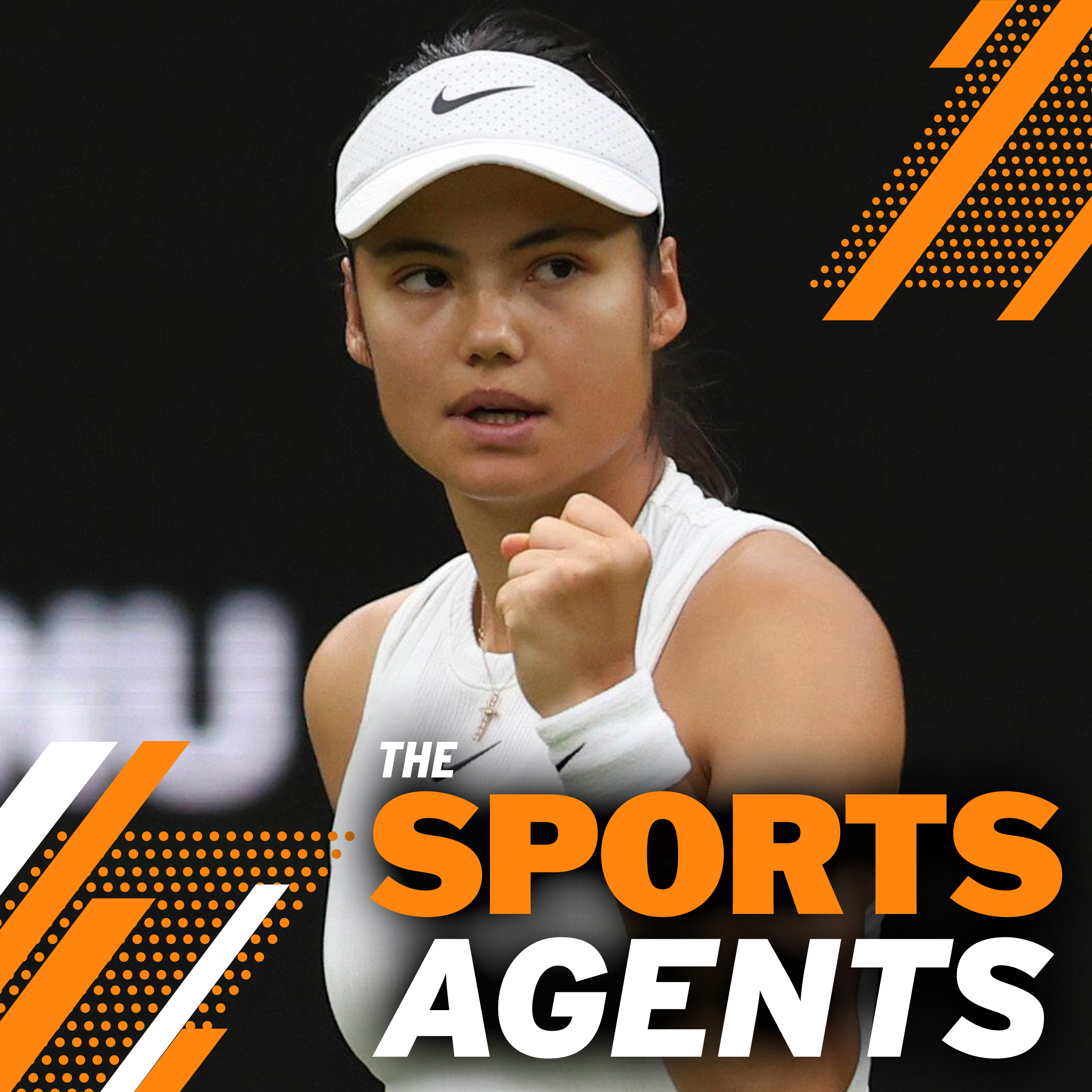
Inside Wimbledon: 66,000 balls, secret languages & wrestling with tradition

 Add vo to ChatGPT or Claude to ask about everything you hear
vo listened to this episode to put together the overview and transcript, so there may be the odd mistake.
In short
Behind-the-scenes look at Wimbledon’s traditions and operations, including how the tournament is run (66,000 balls, court/maintenance logistics), player dress rules, and on-court officiating changes (automated line calls). It also covers preparation routines, coaching tactics, doubles’ role, and the work of practice “hitting partners.”
Guests (backgrounds)
- Gigi Salmon: long-time tennis commentator (TV/radio) covering major moments.
- Daniel Valverdu: Andy Murray’s coach (2012 Olympic gold; 2013 Wimbledon win); now coaching Grigor Dimitrov.
- Marcelo Arevalo: world No.1 doubles player; former singles player turned doubles specialist.
- Jessica Matthews: Wimbledon practice player/hitting partner (university in the US); has hit with Venus Williams and Iryna/Irina Sabalenka.
Key claims
- Wimbledon’s traditions persist while adapting (e.g., removing line judges; players accept the white kit rule with approved color limits).
- Coaches prepare opponent “dossiers” after the draw and use plan A/B/C; coaching from the box is more vocal now.
- Doubles prize money and welfare have improved; doubles players still feel under-credited.
- Practice players are essential for match warm-ups and serve/consistency drills.
Notable examples
Federer arriving alone for a BBC request; Djokovic practicing nearby; Wimbledon’s “hill” culture; Jack Draper’s rise to 4th seed; Emma Raducanu fan-access/security balance; Bublik’s Vegas reset; Sabalenka as women’s favorite; Jessica Matthews hitting Venus and being invited into Venus’s box.
Transcript
0:02This is a Global Player original podcast.
0:15So I'm here on the roof of the media centre at Wimbledon, about a week to go now before the championship starts, with a brilliant behind-the-scenes look at how this, one of the most traditional sports tournaments, never mind tennis tournaments, in the world comes together. We're going to be speaking to the man who is charged with bringing all the balls in, all 66 ,000 of them. We're going to be chatting to somebody who sometimes is practising for seven hours a day as a hitting partner for whoever wants her at whatever time they want her. And we're going to talk to Gigi Salmon as well, the commentator, about how this place retains those incredible traditions we all love in a world where everything else seems to be about innovation and sport is constantly looking at ways of reinventing itself.
1:01Wimbledon holds on to some of the most wonderful traditions and yet it still feels like it's right on the edge of brilliance, excellence and look at this place the manicured lawns, the beautiful plants, it is extremely beautiful. I described it the first time I came here as a sporting kind of utopia. It's like Disneyland if you love sport because everything here is just perfect. We're going to get underneath all of that and see who else we meet along the way. And I'm on my own today. And it's not because Mark wasn't smartly dressed enough when we arrived here this morning. He's travelling. He can't be here.
1:35He's going to miss out on a good one, though. I know he'd love to be here, but I am thrilled to take a look at Wimbledon behind the scenes. Welcome to the Sports Agents.
1:50The Sports Agents with Gabby Logan and Mark Chapman
1:58So welcome to The Sports Agents, Gigi Salmon whose voice you will have heard so many times on television commentaries and radio commentaries over the years she has broadcast on some of the biggest moments in tennis Thank you so much Gigi for joining us up here on the roof of the media centre. It's the quiet before the storm isn't it? I love it. It's my favourite time. It's that time you can imagine a child being let loose in a toy shop and they're the only people in there. This is a time you walk around and you'll see players wandering around with their rackets. You can go anywhere, be anywhere.
2:28I love it when the tournament's on, don't get me wrong. But isn't this nice to be here when you've effectively got the free run of Wimbledon? And it's also seeing behind the scenes, because I've been lucky enough to be coming here since I was about 19 years old. And every year I'm amazed at how manicured and perfect and beautiful everything is. But of course it has to get beautiful. And obviously there's maintenance throughout the year, but you see people erecting various things and working and painting the tiny little areas. It's just incredible. It's a machine, isn't it, how it operates. Those people out there, I'm not really one of them who love gardening.
3:01They always feel very, they just feel quite bad when they come here. why can't my plants look like this? Why doesn't my grass do this? Why isn't it? It's just, it's so... The courts, yeah. I mean, they're the most important thing to be manicured. Yes, they are the most important thing. But it's beautiful, isn't it? You come in and you just feel special. If you compare this to, say, a football World Cup, can you imagine? The players just getting in the lift. One of the great anecdotes that I love is from BBC's television sport. They obviously have the trucks outside where they do all the technical stuff and they actually put the pictures around the world.
3:31And there was a knock on the gallery door and it was Roger Federer because somebody had asked him to turn up at four o 'clock. Oh. And he did. And he did. On his own. That's the unusual thing, on his own. There's normally like a trail of people behind them telling them where they have to be. But it is still, when you see Yannick Sinner suddenly alongside you asking how you are, you are still a little bit taken back. But they're just like the rest of us. They just like having a little wander around. And they love coming here. So let's talk about why this is head and shoulders. I mean, I don't think there are many people in sport who would say that anywhere rivals this, really.
4:05Augusta, maybe. And I sat next to somebody. I was lucky enough to be in the Royal Box last year. And I sat next to one of the guys who basically runs Augusta. And the reason he's invited, he says, is because Wimbledon and Augusta see themselves par excellence. They are the two brand leaders in terms of global sporting meccas, places that people just want to come to. And I guess for the tennis players, you'll know better, that's the same. I think it's interesting. Obviously, British tennis players will say Wimbledon because it's their home slant. And what gets me is when I just will ask a random player from somewhere, where's your favourite slam?
4:37Or maybe I'll ask an Australian or a French player, an American, and they'll say Wimbledon. And I'll say why. And for a lot of them, it was one of their first memories growing up. And I think they also love the tradition because all the slams have their own personality. But I just feel when you're here, you dress a little smarter and you walk a little bit taller. And I don't want to offend any of the Parisians who will say that the French Open has to be up there for the fashion. And it is. But there is something about when you come. I mean, when I have friends who come here, what should I wear?
5:03Do I need a jacket and a tie? I'm like, you're sitting on the hill. And they're like, yes, but it's Wimbledon. How do I sit on the hill at Wimbledon? However you like. But there are so many ways to enjoy Wimbledon. As you pointed out, the hill is for the more casual observer who likes the kind of, you know, slightly more raucous environment of the hill. There's obviously the more demure, you know, those who are going into hospitality. The royal box, Gabby. The royal box where you really have to think about what you're wearing. And obviously you can watch sport everywhere. The courts go on, it feels like miles at the back there.
5:30and there's more hospitality at the back there as well. But tradition is the watchword, isn't it? And let's talk a little bit about the players' traditions because obviously wearing white is the only tournament left where they have to wear white. And there's been kind of talk over the years about whether they should bend that rule or not, whether there's any kind of flexibility. Most of the players don't seem to mind that? They don't mind. I mean, in recent years, we've had the change of the undershorts because women are very concerned if it was their period, their time of the month. It's very uncomfortable.
5:59Can you imagine being dressed all in white and having to go out there and perform maybe for sort of two, two and a half hours? So that was a recent adjustment that came in. And some players have embraced it and said, yes, that's what I'm going to do. Others say, well, no, I like the all white rule. But I think you're right. They don't really complain about it. I think they love how smart it looks. You're wearing the one colour. Obviously, it's their brands that come up with. But it has to go through a committee. So if there's too much of another colour, I know Adidas have got a little bit of green on.
6:25But if it's too much, it will be sent back. And so before they even walk out on court, that has been approved? Yes. The clothes have to be approved because it has to be as white as it can be. Again, the undershorts is a separate thing for the female players. But if there's too much, it goes back. The manufacturers know how much colour is too much colour. They sometimes try and push it a little bit. So anybody watching Queen's would have seen that we did away with the line calls, the line judges. One of the kind of aspects of that is then you're going to go to have a decision, a VAR with Hawkeye.
6:57So this changes a little bit here this year, doesn't it? That's going to be one of the big innovation changes. Yeah, it's huge. And I was talking to Tim Hemman, who I work a lot with throughout the year on Sky Sports Tennis, about it, saying, well, this is going to be very different because the French have said, no, we're keeping them. It's a tradition and we want them. Wimbledon have decided that times are changing. You have to move with the times. In terms of a route for people to become umpires, that's something else people have looked at because it takes away from that. But I think the players have embraced it and they've taken to it.
7:27And even on the clay, when you can still come down and check the court, it's largely leaving us. And also, you know, that moment where somebody smacks a line judge in the head with the ball by accident, you know, that provides hilarity for everybody. And obviously the player usually goes up, gives them a hug or gives them some kind of like paraphernalia out of their bags as some kind of compensation. Those human moments are gone. But then we've also had the human moments where Novak Djokovic did it by mistake in the US Open. And you can be disqualified for hitting the line judge. So we've got rid of the good and bad of the line judges getting in the way.
7:59But there is. And if you turn to a line judge and say, you're wrong and it's not right. You're right. It's taken away because they can go to VA, but the decision is not going to change. No. If a computer said it's out. Yes, you can look at it. But the computer is suddenly not going to say, oh, actually, I made a mistake because the computer is always right. So it's taken away that sort of, is it? Well, no, we know. But I think for people, it will be strange. But like the shot clock coming in, 25 seconds to get the first over. People were up in arms. Raffinadal said, there's no way I can do this.
8:27Everyone's done it. And I think it's like anything change does take time. But then we move on and we continue with it. And I think I think overall, I think it is a good change to have. And that's kind of an evolution here, isn't it? Yeah, they don't want to throw everything out and kind of but they've got to go with the times. Let's talk a little bit then about British prospects here, because Jack Draper didn't quite make the final at Queen's. We found out he was poorly, had tonsillitis, not looking himself in the semi-final. But clearly has come into this with a great run of form and has got himself into a lovely position for the draw.
9:01It's amazing, isn't it? To think that this time last year, he was around 40 in the world. He's going to be the fourth seed at Wimbledon. He's absolutely incredibly just 23 years of age. I think a couple of things with Jack coming into Wimbledon, the attention on him will be like nothing he has ever known. He got to the semi-final at the US Open, but that's far from home. He wins a 1 ,000 title just below the Grand Slam at Indian Wells. He gets the final Madrid on clay, which was incredible, but still it's away from home. And everyone knows that the British players, whatever sport they're in, if they're competing at home, that pressure.
9:33And even his brother, Ben, who's his agent, said it's going to be a different level. And Jack knows that as well. It's interesting. I was lucky enough to get tickets to go and see Andy Murray with Andrew Cotter at the Apollo on Saturday night. And I was reminded of Andy Murray's trajectory, you know, because they did it kind of chronologically. And you could see this skinny kid that turned up at Wimbledon the first year and just physically did not have what it took to go five sets. And then you could see him getting stronger and stronger. With Jack, obviously, he's physically so strong, isn't he?
10:01We saw him struggle a little bit with maybe it was just not having the right electrolytes, whatever it was, in the US Open. He was sick on court. But there's definitely been work on his kind of S &C and his staying power for five sets. Do you feel he's got, should he be pushed to five sets kind of almost every time he goes out on court here? Has he got what it takes? 100 % and I think part of that was also anxiety and that's something he spoke about and the anxiety making him feel sick and that's something he had to deal with and something he worked on in the closed season and we saw a few meditation techniques earlier when he would look at his thumbs and apparently that's something you do to focus yourself and regulate yourself but he also said I need to be in those positions so I don't know how I'm going to deal with nerves or stress or physically until I'm in those positions.
10:44He's learned to deal better in the heat, that's a big thing. Can he do it? Go all the way? This year? I'm not sure he will this year. I would still have Carlos Alcaraz as my favourite to win Wimbledon. But can he in the future? Yes. Will he? Yes, I think he will. Will he win Grand Slams? Yes. Is it going to be this year? I might be proved wrong. I would love to be proved wrong, but I don't think it will be this year. And am I right, there's 21 British players? Well, there's 21 on the main draw. There's over 56. If you want Wimbledon as a whole, and I'm talking the wheelchair competition, the juniors, qualifying, we're over 56.
11:17it's incredible isn't it? Yeah it's amazing 21 in the main draw in the men's and women's so there's a lot to get behind and of course Emma Raducanu's recent form has seen her go back to being British number one there was obviously this year kind of upset for her as well as the injuries and maybe a bit of inconsistency that she's had what went on with the stalker who has apparently also applied for tickets here and a lot has been I think rightly kind of said about that and what Wimbledon does to protect the place because the thing about But the access here is so brilliant. As you say, you can literally brush shoulders with the top player.
11:52And that would be such a shame to lose that kind of closeness and the way you can get kind of so close to your heroes. It's hard, isn't it? And I wonder, anyone like yourself in the public eye, there's, and people might tell you, put things on Instagram and put your life and whether it's your family or what you're wearing or where you're going so people can relate to you and get to know you. And for 99.9 % of the people, that's enough. And that's all they want. and that's the same with Emma Raducanu and Emma wants to get close to her fans and be part of it but you have that section of people that suddenly really believe they do know her and they're owed a lot more and it's awful and it's very difficult for them because as you say you go to a lot of tours and at Grand Slam there's a lot more security at smaller events they're even freer as it were to walk around and to meet the fans at Indian Wells there's a big sort of football style area where the players come up and you don't want to lose that it's such a difficult balance because she is a young girl.
12:45She is working hard at what she does. She has crossed over tennis. I mean, she's one of those players, like a Serena Williams that has gone, I bump into people where I live in the chemist and I say, how's Emma doing? I'm like, that's really random when I've come in for a prescription. But people, they want to know about her. And it's so frightening. And she was just, I think it was in Dubai and she'd just gone for a walk in the mall. She shouldn't need always to take people with her. She should be allowed to be young. But at the same time, she is in the public eye. She's a role model. It's a very difficult balance, but the tournaments, the Grand Slams, they are doing so much.
13:16I know in the French there are apps that players can log into, and it cuts out the social media nonsense. The awful, the vile messages that some of them get when they lose a match. And they have an app that just deletes all that, so they will never see that. Everyone wants a piece of her, so as much as she will want to come in under the radar, she won't be able to. Who's in her box, and who's coaching, and how's she going to play, and what's she going to do? And she's won a Grand Slam before, and why has she not done this? It's crazy that he can be four in the world, but it always feels like there's more expectation and pressure on her.
13:45And to that, who's coaching her, there is a contrast there, isn't there? A marked contrast with the way that Jack's team has been very stable and her team has not. She's had a whole kind of revolving door of people coming in and out and whether she wants somebody regular or not. And she's talked about kind of having fun and wanting a team that makes her feel that tennis is fun again. Has she got that in place right now? I think she has a team in place. do I think it will be long term? No it's not how she works and we can all have our view on it and I think there are areas that should there should be stability maybe a physio or hire someone who's going to be your personal trainer or physio who gets to know you and your body because that's so important in terms of the coaching it's always how she's worked she'll take bits from people and at the time she got together with Mark Petchy she wanted to relax and have more fun she spoke about in Madrid that they were playing football before matches and she realised she was left footed and that relaxed her and I remember watching her through Miami when they started to do a bit together and speaking to her afterwards she said I want to have fun and I want to smile and basically I know how to play tennis so at the moment this is what I need and I think she's someone who at the moment this is what I need.
14:53On the men's side obviously saying Jack to do well maybe not his title this year Alcaraz is your favourite there to retain his title. Who would your favourite be? Well just walked past actually last year's the boards down there of course haven't been redone for this year and And seeing Alcaraz there thinking, yeah, you're probably, I mean, he's kind of my favourite away from Jack, let's say, as well. I would go with that, yes. And he's also somebody who, in fact, he went to Ibiza after he won French and had a nice time. He's got a balance in life. He has a smile on his face. He's kind of, I feel like you feel like you could have a drink with Carlos Alcaraz.
15:27He's a fun guy. Yeah, you could have a San Miguel. Or two, or whatever. But no, he said it's so important, isn't it? too. But I think people play sport for different reasons. Sinner's reasons I think are very different to Alcaraz's reasons and it's good to have those contrasting styles and personalities in the game whatever sport it is. Give me a name then that might just emerge as somebody that we all kind of remember after this. In the men's or the women's? How about Novak Djokovic? That's going to be a massive thing coming into this. Let me write that down. If we can remember this name is he going to win 25?
16:03That's going to be such a big storyline for as long as he's in this tournament. What about Alexander Bublik, who just came through and won his first 500 title? The underarm serve, the slicing, the drop shot, the unpredictability. He actually tried to pull himself together and be serious. He had a son. He said, I'm going to be serious. I'm not going to mess around. But he lost 12 games in a row. So he went on a lads weekend to Vegas to go back to what he does best, which is when I interviewed him about 10 years ago, he said, my pastimes are partying. He went back to Vegas to party. since then he's been unstoppable absolutely unstoppable and he's just won a first beat Daniel Medvedev in Germany to win a 500 title and you're thinking you've got to be kidding me so keep an eye on Alexander Bublik for all sorts of reasons and on the women's side as we just said it's very unpredictable sport women's status isn't it it is isn't it I think Irina Sabalenka has to be the heavy favourite she's lost in two Grand Slam finals this year she's got the determination I know she lost to Marketa von Drusseva recently who went on to win the title I think in Berlin and von Drusseva's a former champion here Coco Gauff having won the French what about Coco Gauff and and her game here do you throw Emma Raducanu into the mix some people maybe will put her into the mix how about Mira Andreva just turned 18 years of age she's fun she's feisty she's fiery she's everything you want to see she's coached by the great Conchita Martinez she plays such a great brand of tennis and she has that belief she's one of those players that walks out going I'm gonna win this I'm gonna win the whole thing you know I'm gonna she's definitely one to watch because she's exciting.
17:31And for you, is this the most brilliant, exhilarating fortnight of the year? Or is it kind of one that you get to the end of and go, thank God that all went well, because all eyes and ears are on you. There is something about Wimbledon, it feels different. That pressure is different. So many people's attention drawn to it because of where it is. I think it's a mix of both. I absolutely love it. I get consumed in it. I can't wait for it to begin. But at the end, you sit down and think, okay, it's done. Well, I hope you have some glorious moments to commentate on and look forward to hearing your coverage.
18:04Thanks so much for just peeking behind the curtain a little bit for us. Gabby, thank you very much for having me and I cannot wait to get started.
18:32So we've come down to the Orangi practice courts. You'll have heard of these courts, but you've probably not seen behind the scenes here in quite this way before, because this is really access only to players and coaches and certain aspects of the media during the tournament. And right behind us here, Katie Bolter, Britain's number two, recently usurped by Emma Raducanu, has just been practising here. and just over there you might recognise a guy in a green t-shirt he's just sat down actually Novak Djokovic is over there he's just been having a hit, having a warm up he's got a big team with him, no surprise Irina Zabalenka, world number one is just on a bike over there because there's a kind of gym over here that's got various bits of equipment she's been doing a medicine ball session with her coach as well and then all around us, as far as the eye can see we've got tennis players who are practising either with their teams or maybe they've got one of the practice players.
19:28We'll talk a bit more about that in a moment. He's been seconded. Is that Coco Goff over there? I'm just trying to see who else I can see. Eyes not that good. But this here is fascinating because we're a week away from the championship and it is so busy here. And apparently during the fortnight as well, you can imagine it just stays busy because the players never know when they're going to get on court, do they? Whether it's going to be a five setter for the men or whether it's going to be three sets for the women. So they're looking at the match before them, wondering at what time do they start warming up?
19:57Maybe they start and then they stop and then they come back on court again. So this area here, as you can imagine, has to run like clockwork with people organising who's on court. And then behind us here, the players lounge. This is where they can get some food and chill out if there's been a big delay. That's where they're going to be hanging out for a few hours maybe. So as I say, this is a real treat to get this kind of close-up to what's going on with these world-class sports people.
20:29Well, now a chance to speak to someone who knows what it's like to be at these championships for the duration. Daniel Valverdu was Andy Murray's coach in 2012 when he won Olympic gold and then a year later when he finally won Wimbledon and before that at the US Open. Daniel, thank you for joining us and giving us even more insight into what it's like here at Wimbledon in these final kind of days When you've got a player, you're coaching Grigor Dimitrov here at these championships and the preparation that goes on for us to see behind the scenes here at the Orangi courts is very exciting. Do you get a buzz every time you come here?
21:03It is a very special event. Well, first of all, thank you for having me. Very special event. It is the days leading up to it, but it always feels like this is the first day because it's the first day that the players are arriving here. Six days to go. Very special feeling. Courts are empty now, but they'll start getting busier and busier. players start getting their palms sweaty as the tournament gets closer. We start getting the chance to hit at the championship courts on Wednesday this week so it's getting even more and more exciting once you start getting closer to centre court. But yeah, looking forward to it and the players are very excited.
21:36You never know as a coach how long you're going to be at any tournament, do you? Because you don't know how well things are going to go. Take us back to when things went very well when you were coaching Andy Murray and what it was like to be part of such a historic team and a historic moment? Well, that was a long, long time ago, 2013, the year he won. A special moment. That was 12 years ago, it feels like two lives ago. But yeah, different times. It was incredible. It was a big team with Ivan right by my side. That was very special for me as a coach and as an ex-player myself. But yeah, very different situation right now working with Gregor.
22:16this is my fifth year working with Grigor he saw great results here but never got into a final so obviously that's the goal but you never know how long you're going to be here it's a 14 day event and yeah usually you try and take it one day at a time and try and get as far as you can get the player and in terms of the preparation for the opponent and what he expects from you because he doesn't know who he's playing until the end of that day when he's qualified how much work are you doing to kind of prepare a dossier on that player so for the first round we usually have two or three days because the draw is done on Friday.
22:46So we have the whole weekend to give him as much information as we can about the player. If it's a player that he hasn't competed with before, then we give him more. If it's someone that he knows well, then we manage the information depending on who the opponent is. But we try and keep him out of it as much as we can. And then we'll try and start sharing information the day before the match. It depends on the personality of the player. Some players you share more information, some players you share a little bit less. Knowing the person you're dealing with is so important. With Andy we used to share a lot.
23:14He used to like to have as much information as possible and he would challenge a lot of it, which was a great learning experience for me and the team because it was pushing you to be better every day and to be as sharp and as precise as you could be. So this information then leads to tactics and you're effectively saying this is how you should play against this player. And it varies from tournament to tournament, right? Because the player that you're coaching is doing things better from week to week. So there's areas of the game that maybe are sharper this week and they'll be less sharp next week.
23:43So you also have to adjust depending how your player is performing that week. But yeah, mostly we try and prepare a plan that gives him some guidance tactically during the match. And then we'll give him a plan B and plan C. But it's up to him to decide how he utilizes that during the match. Nowadays, we can give a bit more information as the match is happening. We were not allowed to a few years back. So that's helpful for us. But did you? Because we see players looking up at the box, don't we? And obviously, as you say, now you are allowed to coach from the box. but in the days when you weren't supposed to why were they looking at the box?
24:15Usually to scream at you and to complain about maybe the wrong tactics but there used to be some dialogue in the past but it used to be minor, not as much as now. Secret signals? Maybe just a few different words that they would be, let's say they would have hidden meanings, they would understand what they meant but now it can be a little bit more vocal and more precise when you're speaking to them but yeah, in the past let's say we try and used to do it under the table. And in terms of when they are losing it a little bit and things aren't going well and they're looking up and they start berating the box, what's your kind of go-to emotion at that point?
24:51To be honest, I mean, after coaching for a lot of years, you get to understand that 99 % of the things they're telling you they don't mean. It's just a way of coping with the situation. And sometimes it's an outlet for them to try and release some of the pressure or some of the anxiety that they're having during the match. Of course, there are boundaries to it and how far they can go. But as a coach, you become a lot more lenient, especially during those high pressure moments in the match. It's very difficult for them to manage the ups and downs of a match. And you as a coach and as a team, that's your job to try and help them get through it and not take it too personal.
25:25I mean, it's difficult at times, obviously, because you're dealing with your own emotions and dealing with the pressure that you're feeling during the match. But your job as a team is to try and help the player in those situations as much as you can and not take it too personal. No, and obviously when things go very well, when you win a Wimbledon title with your team, you imagine what goes on afterwards must be the most amazing party, the biggest elation. I was listening to Andy talking about this at the weekend and he said the first time when you were involved, he went to the Champions Ball and didn't do what he really wanted to do, which was to hang out with all of you guys.
25:54And actually, in his words, go for McDonald's and eat junk food was what he said he wanted to do. We see kind of, you know, the glory shot of everybody kind of cheering in the box. and then after that how does how does it feel how does it feel for you it's a strange feeling so when he won US Open in 2012 it was a big relief for him also for the team so we had a nice dinner but it didn't feel like a celebration but he had been working his whole career towards achieving those goals and once it happens you do get some relief and you're like okay we got it done there's a lot of energy that you have to spend to get to that point not only the player but also the whole team so you don't have that much energy to celebrate to be honest during that moment and then maybe we did get together a few weeks later which was a nicer experience all together but then when he won Wimbledon obviously there's a lot happening around him after winning Wimbledon which takes away from him maybe soaking in the moment spending time with his family and friends and with the team but that's part of it and that's something that I'm sure he's learned over the years and I think he did celebrate a bit more into in 2016 when he won the second time He went for McDonald's, I can attest.
26:57Usually after a 14-day Grand Slam, there's a lot of energy spent that when you get to the last day, you're very, very tired. And all you feel like doing is sleeping for a few weeks afterwards. So yeah, it usually takes some time for it to sink in, particularly for the player. He's obviously dipped his toe into coaching this year with Novak and it's come to an end, that relationship. Did you see him when he was a player? You've already talked about the amount of information he wanted. Did you foresee that, that one day he would coach? Yeah, I mean, if I was a player, I would definitely try and hire him.
27:27I think he would be a fantastic coach. I'm sure he was a great influence for Novak. You never know why things maybe work out at the time or they don't. It's all about timing. Maybe it wasn't the right timing for Novak. You just never know. But as a coach, I rate him highly. I think he has probably one of the best tennis minds that I've ever personally experienced. So, yeah, hopefully he'll come back to coaching at some point. I know that he's not looking forward to it at the moment. No, I think it's a lifestyle thing, isn't it? I mean, you know that, obviously. But I'm sure he will help some players and he will give great input.
27:59And yeah, if I was a player, I would love to have him by my corner. Because obviously he's got a young family and it's a sacrifice, isn't it? You're a player, you're sacrificing everything. And then to go straight into coaching and that is your lifestyle. Tell us a bit about life on the road and how tough that is. Life on the road is tricky. So I used to do the 35, 40 weeks on the road. Back in the day now with the family at home, it's more difficult to do that. So I'm doing a lot less traveling. It's five, six, seven weeks on the road. not seeing family, spending 24-7 with the player on the team, going from hotel to hotel, from week to week.
28:28And it's something that if you've been in tennis your whole life, you're somewhat used to it because you've been doing it since you're a kid. So it's not as challenging as it would be for someone that hasn't done it as much as we have as kids and as tennis players from 10, 11, 12 years old. But still, when you add years on the road, it does become more and more tiring the more you do it. So, yeah, it's been 15 years for me now, So I'm slowing down as much as I can at the moment. But I'm sure embracing every opportunity to come. When you come to Wimbledon, how does it rate for you in terms of the majors?
29:00For me, it's number one. It's difficult not to say that. Obviously, it varies from player to player. But I think the majority of players will say that Wimbledon is the one. And if they had a choice to win one of the four, they would choose to win here at the All England Club. I think there is so much history and there is a special feeling when you go through the gates and when you see the players sitting on the grass courts, you can see that there's that extra kind of tension that everyone has and I think that's what the event brings. So yeah, for me, Wimbledon would be number one. And obviously you said you kind of coach your player depending on what they've been like in the last few weeks.
29:34So if I was a betting woman, how far is Grigor Dimitrov going to go in this tournament? Well, he's had a rough few weeks pulling out of the French Open and then also having to pull out of the Queen's Club tournament. So he's on demand. He's a great grass court player. He's made the semi-final season before. It's been 10 years since he won Queen's. But I think as long as he's healthy, I think he has a good chance to definitely win a few rounds. OK, thank you so much. Really enjoyed chatting to you and best of luck for the tournament. Thank you. Pleasure. Bye-bye.
30:06Well, a bit of a treat now. We're going to get to speak to Marcelo Arevalo, who is the world's top doubles player, ranked number one coming into Wimbledon. And perhaps for a lot of people, doubles kind of goes on at the side and kind of comes into sharper focus towards the end of the tournament, doesn't it? Do you ever feel like you're kind of not given the credit you deserve? I think Grand Slams, we do now in the ATP Tour, there are things that are improving a lot from many years ago. I think I'm pretty lucky to be playing at these times. I heard at some point they even wanted to get rid of doubles.
30:43the prize money's got a lot better prize money got way better you know like uh the pension got a lot better too so tell us what the prize money is for the for the for the doubles here what could you win i think uh if you win the whole thing i think you walk out with 250 000 pounds maybe that could be even after taxes though yeah okay that's bad yeah that's pretty it's pretty good we we're quite excited to be around the orangi courts here because this is really kind of a special place to be, isn't it? You can see Novak Djokovic has been practicing over here. We saw Coco Goff over there. You've got Sissipas just behind us here.
31:17Savalenka was in the gym earlier on. Do you get a bit kind of ever, oh, sat down and had lunch today, had a chat with Novak Djokovic or is this just work? This is your workplace. It is my workplace but of course when you see Novak, you know, it's quite impressive, you know, like, you know, he's probably the best player of all time and you want to show him kind of respect. You don't want to bother him too much because he's on his own with his team also. He has a lot of things to do also. He's been looking out for players' welfare. He's been quite vocal about some of the demands on the players' lives.
31:53He's been a big supporter of tennis in general, especially for the lower-ranking guys to try to have a good living as well. He's been there for everybody. Do you think there needs to be a shake-up in the sport in that respect regards the players' welfare? Yes, but to be honest, I think it's been improving a lot. I remember not long ago when I was still playing singles, the prize money wasn't as good as what it is now. Of course, we cannot have everything at once, so we need to be patient, but I think our sport is growing and growing and growing. Can you give us a little insight into what goes on at the net?
32:33We've seen a few high-profile incidents recently. in the women's game there have been a couple of incidents of players not being very nice to each other saying things that are quite rude
32:50I don't think she's going to invite me for dinner for the rest of our lives but I don't care to be honest I have very good friends and I'll go to dinner with them we see these conversations that go on what's being said at the net You know when you go up at the end of the match and you can see players for a couple of minutes having a conversation? What kind of things do they say? Of course, in the heat of the moment, you know, you sometimes say things that go out of your mouth. Have you ever said anything that you regret afterwards? When I was playing singles, I was getting more, you know, kind of like that inside me now that I play doubles.
33:28If I lose a match, I try to think it wasn't my fault, you know, so I don't get that. angry not angry anymore no I'm kidding but yeah I mean I'm just I'm just trying to you know to keep it for me and then are there some genuine though rivalries that where you see players not even acknowledge each other around here is there a bit of bad blood between some players I feel like before like nobody we're kind of like socialising too much to each other you know but I feel like I kind of like understand that too because tennis is like so competitive you know like you see the same guy every single week at the end of the day you know like we're all here for the same goal you know like you're playing for big money you're playing for big goals and I get happy when one of my friends achieve something but but I get more happy when I achieve something you know how many friends would you say you have in tennis like how many players could you actually say are you I would say I very little like from the tour that I can really trust and call my friend, I will say maybe I can come with one hand.
34:40So why doubles? What was the kind of turning point when you started focusing on doubles? I had a dream and my dream was always competing at the tournaments that I was watching on TV. You know, I remember my dad always waking me up to watch all the matches, all the Master 1000. They used to call Super 9. I remember that. and we were watching all those matches you know on tv andre agassi boris becky you know piz ampras that was that was my dream you know like try to play those tournaments uh in 2020 i had to make a big decision in my life to quit singles i reached my highest singles ranking at 139 in the world when in 2018 and it wasn't easy for me to keep up with both rankings i was already top 15 doubles I was playing the Grand Slams I was playing some of the Master 1000s my dream was that my dream was competing at the biggest stages against the the best players in the world and then and I saw that the way to achieve that it was almost there throw all the eggs into that basket in doubles you know so I I just I just decided to go so you travel time in doubles with Pavic your partner you travel together you you compete together do you have to get on all the time you have to live in each other's pockets or are you able to kind of no no i think i think one of the the good uh things that we do is like we give each other uh space you know like uh and it's great that uh he became a dad so now we kind of he's taking care of his family he got uh he goes for dinners with his family i go with my family i have two kids already and you know like your real lives and then you have your partnership together on court yeah exactly i mean once in a while of course we put the families together we go dinners with the family but but but not every day you know like we used to do that more often when we started playing you know because he didn't have a daughter and and we had more time but now you know like when you spend the whole day at the courts you want to go back and see your family spend time with your kids you know and basically when we are together that's that's when we do the work together and for you you are huge back home in El Salvador, the sports personality of the year, I understand.
36:53So how does a kid in San Salvador start playing tennis? I started probably when I was five years old. My parents were members of this beach country club. They used to play tennis, but socially, you know, nothing competitive. I grabbed my racket. I was pretty lucky that my older brother started playing earlier than me because he's four years older than me. So as a younger brother, exactly. Actually, my brother was the same age as Andy and they were playing juniors together. And as a younger brother, you know, I was just trying to be as my big brother, you know, and I think he was one of my biggest inspirations.
37:36And then he became a good junior player. He was in the top 10 and then he become top 300 in singles. So I always had him and I always look after him. And basically followed into his footstep. He played against Federer at the Olympics, didn't he? Yeah, he did. He did in 2008. That was a huge moment for me. I remember I woke up super early to watch his match and that's when I actually said, you know, if he's there, playing against the number one in the world, I can also make it happen. I just wanted to make it to the top 100. So what would it mean to you to win here in a couple of weeks' time? It would be amazing.
38:14I think everybody's dream is to win here at Wimbledon, especially when it's not your favourite surface or the one that you play, let's say, better. Even Rafa said that his dream was to win Wimbledon when he was more as a clay court player. I think Wimbledon has something special that makes you... And do you like the traditions? Do you like wearing all white? I do like it. I do like it. I wish we could have it more. I think it looks very elegant. you know yeah and what about there are some innovations this year obviously and and Wimbledon has chosen to to just go with the automated uh line calls not having the line judges how do you feel about that I'm a bit sad of that you know because I was born in the 90s and we we were used to to have the the linemen and calling the balls you know I'm a big supporter of the Hawkeye you know because as humans we we we can make mistakes so then you can request the Hawkeye but uh having no humans in the quarter and then only the the machines i don't know it feels like feels like the court is empty like it's missing something yeah i think we we need to adapt the the times are changing and uh yeah we we gotta go with the time yeah and have you had your first punnet of strawberries yet already yes because i was because i played at queens last week so of course of course yeah yeah well obviously you've been blessed with the weather so far you've enjoyed the weather in Queen's very much like home, I imagine, last week.
39:44So hopefully it'll be a sunny fortnight for you and it'll go brilliantly. Thank you so much for chatting to us. Thank you. The Sports Agents
39:55The Sports Agents with Gabby Logan and Mark Chapman Let's speak to Jessica Matthews now, who at these championships is what's known as a practice player. The only female practice player who can be called on in the run-up and during the championships and over her time over the last few years she's hit with Venus Williams and Irina Zabalenka to name just two. You are somebody that people at home will have no idea how important you are to so many of these players. Explain how the process works. Yeah so it's kind of a really intense but such a rewarding job where the players will call me up whenever they need a hit or a practice or even the match for about 20 to half an hour and it's kind of just play with them, do whatever drills they need, practice and do some points as well and yeah, whatever they need to help them out before the matches.
40:46This is your third year doing this? Yes. Which obviously means that you're pretty good if they get you back every year. But you have your own tennis career and aspiration. So you're at university in the States. Yes. And tell us how you got the job in the first place. Yeah, so three years ago I was playing the juniors here and I finished my match, had such a close one and then a man just came up to me and kind of said, would you fancy being a hitting partner next year? And I was delighted, obviously, to come back and just being in the ground is such a privilege as a player and a hitting partner.
41:14And I just couldn't say no. Had such an amazing first year and then I've just been back every year ever since. So tell us how the day starts. At what time are you on call? It starts about nine o 'clock in the morning. You get called up and they send like a brief schedule of the day and it's very brief for the time. And then there's a group chat, which they kind of let us know who you're playing with, where you're playing, courts, balls. And yeah, they could call you at any moment of the day up until about seven o 'clock in the evening. So you're hanging around here at Orangi, basically. Yes. And you're being told, get down to practice court 10.
41:47Yeah. Because Zavalenka wants to serve at you. Yeah. And they kind of say like which one of all the hitters has, I don't know, like the biggest serve or the best forehand. And they'll say, OK, well, this player needs you now. And yeah, go. So what's your speciality? What is the thing that they call you in for generally? I would probably say serve or match warm-up. Because especially for the women, I'm the only female hitting partner they've ever had. So they kind of make the most of the game style that I play. And it's a very different shape on the ball between the men. There's a lot more height and spin, whereas I hit it just like the females.
42:21Right. So most of the hitting partners are male? Yeah, all of them other than me. So behind here now, Katie Bolter's having a session. And Adam is her hitting partner. He's kind of getting involved in some of the drills. and this is this is the kind of thing you'd be doing normally not typically like this usually it's just hitting right and it could be anything from running from side to side or I'll making I make them run around is it exhausting yeah it's really tiring it's so tiring but then it's just such a privilege to be called on again and you can't really say no when you've got the best in the world are you learning from them as well yeah so much and the coaches have so much great experience with all of the tips they give me and all of the information it's just trying to take it all in and so what's what's the most kind of pinch me moment you've had over those three years who have you hit against and thought wow oh there's so many i would say either azarenka just because she's so friendly and she specifically requested me for all of her hits throughout the champs last year and the year before which was so nice and she introduced me to her son and like the whole family took me in which was so nice but venus williams was also amazing just so phenomenal and seeing Serena as well which was just like a childhood dream of mine so you hit with Venus Williams yes yeah oh my goodness she also asked me to go into her box and be part of the team for her match which was so amazing sat in her box yeah oh my goodness so go on you can tell us that you wish list this year right so who do you want to get a call from who would you like the the text to come from oh I'm not sure actually I think maybe like well I played with Eager last year but only for one 45 minute hit so maybe a couple more with her never hit with radakani but we are like we know each other and since young age the call could come from radakani this year yeah yeah which would be so nice if i see you in the box on center call with radakani's team i think oh jess has got a big job it's been a great year and do you have to kind of retain a real kind of because you can't be kind of smashing balls at them and you know trying to get winners can you do you have to be a little bit humble yeah everything's about just consistency it's all about how many balls you can give them of good enough quality that's not pushing them too much that it's just winners straight pass or errors but it's just all about providing them with the practice that they need with as many consistent quality balls.
44:36Okay so here's a question then so how many years before you're calling up a hitting partner when are we going to see you in the main drawer here? Well hopefully soon hopefully I finish university in two years and then probably play on the pro tour for a couple more years after and hopefully sometime after then fingers crossed so yeah that would be a dream and i imagine when that day comes and you do get a hitting partner you'll know exactly how to treat them and leave them with great memories like you've had obviously this is kind of the area here orangy where the players go upstairs they have their food they hang out and is food good yeah it's so nice it's amazing it's such good quality you've got all the protein options obviously breakfast lunch and dinner um they provide us with like a meal plan menu for just anything that we'd like there's pasta sandwiches just any food you can think of so we have it it's pretty good perks with a job then yeah loads of great perks okay well I think we're probably keeping you from somebody we just saw Djokovic walk over there you know you never know he might decide you know he wants to have you serving at him in a minute so yeah thanks so much Jess it's fascinating all these jobs that we didn't know existed at Wimbledon and you can also leave here and go to Roehampton as well I understand yeah I'll be heading over this afternoon yes thank you so much thank you
45:51OK, so can you have a Wimbledon tournament without Andy Chevalier? No, you cannot. You balls, please. You are the man, Andy, charged with making sure that everybody in this tournament has the balls that they want when they want them. How many balls, Andy, do you have to bring in? I took delivery of 66 ,000 this year for the championships. And that's normal every year? We've upped it. If it's raining, we go through a lot more balls. and so we had to up it because the last two years have been very rainy. So is that because you know the weather forecast for the next few weeks or are you just hedging your bets?
46:27I mean, I check it every day. It's looking lovely at the moment. Right, okay. Come on down. So you could be quids in and have a few balls left. Yeah, could be. Okay, okay. And the balls that you use, you've got a can here for us. They are all the same. Yes. Yeah, there's nothing, nobody has any kind of special balls coming in. No trick balls, no. Okay, and every tin is opened fresh on court. Yes, absolutely. Do you want to do that satisfying sound for me? I've got an open one for you. Oh, have you? Okay, well, do you want me to take your mic while you open it and you get a ball? Oh, I love that sound when the top of the tin...
46:57I know. I'll do it now. There, you've just done it. So here we have slasinger balls. Slasinger balls in a 3-5-7s tin. Okay, what does that mean? So this is a special tin that we give to each chair umpire in case they lose a ball during a match. This is something spectators would never know about. No. But if you're on one of these outside courts, these beautiful courts here, and a doubles player is right at the net and he smashes a ball out, then they'll lose a ball in the rotation. And so at that point, they're down to five, but you can't just drop a new ball into the rotation because that ball can be hit harder and faster than any of the others.
47:33So all six are retired at the same time? All six are retired after nine games. No matter how long those games are? Because you could have extraordinarily long games or very short games. Yeah, exactly. Right. So some of those tennis balls will be absolutely battered and others quite fresh. Yeah, exactly. And they're losing their pressure all the way through that. And obviously the less pressure they have, the less hard they can get. Do you want to take your mic and you can pass me one of the balls? There you go. Oh, they're incredibly fresh and hard, aren't they? Yeah, so these come from practice court this morning.
48:02Right. Oh, they have been used then? Yeah, these are 20-25 balls, yes. And so you were just saying before, we were talking about the fluffiness of the ball. And that is one of the reasons that the players kind of look at the balls, check the balls and toss one away. Yeah, exactly. So they're looking for which ball they can hit the hardest. So they want the least fluffy and the one where the logo is least worn. And so, yeah, they're looking for that so that they can serve as hard as possible. And would that be towards the end of the rotation of the balls in particular? I guess so. So just before they're about to get new balls, maybe, it starts to get more obvious that the balls are getting...
48:33It will get more obvious, for sure. And it's not just an affectation that they toss them away. And so when they've chosen the ball that they want, obviously, the other ball's still in the rotation, isn't it? Yeah, that's right. So you could get one poor ball that's getting rejected the whole time. You could do, but then that would eventually become the hardest ball to hit. Right. Because if you're rejecting it all the time, it's not being hit. Right. It's keeping its pressure. Are there any players you've noticed who just don't bother checking? They just get on with it? Or are they all... Not like I've seen.
48:58They all do. And I think it gives them a little minute, doesn't it? A second to just compose themselves. Yeah. What's your biggest nightmare with the balls, Andy? Rain. Rain. There's nobody sadder on these courts when it rains than me because we need to provide every court with warm-up balls. because if there's a rain delay then the chair umpire will collect up the balls at the moment the suspension has happened they'll collect those balls up and they won't be used until that match has continued which could be the next day it could be a couple of days later and they're not going to carry on with those balls until the match continues but the players need to warm up and so as we were saying about the different pressure of the balls the players need to warm up with something that is a used ball they can't warm up with a new ball because they'll get used to that and then the match will continue and they could be using eight game balls so i am constantly trying to find from previous days balls balls that i think have been used for about five games right and they provide warm-up balls for every court that needs do you have a assistant or is this all on you no there's a team of us right okay there's a team this is huge pressure i feel um what's the worst complaint anybody's ever made a player's made to you about the balls?
50:09Like when have you felt like mortally wounded by something a player has said? I've been more puzzled than mortally wounded. There was a match I was watching on one of the monitors on court 12 where a chair umpire was opening new can after new can. Now we only give them 21 cans at the start of each match. A men's single match can only go through 16 cans but this chair umpire was going through all the balls all the new cans and checking the balls as if there was something wrong and it's because a server kept rejecting the balls that were coming in I think they were just having a bad moment in the match right but it made you a little bit concerned well we had to go and deliver a few more balls to make sure they got through the rest of the match and okay we're here a week away from the start of play what do you do for the rest of the year I'm an actor and a writer okay so nothing to do with tennis and I just come in for a month a year do you love tennis I like tennis but it's very similar to the acting thing there is a whole world of different departments coming together to put on an amazing live event this is a big show and this is a big, big show and you're in charge of one of the key props let's say, in this show without you, there would be no tennis we should ask you about the future of the balls because if you're away after this doing auditions and acting do you know what happens to the balls?
51:27we hear that they go to various dogs' homes and tennis clubs and so the future of the balls happen in three ways one if they're really really worn they've lost their logo you can't see it says Wimbledon 25 on it then lucky police dogs get them but for nearly all the balls we will resell them for the Wimbledon foundation so we're raising money for the foundation all the time and for me it's the best thing you can buy on site because you'll get a ball that could have been hit by Alcaraz on centre court you know for for two pounds you'll get an amazing souvenir. You just don't know. But you can tell people that it was.
52:03It's likely to have been hit by Al Karaz. Exactly. And then the third thing that happens is if we have got any left over, the ball boys and girls will use them next year as they're practising and as they're learning their role for next year. And when a player at the end throws a ball into the crowd... I wrestle that spectator to the ground and get the ball back. That's what I wanted to hear. Thank you so much. Pleasure. Yeah. The Sports Agents. Where better to finish today than Henman Hill, Murray Mount, Drapers June, Drapers Down, Drapers Drop? I think we've still got to work on that one. This, of course, is famous for those amazing scenes.
52:41And it was named Henman's Hill, obviously, back in the day because Tim Henman playing on this behind you here, which is this incredible massive screen. I don't think it was like that back in Henman's day, actually. And then the crowds would gather here and create loads of atmosphere. So you see on the TV coverage, their cameras would cut to it here, seeing the reaction. I mean, it's much more gentrified, as is everything around here and manicured than it was back in the day. It was literally just a hill. Now you've got various sponsors having pavilions here. There's even a little stand at the back of water feature.
53:09It kind of sums up Wimbledon, doesn't it? Because it's got the authenticity and the tradition of what it originally was. But then the opportunity to throw a few sponsors in, make it look even more beautiful. And somewhere that you don't just feel like you've come here because you can't go anywhere else. You want to come here. You want to join in the atmosphere. And it is an extraordinary place. I think today has kind of highlighted how much goes on behind the scenes that none of us really know about until you come in here and you kind of scratch the surface from meeting Jess, who, of course, there's going to be somebody who is literally on demand all the time to play against the players.
53:42But, you know, think about those people and what their day looks like. And then, of course, Andy, our ball man. You'll never look at the balls at Wimbledon the same way again, will you? And just hearing from Marcelo, the number one doubles player in the world and you've probably never heard of him coming into this unless you're a massive, massive doubles fan but he has an incredible career an incredible life and is just as big a feature and a bigger part of this championship because without the doubles without the wheelchairs without what's going on kind of around the tournament beforehand the qualifiers and of course then junior Wimbledon you know it would just be a load of great men and women coming and playing tennis but it's so much more than that and I think we've really enjoyed kind of seeing everything that goes on around Wimbledon.
54:23It has really whet the appetite. I cannot wait for the championships to get started. It's just a shame that Chappers wasn't here because we're about to go off now and enjoy some strawberries and cream. So maybe I'll take some back to the sports agents' offices for him, or they might be a bit soggy by then. But that's his fault. That's his fault for not turning up today. Thanks for listening today. Get in touch, as always, at thesportsagentsatglobal.com. And you can, of course, download your episodes wherever you get your podcasts, or a global player. Don't forget to rate and review. And from all of us here at Wimbledon, thanks for listening and I'll see you next time on The Sports Agents.
54:58The Sports Agents. With Gabby Logan and Mark Chapman.
From the publisher
Gabby heads down to Wimbledon to take you behind the scenes of one of the world's most prestigious sporting events.
From the practice courts to Murray Mount, we meet the man who coached Andy Murray to win Wimbledon, the US Open and the Olympics, Daniel Vallverdu, and the world number one doubles player, Marcelo Arevalo.
We're joined by the person in charge of the 66,000 tennis balls, Andy Chevalier, and the hitting partner for Aryna Sabalenka and Venus Williams, Jessica Matthews.
Plus, does tennis broadcaster Gigi Salmon think Jack Draper could go all the way? Can Emma Raducanu shake off the pressure? And how will Wimbledon look different this year?
You can watch our full episodes on YouTube here!
Executive Producer: Adonis Pratsides
Producer: Sophie Penney
Video Producer: Sam Trudgill
Social Media Editor: Calum Scotland
Guest Booker: Kirsty Giddings
Tom Hughes is Editor for The News Agents podcast network
Vicky Etchells is the Commissioning Editor for Global
You can listen to this episode on Alexa - just say "Alexa, ask Global Player to play The Sports Agents".
The Sports Agents have merch! You can buy yours now here!
More from The Sports Agents
All episodesWe use cookies.They keep vo running smoothly and help us improve it. Privacy policy
Scan the code with your iPhone camera
Listen in the app.
- Play everything vo finds for you
- vo remembers everything you hear
Go to the App StoreFree on iPhone