
In short
The Sports Agents - Episode Summary: REPLAY - Bodyline: the Ashes that sparked a global crisis - How It All Played Out
Podcast Overview Hosts: Gabby Logan & Mark Chapman Podcast Description: The Sports Agents explores significant stories from various sports, featuring exclusive interviews and expert analysis. New episodes are released every Tuesday, Thursday, and Friday.
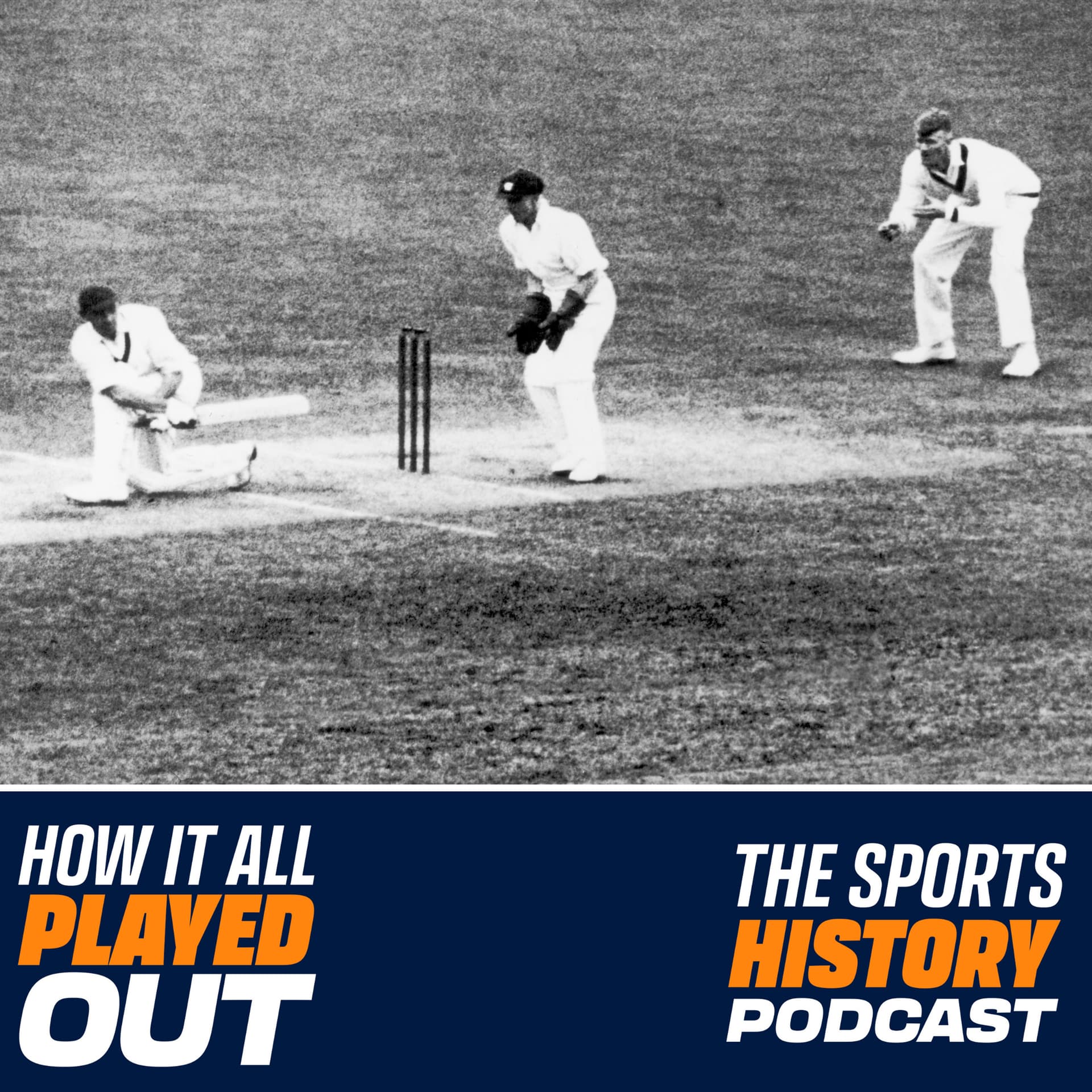
Episode Details Episode Title: REPLAY - Bodyline: the Ashes that sparked a global crisis - How It All Played Out Episode Description: This episode delves into one of the most controversial Ashes series in cricket history, focusing on England's aggressive strategy known as "Bodyline" aimed at defeating Australian cricket legend Don Bradman. The discussion covers the strategy's implications, both on the field and in diplomatic relations between Australia and England.
Key Themes and Topics Discussed
The Concept of Bodyline
- Definition: A bowling strategy aimed at targeting the batsman with short, quick deliveries directed at the body, creating an aggressive field setup to catch potential edges.
- Intent vs. Ethics: The episode questions whether the Bodyline tactic was a brilliant strategy or unsporting behavior.
Historical Context
- Don Bradman's Dominance: The Australian cricketer's exceptional performance posed a significant challenge for England, leading to the adoption of Bodyline.
- Series Overview: The Ashes series of 1932-33 was seen as a battleground not just for sport but also for national pride and diplomatic relations.
Key Figures
- Douglas Jardine: England's captain, who devised the Bodyline strategy. Described as emotionally distant and ruthless, Jardine symbolized British imperialism.
- Harold Larwood: The fast bowler who executed the Bodyline strategy, coming from a working-class background. His career faced backlash after the series, highlighting the dichotomy between his role in the strategy and the ramifications it had on him personally.
- Bill Woodfull: The Australian captain who voiced strong opposition to Bodyline, emphasizing the ethical considerations of sport.
Reactions to Bodyline
- Diplomatic Incident: The tactic created outrage in Australia, resulting in a significant strain on UK-Australia relations. The MCC (Marylebone Cricket Club) was involved in the dispute over whether Bodyline was unsporting.
- Public and Media Response: Intense media scrutiny and public outcry characterized the series, leading to accusations of violence and unsporting behavior against the English team.
Aftermath and Legacy
- Impact on Cricket: Bodyline led to changes in cricket laws to protect batsmen and shaped the future of fast bowling.
- Reputations Damaged: Jardine and Larwood faced significant backlash, and their careers were impacted negatively due to their roles in the Bodyline strategy.
- Cultural Reflection: The series highlighted the complex relationship between England and Australia and showcased how sport can transcend mere competition and delve into national identity and pride.
Key Takeaways
- Controversial Tactics in Sports: The discussion illustrates the fine line between strategy and ethics in competitive sports.
- Legacy of Bodyline: Bodyline is remembered not just as a tactic but as a pivotal moment that transformed cricket and influenced future games.
- Personal Stories: The episode brings to light the human aspect of sport—how decisions made on the field can have lasting implications for players' reputations and lives.
Conclusion The episode serves as a profound exploration of the Bodyline saga, reflecting on its implications for the spirit of cricket and the delicate balance between competitive tactics and sportsmanship. The hosts invite listeners to engage with their content through feedback and sharing their thoughts on social media.
Written by AI. May contain mistakes. Listen to the episode to check what was said.
Transcript
Automatic transcript. May contain errors.0:02Paul Hayward:This is a Global Player original podcast.
0:13Mark Pougatch:Sport often finds it difficult to deal with its heroes, with those who absolutely excel at their craft. As soon as they reach the summit of Mount Olympus, there are those looking to bring them down. On the field, opponents will find any means, fair or foul, to negate a genius, to find the kryptonite that will deprive he or she of their powers.
0:35Paul Hayward:England adopted just such an approach almost 100 years ago in one of the most famous, controversial, bitter and rancorous Ashes series of all time. A series in which England were accused of being unsporting and unethical and, dare we say it, the Australians were doing all the whinging. Don Bradman was the man England needed to crush to regain the ashes. How they went about it sparked a major diplomatic incident.
1:03Mark Pougatch:So why did Australia react the way it did, to body life? This is how it all played out.
1:17Mark Pougatch:so i grew up in a household with a father who was so obsessed with cricket in a really good way that he called me i was his only son he called me bradman quite a lot till i was about 10 or 11 and then i think he realized i wasn't ever going to bat like bradman so maybe he could just revert to my chosen name but don bradman was was a you know as a name i grew up with and when when we were looking at this i was thinking if you think about how young australia is don brabham was the first australian really known to a global audience i think that would be fair to say wouldn't wouldn't
1:49Paul Hayward:you yes he was the first australian to be revered and feared i think in equal measure as well to become a a god-like figure in the game at the expense of england it was england that paid the penalty ultimately for Bradman's genius and his incredible numbers and of course from the moment that Bradman imposed his superiority on on English cricket he became the challenge not just beating Australia but you couldn't get to Australia unless you got to Bradman and that's the whole crux of the story we're about to tell.
2:21Mark Pougatch:So if we look at the backdrop of this Ash's series are pretty evenly shared in the sort of 1920s england won in 1926 then they won 4-1 in 28 29 when douglas jardine a major character in the story is there don bradman plays his first test against england in that series but in 1930 it all changes so australia come to england these are don bradman's figures on that tour of 1930 he averaged in all matches on the tour almost 99 98.67 he averages 139 in the test matches he scores 974 runs in the test matches he scores 254 at lords he scores 309 at headingly in a day on his way to a world record 334 and at the oval he scores 232 Percy Fender, who was captain of Surrey and a respected journalist, most cricketers are amateur.
3:19Mark Pougatch:Certainly most Australian cricketers are all amateur to a large extent. Percy Fender said something new will have to be introduced to curb Bradman. In other words, if we cannot get Bradman out, we, England, will not win the Ashes. We've got to come up with a plan.
3:35Paul Hayward:Yeah, one of the things you can do in cricket, of course, is search for a floor, even in the best batsman. the best batsman will usually have some kind of flaw and everybody tries to exploit it. Bradman appeared to be flawless. And in 1928, 29, Larwood bowled to Bradman. Harold Larwood is the other hero of this story. He bowled to Bradman in seven tests and took his wicket only once. And Larwood said he was cruel in the way he flogged you.
4:04Mark Pougatch:He was a very individual person, Bradman. He's only 5 '7". He was essentially self-taught. He was slightly unorthodox the way he held the bat. No formal coaching. No organised junior cricket. Have you ever been to Adelaide? Yes. Yes, I have. Have you been to the Bradman Museum at the Adelaide Oval? Yes. Oh, you've seen that then? Where he's throwing the ball. Yes. I think it's a golf ball, actually, against a low brick wall, which I think has got a water butt on it. That's right. And he's hitting it with a stump as it comes back. It's extraordinary,
4:34Paul Hayward:isn't it amazing and that's the famous image of bradman the the the dedicates a bit like steve smith in the modern game the obsessive the guy who plays cricket and his the bats in his hotel room can't put his back down you know can play every shot in the book but of course douglas jardine who identified him as the the nemesis began after 1930 to try and find the weakness if if there was
4:57Mark Pougatch:going to be a weakness and he spotted one the last test match of 1930 is at the oval so he's on the way Bradburn to Australia winning the tour and him scoring this extraordinary amount of runs and it's rained at the oval now this is the days where they don't cover the wicket when it rains and this has always made me laugh that pro cricketers say this the rain had definitely juiced up the deck a little bit I love it when they say that and it was quite lively and Larwood is bowling to Archie Jackson who was a brilliant young player who very tragically dies of TB during the body line series actually and Larwood is hitting Archie Jackson who makes 73 but black and blue when jardine looks at this film back and bradman is facing larwood jardine thinks that he can see bradman flinching a little bit and apparently he sort of goes ah that's it he's yellow in other words he's a bit of a coward yeah bradman doesn't like it very fast very short at his body or on middle stump or whatever it is here's the chink of in his armor he thinks
5:56Paul Hayward:To which one would reply, well, who does? Yeah, exactly.
5:59Mark Pougatch:Yes.
5:59Paul Hayward:And we ought to say at this point that Harold Larwood's bowling was so accurate, so potent and so quick. The batsman talked about seeing the point of release and then not knowing anything until the ball hit the bat or more often than not, until the ball hit them. He was so quick that spectators reported not being able to see the ball. And he wasn't wayward. He didn't spray it all over the place.
6:24Mark Pougatch:No, he was very, very accurate, wasn't he?
6:26Paul Hayward:He was very precise. And if he needed to aim it at you, he would and he could. So Jardim was very clever in saying, you know, I've got it. He's yellow. I found the key. You know, we can get this guy out. And actually the figures, as we'll say later, bore him out. Because in the Bodyline series, Larwood's average was way down on his normal level. But I think Jardim thought this was the only way of dealing with Bradman. And he knew that in his midst, he had a bowler of incredible speed and incredible accuracy. So if anybody was going to deal with Bradman, it would be Harold Larwood.
7:01Mark Pougatch:So there was already a variation in cricket called Leg Theory, which had curbed the great Victor Trumper in Australia in 1912. The bowler then was Frank Foster, who was an extremely dissolute character. And he ends up being implicated in the murder of a prostitute. He's a big gambler. So Jardine had this in his mind.
7:18Paul Hayward:leg theory was a fantastic euphemism for what England did I mean it conferred sort of scientific response respectability on something that was really about violence I suppose and Harold Lauer detested the term body line because he said it implied intent to hurt he insisted there was no intent to hurt the intent was to get batsmen to fend the ball off to this cordon of leg side fielders and run through the Australians that way Bradman in particular so we probably should just talk about
7:47Mark Pougatch:Jardine for a little bit. So Jardine was born in India and then immediately sent back to prep school in Newbury and then went to Winchester College. And it's one of the most famous schools in the world, goes home to see his parents once a year. And he's at Winchester during the First World War. And it's described at the time that Winchester is primeval in every respect, in terms of its food, in terms of its housing, in terms of its plumbing, in terms of its corporal punishment. And basically, they're just shipping boys through as quickly as possible to go to the front line.
8:18Paul Hayward:Well, people paid to go there.
8:19Mark Pougatch:And people paid a lot of money to go there. So immediately, they're hurrying through to fight in the First World War. You're thinking, OK, this, you know, there's an awful lot here, separated from your parents for the best part of a year and, you know, destined for the front. What psychologically that's going to do to you. His coach at Winchester was a man called Rockley Wilson, who went to Australia in 28, 29 with Jardine. And Rockley Wilson said, on hearing that Jardine had been appointed captain and therefore would be captain in 32, 33, said one of the most prescient things of all. We shall win the ashes, but we may lose a dominion.
8:56Mark Pougatch:That's the other really important part of this, Paul, that the role that the United Kingdom has with Australia in terms of dominions, in terms of a colony. And we're only talking here, 1932, 33. So we're only talking 15 years after the end of the First World War.
9:11Paul Hayward:Yeah, that's one of the reasons why this story has everything. So Douglas Jardine is the embodiment of the imperial colonial oppressor. He wears a harlequin cap and a white silk cravat.
9:23Mark Pougatch:And the harlequin cap is an Oxford University cap. So it screams elitism.
9:29Paul Hayward:He's emotionally remote. He's cold. He's ruthless. He has at his disposal Harold Larwood, who we'll talk about in a bit more detail in a moment, who has come up from the mines. So he has his sergeant major to do the damage. And he's everything a colonial country would probably hate about the English. He is the Dick Dastardly of cricket captains. Now, when somebody says to Jardine, they don't seem to like you over here, Mr. Jardine, he replies, it's fucking mutual. Which put me in mind of Sir Alf Ramsey when England arrived at Prestwick Airport once and a Scottish reporter called out, welcome to Scotland, Mr.
10:11Paul Hayward:Ramsey. and Alf Ramsey said, you must be fucking joking. Orwell said famously that sport is war minus the shooting. Well, there was a kind of shooting in this one because the shooting was done by England's quick bowlers.
10:26Mark Pougatch:Now, how much did the MCC know about all this? And in these days, England used to tour as MCC. They did till the mid-70s, actually. One of his daughters said, absolutely, the MCC were in on this. And of course they were in on this. There's no way they wouldn't be. Plum Warner, who had been an England player before and had toured before and was a tour manager, who fell out with Johnny, and of course they were in honour. There's no way they could not have been on it.
10:45Paul Hayward:Well, I love this idea that the MCC found about it afterwards.
10:48Mark Pougatch:Yes, or mid-test match.
10:49Paul Hayward:What's going on now? Well, before England set sail, Nottinghamshire, in particular, practised it in the county championship, and nobody could work out what was going on. Why are they bowling like this? Why is Larwood bowling like this? And John Arlott, for example, in his early days as a cricket reporter, was leaving the ground, left the ground just baffled. nobody could understand what was happening and Larwood said we're trying something out it was condemned by a lot of cricket writers and sages as un-English and contrary to the spirit of cricket, what are these people doing, why are they playing like this and of course it was because they were practicing for body line they were practicing leg theory so if the MCC didn't know that they must have all been in a cave
11:33Mark Pougatch:fill in a few more gaps for us about Larwood the character, who are we talking about here as one of the key people in this story.
11:40Paul Hayward:The more I studied this, the more I realized that Larwood versus Bradman is actually one of the great sporting rivalries of the last 100 years. So Harold Larwood comes up from the Nottinghamshire Mines to become the most destructive and accurate fast bowler of his generation. So his father, Robert, was a man of rigid principles, a teetotaler, treasurer of the local Methodist church. Harold Larwood left school when he was 13 to work at the local miners' cooperative store. From there, he went down into the collieries in charge of a team of pit ponies. He broke into the village team but had to play in plumsoles because his family couldn't afford boots.
12:24Paul Hayward:He would take a pinch of snuff before bowling to clear his head. He earned so little money as a county player that he used to keep a small holding, a little farm, through the winter just to make some money growing vegetables and stuff. But when you watch clips of him, it's staggering. It's staggering how good he was, his action. Not very tall, was he?
12:48Mark Pougatch:5 '7", 5 '8"? No, exactly.
12:50Paul Hayward:But he was sort of Michael Holding-esque in the smoothness of his delivery, and he had this metronomic accuracy. Of his 1 ,427 wickets, 743 were bold. Can you imagine that in a quick bowler? So that's ridiculous. And the Trent Bridge ground staff used to keep three pairs of spare stumps because he regularly broke them. Larwood's bowling used to break the stumps quite often. In the ashes, he was labeled the wrecker, the murderer on tiptoe, the killer. An Australian spat in his face. He was called a bastard innumerable times. The hate mail poured in for him. And, you know, as we tell the story of the Bodyline series itself, It's easy to forget just how much vitriol Harold Larwood was subjected to and what a test of his spirit it must have been.
13:40Paul Hayward:Yeah. When we look at cricketers now, they're like robocops, you know. They're as protected as they possibly could be given the dangers they face. I mean, back then, the pads were made of upholstered canvas. There were no helmets, crucially. Do you remember those gloves from when you were a kid? Oh, that's cool.
13:55Mark Pougatch:They were nothing.
13:56Paul Hayward:There were canvas gloves with little green rubber spikes. For thigh pads, people used towels that they'd shoved down their trousers. Yes. The batsman was pretty much naked to the aggression of the fast bowler.
14:10Mark Pougatch:So body line is short, quick, rising deliveries at the batter, pitching on leg stump. So we said leg theory is more like inductive, so it swings into the pads. This is fast, just short of a length, rising at leg stump. So you're having to get on your tiptoes the whole time. And a defensive shot will deflect onto the onside, if you don't know cricket, to the left of the right-handed batsman, where there'll be a cordon of fielders. If you tried to play an attacking shot, well, good luck, because it's so quick you probably got an edge up in the air and caught in there. And they changed the law as a result.
Read the full transcript
14:42Mark Pougatch:You can have as many fielders as you want in this cordon. So that's why it was so dangerous. The other thing is we're talking about the relationship between the UK and Australia. Listen to the words of the Australian captain, Bill Woodfall, as England arrive. He says, you know, a tour like this will strengthen the bonds of the empire and it's a huge deal, especially after the end of the World War I. Bill Woodfall's words, the mother country is coming. England is the home country. I mean, it says it all, does it? In a way, dare I say it, Paul, a slightly subservient as if to say, you know, we know who we are.
15:16Mark Pougatch:We rely on Great Britain and they were relying on Great Britain for a lot of loans at the end of the First World War because, you know, obviously the war had cost so much money. So there was a big financial link between the two. The Great Britain had lent money to Australia for loans. And obviously, there was a big trade. There was a huge trade between the two as well, which is really significant. So that's the backdrop as they arrive on the boat, of course, which takes absolutely weeks. Bradman was in Canada when the England tour squad was announced. And he looked at the list of fast spoilers and he went, I know what's coming.
15:47Mark Pougatch:I know what's coming. And then in the New South Wales game, one of the warm-up games, the batters took a pounding. It's really important to say none of this was against the laws of cricket. None of this at the time was against the laws of cricket.
16:01Paul Hayward:No, and Bill Vose tells Vic Richardson, if we don't beat you, we'll knock your bloody heads off. So that's a team that's armed with a tactic.
16:10Mark Pougatch:Next, one of the most infamous test series of all time gets underway in Sydney.
16:30Mark Pougatch:well the interesting thing about the Sydney test is that Bradman didn't play because actually he was ill so the first test England win by 10 wickets the second test Bill Bowes played in that test match as the only test match he played and he got Bradman out first ball Bradman played on and Bill who's a Yorkshireman his exact words were well I'll be fucked as he got him out yeah And Jardine, when Bowe bowls Brabham first ball, Jardine does a little sort of war dance, puts his hands above his head and is clapping. Very unusual behaviour for the 1930s. You've got a wicket, you shook hands, that's what you're supposed to do.
17:04Mark Pougatch:Go back to the top of your run-out. That was very unusual. But Australia won the Test match. So at the end of this Test match, it's 1-1. And people are thinking, well, what's all the fuss about body line? Has it actually worked?
17:17Paul Hayward:Well, it's also worth saying that England are not bowling body line every over.
17:22Mark Pougatch:And Gubbie Allen won't bowl it, will he? Gubbie Allen doesn't want to bowl it. So it's only Larmond and Vosie bowl it, because Gubbie Allen, the other fast bowler, won't bowl it. He went, Douglas, I won't bowl it. It's not right. We shouldn't be doing this. It's not right, yeah.
17:30Paul Hayward:So it's only in the third test in Adelaide that the rocket goes up. Now, the flashpoint, really, for this whole Adelaide test hoo-ha is the ball that hits Woodful on the heart and breaks his skin. It wasn't bowled to a leg-side trap, but nevertheless, Woodful gets hit on the chest. The booing goes on for three minutes. And as Jardine walks past the stricken Woodfall, he says, well, bold, Harold. There's an infamous, disdainful passing remark by Jardine that told the Australians that actually this guy, he didn't care about them. He didn't care about their well-being.
18:07Mark Pougatch:Because who's at the non-striker's end?
18:09Paul Hayward:Bradman.
18:10Mark Pougatch:So that comment is saying you're getting it next.
18:13Paul Hayward:Exactly. That's aimed at Bradman, isn't it?
18:15Mark Pougatch:But it's worth reiterating that was not a body line delivery. No, it wasn't. Completely normal delivery.
18:21Paul Hayward:No, it wasn't.
18:22Mark Pougatch:But just very quick, short, and just hit Woodfall over the heart. And the next over, after Woodfall is hit, Larwood switches his field to a body line field. So now the crowd go, this is kicking a man when he's down. But Jardine would say, well, Woodfall could have gone off, retired hurt, but he didn't. So it's completely kosher that I bowl how I want to within the laws of the game because he's still batting.
18:47Paul Hayward:There were no subs in those days, were there?
18:48Mark Pougatch:So if I want to go to a leg side field, which is completely legitimate, I should do. The Australian selector, Bill Johnson, said, this act, the most unsportsmanlike act ever witnessed on an Australian cricket field. And I really enjoyed this. That's a high bar.
19:03Paul Hayward:That's a high bar.
19:05Mark Pougatch:This I really enjoyed. A 20-year-old writer in the crowd wrote this. I saw some of Adelaide's octogenarians rise to their feet, flush scarlet of face and with their Adam's apple throbbing. count Jardine and his team out I knew some of their daughters they did not want to sit without protesting while it was being aimed at the heart and head of a badly stricken man a man who in their opinion stood for all the finest qualities that had come to be associated with cricket Australia had taken it until then this is only on day two because day three it gets even worse but this place is in this place is a tinderbox now Bill Ponsford goes out to bat you were talking earlier about how little they're protected wearing a rubber chess card and he gets peppered with short bowling.
19:50Mark Pougatch:I was trying to think of the analogy, then I remembered it. Do you remember when Brian Close, age 45, came back into the England team in 1976 and Michael Holding bowled at him? He wasn't wearing a helmet and he got hit everywhere. It would have been like that, wouldn't it? No protection.
20:05Paul Hayward:Yeah. In Duncan Hamilton's magisterial, really, biography of Harold Larwood, he recalls the story of a child at the cinema, spotting Lowood and saying to her mother, but mummy, he doesn't look like a murderer. You know, by this point, the England team is taking on the appearance of a sort of mortal enemy. No one, after the Woodfall incident, nobody quite knows where this is going to end. But the following day, as you said, Mark, it gets infinitely worse.
20:32Mark Pougatch:So one day too, after Woodfall's been hit and then he's out, Pelham Warner, Plum Warner is nicknamed, the tour manager, who had a difficult relationship with Jardine, but was on board with Bodyline, goes to the Australian dressing room to see how Woodfull is. This is one of the most famous exchanges in the history of Test cricket. Woodfull, straight-talking man, schoolmaster, talked about the mother country, lots of morals, lots of ethics, says, I do not wish to discuss it. There are two teams out there. One is playing cricket. The other is making no attempt to do so. The game is too good to be spoiled, and it's time some people got out of it.
21:13Mark Pougatch:Good afternoon. In other words, piss off. You know, I've said my bit. You get out of my changing room. So he was really, Woodfall was really, I mean, it was physically hurt, but was hurt by what he regarded as the completely unethical behaviour of England.
21:29Paul Hayward:Yeah, and that's regarded as one of the most profound, you know, declarations in the history of sport because what he's really saying is that, you don't win by any means necessary. That's not what sport is about. There are limits. There are rules. There are conventions. There is a spirit in this game which you're violating. And Plum Warner is so upset that supposedly he goes back to his bedroom and is heard sobbing in his room.
21:52Mark Pougatch:Right, that's day two. But day three, Paul, it goes to a whole new level.
22:12Paul Hayward:If you thought day two was controversial, wait till you get to day three. When Bertie Oldfield attempts to deal with a rising ball, he's on 41, but he edges it instead into his own head and sustains...
22:30Mark Pougatch:A non-body line ball, though. A non-body line ball.
22:32Paul Hayward:A non-body line field. and sustains a linear fracture of the right frontal bone, which in layman's terms, he has now fractured his skull. Now, this was serious stuff. This wasn't, you know, this wasn't fairground, you know, grappling. This was life or death.
22:48Mark Pougatch:And the fact that it's not a body line delivery and it's not a body line field is immaterial. And the fact that Bertie Oldfield says to Larwood, it's my Bertie Oldfield's fault. I played the wrong shot, got too, as they say in cricket, got a bit big on me and I've edged it straight into my head. woodfalls in his suit because he's been out the day before comes out onto the pitch helps him off there's a phone call to the local police station and it goes send more police so the anger street police hq are asking for more policemen to be sent there are mounted troopers at the back of the pavilion there's this heady cocktail of imperialism elitism poverty unemployment they've got after don they're not behaving ethically they're a disgrace this is england england the country that gave us cricket, the game that stands for everything.
23:31Mark Pougatch:This is England behaving disgracefully. One rioter on the pitch, it would have gone up. But it just nipped over a picket fence.
23:38Paul Hayward:Larwood turns to Les Ames. He's looking at the crowd and feeling in mortal danger and says, if they come, you can take the leg stump for protection. I'll take the middle. So Larwood and Ames are preparing to defend themselves with cricket stumps. Completely.
23:52Mark Pougatch:They think it's all going to go off. It's an assault on everything. And it's particularly, although they haven't hit him. It's an assault on our Don Bradman. The headline that night screamed premeditated brutality.
24:04Paul Hayward:And Larwood leaves the field to chants of bastard, bastard, bastard. And then of course, this is where the cables start flying and the whole thing becomes a political diplomatic incident between the United Kingdom and Australia.
24:19Mark Pougatch:England win the Test match, comforted by 338 runs. Larwood gets wickets. Gabby Allen, not bowling body line, gets wicket. And Bradman is very, if you look at the films, Paul, he is very skittish in his batting here. He is not, as the modern parlance and coaching would say, getting into line and playing it well. He does not look like he likes it. He's getting bold legs, dump a bit. He's getting too far across his stumps. He clearly is very, very uneasy about it. So the Australians send a telegram to Lords. Now, Reuters send their cable urgent rate, which means it arrives in three minutes. Yes, they're quicker, yeah.
24:53Paul Hayward:Yeah.
24:53Mark Pougatch:Australians sell it the standard rate, which means arrives in about three days. So the press get this before the MCC get this. So the MCC president, Lord Hailsham, is hauled out of bed because Reuters telegram has landed. Here we go. I printed it up. I thought it was so important. Body line bowling assumes such proportions as to menace best interests of the game, making protection of body by batsmen the main consideration, causing intensely bitter feeling between players as well as injury. this is the key sentence in our opinion it's unsportsmanlike unless stopped at once likely to upset friendly relations existing between australia and england it's unsportsmanlike
25:37Paul Hayward:i love the fact that the quickest way to uh offend the mcc is to use the word or english sport in general is to use the word unsportsmanlike as if as if the english could ever be unsportsmanlike. And the MCC replies is equally sort of comic in a way. They say, we deplore your cable and reject the allegation and say, well, cancel the rest of the tour if that's what you want to do. But of course, they know that the Australians won't do that because it would cost them a fortune to cancel the ashes halfway through.
26:08Mark Pougatch:Yeah. Gabby Allen said, Gabby Allen, who had said to Douglas Jardine, I will not bowl body line. So he didn't. Jardine says to Gabby Allen, Lords will let me down. Cubby Allen says, no, Douglas, no one can call an Englishman unsporting and get away with it. The Australians have lost the battle with the first shot they have fired. I actually think it was probably to Jardine's huge benefit that they were called unsportsmanlike. I think that the minute that happened, I think probably MCC might have been quite twitchy. Were it not for that word? What do you think?
26:43Paul Hayward:Well, it's a classic because the two teams are each other's throats physically and the two governing bodies are arguing over a word. The Australians capitulate and the MCC ask, may we accept that the good sportsmanship of our team is not in question? Yeah, absolutely. And the Australian reply comes, we do not regard the sportsmanship of your team to be in question, even though they previously had done so. So the two governing bodies are backing away from a feud while the players on the field are still very deeply mired in it.
27:15Mark Pougatch:Because diplomatic relations are so important because the relations between the two countries are so enmeshed. I've talked about the loans. I mean, the prime minister of Australia, apparently really a bullion character called Joe Lyons said, Australia cannot afford for the UK to boycott Australian goods. So he's talking to Ramsey MacDonald, the prime minister. the previous Prime Minister of Australia, a man called S.M. Bruce said, well, we might struggle to repay the loans if this carries on. Of course, the High Commission is involved. And I like this chap as well. Sir Alexander Hall-Ruthven, he was the Governor General of South Australia.
27:49Mark Pougatch:He's a key figure in all this because it's happened in Adelaide. He said South Australians are very insular and they're very quick to take offence. So you just have to bear all this in mind. Sadly, a lot of the Dominion office files at the time have disappeared. So we don't really know. But we do know there was a serious threat to trade. So when you build all this in, and we, Britain didn't like the high tariff on her goods going to Australia. Australia didn't like the payment schedule on the loans. You can see where it all is. But even on the eve of the fourth test, Gabby Allen says to Douglas Jardim, what's the test team for tomorrow?
28:24Mark Pougatch:And he goes, at the moment, there is no test match. Unless they withdraw the word on sportsmanlike, there is no test match.
28:30Paul Hayward:Well, now you put it like that, you can see that both governing bodies basically abandoned their teams to their fate. The Australians, by capitulating and saying, Suck it up. Suck it up. Go out there and get hit, because we can't cancel the rest of the series. You're just going to have to swallow it. And as we see later, the MCC abandoned England to their fate by pretending that they didn't know anything about body line and disavowing it for the next tour of Australia. So it's a kind of masterclass in governing bodies. being nothing to do with me self-interested and pragmatic absolutely there is a suggestion which
29:07Mark Pougatch:some of the players have said one thing and some of the players the other in the england camp whether jardine after the third test says to the players do you think we should abandon body line because the relations are getting so bad and we might have a riot bill bow said that there was a meeting called to that effect and all the players went no no no no we've got to stick to it otherwise we look like we've been in the wrong and we look like we are sportsman like gabby allen says there There was a meeting, but it was only to agree support for Jardine and that body line was never mentioned. I'm sorry, I don't believe that.
29:37Mark Pougatch:I mean, body line is the elephant in the room. If you have a team meeting with 17 of you, you say, are we sticking behind the captain? Yes. Are you telling me that the word body line is not mentioned? The Daily Herald in England calls the Australian behaviour undignified snivelling. Now, that is the 1930s equivalent to whinging poms, isn't it? Yes, it is. Literally. I mean, this is what I find so interesting about this story. if you'd switch the teams around it's whinging pom syndrome england win the fourth test by six wickets uh eddie painter bats brilliantly having got out of his sickbed with tonsillitis he's wearing an amazing panama match winnings for him and archie jackson who's a very very soon after this dies of tb the australian brilliant cricketer actually telegrams larwood and he says congratulations magnificent bowling good luck in all matches as an australian batsman saying nothing wrong with that and England win the fifth test again.
30:29Mark Pougatch:And to sort of finish the whole Larwood story, Larwood makes 98 as a night watchman and actually is applauded off the pitch afterwards. But then he breaks a bone in his foot, doesn't he? But still Jardine won't let him off the pitch.
30:41Paul Hayward:No, this is...
30:43Mark Pougatch:As I say, you've got to stick it out to the end.
30:45Paul Hayward:Yeah, Larwood said later that he died with his boots on in that test match. He'd been vomiting after some of his bowl. He bowled his insides out, as he put it, in that series on hard pitches in brutal heat. But he's finished by the fifth test. He doesn't even want to play in the fifth test. But Jardine insists on sending him out as Bradman's nemesis. He can't walk. He bowls from a static position. He's sent to point when he can't walk. Because he's in Bradman's eyeline. Exactly. It's only when Bradman goes that Jardine says to him, right, you can go now. Your job is done.
31:22Mark Pougatch:But it's worked. Brabham only averages 56. England win 4-1. And Harold Larwood has had three telegrams from the MCC saying, well, bold England, well, bold Knott's, well, bold Larwood. And his sustained accuracy and his fearsome pace and the body line tactics have all succeeded.
31:40Paul Hayward:Yes. And the aftermath is fascinating because pretty much everybody gets disowned.
32:02Mark Pougatch:so the next ashes is 1934 so it's only 15 months later australia come to england and all the chat is are england gonna bowl body line is douglas jardine going to be captain i'll deal with jardine quickly then you tell us about larwood um governor hall rutheran who i've just quoted there writes to Plum Warner, who never wanted to see Jardine again because he'd had enough of all the crap. Even though MCC were completely behind body line, they're now retreating quickly for it. And the governor says that the whole atmosphere down under will be altered if Jardine is made captain again. So it's so vital for England-Australian relations that Jardine, even though the MCC were perfectly happy what he did, 32, 33, we can't have him captain again because we can't go through all this again.
32:49Mark Pougatch:So the first one chucked under the bus is Jardine. For all that you might think, oh, he's an establishment figure and he's Winchester and Oxford and Harlequin and he won the Ashes and it was a brilliant plan. Oh, MCC chuck him under the bus as soon as they can because of the relationship with Australia.
33:04Paul Hayward:Oh, he's dispensable, even with his background and Larwood even more so. Larwood in May 1934 meets Julian Kahn, who's a Nottinghamshire a benefactor. He's a patron and benefactor and philanthropist. And after a bit of flim-flam at the start of the conversation, he's asked to apologise to the MCC for his bowling, even though he'd been told to bowl that way, and even though they'd practiced it in plain sight before they even got on the boat.
33:32Mark Pougatch:At Trent Bridge!
33:33Paul Hayward:At Trent Bridge, where Sir Julian Khan was a major figure. So, you couldn't imagine that what Larwood thinks of this, he goes home and speaks to his mother, Mary, about it, and she He says, if you apologise, you'll never see me alive again. A ghosted article in the Sunday Dispatch appears under the headline, politicians trying to hound me out of test cricket. This is attributed to Larwood and the interview itself. And of course, you know then that it's over for him. Even though he heads the county, the bowling averages in 1936, the MCC don't want to take him because they want to put Bodyline to bed.
34:08Mark Pougatch:I love the whole exchange between Sir Julian Khan and Larwood in that warm-up game in 1934. Harold, I'm afraid you'll have to apologise to the MCC. Larwood, apologise, sir, for what? For your bowling, Harold. I have nothing to apologise for, sir. Oh, but you must, Harold. You must apologise to the MCC for your bowling. And he must agree to bowl legitimately in the future. He was bowling legitimately. If you do, you'll be picked in the test against Australia. but unless I have your word I am afraid you will not be considered at all
34:41Paul Hayward:what a moment, that's like a could you imagine that as a stage play where the establishment turns on the guy that they've used to achieve the mission they set out to achieve which was to break Donald Brantman
34:52Mark Pougatch:so he did everything they wanted him to do and more and he did it brilliantly and his captain and him, Larwood, are both just tossed to one side
35:03Paul Hayward:for Larwood, life took him back to the country where everybody called him a bastard relentlessly for weeks on end. He emigrated to Australia in 1953, lived a quiet life, was given an MBE in 1993, had five children, became a very respected establishment figure, a much-loved figure in Australia, which is quite ironic when you think about it. But there's an image of Larwood in later life that really strikes me as significant. He would sit there watching the Great West Indian bowlers bowling and make notes of how many bouncers they bowled and how many people got hit. And that brings us, of course, on to this point about how cricket, how fast bowling developed after that.
35:42Paul Hayward:And really, when you compare some of the things we've seen since Bodyline, it makes Bodyline look like a tea party, really, in terms of the number of injuries and the number of bouncers that were bowled. I'm thinking particularly of the great West Indian bowling attacks of the 1970s and 80s. I'm thinking of Lillian Thompson, who in a way could be seen as the avenging angels of body line.
36:03Mark Pougatch:Captain by Vic Richardson's grandson.
36:04Paul Hayward:Correct.
36:05Mark Pougatch:So there's a complete line there.
36:07Paul Hayward:Correct. And everybody who knows cricket will have images in their head of Steve Harmason drawing blood from Ricky Ponting at Lourdes. Joffre Archer hitting Steve Smith and Smith saying he felt like he'd had a dozen beers after being hit on the head, then coming back out to bat at Lourdes, which was very ill-advised. Mitchell Johnson's bowling against us, England in the 2013-14 series.
36:29Mark Pougatch:I was there for that series. It was the most terrifying thing I've ever witnessed. There you go. It was beautiful in its brutality.
36:35Paul Hayward:Exactly, yeah. So fast bowling since Bodyline has become mechanised and highly technical and really part of the language. Obviously, the laws of cricket try and control it a bit. But it's so there. Exactly. And to think of Bodyline as the great outrage in cricketing history is simply not borne out by what has happened subsequently.
36:56Mark Pougatch:Brilliant. I think it's been absolutely fascinating. I hope you've enjoyed that as much as we have. You can catch up with any of the episodes of How It All Played Out on Global Player or wherever you get your podcasts. Hit subscribe, tell your friends, let us know what story you'd like us to retell and to investigate. Love to hear from you. You can email us howitallplayedout at global.com and we'll see you next time.
37:26Mark Pougatch:How it all played out is presented by me, Mark Pugach, and Paul Hayward. It's a global original production in association with Apex Content Ventures.
37:37Paul Hayward:This has been a Global Player original production.
From the publisher
"If we don't beat you, we'll knock your bloody blocks off"
In one of the most bitter and controversial Ashes series ever played, England set their sights on taking down Australian cricketing legend Don Bradman. Their method? A brutal, calculated strategy known as Bodyline - a tactic so aggressive it sparked outrage, strained diplomatic ties, and forever changed the spirit of the game.
In this episode of How It All Played Out, Mark Pougatch and Paul Hayward take you back to 1932 - was Bodyline a genius strategy or just plain unsporting? And why did it cause such a deep rift between two cricketing giants?
Remember to follow or subscribe, and give us a 5 star review too!
We'd love to hear from you! Email us: howitallplayedout@global.com
Get in touch on socials: @playedoutpod
Executive Producer: Adonis Pratsides & Adem Waterman
Producer: Sophie Penney
Video Producer: Sam Trudgill
Social Media Editor: Calum Scotland
Head of Podcasts: Factual: Al Riddell
Director of Podcasts: Vicky Etchells