

- Podcasts
- The Sports Agents
- Should Paqueta get a life ban for spot-fixing?
The Sports Agents10 Jun 2025 · 49m
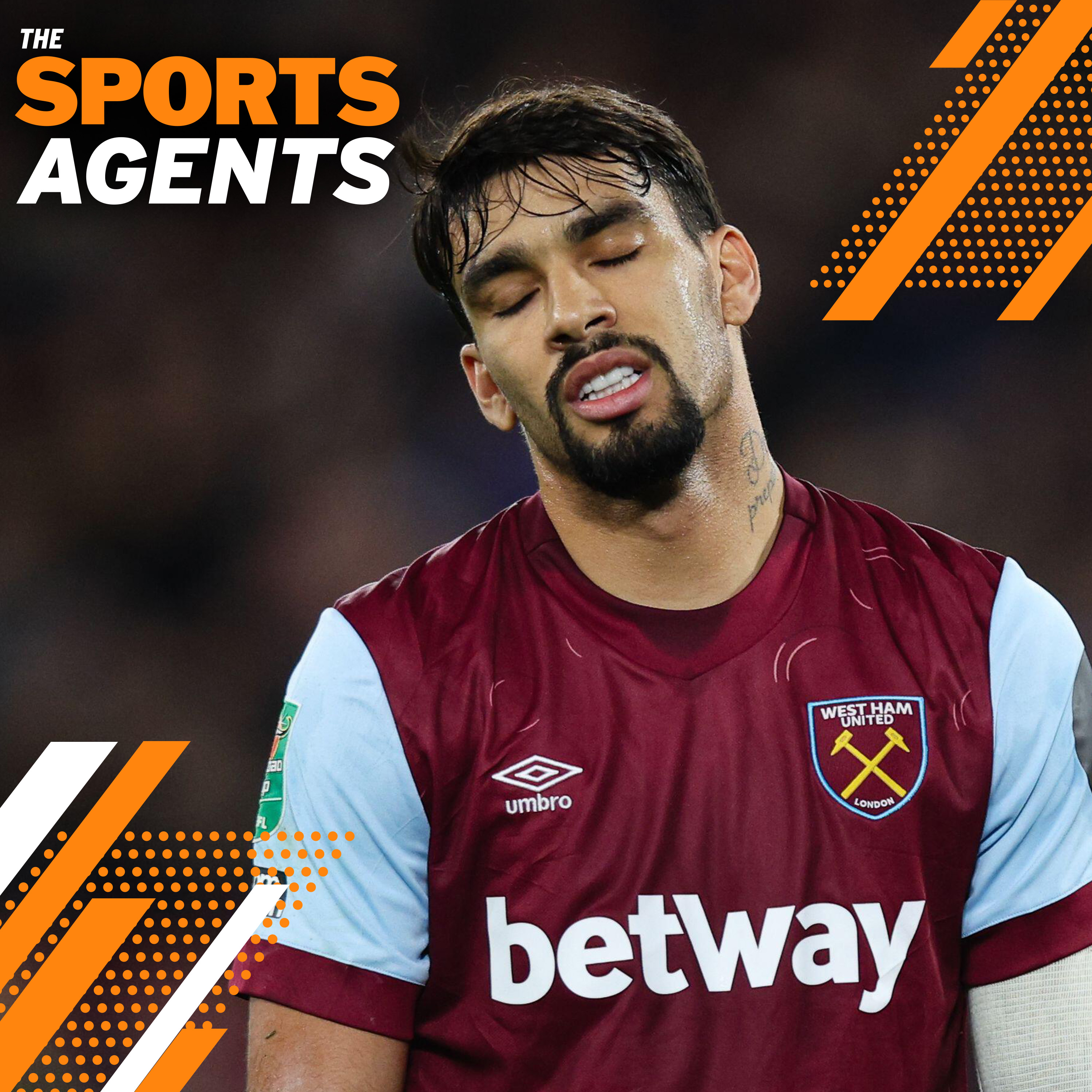
Should Paqueta get a life ban for spot-fixing?

 Add vo to ChatGPT or Claude to ask about everything you hear
vo listened to this episode to put together the overview and transcript, so there may be the odd mistake.
In short
The episode debates whether West Ham and Brazil midfielder Lucas Paquetá should receive a life ban after the FA sought one following his spot-fixing trial. He was charged with four counts of deliberately being booked to influence betting markets; he denies wrongdoing. The hosts discuss how long the process has taken and how the case affects Paquetá’s mental state.
Guest 1
Moses Schwebu, former Crystal Palace Scholar of the Year; later sentenced to 16 months for match-fixing while playing non-league Bromley. He explains spot-fixing as manipulating yellow/red-card markets (often via Asian handicaps), and claims a single player can be enough. He describes being groomed by a Premier League teammate, receiving bribes, and later learning syndicates controlled large parts of leagues. He gives an example of a match where a fixed sequence led to a 2-0 lead by half-time, with “mistakes” timed to betting liquidity.
Guest 2
Sonia Twigg (The Telegraph), who investigated women’s cricket and gambling. She cites £900,000 bet on a Tier 2 women’s match via Betfair and nearly £300,000 on a women’s quarterfinal, plus social-media approaches for team info. She notes an ICC ban in February for Bangladeshi player Shaheli Akhtar, accused of bribing a player to get out hit wicket during the 2023 Women’s World Cup.
Transcript
0:00Observe. The North American Dad. 50s. Great polo collection. He enters his vehicle information on Carvana. An offer appears in minutes. Remarkable. He squints, reads it again, smiles and says, dang, that's a good offer. The highest form of approval. No haggling. No hassle. No one called him boss.
0:23Gabby: He's still on the couch. Astonishing. Sell your car today on Carvana.com. Pickup fees may apply. This is a Global Player original podcast. So, Lucas Paqueta's spot-fixing trial has finally come to an end, but the wait goes on to find out if the Brazilian midfielder will ever be allowed to play again. He's been charged with four counts of being deliberately booked to influence betting markets. Now, the FA have sought a life ban for him. Today, we're going to be joined in the studio by Moses Schwebu, once Scholar of the Year at Crystal Palace. He was sentenced to 16 months for match-fixing while he was playing at non-league Bromley.
1:04Gabby: So he'll explain to us how sophisticated this kind of corruption is in football 15 years later. And we'll look at how sport more broadly is struggling to keep up in the fight against match-fixing. Welcome to The Sports Agents.
1:25Gabby: The Sports Agents. with Gabby Logan and Mark Chapman.
1:32Hello, Mark. Hi, Gabby. How are you? Good weekend? Good, yeah. I enjoyed watching Wales-Belgium or Belgium-Wales with you last night. Yeah, yeah.
1:41Gabby: We both kind of stumbled across it on BBC. I mean, you were obviously looking for it anyhow. I was actively looking, but I had no idea that it was being shown on BBC One. No, and it was great as well. Yeah, in the past, I've sometimes watched a Wales match on S4C but had five live commentary, because I don't speak Welsh. Five live commentary over the top of it. But last night we were able to enjoy it with English commentary, obviously, that I could understand. And it ended up being quite a thrilling game, didn't it? It did. Wales coming back from three down and then losing 4-3 at the end. So that was...
2:12Gabby: And actually, to be fair to Craig Bellamy, he said how proud he was of his players as well. So whilst the defeat is obviously not what Wales expected, the way they came back in the second half was great. Yeah, it was. Now we've got a bit of oval ball chat But just before we get into Hull KR I was slightly concerned that we were going to Jink Sale at the end of the season They weren't going to make it into the playoffs I don't feel we can be responsible though For their defeat to Leicester at the weekend It was a great effort But I think Leicester probably were The better side on the day It's just, yeah From a Sale perspective It's gutting and heart-wrenching I suppose there is that element as well If you're a sporting purist You end up with the two teams who finished in the top two in the league, taking on each other in the final.
2:56Gabby: So they had home advantage did Leicester because they finished second, they finished ahead of Sale. It does make such a difference, such a difference. I didn't see the Sale game because I was at Wembley for a whole KR winning the Challenge Cup for the first time in 45 years. And that went down to the wire as well with them scoring the winning try in the last couple of minutes that had to be converted by Mikey Lewis. But that was a great afternoon for them. They'd lost the final a couple of years ago on Golden Point. So they went through the ring and did the whole KR fans. But it was a special afternoon for them.
3:31Gabby: And Wigan beat St Helens in the Women's Challenge Cup final. So St Helens' run of four straight titles comes to an end. And Wigan with Dennis Betts as their head coach. That's a massive win. It's great for women's rugby league because it means that the depth is starting to increase. Another rugby league story. They finally have their first night. Billy Boston is going to receive his knighthood this week. One of the, he's 90 is Billy Boston. He's one of the greats of the game. Played for Wigan and Great Britain in the 50s and 60s. And a trailblazer in terms of being one of the first black players.
4:13Yeah, absolutely.
4:15Gabby: It has done so much. Universally admired, I think I can say, within the sport and now rugby league's first ever first ever yeah night which is also astonishing really and could give you an insight into how these things work we might talk a bit more about that on the podcast soon so to today's topic which will dominate the rest of this podcast because lucas piquetta's spot fixing trial is over the verdict is yet to come uh just a reminder that the West Ham and Brazil midfielder could get a life ban. He was charged by the FA with four counts of being deliberately booked to influence betting markets.
5:01He has denied all wrongdoing. It has clearly affected him. And, you know, West Ham have talked about his mental state and fragility over the two years. Two years, Gabby.
5:13Gabby: Two years. I mean, I suppose it's easy for us to see her and go, why has this taken two years? But that is a very long time for somebody to be under this kind of pressure, isn't it? Imagine going out and having to perform at the highest level. Maybe football was the 90 minutes was a release, but the rest of his life must have been absolutely horrendous to deal with this, whichever way it goes. And he's the individual who's carrying this at the moment, charged by the FA, as Gabby said, with four counts of being deliberately booked to influence those betting markets. But obviously, the picture is wider than that.
5:53Gabby: It's much more than just the individual that has been charged. And in a little while, Moses Schwebu will join us, who in his career was mainly involved in spot fixing, which is exactly the kind of thing that Lucas Paquette has been accused of. But his insight is absolutely fascinating. And it's not something that is confined to lower leagues of English football. This is a trillion dollar industry, the betting market on football matches, legal and illegal. An inference that there is a lot of organised crime that is behind it, money laundering and obviously other sports. And as the conversation will unfold with Moses, you know, increasingly the growing market of women's sport as well.
6:36Gabby: So that's all on the way. You can catch up with all episodes of The Sports Agents on Global Player or wherever you get your podcasts. Hit subscribe or follow. And don't forget to rate and review. After the break, Moses Schwebu, a former footballer sentenced to 16 months in prison for match fixing, will join us in the studio for an insight into how that happened and how it all really works. The Sports Agents.
7:02Gabby: The Sports Agents. With Gabby Logan and Mark Chapman. Moses, we have so much to talk to you about, but before we get into all of your experiences, do you think it's important to start with to make the difference between match fixing and spot fixing? Yeah, so match fixing is influencing the score and outcome of a specific match and moment. Spot fixing is usually built around yellow and red cards. you'll find on different types of markets across the world especially on asian handicaps you may have yellow and red cards to influence the outcomes of specific moments on the pitch so if i get booked in the first five minutes i'm a center back that may influence some of the actions that i may take next time so it's really uh match fixing is your worst case scenario where spot fixing is a bit more subtle.
8:00Gabby: Match fixing is presumably, if we're talking football, is hard to orchestrate. If you were to match fix, how many people would you need involved? To be honest, you can fix a game on your own. It depends on A, your position, and B, the level of influence you may have on a team. Is a defender in a better place? Yes, a goalkeeper, defenders in a better place. Can we go back a little bit? And just because I think we're going to talk about what you're doing now. But I think it's important to talk about how you got into this and where you were in your life. Because you looked at one point like you had the world at your feet.
8:39Awarded the Scholar of the Year at Crystal Palace. And I think the Vice Chairman's Award as well. You were clearly one of the outstanding talents of your generation, your cohort at Crystal Palace. And then a series of events meant it didn't quite go your way there. there and you found yourself lower down the leagues and you realized you needed to kind of work at it but you still wanted to be a professional footballer and you talked a lot about how being a professional footballer was going to keep you away from some of life's vices yeah so explain a little bit about that yeah so to give you context I grew up I'm 36 now I grew up in the early 2000s in southeast London so I'm coming from the generation where social media clearly wasn't where it is today.
9:21Luckily for me, I had a manager who got me into football called Andy Brogan. So what I saw in Andy and his family dynamics was a very much fully functioning, bigger, wider family, not only in football, but in life and society as our adolescence and our childhood shaping. Also, I grew up with a lot of friends that went the right and wrong way. Earlier on in my early development, I'll say not a lot of people knew what my family situation was in regards to how my dad had treated me, different elements of grooming and what that looks like that wasn't physical, an abusive stepmother that lived in my house, a dad that worked God knows what time in the mornings and evenings.
10:02So I was exposed to quite a lot of things I shouldn't have been exposed to, whether that was drugs, violence, or basically people doing the wrong things. Football always kept me on a straight and narrow. So the club weren't really aware of what I was going through at home. We just walked in and played football. More importantly, I got into Palace at 16 years old. So I was the last person to be signed without having that academy journey. So I'd gone from watching them to now being on the pitch with them. So when I went into Palace and I've won all of these awards, even though it was a surreal feeling, I had one extreme being at the highest version and height of myself.
10:39But the biggest come down was what was happening off the pitch. So Neil Warnock released me. However, South London never really left me in regards to the friends I had over there or being introduced to match-fixing by a former teammate who played in the Premier League. I was 19 at the time, he was in his 30s, and I didn't actually know what corruption or match-fixing was.
11:00Gabby: Where were you when this first conversation happened? What did he do? Sidle up to you and ask if you were interested? Again, how do I describe it? If you've never been groomed before, this form of grooming was very much in a friendly, kind, almost big brother period. Part of coming from the streets is all you want to do is feel safe. He's a captain, the most decorated player. This is why you're at Lincoln. This is why I was at Lincoln. I think I was around 20 years old. So I didn't realise the severity of what was being asked. All we're told is if you lose tomorrow, you're going to get 60 grand.
11:42luckily for all of us everyone was on the bench and that was very rare because everyone had started up until that point the money was even in a change room so as the result didn't come in following day we've gone back to lincoln's training ground the captain's given the match fix of the money back and he said don't say anything but why did they give you the cash up front i think it was almost inducement because one thing he said was who wants to sleep with the money and obviously one of my teammates was like let me take 60 grand to my room and actually sleep with the money see how you feel in the morning but before all of this and this is an excuse this is just context I was actually living with a prominent drug dealer but this is one of the reasons why the grooming element came in because my captain was aware of this it wasn't a wise move living with it wasn't of course it wasn't a wise move but again when you come from where I've come from number one I'm not going to tell a stitch on anyone and number two in my mind it's not affecting my football if anything's doing the opposite you know and that kind of answers the
12:44Gabby: question that lots of people will probably be wanting to ask listening to this at this precise moment is there was a group of you young players who had heard the captain say this and the money why didn't you say something to someone but that comes back to background and upbringing and not being a grass does it um to be honest picture you played around 10 games the first team captain is the one that has brought you this at that time there wasn't any educational pfa or no one from the fa that came in and said hey be aware of your rules right in that moment we knew it was wrong so we said no however that wasn't actually part of the problem the problem and I found this out later was we had a player who was addicted to betting and gambling and he was the only international and those real life issues are being inherited by us and after I leave Lincoln drop down the leagues go to a club underpaid half check half cash you may get paid you may not get paid having a daughter best friend being killed in London and a lot of what was happening off the pitch friends are going in and out of prison I never had no guidance and no structure both in and out of football and and what I got a sense of hearing your story on the BBC Sounds documentary was that actually it wasn't like you were getting a massive adrenaline rush from this you didn't seem that scared about it did it seem low risk while you were doing it The real change actually came from the first game.
14:22Gabby: The first game that you yourself fixed, or that first game that your captain had to hand the money back. No, so there was two occasions in between Lincoln, where we said, no, there's probably six to nine months in hindsight. So I dropped down into non-league, gone to Bromley. Bromley, yeah. Teammates come up to me and was like, hey, there's a new set of match fixes. No one believed him. I'm like, that happened at Lincoln, et cetera. We've gone to Mayfair to meet the match fixes. They've given us money, told us very specific from the beginning what this looks like. First question I asked was, are people arrested and who's been to jail?
14:58They said no one. A lot of where the operational side of where match fixing actually works, my version of where I've seen criminals, these people are not only highly organized, they don't look like anything you can imagine because they just blend into society. Let's get into that a little bit because the boss in that particular scenario didn't speak English. There was a translator there with you. This felt like this is organised crime. This is happening kind of behind the veneer of betting, isn't it? And it's a trillion dollar business. You're now in an underworld of organised crime. Did this now feel very kind of normal to you, the operation of it and how it was happening?
15:37Because this is very different to what happened to you at Lincoln. I think part of addiction comes from, it became so normal, literally waking up and eating breakfast every day, if I'm going to be brutally honest with you. It was so normalised because we'd started off with one team and two teams and three teams and probably a quarter through the season. He'd managed to have control over half of the league at that moment in time. The big boss. Yeah, the main figure for the syndicate. Within that, I quickly realised you don't need five players, you need one player. How do you now go to players and offer them what it was, which was bribes?
16:17So again, studying through the criminal organisation what syndicates looked like. They had casinos, betting companies. This is 2010. A lot of where they were ahead of the curve. Every single day where games weren't fixed, someone else was fixing. They were leveraging their bets and placing them on other sports. Data back then wasn't what it is today because they had people in the stands writing down absolutely everything on where players are. more importantly law enforcement weren't aware of what we were doing and what was happening because it didn't cross their jurisdiction so towards the end it came about through a daily telegraph investigation the match fixes who are fundamentally part of the original fix at Bromley it was moved over by a Singaporean syndicate and this is how ultimately everybody got tied into conspiracy yeah you said he had control of half the league are you aware then when you go onto
17:16Gabby: the pitch which teams might also be involved in this or which players on which opposing teams might be involved in this or you are you all unaware of each other you know it's really strange um you go from being the main man and thinking you're the main person then the games where there's no live markets you're playing a normal game and you hear things like what kind of things things like um go left go right but it's from the opposite team so I'm a centre back I'm marking a striker the striker's telling the defender what to do and where to go stand here go and do this and I'm thinking well I know what's going on because I know the lingo of how these things work I know before every game who looks in a stand and where people are situated so signals are very much dictated but I'm not aware of that and when I realised the size and scale of where this was going.
18:07It's probably towards the end where I stopped match fixing and I retired from football. Then a month later, we were arrested under the conspiracy.
18:16Gabby: Give us an example of something you did in a game that was beneficial to you financially and altered the course of a game. More things were done off the pitch. I was very much at the epicenter of figuring out who does what and where that goes and earning considerable amounts of money from dealing with the organisation internally. So from the first fix, I became a centre point simply because of how well that game went and the liquidity that was in the market. What did you do in that game then? When they say that game went well for us as a syndicate, what had you done? So 2-0 before the first half, players who claim they're going to do something usually have out-of-body experiences because they're not criminals.
18:59so it wasn't until the 44th minute a player who was in on the fix actually grabbed the ball in the area penalty comes in 2-0 fixers come in so the match fixers who sent people to watch the game noticed and identified who was trying and who wasn't so whereas the players were meant to receive the money they gave me all the money and said you're going to take over because the players who were with you in that group they deemed to not have tried they deemed to not have tried so what I quickly realized from the first fix, the outcomes of what happened, people on the pitch are just playing normal, but because of the level, they're not as good as people who've come from the pro game or they're semi-professional players.
19:39So mistakes at that level happen literally every moment of every game. So for match fix, it's perfect because you could almost pinpoint minutes and areas, if you look at the Asian handicap on where unders and overs and line movements can be made, if that makes sense.
19:58Gabby: Excuse me for the stupidity of this bit. Isn't somebody grabbing the ball to give a penalty away kind of obvious? Yeah, it's blatant. But if you look at steps six and seven, how many people are actually at that game? There's no TV. You rarely see fans at that moment getting their phones out. But the peer pressure, because I understand what you're doing now is very much steeped in education and trying to alert more people to what's going on and to avoid the route that you took. But peer pressure is the thing that changes most cultural behaviours, isn't it, ultimately? And it's that feeling that you're in a team, you don't want to lose, this is your journey together.
20:39So when somebody does something, as Mark points out there, that's so blatant, does the rest of the team not come down on them? I'll give you an example. Even in a Premier League, mistakes happen. obviously not as severe as that, but defender gets the ball. Let's just say it's Arsenal and Saliba. He gives a short back pass, someone goes and scores. First thing people are going to be like, it's rigged, it's fixed. If you look at lower down, and again, to expand your question, the problem actually isn't players handling the ball and the culture. The problem on a global scale with a trillion dollar market in certain countries and certain teams and leagues and owners and coaches, the players are actually at the bottom of the barrel, players are having guns and families kidnapped because of organised crime on an international level.
21:27So your answer is no, there's no peer pressure there. There isn't any peer pressure. It's literally, in certain circumstances, life or death. So a lot of the cases we're seeing now in the Premier League or in the world. Your story is 11 years old, right? Yes, 15. Well, how has it evolved? It's evolved, again, the way the internet's gone, technology. a lot of where 15 years ago in 2010 the match fixers knew where betting sponsorship lies when i came out of prison and sat down with the fa the moment i knew those live betting markets for under ratings and 23s game that was really the change in where i knew everything else is going to go if you're sponsored by a betting company that's unregulated with no due diligence it's usually linked to some form of organized crime with a hundred subsidiaries and people posing as actors to be CEOs and owners.
22:18So where betting went and exploded, a lot of the problems internally with athletes and players, they simply don't know the rules because they aren't really governed. Even in the UK, there isn't a law around match fixing. We were tried for conspiracy to commit bribery so the actual perpetrators have never been found or been penalised.
22:40Gabby: There's no actual charge of match fixing? No, there isn't a law. That's incredible. that's in the uk by the way yeah so do you watch stuff now i mean don't don't mention the gamer but do you watch stuff now and think it's still going on a hundred percent yeah at all levels um i won't say at all levels where again we look at the top of the mountain with sport if you look below the 1 % players don't really earn a lot of money the women's game now players are not earning a lot of money under resourced, underfunded owners are buying clubs across the world to wash illicit funds match fixing stems into various different crimes it's not just match fixing a lot of where betting and gambling and that addiction is for example in America they have new gambling laws that are under 5 years old the world cup is in america 2028 the la games is sorry 2026 2028 i was very fortunate enough last year to go to singapore on behalf of fifa for integrity so i actually got to see 211 member associations and some of the issues they have in the majority of countries and leagues there isn't even a safeguarding officer the premier league is quite unique and different because they have the resource and now it's changed even with the FA I remember they had a couple of integrity officers to now they have quite a robust team Premier League teams have the right facilities and people there however again it all comes down to who is actually delivering this education if you're brought up and born and bred in the heart of Southeast London what are some of those challenges and within those challenges they do have the right people like a Crystal Palace to go and help the players however that's just the premier league football's a global game with billions of people watching it as well so the issues are quite severe it's actually got worse to be honest um in other areas of the world yeah yeah yeah education can only do so much though can't it and this is that i suppose this is the depressing thing about it and and it didn't necessarily happen with you but fear threats threats to yourself threats to your family these are all issues that young sports people globally if they get approached to be involved in this are going to be subject to and it doesn't matter does it how much they may think it's wrong and they've been told it's wrong if they're in fear of their lives or in fear of their family's lives you're probably still going to go through with it aren't you you know what i think education is just the foundation.
25:32The generation now are equipped with tablets and phones. We now have the power of a global community that understands parents and guardians going into sport are much more well-equipped in football more than they ever have been. So the change is actually happening, even though it's a smaller change. It's really upstairs and the people... Is it a bit though like drugs in sport? And I mean performance enhancing drugs. it feels like because those people are criminally motivated, there will always be one step ahead. And it's eradicating this problem as it's a trillion dollar industry is nigh on impossible.
26:09It has to come from the ability of that individual to say no or to be able to feel they can call out those approaches. It really comes down to what integrity is. I didn't know what I was until I went to prison. What does integrity actually mean? if you don't understand what integrity is across the world it's very difficult to come into any sport or environment or business in the financial industry since i had a trading if i now turn around and tell a player or tell yourself gabby by the way i've been approached if you don't report it you're as good as guilty players have reported and still been banned by doing the right things because of that 48 hour window so the fear is is incremental to making the right or wrong decisions because no one wants to be labeled a snitch.
26:54Gabby: Before you came into the studio, I just said to Gabby, and maybe I'm part of the problem here because I have a bet every now and then. So I have a betting app. So I look at my betting app, Moses, right? And what's in play now? I could bet on a FIFA World Cup qualifier, the Australian Queensland Premier League, Queensland Ladies Australian NPL. There's tennis going on. I could bet on table tennis. I could bet on basketball in the Philippines. if I want to. There's a super series going on in Dart, Korean baseball. There's e-sports. There's bloody e-sports that I could, I mean, I don't even understand what they're competing.
27:33Gabby: FIFA, maybe. I don't know. But there's e-sports going on. All of those strike me as, like anything, they could all be vulnerable, couldn't they? They could all be, but I won't say you're part of the problem because at the end of the day, it's really legal and illegal. That's what we're dealing with. the question I'll ask everybody here is imagine your son or daughter who's under 10 there's live betting markets on their matches would you still continue to use betting and gambling knowing that they can potentially be targeted and I think that's a real question when you're looking at what I'm speaking about because it only really hits you unless it hits home do you think it's a really uncomfortable truth here and you've alluded to it there Mark that so much of the the wealth of top level sport is built on gambling markets, basically.
28:25You know, clubs that have been sponsored and owned by gambling companies, the money that sloshes around at the top, a lot of it is coming from legal gambling, right? I'm not talking about the stuff that you were involved with. And it's an uncomfortable truth, isn't it? That it is all, you know, there is a lot of links to stuff that's not very nice at all and is not legal. So, you know, do we really want to dig in, dive into it? That's the question, isn't it? And you talk about integrity. Has sport kind of, you know, left it behind? Has it gone? I think it's been forgotten, but also I do believe in everything's in moderation.
29:01So again, for me and my own personal experiences, betting shouldn't really be deemed as bad if it's helping educate and it's letting people know what the dangers are. And a lot of the regulated companies go and do that. the difference in what we're saying kids are being targeted here you know it's grooming there's vulnerability it's almost a very subtle elusive way because the real greed is addiction and earning money however every single person in my humble opinion needs to have much more awareness around the dangers not only within illegal betting and gambling and more importantly with the case that's currently happening now i can fundamentally tell you if the player do you mean the Lucas Bacetti?
29:44Yeah, yeah, yeah. And what are your thoughts? With my understanding, it's quite unfortunate simply because how do you now police your borders? You know, he's come into the UK, there's a high-level organised criminal syndicate or syndicates in Brazil that have had the worst match-fixing scandal in their history in the last few years and unfortunately for him, whether that's through family or inside information, if he has taken actions to influence the outcomes of games, I was banned but I didn't get a lifetime ban. simply because of what I knew and how I wanted to help. And if you make a mistake, don't get me wrong, you should be penalised, but for him to lose his career...
30:21The case is finished, but the outcome is not known yet. Yeah, we don't know the outcome, but either or, if he is found guilty of for years... It's clearly affected him. West Ham have said that he's affected him massively. We're still dealing with a human being here. You know, I hold my hands up. If he's done wrong, get his punishment. But if he hasn't done anything wrong, how do we help him? you know how do we allow more people to not end up in those positions and the sport has the resource to go and do that so for me it's quite peculiar that the right support from what I know internally
30:53Gabby: isn't really there you know so difficult Moses isn't it and it's so nuanced and the more you delve into these kind of subjects me and Gabby have talked about it before you know an 18 year old Pakistani cricketer back in the day Mohammed Amir who was banned for deliberately bowling nobles and yet he's 18 years old and again there were more senior figures there who to go back to your phrase had had groomed him to to do that i have huge sympathy for the individuals who who are targeted in these situations so do you as you sit there with us today you were groomed you are you are a victim in this as well but also do you carry guilt for what you did when you look at those people who were involved in those games you had nothing to do with it and and whose careers have gone in different directions you know i say this you know chris sutton's a mate obviously but you must carry that oh 100 you know it's it's come in so many different stages over the last I've had to go through therapy when I was in prison.
32:02So for me to understand the severity of the people that's affected, which I never really knew and cared about at that time, because I was very much in my own self without realizing the dangers. And more importantly, the podcast really allowed me to go back to those people and face ultimately what you said, which is my teammates that were affected, the cooks, everybody that put in the fans, you know, I sat down with Masha, a diehard Bromley fan. in the last 12 years, I remember him screaming out, this game's rigged in 2012. So for him to tweak that at that time and for him to carry the burden of the actions, not only what I was part of and created, that's something I'm going to have to live with for the rest of my life.
32:46So if I'm not able to give some form of resistance back to the game and show people that if I can turn my life around and make the right decisions, my core was always going to be who I was. I could have been a top player with the right resources and everything else, but not everybody has that opportunity. And going to prison and facing ultimately what the game is, which is built on fans. How about my teammates? Players who honestly played within that period that were going on that pitch, given 100%, were part of a system that was completely rigged. So you was either going to be a part of it, or you was going to not be a part of it because of that peer pressure, Gabby.
33:27and as you probably know sport holds you in such a tight-knit foothold when you're able to be fearless and speak up and make a difference that's when you become an outlier and start making the right transitions and changes because a lot of people actually go and do the right things which is one of what I want to say I don't want to sit here and give excuses to my actions prison actually saved my life if I didn't go to prison and I wasn't arrested on that day I probably won't be sitting here or I'm luckily to be alive simply because of what I was involved in. So again... Do you feel vulnerable now?
34:04Because, you know, you've been to prison, but... Yeah, you know, it's really, really strange here. I don't actually feel vulnerable. If anything, I feel much more empowered. You know, I feel part of this story and journey has allowed other people to come forward. Women's game, football, professional players, amateur players, parents, guardians, literally people I'd have never been able to connect to with everything that they're going through. So the community of what the story and the book and the podcast has created has been incremental. Fixed My Secret Life as a Match Fixer is out on June the 12th.
34:37And we've really, I feel, just scratched the surface of your story today. Yeah, the book is quite an awakening. I probably say I don't really get anxious, but simply because of the contents and context to there, it's going to be really gut-wrenching with some of the detail that I've gone into. So are there people who will be worried about this book? Um, 100%. The right and wrong people will be worried. But again, you know, the truth would set you free and again, coming back to fear, I can't fear something that's ultimately so pure and it's the truth. Well, best of luck with the book and also your journey to help educate and to spread the word, if you like.
35:20I know it transcends football, doesn't it? You're going over to Switzerland today to speak to the... Yeah, I'm with the Olympic committee today. To be honest, FIFA have been amazing over the last five years with a lot of their international tournaments and the people who now work within the work that we're doing as well. So as I was mentioning earlier to you off the camera, Gabby is making sure nations are aware of some of the significant issues and how they deal with that. We're not here turning around and telling you what to do, but we're giving you the right resources with the team and the company and the business to form probably some of the best people in the world for what we're speaking about across the whole landscape as well so that really helps a lot of people the olympic movement above all i think needs its integrity to be protected doesn't it because that is pretty much you know what it is built on so and the sporting values and principles that we hold so dear well moses
36:14Gabby: mentioned the vulnerability i suppose of the growing market of women's sport and next we will talk to Sonia Twigg, women's sport reporter for The Telegraph, who has done an investigation into women's cricket and gambling. The Sports Agents. The Sports Agents. With Gabby Logan and Mark Chapman.
36:40Along the way in our conversation with Moses Schwebu, he talked about how women's sport has become particularly vulnerable. And we're going to bring in Sonia Twigg now from The Telegraph, who recently was the chief reporter for an investigation into a crackdown taking place in women's cricket and perhaps the inference that women's cricket had become a soft target for corruption. Yes, I think it's something that the England-Wales Cricket Board in particular are looking at. I think it's just when you look at the fact that this is non-professional cricket, so mostly looking at the lower tiers of the women's game, So in particular, Tier 2, where a lot of matches are streamed globally on YouTube.
37:21Tier 2 being, so give us an example of what Tier 2 fixture would be. Tier 2 would be Gloucestershire, Kent, Northamptonshire. So the ones who don't have fully professional teams, but are still taking part in these national cricket competitions. Still streamed around the world. And they're still streamed because the counties, so like Middlesex and Gloucestershire, they want to highlight the women's game. so they want to treat it similarly to the men's and show it off, which is right. But with that audience comes obviously some dangers with it. That was something that I found in the investigation that, I mean, alarming numbers of money being bet on some of these matches.
38:00I found out since I actually published the article that there was one game early on in the season when£900 ,000 was put on the Betfair exchange of this cricket match with non-professional players.
38:13Gabby: On a tier two county match in the women's game? On a tier two county match. £900 ,000? 900 ,000? How many sources? This is on the Betfair exchange. So this is just one market. And that just shows the sums that are being bet on some of these fixtures. And are you able to tell where the majority of those funds are coming from the Asian markets? Sorry, it just feels like it would ring an alarm bell to me. Well, I think it has. And I think this is why the ECB have been sending anti-corruption officials, as I mentioned in the piece, they've sent anti-corruption officials to look at. This was something that did set off alarm bells and it's why they've reacted to it.
38:52And they've looked to implement. It's called PMOA, but it's essentially where players don't have access to their phones during matches. They have their own specific area, which members of the public aren't allowed into. and it is to try and sort of increase the gap because some of these matches take place at, as I'm sure you're aware, county outgrounds where normally they're used for club cricket so people can just wander in in a way that you can't at the Oval or Lords.
39:19Gabby: But those Tier 2 county games, and they follow the same rules that the Tier 1 women would do, that the men's county game would do about no access to phones and honestly, you go to a cricket match, the protocol around changing rooms and dressing rooms and what you need to to get in and get out of the dressing room when it comes to passes is incredibly strict Sonia isn't it so does tier two follow that tier two doesn't have to follow that unless they're playing a tier one side I mean some of these matches have taken place in places like Brecon the feasibility of putting on PMOA with security for some of these counties is more difficult some of them have the PMOA restrictions in place for the doubleheaders with the men's game and for any match against a tier one side but for some of the tier two matches no they aren't in place just to go back to those stats and you mentioned that 900 000 for that tier two game i have a stat in front of me as well which which will have come from your investigation that in a women's quarterfinal between kent and the blaze nearly 300 000 pounds was placed on that via the betfair exchange and watched by nearly 80 ,000 people on YouTube.
40:32Gabby: To contrast that, the nine men's county fixtures that day had a total of£8 ,500 bet on them. That's all of those nine compared to that one game. Okay, so the alarm bells are definitely ringing at this point, right? We found that players have been contacted on social media by people overseas trying to get team information and who's going to play and who's going to not play. Have players spoken to you about being approached for more than that? They haven't, but I don't also think they would. I don't think at the moment there's any suggestion that there has been match fixing in place. I think it's more concerned about the betting side of things.
41:13And I know that at one game they have actually, again, this was since I wrote the article. But the betting side of things is linked to match fixing. Of course it is. But from what I found anyway, there was a match where they did kick out two courtsiders from one of these outgrounds as well. for what for what for illegally relaying information from that match overseas how are they doing that they were just texting just because of the delay right in sending information if you're there and how long we talk about for that delay i mean it doesn't have to be long but but the thing with cricket is a cricket market you can bet on so many different things so if you bet on a catch you send that information someone's hour you bet on someone to get out they then do it you send that information quicker than the coverage is going to be.
41:59So you've got to be in really quickly, obviously. Obviously, but you also have to be there. Yes. So this was one of the things they're looking at. And in February, the first female player was banned for corruption by the ICC. Tell us a little bit more about that story. So it was related to something this Bangladeshi player, Shaheli Akhtar, did during the 2023 Women's World Cup where she encouraged one of her players and tried to bribe one of her fellow players to get out, hit wicket, which is a particular dismissal, and offered her 2 million tadkas, which I think is about£12 ,000, to do this. And the player didn't and reported it immediately.
42:40And yes, in February this year, she was banned from cricket.
42:44Gabby: When we spoke to Moses before, we talked about the vulnerability or how vulnerable players are and how they are at the mercy of these organisations. Do you think that's even more the case in women's cricket globally? I think so, just because a lot of people in women's cricket globally are still fighting to have a living in the sport. I mean, in this country, we're really lucky. There are over 100 professionals, but that's just not the case everywhere. And I think that's why my investigation focused on Tier 2, which is the non-professional side of the women's game. I think it's also partly because of social media.
43:23Anyone in the world can contact these people in a way that probably wasn't. It doesn't need to be a teammate. It doesn't. No, it doesn't. I mean, these things weren't possible sort of 10, 15 years ago. You couldn't just pick up your phone and send a message to someone in a completely different country and try and influence it. But you can now. And I think that's something that people need to be aware of. And I think that's why they are putting in sort of more education programs and things just to try and encourage people an awareness. And people might not realise that telling their friend's cousin who's going to play in a few days actually could have betting implications or therefore spot fixing implications.
44:01We've often talked actually about the difference in certain sports and announcing teams. You know, like rugby doesn't seem to care and announces its team two days before an international, whereas football sticks to its kind of hour, hour 15 minutes before every match, pretty much. What's the norm in cricket? Cricket is very hit and miss. You will have cricket captains like Ben Stokes, for example, who will happily say two days before a game who's going to play and who's not. And others who will be militant and only announce who's going to play at the toss, which is half an hour before the start.
44:33That needs to be regulated, does it not? Potentially for the shorter formats of cricket, which are the ones that are most susceptible to these markets. I think there are things that could potentially be put in place, but it's really difficult to say when cricket's just, it's a unique sport that's full of these slightly quirky traditions that a lot of the time you don't really want to change.
44:54Gabby: It's so difficult to do that, isn't it, Sonia? Because, you know, there'll be some captains who will look up at the sky and decide to change the makeup of their team. at the toss or look down at the pitch and decide to change it. If you're the visiting team, you may not, and given how much cricket there is and how much travelling there is, you may only turn up on the morning of a game and not even have a chance to have a look at what you're about to play on. And also just because the weather might change so quickly in cricket and you might have been predicted for sunshine and think you're going to bat and then suddenly it's grey, cloudy and you're contemplating a completely different decision and that might play into what team you choose.
45:33as well. I was telling the guys earlier, Chappas, about being at Wimbledon in Centrecourt last year and watching a guy with two phones just texting the whole time. I could see in plain sight what he was doing and he just was sat on Centrecourt. Well, I think that's why the ground where they have kicked out two courtsiders is because it is an outground. So it's a lot easier to notice than if you're playing at the Oval with 28 ,000 people. I mean, how are you going to find one person with
45:58Gabby: two phones yeah yeah but then i suppose at the same time you can walk in free to some of these outgrounds can't you so actually getting in probably easier to get in than the oval but harder to hide some of the games are also public cricket clubs a lot of them have you know people come and they'll walk their dogs around a few times and they'll take them out and there's there's no monitoring of who's who's there and who's not and that's the case for all cricket matches outgrounds really some a lot of them are free to entry because they want to encourage people to come and watch because I mean this isn't the oval no there aren't huge stadiums and seats filled with fans so I think it's a difficult balancing act but I think it's also just drawing awareness to it and making people aware of the reality and players aware of the reality and the the danger and you might think it's a harmless message to say oh I'm not playing on on Sunday but just think who you're telling that information to.
46:53Well, you are on your way to a very much an all-ticketed event, I understand. You're going to Queen's for the women's event, the first women's event at Queen's for the first time in 52 years. And the new Andy Murray stand, are you going there today? I am, yes. I was mixing between Court 1 and the main arena yesterday, but I think I'll be on the main arena today. And as Baltacanu, are they in action today? They're not. They're individually in action today. So the combined, I think their next doubles match is tomorrow. Okay. Well, excitement, no doubt.
47:24Gabby: Why do we have to put players' names together on everything? It started with Brangelina, did it not? Oh, yes, I suppose it did, actually. Yeah, Brangelina. I was thinking it started with Fleetwood and Molinari because they became Mollywood, didn't they? I think they did. But Bolter-Carny doesn't make any sense whatsoever. No, well, I'm sure. It's Chaparrogan, but that's what you call us. thank you so much for coming in and telling us about your investigation and enjoy Queen's thank you well thank you for having me
48:01Gabby: well that's it for this pod genuinely I'd love to hear your thoughts on what we've heard from our guests today the email is the sportsagents at global.com or you can get in touch on our socials because as we both said many times during those chats and have said before Gabby this is such a nuanced complicated world yeah and i shouldn't probably say this because we've just we just asked you to listen for the last hour or so but it feels like you're literally not even scratching your fingertips just kind of you know just stroking the top of something that is mired in organized crime is globally moving money around the world and at the top of that are these people who are very vulnerable who are being used to you know to carry the can effectively for this kind of stuff and and i don't know what sport does and that's that's the unsatisfactory feeling it massively the the depressing part of it i think when we get to the end of it and i'm sure you're listening thinking the same thing is what do we do how on earth can this kind of thing be prevented and if we're saying that it can't how much of what we watch do we have to doubt?
49:19Well, on that cheery note, catch up with all our episodes on Global Player or wherever you get your podcasts. Remember to hit subscribe or follow and we'll be back with something, hopefully, to raise your spirits on Thursday.
49:31Gabby: I tell you, Thursday is going to be fun. We're at Soccer Aid. It will be fun. Completely different. Put a smile on your face. The Sports Agents with Gabby Logan and Mark Chapman.
49:46Thank you.
From the publisher
As Lucas Paqueta’s spot-fixing trial comes to an end and we wait for the verdict, Gabby and Mark welcome convicted match-fixer, Moses Swaibu, to the studio.
Swaibu went from scholar of the year at Crystal Palace to a 16-month sentence for match-fixing at non-league Bromley. He reveals how rife match fixing is now, what he did to fix games and what he wants to see change.
With lower pay is the women’s game more susceptible to match fixing? The Telegraph’s Sonia Twigg tells us about her investigation into betting in women’s cricket.
Plus we react to Hull KR and Wigan Warriors lifting the men’s and women’s Challenge Cup trophies, and Billy Boston’s long overdue knighthood.
“Fixed: My Secret Life as a Match Fixer” is out on June 12th
Executive Producer: Adonis Pratsides
Producer: Sophie Penney
Video Producer: Sam Trudgill
Social Media Editor: Calum Scotland
Guest Booker: Kirsty Giddings
Tom Hughes is Editor for The News Agents podcast network
Vicky Etchells is the Commissioning Editor for Global
You can listen to this episode on Alexa - just say "Alexa, ask Global Player to play The Sports Agents".
The Sports Agents have merch! You can buy yours now here!
More from The Sports Agents
All episodesWe use cookies.They keep vo running smoothly and help us improve it. Privacy policy
Scan the code with your iPhone camera
Listen in the app.
- Play everything vo finds for you
- vo remembers everything you hear
Go to the App StoreFree on iPhone