

- Podcasts
- The Sports Agents
- SPECIAL REPORT: How to train a Royal Ascot winner
The Sports Agents17 Jun 2025 · 49m
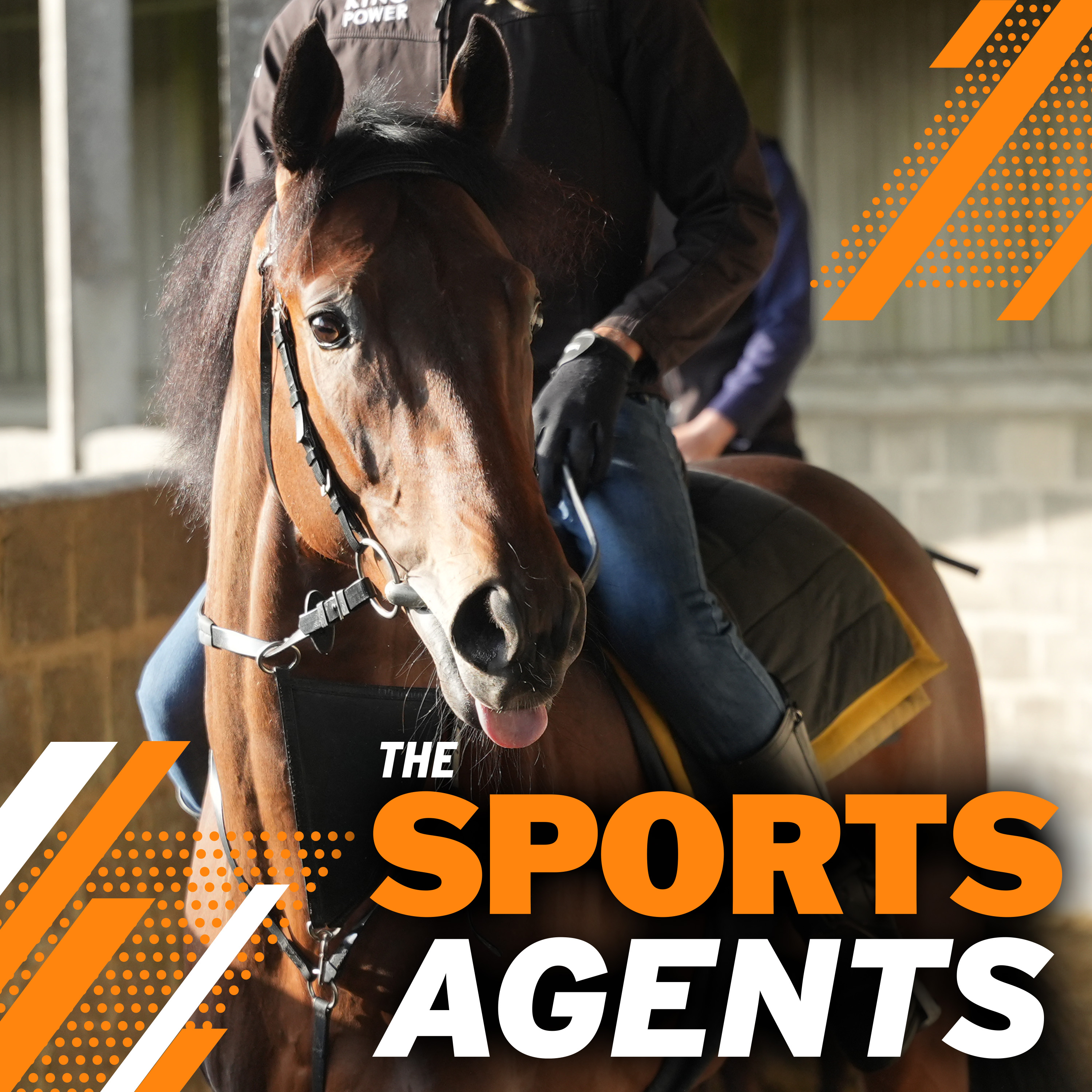
SPECIAL REPORT: How to train a Royal Ascot winner

 Add vo to ChatGPT or Claude to ask about everything you hear
vo listened to this episode to put together the overview and transcript, so there may be the odd mistake.
In short
A behind-the-scenes look at Kingsclere Park Farm Stables in Hampshire—how trainer Andrew Balding and his wife Annalisa run a 250+ horse operation, prepare horses for Royal Ascot (about 25 runners), and manage jockey/work-rider development, welfare, transport, and race-day logistics.
Key claims
Morning training is led by “eyes and ears” (trotting checks, matching jockey-to-horse), with later heart-monitor data for fitness (stride length, recovery, heart rate). The yard uses all-weather gallops for consistency. Welfare and staff training are crucial, including mental health support and keeping “doors open” for riders who may not become pro jockeys. Horse passports with microchips are legally required and scanned at racecourses.
Notable examples
Watership Down view; a rehab horse swimming in a circular pool; Equisizer training for rider balance/weight; Royal Ascot horses among morning workers; Queen Elizabeth II visiting for tea and selecting horses; jockey Holly Doyle riding out and later being highlighted as a record-setting British female jockey winner.
Guests
Andrew Balding (trainer); Annalisa Balding (stable manager); Rob Hornby (jockey, started at the yard, Group 1 winner for them); Holly Doyle (top British female jockey, 1,000+ winners); Leanne White (young rider trainer/work rider coach).
Transcript
0:02Gabby: This is a Global Player original podcast.
0:12Here we are, Mark. The sports agent's on the road because a couple of weeks ago you took me up to Sailshark's, your neck of the woods, and we immersed ourselves there. So I thought I'd bring you somewhere to get a little taste, a real immersive taste of what it is like to be in a racing yard. because I was going on and on about this, wasn't I, the first time I came up to Kings Clear's Park Farm Stables, which is where Andrew Balding trains the horses.
0:36Gabby: So, welcome. Thank you. So here we are. It's picturesque Hampshire, isn't it? When we were at sale, I could show you where Stockport trained, where we're standing now. This is Watership Down. This is probably where the Queen stood watching her horses, because they've been trained here, the Royal Horses, for generations. Very, very similar. So over the course of this episode of the Sports Agents on the Road, we will talk to Andrew himself and Annalisa, his wife, who runs not only the stable side of things, but also this is a home for 83, I think it is. And also the other staff. Yeah, and I mean we'll see how the transport works, we'll meet jockeys, we'll see exactly how an operation like this sends out horses every single day to races during the season.
1:21It's a fascinating look inside one of the biggest and probably best yards in the country.
1:27Gabby: Bright eyes. Welcome to the Sports Agents.
1:46so that view that incredible watership down view and that that gallop up there a bit windy so we've come back down to park our stables and we're in the colour room now inside uh for a moment just to kind of set what we're going to do today and who we're going to speak to.
2:03Gabby: Yeah, so Andrew Balding, the trainer who owns this place, will join us in a little while. One of the jockeys, Rob Hornby. Who started his life here. Who started his life here, has won Group 1 race for them as well. So they will join us in here, as will Holly Doyle. Yeah, Holly Doyle is a bit of a bonus for us today, actually, because we didn't know she was going to be riding out today. Leanne White, who is the young rider trainer here, because most of the riders that you'll see out on the gallops today are not professional jockeys yet. They're learning and training and they go out every day, sometimes three to four times a day on these horses to train them, but they don't get the kind of the buzz of then going off to Newmarket or Nottingham later in the day to race.
2:44That's the goal for quite a lot of them. But some of them, they will end up being trainer jockeys as opposed to racing out at those meets or they'll find another career in the industry. As we'll see, there are so many other jobs here that go on.
2:56Gabby: And they will all join us in here in this beautiful room that's just full of jockey silks and horse blankets. This used to be the chapel here. Yeah. Mill Reef was operated on in this room. And all these silks are working silks. The first time I came in here, I assumed it was some kind of, you know, objectar that was kind of adorning the walls. But it's actually, look at me, I'm a French again. But they're actually the working silks of those owners. And they get taken off to the races and brought back in here. as you say the blankets that are all around from winning the huge races adorn the ceiling and adorn the walls
3:38so annalisa we're here it's just after seven o 'clock and this area here is this a warm-up ring yeah so we've just got we're just on our first lot now and we've got about 40 horses out this morning all the riders have turned up on time which is fantastic and we're out here now and Andrew's just having a look at them all, making sure that they're trotting as normally as possible. They've all been checked over by the head lads, so we know that they're all healthy. And Andrew, in his head, has got a little plan for them all. They're just going to trot a mile, and then they'll slow down, and Andrew will talk to each jockey specifically and tell them what he wants them to do this morning.
4:15Gabby: What's he looking for as he watches them go round? He's making sure that they move the same as how they moved yesterday, because they all move differently. but they all have a right and a wrong. And you've got to try and make sure that you're not putting these horses under any pressure unless they're perfect. And Andrew uses his eyes. He uses his intuition. Does he use any kind of technology, any data? At this stage of the morning, it's all eyes, eyes and ears. And he's hearing, listening to the head lads, making sure that they ate up overnight, making sure that they've got a normal temperature, making sure they drank water.
4:51but later on when they're actually working we have heart monitors on the horse's girths and it'll just be that five or six horses that we need to answer a few questions how fit they are stride length recovery heart rate those sort of things which just help andrew know where sort of paint a picture where they are in their sort of training regime i mean what i find what i find astonishing these
5:15Gabby: kind of things which is not surprising to to my untrained art is that you recognize each and Yeah, well, Andrew's extraordinary. He's like Rayman. You know, he knows every single horse in walk, trot or canter. And, you know, he trains a lot of horses. So there are how many here? 257. But, you know, he's pretty one-track minded. It's all he does. Sure, sure. He literally... It's his job and he's very good at it. So when we arrive here in the morning and we pop into your kitchen, he's got sheets of paper in front of him. All the horses, who's riding what. So you have to match the jockey to the horse.
5:46Yes, but Andrew's done the work list and he's taken three or four hours yesterday working out who's riding who, who's paired with who. And so in his head, he knows now what's going to happen. Because the majority of these jockeys aren't full-time professional jockeys. They are your, what do you call them? Your apprentice jockeys? They are our work riders. And they stay here on site? Yeah, they are full-time employees. Most of them live on site as well. We've got over 80 living here. I mean, we're not just talking about the welfare of the horses. You've got to look after the welfare of all those people.
6:16Yeah, the horses are easy.
6:18Gabby: So you have 250 plus horses and 80 plus work riders. Yeah. And a husband. And three kids. And three kids and quite a few dogs. But then there's also, like any, as you say, any industry, any area with young people, you know, the worries about mental health. And the last time I came down here, just that day, one of your jockeys had lost a friend to suicide overnight that night. And there is a problem, obviously, in terms of mental health within the industry. There is. But I actually, I think, again, you know more about other sports, but I'm sure it must be everywhere. I think for racing, there's a lot of disappointment because there's the wannabe jockeys.
6:59I really want to be a jockey. I'm light enough. I'm small enough. I've been told I'm good enough. When they actually get to the track, are they natural enough? Do they have that wow factor? Are they instinctive? All that side. Maybe they're not going to be jockeys. So what are you going to be? I'm going to be a work rider. I'm going to be a traveling head lad. you know it's a disappointment for them for their parents and i think that is the hardest thing and i think it's those jockeys who might not have had their expectations managed correctly and i think the training of staff i think that is one of the most important things is that you keep the all doors open for as long as possible and when they're ready to really go down the professional path you can then encourage but by that time they're also qualified in they've also got an business course or can touch type all these little things which it sounds silly but it is so important for them going forward and i think for their self-esteem to know that you have other skills and a skill set of some sort is and you know i'm afraid drugs is a massive problem i and i i might be very naive but i'd like to say at kingsleer it's not a problem we we have a very a very good management team and i'd like to think that they they're very quick at spotting it and and you
8:12Gabby: know if if you have one bad egg i'm assuming one of the reasons why drugs may be a problem is because they could also be used to try and keep weight off absolutely and therefore that's maybe why they're more of an issue in in race and you've had uh some kind of crossover with other sport yeah and i know the last time i was down here you had some people from newcastle united yeah i think it's so great that people in sport do talk to each other and actually do learn off each other and i think i told you last time steve orthwick came down which was absolutely fascinating and he was fascinated by the the sort of i suppose the simpleness of it and the andrew's intuition and how little digital or you know little how little data he is because he was he was feeling wasn't he that he was he could potentially be reliant on digital and his on his data and what.
9:08Gabby: Exactly. Rather than just actually looking at them. Thinking all that. Watching them, yeah. The Sports Agents. Well, Jock is back in third, but it's Bryn Davin who has the lead on the run towards the line. And it's a landmark winner for Holly Doyle. She is now the winning most female jockey in British racing history. It's Bryn Davin to beat in the second Cape Breton. A bit of a bonus for us today because we didn't know Holly Doyle was going to be here today. And so we've managed to grab a few minutes with arguably the best female jockey in the world the most uh winners for a british female jockey this year you went past a thousand british winners yeah this year i passed a thousand so amazing target to appreciate and just riding out with a bunch of 49 other jockeys this morning because that's the job yeah that's the reality of it i suppose um people don't really see behind the scenes in racing as much as we'd like to but um an everyday occasion for jockeys really so so when when you come here and ride out in the morning what what do you get out of it I like to get to know the horses um that I'm going to ride in the evenings really um it's always nice and I I like being around the the lads in the yard and getting to know everyone and it's a nice atmosphere in this yard in particular so I do quite enjoy it some other jockeys probably don't but um I enjoy getting up and out and get to know the horses do you find that they're all picking your brains on the way around yeah sometimes um which is nice and you know it's always nice to help out how did you start out the day I left high school I left home and and was gone and started my my my life is trying to be a jockey so where did you go I'm from Herefordshire and I moved to Abergavenny in Wales and worked for David Evans um I was 16 I actually had my first ride as an amateur and I was still in high school so that was a bit crazy so it's been pretty full on since day one really.
11:01A decade of growth development and winning does it become addictive winning? Yeah I mean that's what drives me is winning really if I wasn't riding winners or anything like that I would find it very hard but that's what drives me to not let that happen.
11:16Gabby: When you talk about liking to get to know the horse and obviously being on a horse and and understanding its characteristics are you good at remembering and recalling all of that how much do you rely on Andrew in the morning say to give you a reminder I'm pretty good at you know when I've sat on a horse I can really remember every horse I've sat on over the last nearly 10 years yeah which is probably quite strange but um no on race day Andrew's great he'll just give you a brief reminder of what he expects and how he expects you to ride it and the rest is left down until he really he's trained it and got it to where it needs to be and it's up to me to do the steering well he would say that's because you've got stardust he talks about the fact there are certain jockeys that can just turn up and add something to the horse the best jockeys can do that so when you go to nottingham this afternoon and you've got three three rides at nottingham on your way up to nottingham are you studying the horses you're going to ride do you already are you already across it all how far in advance are you working um obviously we race seven days a week but um from decks i'll know what i'm riding and i would have ridden them before maybe or i'm riding a horse a newcomer today she's never ran but i've ridden her at home so i know her characteristics i do my form in the mornings racing post on my ipad just you know go through the pace of the races and things like that at the stage of your career where you're being driven to those races um tom and i have got a driver called joe um but today joe's with tom up at ripon so i'm gonna drive to nottingham is a bit of a battle at home a bit of an arm wrestle who gets the driver yeah um tom's first preference because he has to sweat every day and i don't so but he's that he's he's saying he's doing the harder yards yeah he has to lose a lot of weight every day whereas i don't have to sweat to do the weight so i'm pretty lucky so um whenever joe's available um and it's a longer trip he goes with tom right so every day he has to he has to go through that does he yeah he has to cut weight every day and will he be doing that in a sauna or in a bath um we're like we're really lucky at home we've got a sauna and a hot tub so um unfortunately we don't have saunas on the race courses anymore so we've put one in at home tell us about your physical training off the horse um yeah i train most days um i try and mix it up i you know train on the walk bike three or four times a week and have free strength training sessions a week as well so i try and mix it up a bit but at this time of year i wouldn't be lifting as heavy weights as I would in the winter just because it's we're at the peak of the season really um and I don't want doms do you think the um do you think the um physicality required for a jockey is underestimated by you know those of us that say watch horse racing but just don't understand what goes in it for you guys we know we all we know you always have to make a weight but you know the the sheer physicality beside that gabby was talking about what what young jockeys have to go through to get the jockey test is tough isn't it to get your jockey test yeah it is tough and um obviously starting out in my career that was something that you know i if you guys had to go on a simulator and got told to push that for three or four minutes be legless when you got off no he's doing it in about an hour well this is still this is still up for debate gabby this i mean there are two of us on this podcast and one of us is more horsey than the other but yeah i think we you know you don't mean legless in a good way either do you no um yeah i think you don't really realize how fit jockeys are you know we're riding out all morning and then some of us going for six or seven rides in the evening i'm at a point where luckily i find the riding riding of a horse very easy um because i've been doing it so long are there certain races though that you come out of it exhausted more than others physically exhausted not anymore i mean when i was younger i yeah if i'd ridden a keen one over two miles i'd come back puffing um but that was just a sign for me to work harder and get better really because you shouldn't be you know you want to be a top jockey but like i said i find the ride in the easy side of things these days and thankfully what about the nerves i don't really get nervous at all um i just have high expectations of myself i suppose so i don't want to let anyone down but um probably adrenaline yeah adrenaline i quite tunnel visioned i kind of know how i want to ride a horse and what's going to happen around the race obviously yeah you anything can happen can't it and you have to you know plan a doesn't work sometimes you'll resort into plan z sometimes so yeah anything can happen and what about when you have time i mean these guys don't seem to have any time off here at king's clear in terms of you know the days of the week obviously sunday is the rest day and then sometime in january there might be a holiday what about your downtime and how you switch off because with that tunnel vision that dedication and that focus you can't do that 365 days a year can you yeah i do struggle to switch off and i i don't we don't we don't have any downtime really i think we i had a week off this year over new year we went away um for a hot holiday and that was it really but um we've been going away to japan and places like that in the winter to ride and you don't race seven days a week you race twice a week so i suppose you have a few days to recover and it's a bit of a different lifestyle in that regard but when you're in england it is seven days a week what's riding in japan like just before we let you go yeah very good it's intense they have 12 races over two days and then they have something called jockey jail so you get put into quarantine on a friday night and not let out until a sunday night why for betting purposes you know not allowed any phones tell you know it's like being on traitors or something yeah it's a different world yeah wow so you're literally shut off from anybody and everybody for that for that 72 hours yeah well all the jockeys are in like a is that why you married a jockey hostel wow that was a good idea at the time but we're at different tracks in japan until I didn't even see him then.
17:17Have you raced in other countries? Yeah, I've been in Hong Kong, win the Melbourne Cup a few times.
17:23Gabby: Can't imagine Australia put their jockeys in jail. No, no. The opposite. The idea, the absolute opposite. Best of luck in Nottingham. Thank you. Thank you so much. Thanks for having me. Thank you. The Sports Agents.
17:38Gabby: The Sports Agents. With Gabby Logan and Mark Chapman.
17:49So today there are going to be three different lots of riding out. And this is the first, is that the right way to say it? Yeah, so we call them lots. Okay. And there are actually going to be five lots. So we have three lots for the older horses and two lots for the younger horses. But yeah, this is our first lot. And this area we're in now, there's an all-weather track here. Yeah, so because of British weather, which is unpredictable, we actually train the horses on all weather gallops so that Andrew knows that he's galloping horses on a really safe, consistent track at all times. And so Andrew stood next to me with a pair of binoculars keenly observing every single pair that come up.
18:29What did you see there, Andrew? Those were two young horses who were just sitting upsides for the first time actually, and likewise these two. So really they're just getting to grips with the idea of having other horses around them and then in a sort of simulating a race situation. And some of these are Royal Ascot horses as well working this morning. How many do you want to take to Ascot, ideally? Probably going to have about 25 going through the week. Some tropical storms, decent horse. He runs hopefully Royal Ascot on a Tuesday. He won at York the other day.
19:02Gabby: All right. Okay. Yeah, good. I think he's just got a bit of a higher cruise. Okay. Got tired. Yeah, got tired. Okay. Hey, don't sweat me. Happy? Yeah, happy with him. Okay. Yeah, very happy. Good. All right? All right, Mr. Borden, just felt a bit of stuff when I pulled up. Okay, we'll lift him back in. All right? Thank you. Who's the person where you've got wow when you've met them? It would have to be the late Queen. I mean, she was the most amazing person, and it was just such an honour meeting her. And, you know, she's had horses at Kingsclere for quite a long time. And she used to literally come down for tea.
19:38And her horse knowledge was phenomenal. and you'd sort of pull out ten horses. You know, let's say she had six and you'd throw in four that had done well. She'd say, I don't own that. You know, or she'd say, that's not one of mine because she was so knowledgeable and she was so... She liked her horses to be immaculately turned out. Tails mustn't be too short. All these little things. And it was... She was just... She was incredible. Obviously, you get noticed she was coming. Yeah, yeah. Not necessarily quite enough notice, but you get enough to paint the house.
20:14Gabby: Do a bit of baking. Yeah, what did you bake for her? Honestly, my husband let me down so badly one time. I love Ottolenghi, and I'm sure you've had some of my granola, which I'm quite proud of. It's world class. I made the Queen some granola, and Andrew passed the plate and said to her, Mum, would you like some birdseed? honestly I threw him a look because she had horses with Andrew's father Ian as well and her mother did as well the Queen mother did as well but we are incredibly lucky we train for the most incredible people and a huge variety of people you've got some footballers involved yeah we've got a couple of footballers sometimes you have to pinch yourself and I think you know last week I just think it's amazing that people come to our little place and are impressed by it and feel like it's a...
21:20Gabby: Hugh were you going to say was here last week? You were going to tell us something then Hugh Bonamille Really? I'll tell you a funny story So does he have a horn? He does but when I met Hugh and Dan Stevens who was also and Dan's nabby, he needed somewhere to live and Claire, Andrew's sister's got a house down here and she doesn't use it very often so she said, oh, Dan could stay there. And Dan said, I'd love to come see the horses training. Well, imagine my street cred walking on the gallops with Dan Stevens, I just couldn't believe it. Anyway, it was all going really well until we get onto the gallops and the horses are galloping like just we've just seen and he goes, oh my God, you've got jockeys on them.
22:01I was like, yes. And he goes, oh, I presumed you train them. And you just take them to the bottom of the gallop and let them gallop up through. I was like, oh my God, until that moment, I thought you were amazing.
22:13Gabby: I thought we were the masters of the stupid question. I was going to say, we may not be Dan Stevens, but we do know that each horse has a jockey on. Charlton were playing Swindon in some final. And all the lads, he brought them all here in the morning. The football bus arrived. It's the swankiest thing I've ever seen. And they get off and they were great, the lads. they were absolutely brilliant most of them really interested absolutely fascinated but the best question was we got a farrier to do a demonstration of putting on the horse's shoes and he said one of them times have said can i just ask a question so the farrier puts them on in the morning who takes them off at night and he said it with a totally straight face i'll just show you just we're just quickly with down here so this is we've got a team of transport sort of lorries and this is the most important bit these are horse passports so every horse has a passport and every horse has a passport and they are not allowed to go anywhere without it right it is a legal requirement what you don't want is somebody going to the pub after a day of racing and leaving the passport in the toilet all their staff pass because it's all about sort of the right people in the right place so this is just like a human a human passport but it hasn't got a photograph of the horse instead it has a little drawing this one's got a little bit of white on it our patron so you can see she so on her diagram you see she's got white white white so she and then they have a microchip number here can you see and they they're all they all have a little chip in their necks and when they arrive at the race course they get scanned and that has to match the passport That absolutely blows my mind as I've heard of it.
24:19So we've seen the horses' leisure facilities in the pool and we've come into the human gym now.
24:25Gabby: I know, but watching a horse go for a swim is a first for me. I've never seen that. Have you seen that before? No, no. When I was here before, they weren't swimming that day. Or I wasn't shown it. And that was quite mesmerising. It was all part of a horse, the old Horovian, that horse was called. And it was all part of his rehab coming back from a soft tissue injury. And he did six laps of a circular pool. As a human would do. A human athlete might do some pool training coming back. But this facility in here is for the jockeys to get stronger. and Leanne White is a young jockey trainer. The organisation and the planning and everything behind the scenes that goes into putting one horse into one race somewhere in this country or abroad is mind-blowing.
25:09Yeah, it is. And of course, that horse has got to stay sound, which is why we do all this, the training with the young staff, because the better riders they are, the better the chance the horse has. You know, it's something that's really important and they'll go and do 9, 12 or 18 weeks at either the British Racing School or the National Horse Racing College, some having never sat on a horse before. So in that time, they're expected to learn to be able to get half a tonne thoroughbred up the gallows safely. So it's a massive ask for these young people. So the Racing Staff Development Programme came up with the idea of having rider coaches, which is what I am.
25:48I don't concentrate on the jockeys. I'll have them when they first come in until they get their licenses and then a jockey coach will take over but probably 90 % of the people I coach won't be jockeys they're work riders and we're very lucky here and Andrew's brilliant at allowing everybody to ride work it's not just the jockeys or the senior riders so they actually learn very quickly and and one of the tools you use um is behind you there this is this is the equisizer mark is so keen so so keen to get on aren't you you've been talking about this for days now how excited but this this looks quite simple and rudimentary but this is a real vital tool it is a vital tool it really is and you know when they first come in we'll work really basic we'll work on balance getting their weight in the right place and as the months go on we progress through to them pushing and actually pushing i I've got one young rider that can now, was very weak when she first started.
26:47She can now push with eight kilograms in her hands, which is really hard to do. But yeah, I mean, it's absolutely vital.
26:54Gabby: If you are six foot two and 51... Desperate coming up. Well, they're desperate for me to have a go. But would it... Could I? Yeah, of course you can. Of course you can. I thought you'd never ask. I don't want to. So, Chappers is getting onto Marmaduke. It is Marmaduke, not Sharkey. You just keep talking to me, Leanne, because it means I can't hear the sarcastic comments coming from to my left. You're just going to hold your hand like that and rest your hands on the net. Right. That's it. So Mark's adopting some kind of jockey position. Push that up. That's it. Good. Very good. Oh, you're quite natural.
27:33Stop. Yeah. Yeah. We're just going to... What? It's all a bit faster.
27:44And now you're coming into the final straight. Lower position. Come on. Lower. That's it. Very good. It's the Oaks. It's Emsum. And it's Chappie.
28:00Gabby: My hip is starting to really...
28:06and unfortunately marmajou was pulled up with just oh well that was uh a good start and then someone did that with waste yeah so i would say that we couldn't use it very well
28:22Gabby: we just need to shift your weight a bit further back just need to shift weight how does it feel it feels um incredibly unnatural It's funny because it looks so natural.
28:49Gabby: Rob, thank you very much for joining us. Such is the life of a jockey. You've already ridden out twice. And now what do you do? Yeah, well, thank you for having me on. Yeah, so this is kind of a routine Wednesday for jockeys. It tends to be our usual work mornings or Wednesdays and Saturdays. So these are crucial foundations that you put in, you know, in a yard to get to know the horses in the mornings, particularly younger horses, two-year-olds that have limited experience. Always good to get a sit on them, work them out. And then, yeah, it's off hop-footing then to Nottingham this afternoon.
29:25So, yeah, it's always pretty... Drive yourself. Driving myself, yeah, two and a half hours. Riding a horse from Kingsclare? No, riding a horse with Brian Meehan, who is another trainer that I have associations with. And my agent has found me the ride for this horse today. But you started your life as a jockey here, didn't you? You came here as a 16-year-old? This is where it all began, yeah, a long time. 14 years ago now, it's my 30th birthday last week. I'm sure you can appreciate today. it's quite a unique place and a place that's developed massively over the the last kind of 10 years with with numbers of horses increasing and quality of horses with some fantastic owners as you can appreciate you know with all the all the colors around this room it's um it's a truly
30:10Gabby: special place do you feel then that by being here from 16 you've actually been able to develop a a career path for you we often we often talk about how a horse progresses through its career but do you feel like you've had step-by-step progress massively you know when I first came here you know even from when Ian Balding was was training it had a great reputation for bringing on young apprentices giving apprentices an opportunity to get out there and and be able to develop their career so it was always a yard that I had my eye on and a yard that I wanted to to try and get in into leaving home at 16 coming down here it really was kind of a home from home we all lived in the hostel we had a great era of young jockeys ashean murphy was here kieran schumark daniel musket and we've all been able to come through and achieve a really high level of success i think we've all between the four of us ridden group one winners so it's quite um special that and quite unique but yeah going back to leaving home to coming here we all lived in the hostel we had a fantastic caterer who looked after us and not annalisa somebody else we've had her sausage rolls so yeah um charlotte she um she looked after us very well but she her main job was keeping us all in check and uh and making sure we were we were on our best behavior but you can imagine a hostel full of 16 year old lads it was um it was a lot of fun a lot a lot is talked about horse welfare within the sport and outside the sport and what i'm really interested in being here with so many humans around to look after is is jockey welfare as well and there've been some terrible stories um of late about mental health and obviously suicides within the sport and it's clear that the pastoral side of things here is really really important the welfare of the jockeys whether it's the gym and having sports available for you guys to I know you're not living on site anymore do you see this place as as being kind of the standard bearer and how you know young riders young jockeys would be jockeys should be looked after yeah I think it's um it's very important to recognize that I think Kingsley and Parkhouse took it to the next level of managing young people, whether they were just coming in to be a stable lad or lass, to being a jockey, to people wanting careers and being a travelling head lad.
32:41It was always something that I felt, you always felt very comfortable here, you always felt like you were in a very good, healthy environment, and everything's all kind of in-house, which is really lucky, it's really unique, but it's something that I do think, particularly Annalisa is pushed massively to improve and it is by far probably one of the best places for that absolutely.
33:05Gabby: How hard is the life of a professional jockey? Well it's all about I think getting your head around okay even if you're doing very well as a jockey and you're riding that 20 % strike rate 80 % of the time you're you're in a losing sport you know almost so as long as you can get your head around that and not beat yourself up too much about it manage your weight accordingly you know don't be riding below what your body can can allow you to do comfortably and and surround yourself with good people just give us a little insight though into how often for example you would monitor your own weight what kind of things you know you don't allow yourself to eat are you quite disciplined or do you find it quite easy to maintain the right weight this time of year now when we're very busy like last last month in may i i had 80 rides so you know you're well over two or three rides a day so so you're busy and and you you wait well my weight kind of sits at a level of probably eight stone ten and then if you were to to get down to that lower weight you'd probably go and lose two to three pounds which your body will allow you to to release as long as you give it back and then it's all about you know yes you're allowed a day off and you're allowed to fluctuate a little bit and treat yourself but it's about keeping busy I think helps.
34:25I know a lot of the lads aren't as fortunate as me and they would have to take off weight every single day but again it's routine. If your body gets used to it it gives you back what you as long as you look after it in the right way. So I must say there's a lot of my colleagues that are heavier than me and I do find it a lot easier but I've always been naturally quite light so it's it's always a help you're looking you're looking at me you gave me a very knowing look not the other way well look we've we've taken up a lot of your time already and you've got to go off and actually earn a living this afternoon and race um but but i can tell and we were just chatting before about all the amazing things that go on here and obviously our colleague claire balding uh her wife alice who was a radio 4 broadcaster has been down and done media training with you guys and it's definitely done the trick because it was great chatting to you and you're obviously all great talkers as well but you understand that's part of the gig isn't it when you when you're on a horse and you win a race you're gonna have a microphone thrust in front of you it's all very well being being a good rider but there's a bigger package to um to just being a jockey and it's it's about communication to to owners and trainers and then you know to the wider audience that are watching you on television um so it's always it's as an opportunity to try and sell yourself as best you can.
35:44And yeah, I hope I try and do that to the best I can.
35:47Gabby: Well, you have go well this afternoon at Nottingham. Thank you for talking to us. Thank you. Thanks so much, Rob. Thank you.
35:59Gabby: Well, Andrew, I think the first thing we should say is thank you very much for everything that we've experienced this morning. The amount of detail and information you have to process is astonishing is it all up there has it all been written down what do you do with it all it's funny thing about you know horse racing it's such a simple sport isn't it one horse runs faster than another but we've got a brilliant way of complicating everything um and you know not just the training but also the you know the handicap system and the horses that required genetically different distances maybe different ground preferences so there are all sorts of intricacies that you wouldn't necessarily be aware of happening behind the scenes and we're trying to establish the picture for each horse so that we can try and campaign them to the the best of their ability that's that's essentially what we're trying to do but so much of that is coming from you and obviously you've got people around you who are also observing but it's not coming from readouts and analytics and computers it's a lot of it is is you innately for years and years and years and years of doing this understanding yeah i think so there is we do have access to a lot of data as well which we'll get at the end of the morning so but but for the time being seeing it with your naked eye and you're probably seen enough having done it for as long as i have that you're visually comparing you know like with like your derby horse galloping six or seven years ago in the program books even we've got going back the workbooks from my dad's day comparing of how they prepared their horses it's very different now but uh keeping a record of that and but visually for the morning exercise today is just seeing it and and having a yeah a natural instinct of of how to read that but then i'll probably look at the data this evening and think oh that was stronger than it looked when i first came here annalisa said she's in charge of things with two legs and you're in charge of things with four legs and she also talked about other sports coming in and your association with Leicester Football Club which she mentioned New Castle United and Steve Borthwick coming down and reaching out and saying can I come and watch you work because he was slightly concerned that he was relying almost too much on data perhaps and wanted to see you in your natural environment what did what did he explain and learn well he was Steve was I think it's fascinating that he was sort of interested not just in how we were doing it but obviously I think he went to other you know sporting places to see how you know how the training happened and how much was instinct and how much was science and I think that the fact of the matter is it's a combination you can't ignore the science now we've got access to it particularly on race data so if a horse you watch a race with your naked eye there are so many analytics now that you can have access to timing stride frequency stride length that might have a an impact on how you're going to campaign that horse going forward so it's just getting the combination right you know the balance between but it's interesting because you know he would obviously be dealing with data but then there are people right so you know every sports person has a different personality and different motivations you're dealing with two different personalities because you know you want your jockeys to do a job and you expect them to deliver the horses also have i'm not saying horses have feelings but they but they but they wake up they definitely have moods yeah they wake up that morning and they might not be up for it a hundred percent and obviously we can't talk to horses and they can't tell you that you know they're feeling a little bit below par or um so we've got to try and and preempt and particularly from an injury point of view that's a lot of you know we one of our main jobs is trying to avoid exposing the horses to injury you know and that's that's a 24-7 job because horses turned out in the paddock can injure themselves.
39:46I mean, it's frightening. If you sort of let them all loose in a paddock, we'd have more problems than how we do it in a controlled way here, you know. So the jockey side of things is, obviously, as Alice probably said, we've got and had young apprentices, young jockeys who you can mold to a certain extent and try and instill values and et cetera, et cetera. But once they're out in the big wide world, they're really their own employer and they've got to make decisions for themselves. so it becomes a little bit more difficult to control them after that we asked holly doyle if she gets nervous and she said no there was you know she's tunnel visioned and she knows what she wants to achieve do you do you get that or is it a sense of excitement adrenaline when you're
40:29Gabby: so many sports people it's fear yeah i'm not a very good watcher i really don't the funny thing is i'd much rather be at home than going racing because a week i get the whole morning done here and then the afternoon work as well. But watching races in my kitchen is far less stressful than being at the race course, you know, watching them in real life. So apart from Asgard and the big meetings, I tend to be, you know, watching them here. Do the owners want you out there though? It depends. Some of them, you know, some of them would, no, I think by and large, I'm not going to make, my presence isn't going to make the horses run any faster at the race course.
41:03But I think the bigger meetings, that's the reason you do it, is to share if you are lucky enough to get success at the big meetings. share that with the people who own the horses because you know i'm sure and lisa mentioned when we got such a variety of of owners from all different walks of life but with a with a common goal and a shared ambition that you share with them is to try and get some success on the race course what ambitions do you have plenty left i mean there's you could be the best trainer in the world and you still wouldn't have won every race you'd want to win so obviously flat racing different to the jumping it's it's very much a sort of a global game and we've been lucky enough we've had big runners big winners in australia and america and canada hong kong dubai obviously um so we we go around the world and each of these jurisdictions have races you'd really like to win not just from the money point of view but just for for a cv point of view it's you know it's it's never ending on the money point of view obviously it's a it's a business that involves a lot of overheads um but it's an expensive business to get into if you want to own a horse and then get it trained.
42:05Does it work differently with every owner in terms of, you know, we see a big money race, you're not going to get all of that cash, right? So I know this is a bit crass, Andrew, but I think, you know, a lot of people don't understand where the money flows and how it goes. From the business point of view, you're running a hotel for a start. So people are paying for the beds every night and that should cover all your costs, the staffing costs, et cetera, et cetera. The margin should be a small profit on that. So the bonus would be 10 % of prize money. So if any, the trainer is, and this is across the board pretty much in every country, win and place any prize money won, the trainer would get received 10 % and the jockey roughly the same and the stable staff 5 % as well, which would get split equally between them.
42:49If you were lucky enough to get a horse who made big money at the sales, there would be a sales commission as well. And that makes a big difference at the end of the year. You know, if we've had a good year and we sell horses well, that's, you know, a very important income, which gives us then the money to improve the facilities. But it's never ending. You know, the investment, the reinvestment is never ending in a place like this.
43:10Gabby: And is the training community collaborative, competitive, friendly? I mean, do you? All of the above. On different days of the week. You know, I don't know if you're if you're on a slot and are you going to invite Ruben Amrim to watch a training session? Probably not. Do you know what each other are doing? No, probably not. But we would have, you know, my close friends would be probably Richard Hannan and Rafe Beckett, who live fairly locally, but are very successful trainers, same sort of age as I am. And we would have lunch, you know, once a month and probably compare notes, but not not in great detail.
43:48you know essentially you know we're there to compete but at the same time it is a friendly rivalry i know that you have got loads more to do today and we've really appreciated your time just briefly you don't have a lot of downtime but you do like other sports uh and maybe that's where you get your respite you're gonna bring up my football club i know i'm not gonna bring up southampton um who obviously have been relegated from the premier league so i was wondering if you're getting another hobby no are you um no we've with a sport obsessed family obviously you You know, my sister is into every sport going, but we would go as diverse as it would be rugby internationals or now going to watch Gloucester.
44:26We got season tickets at Southampton. Try and go to the darts every year at Alley Pally. The American football at either Wembley or Tottenham.
44:35Gabby: Do you go in fancy dress to the darts? No, I haven't been. I usually have to go on the coattails. It's a shame with all this around you.
44:45but uh you know we love as a family we love sport my dad was a great oran sportsman um himself and then decided to to focus on racing but our downtime would be sport yeah basically uh well it's been something of a kind of utopic experience it really has thank you so much for letting us in and a peek behind the curtain.
45:10So, did I oversell it?
45:12Gabby: No, you didn't oversell it at all. When you came back from here first time around and said we should come and do an episode here, you were so full of praise for every aspect of this operation. And no, you haven't. It is eye-opening. It is, isn't it? It is absolutely eye-opening. What has surprised you the most? Because you've seen a lot. Do you know what? I'll tell you what's surprised me the most, which is what which is what you said to me when we were coming back from the horse having a swim is how clean it is and and the reason i say that is because it shows how organized they have to be how everything has to be so controlled and on top of and everybody know what they're doing where they're meant to be every minute of the time that they are here there is there is nothing disorganized it's meticulous so even sitting in this room now the way the chairs i know i did this at sale and made a big thing of the way the chairs are stacked but the way the chairs are stacked there's no horse poo anywhere that's one of the i mean it doesn't even smell of manure and horses no it doesn't holly doyle said excuse me for smelling of horses i said but this is the weird thing you don't yeah when when you know i was riding marmaduke to derby success you know There was a guy in the background washing down one of the horse boxes, ready to take the horses.
46:34Gabby: But again, meticulously cleaning that box on the outside before it set off. Everything is planned to within an inch of its life because it has to be. And yet there is so much personality around the place. There's an old man here, and I can say that he's 83 years old, who mucks out two stables a day because he just still wants to keep coming. He's been coming here pretty much most of his life to work. So it's not that everybody here is 22 years old and has a resting heart rate of 42. There's a whole kind of panoply of human life here. They've got riders who've come from Sudan. They've got a rider who came in from South Africa.
47:0950 % of the riders here are women.
47:11Gabby: There's a care and a love to the place as well. Annalisa knows everybody's name. I mean, we assume she does. I mean, they could have been called something different and we would never know. But she knows everybody's name. she seems to know what they were doing i go back to the sale episode with michelle orange who knew that someone was doing a dissertation or knew what was going on with somebody at home and it's that again it's that it's that care and love that is aligned with the the detail and the planning that leads to a successful operation i mean their house is just like an open house people i mean they live there yeah but you can just owners popping in and we're popping in and racing managers are popping in and Andrew's doing his planning with the racing post at the table and there's a dog walking around and I'm nipping to the loo and it's I mean we're not far away now from Ascot which is one of the big meets of the year they'll have 25 horses there and I'm thinking can you imagine like a few days before the Champions League final Sir Alex Ferguson in his kitchen looking at his selection kind of and people coming in to the kitchen, you know, because that's what it's comparable to, isn't it?
48:20And I think there's a few reasons for that. One, they want to show you the best side of the sport. They're very proud of what they do here. They like to think that they are in some way the leaders in terms of standards. And they know the sport needs to be sold. And when you and I will go and watch a race and I'm going to go to the races at the weekend, I will look at it differently. And I'll look at those horses and I'll look at all the people around those horses differently.
48:44Gabby: and I'll just be waiting for a phone call and now they've seen me on the Equisizer it won't be long sportsagentsatglobal.com if you want to email us or get in touch on our socials you can download all episodes of the sports agents on global player or wherever you get your podcast for that don't forget to rate and review cue black beauty music
49:11The Sports Agents with Gabby Logan and Mark Chapman
49:35Learn more at freestyllibre.us. Finger sticks are required if your glucose alarms and readings do not match symptoms or when you see check blood glucose symbol for the first 12 hours. The views expressed should not be used for medical diagnosis or treatment as a substitute for professional medical advice. Individual circumstances may vary. For prescription only. Safety info found at freestyllibre.us. Shaq here. What's it like to buy a car from Carvana 100 % online and get it delivered to your door? Let me tell you. Your car is here, Mr. Shaq. Thank you, Mr. Carvana guy. Can't wait to take it for a spin.
50:03Only the best for you, Mr. Shaq. Hey, have you always been so big, tall, and handsome? Not always. I was 6 '10 once. Seven days to love it or return it, Mr. Shaq. Not that I would. You never do. No, I never do. So buy your car today on Carvana. Delivery fees may apply. See our seven-day return policy at Carvana.com.
From the publisher
As Royal Ascot starts, Gabby and Mark take you behind the scenes at one of the best stables in the country - Park House Stables in Kingsclere. Trained by Claire Balding's brother, Andrew Balding, the horses from Park House won over £5m in prize money domestically last year, putting them second in the Trainers Championship, and they've got 25 horses racing at Royal Ascot.
Gabby and Mark hear about visits from the late Queen Elizabeth II and horse passports as we watch the horses ride out and take a tour with Anna-Lisa Balding. We meet top jockeys Hollie Doyle and Rob Hornby, to chat about the physical demands of racing and sweating to hit the right weight. Lead trainer Andrew Balding blows our minds by knowing all 250 horses inside out and explains how he prepares them to win the biggest races. Plus, Mark gets on an Equicizer horse simulator, guided by young rider trainer, Leanne White.
You can watch the full episode on our YouTube channel here.
Executive Producer: Adonis Pratsides
Producer: Sophie Penney
Video Producer: Sam Trudgill
Social Media Editor: Calum Scotland
Guest Booker: Kirsty Giddings
Tom Hughes is Editor for The News Agents podcast network
Vicky Etchells is the Commissioning Editor for Global
You can listen to this episode on Alexa - just say "Alexa, ask Global Player to play The Sports Agents".
The Sports Agents have merch! You can buy yours now here!
More from The Sports Agents
All episodesWe use cookies.They keep vo running smoothly and help us improve it. Privacy policy
Scan the code with your iPhone camera
Listen in the app.
- Play everything vo finds for you
- vo remembers everything you hear
Go to the App StoreFree on iPhone