
 Ask ChatGPT



The Standard podcast delivers insights from top news insiders on current topics, including politics, culture, sports, and fashion. This episode discusses significant changes in the UK asylum system and offers a cultural segment about traditional Italian dining in London.
Written by AI. May contain mistakes.

Get the gist, explore an idea or ask about something said.
 Claude
On The Standard, what are the key points of this episode?
Searching your listeningAutomatic transcript. May contain errors.
0:02Hi, I'm Charlie Duffield and welcome back to The Standard Podcast. if you're new here hit follow and give us a rating for all the latest news head to standard.co.uk coming up later in the show where to get your spaghetti fix in the capital trevian is open in 62 that's really beautiful in there and really cheap to go in for a bit of bruschetta sort of don't go having guard with the ordering you're not going to get the best steak in the world in there i reckon just you know go in for some bruschetta maybe some parma ham and melon or something like that, go retro. And then just a simple pasta dish like vanglais or carbonara or, you know, just ragu.
0:46Always good to have a ragu.
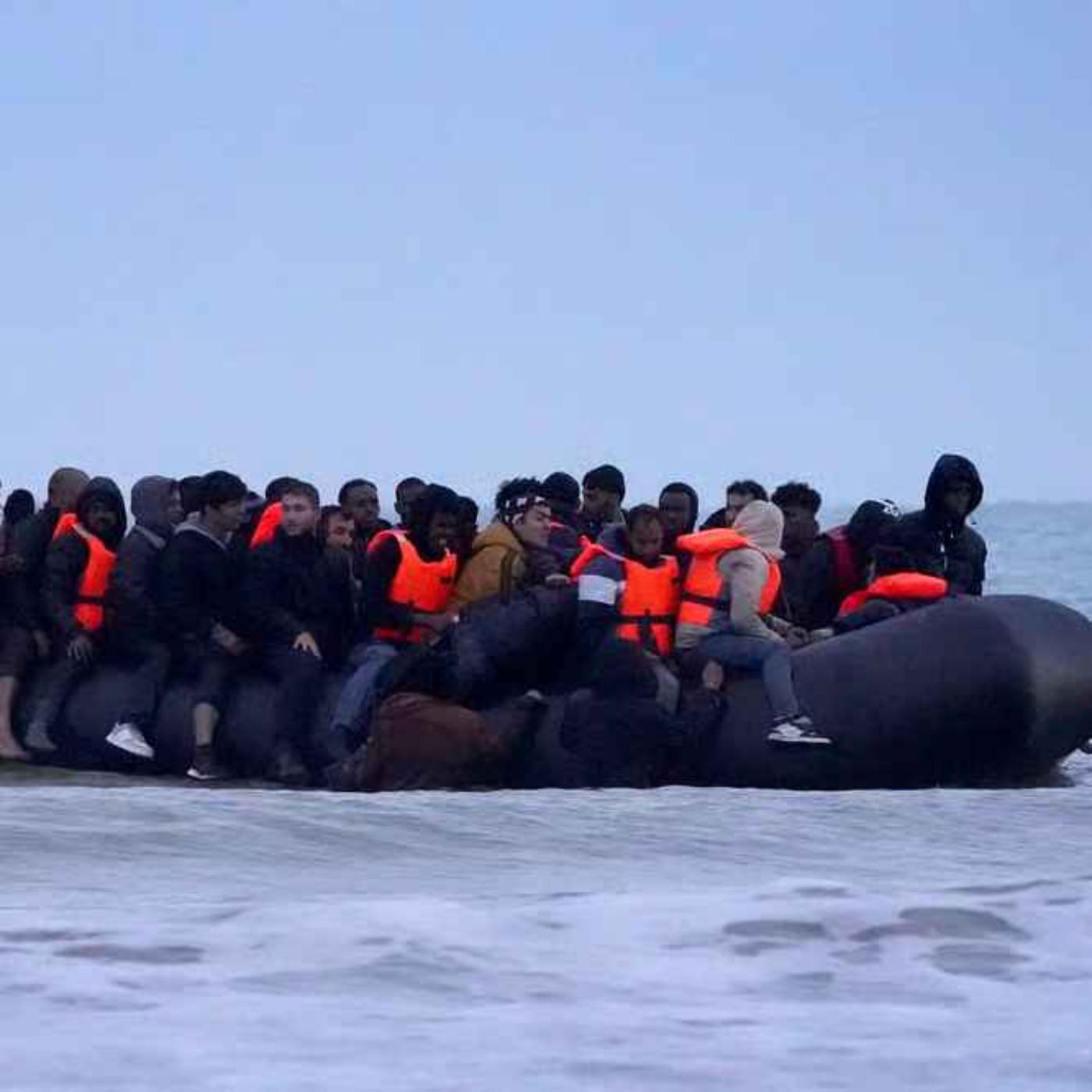
0:51But first, it's been a challenging few days for the government's bid to control borders, but ministers are attempting to get back on track with a shift in asylum hotel policy. Today, the Home Office has confirmed that hundreds of migrants will be moved to military sites as the government has pledged to end the use of asylum hotels, which have cost billions of pounds and become a focal point for anti-migrant protests. It's hoped that the use of military barracks will deter migrants from crossing the Channel in the first place, with the accommodation being less appealing than hotels. However, the use of military sites will be temporary, and the department has also identified industrial sites and other stopgap accommodation that is said to be cheaper and more appropriate than hotels.
1:42As of June this year, about 32 ,000 asylum seekers were being housed in hotels, down from a peak of more than 56 ,000 in 2023, but 2 ,500 more than at the same point last year. Yesterday, Prime Minister Serkis Dahmer said he was frustrated and angry about the soaring cost of the asylum system after a damning inquiry by the Home Affairs Committee found that home office mismanagement had squandered billions on housing migrants in hotels. However, Defence Minister Luke Pollard admitted that using military sites could cost the taxpayer more than asylum hotels. He argued, though, that paying more could be justified given the public demand for migrant hotels to be closed.
2:29Here's what he had to say speaking this morning on BBC Breakfast. Absolutely right that when the Prime Minister set out his ambition to close every single asylum hotel, that every government department does what it can to step up and support that mission. So we're working with the Home Office at the moment to look at where we have disused military facilities that could be used to house asylum seekers as their applications are processed. We're in discussions around a number of sites at the moment. It's right that I think that the MOD steps up to support this mission at this time, because I don't want to see a single asylum hotel open.
3:06I imagine your viewers don't as well. We've already closed 24 of them in the last year, saving a billion pounds to the taxpayer. But I want to see every single one of them closed. And to do that, we not only need to continue hiring more caseworkers to process asylum applications faster. We've cut the backlog by 24 percent so far in the last year, but there's still more to do there. But we need to make sure that we're increasing the deterrent for people looking to arrive or make those dangerous small boats crossings to deter those. The one in one out pilot scheme that we've secured with France is a good way of doing that.
3:42But I think the MOD can support our Home Office colleagues in these provision of bases. We own 1 % of the UK. There's locations where we can, I think, step up to support that cross whole of government mission. And that's exactly what we're doing. Joining us now is the Standards Chief Political Correspondent, Rachel Burford. Rachel, can you give us some more details about these military sites? So the Home Office has confirmed that two barracks, one in Scotland and one in southern England, will be used to house around 900 men temporarily. These are migrants who have come to this country irregularly or illegally.
4:20And then officials are working to identify more sites in the coming weeks. And this is part of the government's plans to close down asylum hotels, which have obviously been controversial with the public. These two sites will be the first in what the government hopes will house up to 10 ,000 migrants. And it's working with the Ministry of Defence to find more disused sites that it can potentially convert into accommodation. The first sites, the initial plans will be Cameron Barracks in Inverness and Crowborough Training Camp in East Sussex. Both these sites have been previously used to accommodate Afghan families that were evacuated during the withdrawal from Kabul.
4:58And then those people that were living there were resettled elsewhere. And that work sort of ended earlier this year. So the government's hoping to move people from hotels into these sites as quickly as possible. And then, as I said, looking to source other disused military sites in the coming weeks. So do you think these places are fit for purpose to house people fleeing persecution? Yeah, so that's a good question. Some of these have been used before to house families temporarily. Obviously, the government is quite keen to shut down asylum hotels. The thing is, I think a lot of the asylum hotels that we've seen are not fit for purpose to house people long term.
5:37They were supposed to be temporary measures. The public perception of asylum hotels is not great. They are expensive and also they're very public facing. We've seen in recent weeks and months a lot of protests outside asylum hotels, most notably in Epping in Essex, where an asylum seeker living in one of those hotels was convicted of sexually assaulting a schoolgirl and then, you know, last week accidentally lay out of prison when he should not have been. All of this is obviously an extremely bad look for the government. So they're quite keen to get people that were housed in these hotels away from sort of more public sites and into these disused military sites where they will be sort of away from towns and cities where there has been a lot of protests and concern about people being housed there.
6:28Do you think this will act as an effective deterrent, which is what is being talked about? The majority of people coming here are fleeing being countries that are perhaps war-torn, have extremely bad economies. And the idea that someone spends months travelling across the globe and then risks their life on a small boat is going to be put off by being housed in a disused military site as opposed to a small hotel is something that remains to be seen. I think a lot of the people coming here perhaps just want somewhere safe to live. We're not a war-torn country, although there are problems in our economy, it's not the same as some of the places these people are coming from.
7:05Is this just a knee-jerk measure then from Keir Starmer? Yeah, I think the government knows it has to do something about accommodation for asylum seekers. Recently, it was announced that cost of the Home Office accommodation contracts between 2019 and 2029, so over that decade, the cost of those contracts has tripled from£4.5 billion to£15.3 billion. That's a dramatic increase. And something has to be done about this. I mean, there has been a kind of admission today that, you know, using military sites may not bring the costs down very much compared to asylum hotels. But certainly after the protests we've seen in recent months, the government thinks it has to do something to stop those and to make this less of a public facing obvious problem to certain communities.
7:54So that is what they're trying to seek to do here. I think it's not necessarily going to bring down costs much and it remains to be seen whether it will be a deterrent. But I think the government thinks it needs to be seen to be doing something. And this is the idea that they've had. And finally, is there anything else you want to add? The defence minister, Luke Pollard, said this morning, he did admit that using the military sites could even cost the taxpayer more than asylum hotels. He argued that it was public demand that was for migrant hotels to be closed that was driving this policy. He said that the public want to see these hotels closed, but it's also right that we try and get value for taxpayers' money.
8:33So basically admitted that the government is competing with priorities here. He said, I think it's right that as a department, the Ministry of Defence is stepping up to support this mission. We are looking at what is possible. In some cases, those bases may be a different cost to hotels, but I think we need to reflect the public mood on this. Asylum hotels need to close and the Prime Minister has been absolutely clear about that. This may not cost less money. It may even end up costing the taxpayer more money. But this is an absolute, just a total response to the protests we've seen, to some high profile court cases involving migrants in recent months.
9:09And I think that is why the government has chosen to do this. I think they need to be seen to be doing something. let's go to a break coming up in part two a roundup of london's greatest old school italian restaurants we'll see you back here in just a moment
9:32welcome back typically classic british dishes encompass fry-ups roast dinners and fish and chips but when it comes to British dining out there are three big cuisines Italian Indian and Chinese. There's a representative for each one of these in every town in Britain and every neighbourhood in London. Some are awful but many of them aren't so bad. And for decades the capital has been home to delis and austerias, trattorias and ristorantes. I spoke to the stand as food and drink writer Josh Barry to find out where to find London's best old school Italian restaurants. Josh, first of all, what exactly do we mean when we say an old school Italian?
10:40So yeah, maybe it's catering to the simple palates of the British public. And so are you saying that carbonara is more of a Britallian dish? Old school Italian, I think, is a direct result of the wave of Italian immigration post Second World War. A lot of immigrants from Italy opened Trattorias, Soho, Clarkham, Wellington, Waterloo, and served classics, but also with a kind of understated charm, are sort of like that probably they started off serving classic italian dishes but over the years they've sort of been warped a little bit and changed to forge this what you might perceive to be britallian i mean they would just call it italian but there will always be sort of a carbonara on the menu and more than likely it will include cream there'll always be like a chicken pork and veal milanese perhaps everyone loves a nice hunk of meat breaded as time went on a lot of rocket and tomato salads with zigzags of balsamic glaze and white linen usually on the tables candles flowers really charming lovely service a proper neighborhood sort of restaurant where the owner will remember regulars and there'll be those kind of small stumpy bottles of wine in there there's a certain look a lot of probably movie stars in black and white photos on the walls brick arches terracotta maybe a mural of a lemon somewhere evoking those kind of walks through Tuscan hillsides.
12:06It's probably less about the food and more about the overall vibe, you know, although some of them have pretty good food, it has to be said. And we're not talking about pizza here, are we? Even though that's a very popular Italian dish as well. Some of them have done pizza. I wouldn't bother with them. They're not generally all that good. The pizza kind of thing has happened more recently. London is now a proper pizza city where before it was either just Pizza Express or one of the junk food ones that whole conversation is quite interesting at the moment most people have seen the news about pizza hut which is in big trouble and i guess people are waking up to the fact that you probably shouldn't spend 20 quid on some sugary dough and cheap mozzarella absolute lunacy i'm not saying by the way there isn't space for a kind of junk food hangover pizza there absolutely is but these places were getting away with absolute murder for too long i reckon but the pizza i mean usually back in these kind of old school chatteriers there'd be like Roman style, thin crust, quite simple, not the kind of floppy Neapolitan that we have now or grandma pizza or New York style ones that we've got recently in London, places like Paulie's and Vincenzo's.
13:14So tell me about some of your favourite old school Italian restaurants. Yeah, there's one in Peckham called Il Giardino. That's amazing, really romantic and beautiful. It's actually only dates back to the 80s, but it's full of charm and buzz and the food's pretty good in there. Local one for me growing up that my dad used to take me to in between lunch and dinner service was baguettes, which is certainly not the best food in the world. But when I was younger, I used to love the talli-talli with beef. It was sort of strips of beef, some chili, tomato sauce, really rich, full of flavor. Loads of parmesan on top and then obviously the big old black pepper grinder.
13:54and that's very much simple flavours. There are some really famous ones, you know, Ciao Bella, that's really famous. Big portions, simple wine, really buzzing, always quite popular, great fun. But ultimately going out to eat should be fun, right? And enjoyable, you shouldn't have to think about stuff too much. And that's the whole point of these places, you know, it's just about having a laugh. I also like the sound of Giuseppe's Place in Borough. Giuseppe's Place is mad. It's down an alleyway in a basement, It's open until 4 a.m. Thursday, Friday, Saturday. They put cream in the carbonara 100%.
14:27But it's actually quite expensive these days in there. But it's great fun. And I suppose they play very much up to the whole mafia type thing. You know, the font in the website is like Sopranos font or the Godfather font. And definitely a good night out in there. If you go and have a bowl of pasta, maybe vongolet or something, and then make your way through a couple of bottles of wine. And then every double and mixo seems to be£10. pounds and then it turns into like a relatively seedy nightclub with a glitter ball and disco lights and everything and it's just a great laugh you know and it's another conversation in London about people saying that it's not a late city and I mean it just is it's just they don't know what they're talking about they don't know where to go there are loads of places that are open late in London.
15:14And that's The Standard. For all the latest news head to standard.co.uk If you'd like to get in touch, please do drop us a line at podcasts at standard.co.uk. We'll be back here tomorrow at 5pm. We'll see you then.
Today it’s been announced that hundreds of asylum seekers are to be moved to military sites as the Government aims to end the use of hotels to house small boat migrants. However, defence minister Luke Pollard admitted that using military sites could cost the taxpayer more than asylum hotels. Yesterday Prime Minister Sir Keir Starmer said he was “frustrated and angry” about the soaring cost of the asylum system, after a damning inquiry by the home affairs committee found that Home Office mismanagement had “squandered” billions on housing migrants in hotels. The Standard’s Chief Political Correspondent Rachael Burford is here with the latest.
And in part two, The Standard’s Food & Drink Writer Josh Barrie joins us to discuss London’s best old school Italian restaurants.
Hosted on Acast. See acast.com/privacy for more information.


