
 Ask ChatGPT



In this episode of The Standard podcast, Evgeny Lebedev hosts Carl Pei, founder and CEO of Nothing, a consumer tech company based in London. The episode discusses the evolution of Nothing as a brand, the challenges of modern technology, and the future of human-computer interaction.
Written by AI. May contain mistakes.
Carl Pei discusses the evolution of Nothing from earbuds to smartphones.
“and how we can build technology to help people stay intentional.”
Carl Pei envisions a future where technology enhances human creativity.
“So earbuds, smartphone, and then we can do more and more with time.”
Pei explains the significance of edge computing in preserving humanity.
“creating these innovations is because who knows if it's going to work or not.”
Carl Pei shares insights on adapting to AI technology in professional settings.
“We can make it look beautiful, almost like a piece of architecture on your desk.”

Get the gist, explore an idea or ask about something said.
 Claude
On The Standard, what are the key points of this episode?
Searching your listeningAutomatic transcript. May contain errors.
0:05Carl Pei: Hello, and welcome to The Standard Podcast. I'm Martha Tipper, stepping in for our host, Tamara Komornik, who is taking a few days off. Today, we're sharing a preview of our sister podcast, Brave New World. In this episode, The Standard's Evgeny Lebedev is joined by Carl Pei, the founder and CEO of Nothing, which is a London-based consumer tech company striving to make devices feel fun. Carl tells Evgeny how his company evolved from earbuds to smartphones and why he believes design focus first features can counter destruction. This is just a preview, but in the full episode, the pair discuss more widely the increasing battle for attention and consciousness and how we can build technology to help people stay intentional.
0:50Carl Pei: To listen to the full episode, just search Brave New World Standard in your podcast app.
0:58Evgeny: If you stack rank animals in the animal kingdom of how fast and how far they can run with each unit of power, actually humans are one of the worst. And like the cheetah or the panther is like number one. But humans can use their brain to invent technology. So a human with a bicycle suddenly goes from one of the worst to the best. so in a way the computer should be a bicycle for the mind to let us exercise our superpower as a species which is creativity and invention
1:35Carl Pei: welcome back to brave new world the standards podcast where we explore the cutting edge of science technology and the future of humankind i'm your host evgeny levedev and in this series we venture into the frontiers of neuroscience longevity consciousness and the extraordinary breakthroughs reshaping the human experience. Today's guest is Carl Pei, CEO of Nothing, the technology company aiming to rethink how our devices look, feel and fit into everyday life. In this episode, we explore whether the customer technology has lost its sense of imagination and what a more human-centered device ecosystem might look like and how design can change our relationship with the digital world.
2:24Carl Pei: Mr. Carl Pei, great pleasure to welcome you to Brave New World. Really interesting to talk to you, so much to talk about. But to begin with, let's start talking about nothing. You see a company, what is it?
2:38Evgeny: I think it's quite hard to describe the company. Every couple of years, we're a different company. We started about five years ago, and we made earbuds. So to the outside world, there was this kind of cool looking earbud company. And a few years later, we started making phones. So now we're kind of known as a smartphone company. And I find that to be okay. I almost think of ourselves as like an iceberg that's like gradually emerging from the ocean. So earbuds, smartphone, and then we can do more and more with time. But fundamentally, I'm a big fan of consumer tech. I was a big fan of the iPod, the iPhone, and Facebook when it just came out.
3:20Evgeny: You know, it could connect to people from all over the world. And as I grew older and older, I just felt the inspiration and the joy and like the sense of wonder from technology disappeared. All these creative companies of the past, they got really big. And I wanted to do something about it to make the industry more dynamic again, making more fun so he said let's make tech fun again let's create nothing and hopefully one day we can be a sense of inspiration to the next generation that are growing up well your products
3:54Carl Pei: are very cool it's a good start yeah i've had a really good look at them and so if you if you started off as an earbud company went into smartphone company where would you like to end up i know it's hard to say what because of things are changing so quickly but yeah i think it's like
4:10Evgeny: time bound, right? Because if you say 100 years from now, then it could be very different from 10 years from now. But in the next couple of years, I think we should evolve from a fast follower. What I mean by fast follower is if you look at the products we make, we didn't invent the headphones or the smartphone. Somebody else did and created the market. We just participated in our own unique way in that market. And we did that on purpose. We didn't want to go crazy in the beginning, we wanted to build industrial scale and capability foundations to be able to be more ambitious in the future. But I feel like we've built some of that already.
4:50Evgeny: We have a good foundation. And so for the next couple of years, what I want to do is also start to show the world our vision of the future of human computer interaction. Like, you know, when we were growing up, all of a sudden came the iPhone and then, you know, iPod came out, iTunes. every couple of years the way we interacted with computers really changed and for a long time it hasn't changed so hopefully what's next is that we can participate in sharing some of our ideas on how it will be in the future and start shipping those and I think the reason why we built this platform first before creating these innovations is because who knows if it's going to work or not.
5:33Evgeny: We have ideas, other people have ideas We've seen a lot of startups with really cool ideas and they ship one product and there's no market adoption and they have to shut down the company. Whereas if we have this platform now, we can keep trying new things and we have like infinite shots at the goal. Hopefully we'll get there one day. But I think it's naive to believe that the first idea you have is going to be the one that really takes off, you know.
5:58Carl Pei: Yeah. Well, it's very smart, as you say, to start the platform. But can you give us a glimpse of some of these ideas?
6:04Evgeny: Yeah, sure. I think fundamentally, AI is accelerating very quickly. And it's getting more and more scary. And I think if you've probably seen this as well, like when you use these AI models, the more you talk to it, the more information you give it, the better it is at serving you. And I've noticed recently for myself that sometimes when I ask it a question, it's starting to reference things I told it like half a year ago to make to give me a better answer that gets really scary because I feel like if we keep feeding these models with more data about our context and who we are what we care about then very soon they're going to be able to clone us like very soon maybe in a year you can chat to me online you think it's me it responds the same way as me, thinks the same way as me, but it's not me.
6:58Evgeny: It's the model company that's cloned me. So I've been thinking about the future of inference. And I looked at the past when cloud servers became a thing. You can upload your files to the cloud, but you can also have storage on your phone and your computer. So I think this time around it's still going to be similar. It's going to be a hybrid between cloud and edge. and I think nobody's thinking about the edge opportunity and what that means for people. I think it means that this might be our last chance of keeping some of our humanity because if we upload everything to the cloud, today it can clone a chatbot that sounds just like us.
7:42Evgeny: Tomorrow it can create a humanoid robot that is a clone of us. I think as more people start to realize this fact, that's when the edge category will grow. And maybe we can play a game.
7:56Carl Pei: Can you just explain to our listeners what you mean by edge?
7:59Evgeny: Edge basically means local. So imagine today when you talk to ChatGPT, you send a message, it goes to the internet, it gets processed there and then it comes back down into your app. When it's edge or when it's local, instead of going to the cloud, it goes to your thing that you have locally. And so it's private. So the corporations don't get access to your data. So that's what I've been thinking about a lot. Maybe there's something great we can build that we're quite good at design. We can make it look beautiful, almost like a piece of architecture on your desk. It has your most private information that you don't share with anybody else.
8:41Evgeny: It understands you very well. And then it has all these devices connected to it. the smartphone being one of them and the main goal for the devices is to feed it with more information so that it gets to know you better if it knows you better it can serve you better yeah i just don't think we're gonna forever want to feed more and more data into the model companies like like anthropic why because we will because we'll be replaced if it knows enough about me it can replicate me it can replicate infinite copies of me i don't think i want that um i don't think a lot of people want that this is something's been on
9:25Carl Pei: your mind a lot yeah recently because i was i was gonna ask you a question at the end of what do you think consumers what kind of questions should be they asking themselves more well i'll ask you
9:34Evgeny: that now yeah i've also been thinking about this a lot about a year ago there was this i started reading about agentic coding, like AI helping you code better and code faster. And for context, I'm not a coder. I did a bit of HTML when I was younger, like to make websites. So I know like some basic structure of how computers process code, but I haven't touched it for 15, 20 years. So a year ago, there started to be some like hype about AI coding. I tried it and it was very bad. Like for every prompt, it just became worse. They misunderstood you and created more bugs. And then in December last year, Opus 4.5 came out, the new model by Anthropic.
10:22Evgeny: And there was like a renaissance in AI coding started in Silicon Valley. Now it's cascading to the rest of the world as well. so I went to San Francisco in January to spend some time with friends and one Sunday afternoon we were just hanging out with our computers wipe coding like it's very San Franciscan to do
10:47Carl Pei: there's one dozen San Francisco
10:50Evgeny: so he taught me how to use it and I've been increasingly asking it to do more and more complicated things like um uh one thing that i just did was i made a feature i'm not sure we're going to release this feature by the way but i made a feature where if you open a photo on one of our phones you can use your hand to grab the photo in the air and then move it to another phone and drop it and it will show up there like that sounds very sci-fi and i don't know coding but i asked it to make it animated. Amazing. But this has a lot of implications, I think. Today I just deployed a bot in our internal communications tool at the company where every day we'll get a sales report written by the bot about how all the models that we have, how the sales are going in the last day compared to the targets, compared to all the countries that we're currently selling in with an analysis of where we need intervention for products that are not selling fast enough.
11:58Evgeny: Before we had a human do it, but the human couldn't give us good actions like analysis. It couldn't compare the target versus the result. It just gave us a bunch of data in an Excel sheet that was very hard to digest and read. So what I'm kind of worried about, my suggestion to people is, I think starting this year, in the next two to three years, this is also the last chance for people's careers. Like either you lock in now and get really fluent and native with all these new technologies, because you'll get a head start on everybody else. And as the technology becomes stronger and stronger, you're going to be able to ride the wave in your career and become more and more capable.
12:45Evgeny: You'll be able to do 100 times more things faster than like you'll be 100 times more productive than you are right now. And you'll have a stellar career. But if you slack off in 2026, you resist change, resist the way the world is going, just get stuck in your old ways and you don't want to adapt, then unfortunately, the entire world is going to kind of go past you.
13:11Carl Pei: That's it for the preview. If you'd like to hear the full episode, search Brave New World Standard in your podcast app. We'll be back here tomorrow morning with another episode of The Standard. See you then.
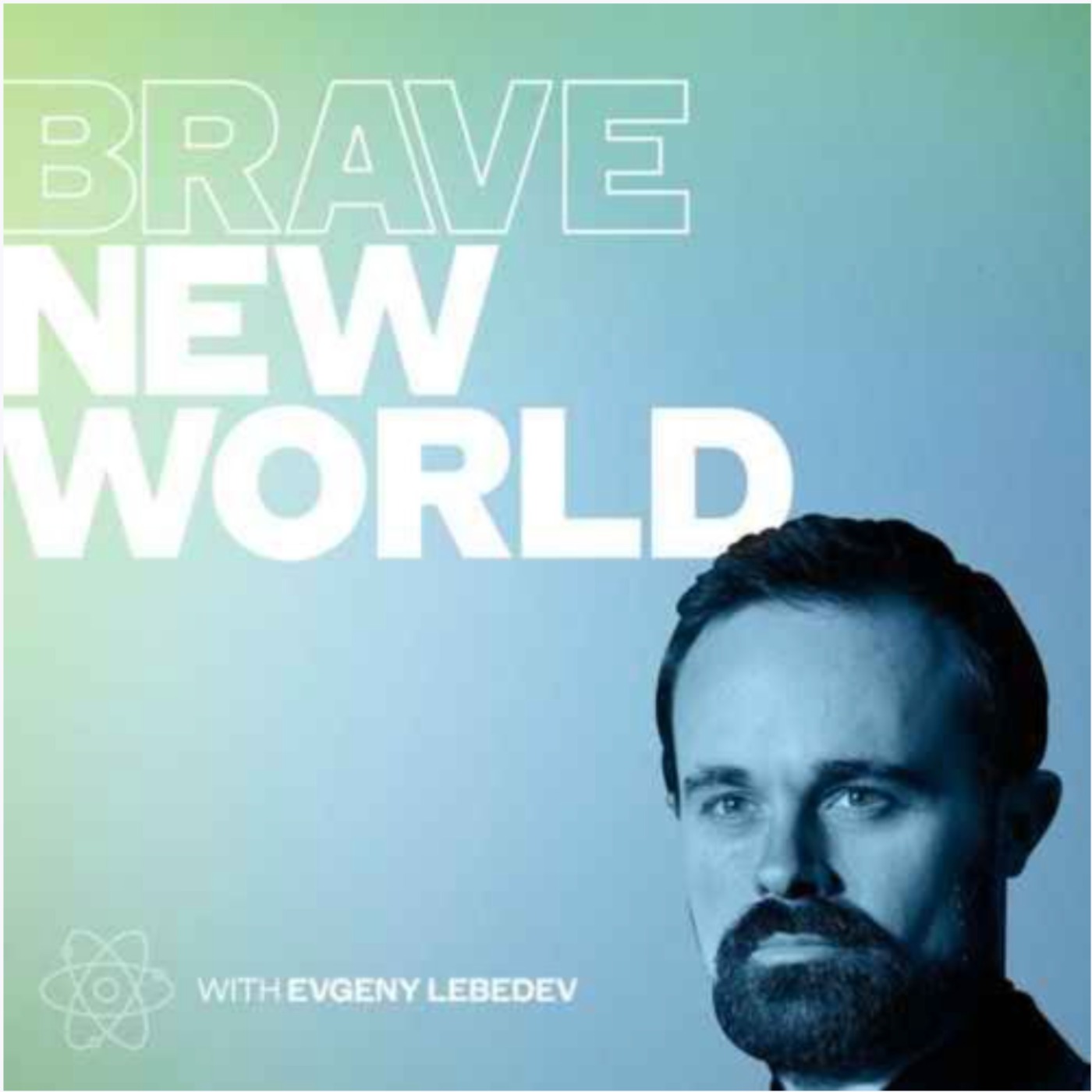
For Episode Eight, Evgeny is joined by Carl Pei, founder and CEO of Nothing, the London-based consumer tech company trying to make devices feel fun.
Carl explains how Nothing evolved from earbuds to smartphones, why he believes design and “focus-first” features can counter distraction, and what it means to build products with a distinct, instantly recognisable identity.
Evgeny and Carl also explore the psychological cost of always-on devices, the battle for attention and consciousness, and what it might mean to build technology that helps people stay intentional.
The episode ends on a wider view of the AI era: enormous promise for medicine and science, but serious unanswered questions about jobs, governance, and whether society is ready for what comes next
Hosted on Acast. See acast.com/privacy for more information.


