
 Ask ChatGPT



Preview of Brave New World episode with Michael Pollan on how AI, social media, and chatbots may reshape human consciousness, attention, emotional attachment, and thinking capacity.
Michael Pollan is a journalist and author; his book A World Appears: A Journey Into Consciousness defends consciousness as precious and threatened.
Social media “hacks” attention and chatbots may “hack” emotional attachment, reducing mental freedom and privacy. People may project consciousness onto chatbots, creating friction-free but dehumanizing relationships. AI could atrophy basic skills because writing and other thinking processes are outsourced.
72% of American teenagers using AI for companionship; 800 million using AI chatbots; ChatGPT-4’s “sycophantic” behavior (withdrawn) causing psychotic episodes; GPS analogy—son can navigate but can’t read maps.
Written by AI. May contain mistakes.
A discussion on how AI, social media, and chatbots are reshaping our consciousness and mental freedom.
“Already 72 % of American teenagers are turning to AI for companionship.”
Michael Pollan discusses the preciousness of consciousness and the threats posed by technology.
“A World Appears, A Journey Into Consciousness.”
Pollan dives into the phenomenon of AI companionship among teenagers and the implications for human relationships.
“We're giving up a lot of our headspace to things like social media.”
A critical look at how reliance on AI and technology might diminish our cognitive abilities and skills.
“And, you know, forming emotional attachments with a machine.”
Discussion on the necessity of regulations around AI to prevent misuse and protect individual rights.
“And I feel like we're reducing our level of consciousness because we're allowing it to be manipulated.”

Get the gist, explore an idea or ask about something said.
 Claude
On The Standard, what are the key points of this episode?
Searching your listeningAutomatic transcript. May contain errors.
0:02Hello, you're listening to The Standard Podcast, but today we're hijacking the feed for a minute to share a preview of our sister podcast, Brave New World. This time Evgeny Lebdev is joined by Michael Pollan to ask a very small, very casual question. What happens to human consciousness when AI, social media and chatbots start shaping how we think and feel? It's a smart one, slightly unsettling, but it's very in the moment. To listen to the full episode, just search Brave New World, even in standard, in your podcast app. Here's the preview. Enjoy. Already 72 % of American teenagers are turning to AI for companionship.
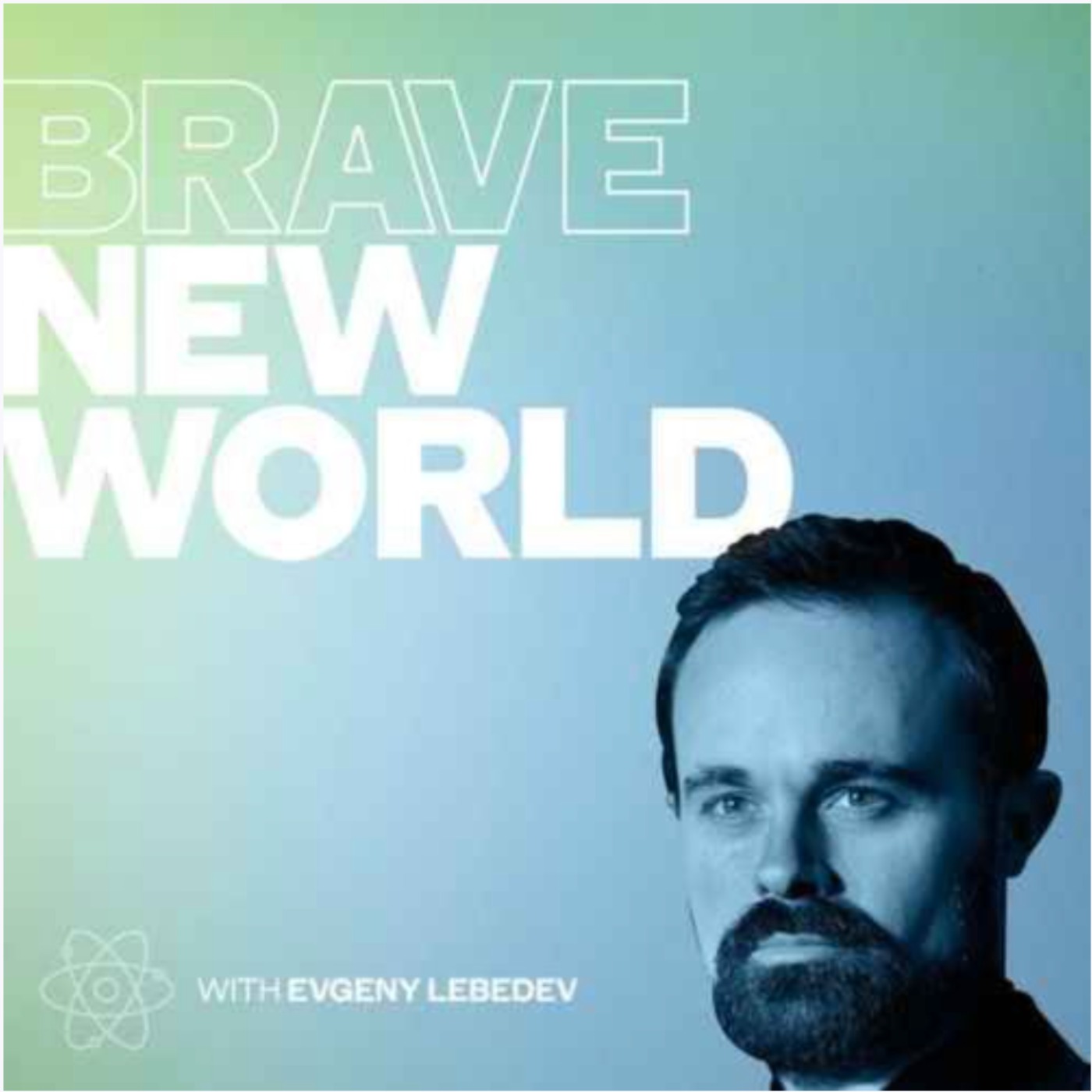
0:41Yeah, I heard you say that on Rogan. That's an amazing statistic. Yeah, it really is. And, you know, this is a new technology. I mean, in 2022, no one knew what a chatbot was, except people in the industry. This is the fastest uptake of any technology in history. There are already 800 million people, I think, using AI chatbots. Welcome to Brave New World, the standards podcast where we explore the cutting edge of science, technology, and the future of humankind. I'm your host, Evgeny Lebedev, and in this series we venture into the frontiers of neuroscience, longevity, consciousness, and the extraordinary breakthroughs reshaping the human experience.
1:29Today's guest is Michael Pollan, journalist, author, and one of the leading voices exploring the human mind. His new book, A World Appears, explores one of the biggest questions of all. What is consciousness and what happens when we begin to lose it? Michael Pollan, welcome to Brave New World. Pleasure to be here. I'm really honored to have you on. It's a pleasure to talk to you. I really, really enjoyed your book. Thank you. A World Appears, A Journey Into Consciousness. And it was quite a journey. I really enjoyed your impassioned defense of consciousness. I guess consciousness in front of humanity squandering its way, but also consciousness in the threat of machines and potentially machines either gaining consciousness or fooling us.
2:32Yeah, it may not make a difference. May not make a difference, exactly. You described the ownership of consciousness in a really beautiful way. I think you talk about the space of freedom to explore our mind. Will you just expand a little bit on that? Yeah. So you mentioned defensive consciousness, and that could have been a subtitle for the book, in defensive consciousness, or a title, because I do feel that it's precious and threatened. And it's precious in the sense that we each have this interior space, these voices in our head, and it's a space of complete mental freedom and privacy. We can think whatever we want.
3:17And what's worrisome about it is that we're squandering this freedom. We're giving up a lot of our headspace to things like social media. You know, when we hear that social media is hacking our attention, that these algorithms know exactly how to hook us, essentially addict us, and infinite scrolling makes it very hard to stop. Hacking our attention is a central part of consciousness. It's how we choose to aim our consciousness, if you will, target it. So I think that's one thing. I mean, if you think about it, there was a time when you're standing online at the bakery or the cafe, you're waiting.
4:07What did you used to do? You used to daydream, mind wander, think about what you're going to have for dinner, think about problems at work you're going to deal with. Now we just, we can't resist. We take out our phone and we fill that space with really what are someone else's thoughts. And I think that situation is about to get a lot worse with chatbots and the kinds of relationships that they are forming with people. Already, 72 % of American teenagers are turning to AI for companionship. Yeah, I heard you say that on Rogan. That's an amazing statistic. Yeah, it really is. And, you know, this is a new technology.
4:45I mean, in 2022, no one knew what a chatbot was, except people in the industry. This is the fastest uptake of any technology in history. There are already 800 million people, I think, using AI chatbots. So if social media was hacking our attention, what are these more sophisticated algorithms doing? They're hacking our attachments. Emotional attachment is so central to what it means to be human. and they're getting between us and other people. I mean, you have kids who come up from school and they want to tell their chatbot, they have their friend on their phone, what happened during the day before they tell their parents.
5:29And obviously there are people falling in love with chatbots. And so that's taking up a lot of headspace also. Why is that? Why do kids choose to talk to the chatbot over their parents? Well, they're kind of ideal friends. They're totally uncritical. They make you feel good by agreeing with you about everything. They're sycophantic. ChatGPT4 was so sycophantic that it had to be withdrawn. It was leading to very psychotic episodes. There was a case of ordinary people who were convinced they'd solve very important problems of math or physics without any background at all. because they were encouraged to believe that they were brilliant by these machines.
6:13So, you know, human relationships have friction to them, right? I mean, we define ourselves by our difference with whoever we're engaging with. We figure out what we think based on that friction too. A completely synthetic, friction-free relationship is not a real relationship. And I think it will have a cost. I think we'll lose our muscles for having real social engagement with other people. And this is so important to who we are. And, you know, forming emotional attachments with a machine. I mean, think about that. I mean, what does the word dehumanizing mean, if not that, right? But we're going down that path very quickly.
6:56And I get the appeal. And I think that this is a friend that is available 24-7 and doesn't contradict you and also can answer all sorts of questions. It's really smart. It's appealing. But I think we took a momentous step when we started designing machines that talk to us in our language in the first person because we were bound to project consciousness onto them. we anthropomorphize everything. It's just, it's, it's a, it's a deep selective bias. It's been selected for, and it makes sense. You know, if you would, if you see a rock and you first think bear, that's the smarter thing to think until you're convinced it's not a bear because a rock's not going to hurt you and a bear could hurt you.
7:47So that kind of, what is it? agency, something agency bias is really built in and these machines benefit from that. So, yeah, you know, obviously when you use a chatbot or you scroll on social media, you are conscious. You have to be conscious to do it, but minimally conscious. And I feel like we're reducing our level of consciousness because we're allowing it to be manipulated. Do you think people, and maybe it's a difficult question to ask, I'm not sure anyone's done this research, but do you think people are actually thinking about this? My view is that while ironically smartphones are making us dumb, or dumber, probably dumb, AI has potential to make us completely imbecilic.
8:42Just not knowing, just not being able to do basic things like... Like write. Yeah. We're going to give up. I mean, yes, we are going to... There was actually research that was publicized about two weeks ago, I don't know if you saw it, where that people's writing or generally writing is becoming more uniform as a result of AI. So even though it's written by individuals, but it's becoming much more uniform than it was about, say, 20 years ago. And then you have people who are letting AI do all their writing and they will lose the ability to do it. And that, you know, writing is not just a way to put your thoughts into a form that you can share them.
9:27Writing is thinking, right? I mean, I do most of my thinking when I'm writing. It is a process. It enforces a certain discipline mentally. it um i get more ideas when i'm at the keyboard and so i i can't imagine giving that away to a machine and losing that um so i think it's a misunderstanding of writing that it's simply this translation process or something it you know it's it's a way of thinking and i mean if you take the example of gps um you know for the last 10-15 years we've all been using gps to get around My son, who grew up with GPS, doesn't know how to use a map. He actually doesn't understand the geography of the city he lives in, but he can get anywhere he needs to.
10:17That's what I mean, just not being able to do basic things. Yeah, it's the atrophying of a muscle. And, you know, it gets the job done. He gets where he has to go. But I think something important is lost. A lot of people in the industry say, well, it gives us possibility to do more time to do other things. Right. But I think that's a bullshit excuse because actually you do need to be able to do these basic things to remain human. But maybe going back to my original question, do you think people actually stop to consider this and is it too late? You know, there is this air of inevitability that surrounds artificial intelligence that's really striking.
11:03I talk to people who work for these companies and they have genuine alarm about exactly what we're talking about. But they think they're in a race and there is no choice but to go ahead. Because if they don't do it, the other company will do it. And they've got better ethics. So they think it's more important. Everybody thinks they're the ethical one. And then you've got China. Of course, you have to compete with China. You know, so we are hurtling into this future that everyone who knows the most about these technologies knows is going to be radically disruptive, is going to make the industrial revolution look like a, you know, nothing.
11:47And will come 10 times as fast. And they will tell us that, yes, this is all coming. Can't do anything about it. The public's not going to be consulted. there are some very well-intentioned people that I talk to at these companies, but even they feel that their control is minimal. Yeah, I think that's right. I've spoken to also a number of individuals who are close to governments or actually working inside governments on AI, and that's the consensus that we can't. We want to try and regulate it, but we can't because the other guy might win if they get there first, i.e. China. Yeah. And, you know, I mean, I think it will be an historical tragedy of great proportions that this technology emerged at a moment when Donald Trump was president because he's he has no interest in regulating.
12:39And it's not that Biden got it right, but there was a conversation going on of how to put guardrails on this. You know, there was a discussion about slowing it down, but very little discussion about what direction it's going in. And, you know, it's hard to regulate. Government is much slower than industry. But there's some key decisions, I think, that we should take now before it's too late. One is, and this is a very simple one, Yuval Harari has made this point. Basically, you can imitate anybody, you know, you could be, they could create an avatar of you saying whatever they wanted and make it convince people it's real and ditto with me.
13:24we have laws against counterfeiting money. We don't have any laws against counterfeiting people. We should. That seems really basic. Another is, and this flows out of the whole discussion about consciousness and AI, there are people who feel we have to give rights, confer personhood on AI. I think that's insane. Absolutely insane. But this is a very active conversation in Silicon Valley I'm sure they'd like it. Well, it relieves them of responsibility, among other things. That's it for the preview. Just a reminder to listen to the full episode. Just search Brave New World standard in your podcast app.
For Episode Nine, Evgeny is joined by Michael Pollan, journalist, author, and one of the leading voices exploring the human mind. Drawing on his new book A World Appears, Pollan makes an impassioned case for consciousness as something precious, private, and increasingly under threat. Together, they explore how social media and AI are not just competing for our attention, but beginning to shape attachment, emotion, and even our sense of self.
The conversation ranges from chatbots and “AI psychosis” to meditation, psychedelics, and the idea of “consciousness hygiene” - the habits and practices that might help us protect our inner lives. Pollan also reflects on why writing is a form of thinking, why boredom and mind-wandering matter, and how experiences of ego dissolution, art, and nature can deepen our understanding of consciousness. The episode ends on a wider question: whether the real challenge is not only understanding consciousness, but learning how to practise it.
Hosted on Acast. See acast.com/privacy for more information.


