
 Ask ChatGPT


 The Standard
15 Apr 2026 · 18m · 10 chapters
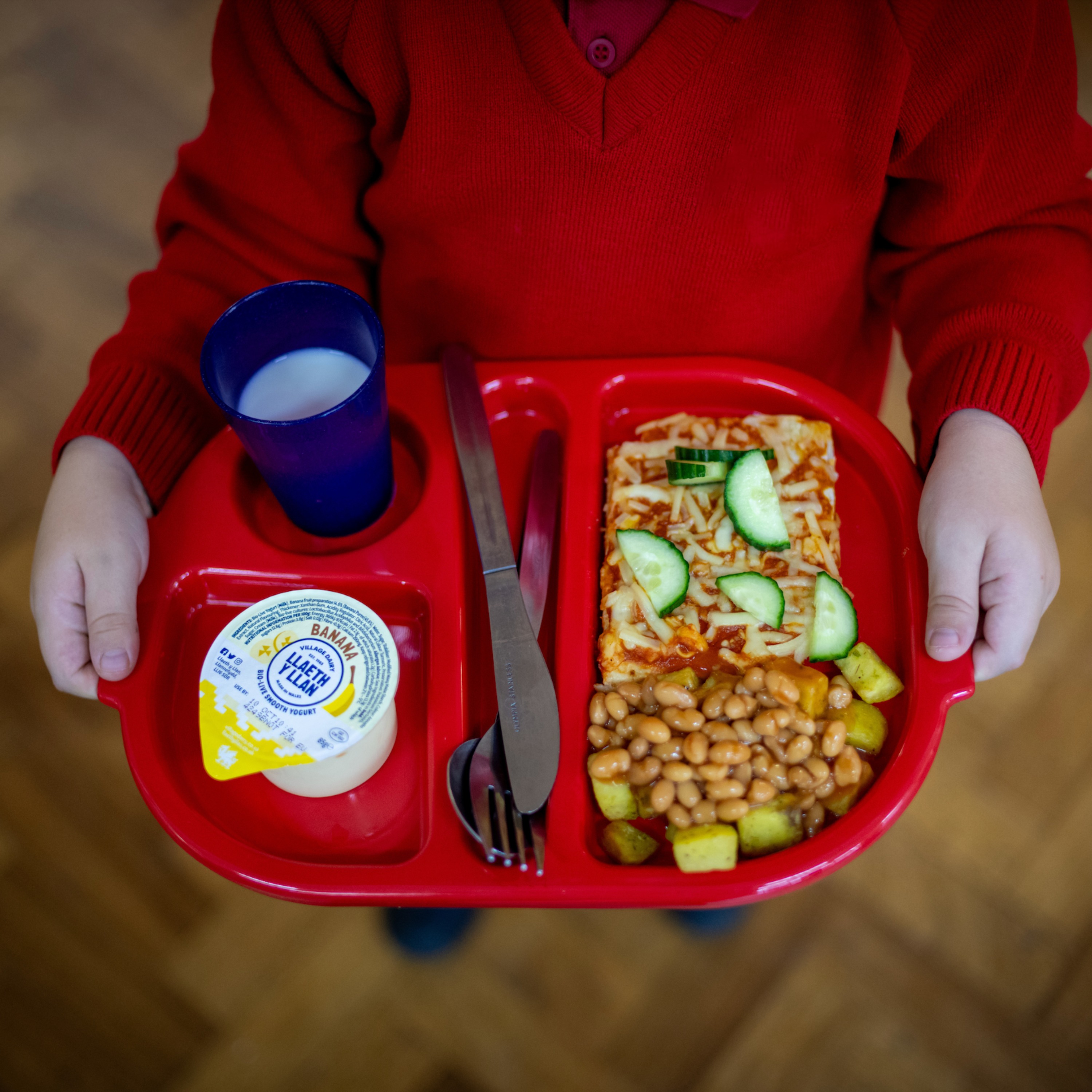
Government proposals in England to reform school meals to curb childhood obesity, including banning deep-fried foods and reducing sugary snacks, and shifting canteens toward healthier, more nutritious options.
Nika Pader, Head of Policy and Research at Fight Back 2030 (Bite Back), a youth-led organization that collects young people’s lived experiences to guide food policy.
Over one in three children leave primary school at risk of food-related ill health; children’s free sugar intake is too high while fruit/veg and fibre are too low. School food is often dominated by grab-and-go, nutrient-poor items (pizzas, rolls, pastries, chips). Big food companies still influence schools via branded products and school-linked marketing, so standards need strong enforcement. No single policy is enough; cultural change and broader environments (schools, digital, high streets) matter.
A youth story about counting 11 dessert types in one day; plastic fruit in a fruit bowl; branded items found in schools (Kit Kats, Maltesers, sugary fizzy drinks); company tactics like Coca-Cola/Cadbury/McDonald’s school-linked materials and events (e.g., Krispy Kreme doughnuts for bake sales, Cadbury World). London “food swamps” and heavy advertising around places like Stratford/Westfield are suggested contributors.
Written by AI. May contain mistakes.
Exploration of traditional school meals and proposed changes.
“Can school meal reforms curb childhood obesity?”
Discussion with Nika about the new proposals for school meal reforms.
“Head of Policy and Research at Fight Back 2030.”
Insights into how children perceive school food and its quality.
“As policy head, what do you make of the proposals?”
Understanding the necessity for nutritious food options in schools.
“And instead, they'll have loads of really colourful, delicious, nutritious options.”
Discussing the risks of creating a culture around food demonization.
“So I would kind of centre this back into what we hear from young people over and over again.”
The role of youth activism in challenging food systems.
“And I kid you not, that fruit bowl was filled with plastic fruit.”
Examining the impact of major food companies in school environments.
Learn how major food companies impact school food environments and marketing.
“from investigating how big food targets young people, even in school?”
Explore the effectiveness of government reforms like the sugar tax in combating obesity.
“There's been the sugar tax, which was arguably effective as soft drinks companies have reduced the amount of sugar in a lot of their products as a result of the tax.”
Understand the need for cultural change alongside policy to address childhood obesity.
“And finally, Nika, when I was kind of wading through the stats, the number of children in year six considered obese in London is slightly higher than the national average in England.”

Get the gist, explore an idea or ask about something said.
 Claude
On The Standard, what are the key points of this episode?
Searching your listeningAutomatic transcript. May contain errors.
0:00Have you ever been stuck on a weight loss plateau, trying everything and anything you can to lose that extra weight and reach peak health? We've all been there, but Noom's unlocked the secret to reaching the mountaintop. Go in micro. The Noom GLP-1 microdose program starts at$99 and is delivered to your door in 7 days. Start your microdose GLP-1 journey today at Noom.com. That's N-O-O-M dot com. Noom. Microchanges. Big results. Noom GLP-1RX program involves healthy diet, exercise, and support. Individual results may vary. Meds and personalization based on clinical need. Not reviewed by FDA for safety, efficacy, or quality.
0:37No affiliation with Novo Nordisk, Inc., the only U.S. source of FDA-approved semaglutide. Not available in all 50 U.S. states. Hi, this is Dave Musial, owner of Four Seasons Heating, Air Conditioning, Plumbing, and Electric. When emergencies happen, who do you call? Broken pipe? Power outage? Furnace failure? No hot water? The answer's always the same. Call 4 Seasons. We guarantee same-day service and installation on all heating, cooling, plumbing, and electrical needs, with no extra charge for nights, weekends, or holidays. That's why over 30 ,000 customers have given us a five-star Google review.
1:08For all the right reasons, call 866-4-SEASONS.
1:21are you a startup looking for funding mentorship business insurance for a year and more then why not enter the access startup angel competition where we'll help you start up with confidence i'm rafael sofaluke founder of uk black business show and i'm back again for this year's access Startup Angel competition in partnership with The Standard. Your business could be in with a chance of winning£25 ,000 in funding, expert mentoring from founders like me and business insurance for a year thanks to AXA and more. Entering is easy. Just send us a short pitch video and answer free questions about your business idea.
2:01Search AXA Startup Angel to find out more and enter before 21st of June, 2026.
2:29The government is considering reforms to school meals in a bid to reduce childhood obesity. Currently, more than a third of children leave primary school overweight or obese. So, are salad bars in school as part of the answer? Hi, and welcome back to The Standard Podcast. I'm Tamara Kormornyk. For all the latest news, head to standard.co.uk. Coming up. Can school meal reforms curb childhood obesity?
3:10When you think back to what was on offer in the school canteen, I imagine the memories that spring to mind featured cakes, flapjacks and, of course, fish and chips. These memories may become even more distant as the government may put a stop to deep-fry foods and sugary snacks served in school canteens. but are Brits ready to be healthy? In today's episode I speak to Nika Pader, Head of Policy and Research at Fight Back 2030. I'm very excited to have her on the podcast as she and her colleagues lead research that is guiding the government's decision making. Here's my chat with Nika.
4:00hi Nika it is so great to have you on the podcast thanks for joining thanks so much for having me so Nika we are speaking on the back of government proposals to ban deep fried food from school menus and reduce sugary treats in a bid to tackle child obesity. Now these proposals mark a huge reform to school meals. As policy head, what do you make of the proposals? That's a great question to start off with because one of the first things I wanted to say about this piece of news from the government, today is honestly a really great day for children's health in England. From our perspective at Bite Back, young people have been telling us for years now about what their school food looks like.
4:46And sadly, too often it's described as bland, beige and boring. I think the steps the government have taken today are really positive. I saw a while ago, I think it was maybe last year, parents would take pictures of the lunches that their children had given or their children would take pictures of their school lunches. Some of these meals look absolutely horrific. I don't know if you saw that. I guess I can give you a flavour of the different stories that we've heard over the years. I remember a few years ago now when we ran a campaign called Spill the Beans, which was all about hearing about young people's experiences of school food in England.
5:23One of the young people we spoke to said that he went into his school and he counted 11 different types of dessert, biscuits, flapjack, cake, served in a single day. So I guess that's kind of what this is all about. It's about putting healthier options at the centre of canteens. So that, yeah, as you say, we won't have these images of very kind of beige, sugary foods on the menus anymore. And instead, they'll have loads of really colourful, delicious, nutritious options. Nika, what are some of the proposals that are on the table regarding the reform of school meals? Yeah, so a big focus is increasing access to the good stuff.
6:03So that's everything like your vegetables, fruit, things like pulses, so your chickpeas, lentils and also fibre as well. I guess if we think about why these changes are needed, the facts are pretty stark. So we know that right now in England, one in three children are leaving primary school at risk of food related ill health. We know that the intake of free sugars among children is too high. and at the same time the intake of fiber and fruit and veg is way too low so it's about limiting those fried options battered foods pastries pizza and that's because that's kind of what's predominantly being served right now so we've heard over the years that it's grab and go that's come to dominate secondary school food and that's what our research shows so the reality is that these options are dominated by nutrient poor predominantly carbohydrate based items so those things like pizzas rolls pastries and chips and the importance on that on child health is that main meals tend to be way more nutritionally balanced
7:17so you talk about foods that are high in carbohydrates high in sugar when you think about British school meals. I mean, you know, historically, you're thinking of things like Angel Delight, you're thinking of quite stodgy foods. I'm thinking back to my school meals, I remember a lot of pizza and baked beans and a lot of cake, actually, a lot of different types of cake. When I first joined school, secondary school, I should say, they had just removed vending machines. So if I'd have joined a year before, I would have been able to, you know, buy chocolate bars every break time, if that's what my heart desired.
7:58It's interesting to see how quickly attitudes have changed towards school lunches. Do you think that Brits are ready to be healthy? Oh, wow. So what a question. So I would kind of centre this back into what we hear from young people over and over again. So maybe to explain to your listeners what Bite Back is all about. So we're an organisation. We describe ourselves as a movement of young people fighting to create a fairer food system. What that means in practice is that day in, day out, the staff who work at Bite Back hear from young people their lived experience of different parts of the food system.
8:40So 100 % that's schools, but that's also about what's available to them on their local high street, what are they seeing on supermarket shelves what are they seeing advertised in terms of food and drink on their phones and other digital environments and we try to give them opportunities to share that lived experience with decision makers stories we hear from them and the vision we hear from them is that they want access to healthy and nutritious food they obviously want that done in a way that reflects the kind of food that they love and enjoy eating they also want school food to better reflect kind of like the vast cultural backgrounds that you know English children have these days as well and why it's important to them is because they really feel how it fuels them during the school day so you know what it's like you're sitting down for hours you're expected to retain all of these information they go through really stressful exam times and And they really connect what they eat with how they feel as well.
9:44And that's why this is so important to them. Well, student activists at Bite Back are clearly very passionate about this. I'm sure that my colleagues might not feel this way, although fish and chips, I believe, is still on the menu. But deep fried food is essentially being eliminated. Do you think that having healthy school meals that get rid of snack culture, you know, afternoon tea, elevensies, risks demonizing sweet foods or processed foods and creates a culture where kids are really thinking about what they eat, but to the point where they're thinking too much about what they eat, you know, counting their macros?
10:27Could this initiative kind of encourage disordered eating if it's pushed too far? I think I might answer your question in two parts one is maybe around how representative fight back youth activists are of the wider student population the young people who completed the survey did so completely voluntarily so we just asked you know would you be interested in reflecting your experiences of school food what would you like the minister to know about school food and 2 000 young people of their own accord with nothing to gain from it other than they obviously wanted their voice to be heard completed that survey so I would say there are you know thousands of young people across the country who obviously want change to happen on your second question around demonizing food yeah it's one that comes up really often with public health policies and I would definitely say it's never about focusing on just one food as bad or another one is good and if you look at what the government's proposed it's really not about singling out one specific food it's about really just rebalancing the school canteen so that healthier options are just kind of like the standard and again bringing it back to some of the youth insights that we've heard throughout the years you know we hear a lot of times that for example we we had this one story where in the canteen there was a fruit bowl.
11:50And I kid you not, that fruit bowl was filled with plastic fruit. It wasn't even real. So right now, children in schools, but also in other environments, don't really have a fair chance.
12:08We'll take a quick break. Coming up, I asked Nika about the significant influence of big food giants on school children and why children in London are more overweight than the national average. We'll be back here in just a moment.
12:29Business is booming, but you know what really helped? Zero, the accounting platform for small businesses. I used to think unpaid bills were just part of it. But batch payments? Wow. Automated accounts payable? Even better. all in one place. That's a big one. And I can keep track from my phone while I get the job done. No bills in sight. What a life. Do right by yourself and your business and search X-E-R-O for your free trial. Conditions apply. Have you ever been stuck on a weight loss plateau, trying everything and anything you can to lose that extra weight and reach peak health? We've all been there, but Noom's unlocked a secret to reaching the mountaintop, going micro.
13:11The Noom GLP-1 microdose program starts at$99 and is delivered to your door in 7 days. Start your microdose GLP-1 journey today at Noom.com. That's N-O-O-M dot com. Noom. Microchanges. Big results. Noom GLP-1RX program involves healthy diet, exercise, and support. Individual results may vary. Meds and personalization based on clinical need. Not reviewed by FDA for safety, efficacy, or quality. No affiliation with Novo Nordisk Inc., the only U.S. source of FDA-approved semaglutide. Not available in all 50 U.S. states.
13:49Welcome back. Let's get back to my chat with Nika.
13:55Looking to Biteback's work myself, what I found really interesting were the findings from investigating how big food targets young people, even in school? So what you're referencing is the fact that I think a lot of people would think and hope that school food environments are kind of protected from commercial interests. So what I'm talking about is that, you know, the big food companies like Coca-Cola, Cadbury, McDonald's, so those are not really associated with selling and marketing healthy food and drink. we would kind of expect and hope that school food environments would be protected from their influence and what we found was that's definitely not the case their tactics have definitely changed over time I think is kind of they've been subject to more scrutiny and all of them will talk about their responsible marketing policies but then when you look at what they do whether that's kind of creating curriculum materials for teachers to use in class whether that's things like for example called Krispy Kreme, providing discounted doughnuts for charity bake sales in schools, whether that's Cadbury World, which is obviously inviting school children to kind of immerse themselves in chocolate.
15:09There's a whole host of activity and ways that these companies are engaging with students through schools. It's so important for these school food standards to be monitored and enforced, because actually what's happening right now is a lot of branded products are still in schools, even though they are not compliant with the existing standards. So that's things like we've seen Kit Kats, we've seen Maltesers, we've seen sugary fizzy drinks in schools. So yeah, our additional request to the government is amazing work that they've done with this brilliant step. Match it with a really robust enforcement mechanism and it will be a massive day of celebration.
15:56Nika, this is far from the first measure the government has put in place to curb obesity in general. There's been the sugar tax, which was arguably effective as soft drinks companies have reduced the amount of sugar in a lot of their products as a result of the tax. And there's also been the initiative to include calories on food menus for large chains. Do you think these reforms can actually work? Because there's a limit to what can be achieved in a school. For example, you know, kids could bring snacks in and go to the sweet shop after school as well. Do you think that this is a cultural change needs to happen?
16:41It can't just be a policy change. We can't just look to the government to enforce, you know, regulation. And we can't just ask Big Food to stop because in a way students have to really want to change and parents need to be very supportive of that there needs to be really a whole ecosystem driving this change right so you talked about cultural change there and I guess I would ask you back who are the organizations the people the brands that are currently shaping our food culture today and we would argue that big food and drink businesses have an incredibly massive role in that so if you think about the millions of pounds that they spend every year just in the UK advertising food and drink and not just food and drink products that we can recognize but also their branding so because the TV and online restrictions we've seen a lot of brands shift to brand advertising as well so they're really smart at creating these norms creating these emotional associations and so that's why we're really passionate about marketing policy as well you know there have been plenty of years of asking industry to do things on their own and they just haven't and so there's a really strong case for government regulation and you said so yourself the soft drink industry levy is an example of where mandatory regulation really works so we just need more of that Yeah.
18:09And finally, Nika, when I was kind of wading through the stats, the number of children in year six considered obese in London is slightly higher than the national average in England. Why do you think this might be the case? So we know that in a lot of urban environments, we've got things sometimes referred to as food swamps. So that's food environments where if you walk down your high street, you will notice that the majority of the food outlets are things like takeaways, selling fried chicken or pizza. There might be convenience stores that right now the windows are kind of chock a block full of energy drinks and crisps.
18:54And then if you think about some of the outdoor advertising that we have on our streets right now as well, it's really tends to be predominantly advertising for unhealthy food and drink. So I'm a Londoner. I'm a really proud Londoner. But when I walk around, I wouldn't say that London streets are kind of designed and made to support my health. You know, I live in Stratford next to Westfield. And when I go in there, the marketing, the massive, massive digital billboards, the food outlets, I wouldn't say that it's geared towards supporting young people's health. So back to my earlier point around like there's no silver bullet for children's health.
19:35We need lots of different interventions that look at the school environment, that look at digital environments, that look at high street environments. It's really clear that we need all of it. I mean, yeah, especially the food court in Stratford is really something else. But Nika, thanks so much for speaking to me about this today. Thank you so much. It's been a pleasure.
19:58And that's The Standard. For all the latest news, head to standard.co.uk. If you're new here, hit follow and give us a rating. If you'd like to get in touch, email us at podcasts at standard.co.uk. We'll be back here tomorrow morning. See you then.
20:45We'll see you next time. right by yourself and your business and search XERO for your free trial. Conditions apply. Hi, this is Dave Musial, owner of Four Seasons Heating, Air Conditioning, Plumbing and Electric with our biggest sale ever. Furnaces from just$39 a month. Furnace and air conditioning combos from just$57 a month plus six years interest-free financing. Four Seasons guarantees to beat any competitor's price by up to$1 ,000. With an A-plus rating from the Better Business Bureau and over For 30 ,000 five-star reviews, we are Chicago's trusted local experts.
21:25ACAST powers the world's best podcasts. Here's a show that we recommend. Hi, I'm Henrik, and I make a podcast called Fall Asleep with Henrik. it's for people who can't sleep and it's just me I talk for about an hour I improvise, no script, no music no advice nothing you really need to do you don't even have to listen to be honest just put it on and let yourself drift Fall Asleep with Henrik is available wherever you get your podcasts
22:08everywhere. ACAST.COM
Currently, more than a third of children leave primary school overweight or obese. The government is about to start a consultation on reforming school meals. Will having salad bars in schools make a difference?
In this episode, host Tamara Kormornick speaks to Nika Pajda, Head of Policy and Research at Bite Back. Together they discuss whether banning deep fried foods from school canteens will have a significant impact on children's health, as well as the lurking influence of Big Foods in schools.
Photograph: Getty Images
Hosted on Acast. See acast.com/privacy for more information.


