
 Ask ChatGPT



```markdown
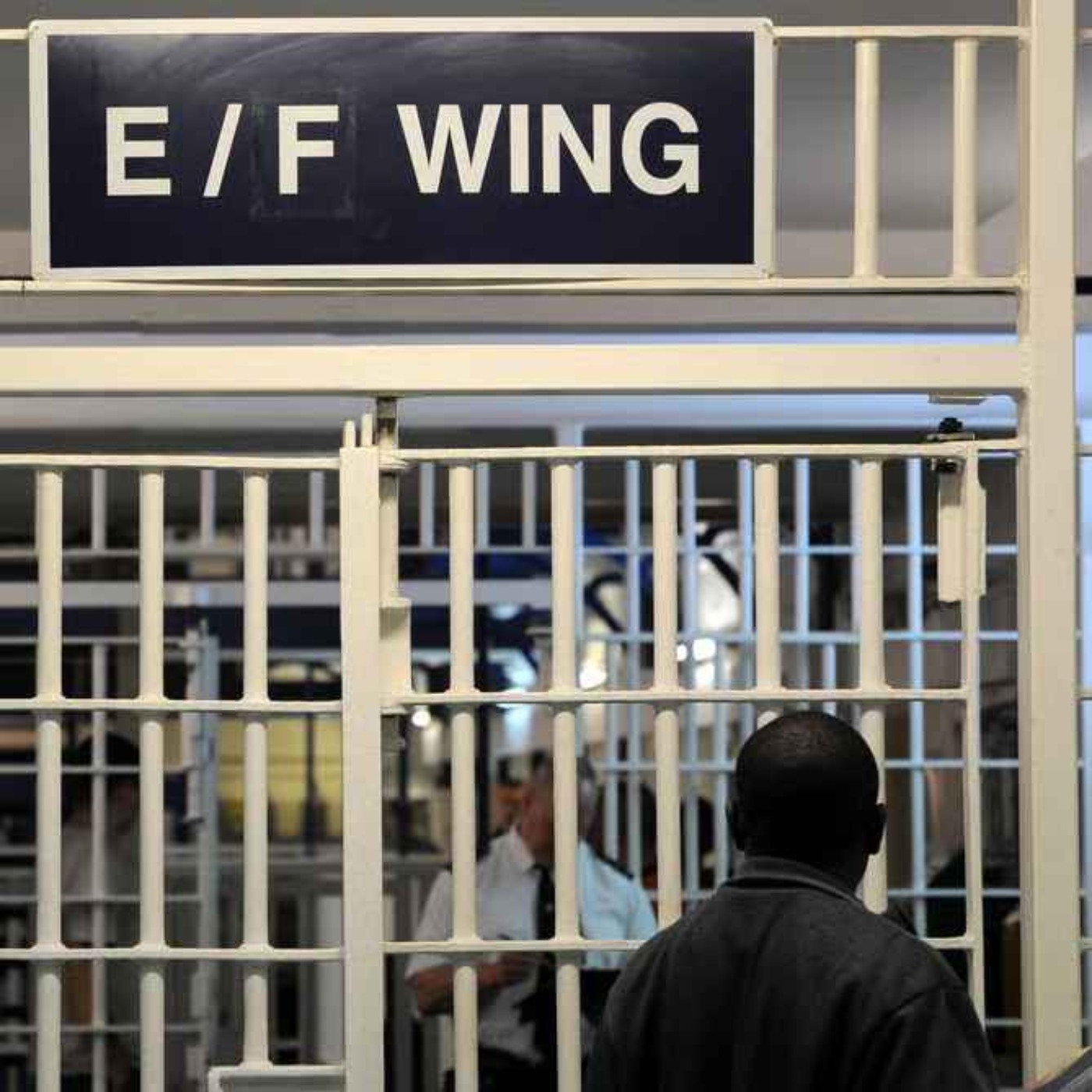
This episode discusses a significant announcement about reforms to the justice system in the UK. It features insights from The London Standard's Courts Correspondent, Tristan Kirk, regarding potential mandatory chemical castration for serious sex offenders and examines the ongoing crisis within the prison system. Additionally, the episode delves into the success of the TV show "Clarkson's Farm," featuring insights from Culture Writer Vicky Jessop.
Written by AI. May contain mistakes.

Get the gist, explore an idea or ask about something said.
 Claude
On The Standard, what are the key points of this episode?
Searching your listeningAutomatic transcript. May contain errors.
0:05Hi, I'm Charlie Duffield and welcome back to the Standard Podcast. If you're new here, hit follow and give us a rating. For the latest news, head to standard.co.uk. Coming up later in the show, find out which TV programme involving Rain, Chaos and Humping Pigs has become Prime Video's most successful ever original series.
0:37But first, Justice Secretary Shibana Mahmood is considering mandatory chemical castration for the most serious sex offenders as part of a major overhaul of the criminal justice system. She is considering the findings of an independent sentencing review by former Conservative Justice Secretary David Gawke that has called for the government to build an evidence base on drugs that suppress libido or reduce sexual thoughts. And as part of the biggest shake-up in sentencing laws in 30 years, dangerous criminals will be released after serving only half their sentences. Here she is speaking in the House of Commons today.
1:18The review has recommended we continue a pilot of so-called medication to manage problematic sexual arousal. I will go further, with a national rollout beginning in two regions covering 20 prisons, and I am exploring whether mandating the approach is possible. Government sources say the Justice Secretary is expected to accept other key measures, including that well-behaved prisoners should be released on tag after serving a third of their sentences. We're joined now by the London Standards Court's correspondent, Tristan Kirk. Tristan, what do you make of all this? Before we start, I think it's a massive red herring, the chemical castration.
2:01OK, so tell me more. For a while now, the government's been trialling the idea of chemical castration for pedophiles. There's been a pilot going on in a handful of prisons on a voluntary basis as part of the rehabilitation and people who've committed the crimes, bringing them back into society. The government has said that it may well now consider expanding that violet and making it into a mandatory requirement for people who are convicted of that type of crime. There's no guarantees that this will actually happen, but it's something that's been floated today on the day that a massive package of fundamental reforms to the justice system are being announced.
2:47And this is all to end overcrowding in prisons. Is that right? The criminal justice system in this country has been pretty much decimated over many years by successive governments cutting funding, not prioritising the sector, essentially ignoring the challenges that were growing and growing within the criminal justice system from the police forces to the courts to probation and to the prisons. Last year, it became very apparent that our prisons were full. There were literally no places left to put the criminals. And there were no immediate plans for more prison places to be opened up. The Conservatives tried various different things.
3:37Emergency temporary prison cells being put up, holding prisoners in police cells instead of taking them to the prisons, delaying court hearings from taking place, delaying decisions on bail. It was a fundamental issue. We'd run out of prison places, and yet there were more and more people who were likely to be locked up. Conservatives before the election let out several thousand prisoners as part of a measure to alleviate the immediate problems. They kept quiet about that, presumably because of the perceived disastrous impact that would have had on their electoral chances. After the election, Labour did something very similar.
4:17They applied that lever and let out something like 10 ,000 prisoners early from their sentences. Because of the same issue, it hadn't gone away. They were slightly more open about it and received the kind of criticism that you might imagine. They did it at the 40 % stage of their sentence rather than the automatic 50%. So somebody jailed for 10 years would be getting out after four instead of five years. Where we're at now is that this problem, again, hasn't gone away. You don't immediately build massive prisons. You need to plan for that years, if not decades in advance. And so Labour has decided that there needs to be more radical action taken because we can't continue to go through the cycle of the prisons being full up to bursting, police stations being filled up with people who should be in prison.
5:09It's just unsustainable and something more fundamental had to happen. So why are you referring to this potential castration measure as a red herring? It's eye-catching, it's headline grabbing, it's going to be the thing that people latch on to because it is a talking point but it is actually rather different and rather far away from the other thing that's happening which is the decision by the government to fundamentally change how people are dealt with once they've been accused of a crime, convicted, sentenced, and then punished. The package of reforms involving changes to the timing of people being released from prison.
5:51So instead of an automatic halfway point, some people will be released after serving a third of their sentence, depending on a sort of a suite of measures, including good behaviour in prison, engagement in rehabilitation services. So somebody who is sentenced to 10 years in prison could find themselves being released after three and a bit years if they are a good inmate, if they engage in the services, if they show clear signs of wanting to rehabilitate. The government's also looking at expanding suspended sentences to up to three years. So that will necessarily mean more and more people will not be sent directly to prison.
6:31They may be on a suspended sentence. And they're looking at massively increasing the use of tags, essentially people serving their sentence in the community on a tag, observing a curfew, being monitored. Now, this is a package of measures that is obviously ripe for the government's opponents to say you are going soft on crime. You're releasing dangerous prisoners. You know, victims are being betrayed. I think that there's perhaps some recognition of that within part of the Ministry of Justice and this chemical castration measure, although it may or may not happen, and it may be part of what the Ministry of Justice does in the future.
7:11It's certainly not the mainstay of today's news. Finally, what are your thoughts on ending the prison crisis? I think that for this plan to work, there needs to be a fundamental shift in the way that we look at criminal justice. For starters, we need to commit to long term investment in criminal justice and particularly in the probation service and the kind of organisations that help to rehabilitate offenders and stop them from doing the same thing again or even worse. Mainly, I think we as a society, as a general public, need to acknowledge that we are addicted to sending people to prison. For many years, and certainly since I've been courts correspondent for The Standard, it seems to be the only answer that people in politics have, if there's a problem, is send people to prison and send them there for longer.
8:04And the natural conclusion of that is that the prisons are full. The courts are delayed so badly that justice isn't being served. and everything's broken. And so if we're going to do things differently, then we need to just acknowledge that it's not a proper answer to just send everyone to prison because, A, we don't have space and so that is fundamentally not something that we can do. But, B, we're ignoring the fact that there's rehabilitation that can be done and that could be for a greater good. So if somebody spends their sentence out in the community on a tagged curfew, being monitored every day by the probation service, attending courses aimed specifically at rehabilitating whatever crime they committed.
8:52And if after that, they don't commit any crimes in the future, then that should be treated as a success, rather than how some people look at criminal justice as if somebody doesn't go to prison, then that is somehow a scandalous sentence and we should criticise the judge and everybody else involved. Sometimes people have to go to prison. Obviously, some crimes are just simply so bad that they have to be met with that kind of punishment. But there are types of crimes where it would actually be better if somebody was out in the community and putting something back and improving their life chances rather than spending six months or so in a prison and potentially learning more criminal crafts which they will then you know put to use when they're they're eventually set free
9:47let's go to a break coming up in part two behind the unlikely success of the tv show at diddly squat farm we'll see you back here in just a moment
10:11Welcome back. Now, as the fourth series is about to be released, Jeremy Clarkson's TV show, Clarkson's Farm, has proved to be Prime Video's most successful original series ever made, smashing ratings and records. The show follows Clarkson's adventures in farming and the challenges he faces in managing his 1 ,000 acre farm in the Cotswolds. And it's become a stealth hit. With a combination of the serious and the silly, even the odd scandal hasn't dented its popularity. We're joined now by the London Standards commissioning editor and culture writer, Vicky Jessup. Vicky, for listeners who are unfamiliar with Clarkson's farm, can you explain the premise behind the show.
10:58Jeremy Clarkson bought this farm back in 2008 because basically a nearby farmer was selling the land by a house that he owned and you don't pay death duties on farmland so that's quite mercenary. Until 2019 this was run for him by a farmer named Howard. Howard resigned and then Clarkson you know by then I think he was just presenting The Great Escape on Prime Video so he wasn't super busy I guess so he decided to give it a go. Yeah the show basically just follows him and his workers and business partners and you know girlfriends as we very quickly um come to learn and which gets you know hammered into us repeatedly is very hard to do it's now prime video's most successful original series ever how has this happened what's behind its success i guess the reasons behind its success i would say are multiple i I mean, first of all, Clarkson, he's a presenter, so he knows how to entertain a crowd.
11:53He's been doing it for years. He did it on Top Gear. He has a kind of very jovial, you know, presenting style that I think people really like. And obviously, this is not Top Gear. And I think when the show came out, people were quite disappointed that Jeremy Clarkson was doing a new show and it was about farming rather than cars. A lot of the same elements are carried over. There's a lot of joking around, there's silly pranks. There are big machines, you know, he flamboyes over his favourite Lamborghini tractor and he invents like silly things that go very wrong he's very willing to make himself the kind of butt of the joke as it were which i think people really like farming is really hard and we see that again and again i think in season three he has lots of piglets and he will just die about like i mean like 12 of them die because the mum sits on them or because they're too frail and you see him get really upset about that so clearly he cares about the land that he's farming and the animals he like kind of tends even if it's ultimately to send them to slaughter and i I think it's also quite clear-eyed by the issues facing farming today.
12:51It's like mental health, how hard it is to turn a profit from the land. And that's not something we see on our screens at all, really. I think the closest thing we probably have is countryfile. It's very soothing. You know, it's not very intelligent viewing, I would say, but it's just beautiful drone shots of the rolling countryside and tractors ploughing fields and the seasons pass quite cyclically. Do we know how farmers really feel about it? so i come from a farming background and the farmers that i know really love the show they say it's very authentic they say it's really representative in season one we're told at the end of the season that he made just 114 pound of profit that year that was it and then he was saying oh well if that's me what like for other farmers who you know don't have the backing of prime video for instance and all these other business investments and various plates that he has spinning.
13:41So yeah, the farmers really enjoy it. He's a voice for them. You know, he has this big platform and he's choosing to use it to spotlight issues that they care about. A lot of farmers, they like their expensive machines, their kind of Top Gear element playing in there too. And what has this done for Jeremy Clarkson's public persona? Yeah, I think it's really redeemed his image, to be honest. When he left Top Gear in 2015, he did so under something of a cloud. You know, he does have quite a reputation for being rather un-PC. In 2022, for example, he caused a massive backlash by saying he hated Meghan Markle and dreamt of a day that she was made to parade naked through the streets of every town in Britain while the crowds chant shame and throw lumps of excrement at her, which is lovely.
14:21That's a Game of Thrones reference, but obviously there was a huge backlash. Clarkson had to apologise, rightly so, shortly after season two of Clarkson's Palm came out and broke records for being the biggest show on Prime video at the time so clearly it's doing something I think one of the big things for him is that it's a chance for him to show this persona that he has of kind of grumpy benevolent Jeremy so he has control of his image and the image that he shows on Clarkson's farm is this kind of very well-meaning bumbling cheerful person that wants to do good and help raise awareness about farming.
14:53What do we know about season four of the show and potentially seasons beyond that. Season four, there's a new farmer taking over from Caleb. Only temporarily, I should stress, but she's called Harriet. So we're going to see a lot of her, which will shake up the dynamic. I want to make it plain that I am absolutely thrilled to bits for Caleb. But he has left me just a little bit in the lurch.
15:26please come on it's freezing cold and soaking wet come on i've got to be honest i'm having a tottering time while caleb's away i'm going to need a hand you've seen clarkson's farm yeah yeah have you no
15:44there's also a storyline about clarkson wanting to open a pub to sell his farm produce we know that's opened. It's called The Farmer's Dog, which I believe is a reference to dogging, which is very Jeremy Clarkson. So the show is going to take us through how that came to life. I had a brilliant idea. Gonna buy a pub. Son of a bitch! Give me a drink! I've got to be honest, when I first looked around, that hadn't fallen down. Oh, man! In terms of season five, that's already been renewed, I think, by Prime. But Clarkson has also hinted that this might be the last one for a while. So he said that he'd do a sixth if there was a bloody good reason for doing it, but there'd need to be a break of some kind as the crews are just all worn out.
16:29Apparently, according to him, they've been filming for two to three days a week, every week for five years. That's a lot. I can't see there not being a season six at some point further down the line.
16:42And that's The Standard. For all the latest news, head to standard.co.uk. and if you'd like to get in touch please do drop us a line at podcasts at standard.co.uk we'll be back here tomorrow at 4 p.m see you then
On the day that a package of fundamental reforms to the justice system is announced, The London Standard’s Courts Correspondent Tristan Kirk reports on the action.
And in part two, we explore why Clarkson’s Farm has proved to be Prime Video’s most successful original series of all time, with Commissioning Editor and Culture Writer Vicky Jessop.
Hosted on Acast. See acast.com/privacy for more information.


