
 Ask ChatGPT



The episode covers two segments. First, Chancellor Rachel Reeves’ spending review: it prioritizes “working people,” with £39bn over 10 years for affordable/social housing, £190bn more for day-to-day public services, an extra £29bn for the NHS, and defence rising to 2.6% of GDP by April 2027. It also includes major nuclear energy and regional transport investment, plus £4.5bn for munitions manufacturing and £6bn to upgrade nuclear submarine production. Guest Jonathan Prynne (The Standard business editor) argues London was mentioned only a handful of times, though London did get a four-year Transport for London settlement (~£2.2bn). He notes markets reacted calmly and warns risks if OBR forecasts slip. Second segment: Boston Manor (Jacobean House) in Hounslow. Guest John Darlington (archaeologist, director of projects at World Monument Fund) explains it was built in 1623 by Lady Mary Reid, highlights restored 17th-century plasterwork “canvas” in the state drawing room (biblical/allegorical motifs like Abraham/Isaac and Perseus), and describes restoration choices (e.g., ceiling and fireplace restored to a 1750 moment).
Written by AI. May contain mistakes.
Discussion on the key points of Chancellor Rachel Reeves' spending review.
“But first, Chancellor Rachel Reeves has delivered her spending review, setting out the budget for all government departments over the next few years.”
A brief introduction to Boston Manor and its historical significance.
“in part two, we'll be exploring one of the capital's lesser known historical sites.”
In-depth discussion about Boston Manor, its architecture, and historical context.
“For most Londoners, Boston Manor is nothing but the name of a Piccadilly Line station passed on the way to Heathrow Airport.”

Get the gist, explore an idea or ask about something said.
 Claude
On The Standard, what are the key points of this episode?
Searching your listeningAutomatic transcript. May contain errors.
0:00Are you getting rewarded for paying your rent and mortgage? If not, you need to check out Bilt. Bilt members earn points on every housing payment, which can be redeemed for flights, lift rides, Amazon.com purchases, and more. Bilt also gives members access to its agentic neighborhood concierge in the Bilt app. It's connected to your home and over 50 ,000 merchant partners, so you can ask it to pay your rent, schedule a lift, and more. Just download the Bilt app, link any credit or debit card, then ask the neighborhood concierge pretty much anything. Download the Built app and join the membership for where you live at joinbuilt.com slash acast.
0:35That's J-O-I-N-B-I-L-T dot com slash acast.
0:46Hi, I'm Charlie Duffield and welcome back to The Standard Podcast. If you're new here, hit follow and give us a rating. For the latest news, head to standard.co.uk. Coming up later in the show, a historic manor house hidden in Hounslow. I just love the fact for the visitor, you're in there and you're transported back 400 years to a time and place which it kind of feels familiar but also alien. And I love the stories twisted and entwined with that.
1:24But first, Chancellor Rachel Reeves has delivered her spending review, setting out the budget for all government departments over the next few years. The priorities of this spending review are the priorities of working people. To invest in Britain's security, in Britain's health, and to grow Britain's economy so that working people are better off. That was her speaking earlier in the House of Commons. The review includes£39 billion over the next 10 years to build affordable and social housing, £190 billion more for the day-to-day running of public services, an extra£29 billion for the NHS and an increase in defence spending to 2.6 % of GDP by April 2027.
2:15Major investment was also announced for nuclear energy and regional transport projects And as we invest in our armed forces, our military technology and our supply chains That also brings huge opportunities £4.5 billion of investment in munitions Made in factories from Glasgow to Glasgow Stevenage to Radway Green And over£6 billion to upgrade our nuclear submarine production supporting thousands of jobs across Barrow, Derby and Sheffield. We will make Britain a defence industrial superpower. There had previously been speculation that London would be snubbed in the review. There will be a new four-year settlement for transport for London, but overall the capital was only mentioned a handful of times.
3:08Joining us now is The Standards' business editor, Jonathan Prynne. Jonathan, what was your take on today's spending review? Well, this was her big sell to the electorate. This is where she says the tax increases were for a reason. The reason is that I can now afford to spend this money on increased health spending, on infrastructure, huge increase in affordable housing spending and various other areas of acute need. I'm very much focused on the regions as well. London barely got a mention, very much focused on the North, Scotland, Wales, all got multiple mentions during the speech about new spending pledges, very little for London.
3:53But it was basically about Labour setting up their stall. We now have the money to invest, to modernise, to improve health services, to improve infrastructure, to improve transport, to upgrade housing, build new houses. And that is why we had to put taxes up in the autumn budget. And what does it mean for business? Today wasn't so much about business because it was more, she was setting out spending rather than tax raising today. I think business will worry that she'll have to come back for more tax raising in the autumn, in the next budget. Obviously, it's important for business that the country's infrastructure is fit for purpose, particularly outside London.
4:38There wasn't all that much specifically about business. We'll hear more about that in the autumn. What has the reaction been so far? Well, the markets have taken it calmly, which is obviously a good sign. The yields on gilts haven't moved very much. The stock market hasn't moved very much. No chance that wants to see the markets crashing as soon as they sit down, as occasionally happened. So I think the Labour team at the Treasury will take that as a win. What they said didn't unsettle the city, didn't unsettle the markets. To be honest, most of it was pretty heavily trailed anyway, so there weren't any huge surprises.
5:18The worry will be further down the track, I think, in the weeks and months to come, particularly if the economy fails to hit the forecasts that have been already laid out by the OBR. So there's very little wiggle room for anything going wrong over the next few months. By the autumn, if the world economy takes a turn for the worse or some other surprise comes along, then we could be looking at a much worse scenario and significant tax increases. Finally, do you have anything else to add? I think for London, the fact that there was a four-year settlement for transport for London, 2.2 billion I think that was maybe not a surprise but certainly a good win for London if there if there was a win for London it was that Transport for London has got a settlement a reasonably decent one not everything they wanted but you know they're never going to get that but at least they can plan ahead a bit now with some investments and improvements to London's transport network so I think that was the thing I would take away.
6:19Let's go to a break coming up in part two, we'll be exploring one of the capital's lesser known historical sites. We'll see you back here in just a moment.
6:52When you need a reset after a long day, make Dr. Thiel's Magnesium Spray part of your nighttime routine. It's an effortless way to relax your body and your mind. Dr. Thiel's Magnesium Spray comes in a lightweight, fast-drying formula. Just shake it up, generously spritz on the soles of your feet, and massage until absorbed. I've long been a fan of Dr. Thiel's, so I was excited when I learned that they had a new product to help me unwind. I tried out Dr. Thiel's Magnesium Spray after a particularly hard week. It was the perfect ritual to end my day and signal to my brain that the work week was over and it was time to rest.
7:26For wellness you can feel, find Dr. Teal's magnesium spray online and in your local bath aisle. Dr. Teal's, yep, you needed that.
7:46Welcome back. For most Londoners, Boston Manor is nothing but the name of a Piccadilly Line station passed on the way to Heathrow Airport. But if you take a walk just 10 minutes from the Tube, you'll be transported back 400 years. The Jacobean House features restored historic interiors, original ornate plasterwork, two community exhibition galleries, meeting rooms and a cafe. As part of the Standards Hidden London series, we're joined by John Darlington, an archaeologist and director of projects for the World Monument Fund. John, where exactly is Boston House? It's out towards Brentford Way. So if you're on the tube line, if you're on Harry Beck's famous tube line map, there's a station called Boston Manor Station.
8:39Can you tell me a bit more about the history of this house and park? It was built in 1623. Unusually, it was built by a woman, someone called Lady Mary Reid, whose husband had died. He was 30 years older than her. So she got a lot of life to live. And she essentially constructs a new house on the remains of an old medieval one, which is her country home. So the family are very much business people working in the city. And she wants somewhere which is out in the country where she can entertain, which impresses people. And so she has this amazing house constructed, very modest in proportion, but its decoration and its aspiration is very much not just of the mercantile class, but it's the aspiration of the court.
9:32It's the aspiration to reflect what James I and his courtiers are doing. What is there for visitors to see there? There's a lot to see. But what I really love about this place is that you go in through quite a kind of simple and later doorway, an arch doorway. You go up the stairs, which are very impressive, so original 17th century stairway. But the main room, however, is the state drawing room. and the reason that's so impressive is that when you think about works of art you tend to think about the grandmasters you think about Canaletto and Gainsborough and so on and so forth but in the 17th century the plaster work which is all over the ceiling of this this particular room and down the fireplace is just as much a work of art as any of the paintings that would have been on the walls So here you've got this, literally, if you look up, you've got this five by 10 metre, effectively a canvas of extraordinary plasterwork.
10:37And when you look at it, today, we might think, hmm, I don't really understand that. It refers to lots of people and names and places. But to the 17th century visitor for whom Mary Read is trying to impress, they get all the biblical and allegorical motifs which are used and are hidden or some less hidden amongst this extraordinary ceiling. So in there, you've got everything from the four elements. So you've got water, earth, air and fire. And I always like to think they're kind of just one short of a self-respecting 1970s disco outfit. You've got the five senses. You've got sight, hearing, smell, taste, and touch.
11:18You've got three theological virtues. That's hope, faith, and charity, plus peace, and war, and time, and plenty. If you just look up, it's this incredible, incredible ceiling, which has been beautifully, beautifully restored. And then if you turn to look at the fireplace, the same thing stretches down to the fireplace, where you have essentially an outline in the fireplace which tells the story, the classical story of Perseus. But in the middle, there is a biblical story, which is from the Old Testament, which is about how Abraham is tested by God to kill his oldest son, Isaac. And an angel comes down and says, no, no, no, it's just a test.
11:59You've proved how faithful you are. And finally, how has this house been preserved over time? When you do historic restoration, there's always a challenge, because buildings change over the years. And what's particularly wonderful about Boston Manor is the recent restoration has picked certain moments in the house's history and restored to that moment in time. The drawing room, which I've just spoken about, that used to be covered. All the ceiling was painted, that fireplace was painted, and it kind of detracts from the glorious plasterwork. So it's all been restored back to the period of 1750 where you've got just a pure white ceiling and a pure white plasterwork, a fireplace surround.
12:43The walls have been replaced. It used to be very grubby yellow wallpaper, and that's now a very rich blue damask. So I just like that fact that you can go around the building and see in one place 17th century wallpaper, in another place it's restored to the 18th century. So I think that's all wonderful.
13:07And that's The Standard. For all the latest news, head to standard.co.uk. And if you'd like to get in touch, please do drop us a line at podcasts at standard.co.uk. We'll be back here tomorrow at 4pm. We'll see you then.
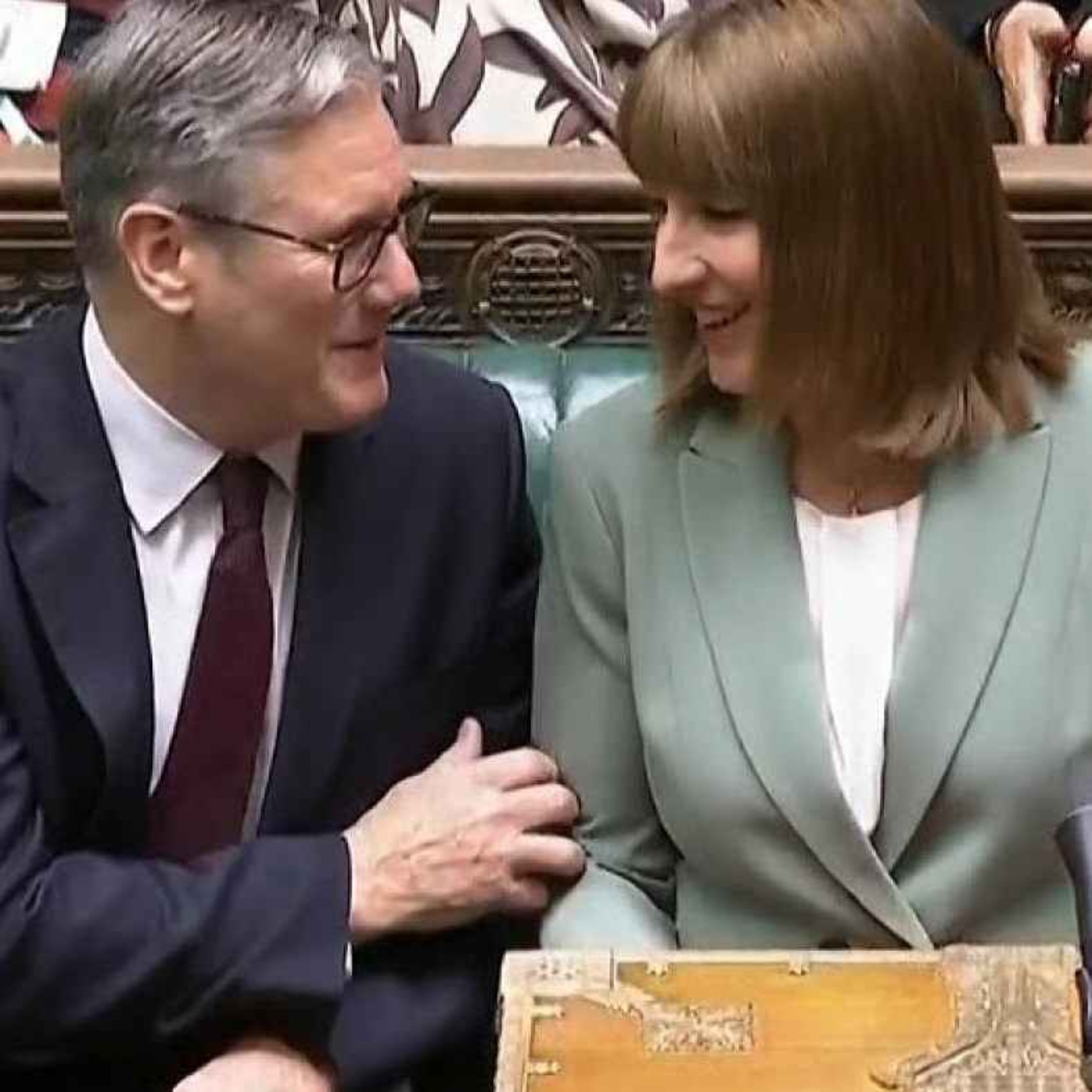
Chancellor Rachel Reeves has unveiled her spending review today, with budgets set out for all government departments over the next few years. The Standard’s business editor Jonathan Prynn has the latest.
And in part two, as featured in The Standard’s Hidden London series, we’re joined by John Darlington, an archaeologist and director of projects for the World Monuments Fund, to explore Boston Manor House.
Hosted on Acast. See acast.com/privacy for more information.


