
 Ask ChatGPT



Written by AI. May contain mistakes.
Discussion on the potential overnight levy for tourists in London.
“No, I think probably tourists spend enough money in London to make businesses viable.”
Gathering public sentiment regarding the proposed tourist tax.
“Hi Claire, thanks so much for joining me on The Standard Podcast.”
Interview discussing the details and implications of the tourist tax with Claire Holland.
“So you mentioned this overnight levy supporting some of the services that tourists use.”
Exploring how the tourist tax might fund local services and support the economy.
“That means that the services that the tourist economy rely on are often most at risk of being underfunded because we simply, as local authorities, don't have enough money left.”
Discussion on how the revenue from the tourist tax would be distributed among London boroughs.
“And people often stay further out in London.”
Learn about the proposed tourist tax and its potential benefits for London councils.
“So what we're saying as London councils is that where the money is raised, that area should retain in the first instance, 50 % of what's raised.”
Discover the importance of fiscal devolution for London's economic growth.
“So I think if you look at the investment that has gone into London over the past years, it's declined.”

Get the gist, explore an idea or ask about something said.
 Claude
On The Standard, what are the key points of this episode?
Searching your listeningAutomatic transcript. May contain errors.
0:05London is consistently ranked as one of the most expensive tourist destinations and it's set to get even more pricey this year with the likely introduction of an overnight levy, which is better known as a tourist tax. So is implementing this tax a good idea for London? Hi, and welcome back to The Standard Podcast. I'm Tamara Kormornyk. For all the latest news, head to standard.co.uk. Coming up, does London need a tourist tax?
0:37well if you're thinking of booking an overnight stay in london this year you will want to leave a little room in your budget to the tune of about three percent of the cost of the accommodation per night to go on predicted proposals this comes after chancellor rachel reeves gave london mayor sadiq khan the power to impose an overnight levy as part of the government's devolution of power So what do Londoners think? No, I think probably tourists spend enough money in London to make businesses viable. So I don't want to discourage people from coming to the city. No, I don't think so. I don't really think...
1:12I mean, tourists bring in a lot of money to the economy already. I think prices are pretty high, so I don't really feel there should be a tourist tax. No, I don't think it should have a tourist tax. They put a lot of money already into the country with their tourism. I don't believe a tax is necessary. In today's episode, I speak to Councillor Claire Holland, who is the leader of the London Borough of Lambeth and also the chair of London councils. She's calling for London boroughs to retain half of the income from the tourist tax that's raised in their area to fund local services that support cities' tourism and growth.
1:50This could amount to tens of thousands of pounds being poured into local infrastructure. Here's my chat with Claire.
2:00Hi Claire, thanks so much for joining me on The Standard Podcast. It's great to have you. Hi, it's really good to be here. So Claire, today we're going to be talking about the introduction or the potential introduction of an overnight levy or a tourist tax, as most people know it as. So were you involved in conversations to bring this to London? It was raised formally in the London Finance Commission paper in 2017. It became formalised as a position for London Council. Oh, wow. Yeah, so it goes back quite a way. And we have been, there's been various pieces of work done over the time. But since this new government came in and has indicated they're leaning towards introducing it and now have said that they would, we have been lobbying quite hard and having conversations about the fact that we really support this as part of a wider fiscal devolution package.
2:57But we really support it in order to support London, to support our tourist industry, our local businesses and our local areas across the city. And I mean, the figures are changing. I looked this morning and they were a little bit different to what they were a few weeks ago. How much is this overnight levy or the tourist tax expected to raise for London? The CLF, the Central London Forward, that's the sub-regional partnership of boroughs that make up Central London, have done quite a lot of work on this and research. And their estimate is that it could raise, if you had a 3 % levy, it could raise around£350 million.
3:36pounds. But it might be less depending on what levy you have, it might be more. And in an ideal world, what would that levy be? What percentage would it be? Would it be a flat fee? And if so, how much would you suggest is the right amount for a tourist visiting London to pay on top of their hotel or short stay bill? So we don't have a position as London councils on exactly what that should be. If you think about the two pilot projects that there were with what they called overnight levy business improvement districts in Liverpool. And Manchester, they had a flat rate. But I think that's to be determined.
4:15As borough leaders, what we're saying is there should be a balance. And this should be a conversation to be had with business to make sure that it is something that doesn't put tourists off, but actually continues to welcome tourists to London as a global destination. And we're something like the third most visited global destination. And we need to build on that. We need to nurture it. We need to cherish it. But we also need to ensure that tourism continues to grow for our capital city. So I think that's a balancing exercise and a conversation to be had. So you mentioned business and growth. Westminster Business Council have actually come out against the proposed tourist tax.
4:53They're saying that hotels and businesses are already contending with the perfect storm of rising costs and staffing challenges, the long tail of the pandemic, and to impose a tourist tax would send the message that London's actually not a welcoming place anymore for international visitors or businesses. What do you make of this position? I think what we have to understand is, if you introduce an overnight levy, there are going to be bumps along the road right anything new we need to thresh out and work out how it's going to work best for London because how it works in Barcelona isn't necessarily the best for New York isn't necessarily the best for London and that's why London leaders need to be at the table with the mayor to ensure that how this works the way in which it works what's charged how businesses are involved works for London and works for our communities because ultimately this is about benefiting londoners and about driving local growth in our communities inclusive local growth to try and address many of the inequalities that exist and so i would say that that balance is looking at the principled approach that we have as london councils which is first principle money comes to london and 50 is retained at a local level to ensure that our communities feel the benefits and our businesses feel the benefits and are mitigated against the worst impacts of tourism then the remaining 50 % gets pulled out across London to be decided in consultation the mayor how that's spent so for me the most important thing and for London council's most important thing is is that this is something that is worked out together and really benefits the whole of London because if we're really gonna have that inclusive growth that we were so excited to see in our growth plan we need to make sure that this is something that works for all London boroughs and works for all Londoners across London.
6:51So you mentioned this overnight levy supporting some of the services that tourists use. Could you take me through some of the services that tourists use the most and where the shortfalls are coming from? There's the obvious services that we provide as a local authority in our area that support tourism. There's street cleansing, there's removal of litter, there's street lighting. And there's also services around supporting businesses. So for example, having a really good licensing system, having a robust and good enforcement system to make sure that the nighttime industry or the arts industry, whatever it is that tourists are visiting is working well and is working lawfully.
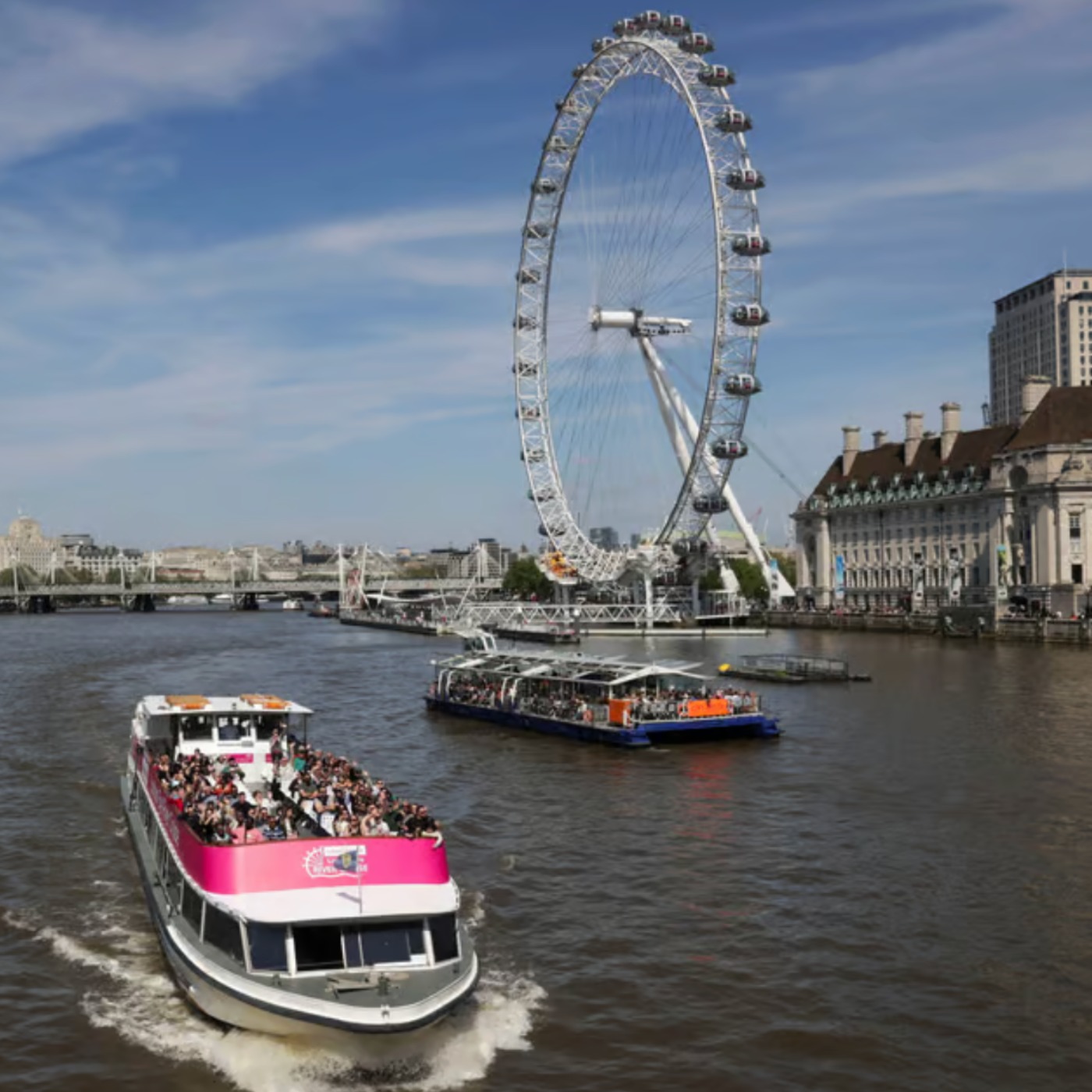
7:41And there is also, of course about supporting our local transport hubs and working with the mayor to do that to ensure that the transport has the capacity for this there's also the fact that local authorities often supplement community safety numbers so if you take my borough for example we're absolutely privileged and fortunate to have the south bank that runs along the top of the borough so we've got world leading arts institutions like the national theatre and the bfi and the Southbank Centre and we have the Millennium Wheel and Jubilee Gardens. Along with the local businesses there, as a borough, we invest a huge amount over and above what we would usually invest if it was for residents and just local businesses because we get millions of visitors a year to that stretch of the river.
8:31And it's fantastic, but it also comes at a cost. And so we deploy a huge amount of street cleansing and litter picking over and above that which we would do. We are working with partners, Network Rail and TfL, to have longer term plans for how we can make the whole area around Waterloo even more attractive for tourists incoming. And it's money that we put in from local residents in order to ensure that everything runs smoothly and is safe and clean. And investors tell us that people want to invest in London, but they want to make sure that when they invest, that they're investing in areas where people feel safe, where the public realm is clean and beautiful and well designed.
9:16And so it's a win-win situation. If we invest, then people are more likely to come. It supports local businesses. We can put money back into local growth and we can also share money across London.
9:31we'll take a quick break coming up i asked claire whether the tax will leave tourists footing the bills for cash strap councils and how the income from the tax might be divided across london welcome back let's head straight back to my chat with claire I know at the moment you're saying that it's about talking about percentages of maybe three percent do you think there's a risk that the tourist tax could just be whacked up to patch up holes in council budgets and and you know should tourists be responsible for fixing the issues that arise in in local council budgets I think the risk is actually in the other direction a lot of the services that are most critical to the tourist economy such as the ones I've just described they're not statutory services like social care like looking after older people or young people at risk if you look at the huge financial pressures facing councils which comes from over a decade of structural underfunding rising need and complexity of need and increased levels of the cost of delivering those core statutory services.
10:55That means that the services that the tourist economy rely on are often most at risk of being underfunded because we simply, as local authorities, don't have enough money left. So if we want to ensure that those services receive funding, having a dedicated stream of revenue that we can then use to invest in them, I think is critical to supporting the tourism industry. Now, we'd obviously have to look at what measures are in place to ensure that as councils, we can demonstrate to government and to the tourist industry that money being raised by the overnight levy is being invested in a way which is focused on supporting tourism.
11:35But I absolutely think we can do that. And Claire, I'm curious to know which case studies or which forecasts give you the confidence to push a policy like this forward in terms of, you know, the case that it could discourage tourists from visiting London or, you know, do you think people are going to start staying outside of the M25 and the benefits of the tourism in local boroughs might be lost? so there has been a huge amount of work and studies over the years done on this and if you look across the world i have not made the decision not to go to barcelona because they have an overnight accommodation nevy and if people want to go and visit new york i don't think the fact that they charge you know three or four bucks a night puts people off and i think that's where the balance comes right we have to make sure it's set a limit where it doesn't put people off the other thing to say is that many people who come to maybe central london to the houses of parliament to the big wheel or to hampton court to tower bridge won't necessarily stay around those areas although in central london we have lots of airbnbs and hotels but will often stay in airbnbs and to be clear we believe that this absolutely should cover short-term lets and overnight accommodation levy and not just hotels.
13:08And people often stay further out in London. And so by applying the overnight accommodation levy to all forms of overnight accommodation for tourists and visitors, then that means that that is benefiting those areas where they're growing their industry and ensures that it isn't just money that is being pumped into central London. But I feel confident because we can look at the experience of other cities across the world, major capital cities such as us and other cities within Britain and really learn from that and ensure that we introduce a system that works for local businesses and works for Londoners.
13:52And Claire, could you take me through the process of how the money might be divided between the London boroughs? So what we're saying as London councils is that where the money is raised, that area should retain in the first instance, 50 % of what's raised. Say you raise£100 ,000 in a borough, you should keep£50 ,000. I'm using these figures just because they're easy and I can do the math. Yeah, yeah, yeah. So if you raise£100 ,000, you would retain£50 ,000 locally and that would be used to meet the additional costs and the additional burdens of tourism locally, the street cleansing, the licensing, the safety, the lighting, all the things that I've talked about.
14:44The remaining£50 ,000 would then go into a London pot and then the mayor and all the London leaders would sit at a table and work out how that pot is to be divided and spent. And it would clearly need to align with the London growth plan that we launched with the mayor of London last February, Imperial College. And it would also, we think, need to look at areas that have daytime pressures through daytime visitors, but won't necessarily have the number of Airbnbs and hotels that other areas might have. So they might be losing out on some of that. And how do we mitigate the impacts of that daytime tourism.
15:23We're a fantastic city already, but we really need to keep attracting people because we're a wonderful city to visit and we don't want to miss out and we don't want to slide down. So we want to keep going up because we think London is the best place to visit in the world. So we want to encourage people to do that. And Claire, just to wrap up our conversation, do you think tourist tax is something that London actually needs? Or do you think it's something that is nice to have? So I think if you look at the investment that has gone into London over the past years, it's declined. We have been asking for a long time for what we call fiscal devolution to London.
16:08And that is the ability for us to raise money locally, because we understand the economy nationally is in a tough position. We understand that the government needs to support growth across the country. We believe if you give London fiscal devolution, we are really, really good at making sure that that money is spent wisely with our business partners, with our other public sector partners, with our communities, to ensure that the money is spent wisely and really does drive local growth. There isn't enough money in the system in London and so this will give us the opportunity in order to reinvest that money in order to support that growth in London that Londoners really need.
16:51Thank you so much for coming on Standard Podcast, Claire. Not at all. Thank you. It's great to be here. Thanks for inviting me. And that's The Standard. For all the latest news, head to standard.co.uk. if you're new here hit follow and give us a rating if you'd like to get in touch email us at podcasts at standard.co.uk we'll be back here tomorrow morning see you then
London is consistently ranked as one of the most expensive tourist destinations in the world. It’s set to get even more pricey this year with the introduction of a tourist tax that is predicted to raise £350 million per year. Is implementing an overnight levy the right move for London?
To understand why councillors are backing the idea, host Tamara Kormornick speaks to Councillor Claire Holland, leader of the London Borough of Lambeth and chair of London Councils. They discuss how much the overnight levy could generate, how the revenue might be distributed, and whether it’s fair to ask tourists to help fund local infrastructure.
Hosted on Acast. See acast.com/privacy for more information.


