
 Ask ChatGPT


 The Standard
16 Jan 2026 · 15m · 8 chapters
Written by AI. May contain mistakes.
Discussion on Laila Cunningham's views about banning face coverings in London.
“but I would like to make it a reason for stop and search because I don't think in an open society you need to cover your face.”
Laila Cunningham shares her journey and thoughts on her candidacy for mayor.
“And have you taken the job on any preconditions?”
Insight into Cunningham's campaign strategy and focus on Londoners' needs.
“I'm here to talk about the London campaign.”
Cunningham discusses police station closures and rising crime rates in London.
“Who's there to protect me if there's no police?”
Exploration of Cunningham's comments about London not being a Muslim city.
“And you want, you know, you've got to ask yourself, if you're not prioritised in your own country, then where are you going to be prioritised?”
Cunningham shares her opinions on Oxford Street pedestrianisation and transport issues.
“If you became mayor, would you essentially keep it as it is and reopen it to traffic?”
Discover Laila Cunningham's plans to make London more accessible and efficient.
“So under a Cunningham mayoralty, the buses and taxis would be back up and down the length of Oxford Street?”
Learn about Cunningham's approach to engaging with Londoners for reform.
“Buses are very useful for people with children to take you down to Oxford Street.”

Get the gist, explore an idea or ask about something said.
 Claude
On The Standard, what are the key points of this episode?
Searching your listeningAutomatic transcript. May contain errors.
0:05Last week, ReformUK announced their candidate for the London 2028 mayoral election, Leila Cunningham, the Westminster councillor who defected from the Tories to reform last year. The news broke in the same week that a poll revealed Labour to be the early frontrunner to win the race, with reform neck and neck with Conservatives in second place. It's early days, and Leila Cunningham is yet to write her manifesto, but the former Crown Prosecutor has indicated that the safety of Londoners is a top priority of hers, and in her latest interview for The Standard podcast, she had some quite controversial things to say about women wearing burqas.
0:42I would look to ban face coverings if I could, but I would like to make it a reason for stop and search because I don't think in an open society you need to cover your face. I've prosecuted a woman in a burqa. It has to be assumed that if you're hiding your face, you're hiding it for a criminal reason. Leila Cunningham is already a divisive figure in British politics. While some hail her as a rising star, Others accuse her of sowing harmful division, particularly her views on the Islamic community in London. In an interview with The Standard earlier this week, Leila Cunningham said London had to remain British and was not a Muslim city.
1:19For today's episode, The Standard City Hall editor Ross Lydell sat down with Leila Cunningham to explain her comments, how she feels about the closure of police stations to the public and what she'd do about the pedestrianisation of Oxford Street.
1:35Leila, thank you so much for speaking to us, giving time to the Standard podcast. Can I take you back to the start first, if you don't mind? How did you become the Reform Mayoral candidate? Did you approach Nigel Farage? Did he approach you? I've been a member for seven months and I've been helping with the London campaign. And yeah, I was honoured to be asked to stand as the London Mayoral candidate. You've obviously been a Tory Westminster councillor. you remain a councillor in Westminster. Had you given any thought at the time when you were a councillor to becoming a mayoral candidate? What, as a Tory mayoral candidate?
2:15Either Tory or when you moved to reform. Did you think that your move to reform would sort of quickly fast track to becoming the party's mayoral candidate? No, not at all. That was never discussed or no, not at all. I defected to reform because I couldn't support the Tories anymore. Everything they did, they did the opposite. And it was getting difficult to knock on doors. And just I agreed when people said the Tories let us down, they did everything the opposite that they were supposed to do. I had to agree with them and I couldn't, you know, I couldn't lie to myself. And that's why I defected.
2:53And I also really liked Nigel Farage. And how did the invitation to become the candidate come about? You know, did Nigel phone you up?
3:04Yeah, I mean, it was a phone call. It was discussions. Did I want to do it? You know, it was a process. Yeah. And have you taken the job on any preconditions? You know, is it the case that you've said to him, I'm going to run my own campaign or that I want you by my side? You know, will Nigel be running the show? I only win as a reform candidate because, you know, it's under reform that we're polling second, we're beating the Tories. People recognise that reform is the only party that actually wants to speak for people, not at them. And people want a London that works for Londoners. Can you tell us how your strategy will work then?
3:45Because you're going to lead the party's borough campaign for the local elections in May. and I guess you would look to use that as a springboard for success at City Hall in 2028. How well do you have to do this May to make that work? One is not contingent on the other. I just want to get out there and speak to Londoners and tell them that, you know, finally there is a chance to vote for something other than Conservatives and Labour. They haven't had that chance in such a long time, as far back as I can remember. And right now it is a Labour stronghold, London. And I speak to Londoners across London and they don't feel that London's working for them under so many different levels.
4:26And I want to go around London and tell people what do they want. And the manifesto that would come in two and a half years, obviously before, would reflect what Londoners want, not what I want, like Sadiq Khan. My priorities would become Londoners' priorities. Will you be standing yourself for re-election to Westminster Council as a reform candidate? Well, no, I won't because the campaign won't allow me to spend as much time as I want to as a councillor should I win. And also the mayoral election is before the next council elections. So it would cause a by-election. I want to dedicate myself to running the mayoral campaign.
5:07And it wouldn't be fair on residents to have someone that's not there dedicated to them. Isn't it a bit strange to be the lead figure for the reform local campaign, but not to be a candidate yourself? Why is that strange? Well, if you're not putting yourself up, why would you expect others to put themselves up? Well, I've just told you why I'm not putting myself up. It's not because I don't believe in the party or I don't want Bessa for London. I'm not putting it up because, as I said, if I do win the mayoral, that will be in 2028 and the next council elections are in 2029. So how can I? I don't want to do both.
5:38And I don't think residents expect their councillor halfway through a term to become a mayor. OK. It's a long way off the mayoral elections, May 2028. Will you sort of continue to have a day job in addition to leading the campaign to get yourself elected as mayor? Sorry? The next mayoral elections are a long way off. Will you continue to have a day job? My sole focus is doing as well as we possibly can in the London elections and then focusing on, you know, developing a manifesto for Londoners. But do you not have to keep working on a daily basis, though? I'm here to talk about the London campaign.
6:20I'm more than welcome to talk about it. If it's pertinent to me or the mayoral elections, more than happy to discuss it. OK. Who's going to fund your campaign? Sorry? How are you going to fund your campaign? Through donors. That's how political campaigns are funded. We don't quite know yet whether Sadiq Khan's going to stand again. Would you prefer Sadiq to stand again so you can take him on? Or would you prefer actually to just go up against a new Labour candidate? I don't really have a preference because I think my message is strong. and I think Londoners recognise that whether it's Sadiq Khan or someone else representing Labour, they serve an ideology and they serve a party, whereas reform are here to serve the voters.
7:08We're not here to serve a party, we're not here to serve an ideology. Our ideology is what's best for Londoners. What do you think Sadiq's done wrong? Oh, I'll tell you what Sadiq's done wrong. Knife crime has risen by 67 % and he became mayor. Violence against persons, 40%. Possession of offensive weapons, 23%. Sexual offences. 75%. One rape is reported every single hour. London has just two police front counters open 24-7. And you know how many offences end up in a charge in London? 6%. That means 94 % people don't even get a look in. 94 % of victims. You mentioned police counters there. If you were to become mayor, would you reverse the closures of police front counters?
7:53100%. And he had promised that in his manifesto, he said that he would maintain a police counter in every borough. And that's not been the case, sadly. He said that he changed his mind because the facts changed and that the number of crimes reported at front councils is minuscule. Do you sort of disagree with that? You'd see a purpose of them being reopened? I haven't seen the data, but as a personal opinion, I find it quite reassuring that I can go and report something to a police station. I have been the victim of crime where I've called 999 and they told me they don't have enough resources.
8:24So to go and speak to someone and report it is reassuring to know. And I think that is a service that the police should be required to provide to residents. You know, as a Londoner yourself, you know, do you feel frightened in London? Do you feel concerns for your own safety? I do. Yeah. Depends where I'm going. If I'm walking at night, I definitely do. I feel concerned for my children, my teenagers. I do. Of course I do. How can I not? There's no police. 4%, 6 % of offences are charged. How can I feel safe? Who's there to protect me if there's no police? Does this change how you go about your activities at night?
9:02You know, how you get home? Is it something you're always thinking about if you're out late? Yeah, 100%. But it's not even only at night. You know, if I take my phone out, I don't take it out with ease. I take it out quickly. I put it back. As I said, you know, My son was mugged at knife point. So I'm acutely aware of the danger that all Londoners face. It's a lived experience. It's not some dangerous rhetoric that reform's trying to pursue, as Sadiq Khan is saying. And it would be great if Sadiq Khan could stop policing public opinion and start policing our streets.
9:41We'll take a quick break. Coming up, what Leila Cunningham meant when she said London was not a Muslim city.
9:57Welcome back. Let's get straight back to the interview.
10:04Your interview with my colleague Claudia Cockrell has proved quite a hit on the Standard website, and it's in the standard paper as well. It's had many, many views already in the last 12, 15 hours. One of the headlines from that interview was what you said about London not being a Muslim city. I'm just wondering if you could expand a bit on those comments, please. Yeah, I mean, I can. You know, if you go to parts of London, it does feel like a Muslim city. You've got, you know, the signs are written in a different language. You've got burqas being sold in markets. And I think the problem is, is that various councils have prioritised refugees for social housing and they've been put in certain areas and the demographics and the values and way of life in that area has changed.
10:50And that's why I say people want a British city back with British values. That starts on May 7th because I'd like to see councils prioritise British people for social housing. And you want, you know, you've got to ask yourself, if you're not prioritised in your own country, then where are you going to be prioritised? but just because you're muslim doesn't mean you're not british though i didn't say that you didn't you didn't ask me if muslims are british i'm muslim and i'm british you asked me if it's not a muslim city or something like that and i said in certain parts you would walk and you would think that it is a muslim city and i think that is wrong is there a problem with the number of muslim people in london no of course what the problem is is when people come and don't want to assimilate and they want to change the country for themselves.
11:38And that is a problem. I think there should be one civic culture and that should be British. Okay. You mentioned burqas being sold in marketplaces in London. Would you look to change that in some way? I would look to ban face coverings if I could, but I would like to make it a reason for stop and search because I don't think in an open society you need to cover your face. I've prosecuted a woman in a burqa. It has to be assumed that if you're hiding your face, you're hiding it for a criminal reason. So just so I don't misunderstand what I think you've just said there, you would say that if a woman was wearing a burqa or some sort of other face covering, that would give the police justifiable reason to carry out a sort of stop and search operation?
12:30I mean, burqas are banned in many Muslim countries. They are not religious. They are part of a tradition inflicted and they've got nothing to do with religion. I don't think in an open society people should cover their face. It provides a cloak of anonymity for criminals. I believe Sadiq Khan spoke about this issue after you made comments about the burka last week. He said he would never move to tell any women what to wear. Would you not agree with that position? no i don't i'm not telling women october i'm saying that if you cover your face that will be a reason for stop and search okay and i know it's obviously some way off before it's time to write your manifesto but i'm wondering if i could just ask you about a few london issues just to get the sense of what you're thinking is just now uh for example obviously you're in your westminster councillor you know very well what's planned by sadiq khan in oxford street in terms of the pedestrianisation.
13:28If you became mayor, would you essentially keep it as it is and reopen it to traffic? I would, because I know that there's big, big, a lot of people don't support it. Residents don't support it. Businesses don't support it. You know, his public consultation was not sufficient enough. And he's kind of railroading it through. Even the Labour Westminster Council is against him on this. And that goes to show that Sadiq Khan runs London for Sadiq Khan, not for Londoners. And that's got to change. It's got to be a London that works for Londoners, not for a selected few politicians. So under a Cunningham mayoralty, the buses and taxis would be back up and down the length of Oxford Street?
14:12Yeah, they are still. They're there just now, but Sadiq's hoping to get rid of them by the summer. Yeah, they would be going up and down, of course. You already have massive amount of traffic on the side roads. I want to get London moving again. I don't want bottlenecks on the sides. Also, how would disabled people get into Oxford Street? He doesn't think about that. Buses are very useful for people with children to take you down to Oxford Street. Not everyone can ride a bike. Could I ask you about the Freedom Pass? You may have seen coverage over the last week or so. Can I just stop you there?
14:44Because I think the time's over. I haven't written a manifesto, as I've said. As I said, I'm going to go around to Londoners. And I'm going to speak to them. And so any of these detailed questions, I can't answer you now. But it was a pleasure. Thank you. OK, thank you very much. Thank you. And that's The Standard. For all the latest news, head to standard.co.uk. If you'd like to get in touch, email us at podcasts at standard.co.uk. We'll see you on the next one.
15:20You
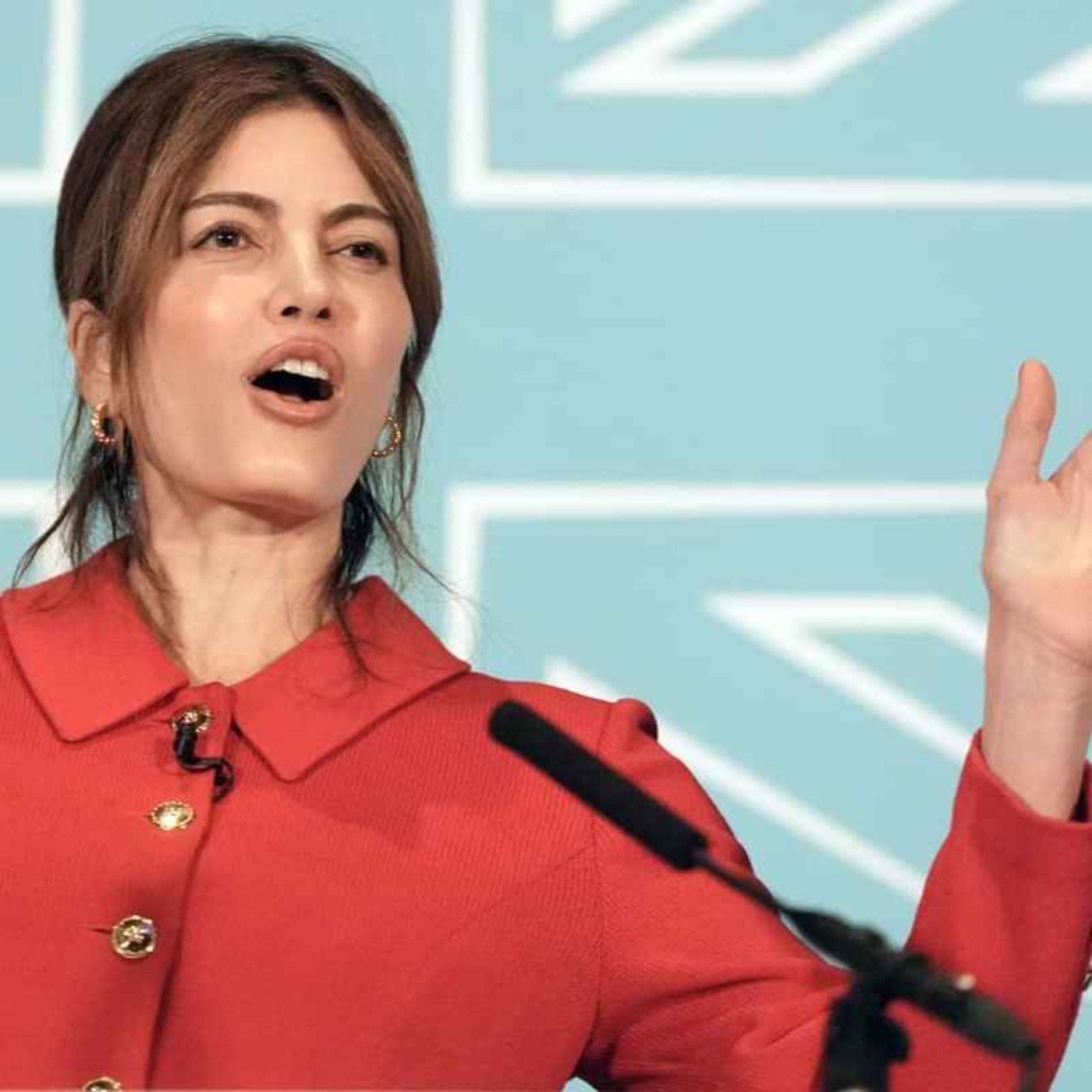
It has been a busy start to the year for Laila Cunningham, the Westminster councillor newly selected as Reform UK’s candidate for the London 2028 Mayoral election.
In today’s episode, The Standard’s City Hall Editor Ross Lydall sits down with Laila Cunningham to discuss controversial remarks she made earlier this week about London not being a “Muslim city”. During this interview, Cunningham sets out plans to make wearing face coverings, including the burqa, grounds for police to stop and search Londoners. She also discloses that, despite leading Reform’s campaign for the May borough elections, she will not be standing as a candidate herself.
Hosted on Acast. See acast.com/privacy for more information.


