
 Ask ChatGPT



Host: Charlie Duffield
Louis Ramirez (Managing Director and Co-founder of Flooded People), Arielle Domb (freelance journalist)
Storm Benjamin's impact in the UK, flooding risks, and youth culture meme "6-7".
Written by AI. May contain mistakes.

Get the gist, explore an idea or ask about something said.
 Claude
On The Standard, what are the key points of this episode?
Searching your listeningAutomatic transcript. May contain errors.
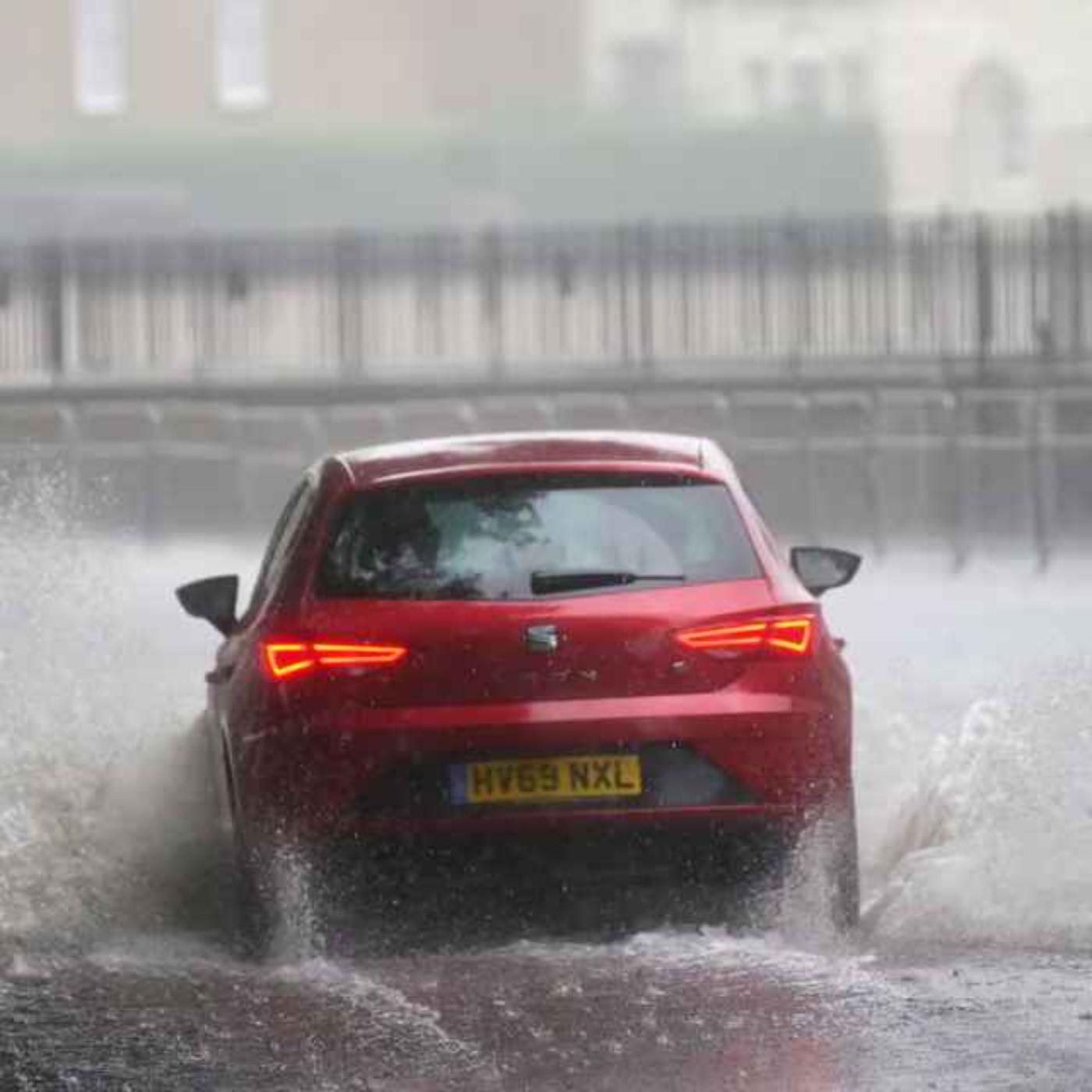
0:02Hi, I'm Charlie Duffield, and welcome back to The Standard Podcast. If you're new here, hit follow and give us a rating. For all the latest news, head to standard.co.uk. Coming up later in the show, what's behind Jenna Alpha's latest catchphrase 6-7? But first, today people across the UK have faced flooding and disruption as Storm Benjamin hits the country. This morning, commuters in the capital experienced heavy downpours and strong winds. The Met Office issued yellow weather warnings for wind and rain for London, with gusts forecasted to reach up to 50 miles per hour in the city. The miserable weather impacted on travel, with the Overgrounds-Lioness Line suspended between Wollstone Junction and Watford due to a fallen tree blocking the track at Carpenters Park.
1:01Forecasters warned of travel disruption and possible power cuts as Londoners braced for the storm. The Met Office warned that flooding could lead to difficult driving conditions and increased chances of accidents, while public transport is set to be disrupted, with flood alerts issued for much of Kent, Surrey and Sussex. It comes as a new report published yesterday revealed the London area's most at risk of flooding. The research, conducted by insurance firm Aviva, found that estuary cities such as London, Liverpool, Cardiff and Bristol faced a double threat because rising seas amplify tidal surges and river flows peak more often.
1:45In London, the region most at risk is Bermondsey and Old Southwark, followed by Vauxhall and Camberwell Green, and then Battersea. Joining us now is Louis Ramirez, Managing Director and co-founder of Flooded People. Louis, can you explain a bit more about what the impact of storms such as today's Storm Benjamin is and which regions tend to be most badly affected? So overnight we had flood action groups under warning in parts of the West Midlands and Plymouth and Lincolnshire. And I mean, at the very least, when these warnings start coming up, for if you're someone who has flooded already, maybe multiple times, what it means is sleepless nights.
2:25It kind of reactivates these mental health crises that flooding subjects people to. I was talking to a group who had their alerts ready to go and their pumps ready to go to wake up in the middle of the night to try and prevent their homes from flooding. So even when there is no flooding, at the very least, what's going on is that you've got this huge pool of people who are just kind of put through endless amounts of stress by these particular kind of near misses. And if the floods do happen, then at that point you have flooding going on and then water, usually very dirty water, just enters people's homes.
2:54They're left outside of their homes for nine months. They have to carry on with their lives on top of being their own building managers, keep their families together. And at that point, the impacts are absolutely devastating. You get divorces, you do sometimes get suicides, you get economic ruin, especially if it's multiple impact people, they lose the value of their homes, and so on and so forth. So that's quite a wide geographical range of areas impacted then. Yeah, that's right. And we're just checking this today. And thankfully, a lot of the flood warnings have been taken away. So the people I'm talking to are probably okay for now, but you're never sure until the storm has passed.
3:26And is this type of storm unusual for this time of year? I mean, there's often been storms, but one of the things that's going on is that you get more and more of them. So it's more when you zoom out that you start realising that there's a pattern going on with more and more storms, more and more frequent flooding. So you zoom out from this storm and one of the things that's going on is that now you've got an awful lot of houses that are flooding multiple times, sometimes more than once in a year. And that is quite unusual and it's being driven by all types of things like development, impermeable surfaces, which this government is making worse, sadly, as well as climate change and a creaking infrastructure and the likes.
3:58And that's why we're looking at numbers like one in four homes being at risk by 2040 or 2050 at this point. That's the EA's data in England. We're going to a place where one in four have a risk of flooding. Yeah. So how at risk of flooding has the UK been historically? The UK is always flooded. That's something really important to keep in mind, which is that it's a rainy island, among other things. There's a sea around it, there's rivers through it, there's water under the ground, and so on and so forth. I think the challenge that we're looking at and the reason that flooding is kind of gaining attention now is that rather than this kind of static problem or that, you know, control problem that gets increased by building homes where the water is going to go, it's now escalating in ways that we don't fully understand.
4:37And so you're getting more named storms like Benjamin every year. You're getting high, close, kind of like escalating coastal risks with rising sea levels. You're getting repeat incidents. And so this is the product of, yes, it's climate change. It's a big part of it. But you're also looking at really bad infrastructure. You're looking at authorities that don't have the capacity to react. You're looking at your sewer infrastructure that's derelict and the likes. You're looking at roads. It's a bit of a wild west out there in terms of the way we manage our water. And so whereas you once had a kind of static, normal flooding thing that would happen to you once every very long time, increasingly you've got people getting impacted once every three years or something.
5:11And if that's your baseline year, if every year like this with Benjamin, you've got tens of thousands of people across the country spending their winters on high alert, just kind of rolling the dice and hoping that they don't get hit, then you can start to be very worried about what your bad years are going to look like and with what frequency they're going to arrive. Do you think enough is being done to mitigate the risks of flooding? No, not enough is being done. I mean, look, right now what we've got is a system where we only kind of give protection to the places where we think it's going to be most economically impactful.
5:44So if you're in a small rural village, for instance, and you're repeatedly flooded, you've got nothing coming to you. And we've also got a system where basically anyone can raise the risk of someone else to flood and there's very little to stop doing that. So I could build a couple of houses next to your house and, you know, stop the drainage or something and place you at risk. And there would be very little stopping me from doing that right now. And I wouldn't be the one to clear that mess. And then faced with this kind of reality, it's really important that we change that to a different system where what we have is a kind of minimum amount of safety that we invest properly to get everyone.
6:14And also a system of accountability where you can't just kind of cause someone else to flood with impunity. And what action would you like to see the government take? immediate near wind is they need to stop allowing building in the flood risk areas. That's just this travesty that has been going on for a long time and is getting worse. So stop making it worse. And then in the longer term, you need to start fixing the way this is flooding. Again, you need to start creating a way where the people contributing to fixing it are also the ones contributing to making it worse. That can be developments and that can at times be government.
6:43Tragically, it can be water companies, it can be private individuals. It can be energy companies through the kind of climate change effect as well, when that can be proven on the coast in particular. And then you need to kind of switch to this kind of protection-based system. Because one of the things that's going on right now is that instead of protecting people, there's this big move to trying to kind of tell them to cope better. And that's not working. That's never going to work. Am I right in saying that coastal regions are particularly vulnerable? Well, the coastal regions are vulnerable because you've got sea level rise going on, and that's going to supercharge erosion.
7:12So there's entire areas of the coast, yeah, that they're particularly vulnerable in the kind of like longer term because they become unsustainable entirely. And there's a lot of evidence right now that's inviting us to start thinking really carefully about that. The vulnerability is not limited to the coast as well. So like I said, there's one in four homes that are said to be at risk. And you're going to start looking at increasingly kind of repeatedly impacted communities, at which point business insurance is already hard to secure in places like that. But potentially in the future, home insurance is going to be hard to secure.
7:39And that can create this kind of localized downward spiral where the communities just goes and goes and goes. That's interesting. Can you explain a bit more about the community impact. And finally, is there anything else you want to add? Basic level, if it happens to you once, it's awful. It really is. Flooding is this kind of, you know, I'll call it like a many months long nightmare. It just kind of devastates your mental health. It takes away your sense of safety in the home. So when you come back from home from a long workday or whatever, you're not coming back to a safe place. You're coming back to a place that's potentially been devastated and that's a source of anxiety.
8:10You can tank your personal finances as well because if your house is flooding repeatedly, you might have saved your whole life to buy that house and now it's unsellable and it might become worthless as well. So you're really kind of stuck in a place and it just grinds you down. But that's when it happens once. And then in communities, you're seeing this in kind of Tenbury Wells and South Wales, you're seeing this in Shrewsbury. There's a whole increasing number of communities now where this is happening quite regularly. And at that point, you can start having these not very well understood economic effects where you start getting businesses leaving and then eventually that depresses your local economy.
8:42And then you're kind of setting yourself up for a flooded ghetto, if you will, just this kind of area that anyone who has any say in it doesn't live in. And this is something that's kind of being warned about by hydrologists and flood specialists increasingly, which is that unless we kind of really step this up and treat this like the crisis that it is, these are processes that are already starting in a lot of communities. And finally, is there anything else you want to add? I think that right now there's this direction of travel where we're expecting communities to always do more. And it's like the government is doing less and less and always asking communities to be more and more resilient without telling them how resilient.
9:16I think it's really important to understand, first off, that people are incredibly resilient, people going through that, and that this resilience stuff can only go so far. You need protection, you need engineering schemes, you need strategic kinds of approaches to alleviating risk and managing it. And instead, what we've got is this kind of disguised austerity where in the name of community resilience, we're just passing on the buckets of managing flooding absurdly to people who have to wake up at 5am and then just do pumping themselves. Let's go to a break. Coming up in part two, what does the latest slang in the playground mean and should parents be worried?
9:53We'll see you back here in just a moment. Welcome back. It's the bane of school teachers everywhere, but the phrase 6-7 bizarrely is the latest slogan to become a phenomenon among Gen Alpha. There's an accompanying hand gesture as well of two upturned palms, alternately rising and falling like weighing scales. The slang originated in a rap song and has even been the basis for a South Park episode. Children repeat the words six and seven until they are visited by a tech investor who declares a state of emergency in the school. Here's a clip from the episode.
10:50However, educators have banned the term, saying that it has become a distraction in classrooms. To find out more, I spoke to freelance journalist Arielle Dom. Arielle, remind us what this slang is and how it started. The term 6-7 is thought to derive from Skrilla song Doot Doot 6-7. The Guardian proposed that the lyric could be a reference to a police radio code or it could be a reference to 67th Street or it could be something else. But the track gained popularity through TikTok and Instagram videos featuring the NBA player Lamello Hall who is six foot seven inches. Recently, school children have begun saying this in class.
11:33Either they're saying six, seven together, or when someone blurts out the number six, someone else will say the number seven. They also commonly do it with a kind of juggling gesture with their hands. And teachers in America have been finding it very frustrating because they're saying it's distracting. Then last week, on I believe it was the 15th of October, there was a South Park episode called Twisted Christian that featured the 6-7 meme. So the concept was that children were repeating the words 6 and 7 at school until they were visited by the tech investor Peter Thiel, who declared a state of emergency in the school.
12:13So that is a really interesting moment. It encapsulates this meta-culture, where it's not just that the internet culture is imitating pop culture. pop culture is actually imitating something which has been created through memes on the internet. Why is this term banned? I can imagine that school children blurting out random words in class and so many of them doing it could sound alarming. I think the 6 '7 friend is innocuous and quite wholesome. I think teachers have banned it more just because it's disruptive but it kind of reminds me of I mean I remember when I was at school, sometimes in assembly, one person would cough and then everyone would start coughing.
12:57And it was this funny in joke that you would be, you know, rebelling in quite a wholesome way. In my mind, it's kind of similar to that. It's just something for people to join in on. And I think teachers are only getting frustrated because it's disruptive. So how have teachers responded? There's a teacher called Gabe D 'Ambenbring, who's a seventh grade science teacher in South Dakota, who told CNN that it's like a plague, a virus that has taken over these kids' minds. There was another teacher, sixth grade language teacher in Michigan, who told today.com, I've been teaching for 20 years and I've dealt with all sorts of slang.
13:35Nothing has driven me crazier than this one. So teachers are getting quite riled up. Another teacher, Monica Chofflett, she's a New Jersey fourth grade teacher. She told NBC Los Angeles that while she has put in rules to stop the students staying 6-7 in class, she's also lent into it a bit. So she's created a playful call and response activity to refocus her students. So she says 6 and she'll get them to respond 7 in response. She also said that she appreciates the humor of the inside joke. She said that a co-worker in her went to a fundraiser, a bingo fundraiser, and they called out G67 and they kind of looked at each other and said 67.
14:17There's something nice about this sort of universal language that Hujun, no matter who they are, can get involved in this joke, which it sounds like there's not actually that much behind it. I think the joke is almost in the arbitrariness of it. Do you think the popularity of this phrase will just fizzle out? People have been theorising online that this, because adults like myself are now talking about this, it's inevitably kind of become less cool to have people, like adults deconstructing it online, sort of ruins the fun of the joke. So people have been predicting that the 6-7 joke will end soon.
14:56And should parents be concerned? I think after adolescence came out, which obviously had so much about, you know, the red pill and emojis signifying different things, I think parents are rightly maybe anxious about jokes or memes that they don't understand. And they want to get to the bottom of it to ensure that their child isn't talking about something which is potentially concerning. So I think maybe there's an extra level of paranoia around memes that young children could be engaging with. Like there's a Pepe the Frog meme that has been branded as a hate symbol. I know there was also like an Italian disco trap that's been co-opted by far right groups.
15:38So maybe there's an extra level of paranoia around these things. In this instance, I don't think it's that at all. I think it's just a bit of fun.
15:50And that's The Standard. For all the latest news, head to standard.co.uk. If you'd like to get in touch, please do drop us a line at podcasts at standard.co.uk. We'll be back here tomorrow at 5pm. We'll see you then.
Storm Benjamin hit the UK with gale force winds causing travel disruption, and serious flooding feared. Yellow weather warnings were put in place for London, the south of England, and the east Midlands, Yorkshire and parts of Wales. The Met Office said flooding, damage to buildings and travel disruption was likely throughout the day. It comes as a new report has revealed the London boroughs most likely to be impacted by flood damage. Louis Ramirez, Managing Director and Co-founder of Flooded People is here to discuss how these weather events are becoming more common and what action should be taken to mitigate the risks.
And in part two, freelance journalist Arielle Domb joins us to discuss what the 6-7 meme is and why teachers are fed up of it.
Hosted on Acast. See acast.com/privacy for more information.


